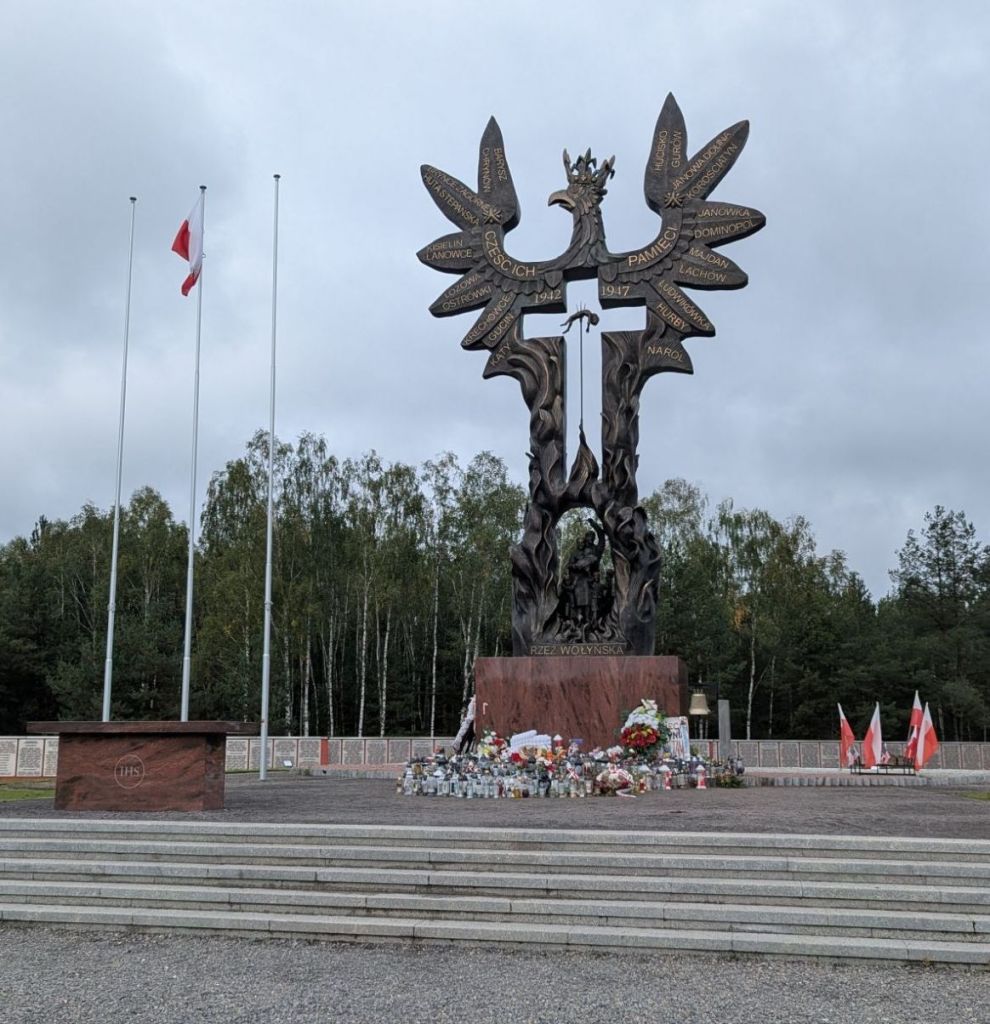
Departing Warsaw on our tour of Poland with Chopin Tours and John Gora, we headed further south and east. (See previous blog for first half of trip). https://retirementadventureblog.com/2026/09/29/polska-gdansk-to-warsaw/ The weather was cooler with occasional light rain. We drove about 2 hours, stopping once to visit a monument remembering the Volhynia massacre, or ethnic cleansing, of 100,000 displaced civilian Poles in 1943 by the Ukraine Insurgent Army, or UPA. The monument was particularly graphic in its representation of terrorized families and children. Recently, Poland has accepted over 4 million Ukraine refugees.
We continued on toward Lublin. Some more history: the Polish-Lithuanian Commonwealth existed from the 16th to the 18th century and was formalized in Lublin. This was the largest and most populated state in Europe at that time, a combined multicultural kingdom and duchy extending from the Baltic to the Black Sea. In the late 18th century, the Commonwealth adopted a constitution, the 3 May Constitution, the first in Europe and second after the US. The Commonwealth, weakened over the years, was partitioned between Russia, Germany, and Austria in 1795. Poland and Lithuania were not reestablished as independent countries until 1918.
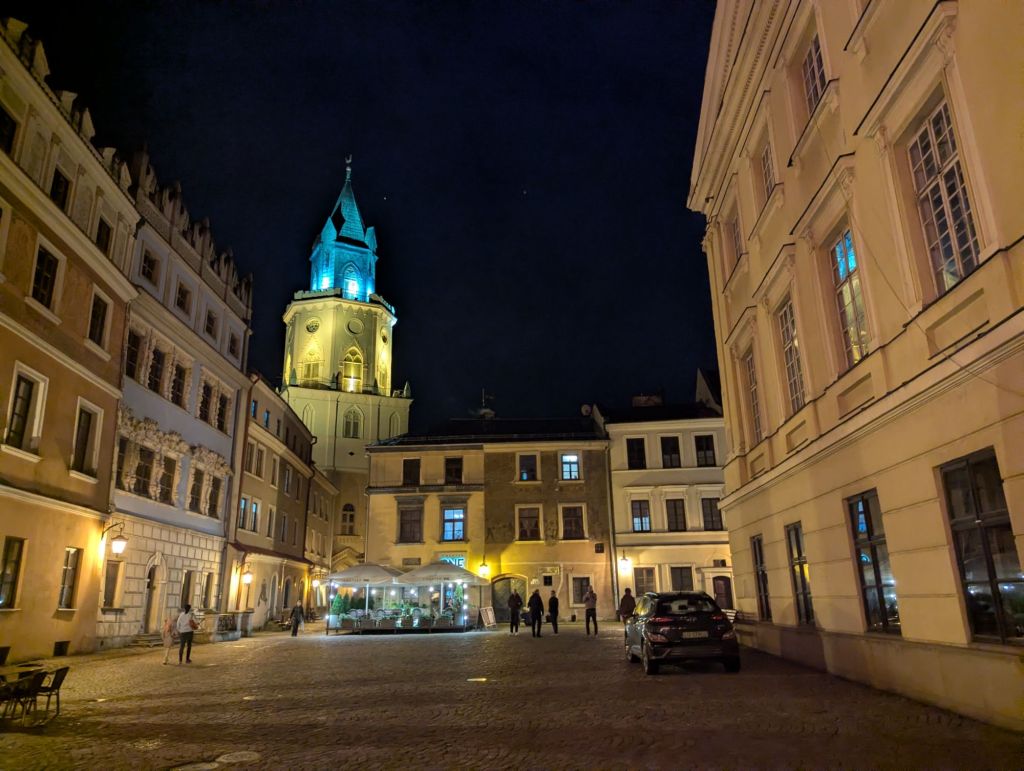
Lublin saw important developments in the Commonwealth and was on the international trade route. The 13th century castle was destroyed mid 1600s during the Swedish Deluge. Apparently the destruction of Poland during that time by the Swedes was pretty extensive, on the order of later WW2 devastation. It was reconstructed mid 1800s under Russian rule in neo-gothic style and has been used as a prison for 128 years by Russia and later by Nazis. Now a National Gallery museum, only the stone keep is original to the castle. We walked from the castle to the old town square observing many original tenement houses. Lublin’s population was 40% Jewish at the onset of WW2; first forced into a ghetto outside the city gates, there were few Jewish survivors from the Holocaust and those few eventually emigrated elsewhere.
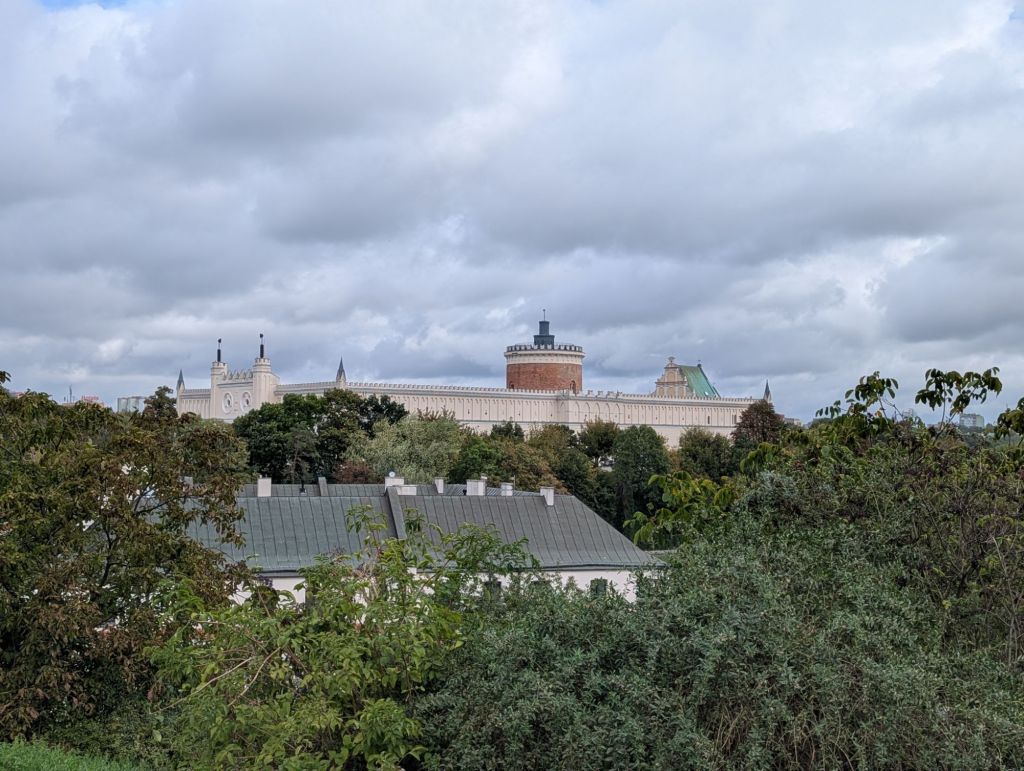
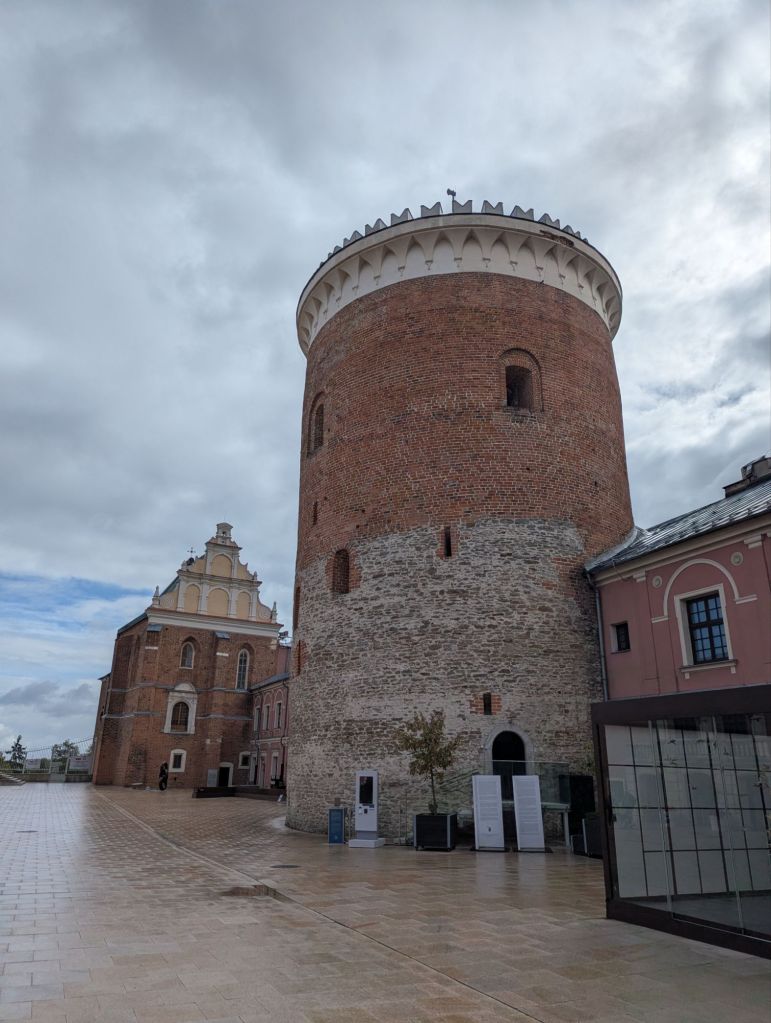
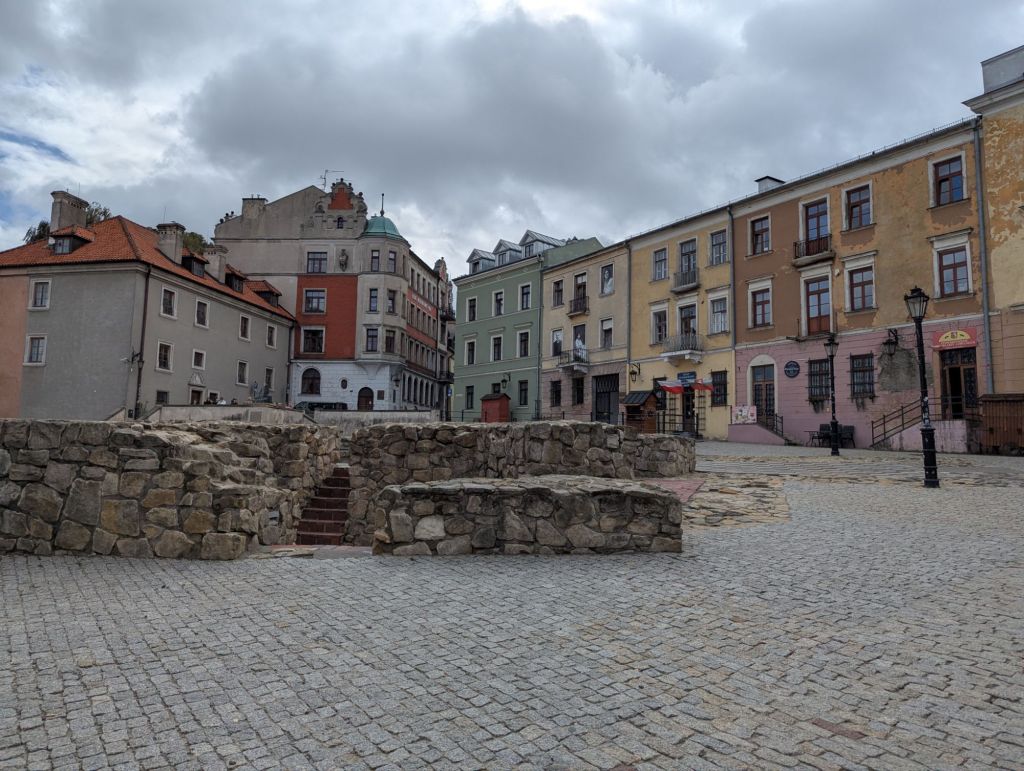
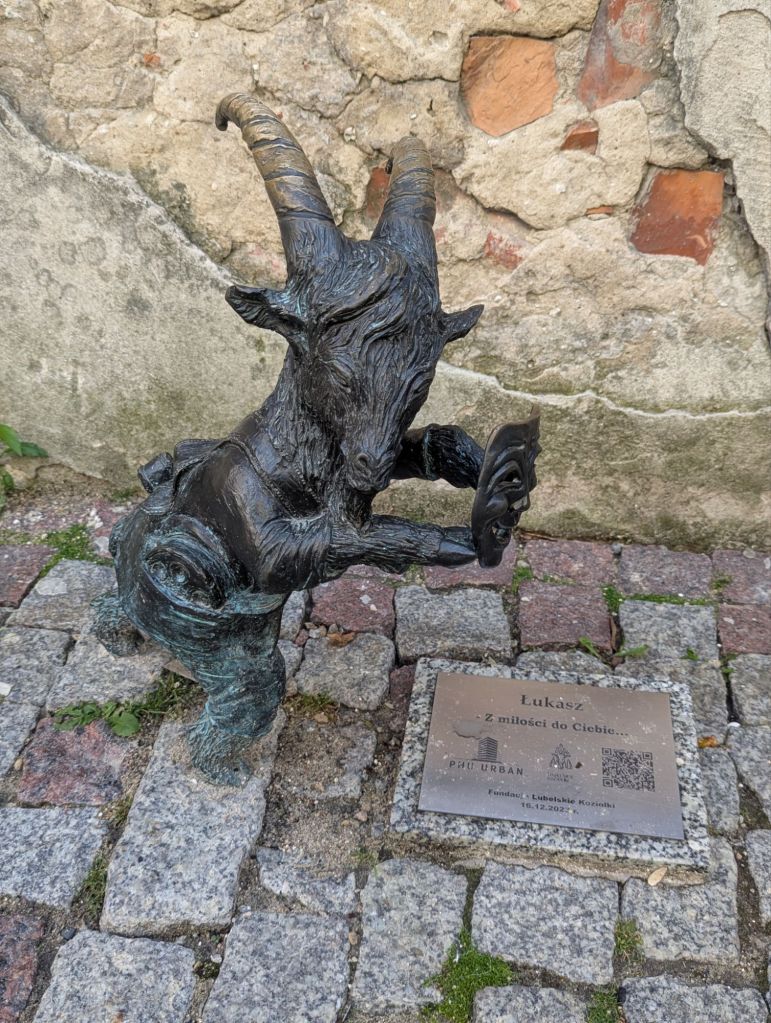
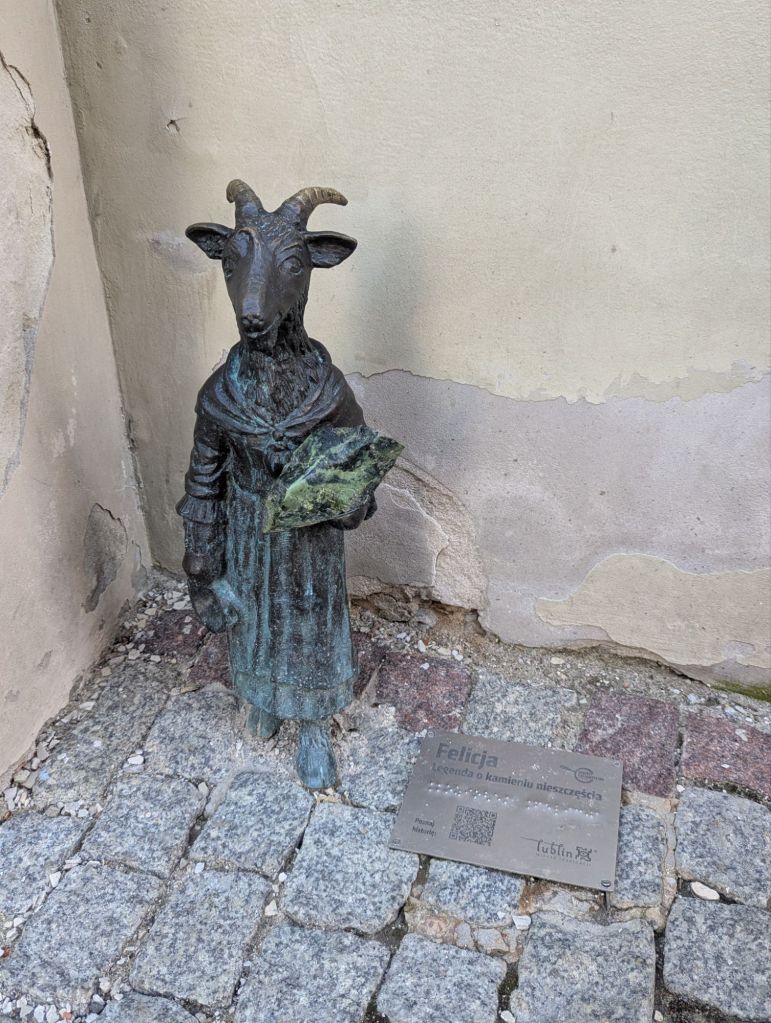
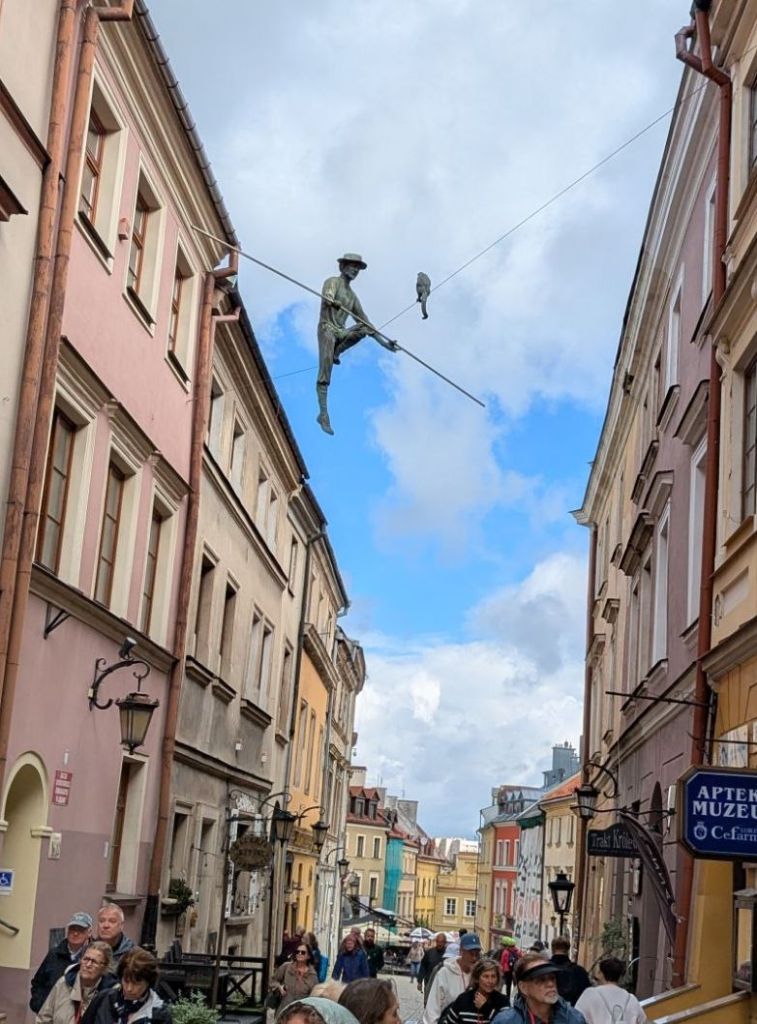
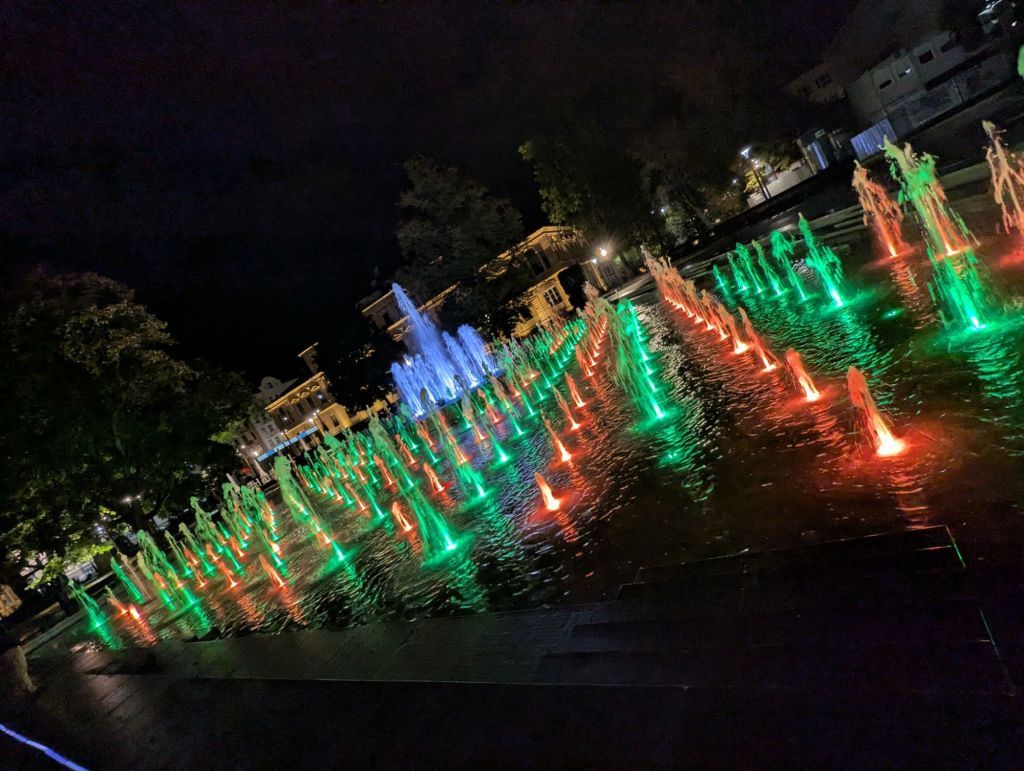
The symbol of Lublin is a goat (silly legend) but now there are many representative goat statues tucked in various city corners. Lublin hosts some fun festivals, most recently for magicians. Wires are strung up between the old buildings throughout for trapeze artists and aerialists to perform. Our hotel, IBB Grand Hotel Lublinianka, was just outside the old town gate. Upon our return from a brewery dinner we were mesmerized by an entertaining fountain and light display.
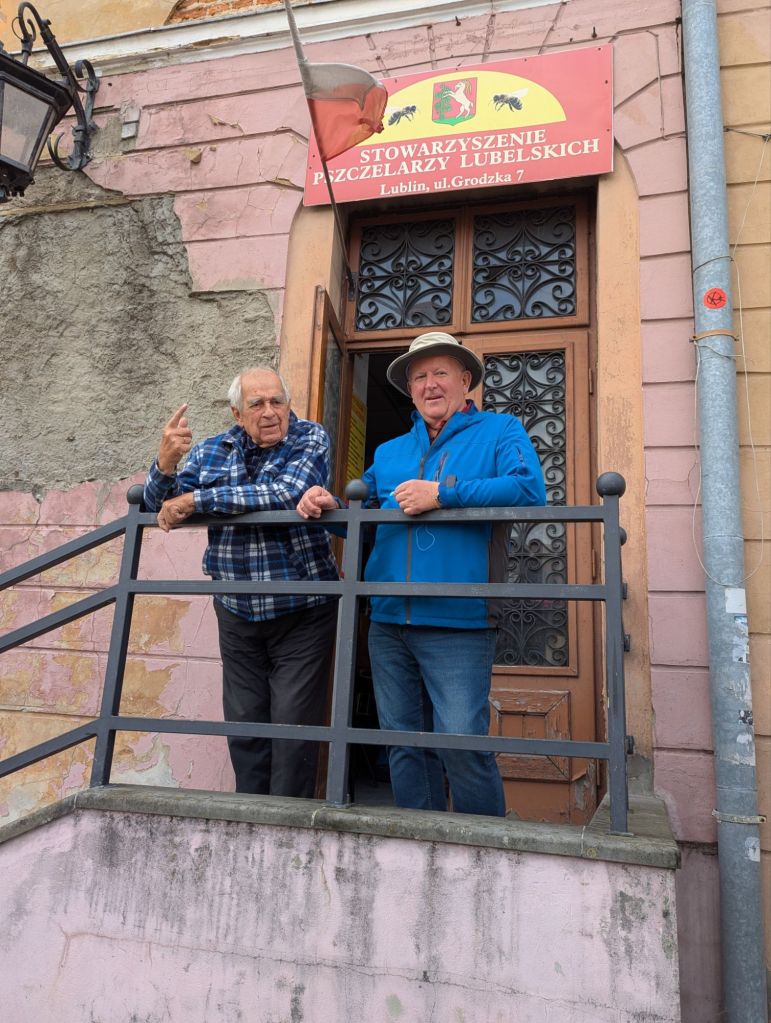
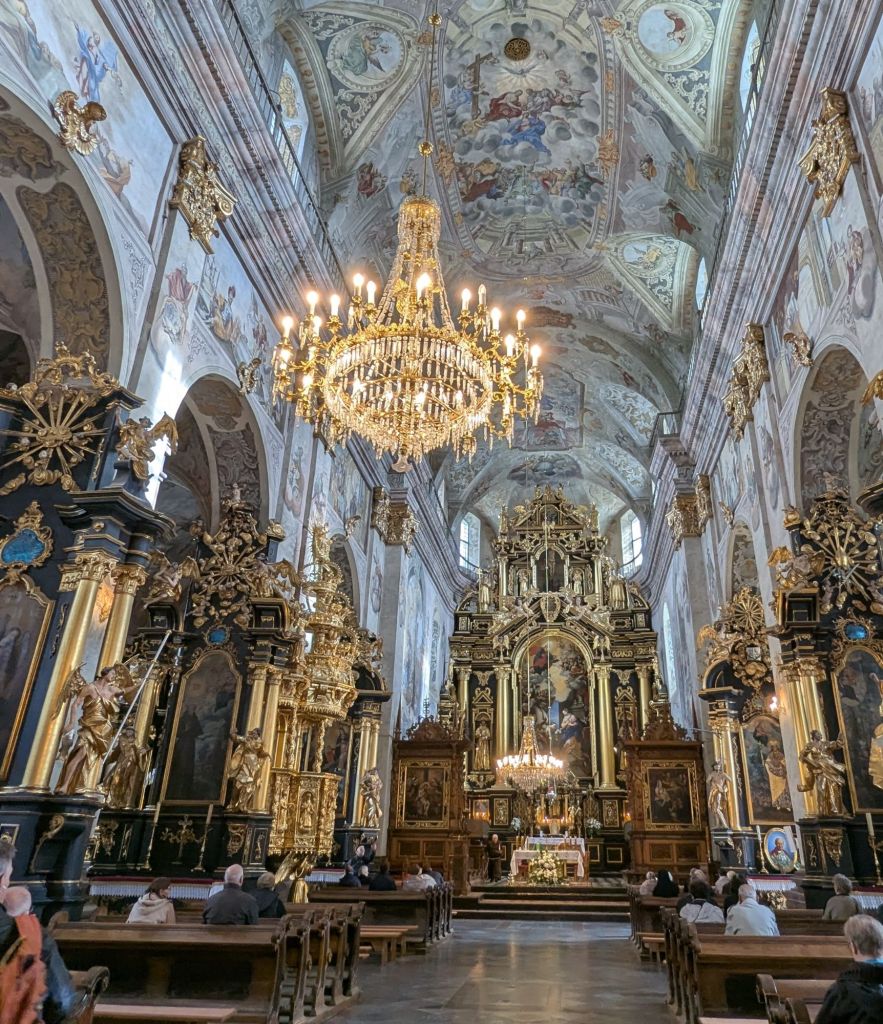
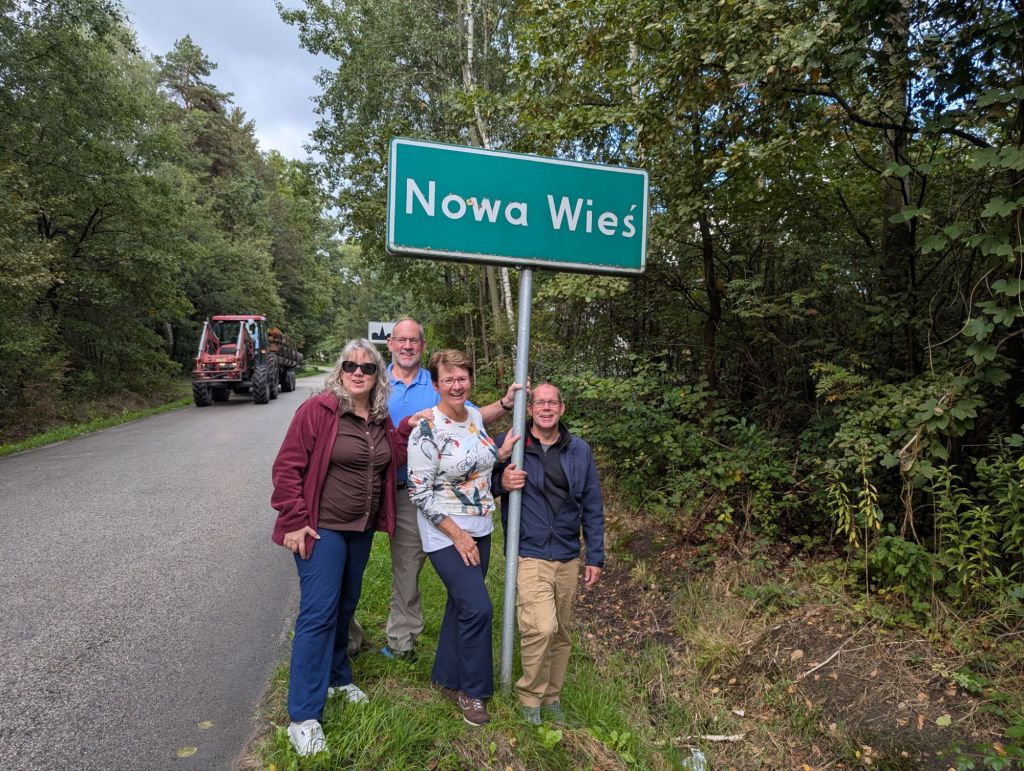
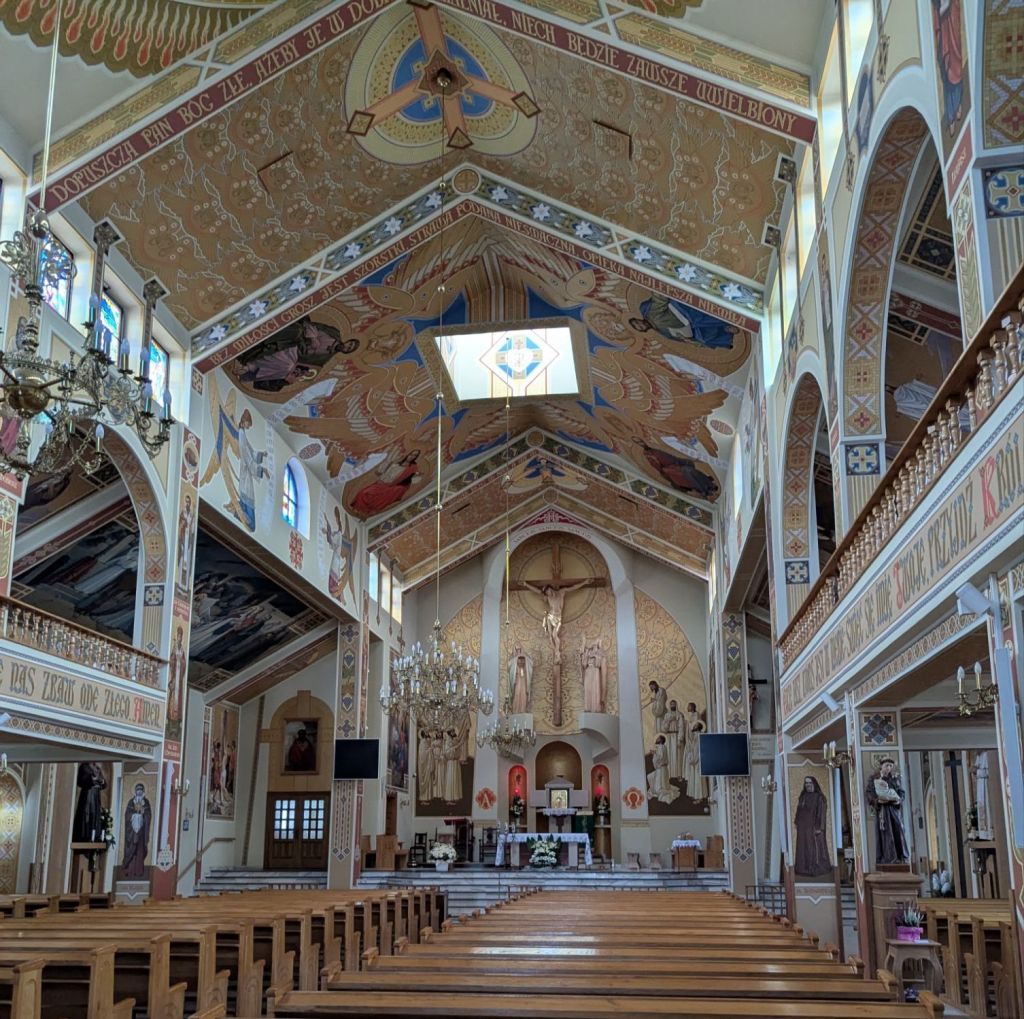
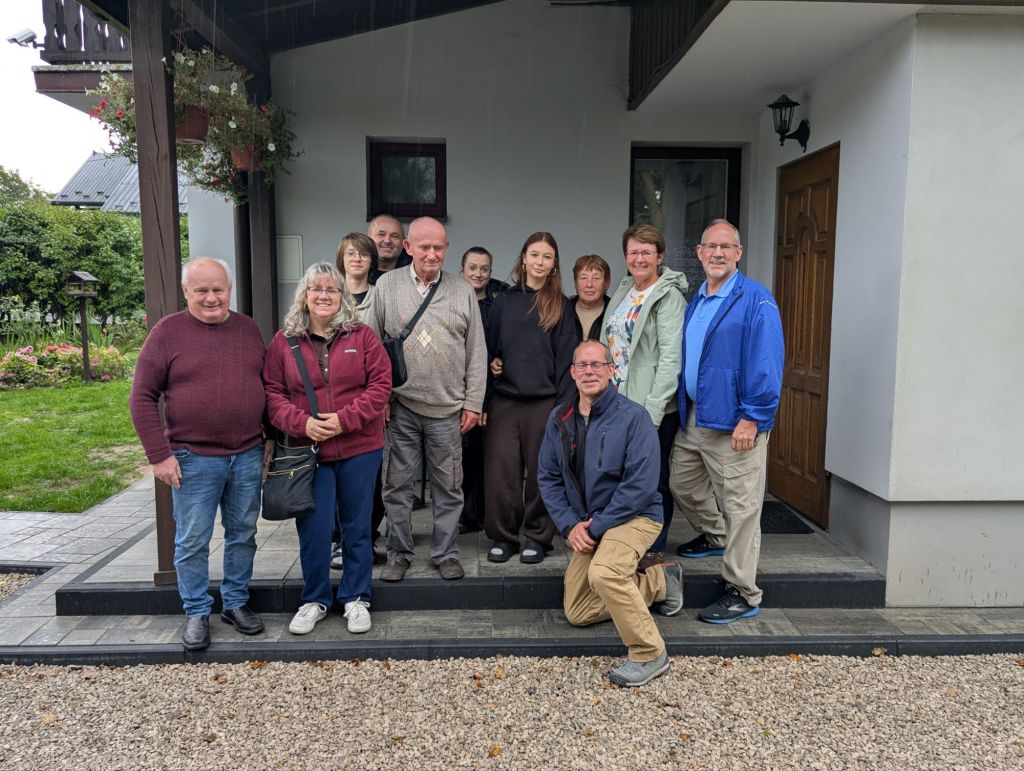
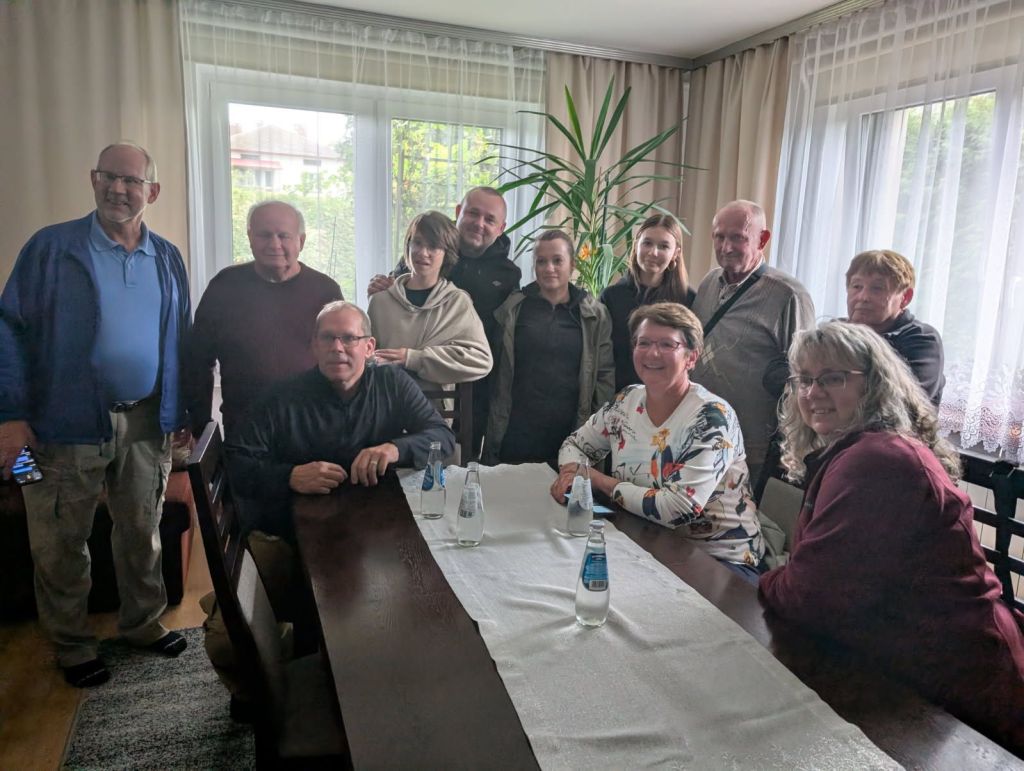
Moving south from Lublin we headed toward Rzeszow (pronounced “jesh-ov”). On the way we stopped at Lezajsk, near to the town of Wegliska where my father’s father emigrated from. We visited the Bernadine Abbey Basilica of the Blessed Virgin Mary’s Annunciation, an outstanding church and Abbey complex built in the early 17th century where a villager claimed a siting of Mary in a tree trunk. The gold and black baroque decoration was gorgeous. This may have been the mother church of my grandfather’s family, but seems unlikely that my Ellis Island-arriving ancestors ever set foot in such a spectacular church. We continued on to Rzeszow, the largest city in southeast Poland. We dropped our bags in the labrynthine hotel, the Bristol, and got in a minivan driven by Robert, a Canadian/Polish transplant. With an address on an envelope written to my mother years ago we headed out of the main city towards Nowa Wies where my mother’s ancestors were from. When last we were in Poland, 2 of my sisters and my mom and I got in a taxi and showed up at a distant cousin’s house, unannounced. We spent a couple hours communicating between a young cousin who knew English and my Mom who knew Polish, with help from a bottle of vodka. We were about to do it again: we visited a local church and cemetery before Robert realized that maybe we should find the address of the house, which he did. Upon arrival we met an old man and young boy and girl at the same house we visited 23 years ago. Calling the rest of the family home (they were mushroom picking), we had a little reunion. An album was produced with a photo of us 23 years younger! Emails exchanged, we left. A short visit before the vodka was poured.
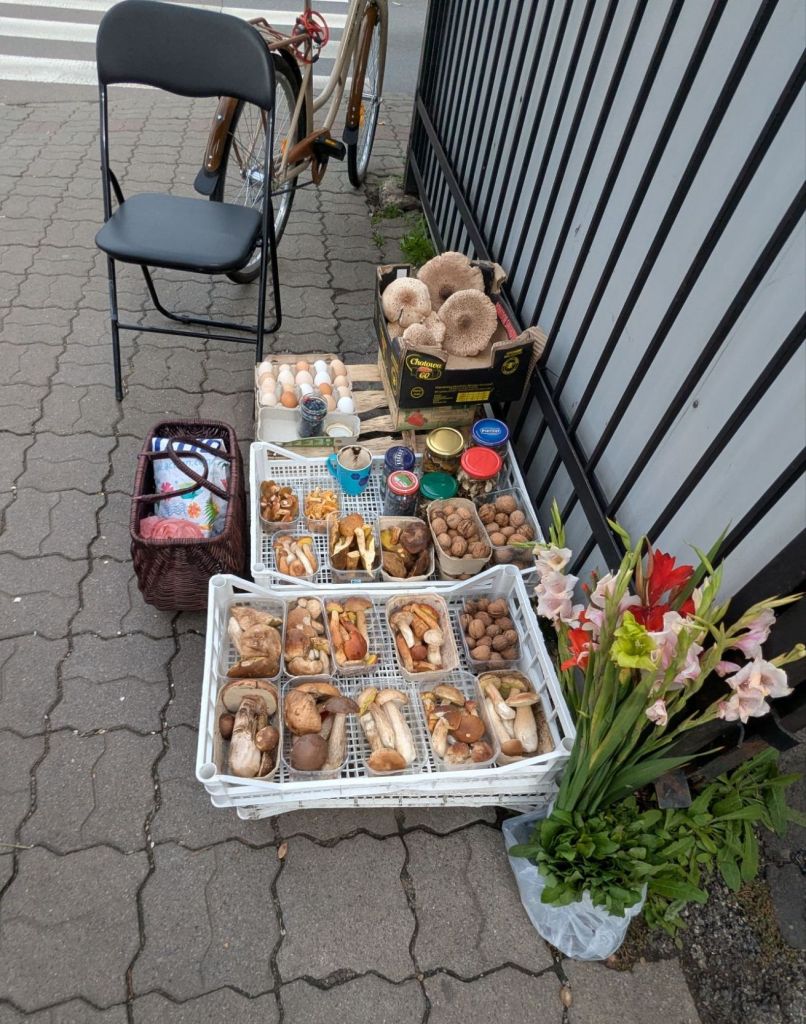
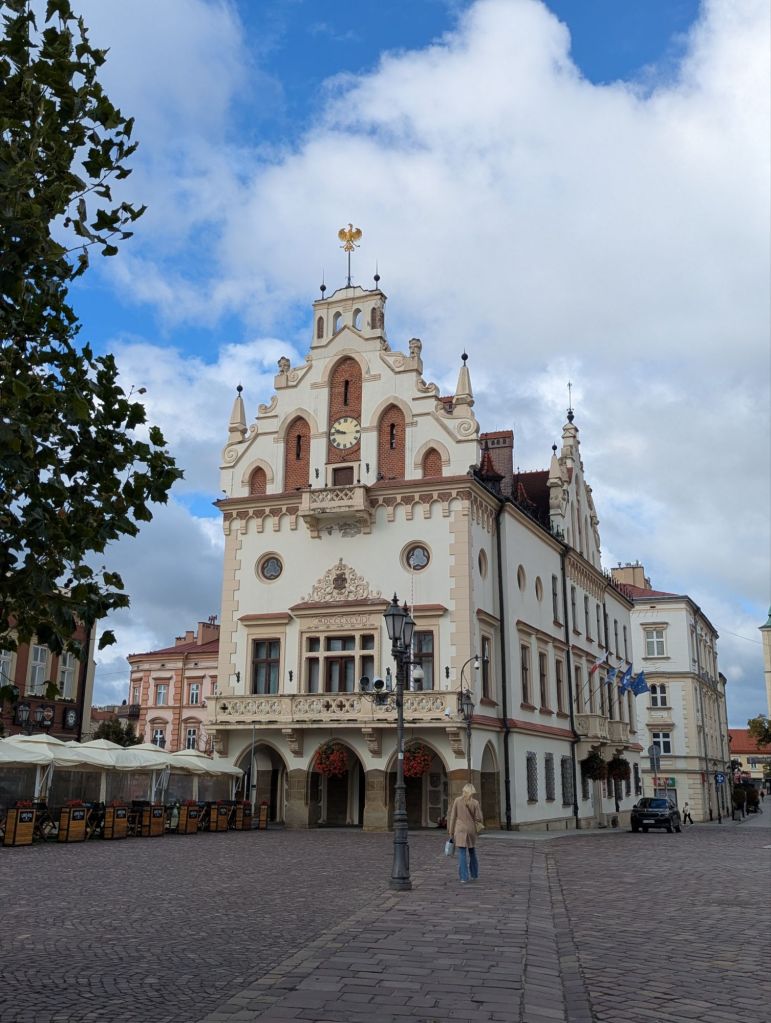
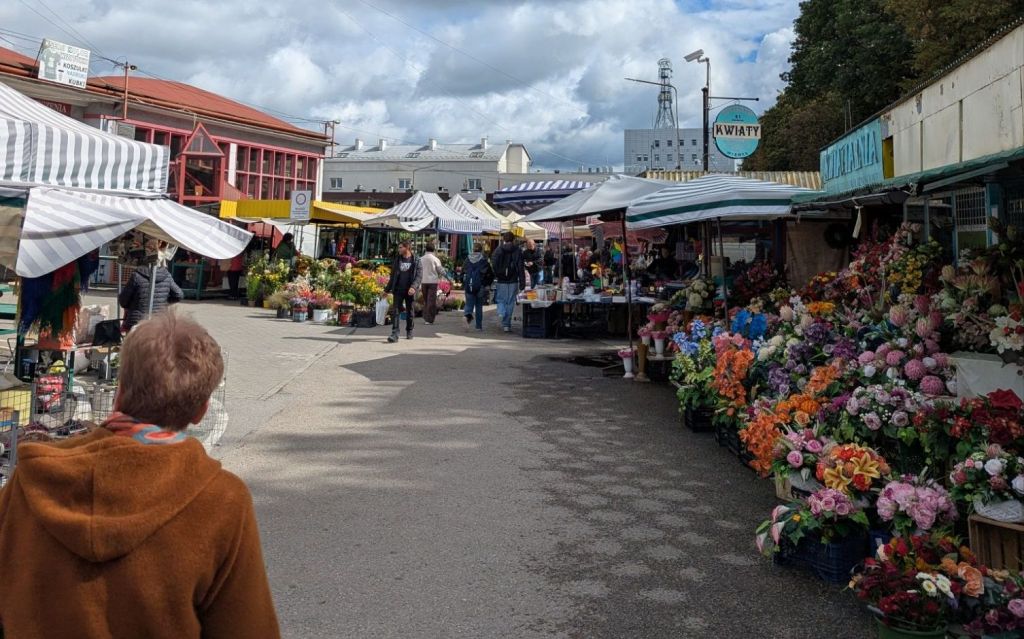
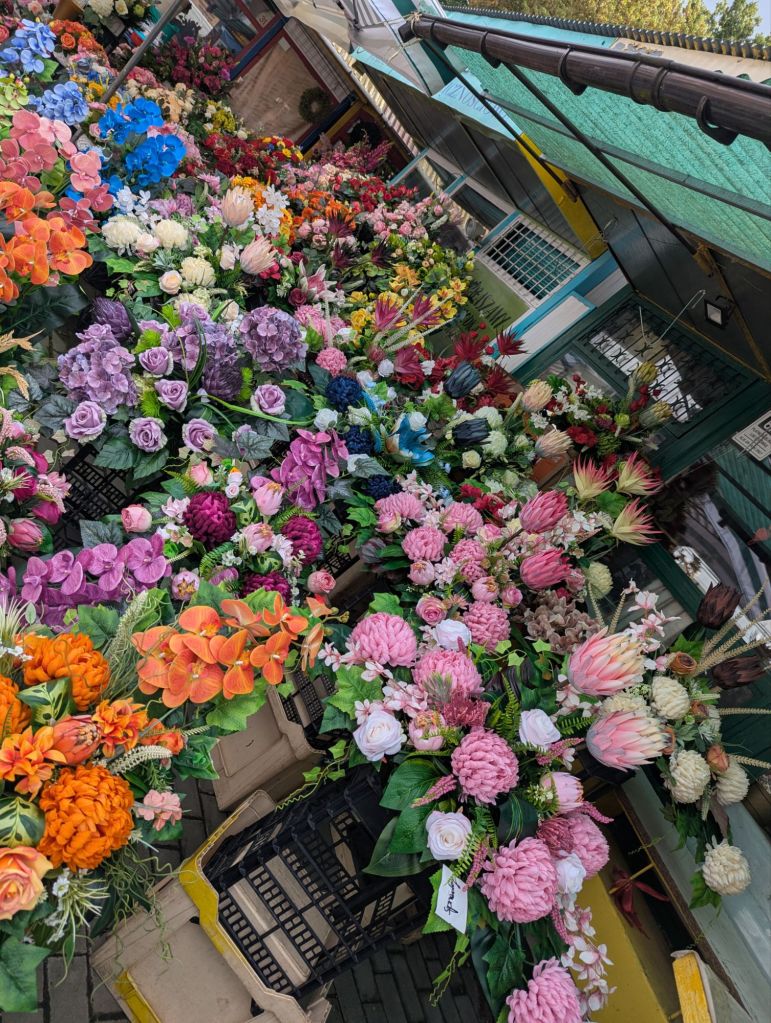
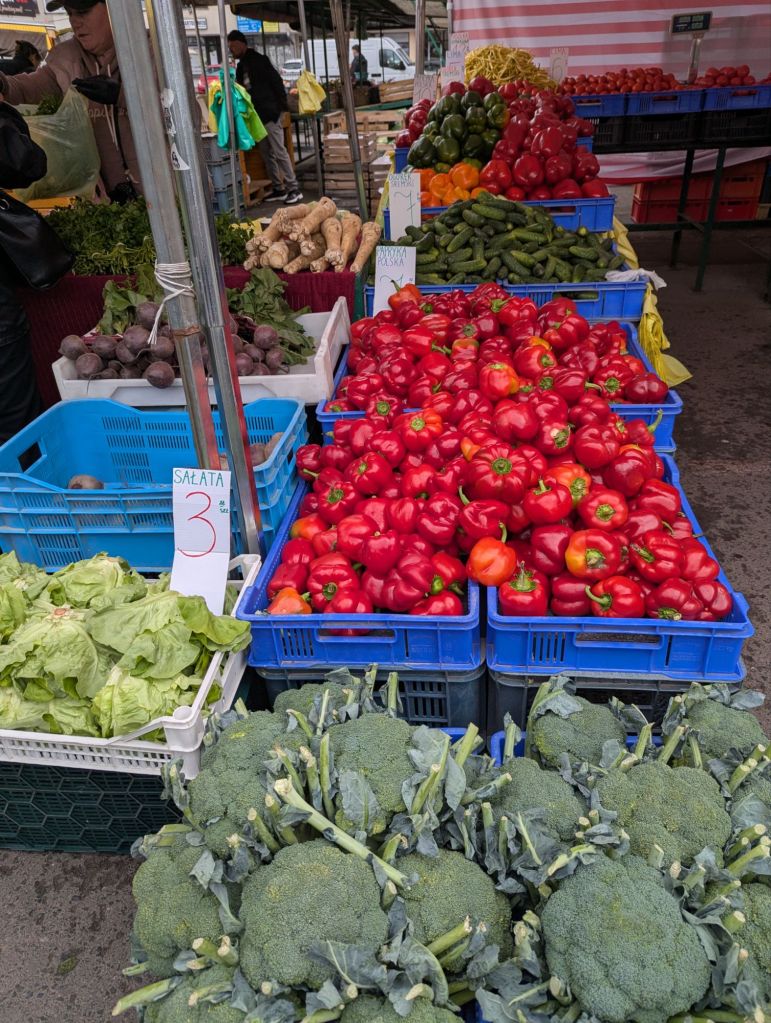
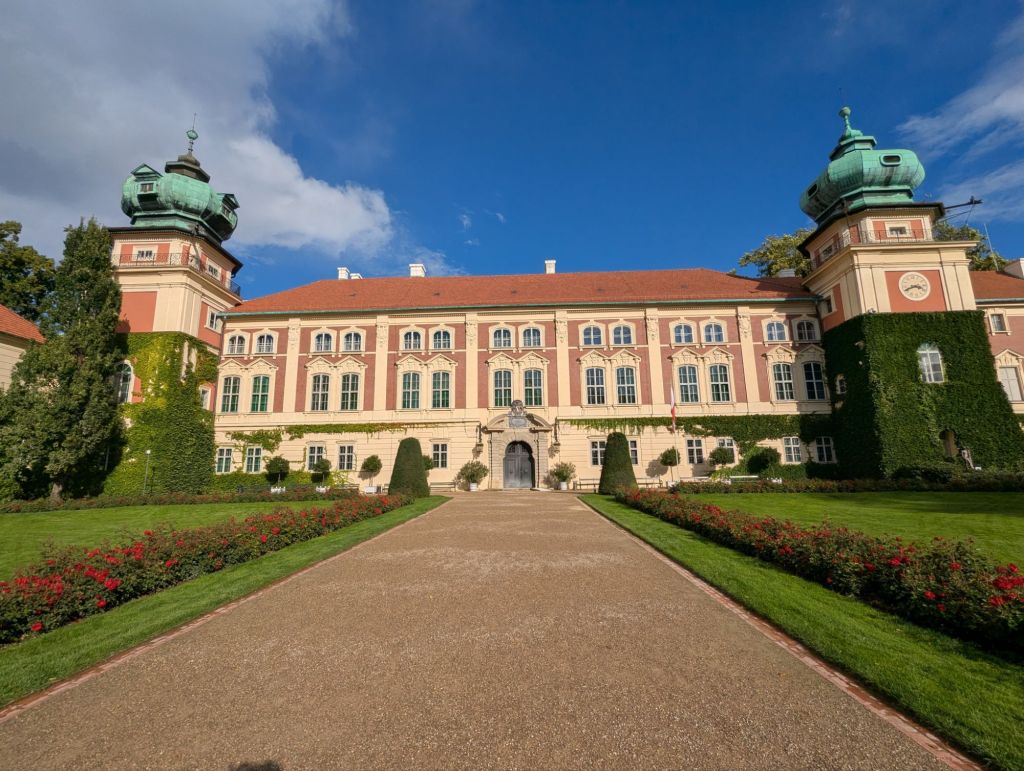
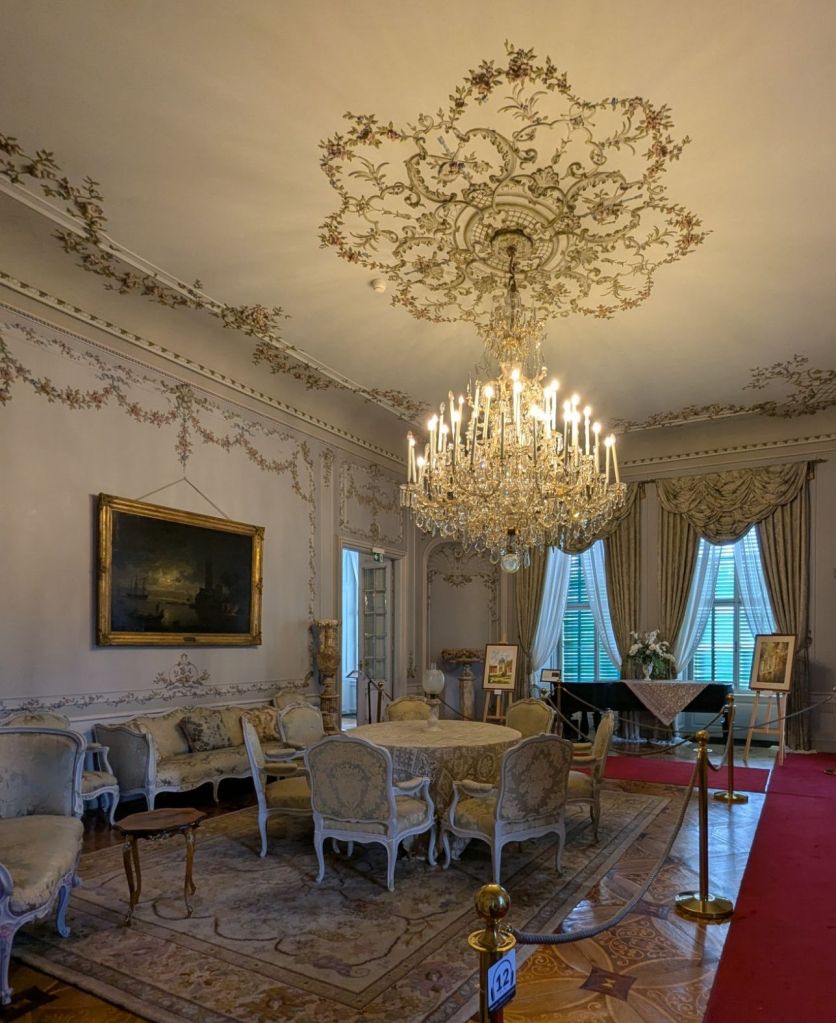
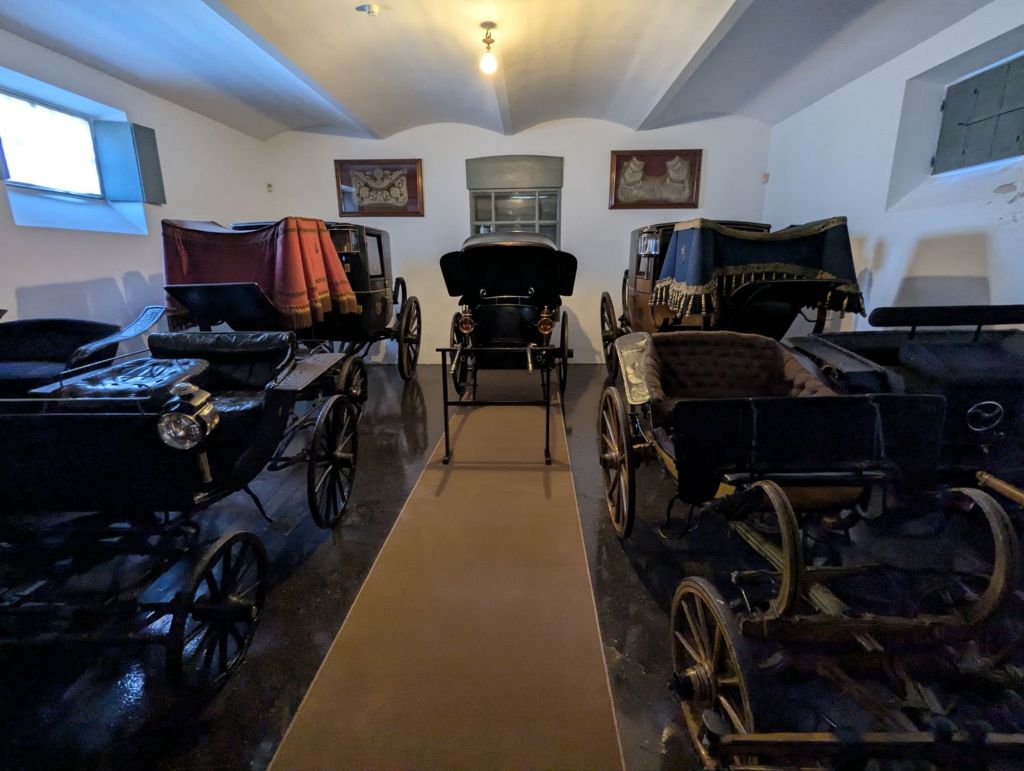
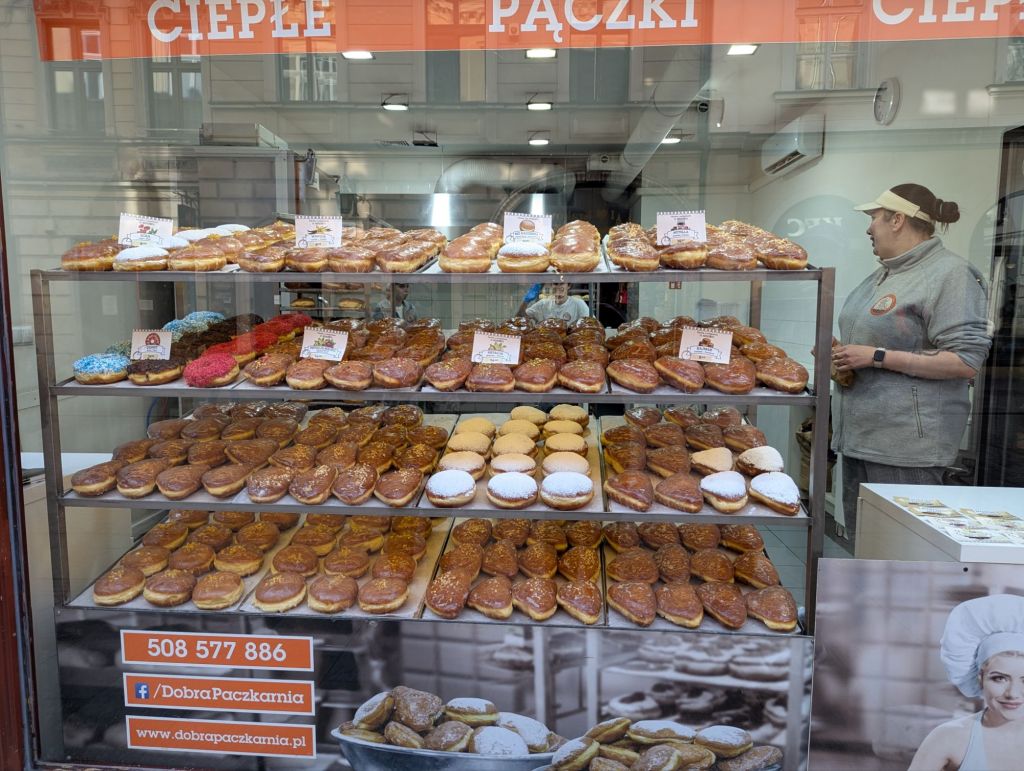
The next day we had a walking tour of Rzeszow. Like many of the towns we visited, baroque and gothic buildings lined narrow cobblestone streets with busy shops: paczki shops, Wisniewski bars, kebabs, bakeries, souvenir shops, boutiques, and the like, all very walkable. Greg and I also visited a local market with stalls offering beautiful vegetables, fruit, flowers galore, mushrooms, socks and undies, and beautiful baked goods. I think I’ll remember baked goods and flowers most of all from this trip. Later we visited the Lubomirski Palace in nearby Lancut with beautiful woodworking, furniture, artwork, and surprisingly, an amazing collection of carriages. There were carriages for every purpose and some just for fun and all beautifully maintained. The stables were as beautiful as the house with 2 horses still in residence.
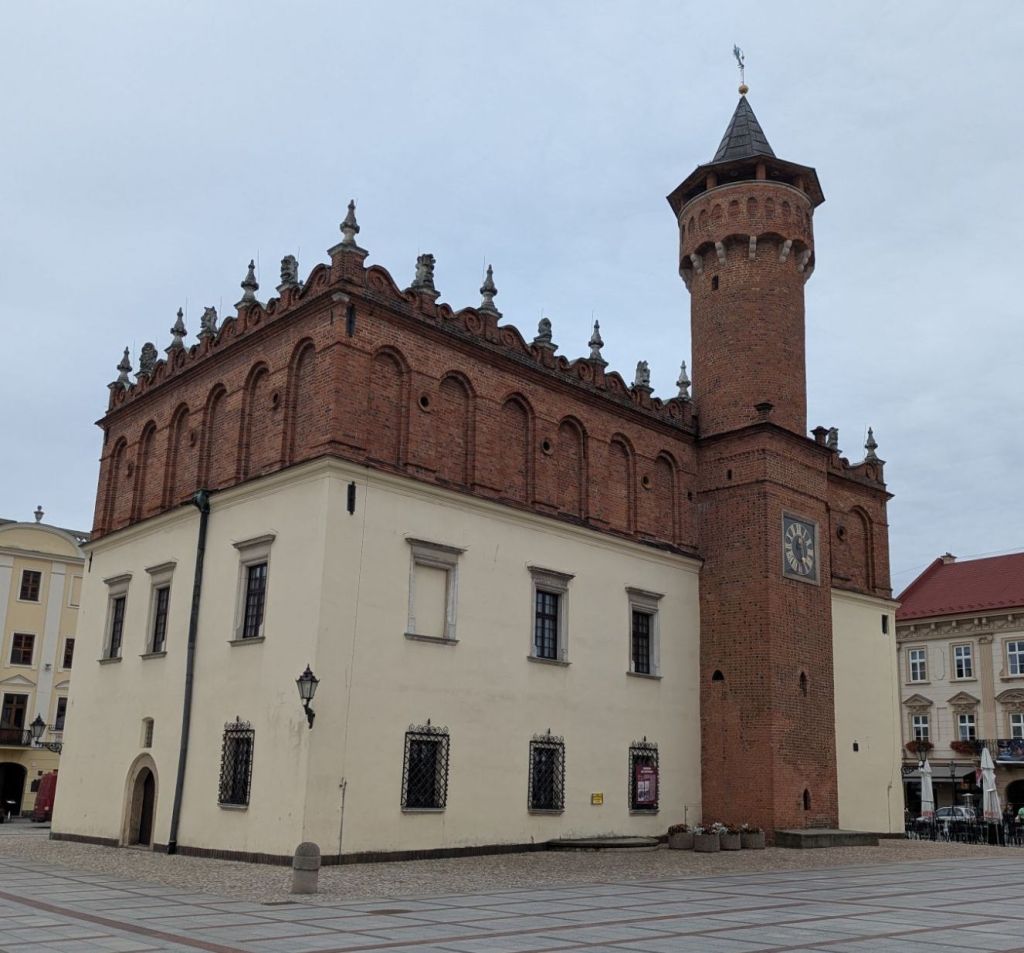
Moving further south and west away from the Ukraine border we stopped at Tarnow for lunch. A tiny, old village with original gothic and baroque buildings and a 13th century church was perfect for a movie backdrop, which indeed, they were filming. We couldn’t explore everywhere so wandered where we could, lunched (meat) and left.
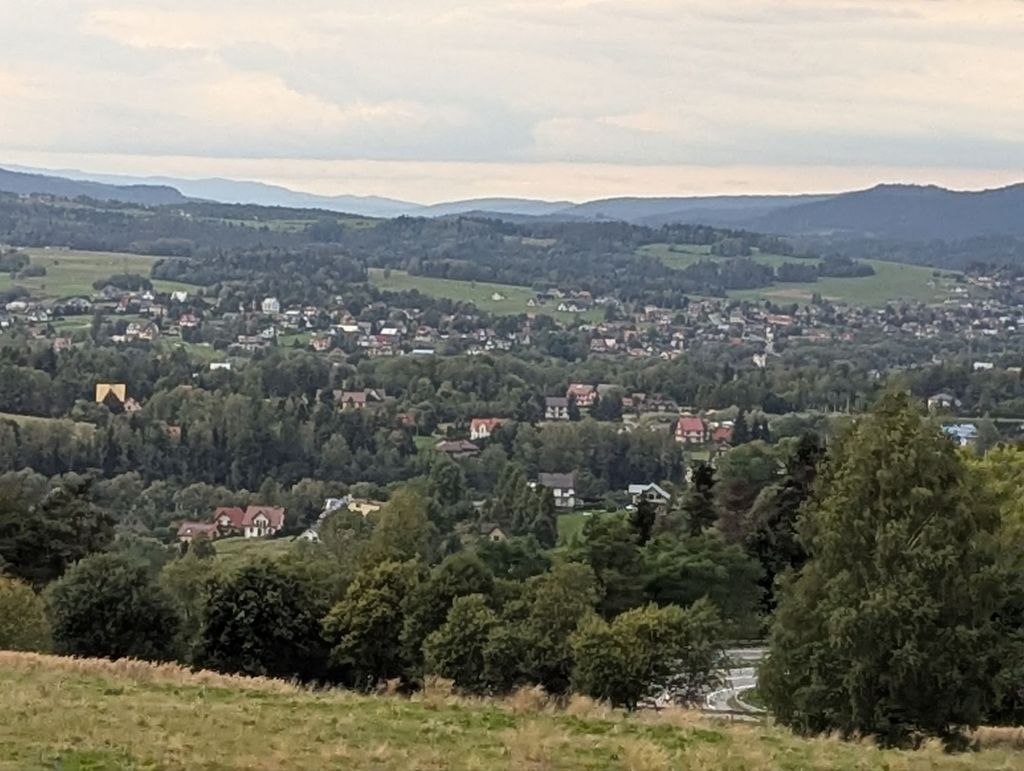
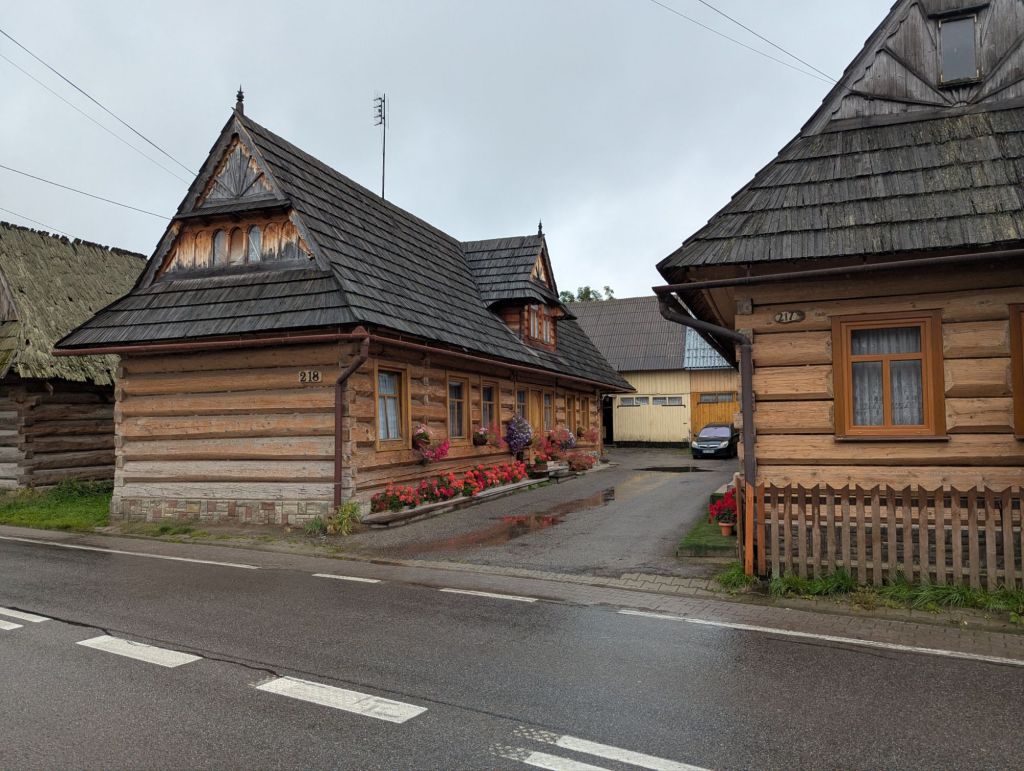
A few more hours of driving progressed through flat farmland to rolling hills with villages nestled within to mountains with taller snow capped peaks in the distance. Zakopane! The land of wooden houses. Gingerbread wood chalets with steep roofs, huge overhangs, and intricately carved details lined the streets. Even newer homes mimic the unique style. We dropped our bags at the hotel, the Nosalowy Park Hotel and Spa, and headed out to the wide walking boulevard lined with bars, restaurants, cheese kiosks, more paczki and Wisniewski vendors and finally settled on a tiny goralski cafe. None of us were hungry but we enjoyed bigos, goulash soup, and kielbasa anyway. Oh, and beer. A gorale band played for the crowd. Here, the locals are “Highlanders”, descended from shepherds, and have more in common with Slovakians and Romanians than Poles. “Gora” means “mountain”, “Gorale” are Highlanders. Their music is more fiddle and bass, not brass, clarinet, and accordion. Their dress is different too. Wisniewski shots to end the night and back to the hotel where the parking lot was now filled with Porsches and a Rolls Royce. Oligarchs?
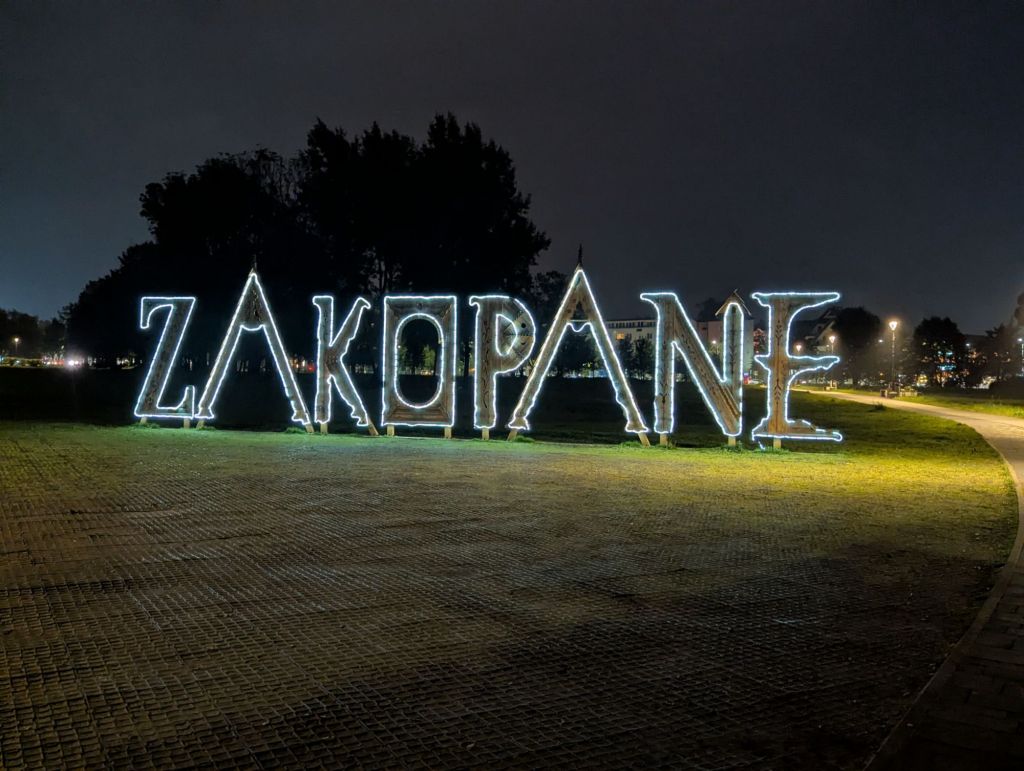
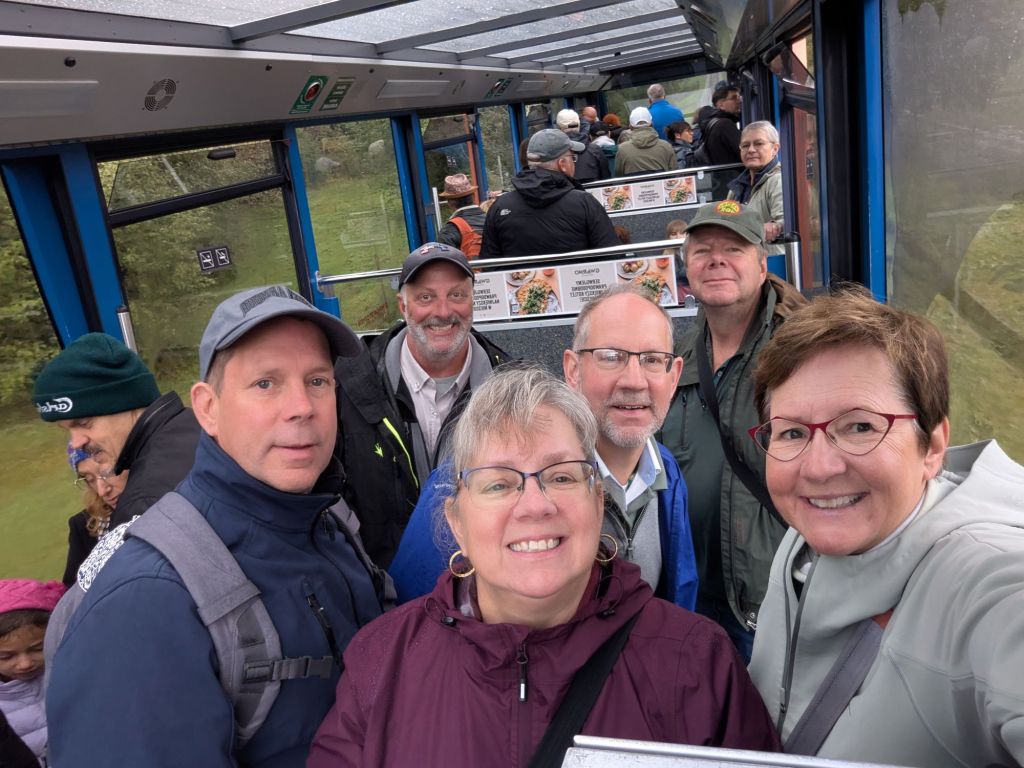
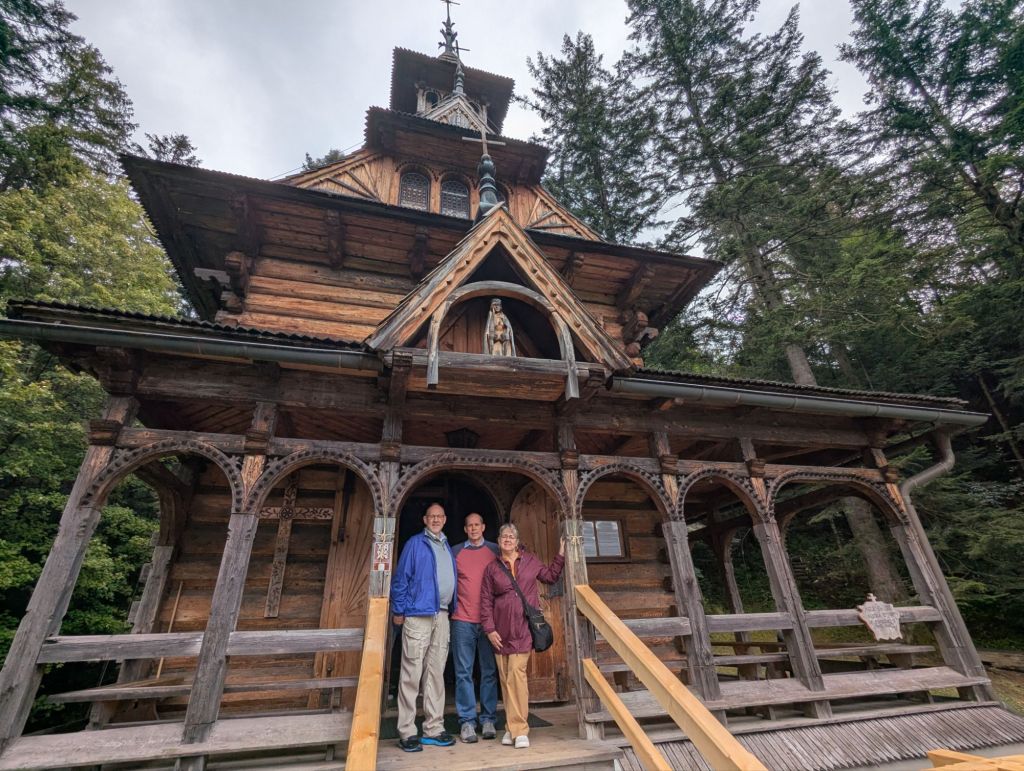
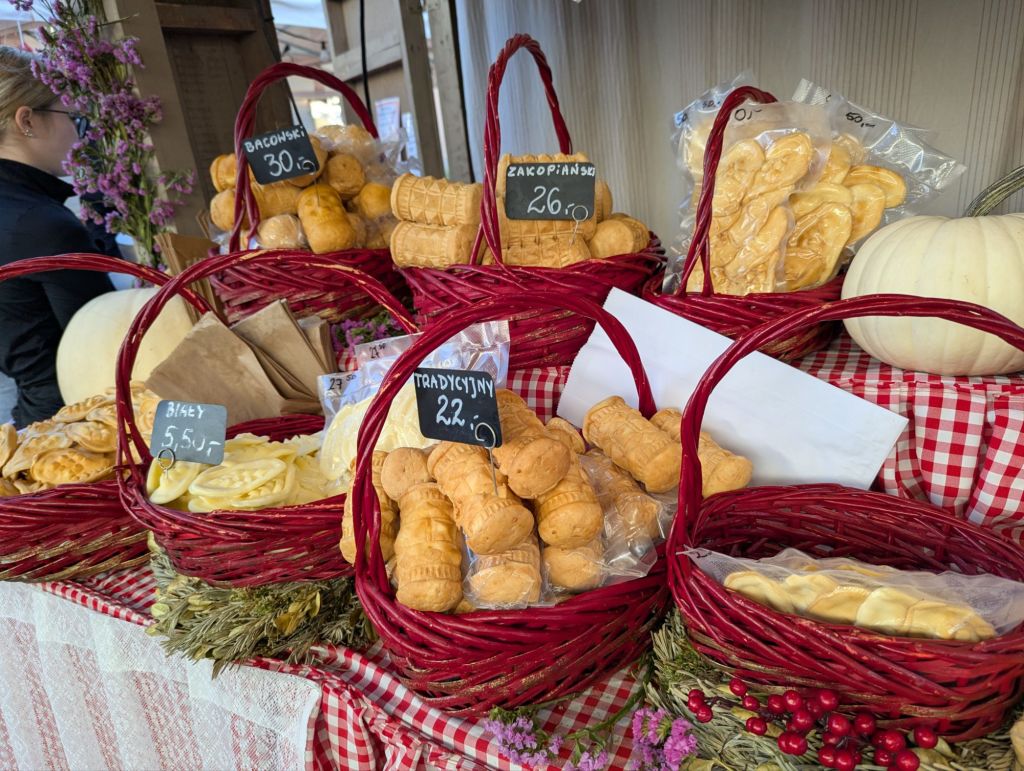
The following day we visited an old, highly decorated wood chapel, a landmark in the Tatra National Park and then headed out to visit a woodcarver in Chochołów, a beautiful village of over 100 tiny timber frame chalets. We also sampled smoked sheep cheese, Oscypek, often molded in a football shape. (A little too smokey for me). Returning to Zakopane proper, we took the funicular up the mountain to get a bird’s eye view of the area but it was still cloudy and rainy. After a summit drink from a hopelessly overwhelmed server, Christine and I headed down the funicular for a tour highlight: shopping!!! The market stalls at the base of the mountain offered good quality leather goods, Polish cultural costumes, hiking clothes, chatchkis, and food. So many people were out strolling and shopping. First stall, first try-on, I got a beautiful shearling lined leather coat. We shopped the entire market for Christine’s coat but ended up back at the first stall for hers, and at $5 cheaper! She and I shopped for other souvenirs until it was time to return to the hotel and enjoy the hot tub spa. Dinner was at another Gorale restaurant with an excellent Highlander band. The entertainment, scheduled by our tour operator, has been a warm and cozy touch. John often pulled out his accordion and played along with the locals.
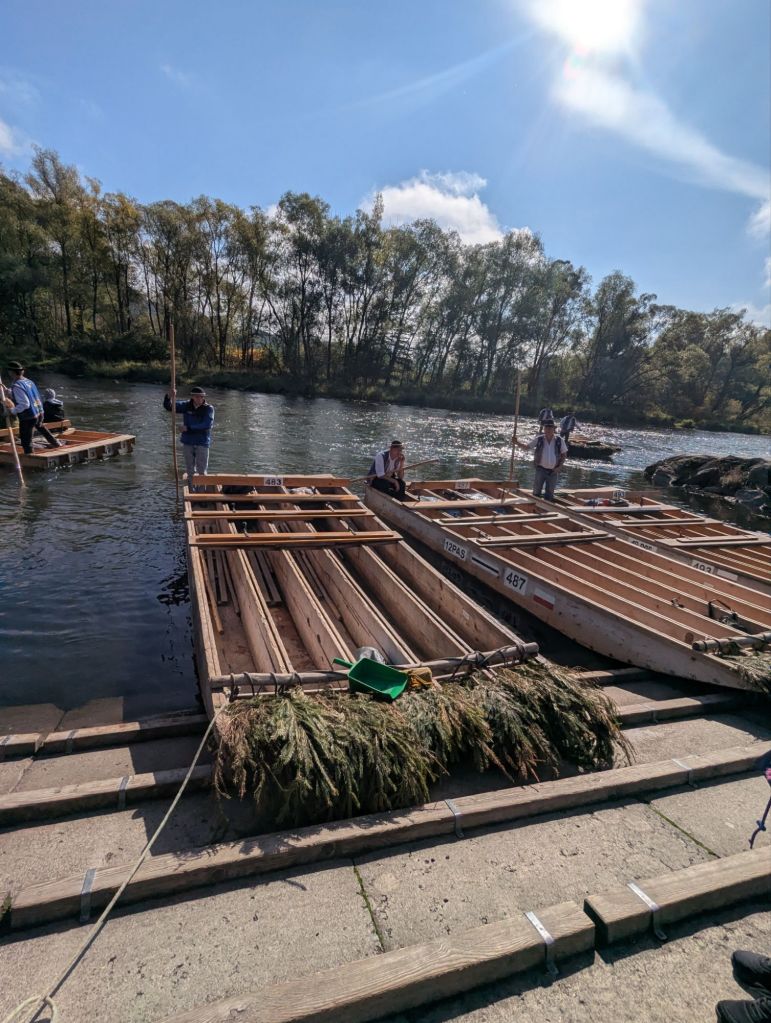
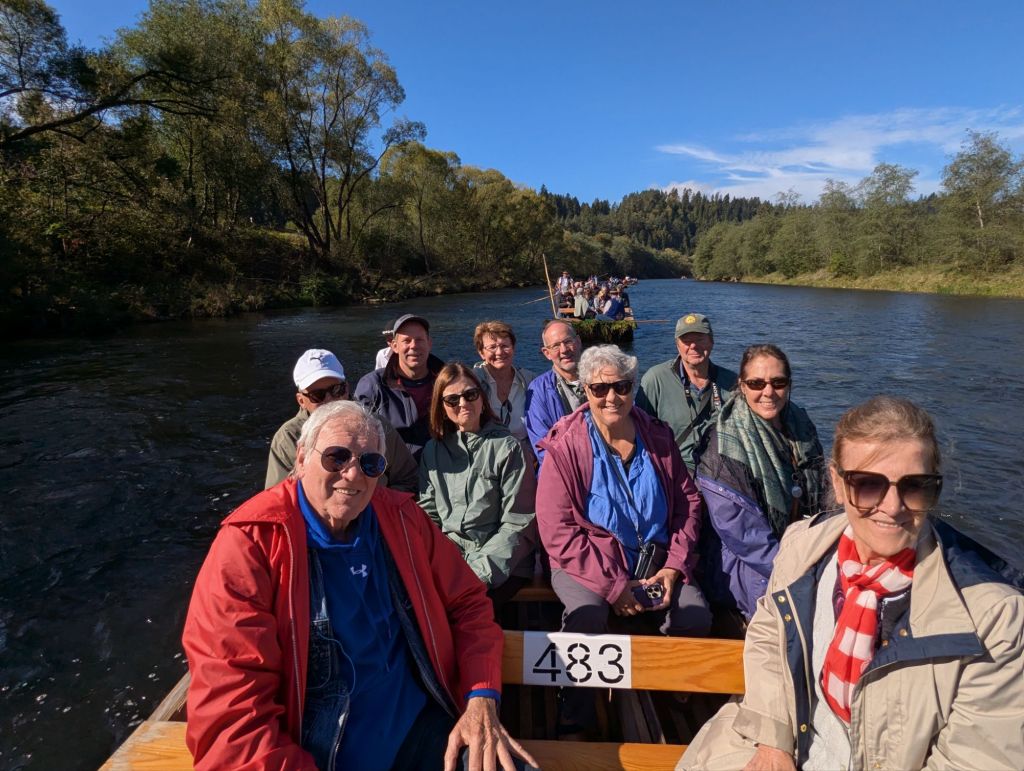
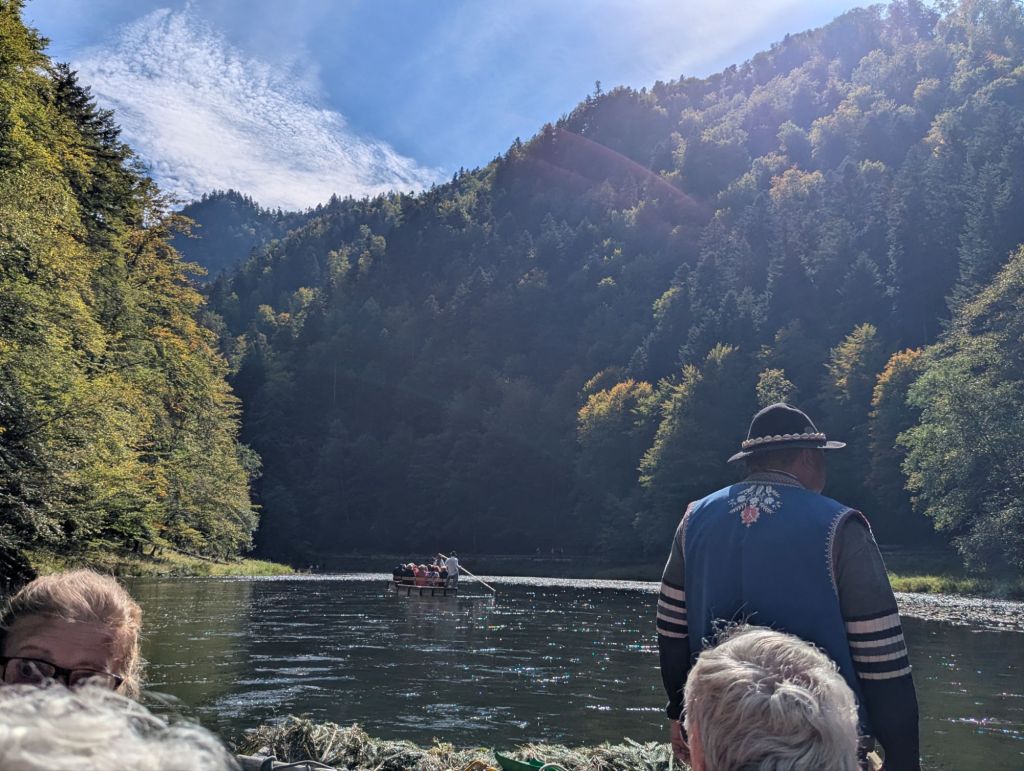
The next morning we headed out in the sunshine which we had missed the last 2 days. Driving away from the mountains we got excellent views of the peaks and the villages nestled in the foothills. Next stop: a rafting trip down the Dunajca river. How fun and lovely to float on 5 pine “coffins” lashed together with 2 local Polish “gondoliers” paddling and directing our craft through the “rapids”. The 2 1/2 hour ride took us between sheer, forested cliffs with Poland on our left and Slovakia on our right. Bicyclists enjoyed pedaling on a beautiful path alongside while we waved and John et al played polka tunes in their boat. A pedestrian bridge connects Poland and Slovakia for access to the bike path. Just carry a passport in case of random border checks! The raft ride was great although about 30 min too long based on my sore butt on the hard wooden seats.
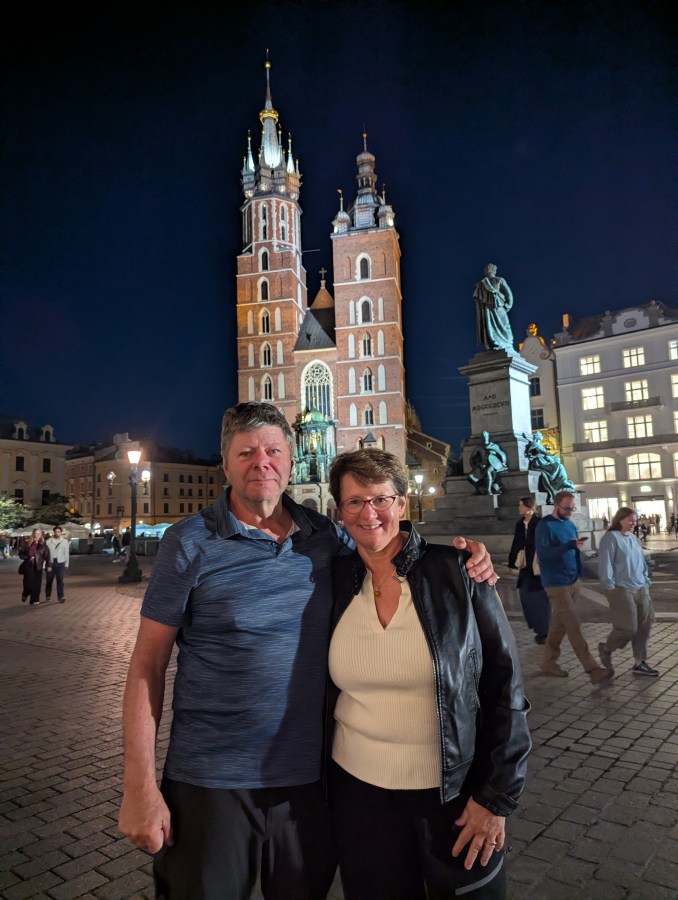
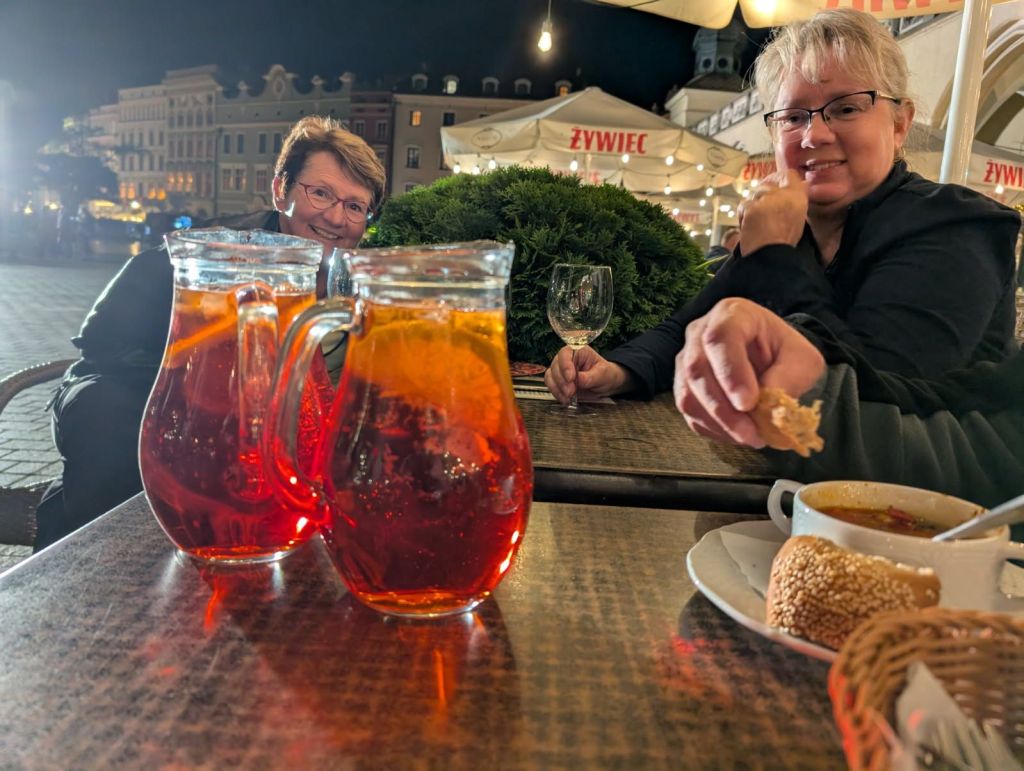
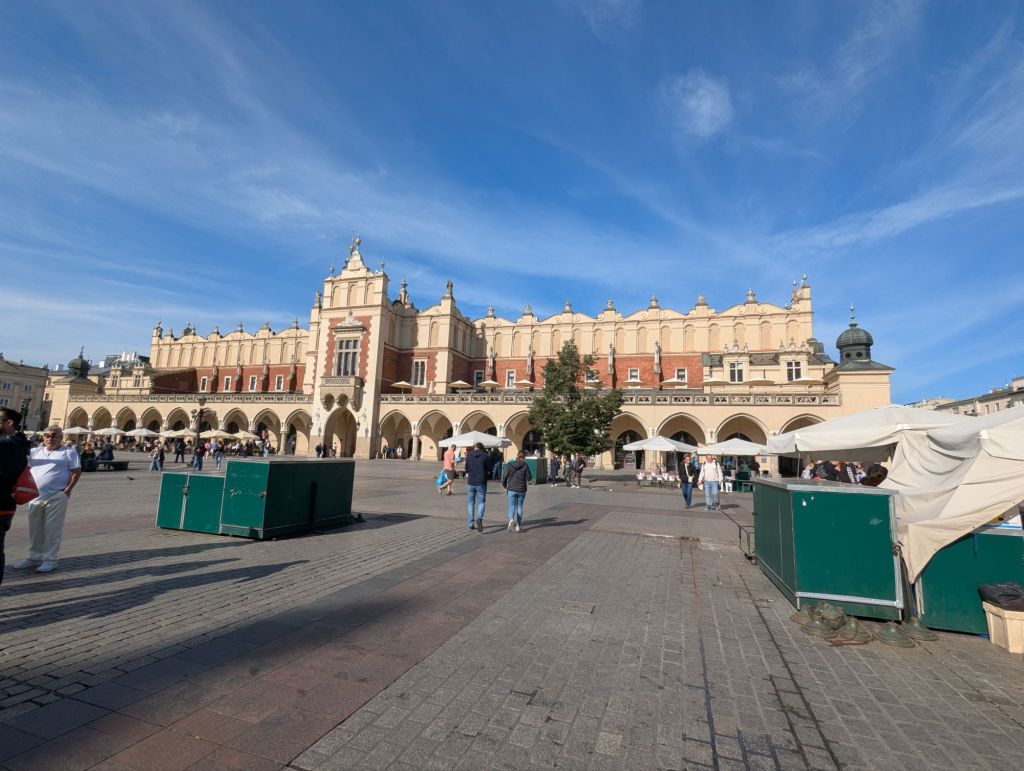
Continuing on through the rolling hills after lunch (more meat, and as with all our meals, preceded by some sort of soup), we finally arrived in Krakow! The Royal Capital of Poland until 1596, Krakow has maintained its Medieval and Renaissance character and original buildings. We walked to the Old Town upon arrival at night to people watch as the crowds strolled and enjoyed the beautiful square. In the center of the square is Cloth Hall, built mid 14th century and still serving as a marketplace, filled as it is with galleries offering amber jewelry, ornaments, souvenirs, clothing, and more. We visited here several times. That first night, however, we stopped for a drink and snack on the square. A “large” Aperol Spritz turned out to be one liter! Four of us gamely finished 3 liters of Aperol spritzes while others worked easily on their liters of beer. Meanwhile, we watched and listened as the Trumpeter of Krakow played his abbreviated tune each hour from the top of St. Mary’s tower. Legend has it that a 13th century trumpeter blew a warning of a Mongol invasion but was shot with an arrow in the neck before he finished his call. The city was saved. The Hejnal Mariacki tune is played by a firefighter from all 4 sides of the tower each hour and on the radio at noon everyday. The thing is, is that the legend is from a book written only 100 years ago by a guy in NH! (Eric Kelly “The Trumpeter of Krakow”). Still, cool tradition!
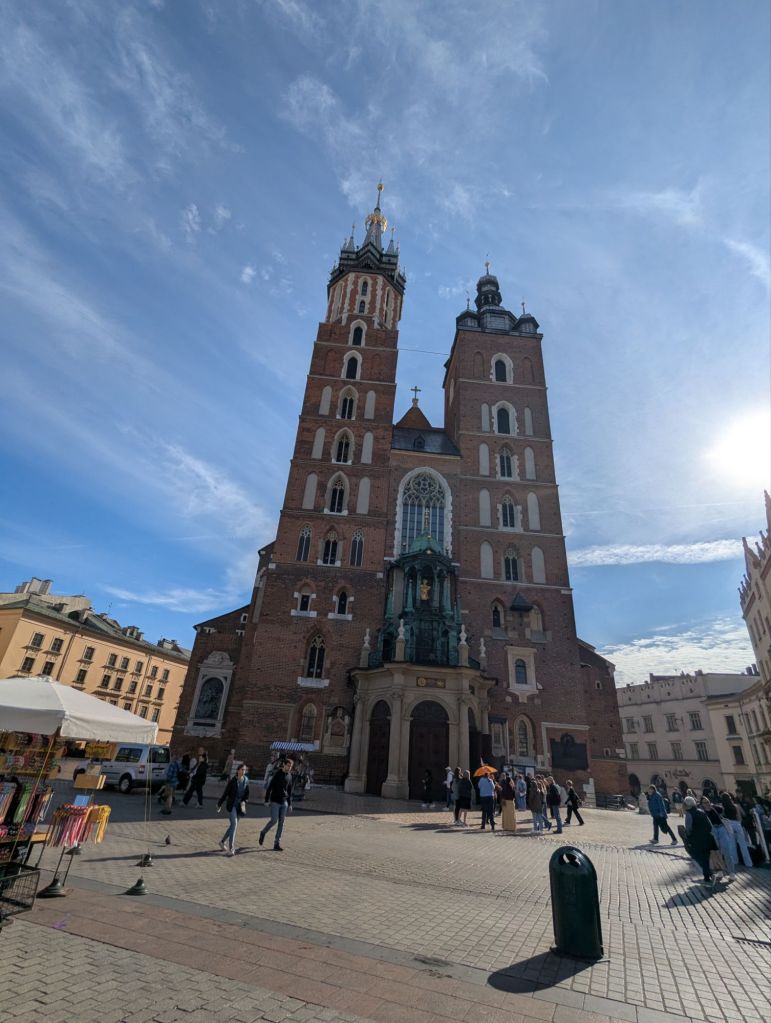
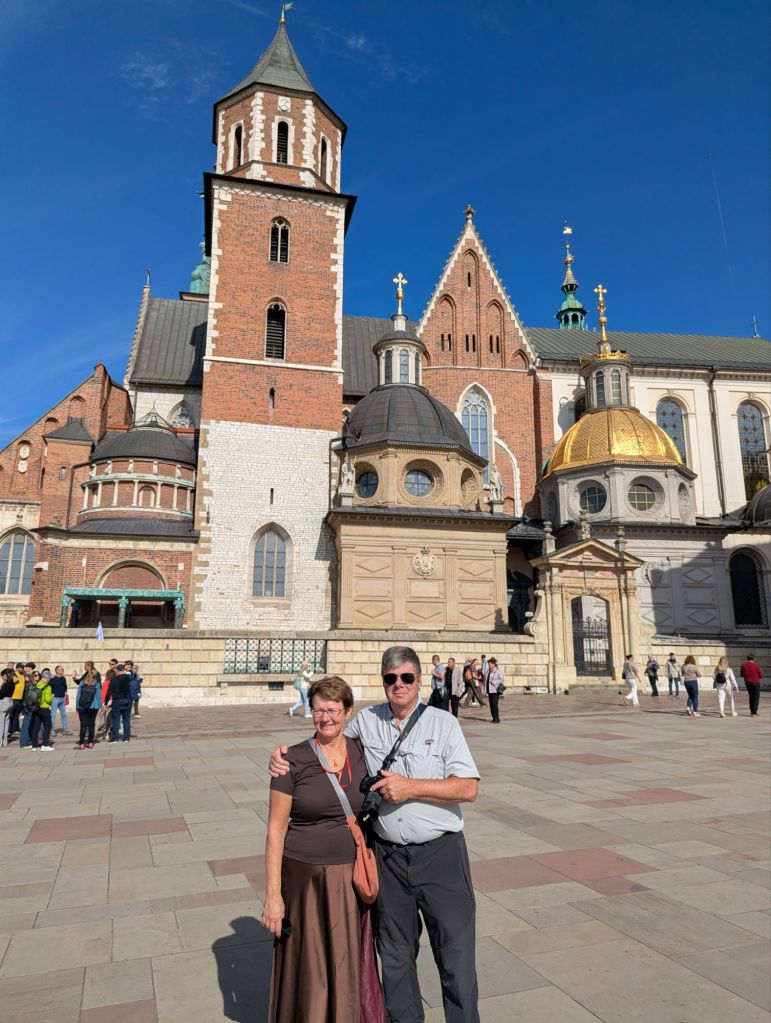
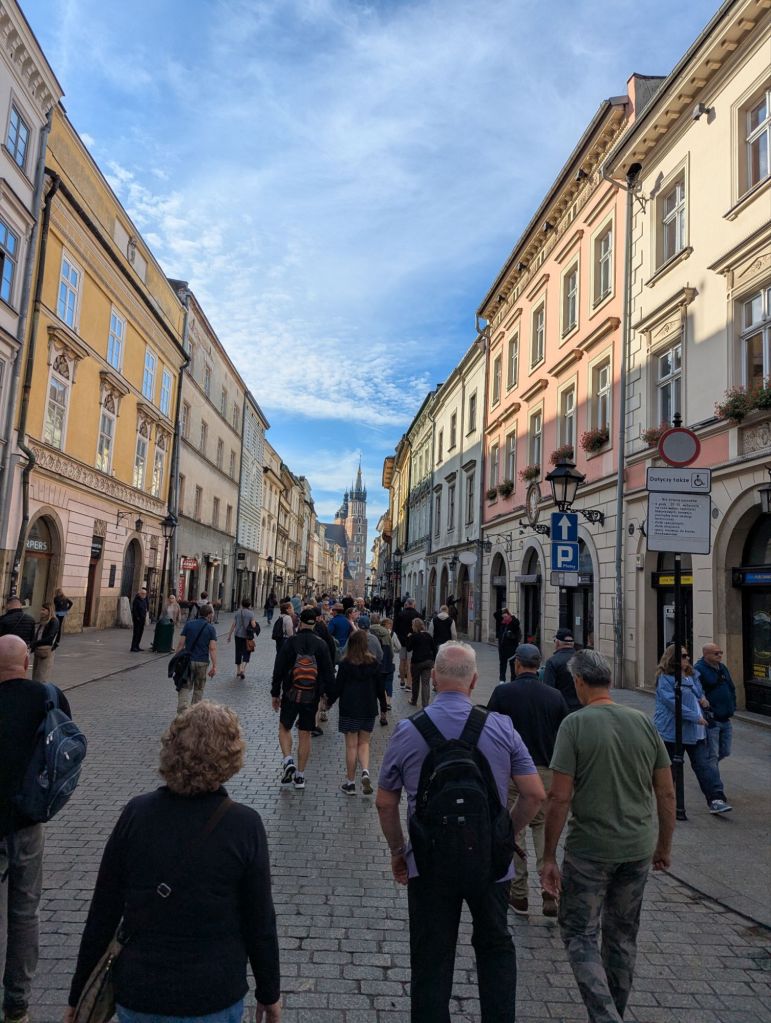
Two full days in Krakow! The weather was fantastic as we began our walking tour: St. Florian’s Gate of the old wall surrounding the city (founded 896AD), Florianska St. Leading to the Old Town Square, and on to Wawel Castle Hill. Here the castle is built on a hill overlooking the city to one side and the Vistula on the other. The cathedral within its walls is a mishmash of architectural styles. We went back later and toured the castle interior but by then we were castled out. Jagiellonian University, one of the oldest operational universities in the world is here. Everywhere we saw churches; there are 200 churches in Krakow proper, some right next to each other!
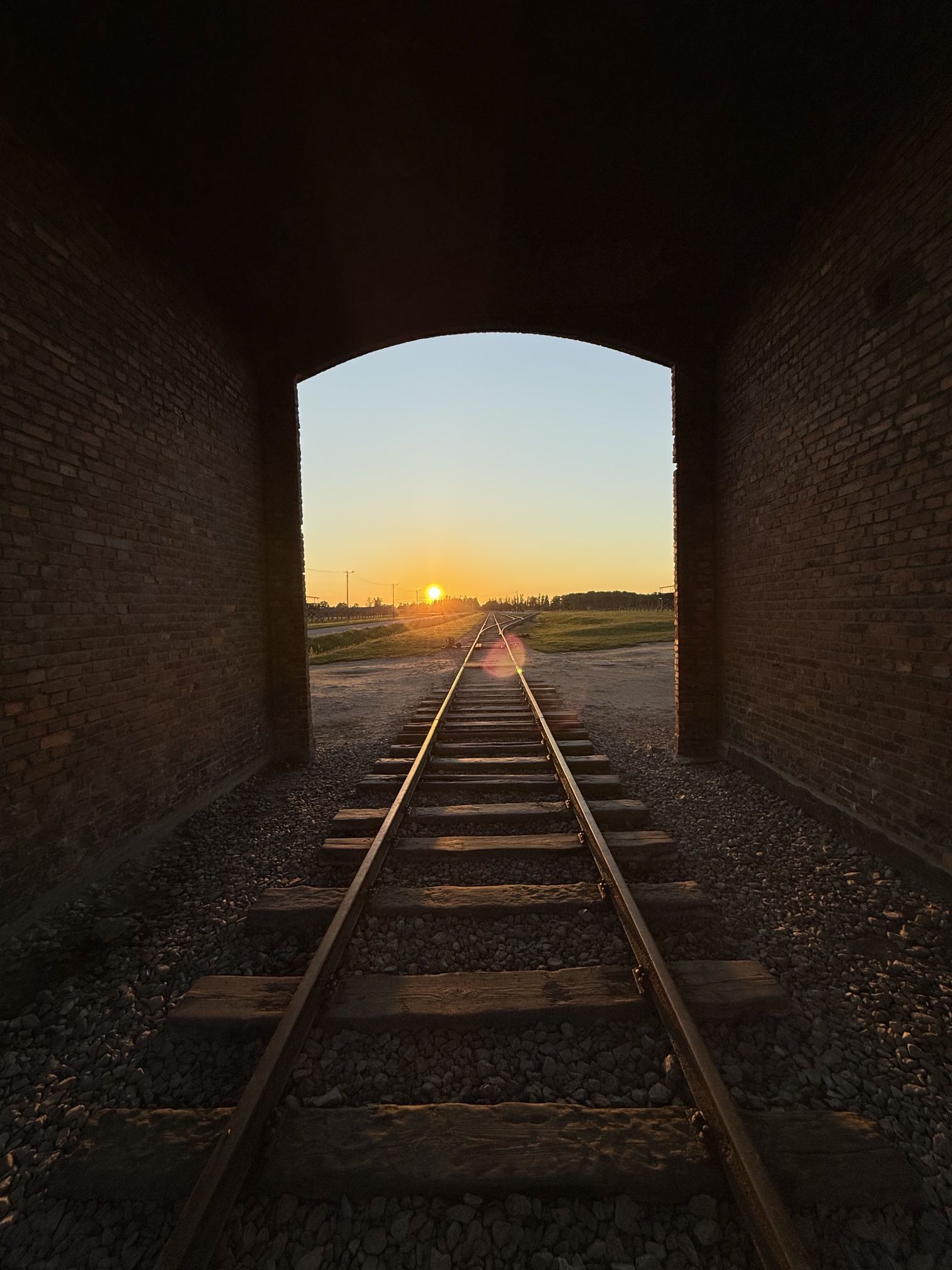
That afternoon we rode about 1.5 hours to Oswiecim, renamed Auschwitz by the Nazis. Walking slowly through a concrete tunnel entrance, prisoner names were read aloud as we approached the red brick barracks buildings. Auschwitz was a Polish army camp redesignated as a prison when taken over by the Third Reich. The first year, 1940, Polish political prisoners were sent here to be held, work, or tortured and killed. By 1941, Soviet prisoners were included. Eventually, in 1942, in Birkenau nearby, former stables with other rustic wood buildings were added to accommodate the Final Solution: the extermination of 1.1 million Jews, 80% of them women and children. In all, 1.3 million people were killed, mostly in gas chambers and then cremated. We slowly filed past a room filled with 2 tons of accumulated hair, another with shoes, or medical devices, crutches and even eyeglasses. These belongings testify to the incomprehensible inhumanity. To make it worse, one week before the Soviets liberated the camp, the Nazis (with Rudolph Hess as commandant) 9blew up the crematoriums and paperwork, knowing their crimes. Seven thousand prisoners were liberated. Only 10 percent of the SS staff were found guilty and punished. No words…
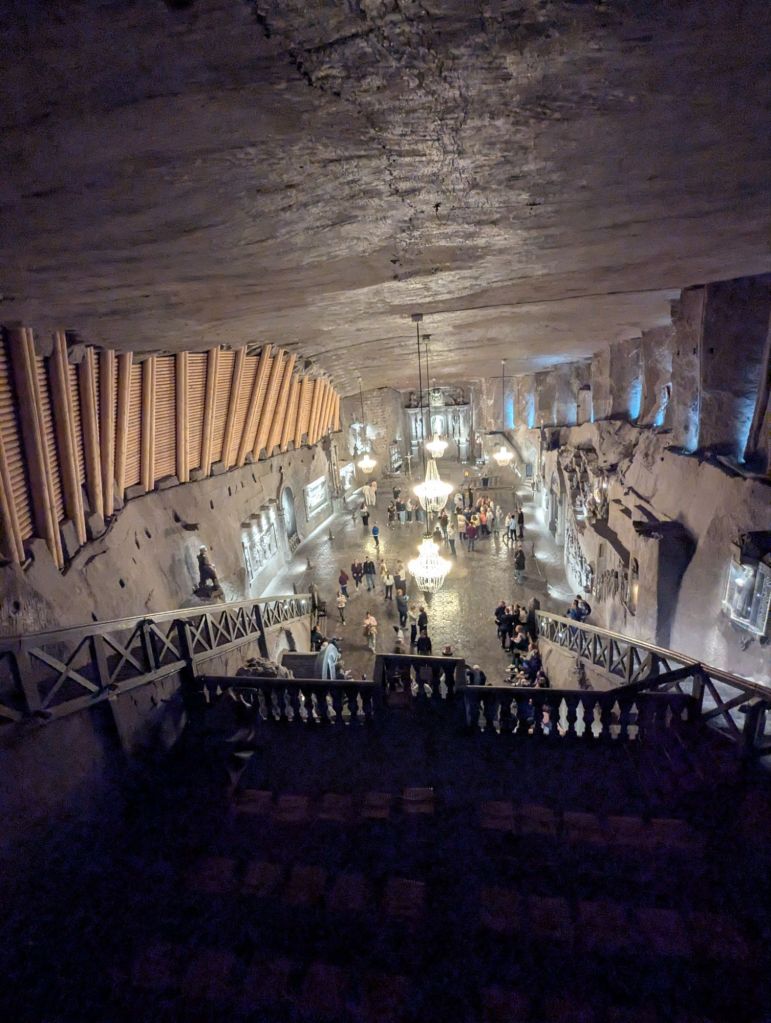
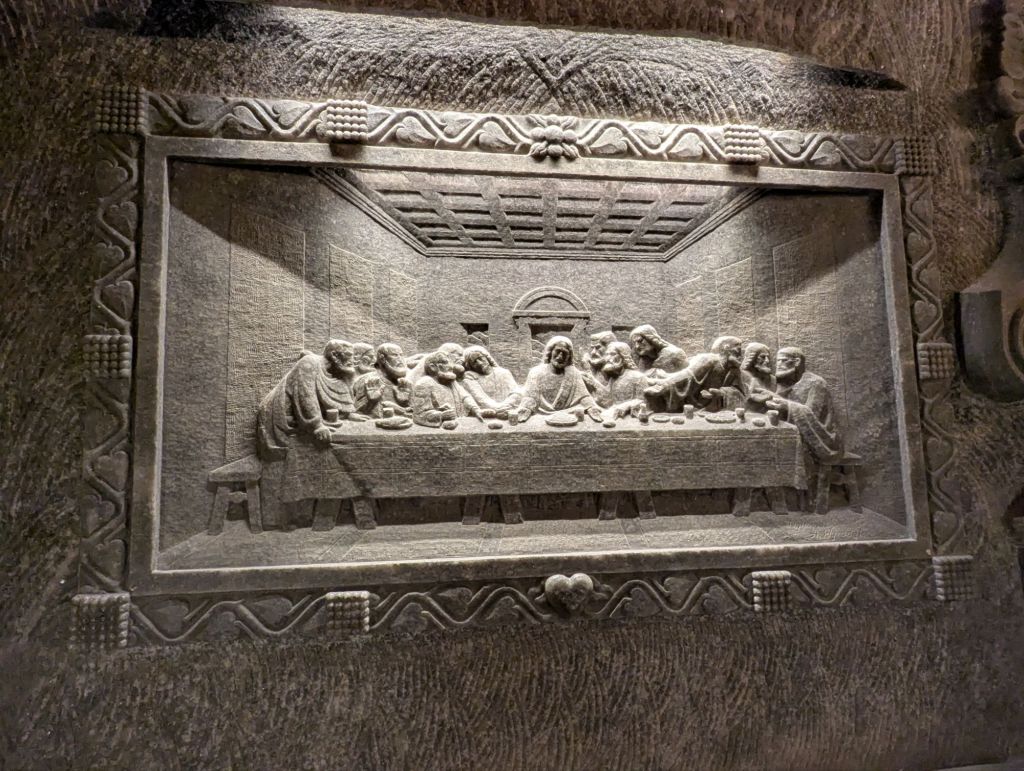
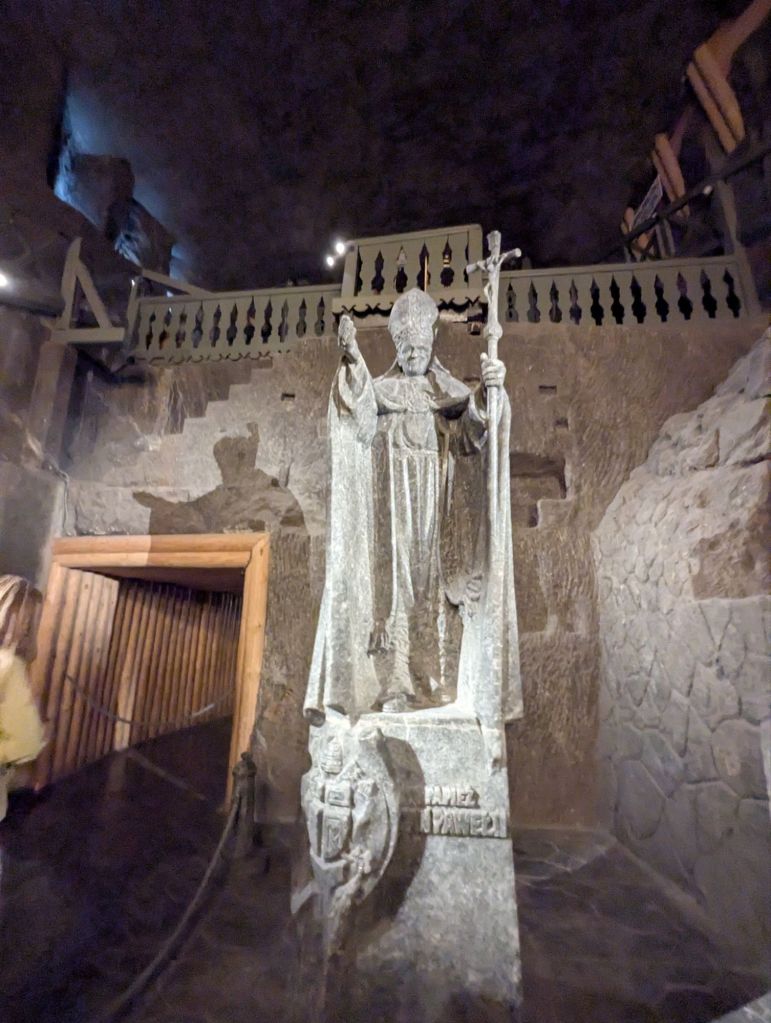
Our final day dawned sunny so we headed back to Old Town to visit a small market, stroll, and shop. After a leisurely lunch in the square we caught the bus to nearby Wieliczka to visit the salt mine. We visited 3 of the 9 underground levels, descending eventually 135 meters underground, mostly by elevator but quite a bit by stairs. Salt deposited millions of years ago was begun to be mined in the 13th century. Here was a real labyrinth, tunnels with airlocks and extensive pine post reinforcement. The highlights were statues carved in salt scattered throughout, and ornate chapels and rooms, and a stunning cathedral room complete with more statues and chandeliers made of wood and salt diadems. Of course, found everywhere in all of Poland and especially Krakow, there was a statue of “The Pope “, Polish Pope John Paul II, but carved in salt. He was archbishop of Krakow before being elevated to Pope, and now, a saint. Walking to a remote elevator to “save time”, our group whistled the theme to Bridge Over the River Kwau, and The Great Escape, and even sang the Seven Dwarf’s song “Hi Ho, Hi Ho”. We probably should have waited. We had a friendly, fun tour group.
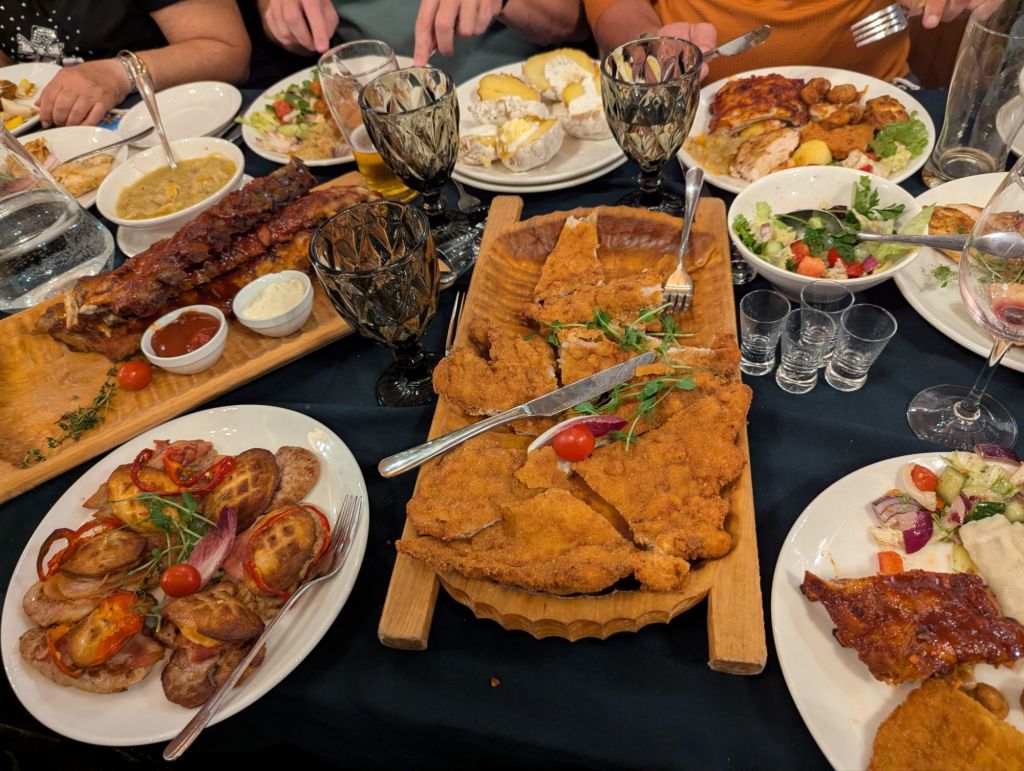
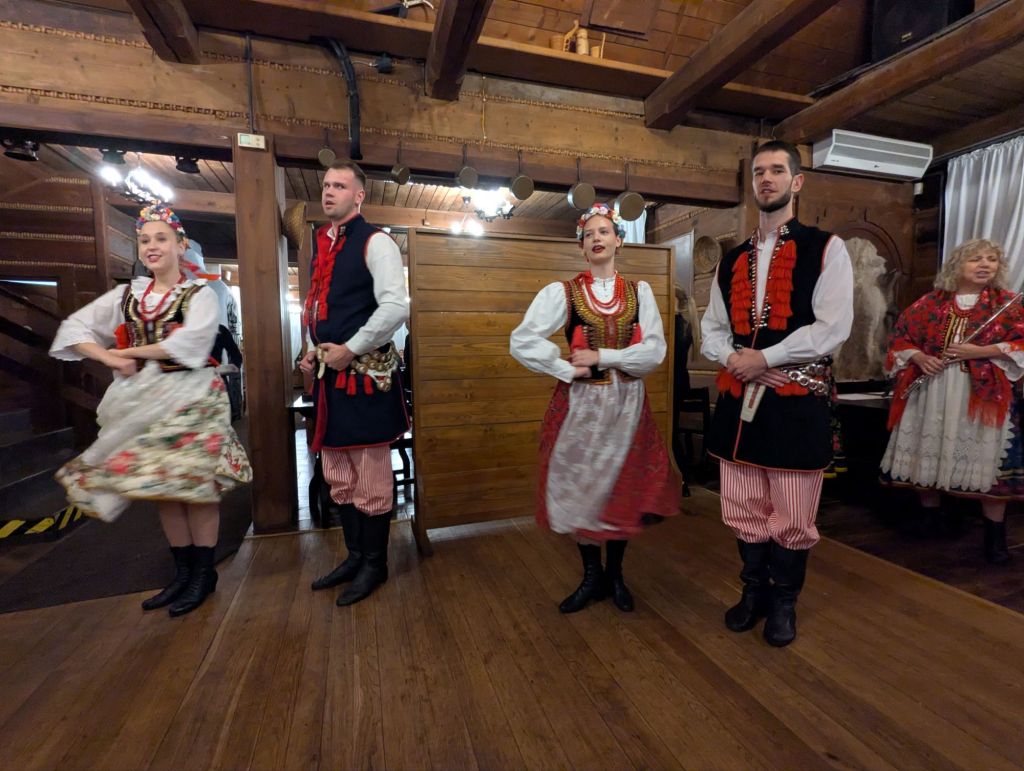
To end this wonderful trip, we enjoyed another Polish meal. First, bread with bacon fat, then goulash soup, then meat! Chicken breast, ribs, huge pork schnitzel, smoked sheep cheese on pork medallions, kapusta (saurkraut), pierogis, 2 kinds of potatoes. There was no room on the table! Somehow a salad got squeezed in there. Then the entertainment began: another authentic polka band complete with accordion and clarinet AND 4 young dancers who performed and also got the whole group up dancing. Really, a wonderful time to cap off a fantastic trip.
How would I say Poland has changed since I was last here in 2003, 23 years ago? It’s vibrant, shinier, faster paced, more 21st century. There’s certainly a loss of rusticism. Businesses and small industries line the highways. It still retains character, however: homes are lovingly maintained with beautiful gardens and yards. Narrow strip farming as well as wide open fields were everywhere but we saw only 1 plow drawn with horses. There’s pride evident in home, heritage, history, and country. It was a pleasure returning.
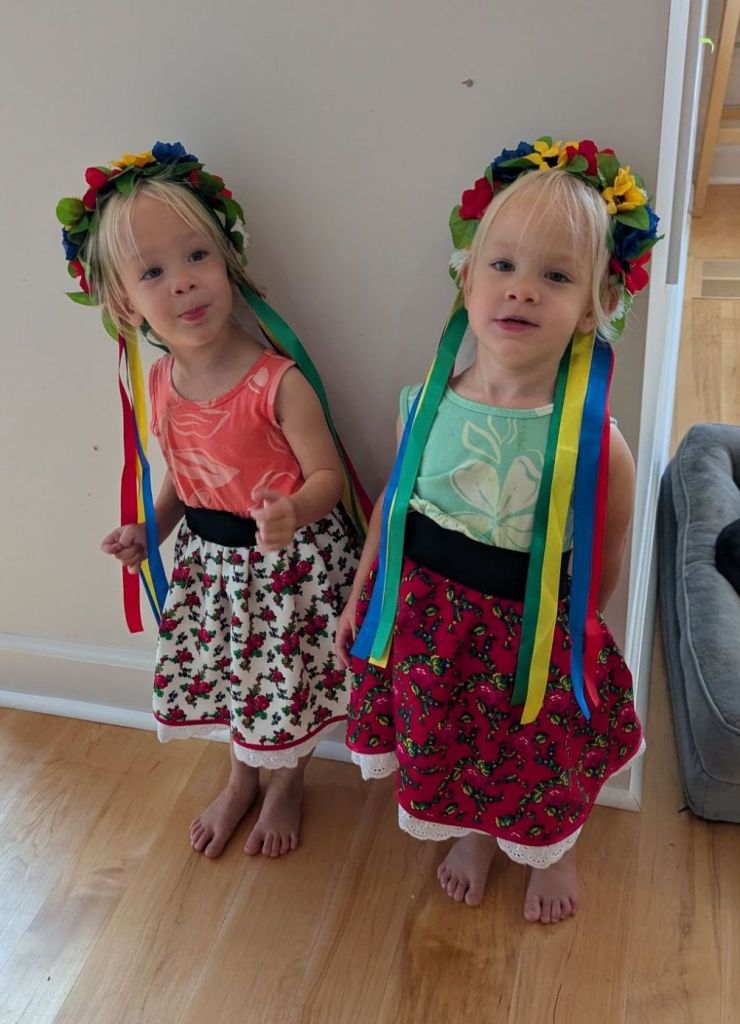
If you’re considering going: we went with a very relaxed tour group with lots of free time for doing a few excursions or exploring on our own. We always felt safe and welcome, though years of Eastern Bloc suspicion means that people don’t smile readily but they are friendly when you approach. Most people speak English and it was easy to communicate even if they didn’t. Maybe something got lost in translation when we got liters of Aperol spritzes but that was with an English speaking waiter! Our tour organization planned the entertainment but there were restaurants that offered traditional music; you’d often see people in traditional dress on the street. Poland is not on the Euro but rather their currency is the Zloty at about 4:1 with the USD; prices were cheap to reasonable. Churches were open for exploring but be respectful and dress appropriately and don’t visit if services are ongoing. Most bathrooms cost 3-5 Zloty so plan liquid intake carefully. Water at the table is not free. Be aware that Schengen is utilizing the EES, Entry Exit System, which is a digital trace of your data. It doesn’t make immigration any faster. Plan to spend some time in line, though it’s better than it has been recently. Bring stretchy pants!