New day, new country: Poland! Well, maybe not so new. I was last in Poland 23 years ago on this very same tour with polka band leader John Gora out of Toronto (Chopintours.com). I traveled then with my mom and 2 sisters, Christine and Terry. Now, I’m back! This time Greg joined me, as well as my two brothers, Ed and David, and Christine, once again, and her partner S. Let’s see what’s changed in 23 years:
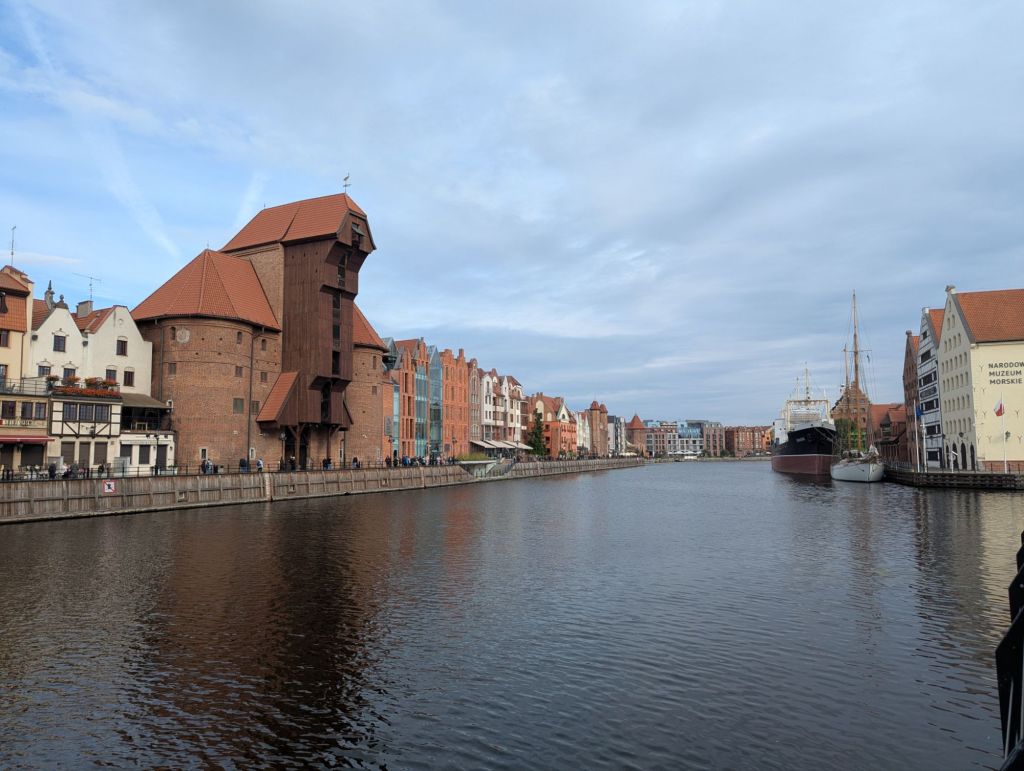
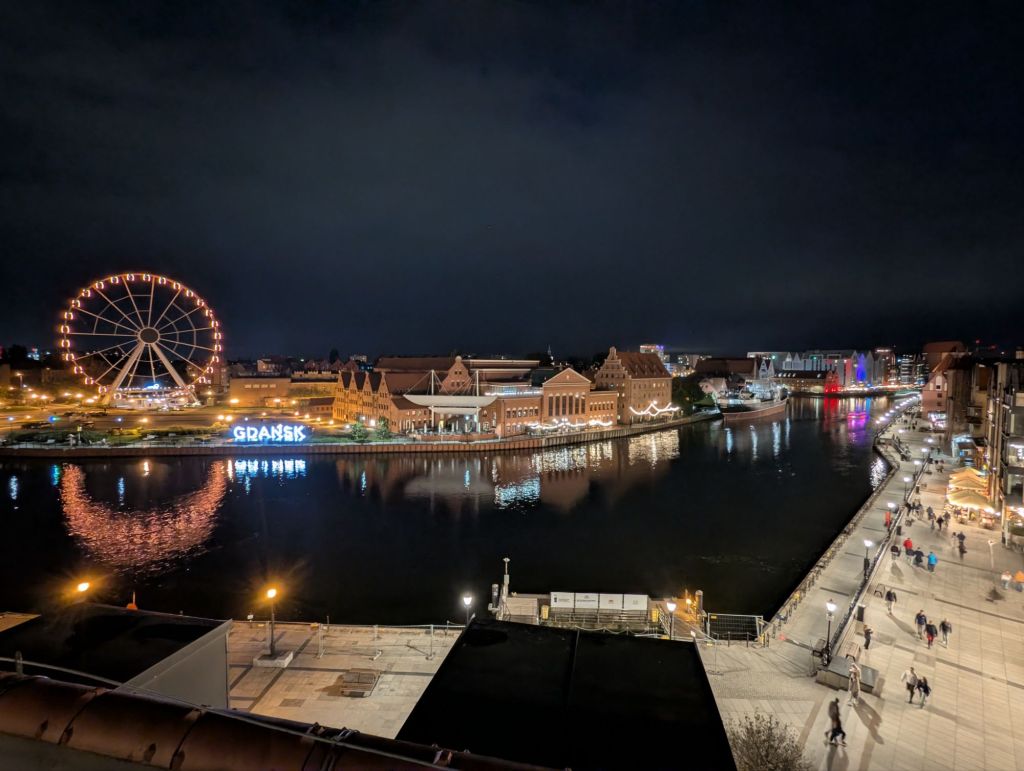
We flew from Munich to Frankfurt and then onto Gdansk. This northern city on the Baltic has been a valuable seaport since the 10th century, a free city or under Prussian or Teutonic or German or Polish rule alternately through the centuries. Formally annexed, again, to Poland following WW2, it is now a thriving seaport and shipyard but also the city itself is a vibrant mix of new and old. In the last 23 years abandoned properties along the river are now hotels, restaurants or apartment buildings built in a complementary style to the tenement houses and buildings in the Old Town. Even those “old” buildings were reconstructed after 90% of the city was destroyed by the Red Army at the end of WW2. Native red brick is evident everywhere. The river has wide walking paths on either side for strolling among the many outdoor eateries. Brand new lift or pivoting pedestrian bridges allow sailboats, excursion ferries, or the touristy “pirate” boat to move inland. Meanwhile, the older section has narrow “tenement” houses, red brick churches, centuries old gates into the city, remnants of the city walls, cobblestoned streets, and an imposing town hall.
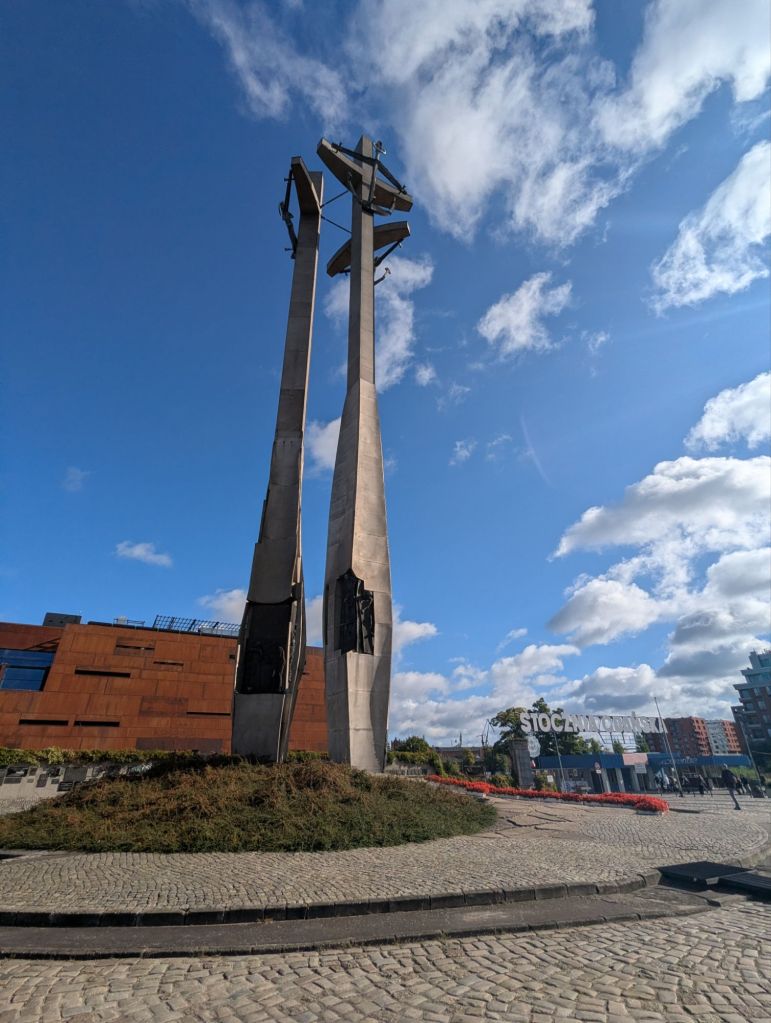
We arrived simultaneously with a large group from the States and Canada. We all boarded the bus and headed to the Hilton on the boardwalk in Gdansk. I left a tote bag with a sweater, my sunglasses, and charging cables at the airport which I hope someone will be able to use. The hotel was new and convenient to the sites; we did so much walking there! We had free time this evening so we (with the sibs) started with a drink (beer) and had our first pierogis (disappointing) then walked through the Main Town (old but not oldest section) and stopped for dinner at an outdoor cafe. The Zurek (sourdough rye soup with potatoes and sausage) and pork schnitzel were delicious. The next morning we headed to the Solidarity Monument and the shipyards. Here, in Gdansk, the matchstick to the fall of communism was lit. The Yalta Conference in 1945 basically ceded Poland to Russia in exchange for Soviet support in the Pacific. Despite promises that Russia would create a “mighty, free, and independent” Poland, instead it was forced into the Eastern bloc during the Cold War. In 1970, shipyard workers held a strike for several days. In the end, at least 44 people were killed before the strike ended with some concessions for increased wages and lower food prices but the seeds of political resistance were planted. Additional strikes through the next decade led to the 1980 protest at the Gdansk shipyard by trade unions following the dismissal of a female worker being fired a few months before retirement eligibility. This protest led to the recognition of the Solidarity movement by the Communist government, a successful proletariat revolution. From then, the fall of Communism (in 1989) was inevitable. Part of the negotiation allowed for the construction of a monument to the workers of the 1970 strike, now the symbol of Solidarity. The original entrance gate to the shipyard is still there as well as a museum dedicated to trade unions and modern history. The rusted metal exterior represents the blue collar nature of the area as well. The abstract, leaning architecture is meant to infer a set of falling dominos, reflective of the fall of Communism and the Eastern Bloc nations. Plaques on a memorial wall honor the protestors and in particular Fr. Henry Jankowski who, as a local parish priest, supported the protestors and their families as well as their mission. Lech Walesa, a charismatic protest leader, became the first president of the new democratic Poland in 1990 and was a Nobel Peace laureate in 1993.
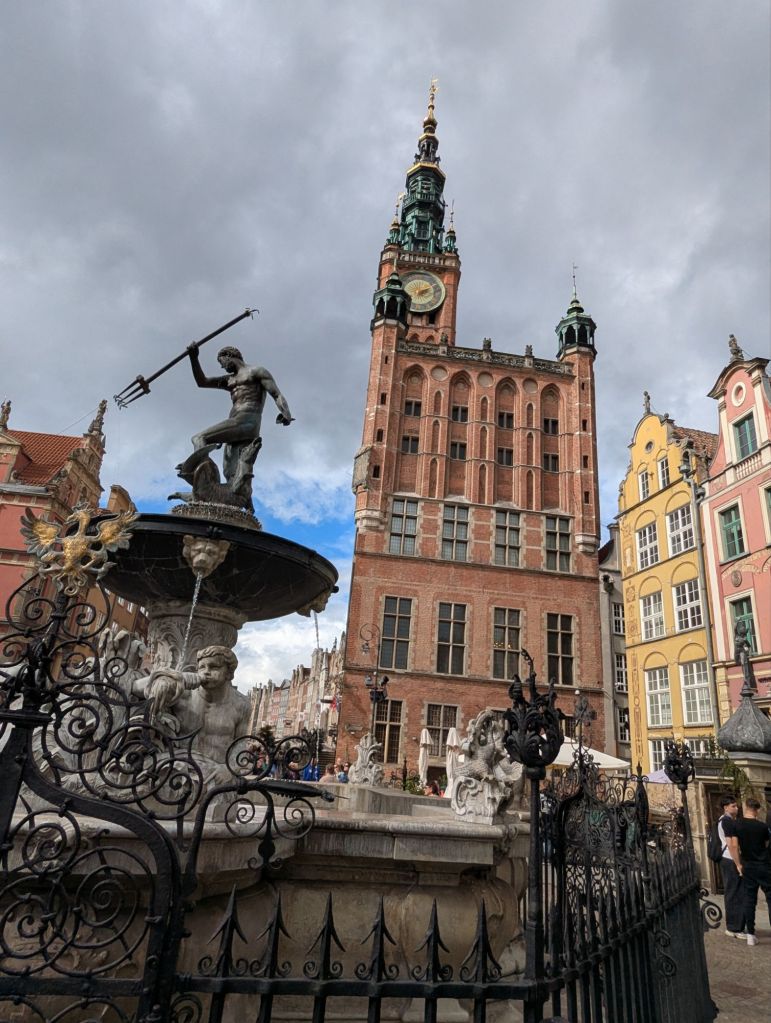
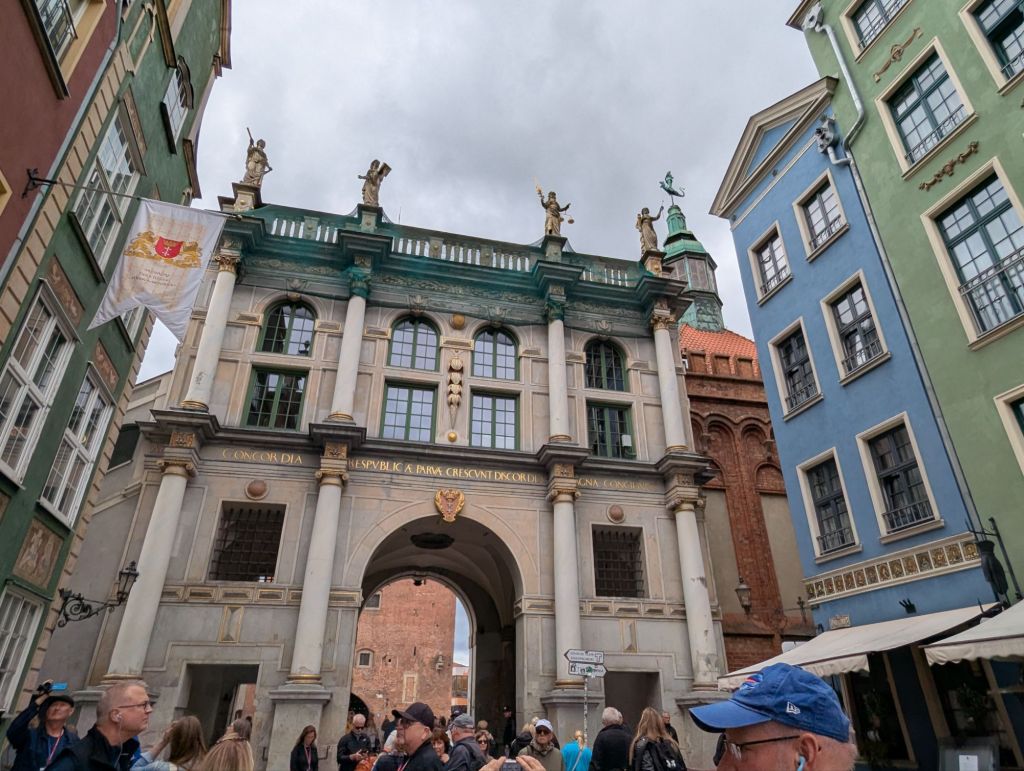
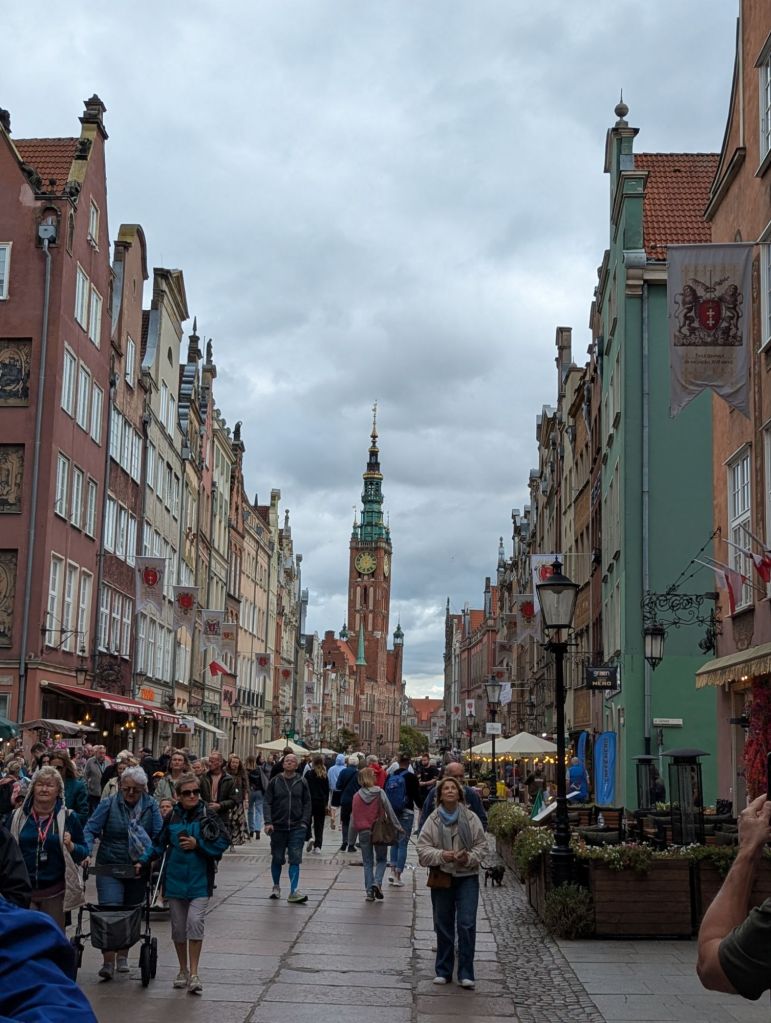
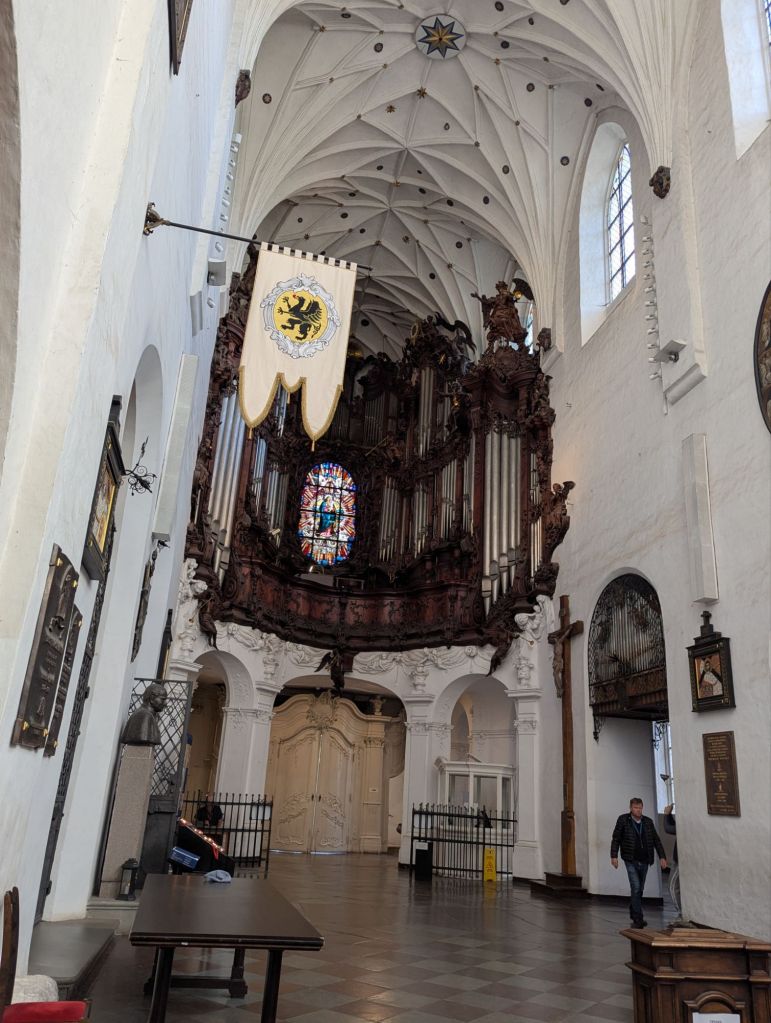
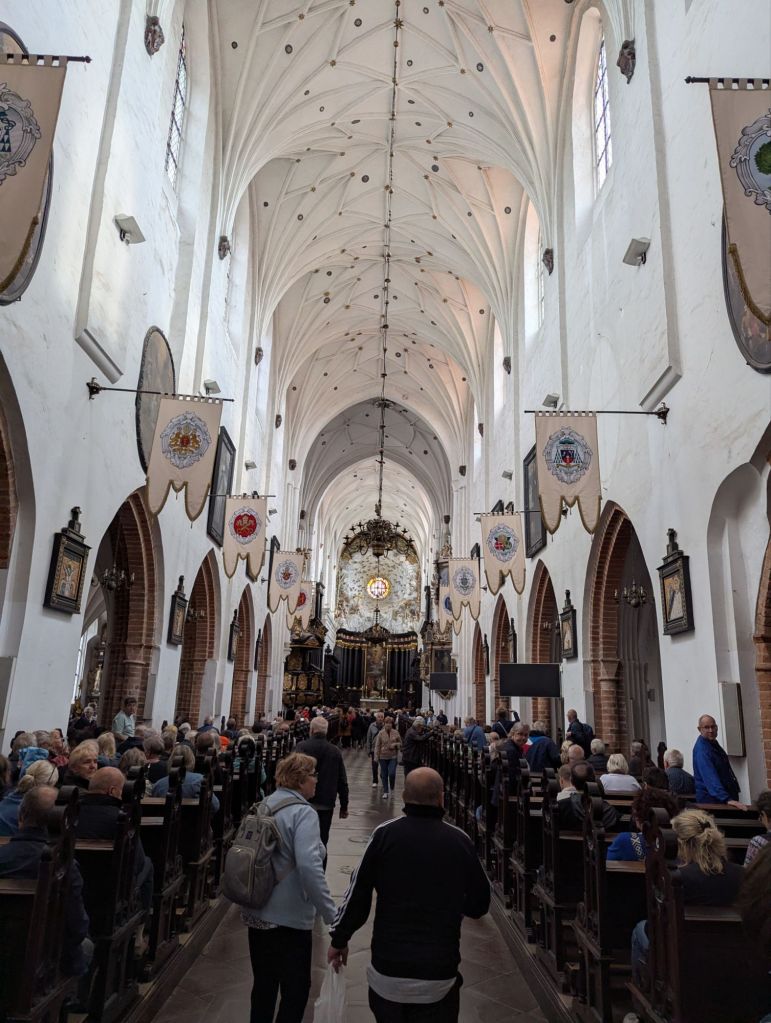
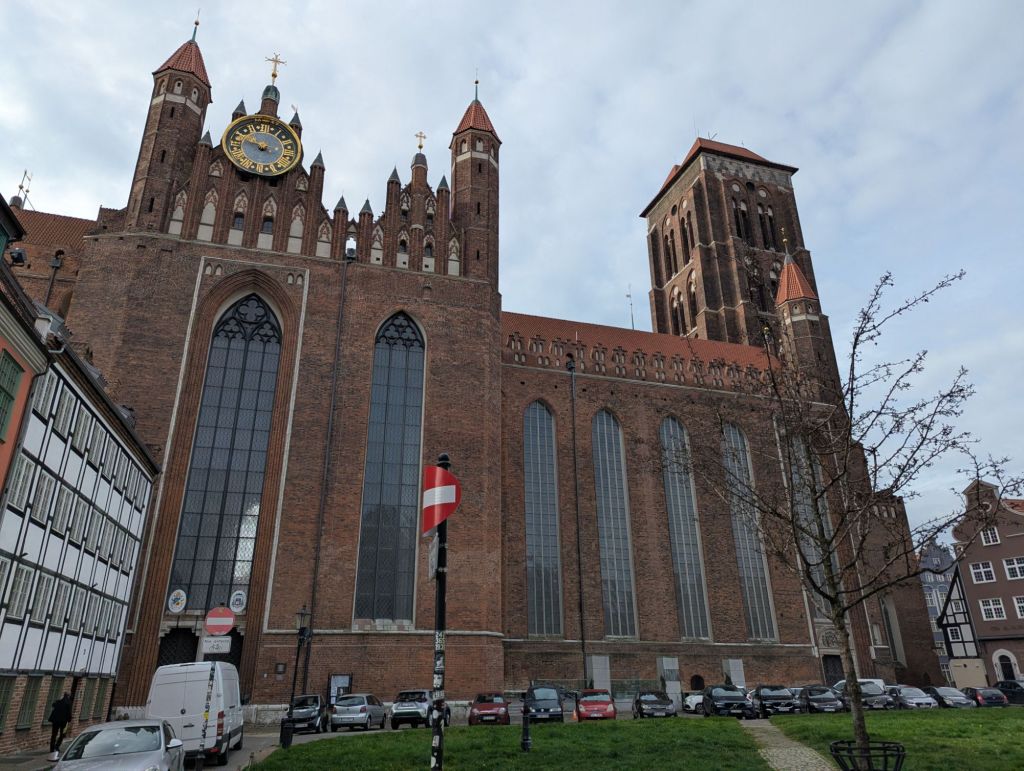
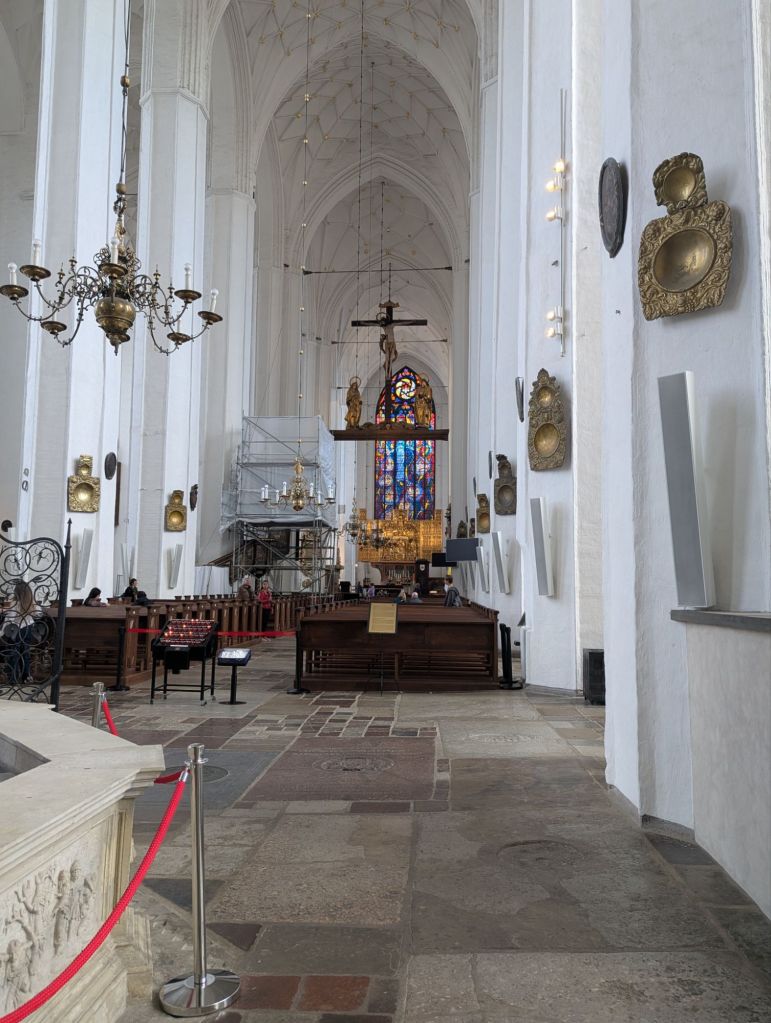
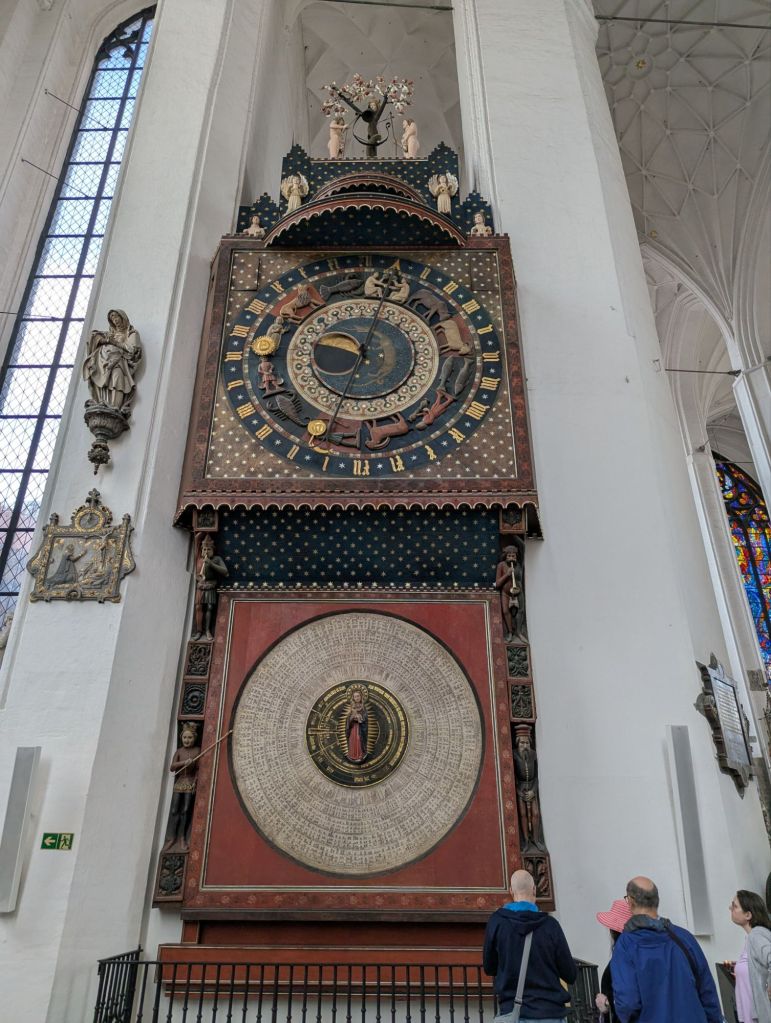
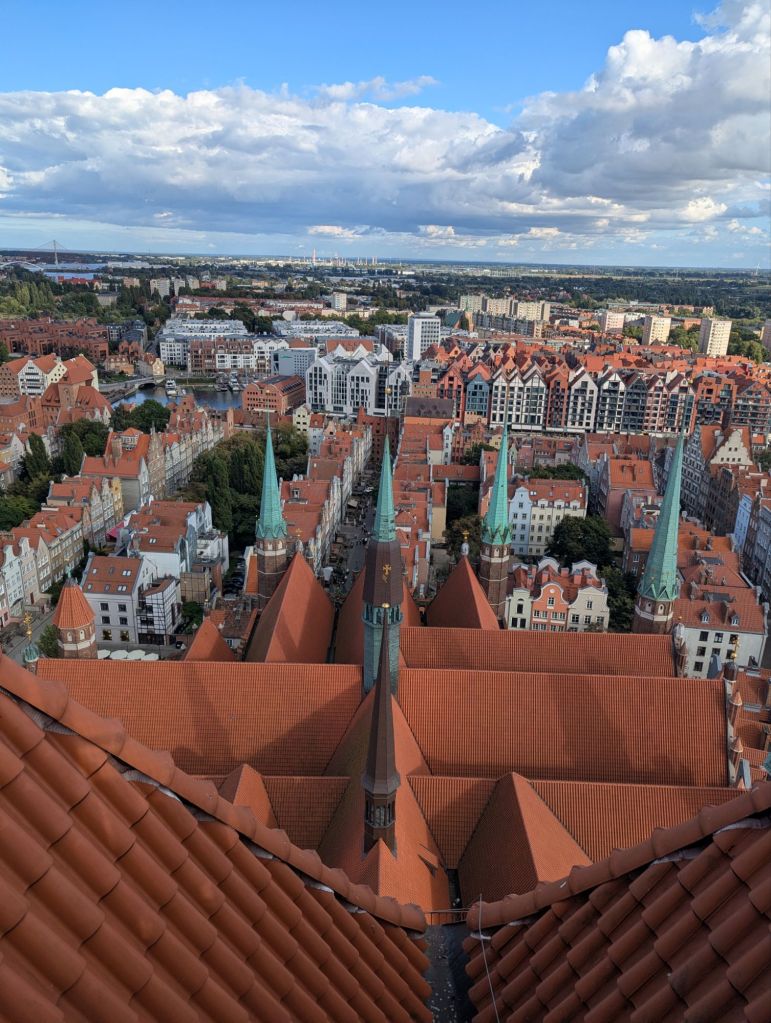
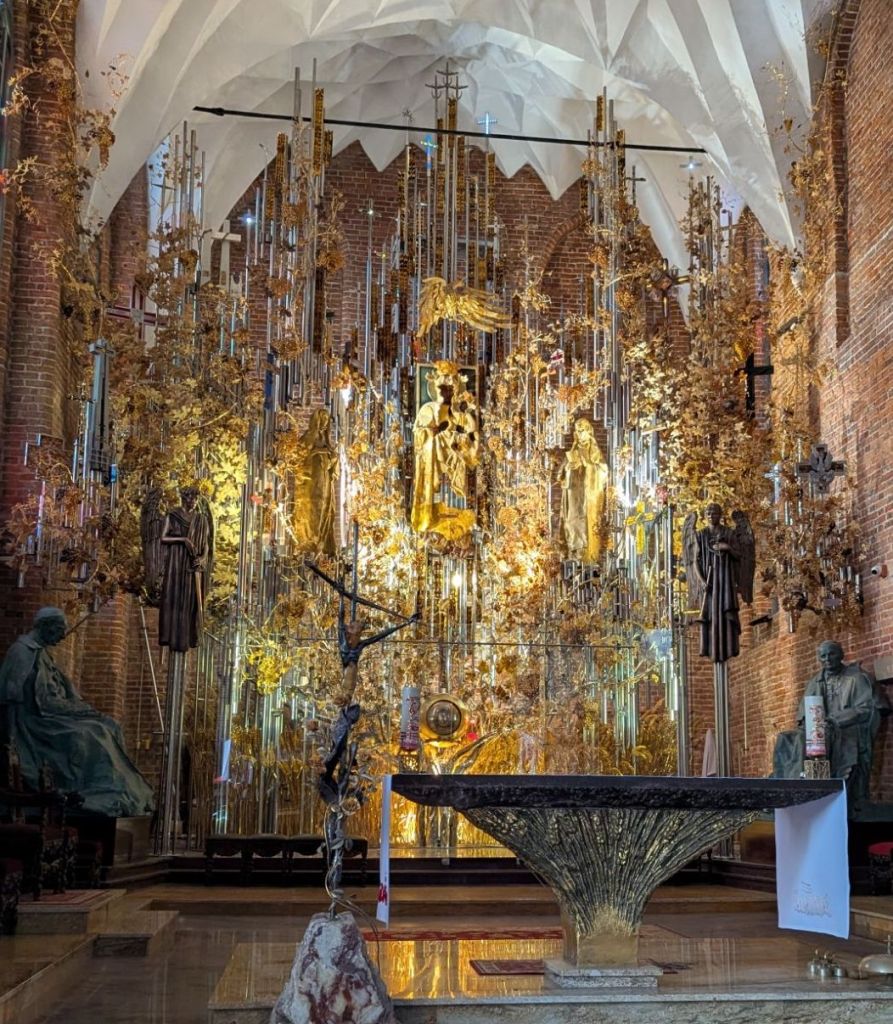
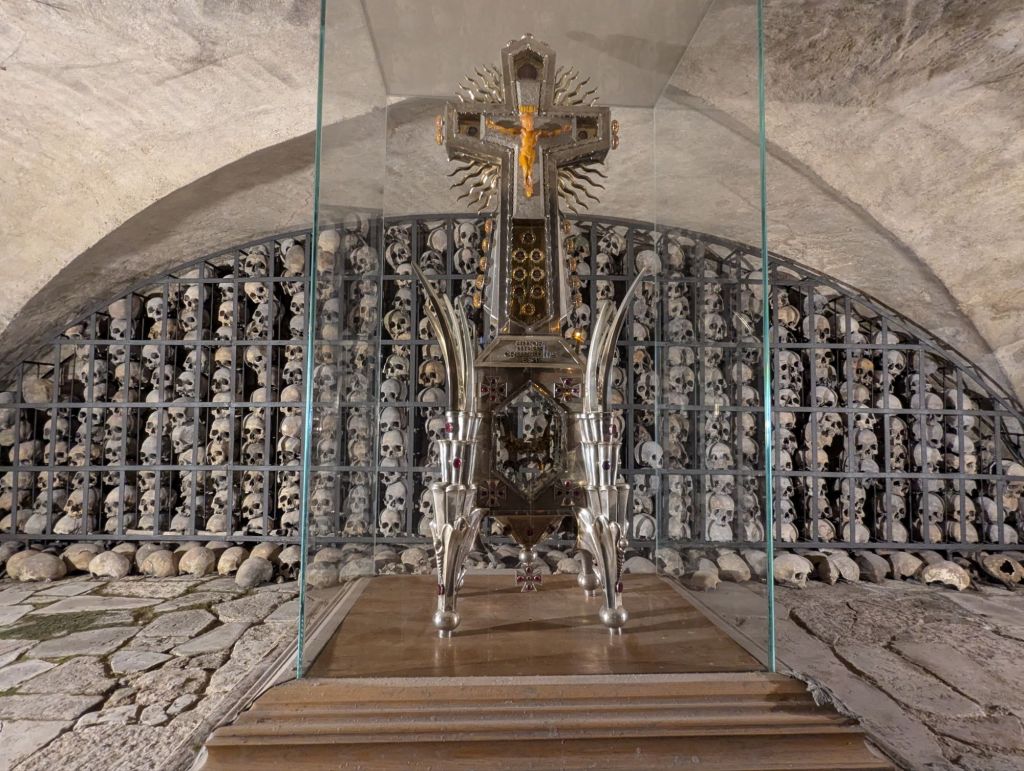
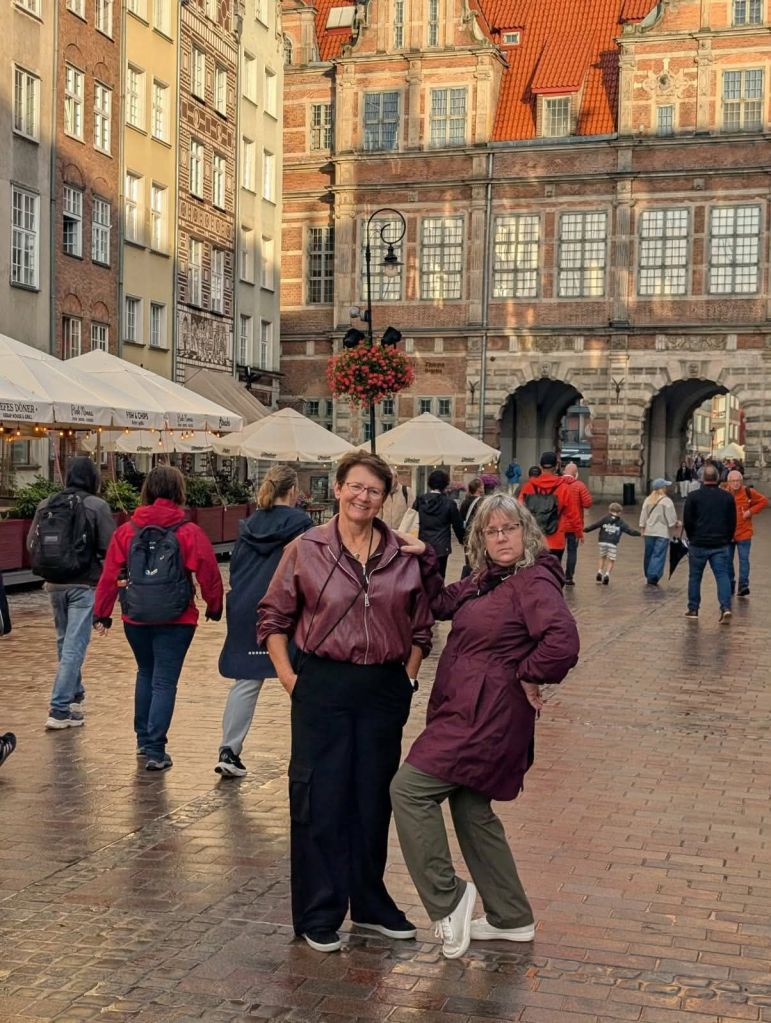
We bussed into Oliwa Abbey, a Cistercian church, for an organ concert with all the acoustically impressive classics: e.g. Handel’s, “Allellujia”, etc. Then we returned to Gdansk proper for a walking tour of the Main City. There were 4 gates built into the entrance of the Old Town following a curved street which leads to the gothic, red bricked Old Town Hall with graceful spires. The Fountain of Neptune graced the avenue. Beautiful, narrow tenement houses lined the cobblestoned street up to where gates led to the river (“tenement” meaning homes or living quarters). Here there were more restaurants with umbrellas and lots of outdoor seating and people watching. We visited the Basilica of St. Mary (or Mariacka church) claiming to be the largest red brick church in the world (in contention with Albi Cathedral in France, see blog “Tour de France Apotheose”). Nevertheless, a very big, gothic, red brick church. The interior walls were whitewashed since the Reformation but areas are being cleaned to reveal religious murals and motifs. A large astronomical clock built in the 15th century tells time on a 24 hour dial, but also date, liturgical feasts, phases of the moon, and more. Later, in our spare time, David and I climbed the 350 stairs to the top of the bell tower to get an aerial view of the city and also to burn off some sausage calories. Inside we could see the upper side of the cathedral ceiling, the inside of the bell tower, and the architecture of the attics and rooflines. We visited St. Bridget’s, named for a Swedish nun who was venerated here on her funereal return to Sweden in 1373. The church is known for the altar highly decorated with amber which is still being added to today. Also of note is a crypt with hundreds of skulls stacked neatly behind a reliquary of St. Bridget. Gdansk is known as the “amber capital of the world”, a fossilized tree resin that makes for beautiful jewelry. Amber shops and kiosks are everywhere; we visited a few. Ok, more than a few. A lot.
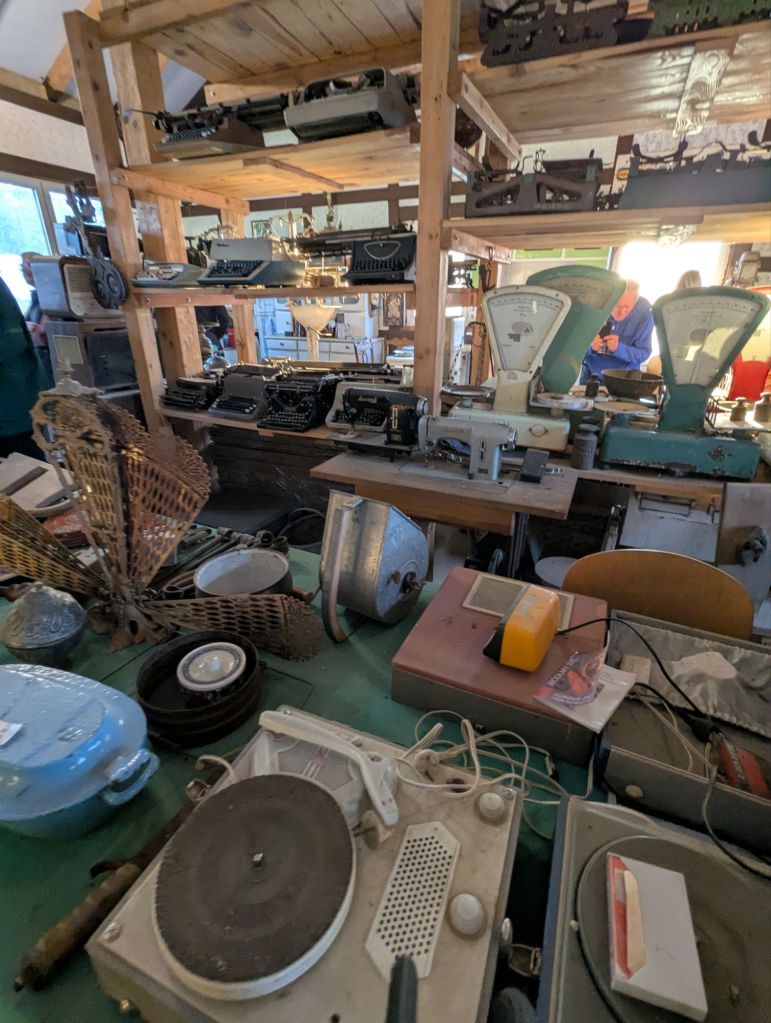
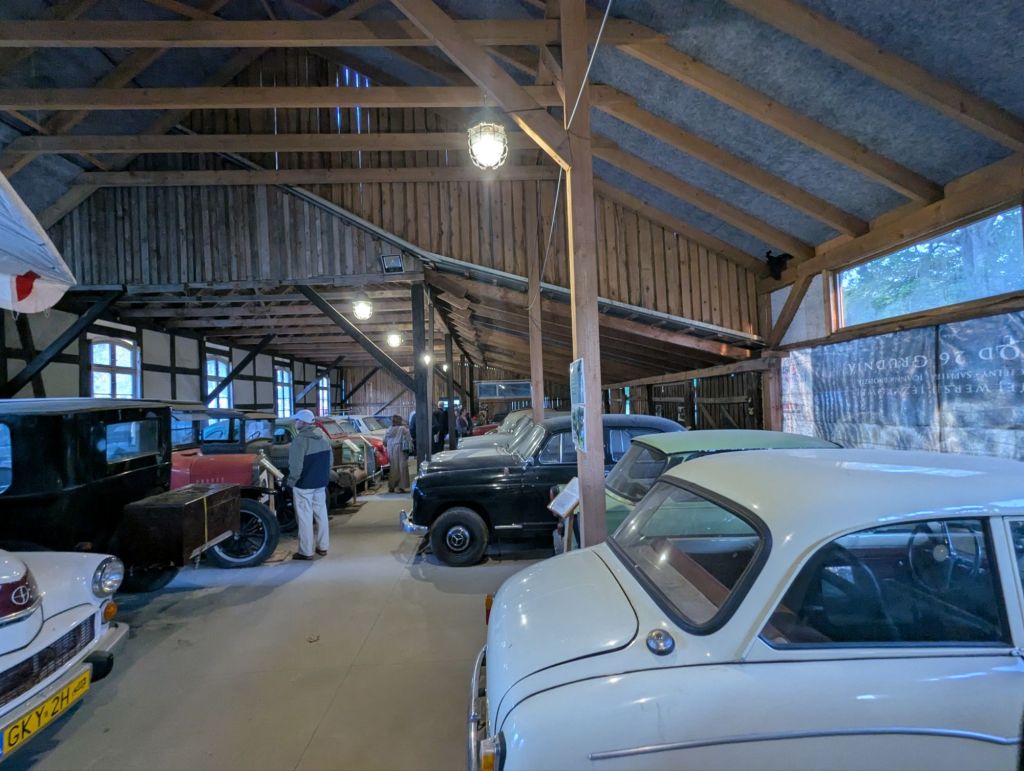
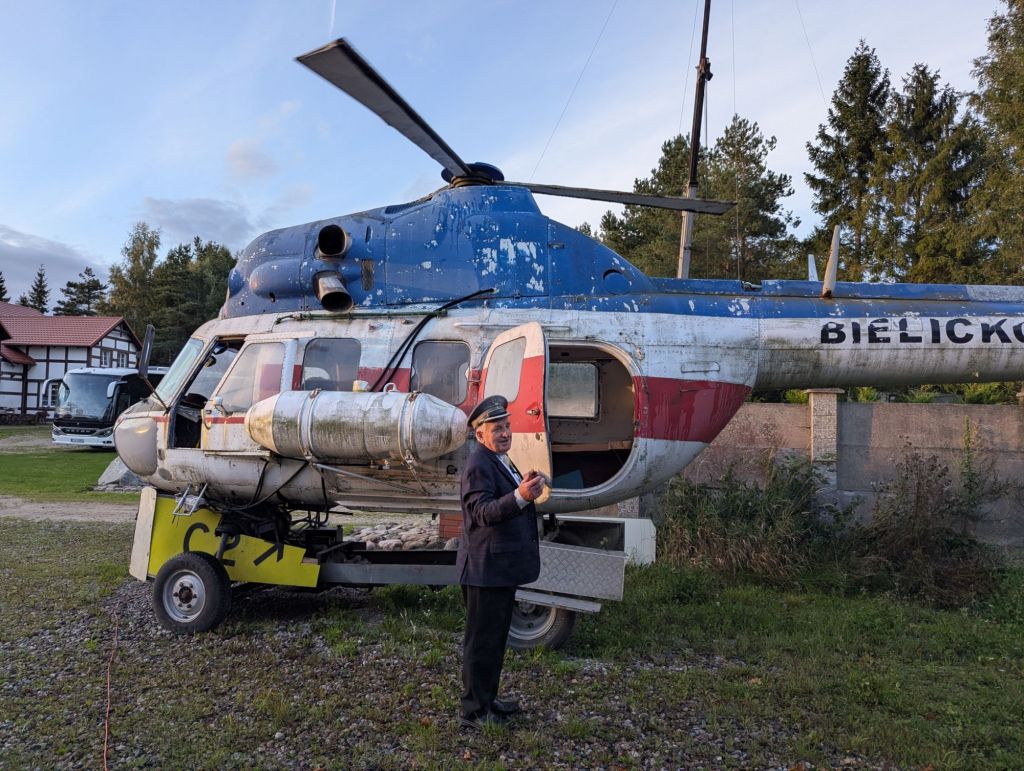
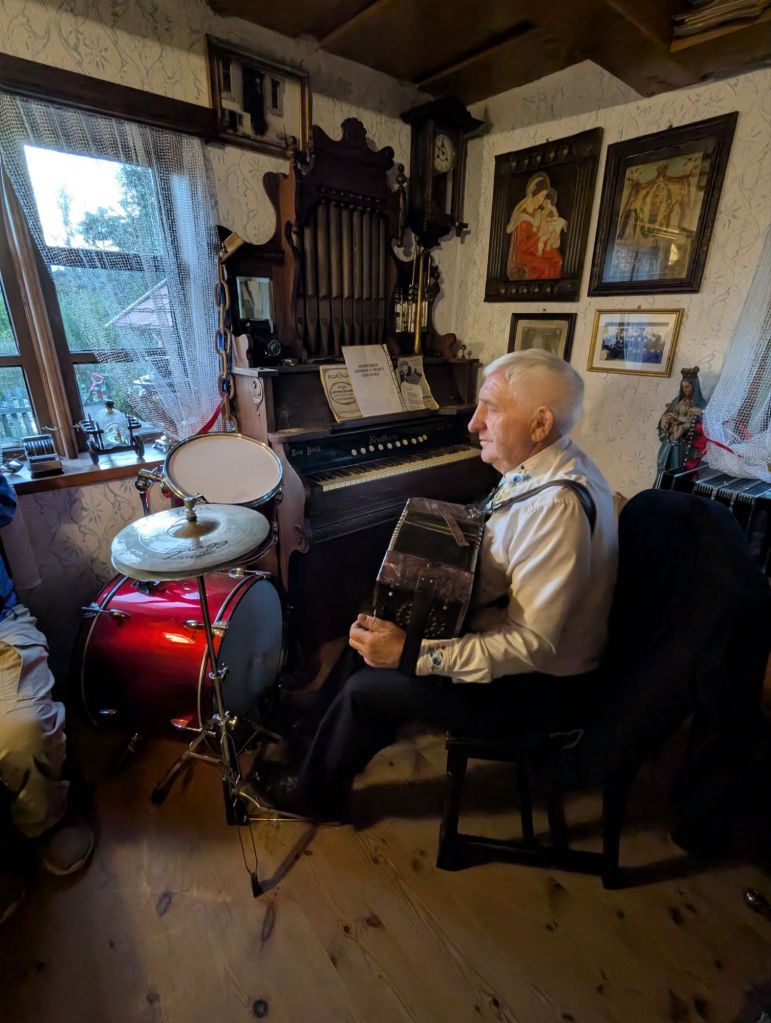
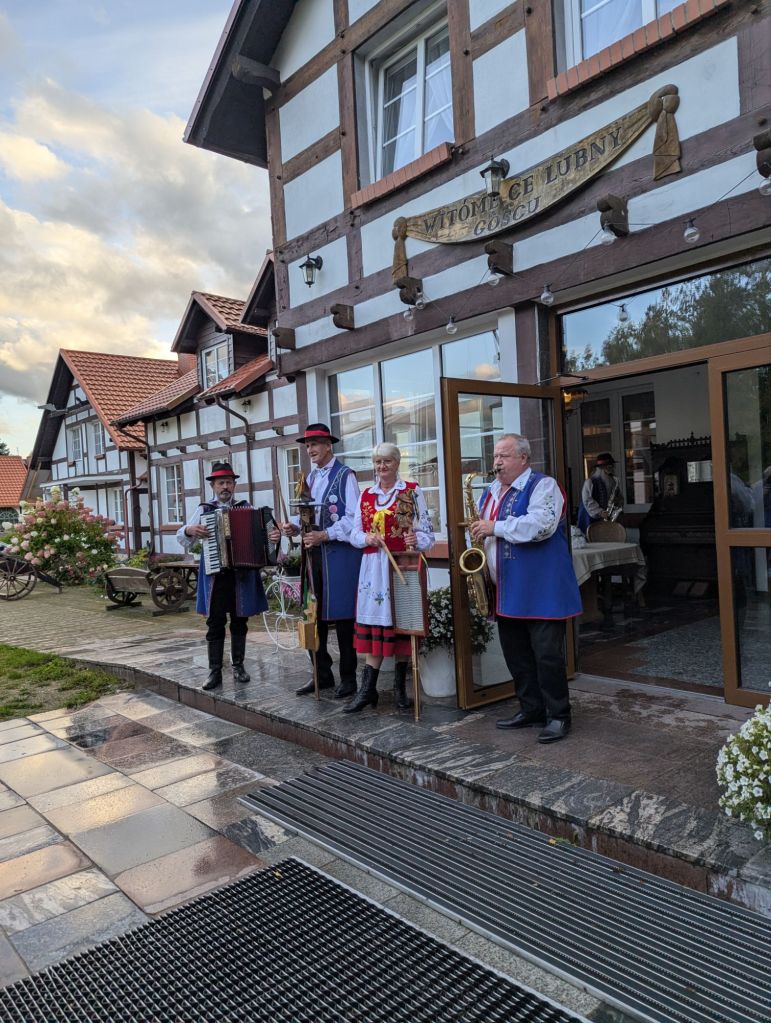
That evening we went to a Kashubian dinner nearby. Kashuba is a small but distinct Polish cultural region with its own dialect and customs located near Gdansk. Chester, our host, was a smallish man with blue eyes and a shy smile. His museum-worthy collection of Communist era Polish-made items filled multiple barns including typewriters, wringer washers, dishware, telephones, furniture, cars, motorcycles, tractors, and even a helicopter. Other barns held antique farm equipment, everything maintained in working order by this retired truck driver. The dinner was a banquet of Kashubian food, as with all East European countries, mostly meat and potatoes accompanied by Chester’s own moonshine. Entertainment was provided by local Kashubian musicians. What a charming evening!
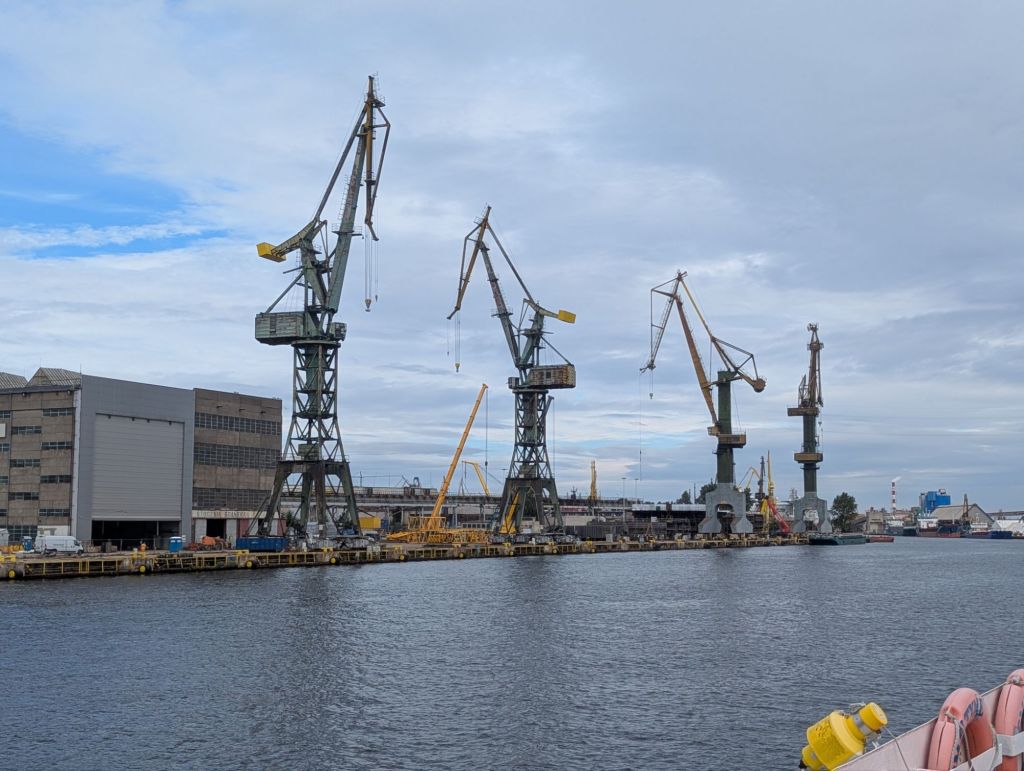
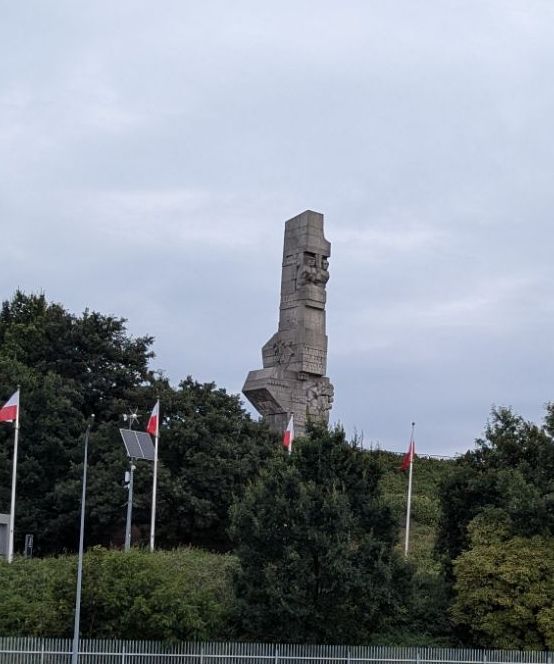
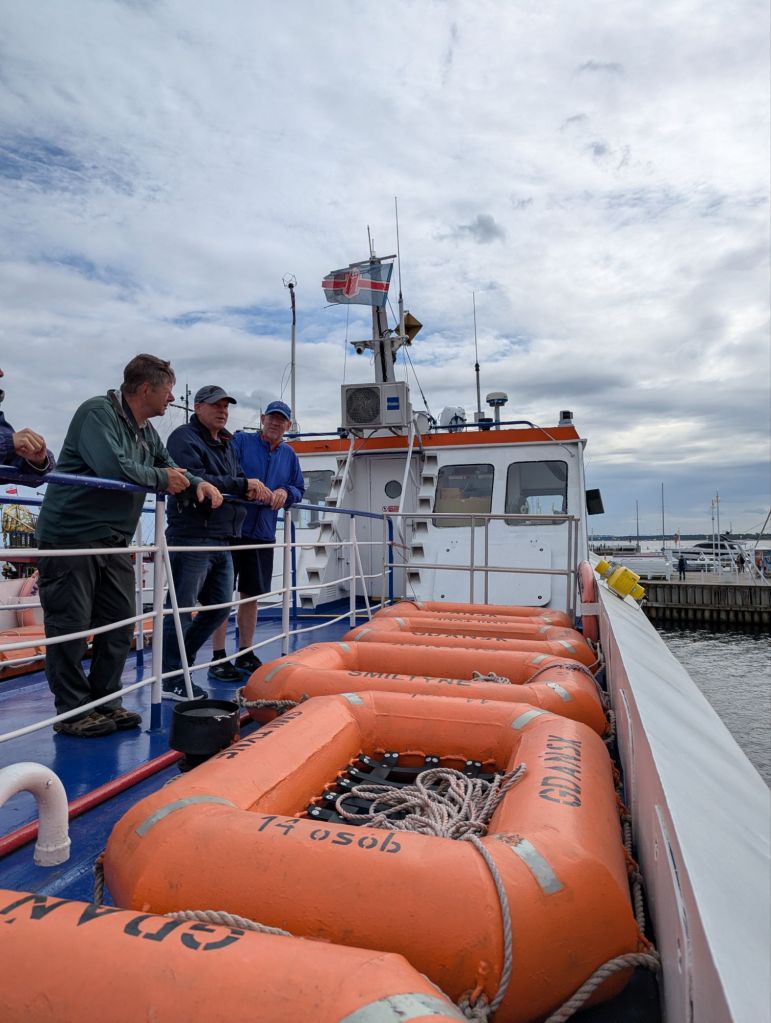
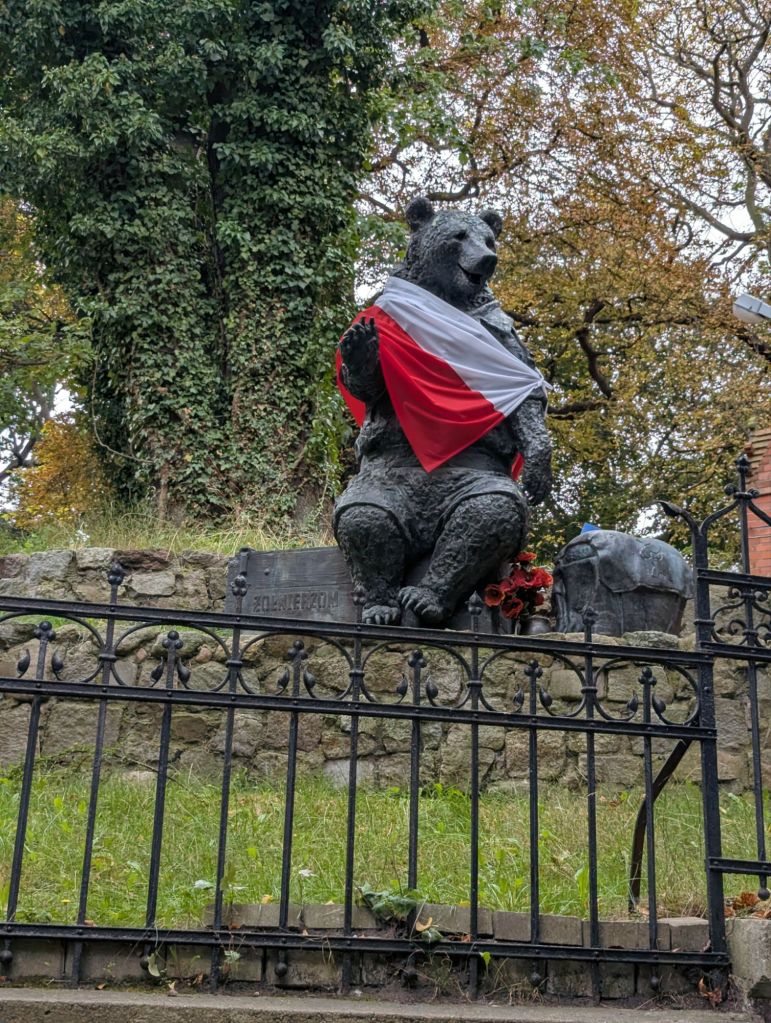
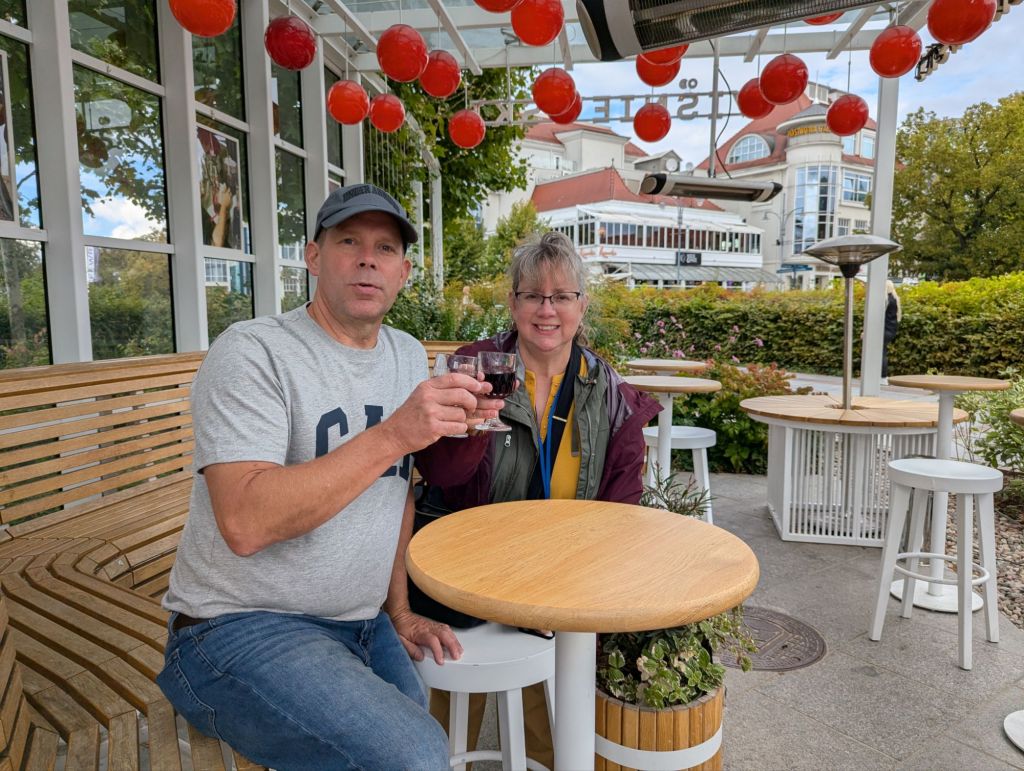
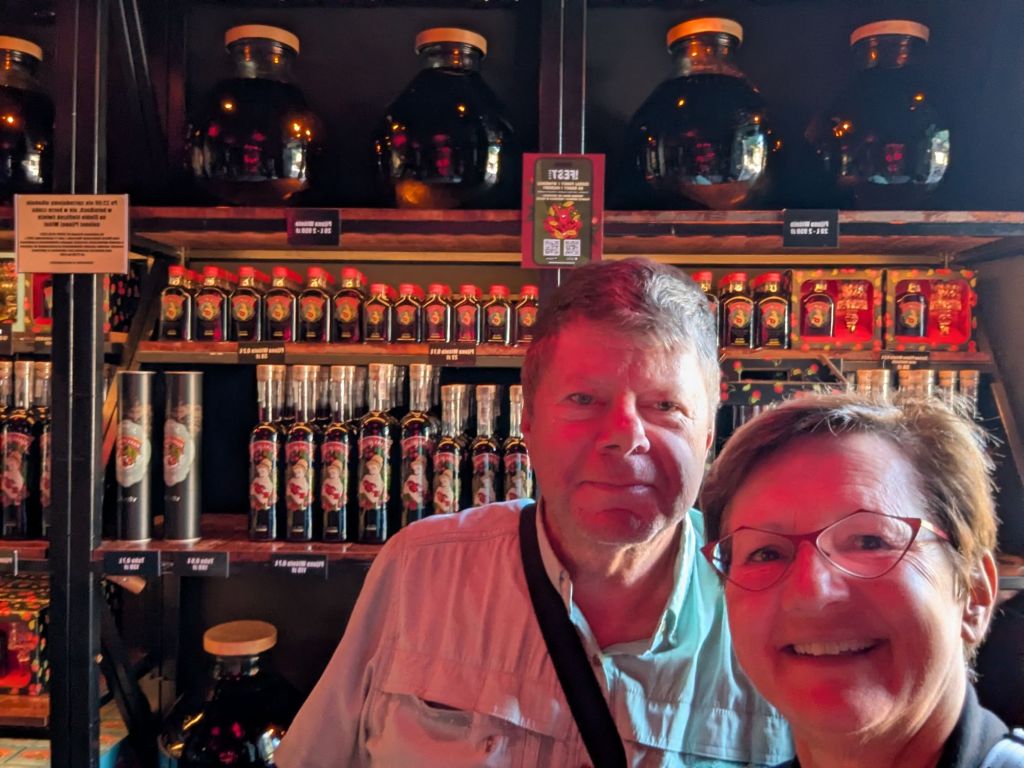
The next day we boarded a ferry which took us down the Martwa Wisla river towards Sopot passing shipyards with huge gantry cranes lining the shore like Star Wars At-At walkers in formation. We passed ships under construction and piles of coal and metal recycling and grain waiting to be loaded into freight ships. Huge car ferries loomed above as we squeaked by. Fascinating! We eventually came upon Westerplatte, the peninsula where World War II started. On Sept 1, 1939, 180 Polish soldiers held off a German attack by land, sea, and air for 7 days. Despite mutual defense pacts with Britain and France support was merely diplomatic. The Battle of Westerplatte became a symbol of Polish resistance. There is a monument, cemetery, and museum there now. Sailing into the Gulf of Gdansk freight ships were lined up into the Baltic awaiting entry. Windsurfers and sailboats dotted the bay as we headed towards Sopot, a resort town. Grand hotels anchored the beach around the long pier while vendors and restaurants lined the main road. We walked the main drag, visiting a church holding a lovely concert. David and Ed dipped their toes in the Baltic, surrounded by jellyfish everywhere. We then split up, some headed for beer at the beach resort and the rest of us for more amber shopping, more ice cream, and more Wisniewski. “Wisniewski” you ask? A cherry liqueur that seems to be served by the same languorous young man everywhere. Nevertheless, the drink was tasty so we endured the indifference, everywhere. Back on the bus, we headed to nearby Gydnia, the third of this tri-city region. Also a large shipyard, Gydnia has a nice museum of emigration. Gydnia was the site of large numbers of Polish emigrating in the 60’s and 70’s. Earlier emigration, as with my ancestors at the turn of the century, departed from elsewhere, like Bremen or, in the case of my grandfather, Antwerp. Dinner was back in Gdansk. Last fun fact about Gdansk: Gabriel Fahrenheit was born in Gdansk in 1686. He invented the mercury thermometer and the temperature scale we use in the US: 0deg F was set with a salt/ice/water mix and the upper limit (around, but not quite 100deg F) was set at human body temp.
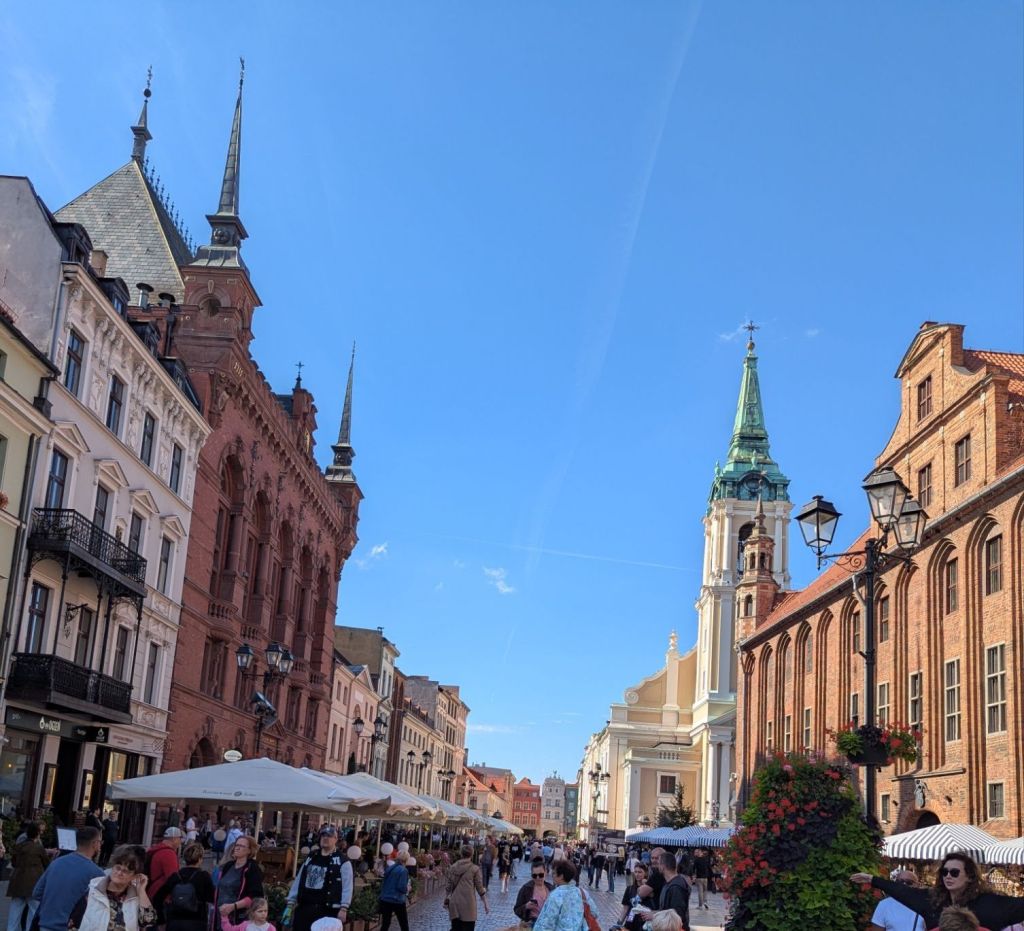
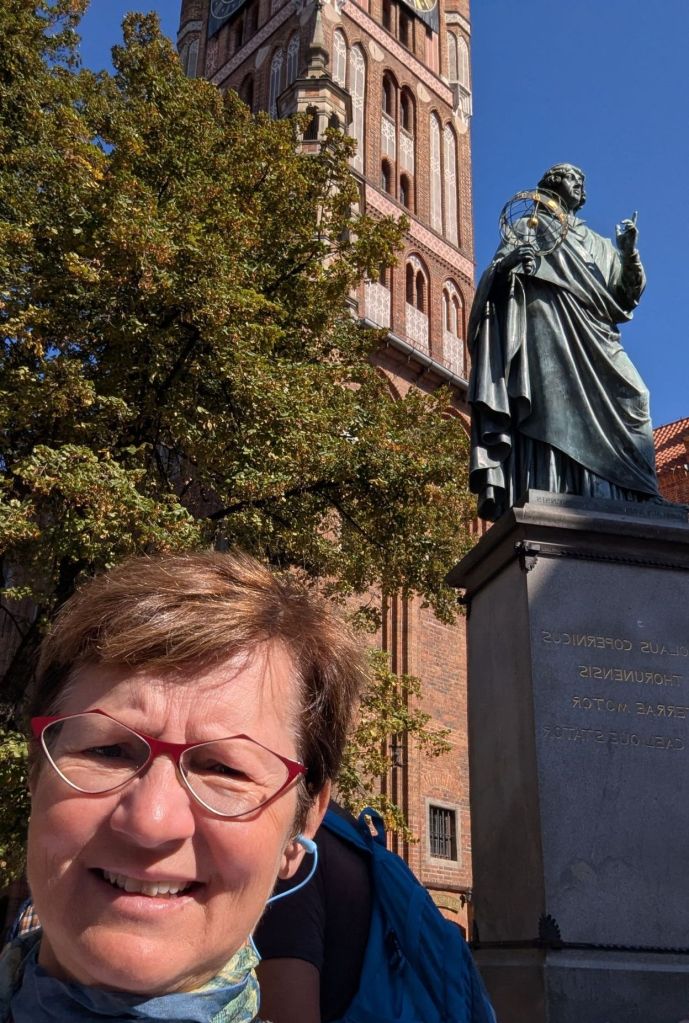
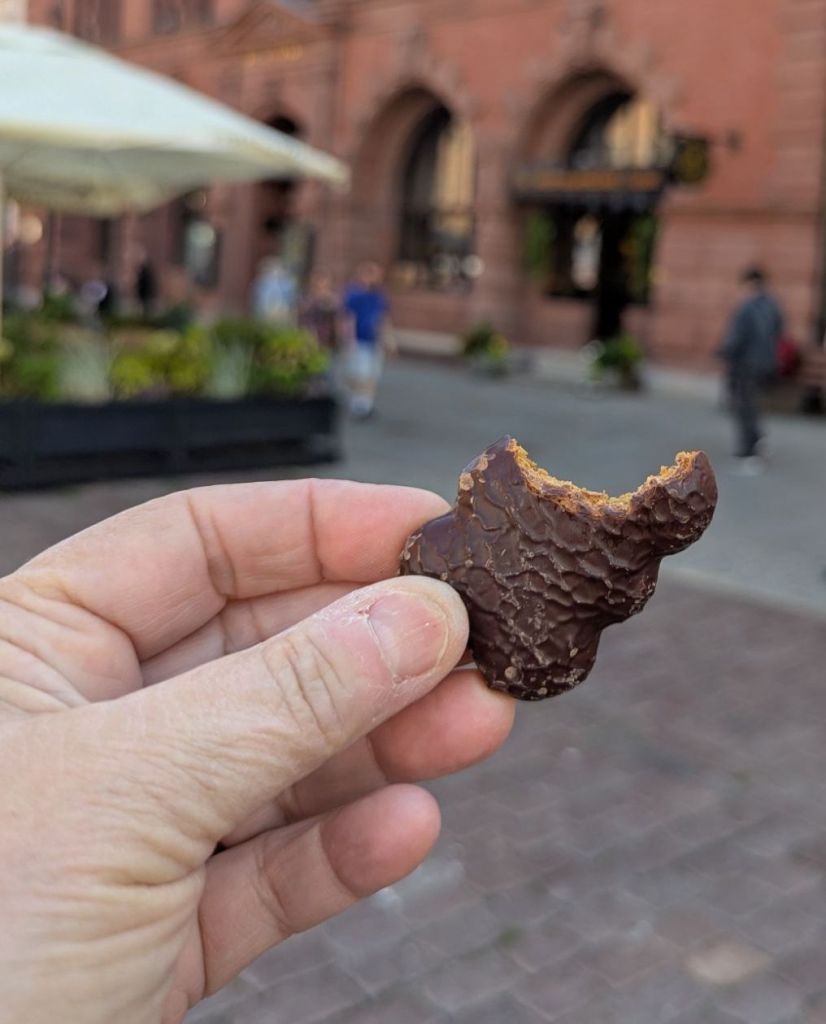
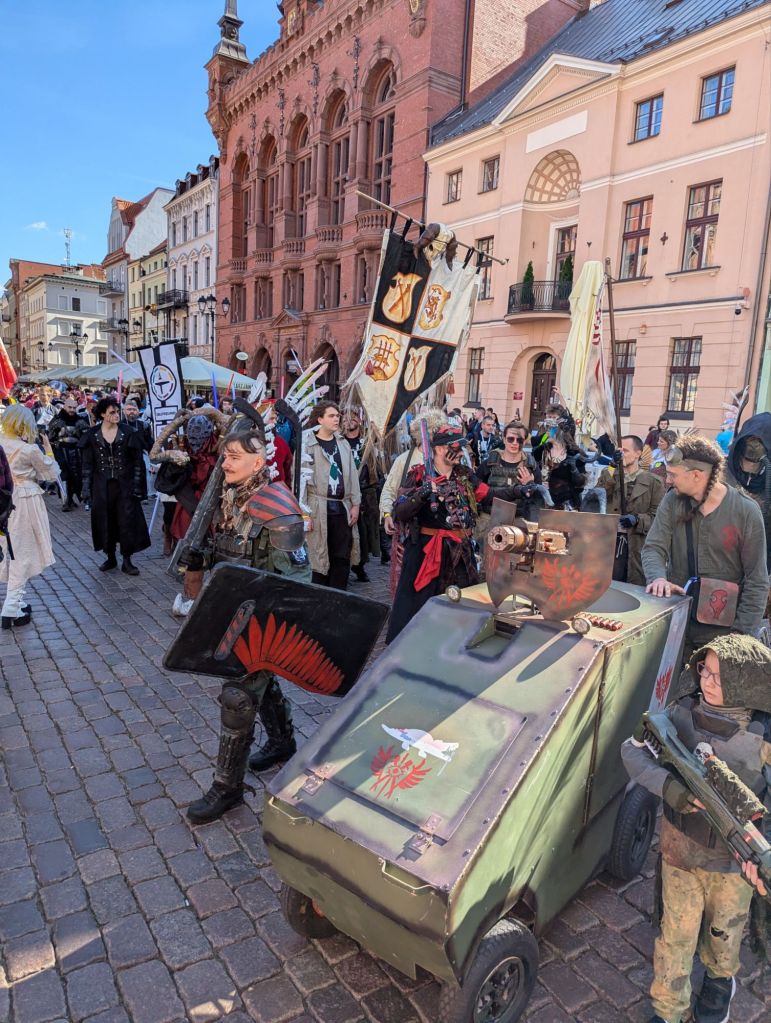
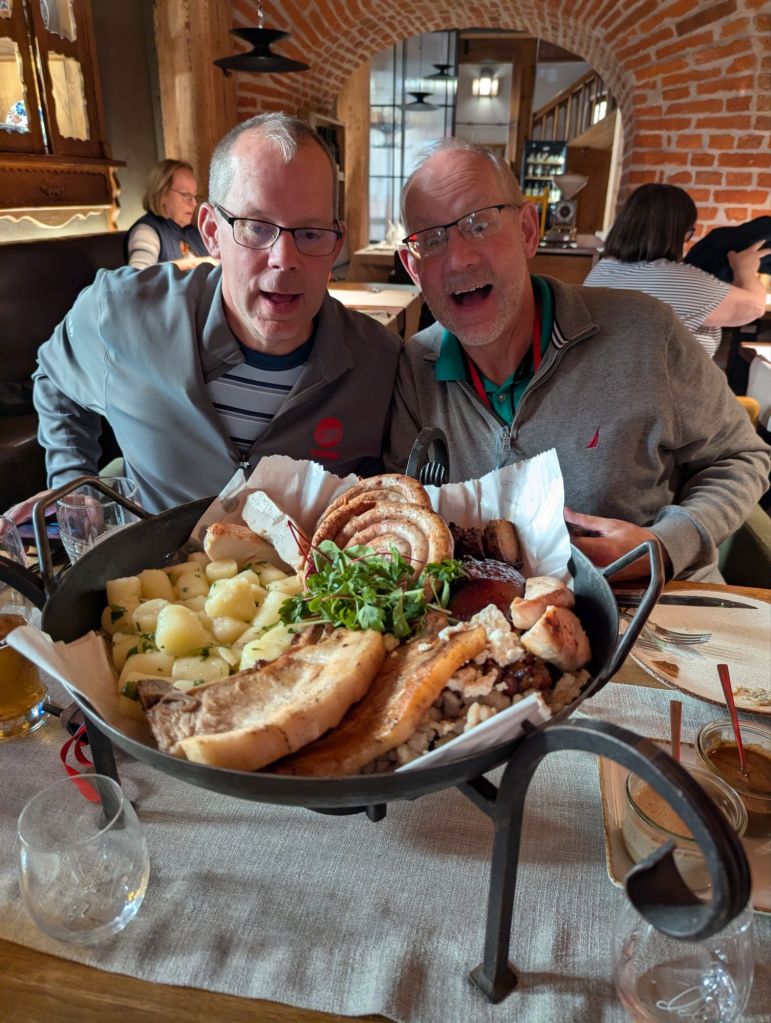
We left vibrant, growing Gdansk for Torun, about 2 hours south. The highways are new and the drive was smooth. We had a local guide in Torun, Paul, or Pawel, easily followed since he was so tall. Torun was the birthplace of Nicholas Copernicus and there are many monuments to him and his achievement: proving the earth and planets revolve around the sun. A conceptual scientist, he was more mathematician than inventor and his theories changed the worldview, literally. Torun also is famous for gingerbread. First settled in the 8th century and later expanded by Teutonic knights as a crossroad village on the Vistula river, it is one of Poland’s oldest cities. Although 2 hours from the sea by 21st century bus, it hosted the Naval Academy in olden times. Smaller than Gdansk, it still was very busy and lively with locals and tourists strolling the wide, cobblestoned streets. A cosplay festival was on so lots of people were dressed in costumes and paraded through town. Never destroyed in WW2, there were original gothic and baroque buildings and of course, mostly in red brick. Lunch was at a local place, Spirchz, in a cellar setting. A continued theme of meat, meat, and more meat, this time served on a brazier. Oh, and more beer.
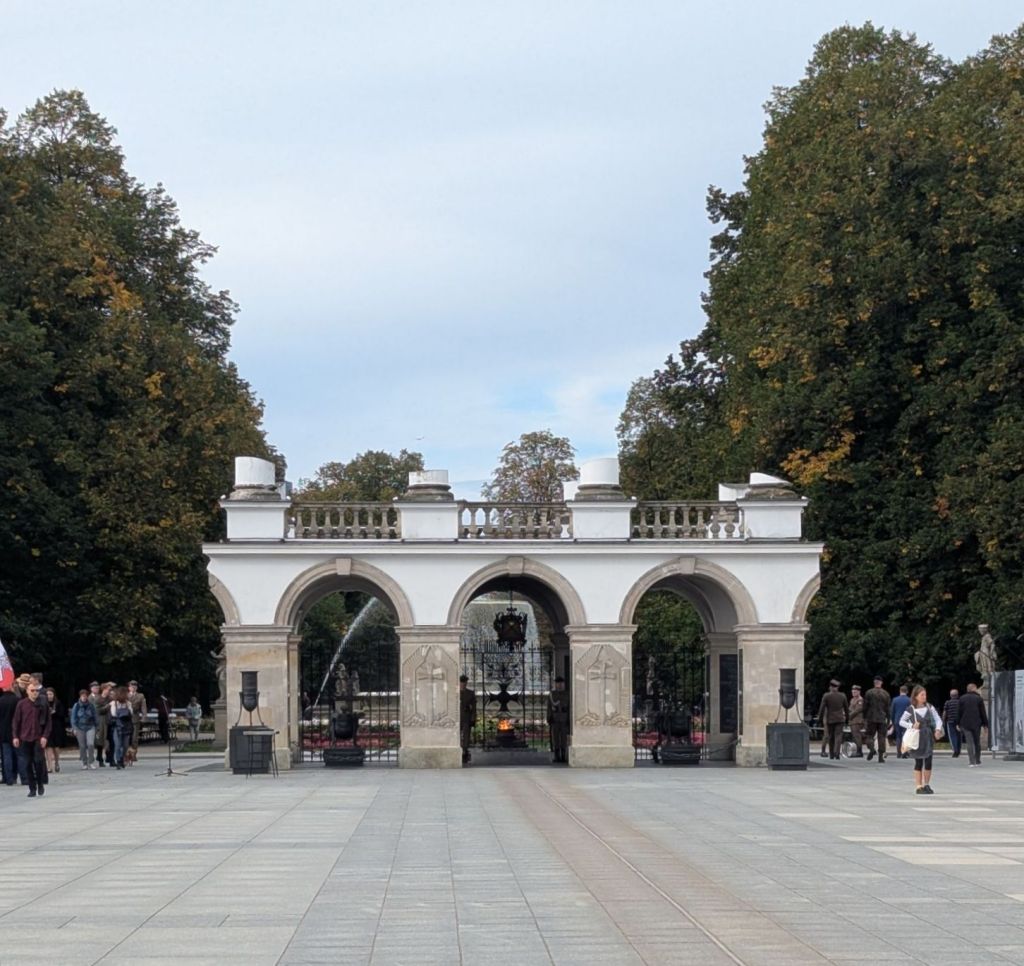
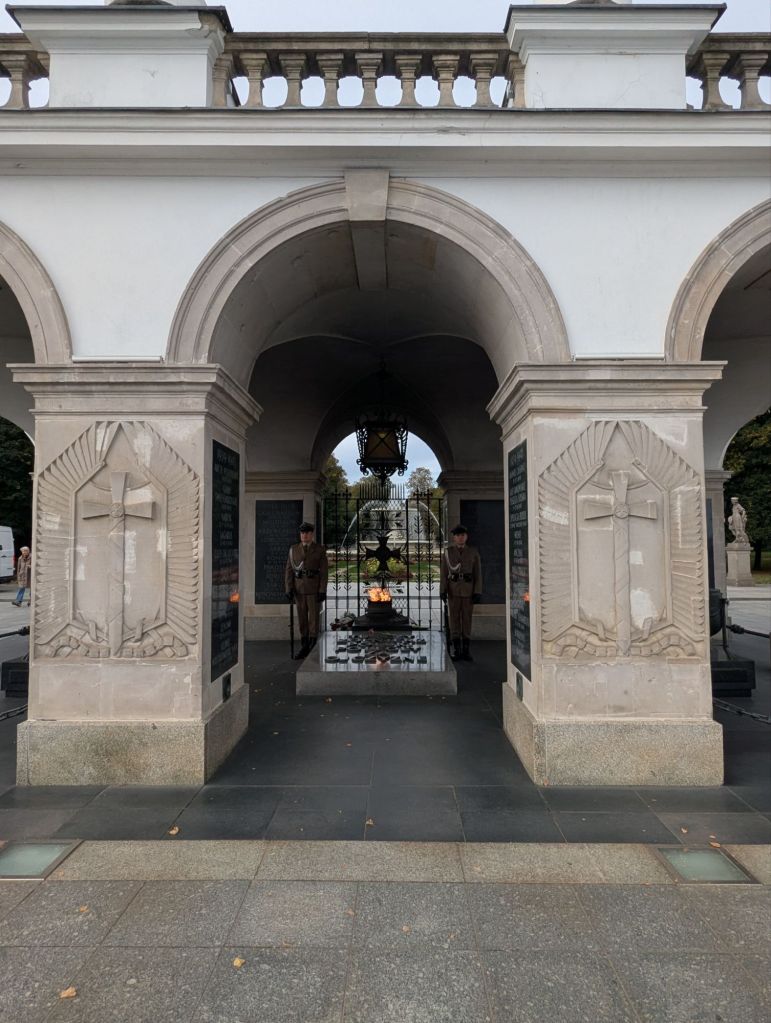
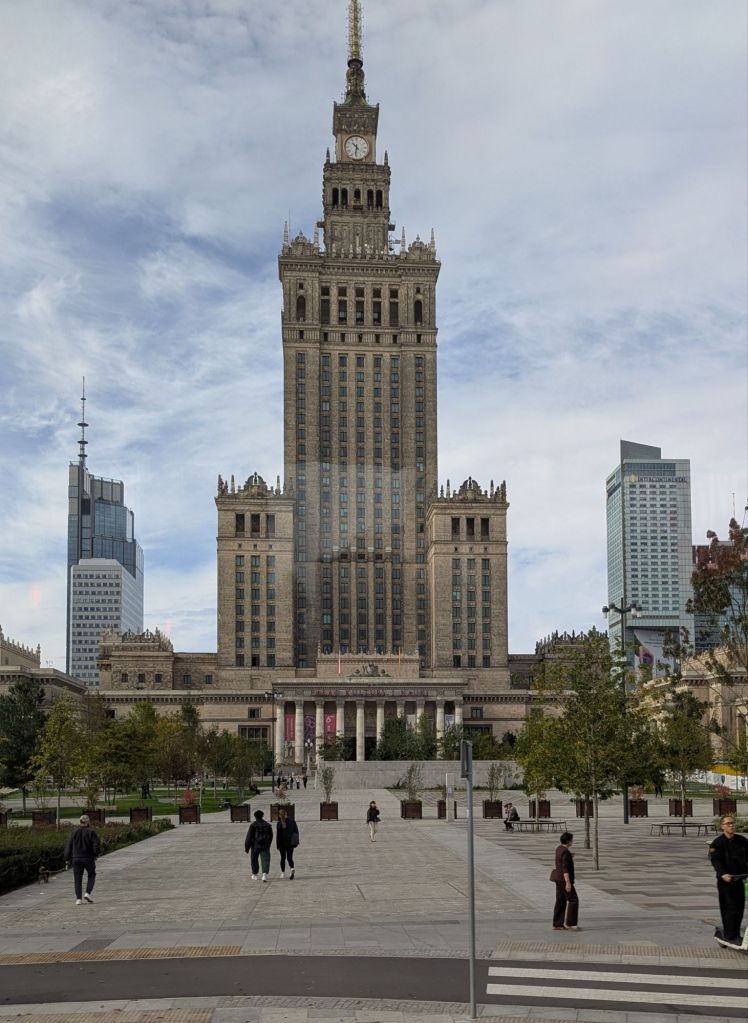
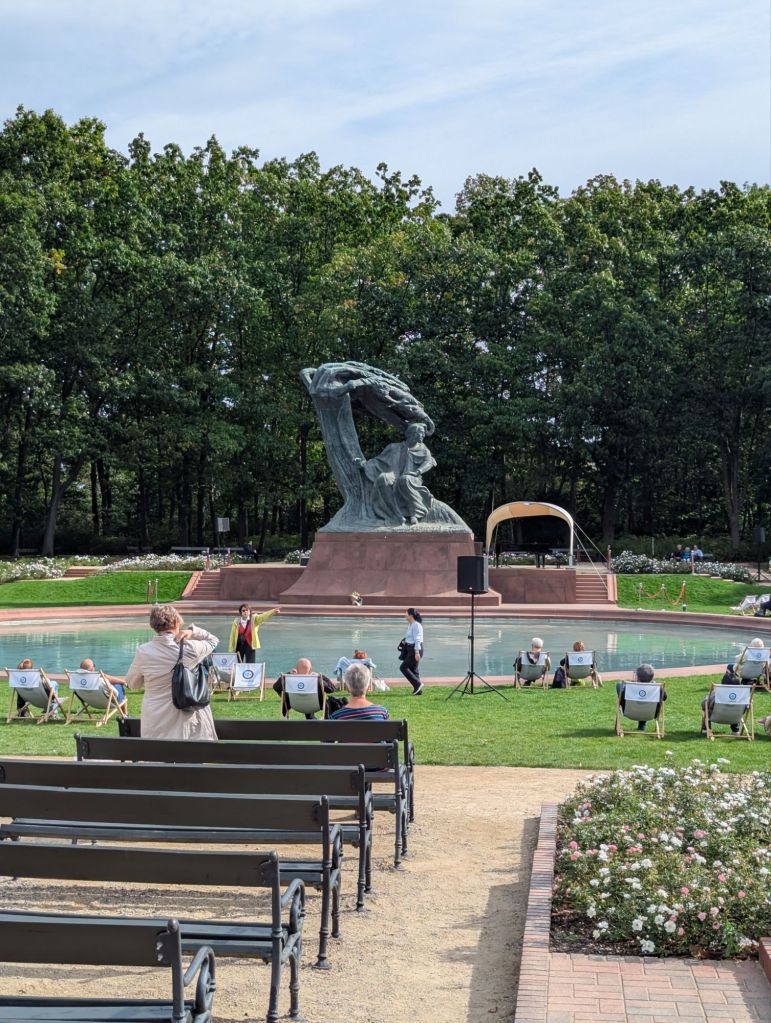
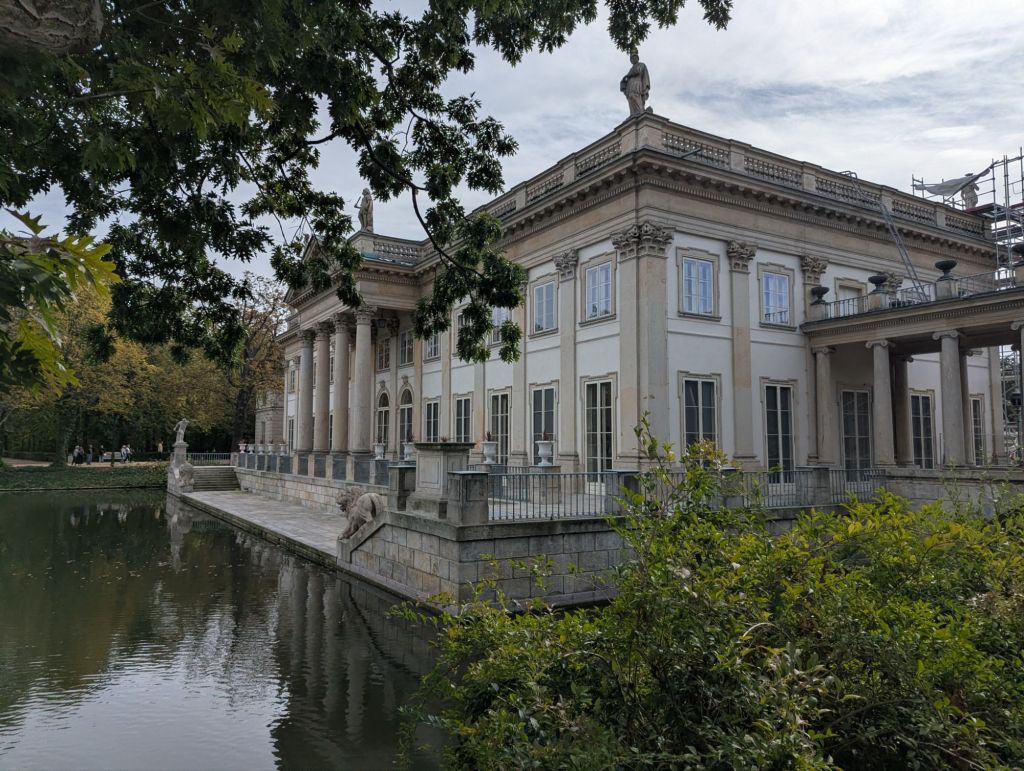
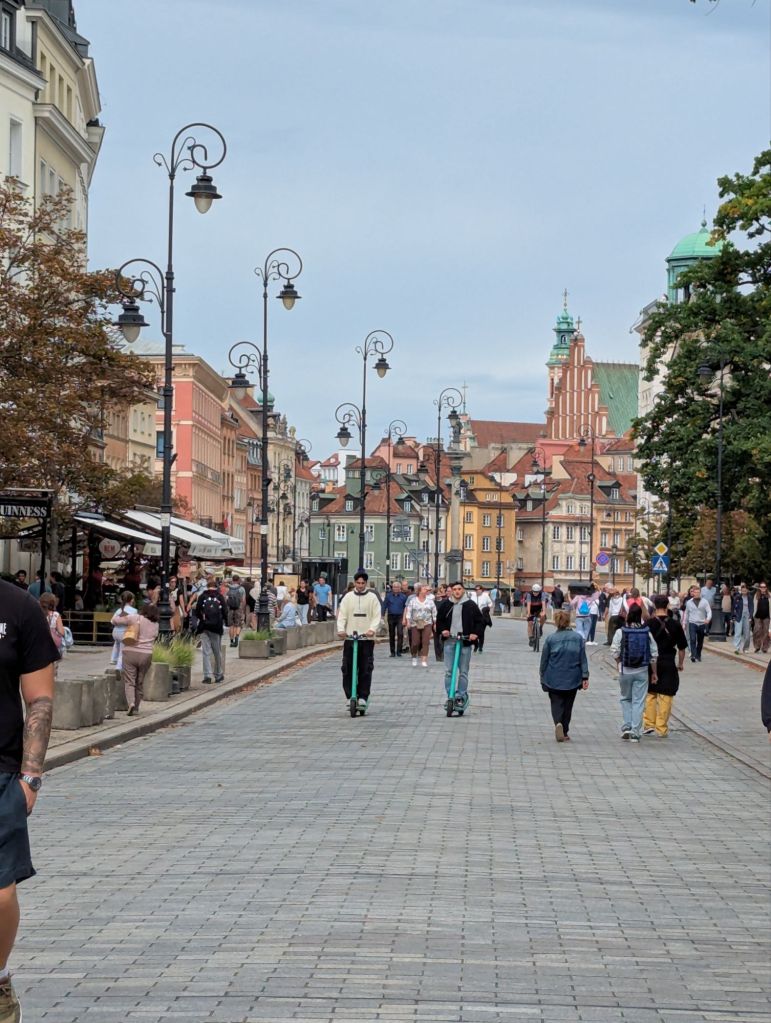
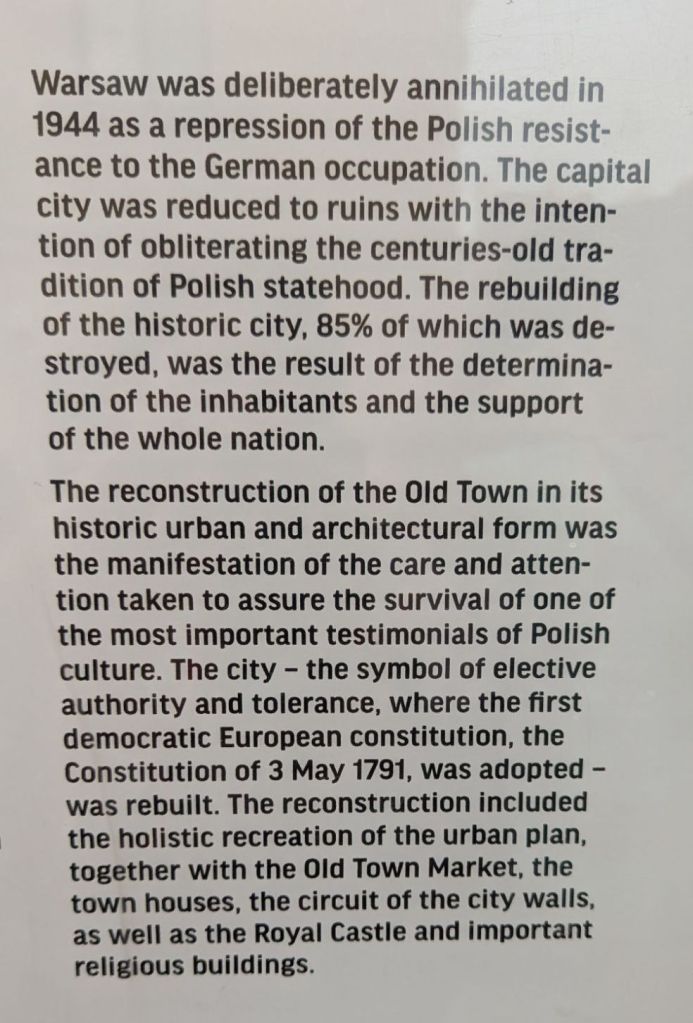
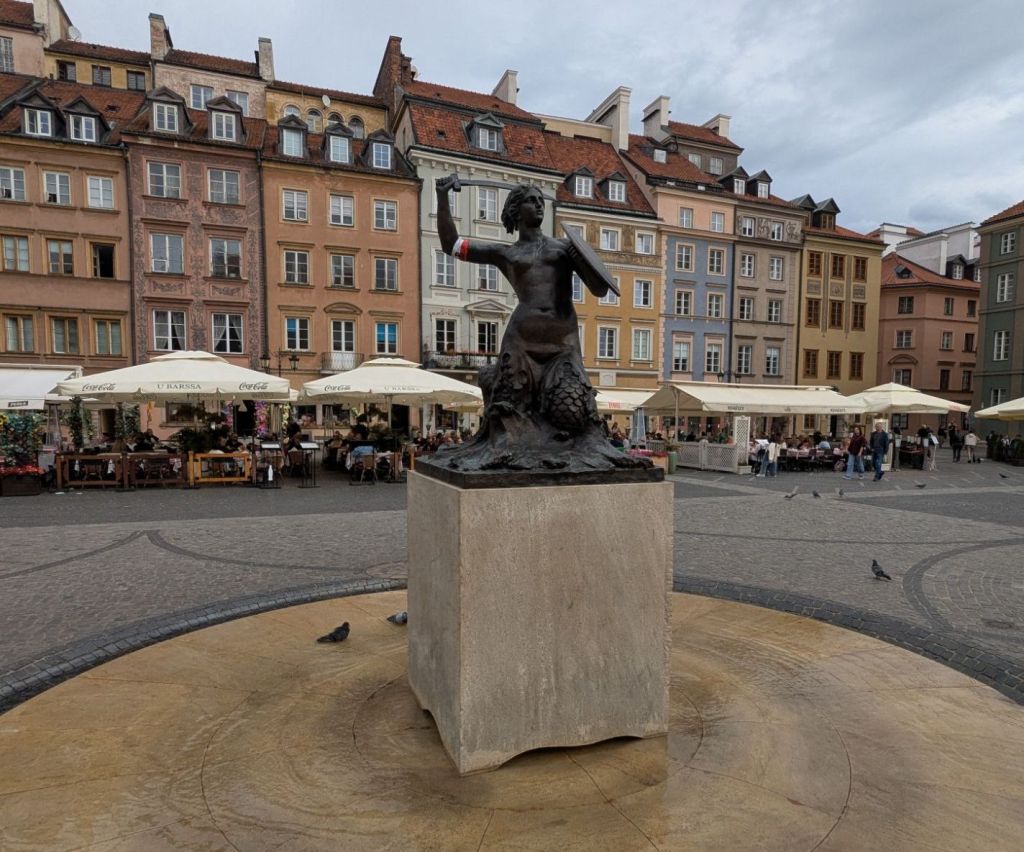
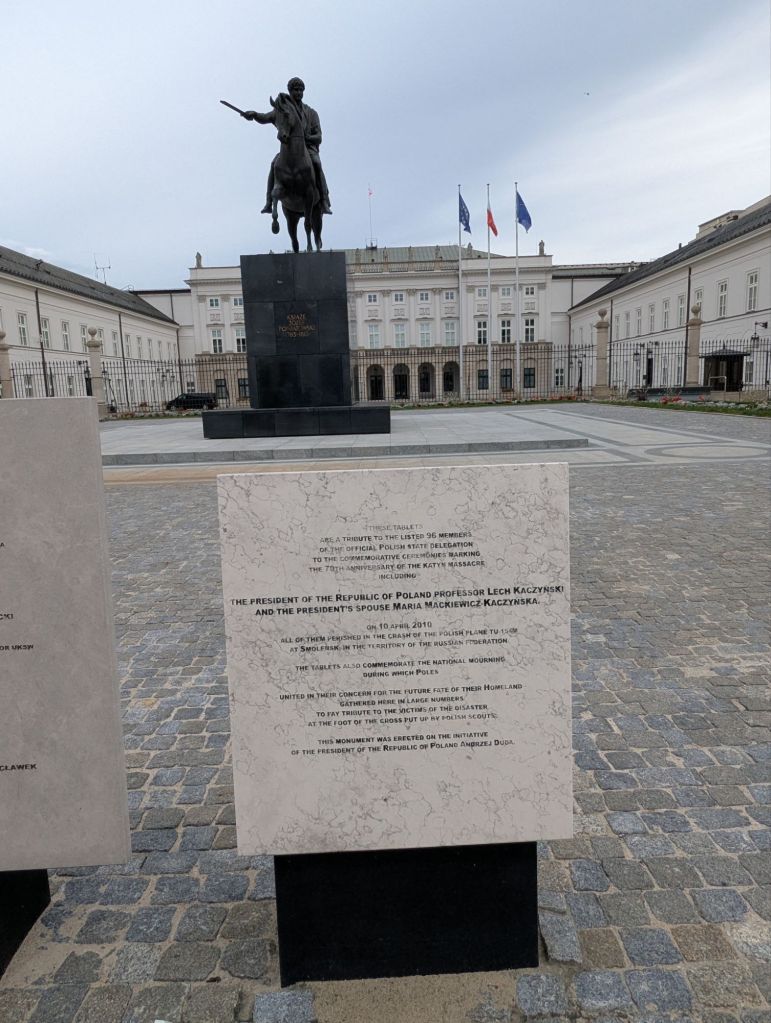
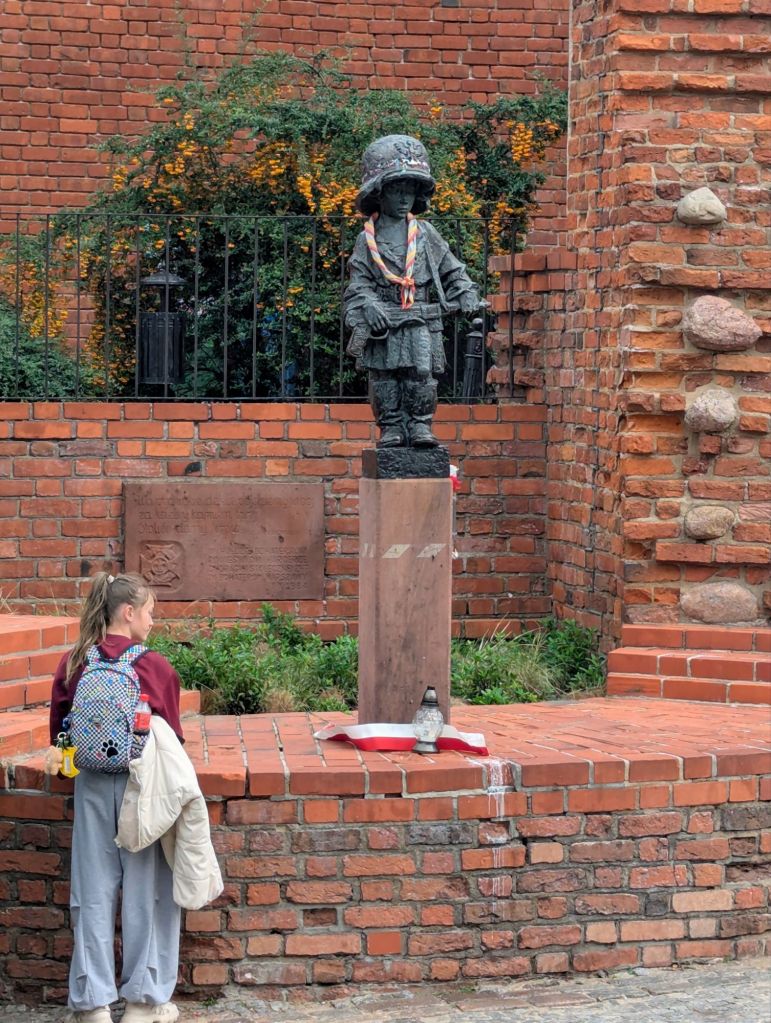
We left Torun and continued onto Warsaw, another 3ish hours through flat, beautiful farmland. Driving into the capital city of Poland, formerly known as the “Paris of Central Europe”, we saw new, shiny skyscrapers and modern office buildings on the wide, smooth roads. Our hotel, the Sofitel, was a Communist era hotel, newly updated, located in the main square. We began our Warsaw walking tour in the morning. Starting at the main square we approached the Tomb of the Unknown Soldier located beneath a fragment of the Saxon Palace arcade, the tomb and 24/7 honor guard under the 3 arches. We watched the changing of the guard as well as a military ceremony which are often held in this square. “The Pope”, Polish Pope John Paul II, held a mass here. The Polish population is over 70% Roman Catholic and pretty fervent at that. We then walked the Lazienki or Royal Park where Sunday piano concerts are held at the Chopin statue. The main palace, built around 1680, sits on a small island in a central lake. Warsaw is a “green” city with lots of green space and residents take advantage. We bussed back to the Old Town to tour the reconstructed neighborhoods built on a wide, walking boulevard. Most of Warsaw, as with the rest of Poland, was destroyed in WW2. On Aug 1, 1944 there was an uprising by the Polish Home Army against the Nazis in advance of the Soviets takeover. Expected to last 6 days, the resistance lasted 63 days; the Soviets waited outside the city while Nazi destruction squads decimated the city. Over 220,000 Poles died. Later, the Communists designated Jan. 17, 1945 as Liberation day and commemorated it with a monument, soon to be dismantled-indicative of the feelings of the Poles. The history of Russia in Poland has been one of betrayal: The secret Molotov-Ribbentrop pact was a non-aggression agreement between Germany and the Soviets that also divided eastern Europe between the 2 countries (later ended in 1941 when Germany invaded Russia). Following Germany’s attack on Sept 1, 1939 in Westerplatte, the Soviets invaded on Sept. 17. They rounded up the intelligentsia: 22,000 professors, priests, police were taken to the Katyn Forest and massacred; only in 1990 did Russia admit to their responsibility under Stalin, having previously blamed the Nazis.
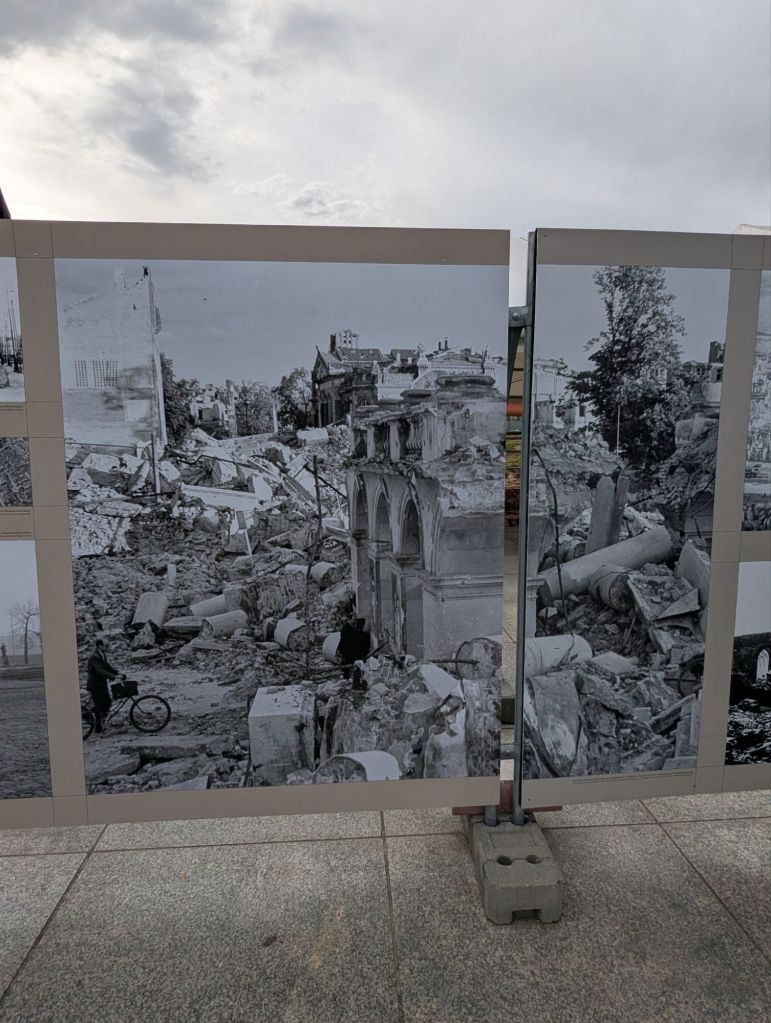
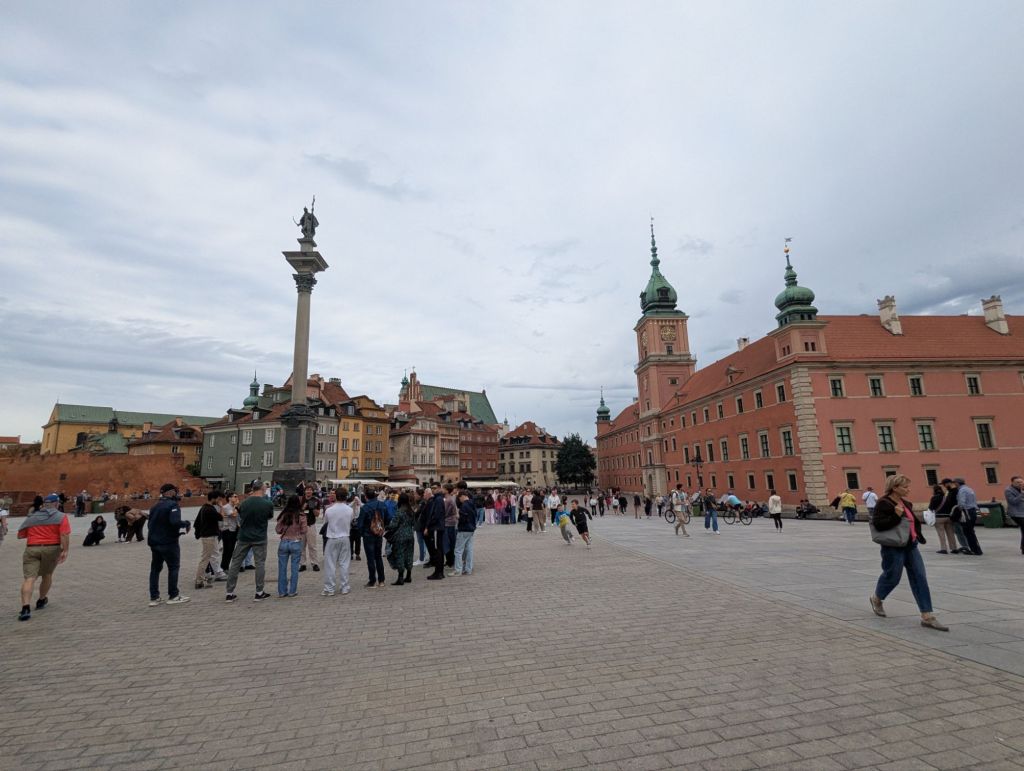
The Royal Castle in Warsaw Old Town was reconstructed in the Communist era at the behest of the Polish people, many volunteers helping to clear the rubble and rebuild. A museum inside showed the pre-war, during, and post-war images. Most of the artwork was either stored in the National Museum and/or stolen by the Nazis; some was repatrioted. Later that night we enjoyed another meat-fest accompanied with beer and great polka music. How anyone can play the button box (accordion with buttons, not keys) with agility, squeeze, and sing is beyond me! Goodnight Irene!!!
Part 2 of our Poland trip in the next blog.


One thought on “Polska! Gdansk to Warsaw”