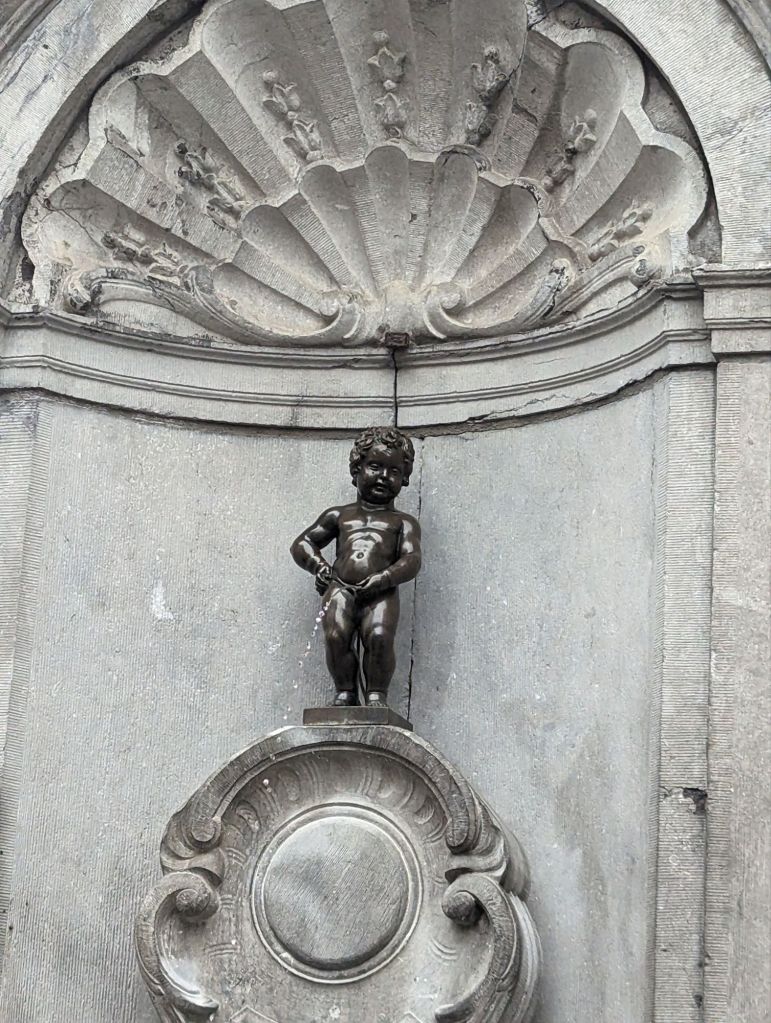
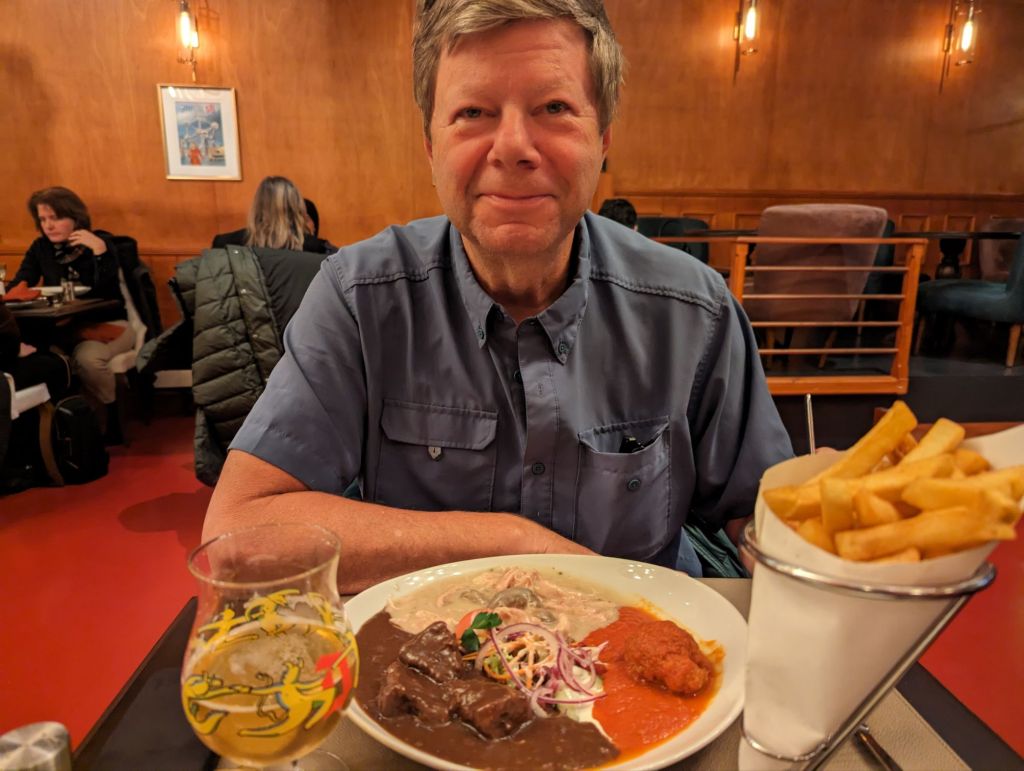
After spending a few days in Brussels and Frankfurt (the Lufthansa hub – about 1 day is all you need in each) we returned to Africa: Morocco!




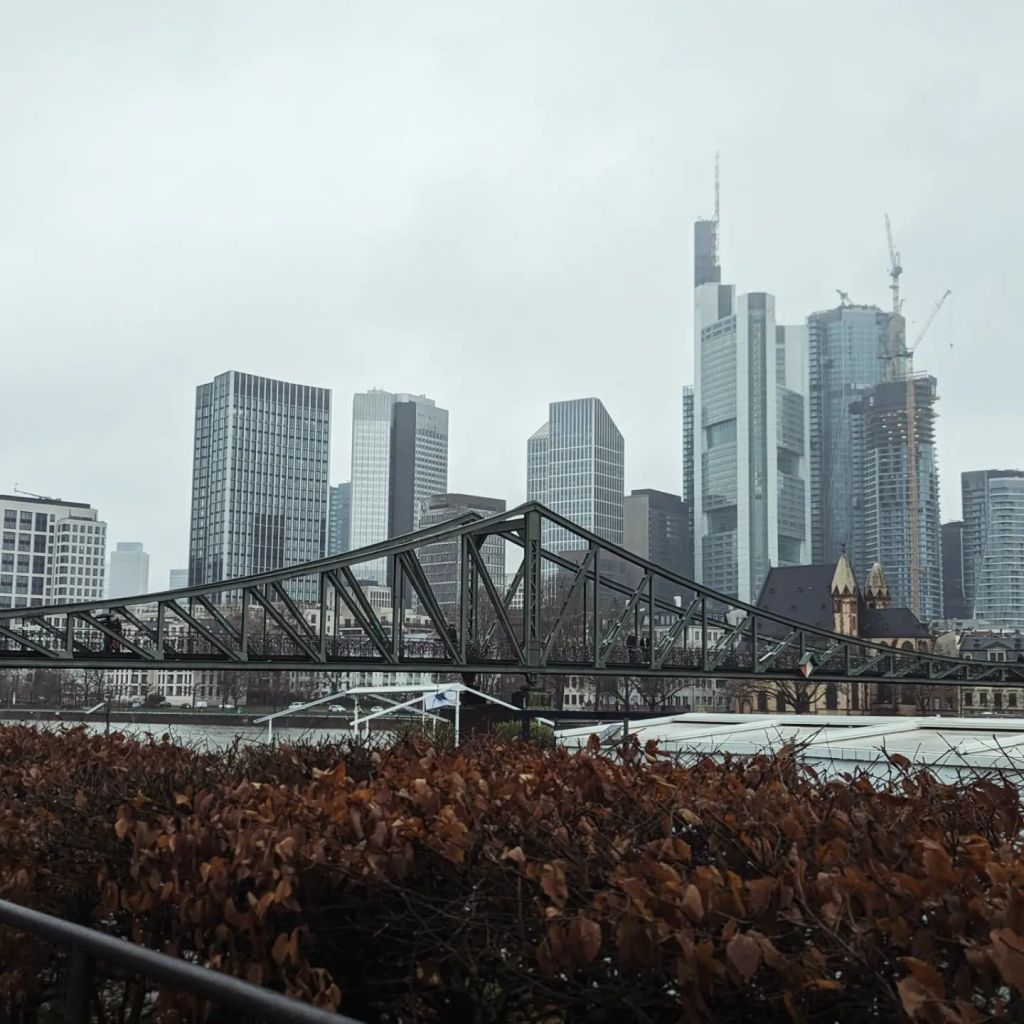

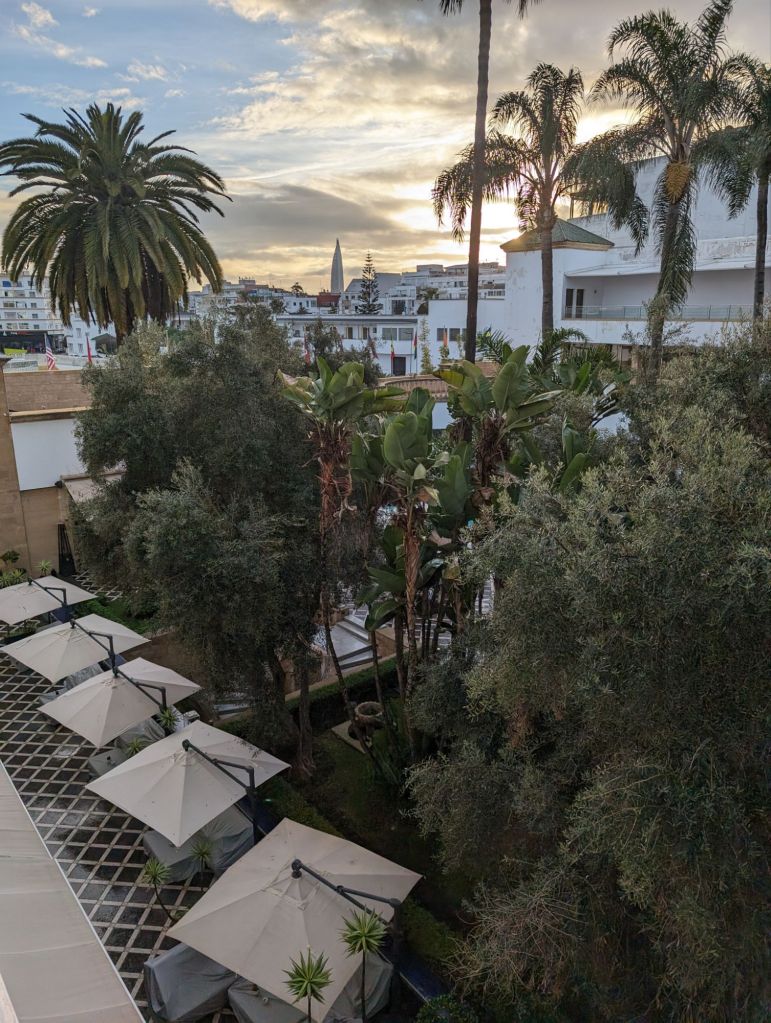
Our Lufthansa flight arrived 2am in Casablanca. We were met by our Odysseys Unlimited Tour rep and driven 1.5 hrs to Rabat, the capital of Morocco, on the Atlantic coast southwest of Tangier. We passed numerous checkpoints along the way but our van, the only vehicle on the road at the hour, was unhindered. We arrived at our hotel, the La Tour Hassan Palace, at 4 am and promptly went to bed. We had 2 days to rest and explore before our organized tour of Morocco began. (We had booked our own flights but had OU book our transfers and hotels). The hotel was magnificent with its mosaic walls and intricately carved moldings and doorways. The central garden and pool area were inviting, though the water was cold and there were occasional sun and showers. The air conditioning was nonexistent but we kept the windows open and all was well.
In the first millennium BC Phoenicians likely used this area as a port where the Bou Regreg river meets the Atlantic Ocean, then ancient Berbers and Romans and Jews occupied the area until its occupation faded. Muslims came to the area in the 7th century and have maintained Islamic influence since.
In the early 17th century the port of Sale, the sister city of Rabat just across the Bou Regreg river, was a haven for Corsairs and Barbary pirates who were former Muslims or Moors ejected from Spain. These disaffected Spaniards-Muslims and Jews- took revenge on Spanish vessels and over time started targeting other ships too. Piracy continued until the 19th century. Slavery of black people and white pirate hostages was abolished in 1912.
French colonial rule was established in the early 1900’s. There’s definitely French influence here: architecture, infrastructure, and language. Most people speak French and Arabic and maybe even Berber- the indigenous population (aka the Amazigh) though English is becoming more common. Morocco achieved independence in 1956 under King Mohammed the V. The name “Morocco” is derived from “Marrakesh” for ‘the land where the sun sets’ and is said to have ‘cold weather with a hot sun’. Rabat is translated from the Arabic as “citadel”.
We spent time walking the neighborhoods around the hotel which were mainly businesses, schools, or embassies, and a park. We visited a local church, St. Peter’s, which was built in the early 20th century. It was light and airy and spacious but with some Moroccan details and stucco carving above the windows. We failed at our first attempt to withdraw Dirham (Moroccan currency, about 10:1 exchange rate with USD) but were successful later. That night Greg and I dined at the Moroccan restaurant at the hotel served by gentlemen in white jallaba (caftan robes with a hood) and red fez hats. We ordered too much food and a nice 1/2 bottle of Medaillon Cabernet. Lamb couscous and kefta kabobs. Yum! The next day we wandered around again avoiding the sporadic showers which Moroccans were grateful for as they are suffering a 3 year drought. The rest of the group and the tour director, Salah Eddine, arrived and we dined at the hotel buffet while suffering the stampede of other guests who don’t know the meaning of ‘queue’. Or ‘excuse me’.
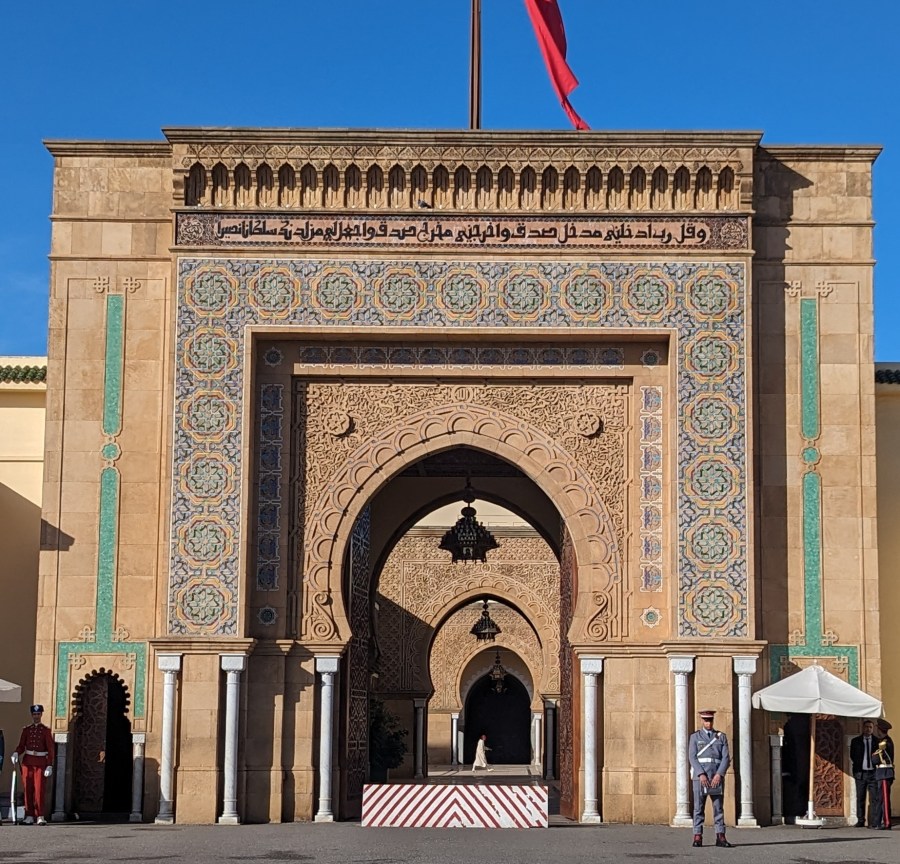
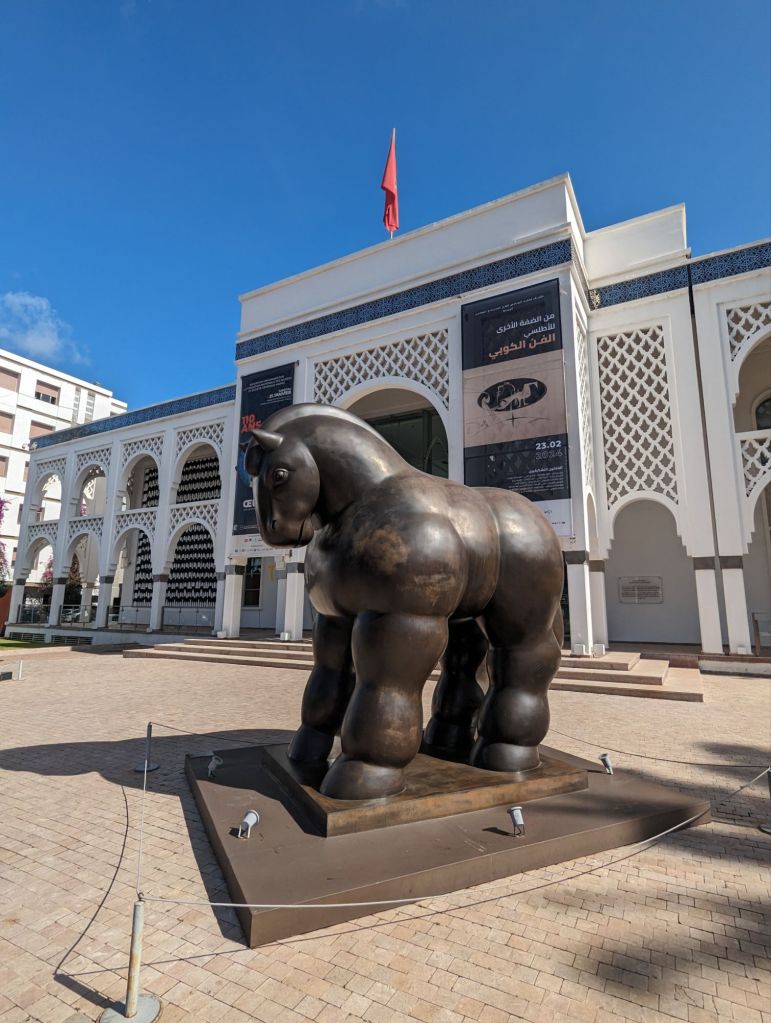
Our first day we boarded the bus driven by ‘Bob’ and assistant Yusef to visit local Rabat and Sale sights. We stopped at the entrance to the King’s Palace to observe the beautiful guarded gate and learned a bit about the monarchy and history of politics in Morocco. There are 36 parties in Moroccan government. The King and Prime Minister lead the executive branch while the legislative has 2 chambers. The current king is Mohammed VI, son of Hassan II who reigned from 1961 to 1999 and grandson of Hassan II, the first king of Morocco. Next we visited a museum of archeology with local artifacts from Morocco, especially from Volubilis, a Roman ruin nearby. We also visited the modern art museum. Modern art still hasn’t grabbed me (“untitled”? I mean, doesn’t the artist know? How will I?) But I recognized Botero’s horse, donated by the king.

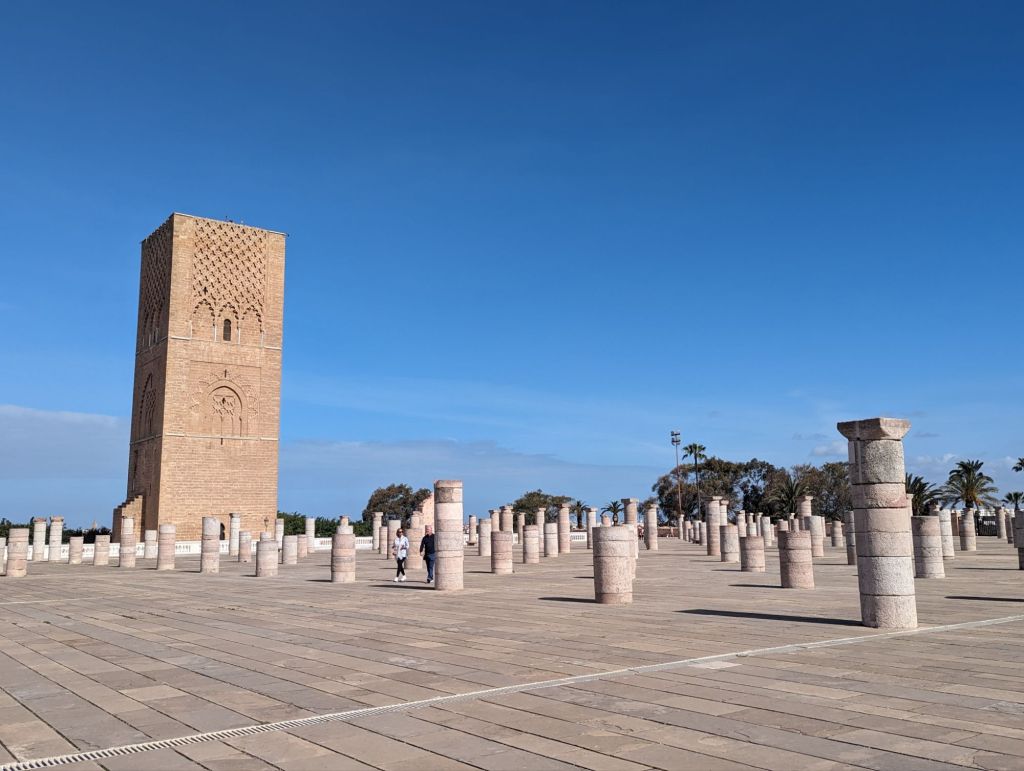
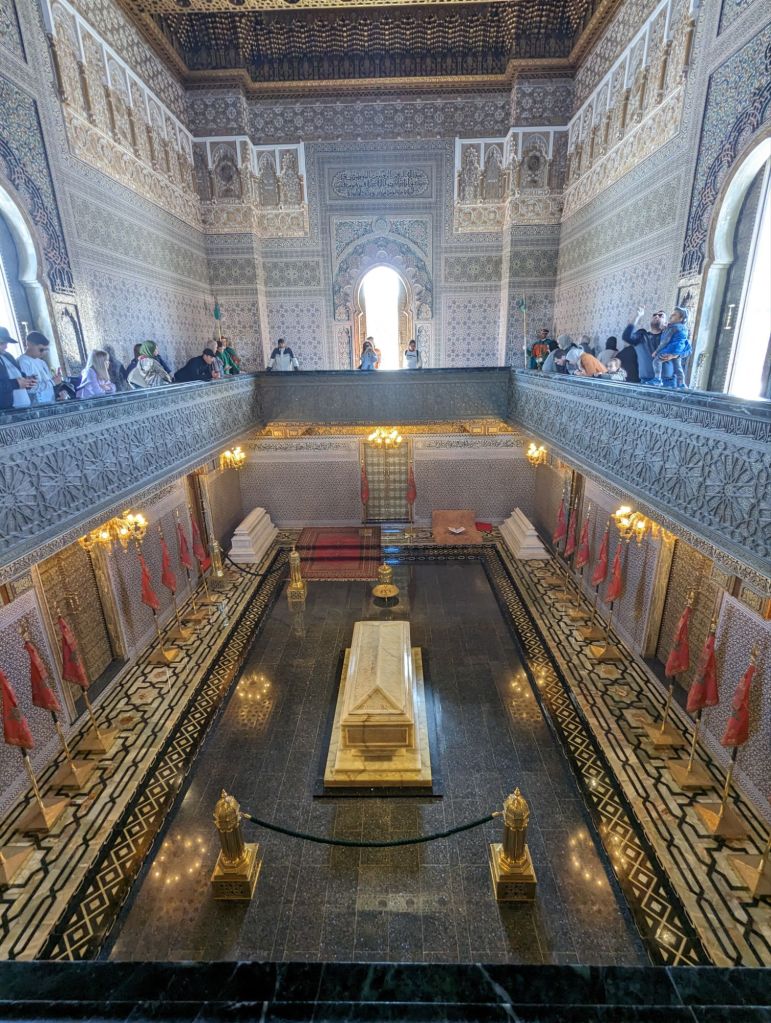
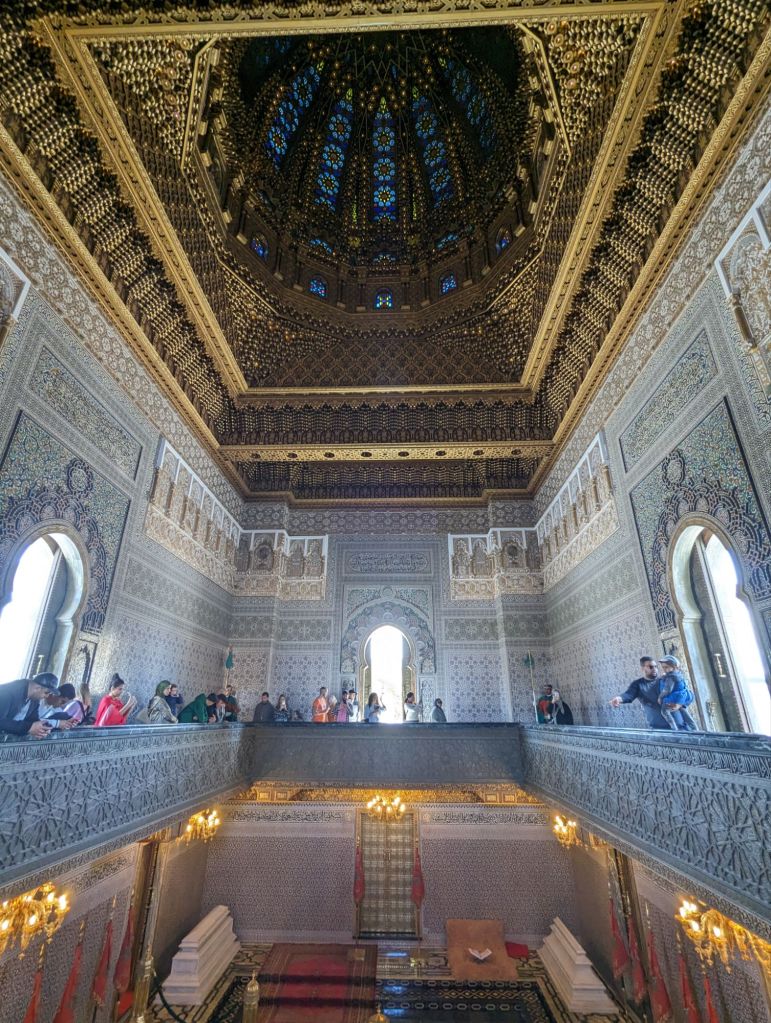
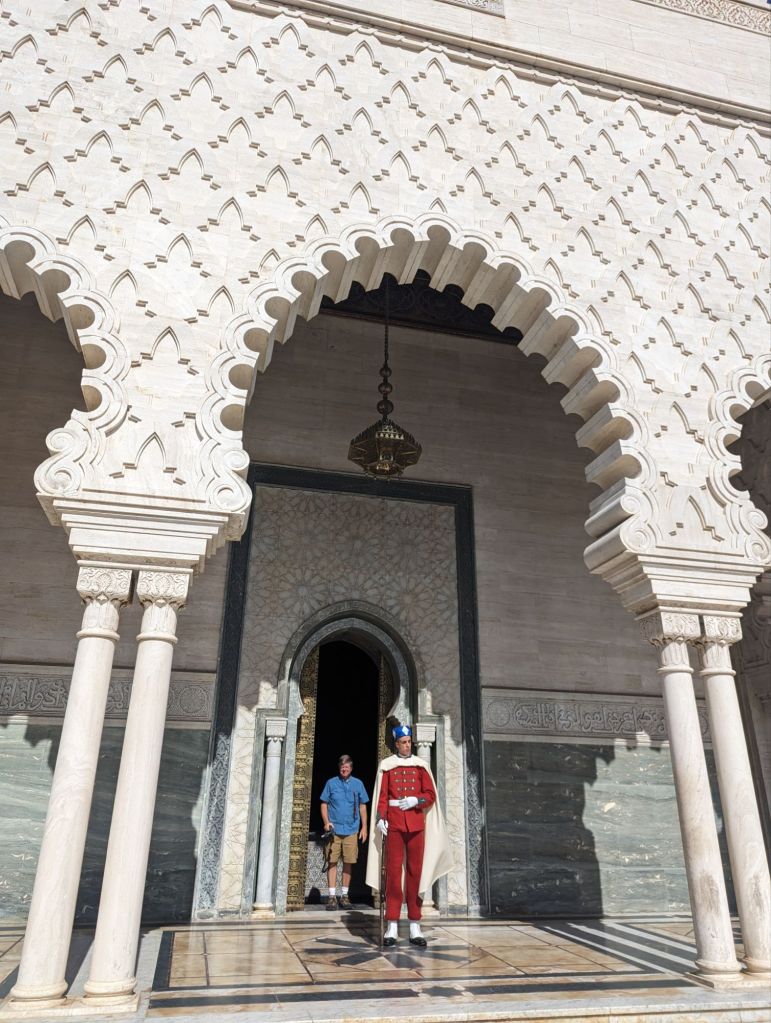
We next visited the unfinished mosque from 1199 where a series of shortened posts stood in formation marking the surface of what would have been the largest mosque outside of Mecca. The mausoleum of King Hassan II, the father of the current king is here. The guarded mausoleum was adorned with fantastic mosaics, brass ornamentation, and an ornately carved and painted ceiling. Guards stood (mostly) at attention at each opening and in each corner. The tomb was on the lower level which we observed from above. We walked across the street to get a good view of Sale across the river. The Hassan II ‘cats eye’ tower-the tallest building in Africa at 51 stories and the Grand Theatre designed by Zaha Hadid were visible but both are unfinished. The theatre is designed to look like a cobra’s head. There were grass whistlers: guys standing around to blow whistles if you stepped on the manicured grass. Government employees!

We lunched at a private riad, a traditional home with an open courtyard garden in the center known as a “garden of paradise”. (A home without a courtyard is a ‘dar’). We dined on chicken, beets, carrots, eggplant and peppers. The almond paste and sesame cookies were so good along with the traditionally served tea: using gold inscribed colored glasses the hot tea (usually mint, served with or without sugar) is poured from an ornate silver teapot with the teapot extended high overhead.

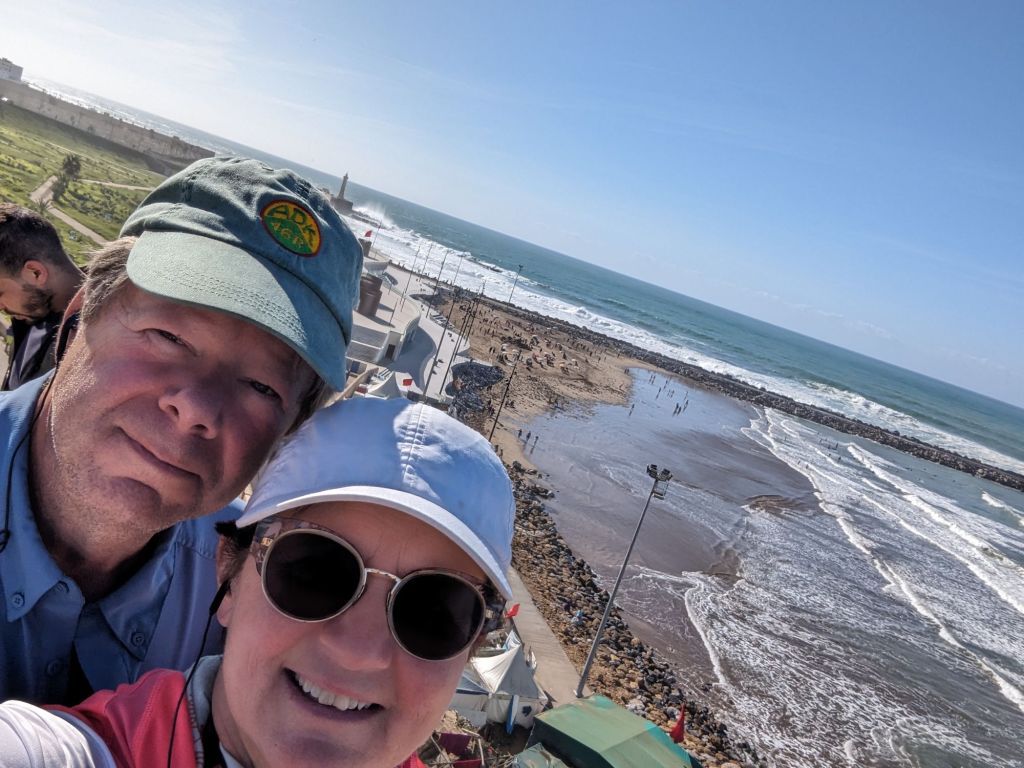
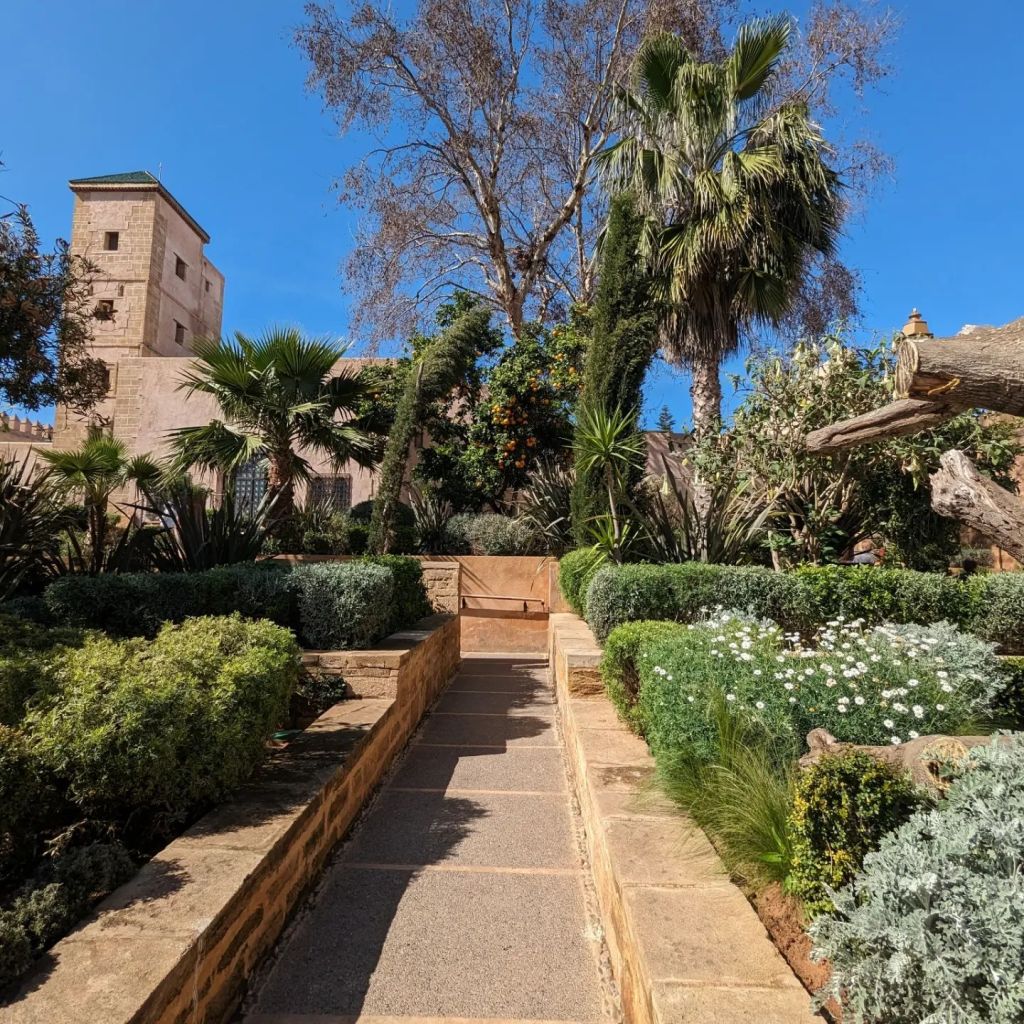
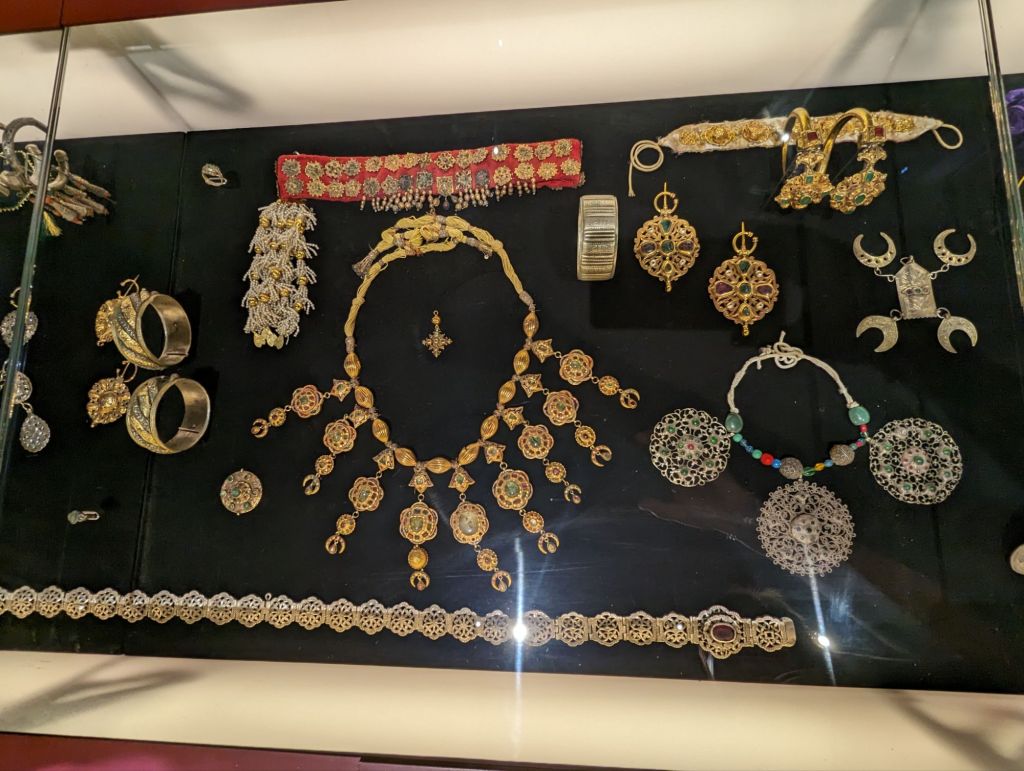
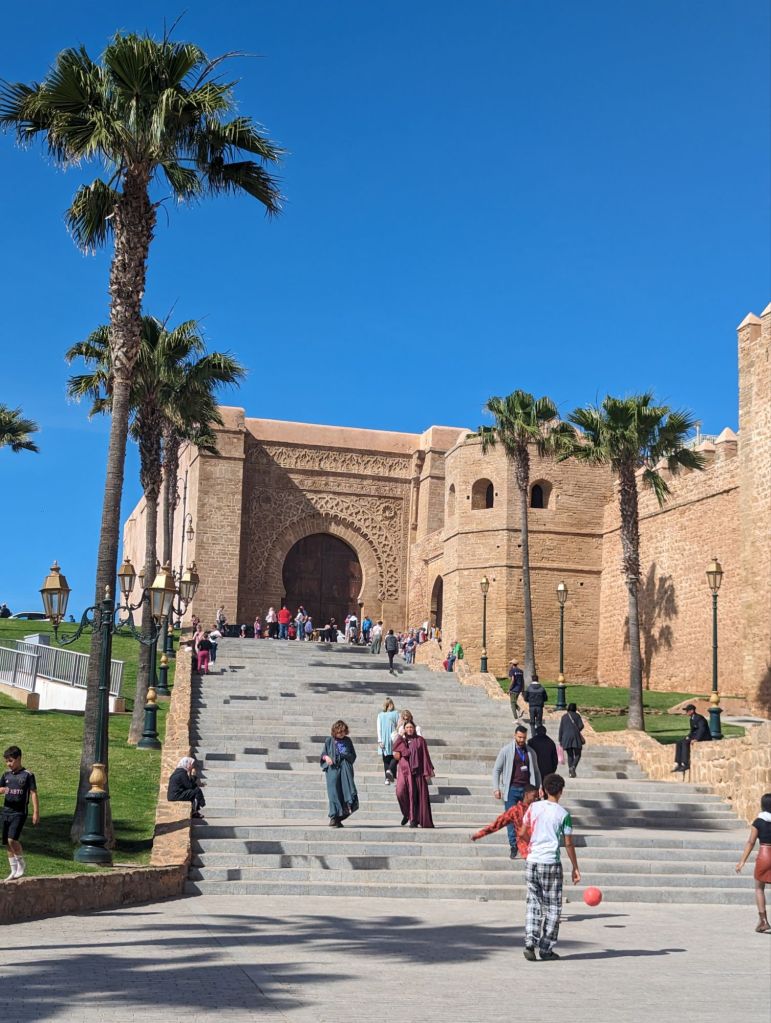
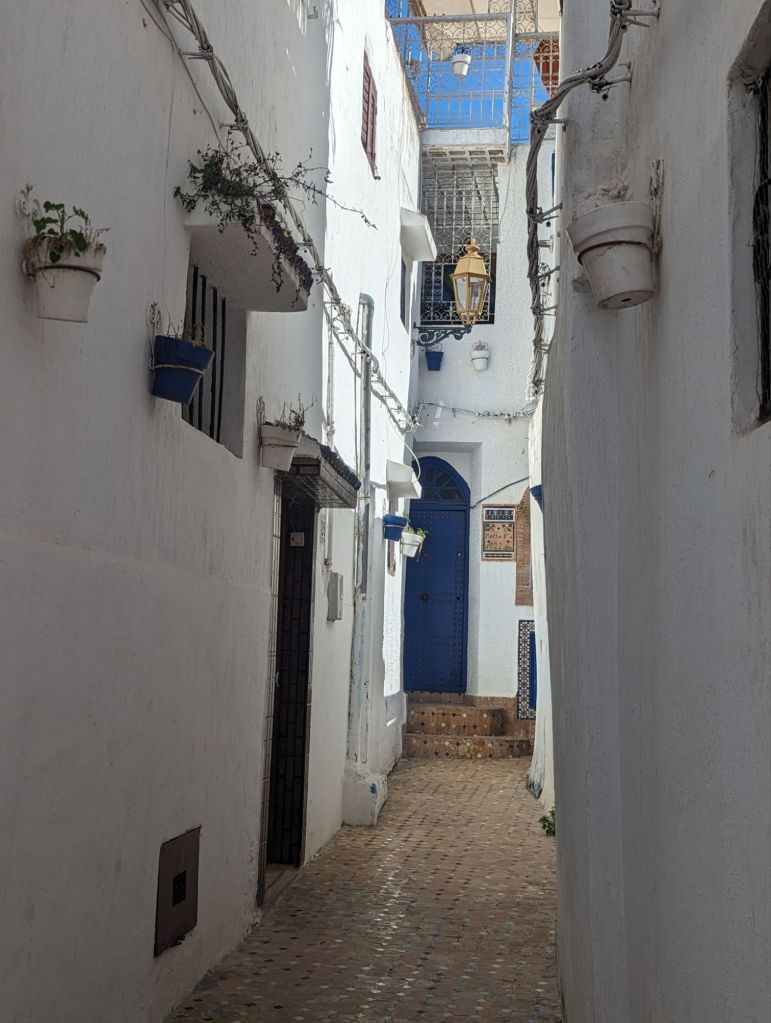
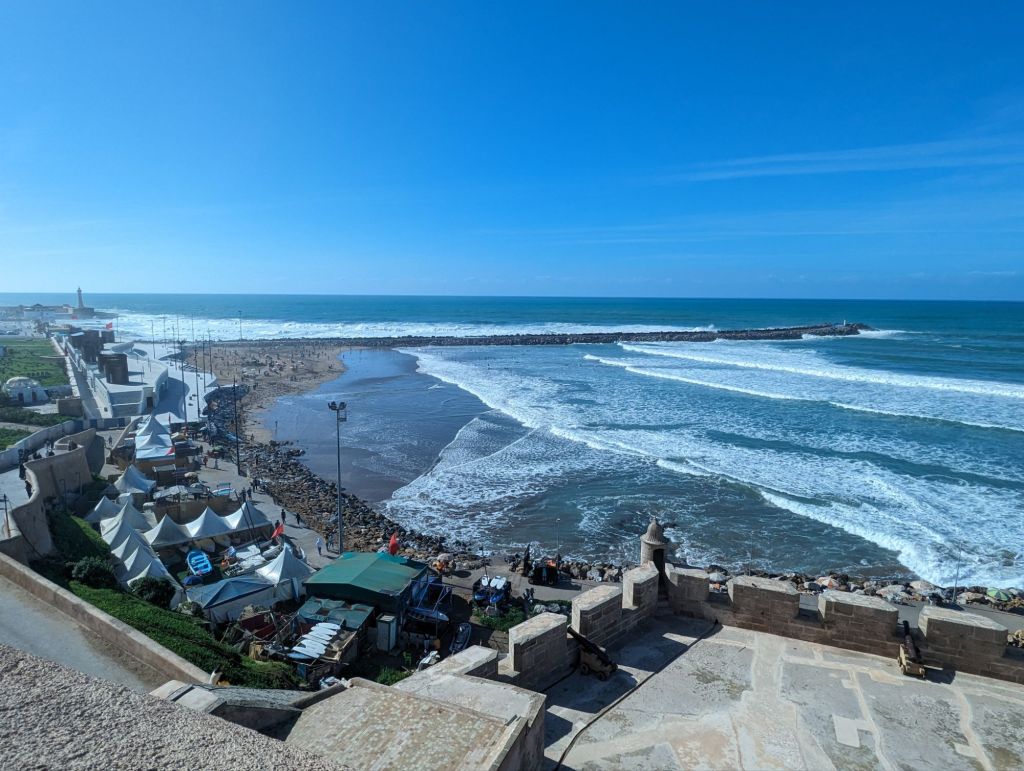
The afternoon was spent visiting the lush Andalusian garden at the Kasbah and the Oudaia Museum. The museum housed gorgeous jewelry, adornments, and caftans. These simply constructed clothes were beautifully styled with stunning fabrics, embroidery and jewels! The Kasbah of Oudaia is located on a hill overlooking the mouth of the Bou Regreg river and across from Sale. We wandered the alleys of the walled Kasbah, or citadel, until we came to the lookout over the Atlantic where we could see an oceanside cemetery (all headstones face east towards Mecca), surfers, tourists, and cats lounging everywhere. The Kasbah was built around 900AD and was used as a summer residence by royalty; now it’s a neighborhood for artists and vendors.


Once freshened up at the hotel we headed to dinner at another riad restaurant tucked within a neighborhood with complicated alleys. Wine, briwate (samosas), chicken and veggies with a Moroccan spicy flair, and a phyllo dough dessert covered with a sweet sauce and dramatically served mint tea, of course.
The next morning after our buffet breakfast (where they serve my “black tea with milk” as a tea bag in milk) we departed for Fez but with two fabulous stops on the way: Meknes and Volubilis. The sky was menacing.
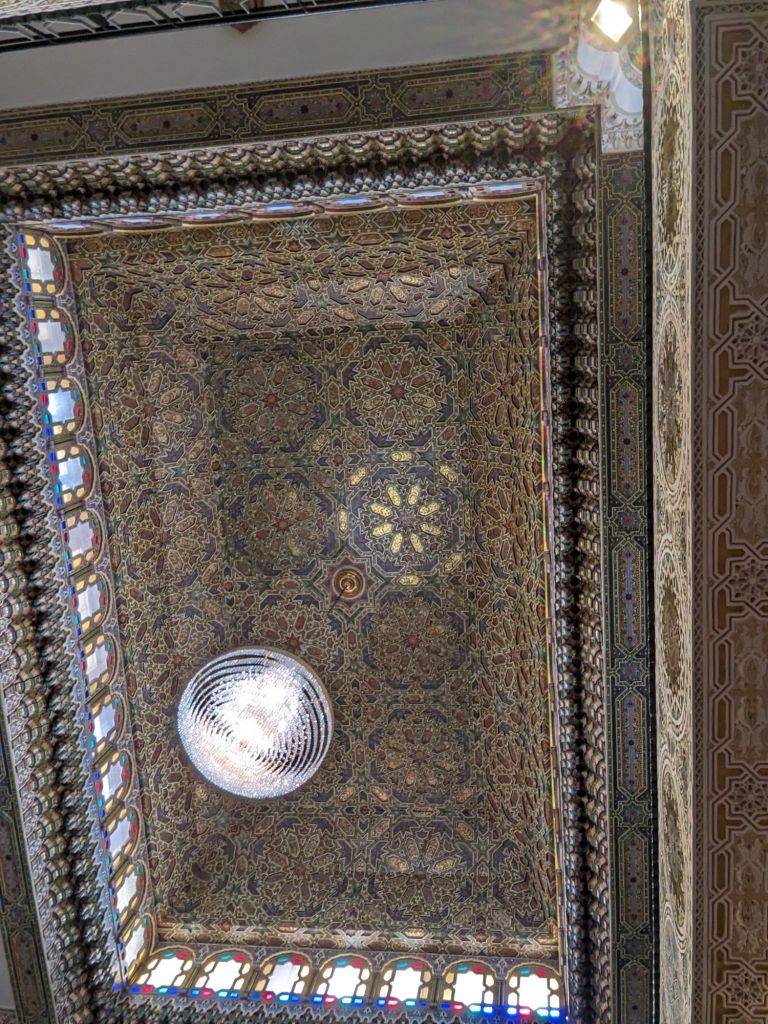
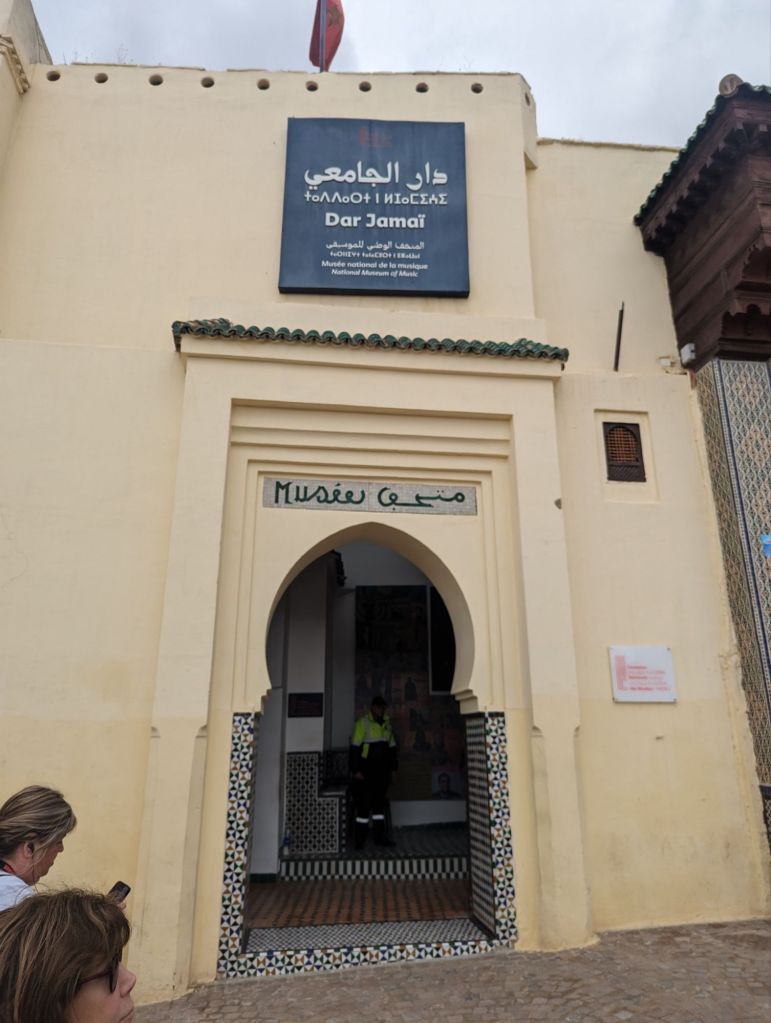
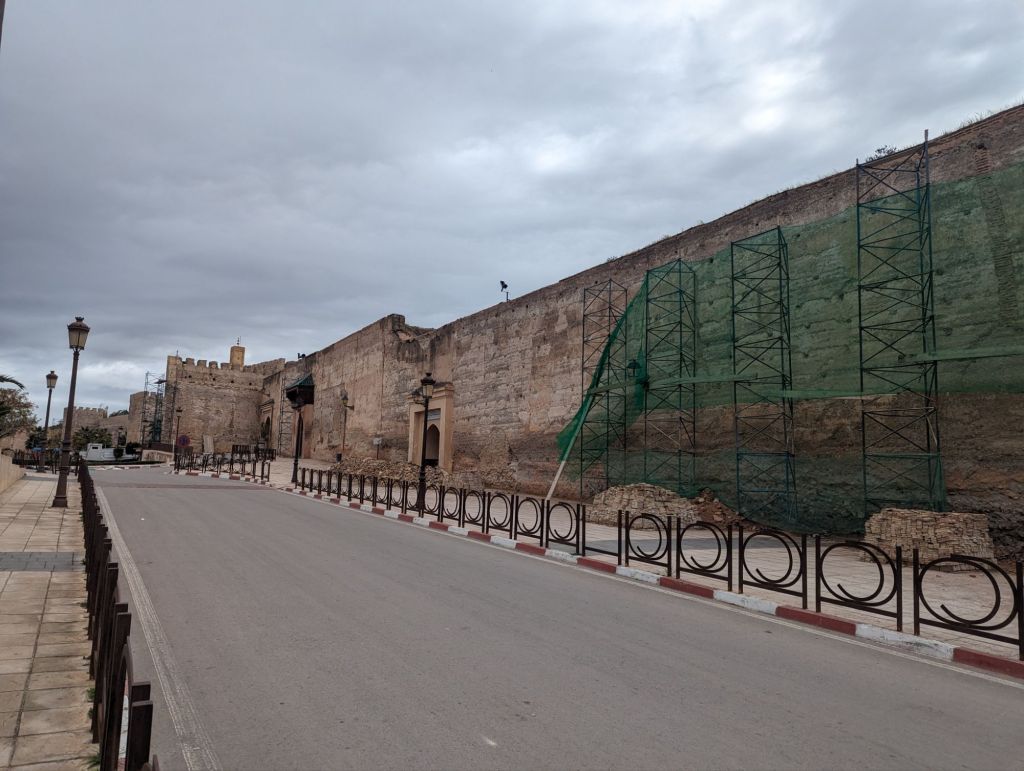
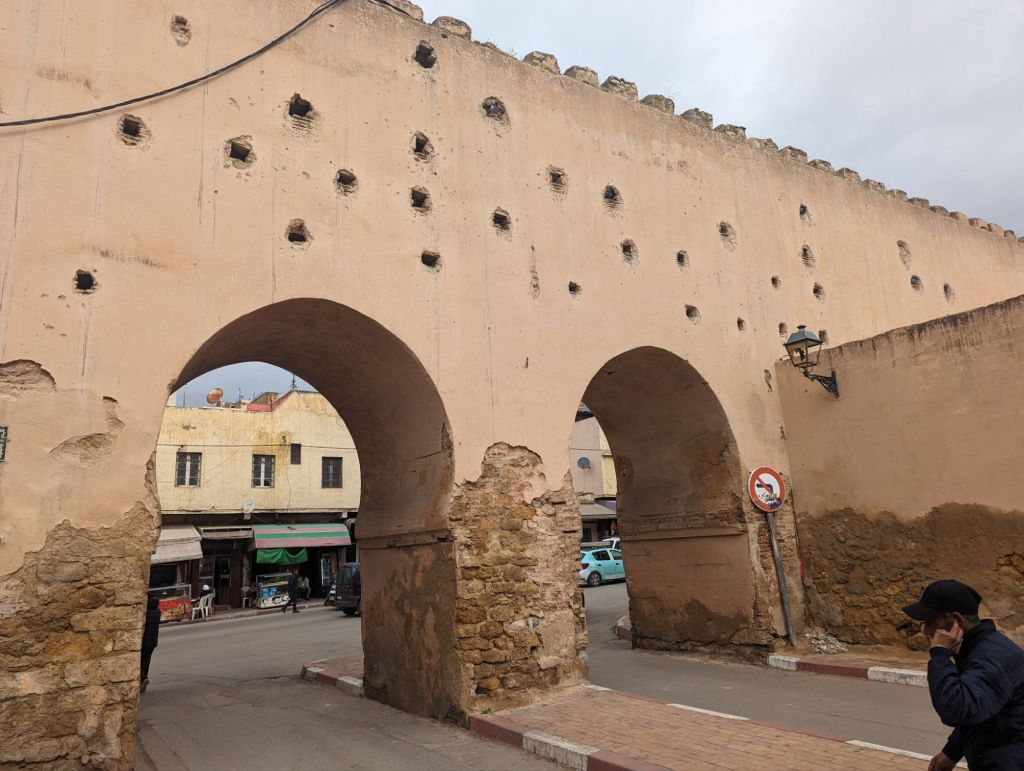
Meknes appropriately translates to “city of olives” and was the capital of Morocco in the early 18th century. Now there are 1 million people and many schools and colleges. We drove through miles of olive groves as we approached, arriving at Meknes about 2.5 hours later. Meknes is a triple walled city built by Moulay Ismail, an Awali Sultan and second ruler of Morocco whose reign lasted 55 years. He was particularly brutal and paranoid as well as being a sex addict. With 4 wives and 600 concubines he fathered over 800 children. The city was considered to be the Versailles of Morocco as he was a friend to Louis XIV of France. Moulay Ismail built a fierce army of sub-saharan slaves called the Black Army. The wallty has multiple intricately carved and tiled gates; the walls stand up to 20 meters high. Meknes is currently under restoration under UNESCO direction so there’s scaffolding everywhere as they replaster the pastel colored, crumbling walls and rebuild the medina stalls. After a visit to the medina and quickly perusing the wide array of goods in the narrow marketplace (piles of nuts, shoes, veggies, clothing) we visited a music museum with ancient musical instruments and videos on construction of them. The building itself was stunning with the intricate mosaics and carved wood. We lunched at another beautiful riad, again tucked away in a deep alley, this time dining on chicken couscous and veggies. For dessert: orange slices sprinkled with cinnamon and confectioners sugar. And tea.


The menacing clouds opened up as we drove to Volubilis, the most prominent Roman site in North Africa. Volubilis marks the furthest southwest corner of Roman habitation, dating from the 3rd century BC. (The furthest north is Hadrian’s Wall.) The ruins included pillars and arches from a basilica and outlines of homes with mosaic floors for this city of 15,000. Unfortunately at this point the wind was whipping with driving rain and with destroyed umbrellas we all scurried back to the bus. I was sorry to miss exploring the ruins further. With shoes and clothes soaked, we drove on to our hotel about 1.5 hrs further outside of Fes, the Hotel Sahrai. The hotel is fairly new and contemporary with concrete and glass walls and decorated with beautiful ornate carved stucco. The rooftop bar had a fantastic view of the entire city of Fez nestled between two mountains ranges: the middle and high Atlas. Our sea bass tagine and chicken and almond pastille dinner was delicious and we celebrated another tour member’s birthday with a chocolate dessert delicacy. The next day: Fez!


 My new reality
Your blog was amazing! We are leaving for our Odyssey trip to Morocco this week and am very excited after reading your notes and seeing all your photos. Thanks for sharing.
LikeLiked by 1 person
Have the most wonderful time! We booked an Odyssey trip to Egypt next Feb.!
LikeLike