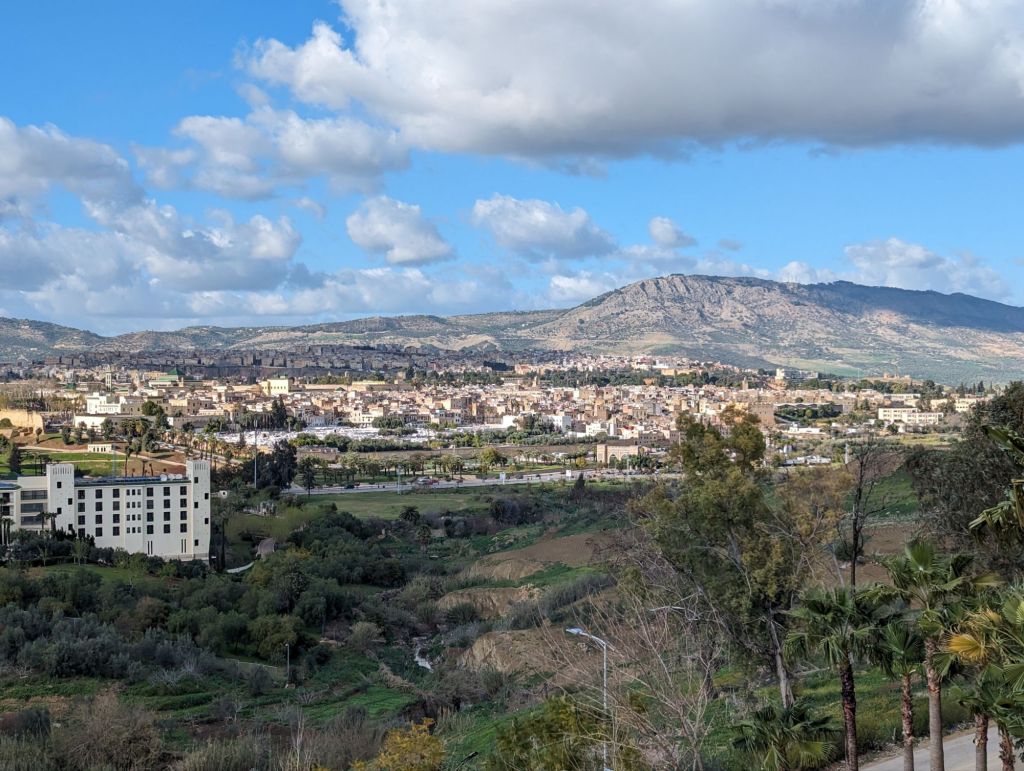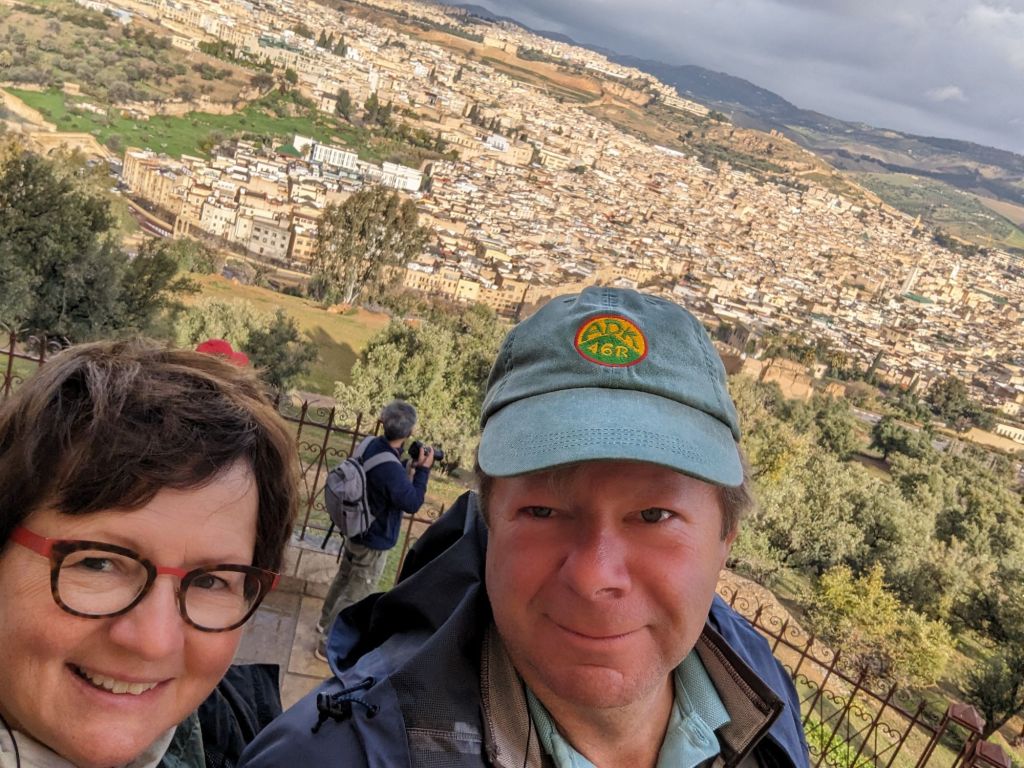
The morning started cool with sun and clouds and only a chance of rain. We headed out to explore the medina of Fez, or, Fes. First, though, an overview of the city from a hill fortification by our local guide, Achmed. Fes is the cultural, religious, and artisan trade center of Morocco and is called both “the Athens of North Africa” or “the Mecca of the West” and the name means “west of the mountain”. It has been designated the capital of Morocco several times by different kings. Old Fes dates to the 8th century whereas the adjacent New Fes dates to the 14th century, “new” bring a relative term. Many universities are located within its walls especially, though, the oldest continually operated higher education institution in the world, the University al-Qarawiyyin, from the 9th century. The population of Fes is over 1.2 million.
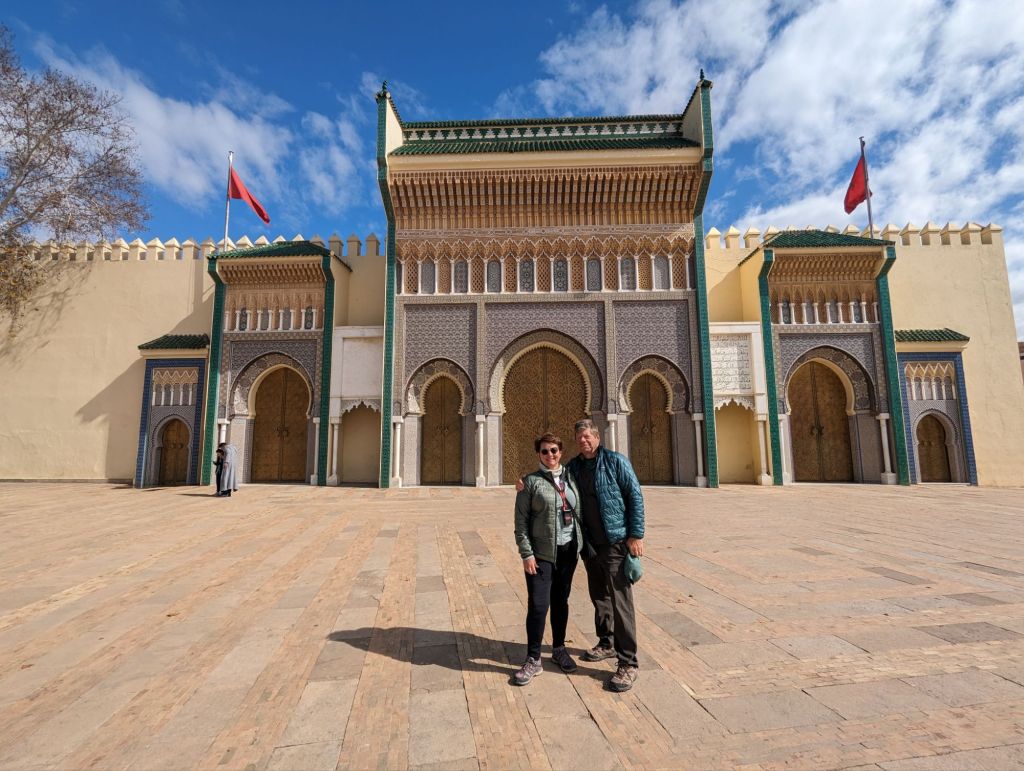
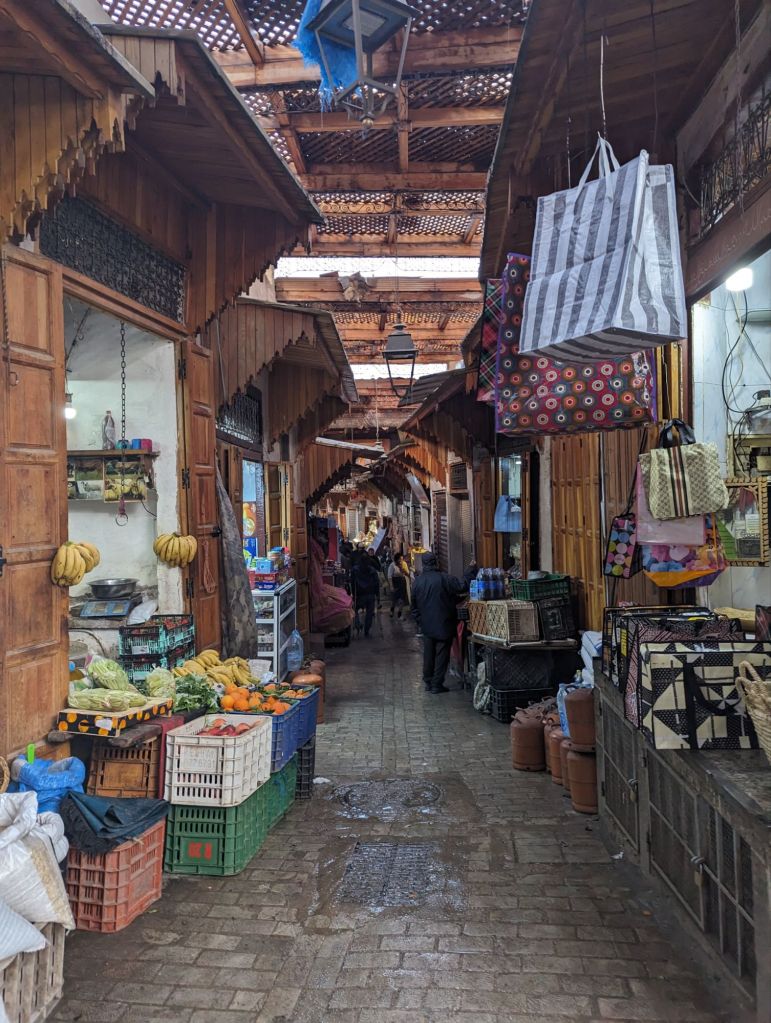
We spent 2 days exploring the souks in the medina, or the walled city. Souks are guild markets offering like products in an area: meat, fish, herbs, flowers, pastries, wood products, brass, copper, silk, dyed wool, grains, nuts, etc. spread over 9,600 tiny alleys with people living among them. Achmed and Salah with assistant ‘Cosmos’ shepherded our group through the narrow, twisting alleyways of the medina. There are over 9,000 alleys so we were reminded to stay put if we lost the group, the guides would return to find us. No worries, though. We were pretty obvious tourists and the souk network would likely have helped. Besides, Cosmos grew up in the medina, he knows everyone: every vendor, pickpocket, beggar. He was our own “Liam Neeson” bodyguard. Most everyone had a friendly smile or “Salaam”, though there were plenty of busy vendors and donkeys passing speedily in the narrow passages. We would hear “Bellach!” (“beware”) frequently. There quite a few tripping hazards and animal gifts around as well. Cosmos was kept busy running back and forth like a Border Collie herding aged sheep.
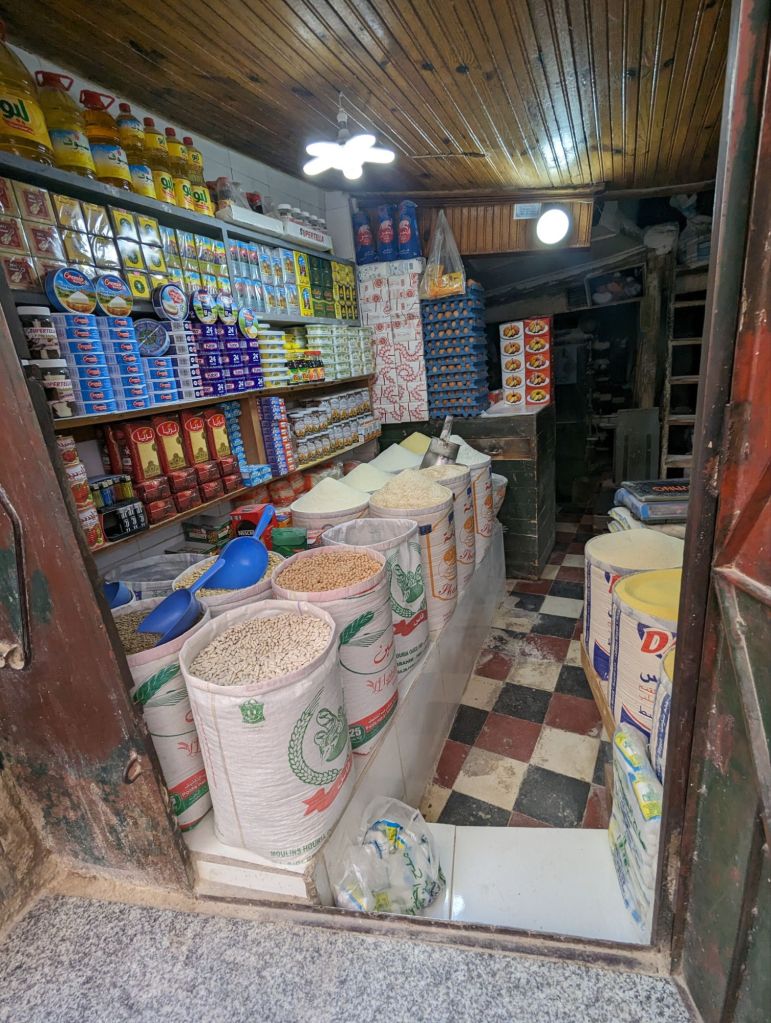
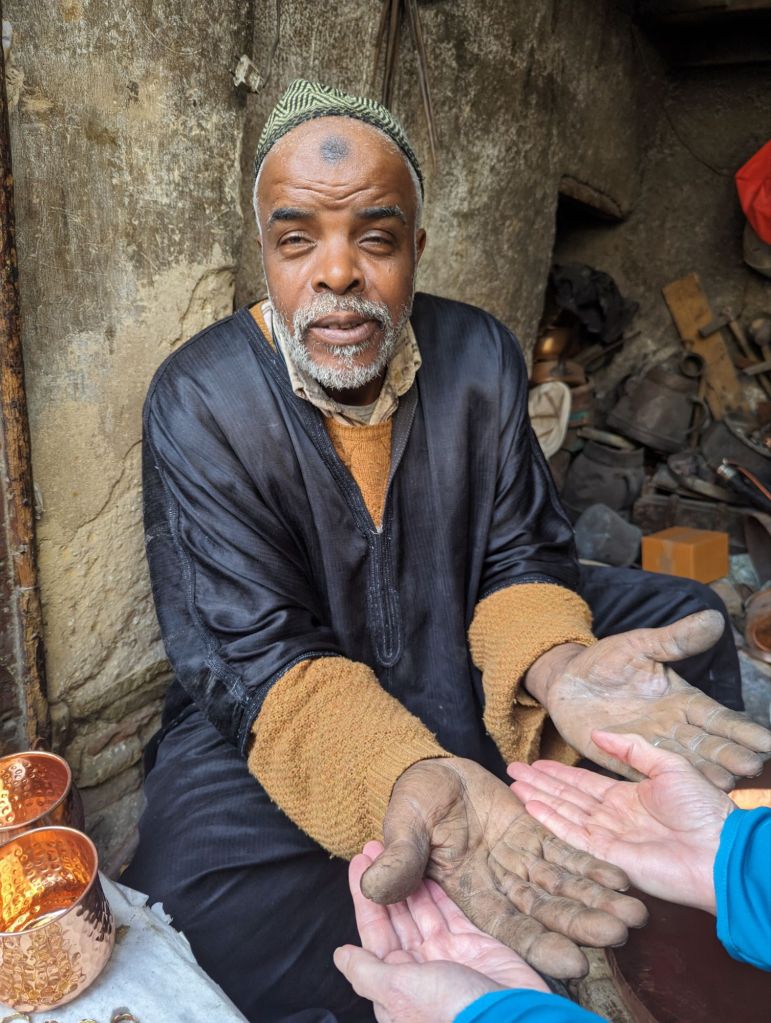
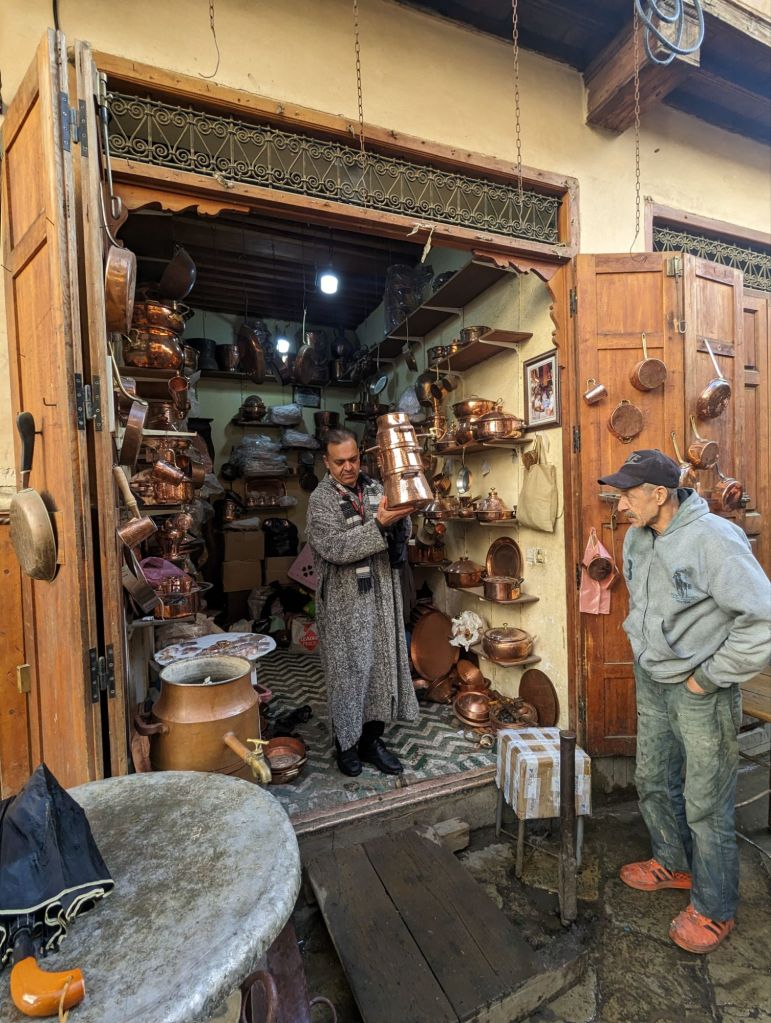
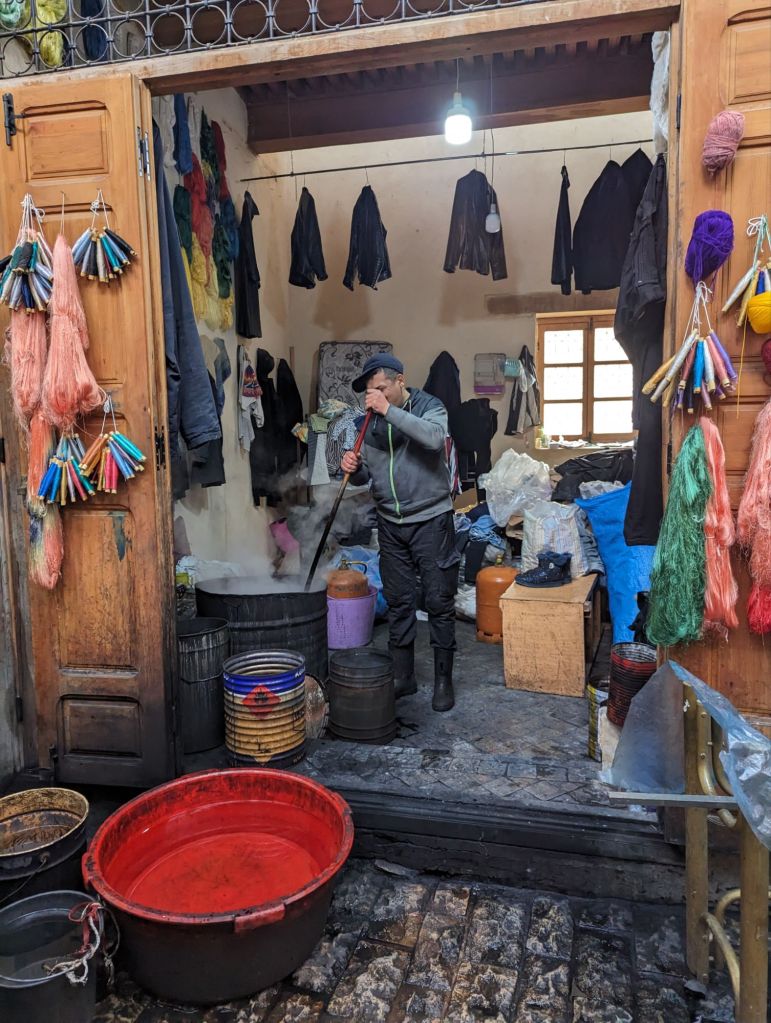
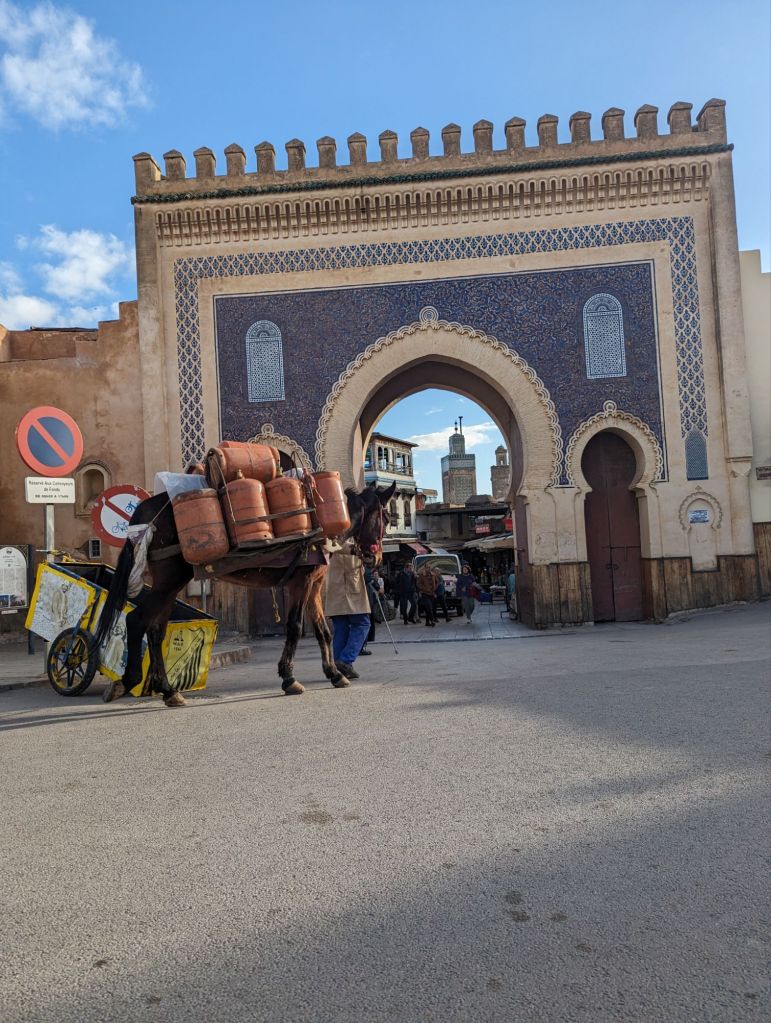
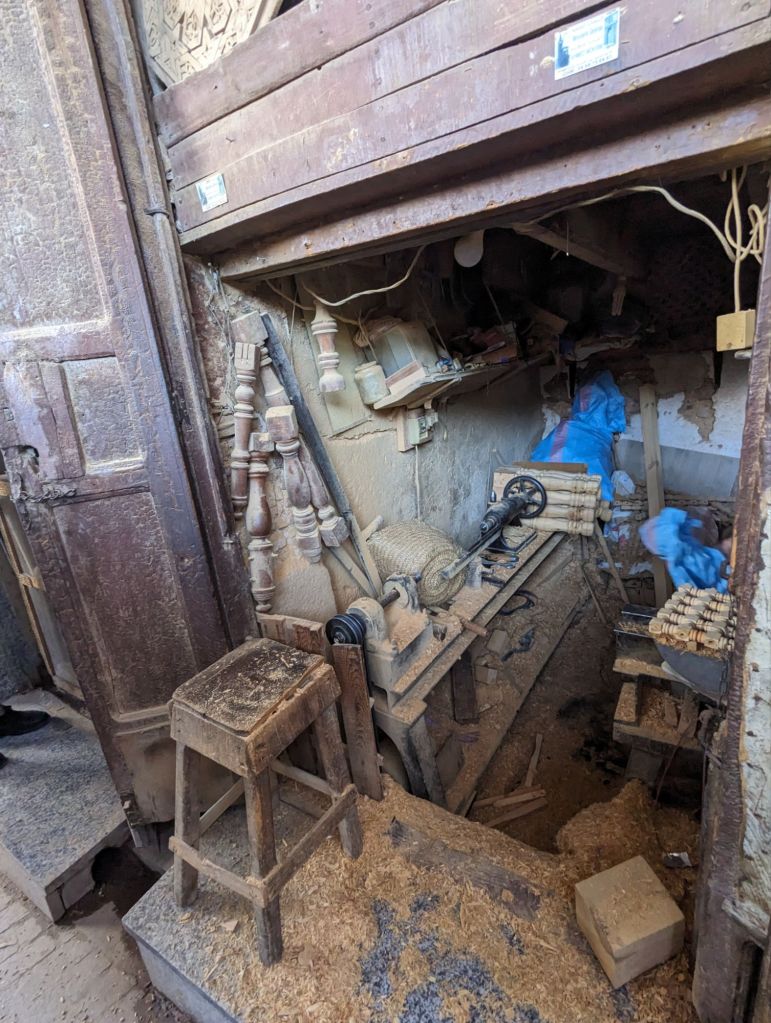
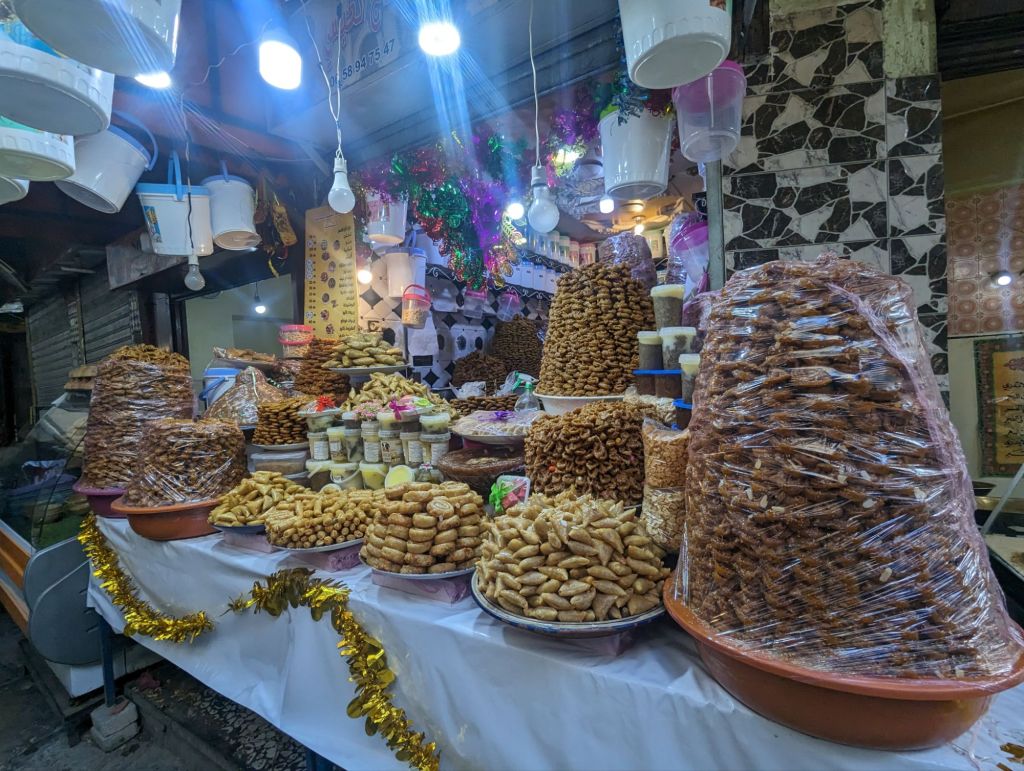
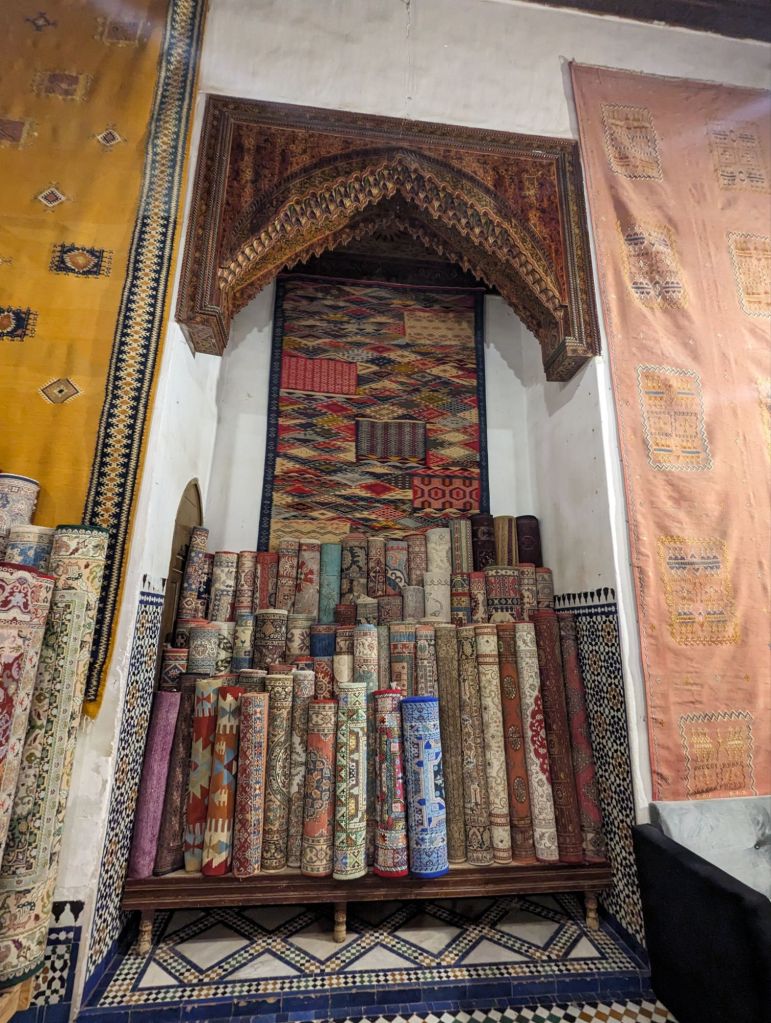
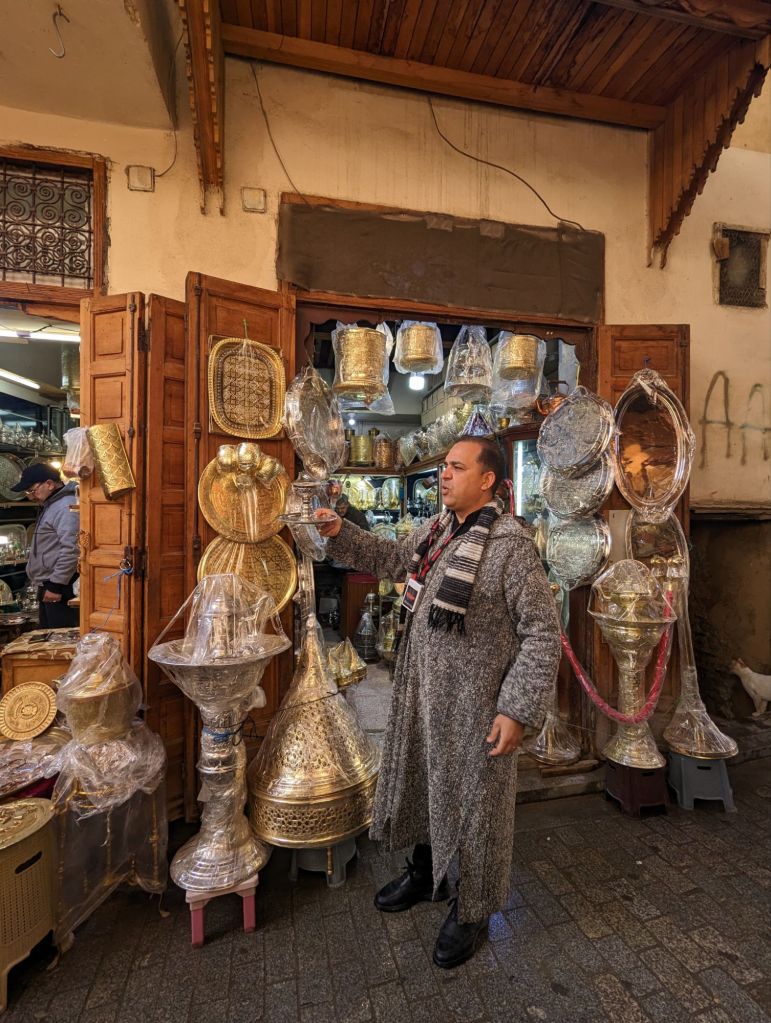
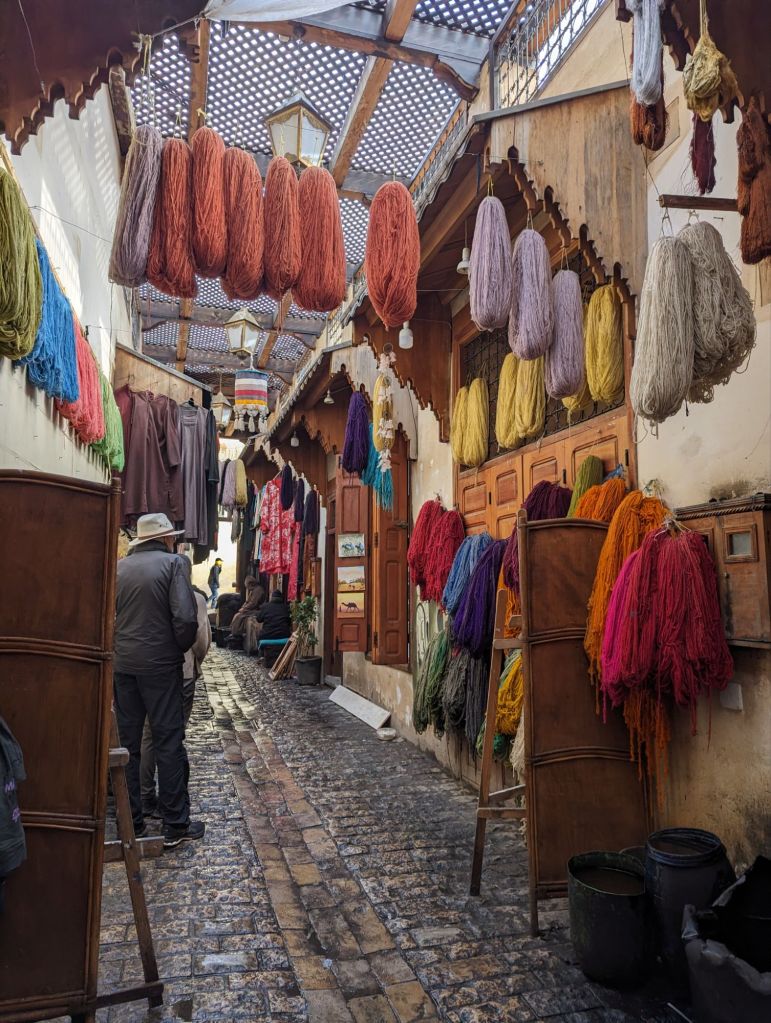
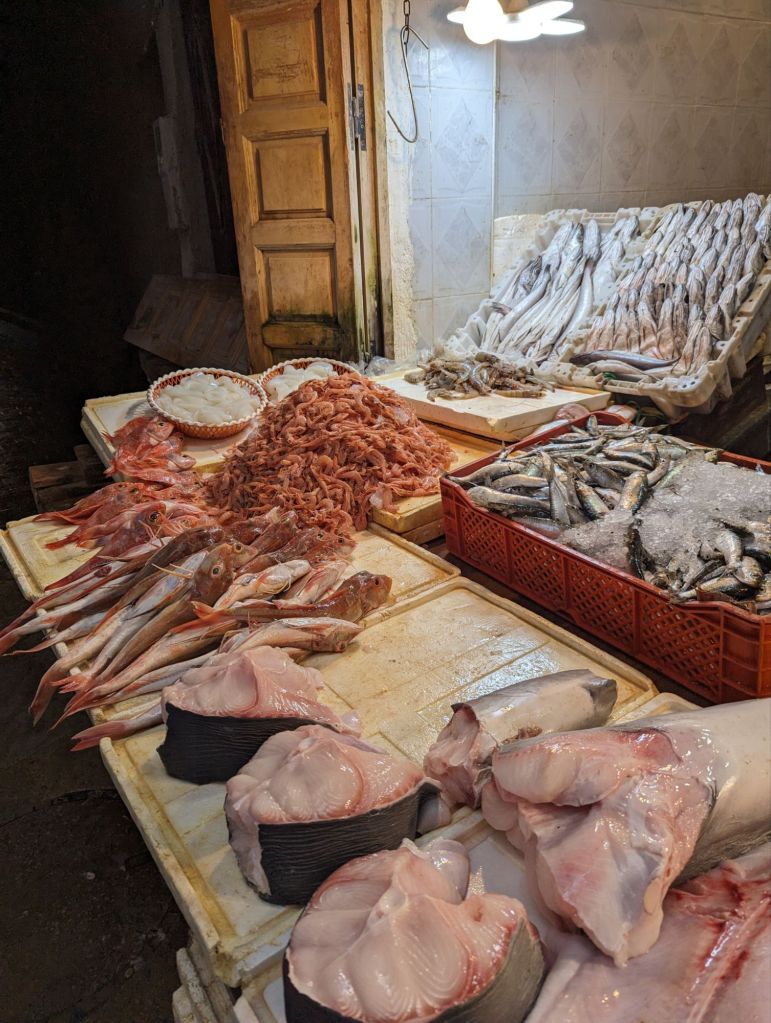
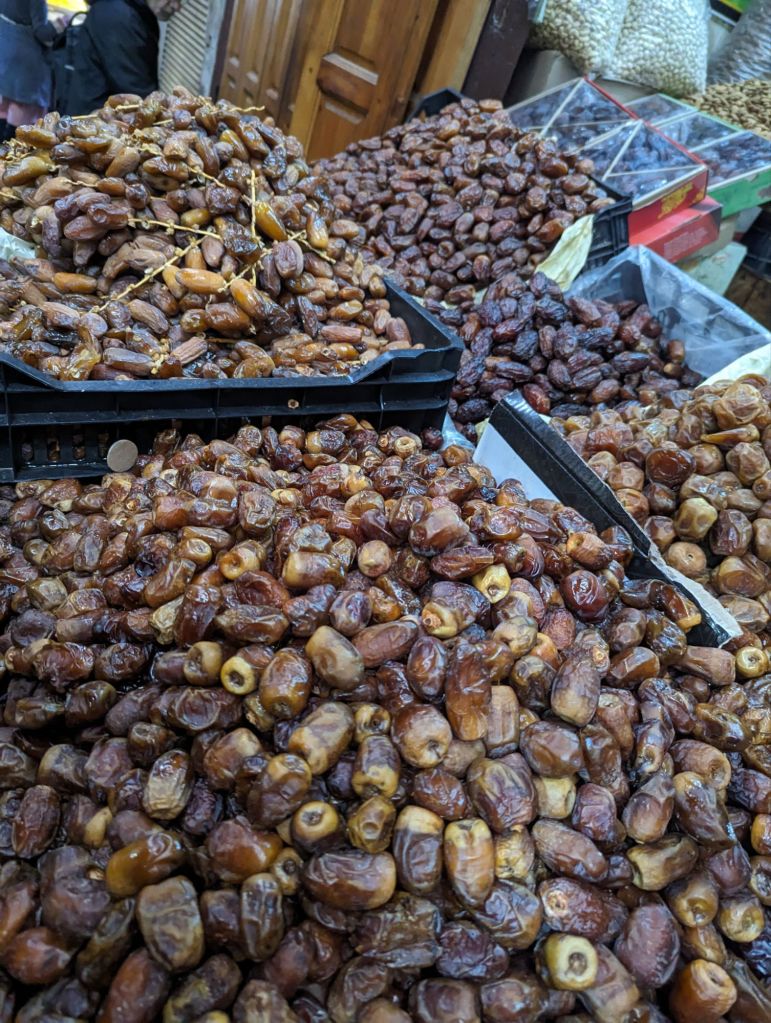
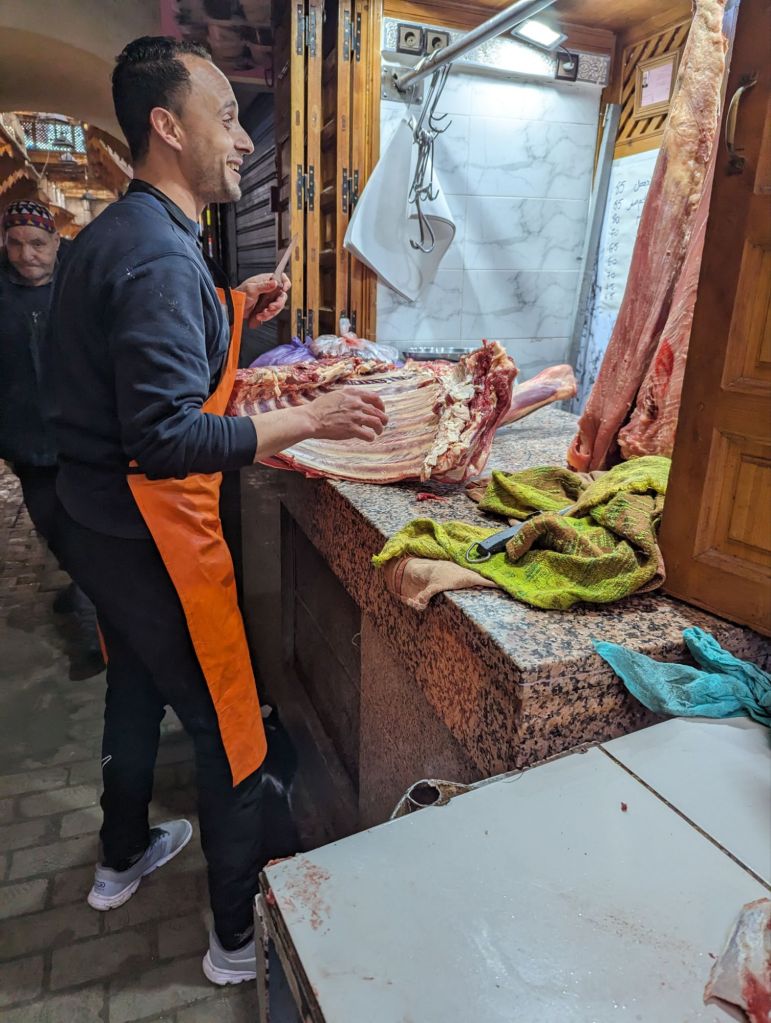
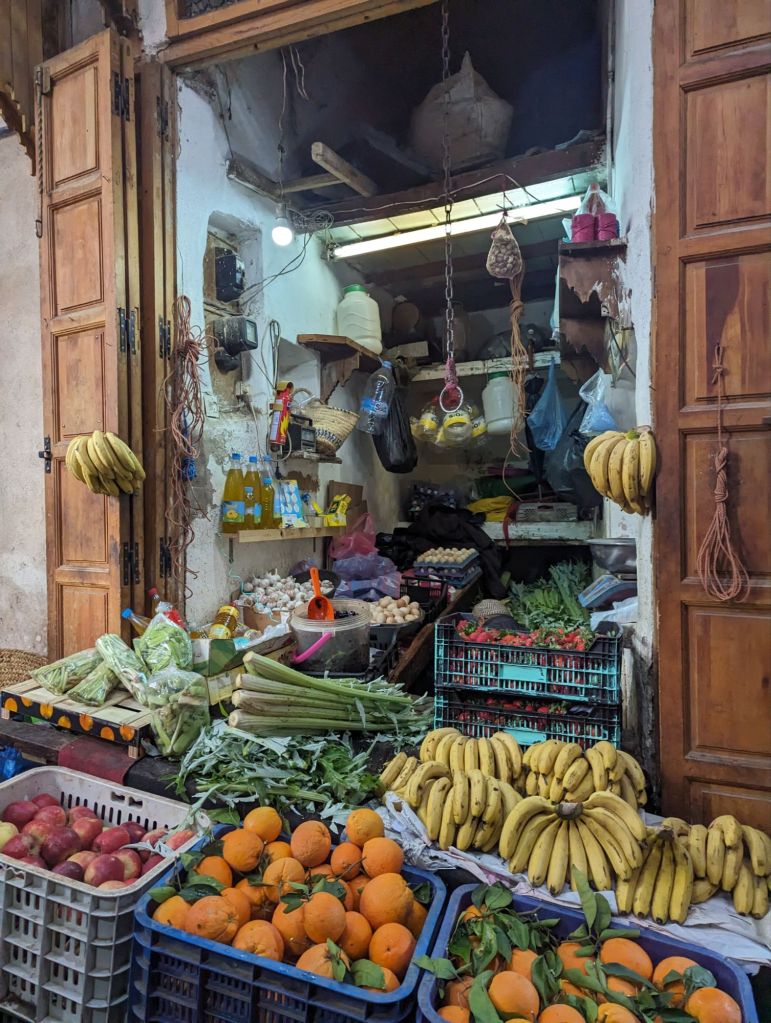
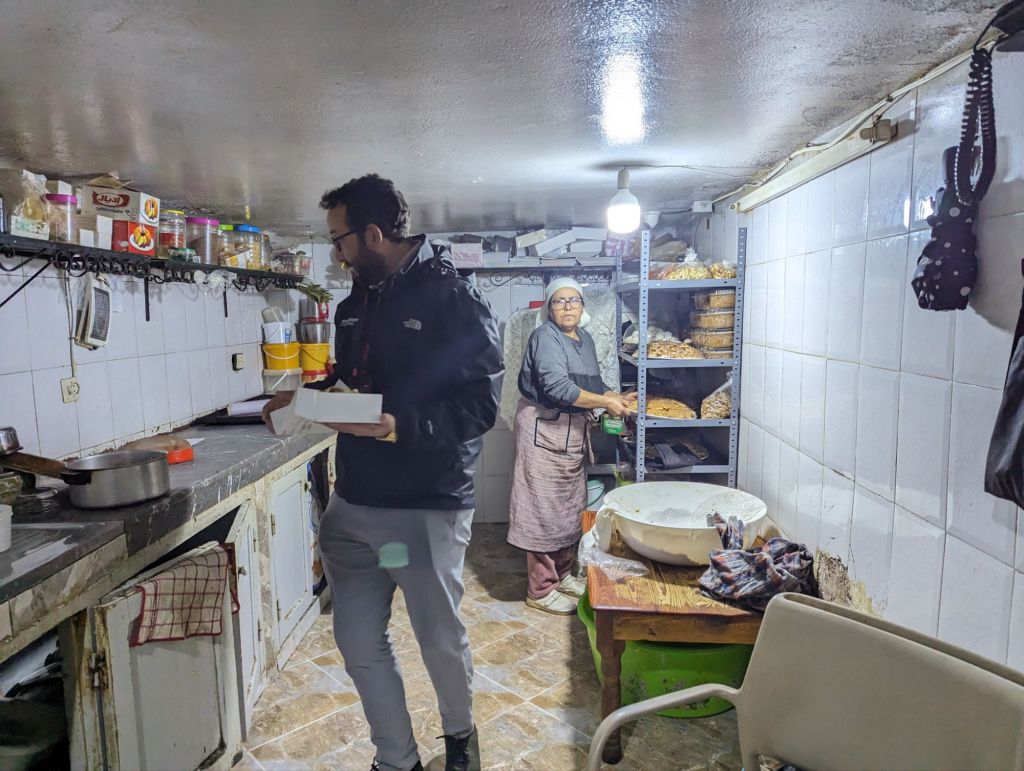
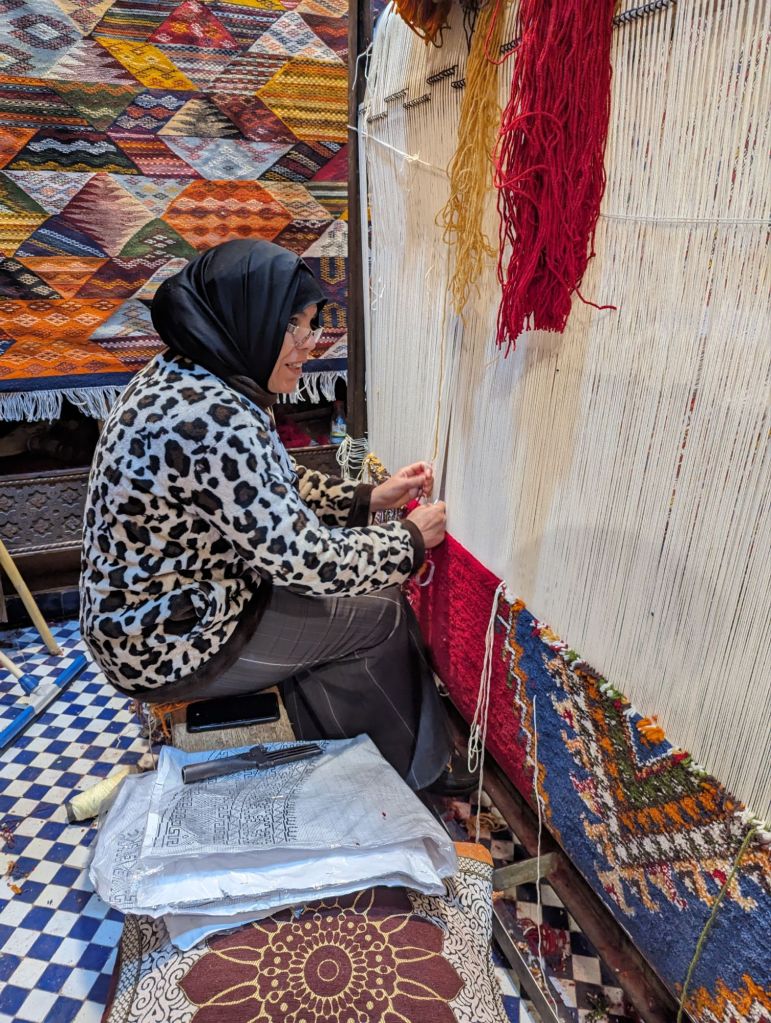
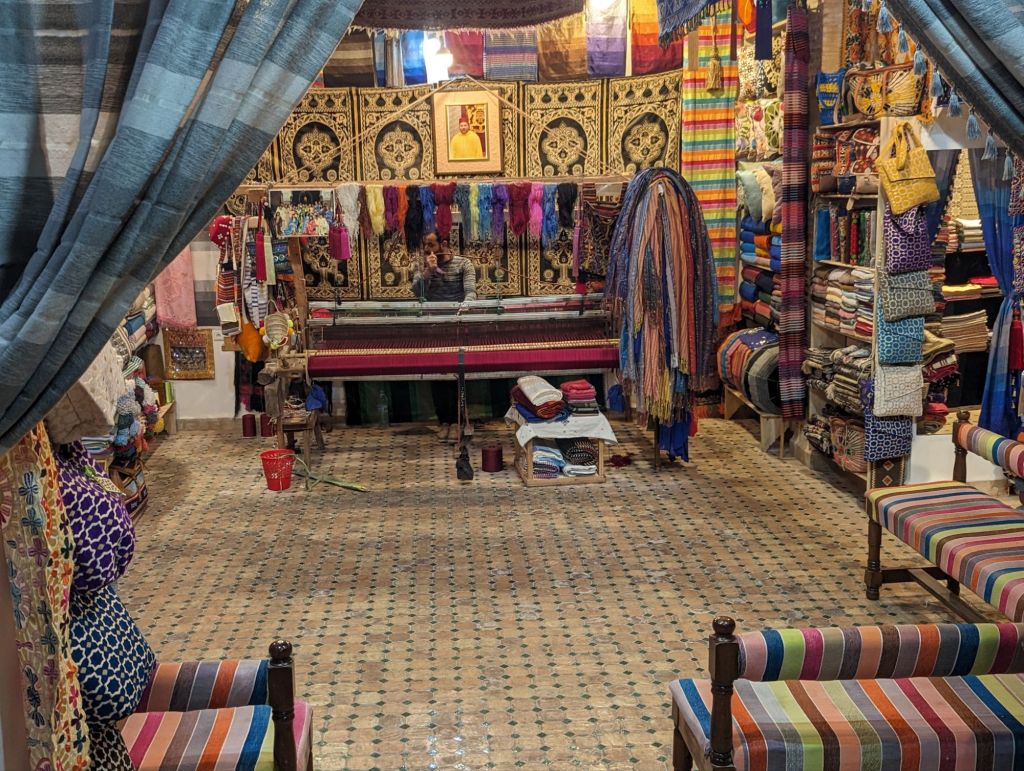
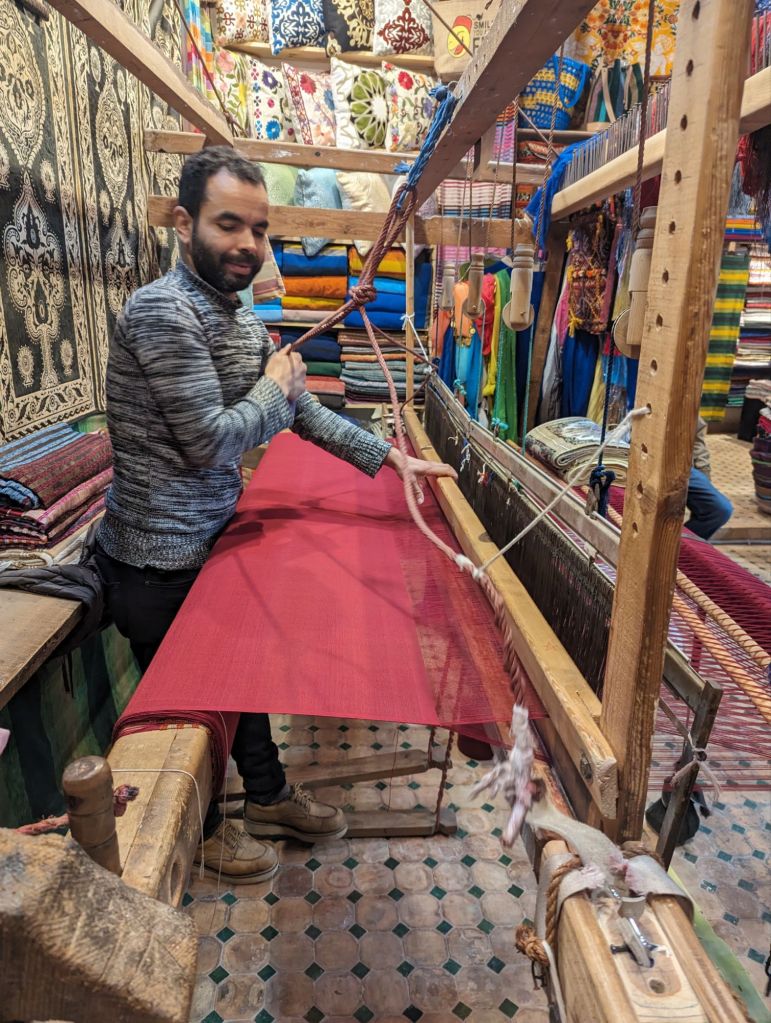
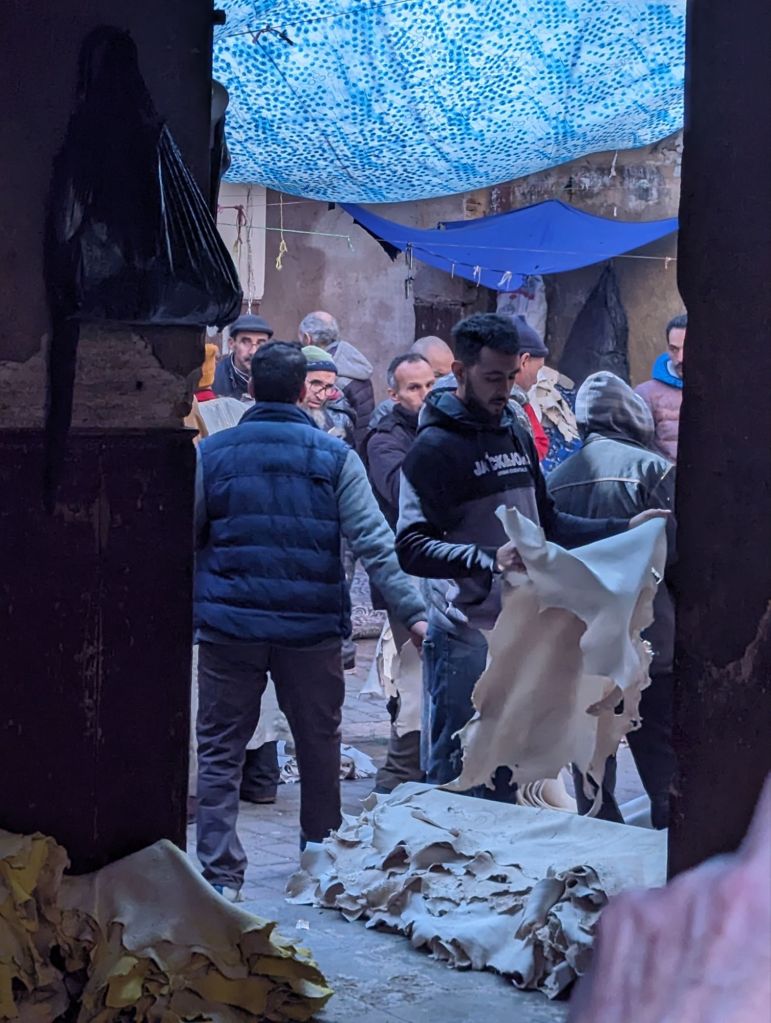
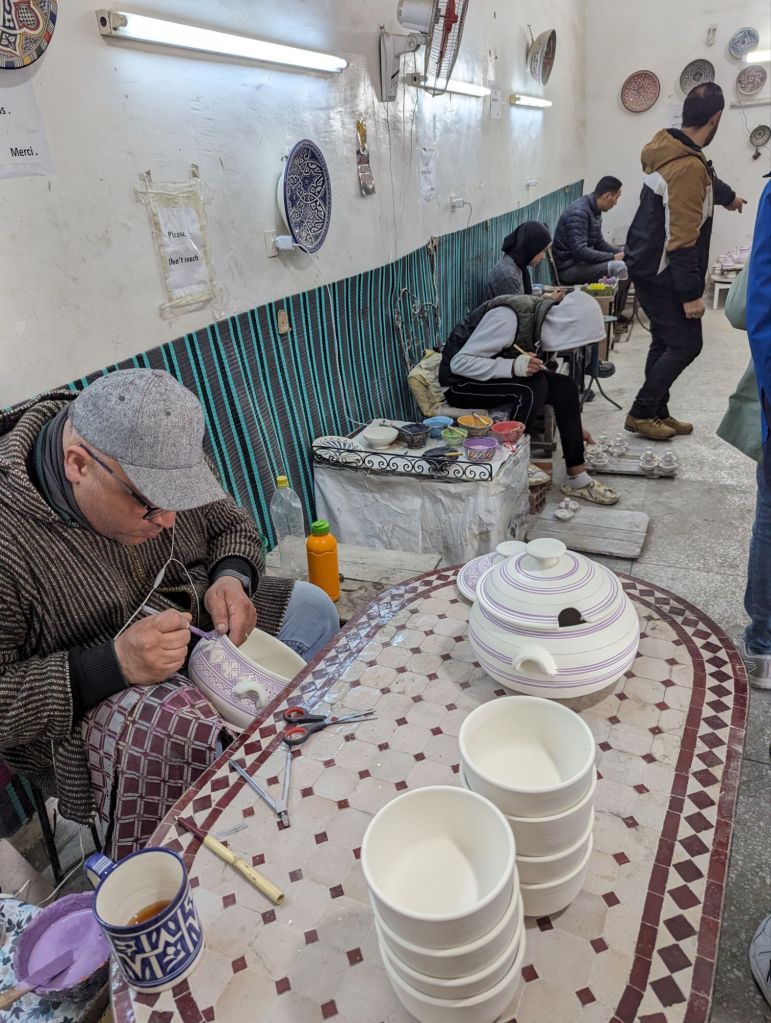
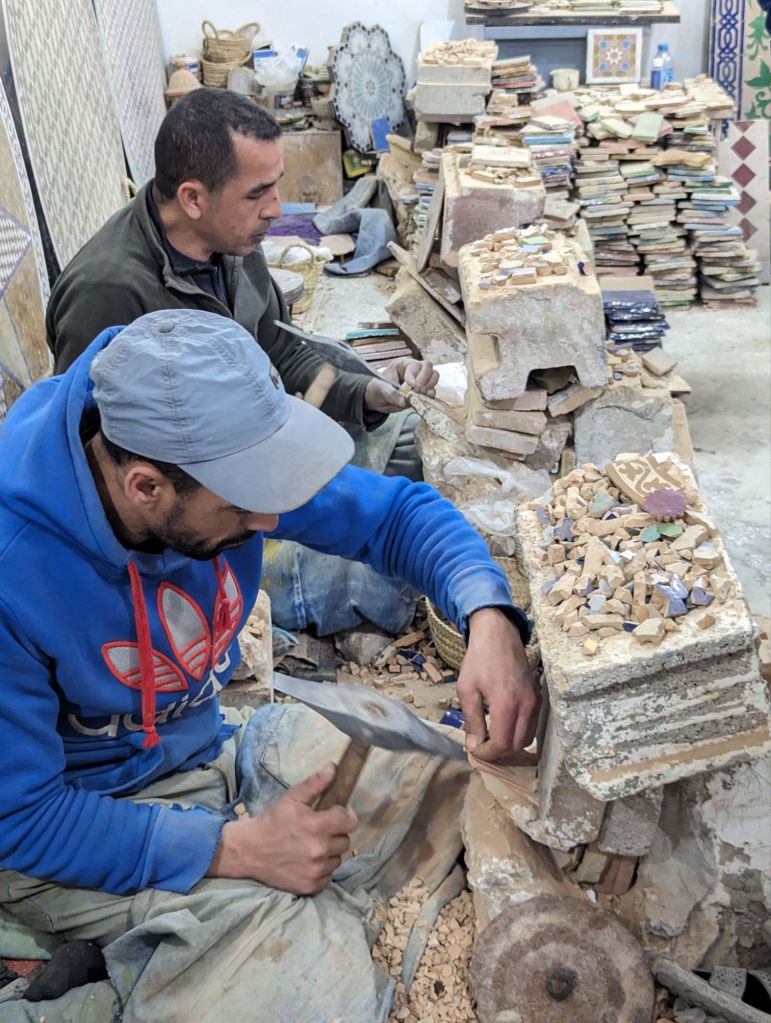
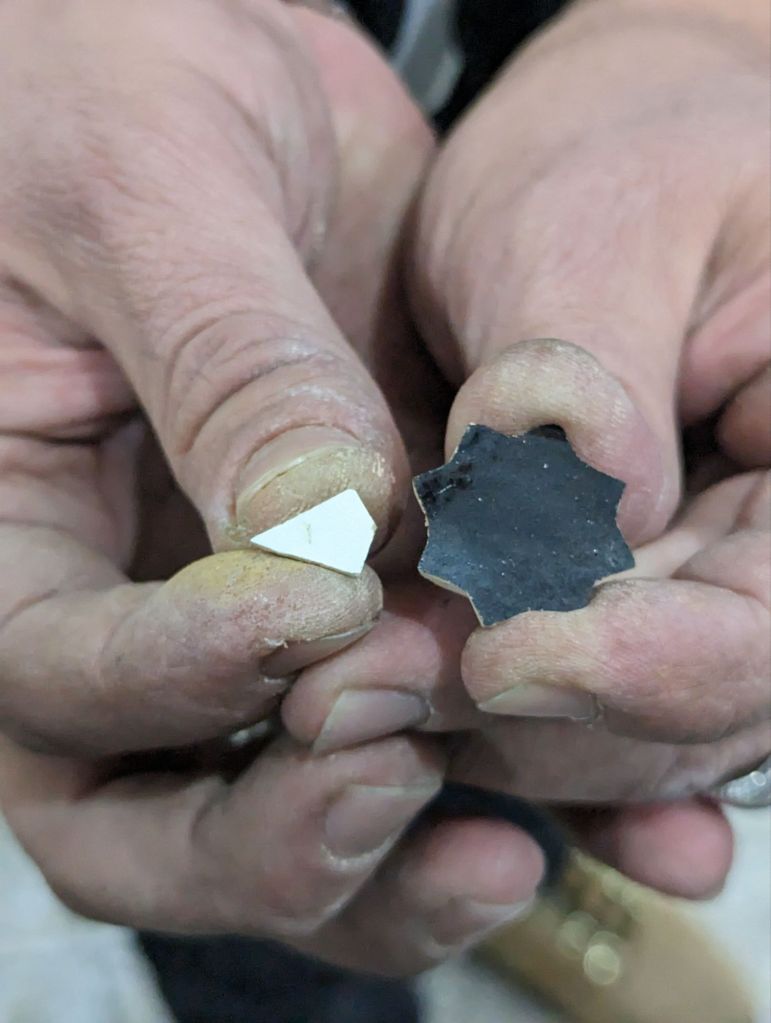
The beauty of taking a tour is the familiarity of the guides with the area and the people. We had personal encounters with vendors and locals, tasting their wares, watching them work, visiting their behind the scenes places like kitchens and living spaces. We also visited work shops and sales rooms: rug makers, embroiderers, bronze engravers, tile, pottery and mosaic schools, and silk weavers. All were fascinating though the most interesting were the leather workers and tile manufacturers. Everything was handmade. We visited an auction house for animal hides with buyers and sellers calling out prices over piles and piles of goat hides and lamb skins. We visited the Chouara tannery with hot-tub sized mortar vats filled with processing liquids (pigeon poop) and organic dyes filling an entire city block. One friendly man sat for hours trimming lamb skins for processing. Afterwards, leather products were displayed and available for sale. Also fascinating was the tile cooperative. Apprentices worked in clay pits or formed tiles by hand. Tiles and pottery were fired in outdoor kilns fueled by burning olive pits. Other apprentices hand painted pottery or chipped tiles into minute, intricate mosaic pieces, then the mosaics were pieced together upside down and mortared or epoxied into place. Of course, there was a showroom at the end, like a gift shop in a museum. My wallet became even thinner.
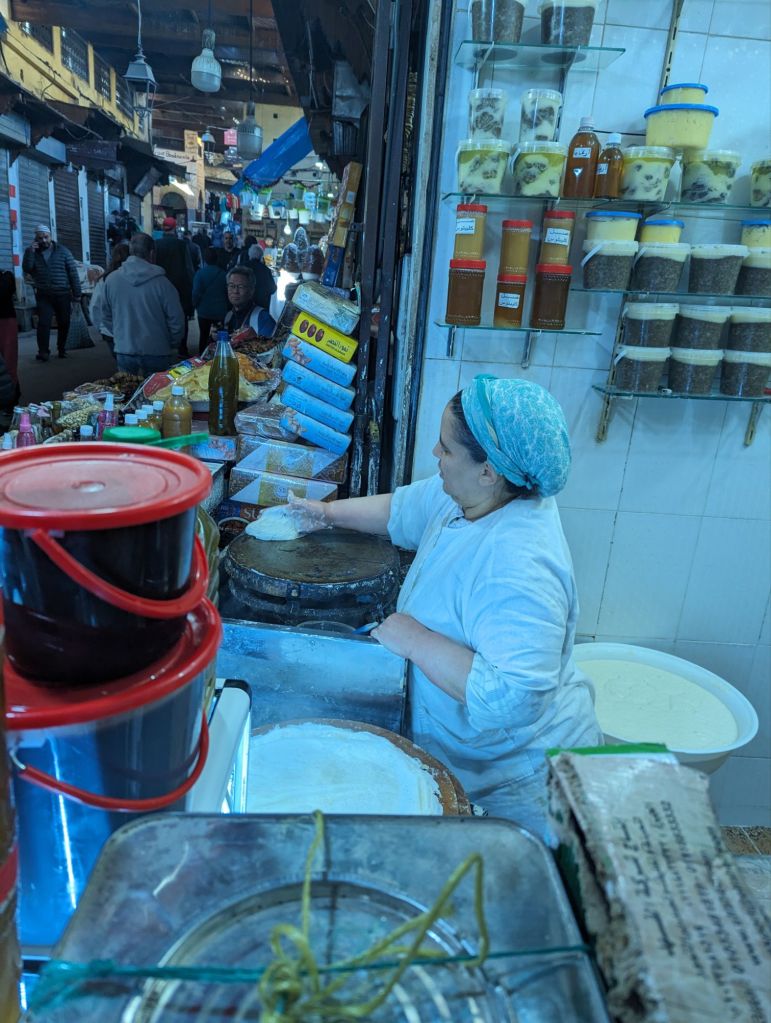
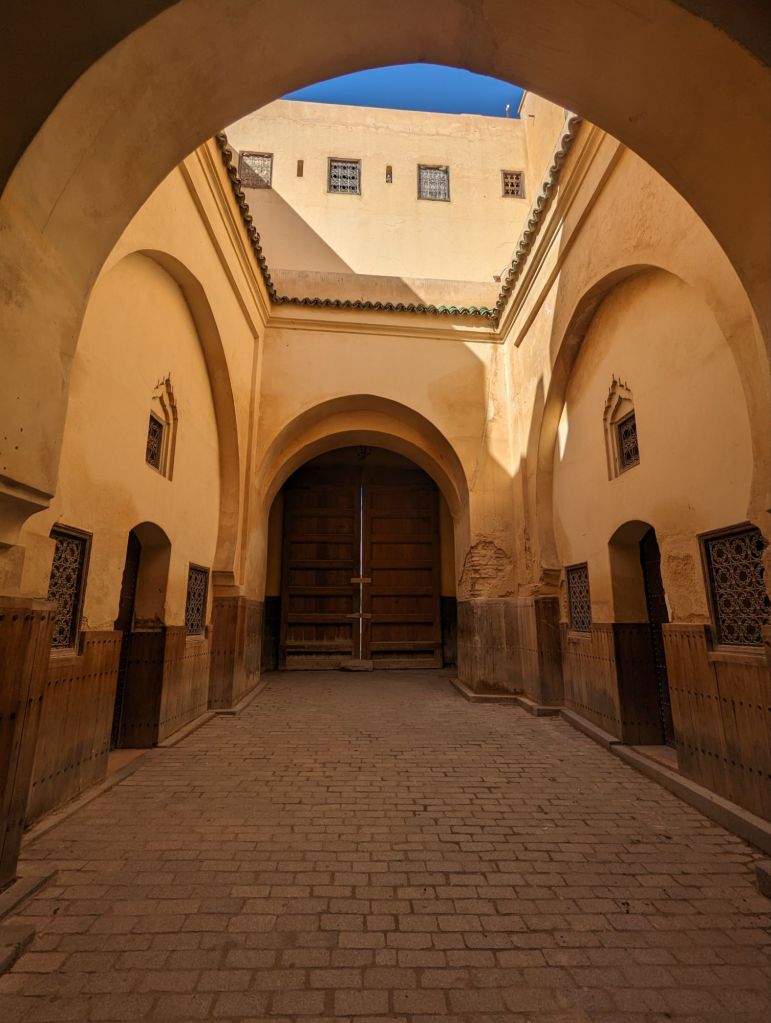
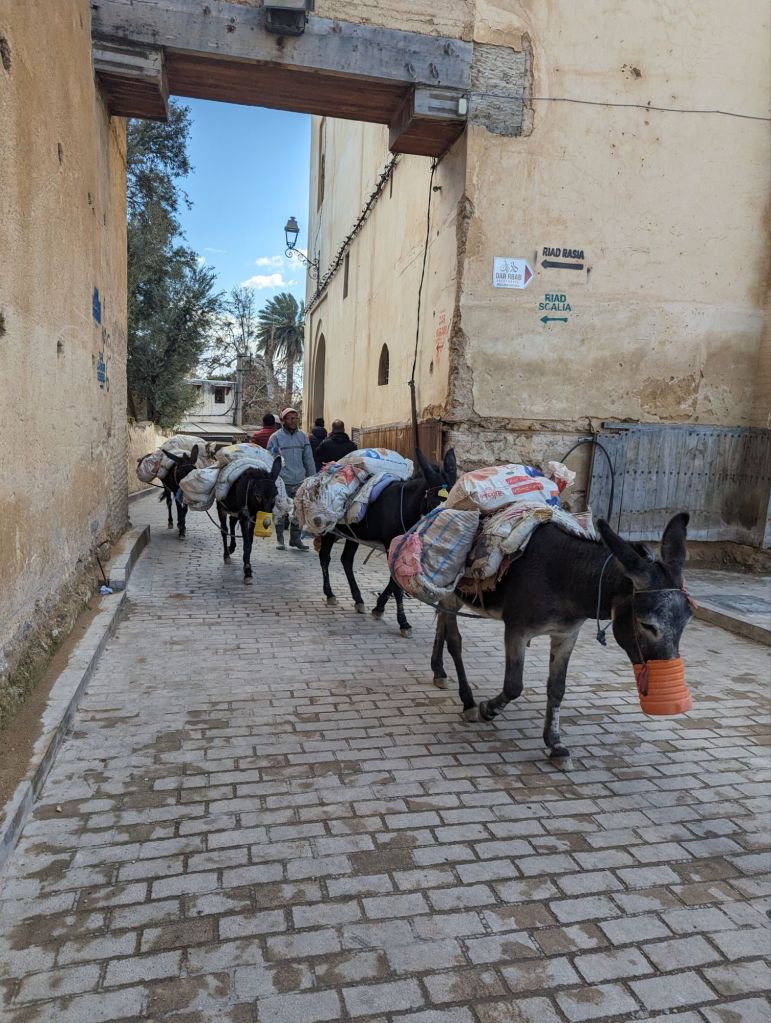
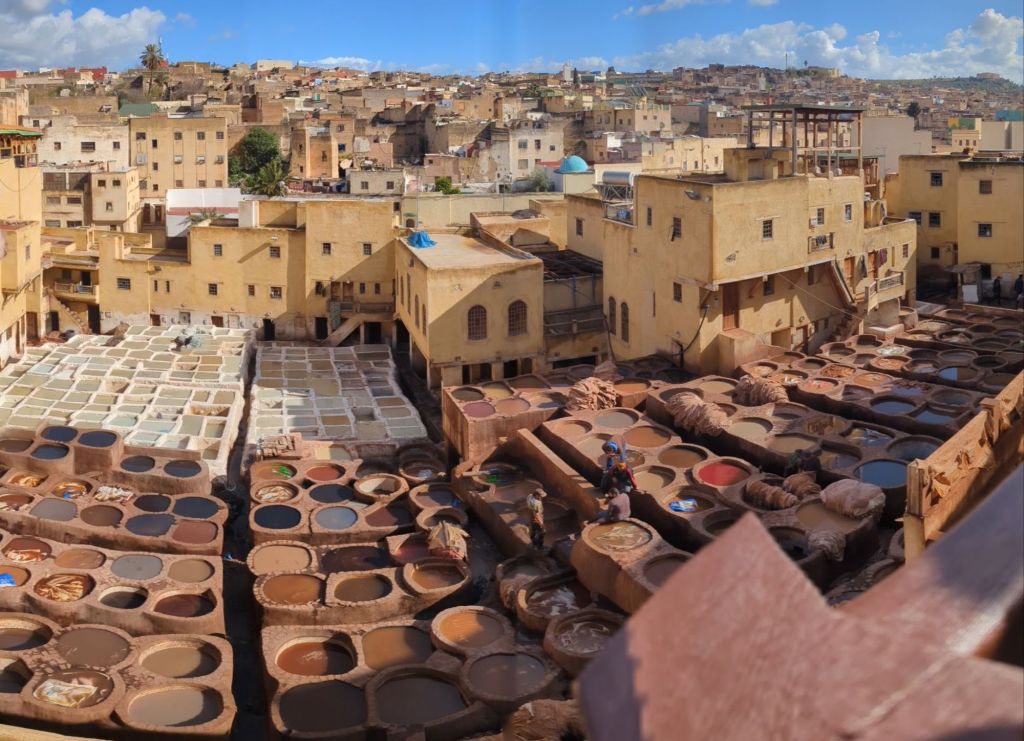
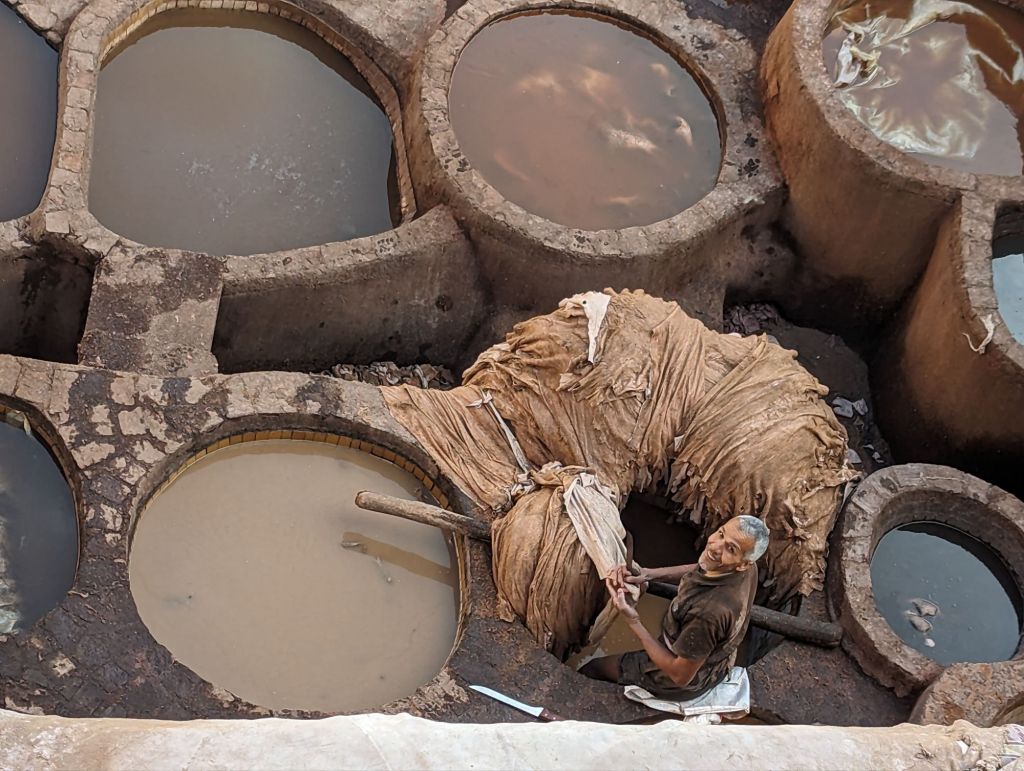
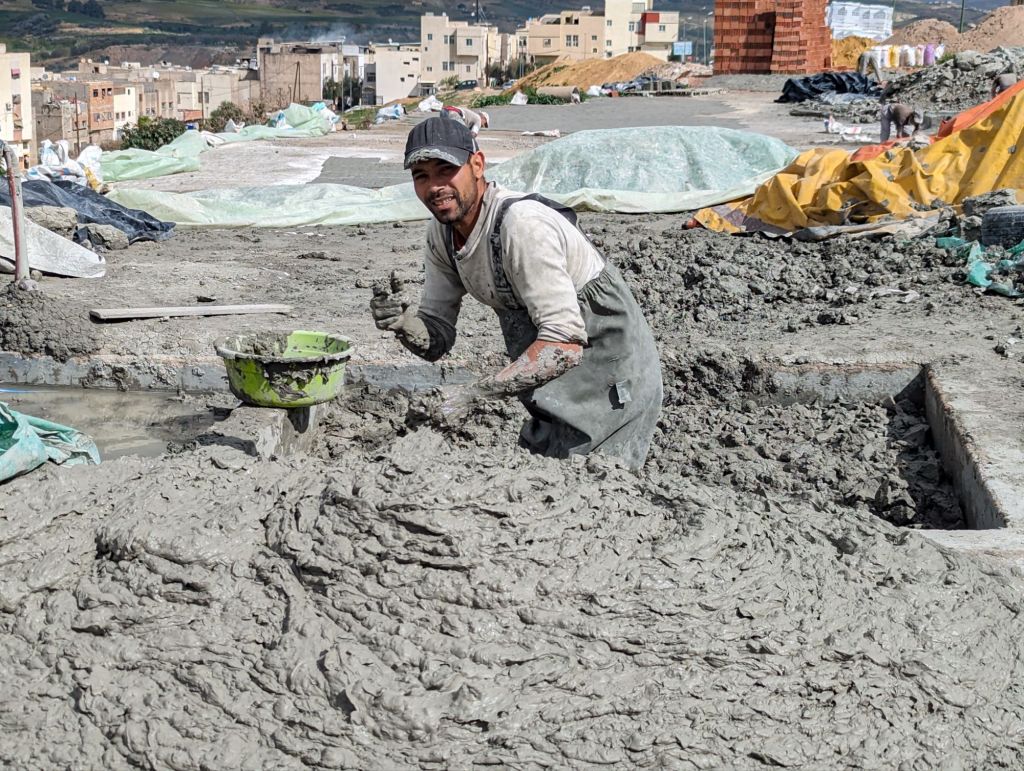
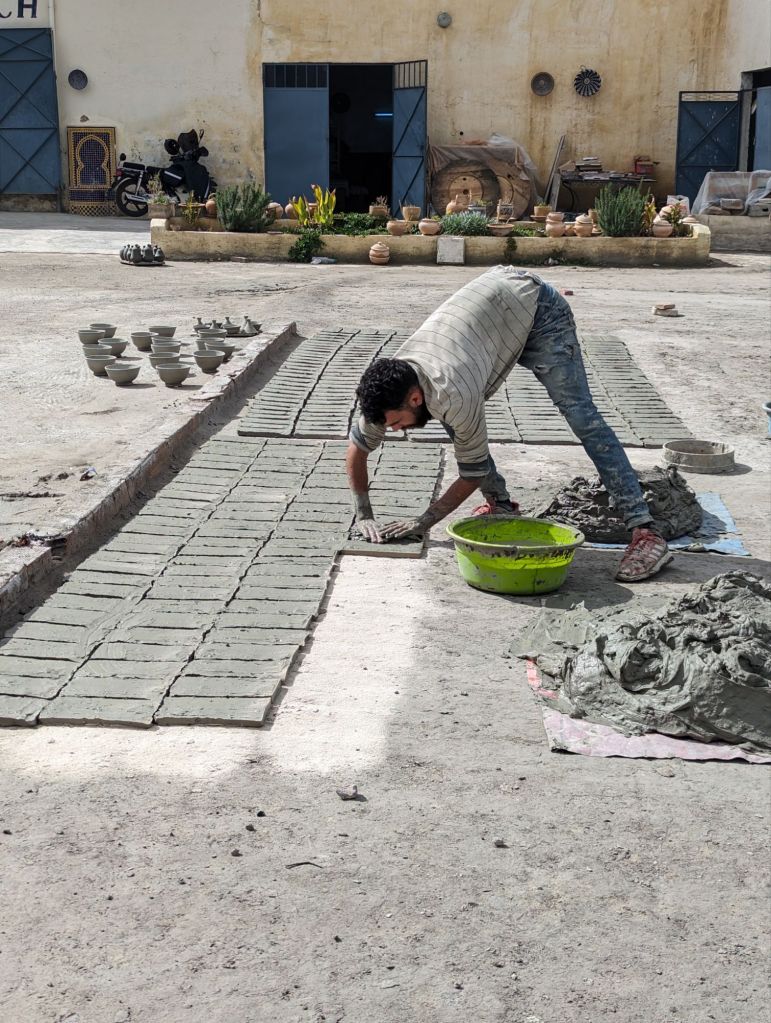
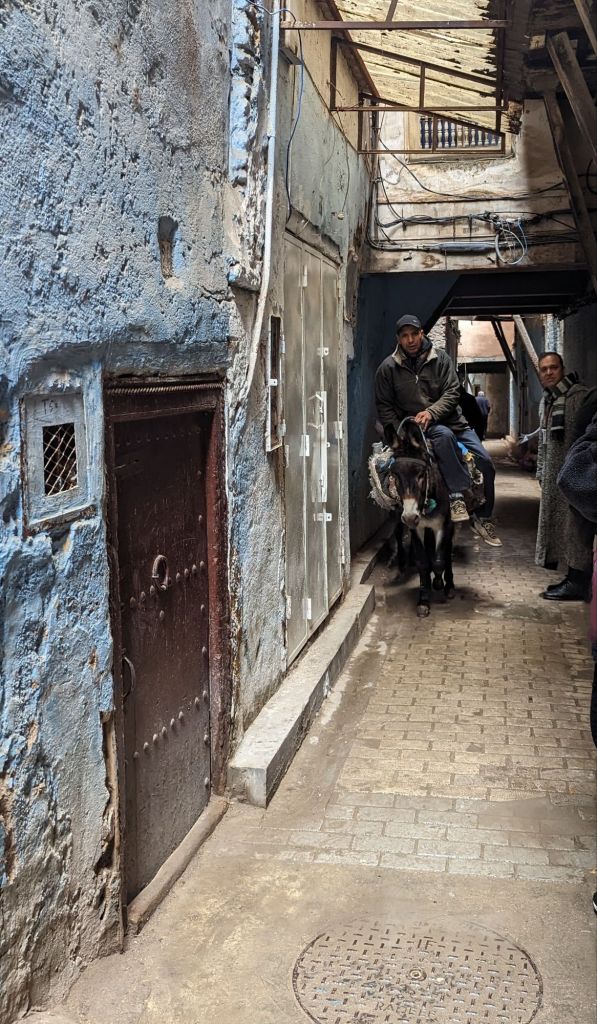
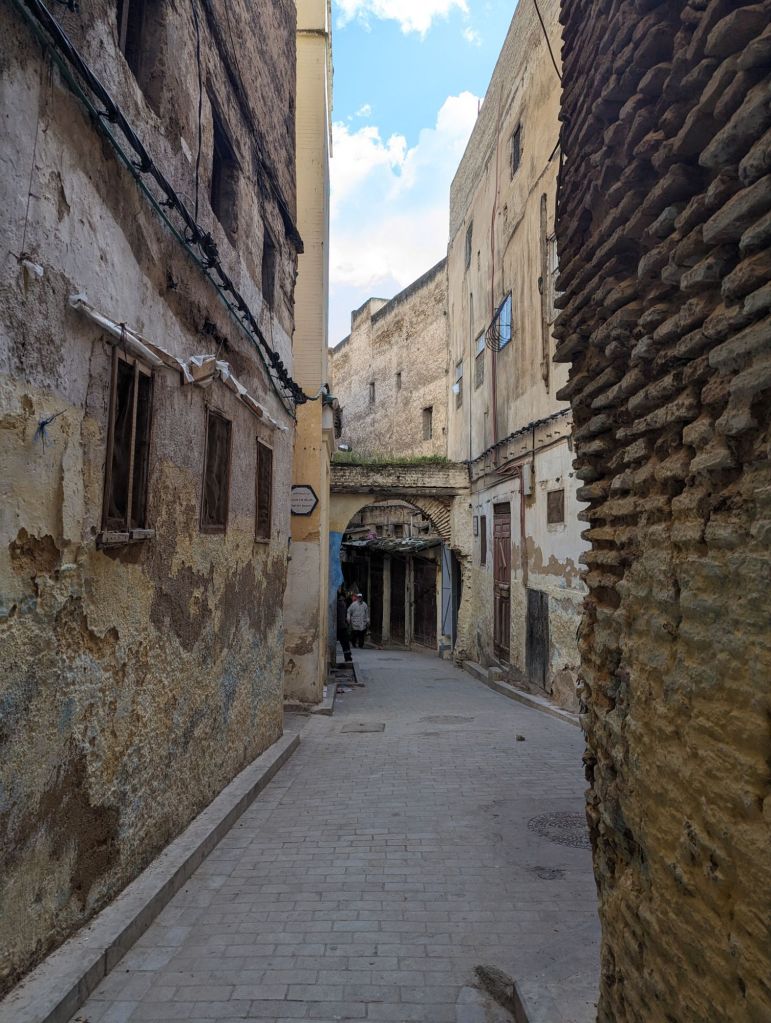
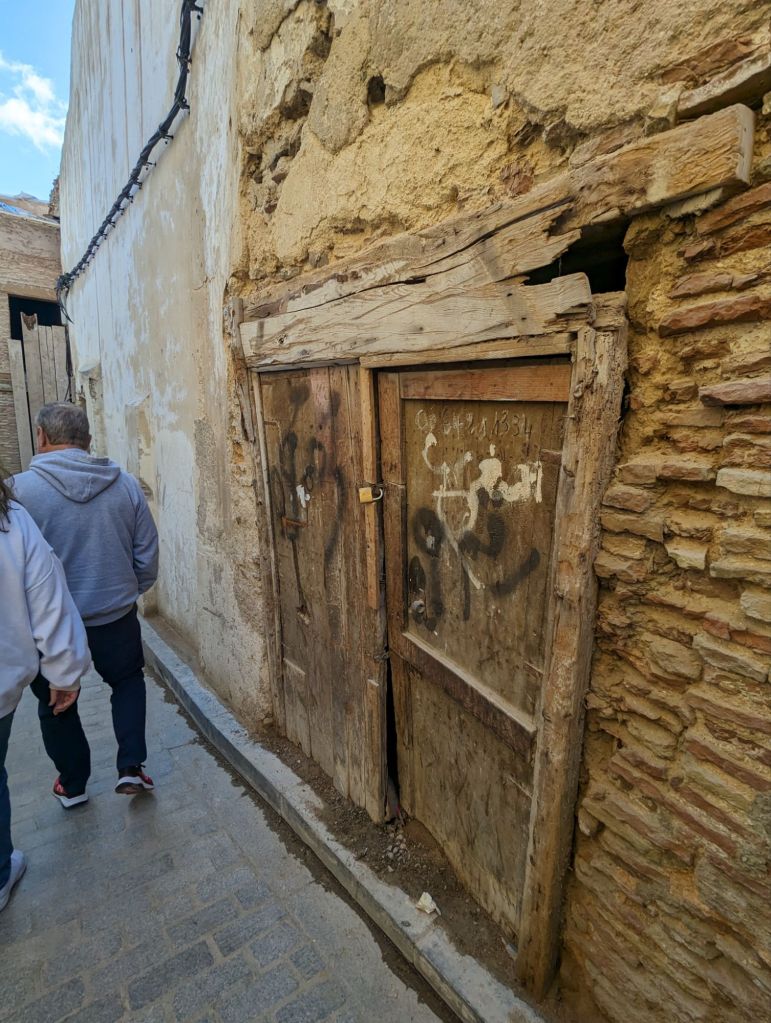
The medina passages varied from wide alleys to narrow single file paths. Some areas were haphazardly covered from rain or sun exposure while other areas were open to the elements. Narrow alleys were naturally dark. Many walls were decrepit and were propped upright with sketchy scaffolding. We peeked into dead end alleys or into open doorways. Doors were metal or wood, some grand and others old, worn, and dwarf-sized with lots of history. You could not tell what lay behind those openings: a grand riad, a workshop, a warehouse, or a humble home. Kids played in the alleys at lunch or after school. Cats prowled everywhere and an occasional dog too. Donkeys were muzzled with plastic jugs to prevent sampling the wares. Beggars sat in corners, noise from woodworkers and auctioneers and metal being pounded filled the air along with the odors of meat, fish, spices and baked goods. It was an amazing amalgam of humanity and human needs. Some residents never leave!
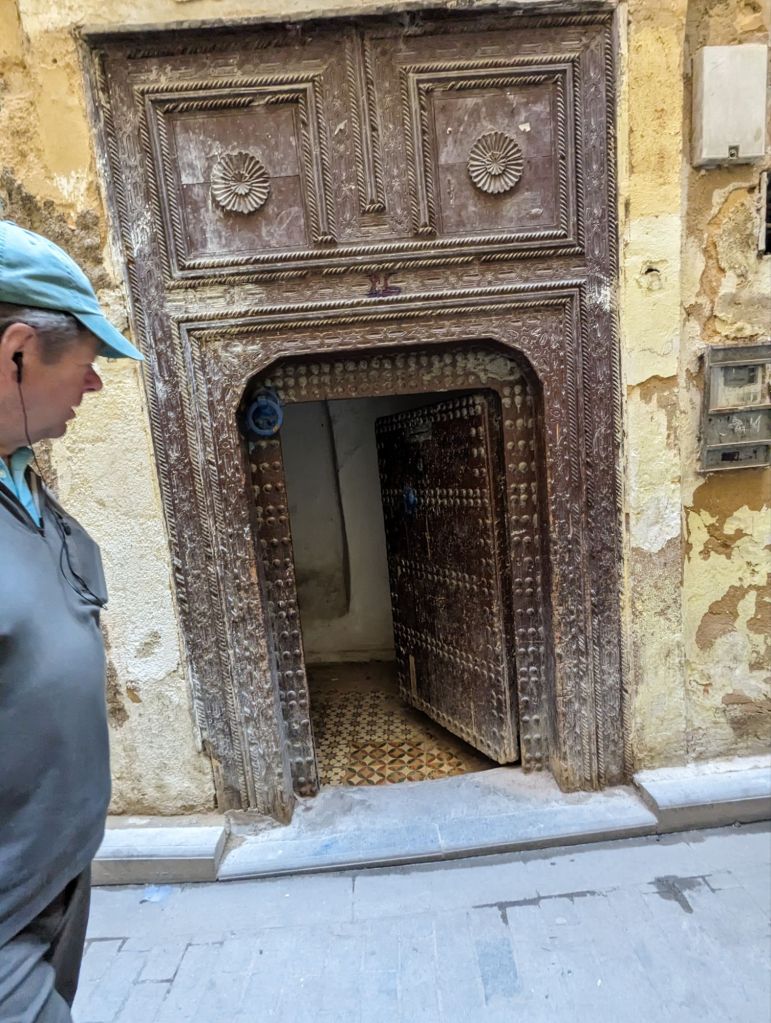
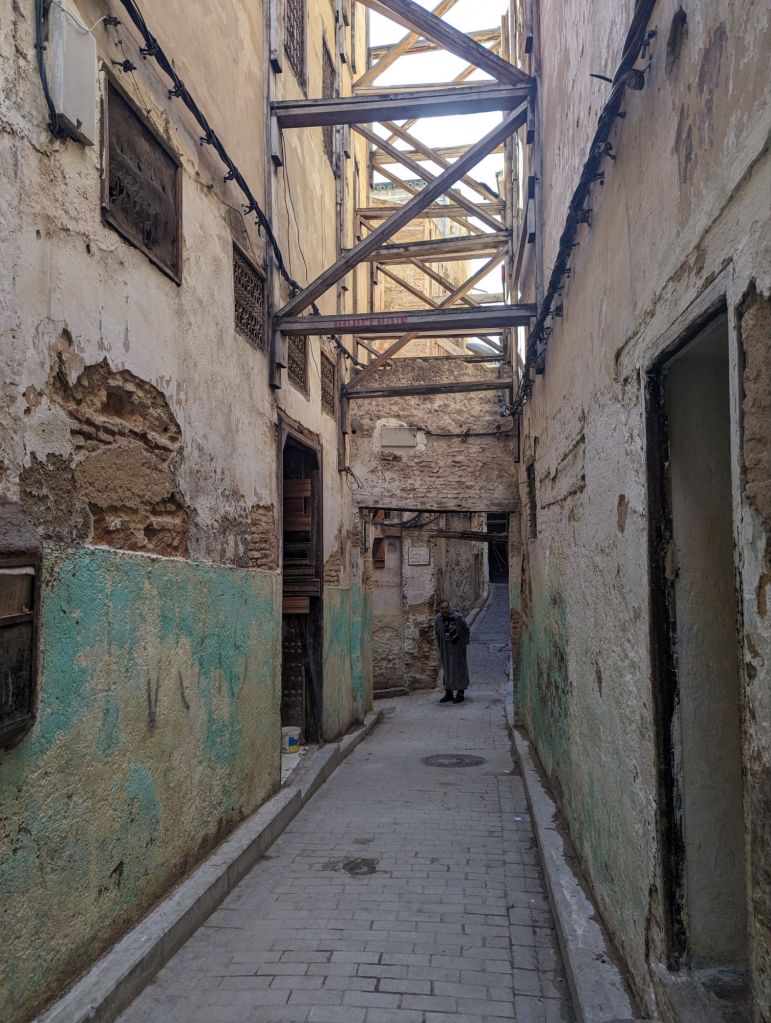
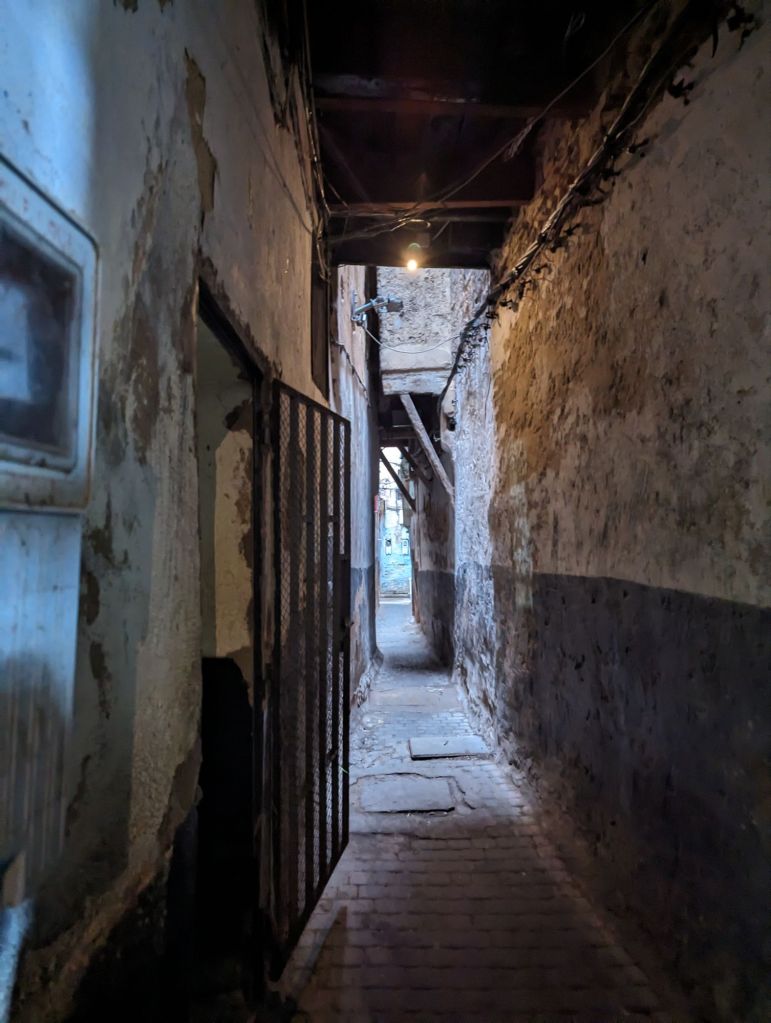
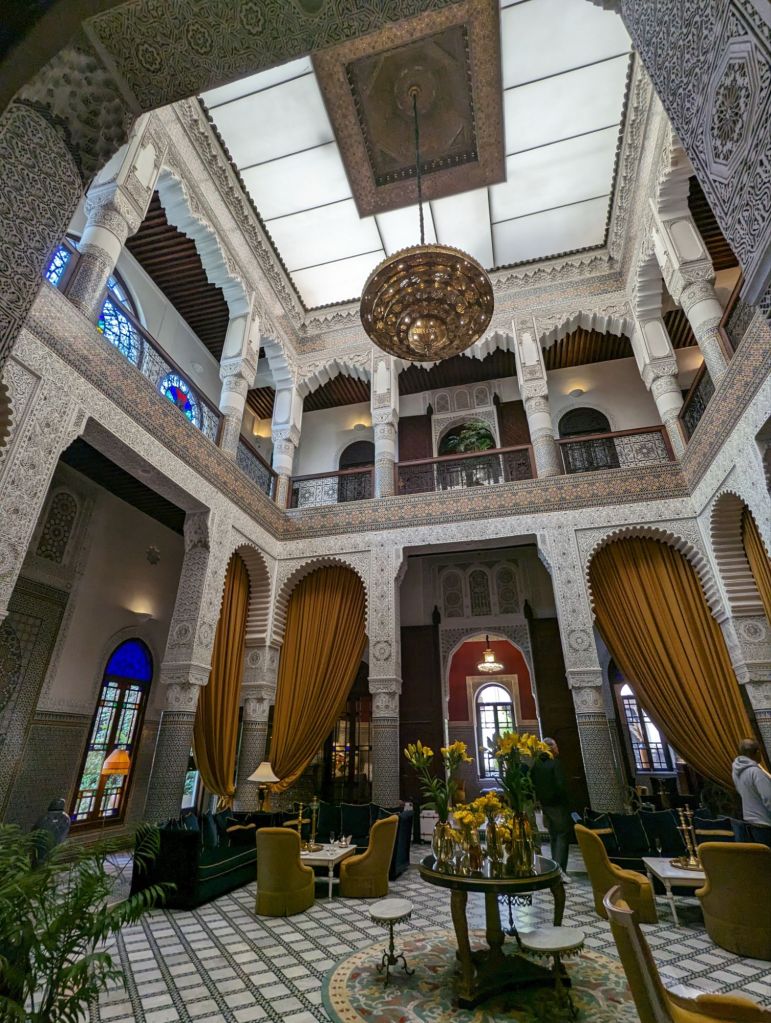
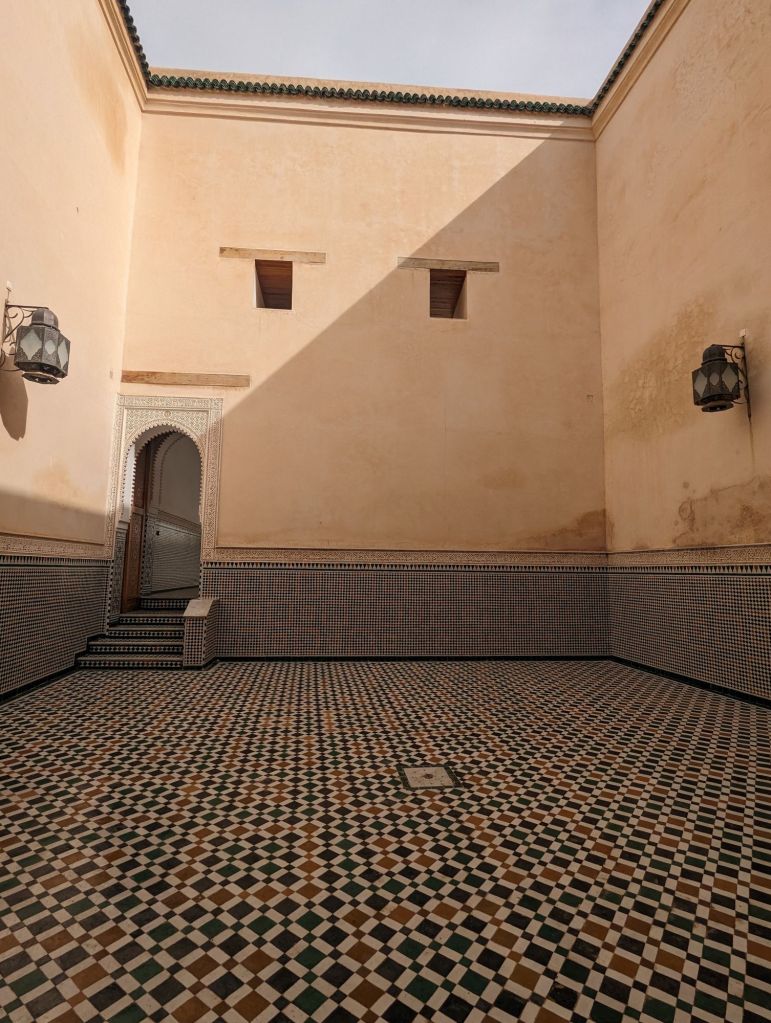
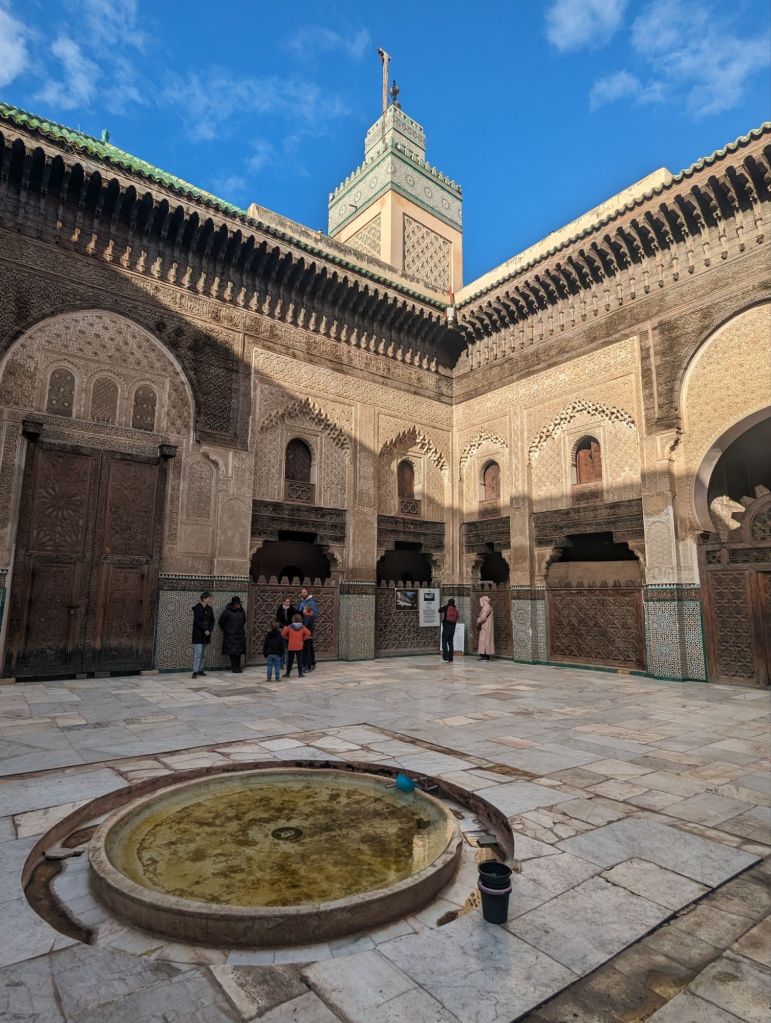
There were mosques and schools and madrasas (Koranic schools) wlithin the medina. We visited a few mosques and madrasas. The open courtyards were exquisitely decorated with the 3 traditional decorative forms: tile, stucco carving, and wood, each with a fountain for cleansing in the center of the courtyard. There were various gates to the medina that were restored and also ornately decorated. The riads we visited for lunch and dinners were spectacular; we dined in the courtyards to Moroccan music surrounded by mosaic and carved splendor.
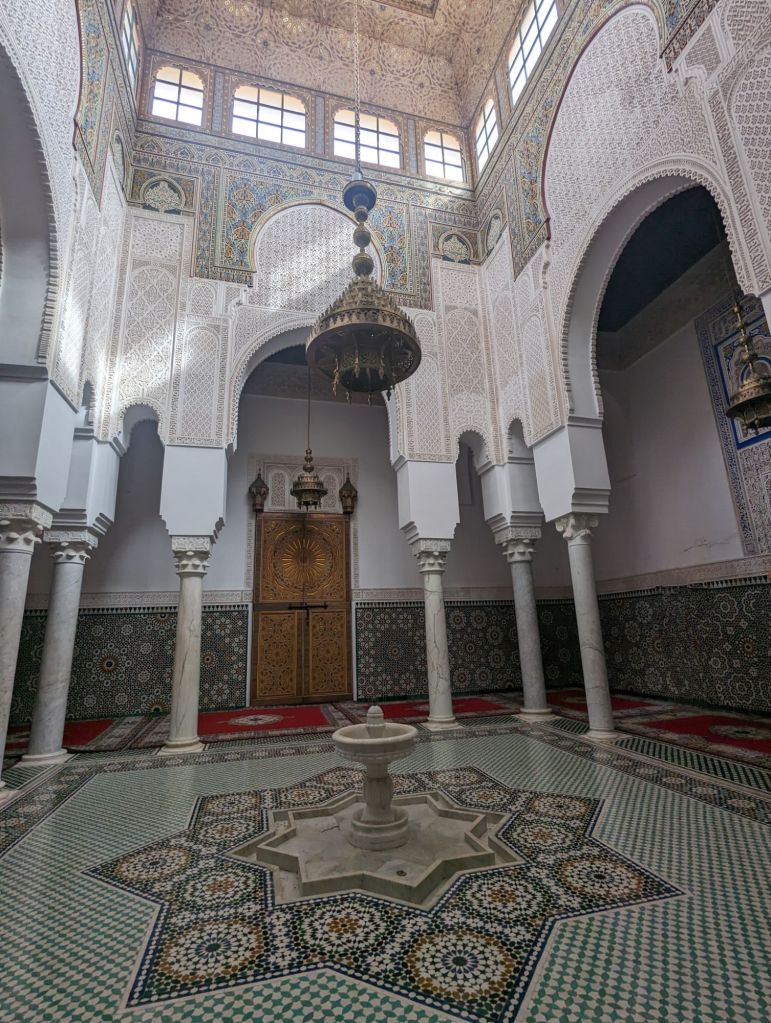
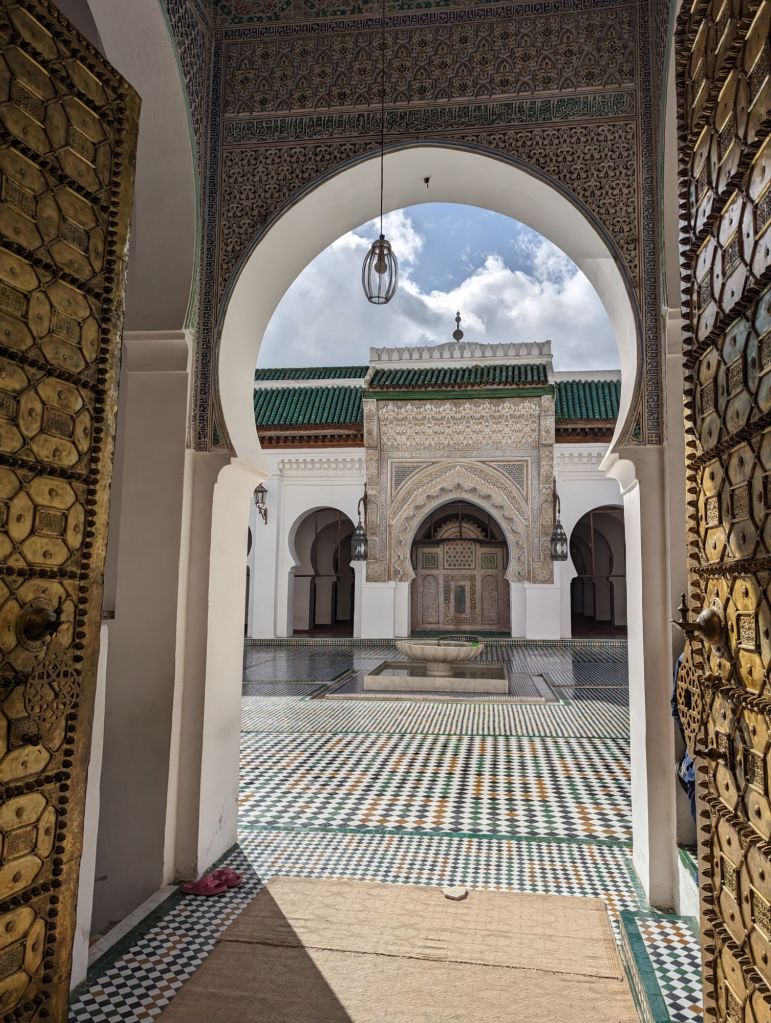
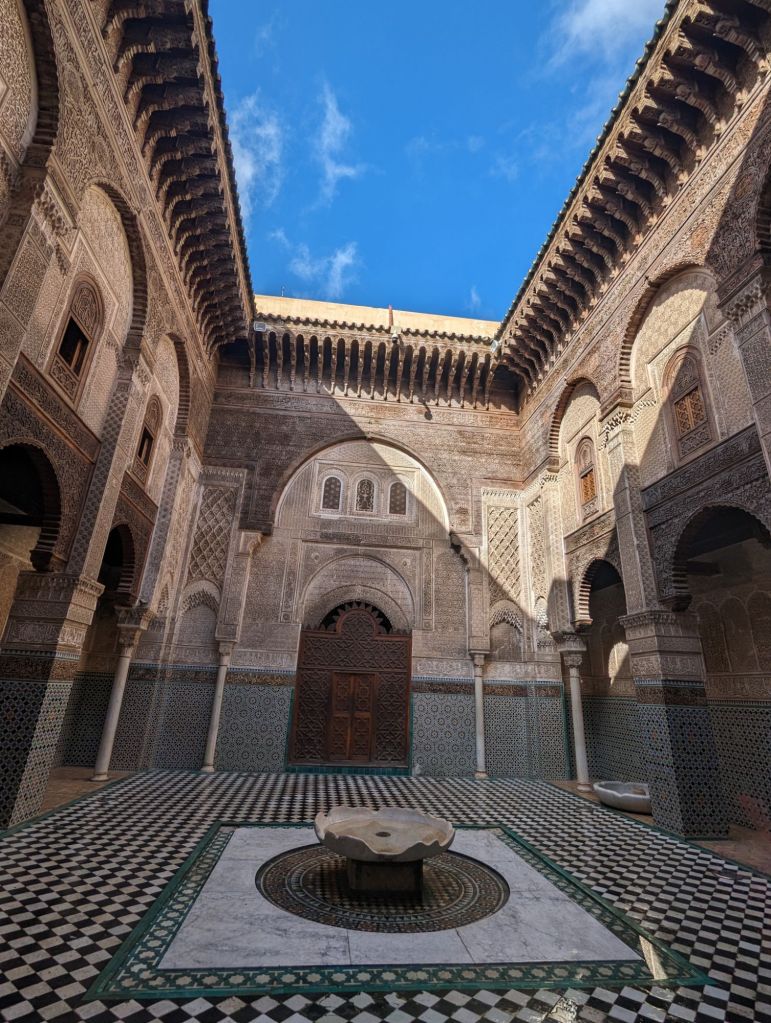
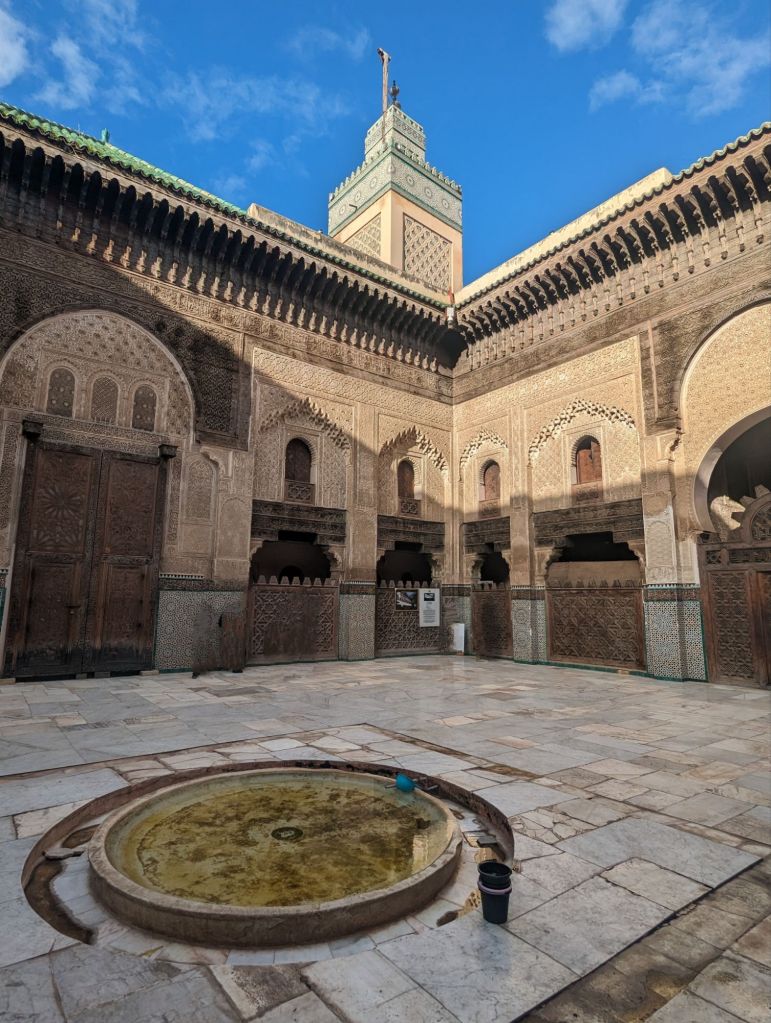
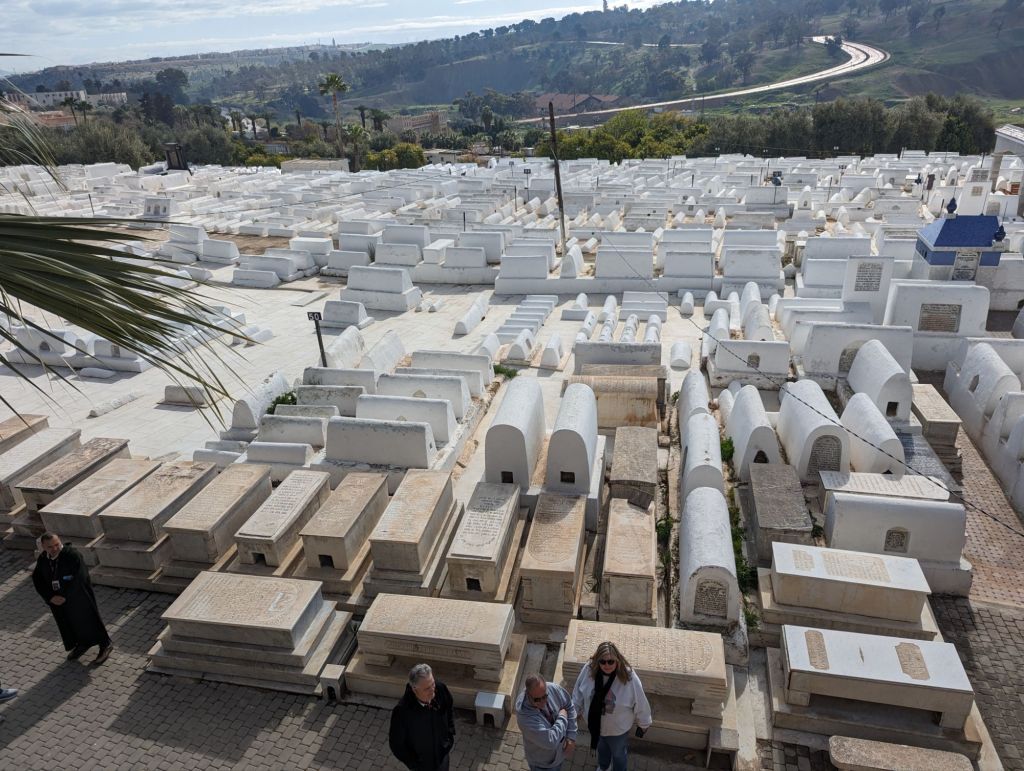
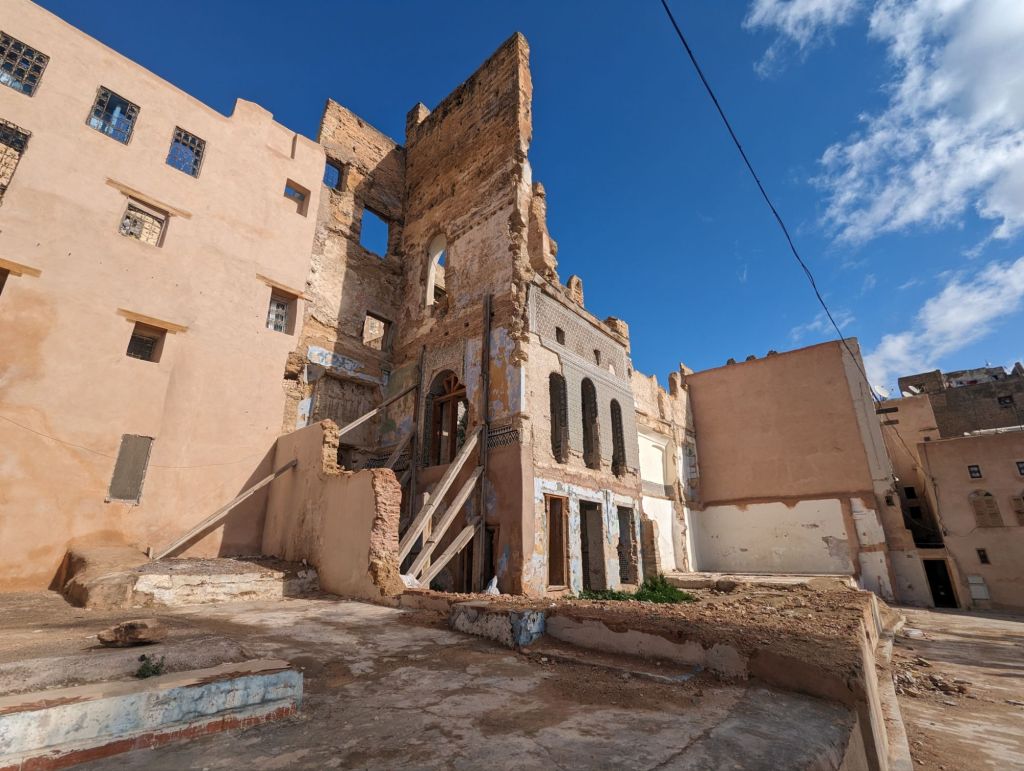
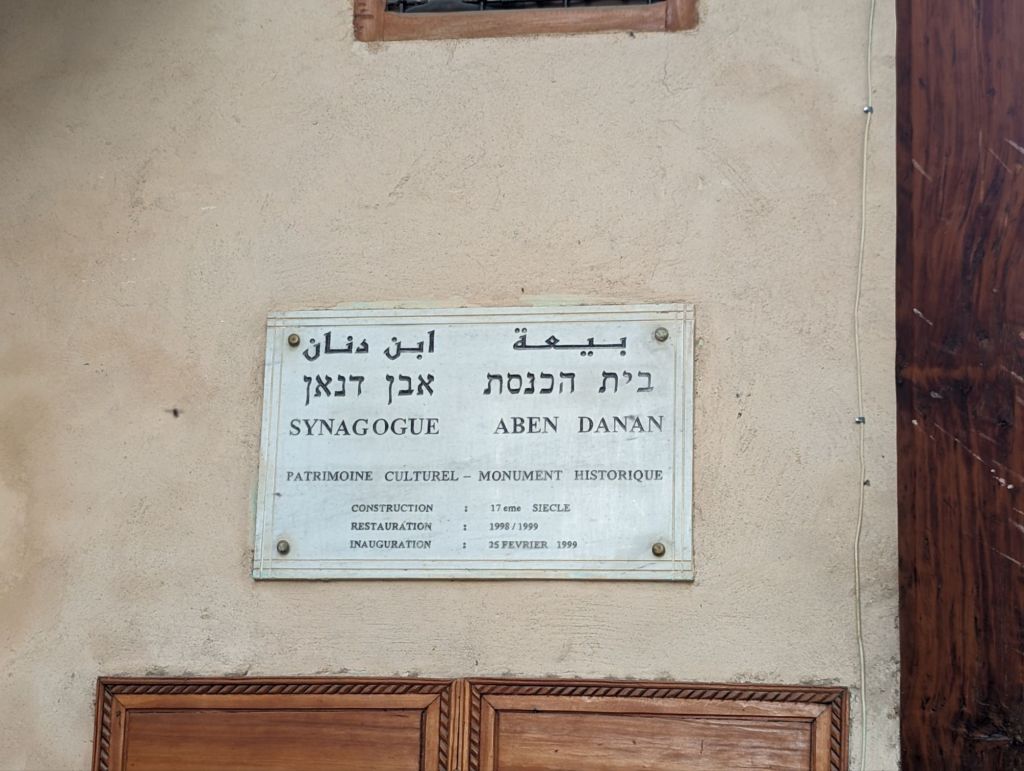
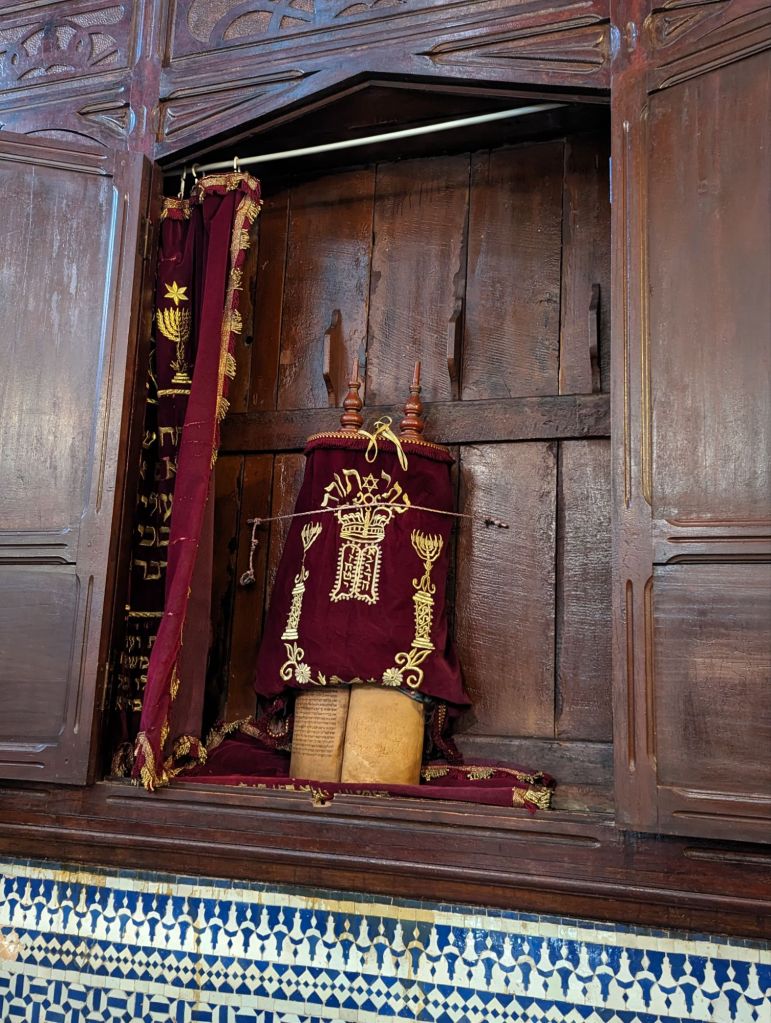
Remarkably, the ornate decoration is Andalusian: Arabs in southern Spain (Moors) developed the artisanship of the mosaics and tilework then when driven out during the Inquisition along with Jews and relocated to nearby Morocco and brought their talents. In a way, Morocco has been very progressive for centuries; their constitution recognizing Abrahamic as well as Arab and Berber cultures. There is a Jewish quarter or, mellah, in the medina which we visited. We saw the ruins of a 17th century temple and a small family synagogue as well as Jewish cemetery.
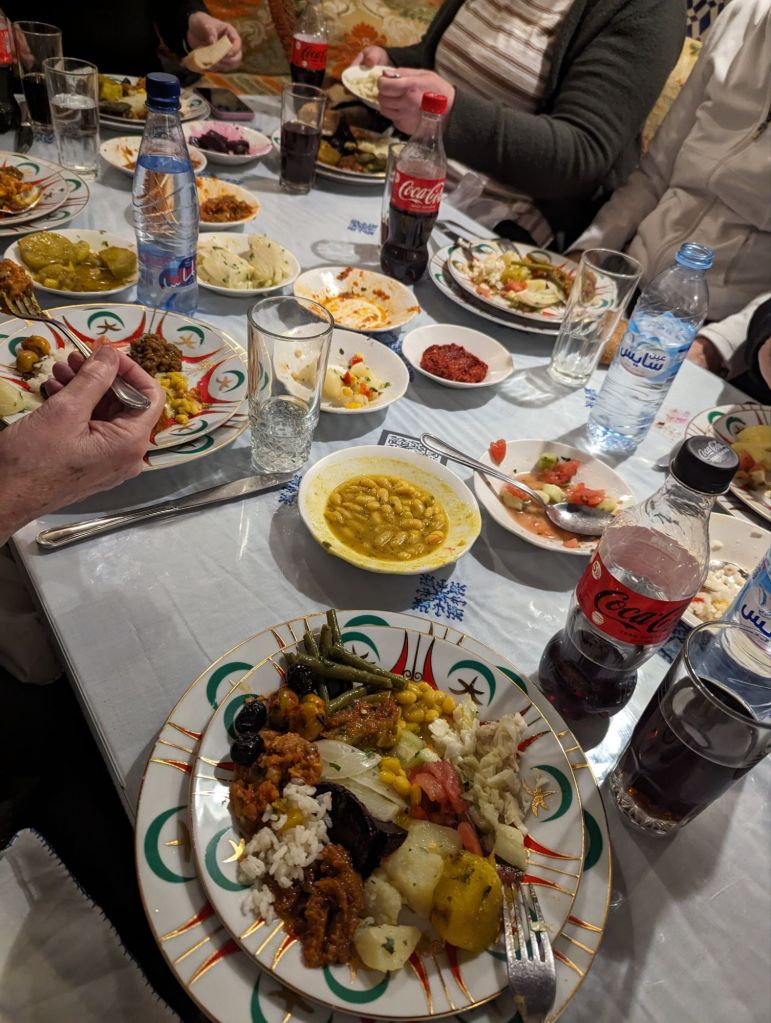
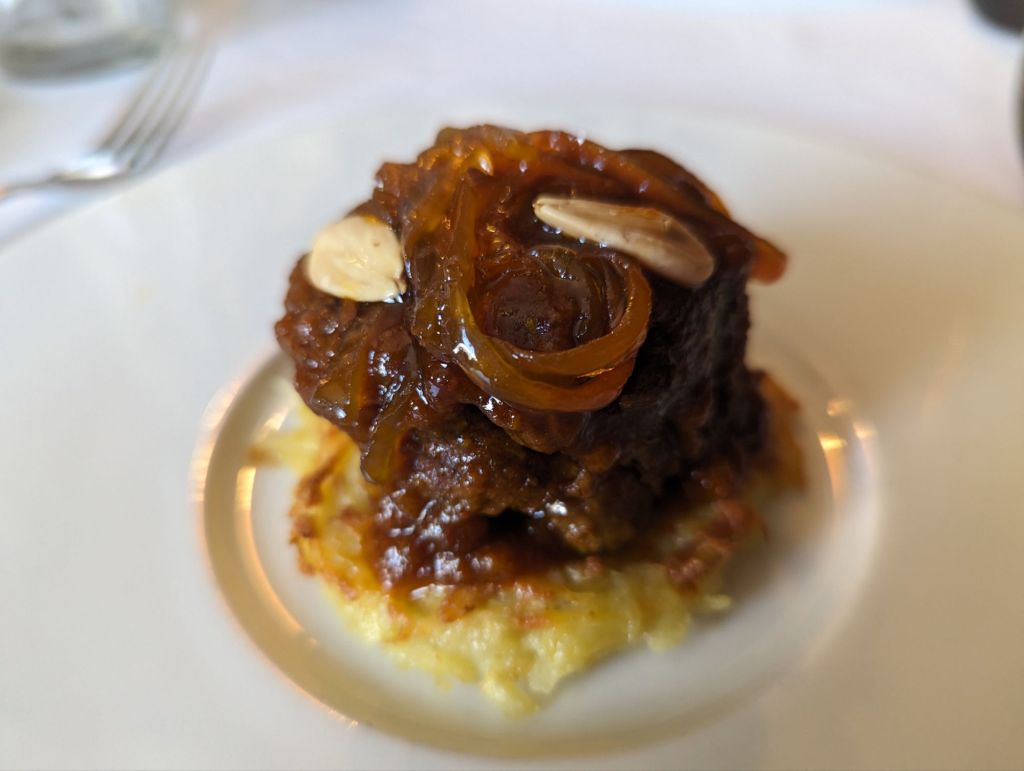
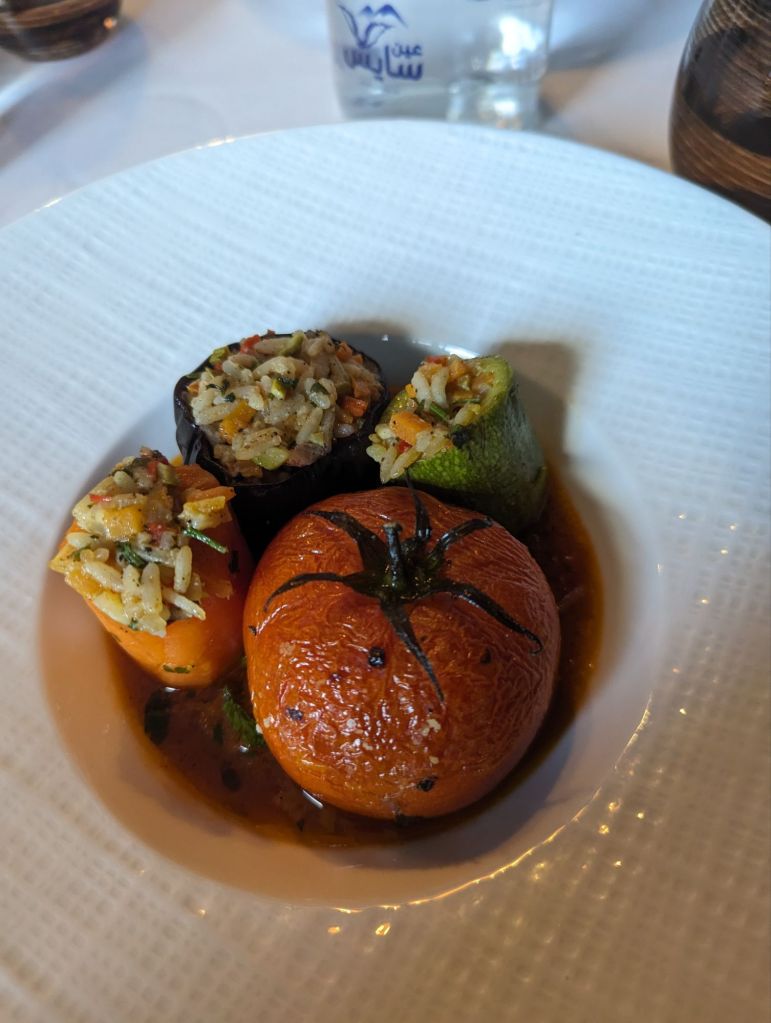
We spent 2 days visiting the medina from all different entrances, seeing and sampling the wares of various souks, shopping for rugs, pottery, jaballas and scarves, and dining in beautiful riads or simple diners. Each meal started with multiple dishes of cooked vegetables: carrots, zucchini, pumpkin, peppers, beans, eggplant, green beans, up to 15 small plates! Then the main course: lamb tagine, chicken tagine, sea bass tagine, salmon, beef, couscous and ending with tea. All meals were wonderfully spiced and so tasty. We walked miles and never went very far – down twisting, maze-like alleys. We saw schoolchildren, tattooed Berber women, donkey drivers, beggars, malingerers, and artisans working their ancient handed-down trade. We came, we saw, we were conquered . “Shukran” (thank you) Fes, and goodbye.