Cairo! City of 1,000 minarets and 10 million people (over 20 million in the region), more than NYC. Largest city on the African continent, capital of Egypt, and our next destination of travel. Finally!
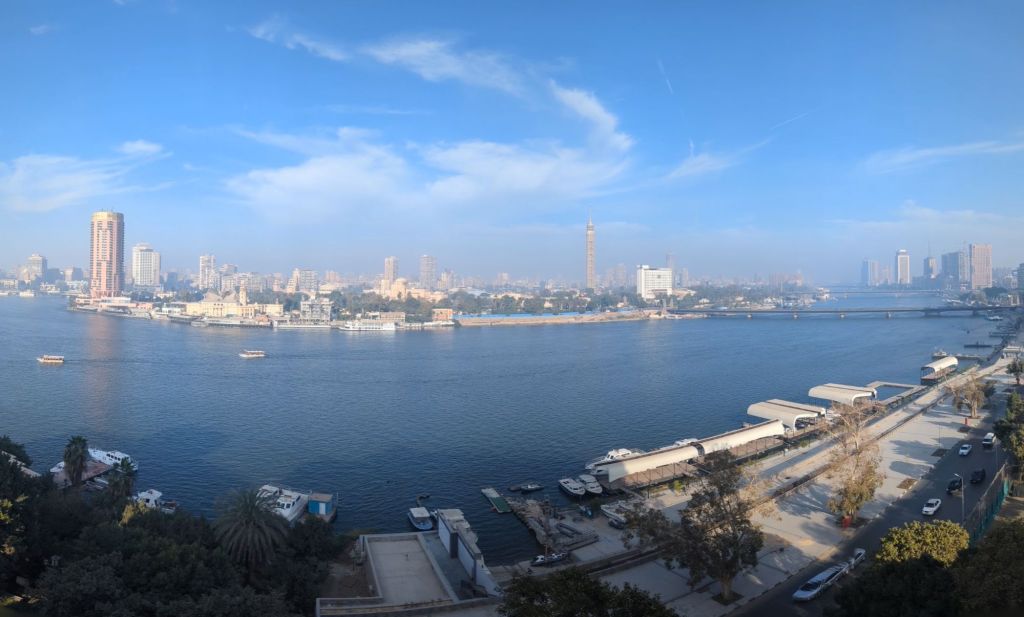
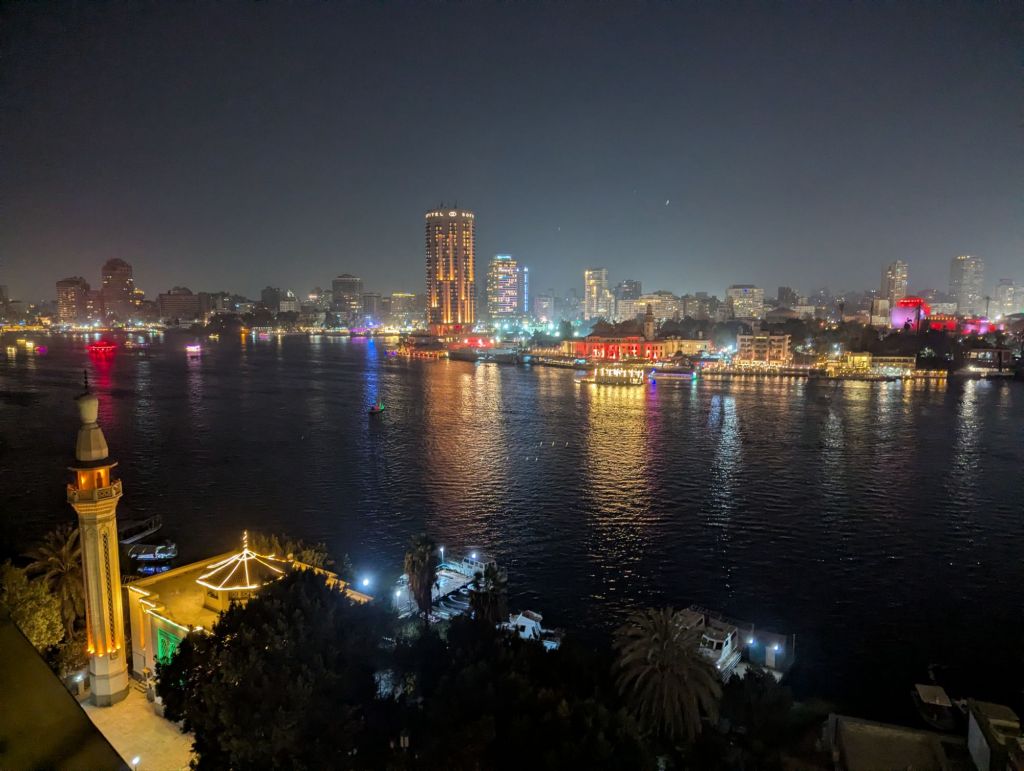
Our AirFrance flight through Paris landed around midnight, having evaded the snowstorm that paralyzed most of the US the day previous to our departure. We were travelling again with Odysseys Unlimited tours. We arrived a day before the tour began and had an OU representative meet us at the airport; we had procured our online visa so immigration processing was fast (visas are also available at the airport upon arrival, $25USD). Sam, the OU rep, had a driver for us so we proceeded to the Hotel Kempinski in the Garden City section of Cairo, located, with other luxury hotels, directly on the Nile. There was a dusky haze in the air and the illuminated buildings were surrounded by golden halos. We passed by ornate, walled government buildings, a medical school, mosques and Coptic churches, and groups of new, fancy financial company buildings before getting into the nitty gritty city. The elevated highway passed over busy local streets with people milling about brightly lit bodegas or just sitting on curbs or benches. It was 1:30 am and yet the highway was fairly busy with cars, trucks, and scooters, all of whom ignored lane markings, turning indicators, or other cars honking nearby. Who needs headlights at night? Duct tape won’t keep the trunk closed? 12 people in a tiny minivan bus? Pedestrians walking on the road as swerving cars sped by? Basically it was crazy chaos that Egyptians instinctively navigate and even possibly, enjoy. Our van was checked by a bomb sniffing dog before we disembarked at the hotel; our bags and bodies were x-rayed at the entrance, we checked in and collapsed into bed.
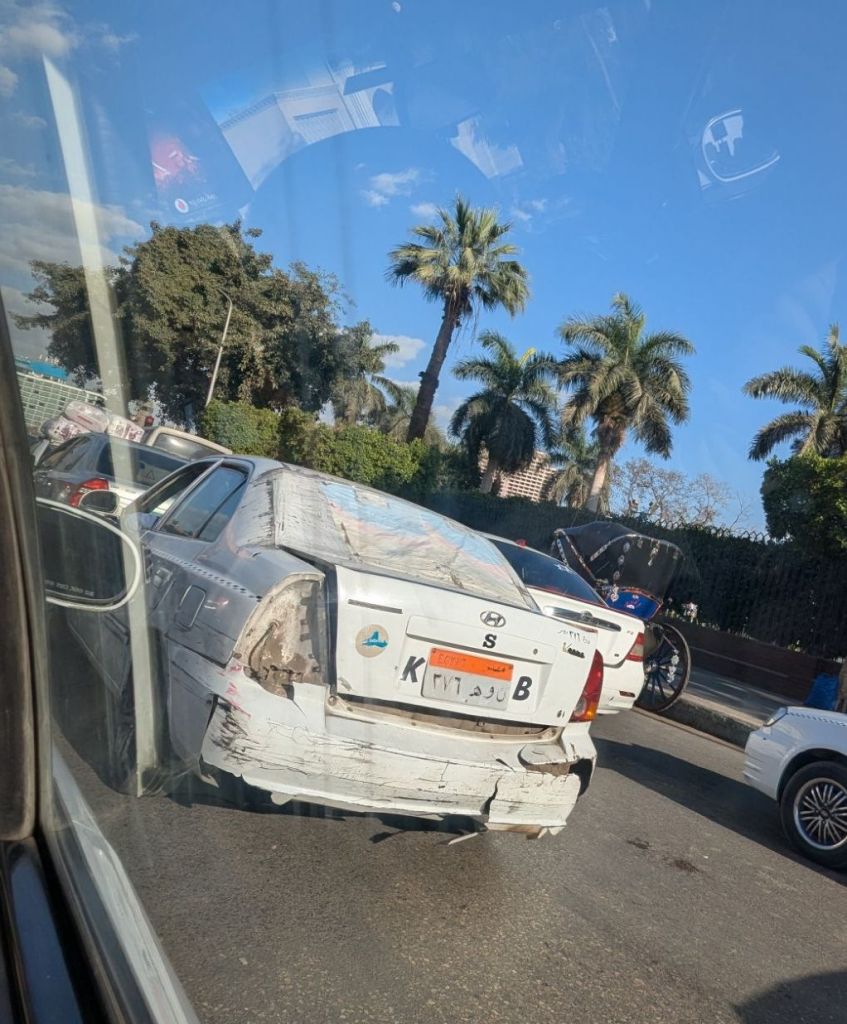
Remnants of a recent dust storm were evident in the morning haze. A pleasant smell lingered, almost sweet and not unlike mild incense, which I attributed to the dust/sand. In the daylight, all buildings were colored various shades of ‘sand’, with an extra layer of actual sand coating roofs and satellite dishes, awnings, or any exposed surface. Growing up at home, one of us had the weekly chore of dusting the house; here that would’ve been a monumental task! We had some difficulty extracting Egyptian pounds from the hotel ATM that morning but eventually, with a phone call back to our bank, it all worked out (47 Egyp pounds to the $1USD). After breakfast we taxied (through rush hour chaos – refer to my comments from the previous night’s drive and magnify) over to the GEM, the Grand Egyptian Museum. For 1600 Egyptian pounds, approximately $35 USD, our driver Mallach skillfully maneuvered the 30 minutes of bumper car driving (not without some comments-understood from inflection), would wait 4 hours while we visited the museum, and then would drive us back. The drive took us past sand colored highrises that went on for miles, with laundry drying and collecting dust out most balconies- so close to the highway you could almost grab a pair of undies off the line. These were mostly lower class lodgings, the buildings appearing unfinished and unsteady. But then, glimpses of the Pyramids at Giza appeared between the buildings and then the adjacent GEM was right there.
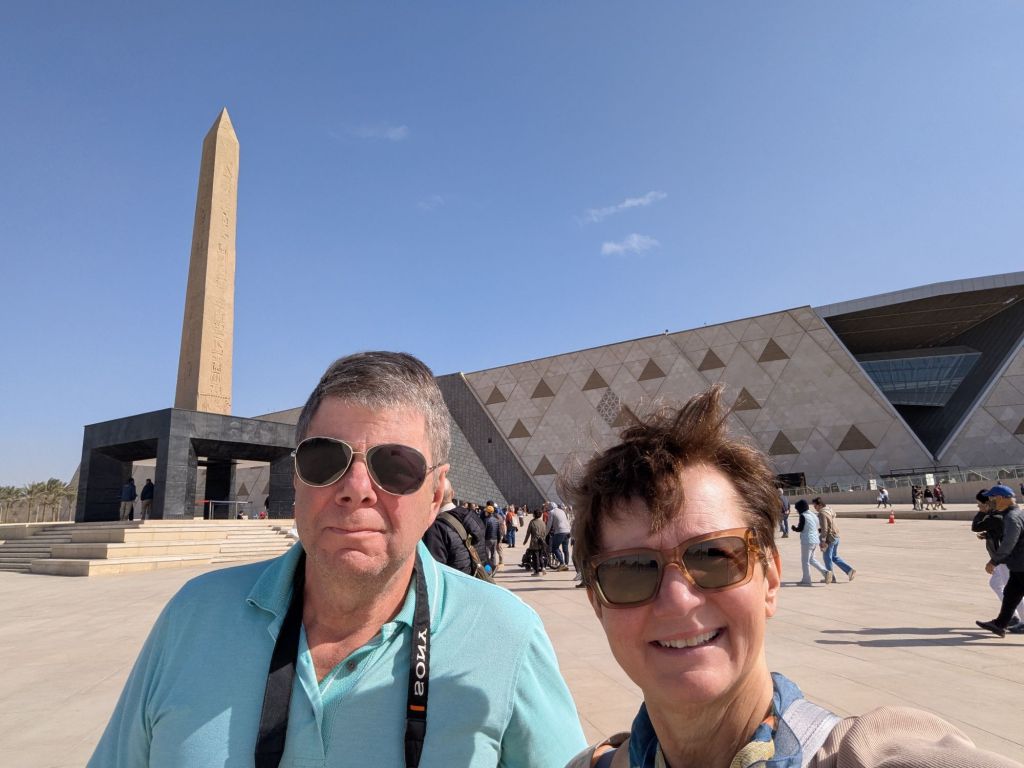
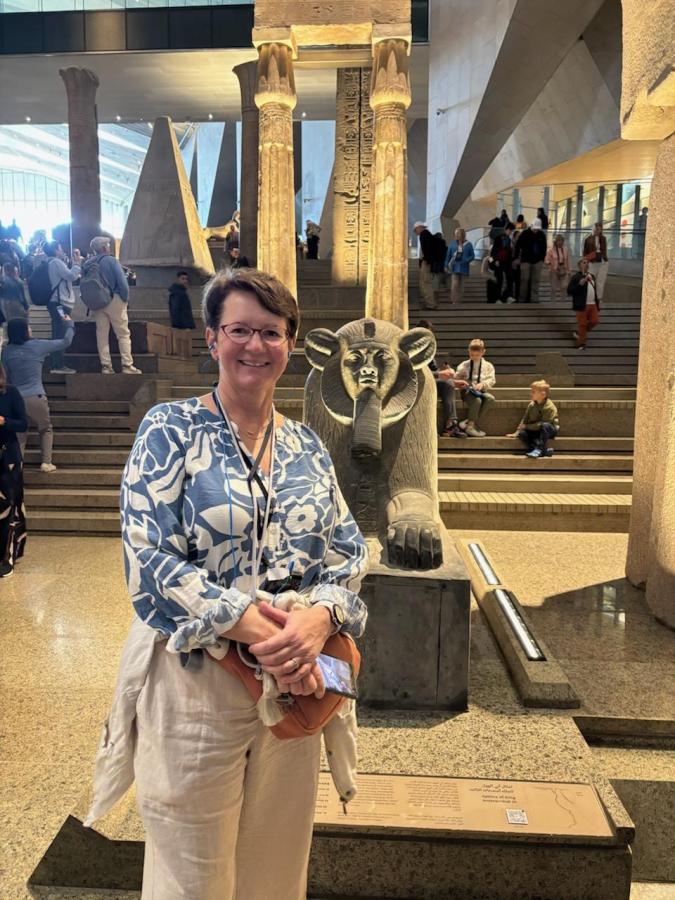
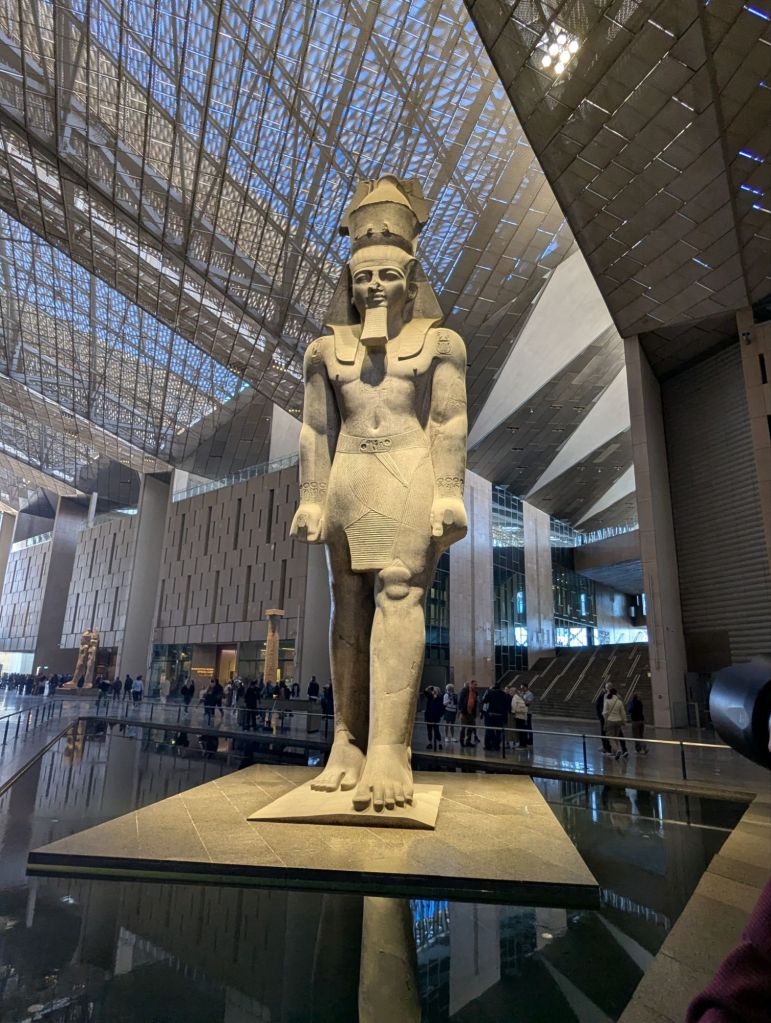
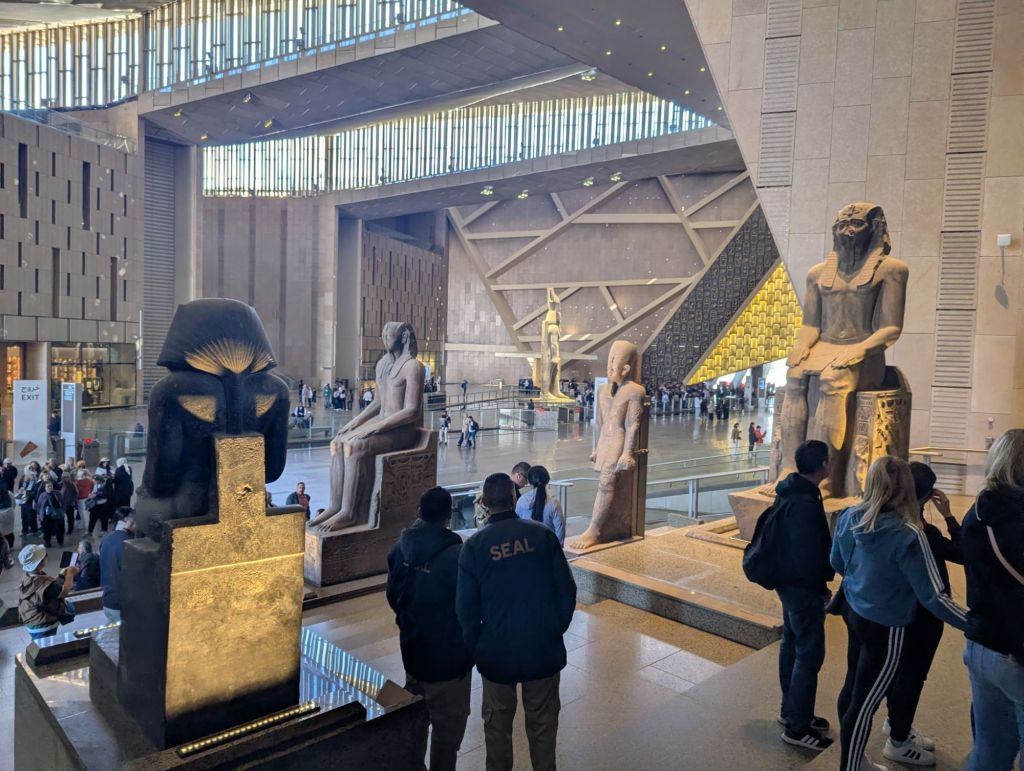
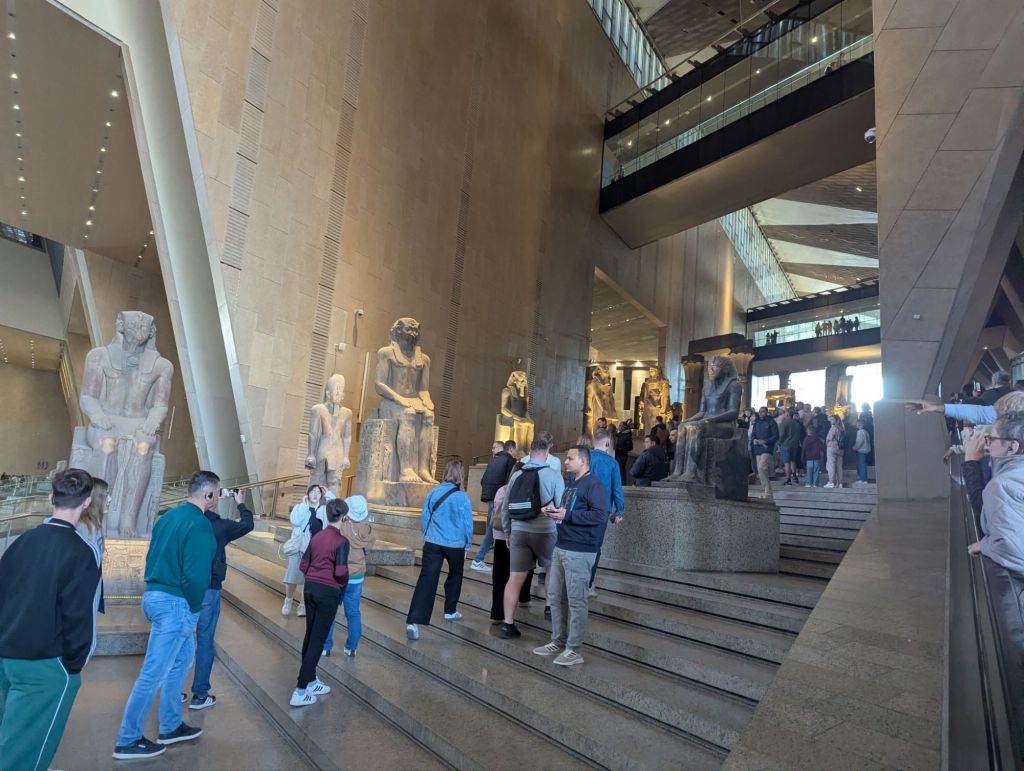
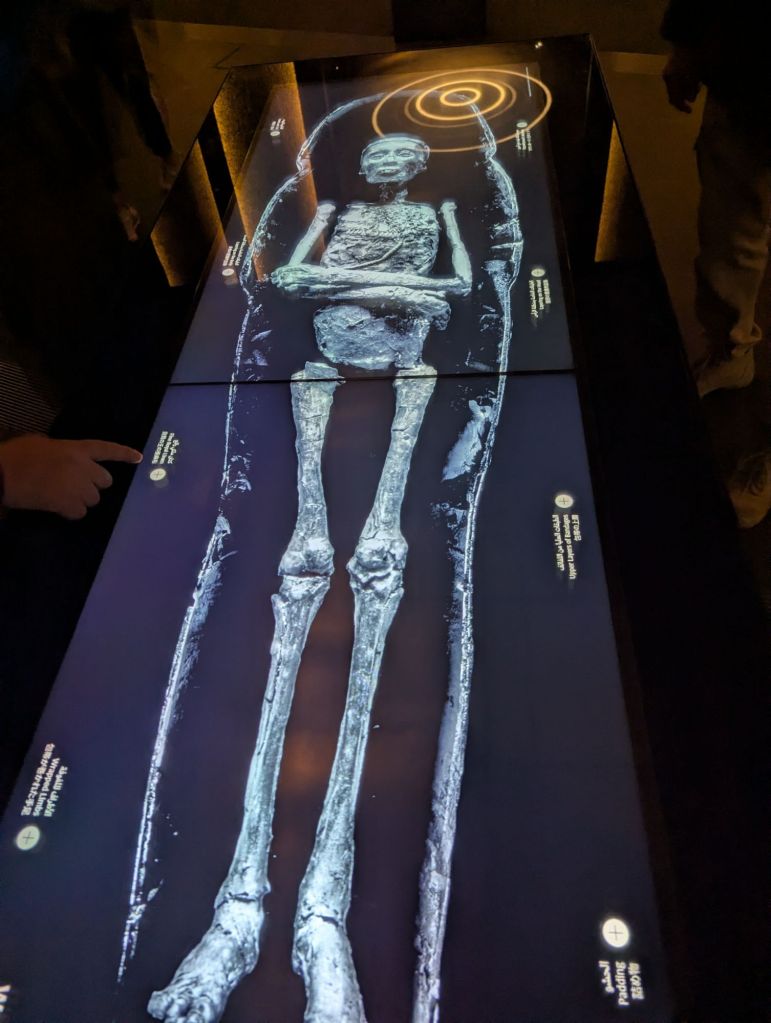
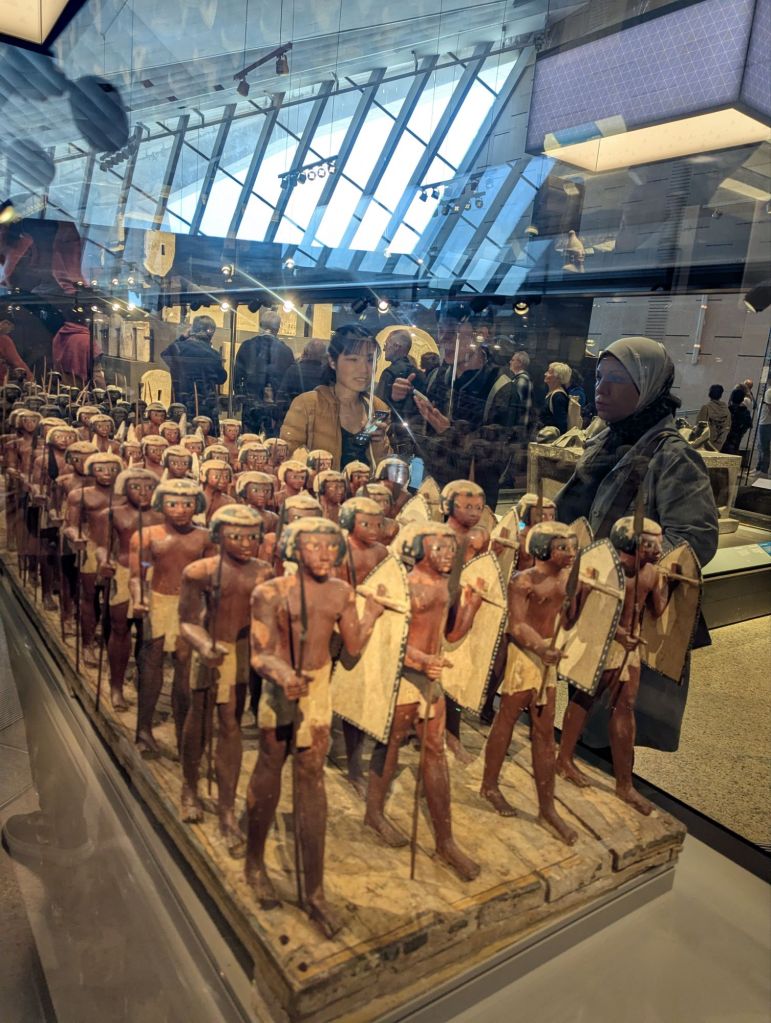
Over 25 years in the making, the GEM opened Nov 2025 and is the largest archeological museum in the world dedicated to a single civilization (500,000 sq m). The building extends in front of and into the surrounding desert with pyramidal shapes designed into the facade, mirroring the neighboring Giza pyramids. Before entering, a ‘floating’ obelisk greets you in the exterior courtyard and teases the treasures within. Once inside, the Grand Hall is immense, yet stunning. An enormous statue of Pharaoh Ramesses II, carved from a single block of red granite, greets you as you enter (along with 100s of other guests). This museum hosts 19,000 people a day yet there is room to maneuver. To reach the exhibits, a magnificent four tier stairway beckons you up and up, artifacts on each tier representing the Egyptian story: Royalty, Divine Houses and Temples, Gods and Kings, Funerary, each level exhibiting kings, shrines, sphinxes, and sarcophagi. An escalator is available nearby. The actual museum collection is displayed at the top level in 12 areas. We spent 3 hours looking at the exhibits of stelae, canopic jars, jewelry, cartouches, statues, shabti, sarcophagi, mummies, papyrus, carvings, hieroglyphics, and on and on. Tired and overwhelmed, we stumbled into the Tutankhamen exhibit and were immediately reenergized.
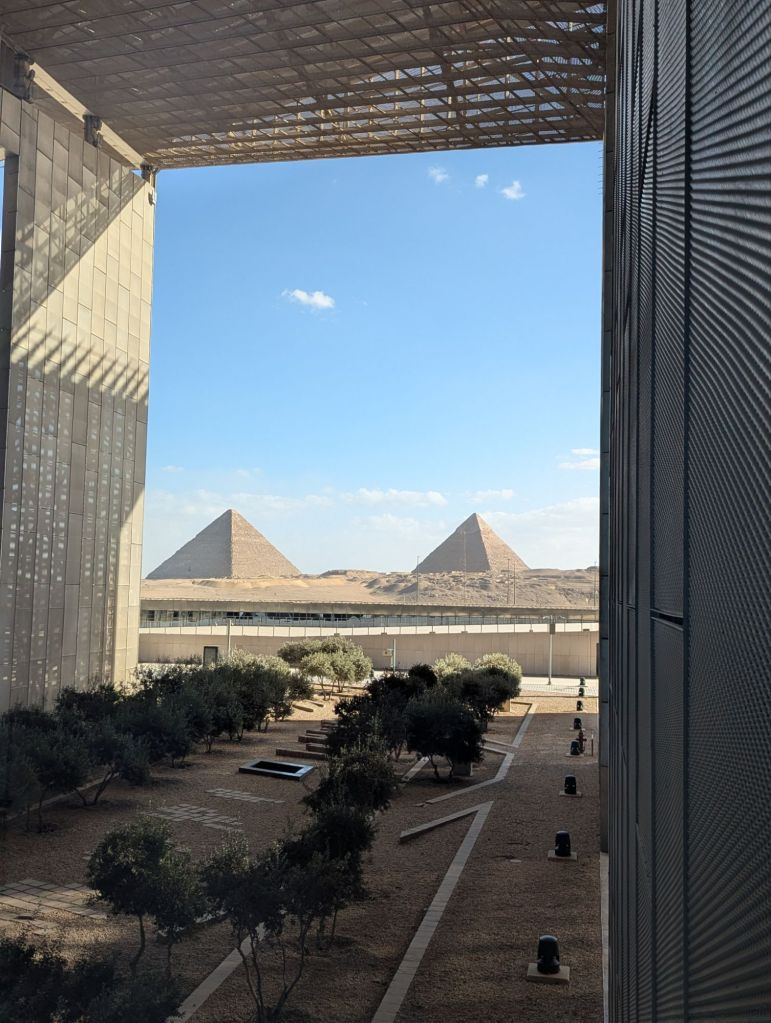
The nearby Pyramids at Giza; soon will be connected to the GEM with a walking path. We will visit later.
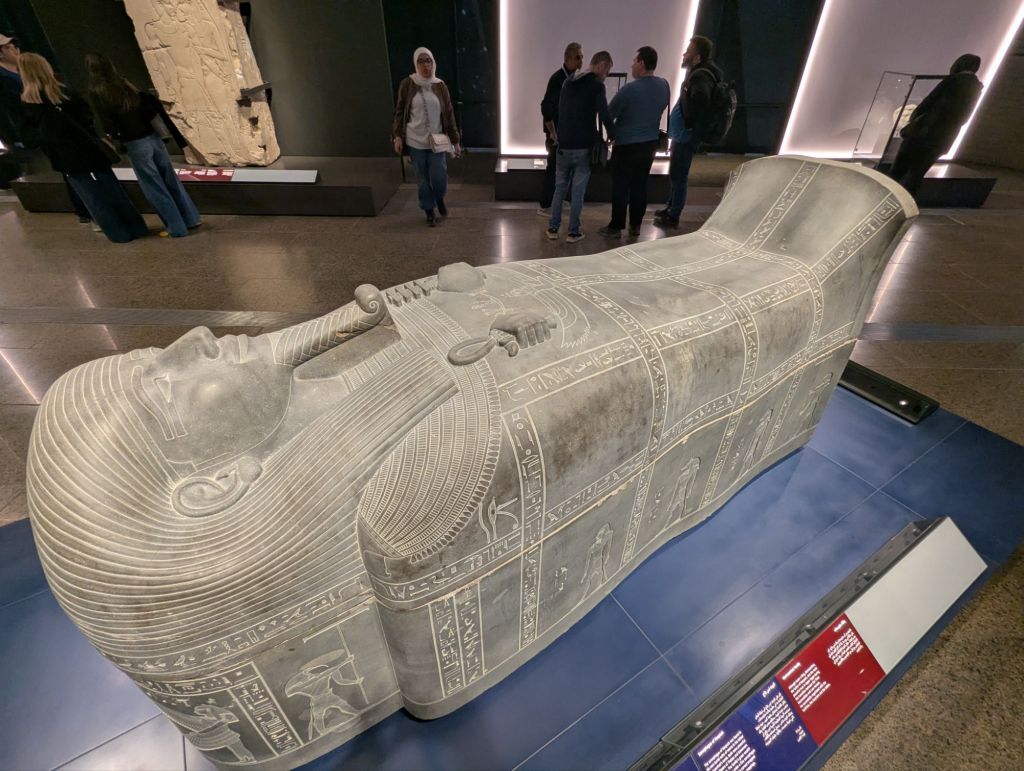
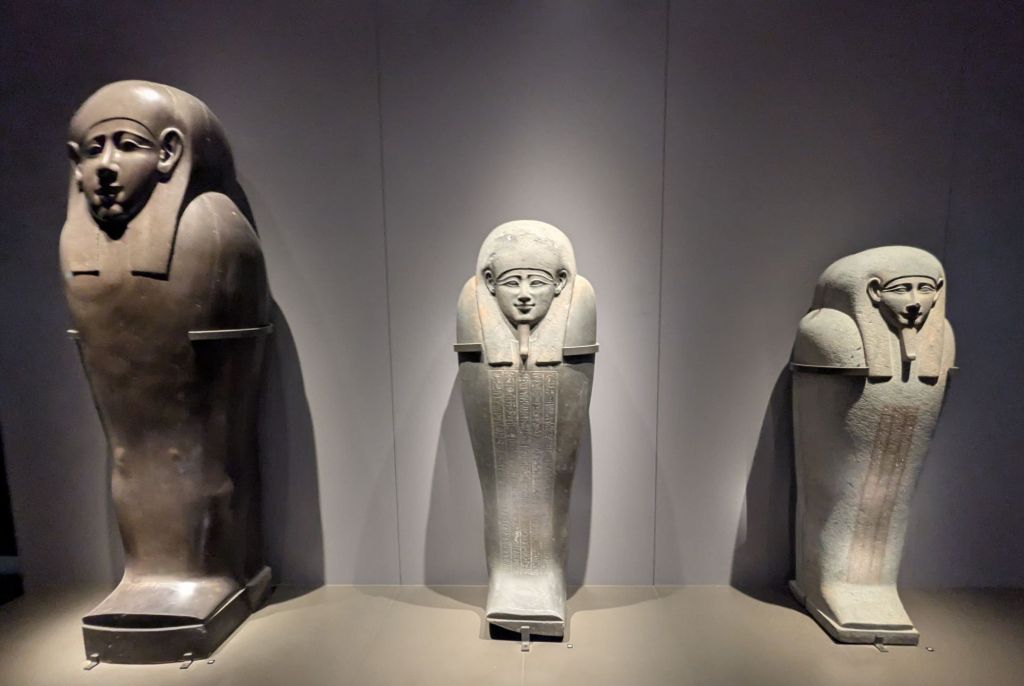
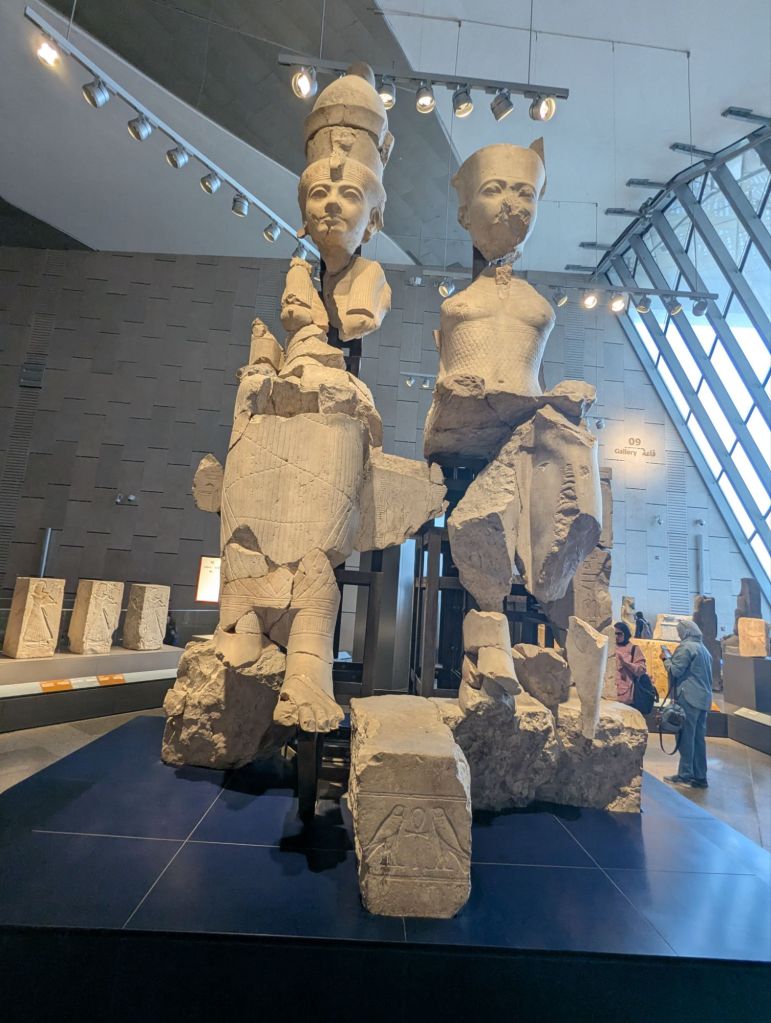
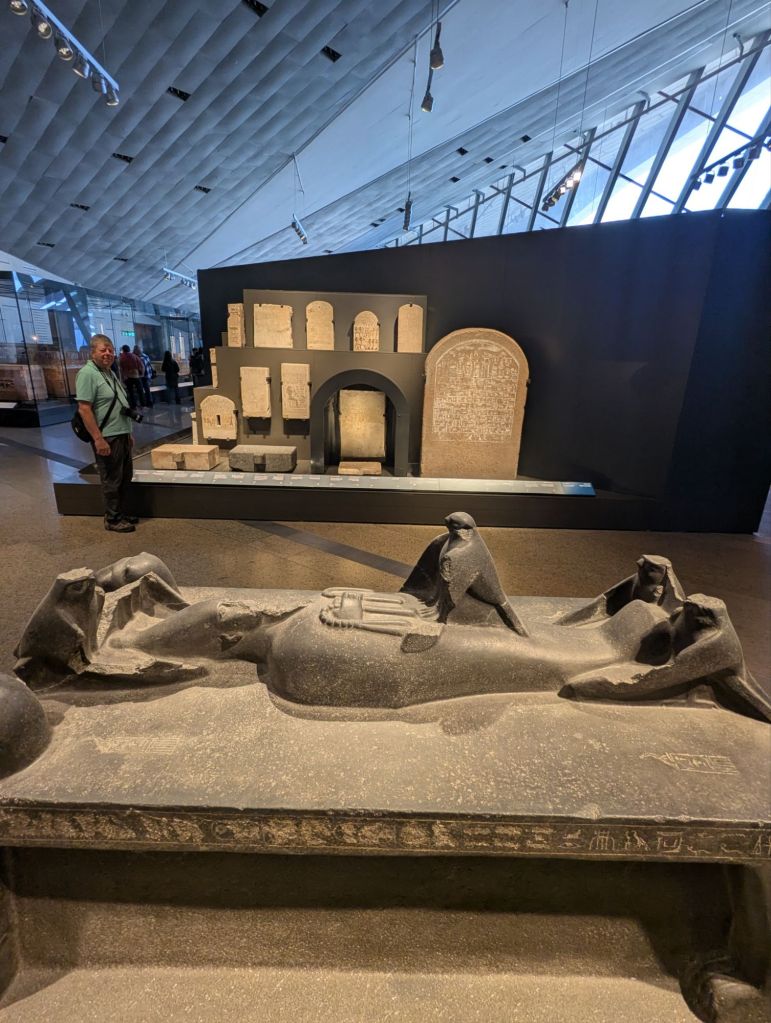
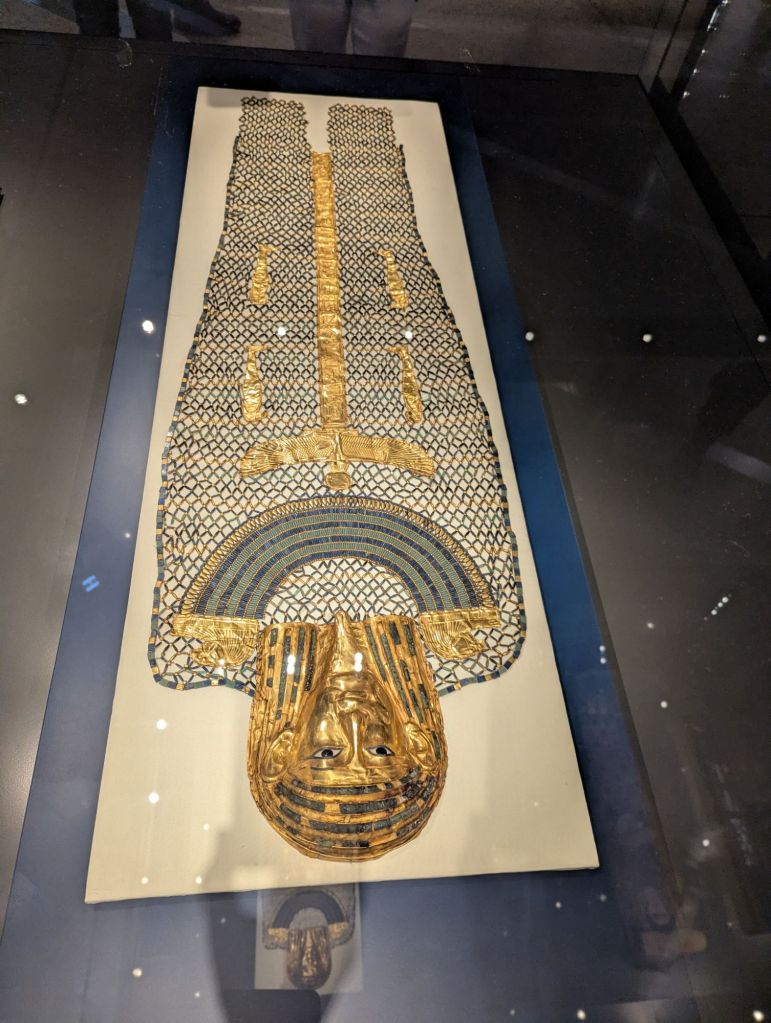
We returned to the GEM the next day, now with our tour director, Ayman, and our 18 tour mates on a large bus. Although we spent less time in each display area, Ayman took us to various highlights giving interesting history, commentary, and descriptions of the artifacts with enthusiastic flair. Again, Tut’s exhibit was the highlight.
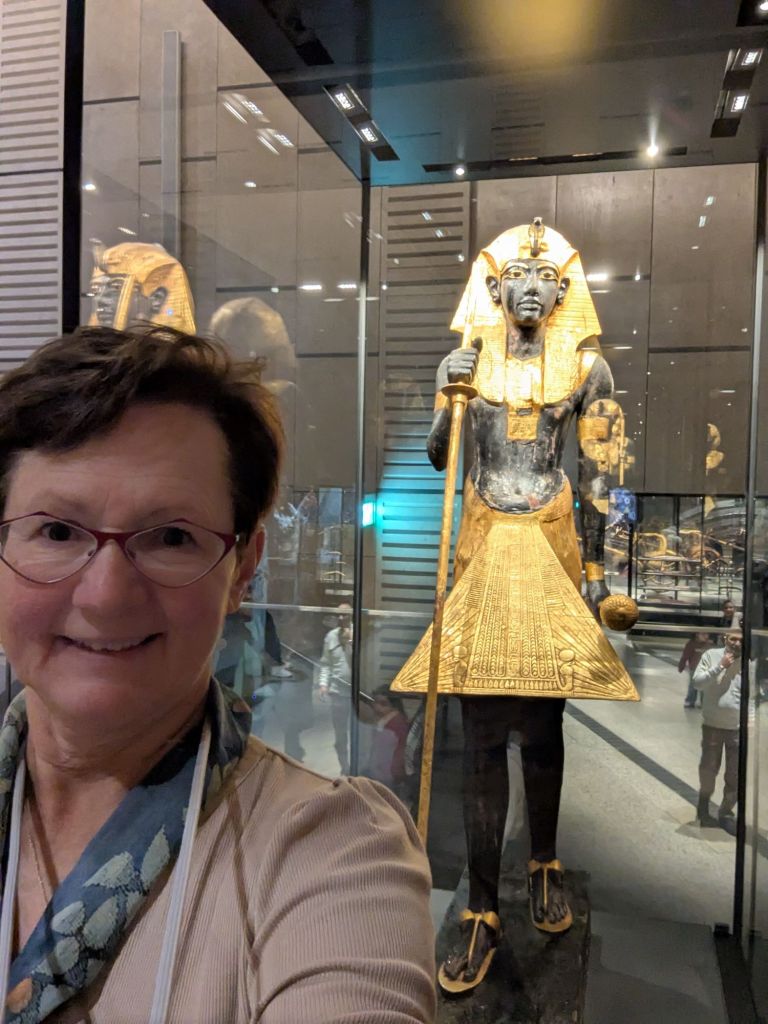
Howard Carter, British archeologist, sponsored by Lord Carnarvon, discovered Tutankhamen’s tomb after almost giving up following decades of unfruitful searching. Finally, in 1922, having one more go at it, a top step of a stairway was discovered and further exploration revealed a treasure unlike any other. When asked, as he peered into the now opened tomb what he could see “Yes, wonderful things!” Most other tombs had been pillaged but Tutankhamen’s tomb was untouched due its location beneath another pharaoh’s tomb. The resulting discovery was incredible. Carter et al took 10 years digging and cataloguing his finds. Now, artifacts from Tut’s tomb are on display at the GEM. Everyday items like toys and games, sandals, wigs, bow and arrows, beds and chairs, and also chariots, ornate jewelry, statues of all sizes, gold masks, and his burial shrines and coffins, all 5,000 items are on display.
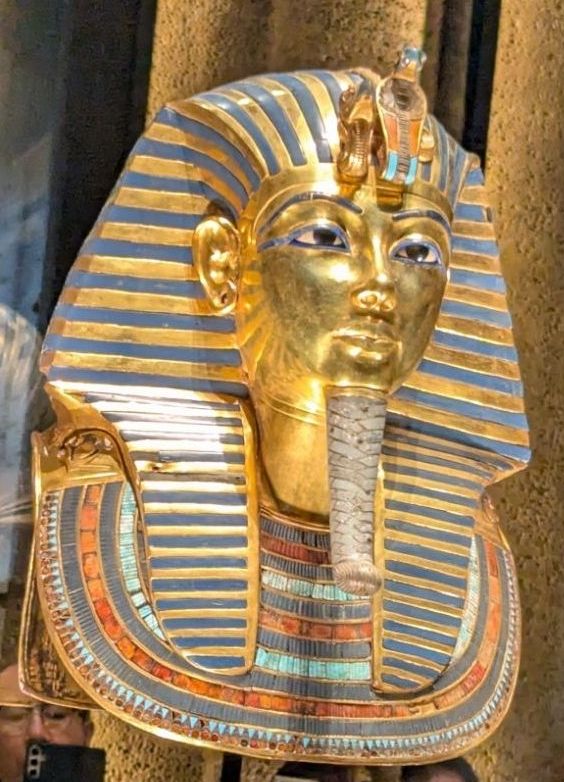
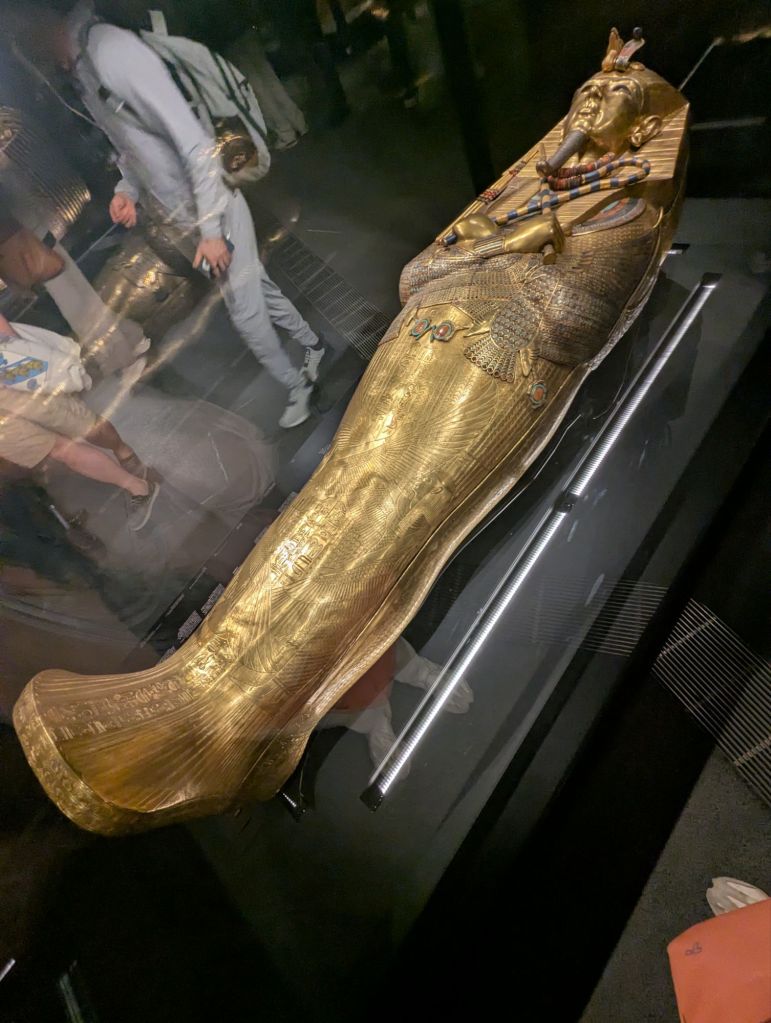
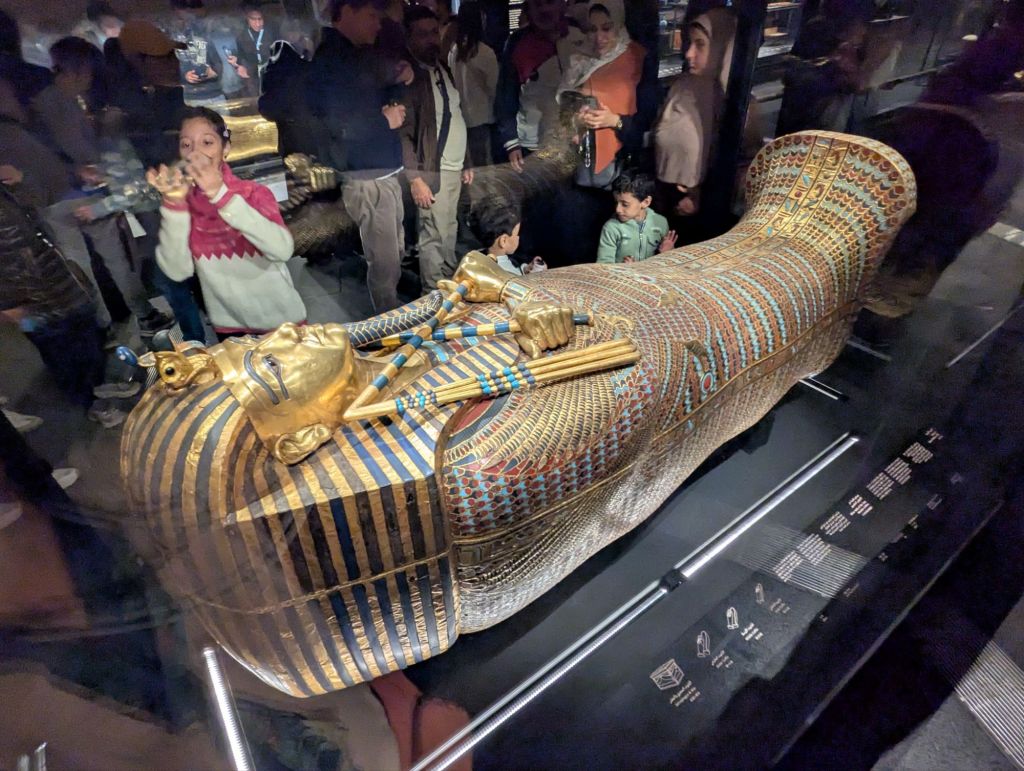
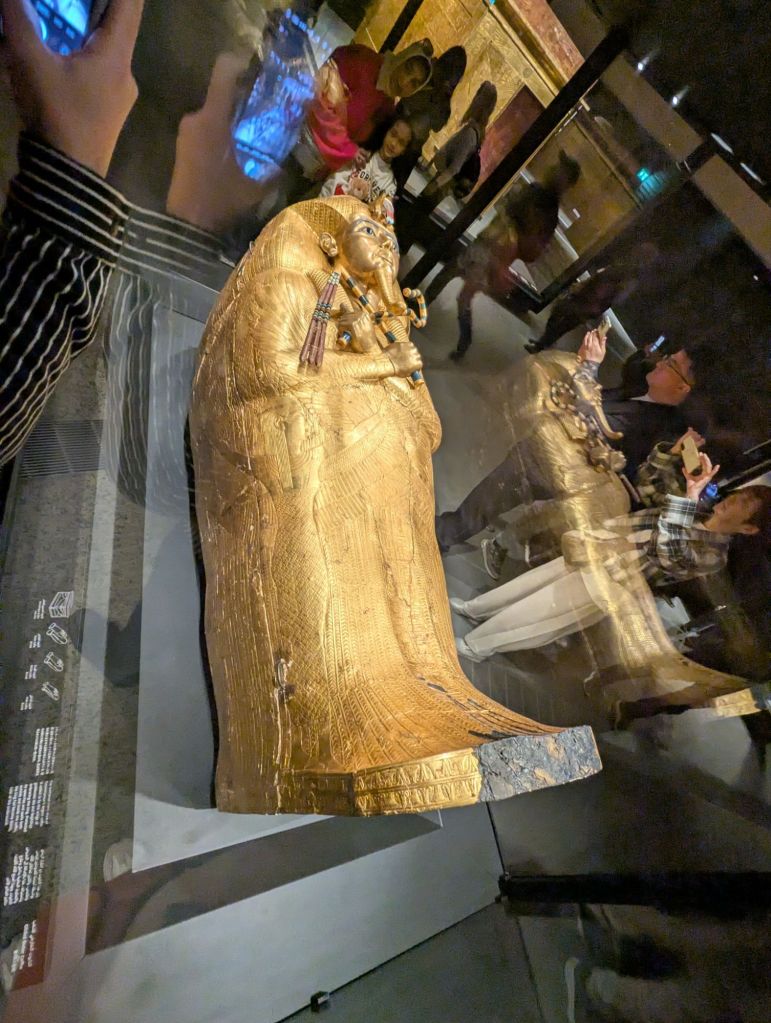
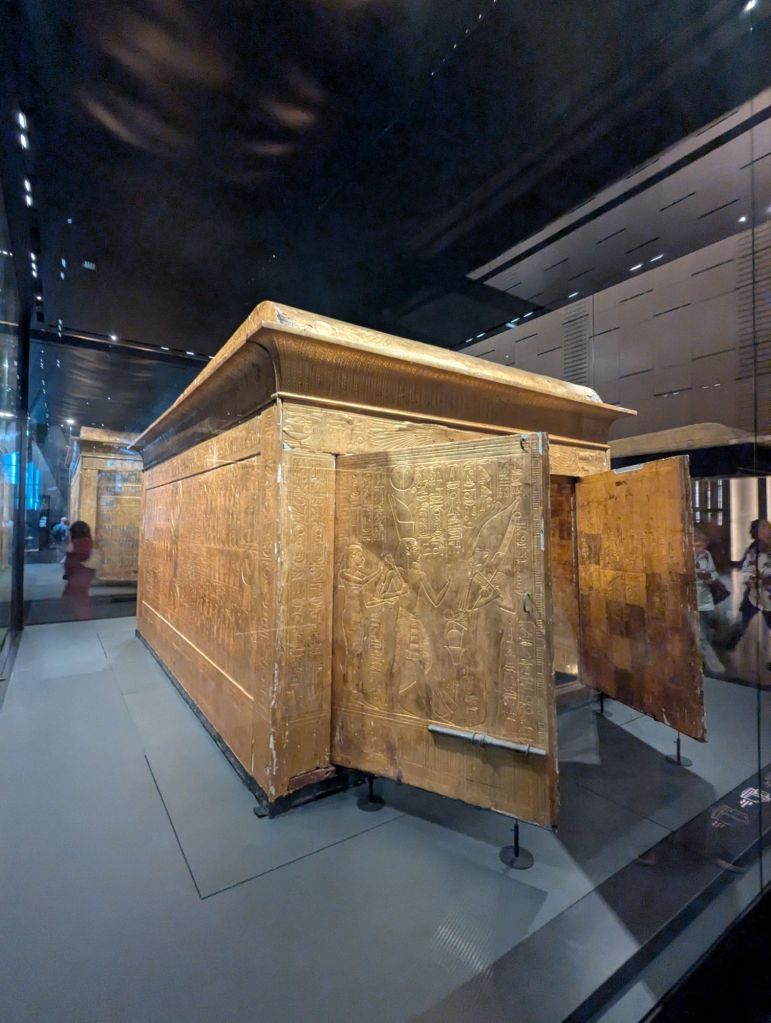
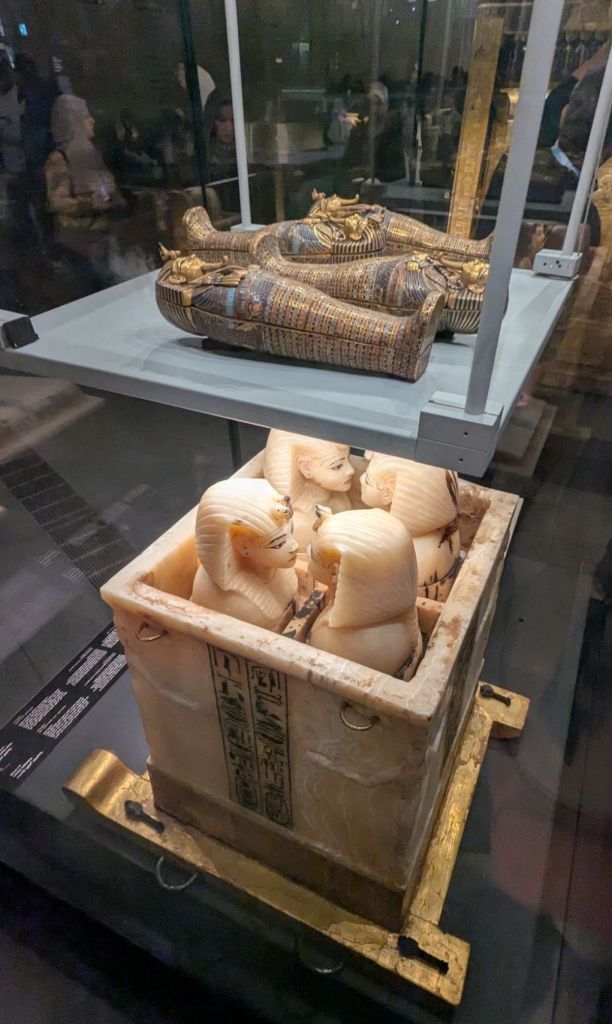
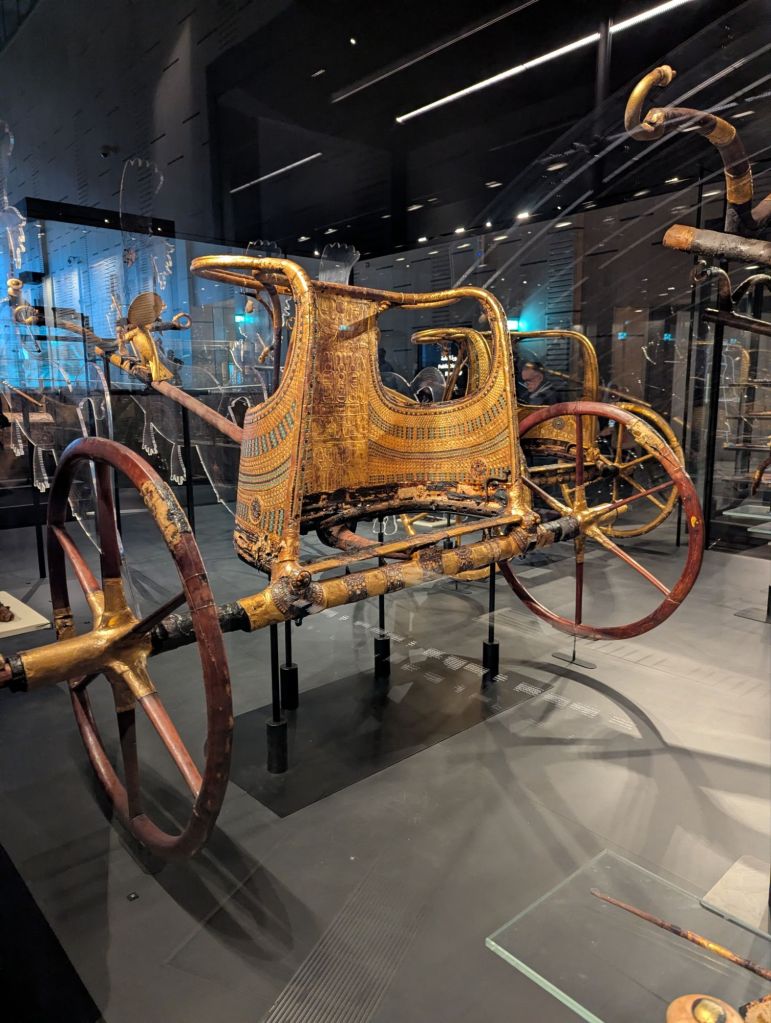
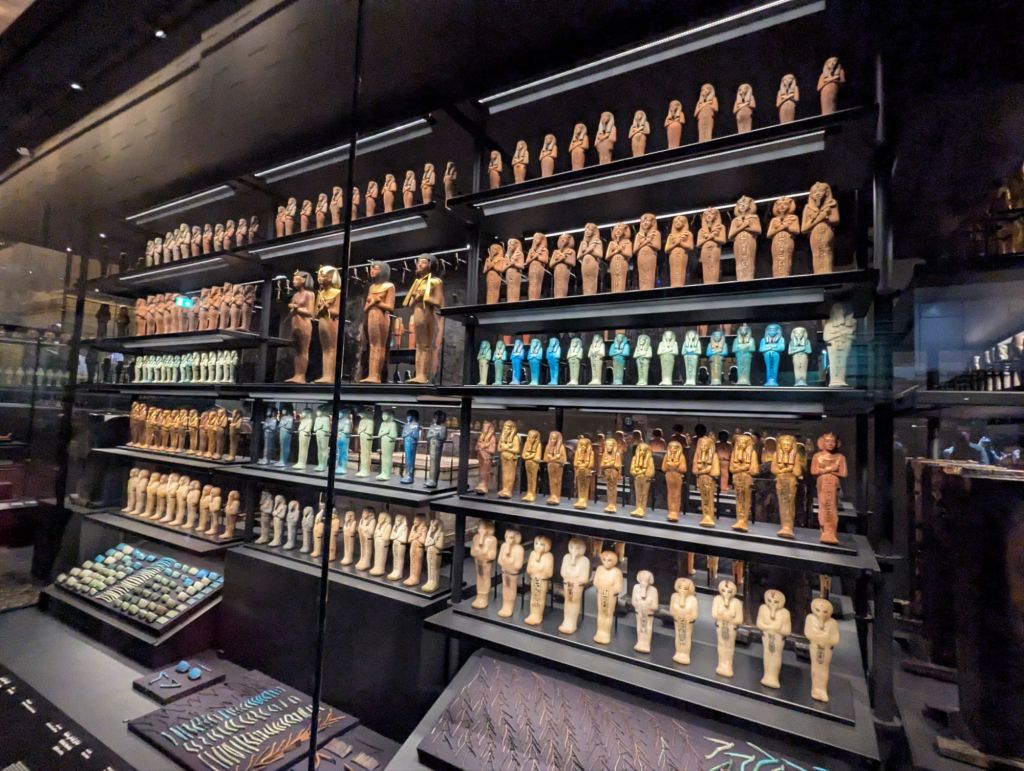
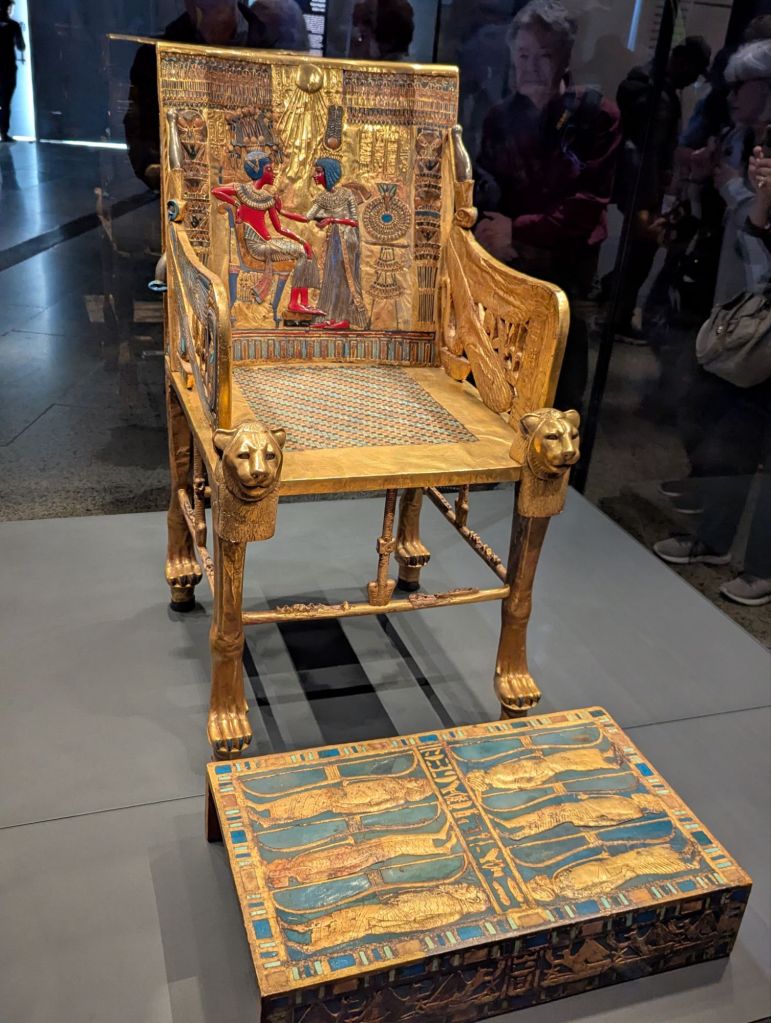
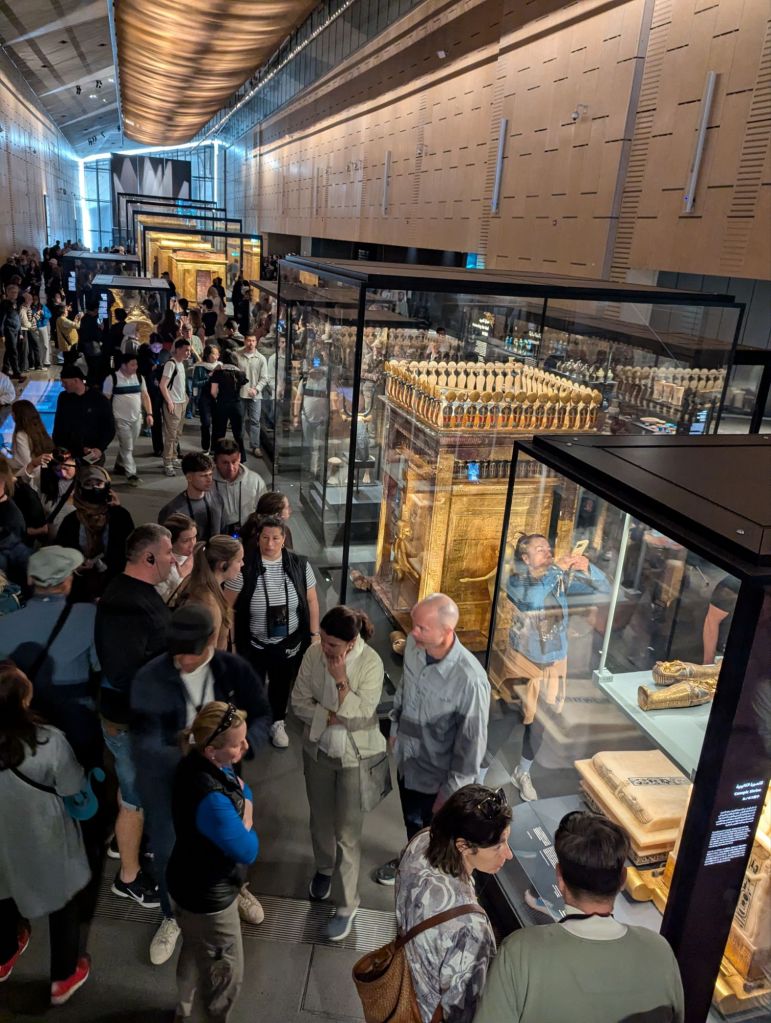
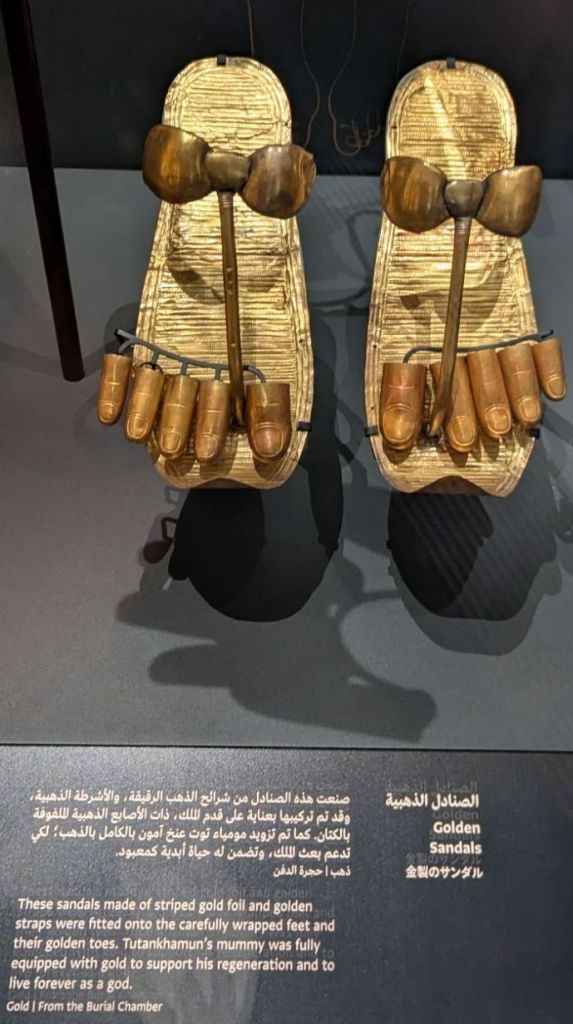
We also toured Khufu’s boat display at the GEM. Like the Vasa in Stockholm, this separate building was built around a 4500 year old ancient ‘solar’ boat which was discovered buried near the Giza Pyramids. Khufu had the boat built and buried near his father’s tomb as a gift and method of transportation to the afterlife (hence, the term ‘solar’); it may have been used as his funerary barge.
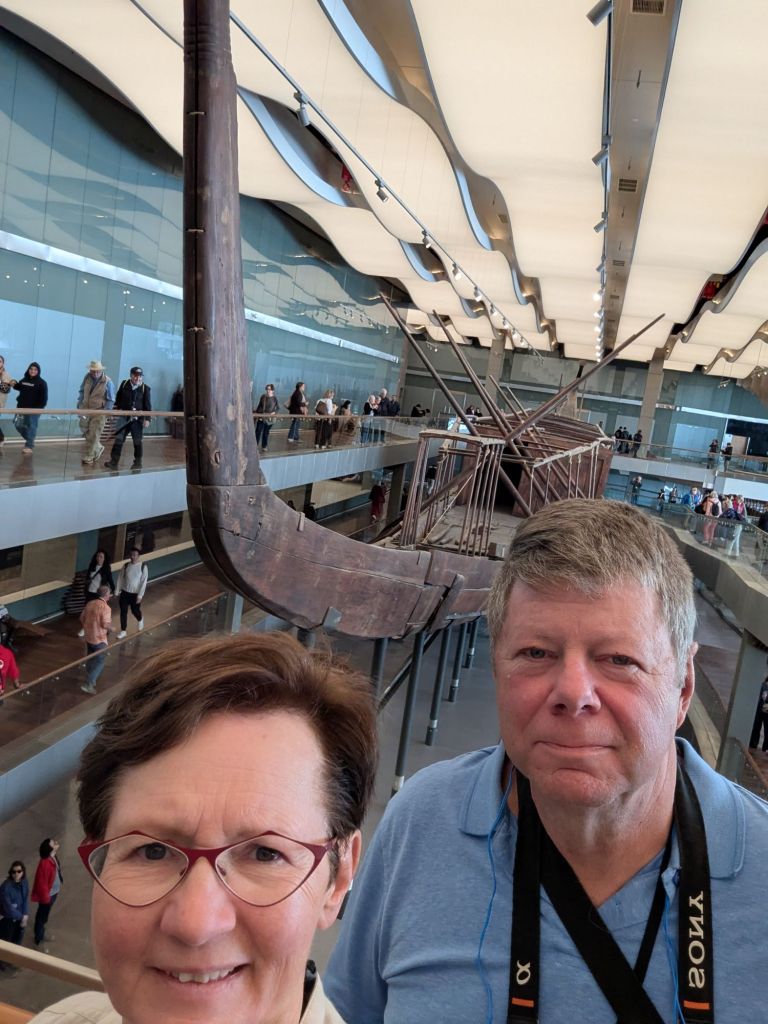
The GEM had so much to offer in terms of history and beauty, it was worth visiting twice. And I’d go back!
This first day of the tour ended on the early side, with dinner at a nearby floating restaurant called “the Blue Nile”. Our meal consisted of grilled veggies, baba ghanoush, hummus, yogurt, and other condiments, ‘balloon bread’ (a very puffy pita), samoska (samosa), and ground beef sausage and grilled chicken, with a chocolate mousse cake to finish. Welcome to Egypt, “the Gift of the Nile”. Lots more to come!
Life on the Nile. E2

 My new reality
Love Love this!! Brings back such memories! You capture our experience brilliantly 👏
LikeLiked by 1 person