
It’s been a week since we arrived on NZ’s South Island and I love it! Previous week’s adventures written here: https://retirementadventureblog.com/2025/03/07/new-zealand-the-south-island-in-two-or-three-parts/
We’ve been blessed with outstanding weather and a wonderful group on tour. The food is good and abundant and laughs abound on the hikes and on the van. This day, Saturday, started cloudy with sprinkles. We found out the van trailer was broken into overnight while in Christchurch but luckily nothing was missing including guide Cameron’s climbing gear. After we turn in on these busy days he goes hiking or rock climbing later in the dark. Both our guides are extreme sports enthusiasts. And young. And patient. And funny.
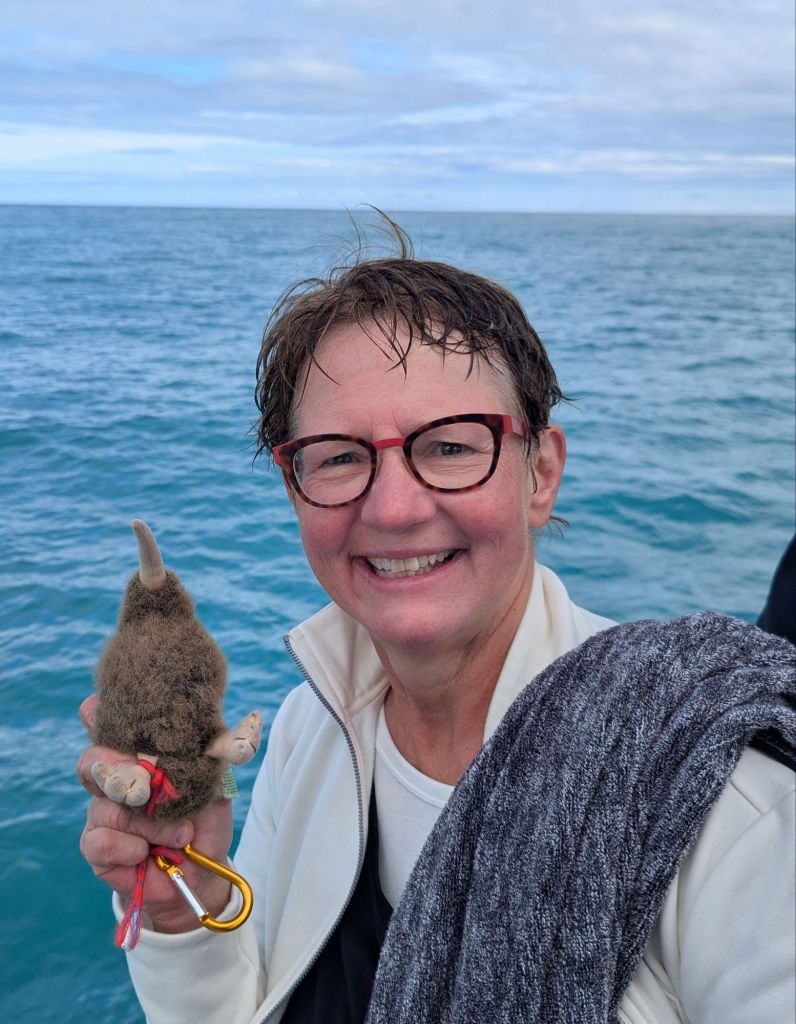
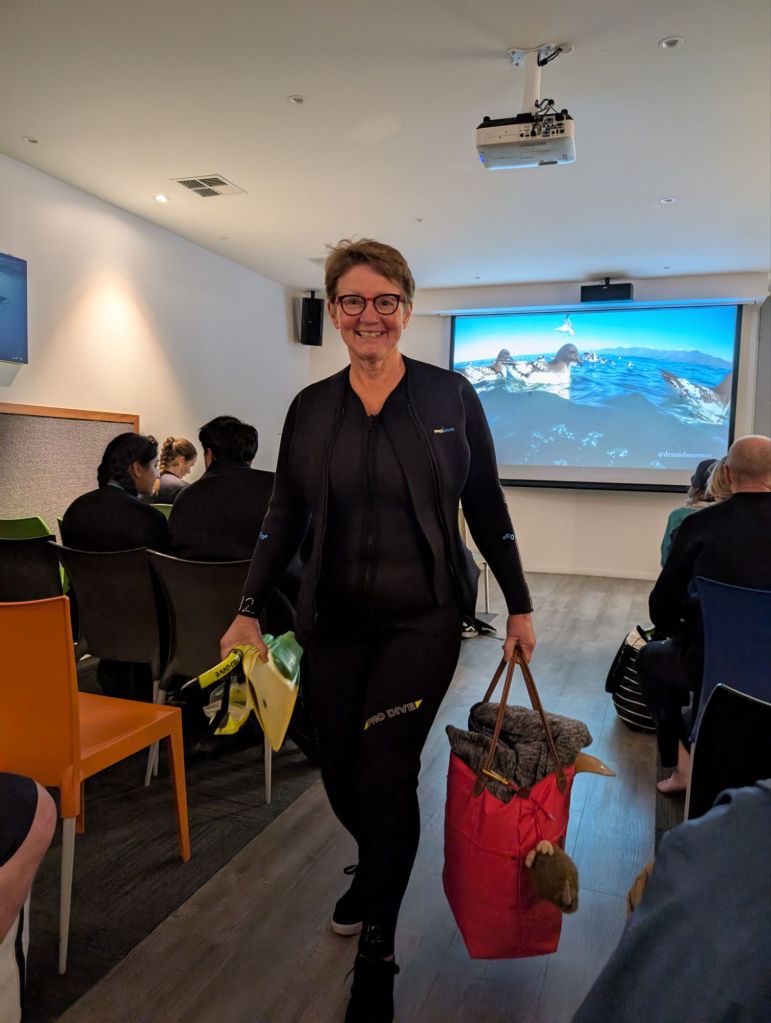
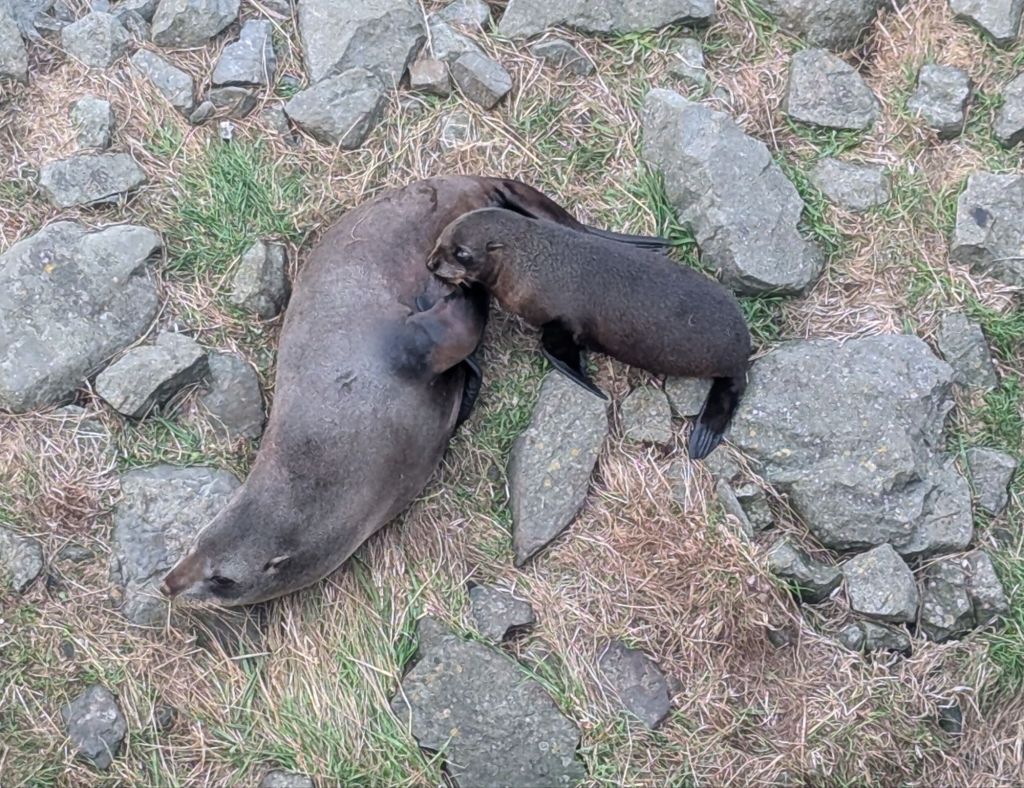
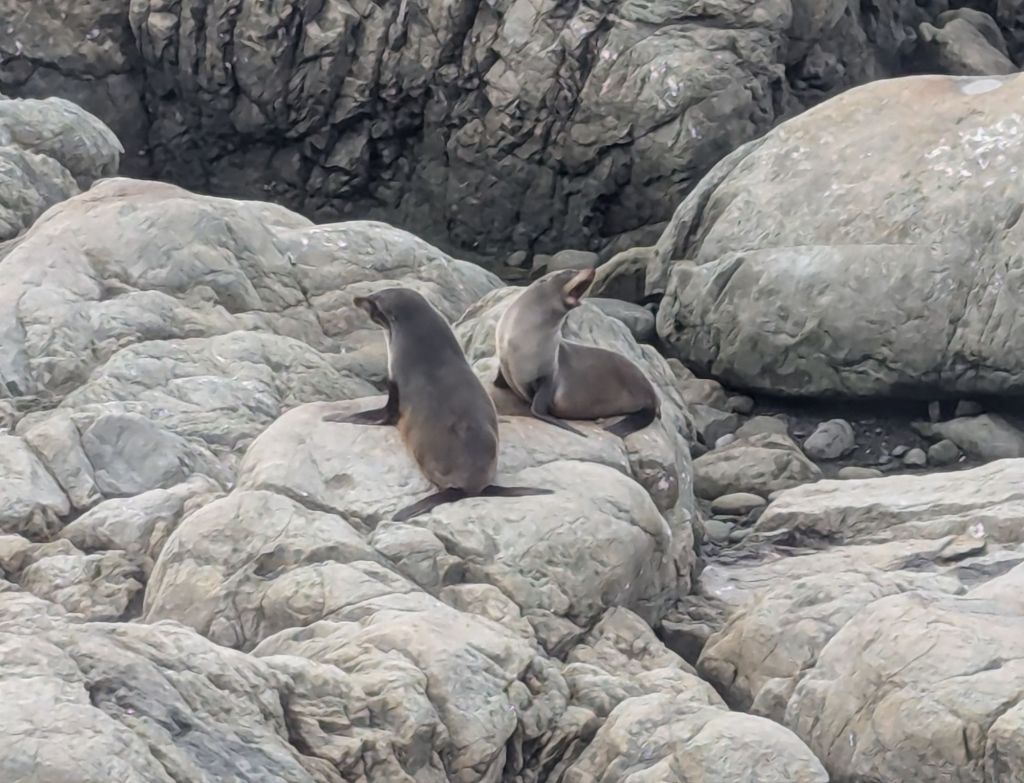
Saturday started cool and rainy but, no matter, we’re on the bus for a few hours before our day’s activity. Not hiking, but rather, swimming with dolphins! Our route took us up the east coast to Kaikoura. There were plenty of little coffee and rest stop pulloffs throughout NZ, of which we visited most. We passed miles and miles of sheep grazing while the landscape consisted of rolling hills and dried golden grasses and trees. As we approached Kaikoura the foothills of the Southern Alps reappeared as they run laterally from southwest to northeast across NZ. Tectonic shifts cause these mountains to change height as well as give way to the numerous earthquakes. Kaikoura is a one road beach town with tourist shops and eateries. The specialties here are highly iridescent abalone shells, jade, and crayfish, a tasty version of our more familiar lobster. We then headed to the Dolphin Encounter offices and got outfitted in wetsuits and instructed on proper dolphin encounter etiquette, to wit: this is their environment and we are guests. It was rainy as the boat departed but the weather cleared as the boat rolled through the swelling seas. We slithered overboard and snorkelled while Dusky dolphins swam around and under us. Those of us swimming made various noises to ‘call’ the dolphins, to what effect I’m not sure. In any case, we swam several times in the 57 deg F water in different locations. I had maybe 30 or 40 dolphins approach and swim nearby, around, and under. None were touching, though, which was fine by me. It was awesome. Later, on board, we saw Common dolphins and fairly rare Hector dolphins (smaller, lighter gray) as well as fur seals and albatross. There are strict regulations regarding marine mammals in NZ and we were lucky to visit with regulated, registered vendors. Long, hot showers were the order of the day at our hotel, Sudima, in Kaikuora, right on the water. A great day, once again.


Our drive the next day took us inland into the Marlborough wine region, predominantly whites including NZ’s famous Sav Blanc. Blenheim, at the upper northeast of the South Island, is known for wines and sun. Our mid-day destination: Nelson Lakes National Park and Lake Rotoiti. A 2.5 mile gentle hike along the lakeshore brought us to extremely loud jet boat races which ruined the serenity of the local birdcall. Instead, we ate our brown bag lunch at a local park. And then drove on to Marahau in the upper northwest through more sheep and also orchards and hops farms. This region was populated by hippies and renegades but now are parks and farms. The start of the golden beaches, with 25 foot tides, revealed beached boats awaiting high tide. Meanwhile, Ford tractors hauled people-filled boats on trailers to deeper waters for taxiing to their destination on Marlborough Sound.



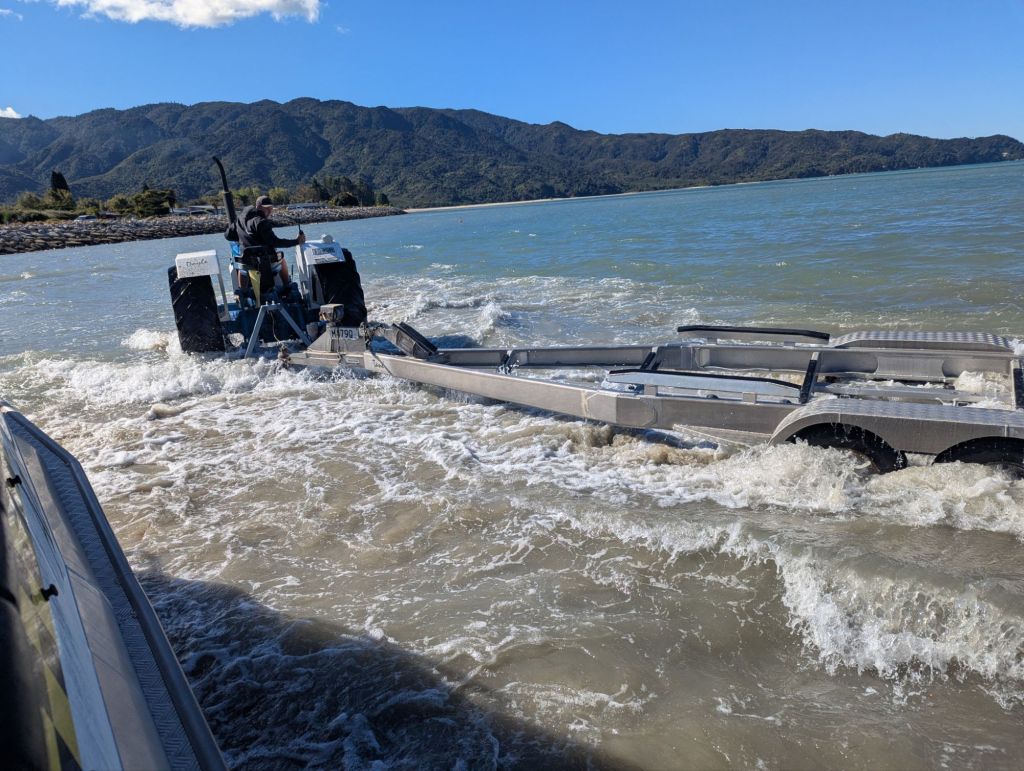
We got on our water taxi after meeting our local guide, Traff, then were towed to the water by our own tractor and once in the water, detached and took our 30 min windblown sea ride through the Sound to our home for 2 nights: Awaroa Lodge in Abel Tasman National Park. This remote lodge is inaccessible except by boat or hike. We headed onshore and then walked up barefoot to register for our room overlooking the wilds of the Park. Rustic and bare and wild, we all loved the location and the backwoods vibe. Dinner was wonderful, hand speared snapper and lamb. Tomorrow: our longest hike yet!

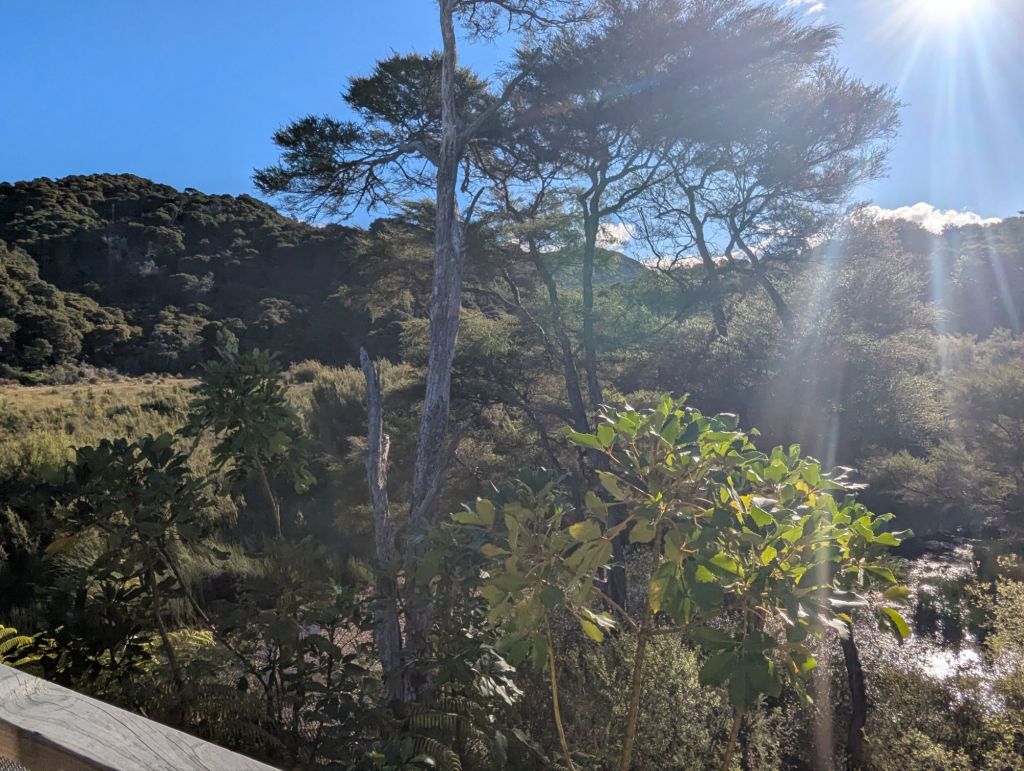
Another early morning found us donning the hiking boots once again. I needed to do real laundry soon, but sink laundry was getting me by. This day’s hike: 14km (8mi) along the shore on the Abel Tasman Coastal Track took us through beech and fern forests along the rocky granite shoreline. Once over 3 hills, each 100 m elev, and past 3 granite sand beaches with turquoise water, we met up with our water taxi at the pickup spot on Bark Beach. There are various taxi ‘stops’ at these beaches where you can be dropped off, hike, then picked up again at a previously scheduled time at a beach further on. Our local guide, Traff, he of the silvery tresses (not quite dreads), guided us with very informative stories and commentaries. We forgot to pick up our bag lunches and Traff felt bad (even though he brewed us tea at 2 stops on the hike). We’d been handfed toilet stops, lunch, snacks, all meals, on our “bougie” tour this far so no one thought to ask. No loss, we all could stand to skip a meal or two at this point. And a delicious dinner once again awaited us at the lodge a little later.

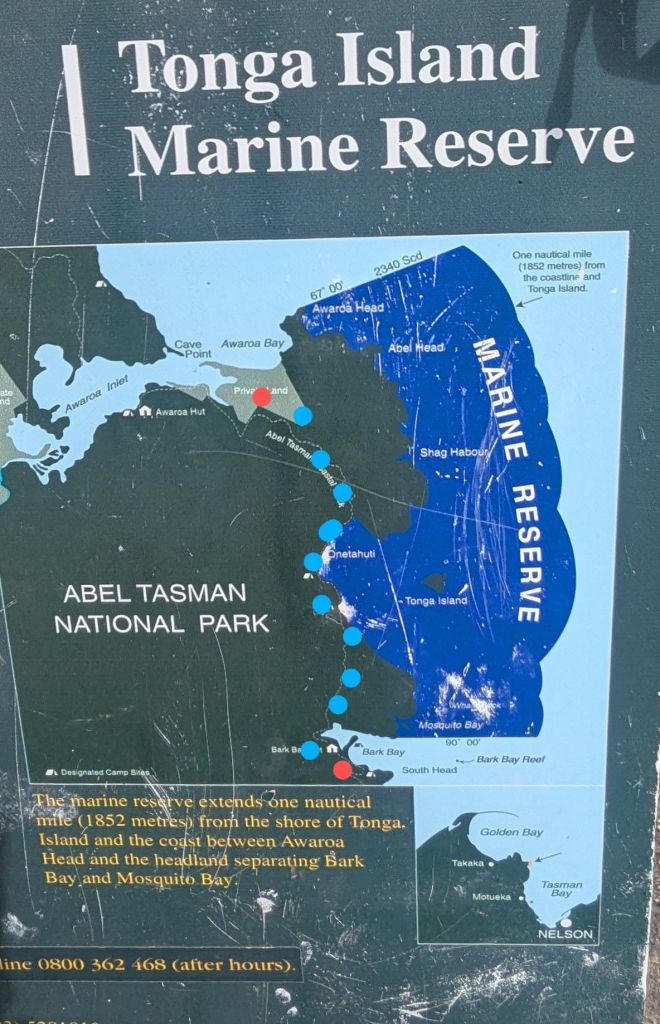


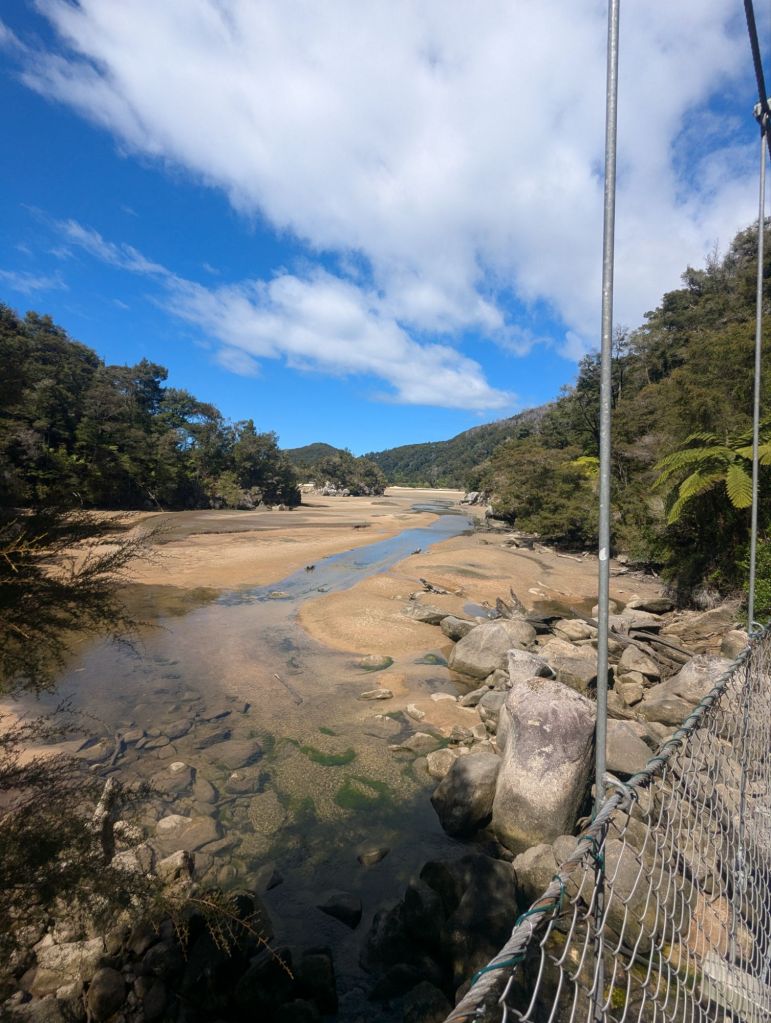


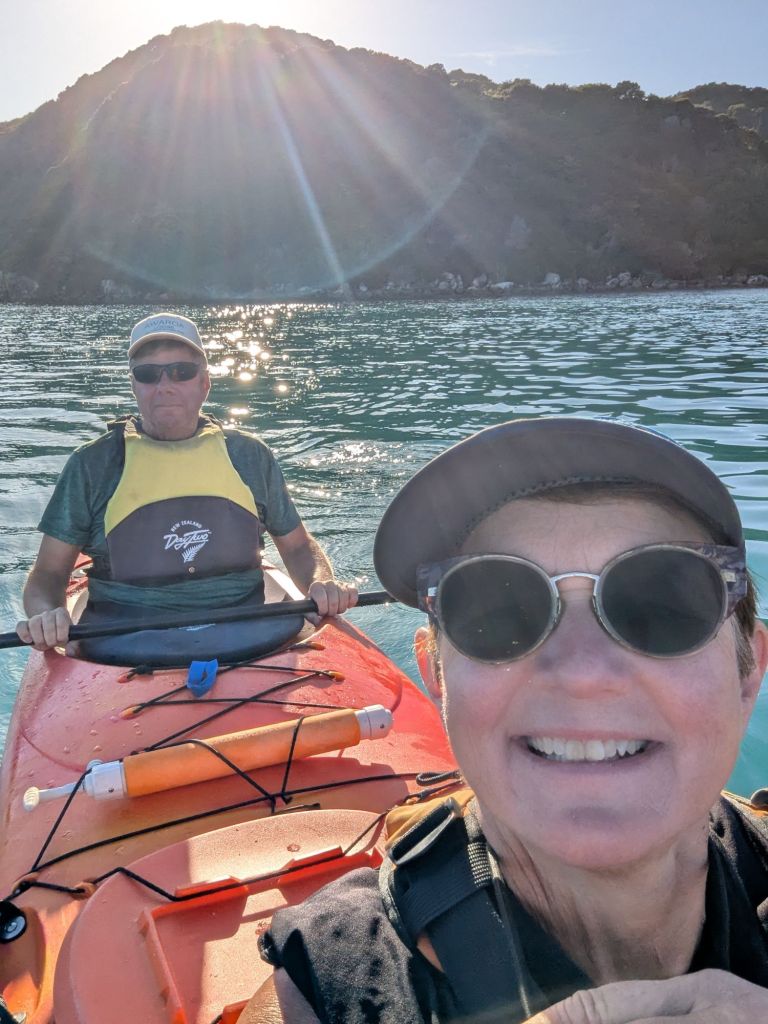
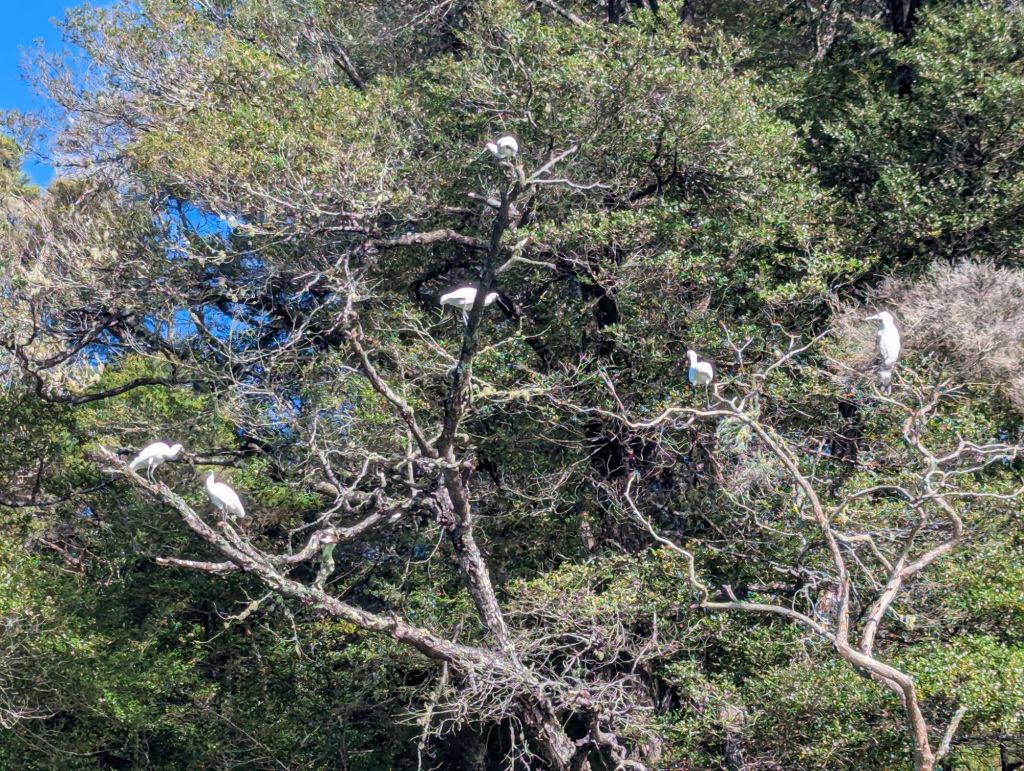
And now for something totally different: sea kayaking! Another day started bright and luckily, calm, as we paddled around Awaroa Lagoon in tandem sea kayaks. After a brief safety instruction we took off in our “divorce boats”. Birds: oyster catchers, cormorants and chicks, and spoonbills, also stingrays beneath the water’s surface. The water taxi met us back on the beach to return us over the beautiful blue ocean waves to Marahau as we said goodbye to our guide Traff and the beautiful Abel Tasman National Park. We lunched in Marahau, the drove onto Maruia Hot Springs for a hot soak.


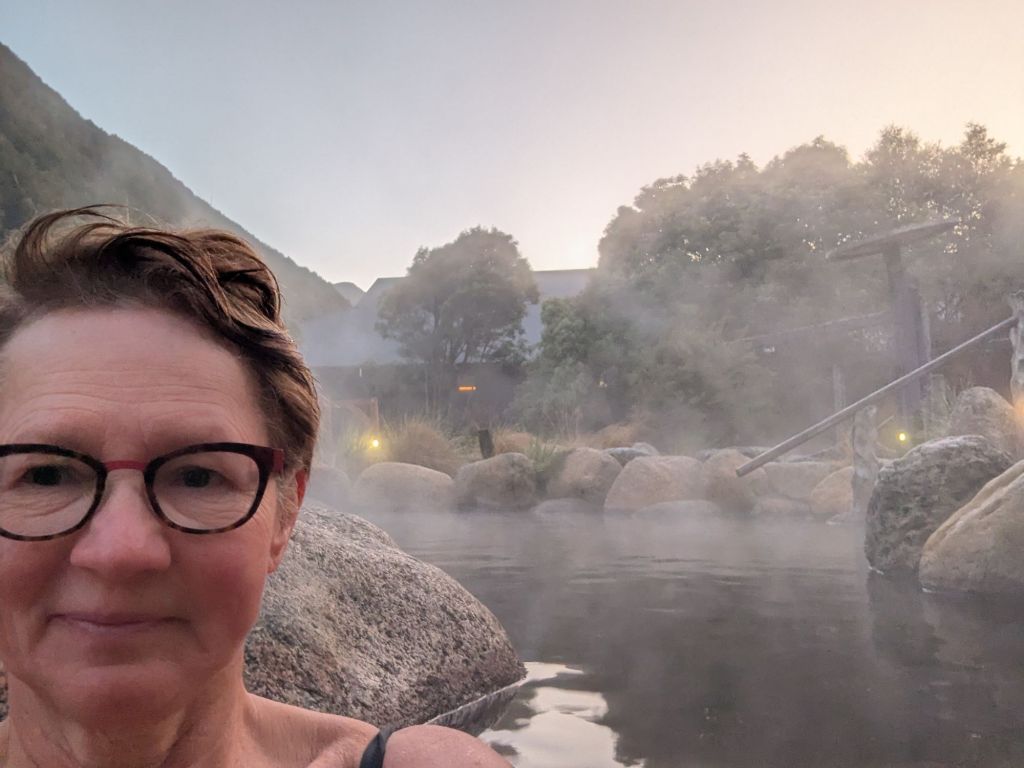
That afternoon we drove 4 hours south into the central northern Southern Alps (confusing, eh?) through miles of hops farms and dairy cows. Huge herds of cows (multi-100’s!) grazed in the rolling hills, their milk destined for milk powder and exportation. We enjoyed musical playlists, chitchat, local lore, and very dry wit from our guides. Arriving to our Lodge in Maruia we ate again (!) and then took in an evening soak in the natural hot springs with an occasional cold plunge. Sand fleas kept us busy swatting until dark. The weather turned misty and cool and we turned in. Despite showers, the room smelled sulfurous all night. Minor downside.
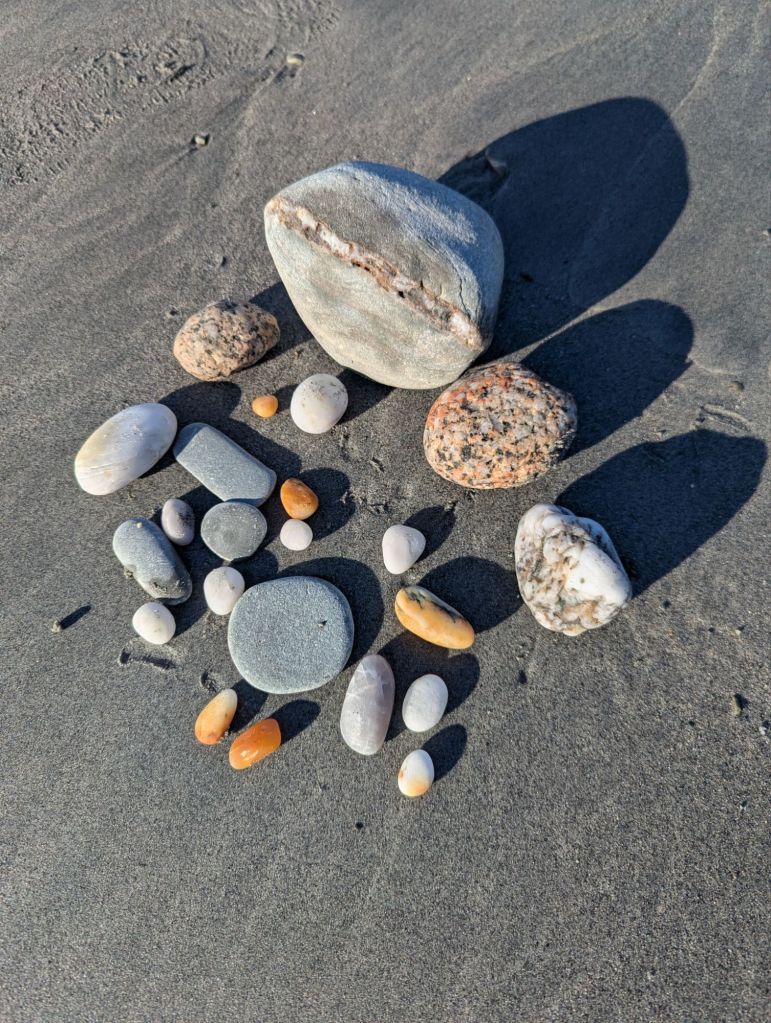
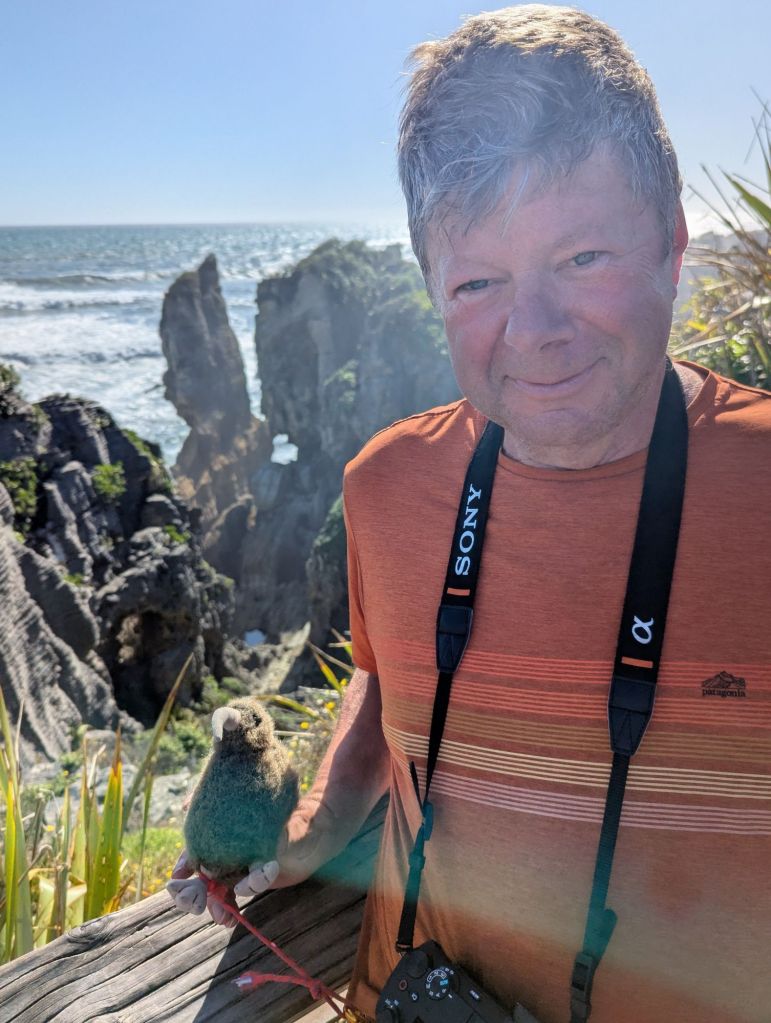
Reassembled in the van the next morning, we retraced some mileage to Reefton through somewhat nauseatingly windey mountain passes. Reefton, a tiny gold mining town in the mid-1800s, was the first place in the southern hemisphere (and 6th worldwide) to become electrified. As we drove through the mountain passes we were often stopped by road crews cleaning up rockfall from recent earthquakes or severe flooding which is common on the West Coast. At one point we traveled along the Buller River on a one way mountain ledge pass monitored by one of the 2 permanent stop lights on the whole west coast. Scenic and remote to say the least. Finally we arrived on the coast with its crashing waves and limestone cliffs. The sedimentary linestone layers were uplifted and eroded and now look like stacks of “pancakes”. We lunched in Punakaiki then immediately departed on a beautiful hike on the Punakaiki Track which follows the meandering Porari River. Limestone cliffs loomed overhead as we walked towards the swing bridge through the tropical/temperate forest. So many palm trees! We passed through and under large tree trunks as well as through a small through-cave. I bailed just short of the swing bridge as I wanted to take my time enjoying the return hike; Greg continued on and caught up later. A couple of us spent time skipping stones on the river with guide Ryan. This trip is truly a “slow down and enjoy the journey” ride. We then stopped at the nearby Pancake Rocks and Blowhole Track, a nicely paved loop along the coast with dramatic sea scapes and waves crashing onto the pancake rocks. Our hotel, the Scenic Hotel Punakaiki, had washing machines so I jumped on that and we enjoyed walking the gravelly beach awaiting the dryer. Dinner at the hotel allowed us to see the stunning sunset and we turned in for the night. This trip is winding up fast and yet, too soon!!!


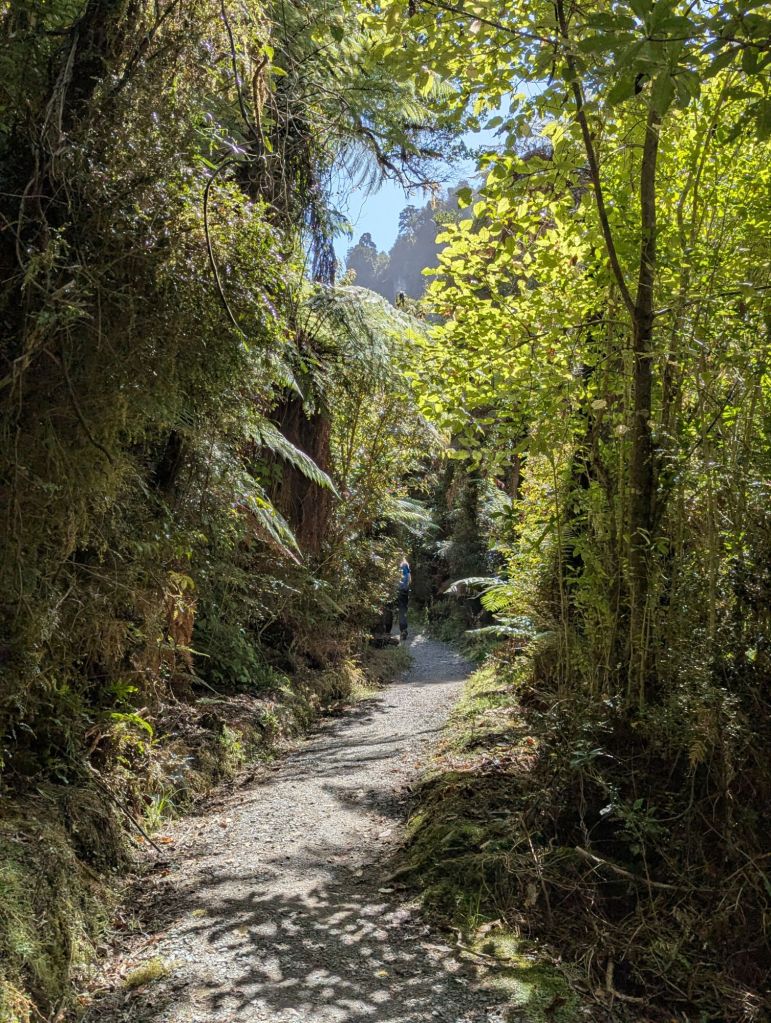


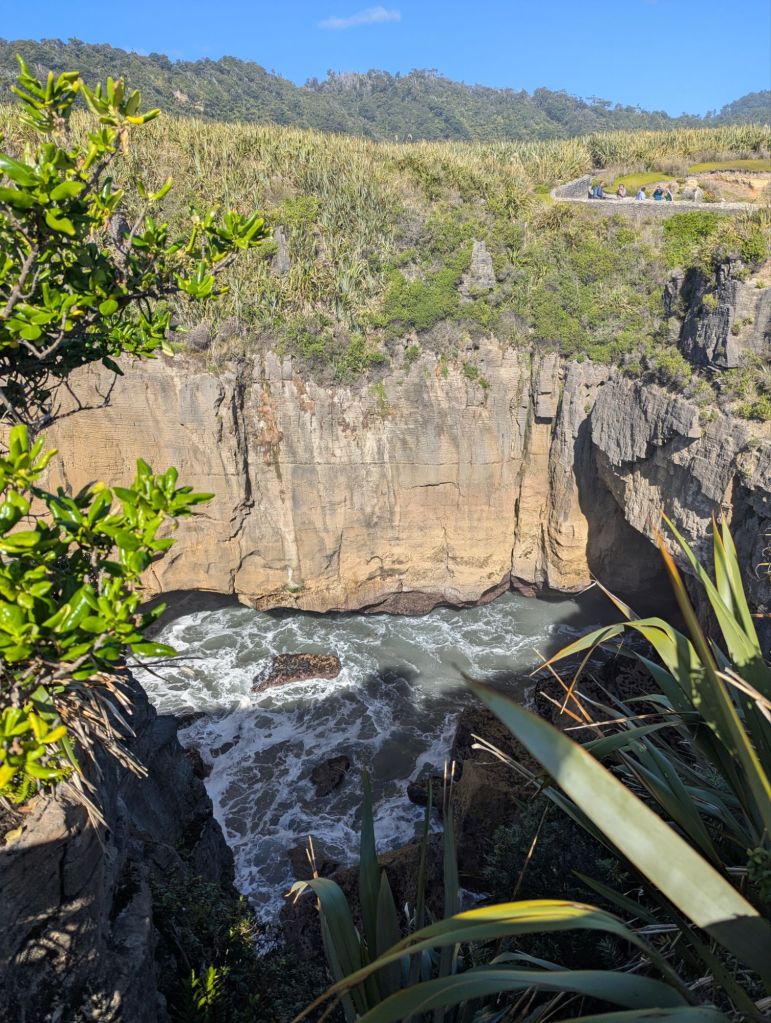
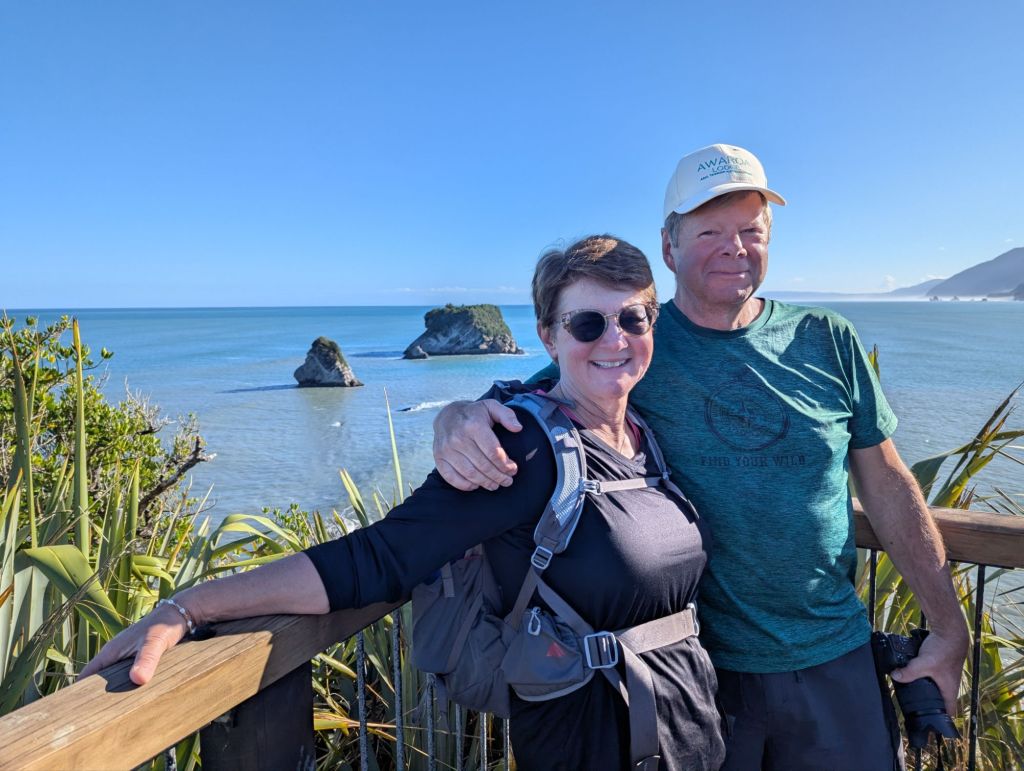
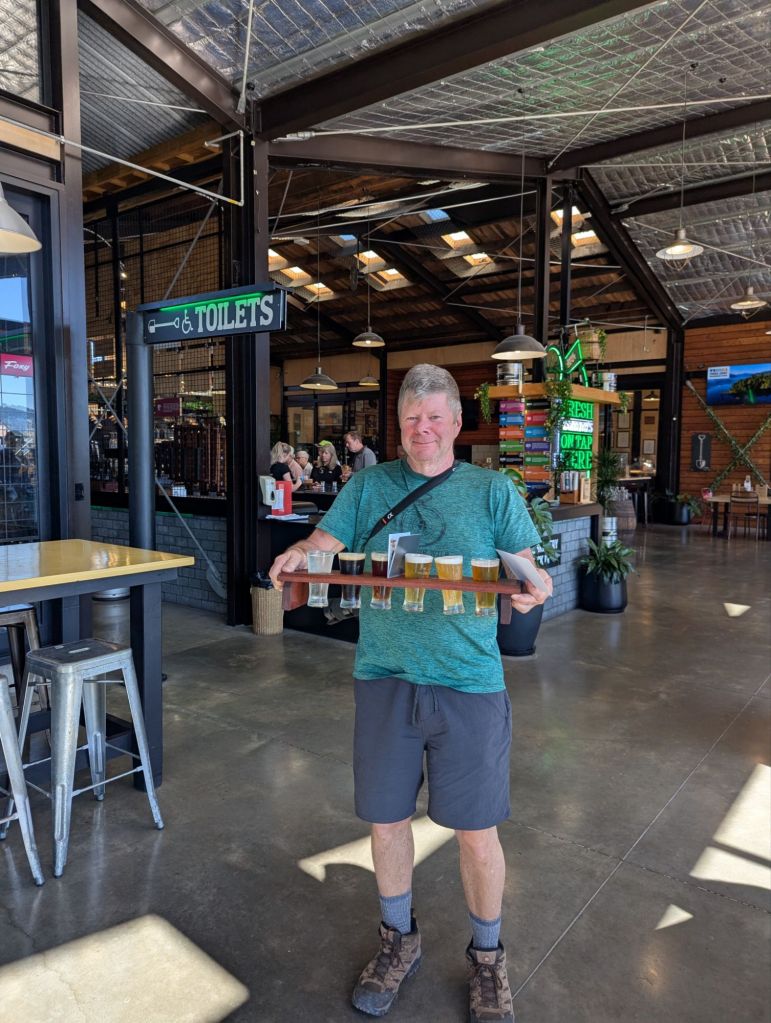
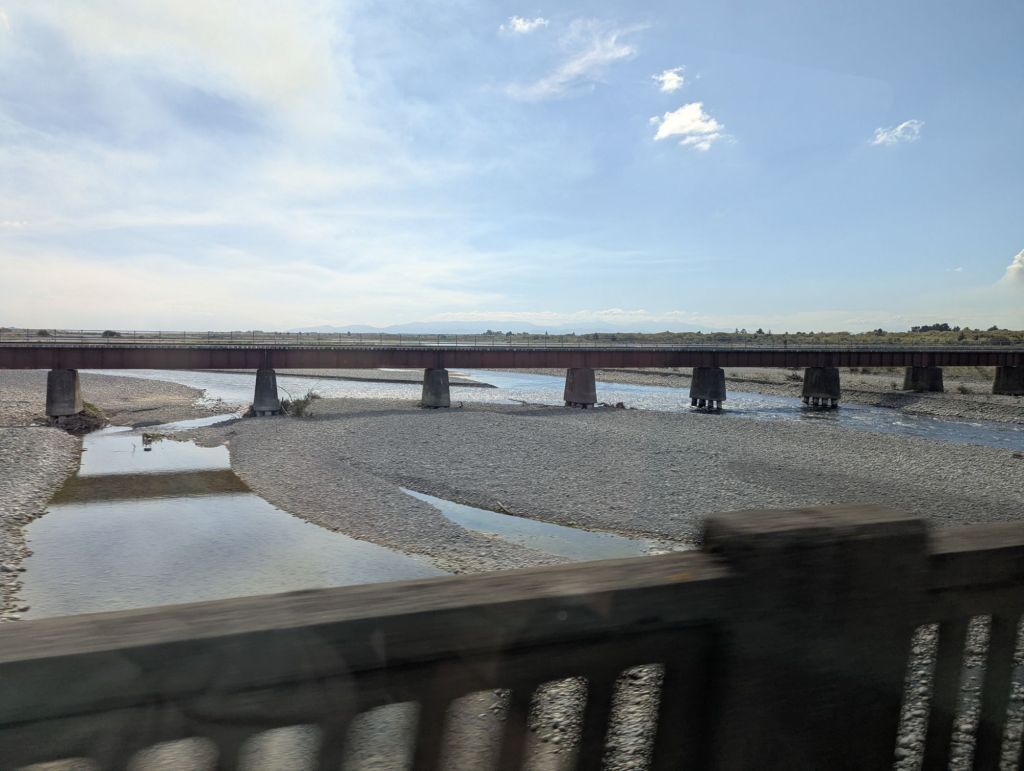
Continuing on down the West Coast the next day we stopped Point Elizabeth for 3mi walk amongst dense flax, tree fern, and palm forests to occasion al lookouts onto the coast. The surf pounded so heavily below you could feel the ground shake. Snowcapped Mt Cook was visible in the distance. Though only 37km away, it is still a 7.5 hour drive. We stopped for lunch at Monteith’s Brewery in Greymouth, guide Ryan’s hometown. After Ryan’s short hometown tour (primary school and place of first kiss!) we continued on to Hokatika, a cute town known for green stone, jade, aka Ponoumu. Some shopping and beach walking commenced then onto the Hokatika Gorge. A 2 mile RT walk on groomed limestone trails and through more tropical/temperate forest took us to the Hokatika Gorge lookout. The glacier melt river was a stunning turquoise blue. Onward south to the Franz Josef glacier and our hotel, the Scenic Hotel Franz Josef. Unfortunately the glacier has receded enough to be out of view but the mountains were spectacular. It seemed like the longest day we’d spent driving (it wasn’t). The scenery has been cows and sheep grazing (even more!), mountains (yes, even more!), some coastal views, shallow braided rivers and their one way bridges, switchbacks up and down mountains through thick forest, tiny mining and tourist towns, camper vans, and multiple visits to the well stocked snack box; basically everything we’ve seen for the last week and a half. And sunshine. How lucky are we?




 My new reality
Beautiful pictures of scenic views making for great memories. Enjoy your travels and stay safe!
LikeLike