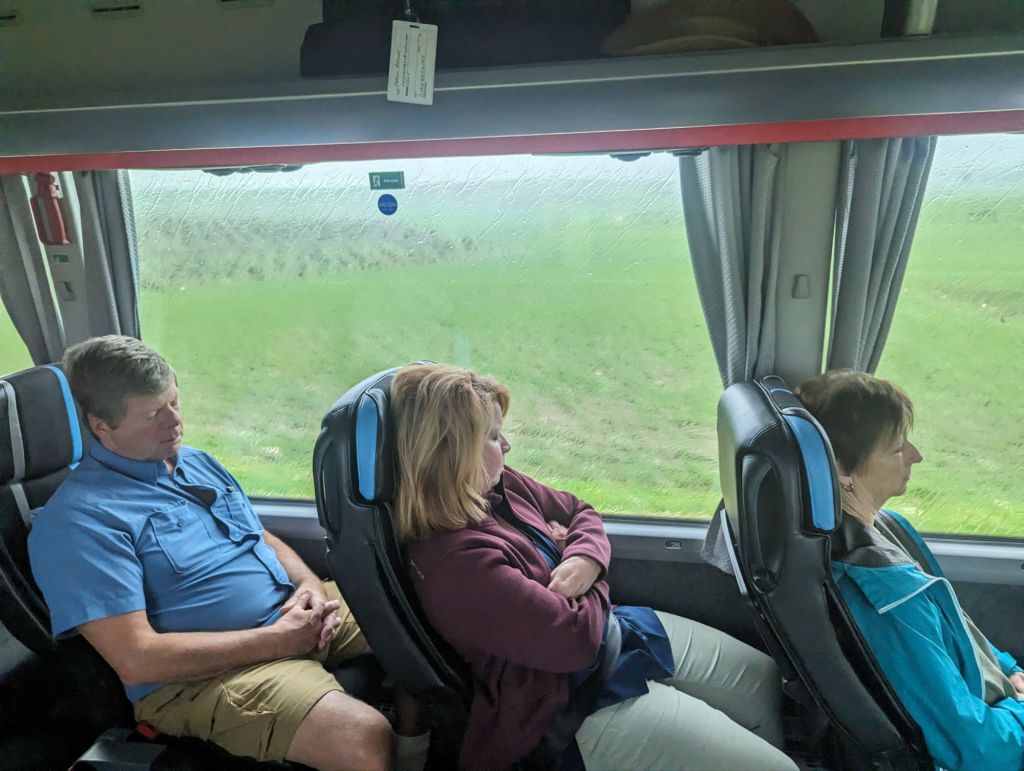
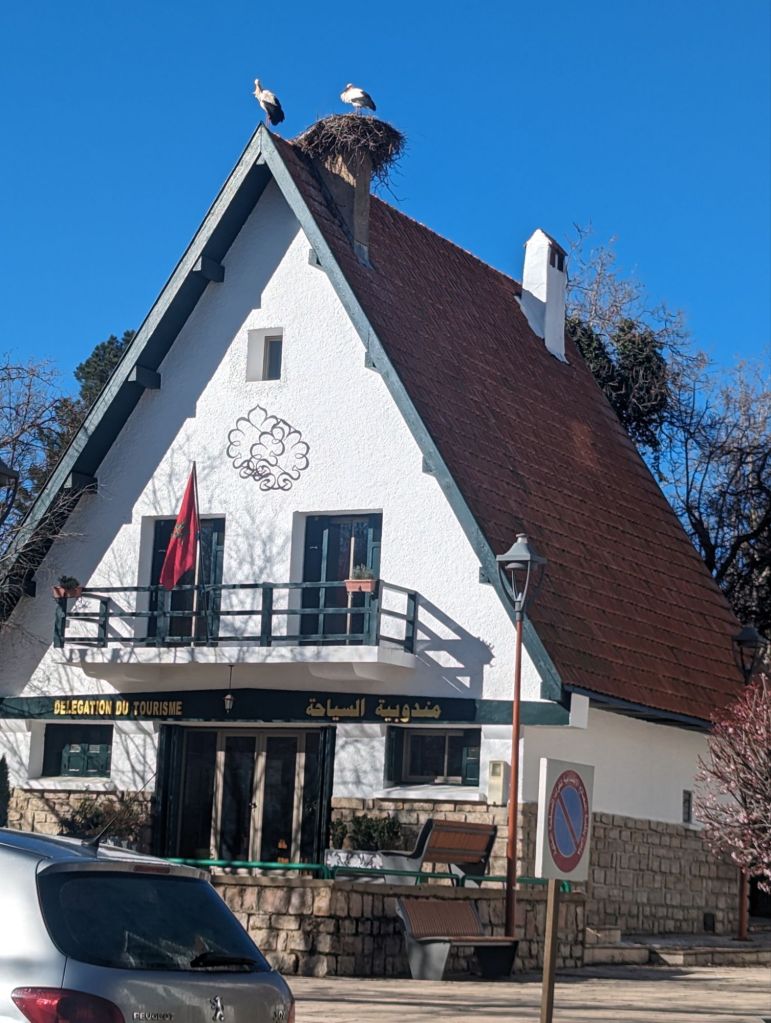
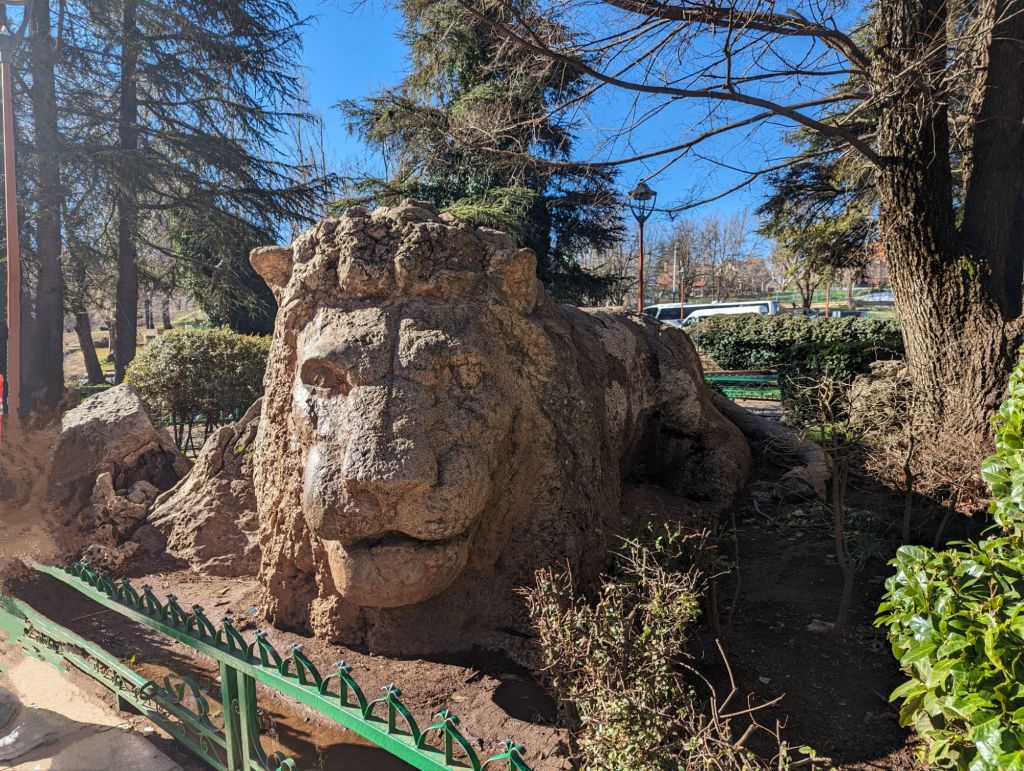
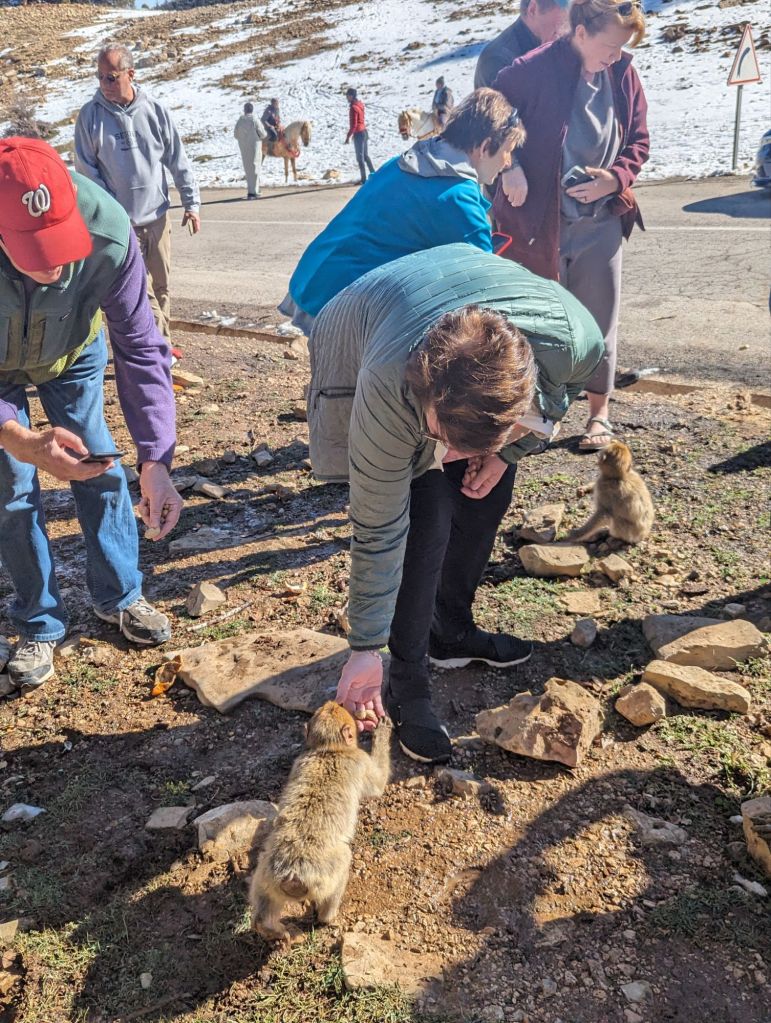
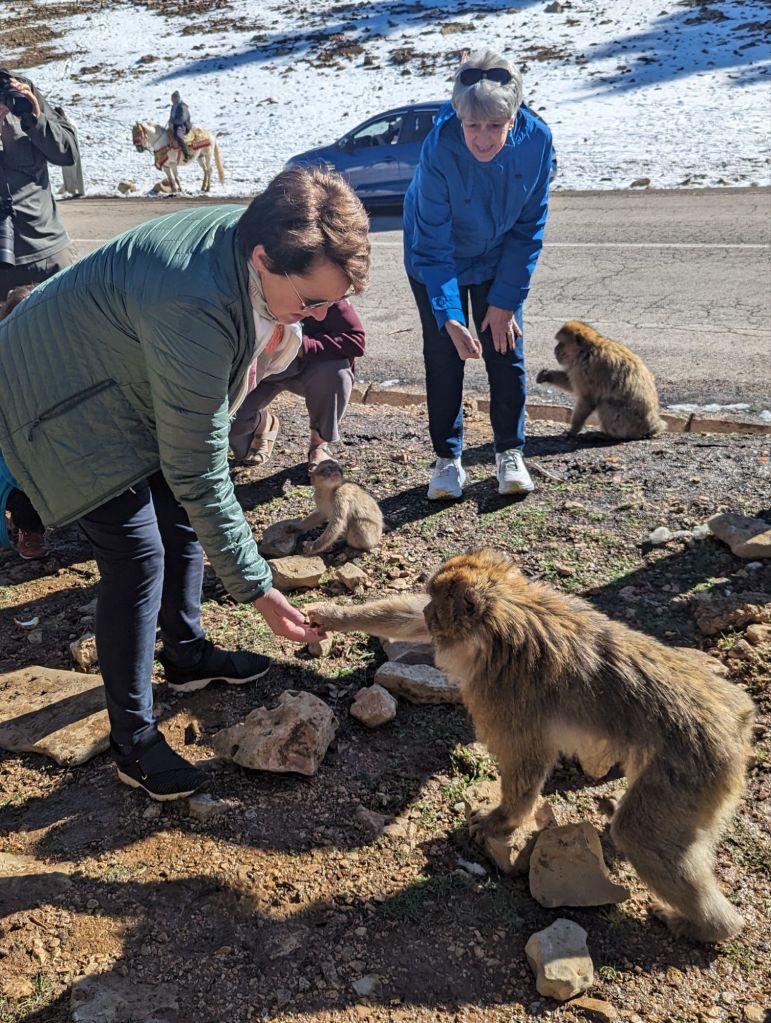
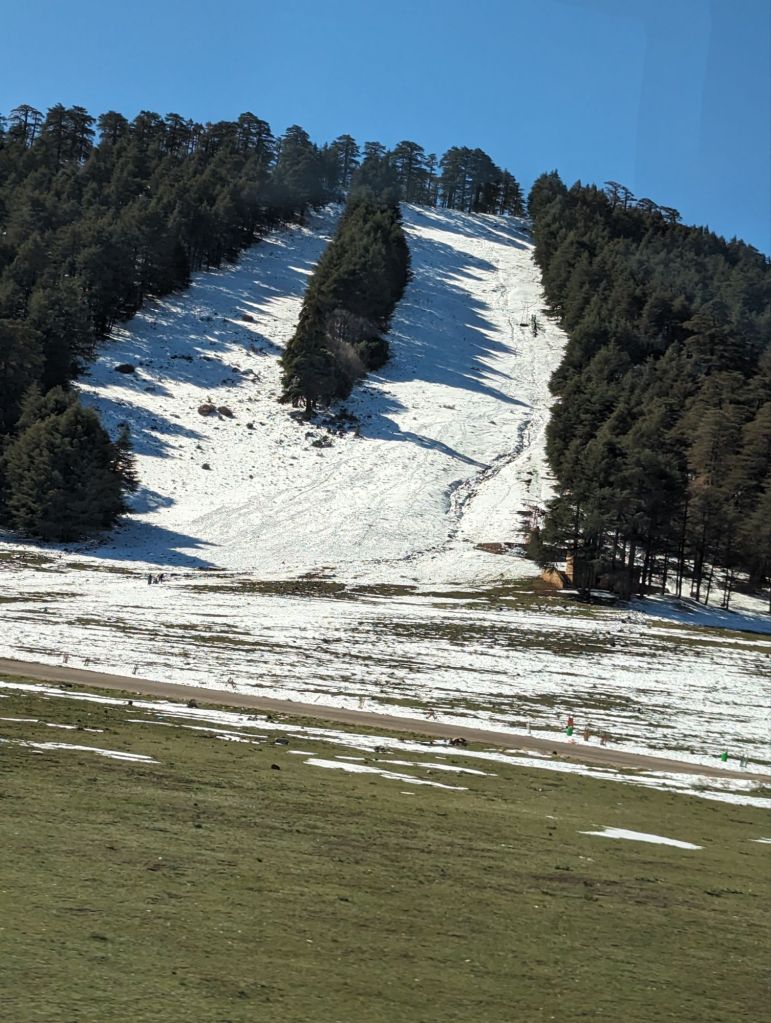
Leaving Fes on a Thursday we headed south towards Erfoud and the Sahara. A day long bus ride took us from verdant planted fields and olive groves to the pines, Atlas cedars, and snow of the Middle Atlas mountains. On the way we stopped at the village of Irfan, known as the “city of caves”, for a quick break. This college town had a Moroccan-Bavarian fusion appearance. The area is a summer vacation destination away from the heat of the lowlands. Statues of the now extinct Atlas Lions graced the town square, the air was crisp and clean, and friendly dogs roamed the quiet streets. A Swiss Harley Davidson entourage lined up their hogs near our sleek bus. We continued up the mountain pass to see the wild Barbary apes (macaques) that scrounge for handouts. A handful of peanuts for a dollar gets you the thrill of feeding them, meanwhile, Berbers on horses posed for photos. Everyone expected a tip for a photo anywhere. Further on small ski slopes appeared and short skis piled into 5 gal buckets were ready to be rented. You’d have to walk up the hill first, however. Snowmen and snow lions waved from the roadside.
.

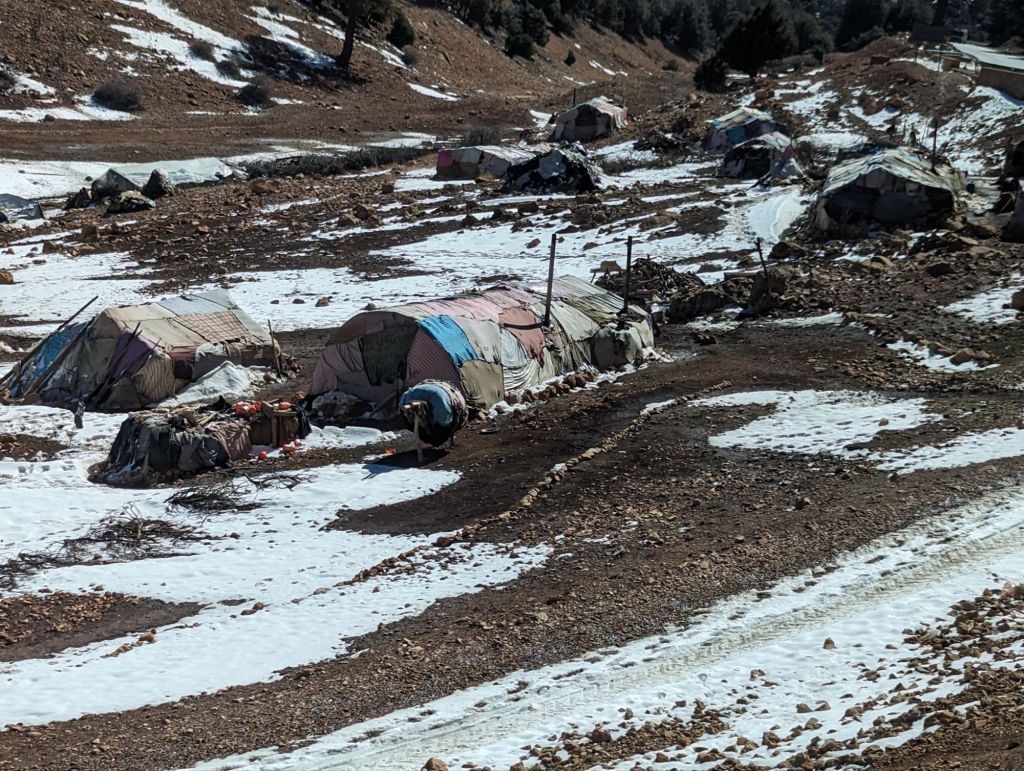
Once on the rocky high plains between the Middle and High Atlas mountains the snow petered out and Berber goatherders, goats, and their rustic accomodations appeared. Berbers, or the Agazigh, are the indigenous people in Morocco since the ancient tribes: Phoenicians, Carthaginians, and Romans died out or left. “Agazigh” means noble and free and there are 21 tribes within. Berbers are the ‘local’ nomads whereas Bedouins are Arabs from Lebanon. Berber woman wear black dress with embroidery; Bedouins wear plain black, and the Saharan Toureg women wear blue or colored dress, others tribes may wear white. It’s purely cultural, not religious.

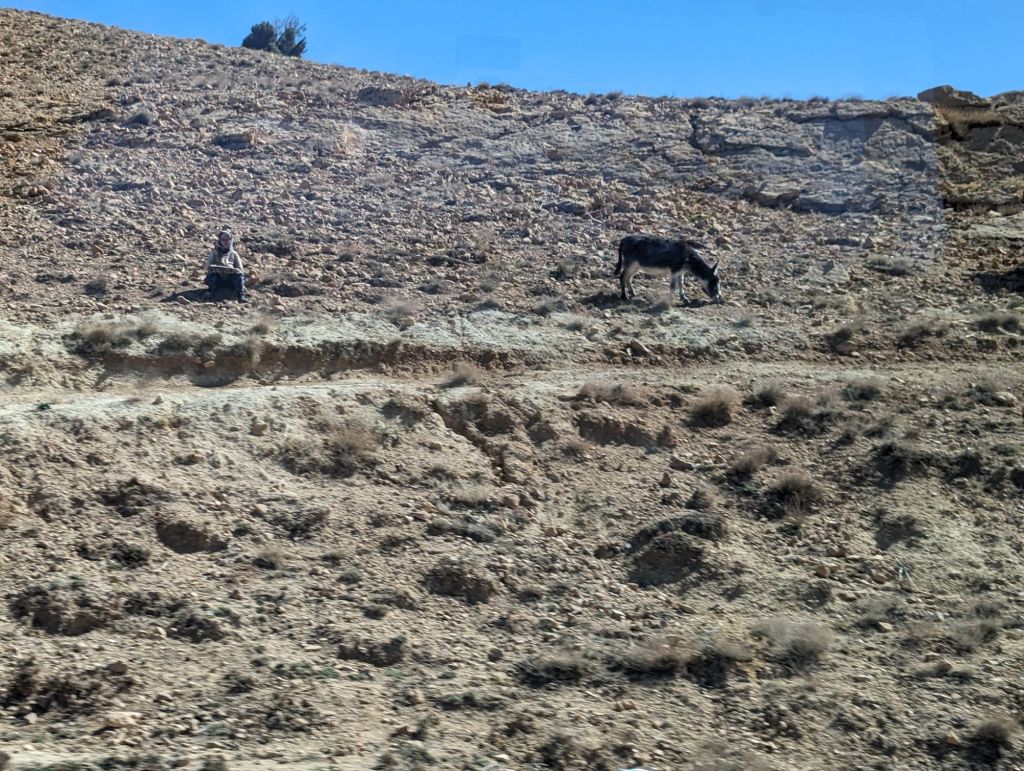
Randomly spaced saddled donkeys hung out near the edge of the highway; their owners travelled with them from their remote homes to catch rides from cabs on the highway to the nearest town or market. The donkey will wait nearby all day for their return. The snow covered High Atlas peaks loomed ahead.

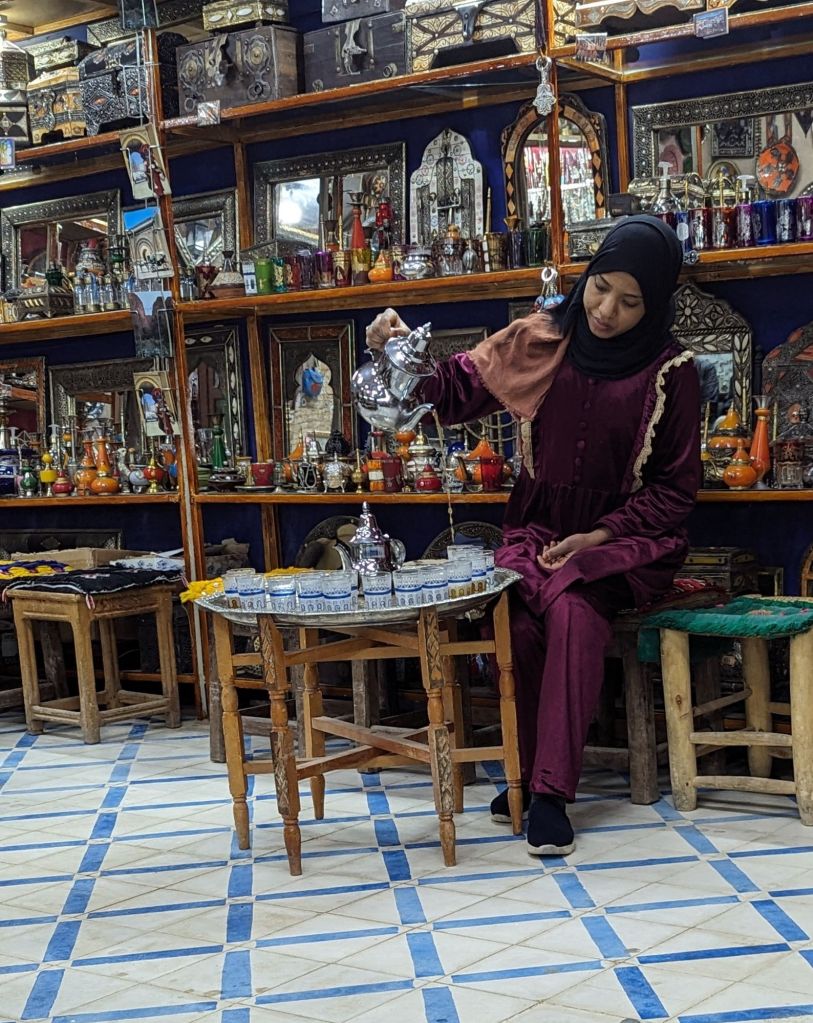
We enjoyed another abundant lunch at a roadside restaurant in Metrouni before crossing the mountains. For lunch: a calzone-like dish stuffed with either Moroccan spiced veggies or beef. And the ubiquitous tea. Some tea is better than others; the best is accompanied by cookies but otherwise it can seem too bitter so I started asking for sugar so I could politely finish my drink. Ironically, when tea was introduced by the British travellers from the Silk Road and India in the 16th century it was forbidden by Koranic scholars as mind-altering. It was traded for sugar then. Now it is the national drink, often jokingly called “Moroccan whiskey”.
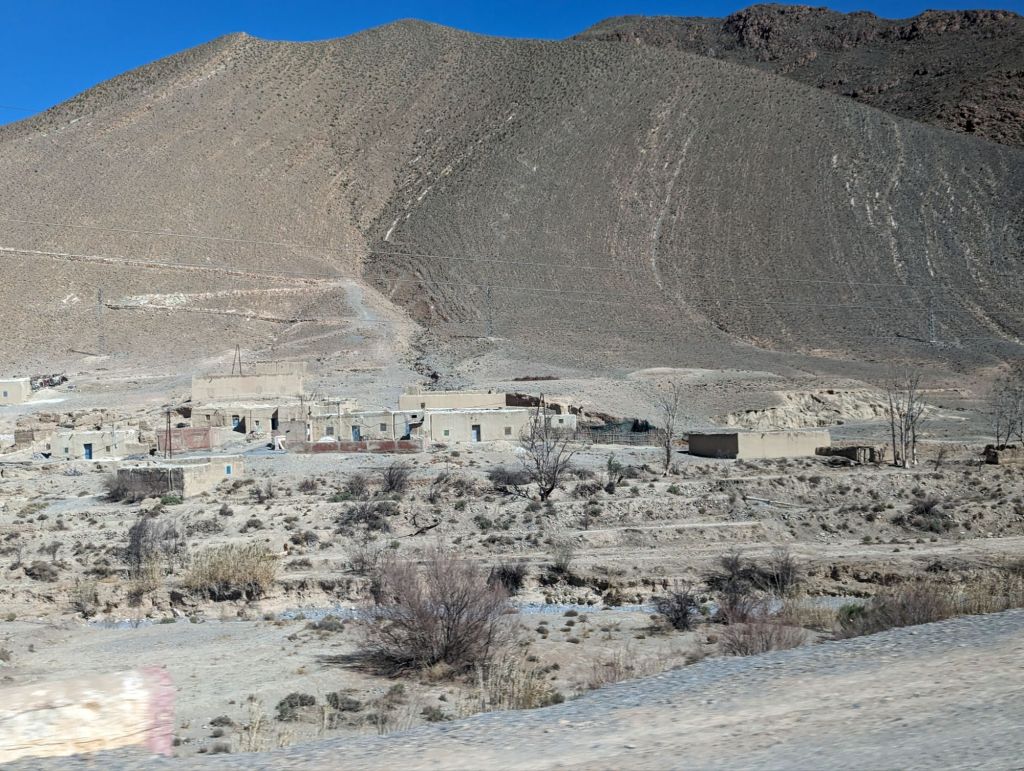
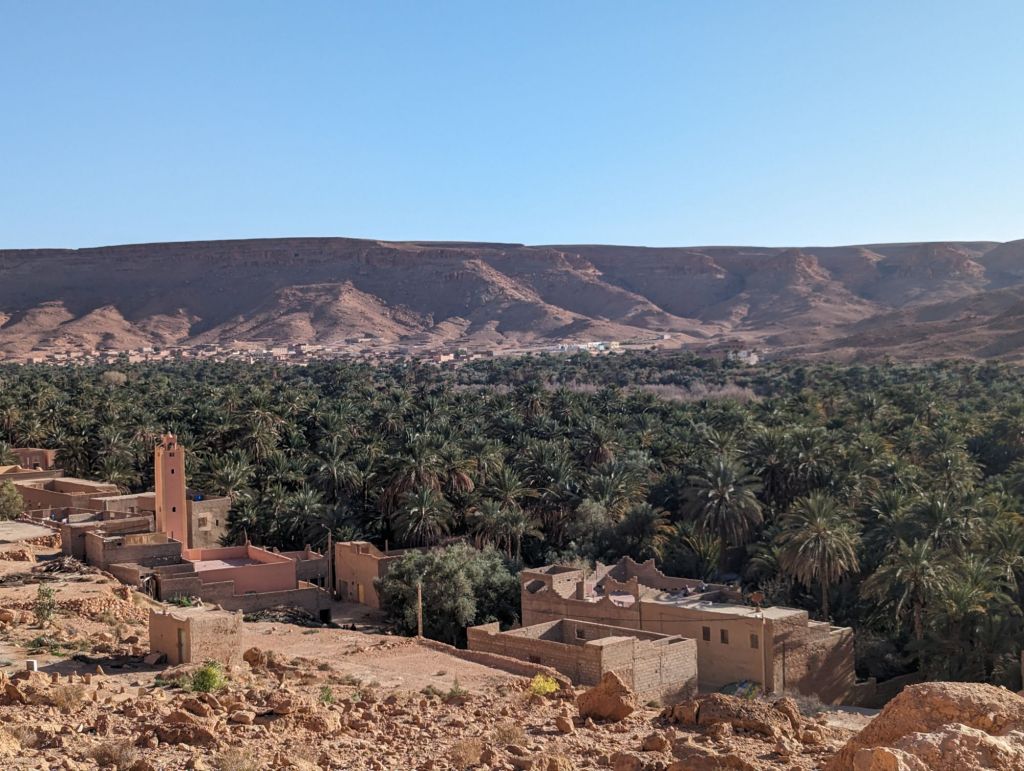
We crossed over the High Atlas Mountains which extend 1,000 miles from the Atlantic to Algeria. The other side was a moonscape: dusty, rocky and dun-colored. Oases appeared along mostly dried up (for now) river beds. Palm trees filled the oases and in the shade of the trees vegetable gardens were planted. Aqueducts were evident everywhere. Runoff from the High Atlas waters the trees and agriculture and sustains the communities. Each tree or group of trees is individually owned as the dates of the palm are lucrative cash crops and the leaves are used as well. 35% of the Moroccan population are involved in agriculture. Indeed, delicious veggies comprised the better part of every meal: carrots, zucchini, eggplant, pumpkin, and veggie soups, with dates, oranges, and bananas to follow.

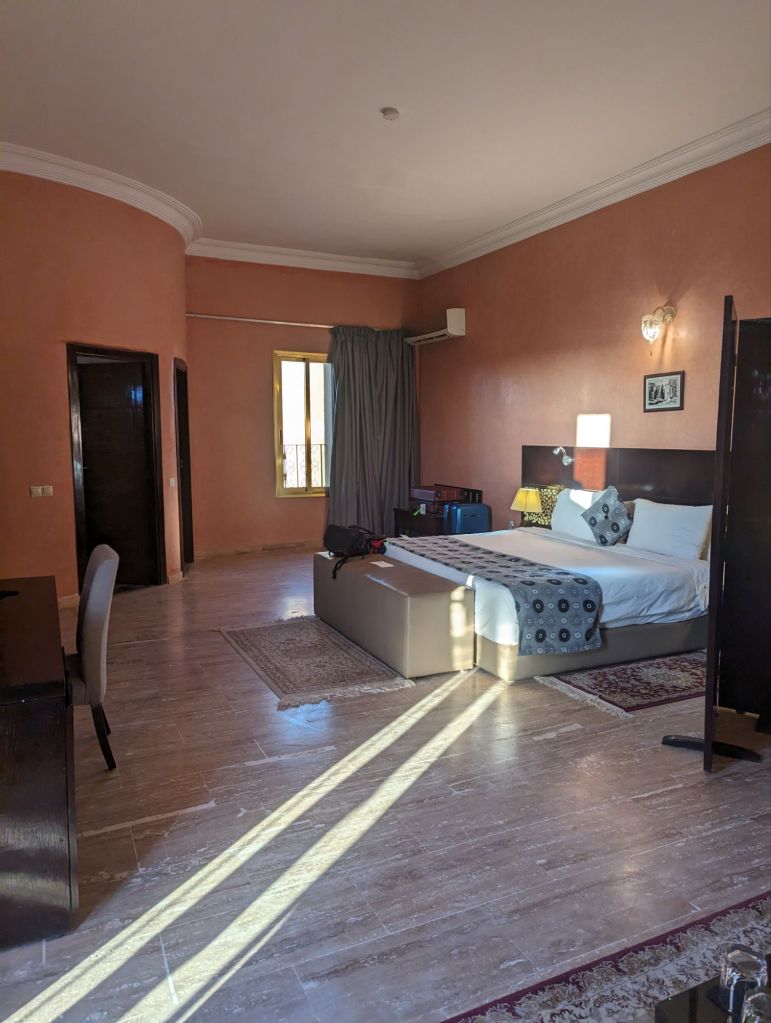
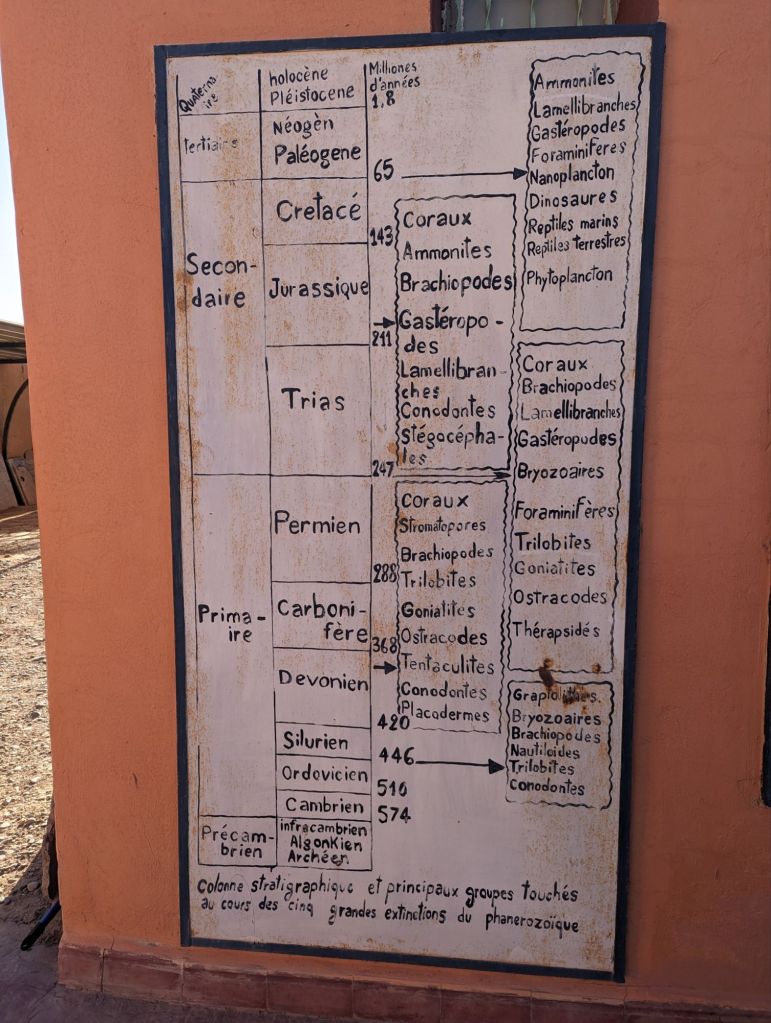
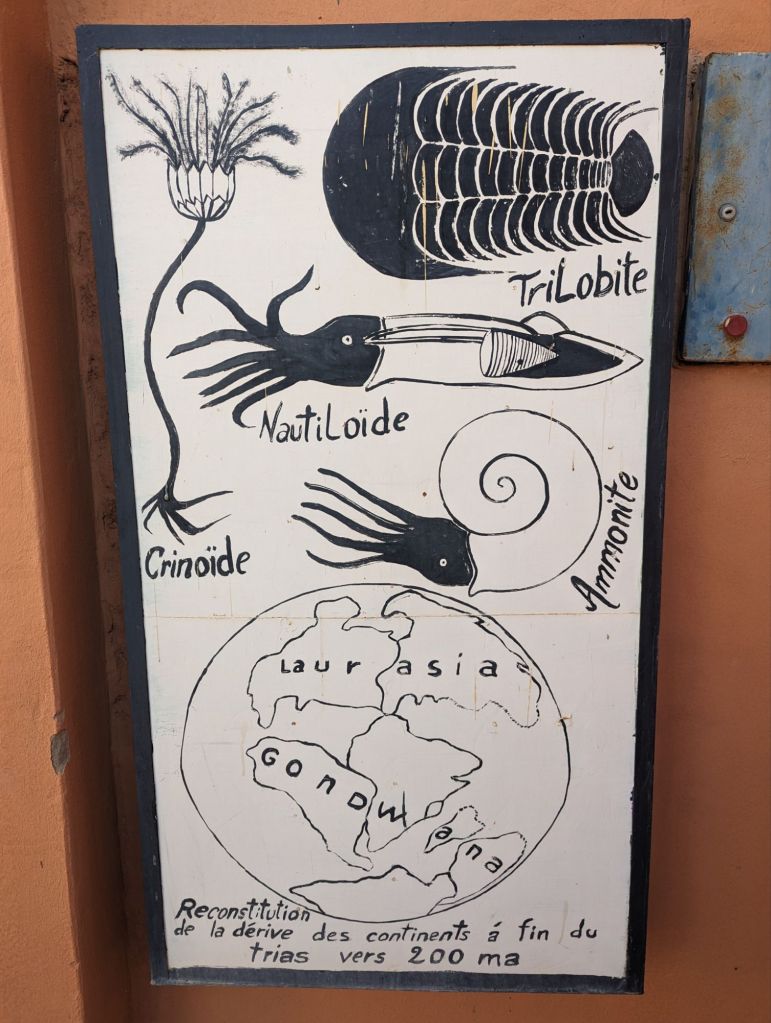
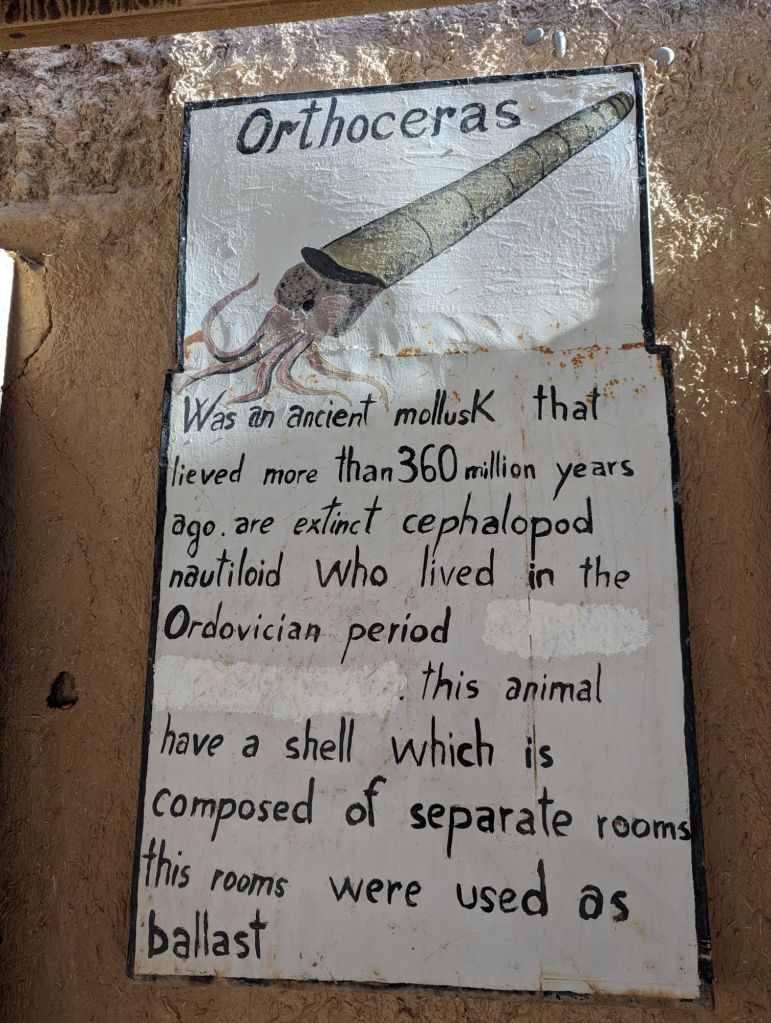
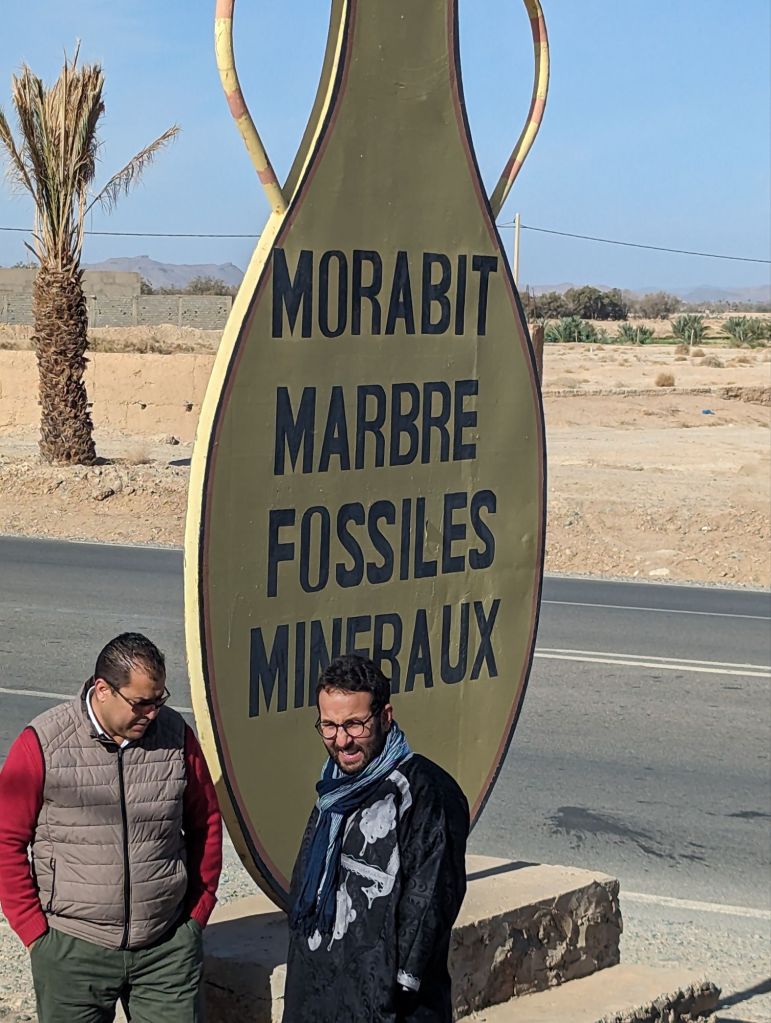
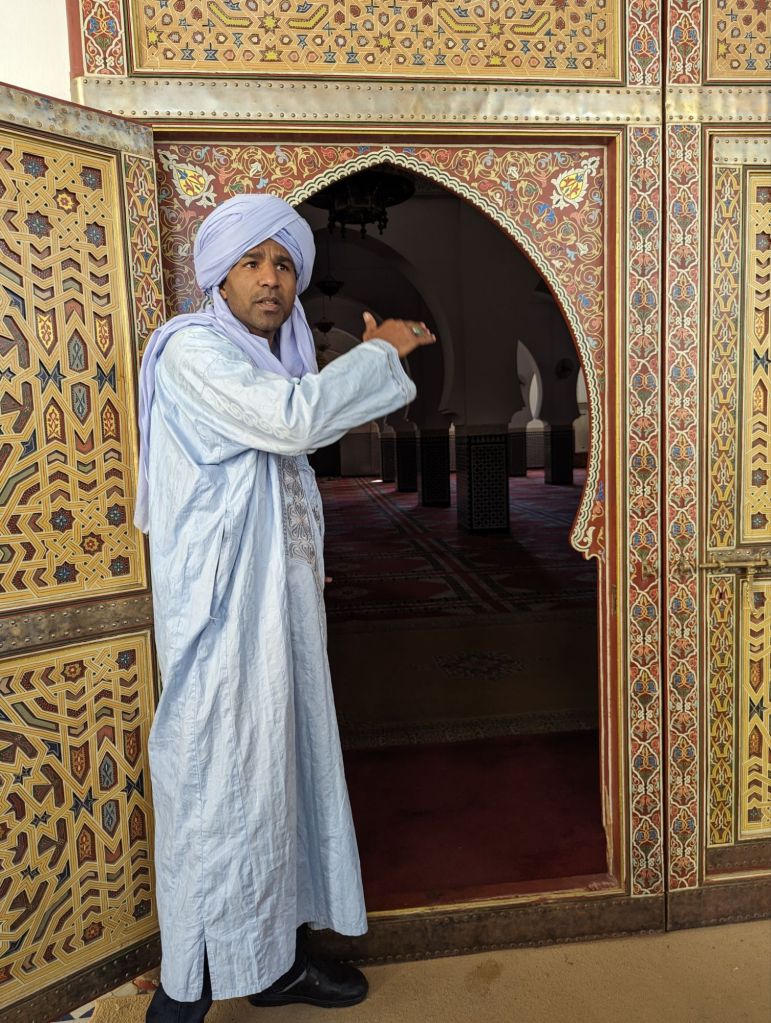
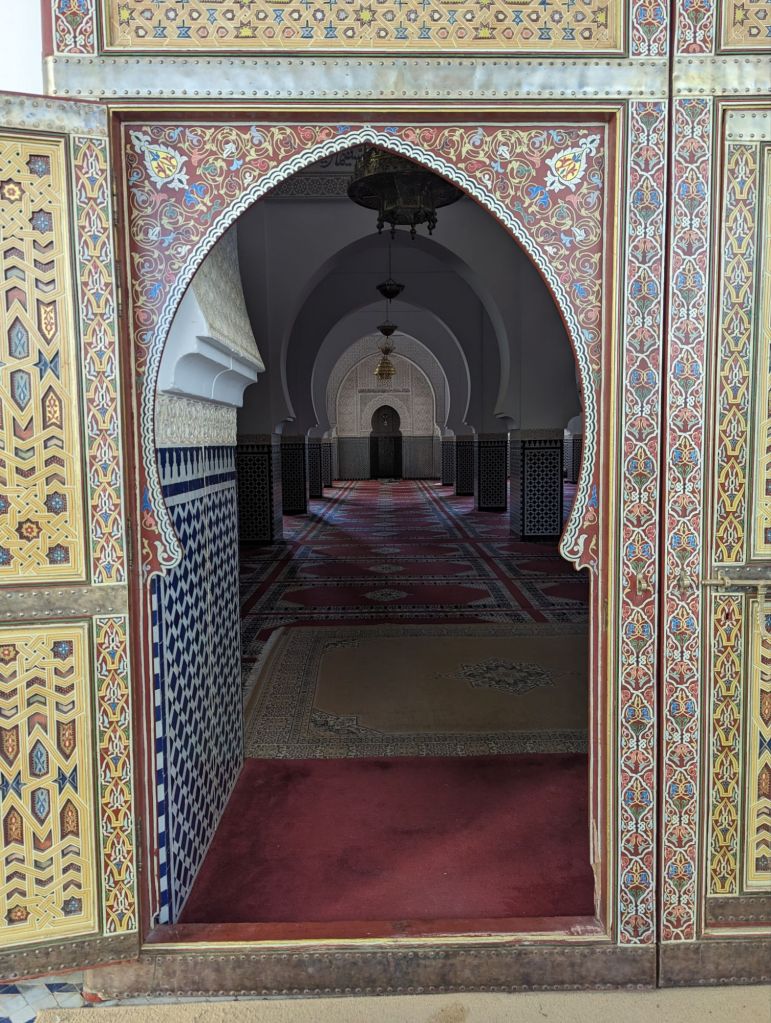
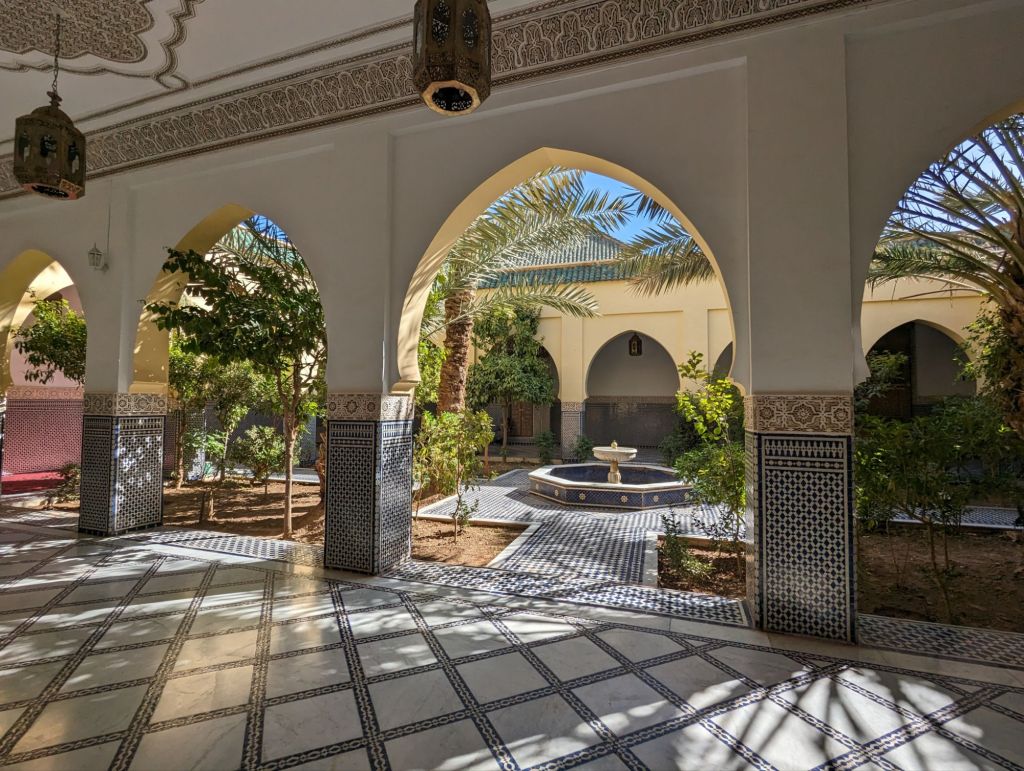
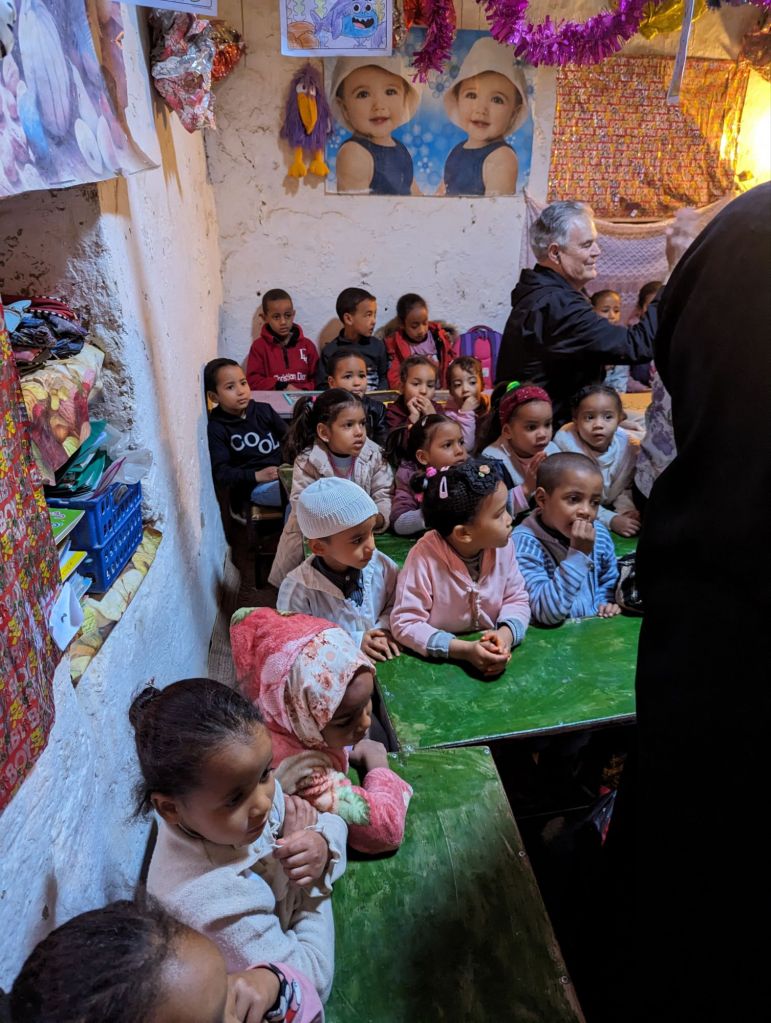
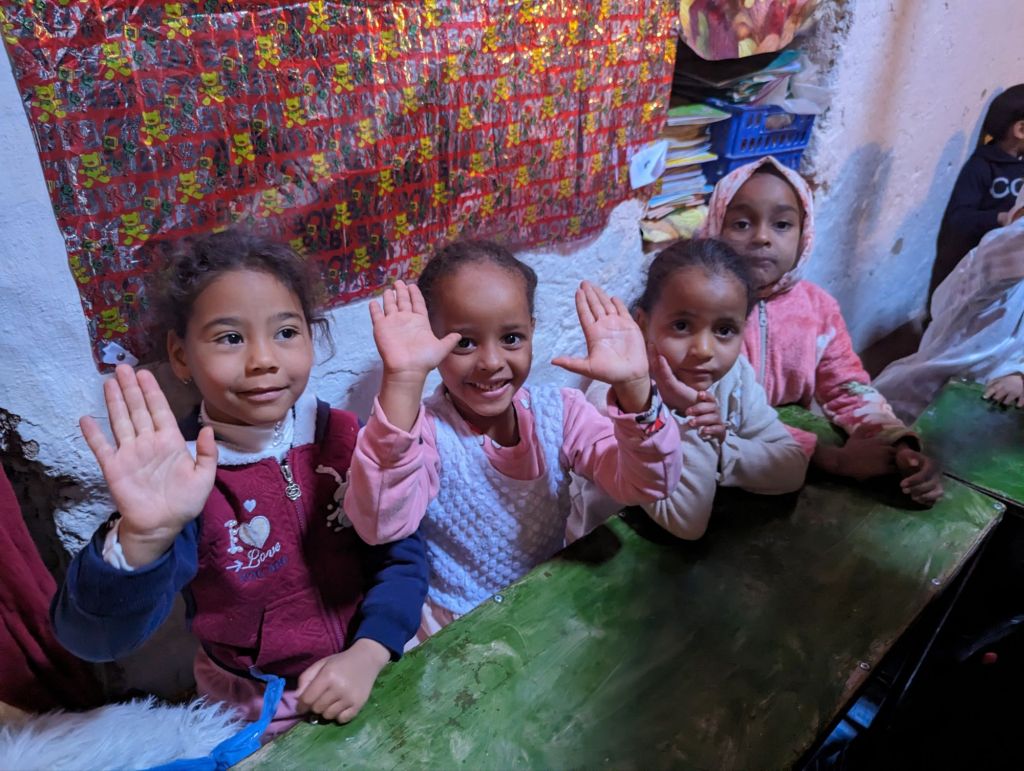
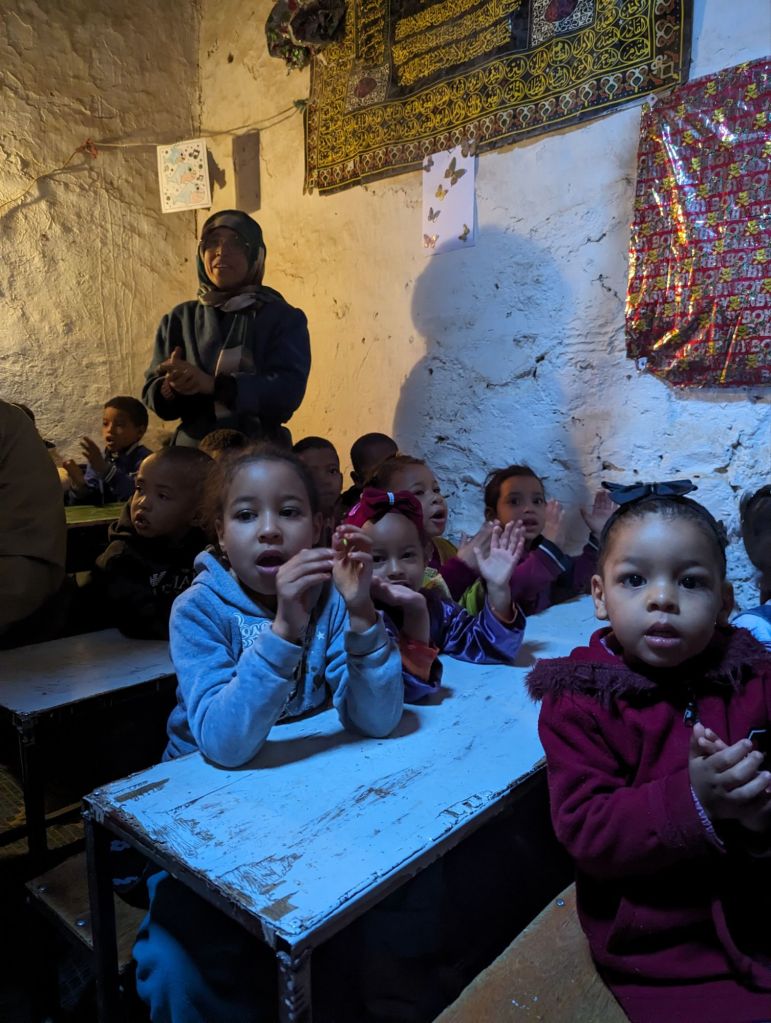
We reached our hotel, the Hotel la Palais du Desert in Erfoud that evening. Greg and I were “upgraded” to a larger room. The space was nice but the broken shower and hard mattress were disappointing. Also, when later we lounged at the frigid pool, the fibreglass chairs left an itchy rash and we were beset with annoying flies. The luxury was surface aesthetic but we managed despite. In the morning we headed out to a rock shop. The whole area is rife with fossils: ammonites, trilobites, orniates, and orthoceras. We listened to a demonstration of harvesting, polishing, and creating art pieces with the fossils. As private landowners the shop owners can sell the fossils but also welcome archeologists to study the quarry treasures. There were some really cool fossils and creations highlighting them: tables, plates, jewelry, wine racks, wall decorations. Our hotel had flooring, sinks, and tables featuring embedded fossils. After the usual shopping frenzy we visited a mosque and kasbah in Rissani for an interior look and also a special visit with a pre-school class. Idris was our guide, a Toureg in Indigo colored dress. Indigo is also used to color the skin of the locals as sunscreen. It was nearly Friday afternoon when schools and markets close but we were able to visit with 40 pre-school children and their teacher in a tiny school room. We walked through narrow alleys and ducked through tiny doorways to reach the children. We jammed our 22 adult bodies into an already overfilled basement-like room decorated with posters. They proudly and loudly sang a few songs and we likewise sang to them: Row Your Boat in the round and the English alphabet song. We sounded pretty good. They were adorable. The teacher was very appreciative of our school supplies donation. We also visited a silver and curio shop and then many of us purchased scarves for our evening event: a camel ride and dinner on the sand dunes.
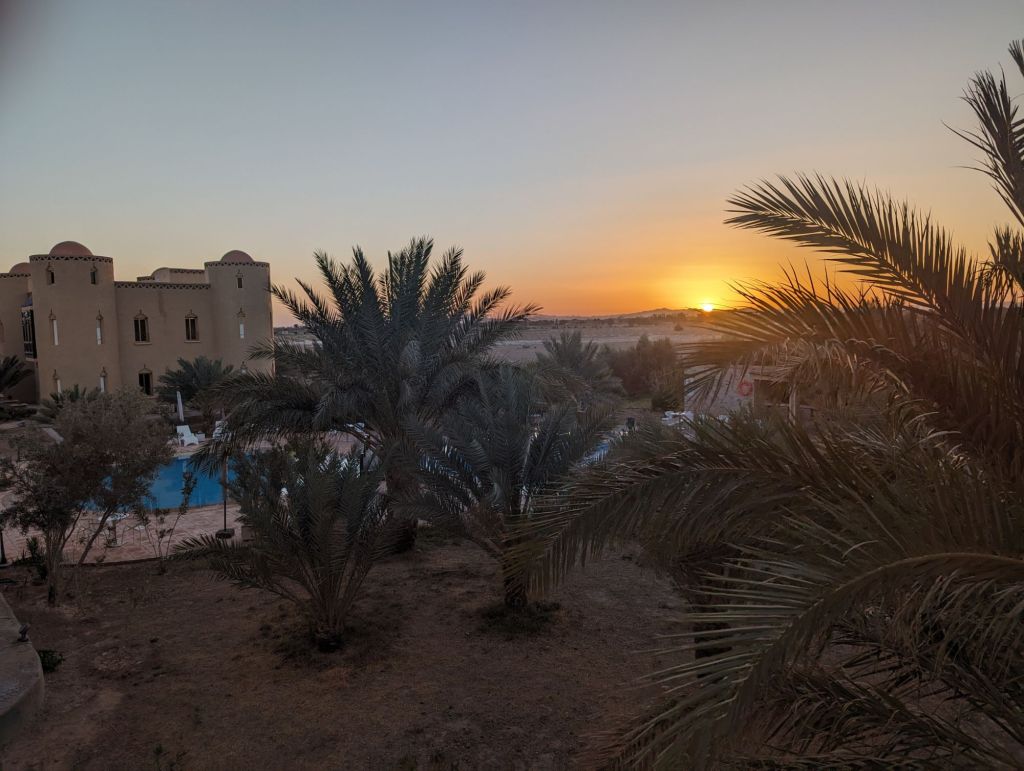



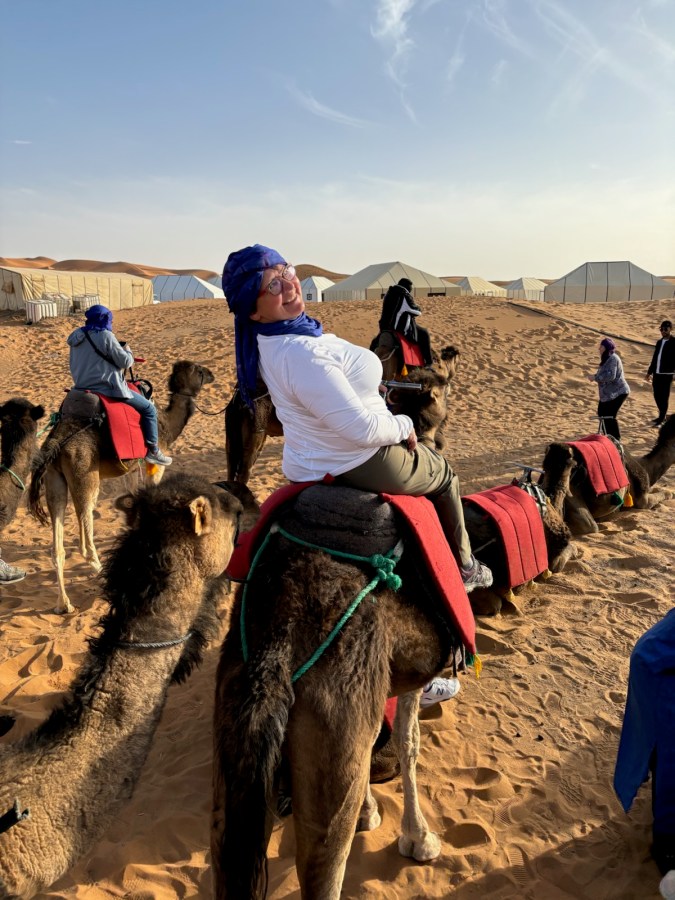
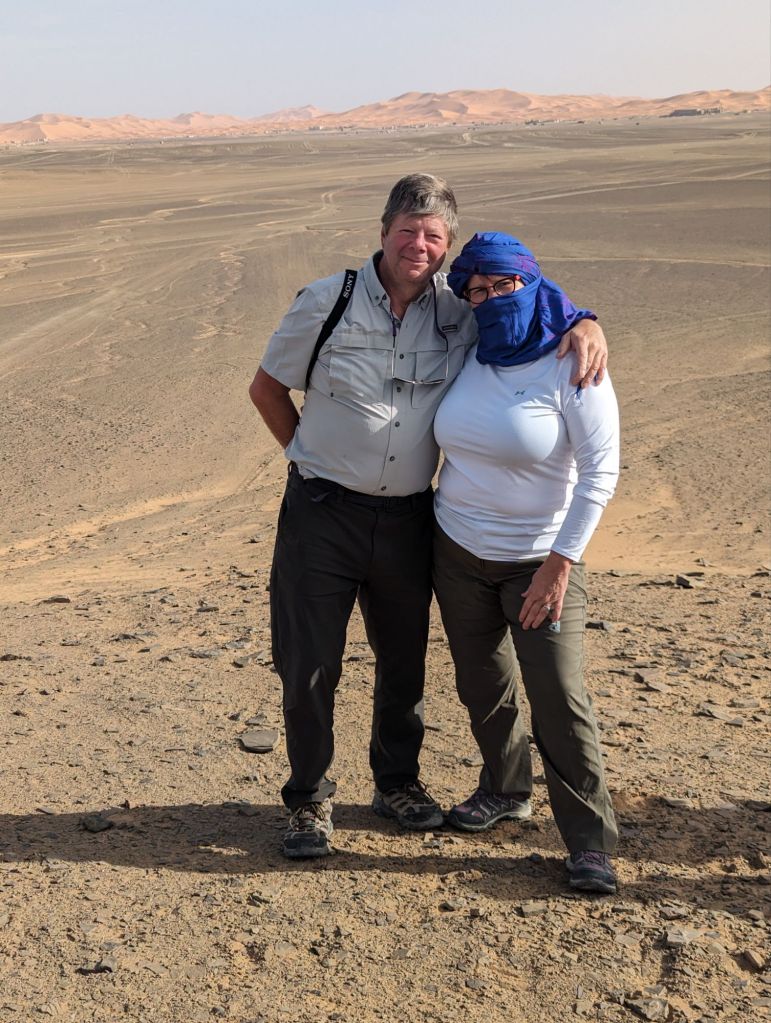
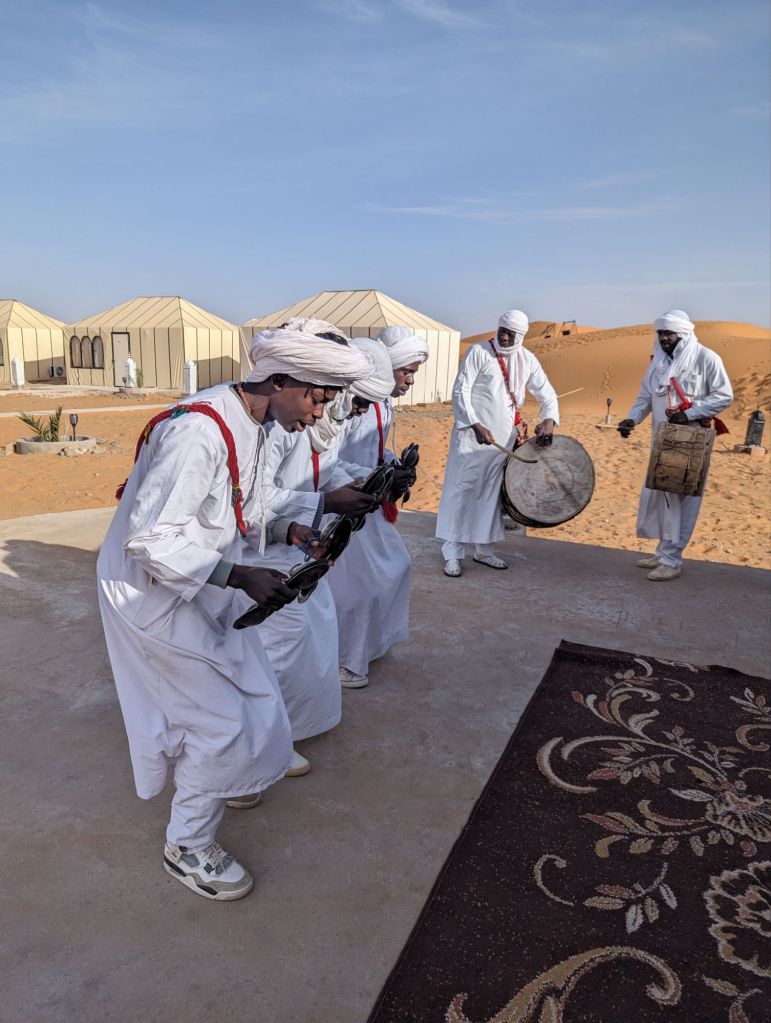
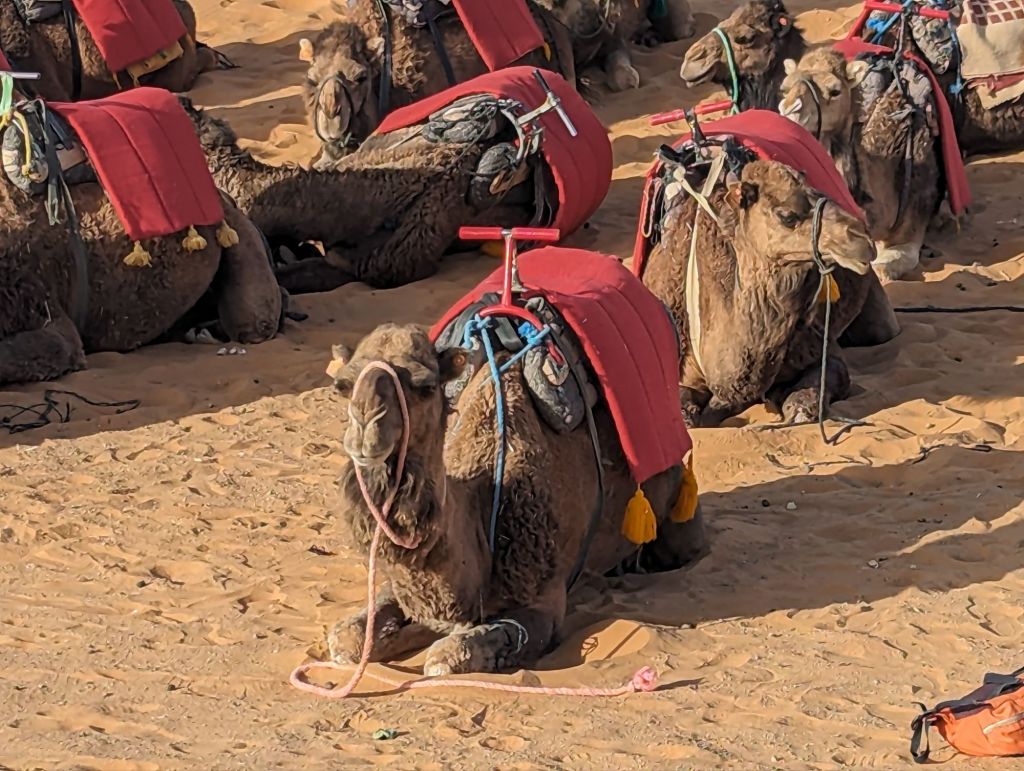
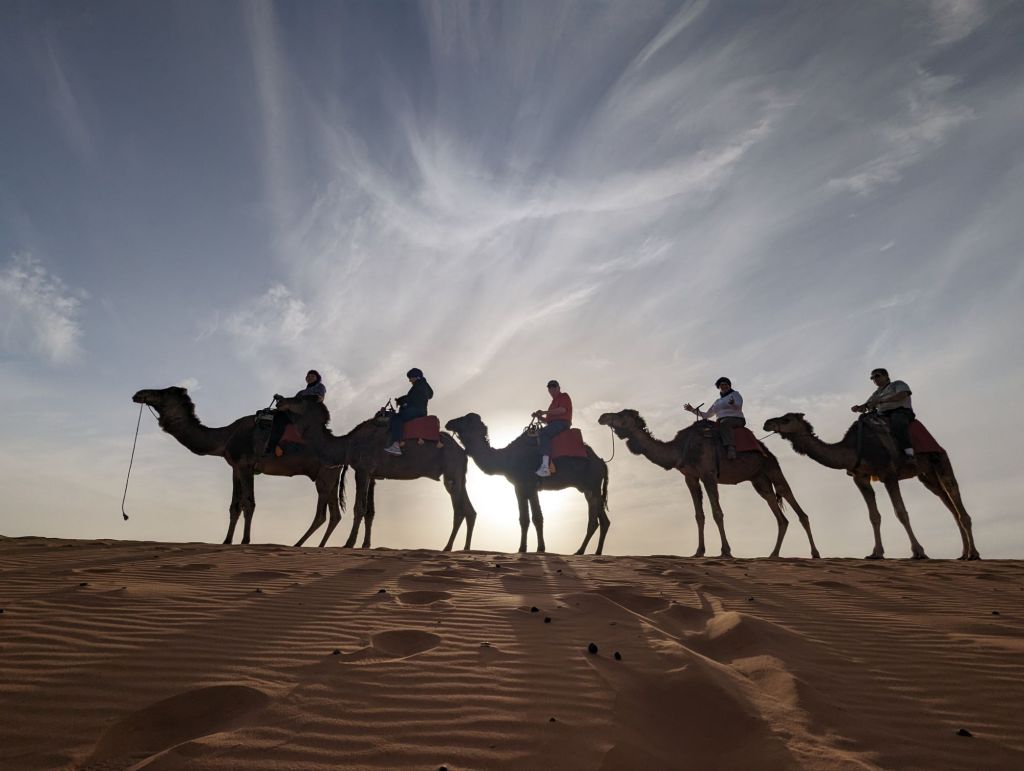
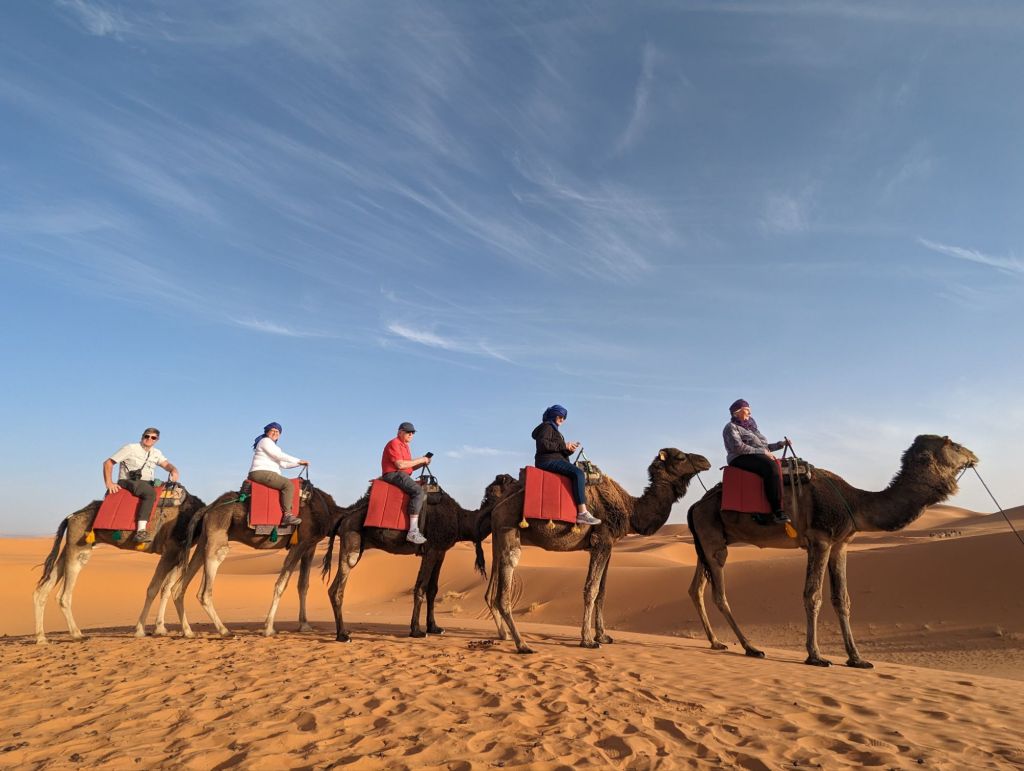
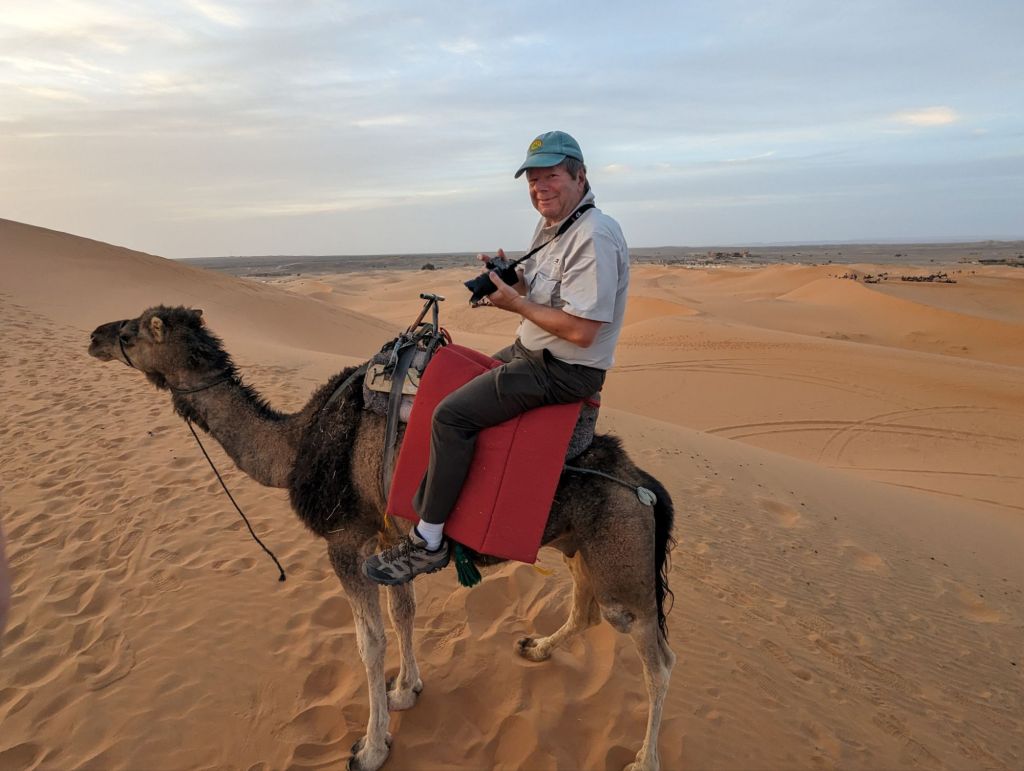
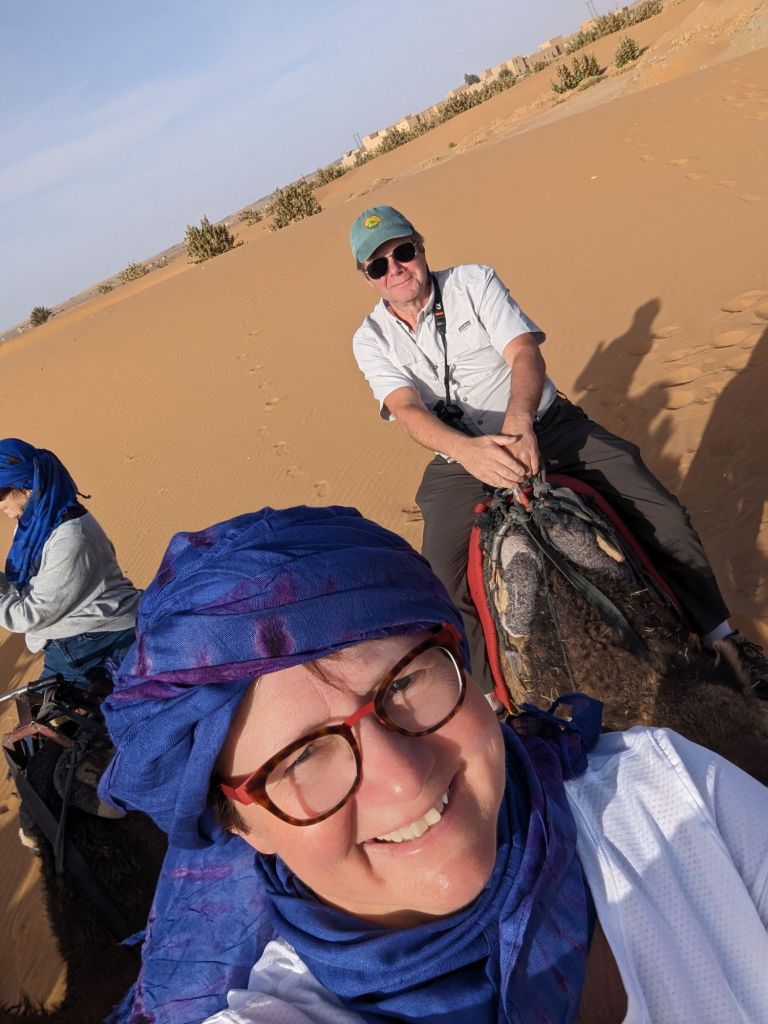
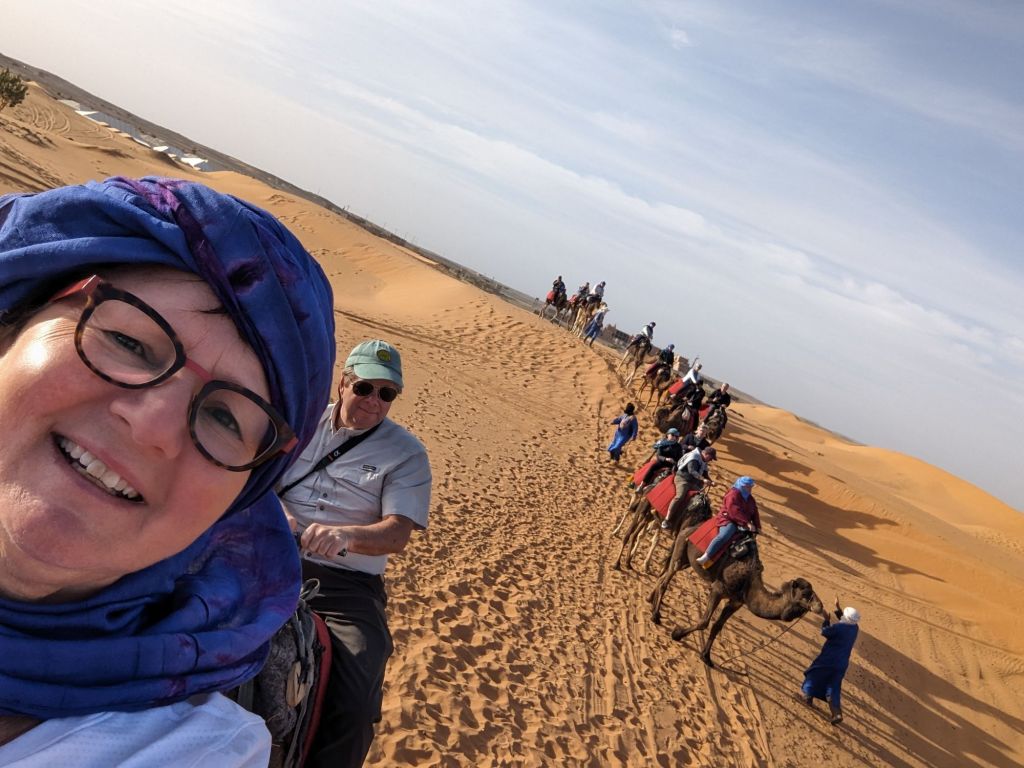
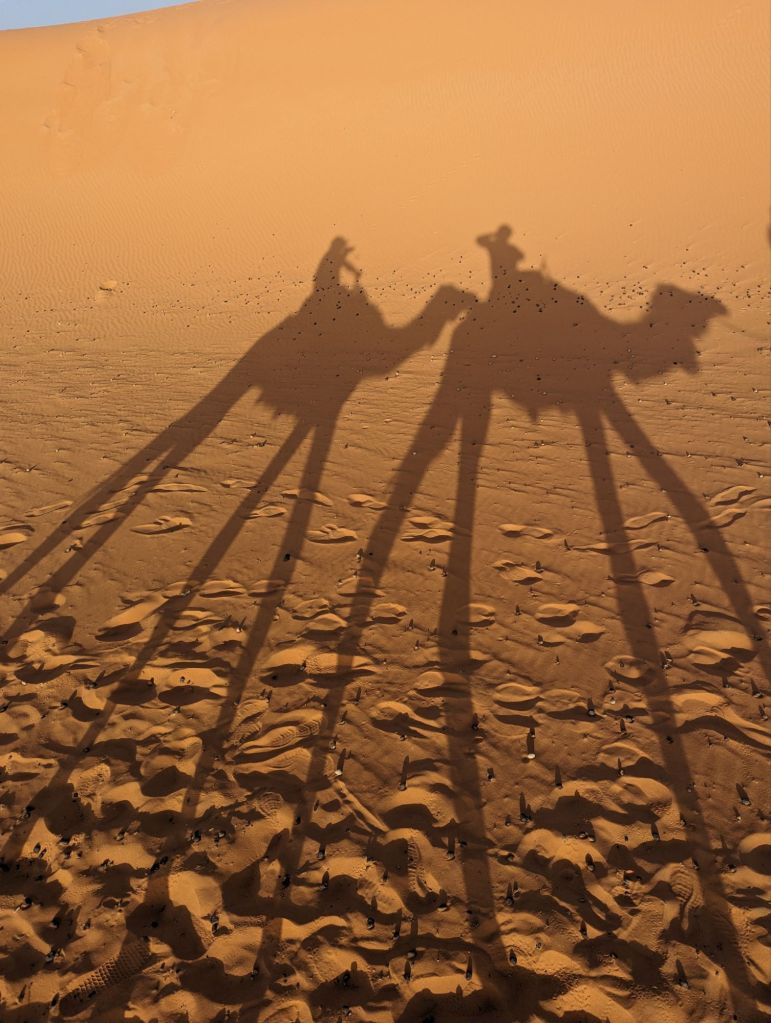
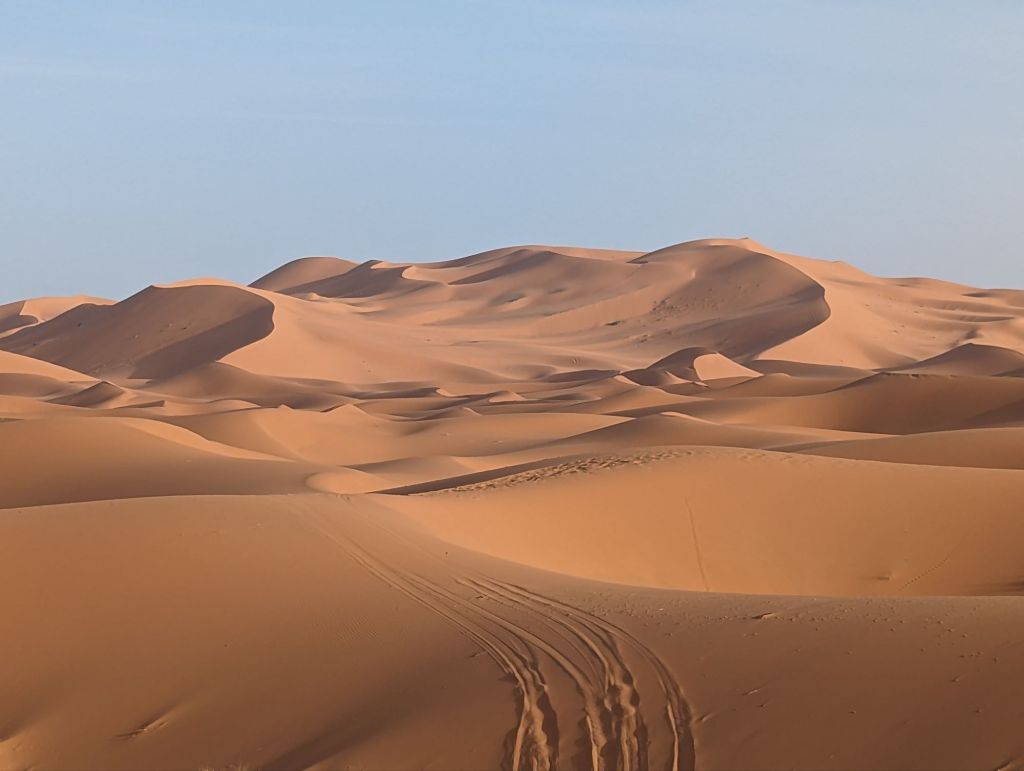
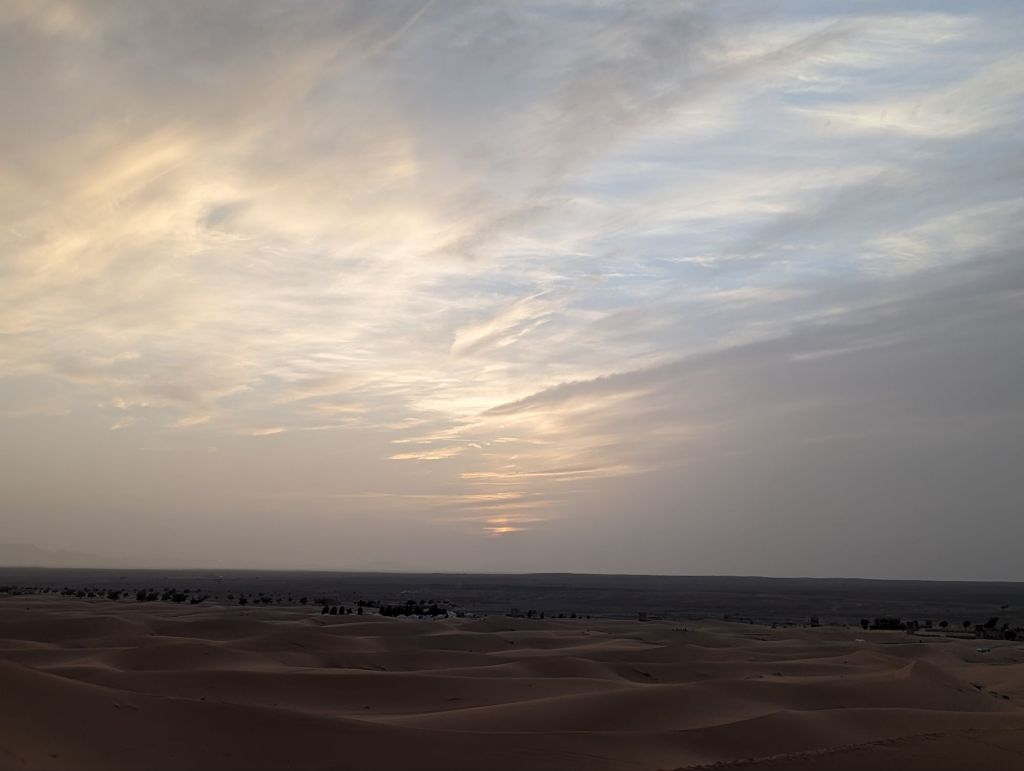
Late that afternoon we departed the hotel in 4×4 vehicles for the Sahara sand dunes. Morocco’s southern and southwestern corners occupy part of the Sahara desert. The Sahara (which translates from “desert”) extends from the Atlantic to the Red Sea, a 3,000 km goldmine of lucrative minerals including lithium and phosphate. Algeria, Morocco’s neighbor to the East, still quarrels with Morocco about the ownership of this Western Saharan parcel. Politics aside, we did a little “baha-ing” on our way to our destination: a tent encampment on the dunes. So charming! We were greeted with tea and cookies and a North African Maghrebi instrumental group playing Gnawa music using drums and qraqeb (double castanets) with a repetitive mantra-like beat. It was hard to discern one performance from another but it was easy to join in with them. Afterwards, we climbed onto dromedaries in groups of 5 and ascended the sand dunes to enjoy the sunset. We sat astride the camels wearing our colorful turbans and slowly waddled up the dunes, some more stable than others. I was in the Sahara, the stuff of 6th grade dreams and romantic black-and-white movies! It was awesome. We dismounted on a ridge facing the sunset but alas, the sun faded behind a haze of clouds. Nevertheless, our group and several other groups nearby enjoyed the company and the view and the fine grains of amber and camel colored sand. Greg sat on his ‘steed’ behind me, his camel nuzzling my leg or, more likely, wiping his snot on my pants. Gosh they’re ugly-cute. We returned to the tents for more Gnawa music, dancing, wine, tagine, and fruit under the stars.
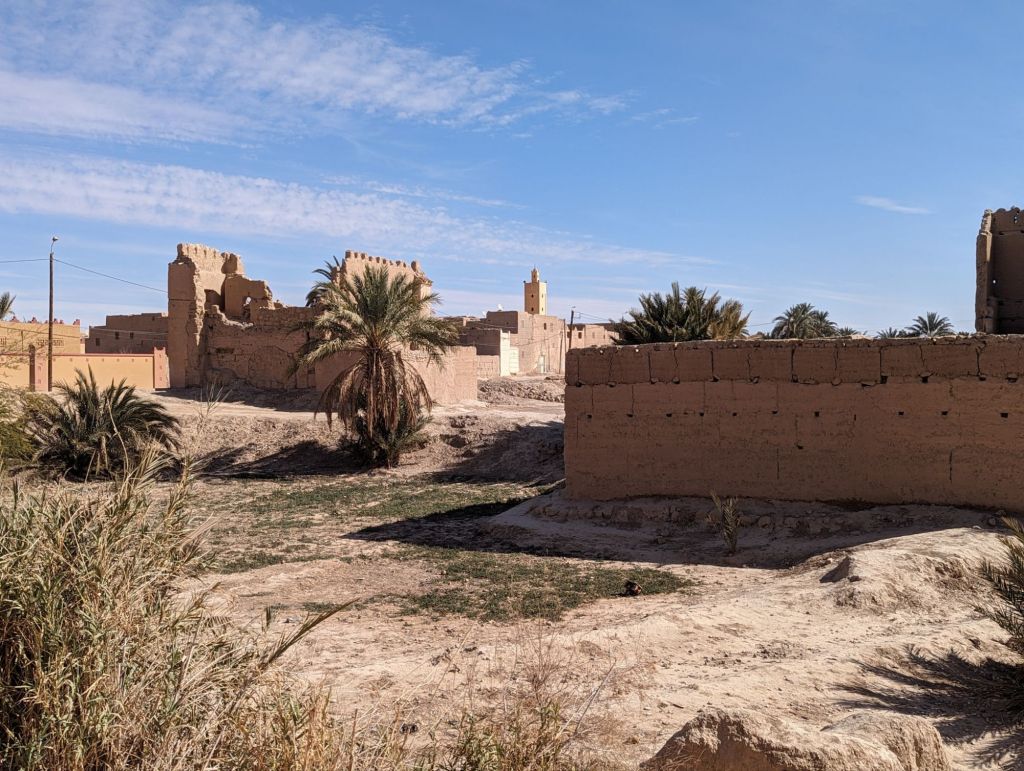
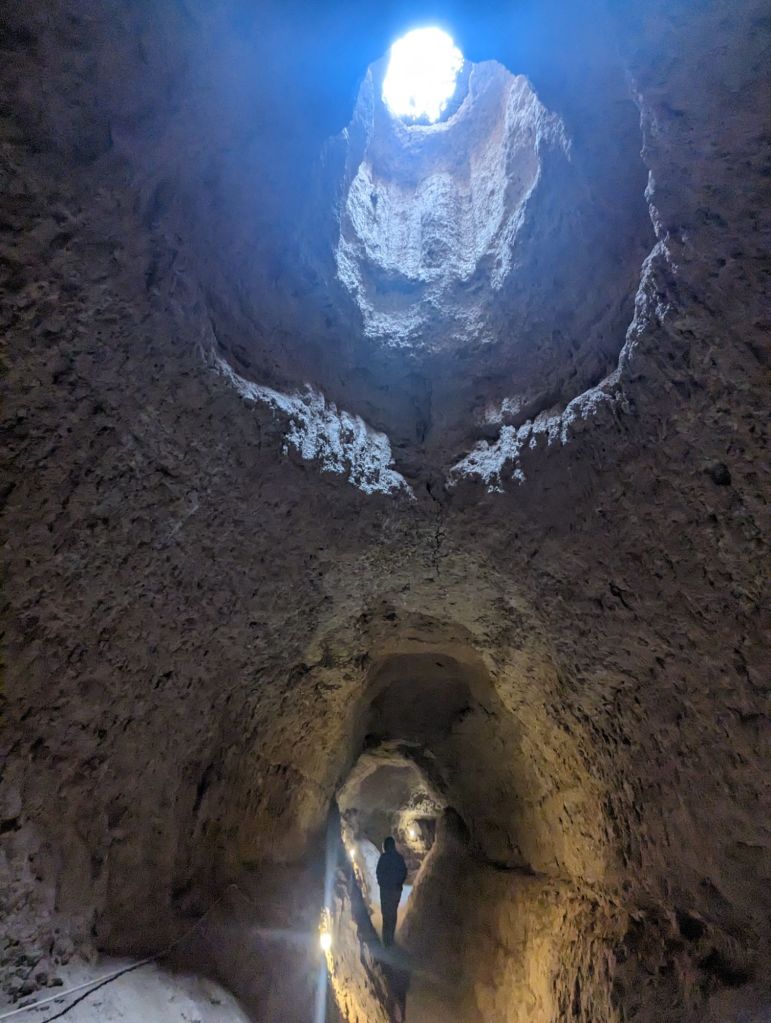
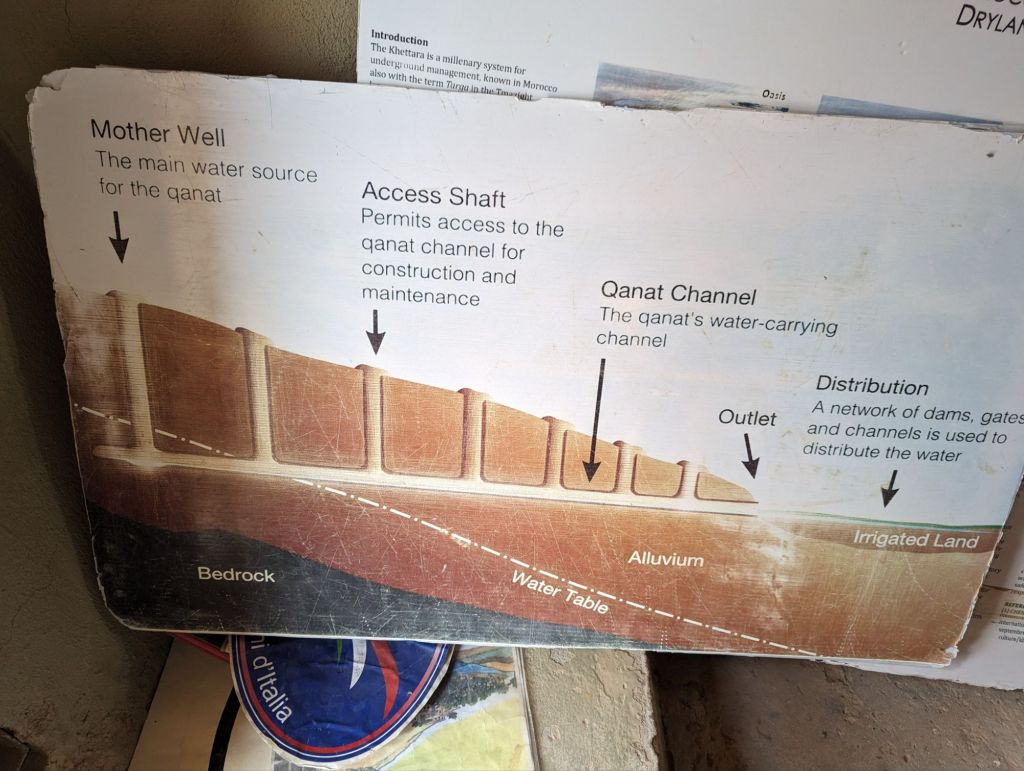
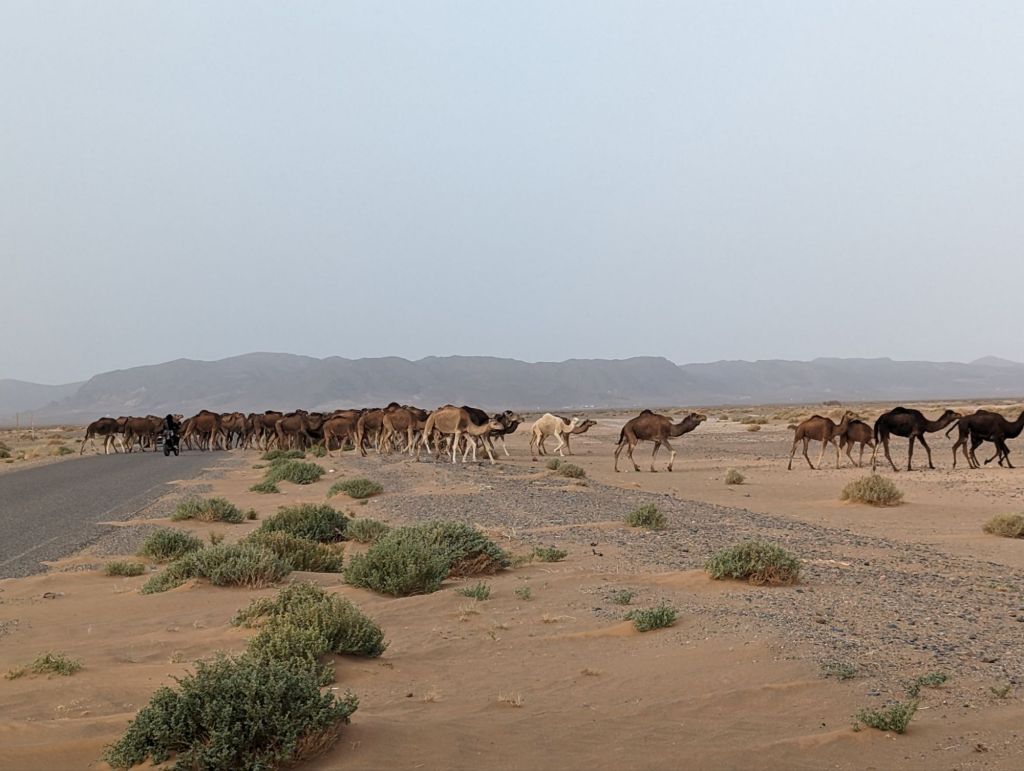
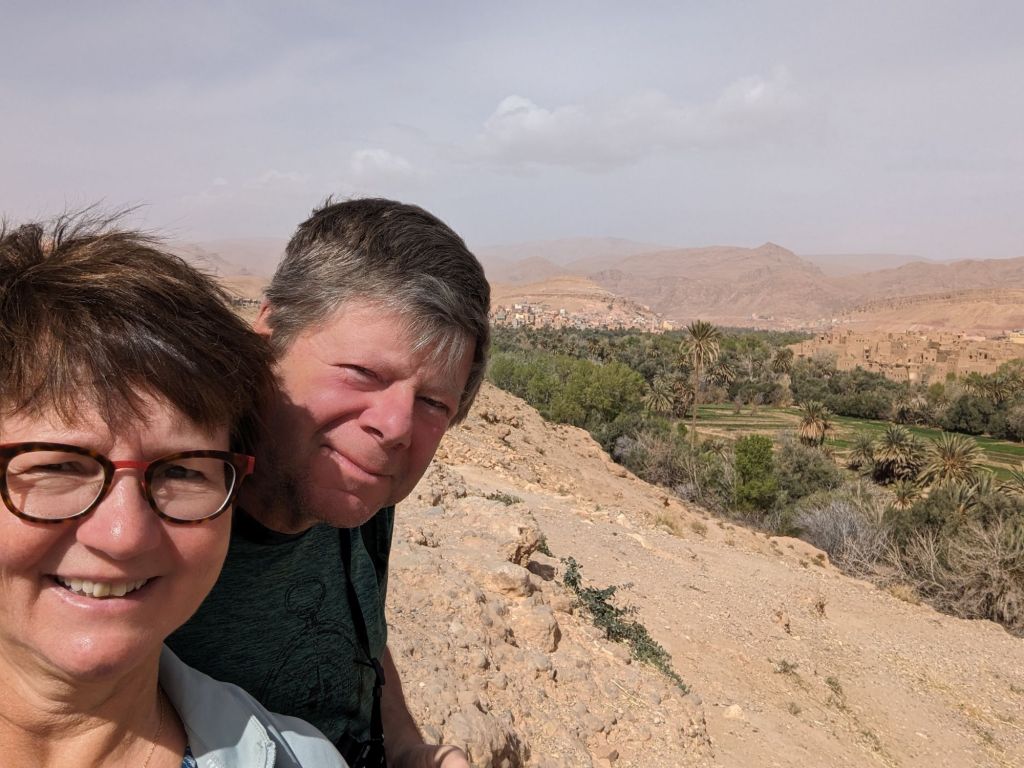
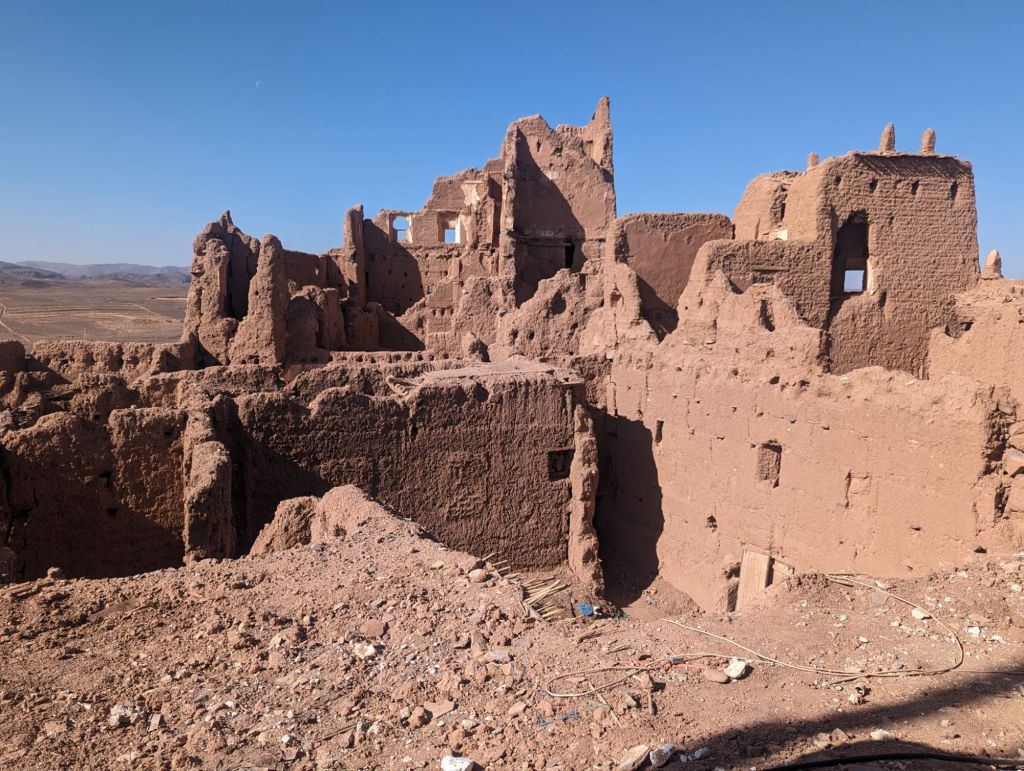
On Saturday we left Erfoud and headed to Ouarzazate. On the way we stopped to visit an underground irrigation system. Piles of sand stretched in rows for miles along the road. Each was an opening into an underground tunnel used for moving water. Families contributed to digging and maintaining the tunnels and benefitted from the results. When these ‘Khetteras’ eventually fell out of use, Moroccans would use them to evade the colonial French in the early 20th century. Irrigation systems were evident everywhere with oasis communities at the center. A little further along we were surprised to see a camel herder using a motorcycle. The motorcyclist came by for his requisite photo tip. The herd was worth about $40,000.00. We proceeded to the ‘Road of 1,000 Kasbahs’ and indeed, the name was not an exaggeration. Sandstone colored kasbahs lined the road and river valley far into the distance. Just a little beyond we visited Tinghir, a massive gorge that is a rock climber’s dream (or nightmare). A new hotel at the base of the gorge had been abandoned due to falling rocks. Goats and goatherders climbed the steep hills alongside while hawkers sold scarfs and knickknacks amid the ‘gorge-ous’ beauty. We continued on, making a technical stop at a gift/coffee shop near the Rose of Damascus, the rose growing district. Here roses are grown for their petals for making perfumes and rosewater and rose flavored items. 5500 tons of petals are collected each year. I got an ice cream.

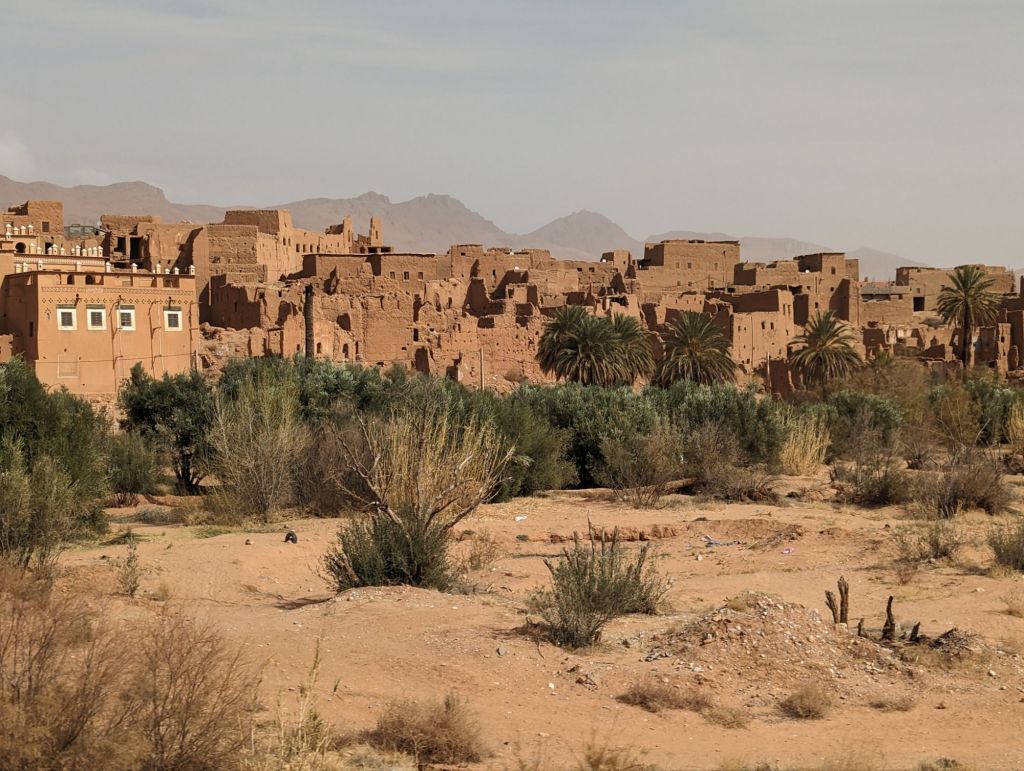
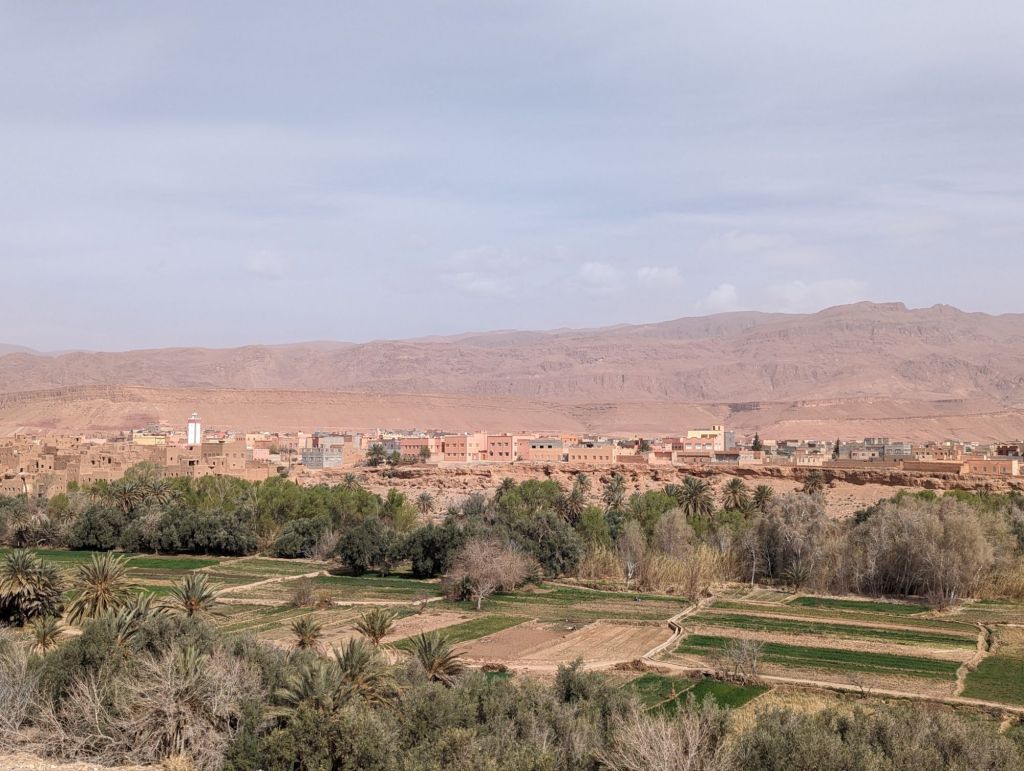
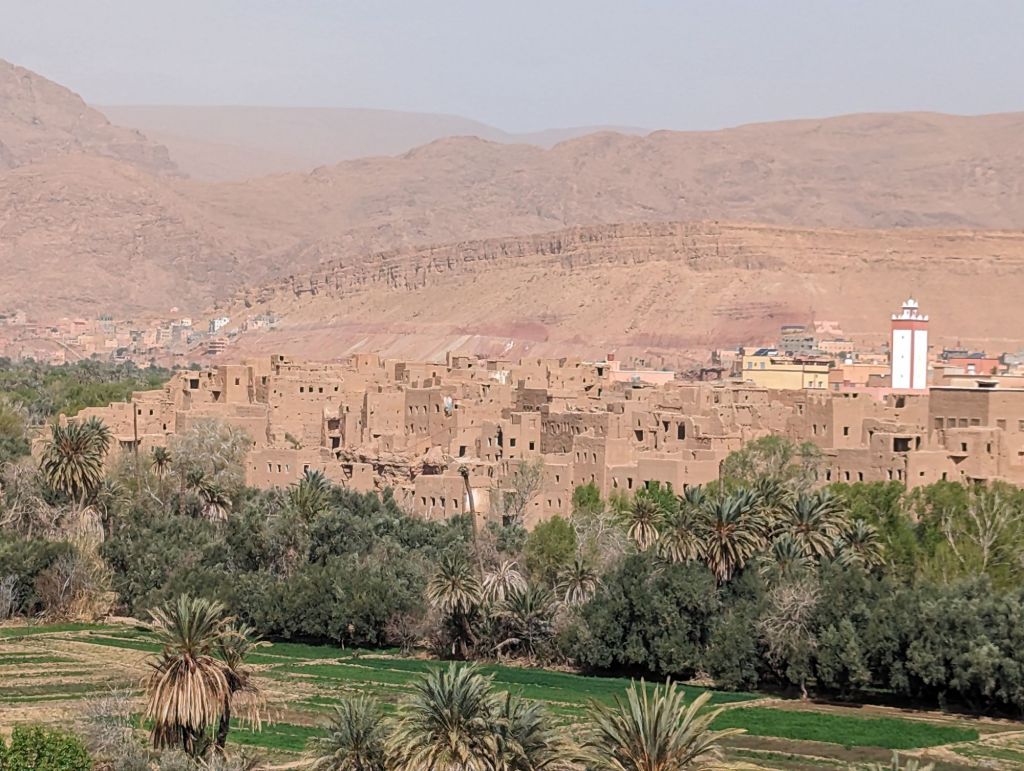
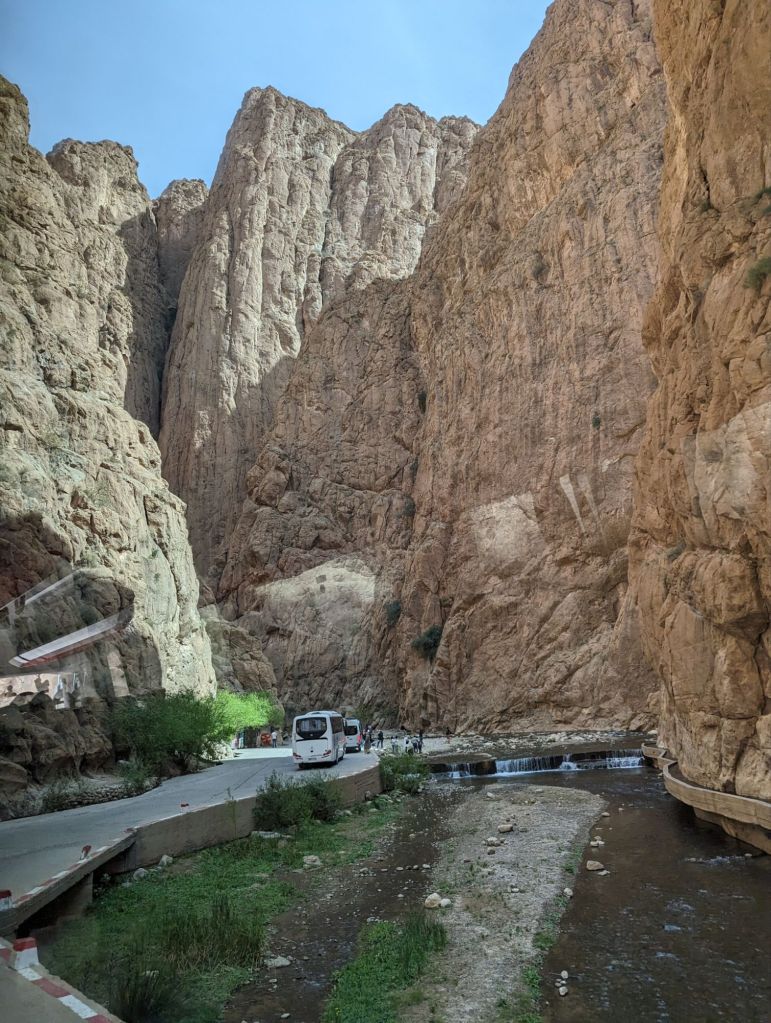
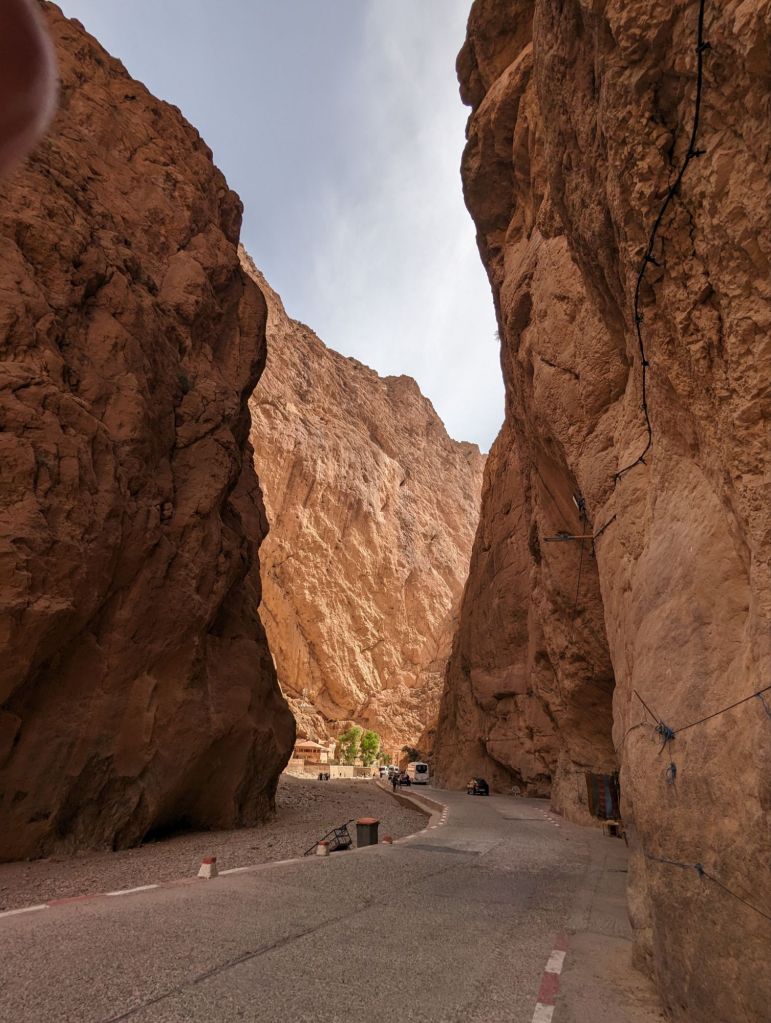
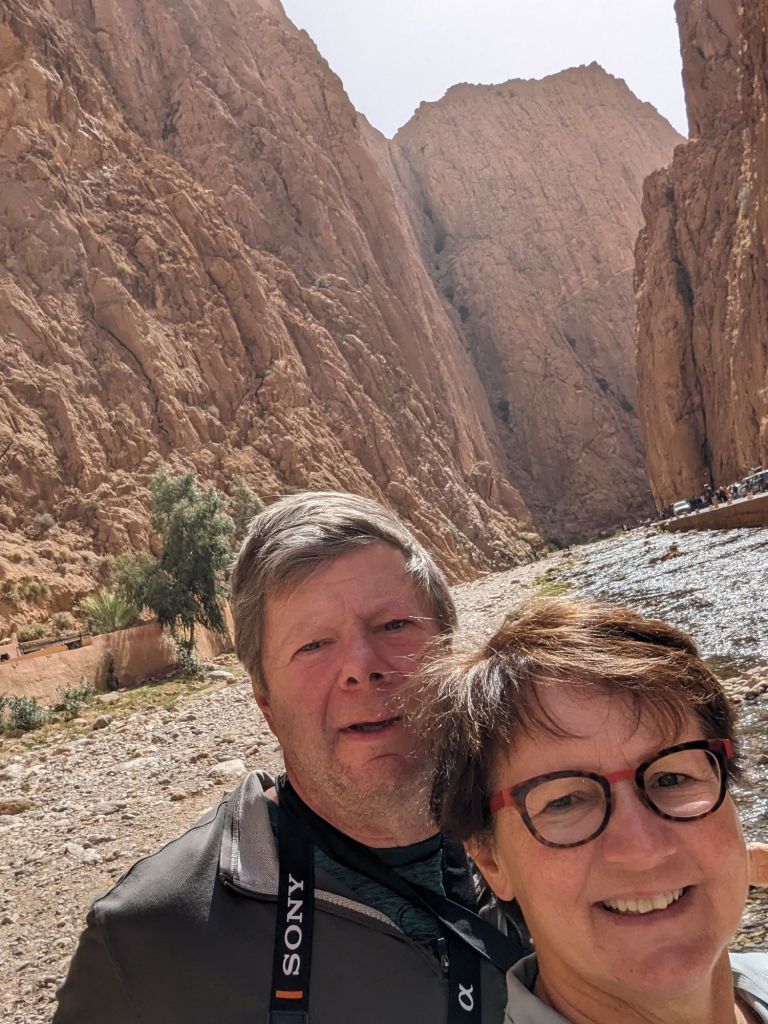
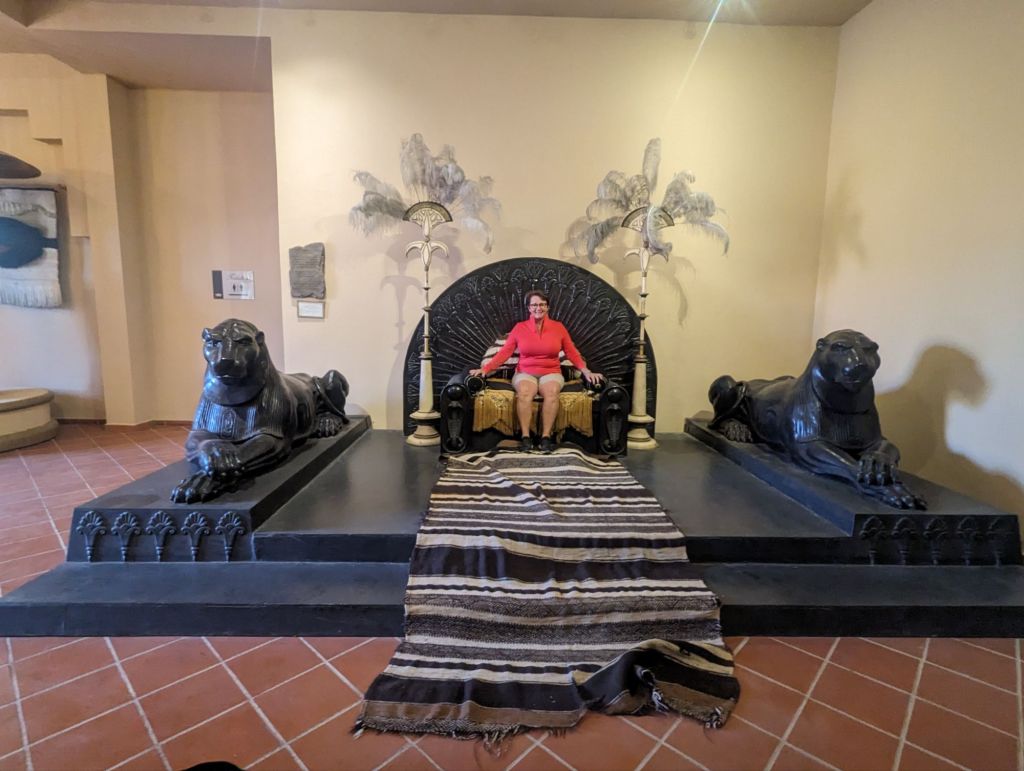
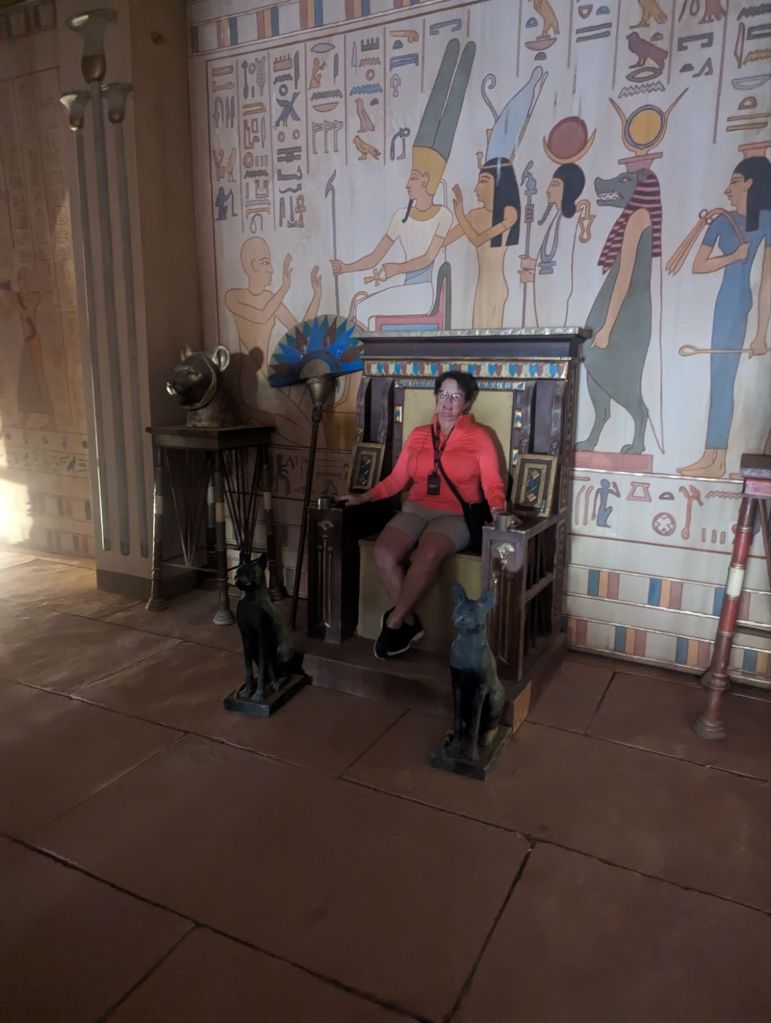
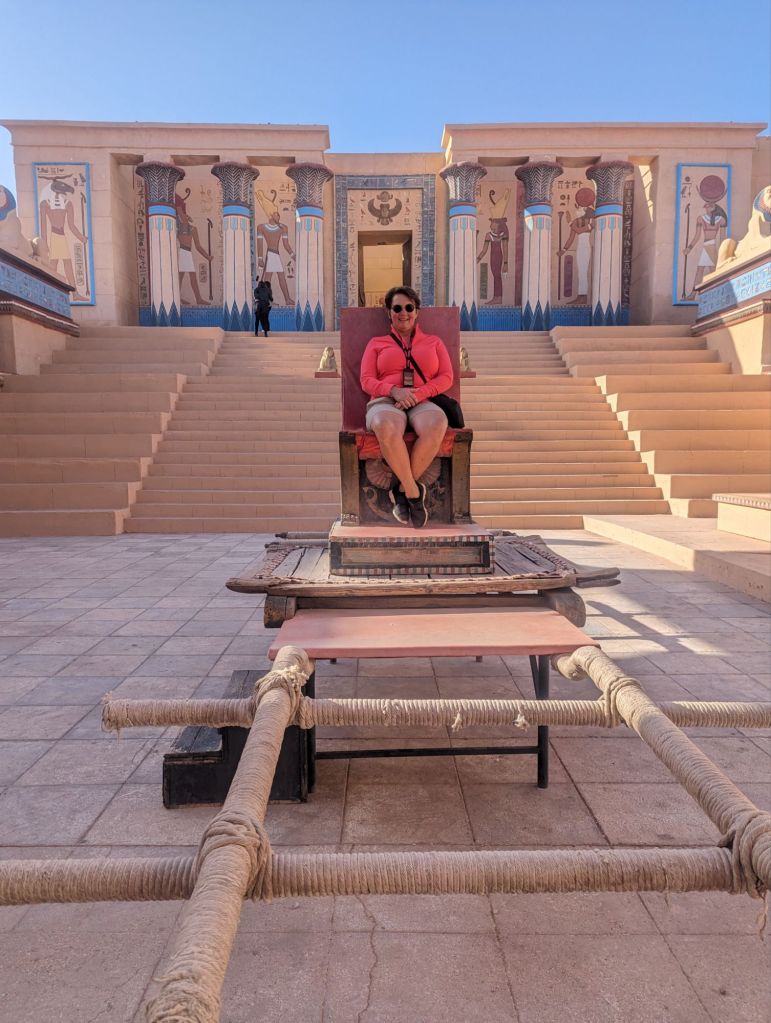
More kasbahs, goats, oases, and women washing laundry in streams followed until we arrived in Ourzazate in the late afternoon. We stayed at the Hotel Berbere, an expansive, maze-like, beautiful hotel favored by celebrities. The lobby was filled with movie props since Atlas Studios is nearby. Here they filmed “the Jewel of the Nile” and then donated the studio to the municipality. Since then “Prince of Persia”, “Aladdin”, and other movies were filmed here. It was interesting to see the studio lots prepped as Cleopatra’s throne or a desert village or a Chinese temple made of thin adobe with nothing but scaffolding behind and perspective skewed for filming.
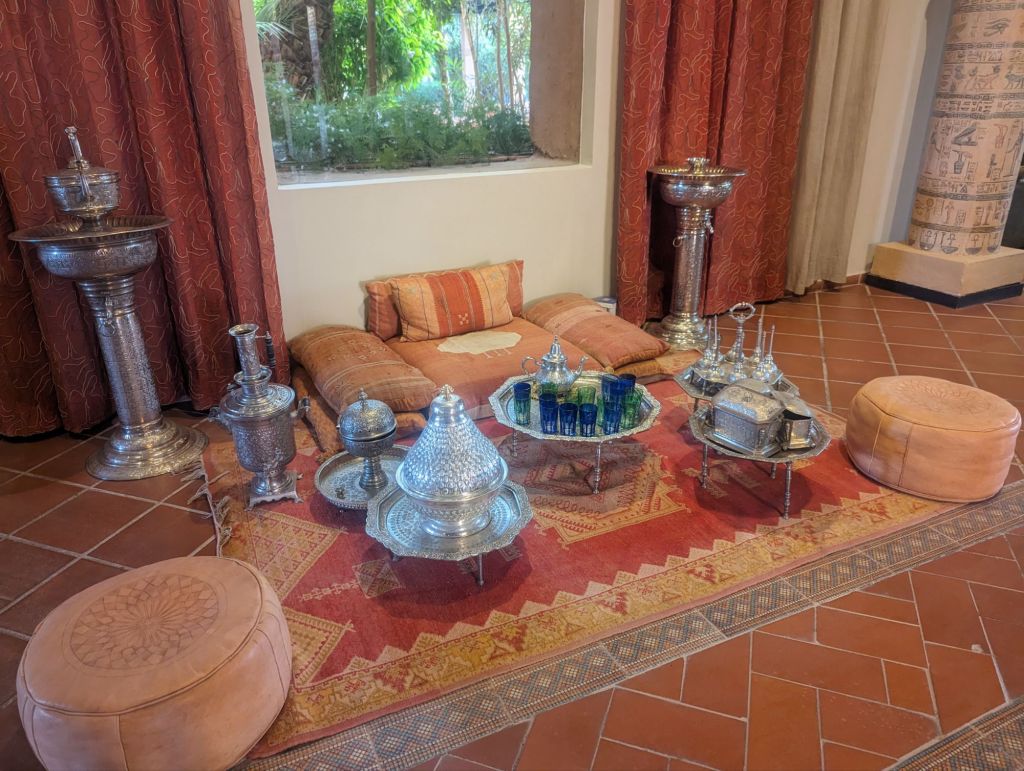


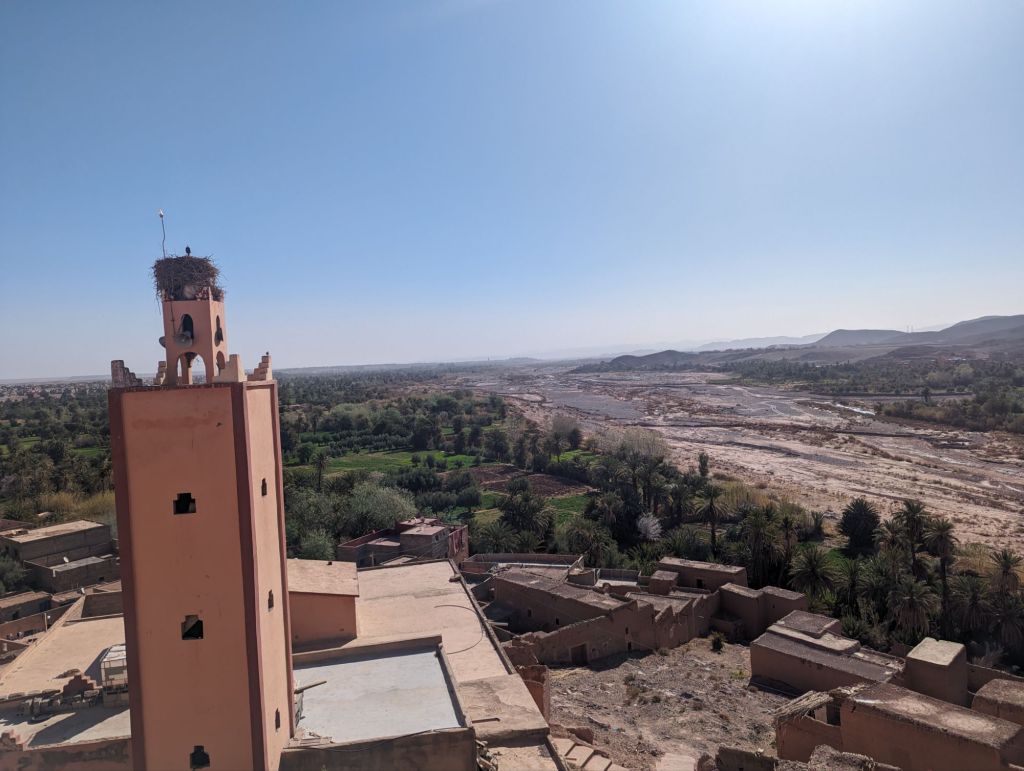
We followed the road onward toward the mountains along the gold trade route with old and new kasbahs alongside. I’ve lost track of the number of 9th, 10th, 11th, 12th century dwellings and fortresses and mosques we’ve seen. The history here is mind boggling as when describing 28 generations of a sultan King’s heritage or Berbers living as nomads even today.
We are on our way north and will cross the mountains again. Next stop: Marrakech!

 My new reality