
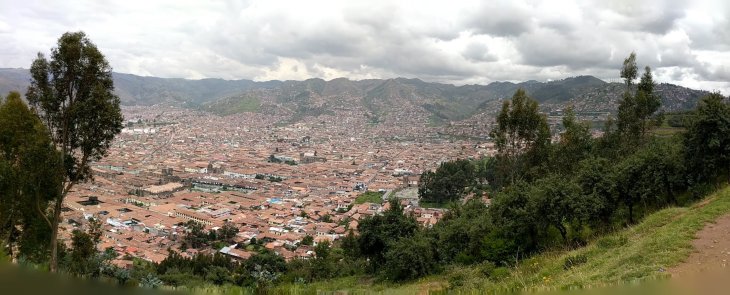
After a short flight we arrived in Cusco in the Andes. Cusco is called the “navel of the world” in Quechua, the native language of Andean people. It sits at 11,000 feet in a valley surrounded by mountains with houses now climbing up the slopes as the population expands (currently about 0.5 mil). It is the capital of the Cusco region and the historic capitol of the Inca and has been designated a ‘World Heritage Site’. But more on this later.
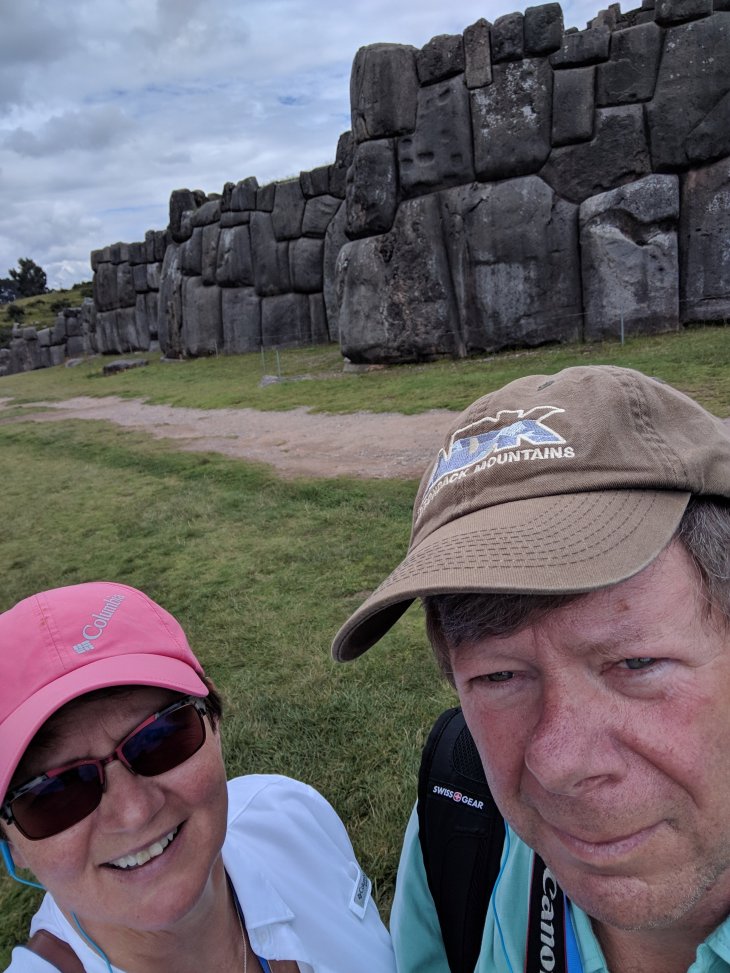

Immediately we departed by bus for Sacsayhuaman, an Incan archeological site in the Andes at 12,000 feet. We’d been warned about altitude sickness and indeed I was feeling a little lightheaded but no worse. The ruins were a great example of the very tightly placed boulders that are hallmarks of Inca stonemasonry. We slowly meandered through but then Greg was overcome with either sorochi (acute altitude sickness) or maybe Pachacuti’s revenge. Either way, the symptoms are the same. Good news, he recuperated eventually but missed the next few excursions.

We continued on although several of our compadres were feeling ill. We went up and over 14,000 feet and then headed down to Pisac. The views as we drove through the Andes were spectacular: dark green peaks with patchwork green valleys below. Distant snow covered peaks were evident. The tallest mountain in the Peruvian Andes stands at 22,000 feet; the tallest peak in the range is 23,000 feet. The Urubamba river flows through on it’s way down to the Amazon, raging yet the same silty brown.

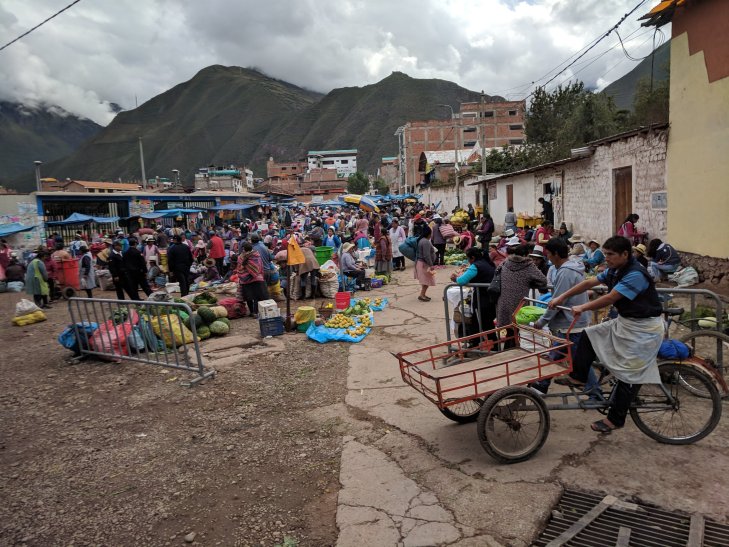
We stopped in the tiny village of Pisac to do some shopping in the colorful market and to practice our bargaining skills. I purchased a few silver trinkets at the jewelry store that let us use their banos where Greg spent his time. Then we headed to our hotel. We passed farmers, women selling grilled Cuy on a stick (Christina, sorry, but think “Chubs” and BTW it’s delicious), random do the dogs, a few cows grazing everywhere and anywhere, rustic red brick houses with unfinished second floors, cornfields being harvested manually, adobe houses, and fancier versions of the tuk tuks we rode in the Amazon. Of special interest were the local women wearing colorful, traditonal outfits and bowler-type hats. This is the Peru I’ve imagined!
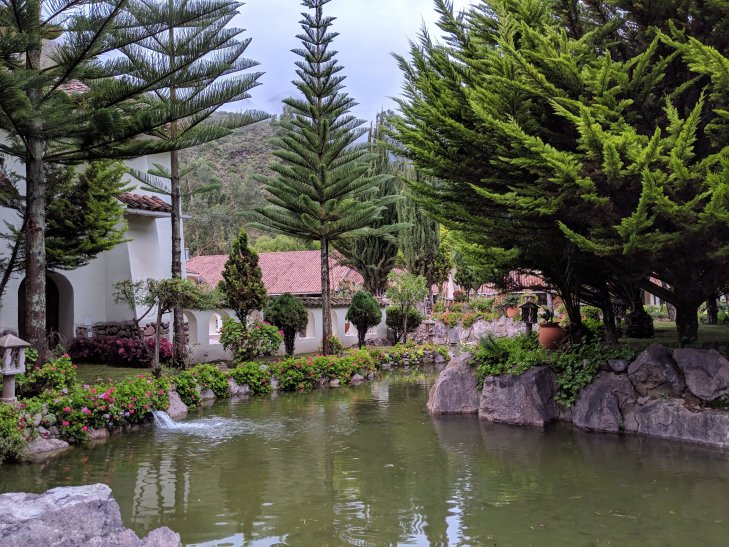

We arrived at our hotel Aranwa, a former hacienda amidst the rural surroundings and between soaring mountains. It was a spectacular retreat center with serene gardens, a pool and hot tub, and wandering llamas, peacocks, and blue parrots. It also had its own chapel and movie theatre. The food here was outstanding and outstandingly prepared including alpaca and local trout. If you were feeling bad for Greg, you should know he spent the next day at this oasis recuperating; I was just a little jealous.

The next morning we were treated to another ritual performed by a shaman. He was pretty funny even through translation. Although so many Peruvians are Catholic, they tend to retain their ancient religious traditions, melding the two.

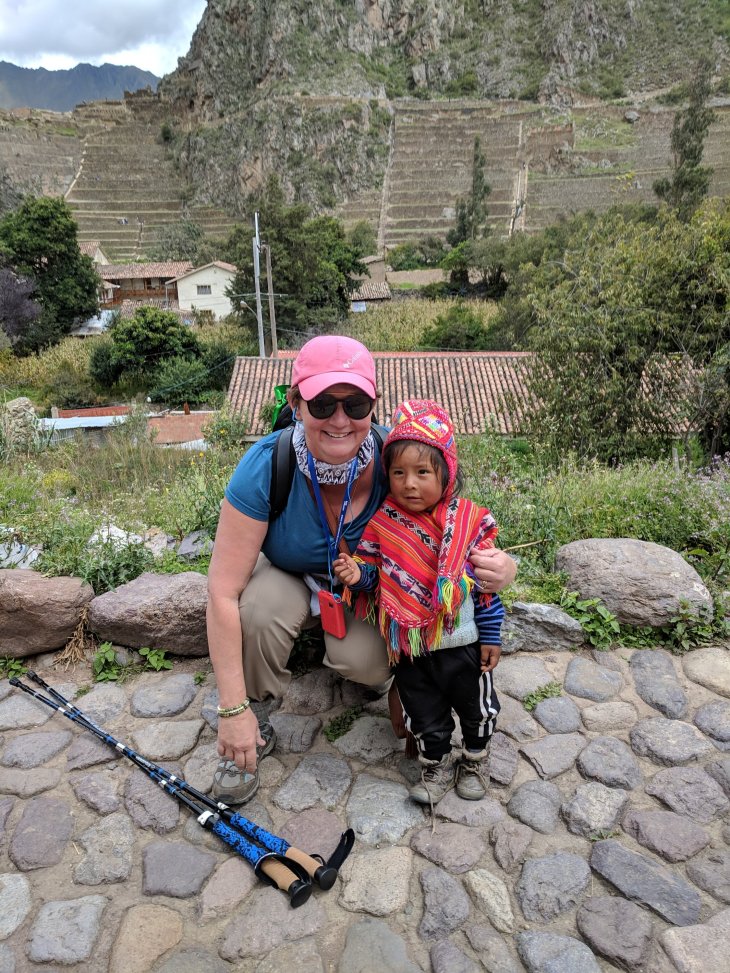


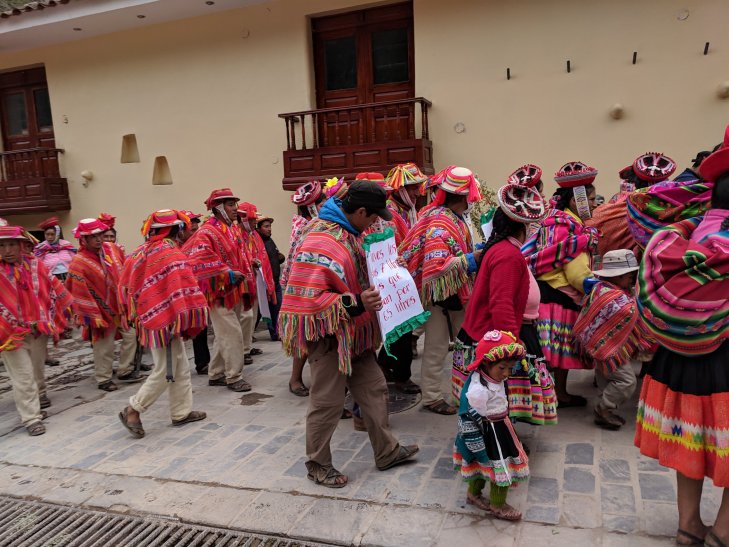

Leaving Greg and his Cipro behind to rest and get sunburned, we headed out to Ollantaytambo, another Inca archeological site. The village at the entrance has narrow cobblestone streets and a market in the square. As we wandered the narrow alleys, children in colorful traditonal dress posed for photos and charmingly requested payment, typically 1 soles apiece (about $0.30). On our way to the site we were surprised to see a village parade celebrating ‘water’. Farmers, villagers and schoolchildren marched, many in traditonal dress. Their outfits identify their role in society.


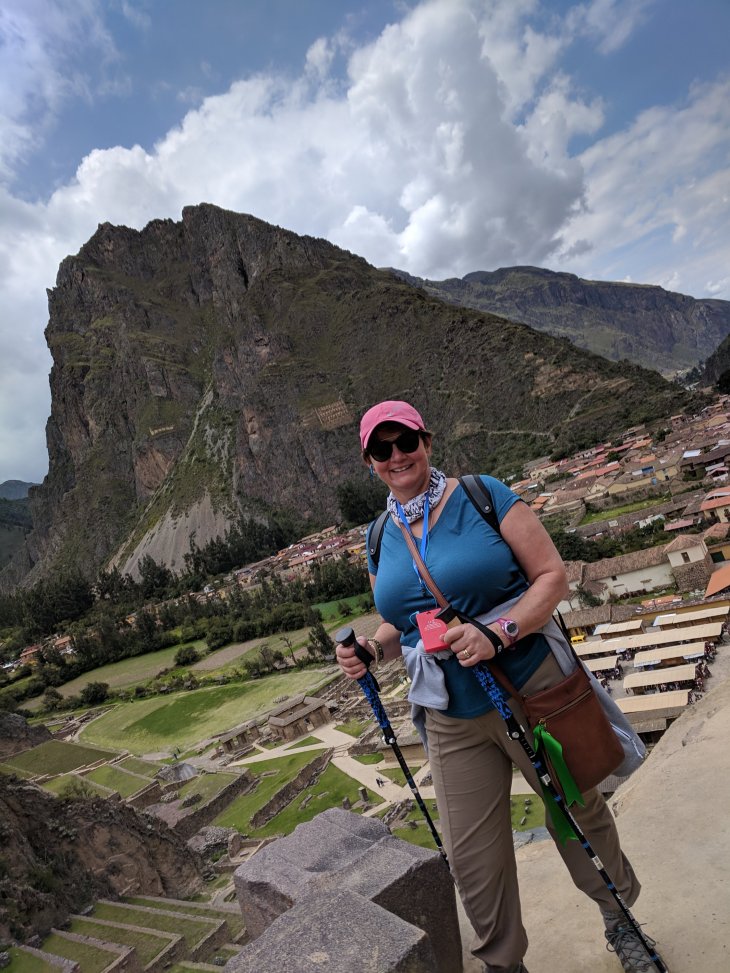
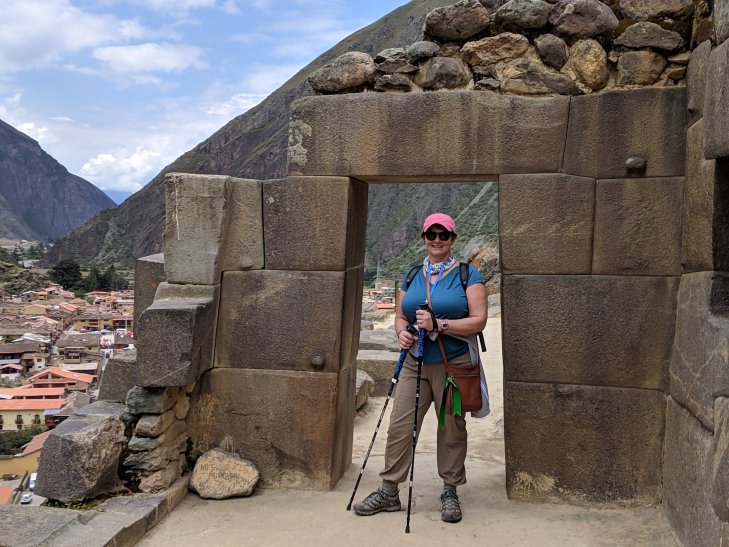
At the site the Inca agricultural terracing has been restored and we learned of the engineering involved in construction. Each terrace is about 10 feet high and 18-20 feet deep. The terraces were filled with sand or gravel for drainage and then covered with soil. Also, the Inca planted legumes on upper levels so soil nutrients would flow downhill. There were many culverts and floating stairs between levels. On the mountainside above the village were remains of food storage warehouses.
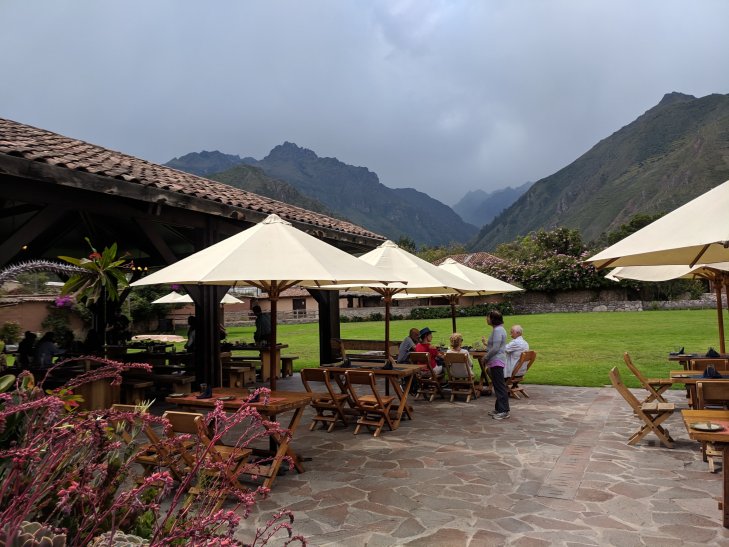


We stopped for lunch at Sol y Luna where Peruvian tapas were served: beef hearts, pork, fish, ceviche, empanadas, and corn. We sat in a stylish outdoor pavilion surrounded by beautiful gardens and a manicured lawn. As a treat there was a horsemanship display by 4 Chalan horsemen and their steeds. The horses were originally imported from Seville and are trained to flick their ankles outwards. Although the horses pranced the riders seemed to float. The traditional costume worn by Chalan are white hats, white ponchos and pants.

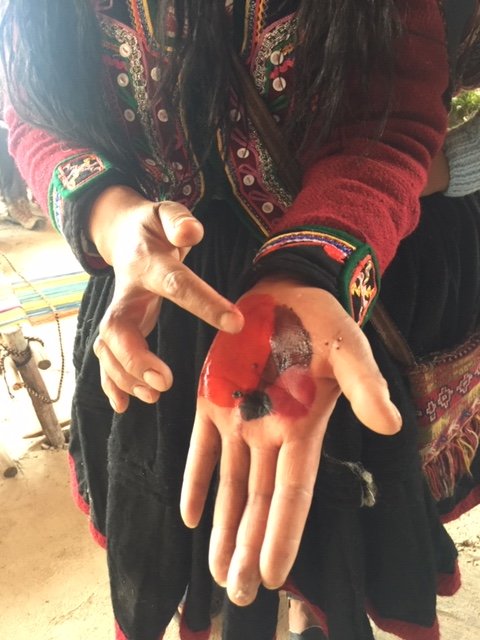


We continued onto Chinchero, an hour’s drive up to the plateau. Beautiful checkerboard farms dot the countryside as we bussed by. Arriving in Chinchero the bus ascended a narrow dirt (now muddy) road to a weaver’s co-op. We were treated to a demonstration of spinning, washing, dyeing, and weaving of alpaca wool by the women of the collective. Each was dressed in their colorful traditional dress and a few had their babies ‘papoosed’ on their backs. The co-op was started by a young college trained woman named “Nelly”. We admired their shared efforts and then shopped some of their textiles. I felt these women were worthy of our support. In fact, it was only recently that farmers in this area have started using currency so these women are substantial contributors to the support of their families (in addition to the usual cooking, cleaning, raising the kids, etc). Working moms unite!!!
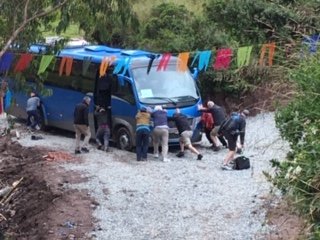
Returning to the bus with our hard fought goods (I may have ended up with someone else’s woven table runner in my shopping frenzy, again, apologies to Penni), we found the bus stuck in the mud. With some pushing from the local men and the guys on the tour they managed to extricate and get the bus turned around for our return to Aranwa for dinner, joined by Greg! Yay! Tomorrow we depart for Machu Picchu!

 My new reality
I’m impressed. I have experienced some altitude discomfort at 10,000’. I can’t imagine staying upright at 14,000. My definition of whirlwind was not harried; it was going from the Amazon to 14,000’ and then down to sea level for your next adventure. Wow. Stay hydrated, stay healthy, have fun, and keep those great photos coming.
LikeLike