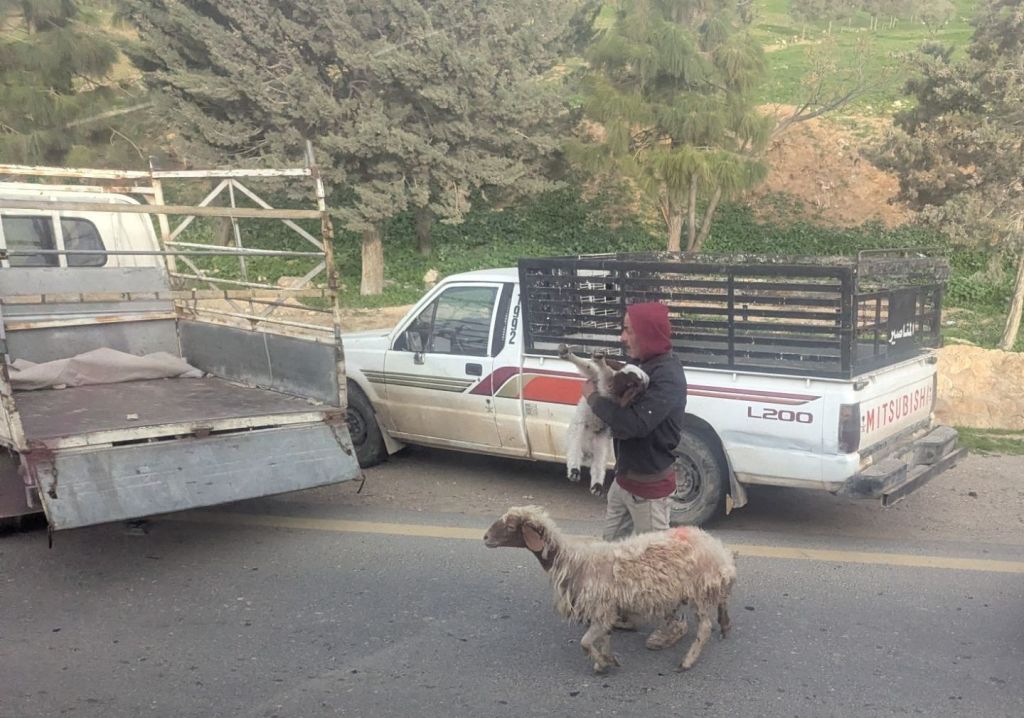
Salaam! Welcome to the Hashemite Kingdom of Jordan. A short 1.5 hr flight from Cairo to Amman on Royal Jordanian Airlines brought us to the beautiful Queen Alia airport. Our group, now reduced to 15, was greeted by our Odysseys Unlimited rep and rapidly processed through immigration, then we were on our way to Madaba. We drove about an hour to this small town with lots of history. The scenery was greener, cleaner, and hillier than the Saharan dust colored flatlands of Egypt. Small olive and fruit orchards dotted the landscape with occasional sheep and goat herds tiptoeing across sandstone rocks looking for greens.
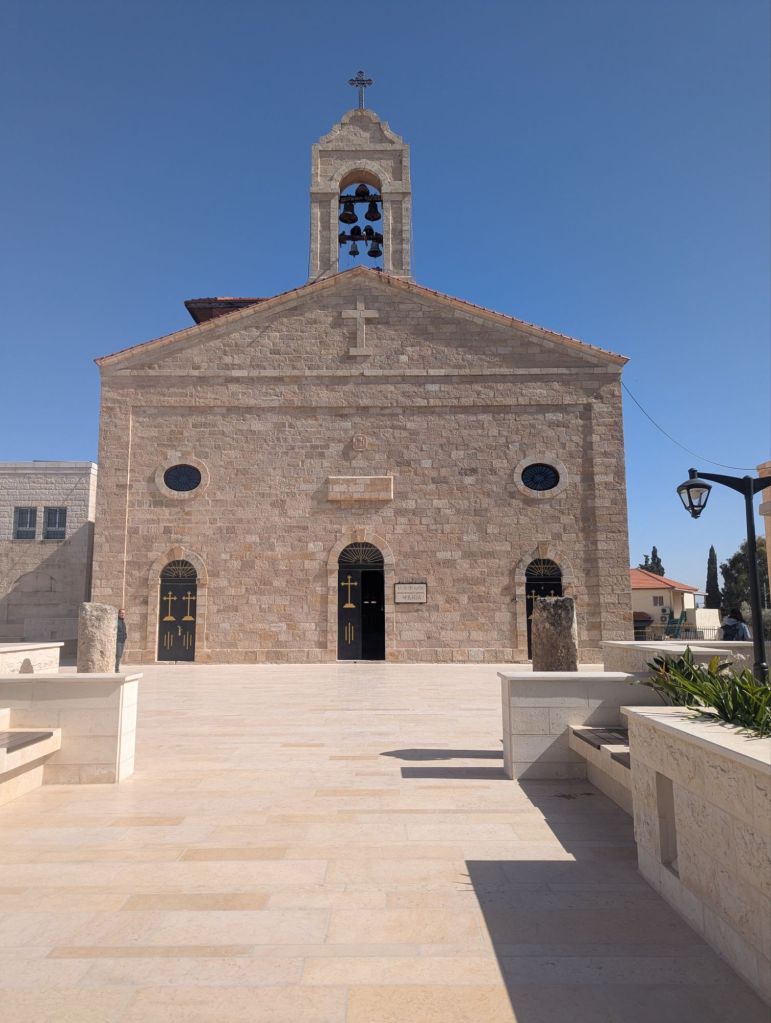
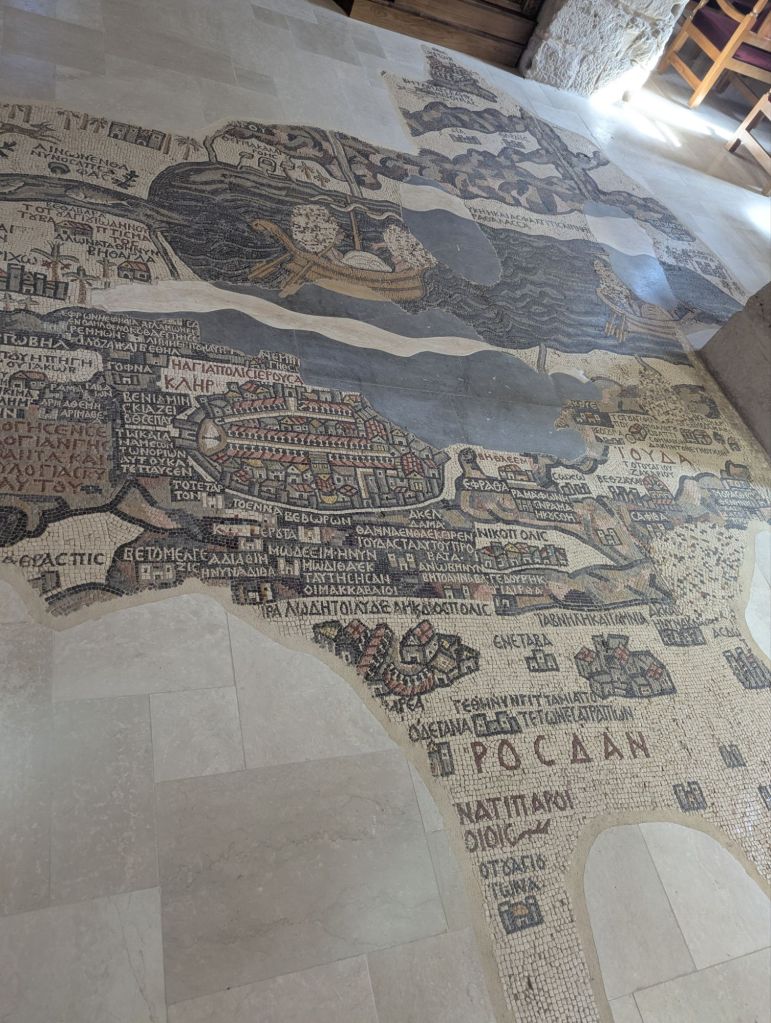
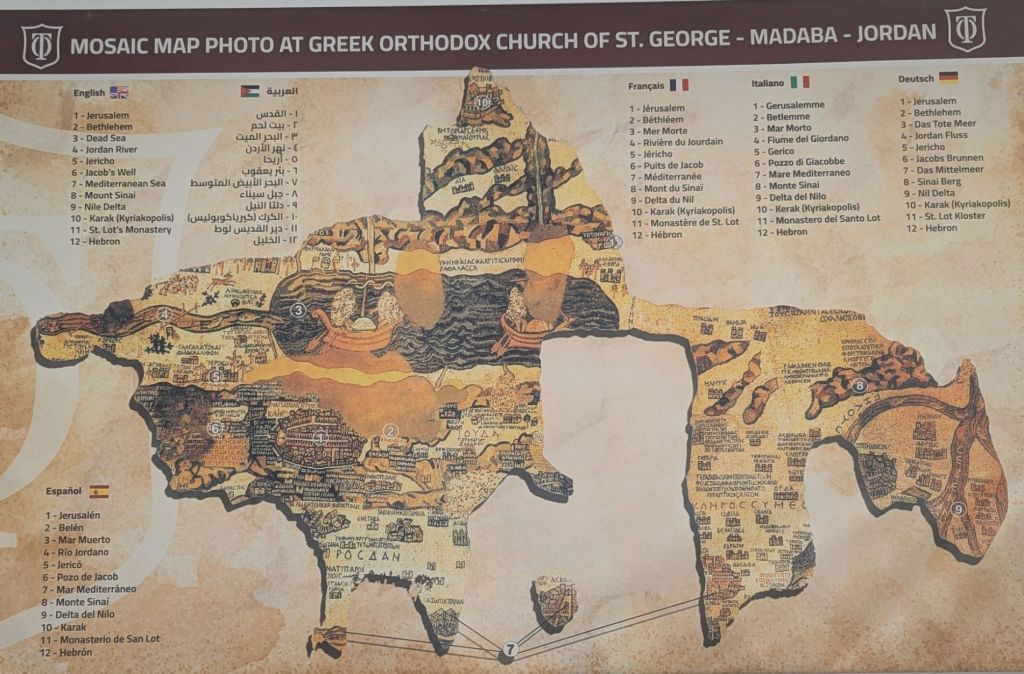
Madaba was our introduction to Jordan. This whole country has such a deep biblical history, unbeknownst to ignorant me who failed to study up before my arrival. Madaba was on a pilgrimage route through the Middle East, even mentioned in the Bible. We visited St. George Greek Orthodox church of 1885, built on the remains of a 6th century church. The highlight: a mosaic, embedded on the floor of the original church, showing the pilgrimage route with various towns and landmarks indicated for direction to Jerusalem. Mosaics are a major craft in Jordan, handiwork common to the Byzantine era. The detail in this ancient map was amazing; the mosaic measures 50 by 15 feet.
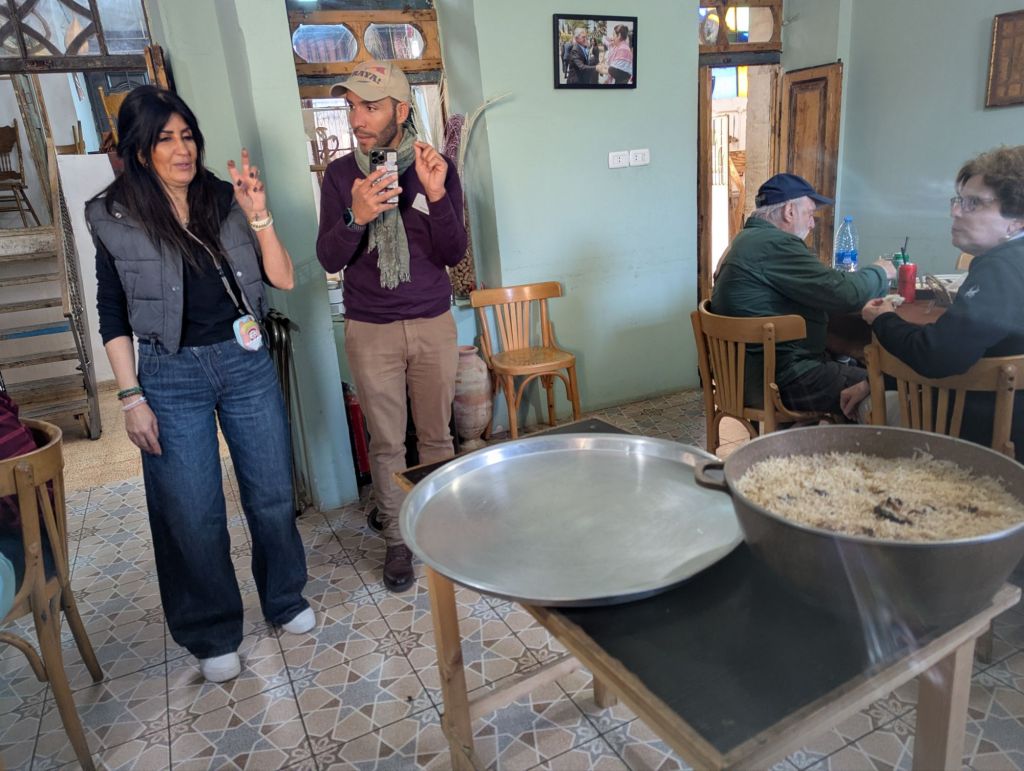
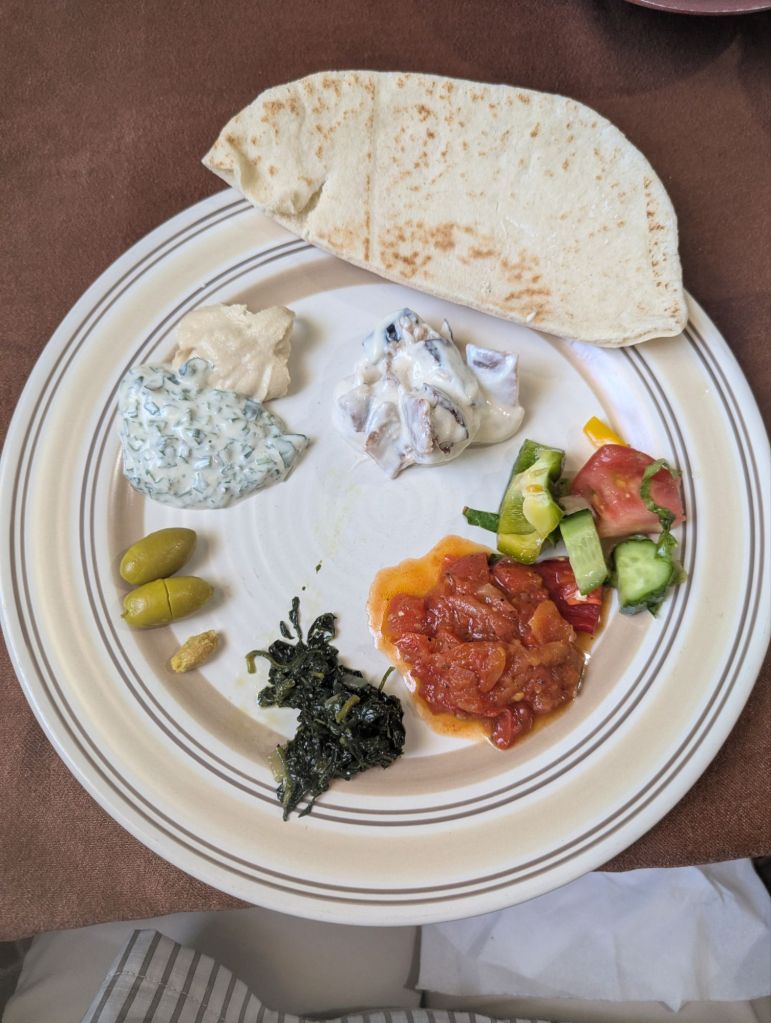
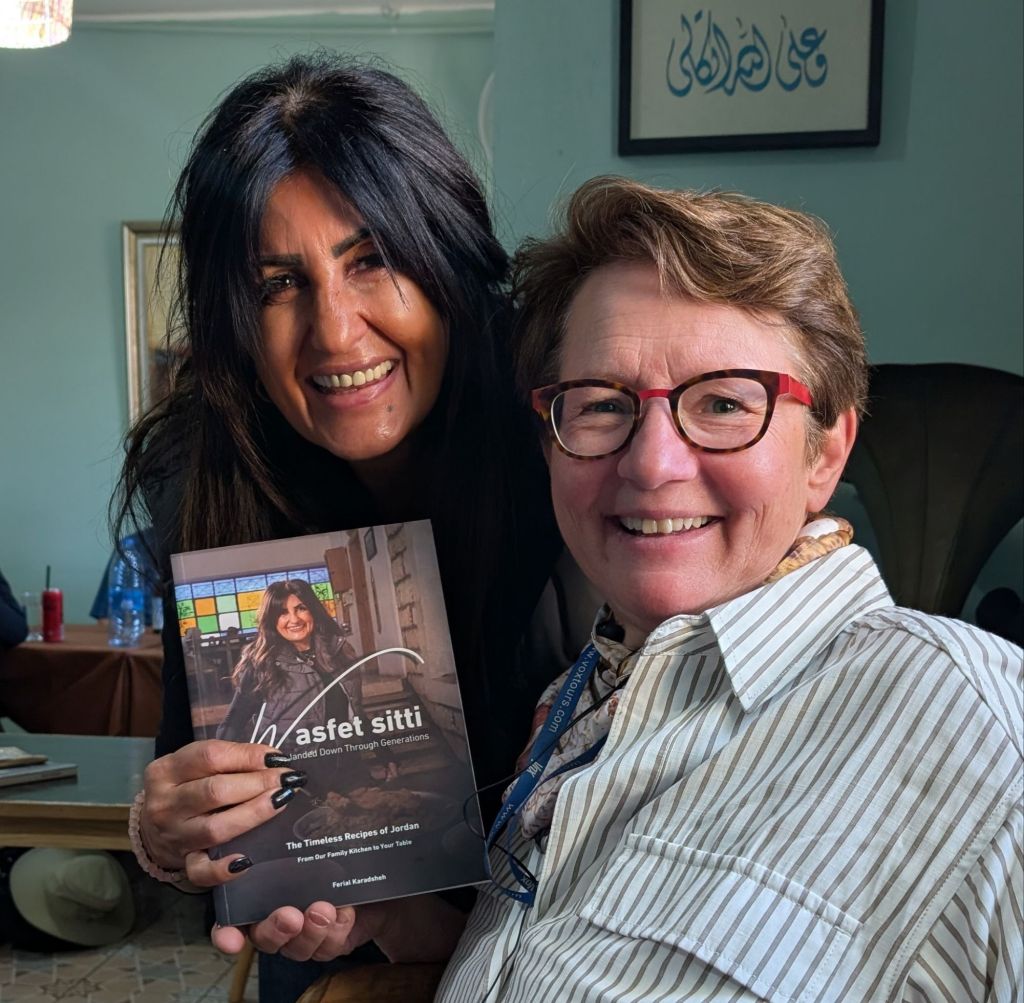
A short walk through the quiet town of Madaba, past shoppes and non-invasive vendors, found us at our lunch place, The Food Basket. This quaint restaurant was funded by USAID around 2018 to help the owner expand and improve services. GHW Bush visited here! The food was delicious, a tasty introduction to Jordanian delights. More hummus, stewed tomatoes, pita bread, and the like with the main course of Maqloubeh: a lightly spiced chicken rice dish served dramatically by overturning a very large pot onto a large pan. I bought her cookbook but wish I also bought some Za’atar, the thyme/sumac spice for flavoring bread.
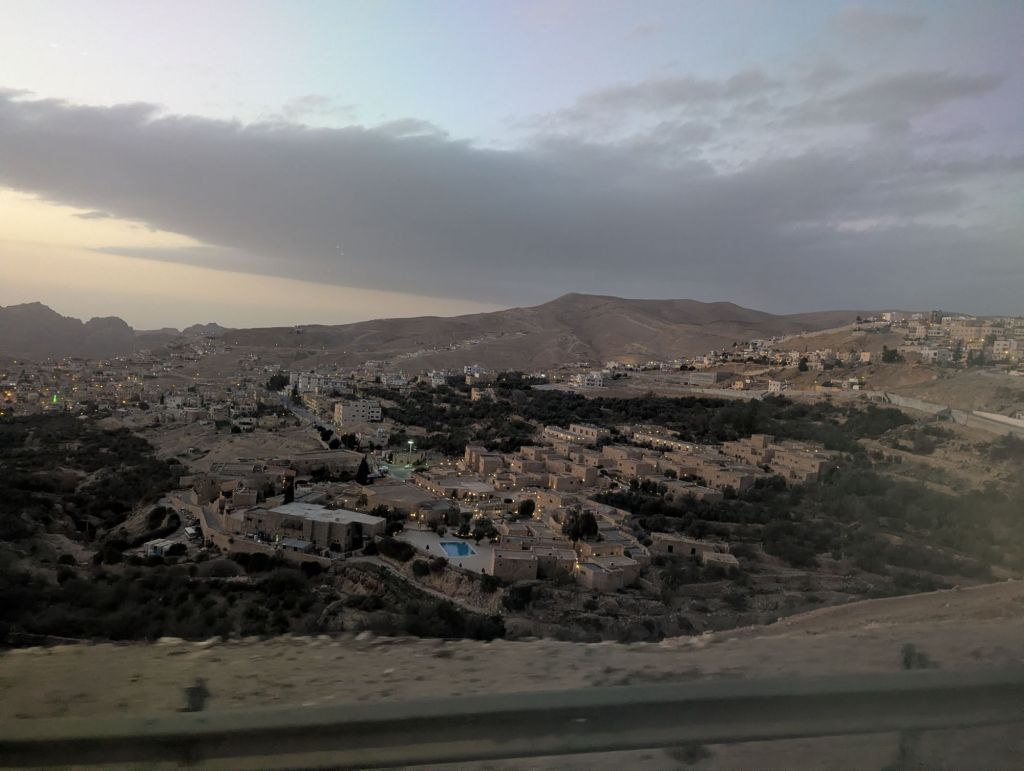
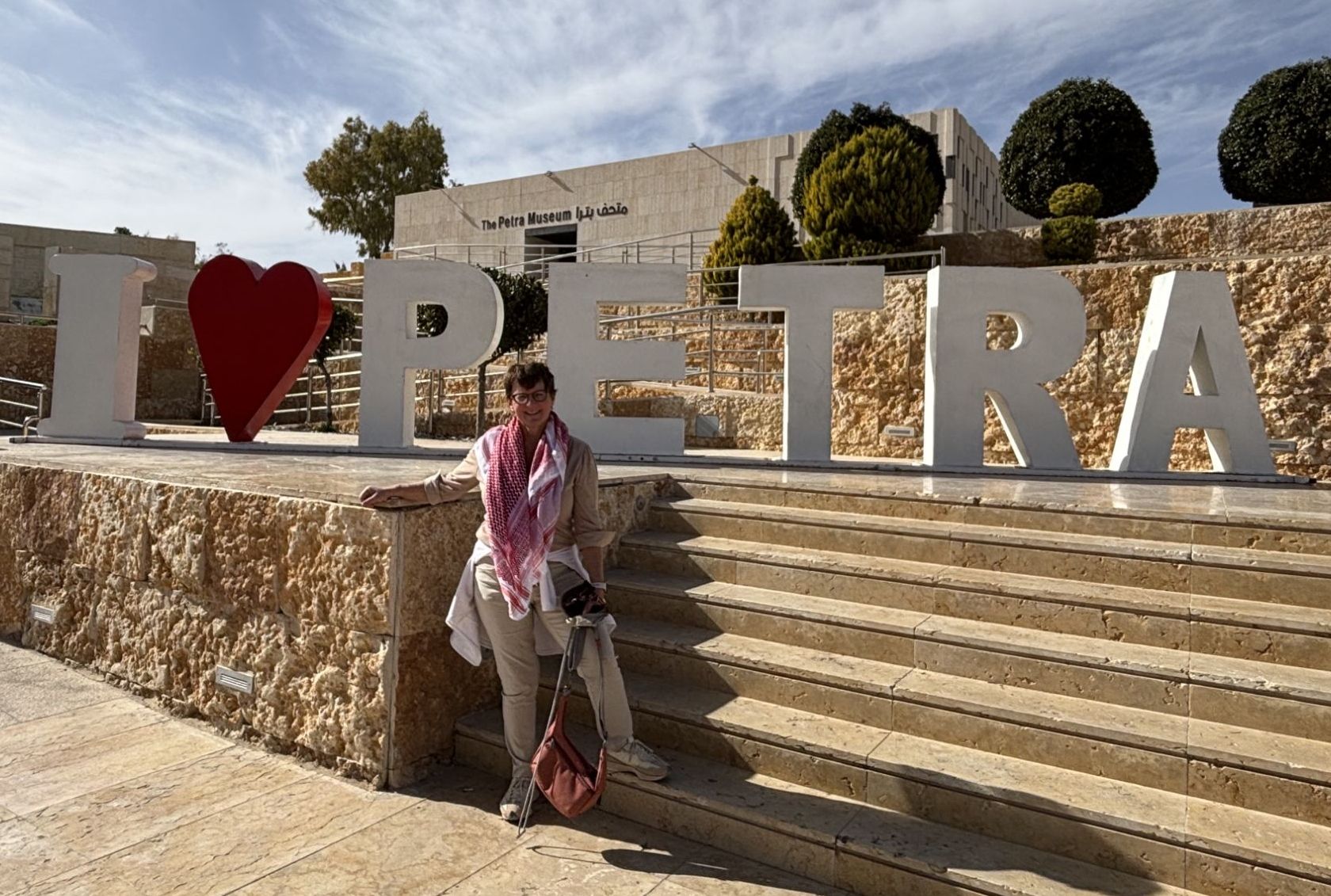
We drove further to Wadi Musa, the Valley of Moses (a common place name; apparently he got around wandering 40 years in the area). On distant peak Mount Hor, Aaron, Moses’ brother and spokesperson, is buried. The bus travelled down into the valley to our hotel, Movenpick, located directly across the street from the entrance to … Petra – a Wonder of the World and World Heritage Site and bucket list item of mine.
We began our day touring Petra early the next morning. Nabateans, who started as Bedouins 500 years BC, settled here in Petra and carved their homes and tombs out of the red sandstone. An ancient trade route from Arabia to Egypt, Rome, and elsewhere, the unique landscape was utilized by the local Nabateans as a toll road with safe passage for camel caravans for 100’s of years until gradual decline in the 12th and 13th centuries as trade routes shifted. Of course, I’m abbreviating their history considerably; there’s lots more involved but no room here to include everything!
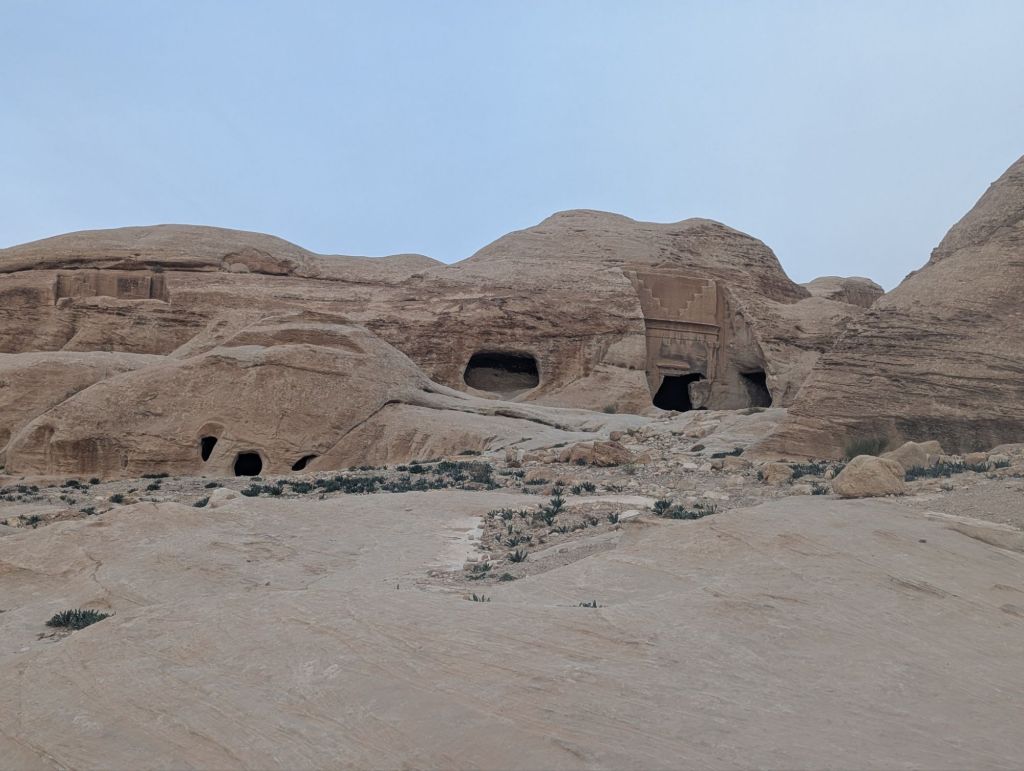
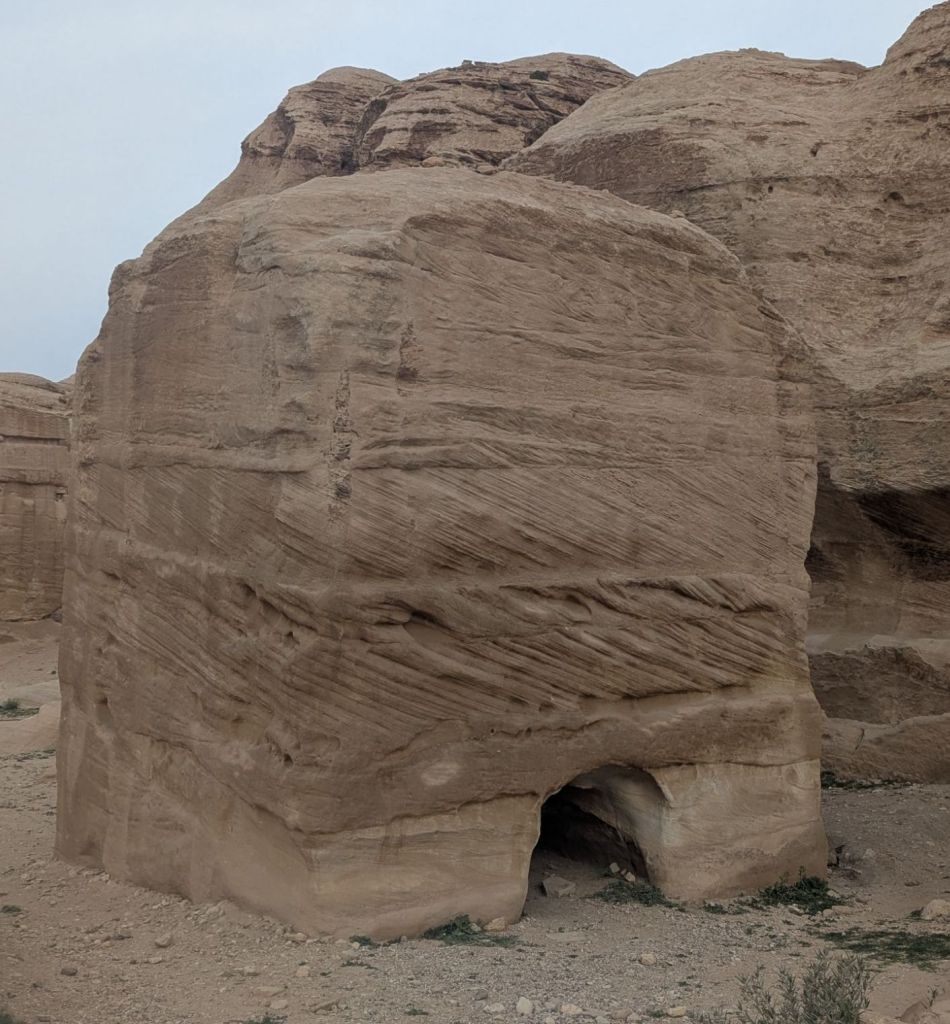
Descending from the ticket booth, caves for homeowners and tombs with beautiful, now eroded, carved details dot the sandstone hills. House-sized square blocks of sandstone, known as ‘djinn’ or ‘genies’, were tombs for Ancient residents; locals have always considered them spiritually creepy. Waterways are carved into the cracks between the rocks to collect any rain and direct flash flooding. Meanwhile, present day Bedouins and hawkers pester tourists to ride their horses. About 0.5 miles later, the caves, hills, sand, and trees give way to tall, sinuous sandstone walls, the magical Siq.
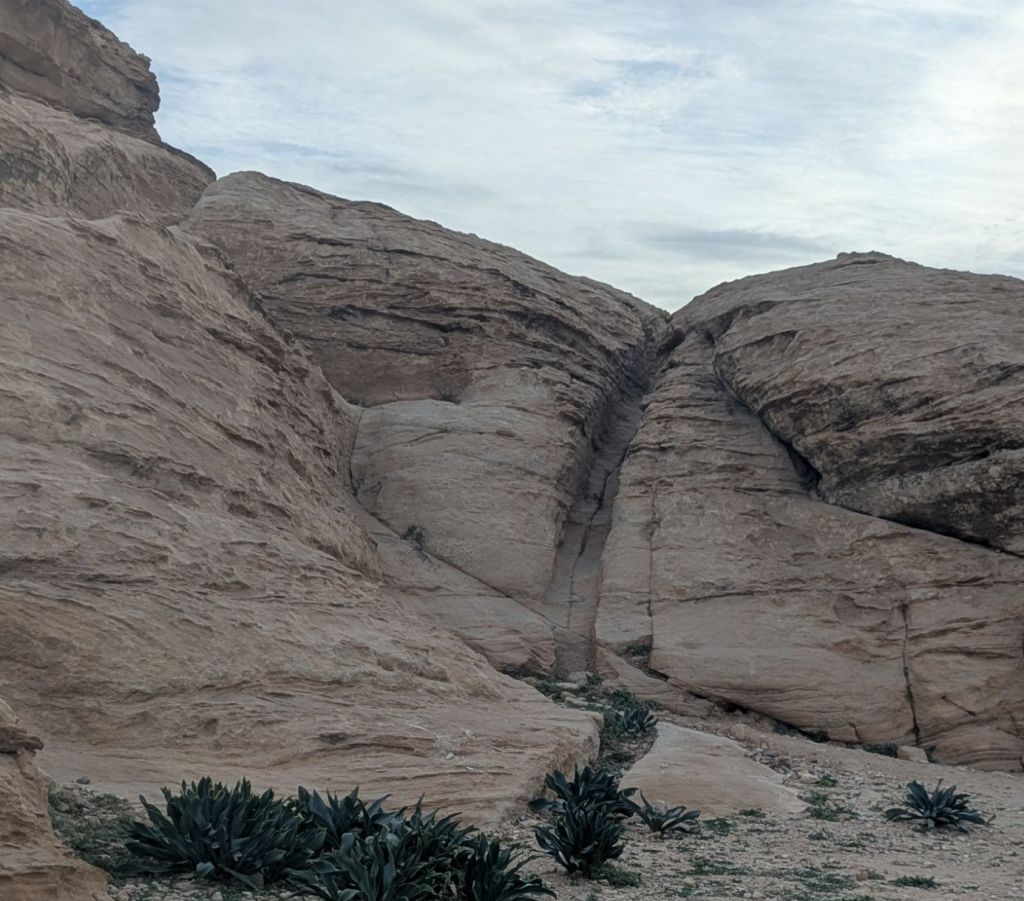
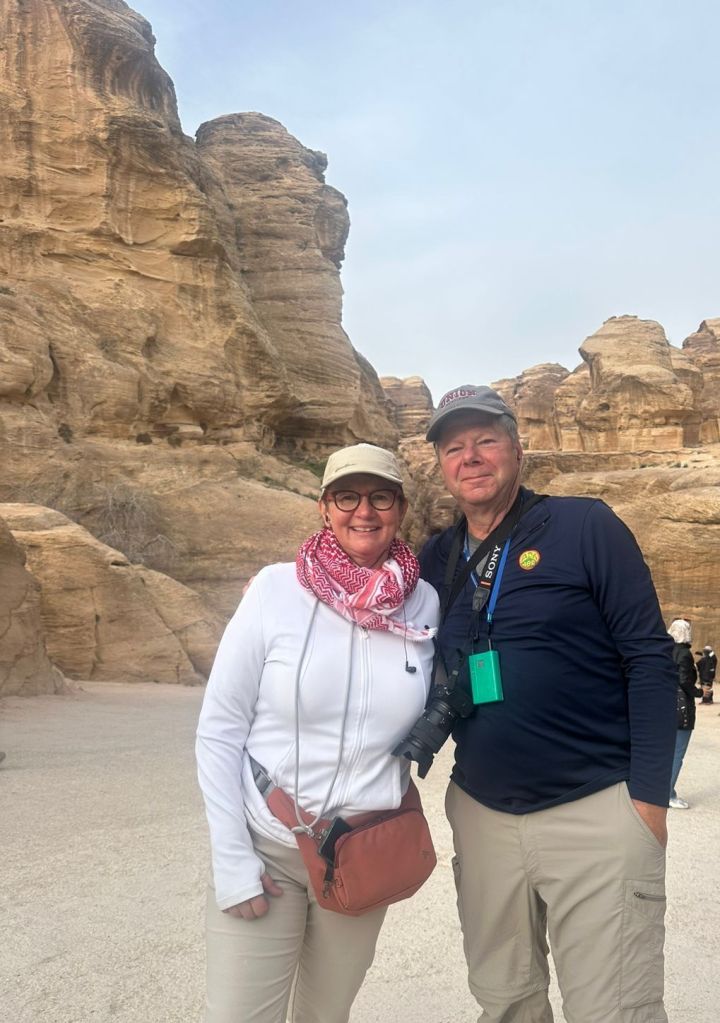
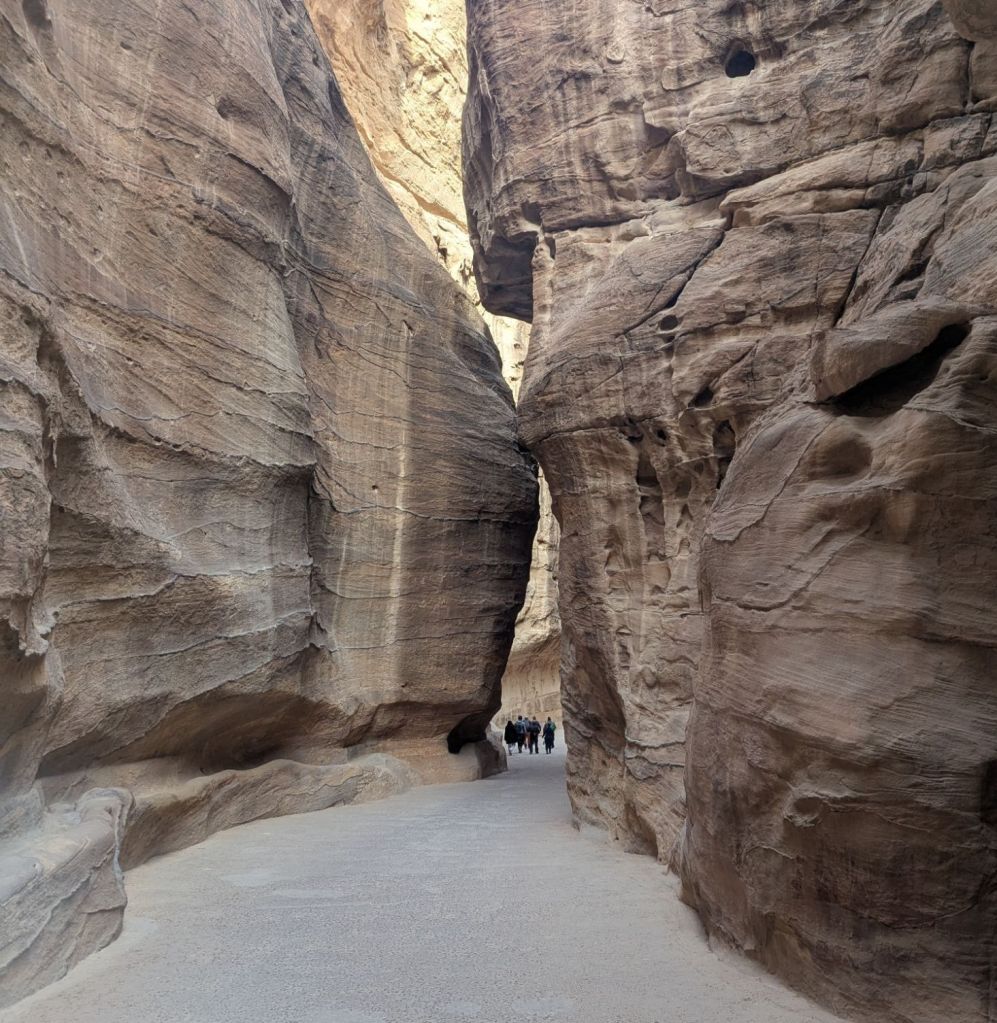
The area around Petra is part of the Great Rift Valley which extends from beyond Kenya and Tanzania northwest through Jordan. Evidence of the tectonic shifting is visible here as we walk 1 mile through a crack in the rose red sandstone with walls rising hundreds of feet above. This is the Siq, a natural gorge, a unique toll road indeed!
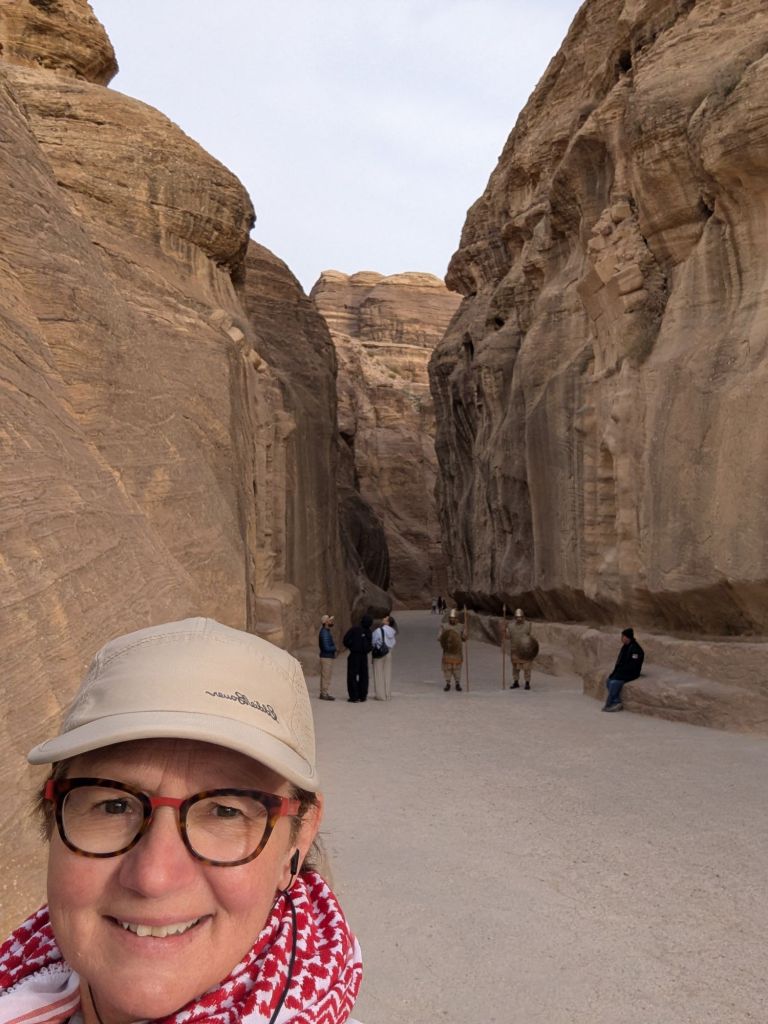
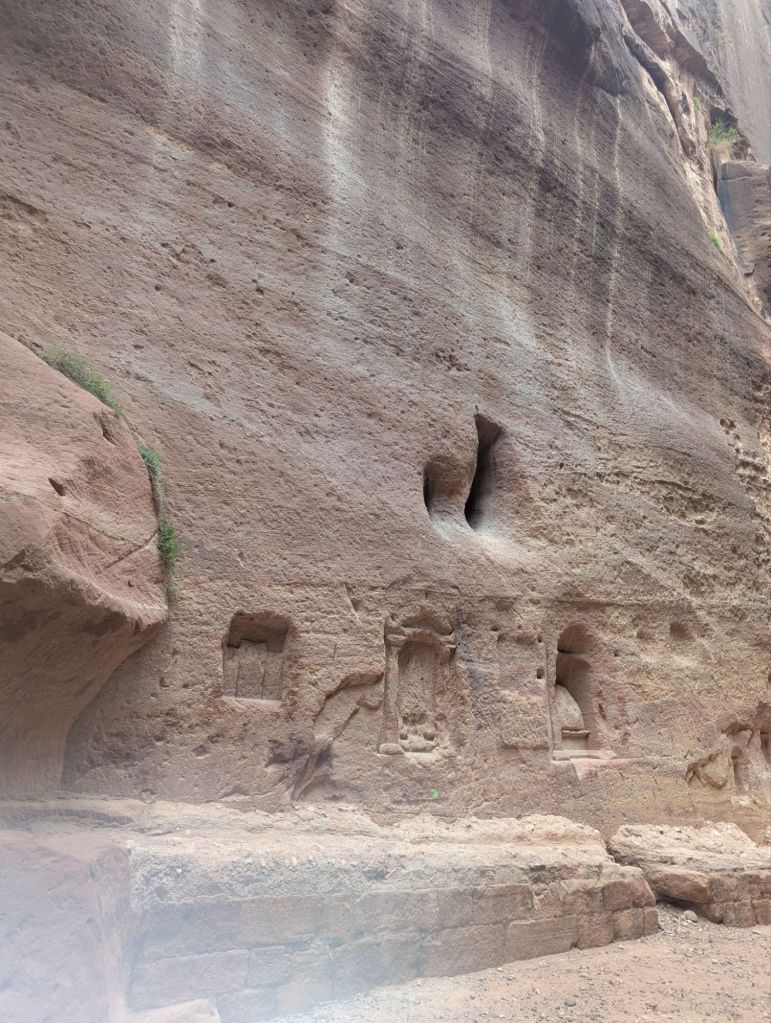
Along the gorge walls are carved dedications, directionals, and tombs. A channel is carved into the walls to carry precious water down to the village. Now paved, this ‘Via Sacra’ path was originally lower and these artworks and waterways were higher up. Golf carts shuttled paying guests but we enjoyed our guided tour with OU tour director and experienced archeologist Osama.
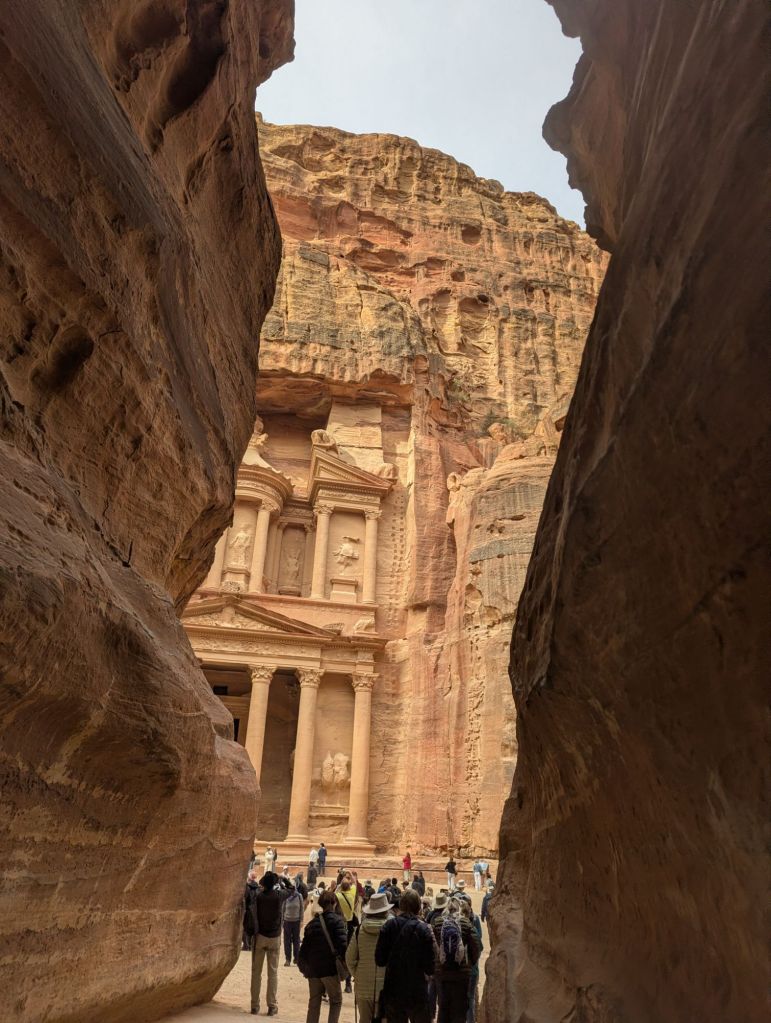
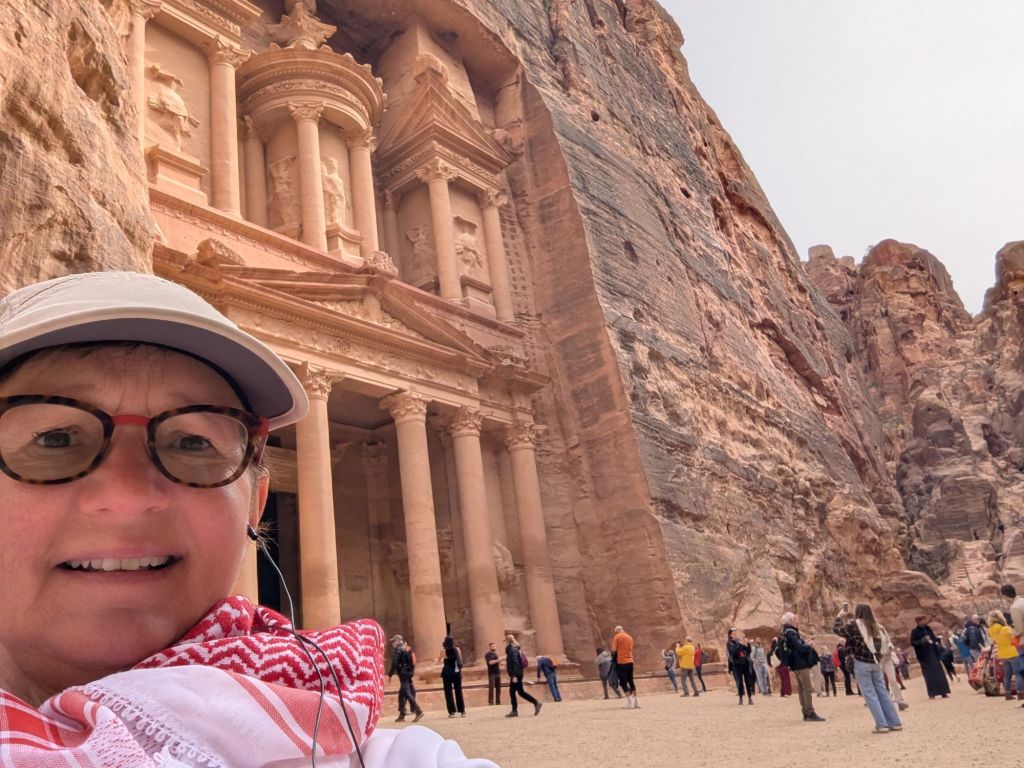
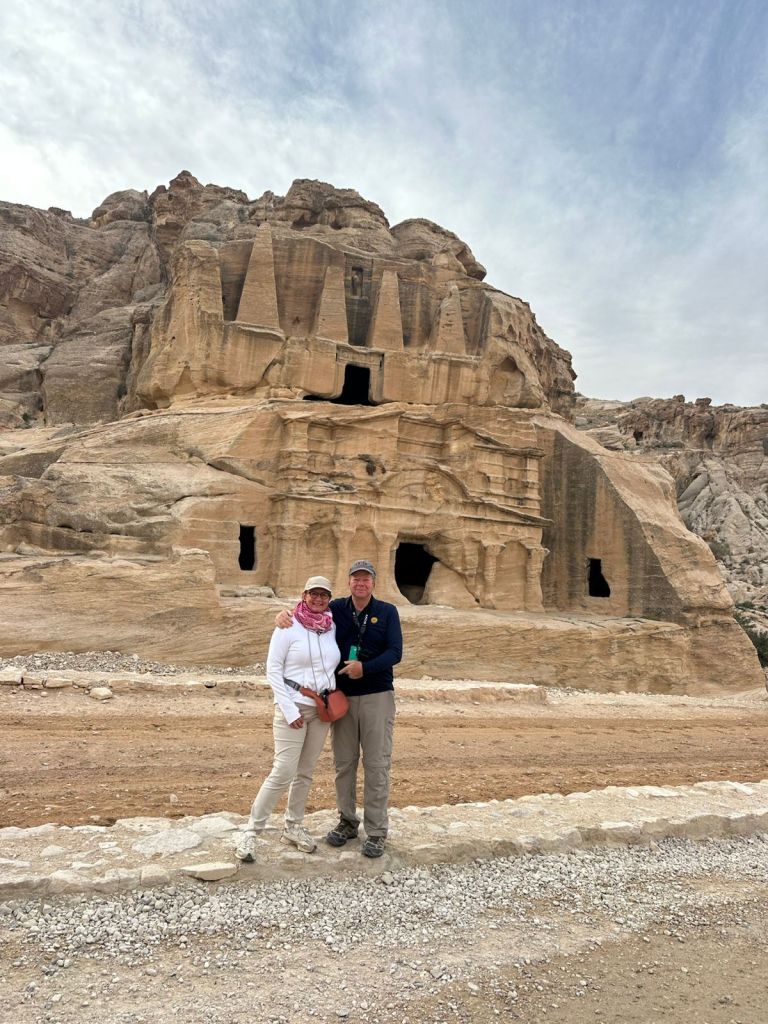
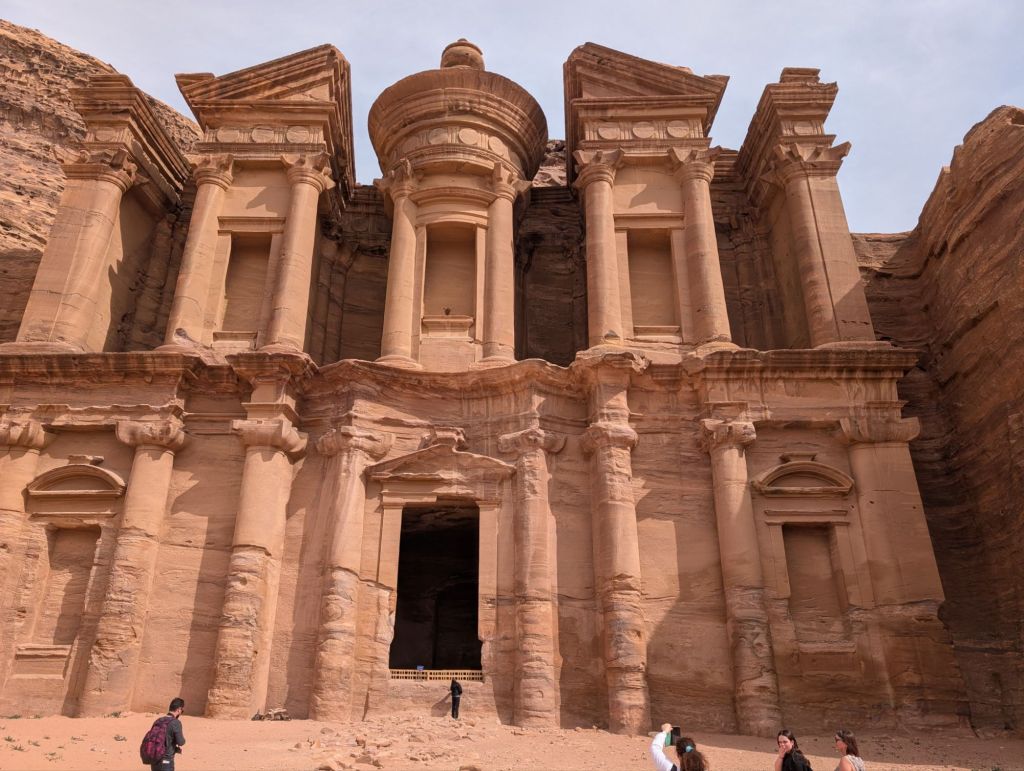
Eventually, about 1 mile down a gentle descent, the real highlight appeared: the ‘Treasury”, probably the most well-known aspect of Petra, at least to me. I was totally unsuspecting of the magnitude of this place, an actual city! The Treasury, however, was a highlight. Actually a tomb and not a treasury, the 3 story carving reaches 39.5 meters in height, it’s features eroded by rain but yet original beauty comes through. Two actual tombs sit below the surface, unearthed only recently with at least 6 bodies buried in each. The Treasury sits in a wider part of the gorge but has tall cliff walls on 3 sides; ancient, eroded stairs lead to other smaller tombs on the rock face or to precarious viewpoints several stories up. Further on down the gorge opens up and more tombs are carved around the corner, almost equally as beautiful as the Treasury and with more depth to the caves within. Rolling hills appeared with a rock-carved Roman amphitheater and the remains of a large temple in the distance. More Bedouins hawked horse rides, their eyes lined with kohl and looking like authentic versions of Johnny Depp’s Jack Sparrow. We headed down to the river, more caves high up on the distant cliffs with donkeys braying below while we ate lunch at the remote ‘Crown Plaza’. Greg left lunch early to hike up to the ‘Monastery’, another tomb carved into the rock, too many stairs and donkeys and vendors along the way for me to join. I hiked with a few others to explore a few of the tombs we just passed, ‘bouldering’ the landscape and ‘spelunking’ the tomb/caves. Colors of red and orange and yellow ran through the sandstone like the grain of trees. The ceilings were black from the smoky fires of ancient inhabitants; they would visit the tombs, often dining on benches called ‘triclinium’ while visiting the dead.
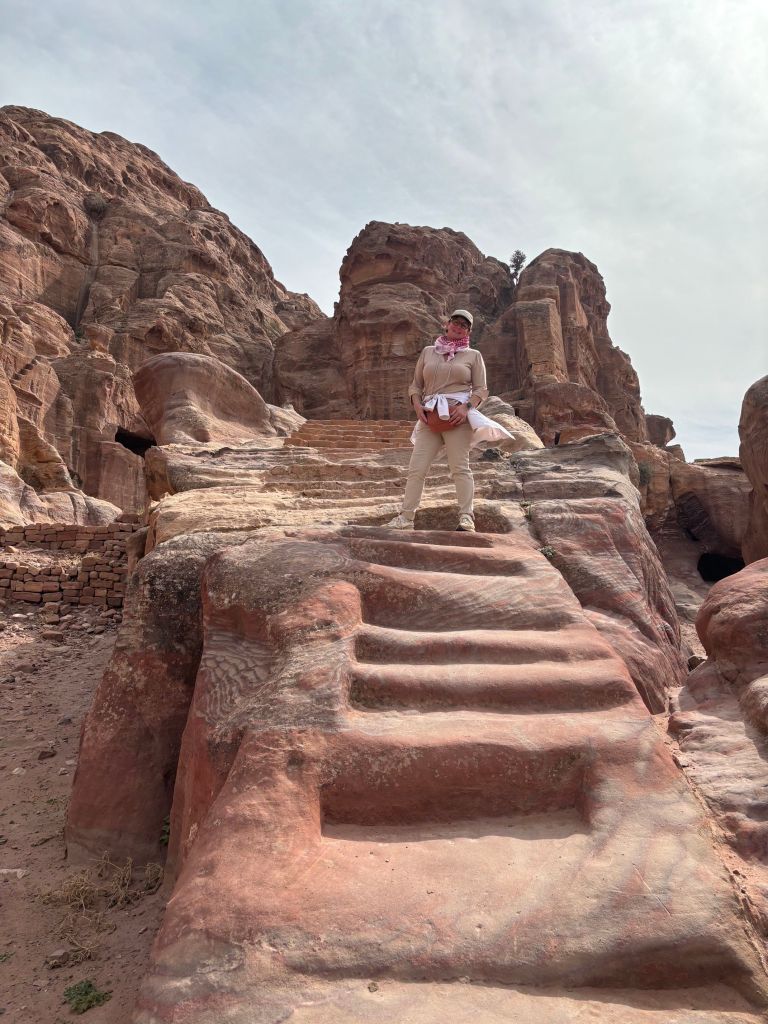
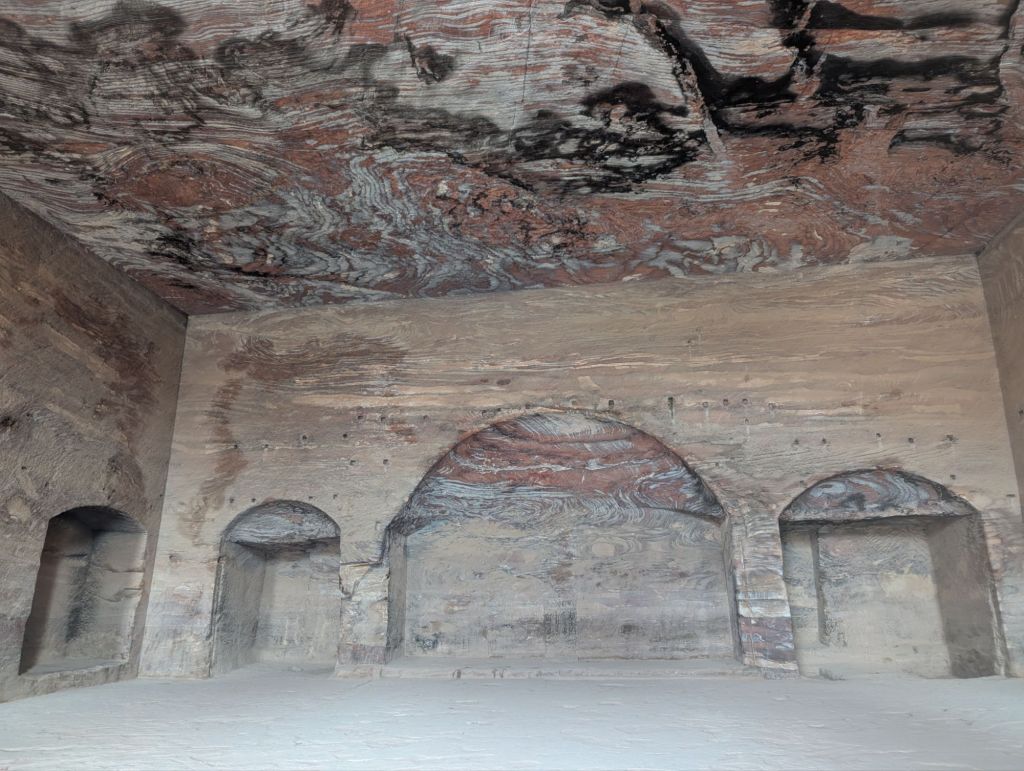
The return walk changed the gorge for the different light of the now-afternoon sun. After a while, as we meandered uphill to the entrance, those hokey horse rides looked appealing. We labored on. A quick turn through the museum of Nabatean artifacts and then a visit to the Movenpick chocolate tasting and this marvelous day ended.
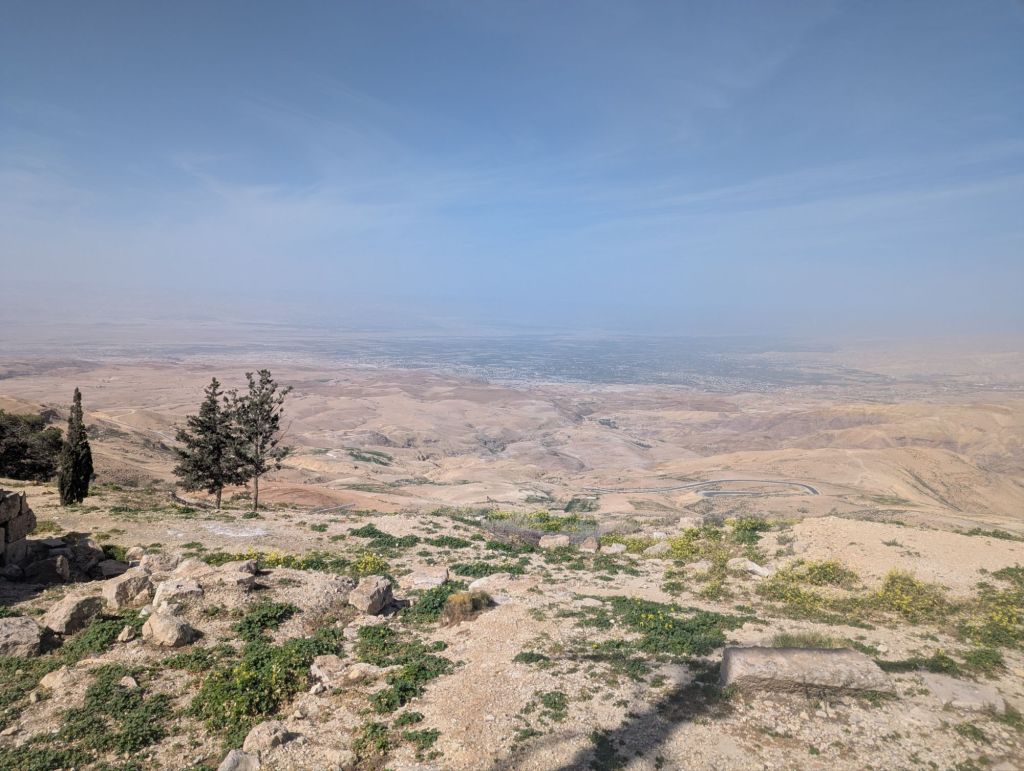
Early the next morning we left Petra for a drive through the rolling hills to another Wadi Musa and Mt. Nebo. Here, in the biblical text, Moses viewed the Promised Land from the summit, known as ‘Pisgah’, after wandering for 40 years in the desert. He died and his body is buried in this area, place unknown. Looking over olive trees and goat herds and across the valley the distant Jordan River and the Dead Sea appeared. This is the area where John the Baptist lived and baptized Jesus. We drove through a local town and arrived at the Memorial Church of Moses at the summit of Mt. Nebo. A contemporary spiritual center is built over what remains of a Byzantine mosaic floor from around the 5th century AD. In 726 AD the ‘iconoclasm’ occurred, the destruction of icons of human forms as fear of paganism developed. These floors with detailed figures of men, trees, and animals were covered with geometric designs, rediscovered later. Islam still has ‘iconophobia’.
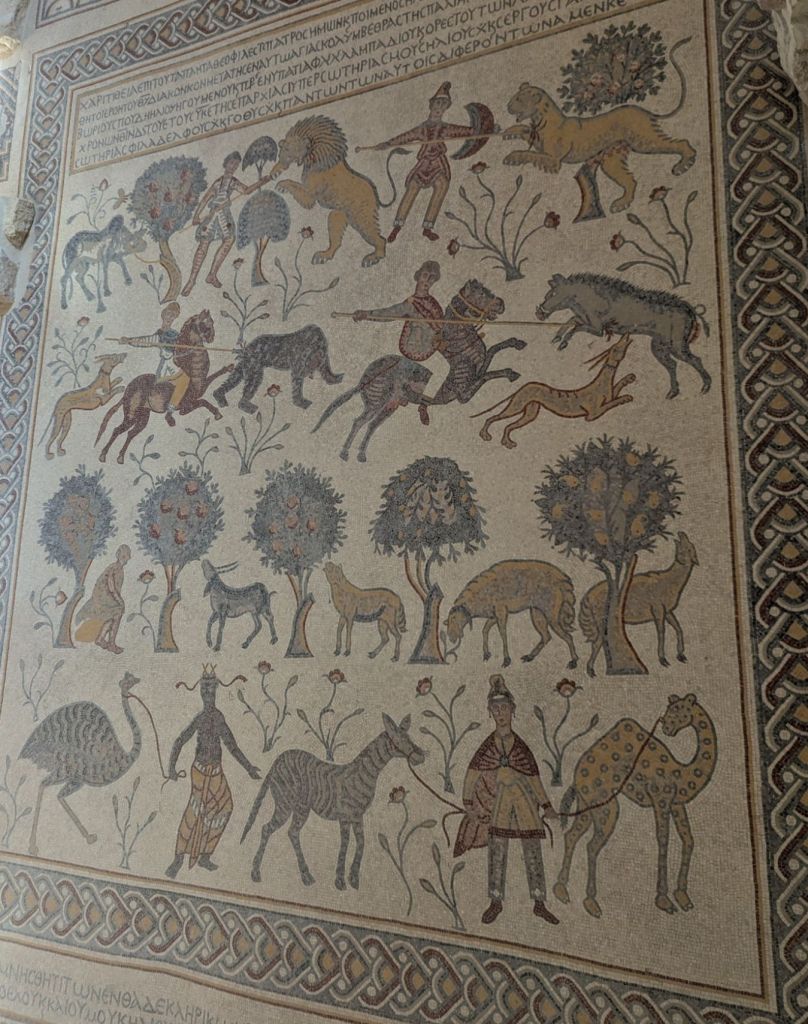
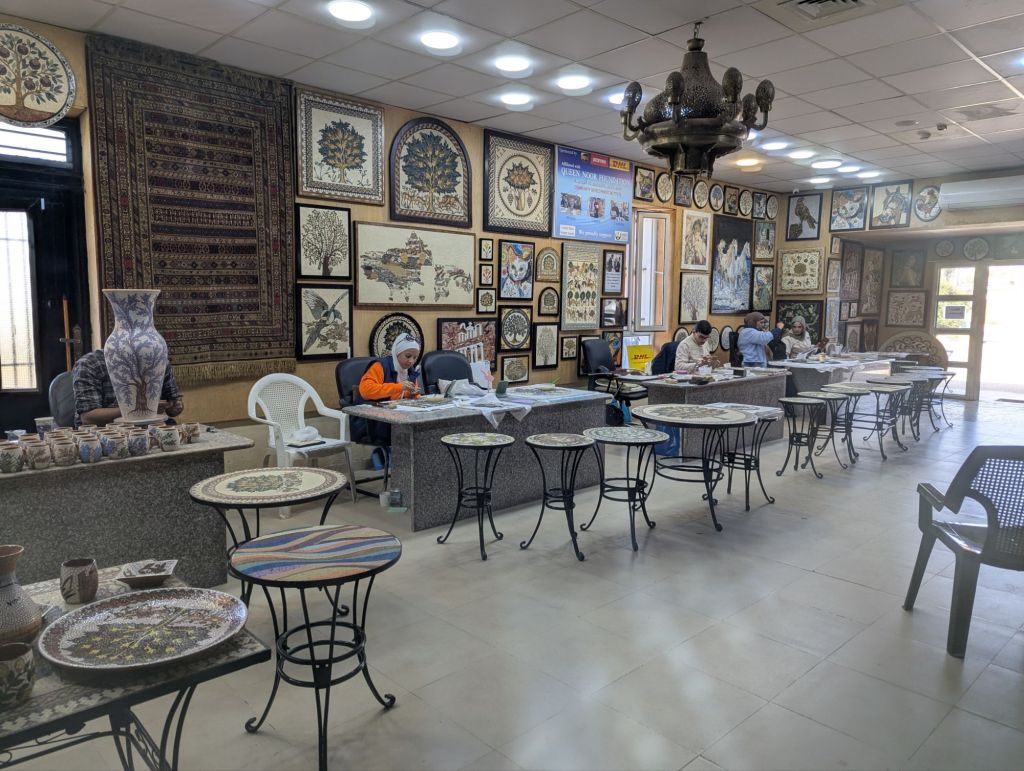
We visited a nearby mosaic school/shop with gorgeous mosaic pieces, from jewelry to table tops, and fine area rugs made of camel hair. I kept my wallet in check! Osama then treated us to delicious falafel sandwiches. We drove another couple hours to Amman where we stayed the next 2 nights.
Amman was founded, like all ancient cities it seems, on 7 hills. Seven seriously steep hills. A few of the oldest continuously inhabited cities in the world are Jericho, Damascus and Plovdiv, up to 11,000 years old! Amman is not quite as old but pretty close. Originally called ‘Ammon’ (after one of 2 of Lot’s sons, Ammon and Moab), then ‘Philadelphia’ in 255BC by the Greeks, then named ‘Amman’ by the Arabs since 661AD. There was a general decline since the 8th century until the city was revived in the early 1900s when trains were introduced, reducing camel caravans then travelling the ‘Kings Way’ or ‘Via Nova’ some distance away. Btw, train lines were built to interfere with England’s desire to connect their influence between Egypt and India through Arabia (who were ruled at the time by the Ottomans since early 1400s). Honestly, if I travel enough, all this history will connect in my head! Btw, the name ‘Philadelphia’ is derived from ancient Greek when Ptolemy II married his older sister giving new meaning to ‘the city of brotherly love’.
Anyway, Amman has a population of over 4 million in a total Jordanian population of 11. Of the 11 million, 10 – 20 percent have been introduced through the years as refugees, having fled Armenia, Iraq, Syria, Yemen, and Sudan.
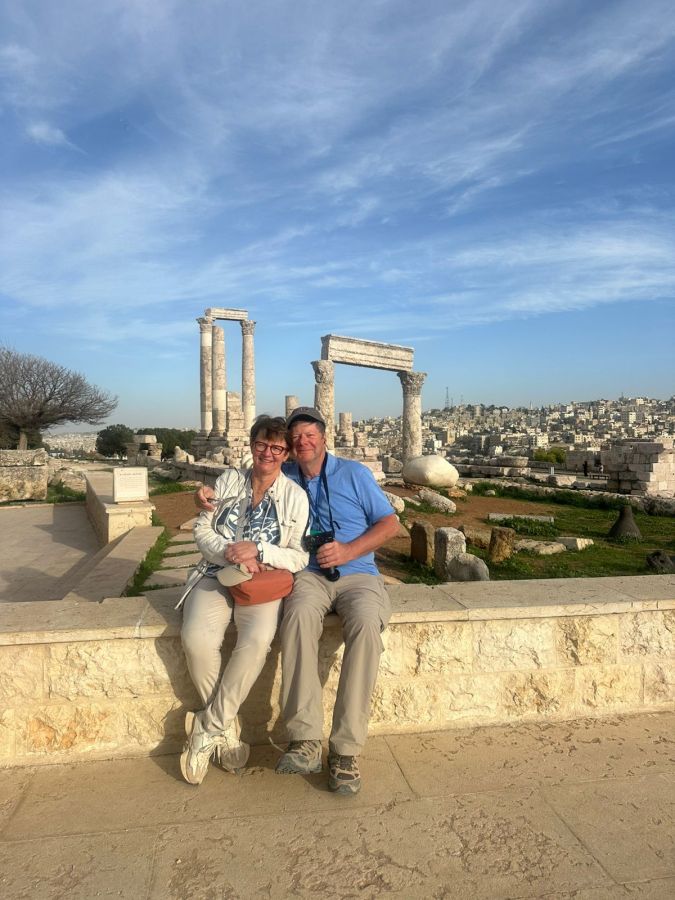
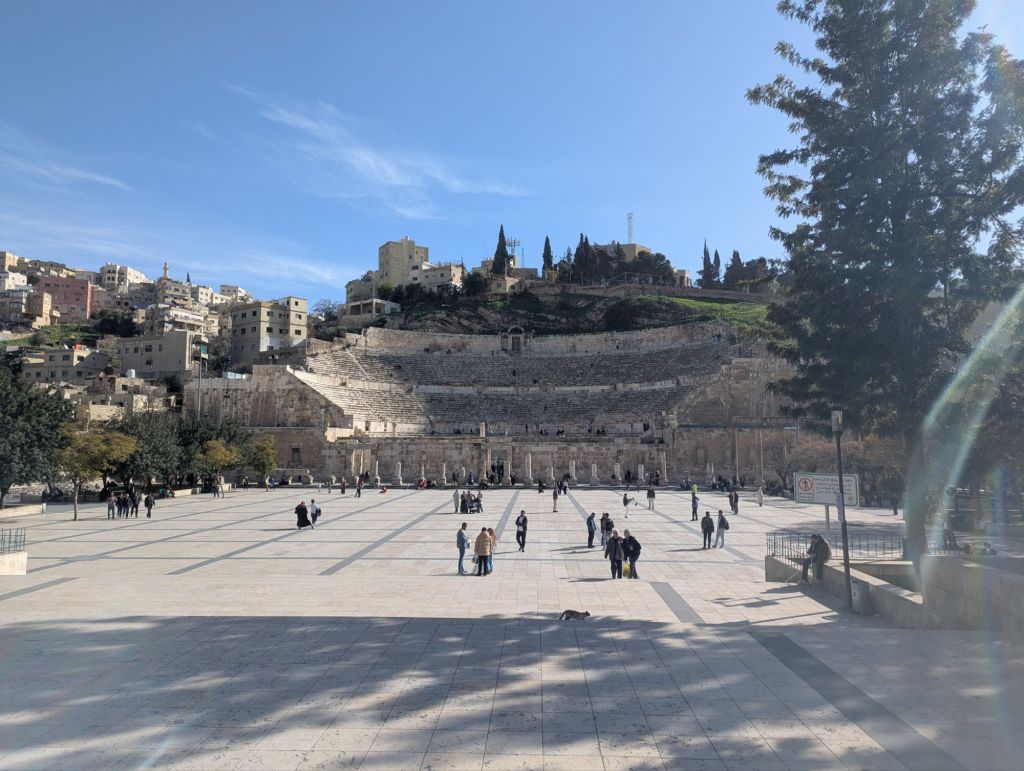
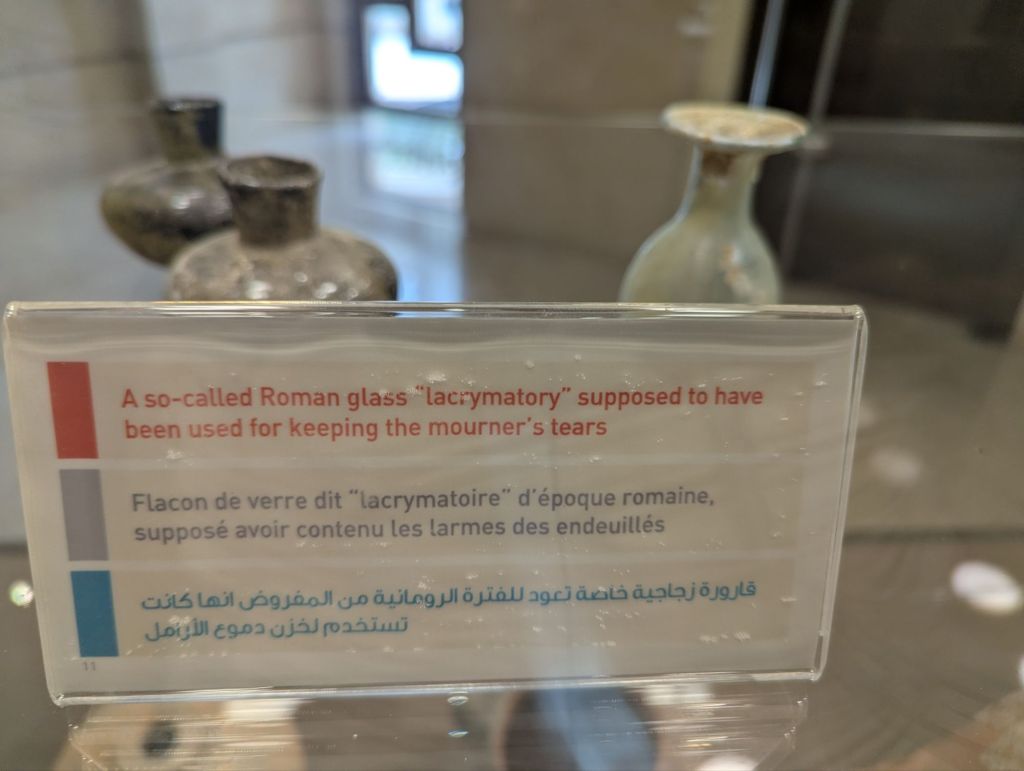
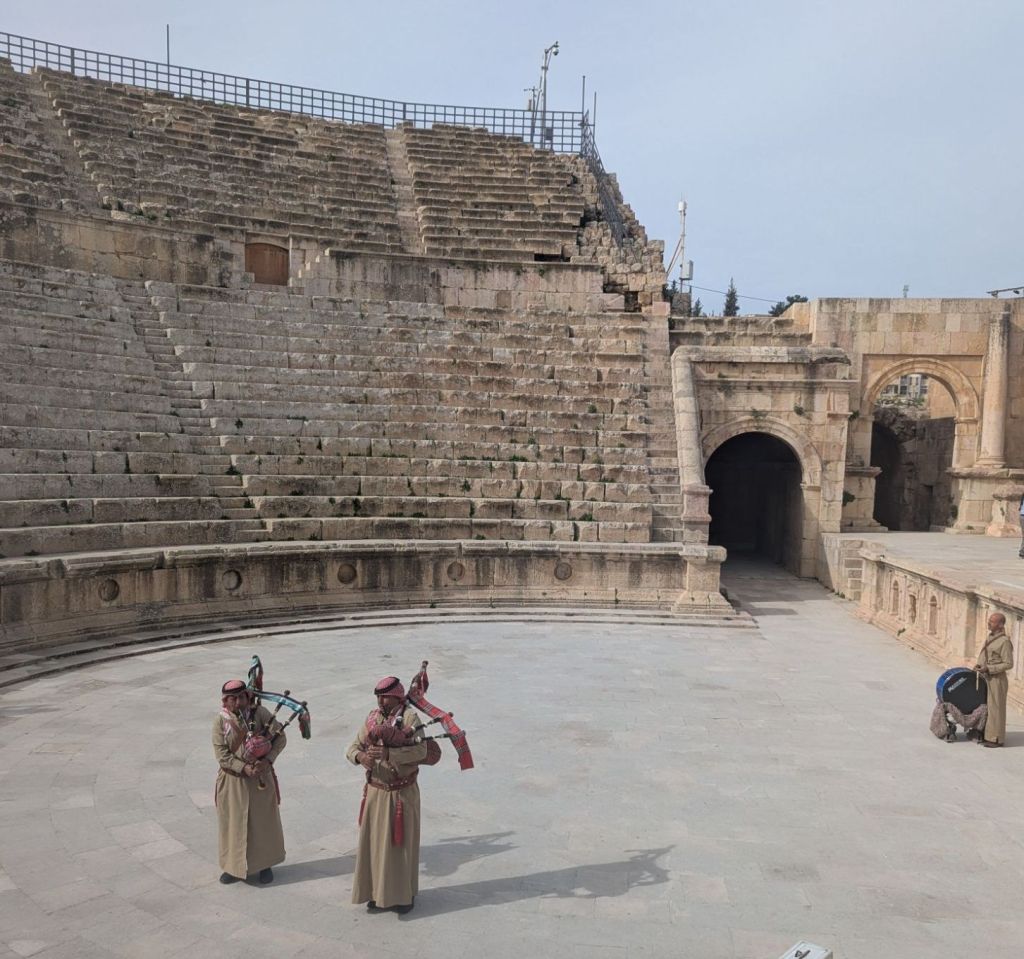
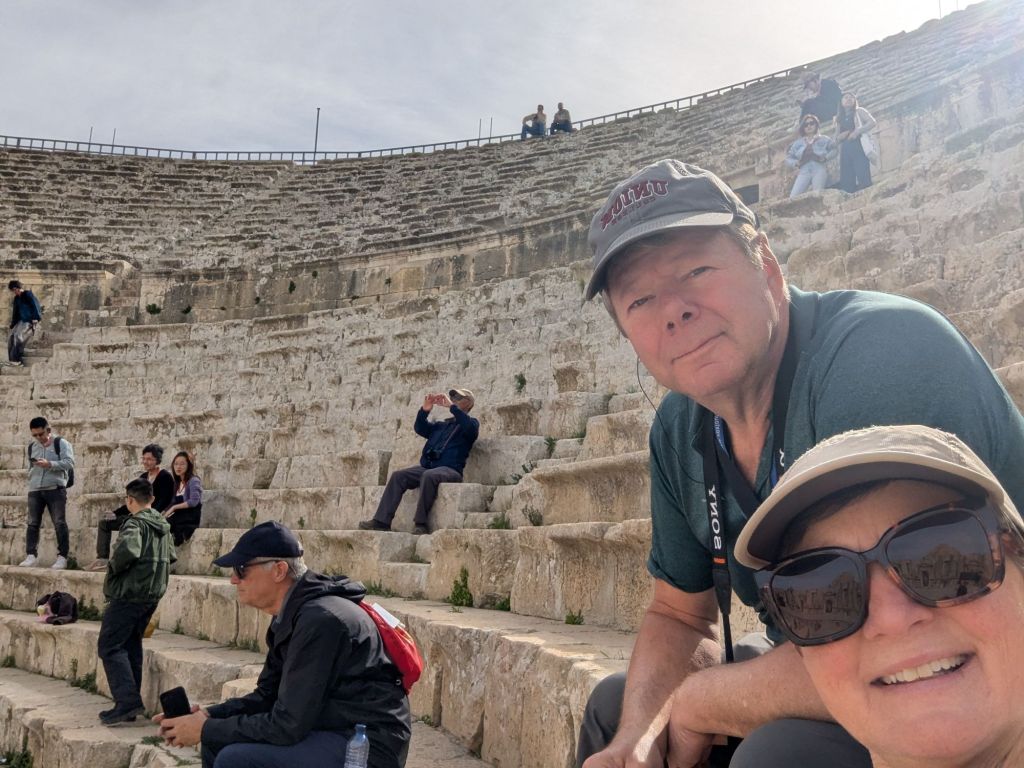
We visited a Roman amphitheater in Amman, built 2nd century AD. Very well preserved, it holds 6,000 spectators and is still used today. This day was Friday, the first day of the Islamic weekend, so the amphitheater and surrounding paved courtyard were very busy with locals enjoying the sunshine. A man from Gaza and his children were very excited to meet us from the US. As we were waiting for our bus we were treated to some street food samples and were filmed for their restaurant ad! We also visited the hilltop Citadel, an ancient site with remains of Roman and Byzantine structures. A small but interesting archeology museum is also located there. After, we ascended (on the bus) a few steep hills to reach our hotel, the Grand Hyatt, which was grand indeed.
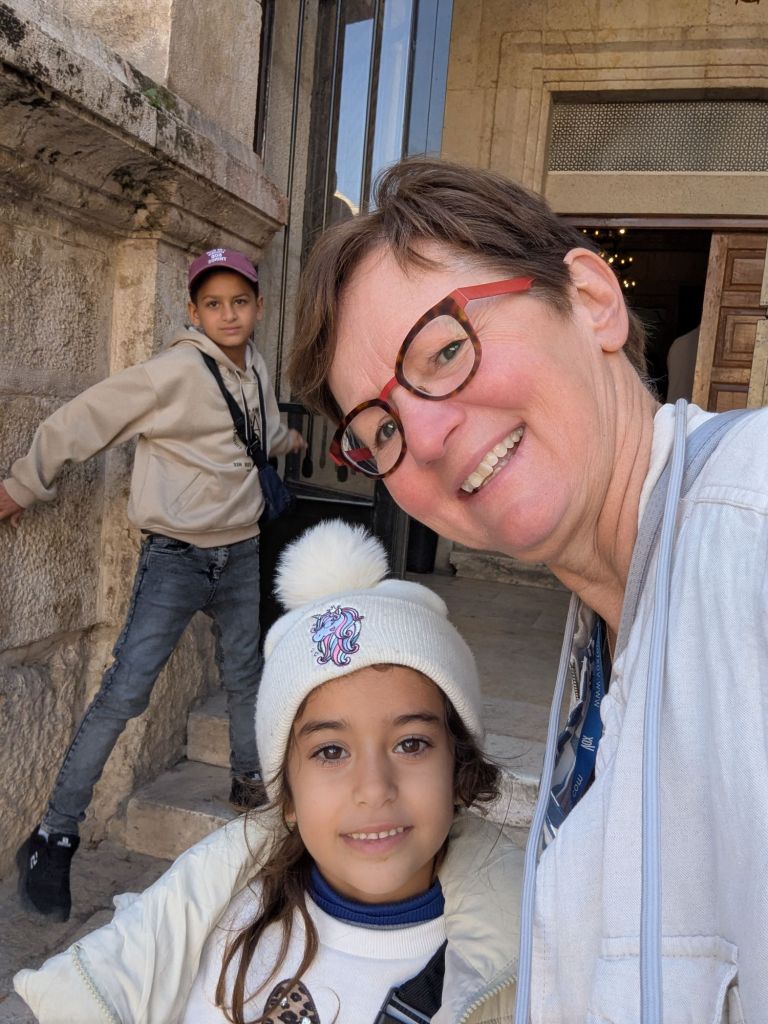
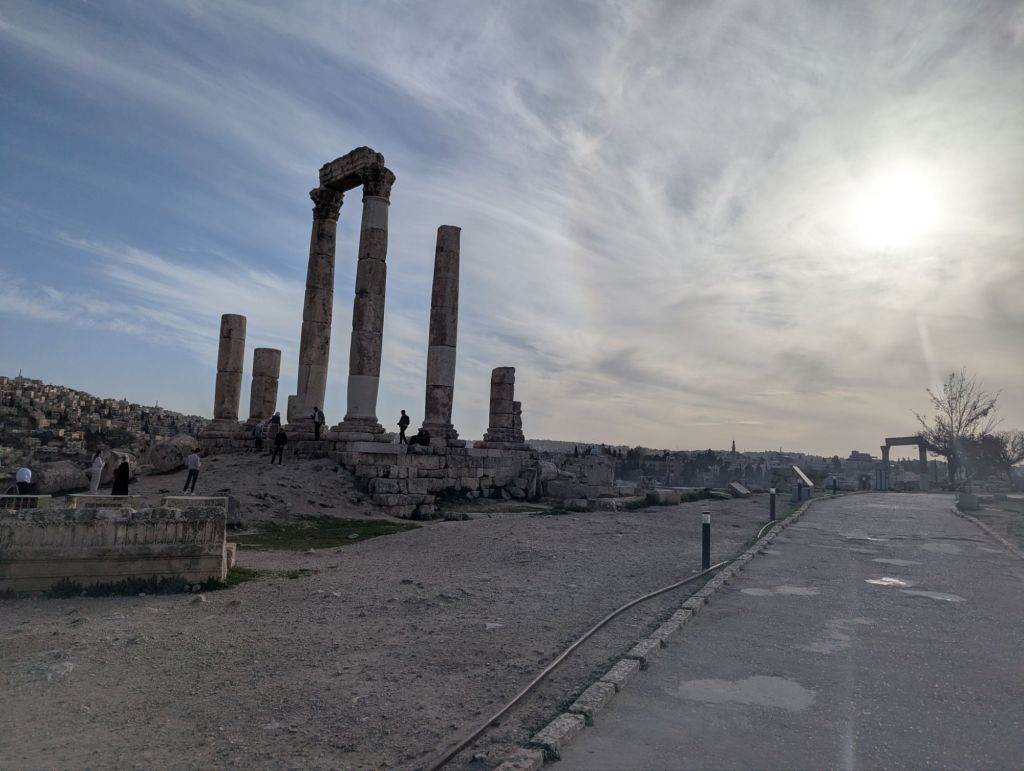
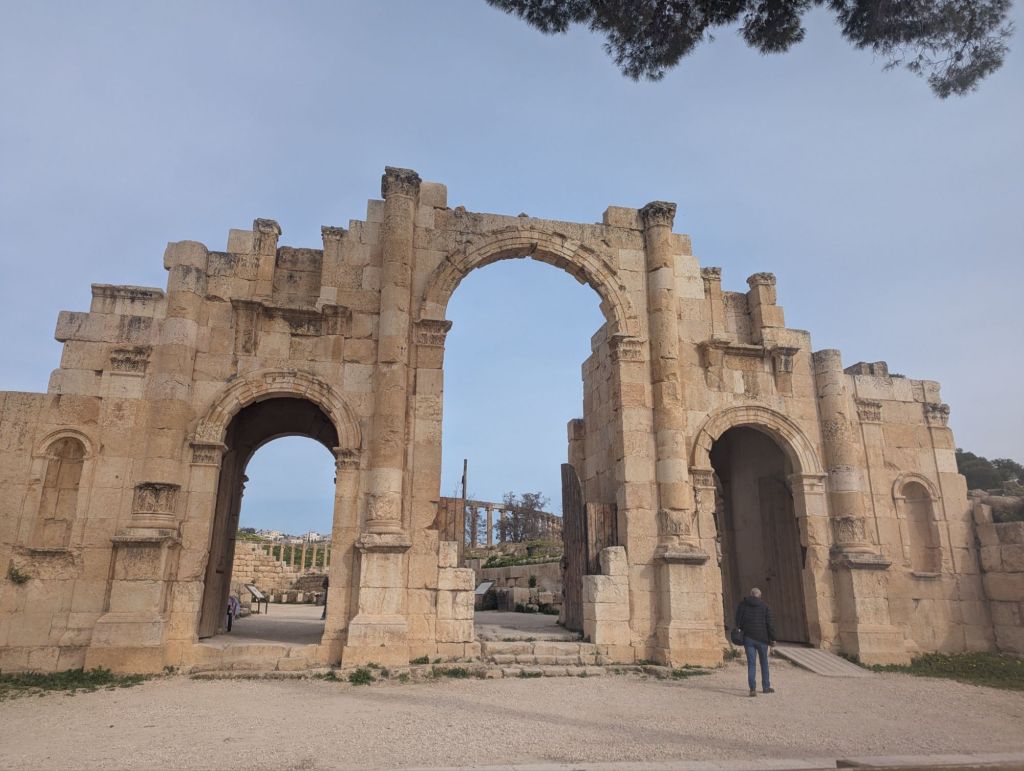
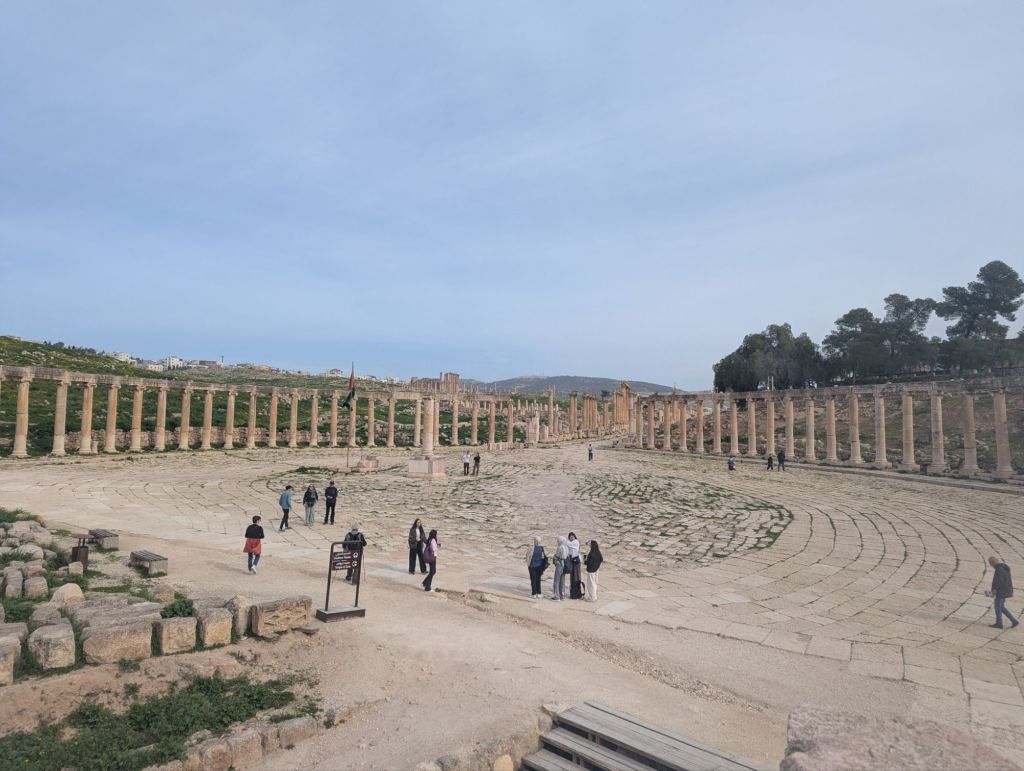
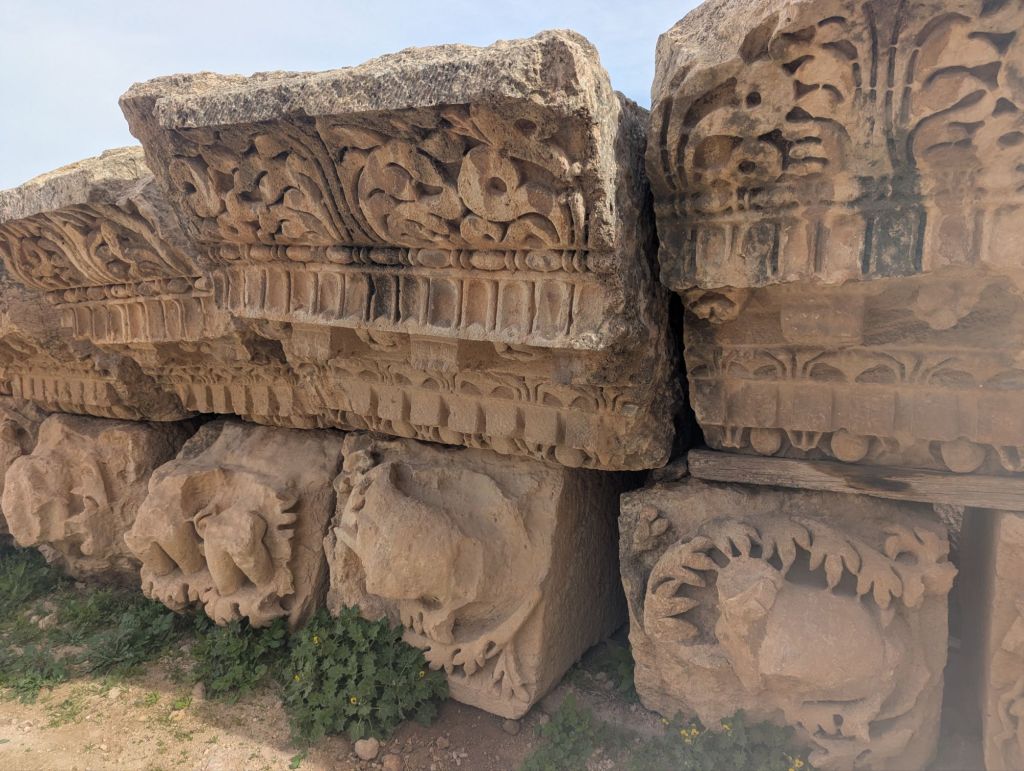
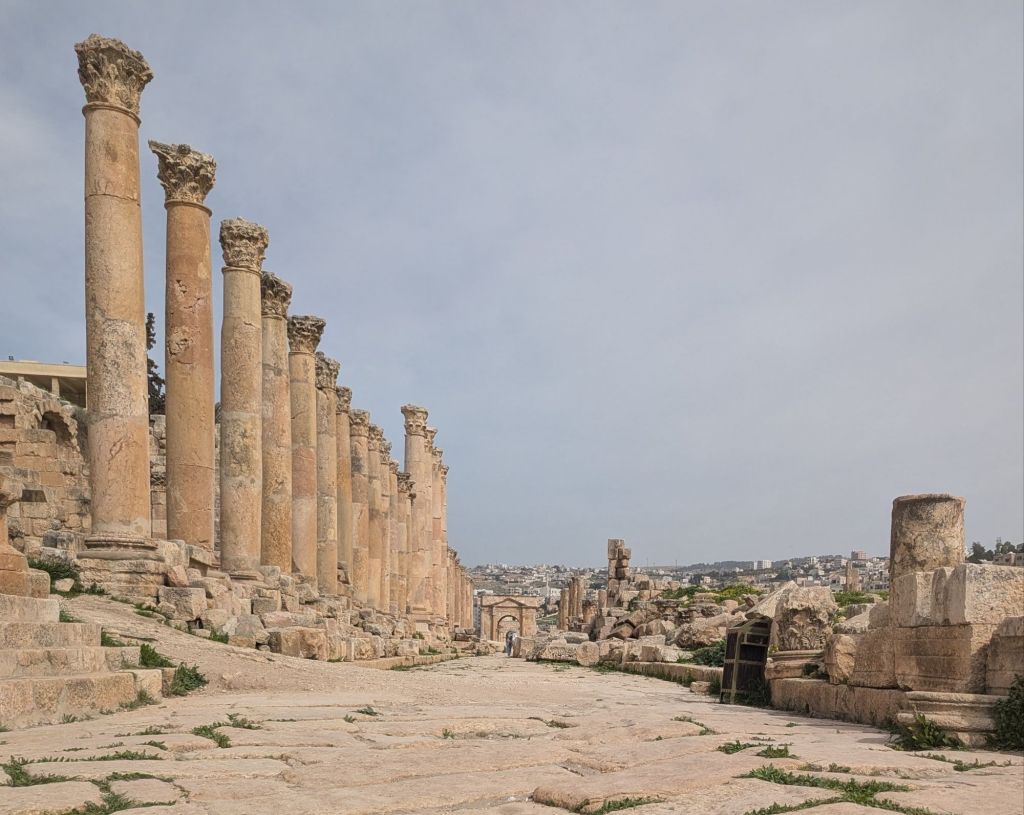
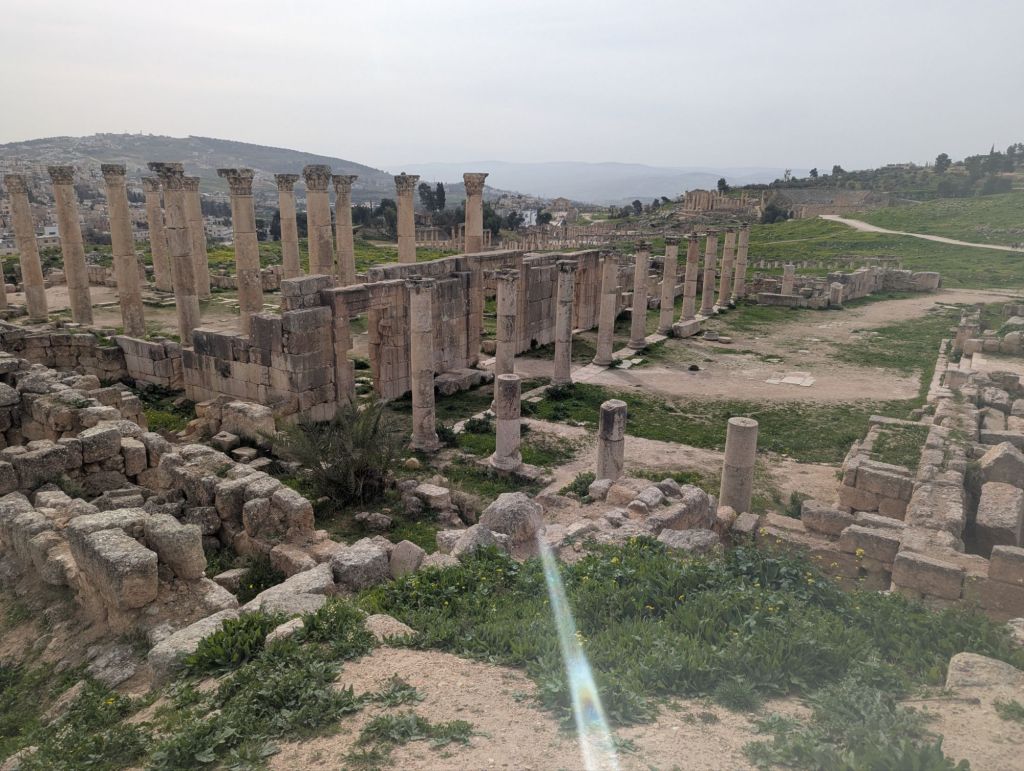
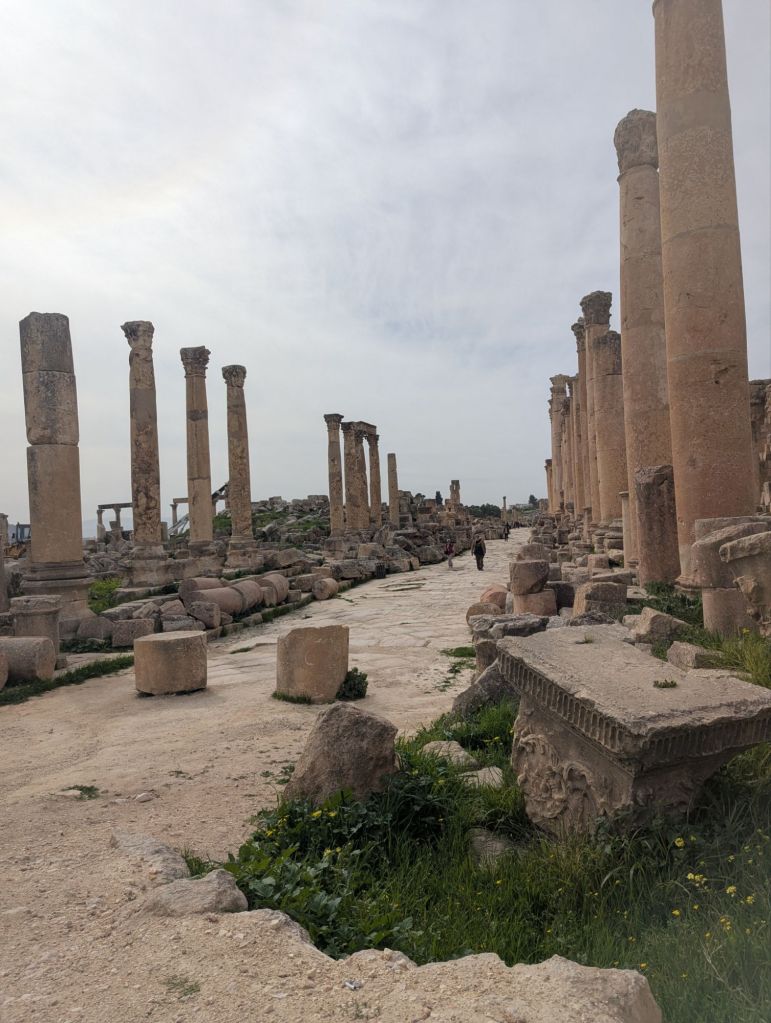
The following morning we took a 2 hour drive to Jerash. Jerash, known in ancient times as Gerasa, was a frontier trade town originally inhabited since the Bronze Age but reaching it’s heyday under the Romans, around 64 BC. It now is known as the “Pompeii of the East” with remarkably preserved ruins and quite a large footprint; the population was estimated at 30,000. It suffered a huge earthquake in 749 AD and face gradual decline but was rediscovered in the early 1800s. We spent a lovely day wandering around and learning so much about the history from Osama, an archeologist. As an aside, Osama grew up in a large Bedouin family, tent living, until a young age. Having a toilet in the house was remarkable. Think how much change this young man in his 40s has already seen!
Normally I would include more political history but this blog is getting unwieldy. Suffice it to say Lawrence of Arabia played a big role and wrote a book. Jordan is fairly liberal amongst Middle Eastern countries, the ‘Switzerland’ of the area. It is 94 percent Sunni Muslim, and exports phosphate and potash. It has no oil access so gas is about $6 a gallon whereas in Egypt it was about $1.50 a gal.
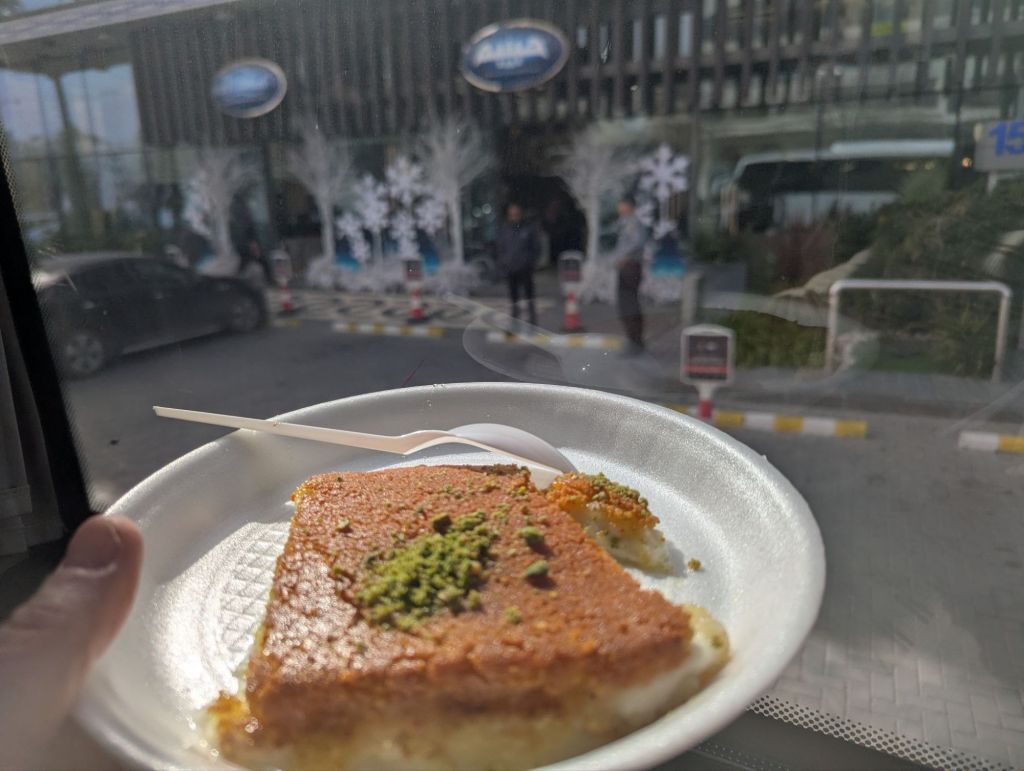
Our Jordan trip ended with a surprise roadside treat of Knafeh and then our farewell dinner at the hotel. There’s so much more I’d love to see here in Jordan, so, til next time!
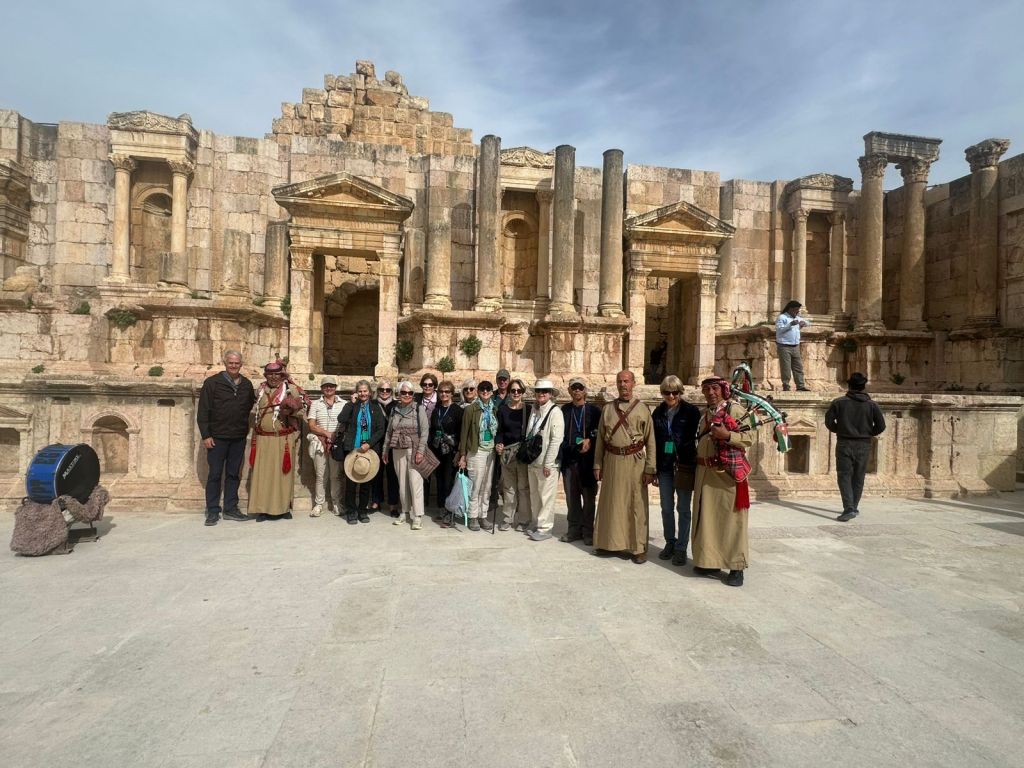
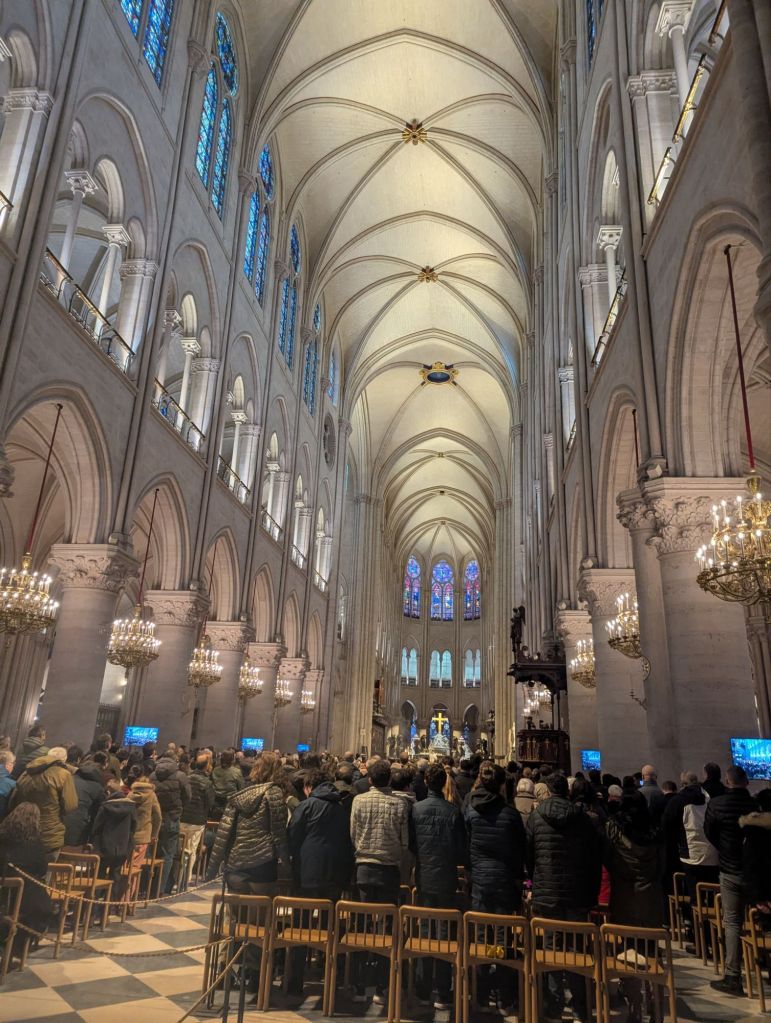
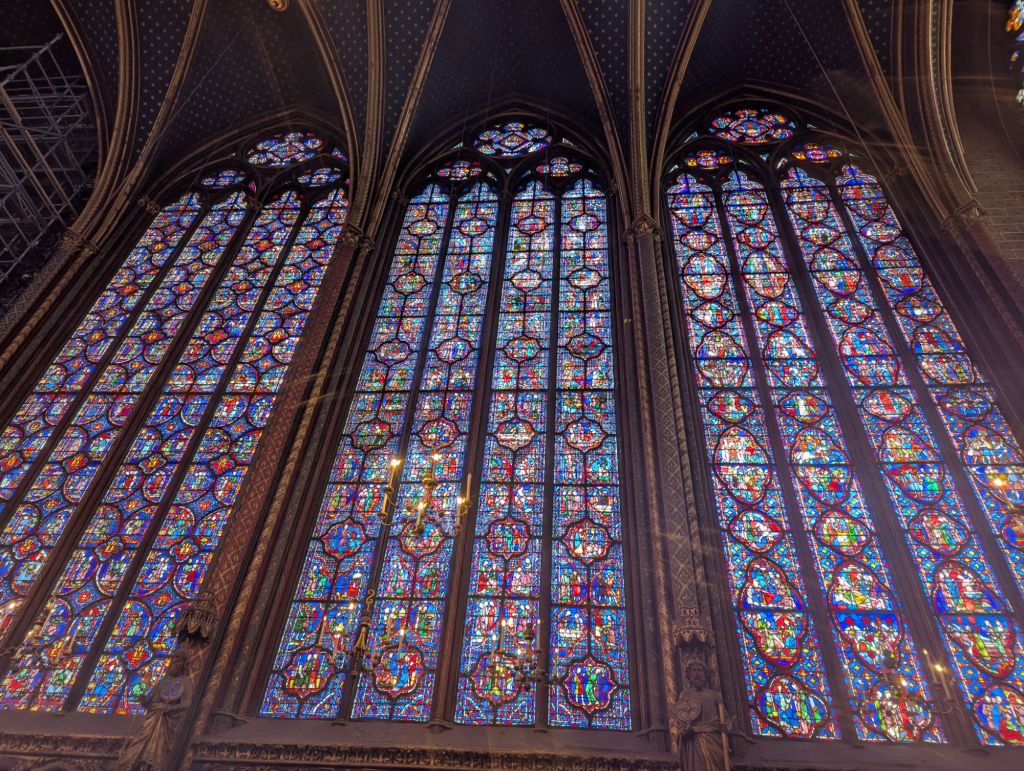
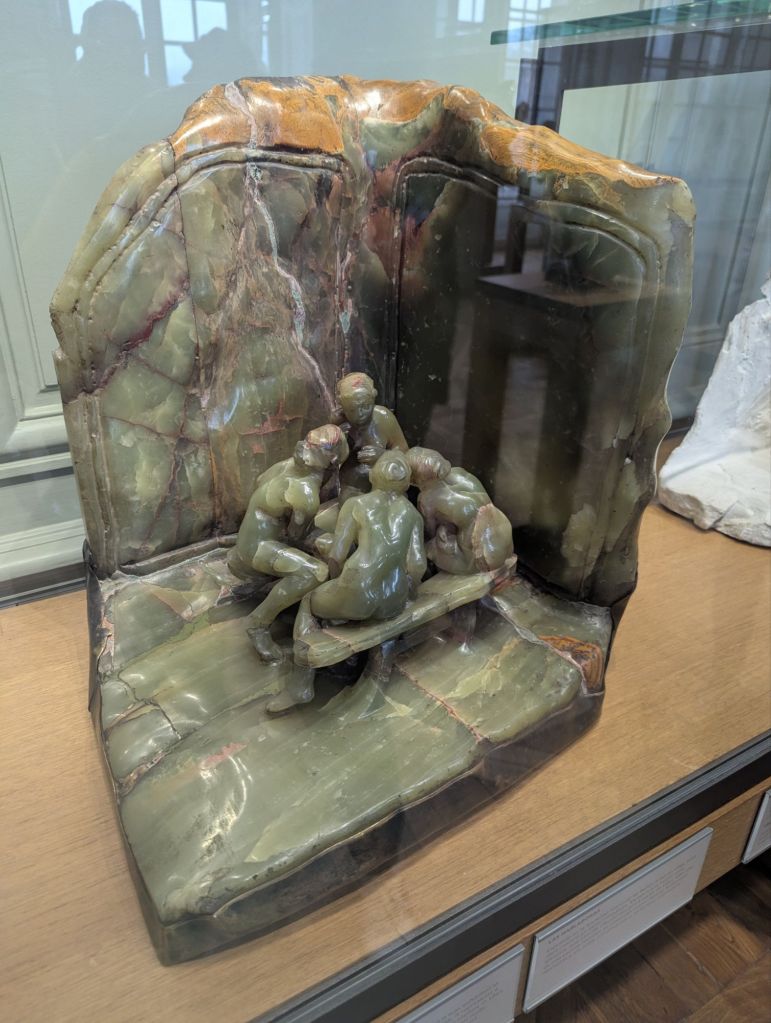
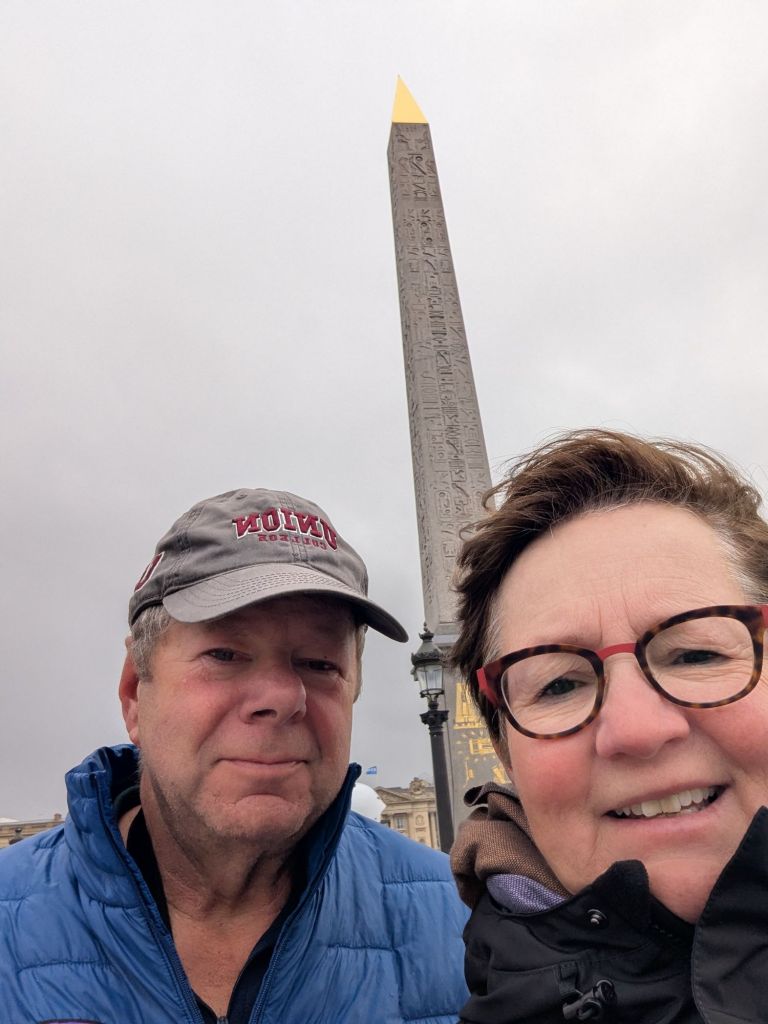
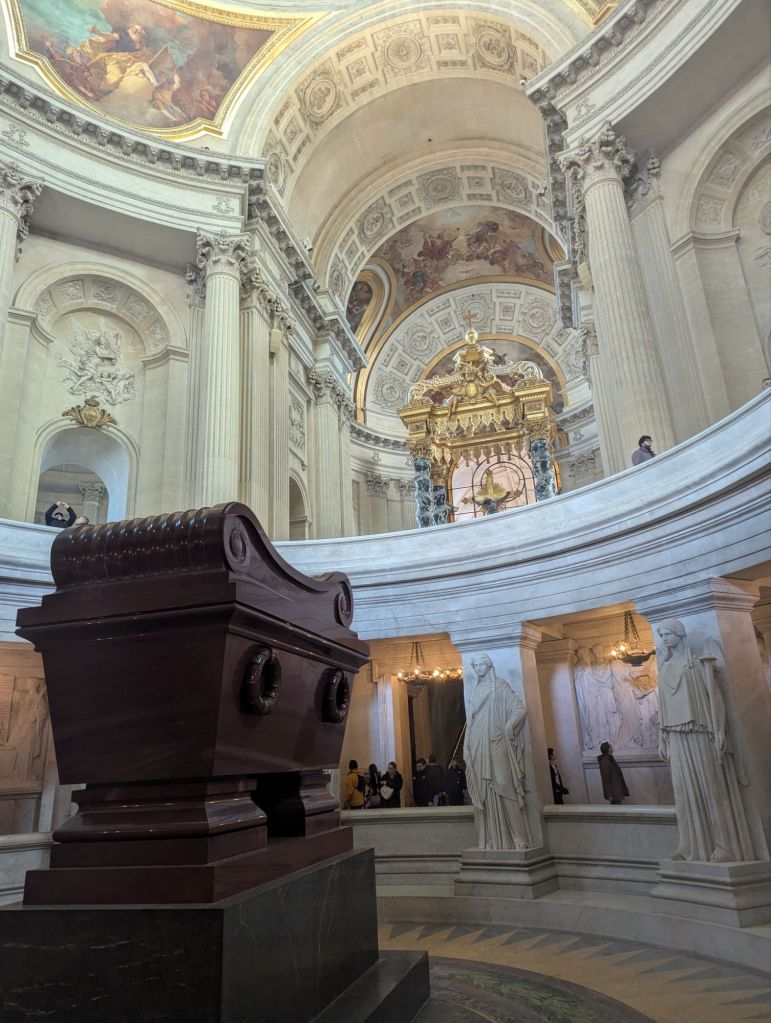
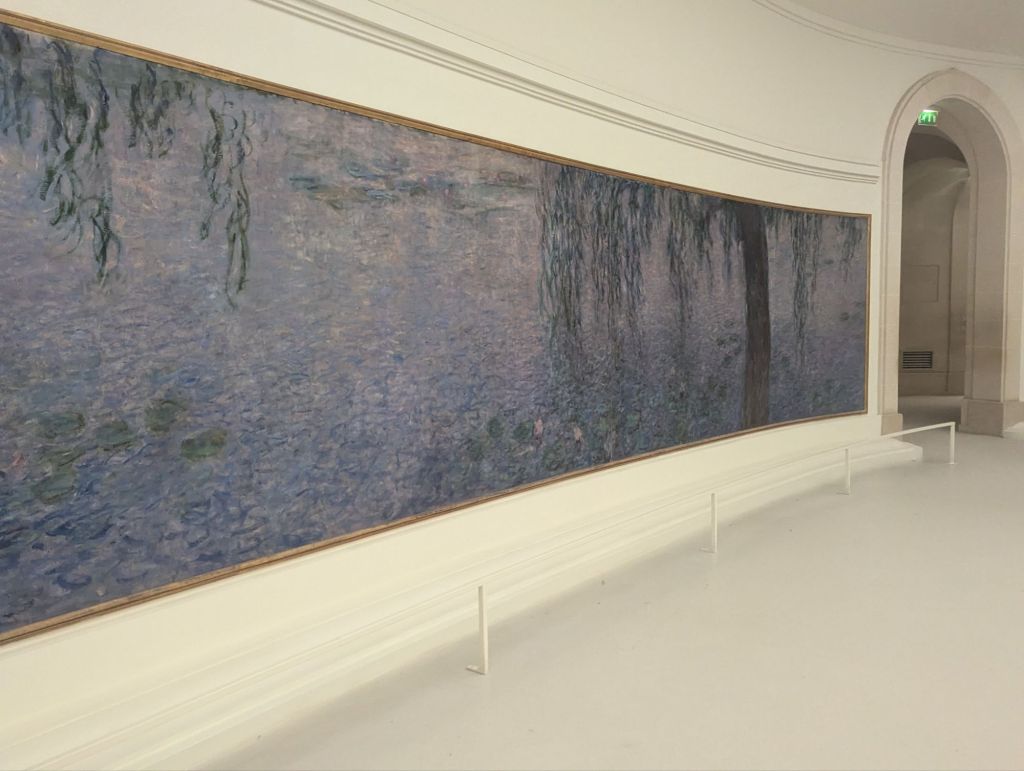
We departed the Jordan the next morning appropriately, in a significant dust storm (though not typical for Amman). Our trip was not completely over, however, as we booked 3 nights in Paris as a ‘vacation from the vacation’. We stayed at Madame Reve hotel in the 1st arrondissement and hoofed it 8 and 9 miles the next 2 days visiting sites though I did manage to get my ‘lingering in a French cafe’ time in. In fact, we spoke with the young owner of one tiny cafe (Cafe Moulin) who went to school at Northwood in Lake Placid! It truly is a small world and we hope to see more soon!

 My new reality