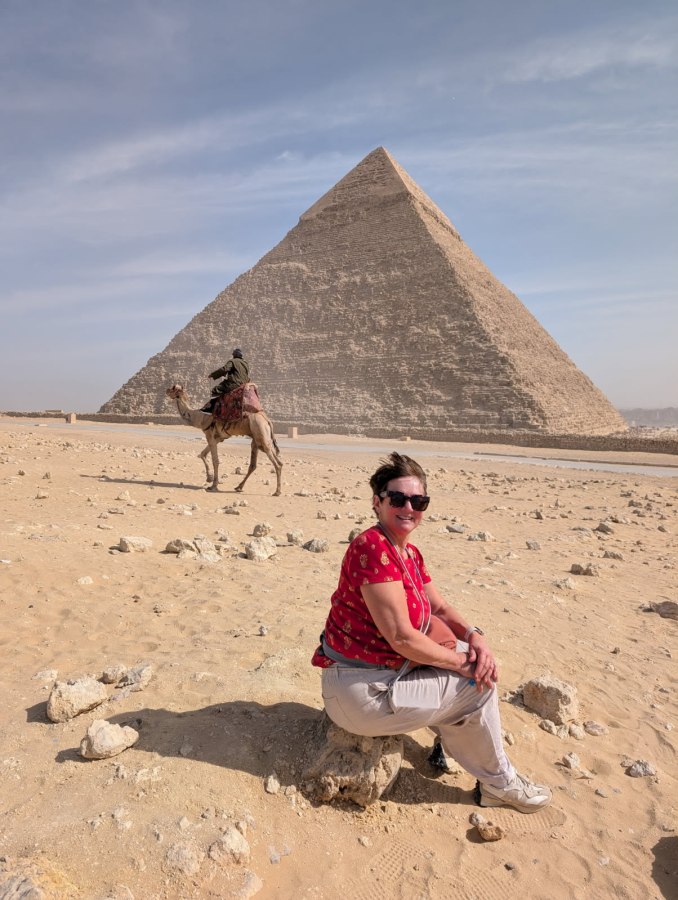
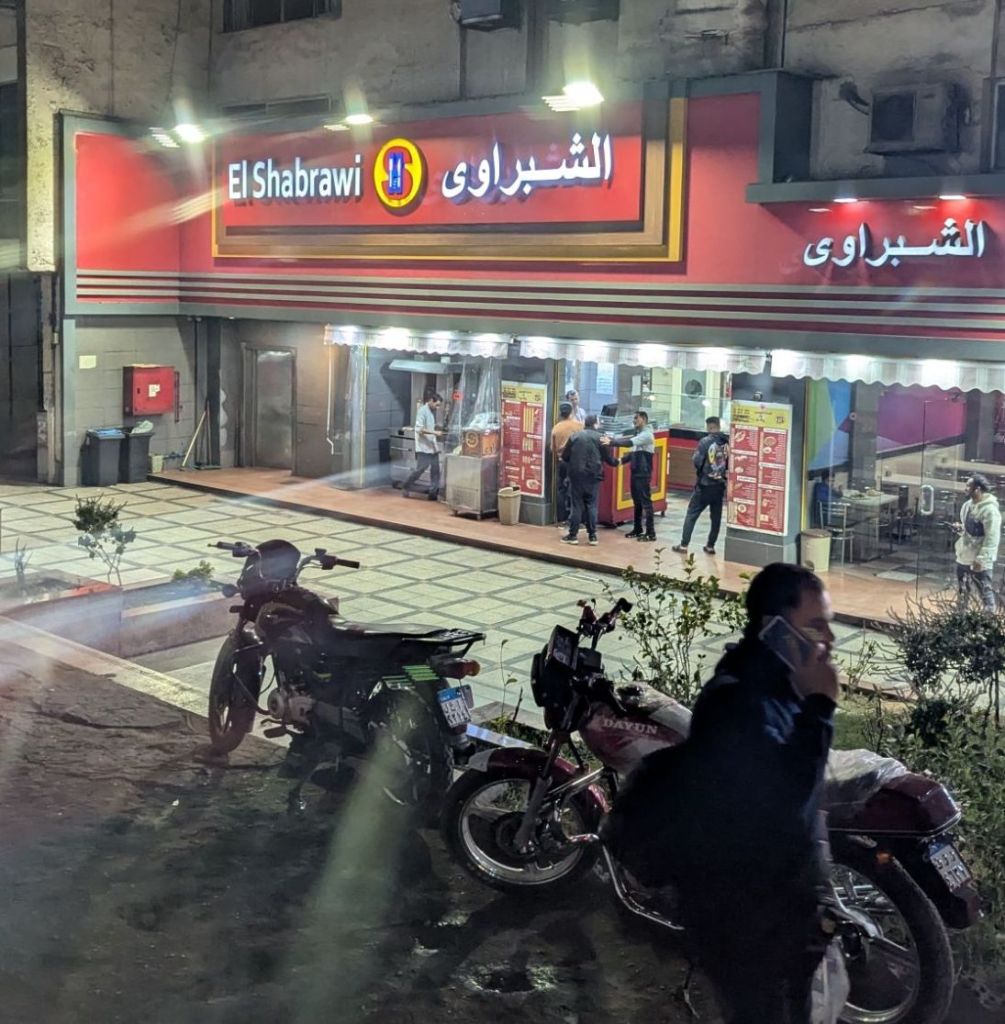
You’d think that after all the amazing sites we’ve seen that there couldn’t possibly be any more highlights, but, The Pyramids of Giza! A short flight took us from Luxor back to Cairo and the Kempinski hotel. Our wonderful OU tour agency and amazing tour director Ayman managed our travel, porters, buses, and even a quick stop at a local falafel ‘bodega’ for hot falafel sandwiches! Next, Pyramids!!!
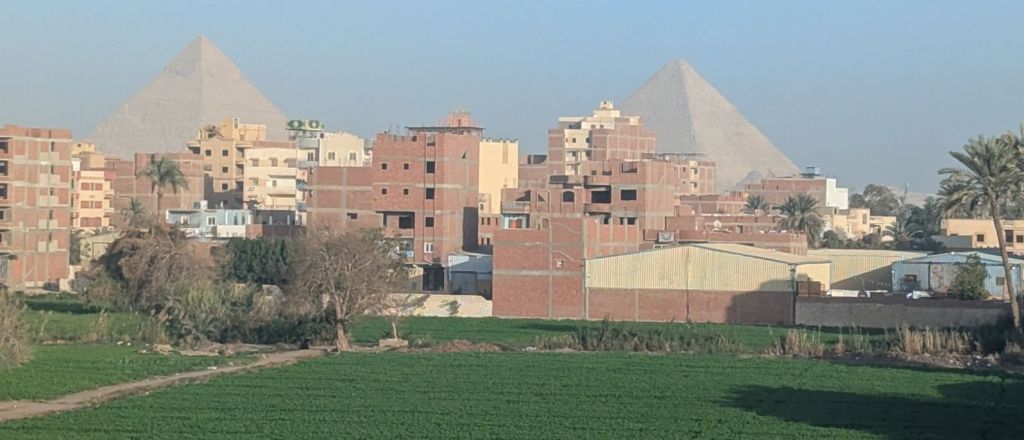
The new day dawned hazy, once again, with winds kicking up the Saharan sand. Our early start meant for ‘lighter’ traffic (still crazy) and the pyramids appeared in no time. The Sahara desert borders right up to the edge of Cairo with the Giza Pyramids and the Grand Egyptian Museum just a life threatening jump across the highway from massive housing complexes. A new subway stop and bridge are in the works. Lots of construction is evident in this teeming, sprawling city of old and new.
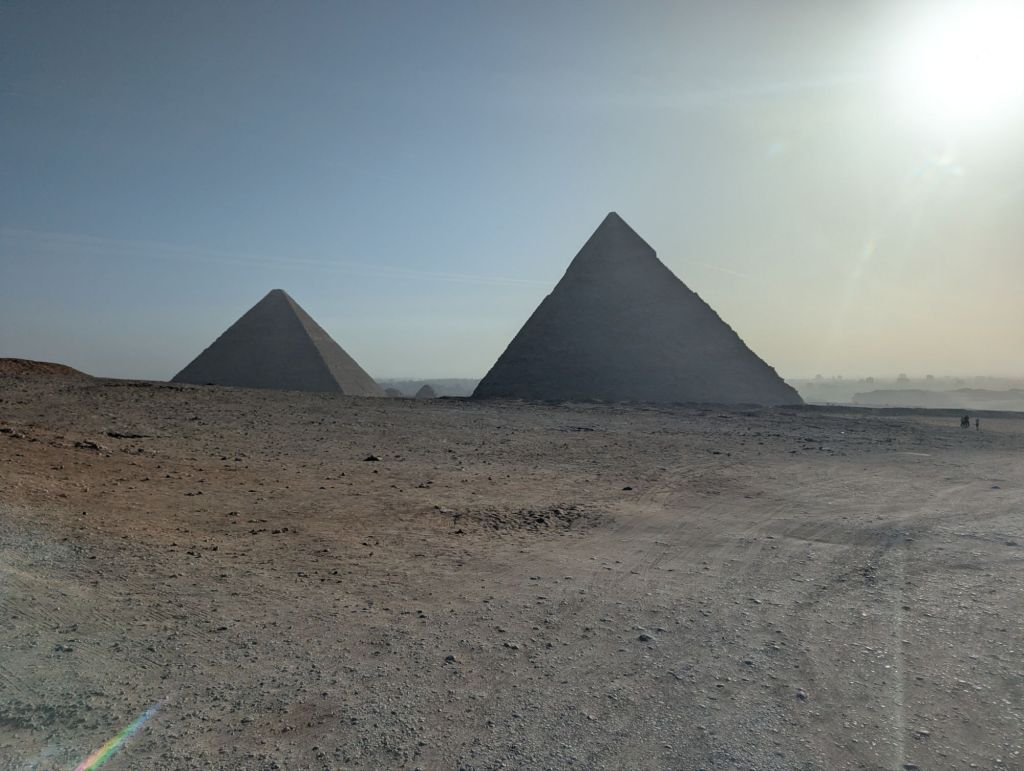
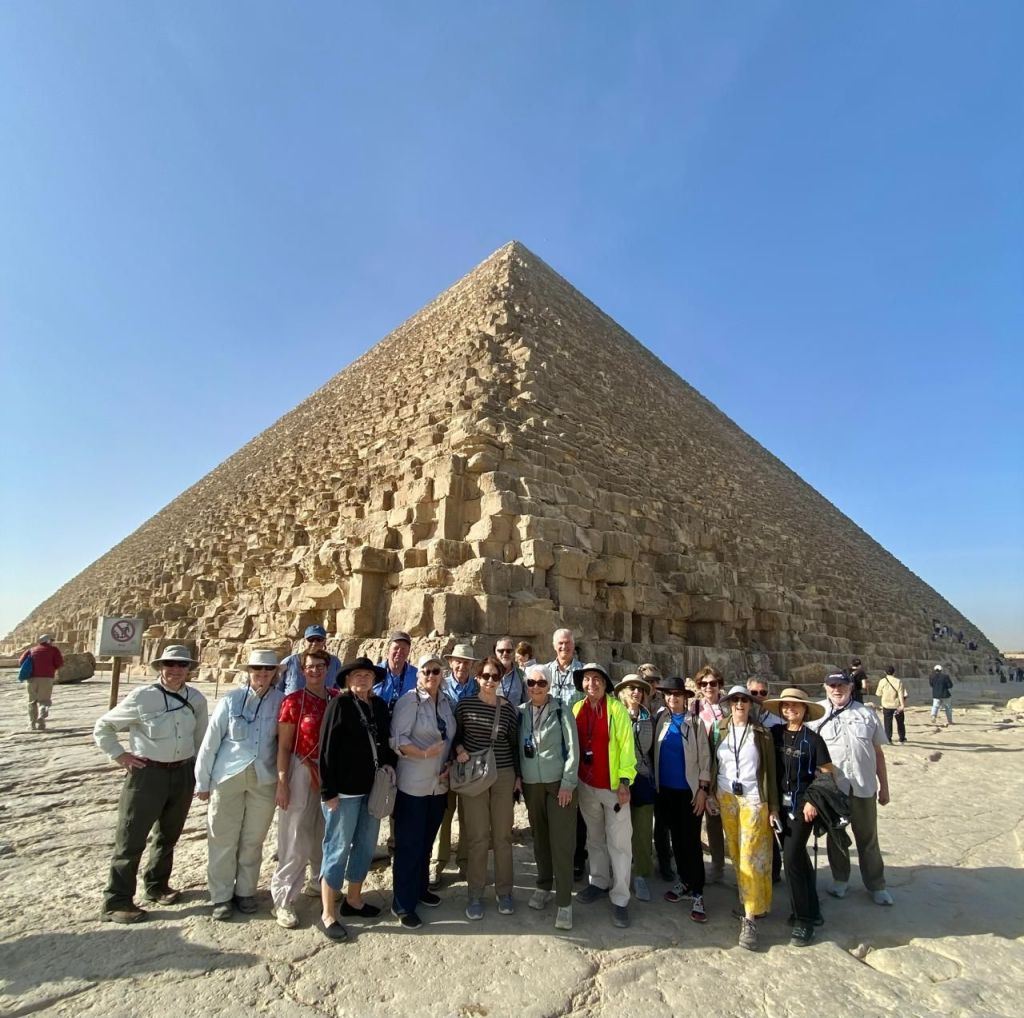
Oh, the Pyramids! Standing proudly above the sands, the 3 tallest pyramids were built for 3 pharaohs (Khufu, his son Khafre, and grandson Mankouri) and 6 smaller pyramids for wives for 2 of them. These Pharaohs were of the 4th dynasty 2500BC, 4500 years ago, about 1200 years before Ramesses II of the 18th dynasty (that incredibly well self-advertised conqueror of nations and prolific builder of temples). Khufu’s pyramid rises slightly lower than its original 480 ft height, used 2.3 million blocks of stones, took 20 years to build using about 20,000 builders. It is the last remaining Wonder of the Ancient World. Quite nearby is the site where the Khufu’s Solar Boat was recently unearthed and is now on display at the GEM just over the hill.
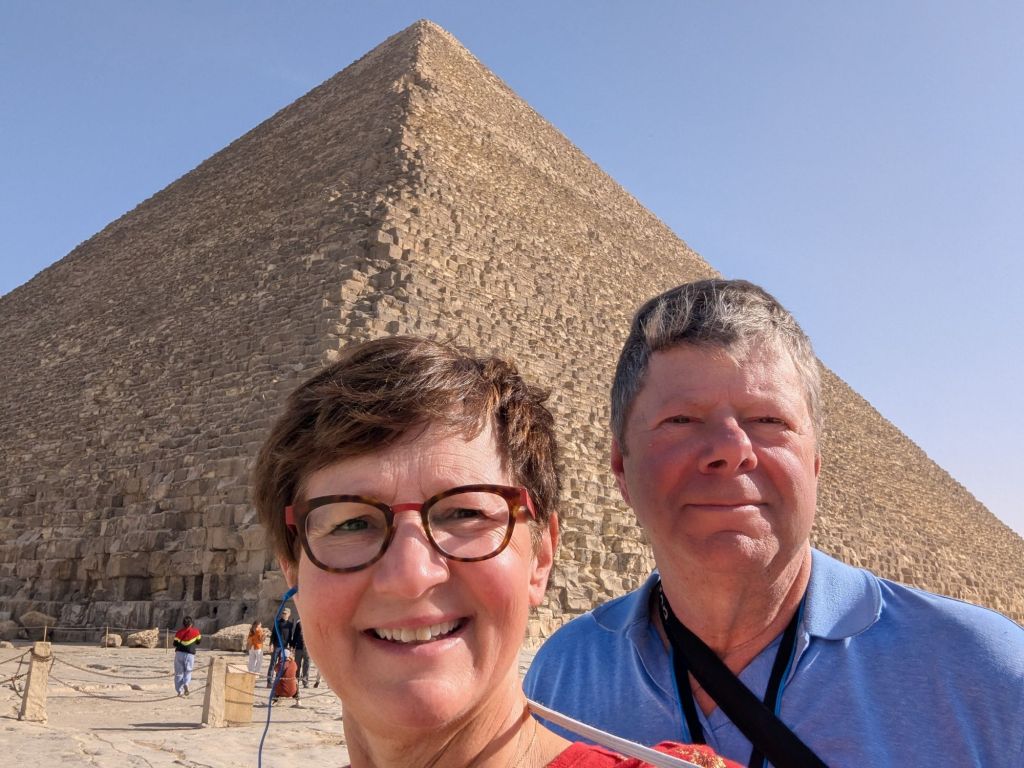
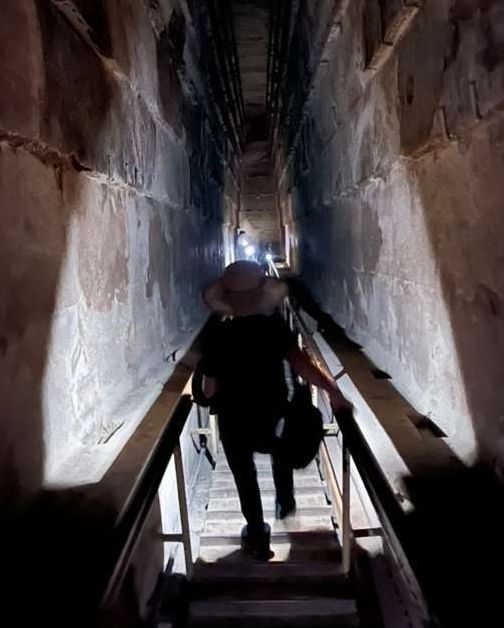
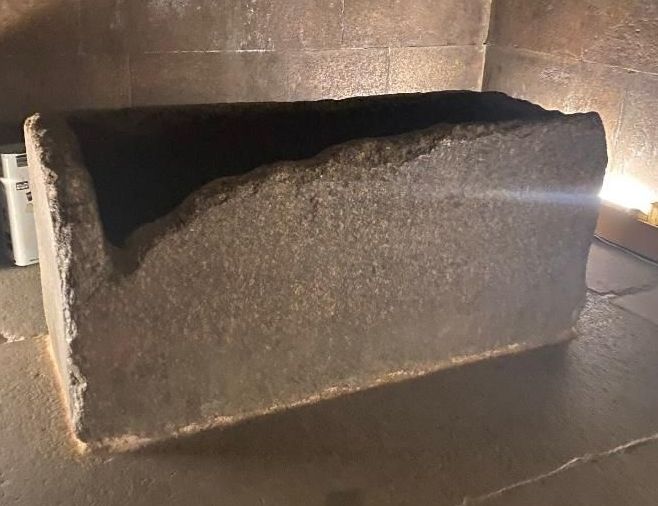
Our early arrival meant for a relatively smooth and easy climb into the center of the Great Pyramid to view the tomb. Up the stairs and then ducking into the pyramid, we immediately began ascending a ramp, crouched over to accommodate the low, rock cut ceilings. Up a short ladder and then further ascent, upright, took us into a single, cavernous chamber with a large stone sarcophagus. All done in the dark. Our small group teamed up to hold cellphone flashlights and provide encouragement to each other. A group photo was taken and we descended. Then the lights came on! Lights! Who knew? We at least had the remotest feeling of being ‘discoverers’.
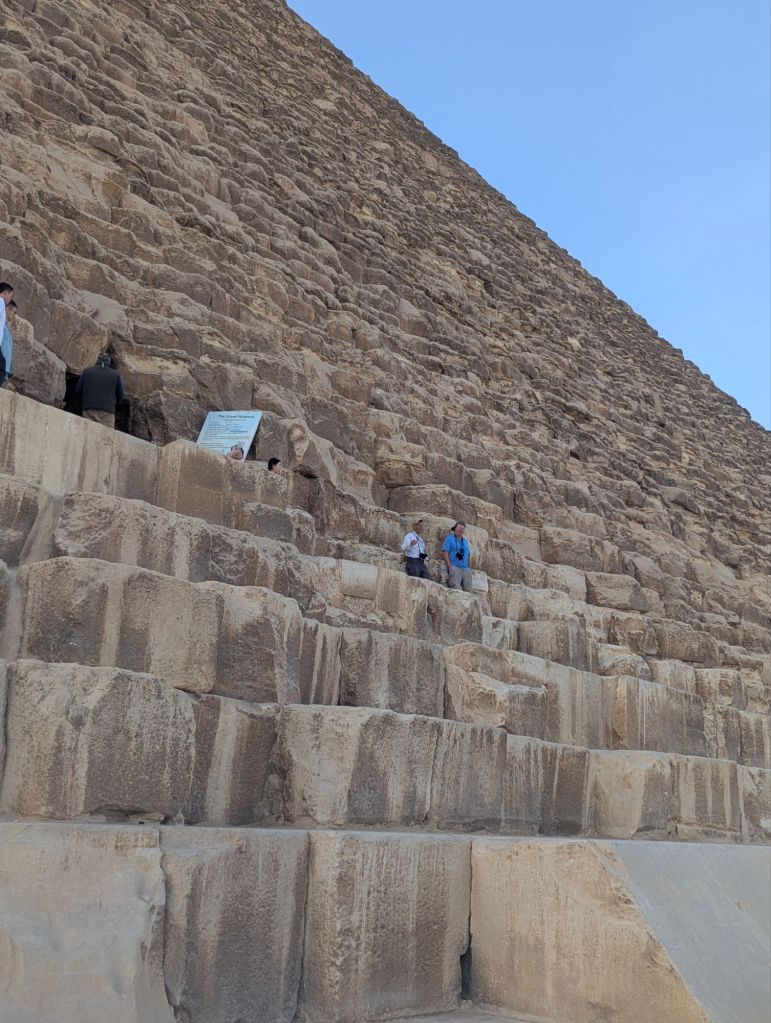
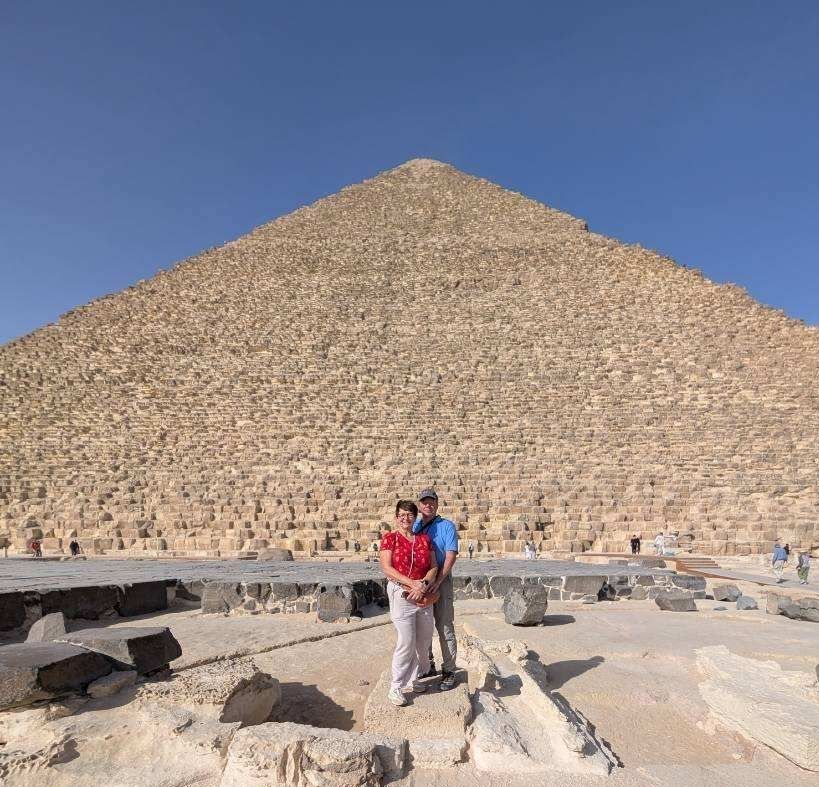
Many photos later we visited the 2 other pyramids each in various stages of disrepair. The pyramids have lost at least a couple of outer layers including a smooth limestone outer shell (or, in the case of Mankouri’s pyramid, 1/3 red granite from Aswan, the remainder of limestone). Other smaller tombs of high officials have been/are being excavated nearby, dotting the barren landscape.
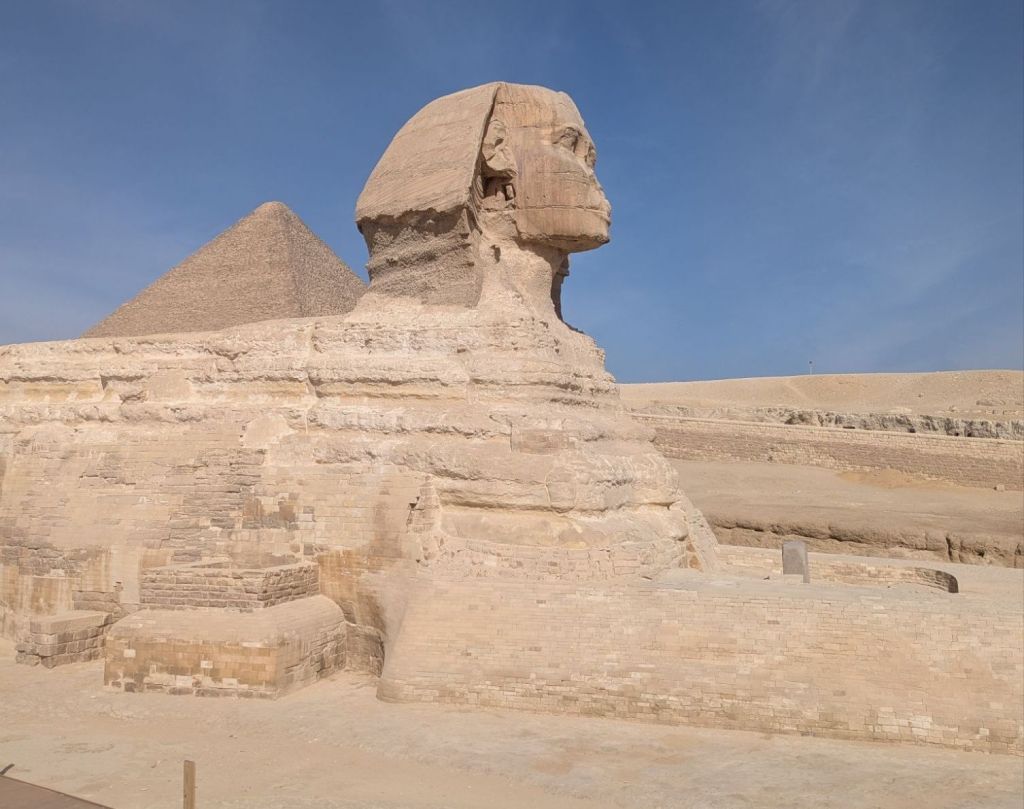
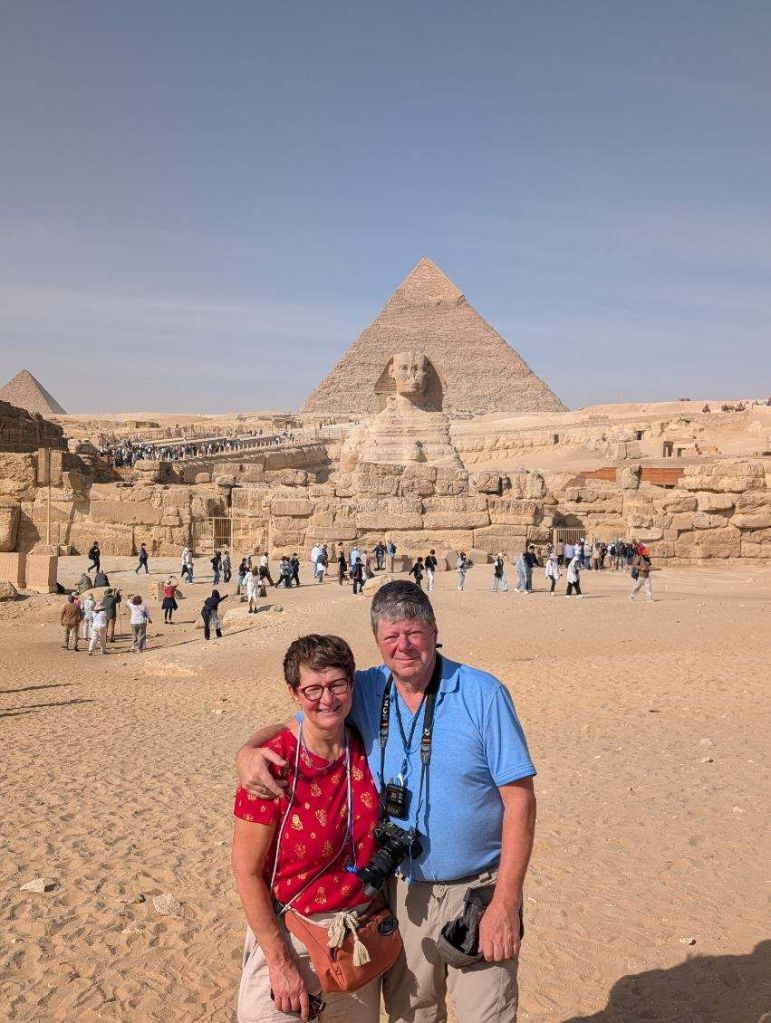
Just around the corner the Sphinx sits upright, surveying the multitude of tourists coming to visit. The Sphinx’s face is obscured from the damage done by fanatical Muslims in the 10th century, its nose chipped off. The Sphinx is the largest rock cut statue in the world measuring 52x20m and was built by Khafre to be the guard of the 4th dynasty tombs. Parts of its body are covered with limestone blocks, an attempt at restoration and preservation, while at its back a long, feline tail wraps around the base.
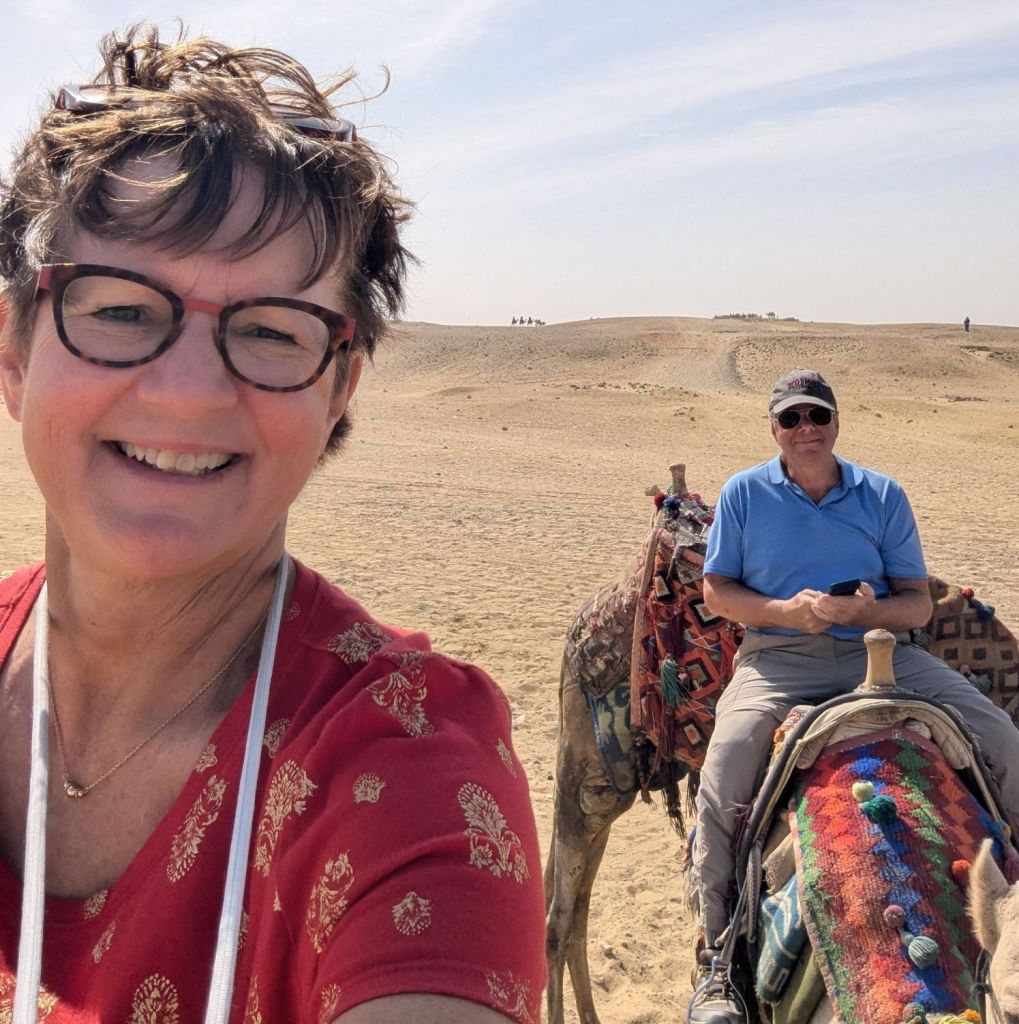
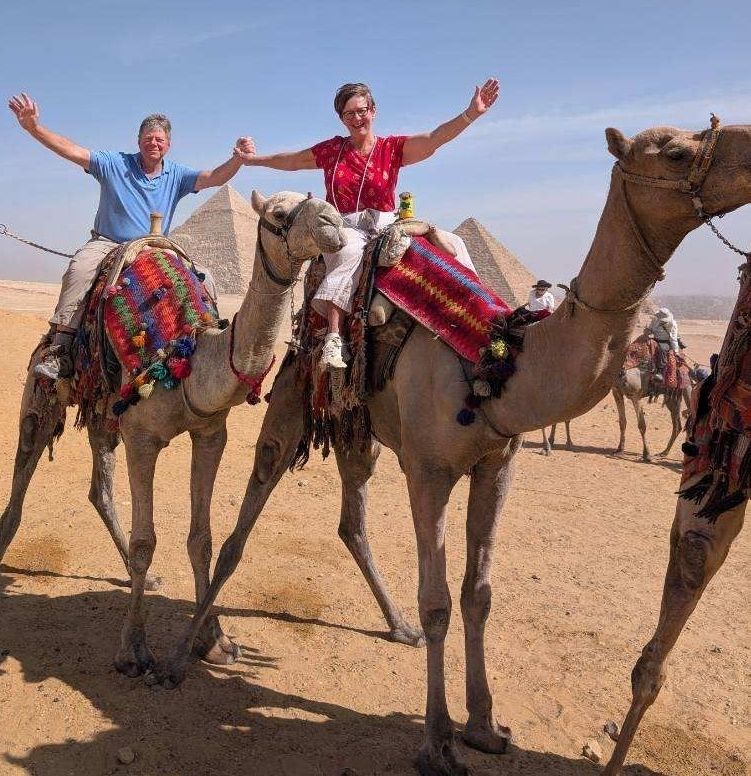
Being tourists, we did a touristy thing and took a short camel ride for fun and for the photo op. I guess we’re as bad as the annoying, wannabe influencers and fashionista posing in front of tombs and churches (without the ‘fashion’ part).
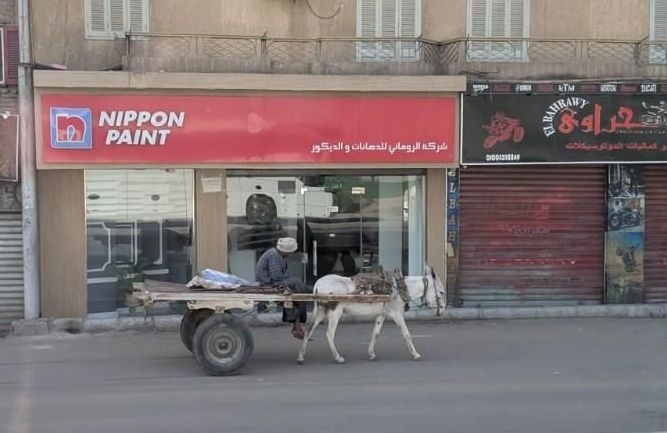
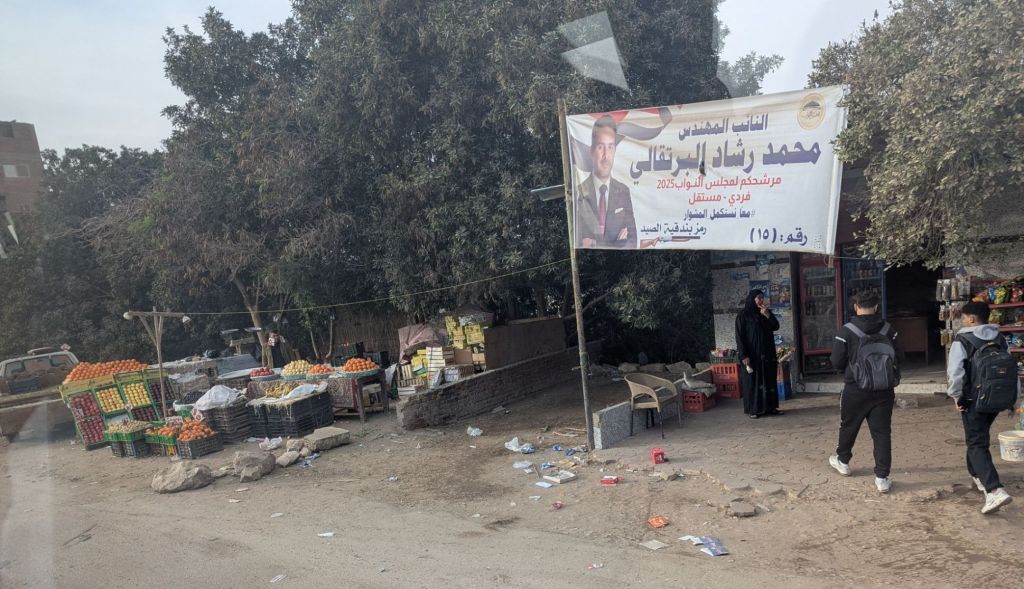
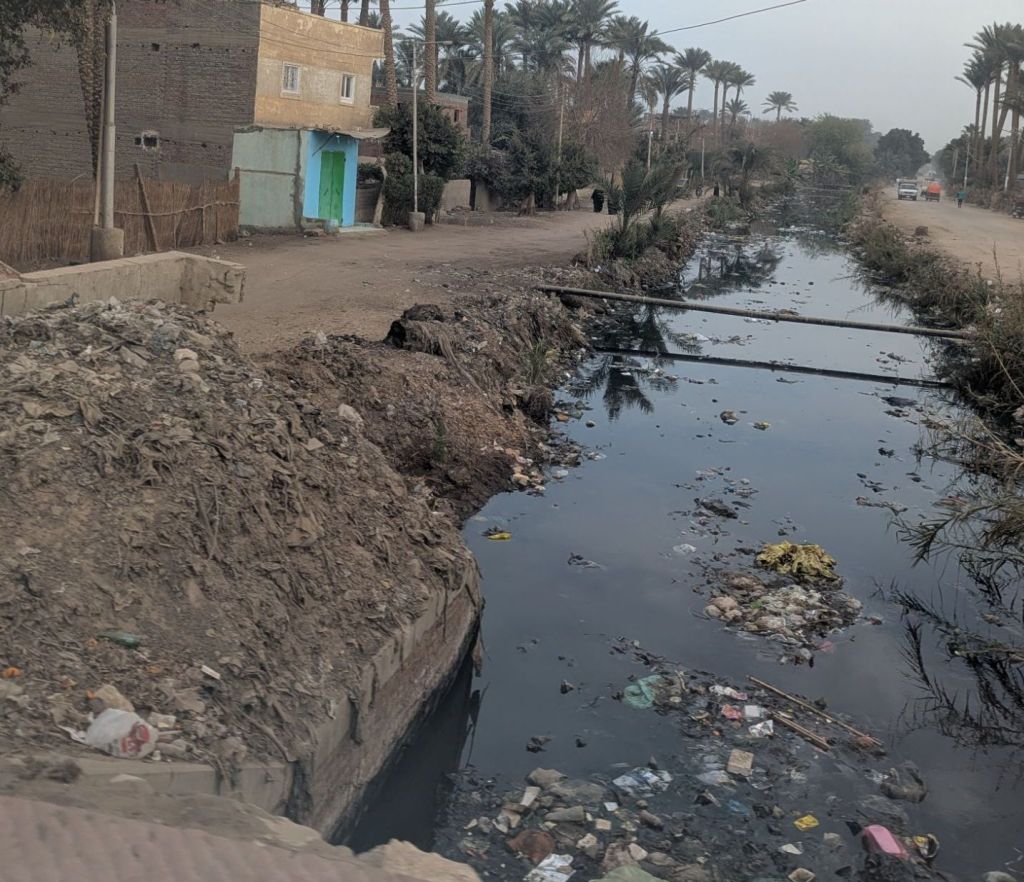
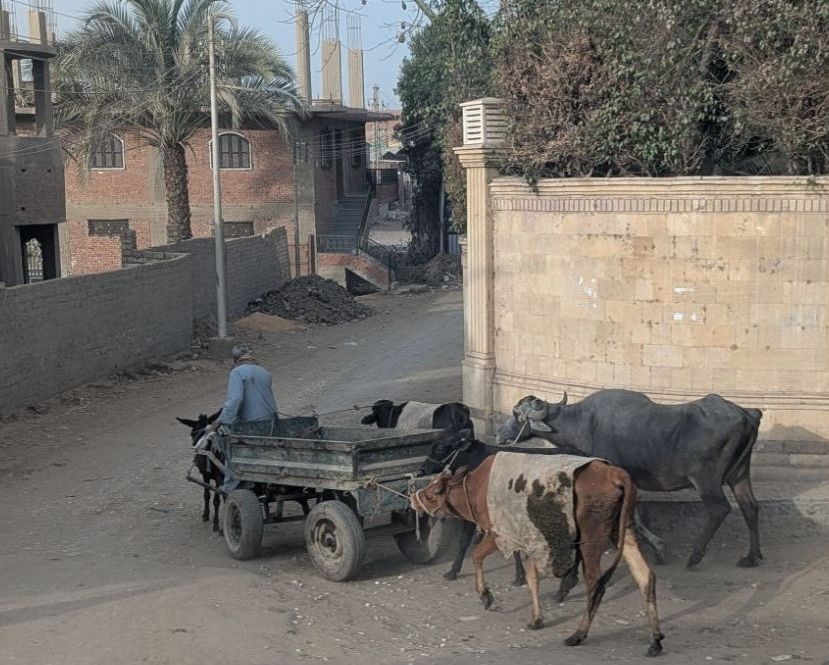
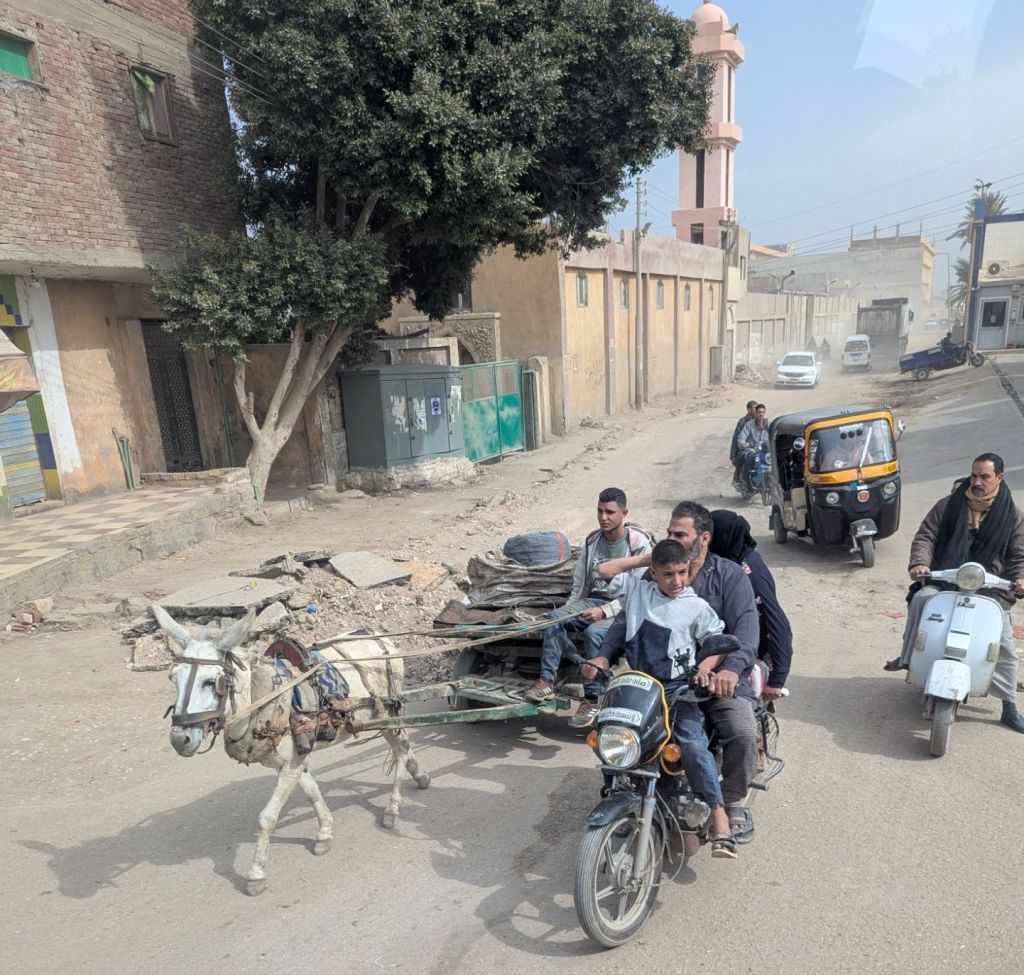
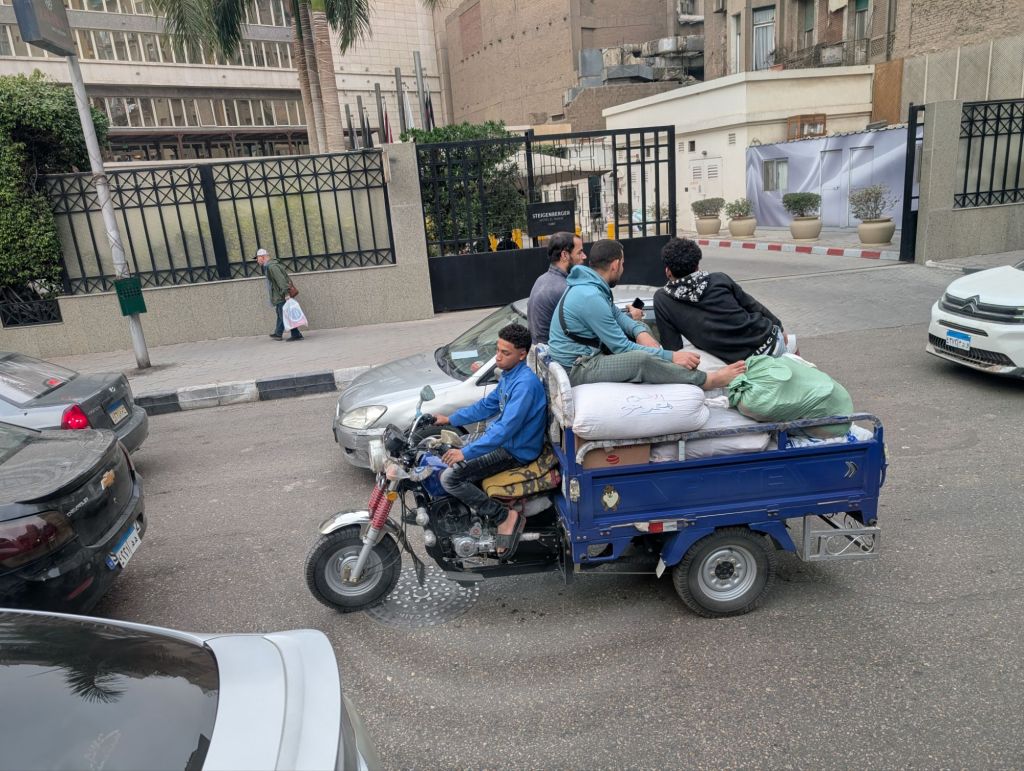
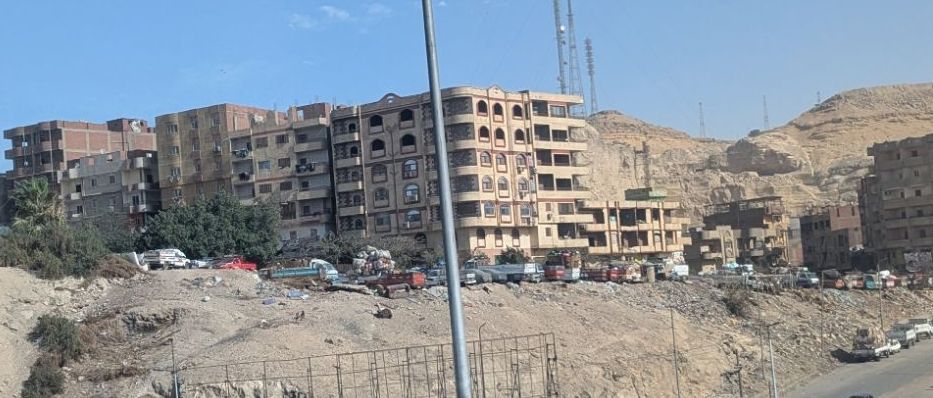
The bus driver took us to another side of Cairo, away from the city center, through dusty, garbage strewn neighborhoods where tiny workshops, smaller than a typical garage, housed welder’s workshops, tire shops, bakeries, fruit and vegetable shops, shoe stores, falafel shops, side by side with abandoned buildings or random piles of bricks. We passed tuk tuks, motorcycles, pedestrians, stray dogs, camels, and donkey carts within a hairsbreadth of the bus. Women carried parcels on their heads, hands free, while many people just sat, observing or waiting. Green vegetable plots filled in between rustic, dusty, rickety brick buildings. A huge tomb-filled Muslim cemetery known as the ‘City of the Dead’ stretched for blocks. The tombs themselves are often inhabited by homeless people, so much so that the Egyptian government has provided water and electricity. Satellite disks dot the uneven roofline of the inhabited tombs. Another neighborhood of note is Garbage City where residents have taken to collecting the city’s garbage and recycling for sorting and profit.
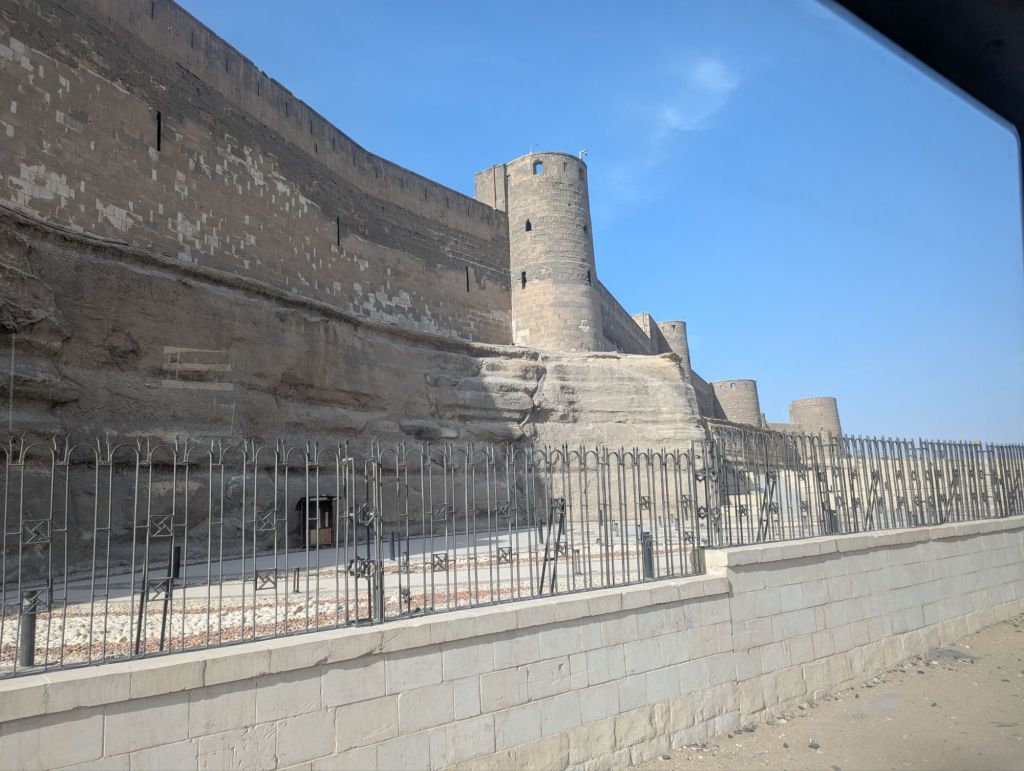
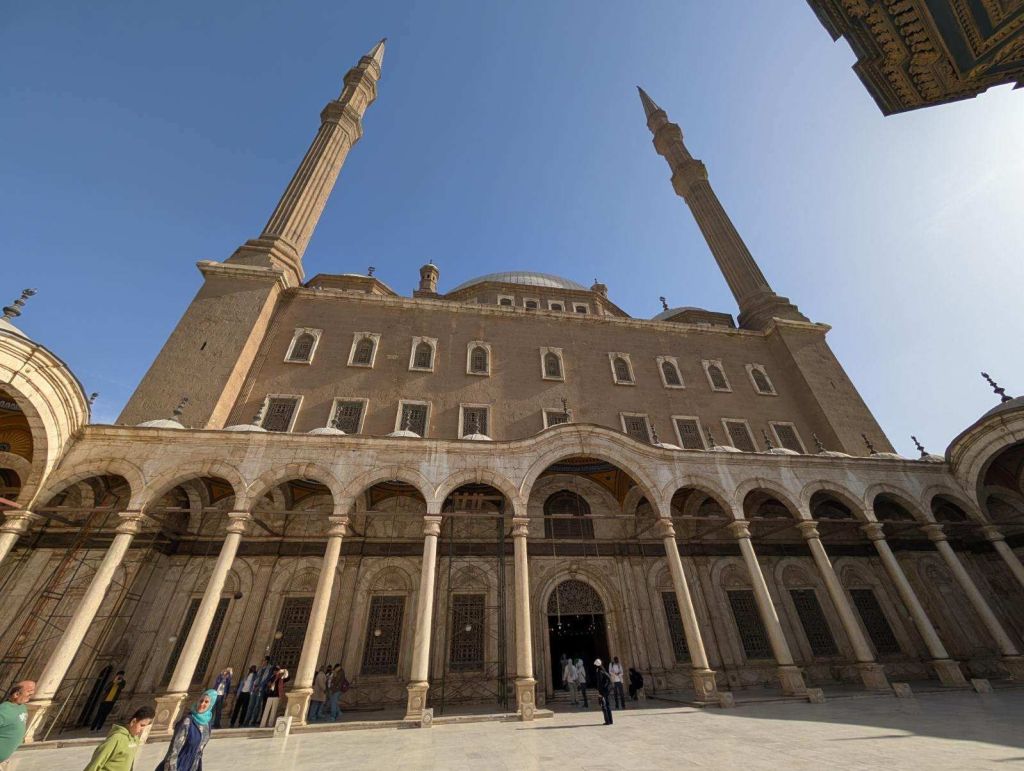
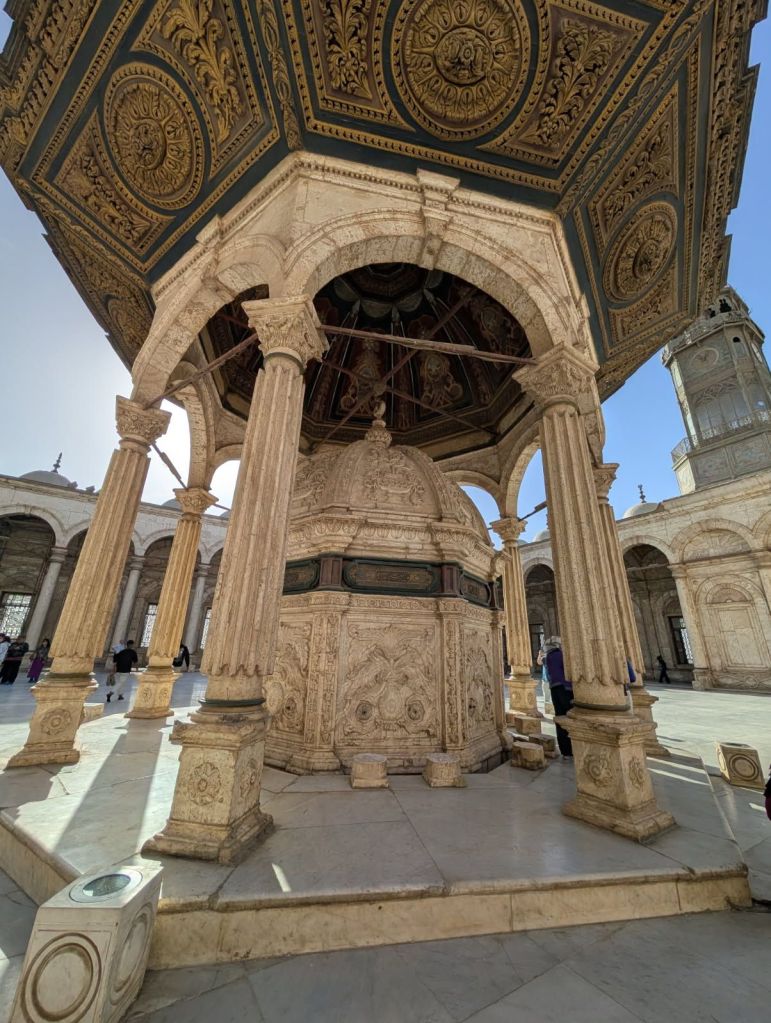
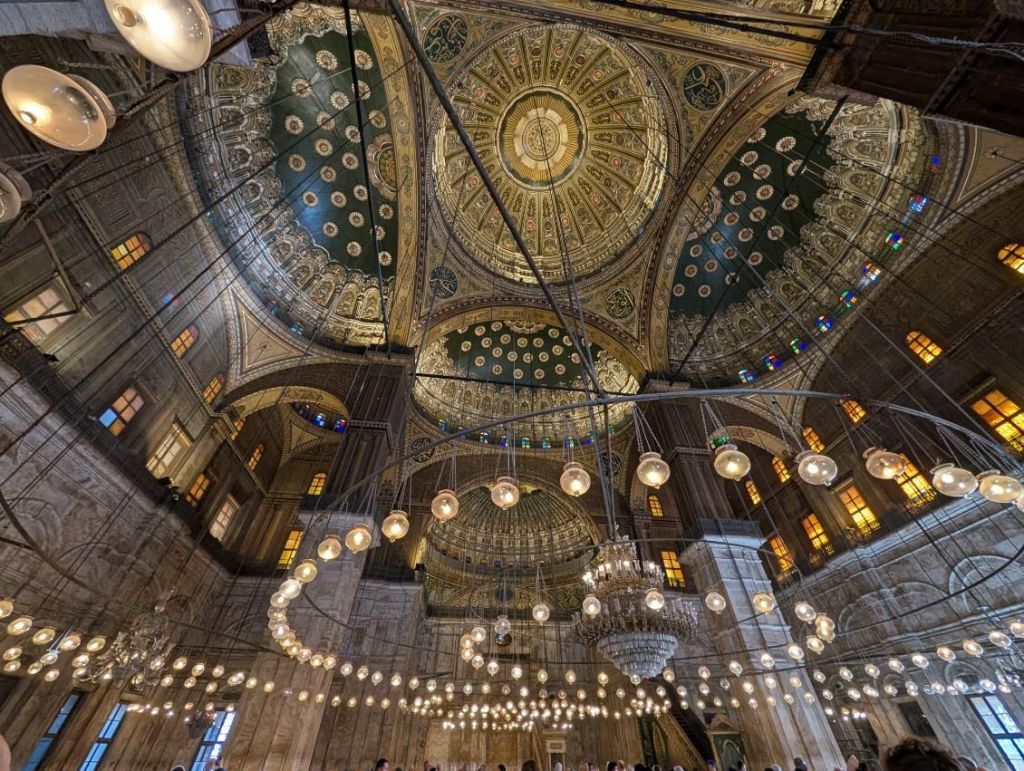
Our afternoon destination: the Citadel of Saladin on Mount Muqatamm, a plateau elevated above this part of the city. An aqueduct running along the roadside brings water from the Nile to the Citadel. Every Arab ruler lived within its walls for 600 years and built their own mosque within. In 1830 Egyptian ruler Muhammed Ali from Turkey built his own mosque, copying the Blue Mosque of Istanbul. His tomb is within. The interior of the mosque was designed with amazing detail, almost like a cathedral in Europe. In fact, the designer was French. Alabaster posts lined the walls up to the tall, multi-domed ceiling, decorated with gold details. Dusty chandeliers swayed from long chains. Prayer rugs in the corners provided respite for the faithful while gawking tourists (and the stupid influencers) take it all in. Muhammed Ali was friendly with the French; he gave them an ancient obelisk and they reciprocated with a non-working clock. Speaking of work (or as in our case, non-work), Greg ran into a colleague from his Novartis days, John T!
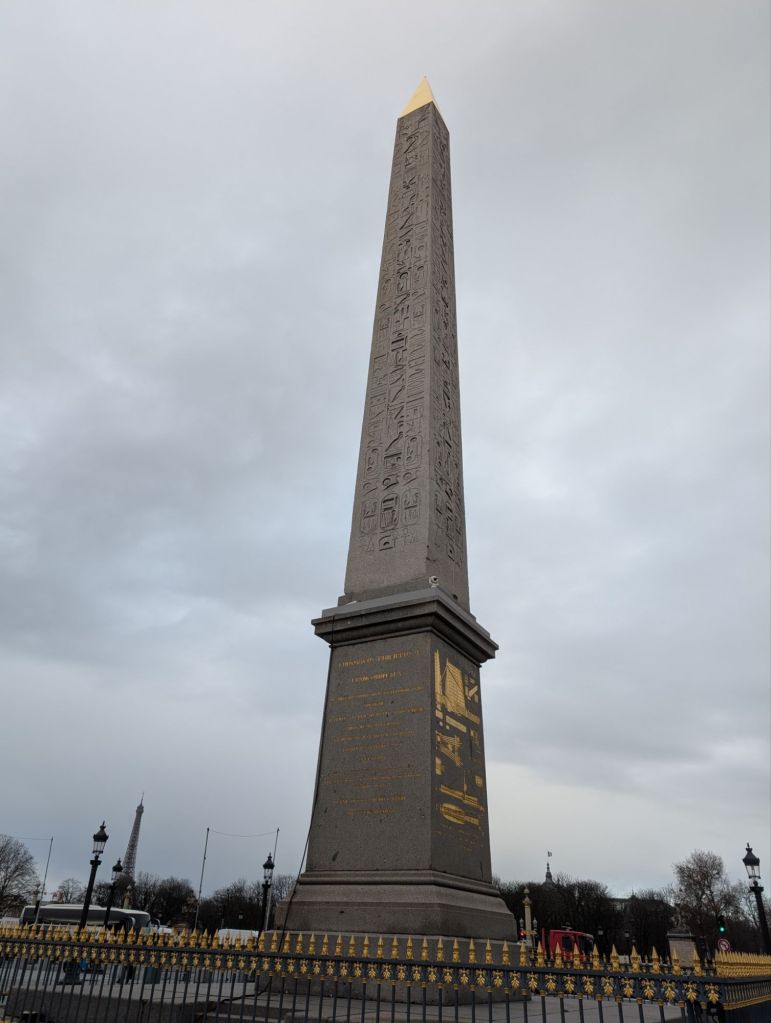
Ayman was kind enough to give us some insight into his culture and religion, Islam. Egypt has 108 million citizens, 80 percent of whom are Sunni Muslim, the remaining 20 percent, Christians. In the Muslim religion, there is the call to prayer 5 times daily, the evocative chant heard from morning til dark. Only men go to the mosque for daily prayer; women are exempted due to family responsibilities. Their beliefs: there is 1 God and Muhammed is his prophet (Jesus is also considered a prophet). They fast for the month of Ramadan as a discipline, training to be a good person and to control desires. Charity is encouraged and a pilgrimage to Mecca (the Haj) is expected, at least once, as finances and health permit. Civil and criminal laws are based on French law but they follow Sharia law for family related instances like inheritance, marriage, conversion, etc.
Egypt’s major source of income is tourism with 25 million tourists annually spending about 10 billion USD. The Suez Canal brings in 7 billion USD. Next comes agriculture (cotton), and natural gas. Middle class salaries (nursing, teaching) are $1-1.5k/month. Taxes range 10 to 30 percent depending on income.
Our last day in Cairo we visited Saqqara, the biggest archeological site in all of Egypt. Located on the West bank, it has been a burial site all throughout Egyptian history and the archeologists are still digging to find them all. Of most obvious interest is the Step Pyramid, built 2700 BC. But first, the funerary building with it’s reed shaped columns and 42 rooms that the high officials would process through on the way to burial in the tomb below the pyramid. The pyramid itself started with only 3 layers, but more were added since it wasn’t visible far enough away.
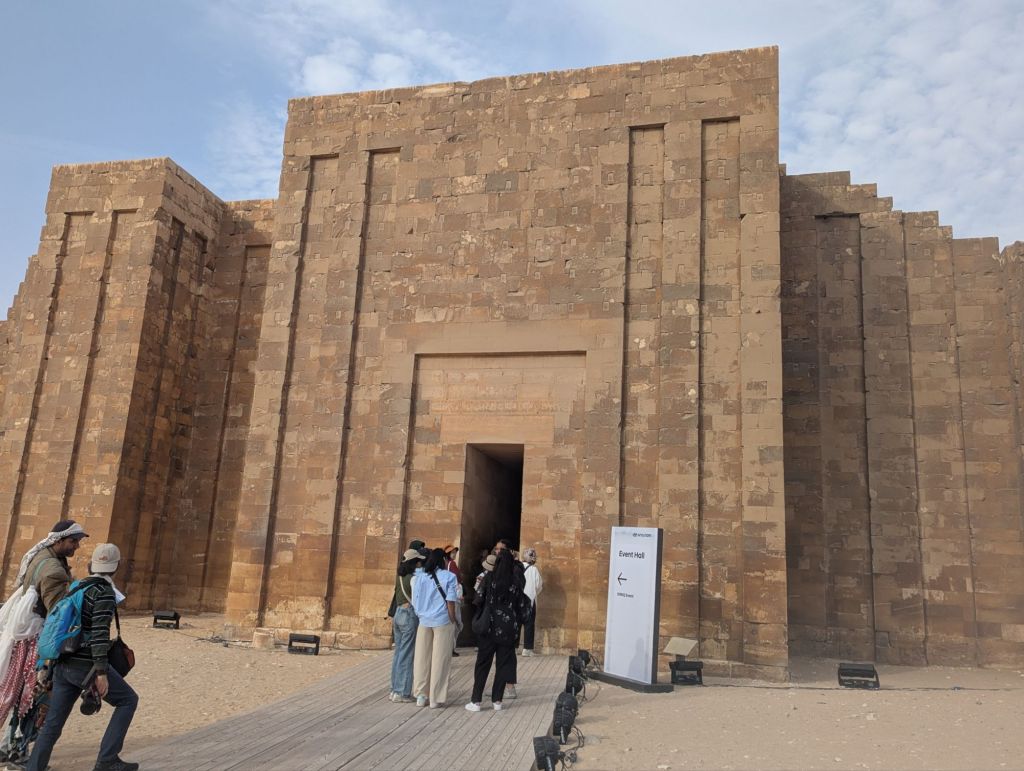
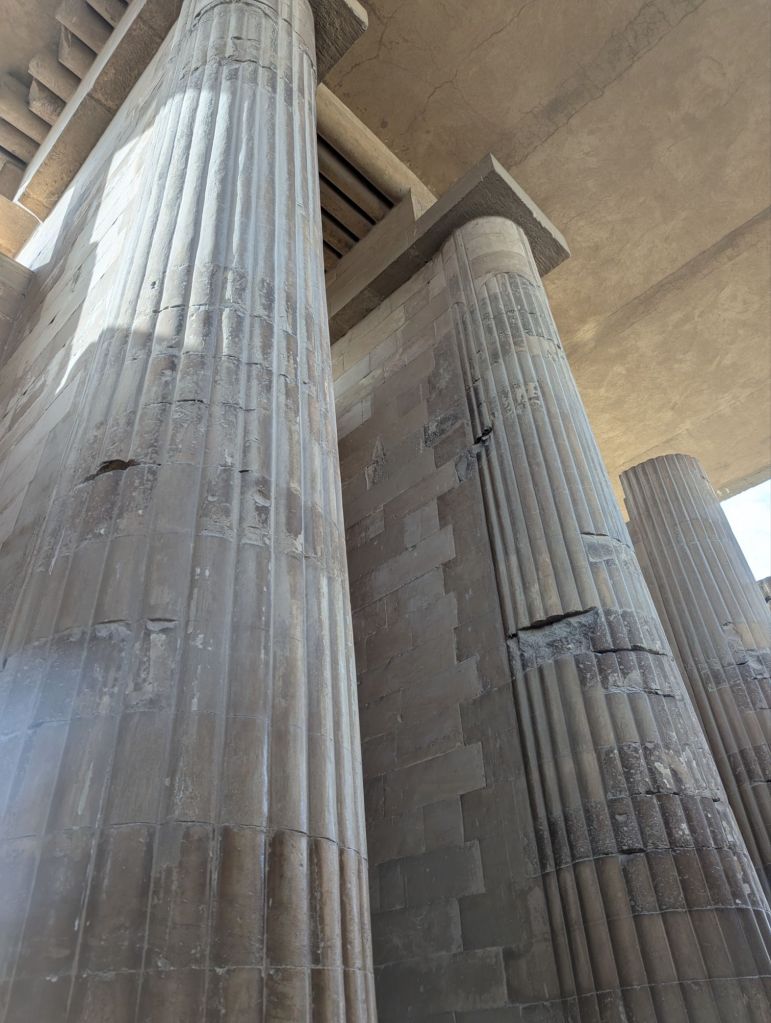
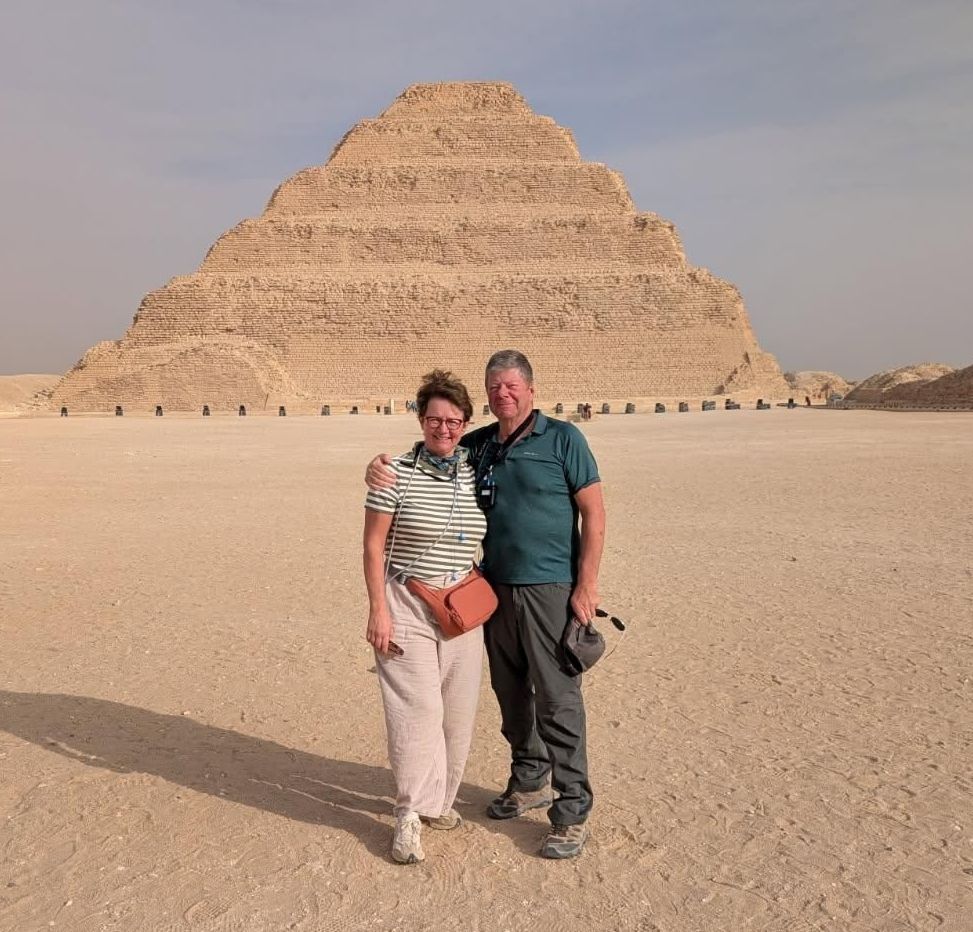
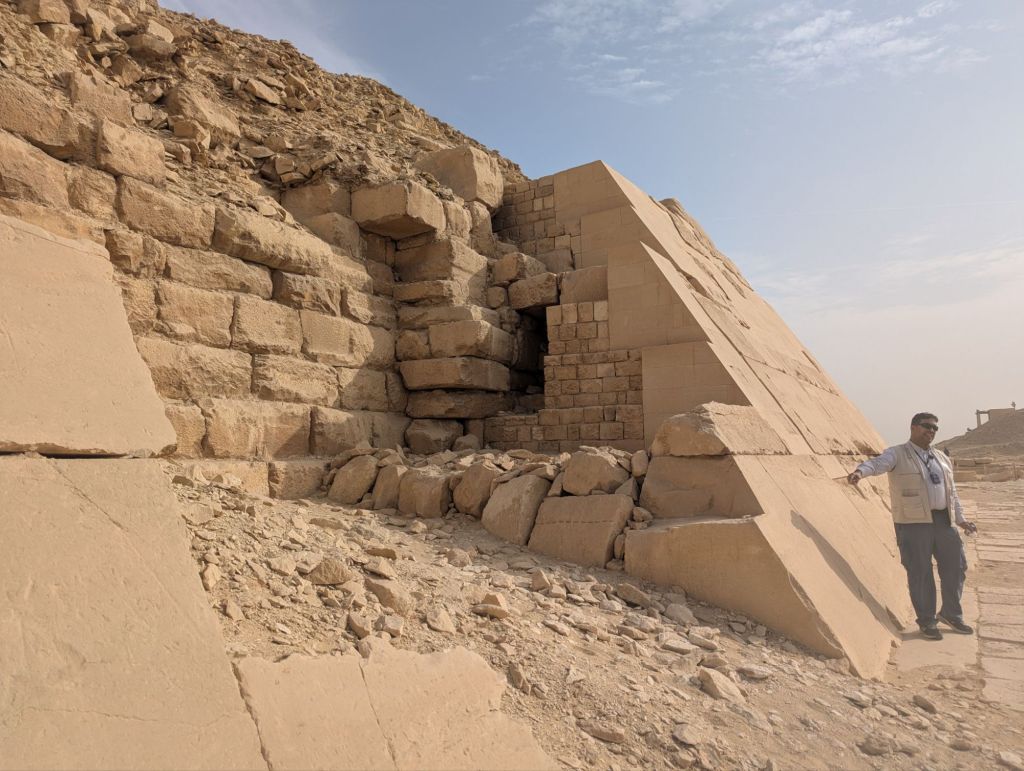
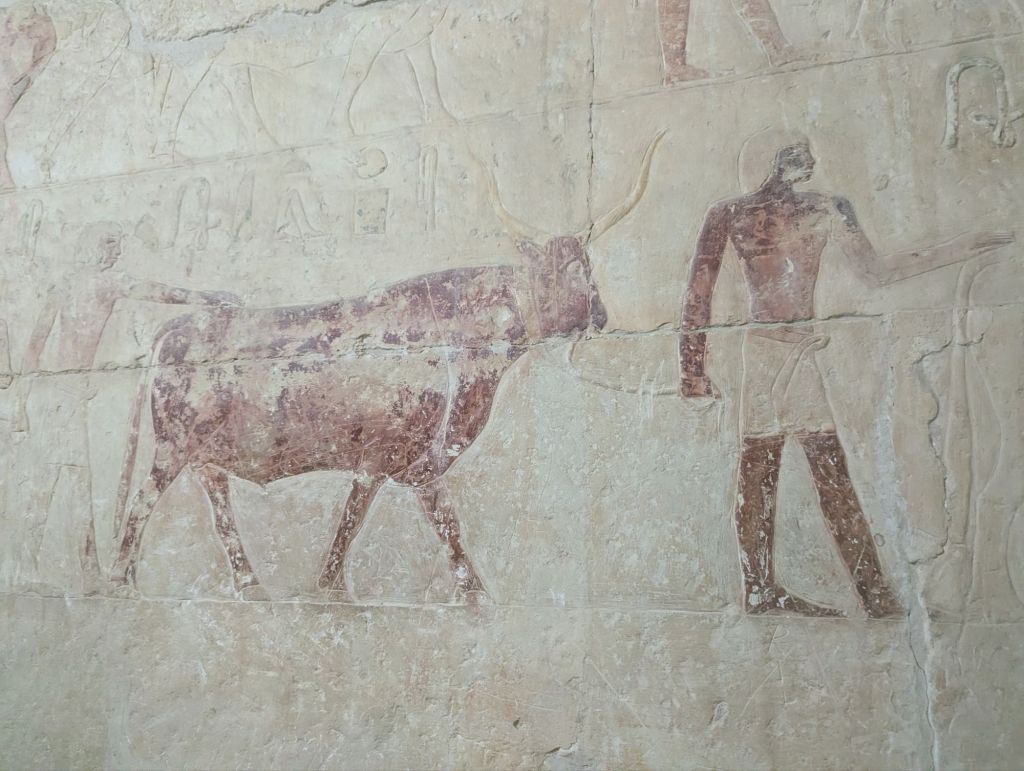
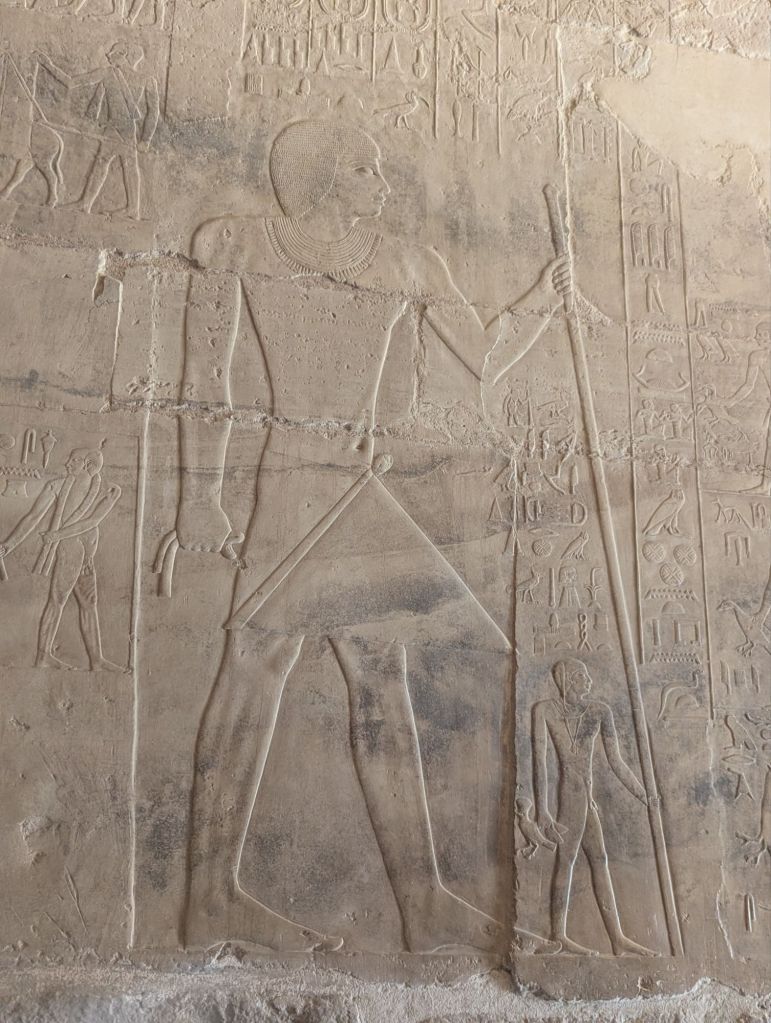
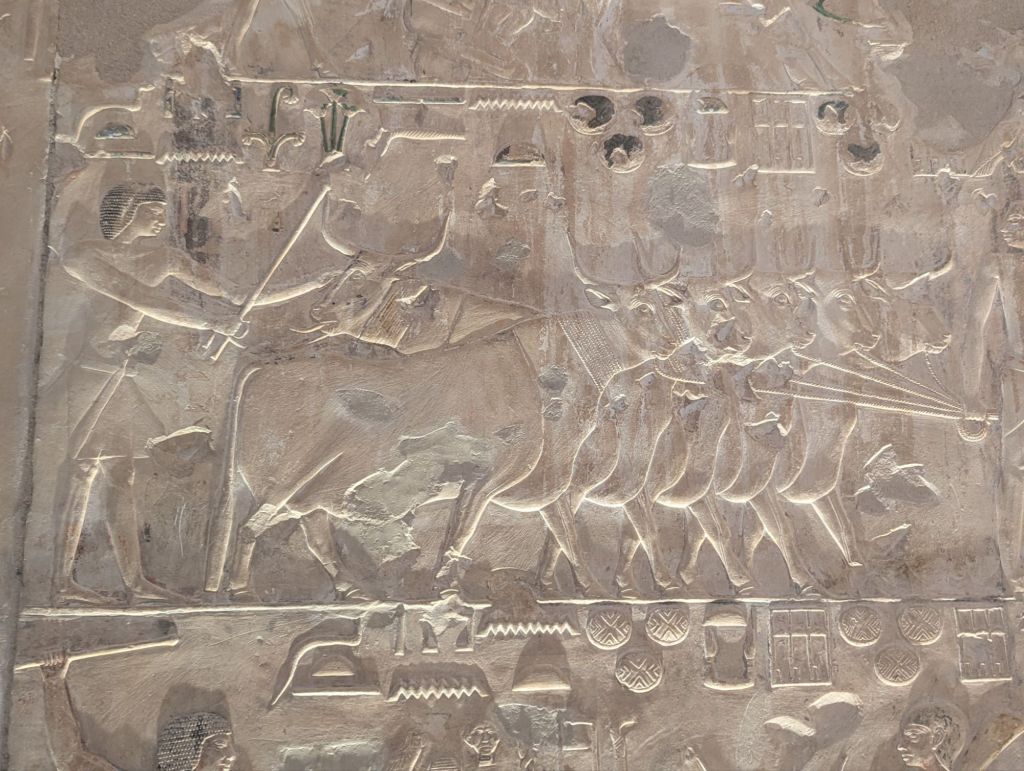
Nearby there are other, more eroded pyramids. There are 112 pyramids in Egypt in different areas and in various states of disrepair. Availability of limestone might determine location. When they ran out in Saqqara, they moved to Giza. We visited several nearby underground tombs of high officials: viziers, scribes, high priests. The tomb of Unas, 2300 BC had the first writings found in a burial chamber. The tomb of chief judge Ptahhotep II, just 75 years later, had spectacular, detailed carvings, some depicting his mani/pedis, his hairstylist, and perhaps his fishing hobby.
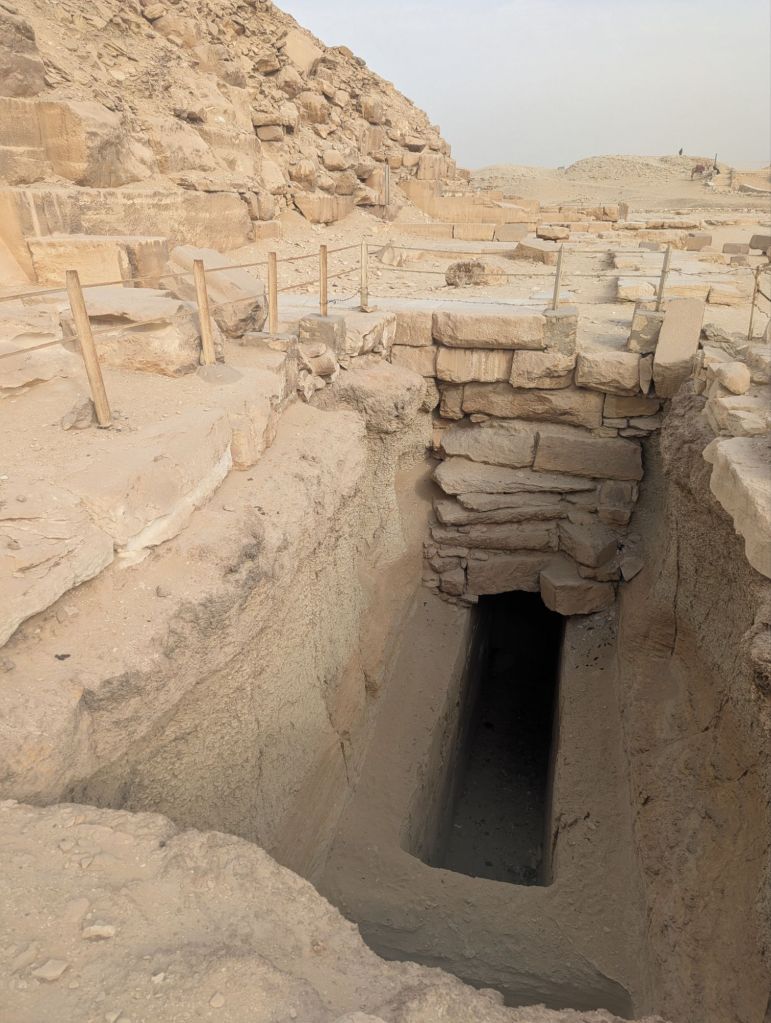
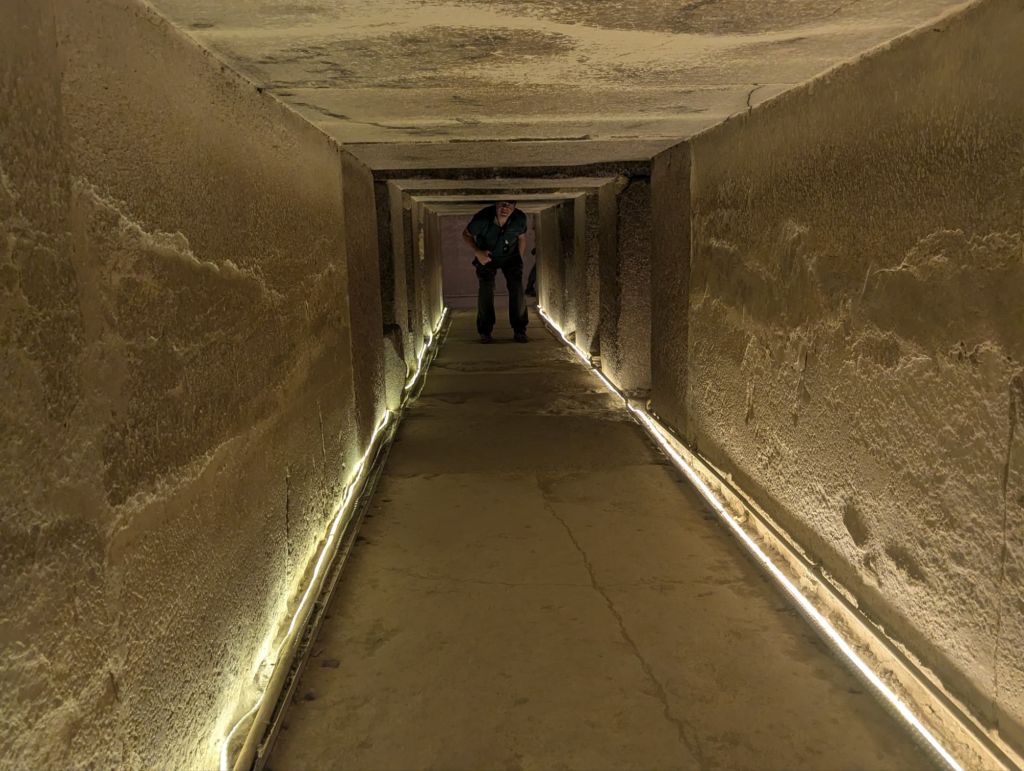
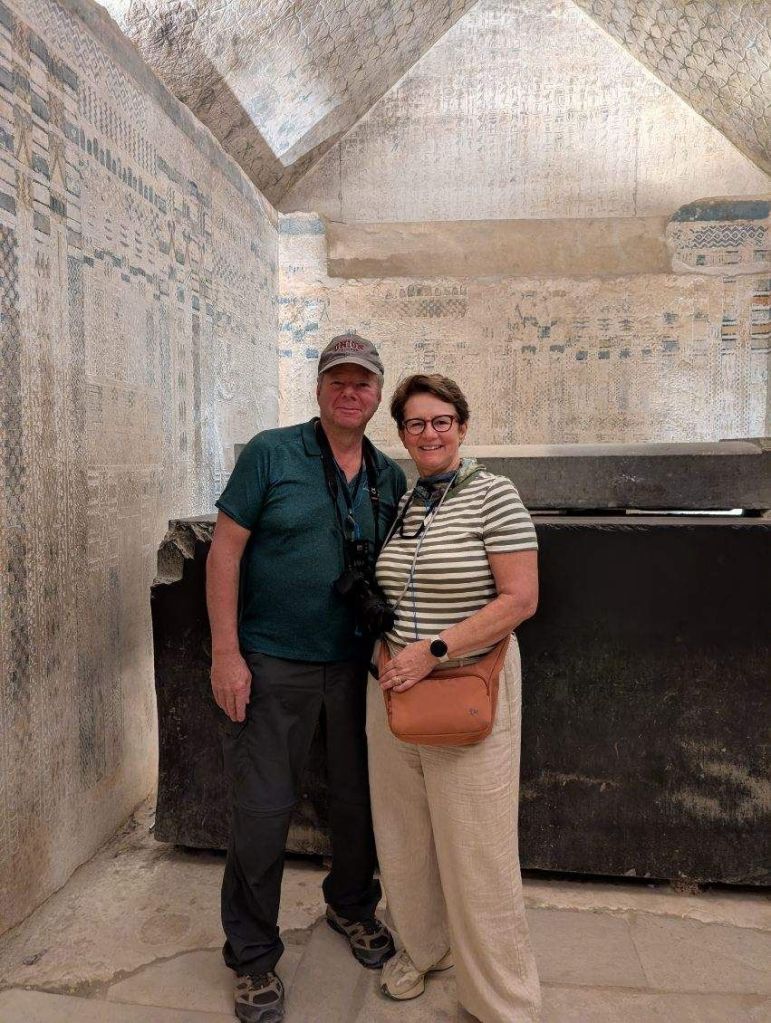
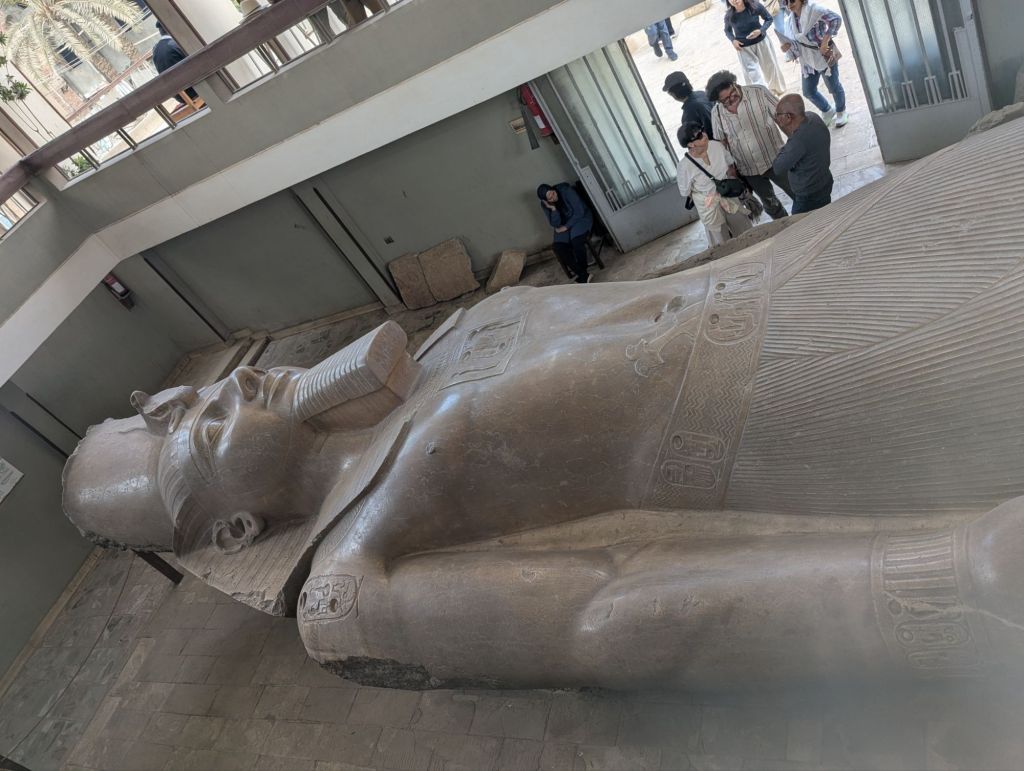
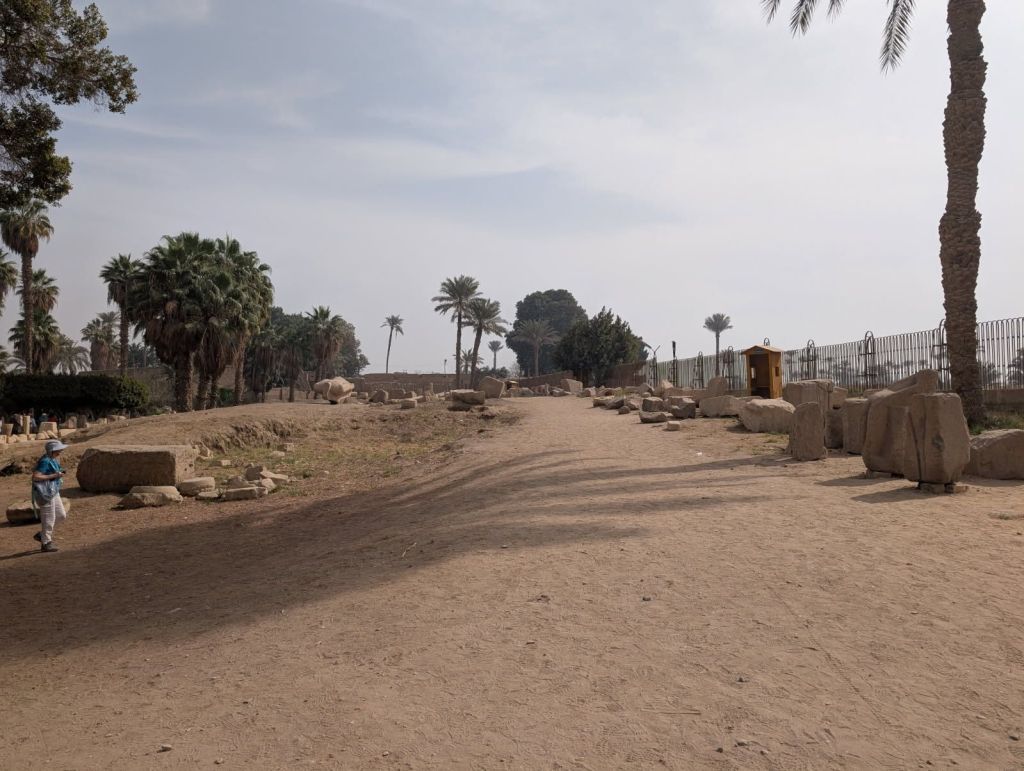
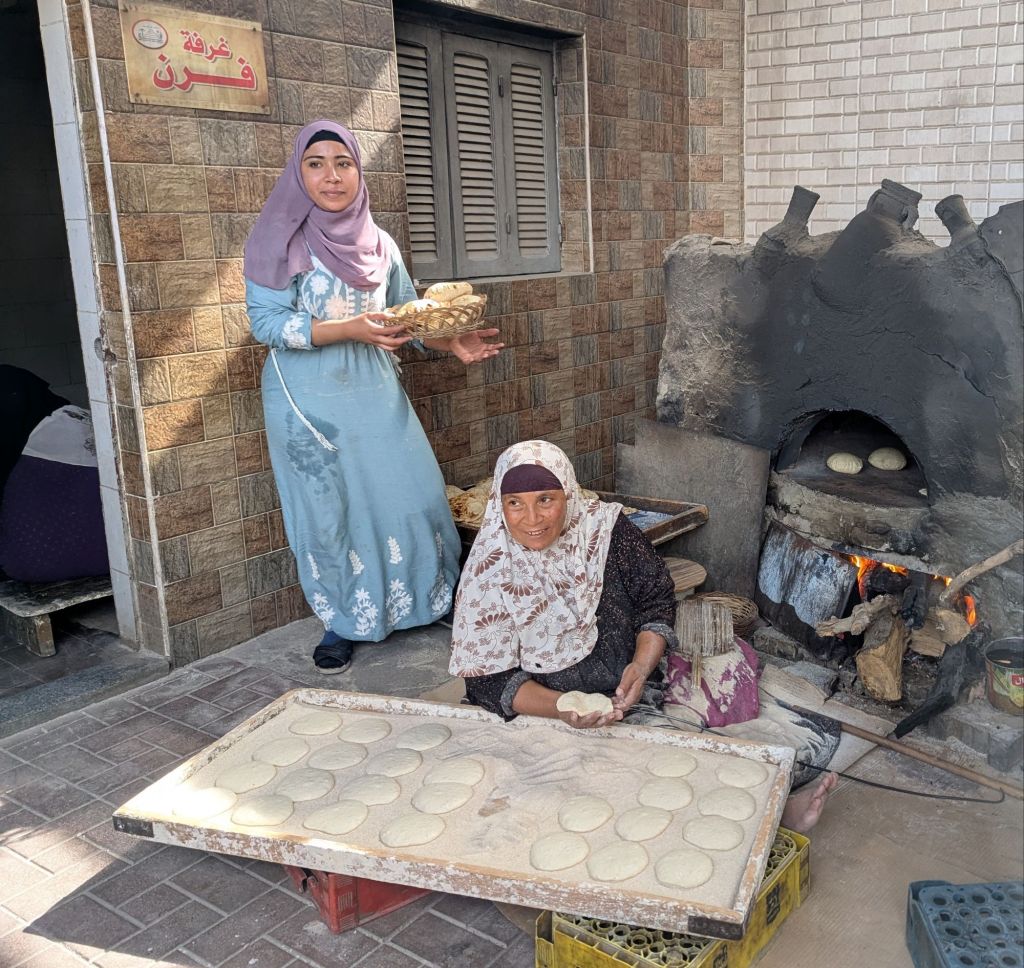
Memphis was the original capital of ancient Egypt, 3100 BC; we visited there next. There’s really nothing left to see since living quarters were made of mud whereas the longer lasting limestone and granite tombs were built for eternal life. A large statue of Ramesses II, found nearby, lies in a covered building while outside various statues, stelae, and sarcophagus fragments fill the space like an ancient salvage yard. Of course, vendors hawk all the same souvenirs nearby. We stopped for lunch at a family restaurant with bread baked in the wood fired oven. Lamb sausages kabobs, chicken, tagine-cooked vegetables and the typical Egyptian condiments: hummus, baba ghanoush, tahini.
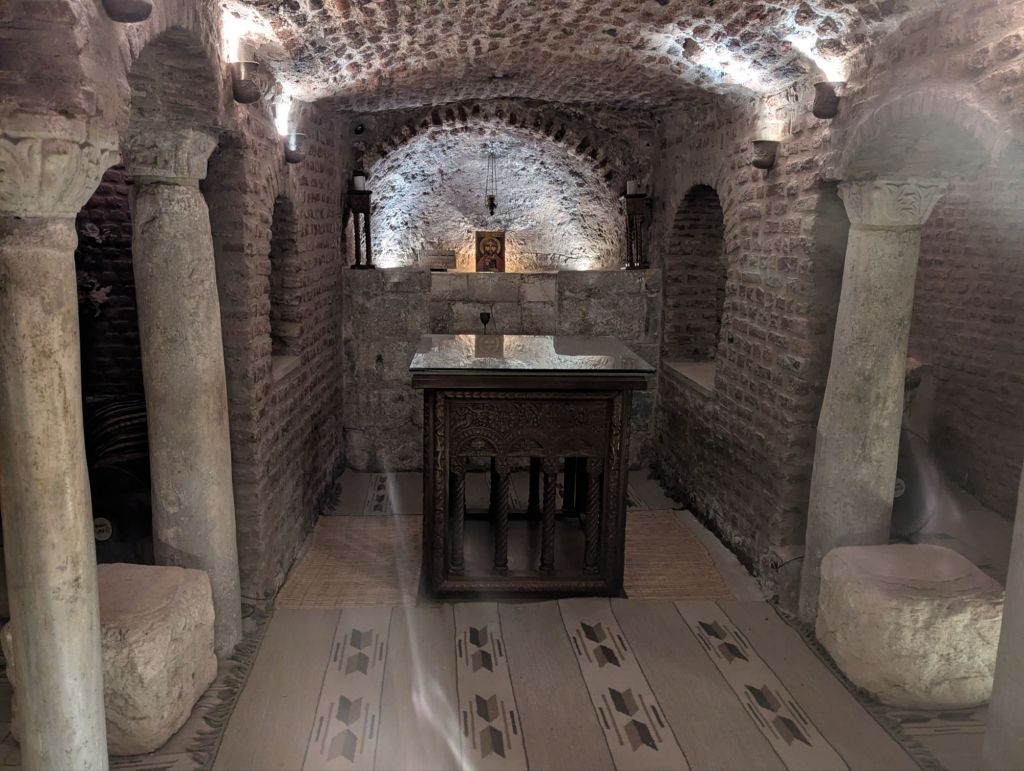
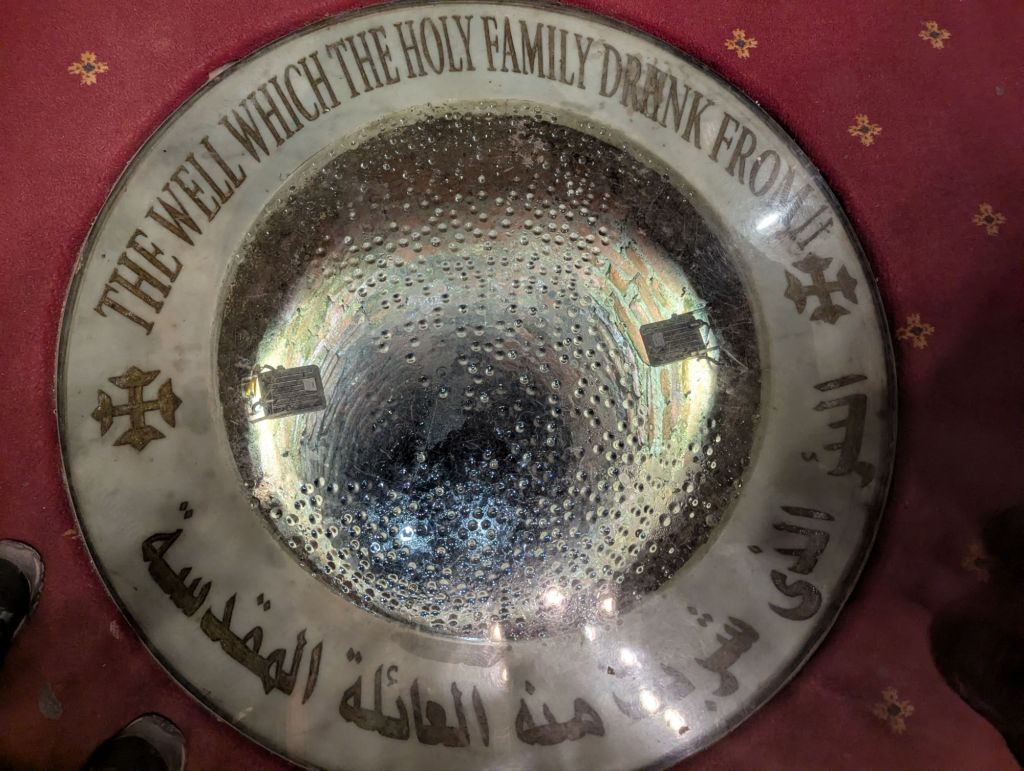
Rounding out our tour we visited other religious sites in Old Cairo: 2 Coptic churches and a synagogue. The Coptic church of St George is called a ‘hanging’ church as it is built over Roman ruins. A byzantine icon of St. Mark, who evangelized here in the 1st century AD, is displayed. Ancient Egypt had polytheism for 3000 years until St Mark arrived. He was killed by the Romans. Christianity became the main religion in 400 AD when Constantine converted until 644 AD when the Arabs took over. Now Egypt is 80 percent Muslim, 20 percent Christian. Another modest Coptic church, of the Martyr Saints Bacchus and Sergius, is built over the alleged location of the Holy Family’s lodging while they stayed in Egypt on their flight from Herod. Their cave in the basement of the church and a well from which they drew water are the highlights of this visit.
Afterward, walking through narrow alleys lined with booksellers books, we arrived to the Synagogue of Ben Ezra which was formerly a church. Very few Jews live in Cairo or Alexandria since the establishment of Israel (like, less than 10 in each city. Remember, Cairo has 22 million people!) This and other synagogues, churches, and mosques are all maintained by the Egyptian government.
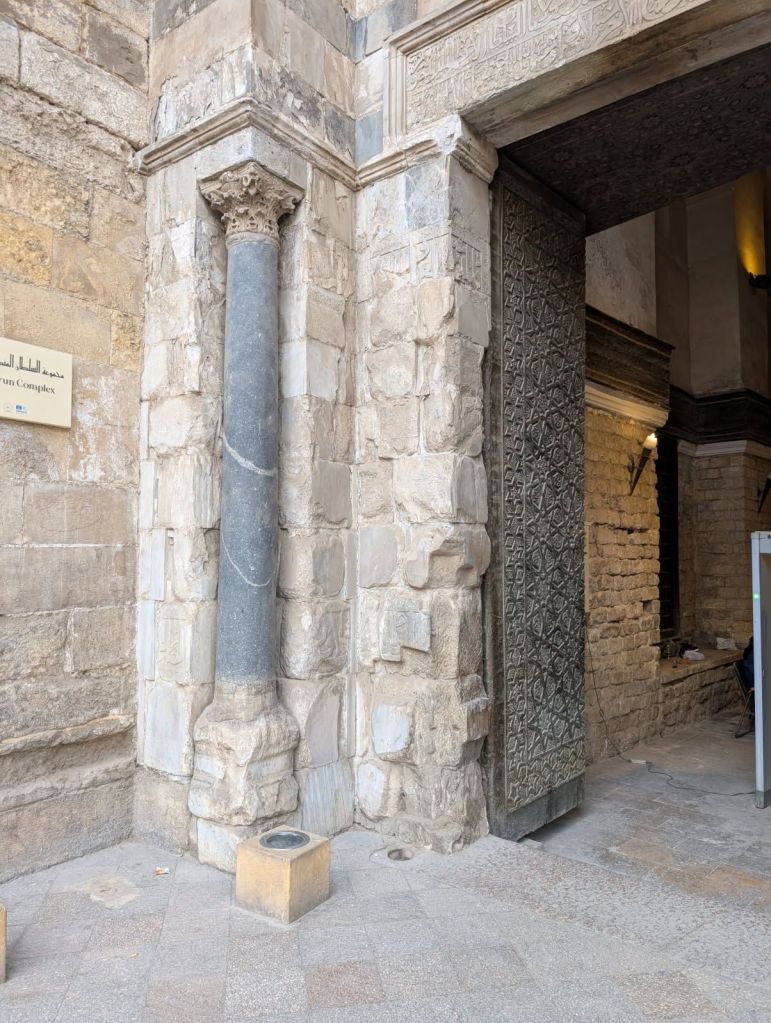
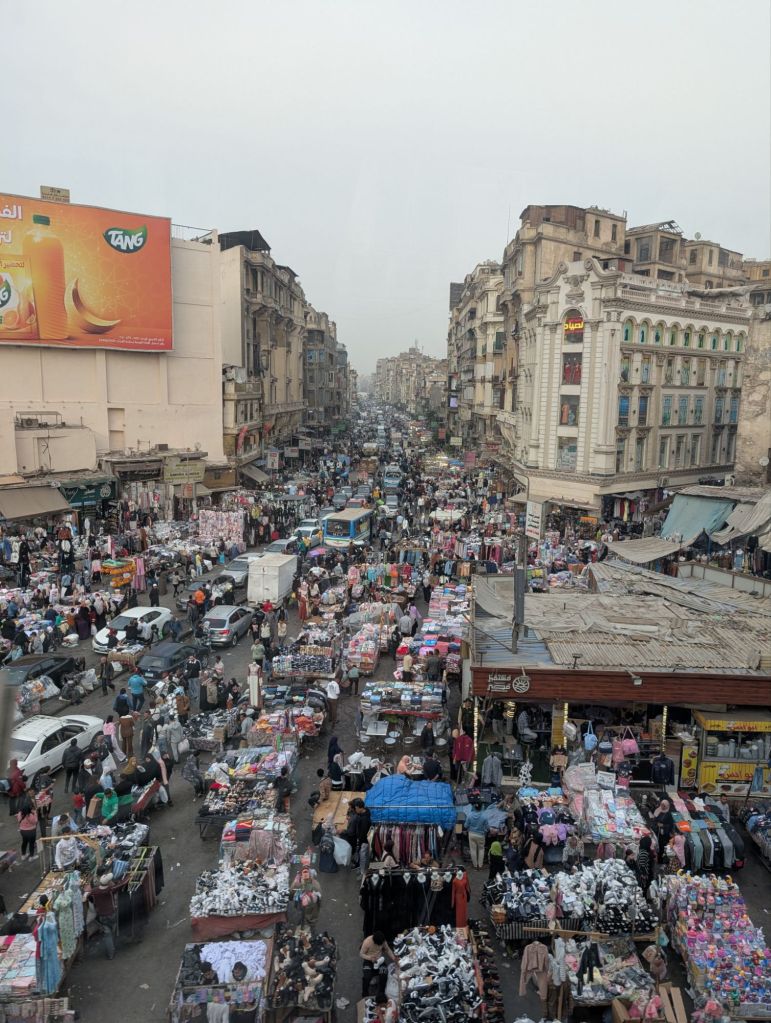
Our final activity was a fun visit to the Khan el-Khalili Bazaar, enjoying the vibrant sites of shopping among the street sellers: scarves, spices, clothes, jewelry, food, while walking past ancient mosques and other buildings. Around the corner sits the much larger center of the Bazaar, basically an outdoor mall visited by thousands of Egyptians; as they drive, so they shop. Very impressive!
Our 2 week Egyptian trip came to an end, every day filled with adventures and great memories in the making. This has been the most wonderful, interesting trip with a fun group of fellow travelers and an amazing tour director. Meya meya!
Points to consider when visiting Egypt: people dress modestly (unless you’re an oblivious tourist) but beautifully. Egyptians are extremely friendly and accommodating, but also sellers, hawkers, and children have no compunction about being pushy to sell goods or ask for tips or “baksheesh”. Bathroom visits require a tip to the attendant; 10 or 20 Egyptian pounds will do. Many toilets ask for toilet paper to be placed in bin and not toilet; also bring your own TP to be safe. Driving is crazy and traffic was pretty bad. The weather was nice and sunny, rarely reaching 85 at this time of year (Feb) . It was very dusty most of the time. Random dogs roamed everywhere, some vaccinated, most well fed. Water was provided by our tour agency otherwise it was not recommended to drink tap water even from the nicer hotels although we did enjoy salads and fresh strawberries. A few guests suffered GI problems occasionally. Everyone had a good time.
I highly recommend reading “Empress of the Nile” by Lynne Olson. Details the efforts of Christiane Noblecourt to save the temples along the Nile
My packing list: 1 sneakers, 1 sandals, 2 pair pants (1 linen, 1 polyester), 1 pair shorts (can’t wear shorts in mosques, churches, etc), 5 tee shirts, 2 blouses, 1 long sleeve shirt, 1 swimsuit, 1 dress, 1 linen top with skirt, 1 polyester sweater, 1 linen jacket, 2 hats. A scarf or two but also bought 2 more. The usual undies and socks. I made good use of my cell phone tether and sunglasses that slide over my prescription glasses. Midway through my prescription glasses fell apart; I always carry a backup. I also cracked the camera screen on my phone so could take photos only without resizing/zooming. Oh, I also lost my Kindle. More time for writing!Thank you for reading! Shukran!
But wait! There’s more! Jordan is next!

 My new reality