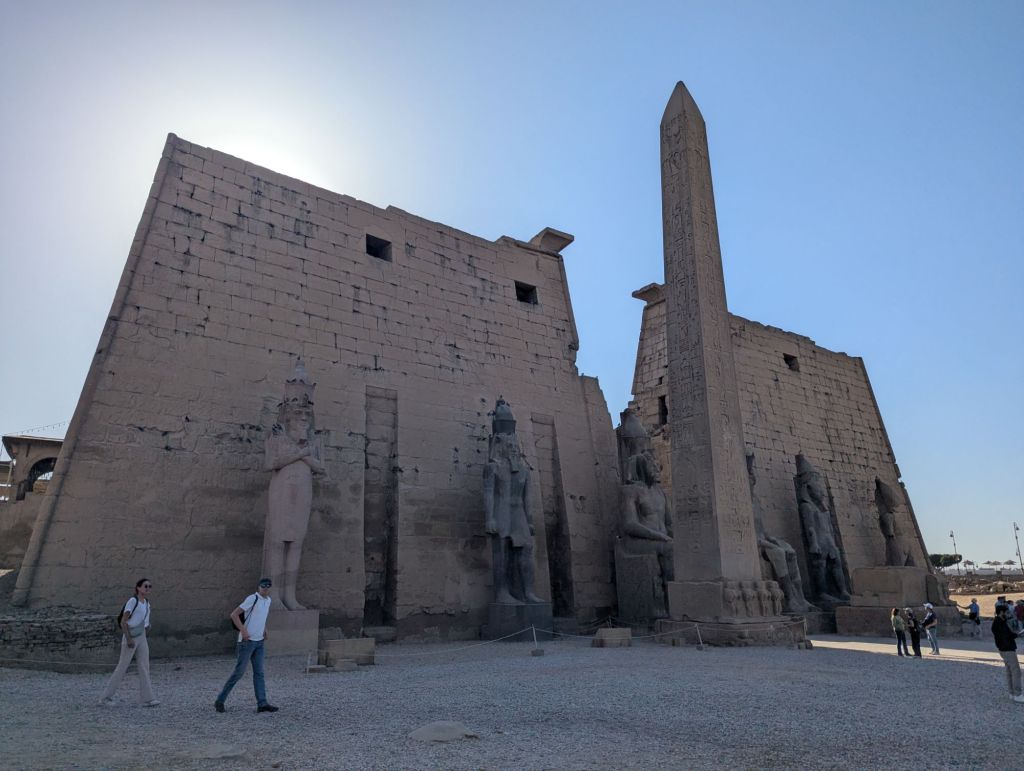
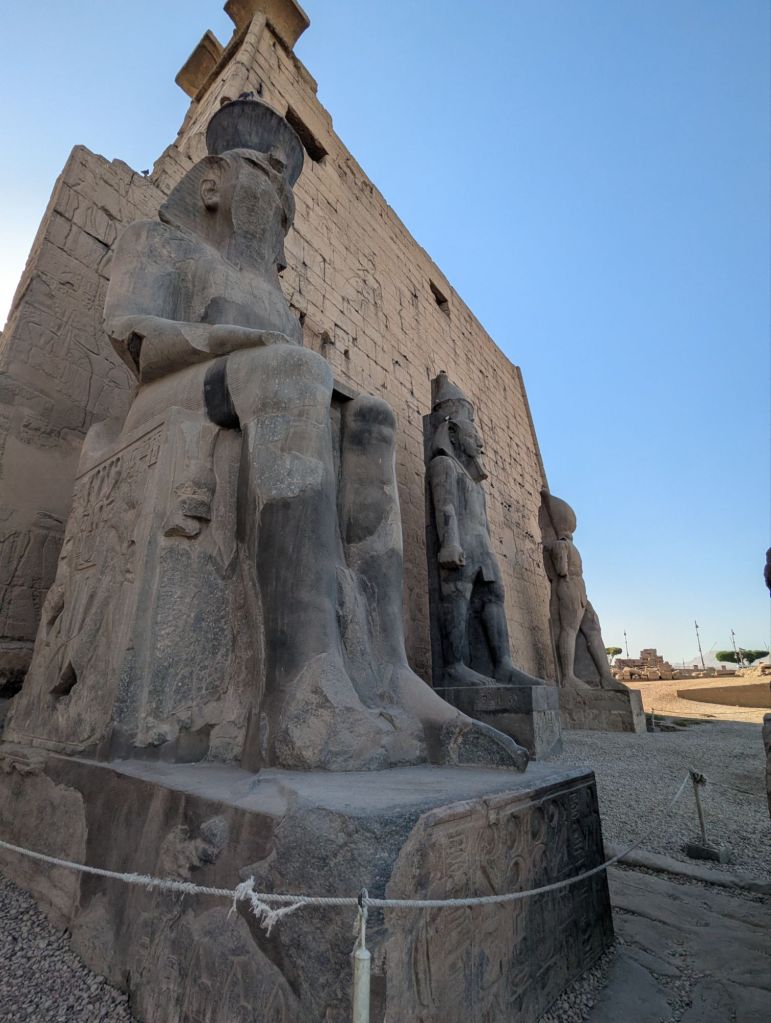
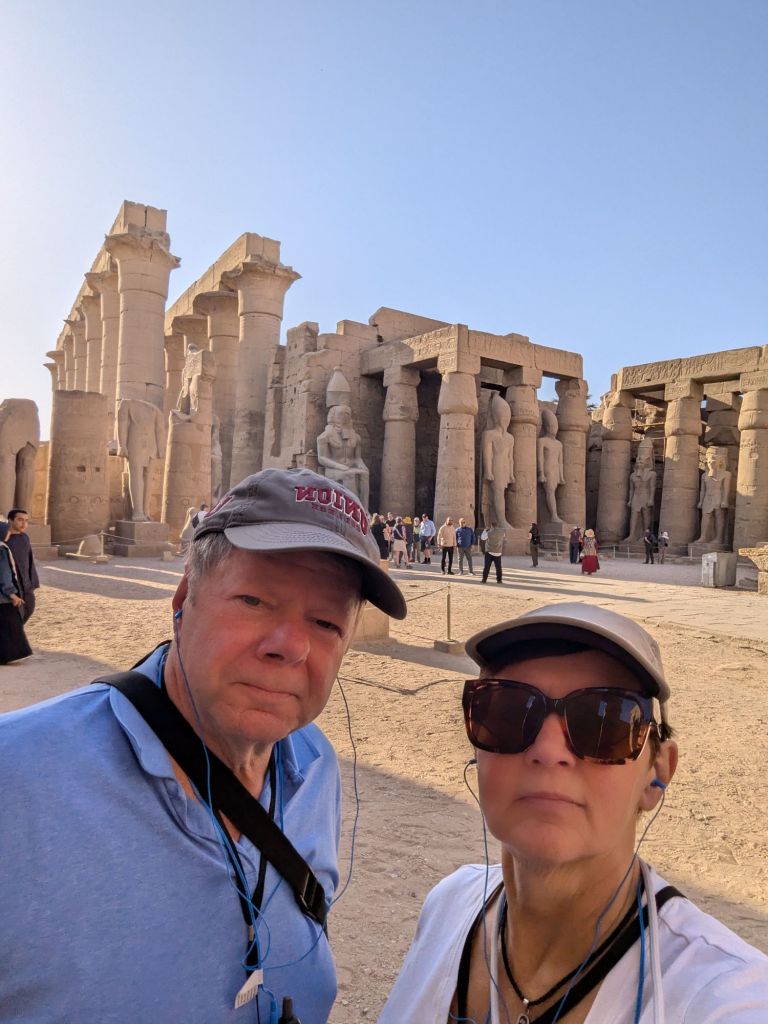
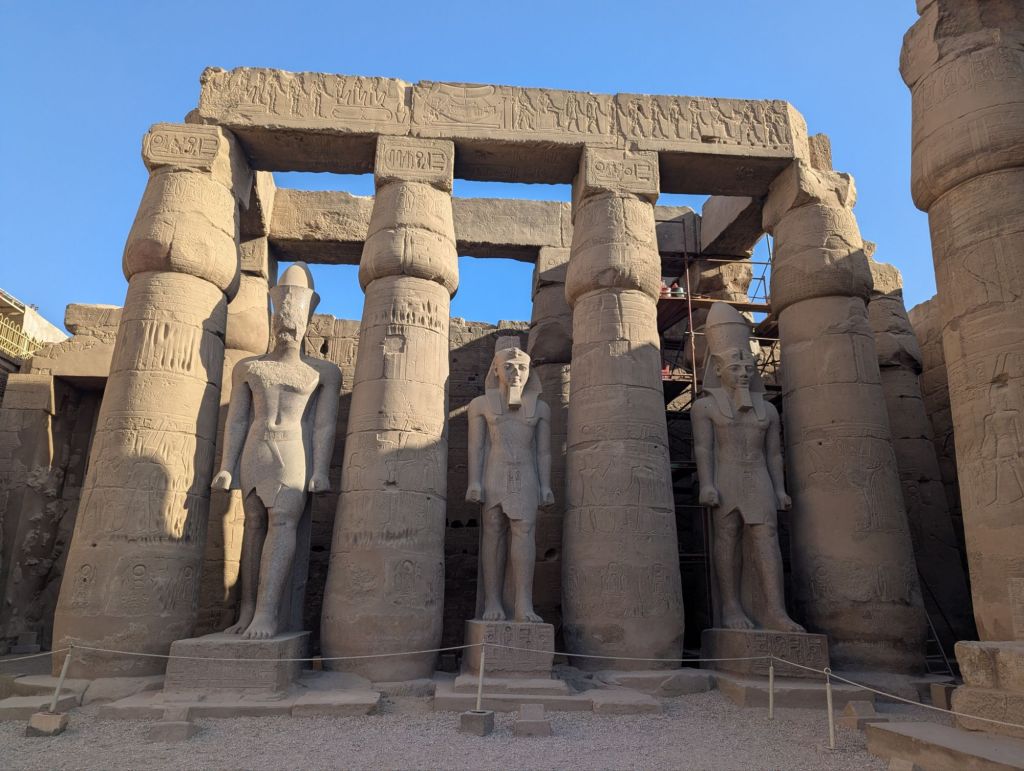
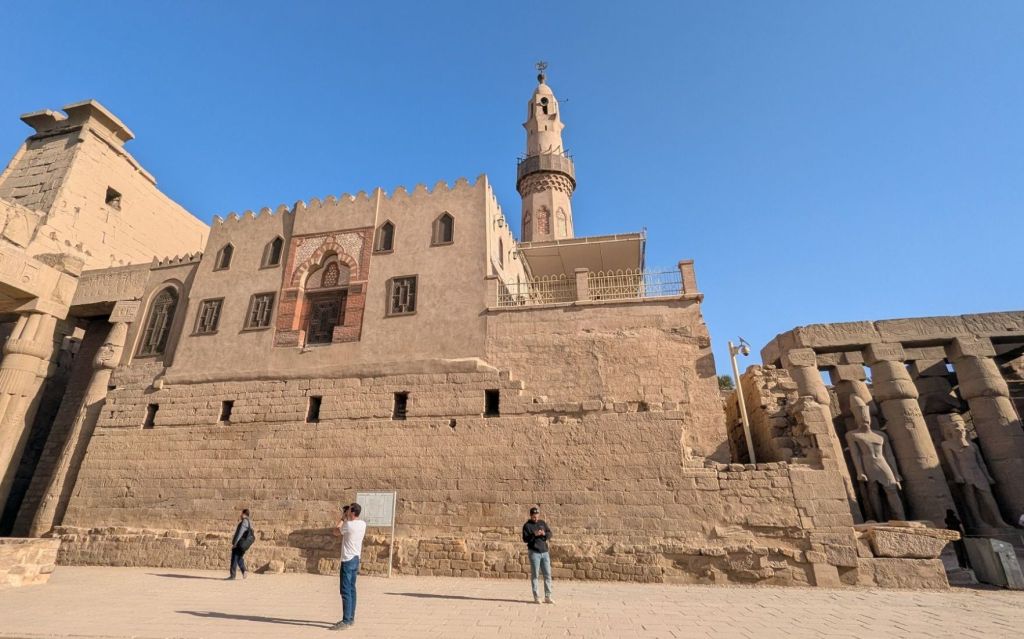
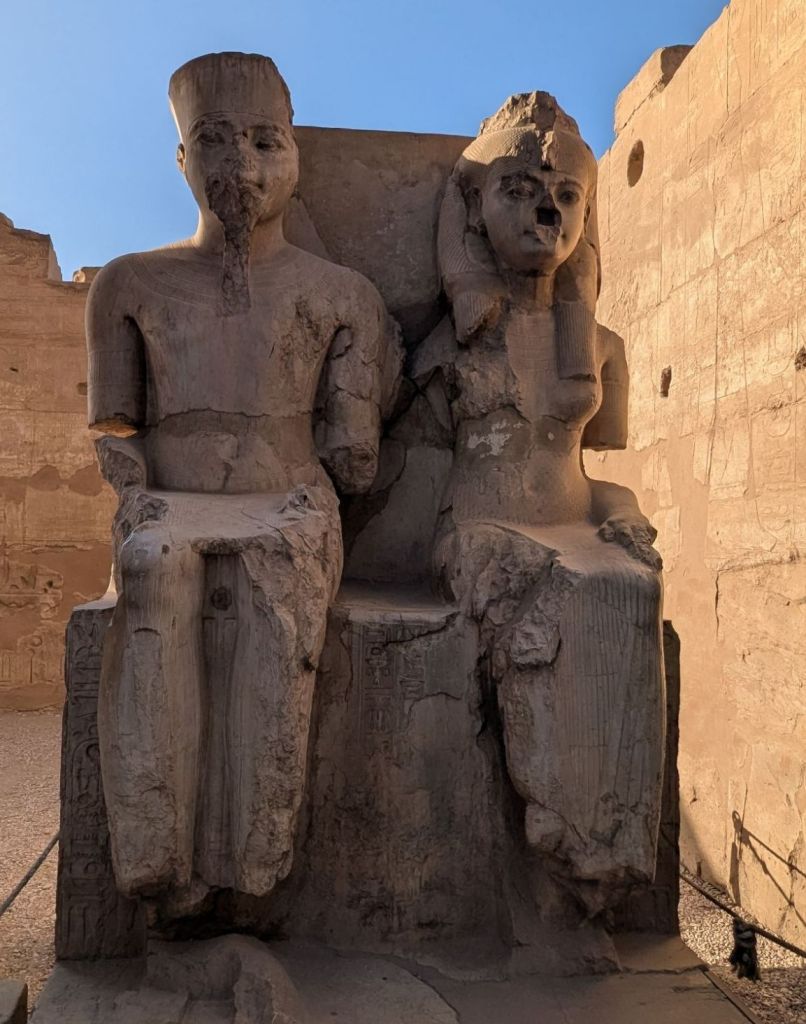
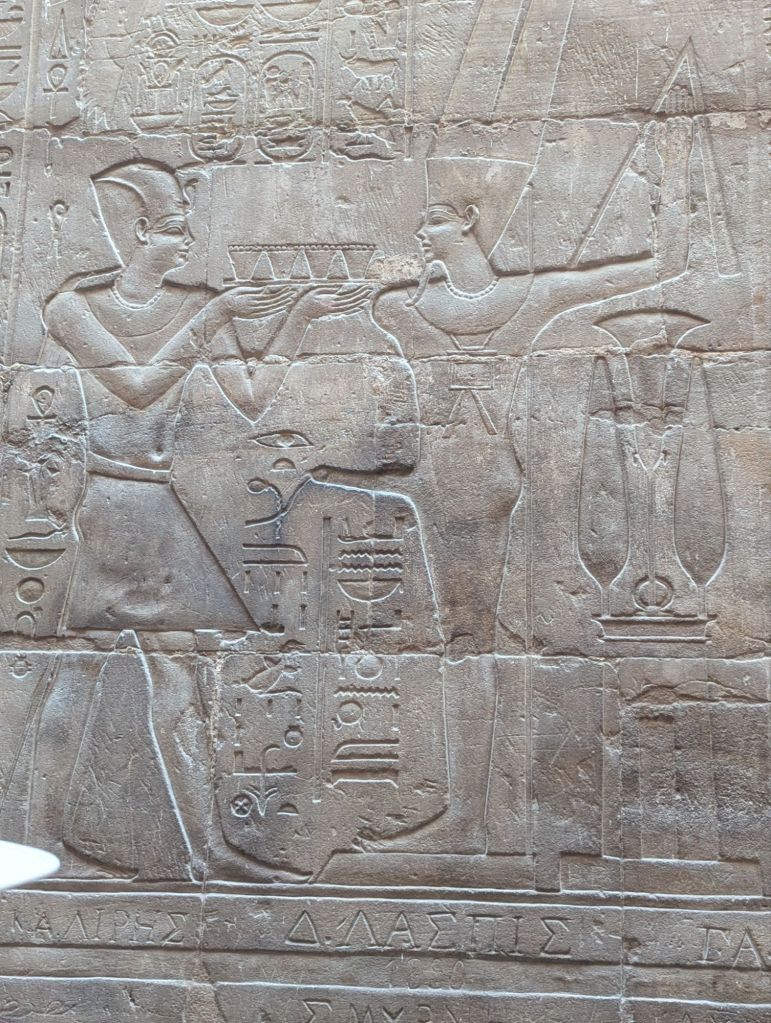
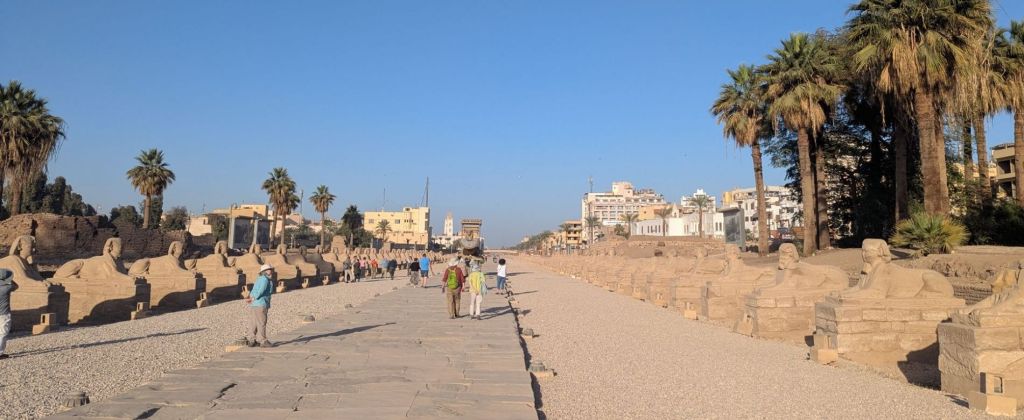
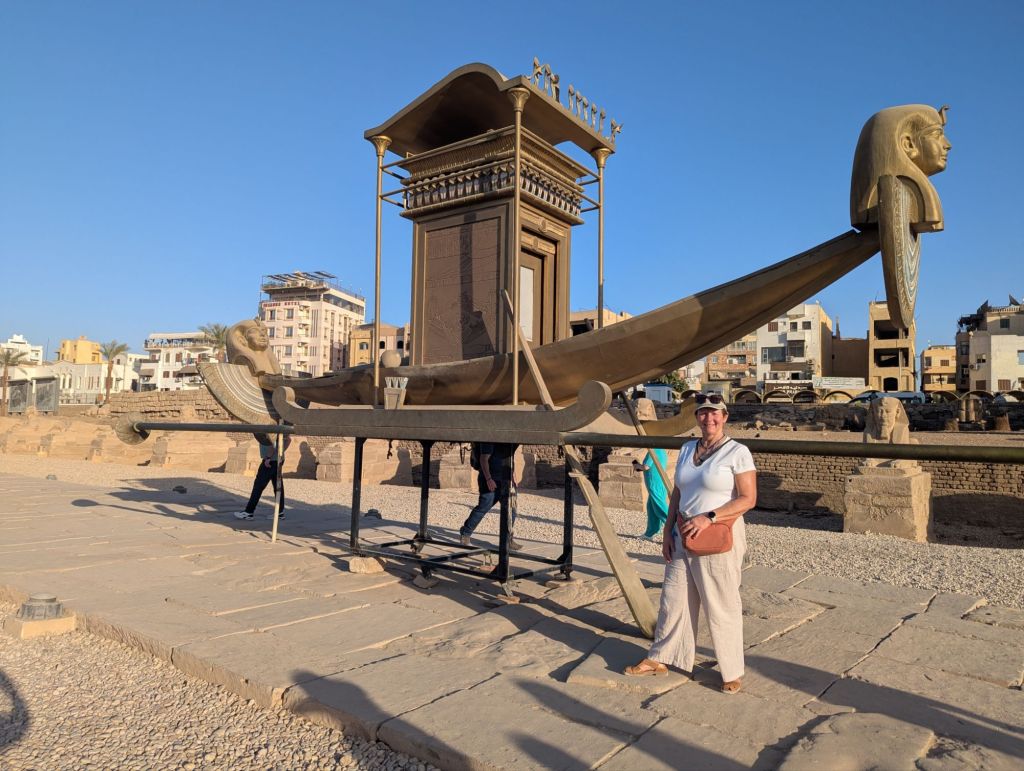
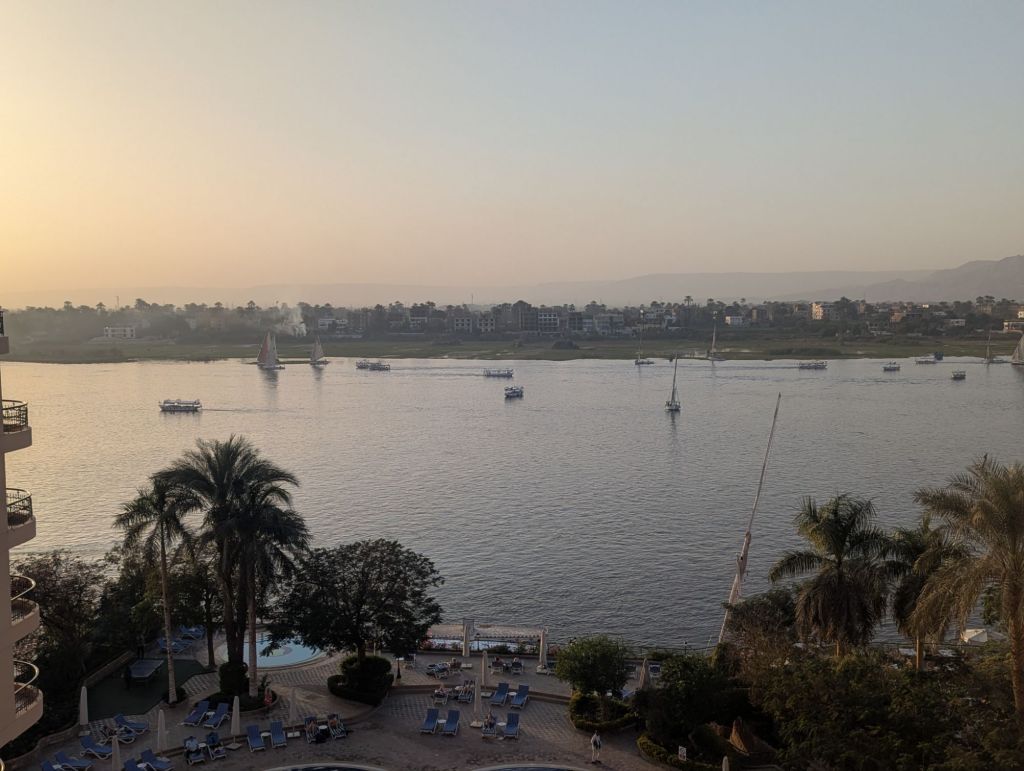
Ah, Luxor! Capital of Ancient Egypt for 500 years (1500-1000BC), land of the pharaohs, known as Waset in ancient Egypt or Thebes in Greek. We docked at this city of 1.5 mil population for an overnight before moving to our hotel, the Steigenberger Nile Palace. Our first visit was the temple of Luxor, continuously built since 1400 BC and added onto by successive pharaohs and kings: Amenhoptep, Tutankhamun, Ramesses II (he was everywhere!), and even Alexander the Great contributed. Luxor temple was also buried in sand and not discovered until 1949; houses, stables, and even a 700 year old mosque were built on top. The mosque is still there! Statues of King Tut and his affectionate wife grace the courtyard. Alex the Great built a sanctuary within the original sanctuary to prove his point. A magnificent avenue flanked by over 1,000 stone sphinxes stretches 2.7 km to Karnak.
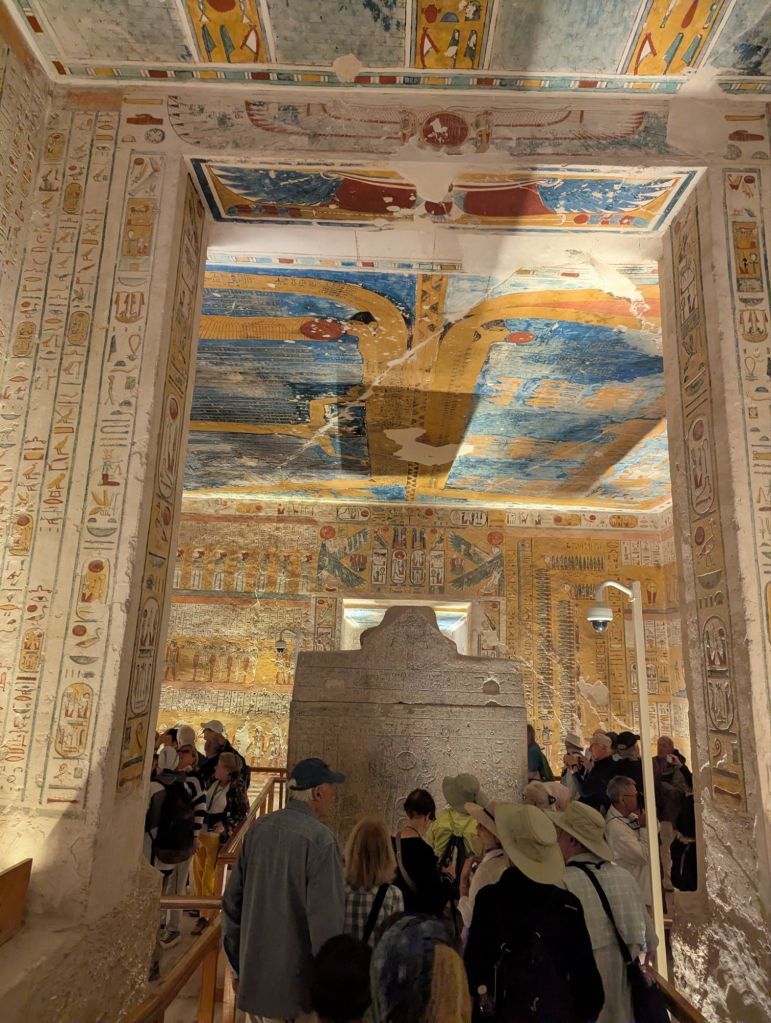
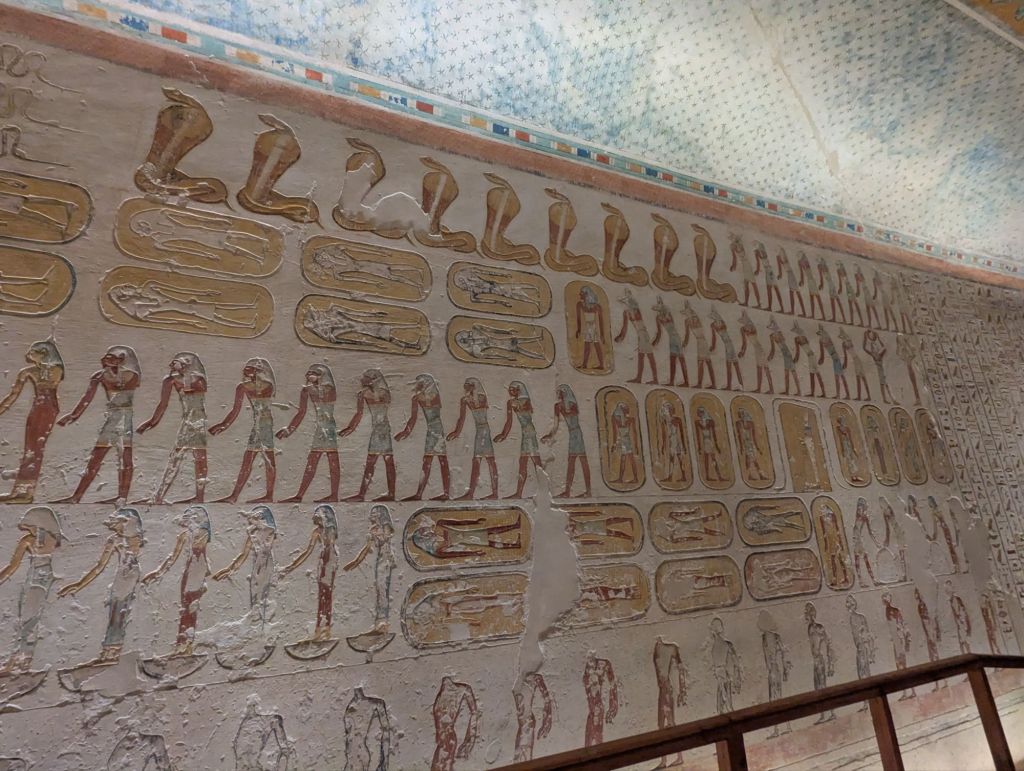
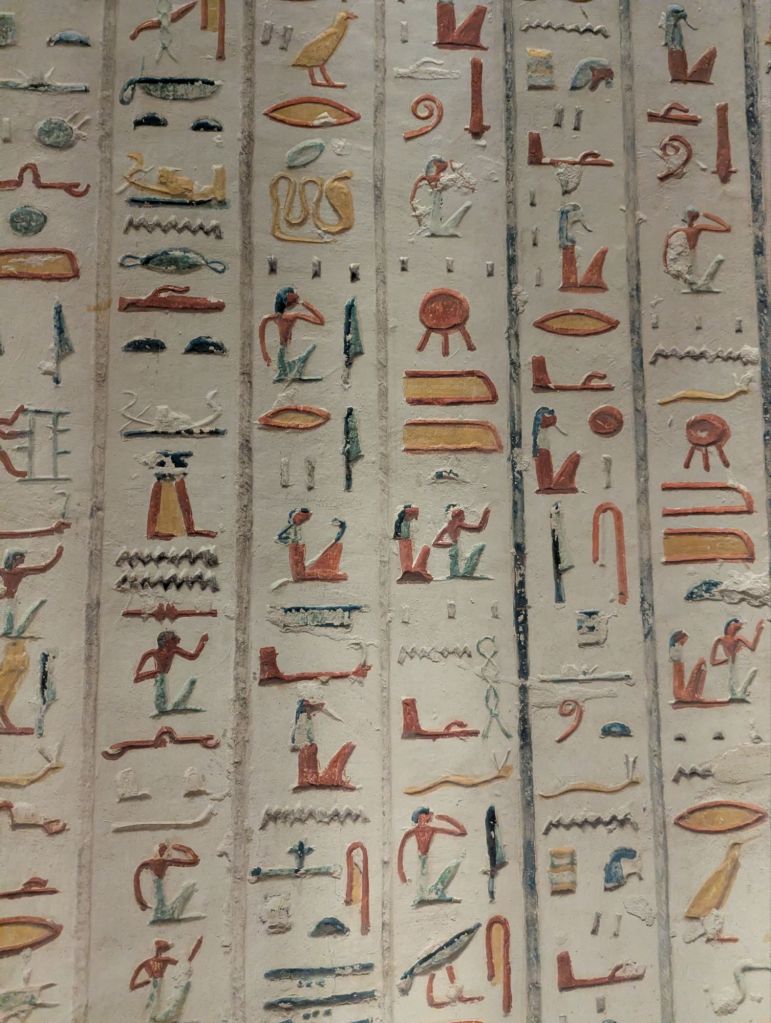
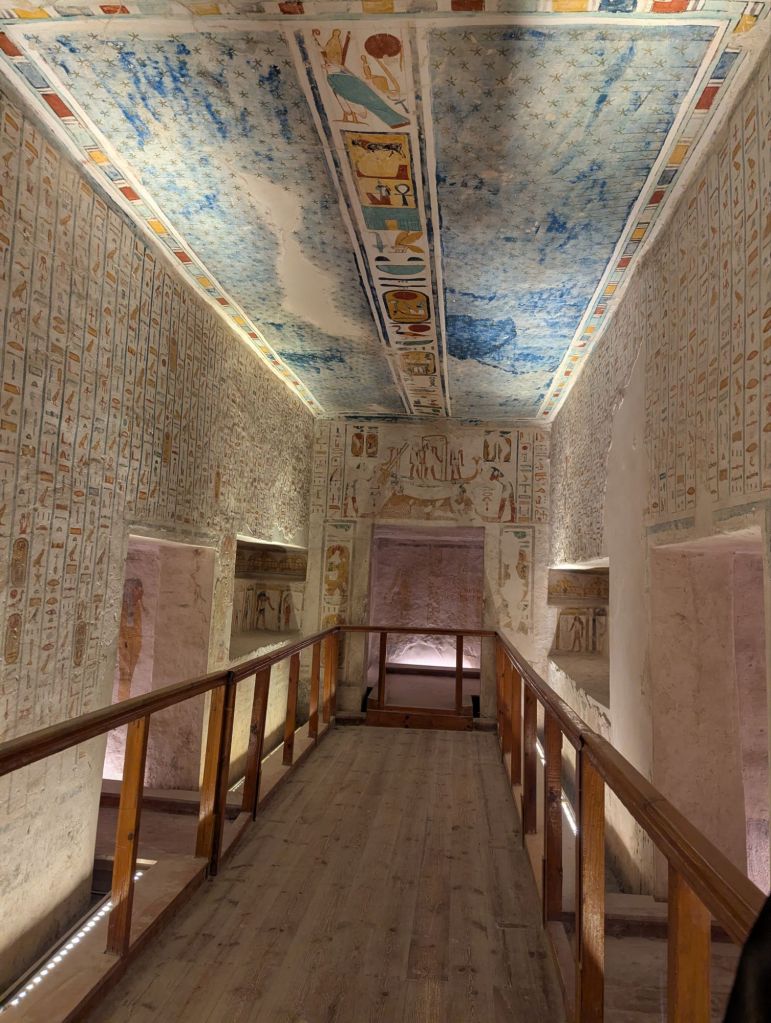
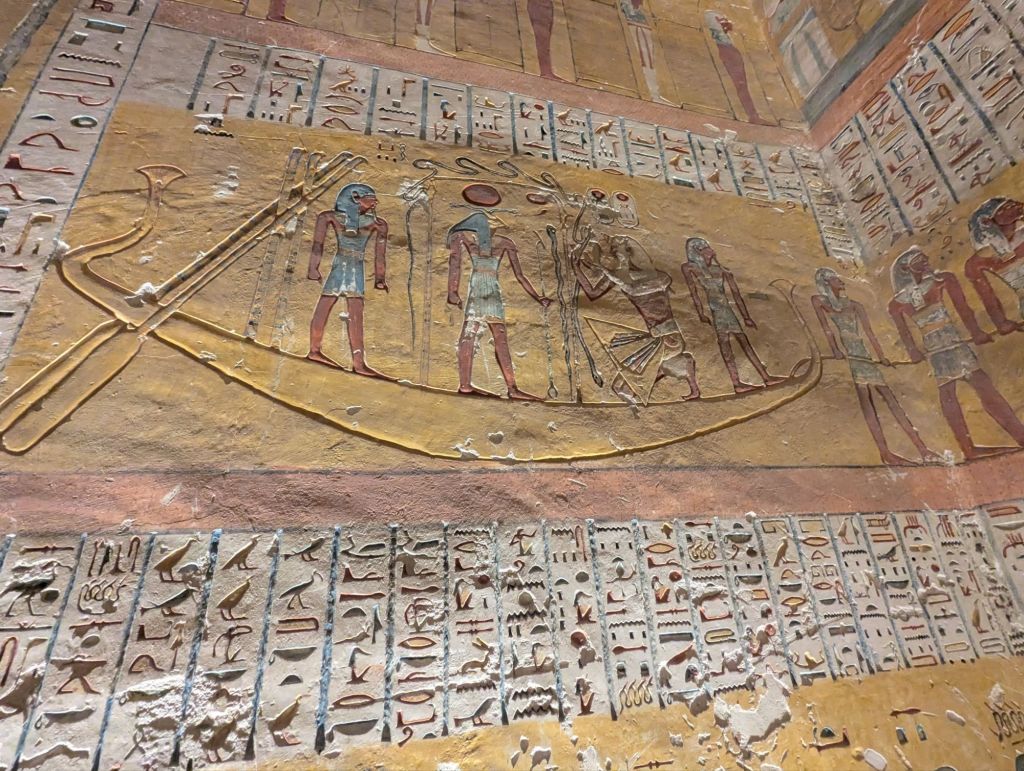
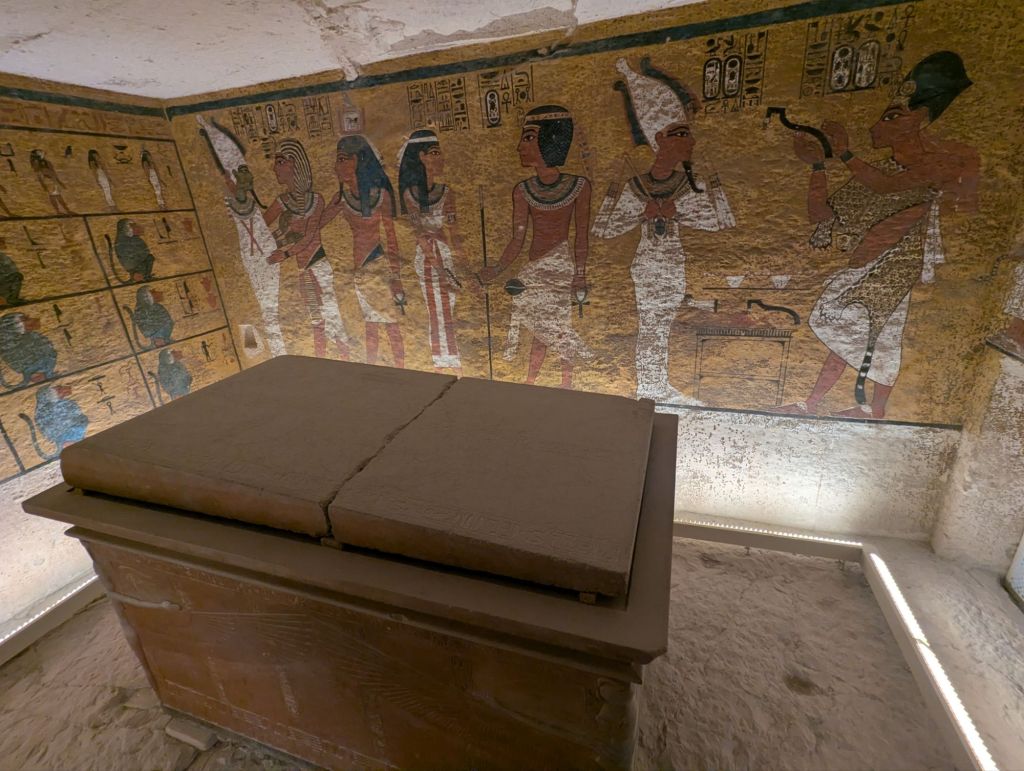
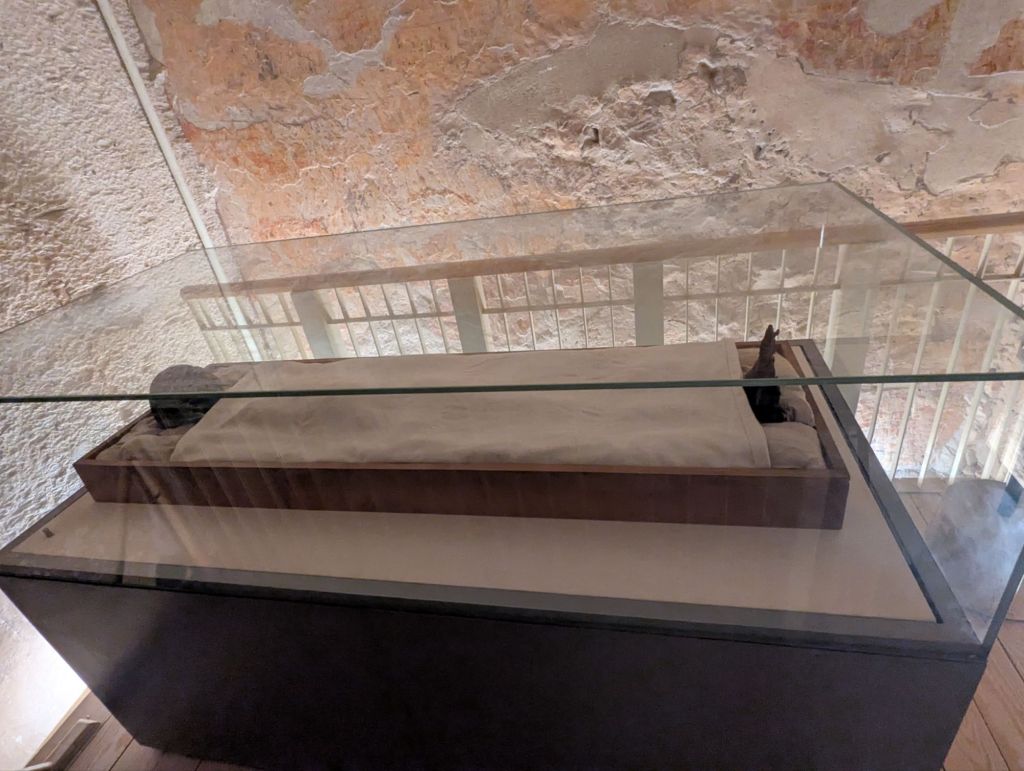
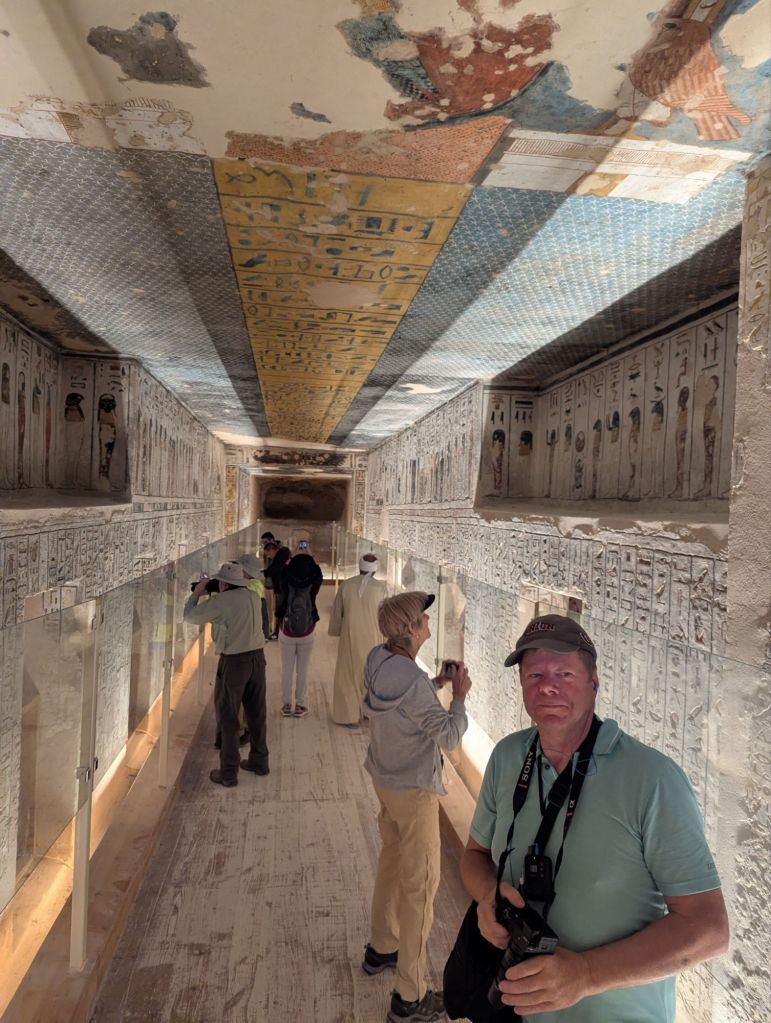
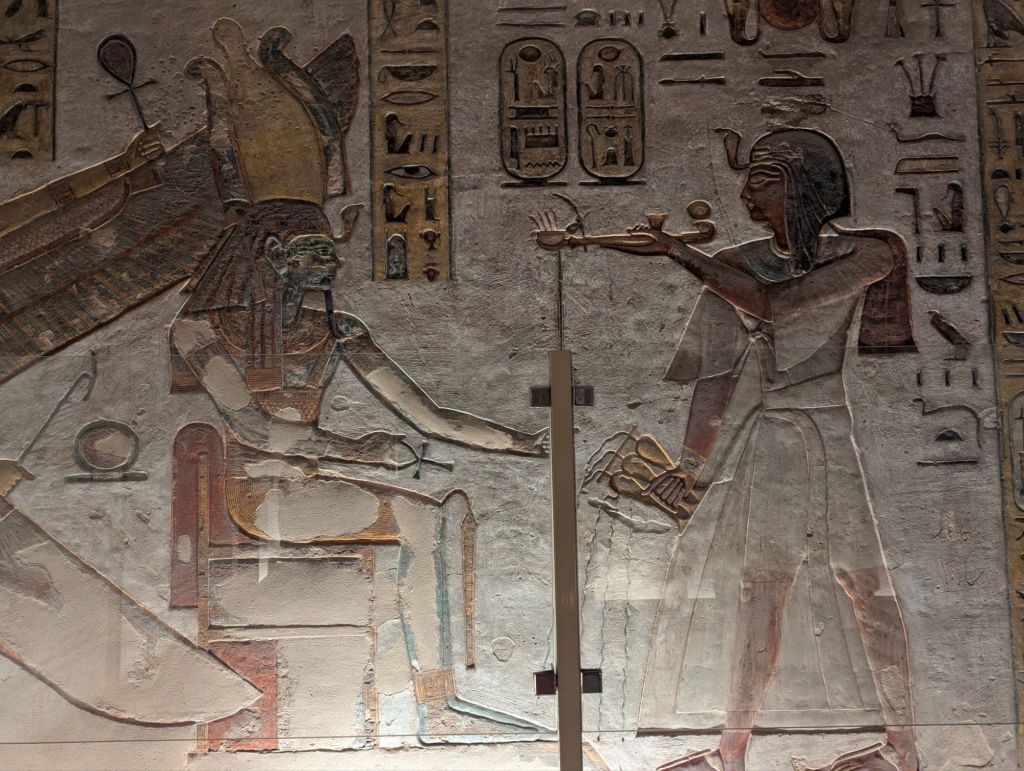
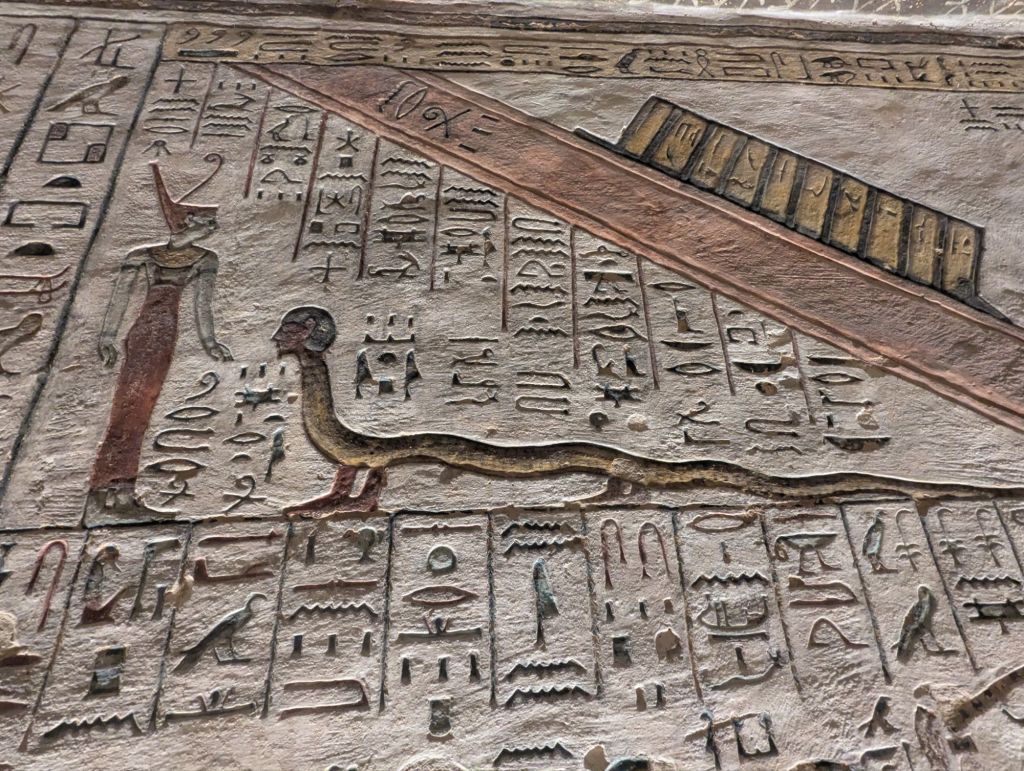
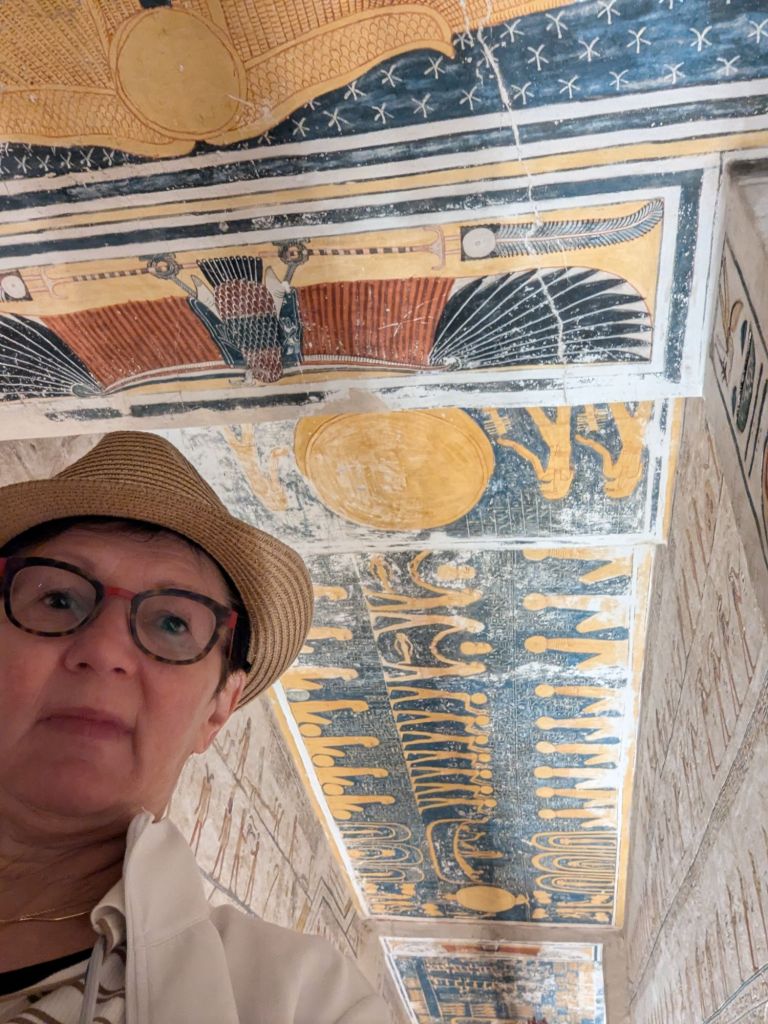
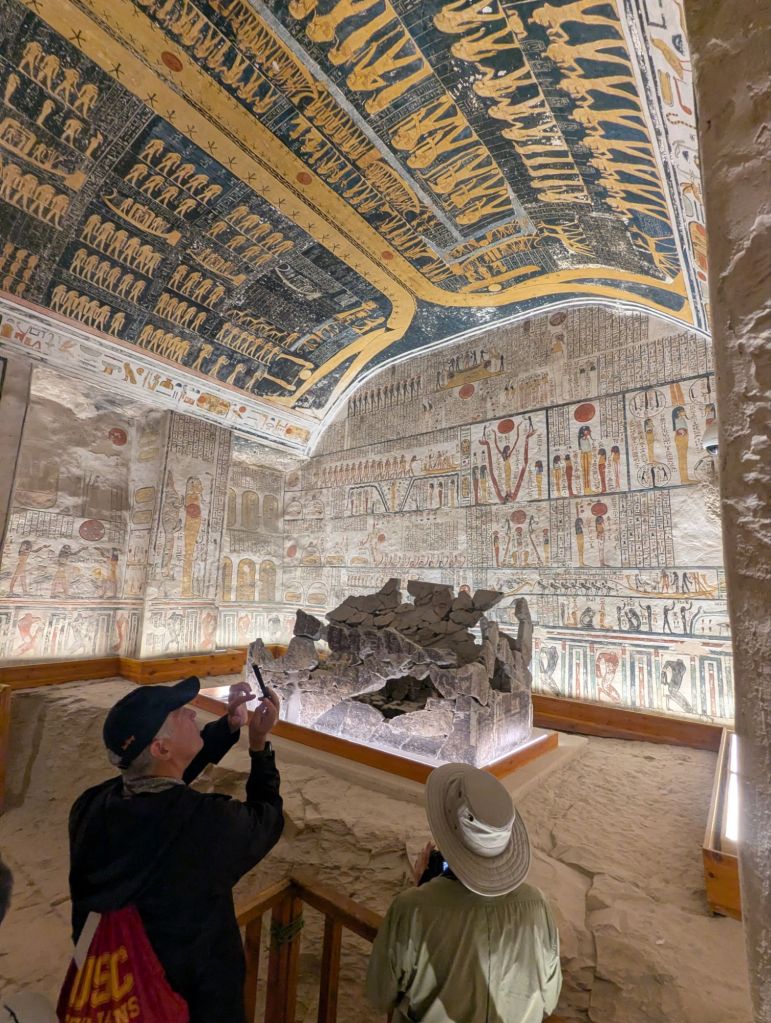
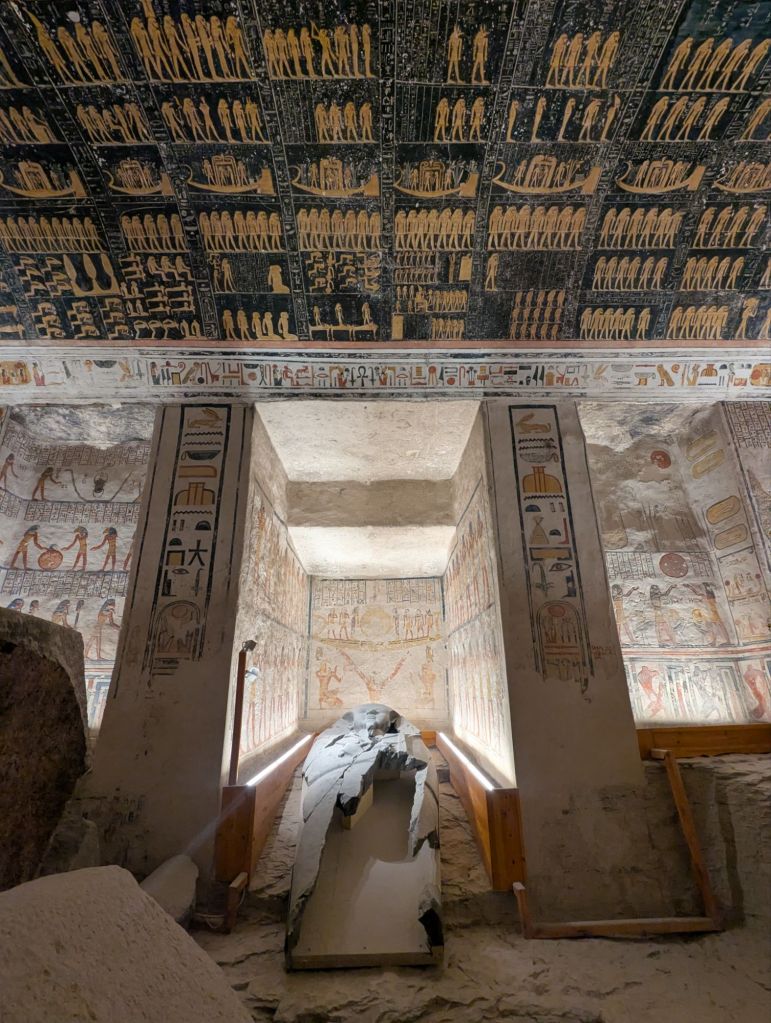
Another day, another highlight! We headed to the West bank very early the next morning to visit the Valley of the Kings. Here, pharaohs of the golden age (1500-1000BC) were buried in ornately decorated tombs. Over 60 tombs of 3 royal families are located in this barren valley surrounded by hills, notably the tallest peak in the shape of a pyramid. Our early arrival meant for lighter crowds. We entered the tombs of Ramesses III, Ramesses IV, Ramesses V/VI, and Tutankamun. Also the double tomb of Tausert tomb usurped by Setnahkt.
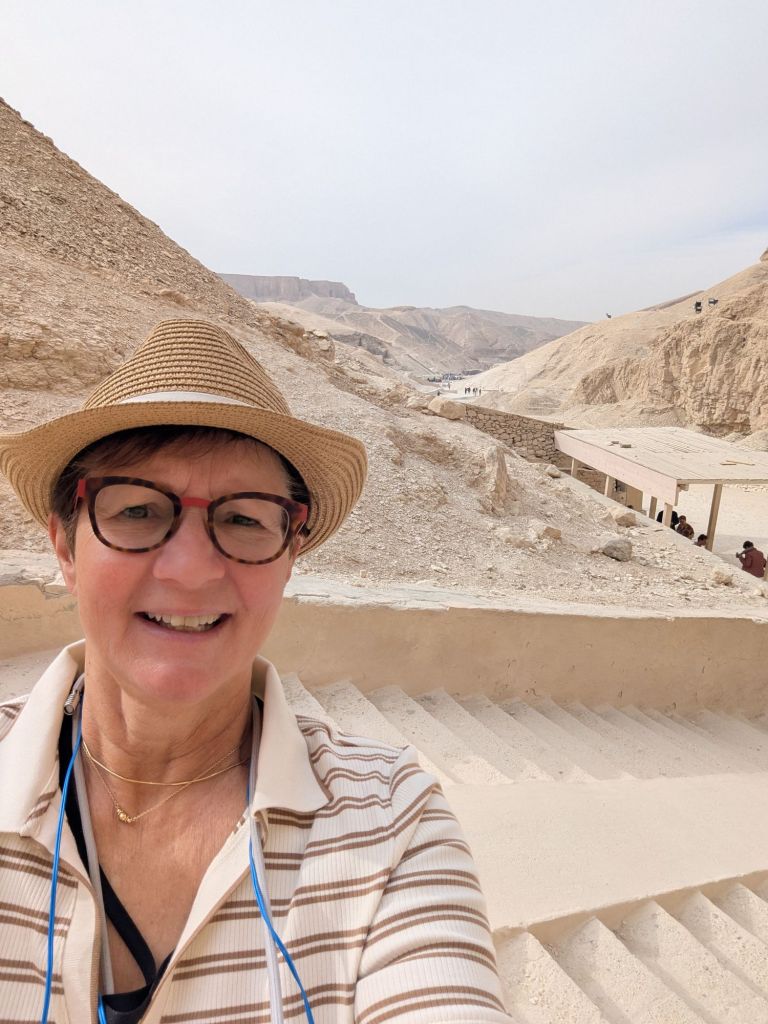
Ramesses IV’s tomb was the largest, Tut’s the smallest. Upon ascension to the throne, pharaohs immediately began constructing their tomb showing the importance they placed on eternal life. Tut died young, 19 or 20 years old, with less time to prepare his tomb was smaller than most. Luckily, his tomb was below another so grave robbers were unaware of the treasures beneath. Tombs were built in this valley when grave robbing was popular at the pyramids; apparently that didn’t work to keep them away here. Imagine if tombs were undisturbed? Oh, the treasures!!! The valley is guarded these days and archeological digging continues for 2 or so pharaoh tombs as yet undiscovered.
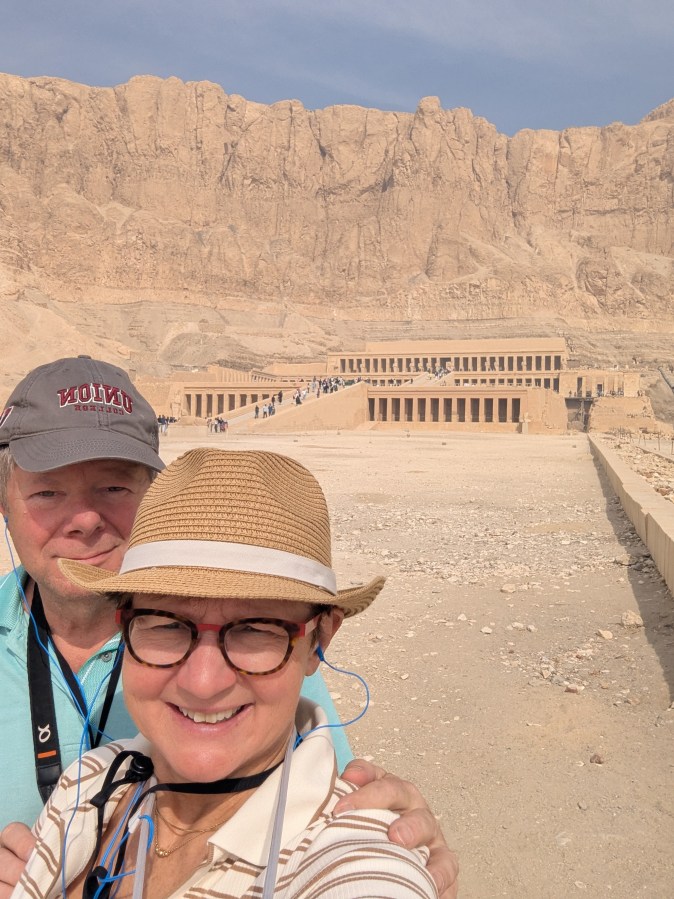
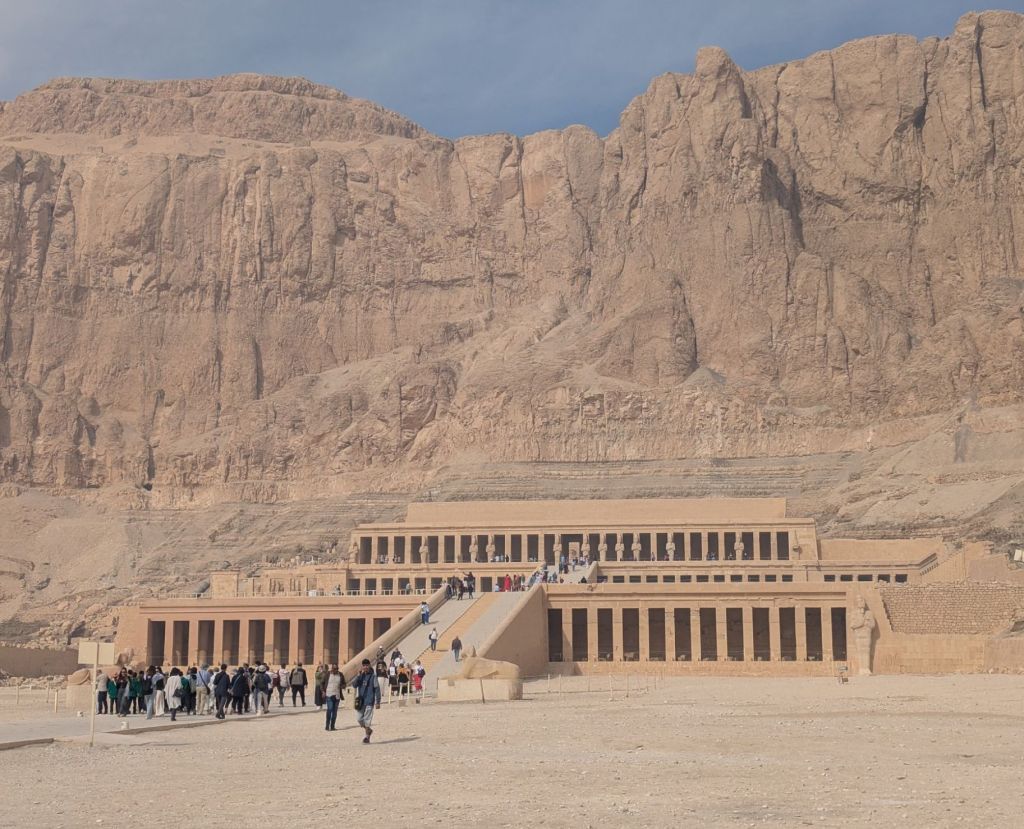
Nearby, actually just over a hill, is the tomb of Hapshepsut. A woman, how is she buried in the Valley of the Kings? As the royal wife of Thutmoses II she helped her stepson when he inherited the throne at age 10, then she declared herself as queen. Since only men could be pharaohs, she dressed as a king and manufactured a tale about being the daughter of Amun Ra. She fooled and ruled for 22 years. After her death her stepson took revenge on her by defacing her statues and temples. This funerary monument is stunning, set into the hillside and visible for quite a distance. Nearby, in those same hills, are smaller tombs of high priests, royal scribes, and other notables. All ancient Egyptians were buried on the West bank, some had larger tombs than others.
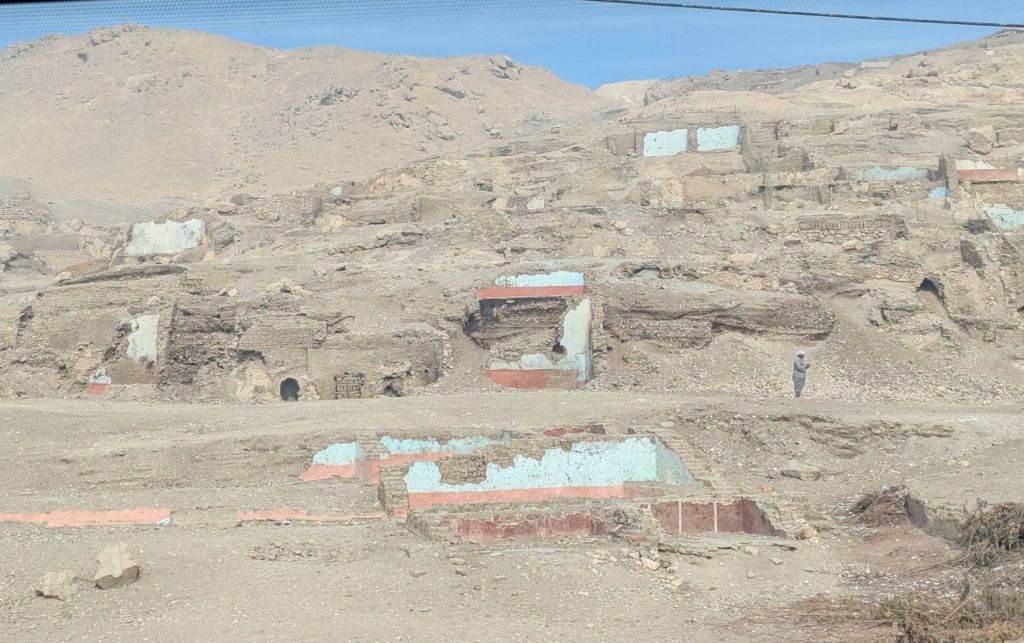
We then visited the Valley of the Queens nearby, where wives and children were buried in over 80 tombs. This area was discovered in the early 1900s and is where Queen Nefertari’s (R II wife) tomb is located.
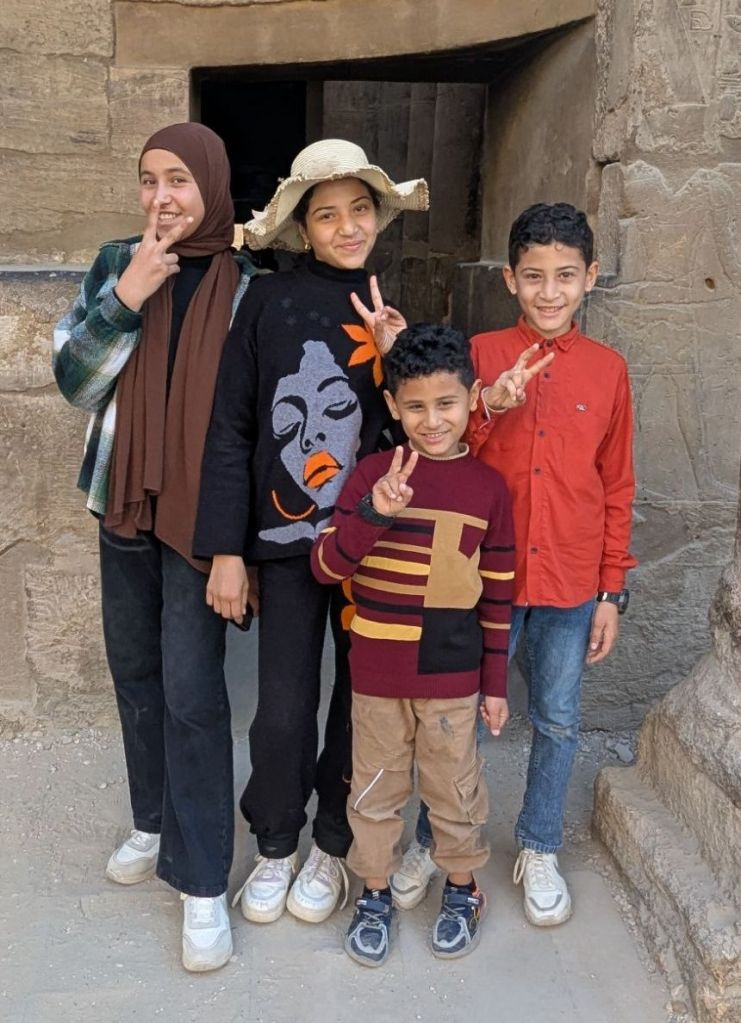
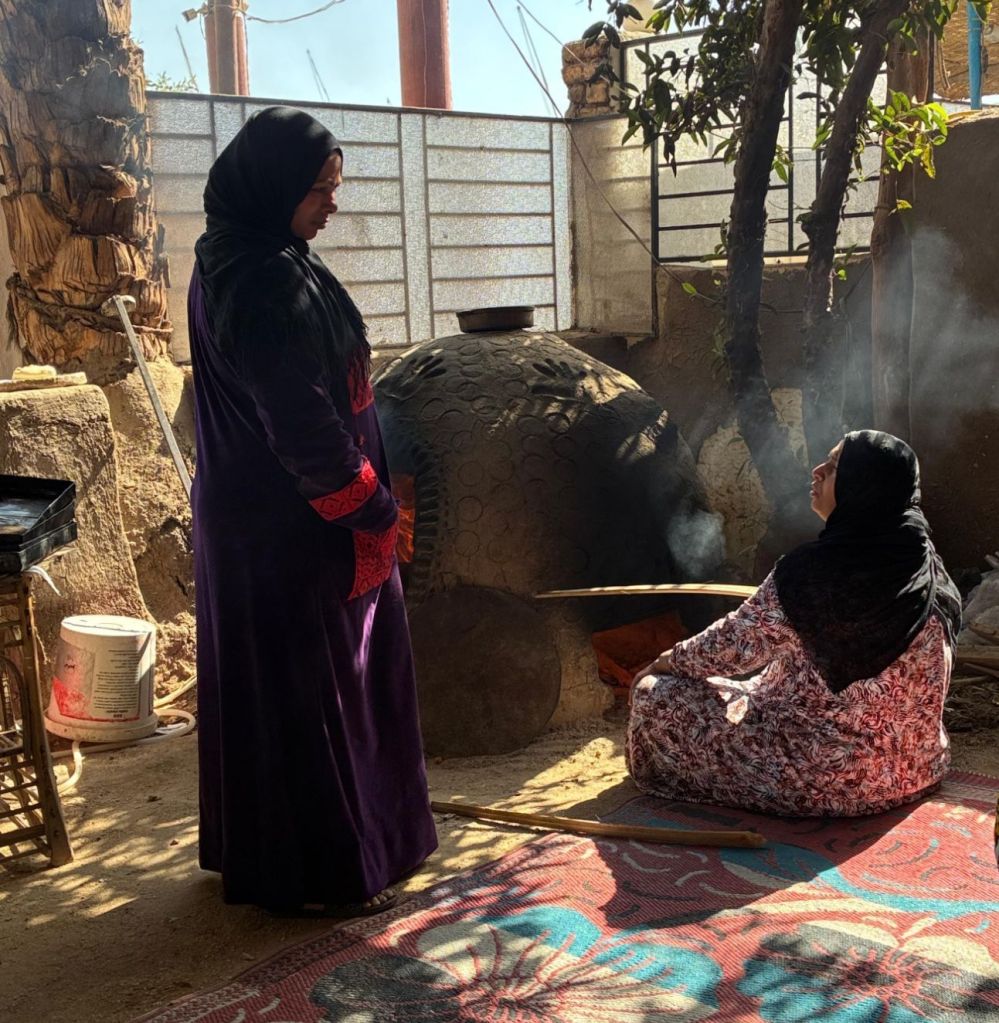
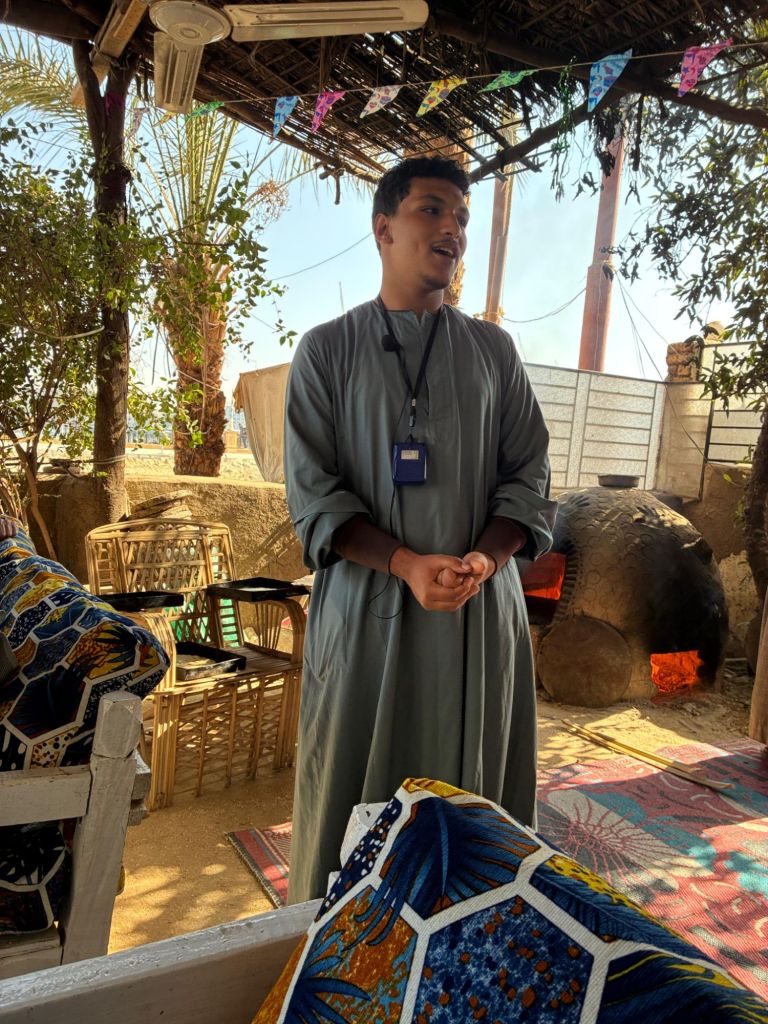
We had a treat for lunch: a local family hosted us and served a traditional celebratory meal. Some of our group helped to make the bread they baked in the outdoor wood-fired oven while others tried milling wheat into flour with a manual millstone. The food, bread, beef, chicken, okra, rice, and bread with molasses for dessert was the best food we’ve had this trip. Everyone in the family participated, from the 86 year old grandmother (house boss), the father and mother, uncle, oldest son and down to the smallest child. Everything was grown on their farm. They were so proud to host us and we were so honored for them to share a tiny part of their lives with us.
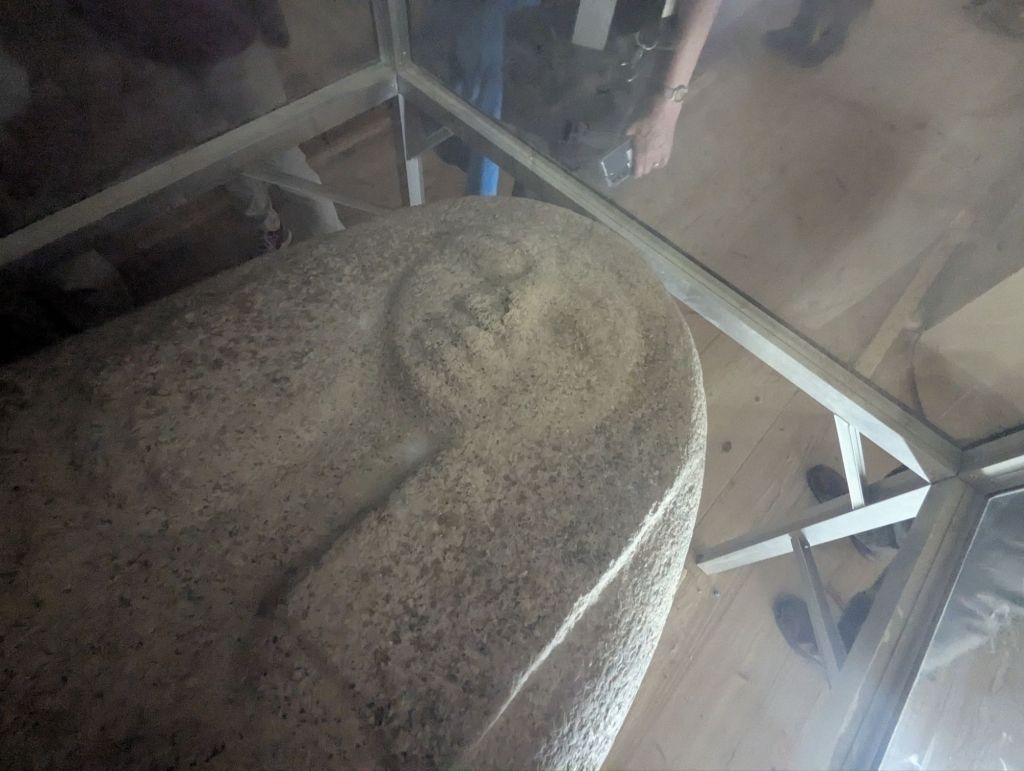
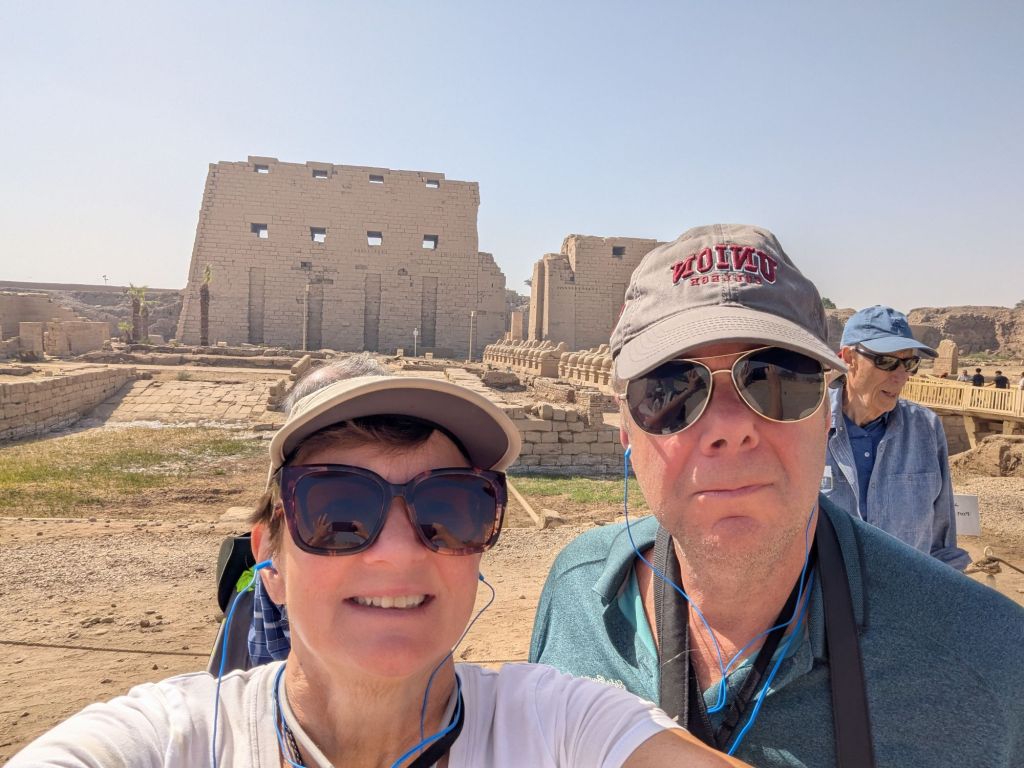
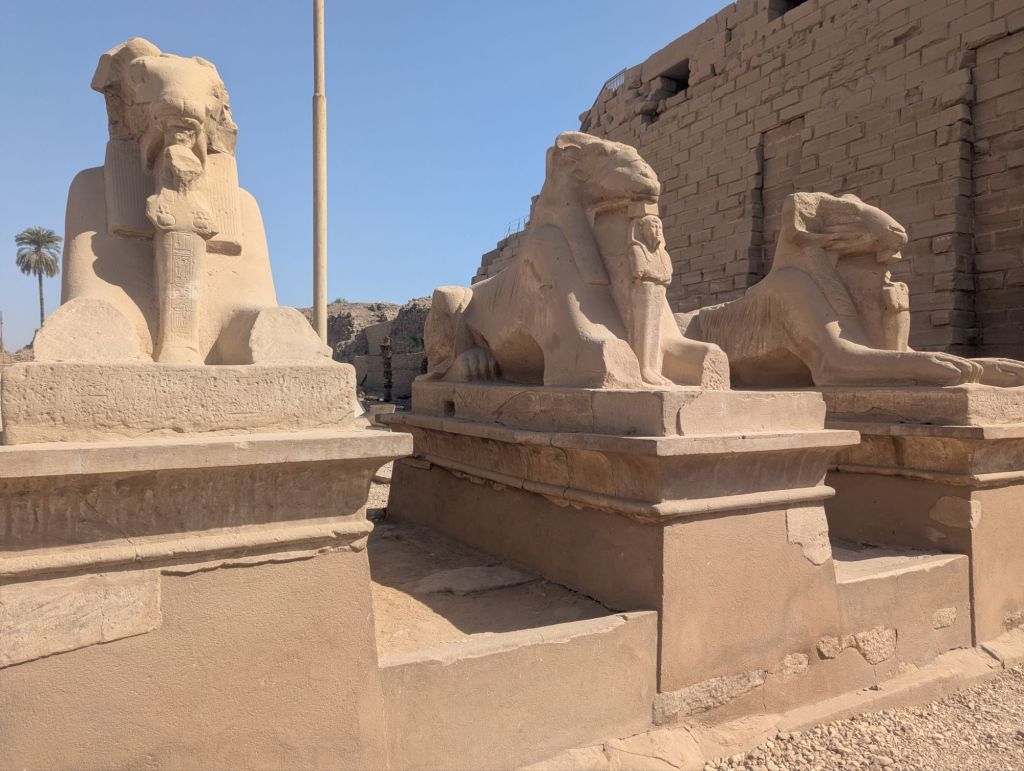
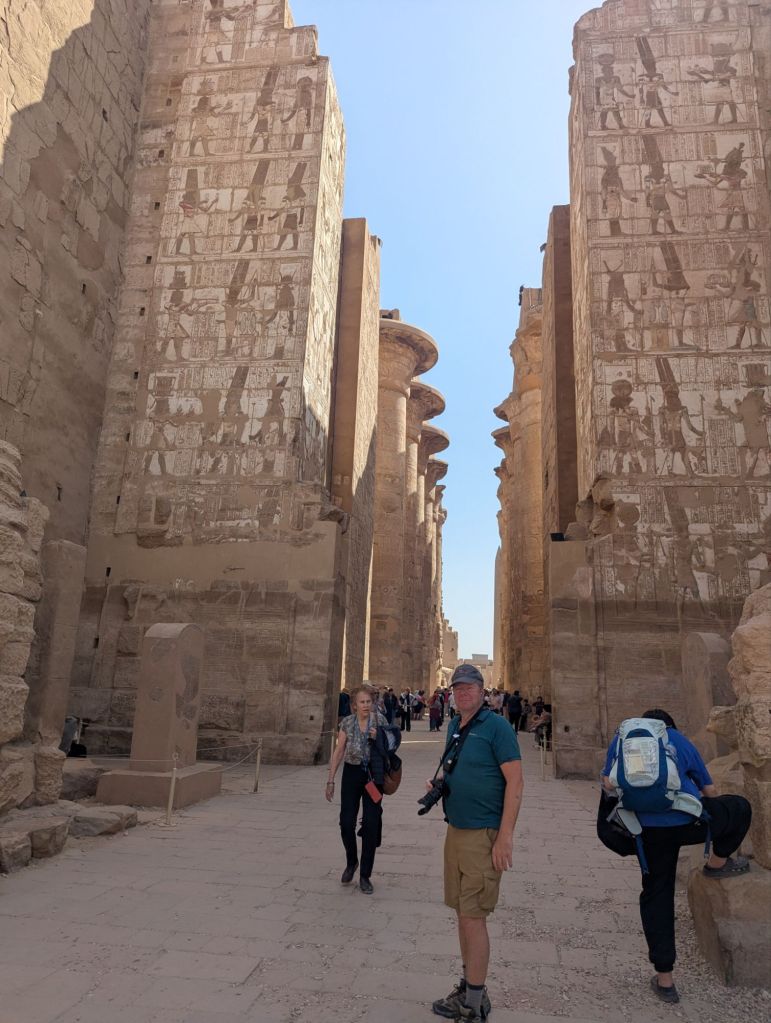
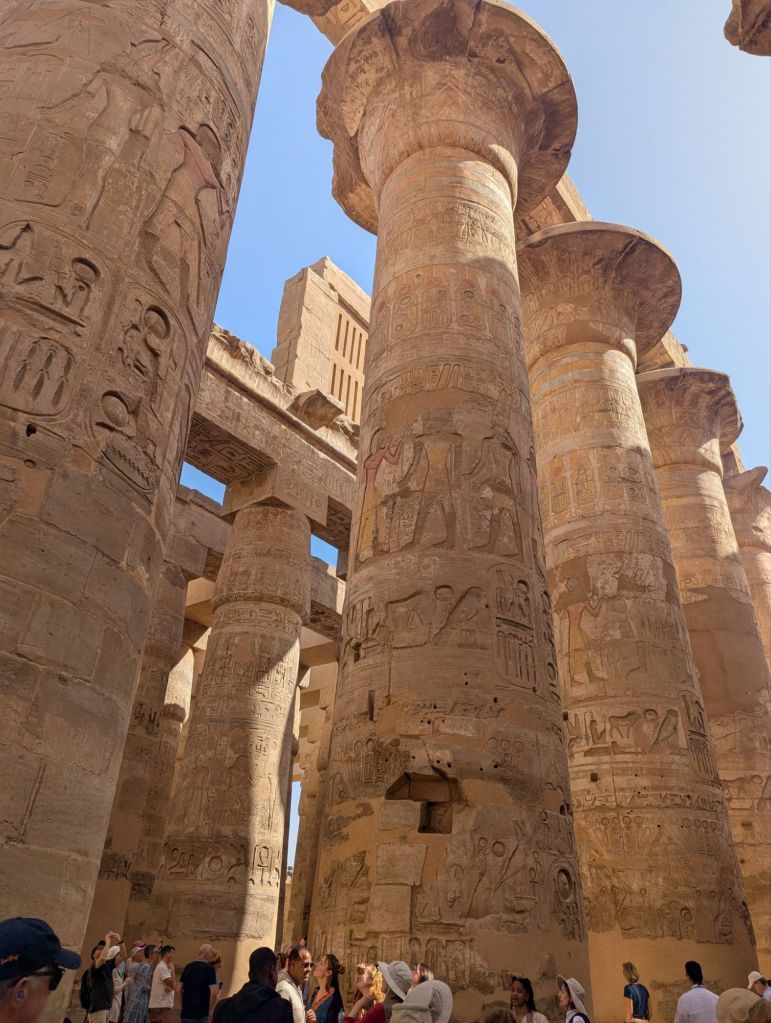
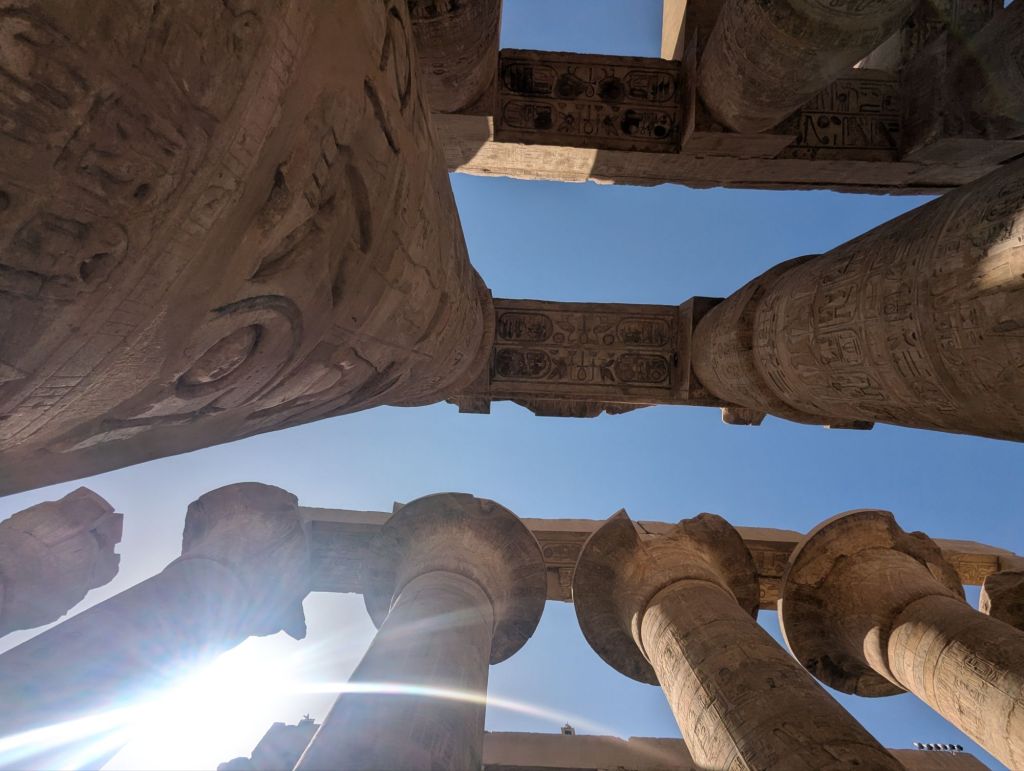
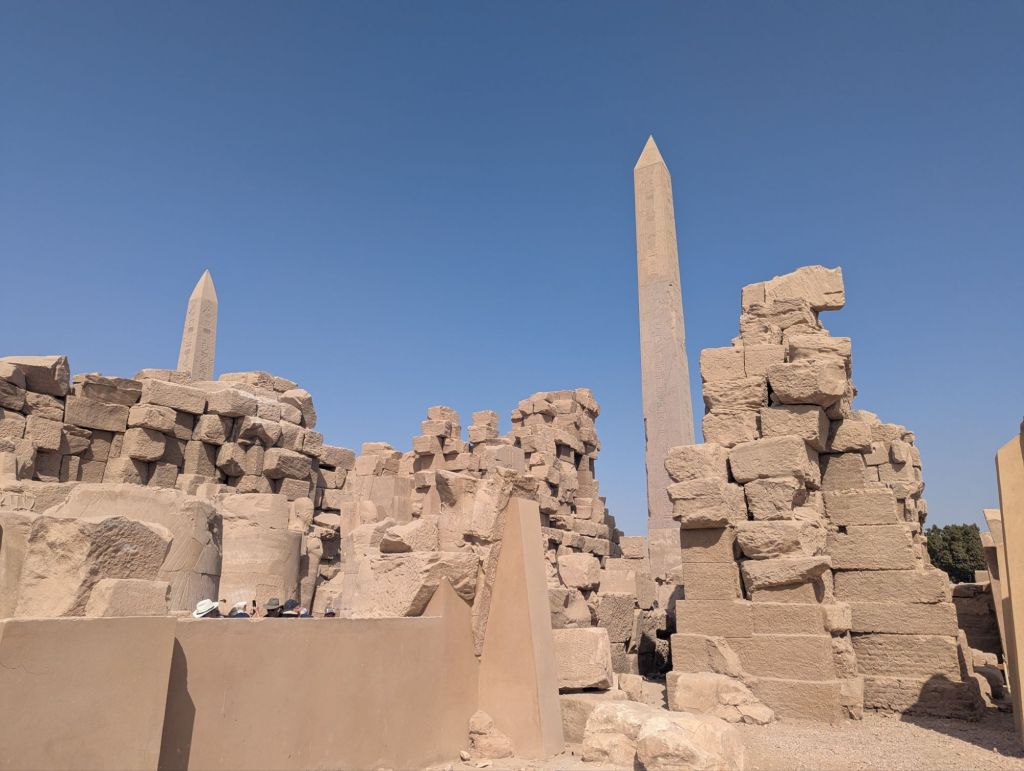
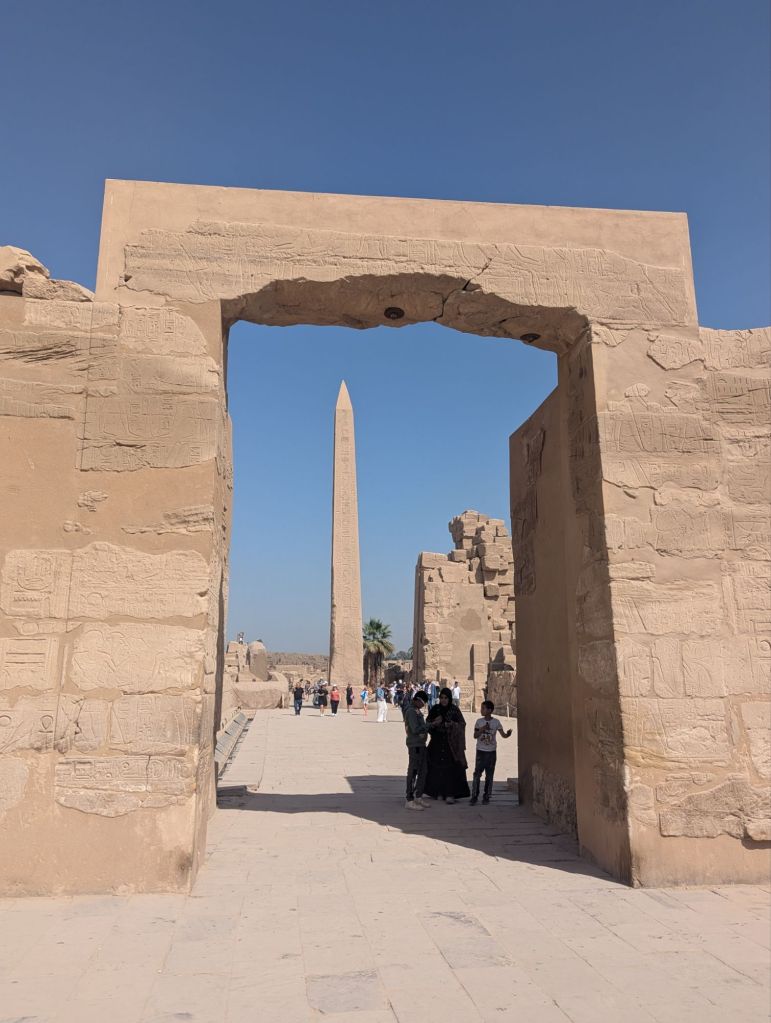
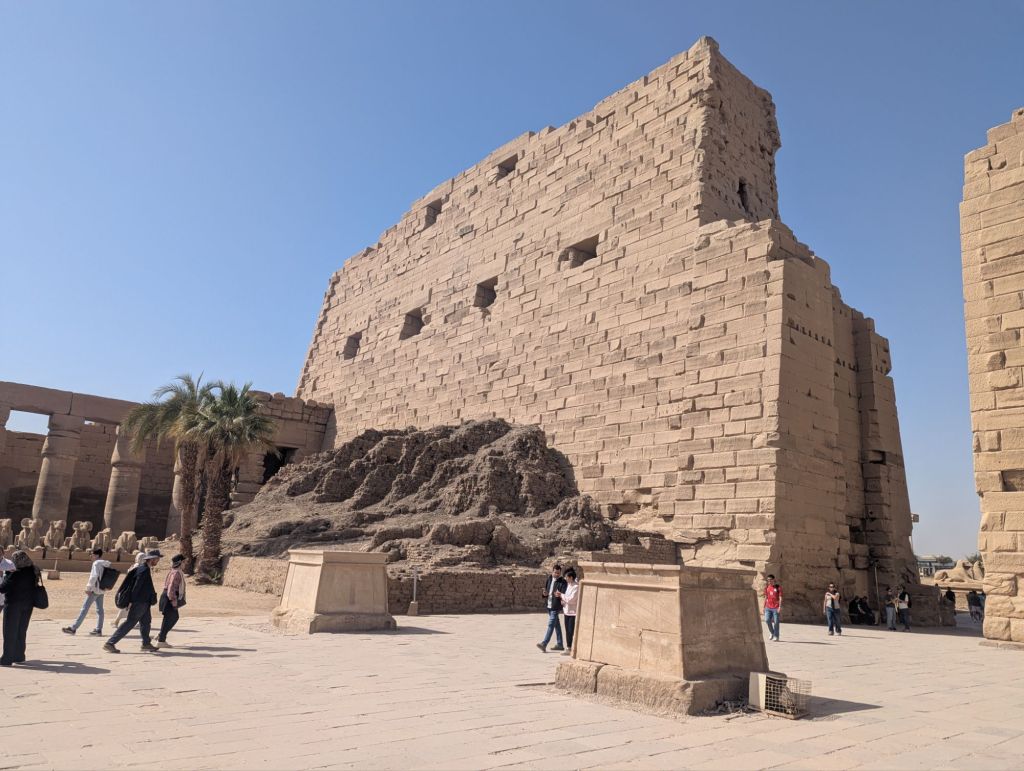
Karnak, connected to Luxor Temple by the Avenue of Sphinxes, is a 62 acre religious complex dedicated to Amun Ra, the chief deity, and his wife Mut. Pharaohs left their mark here through the ages. Sphinxes with heads of a ram line the entry to the temple, representative of Amun Ra’s power and fertility. The Hypostyle hall, built around 1290 BC, is a large room with many pillars holding up the roof, and it is magnificent. There are 134 immense pillars, like a forest of huge granite trees, each carved and decorated beautifully ranging from from 46 to 79 feet tall. The tallest obelisk in Egypt was built by she/he pharaoh Hatshepsut from a single piece of granite and erected after only 7 months! Later it was enclosed with large bricks by her stepson after her death. He couldn’t bring himself to deface or destroy the obelisk decorated with carvings representing the gods, so he covered it up. There are so many interesting stories from ancient Egypt, luckily we had a studied Egyptologist, Ayman, explaining them to us.
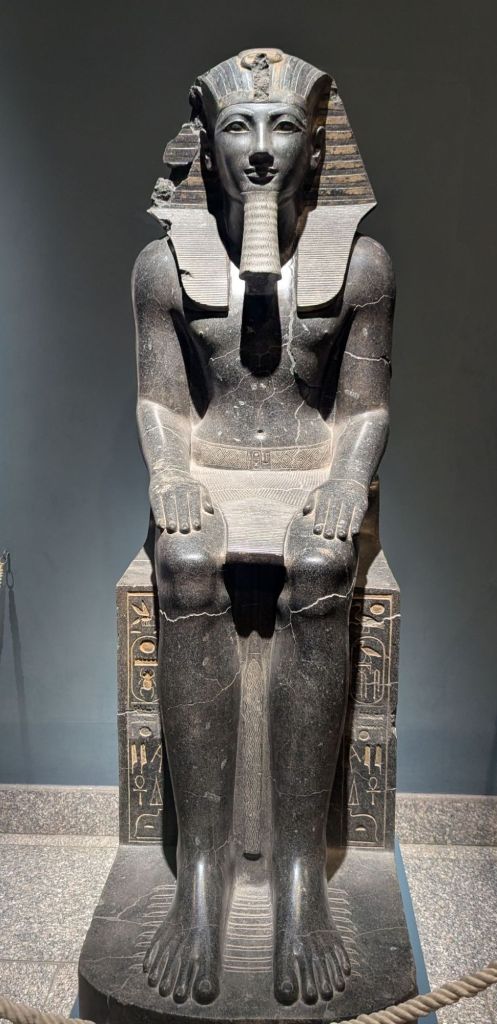
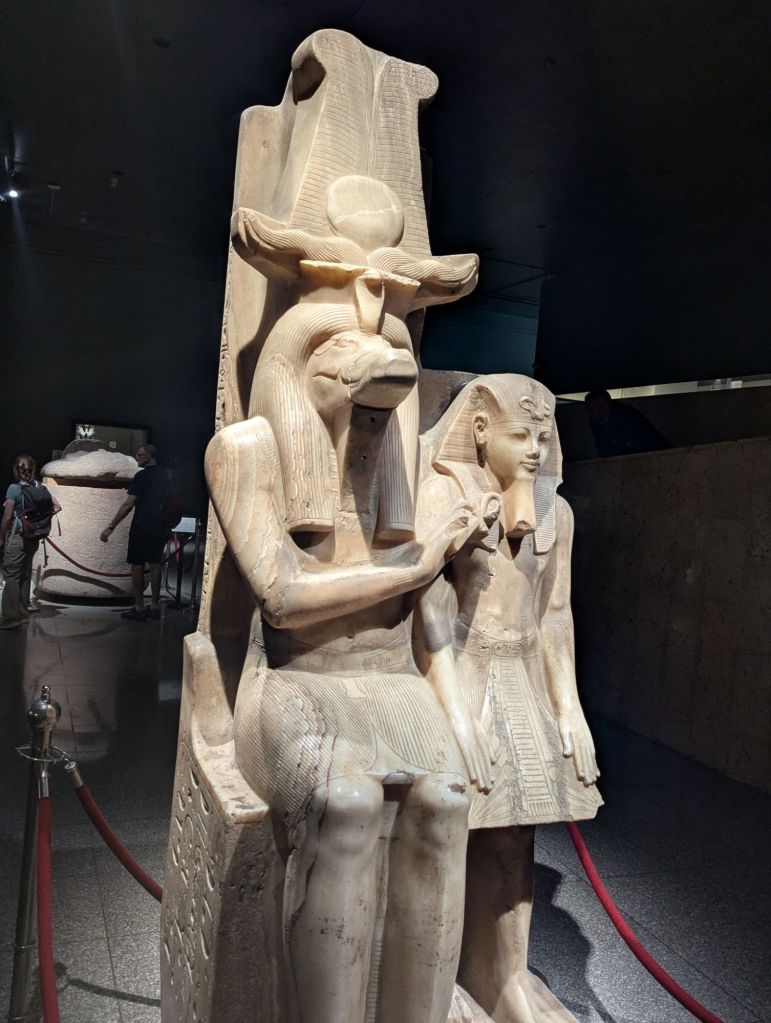
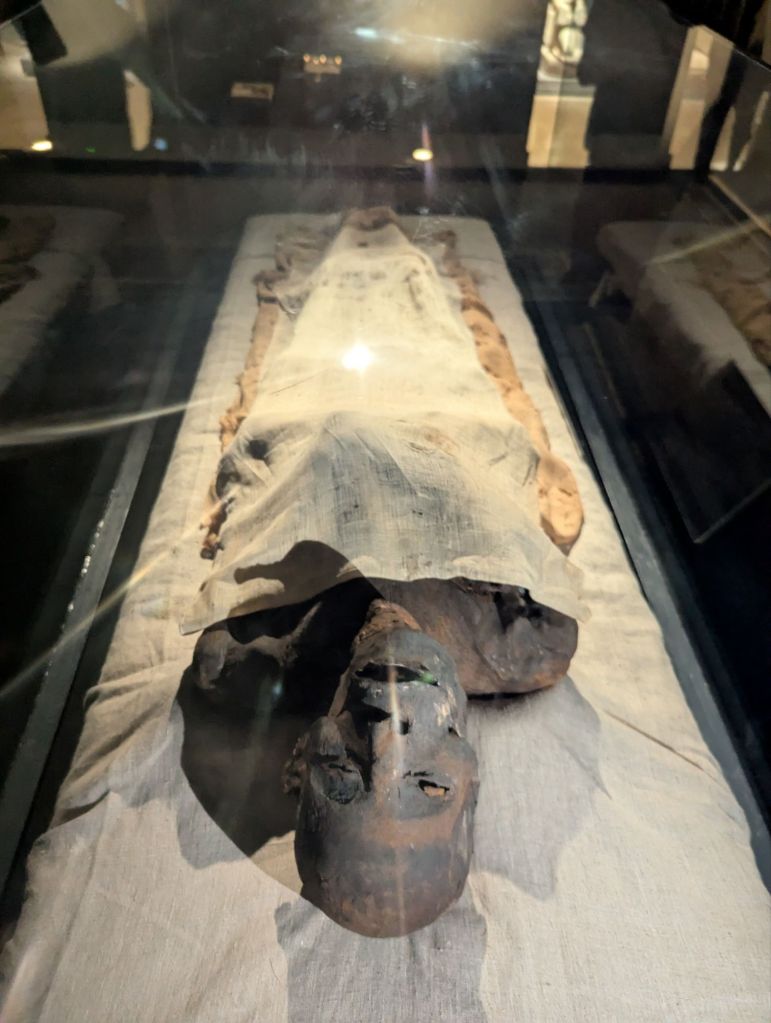
The last morning in Luxor we took a motorboat from our hotel to the Luxor Museum. What a gem of a museum! Filled with gorgeous ancient statues and a few mummies, it was a great way to finish our tour of ancient Egypt history in Luxor.
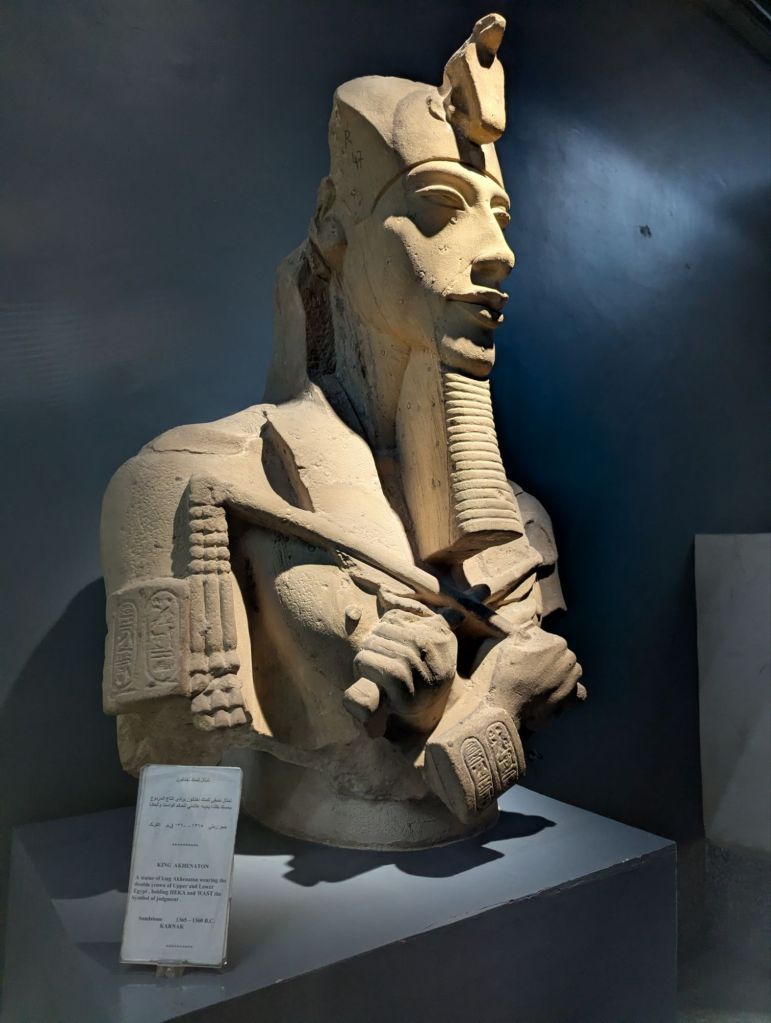
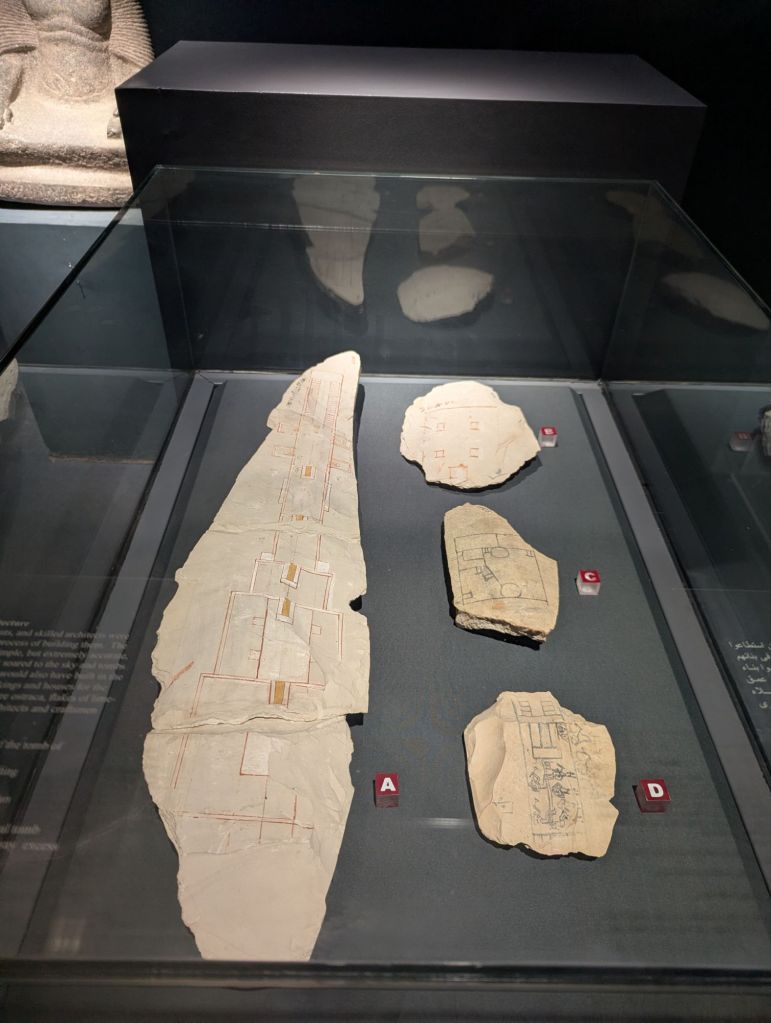
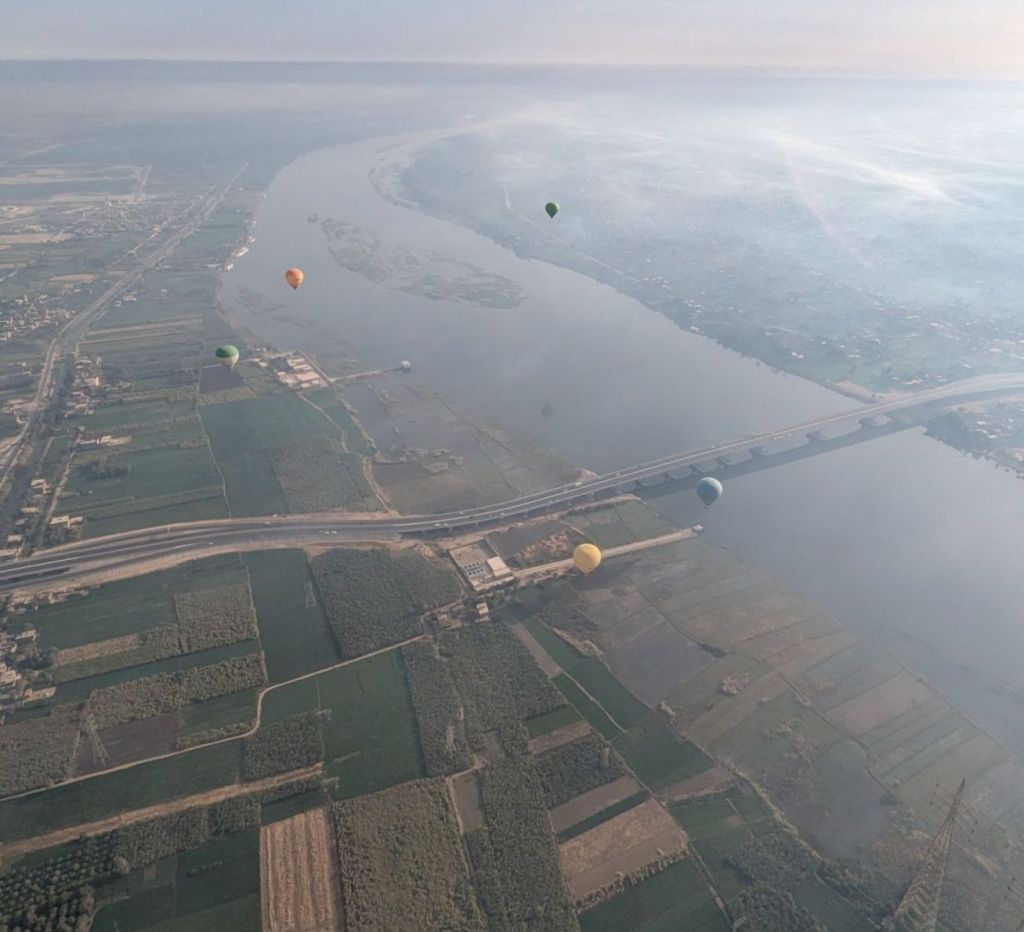
A trip to Luxor would be incomplete without a balloon ride! The intent was to fly over the Valley of the Kings but the winds were not cooperative. We were lucky to fly at all since local farmers were burning their harvested sugar cane fields making the skies hazy and unsafe. Eventually, after a 1.5 hour delay, there were shouts and applause and a quick scurrying of men who then got the balloons up, up, and away.
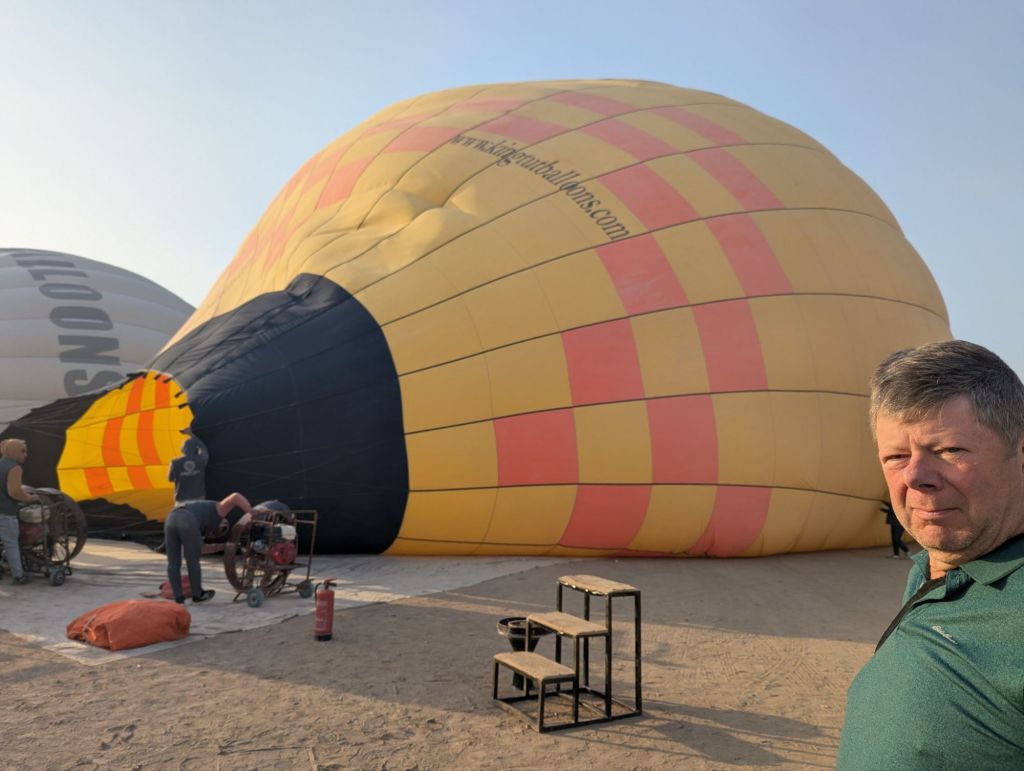
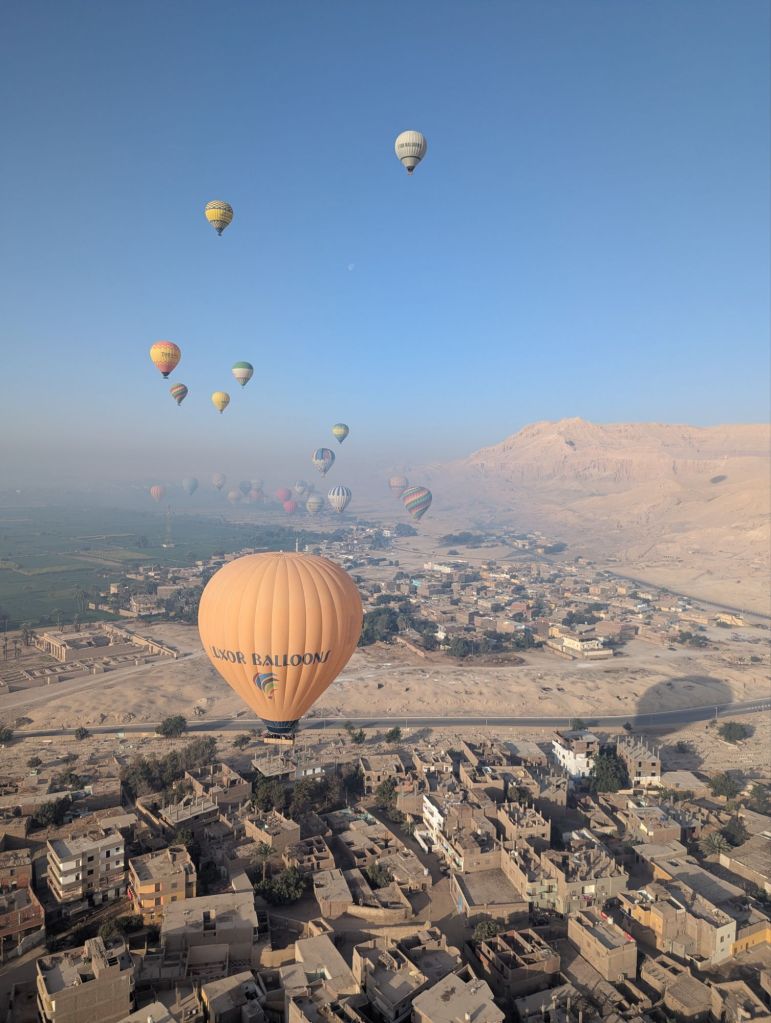
Apologies to Egyptians and Egyptologists for any errors. Next: back to Cairo!
Giza and Cairo. Shukran! E5
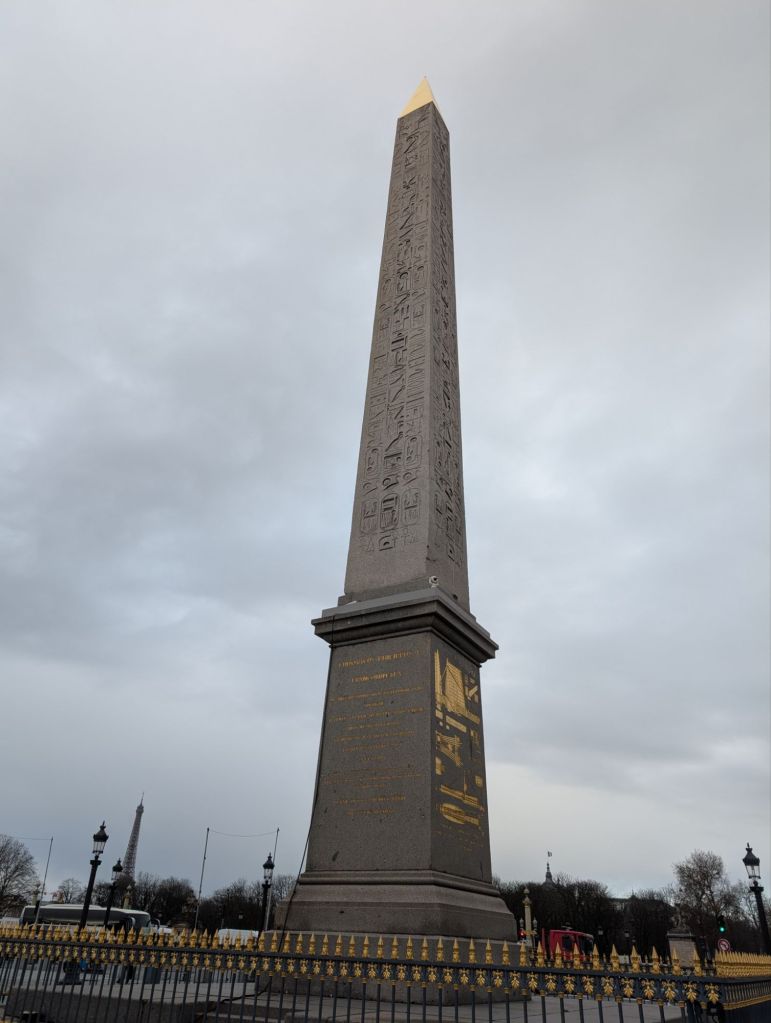

 My new reality
One thought on “Luxor and the Valley of the Kings. E4”