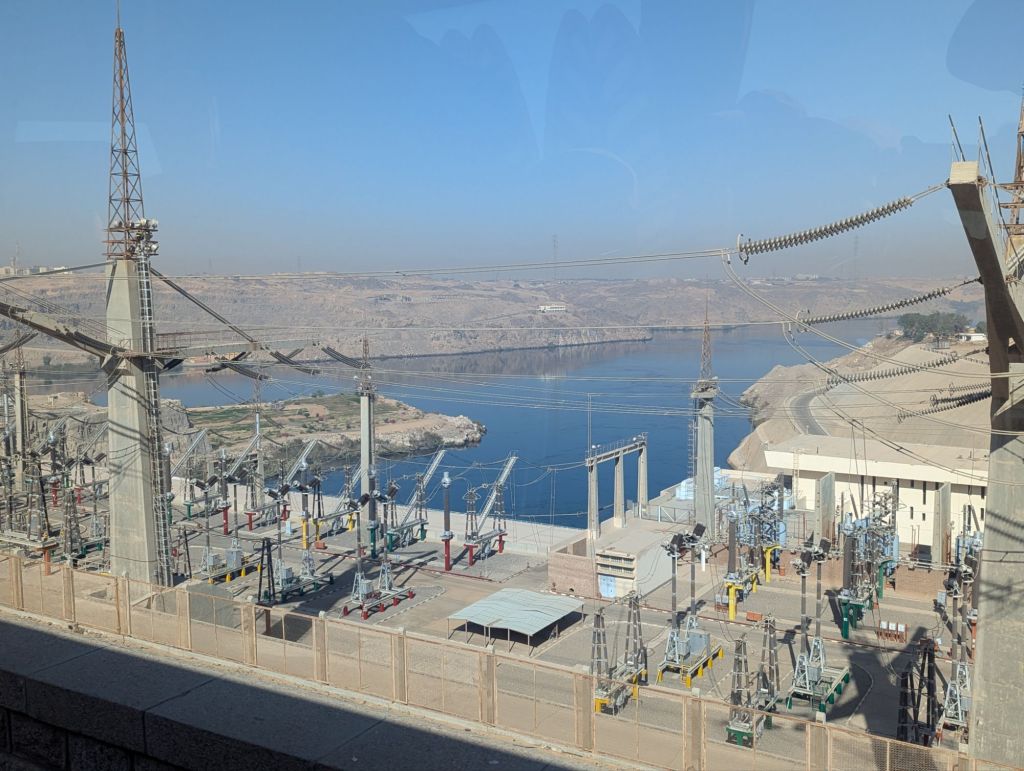
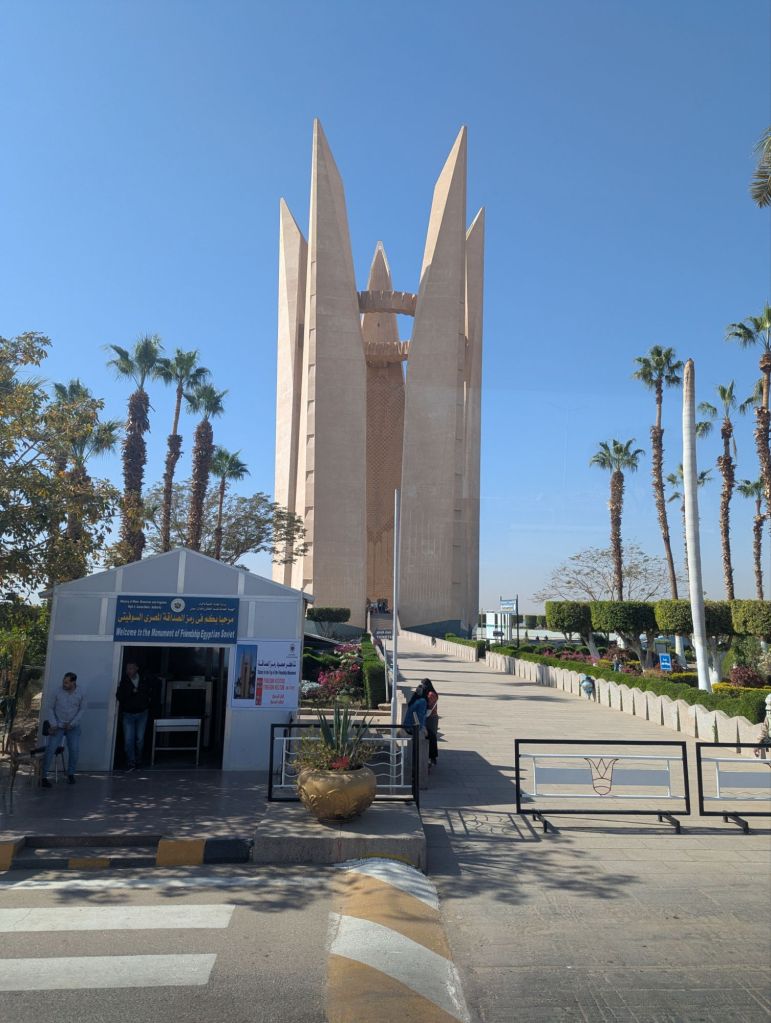
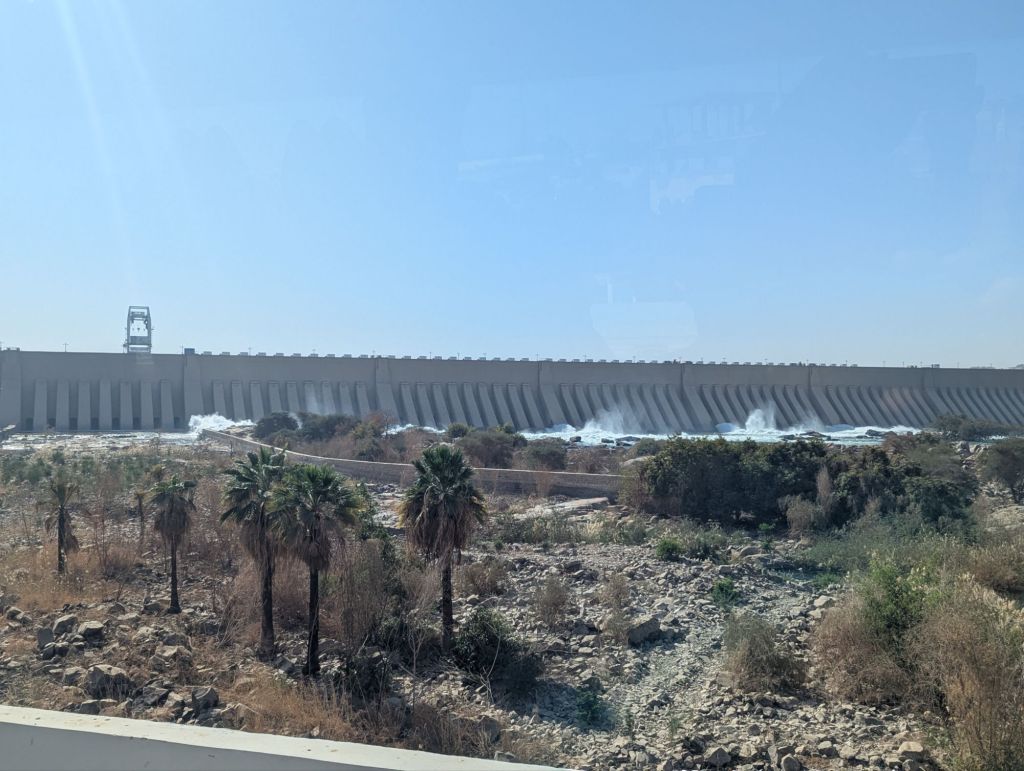
Our Lake Nasser cruise ended at the Aswan High Dam. The High dam was constructed over 10 years in the 60s with financial assistance from the USSR (without US or Western Europe assistance due to nationalization of the Suez Cana years prior among other reasons). A monument to the partnership stands nearby. The High dam is the 3rd largest dam in the world, after the Hoover and Yangtse dams, and provides 60 percent of Egypt’s electricity. Just a few km upstream is the smaller Aswan dam aka the “English” dam built in 1902. This older dam alleviated the annual flooding of the Nile which could be devastating yetprovided the fertile silt the farmers depended on. Also, Nubian villages and, of course, temples were submerged. In the interest of progress…
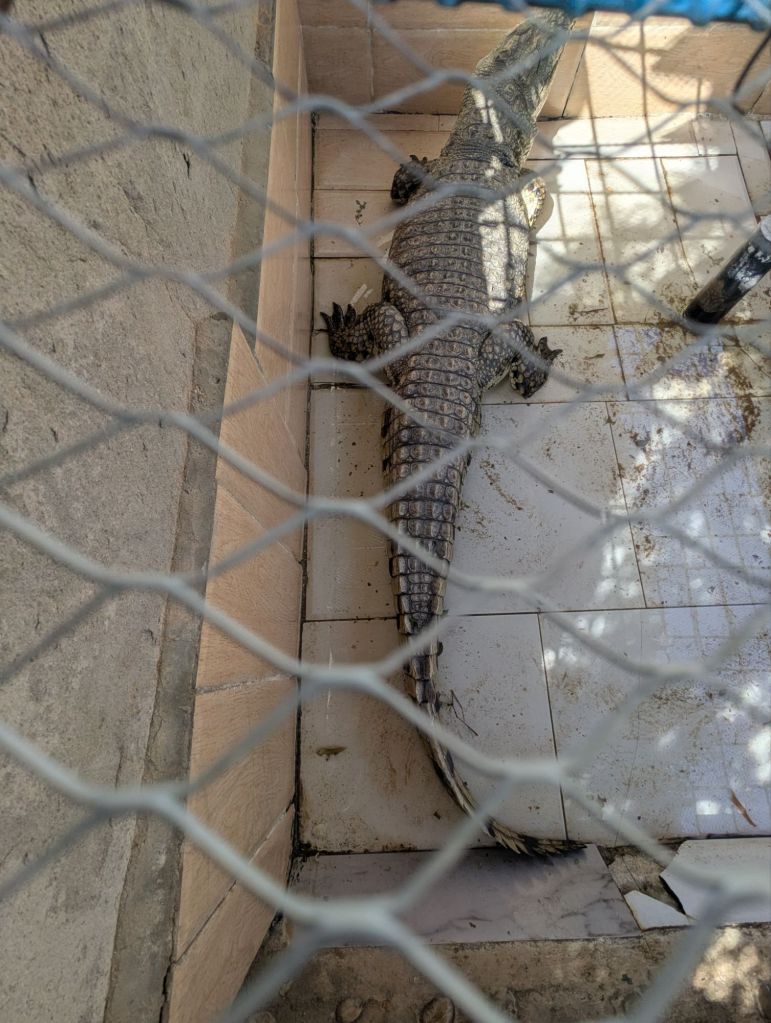
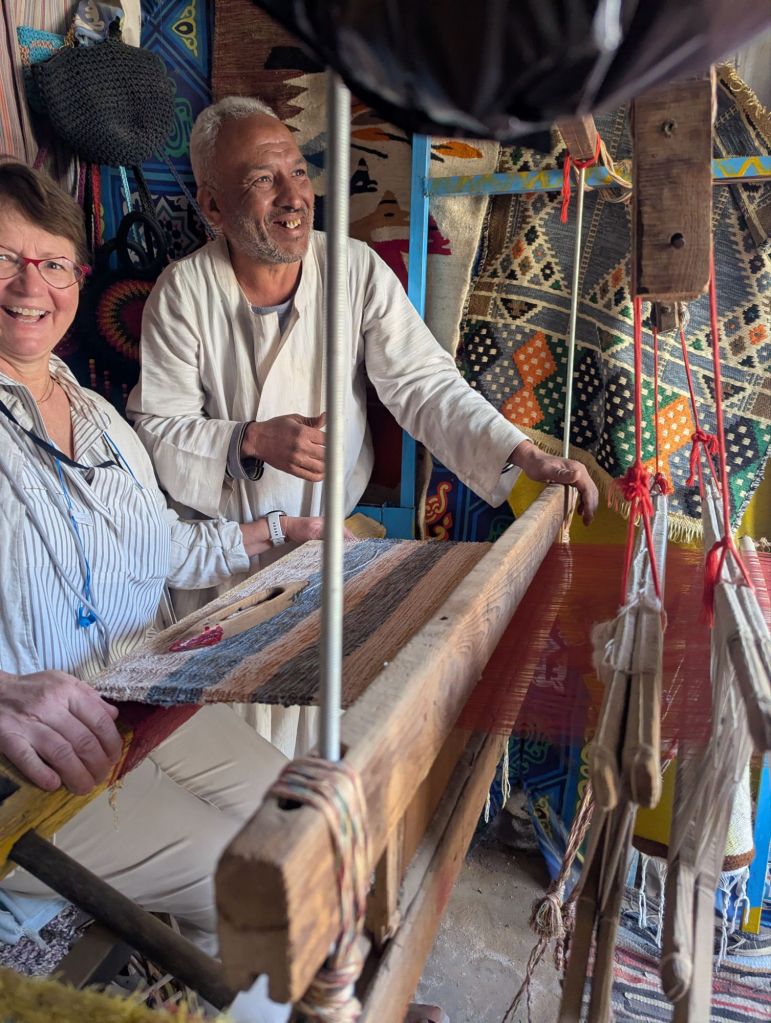
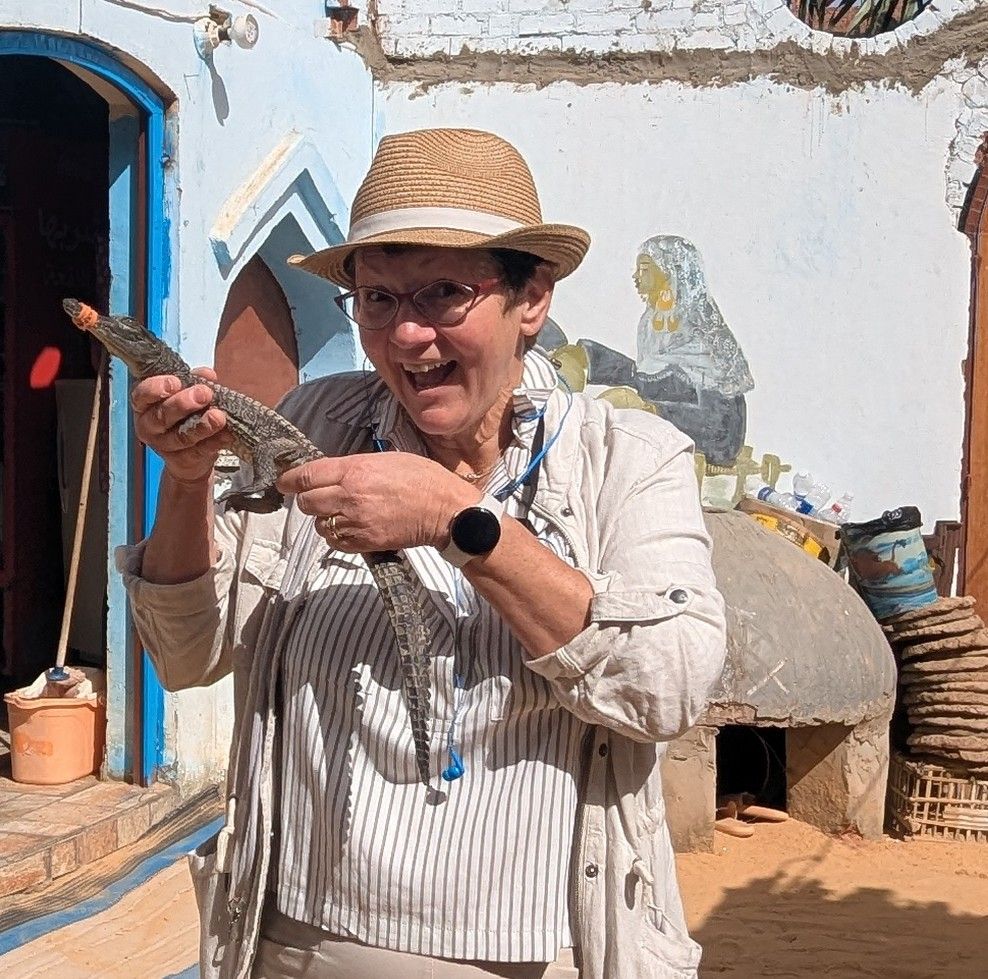
In the Aswan area, 90 percent of the 1.5 mil population is Nubian; they were granted land on the West Bank for new homes and villages when the High dam submerged their own. A tight knit community, they are slowly starting to lose their identity due to tourism. We visited a Nubian household, sampled mint tea, observed their colorful living quarters with clean, sand covered floors, met a pet crocodile, and purchased some homemade wares. They proudly shared their home with us and we were honored to visit.
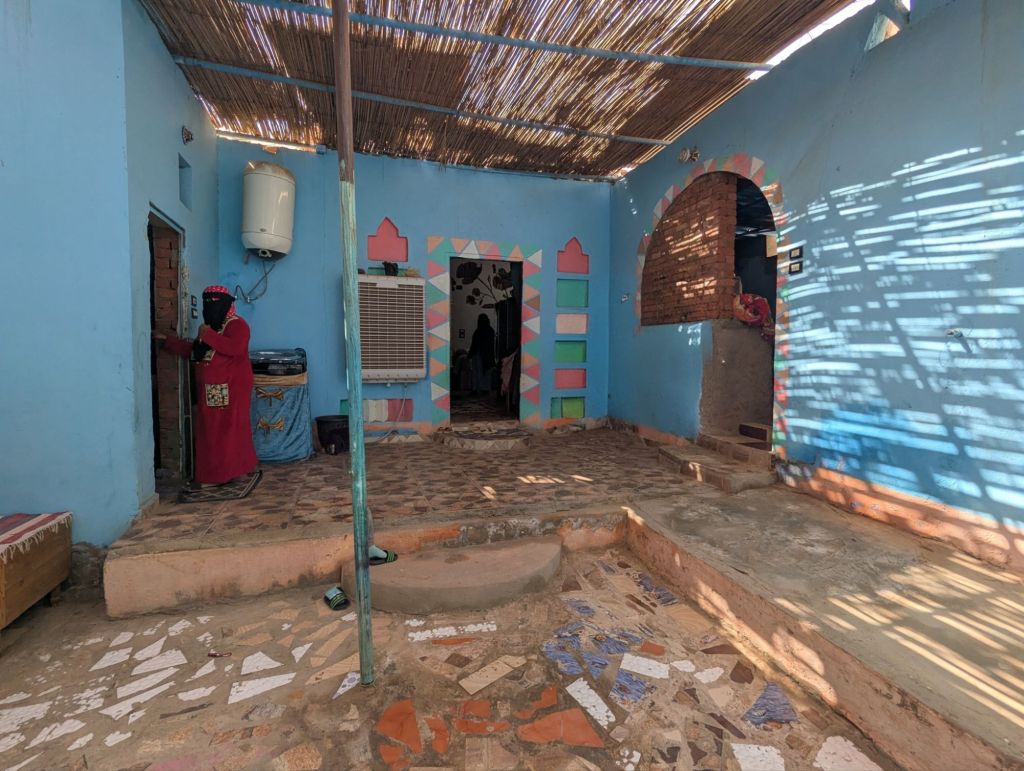
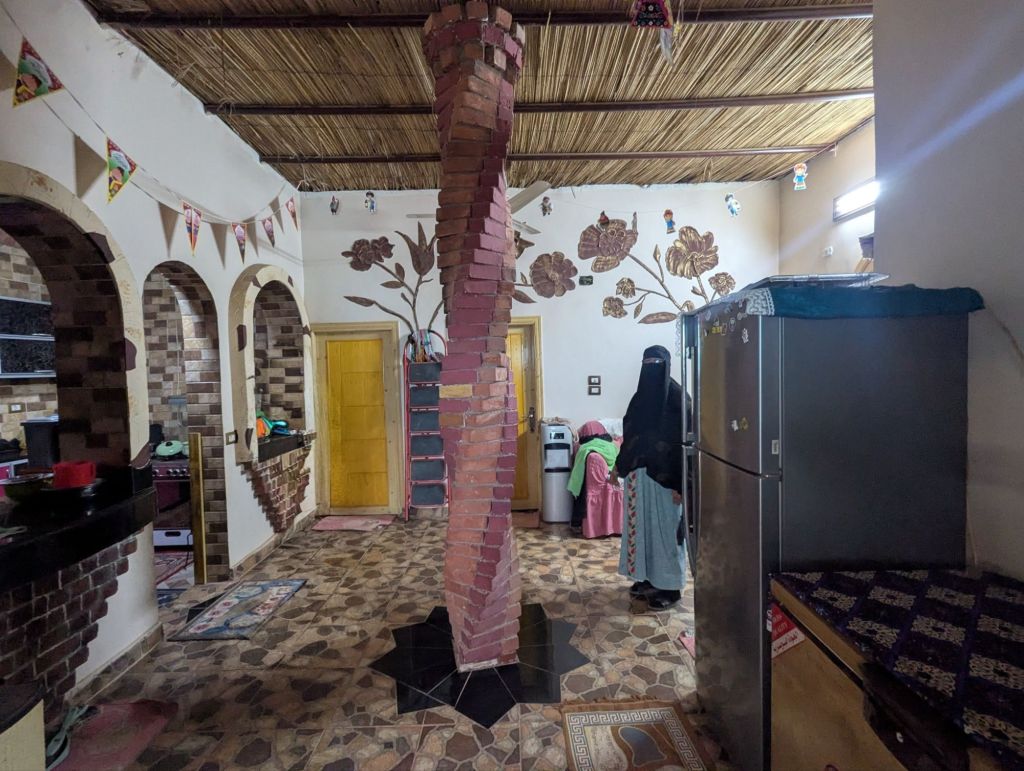
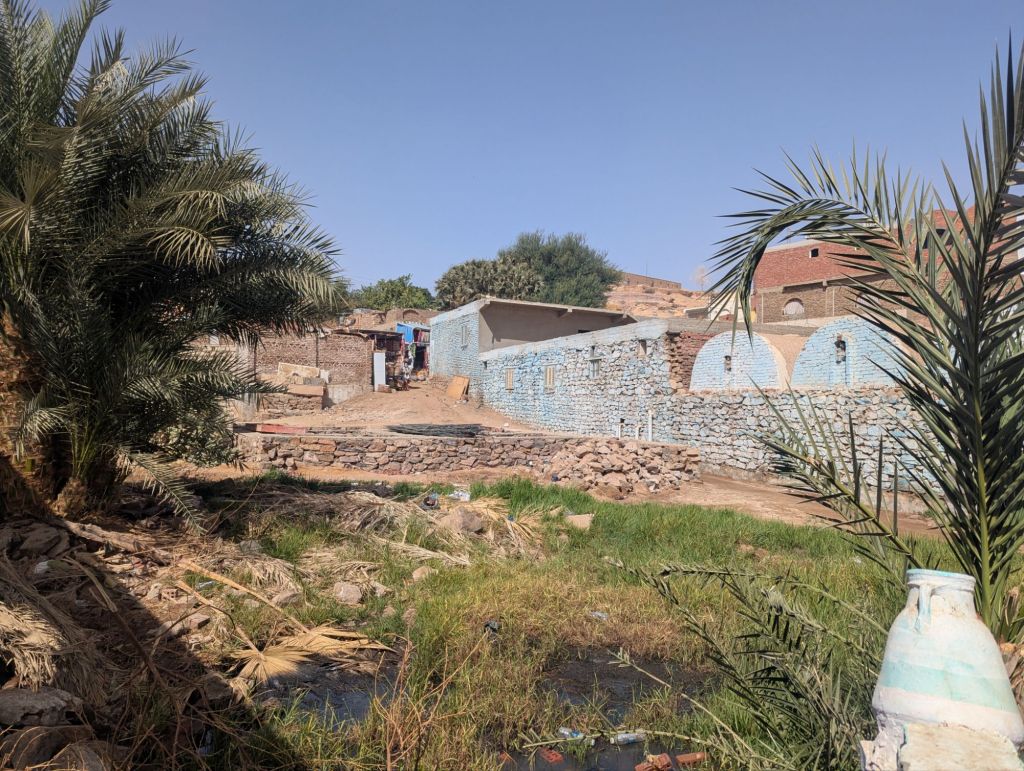
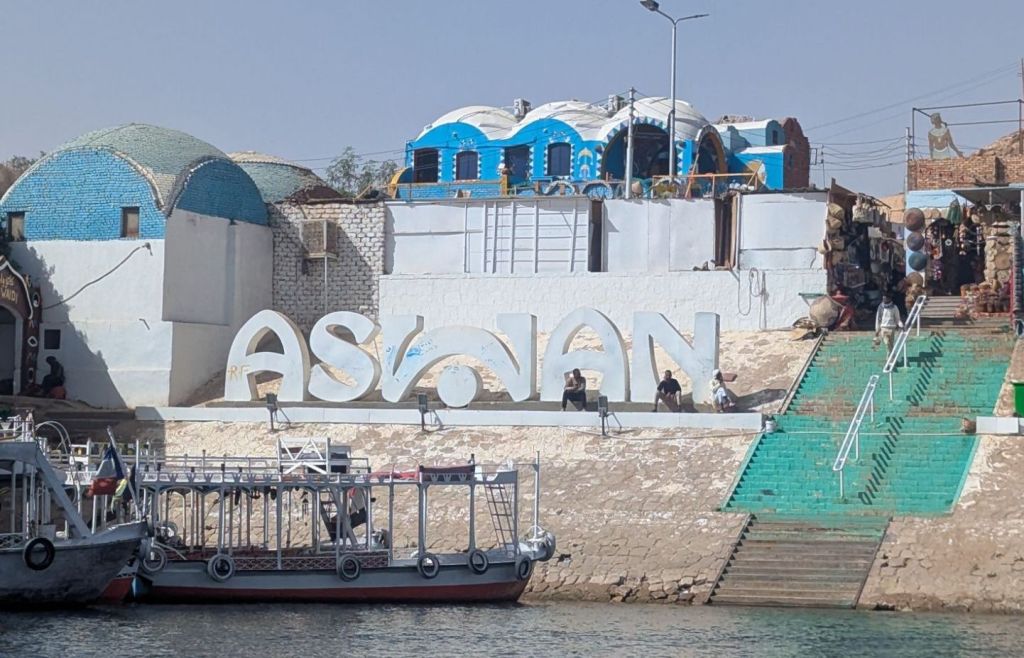
Aswan is a major trade center between Egypt and the rest of Africa. But the major income generator in all of Egypt is tourism. Many hotels lined the Nile, like ‘the Cataracts’ where Agatha Christie penned “Death on the Nile”. Colorful, domed Nubian houses lined the West Bank, Aswan proper is on the East bank, felluccas, cruise ships, and tour boats sail in between.
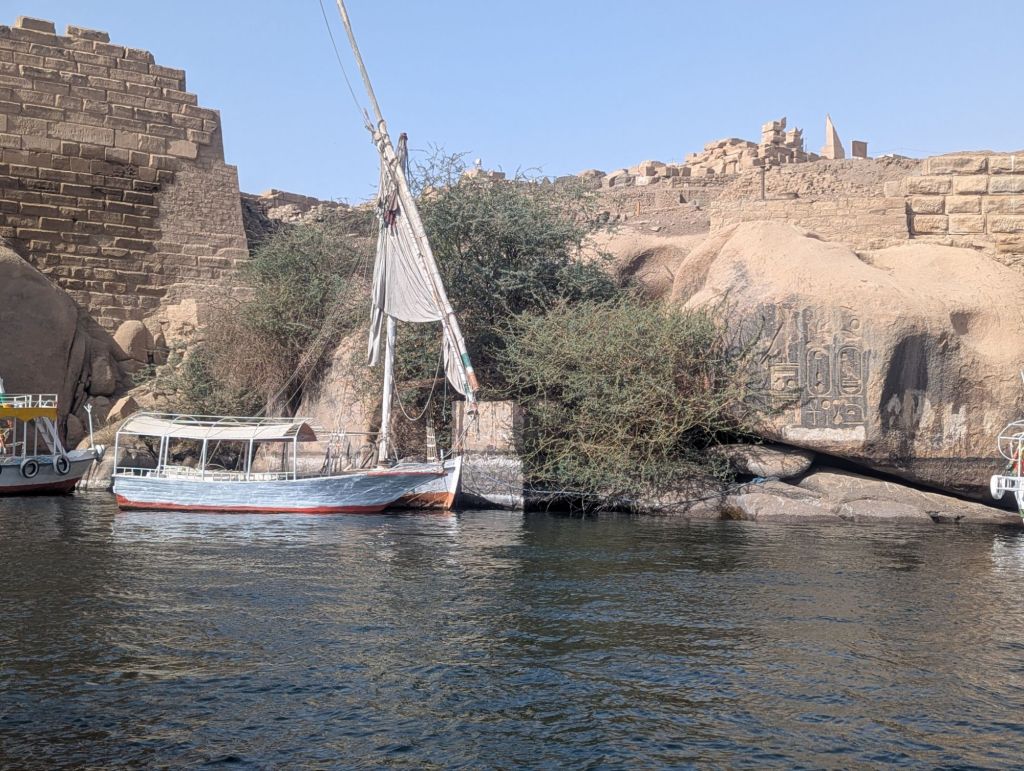
My dad was a mechanical engineer. Family outings usually included visits to interesting sites such as the electric generation station at Niagara Falls, or Kinzua Damn in PA, or watching a Sikorsky Sky Crane deliver a huge refrigeration unit to the roof of the Ford Stamping plant in Buffalo. No Disney world for us lucky kids! Understandably, the Aswan High Dam was fascinating to me. Once across, we visited the Temple of Philae on Agilkia island in the reservoir between the Aswan High Dam and the English dam.
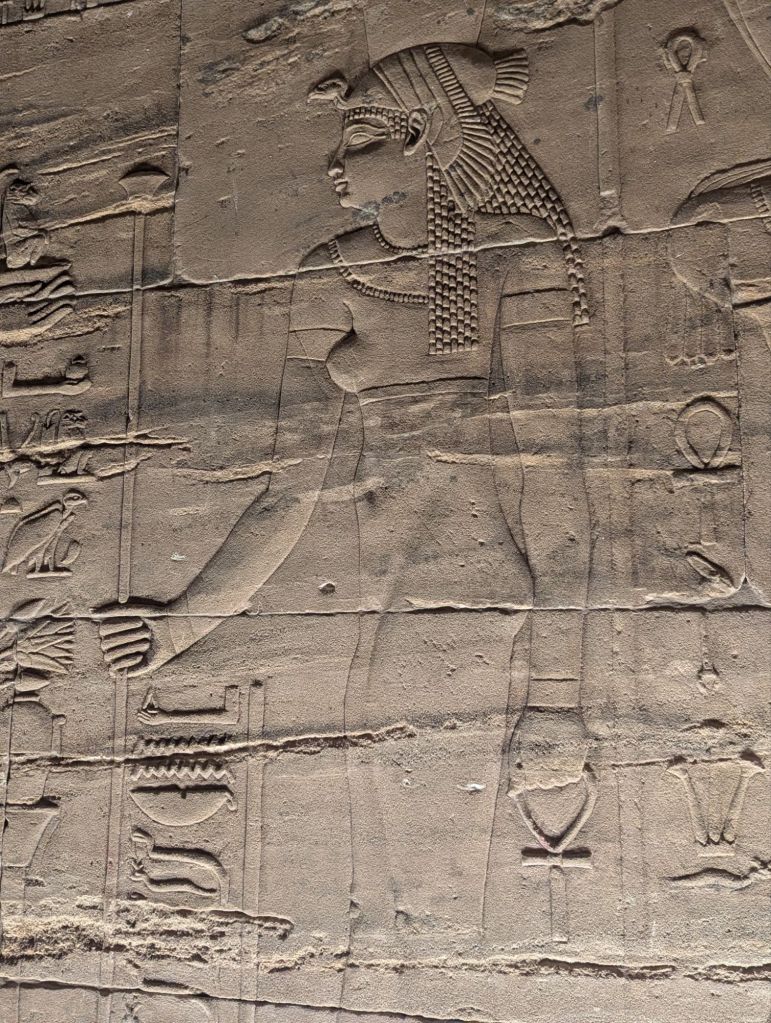
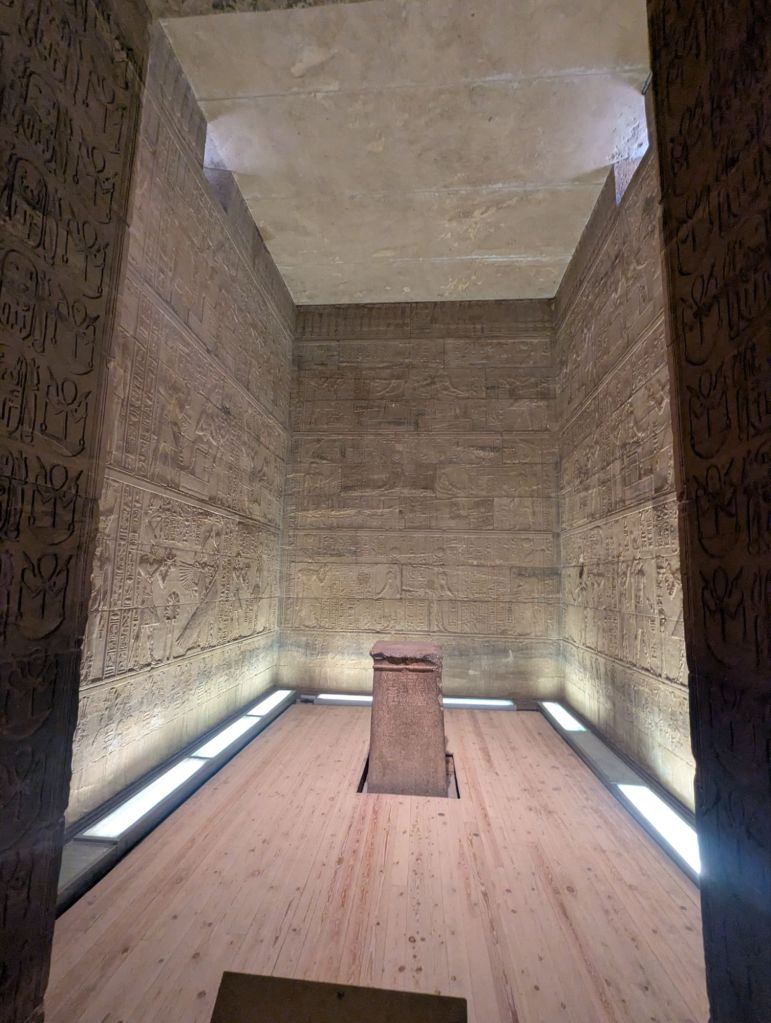
The Temple of Philae was built to honor Isis, the goddess of love and beauty. Built around 500BC, the temple was partially submerged for 6 months annually when the Nile flooded. For centuries! Then it was threatened with complete and permanent submersion with the High Dam construction but was not on the original list for relocation. It later was considered too valuable to lose so it was relocated to another island close by. This site is significant as the last known actively used temple, til around 500 AD. The carvings inside, those which hadn’t been destroyed by the early Christians who later used the temple as a church, were stunning.
Isis was married to Osiris who was murdered by Seth. She brought Osiris back to life by reassembling almost all his scattered dismembered body parts; later he became god of the underworld. In the meantime, they conceived Horus, the god of kingship, protection, sun, and sky, aka the ‘king of the gods’.
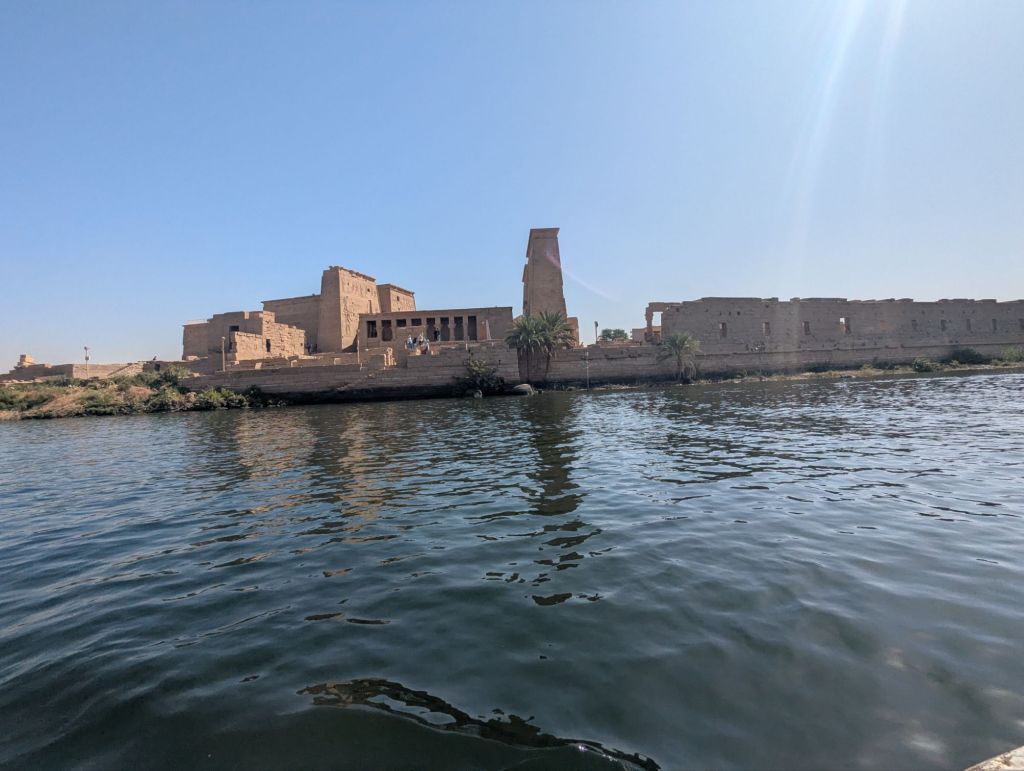
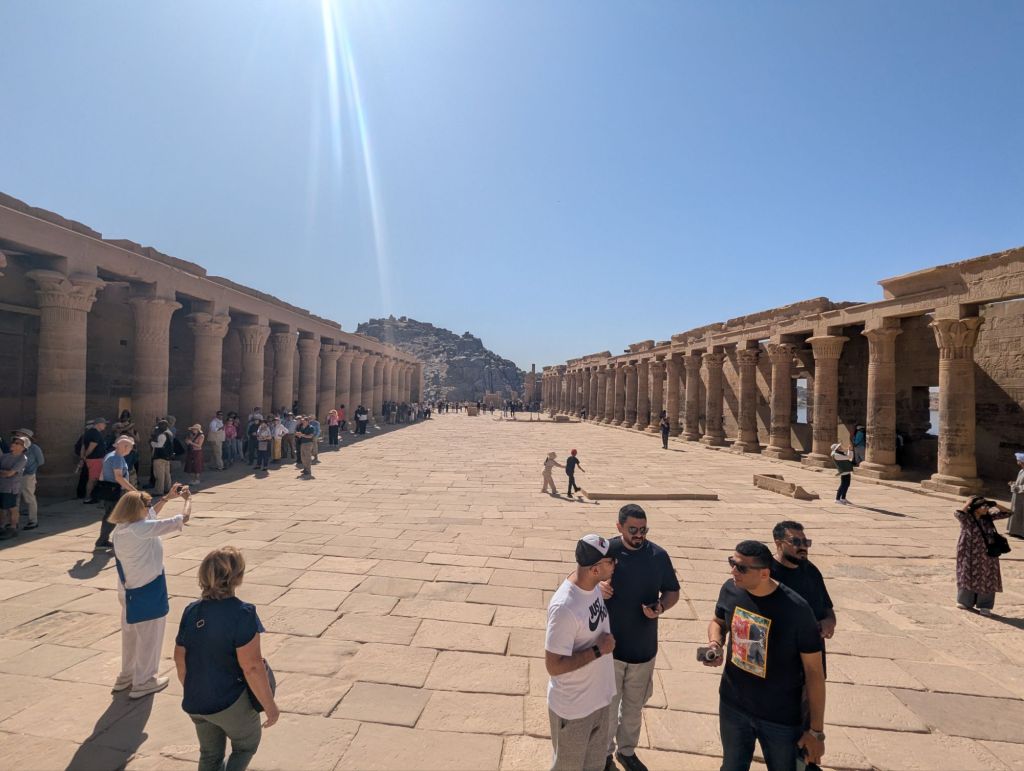
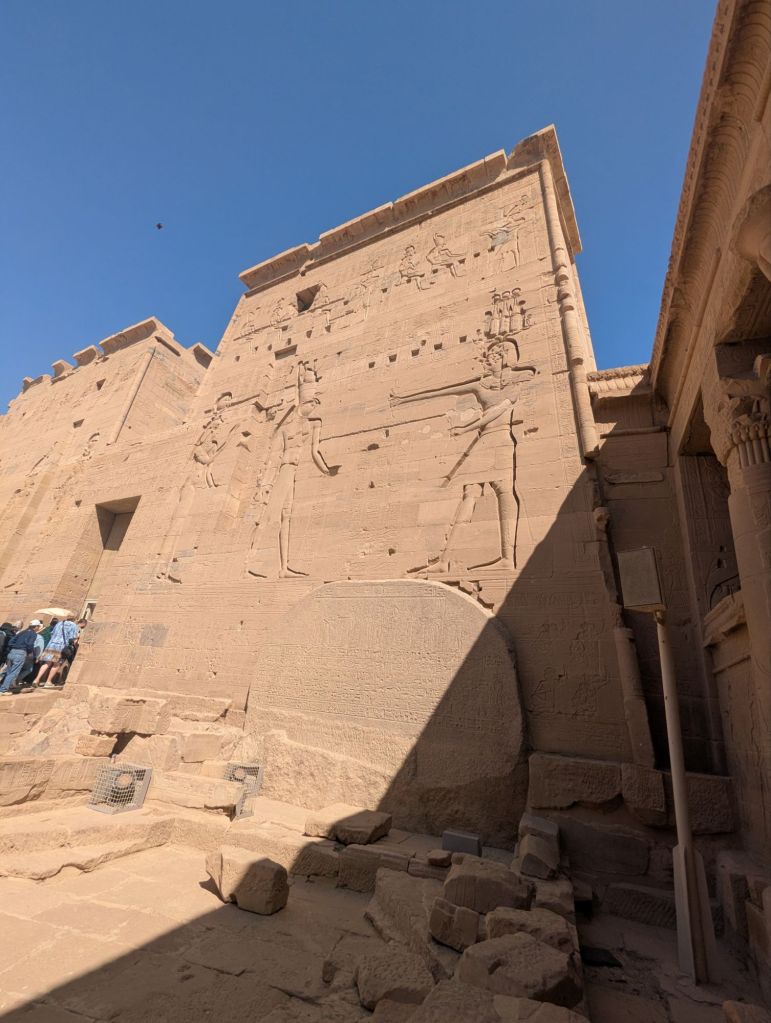
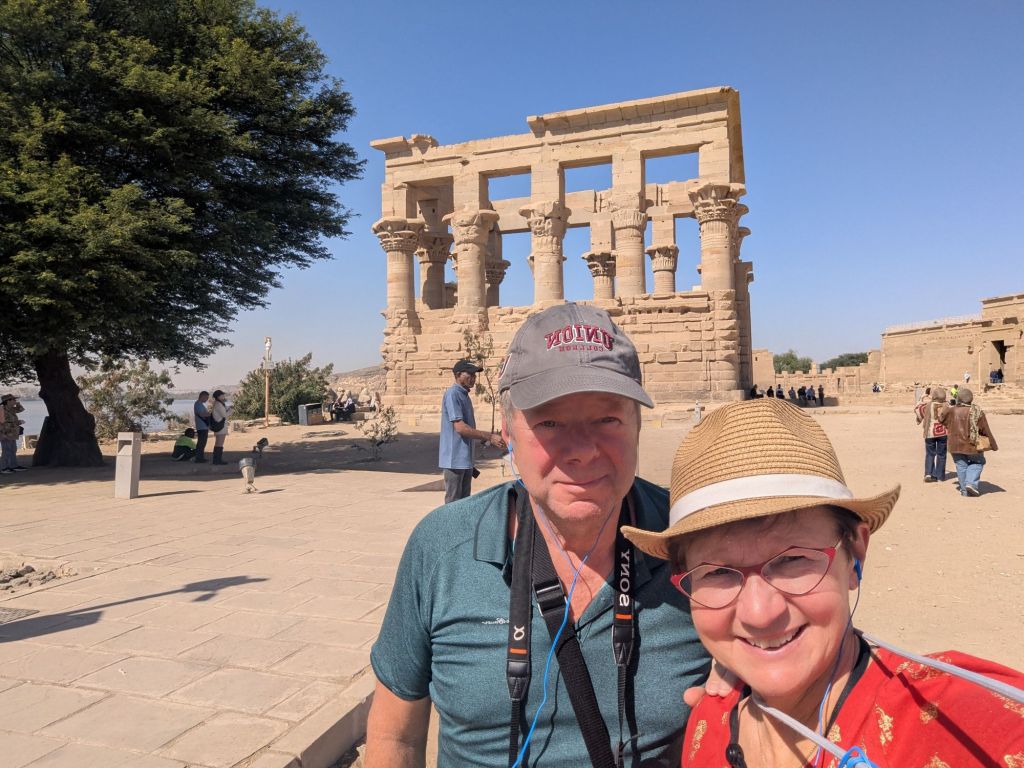
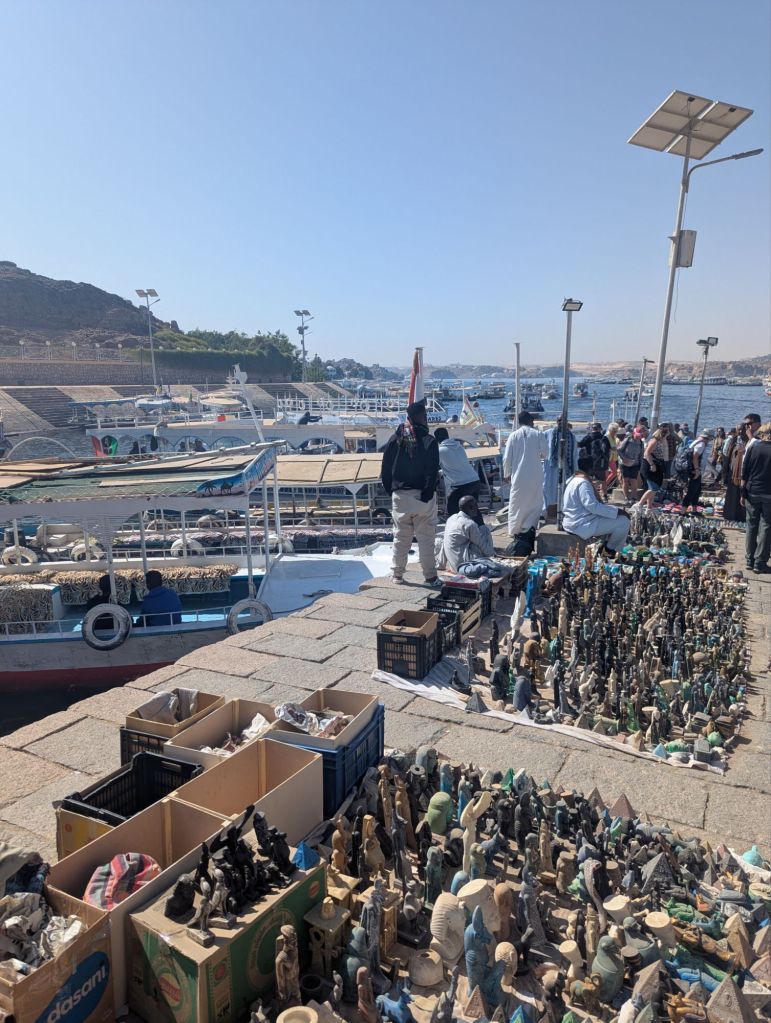
This side of the dam was considerably busier: Aswan is a popular resort destination. Philae is on an island so there were hundreds of boats ferrying hundreds of tourists back and forth from the temple just to run the gauntlet of vendors stationed back on the dock. From here on to the end we’ll encounter a sea of tourist and vendor humanity.
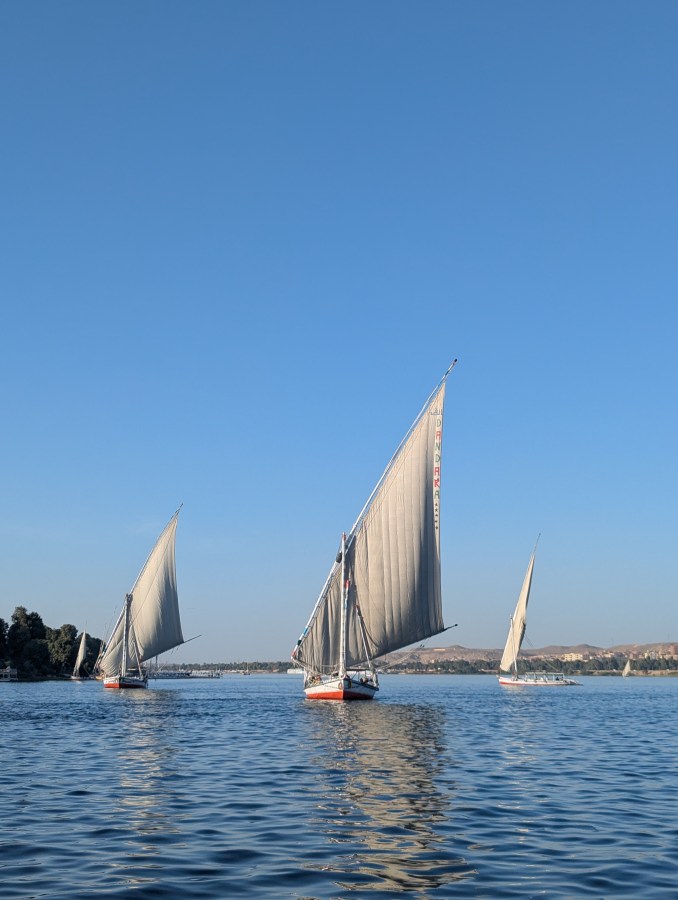
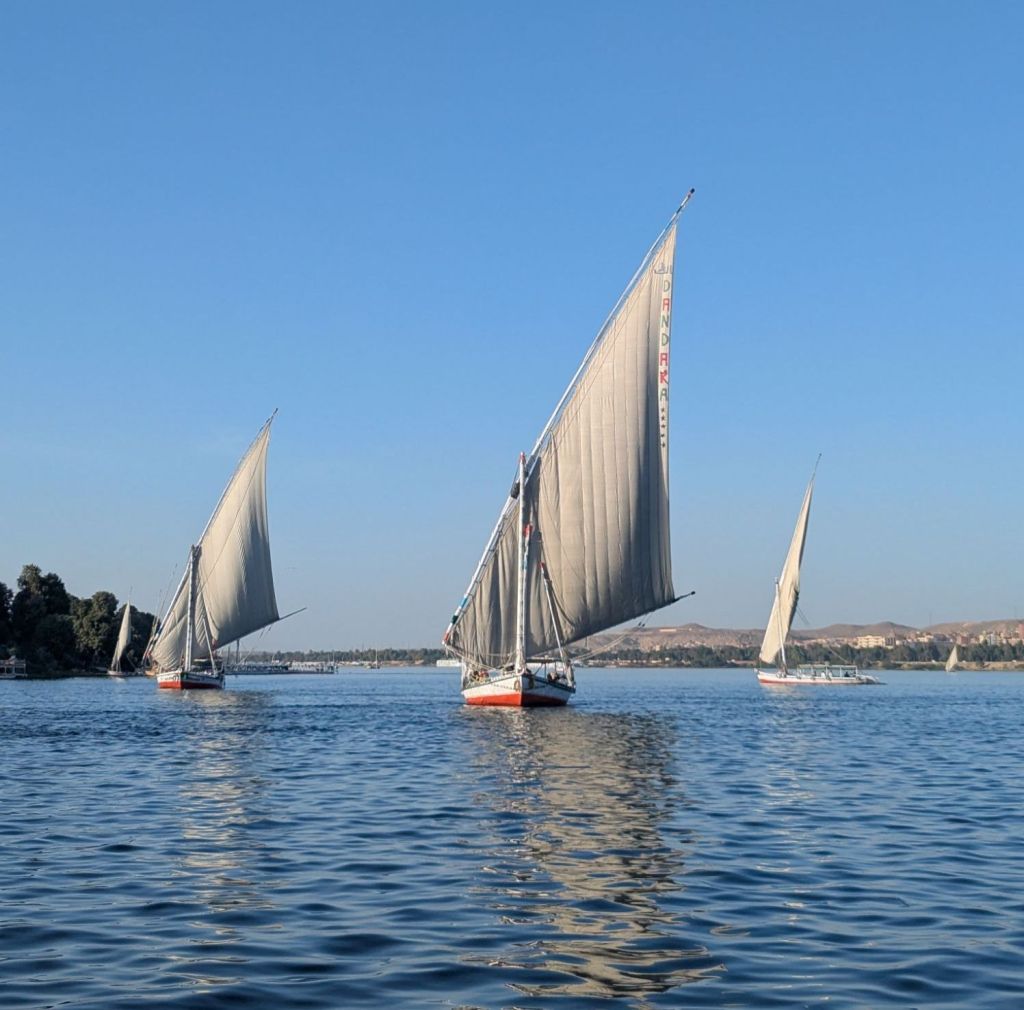
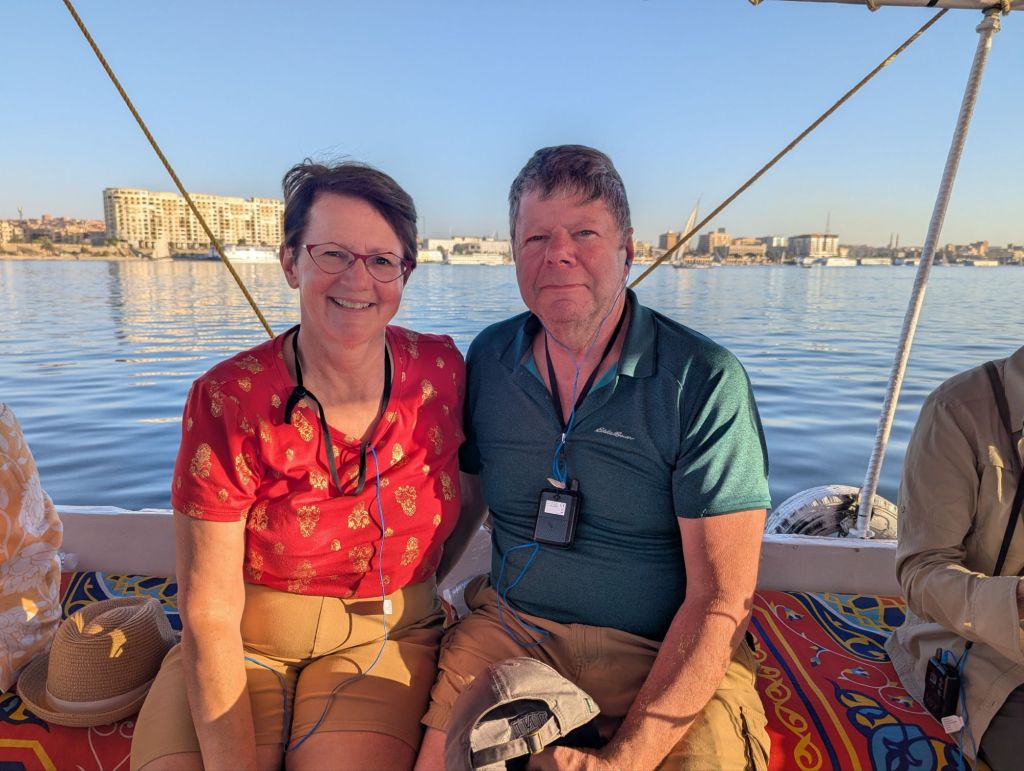
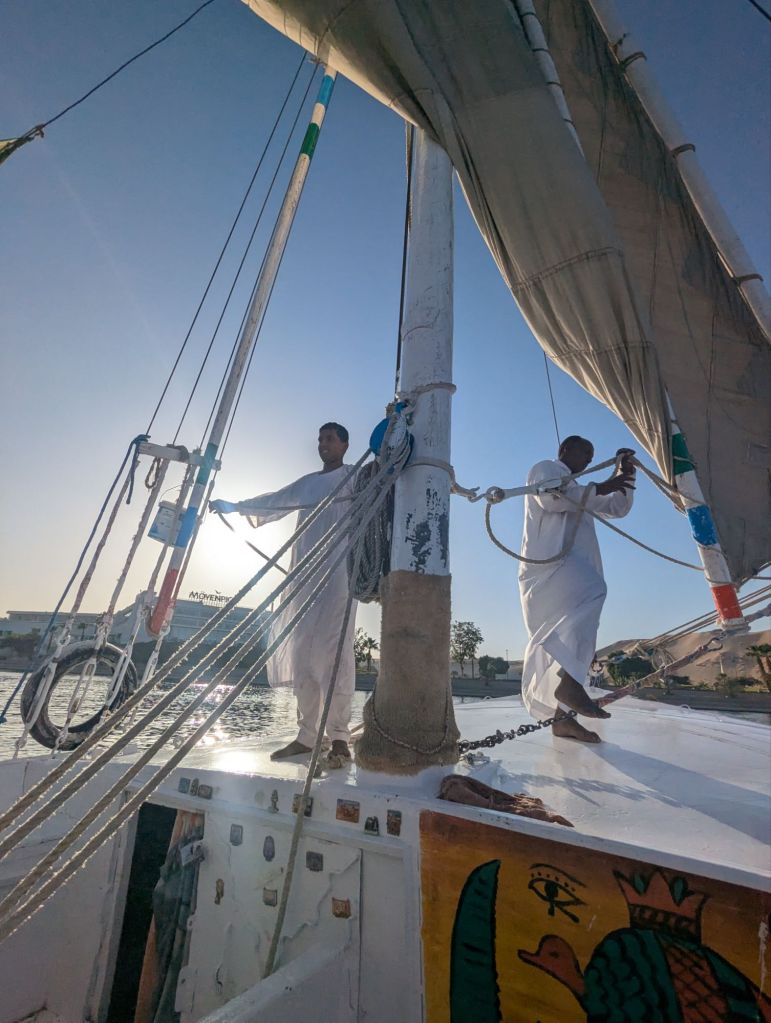
Our next lodging was a river cruise boat, the Amwaj. We settled in for a bit then headed out for a treat: an evening sail in a felucca, an Egyptian sailboat, on the Nile. Sun set as we sailed between Aswan and Elephantine Island and then the Nubian West Bank. A few caves and tombs were evident in the distant hills. The sail was lovely, though the wind died so we were towed back to port. The maneuvering of tour boats, feluccas, and even cruise ships as they crowded the city’s shore was remarkable; pushing in and away, squeezing in, or lining up side by side for access to the dock. All with smiles and friendly calls and helpful shoves, if not suggestions.
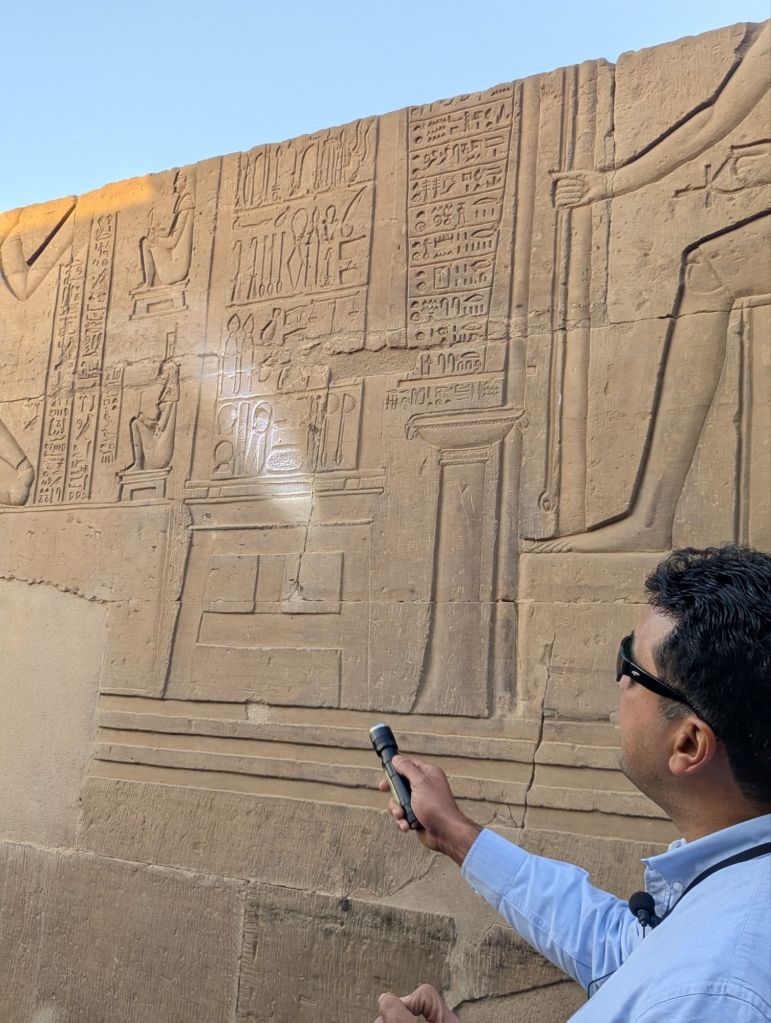
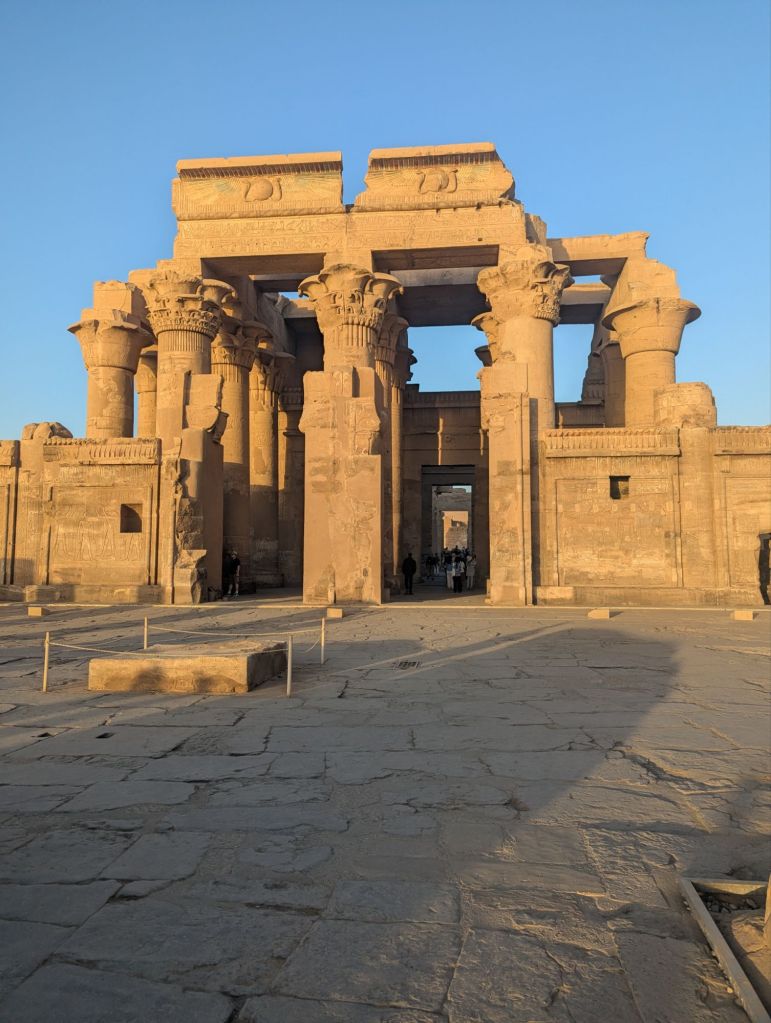
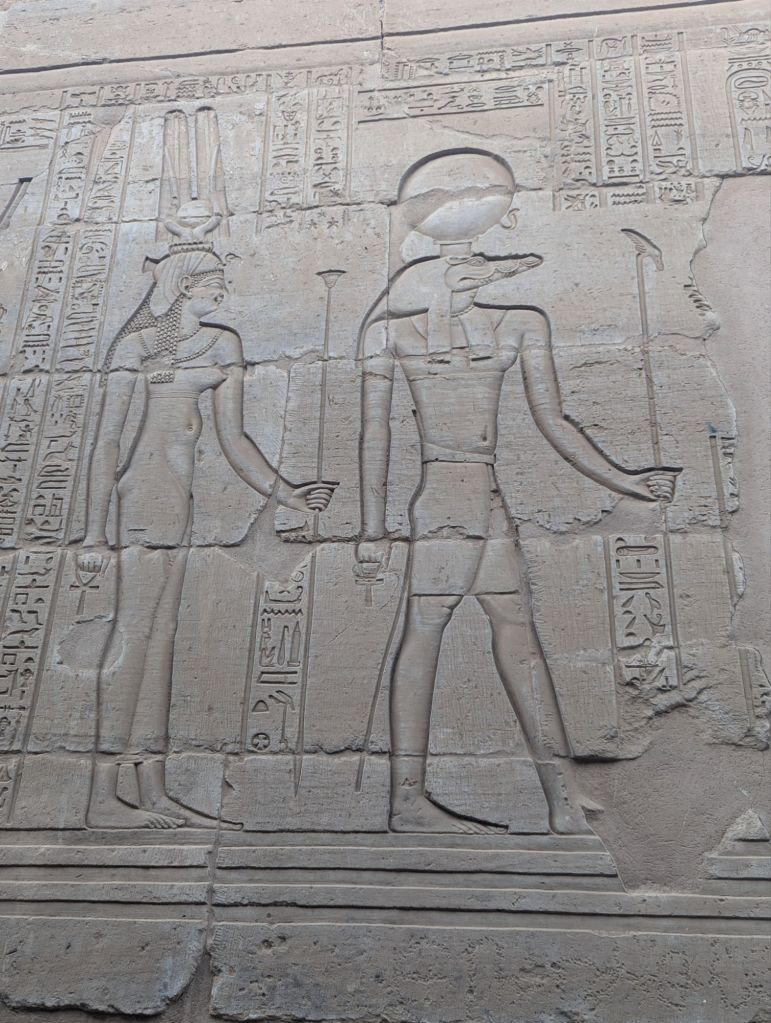
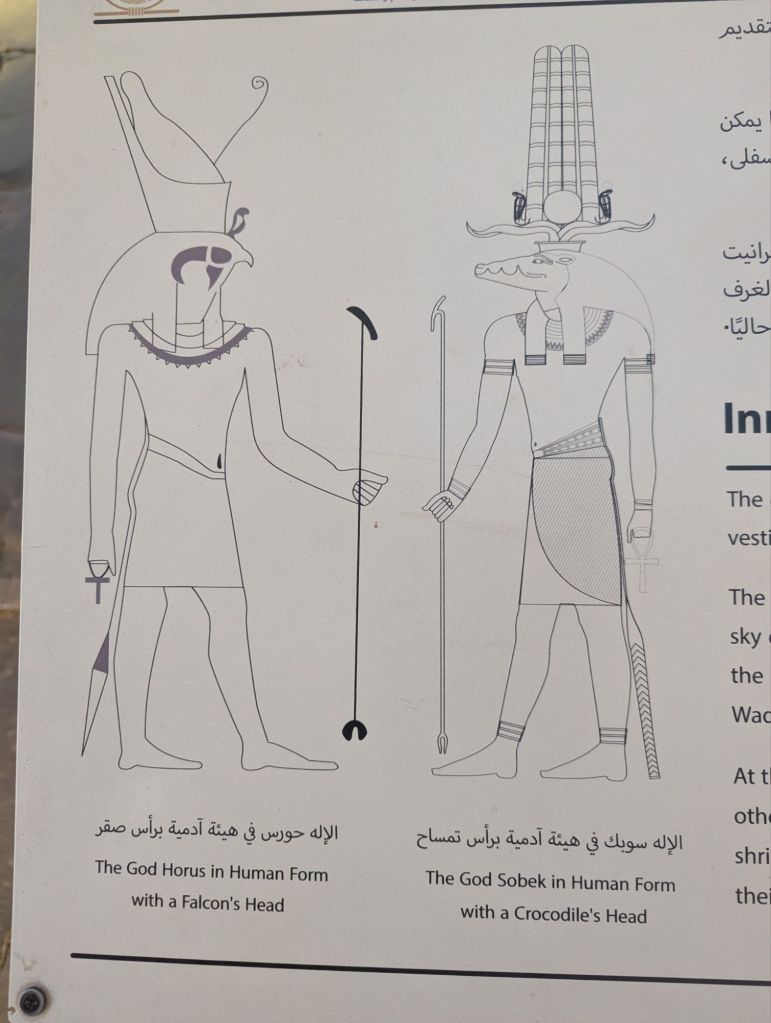
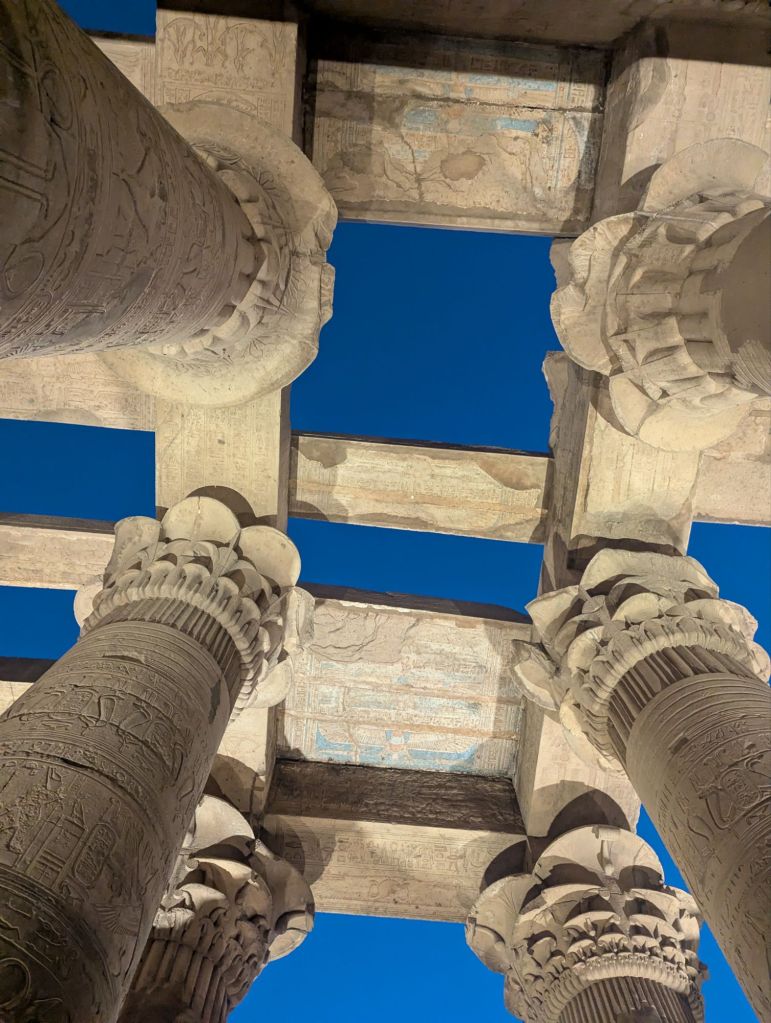
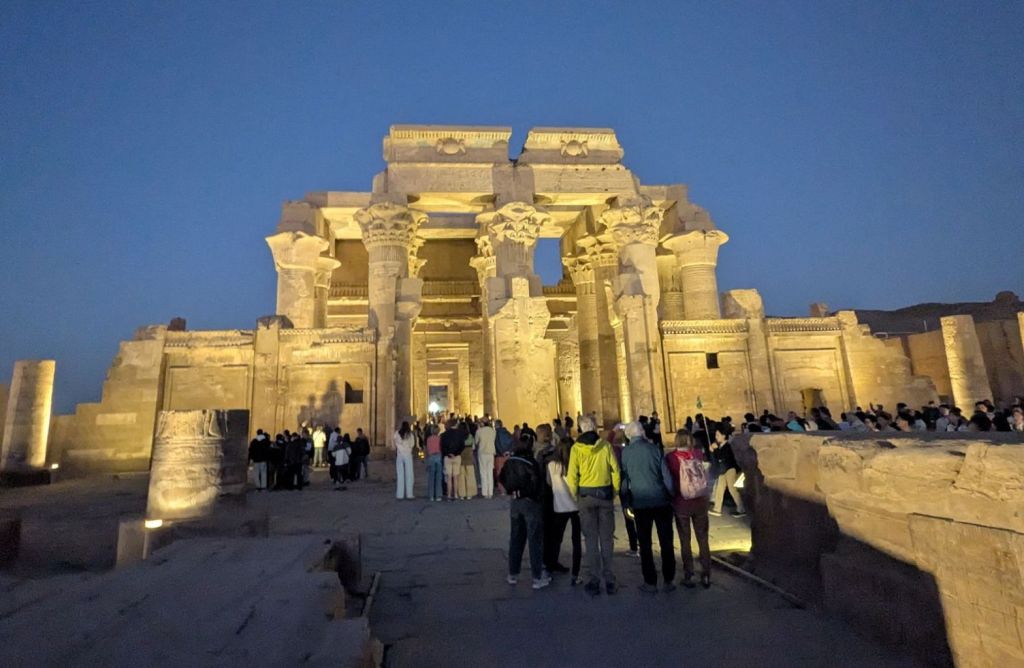
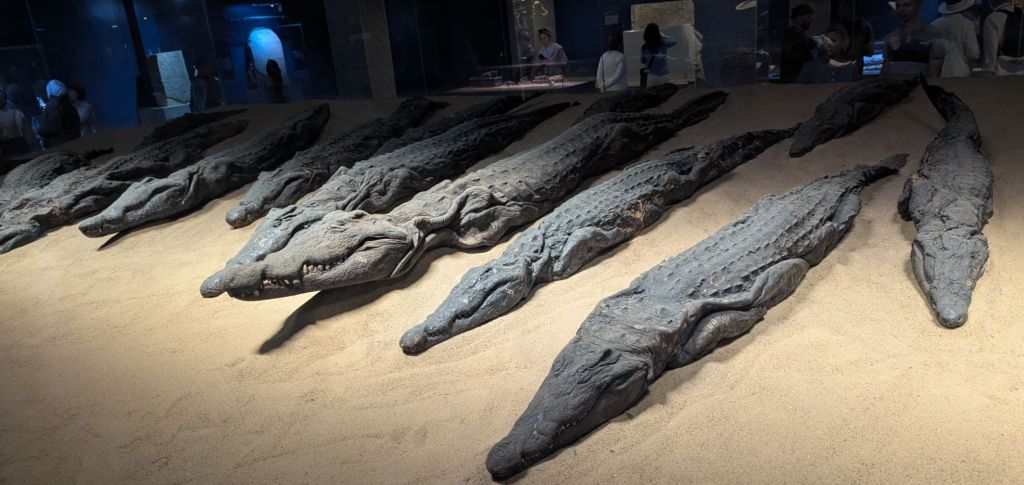
The next day we took an early morning motorboat nature cruise through the islands just below the English dam, the water moving fast through rapids. Young boys paddled up alongside our boat on stand up paddle boards to sing for money. Nubian homes lined the shore, fishermen cast nets, school children were being ferried to town for school. Aga Khan’s tomb stood watch atop a tall dune. We visited the Nubian family and returned to our boat for a relaxing afternoon (in my case, a massage). That evening, we visited the temple of Komombo, a double temple from the Greek and Roman times 181 BC, dedicated to Sobek, a crocodile god of evil, and Horus. Although very crowded due to all the cruise ships visiting and all on a similar schedule, Ayman, our tour manager, perfectly timed our arrival for us to see the only known hieroglyphics to show medical equipment without crowds.
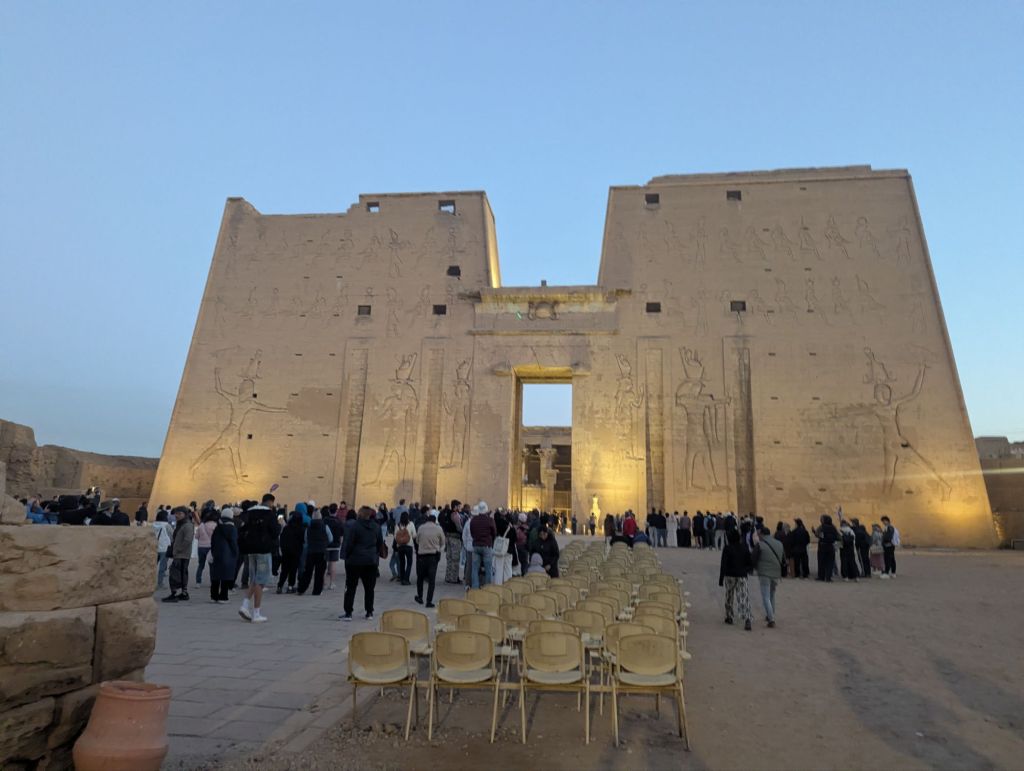
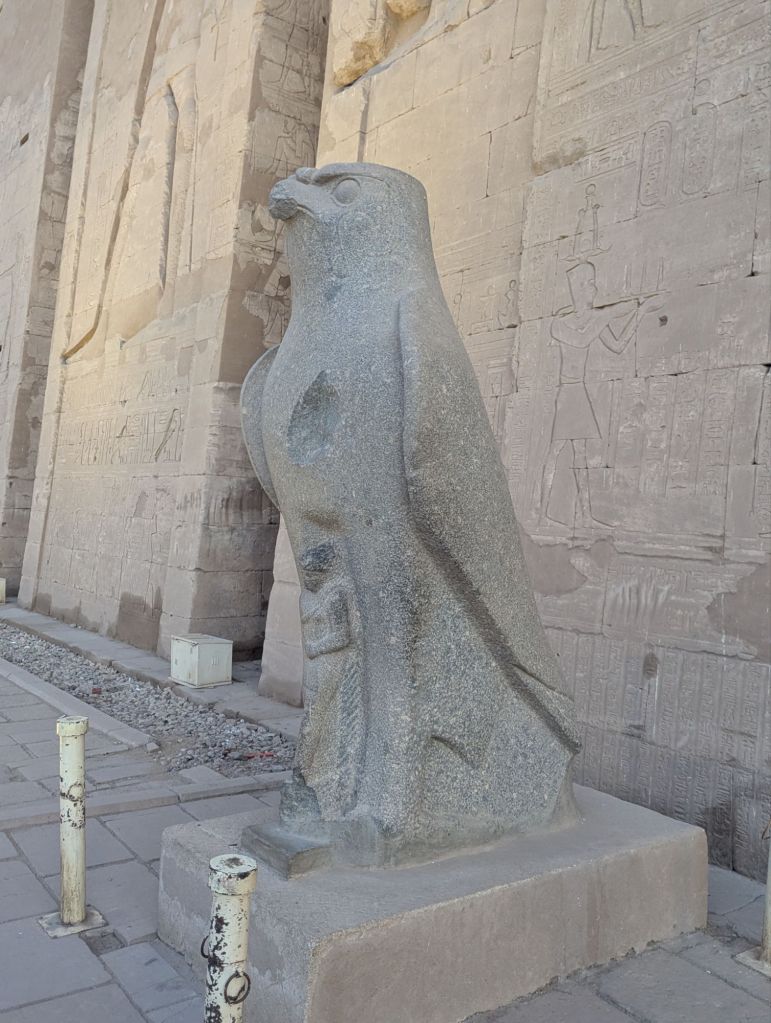
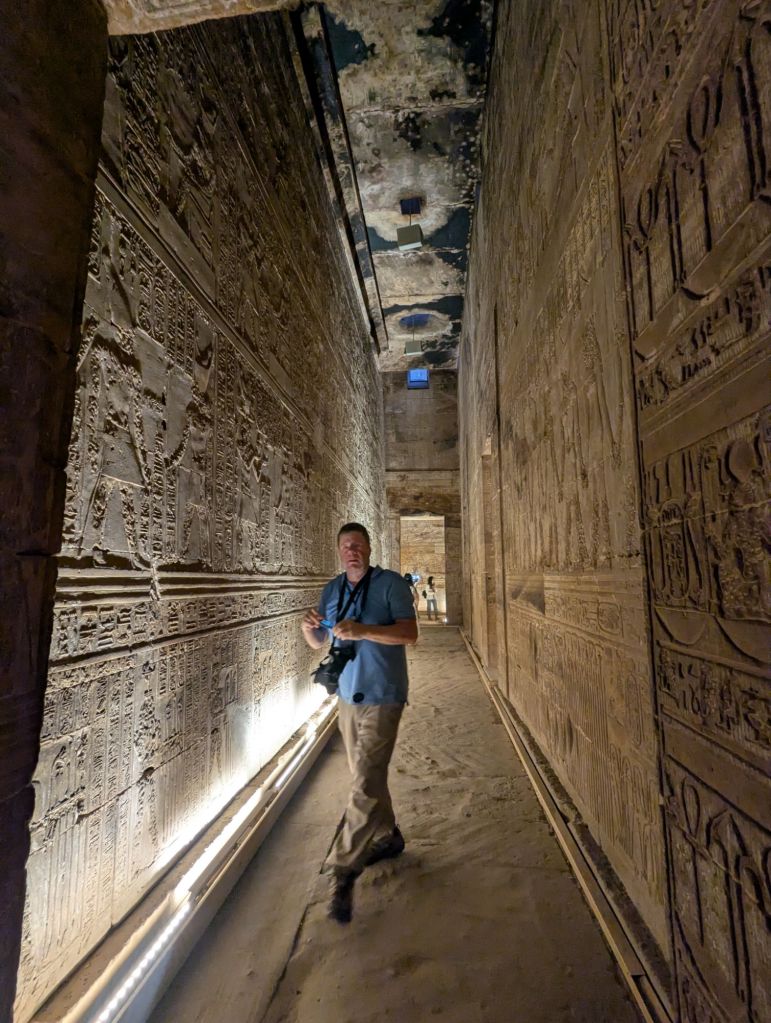
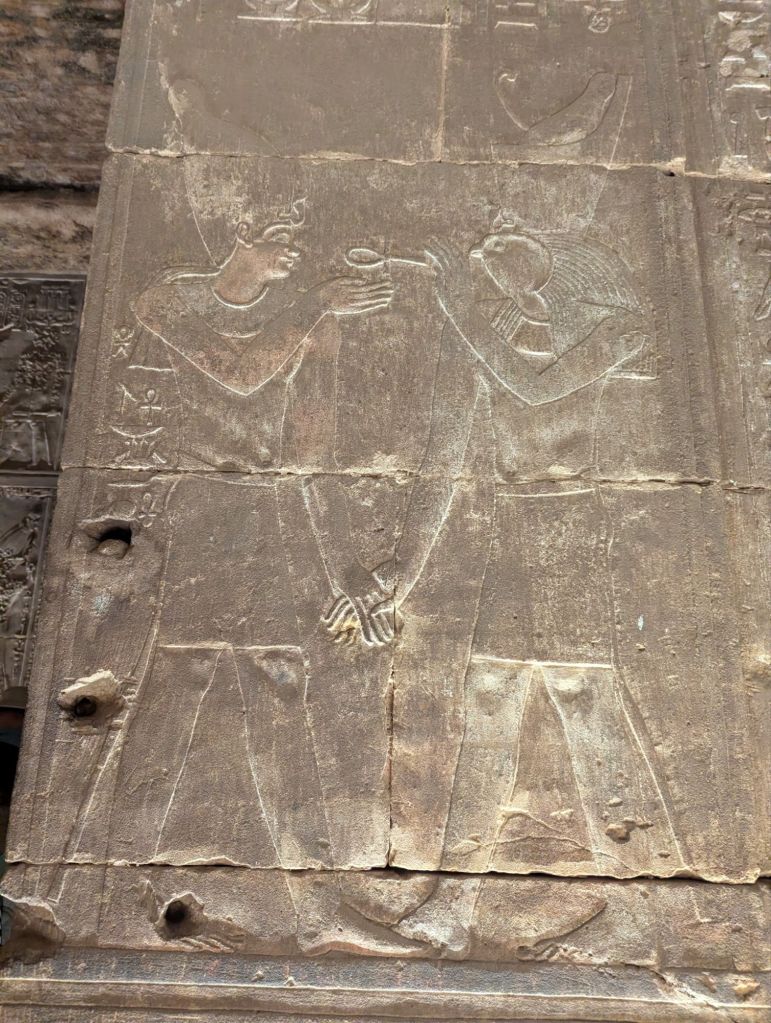
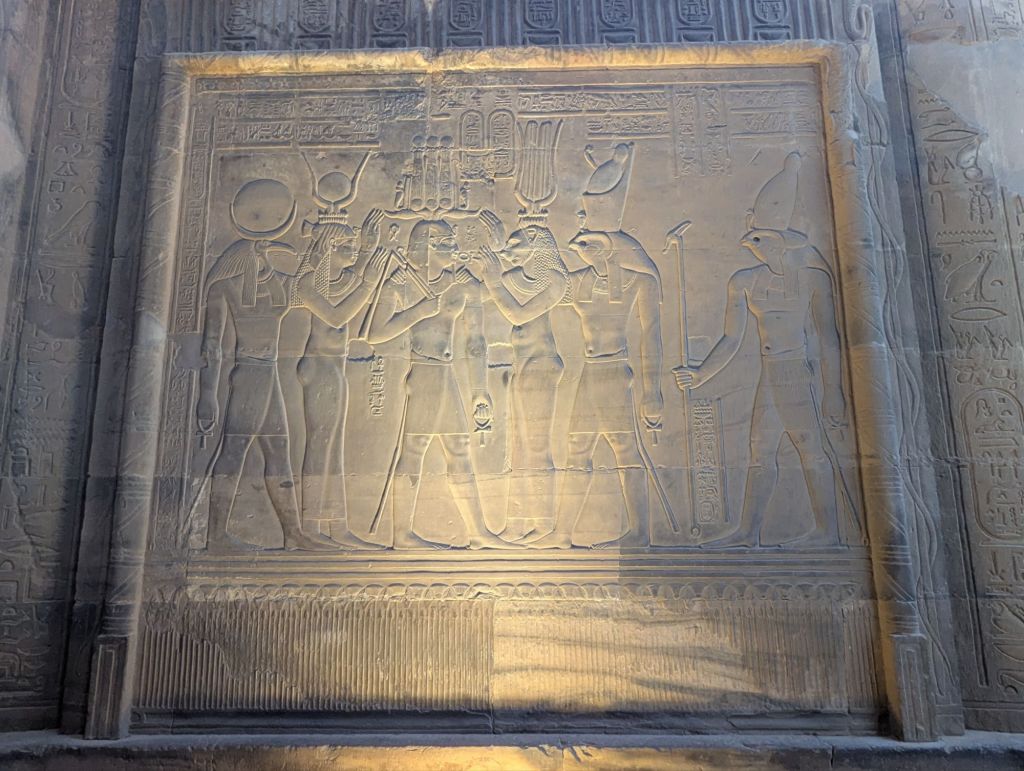
A very early morning (6:00 am) found us entering the Temple of Edfu in the impoverished town of Edfu, about halfway between Aswan and Luxor, our eventual destination. Many horse-drawn carriages lined the narrow streets to take tourists from the shops to the site. The horses looked malnourished and ill cared for. We bussed it and although the entrance line was very long it moved rapidly. The Temple of Edfu is huge with more beautiful carvings. Built in 237 BC, Edfu is dedicated to Horus. He is seen wearing the double crown of Upper and Lower Egypt, with his wife, Hathor, who has the eyes and ears of a cow. Ten rooms surround the sanctuary which holds a replica of a wooden boat. The boat is a symbol of life and death and serves to carry souls to the afterlife. The original boat from Edfu is in Luxor. Carvings higher up were defaced by the early Christians but, remarkably, lower ones were intact. This was due to the temple being buried in sand about 1/2 way up and not rediscovered until 1860.
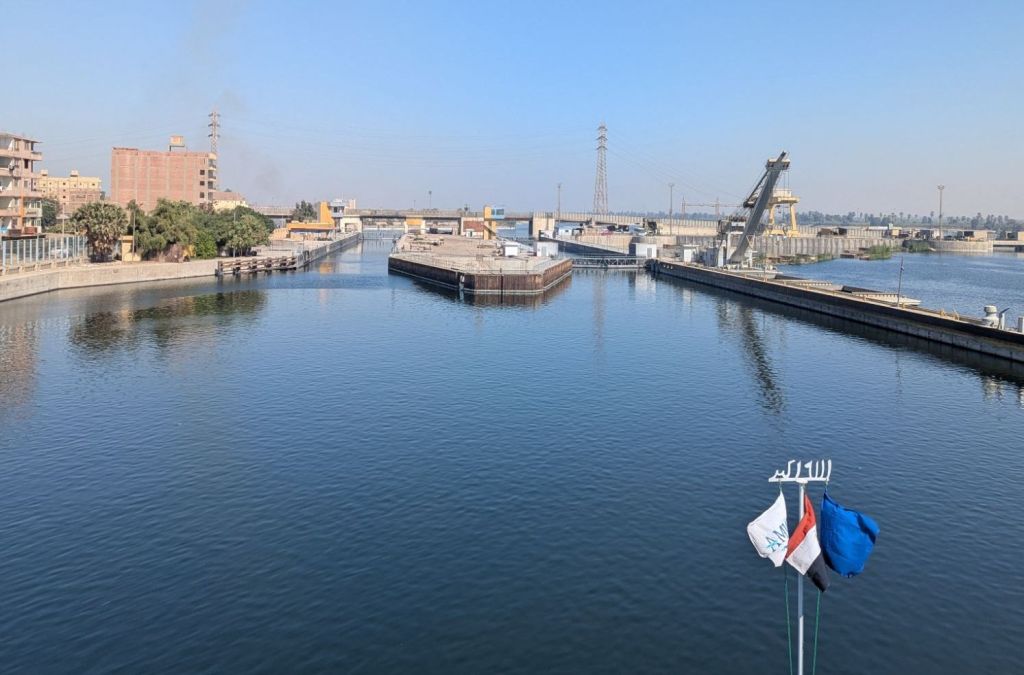
We relaxed as our ship cruised along the Nile. We sat up on deck in the very chilly breeze watching as Egypt passed by. Farms and palm trees line the Nile, Sahara dunes just beyond. In ancient Egypt everyone lived on the East bank while tombs were built on the West; today all Egyptians live on 10 percent of the land, all near the Nile. The Nile is 4,000 miles long, the longest river in the world. The source is Lake Victoria (the White Nile) and Lake Tana in Ethiopia (the Blue Nile) eventually combining in Khartoum in Sudan. We passed through the Esna lock, dropping 14 meters, and continued on. Luxor and the Karnak temple beckoned.
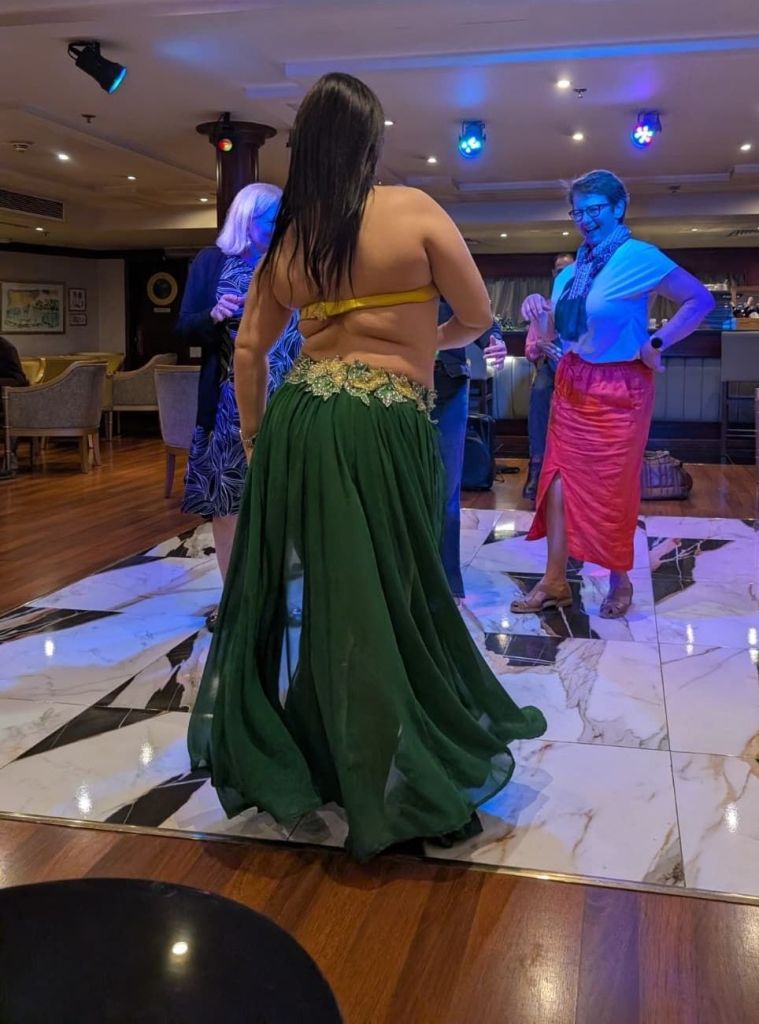
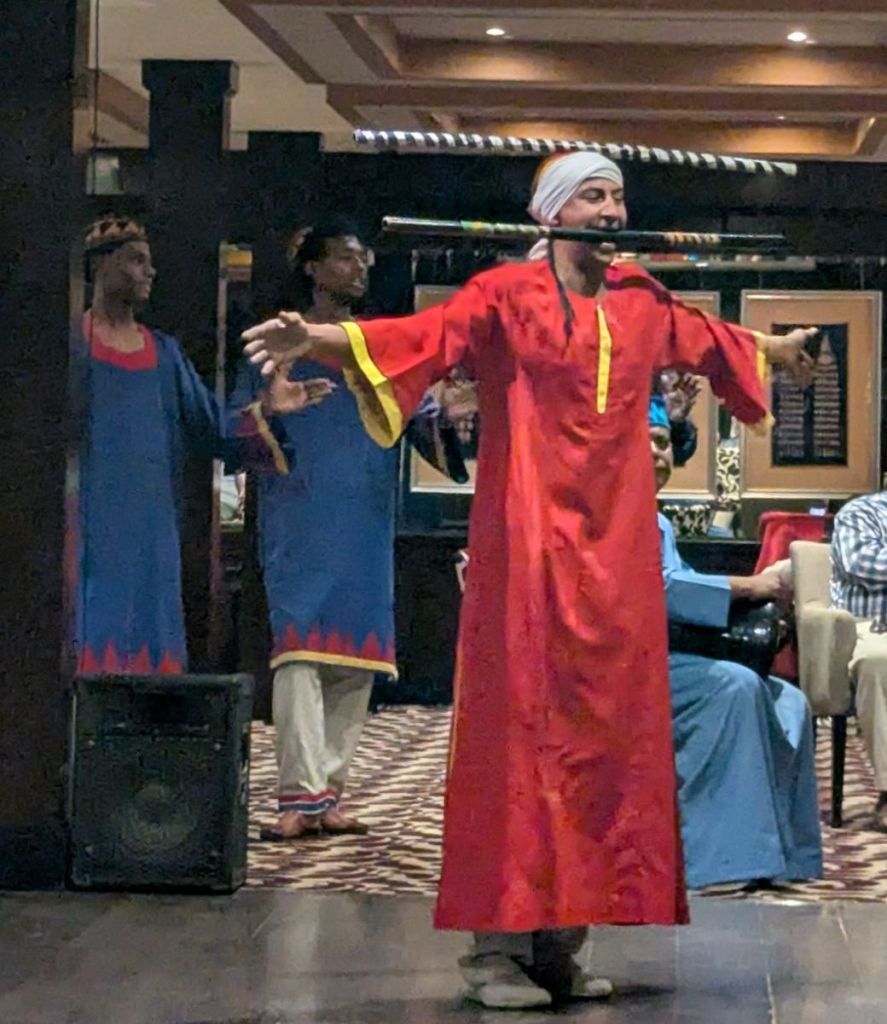
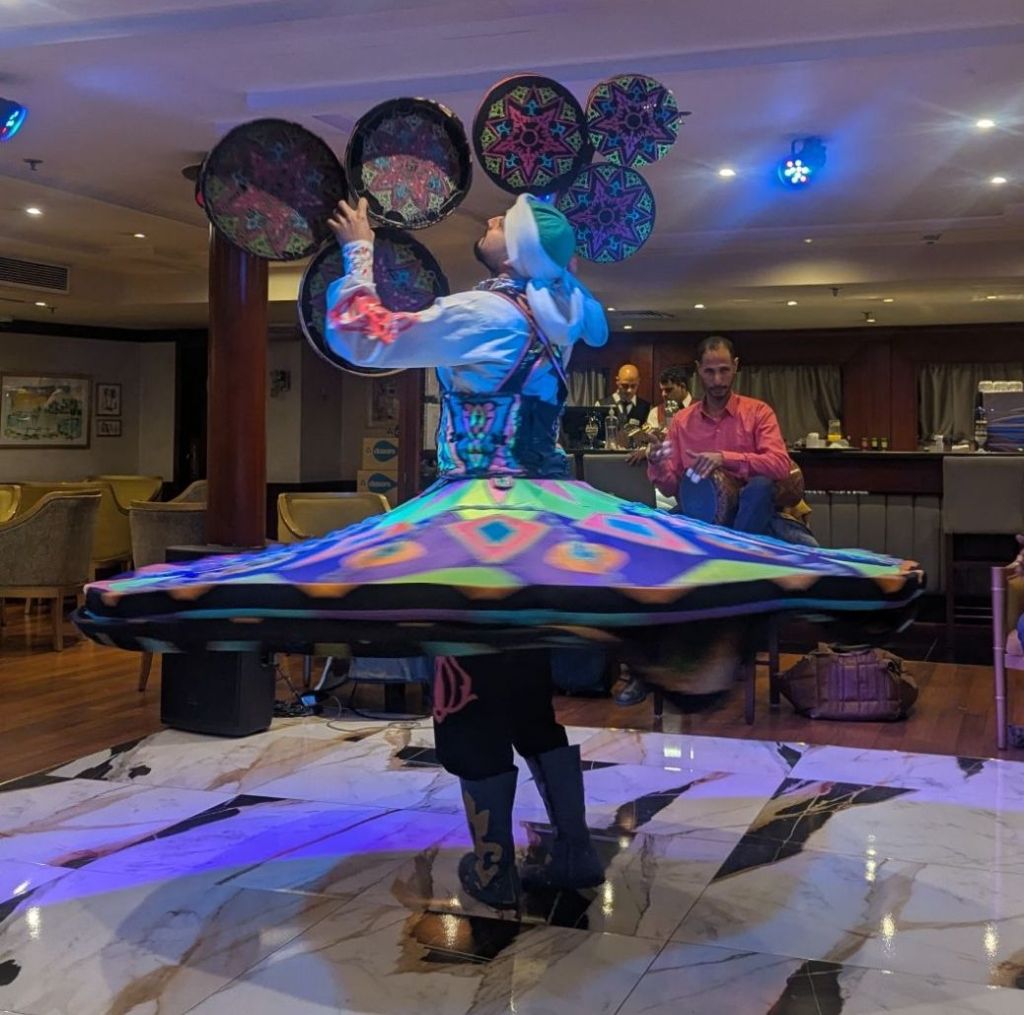
There was some fun entertainment on the cruise ship including a whirling dervish, belly dancer, and Nubian dancers. Quality was ‘meh’ but fun and laughter was top rate.
Luxor and the Valley of the Kings. E4

 My new reality
One thought on “Aswan. E3”