

Jeanette and Allen left Paris for home after 10 days of travel so we were on our own. Rain had started as we cabbed to the nearby Gare Montparnasse train station. Our next stop: Bordeaux! (Read parts 1 and 2 here: https://retirementadventureblog.com/2025/09/22/tour-de-france/ and https://retirementadventureblog.com/2025/09/24/tour-de-france-parte-deux/
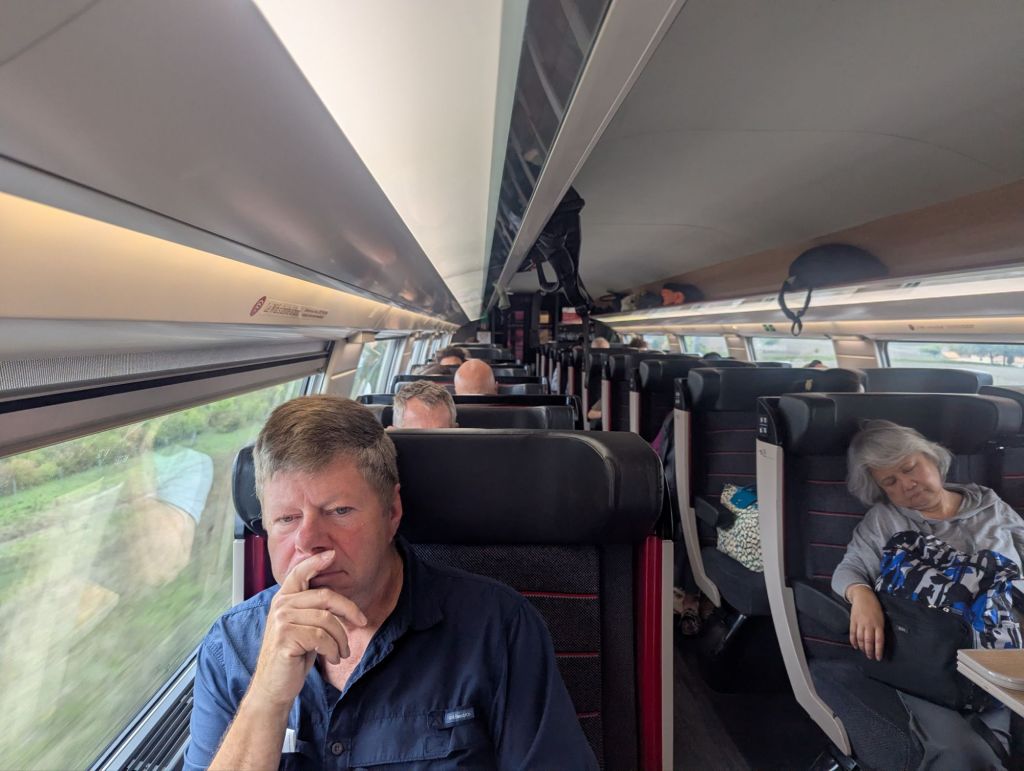
With the TGV travelling at speeds over 300kph (196 mph!) we arrived in Bordeaux only 2 hours later (362 miles). Bordeaux is in the southwest region of France in Gallic Aquitainia. This is wine country, or rather, this is vineyard country; France itself is wine country, or should I say, heaven!
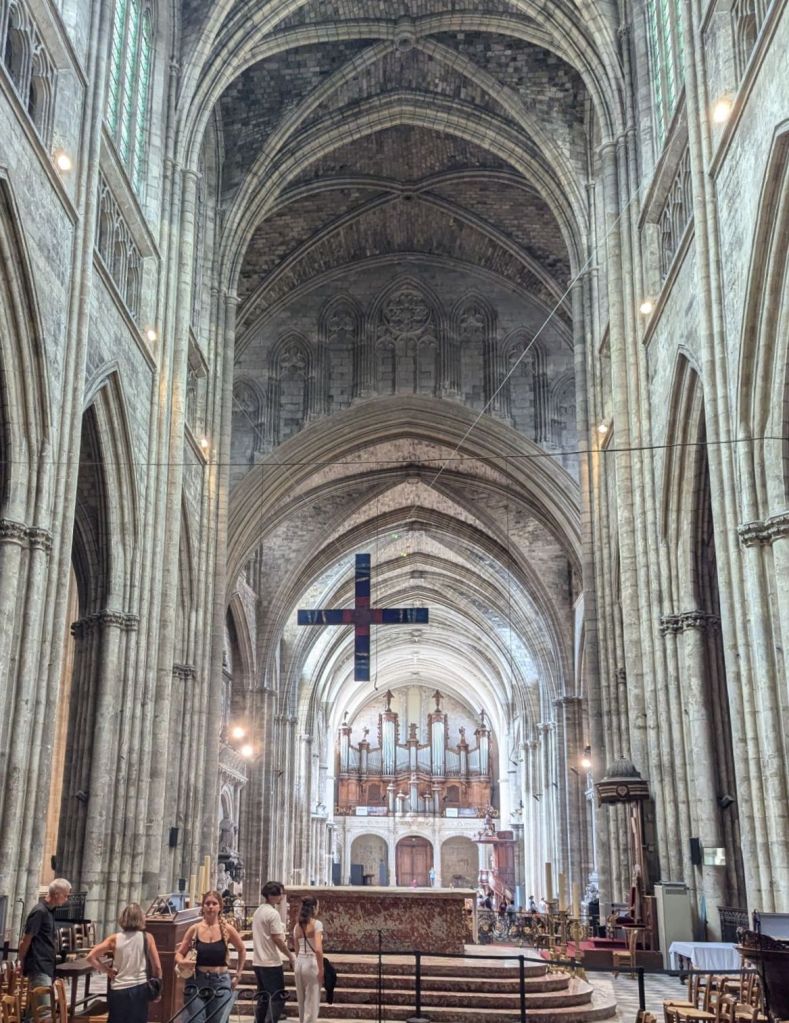
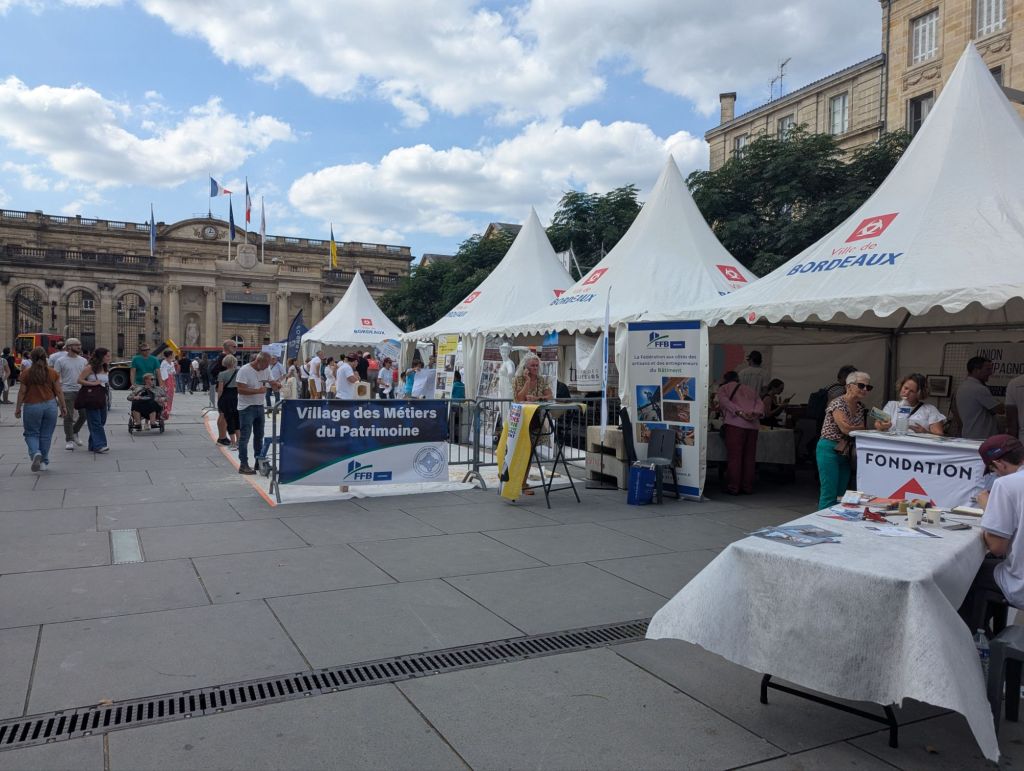
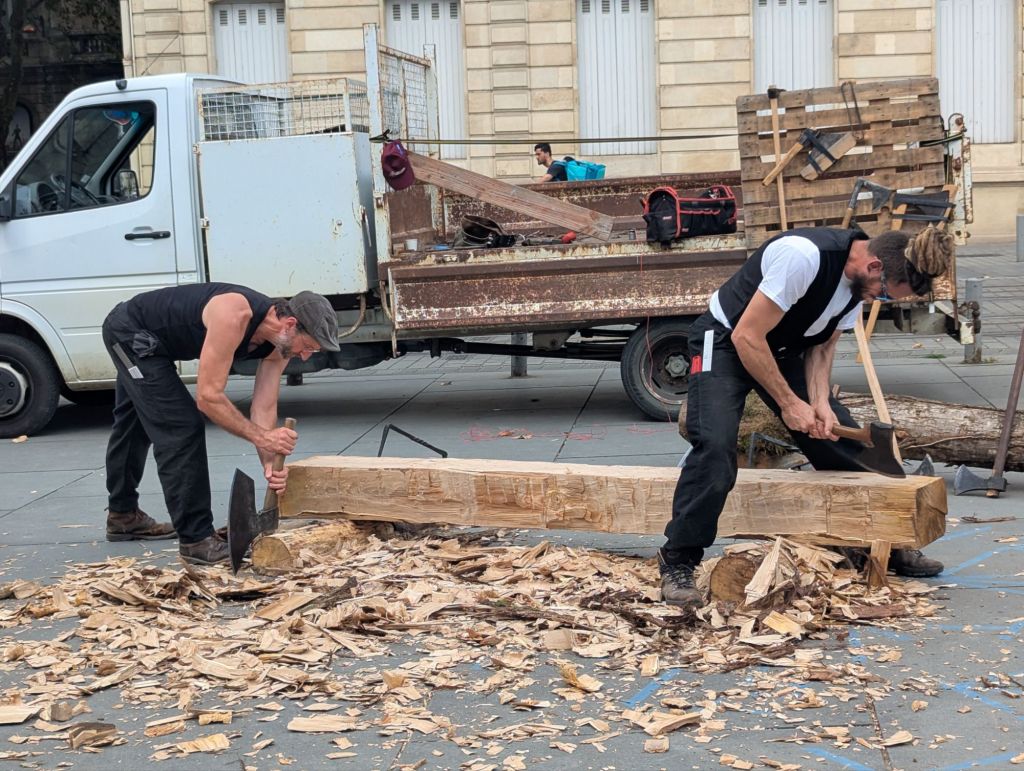
After picking up the rental car (a very scuffed up Peugeot 3008) we headed into Bordeaux city centre. Bordeaux has a population of 265,000 (over 1.5million with its suburbs) and it seemed like everyone was out on this beautiful day. We found parking in the tightest parking garage ever and then started walking. The cobblestoned streets of the historic shopping district were cordoned off and people were out and about. This weekend marked European Heritage Days, aka the French Patrimonie Holiday. Museums were free and festivals popped up everywhere. We headed over to the Bordeaux Cathedral which was easy to find as it towered over the red tiled roofs of the surrounding Neoclassical buildings. On display in the courtyard were artisans of ancient craftsmanship: blacksmiths, stained glass artists, woodworkers, and the like. We toured the Romanesque Cathedral of St. Andrew, built in the 11th century. After, we found the Belle Arts Museum a short walk away, which, of course, was free that day. Their collection was modest and split into two buildings. A local classical orchestra was performing, most musicians in tune. It was delightful. Afterwards, we wandered the streets searching for a particular shop for Christina but declined to wait in line at the store. (Sorry, honey, but there’s always the internet). There were literally thousands of shoppers out and about. We didn’t tour enough of Bordeaux to do it justice, it seemed dingy and a bit run down though it was vibrant and alive. The car was where we left it and our luggage was intact so we headed out of the city towards the right bank of the Garonne river and St. Emilion- a wine lovers paradise.


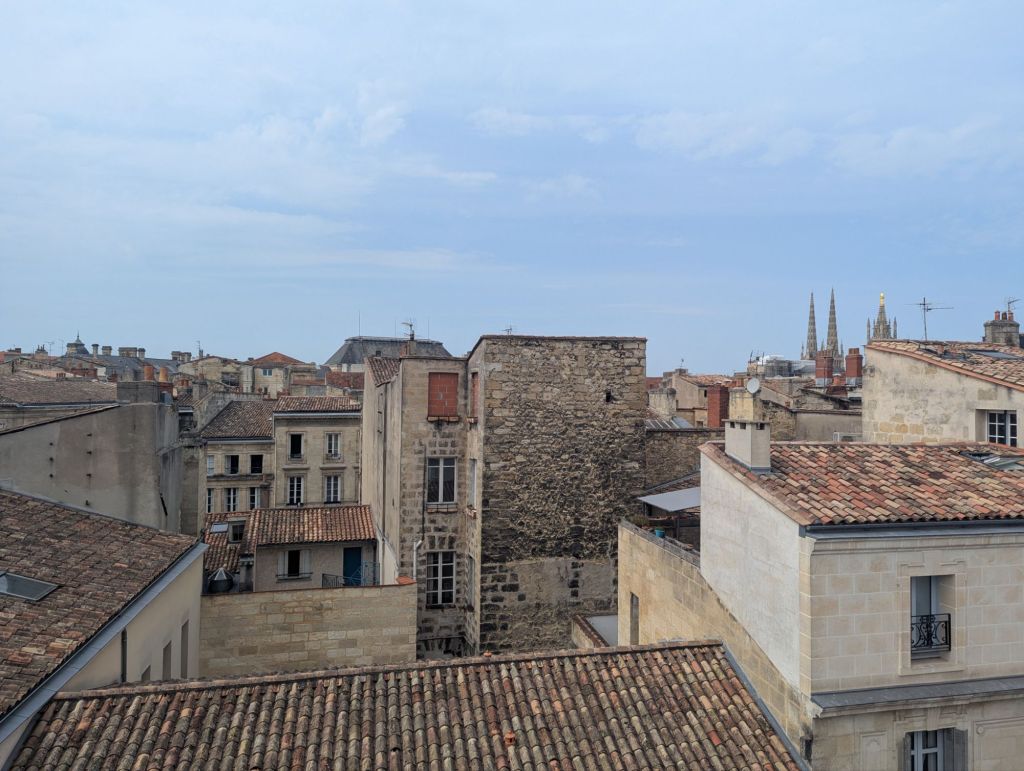

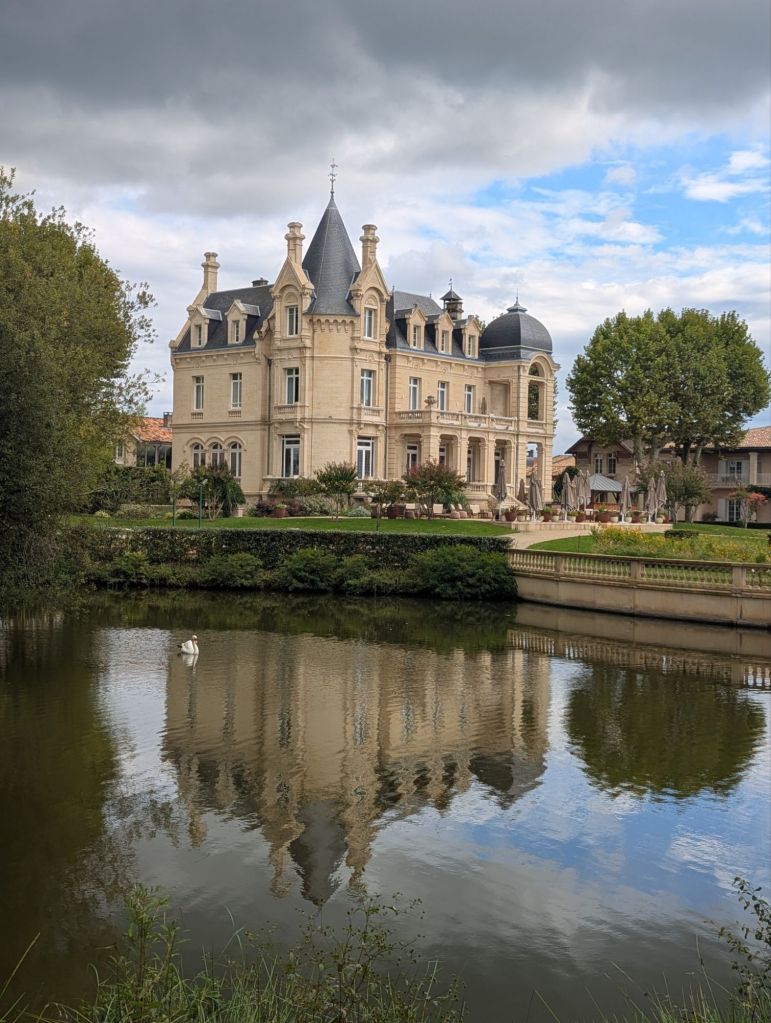
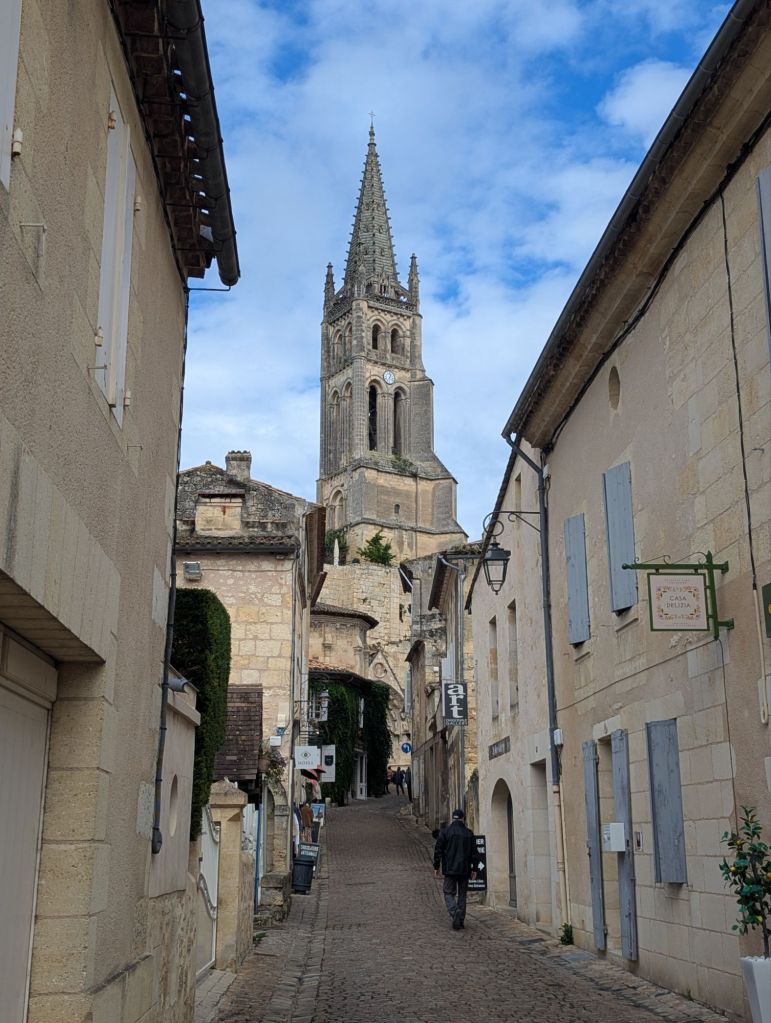
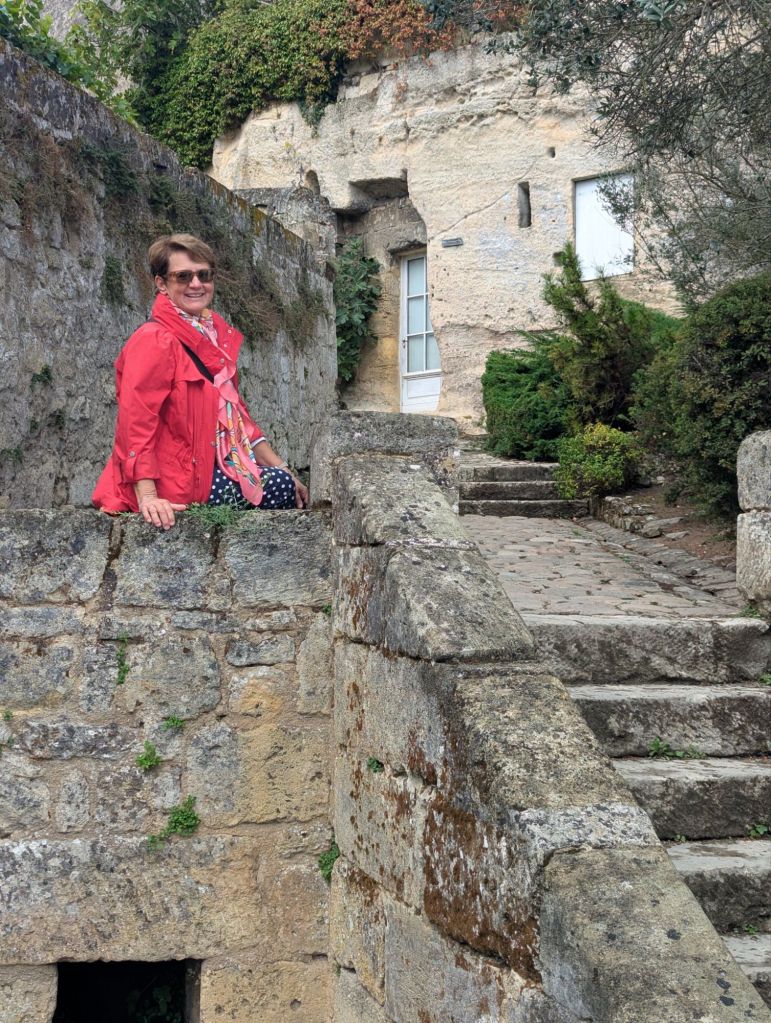
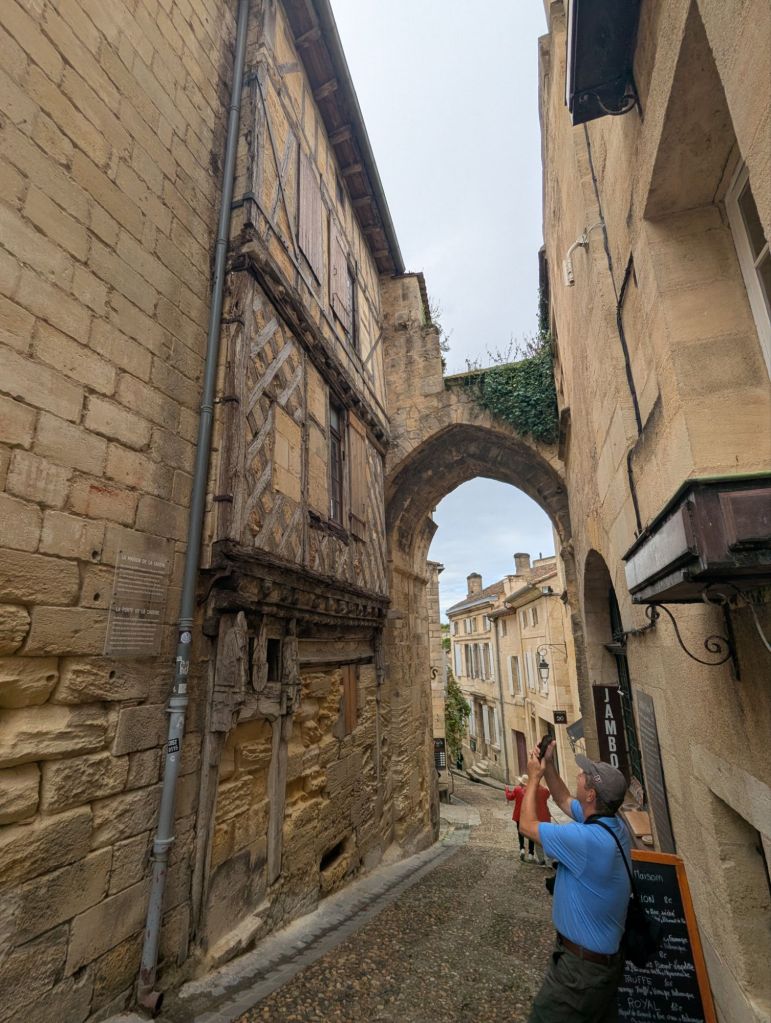
After only 1 hr of driving from the industrial outskirts of Bordeaux we arrived at our hotel in St. Emilion, Grand Hotel Barrail. The landscape surrounding the area was gently rolling hills covered with rows of grape vines and dotted with cream colored chateaux and farms. Oh! It was beautiful! Our hotel was beautiful as well (understatement) and our room was situated in the older building, which we like. The desk made our dinner reservation in St. Emilion proper, at L’Envers du Décor, with the best foie gras to date! Greg has been sampling foie gras nightly and should probably double up on the Crestor. We also strolled St. Emilion, the upper village, with its cobblestoned streets and ancient buildings, some intact, some ruined, but most with a wine shop selling the local goods: Bordeaux wine.

And did we ever get immersed in viniculture the next two days, with 6 wine tastings at different chateaux. You can’t drive, nay, walk, a few meters in St. Emilion without stumbling into a chateau that sells its own wine, and, after the tasting, stumbling out. We visited Chateaux Cadet Bon, de Ferrand, Soutard, Fonroque, Grangey, and Amber Tour. Here, wine is classified according to wine quality and quality of production: Grand Cru, Grand Cru Classe, Grand Cru Premier, and Premier A or B. We toured Grand Cru and Classe wineries. Most were 5 to 10 acres in size and either organic or biodynamic and regulated by those designations. All had just recently harvested their grapes: Merlot, Cab Franc, and Cab Sav, some by machine but most by hand, and had started production. Most recently, Bordeaux St. Emilion wines are less toasty than in the past and on average, a blend of a majority of Merlot grapes with Cab Franc and/or Cab Sav added in. These grapes grow well in the clay/ limestone soils here on the right bank whereas on the left bank the ratio is flipped.


Each tour was different and each guide was enthusiastic in representing their winery and wines. Organic (no pesticides) vs biodynamic (everything used must be produced on the property or minimally, purchased from another biodynamic farm), e.g. weed tea fungicides, compost made from cattle horns, and following the lunar calendar i.e. the phase of the moon affecting sap movement similar to the tides and thus determining treatment of leaves vs. stems vs. roots. They all accomodate the “terroir”, a French word explaining the culmination of environment, soil, weather, human, and the vine interaction.


Vines here are allowed to grow to approx. 40 years old, the older vines producing fewer but higher quality grapes. A 5 acre plot can produce 18,000 bottles. A few tidbits: roses are planted at the end of a few rows of vines as they are an early indicator of mildew. Also, wine was first developed in Georgia (Russia) and/or Iraq in terracotta amphorae but it wasn’t until the Romans were in Gaul they discovered the use of oak barrels for fermentation, which they had already been using for making beer. Speaking of oak barrels, only French oak barrels can be used at these Grand Cru wineries, each barrel costing about $1200, used no more than 3 times, and holding 300 bottles of wine each. Medium toast is used these days for moderate tannin production.

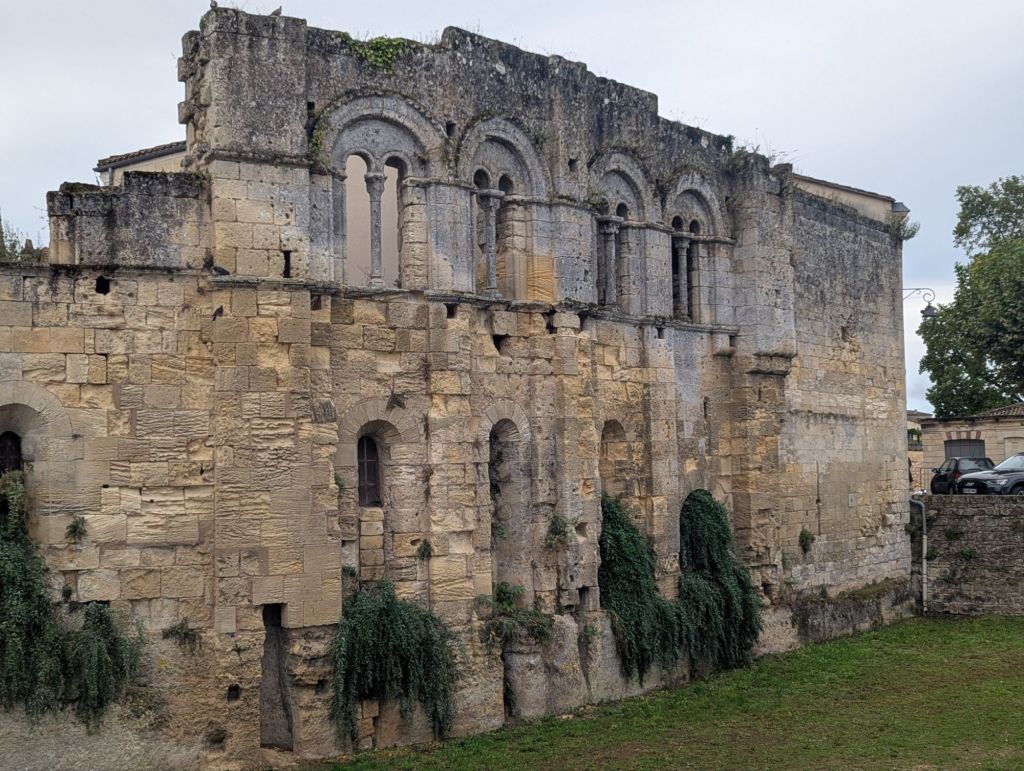
We also visited the rest of St. Emilion, the lower half, with more cobblestoned streets, Roman ruins, cute little shops, and vineyards tucked inbetween and all around. Dinner at our hotel was outstanding, the foie gras the best so far. We dined the last night at a restaurant located amongst the vineyards, l’Atelier de Candale. Let’s be honest, French people aren’t thin because they eat healthy and walk a lot. I’m eating French food, walking a lot, and outgrowing my elastic waist pants. I guess I’ll have to cut back on the croissants and wine and cheese…when I get home!

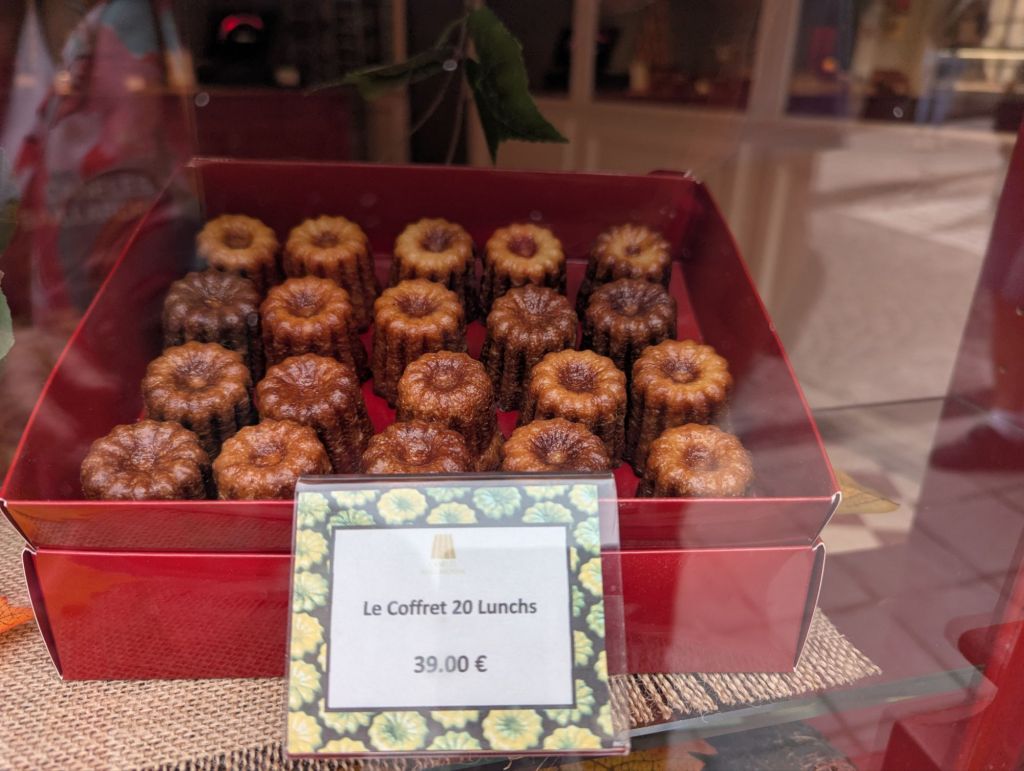
All too soon we had to leave St. Emilion. It certainly was a delight to visit and I highly recommend it. Greg drove slowly (I know! It’s incredible!) through the town as we departed, enjoying the vineyards and vistas. Side note here: roads are very narrow and get narrower the more remote. We live on a fairly narrow, dirt road so we understand the driving. However, French drivers are nuts! They go so fast no matter where! I certainly understand my French brother-in-law Serge now. Come to think of it, maybe my brother Ed was born here too.

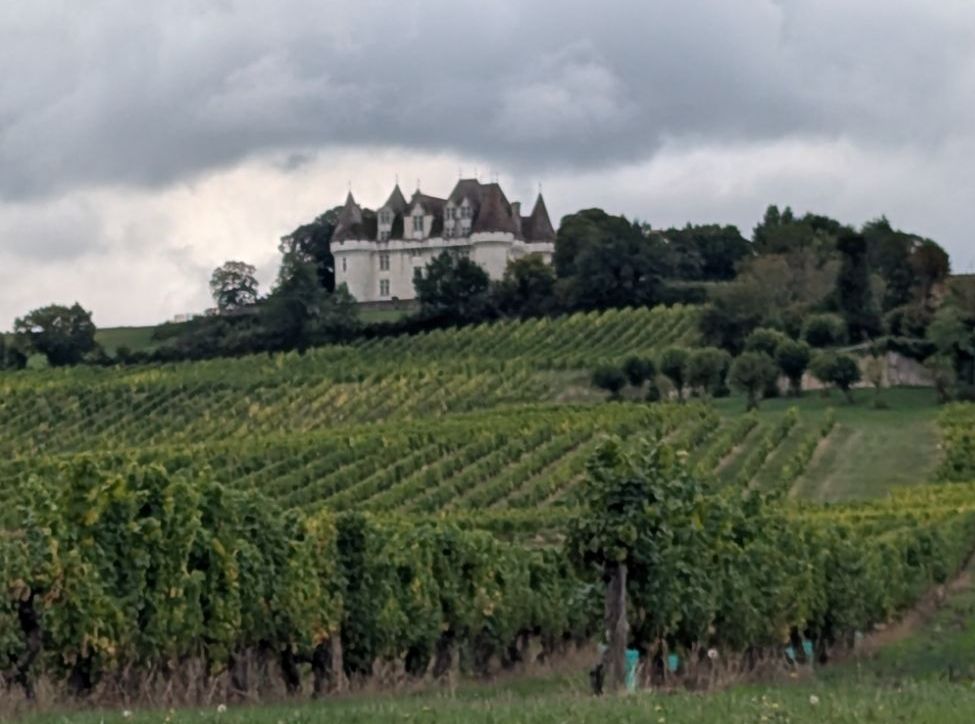
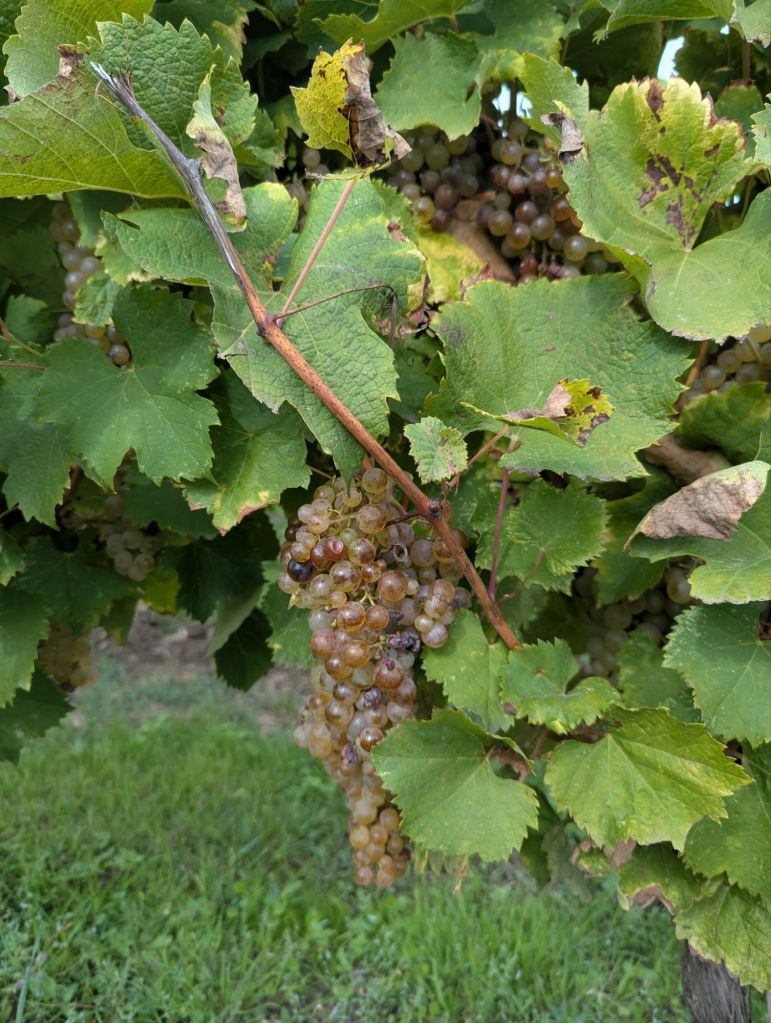
Heading East, we stopped about an hour away in Monbazillac for a visit to a wine museum and castle tour. Monbazillac, in Gallic Aquitaine and near the Dordogne river, is known for a sweet white wine. Chateau Monbazillac is owned by the local winegrowers cooperative and has a wonderful vini-culture museum onsite. The grapes here are allowed to succumb to ‘noble rot’ late in the season. A fungus, Botrytis cinerea, grows on the grapes and perforates the skins and concentrates the juice before harvest. Not being a fan of white wine, I enjoyed the tour but not so much, the wine. The Chateau had an exhibit detailing the effect of the Reformation and following religious wars in the area. Henry IV (Henry Navarre) tried really hard to overcome the strife but was assassinated for his efforts.

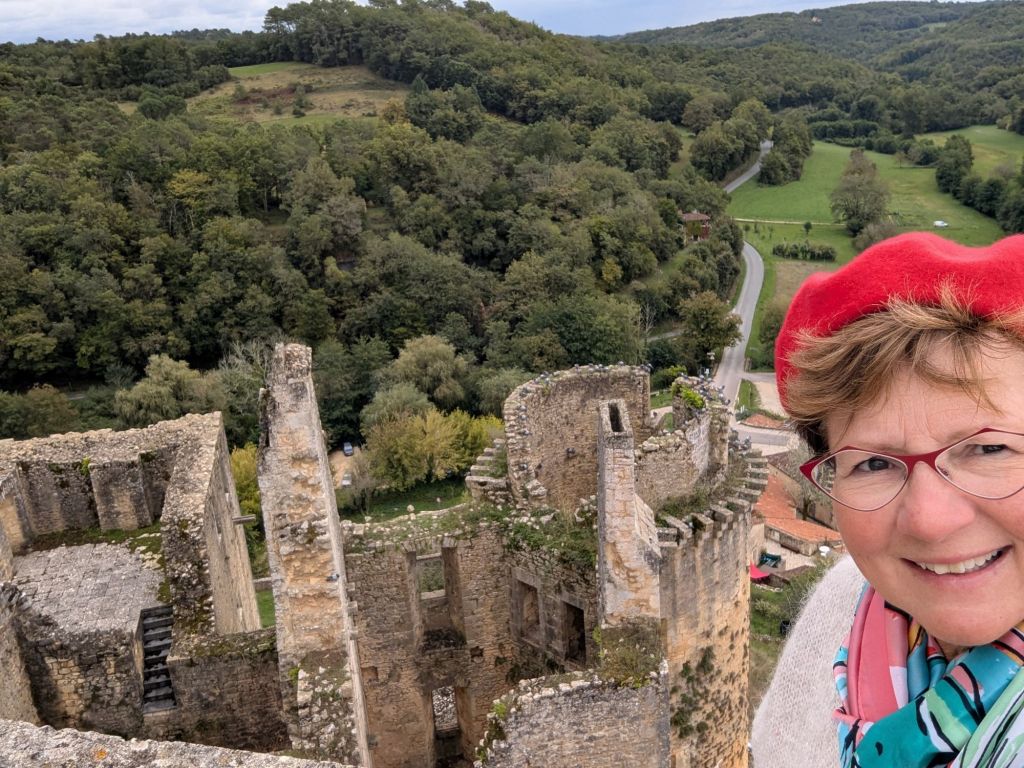
We stopped at another castle or two on our way to/through the Dordogne region. First, Chateau de Biron, from the 12th century, mostly intact with turrets and a keep, decorated rooms and an amazing view of the pastures and forests below. Statues from their chapel, a Pieta and the Deposition, or the Entombment of Jesus, are displayed in the Met as examples of French Renaissance sculptures; 3D replicas are on display at the castle. We also, with our discounted combined tickets, visited Chateau de Bonaguil, built in the 15th century but mostly in ruins now. It was fun to explore the towers and dungeons, terraces, and spiral stone stairs on this hilltop castle.




Our next hotel, Domaine de Rochebois, is a spa and country club with views of the Dordogne. We took advantage of the “sensory pool” which was just a pretentious giant hot tub with various jets in various locations.
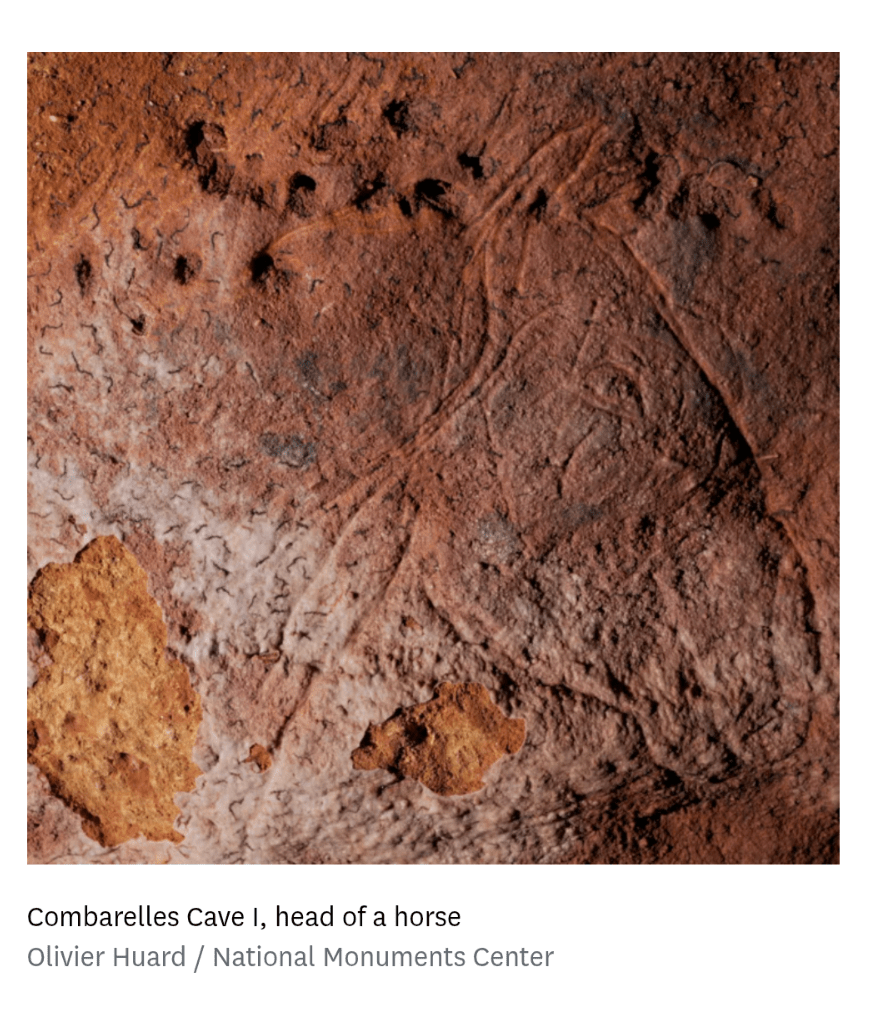
What’s in the Dordogne (otherwise known as the Perigord)? Walnut groves aplenty but also, limestone cliffs with caves and tunnels. And, what’s in those caves? Paintings and carvings from Paleolithic artists. People would crawl 250m into a narrow, rocky space to draw or carve bison, deer, wooly mammoths, bears, horses, or rhinos into the limestone. In the dark, with animal fat lamps, with flint to carve and only a few options to color. And these artworks survived 13,000, or 17,000, or 21,000 years. Amazing! We toured Caverne le Font de Gaume, with original drawings, each traced with engraved outlines though the form of the animal drawn often matched the contours of the wall. Some damage from unsuspecting visitors or humidity from the cave itself, and calcite formation, was evident, but many of the paintings were intact and highly colored. Limited numbers of visitors these days helps to save these artworks. Lots of these decorated caves are closed to the public, like Lascaux, where replicas are on display. We also visited las Combarelles, also original, but with etched carvings and little to no color on the walls. Most remarkable here were the tight spaces and distances the artists had to crawl to find their “canvas”. Luckily for us, the cave had been excavated to a reasonable depth for careful walking, often while hunched. Surveille ta tete! The tour of la Combarelles was in French with limited translation from the guide and another guest. We also did a quick visit to the National Museum of Prehistory in nearby Les Eyzies. This was a nice museum with an overabundance of information and displays of Paleolithic tools. This, however, emphasizes the transformation of man as he evolved into a purposeful being with planning and intent and even aesthetics.




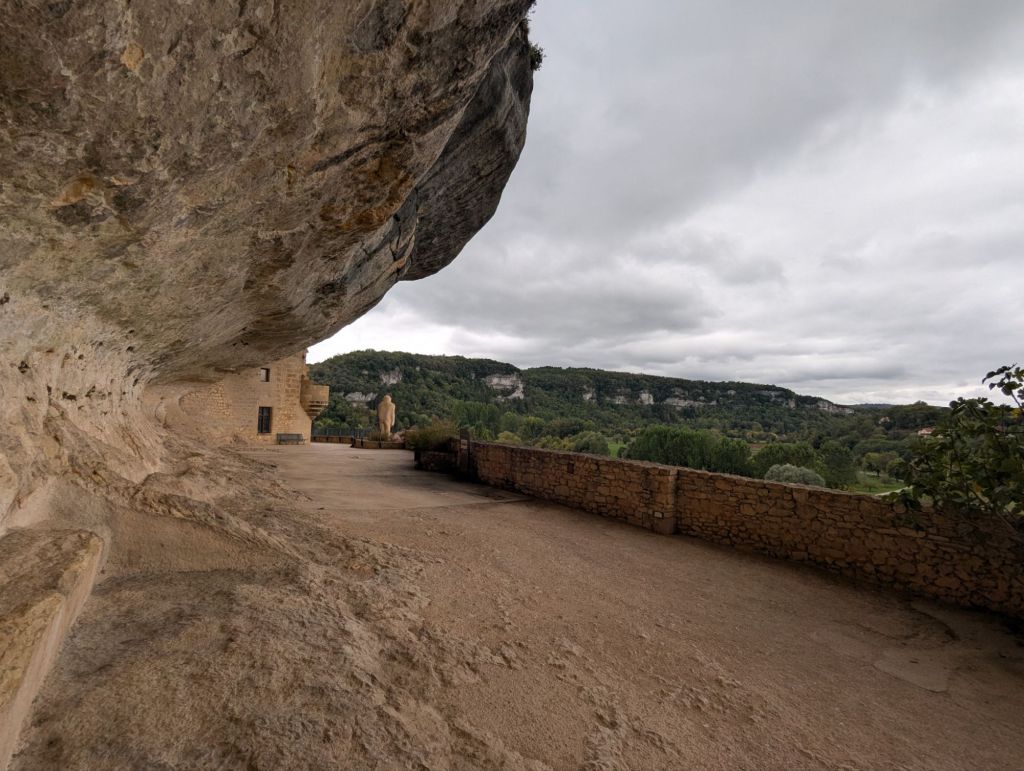
We visited a chateau on the way home: Puymartin and dined in town. It’s been cloudy and cool but we’re mostly inside. But then we visited the Lascaux IV museum the next day. Thinking since it’s a reproduction of the Lascaux caves discovered in 1939 that it would be “meh”, we were thrilled with the museum! What a highlight! The “caves” were replicas, of course, but the detailed, yet dramatic, presentation by our guide, and the drawings/paintings were so accessible, it was a great tour. The interactive museum displays highlighted the artistic nature of the art and proposed scenarios for the composition. This is really a must-see if you’re in the area. That said, I’m glad we got to see art in its original state as well to give perspective to the difficulty and efforts of the artist(s). Other notes: these paintings were made in different, but close, locations over 7,000 years. The artists also were able to show perspective and motion. Some pics were stylized, causing Picasso to say “I did not invent cubism”. Really, just wonderful.


I never thought I’d need 4 blogs for this trip, but it’s been fantastic with so much to see and do. Look for the rest of the trip in my next blog. Abientot!

 My new reality
One thought on “Tour de France Troiseme Partie”