
Monday morning! Our luggage was sent ahead while we transferred to the Bucharest train station. The horrible rain/hail/wind event never materialized though it was cloudier and cooler than the last 10 spectacular days. The train station was a tad run down, as was the train, but the ride was smooth as we traveled over the Carpathian mountains into Transylvania. Romania has 3 fairly distinct regions: Wallachia, the southernmost area which borders Bulgaria, Transylvania to the northwest over the Carpathians, and Moldova, or Moldovia, to the northeast. Wallachia historically was in conflict with the Ottomans, Transylvania with the Hungarian Empire, and Moldova with Russia, though all are now combined as Romania though the easternmost part of Moldova retained independence (per Russia’s ‘request’) though it is landlocked between Ukraine, Romania, Belarus, and Poland.

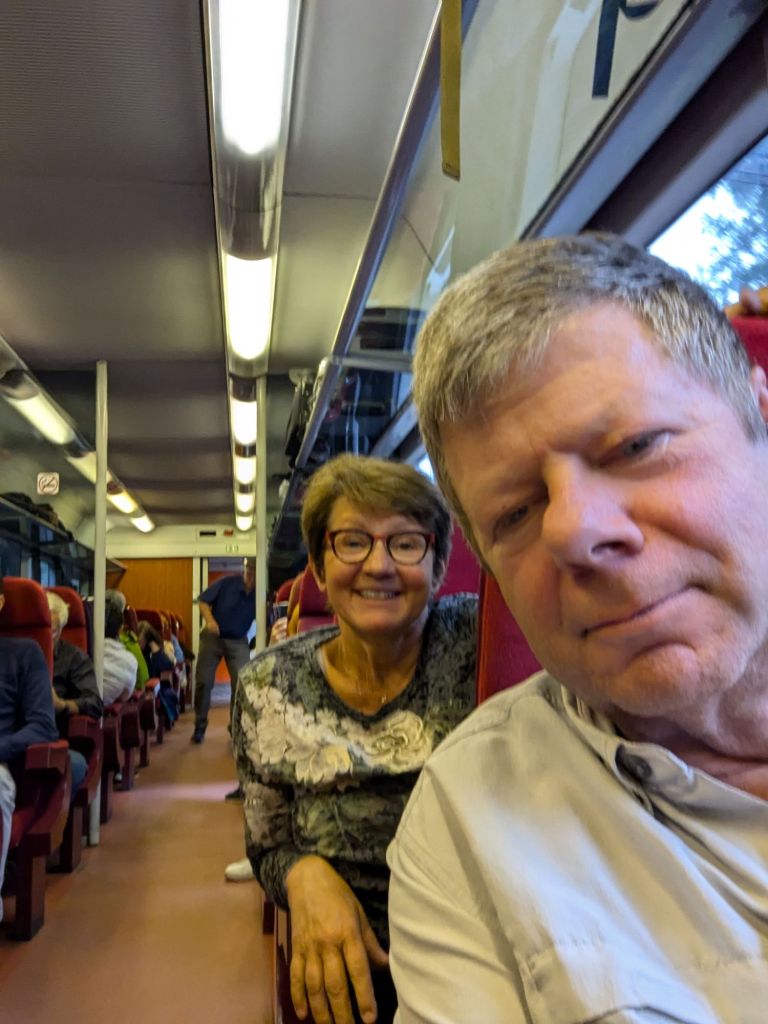
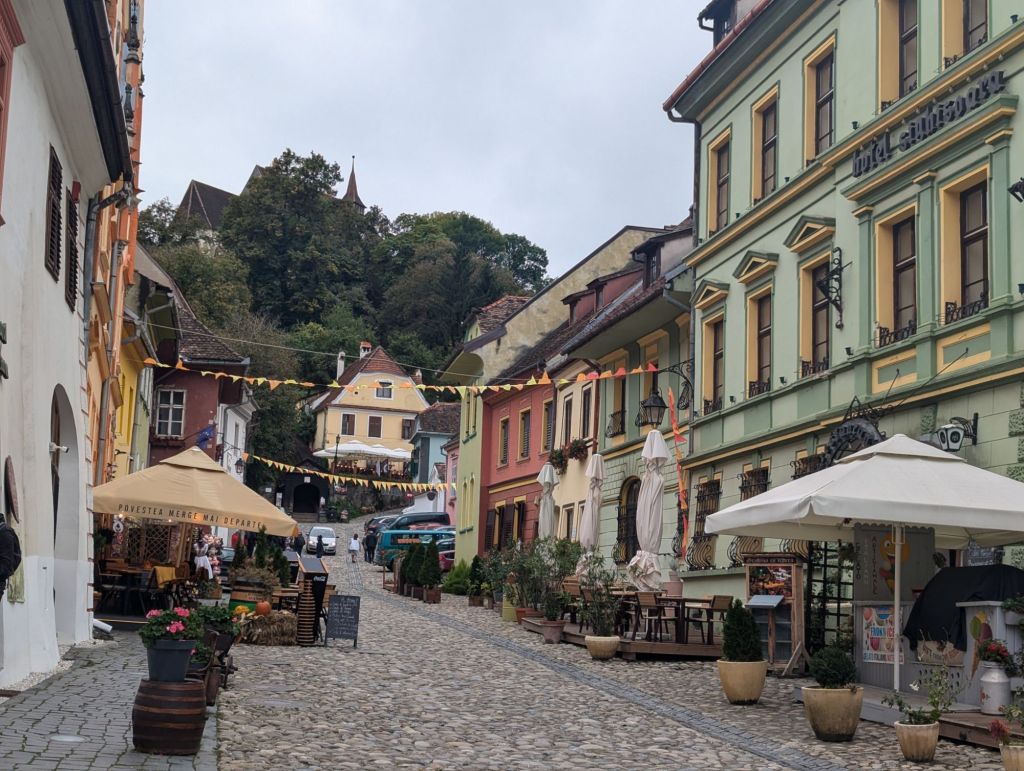
Enough geo/history. We detrained in Brasov and caught up with our bus and our luggage for the 1+ hours to Sighisoara. Sighisoara is a walled medieval town on a mountain with ankle-busting cobblestoned streets and a gothic cathedral at the pinnacle of the hill. We took a cute train up the hill to our 16th century hotel, the Hotel Sighisoara, then hiked up the 200+ wooden stairs to the church. There we heard an interesting history of the church and religion in the Transylvania area in general. Oops, more history: the Austro-Hungarian emperor installed Saxons in Transylvania to defend the borders around 1200AD (their reward: no taxes). Originally Catholic, after the Reformation they became Lutheran. The whole Transylvania region has Germanic influence in architecture, language, and food. During and after WWII many started to emigrate back to Hungary/Germany especially after the 1989 Revolution to escape possible reinstallation of Communism but they found themselves not belonging anywhere especially since Germany was in reunification chaos itself. When they tried to return to Transylvania other people had occupied their houses in their absence. When communism fell, if you were occupying a house (when all were owned by the government during the Regime) you could buy it from the government no matter the title. Basically, squatters (mainly gypsies) took ownership of the Saxons’ houses. Few Saxons remain in Transylvania now though the Germanic influence remains.


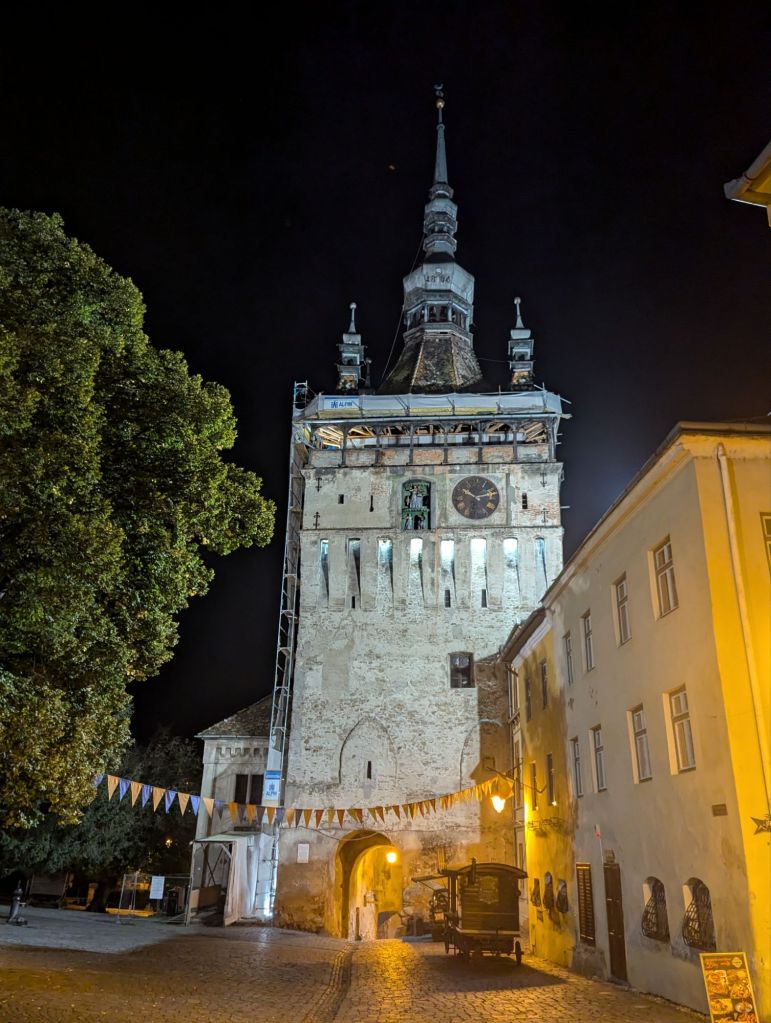
We enjoyed an evening organ demonstration including a short concert within the Sigishoara basilica church and then enjoyed dinner at our hotel: wild boar, vol au vente, and apple strudel. The following day we walked around the tiny walled city: cobbled streets and multi-colored guild houses from the 16th century, fortified walls and gates, and clock towers and archers’ towers with stray dogs accompanying us throughout. Notably, Vlad Dracul, Vlad (the Impaler) Dracula’s father, lived here. Vlad Dracula himself was probably born here.



Next we visited a Roma family otherwise known as gypsies. Roma are descendants of Indians of the lower caste who arrived in the Balkans around the 12th century, many as slaves. They retain their “cult-ure” and traditions by keeping their children uneducated. Gisele, who received us warmly, answered all our questions about her family, the current caste system, arranged marriages (ongoing), and the illiteracy rate (very high, especially women). Despite laws dictating marriageable age many girls have babies as young teens. And the cycle goes on and on.


We drove through the agricultural countryside passing small towns and houses with red tiled roofs, sheep, cows, corn fields, and hop yards to tiny Malancrav for lunch. Although chilly, we sat outside at a local “bucataria” (kitchen) for a home cooked meal at Bucataria Mamei. While ‘Mamei’ cooked inside or on open flames outside, her 2 children served us soup, goulash, and apricot cake. ‘Peasant’ wine and elderflower lemonade washed down the delicious meal.

Next we visited Biertan where the largest fortified church in Transylvania is located. A “fortified” church. You read it. This gothic church from the 14th century has 3 outer walls and elevated archers’ turrets in every corner. Obviously they anticipated being attacked-Ottomans, Mongols, whomever. A phrase used even today: “better the Turks than the Russians”. Eventually the area fell due to the guard’s negligence and trickery and not from battle failure.


Returning to Sigishoara we strolled through town on our own then dined at Casa Krause on Romanian stew and goulash. Delicious! The next morning we headed south back to Brasov. The fog cleared and the sun came out. We were able to see the Carpathians clearly, recently capped in snow. The Carpathians run southeast from Slovakia/southern Poland (the Tatras) then turn abruptly west in the center of Romania towards Hungary and Serbia. Brasov lies in the elbow. It is Romania’s largest ski center. Unfortunately we did not see any bear, Romanian bison, or wolves which reside here. Bear alerts are not uncommon! Highest elevation: 8500ft.
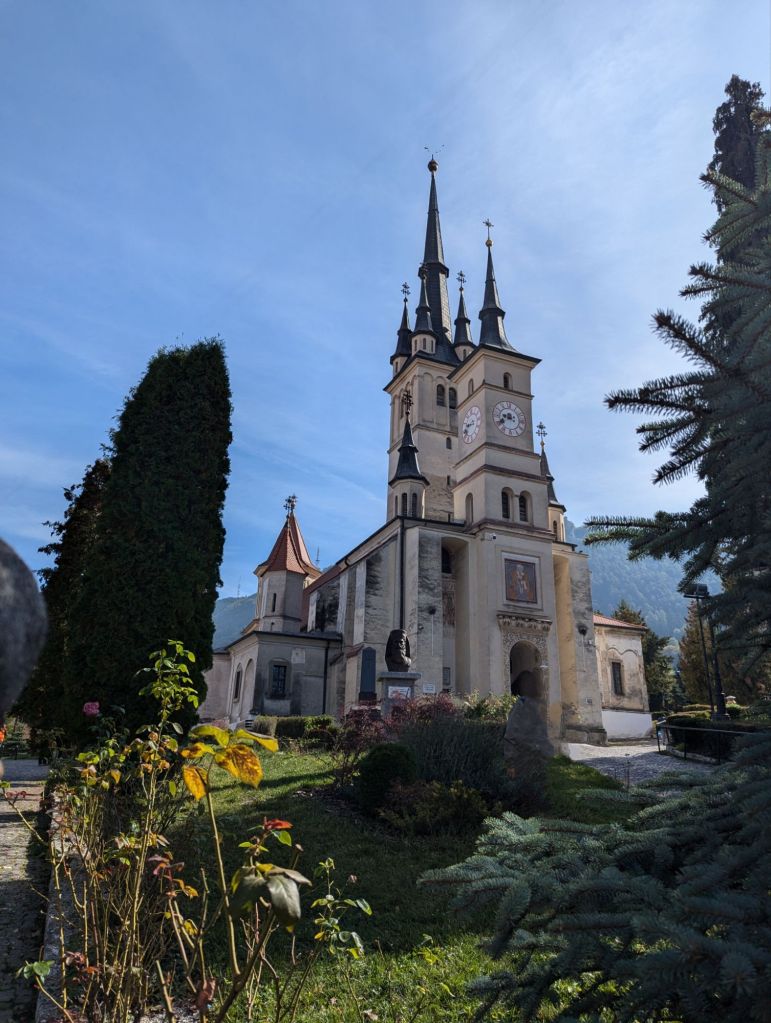
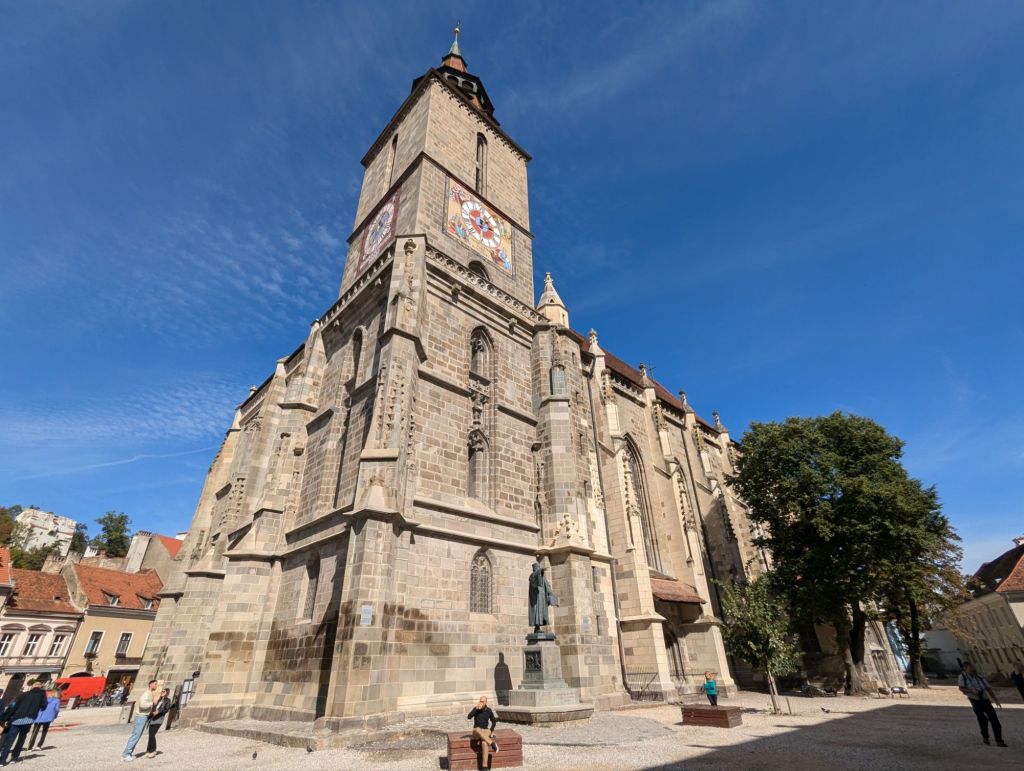
Brasov at one time was the seat of commerce in Romania. Now it is its 4th largest city with the charms of a 12-14th century old town as well as some bustling modern industry. We toured the First Romanian School which houses the oldest books printed in Romanian (which is based on Latin). Remember those Thracians? They never developed an alphabet or written language. After they left the Romans who came next left their literary skills from which Romanian developed. The tour guide had the loveliest basso voice, with inflection, and even sang the tour facts a bit. Bela Lugosi with humor. Next we visited two more churches from the 14th century: the Black Church, now Lutheran (again, formerly Catholic) which houses the 2nd largest collection of Turkish prayer rugs in the world (donated to help decorate the church) as well as the largest pipe organ in Romania. The other was an Orthodox church. Fun fact: churches whose tallest spire is surrounded by 4 smaller spires send the message that capital punishment is approved in that town, thus inspiring merchants to do business there. Later we sat in the open square and enjoyed people watching, the mountain scenery, and a beer.




Next day:
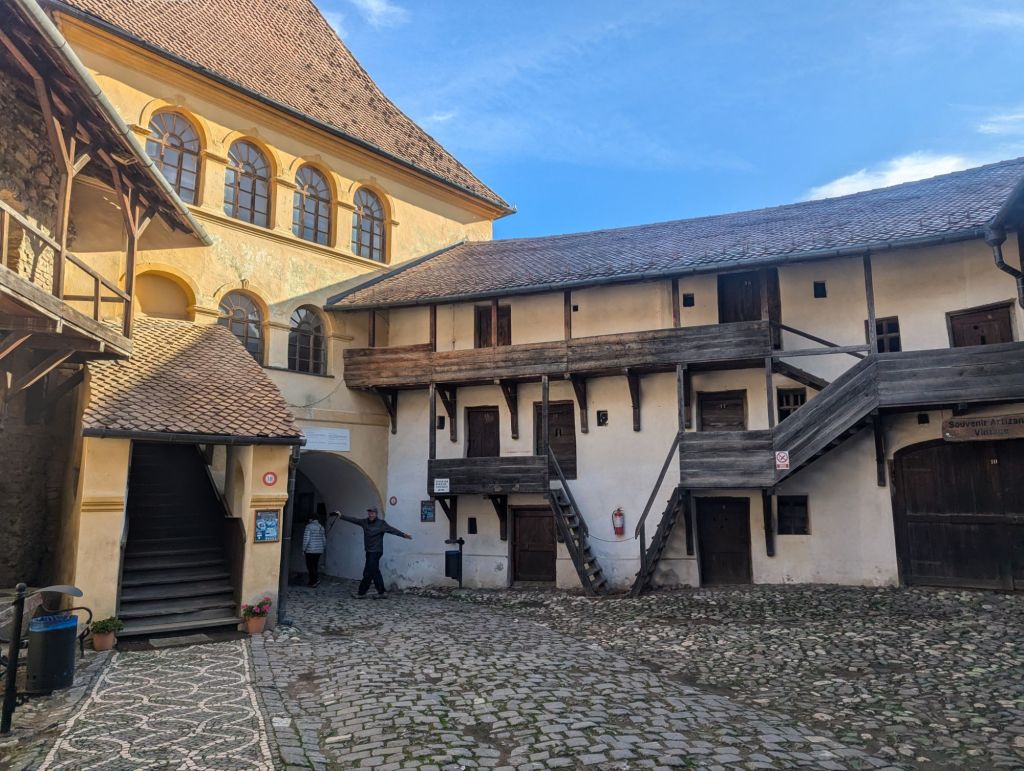
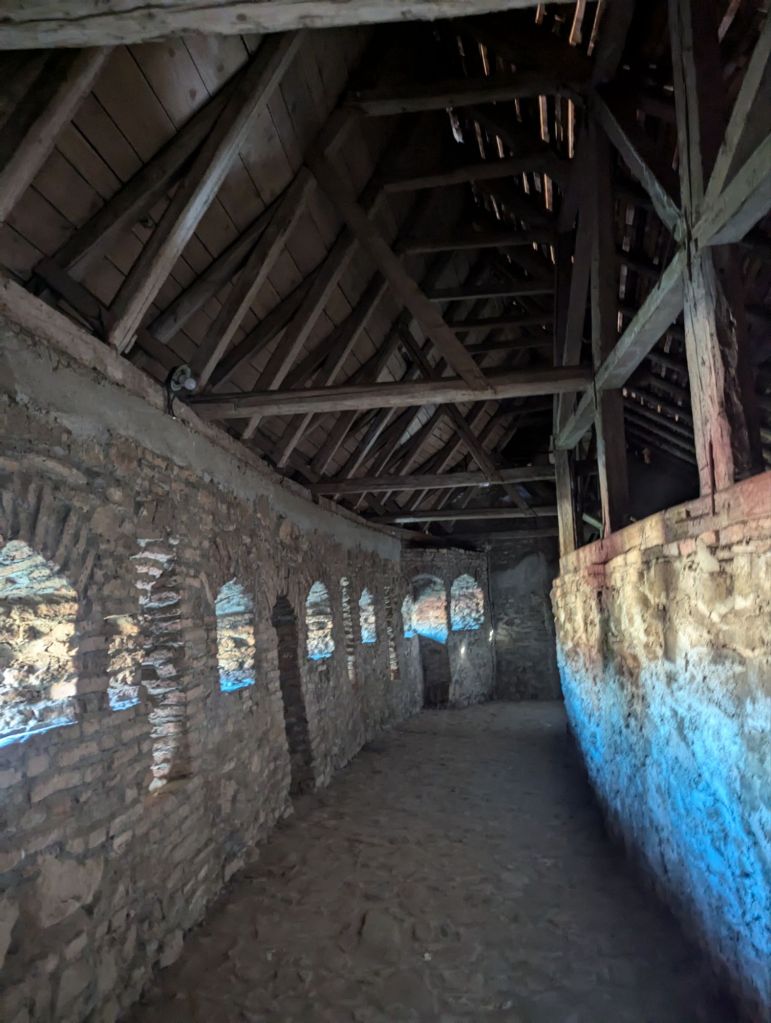
Prejmer and Bran castle. Prejmer, about 40 min from Brasov, was an unexpected delight. The fortification walls of Prejmer were built in the 12th century as part of a series of fortifications protecting Transylvania from the Ottomans or Russians (aka Mongol hordes). Each fortification (e.g. Biertan, Rasnov, Bran, Prejmer et al) was placed strategically around Brasnov protecting Transylvania from the east and south and also convenient for collecting tolls. The walls of Prejmer are 4 meters thick and within the walls are individual rooms where local families would store their valuables but also would retreat to in case of attack. Later a church was built within the walls (“ABC” = Another Bloody Church). But the fortification was interesting as we explored the upper levels of the walls from where archers and defenders would shoot, and the attics where grain or hay would be stored for lengthy sieges. Prejmer has not been discovered by the tourist industry so we enjoyed our visit in quiet, but also, OSHA hasn’t seen this place (for that matter, not OSHA hasn’t seen much of Romania). So fun to explore the dusty attics with creepy, creaky stairs and dark passages.

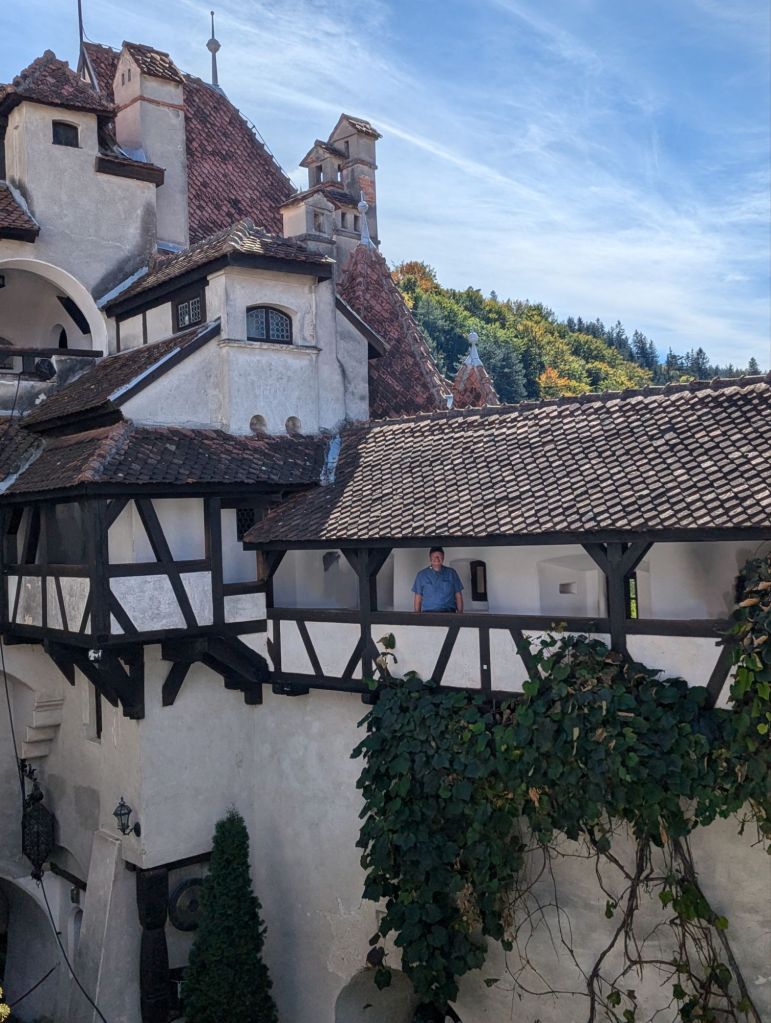
Afterwards we visited Bran castle, also originally a border fortification in a mountain pass between Wallachia and Transylvania. Unfortunately, Bran Castle has more notoriety as Dracula’s castle, though, in fact, it is not. Bram Stoker wrote a fictional story about Vlad Dracula, son of Vlad Dracul, attributing Bran Castle to him. More to the truth (as best and succinctly as I can discern) he was born in Sigishoara around 1432 then was sent to the Ottomans to be trained/educated and also held as a hostage as his father was ruler of Wallachia under Ottoman supervision. Later, as a 17 year old, Dracula, with a Turkish battalion, captured Wallachia upon the assassination of his father. He ruled for awhile, defeated the Ottoman army in another lopsided battle but then was called to Transylvania by the Austro Hungarian Emperor where he was “detained” for 12 years. He married the emperor’s daughter but then, with the emperor’s support, returned to Wallachia recapturing it from the Ottomans. He never lost a battle though he was especially cruel to his enemies (generally, Ottomans) hence the moniker “Vlad the Impaler”. Never mind the details, you get the picture. Bran castle, though interesting, is not even associated with him. It was originally built as a 12th century fortification but then through in later years became a summer home for Romanian Royalty, notably people’s favorite Queen Maria (died 1938). The vampire schlock was a turn off for me but the many secret stairways, tiny rooms, ramparts, stunning valley views, and romantic spires superceded all that. The town below has built up in recent years as a Disney-esque tourist trap based on the vampire legend. Luckily we got through the cramped castle before the other tour buses arrived.

A free afternoon was spent swimming laps in the awesome Aro Palace Hotel pool, more wandering around the huge pedestrian friendly (but not smoke free) old town, and another wonderful dinner at Sergiosa, an underground restaurant with wine cellar decor and tasty pork rind apps and wild boar and sausage entrees. Romanian menus tend to feature meat with a side of meat. Veggie dishes are rare despite the miles of agricultural fields we drove past.
Our last full day we began the bus journey south to Bucharest. We zigzagged up the switchbacks over the Carpathians to Sinaia, now a ski destination but where King Carol I was inspired to build a beautiful mountain palace, Peles, during his reign. This ornate mountain retreat was the last palace built in Europe, completed in 1914, shortly before the King’s death. There are modern amenities: electricity, a vacuum system, heating systems. Words don’t do it justice so check out the following photos:
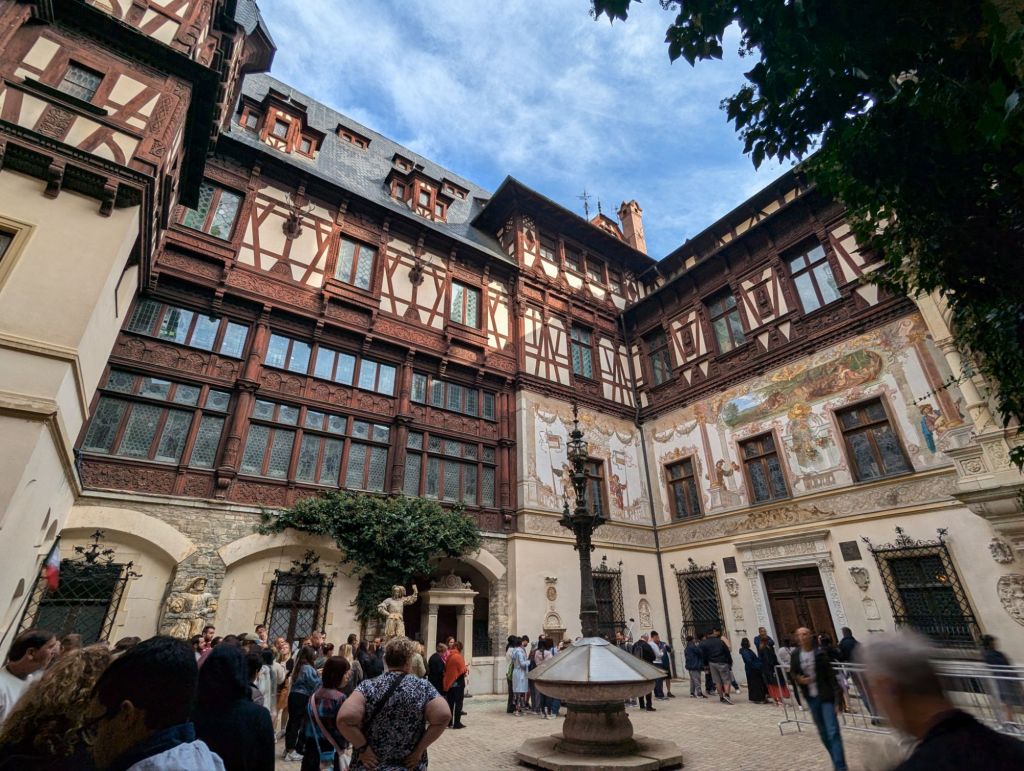

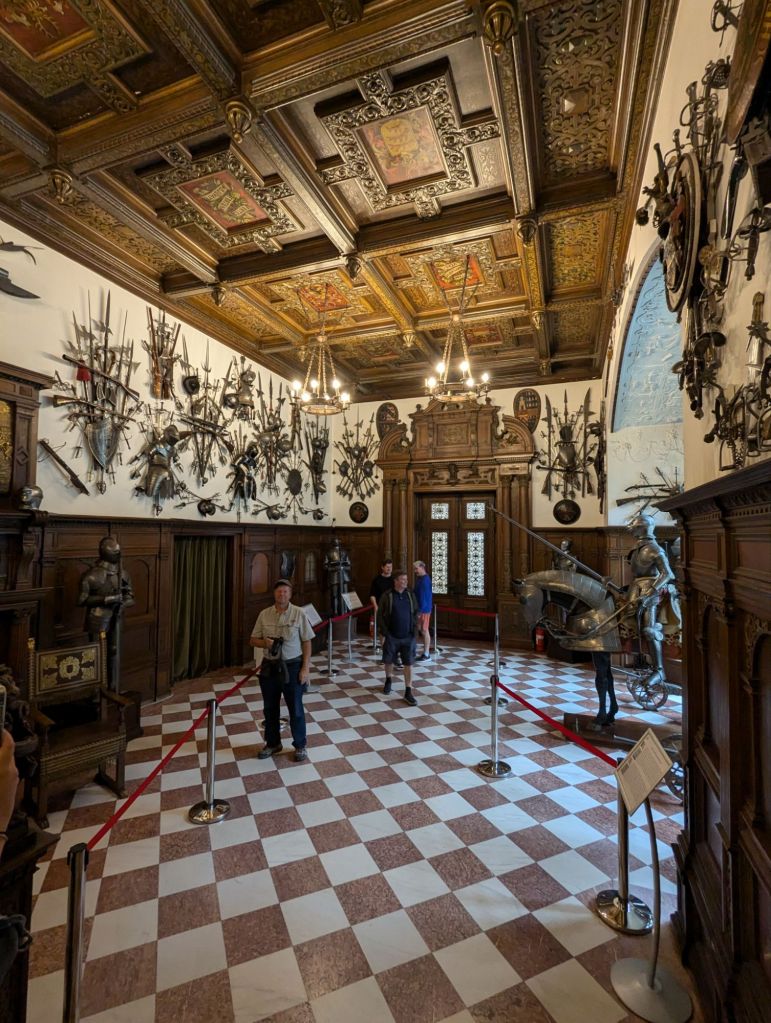


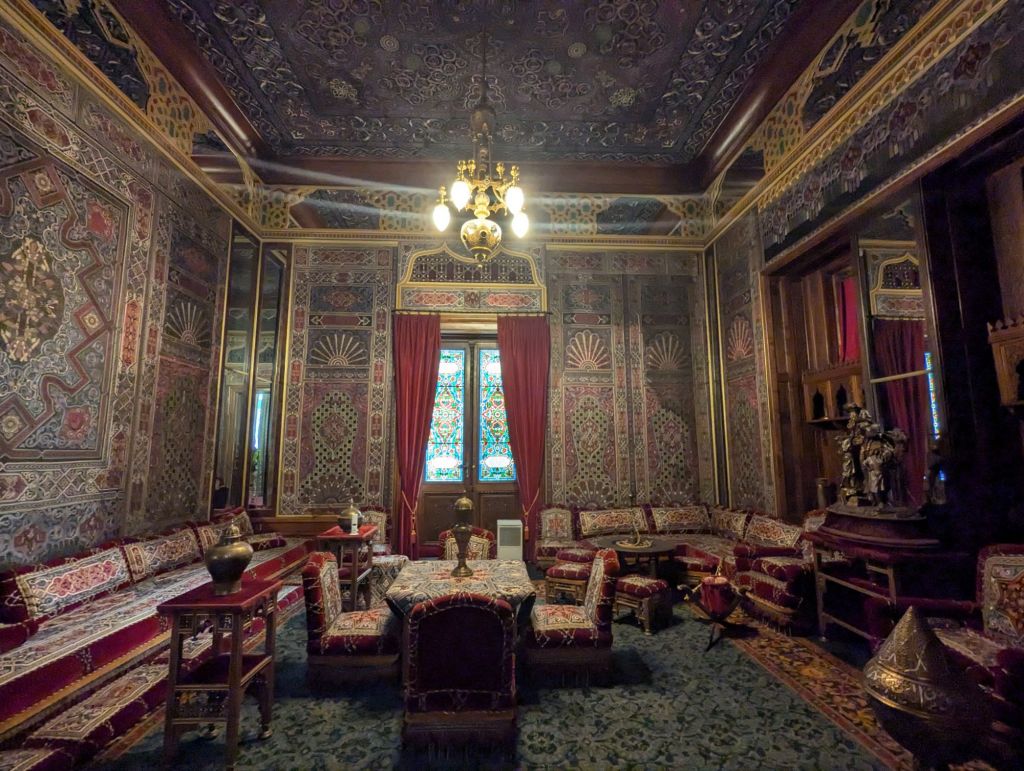
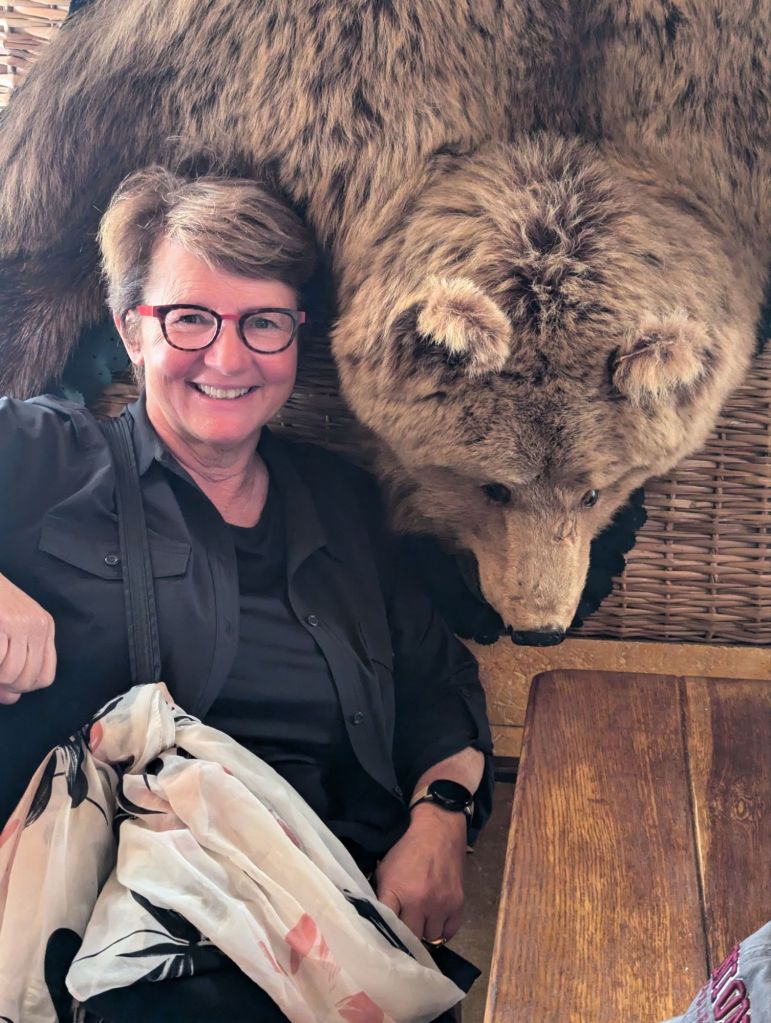
It goes on and on. The palace is stunning. And a nightmare for collecting dust in tiny crevices. Amazing valley and mountain views also. We lunched at one of the many restaurants that were in the area after the palace was constructed. We sampled bear, boar, and deer sausage. Interesting flavors, nothing out of this world.

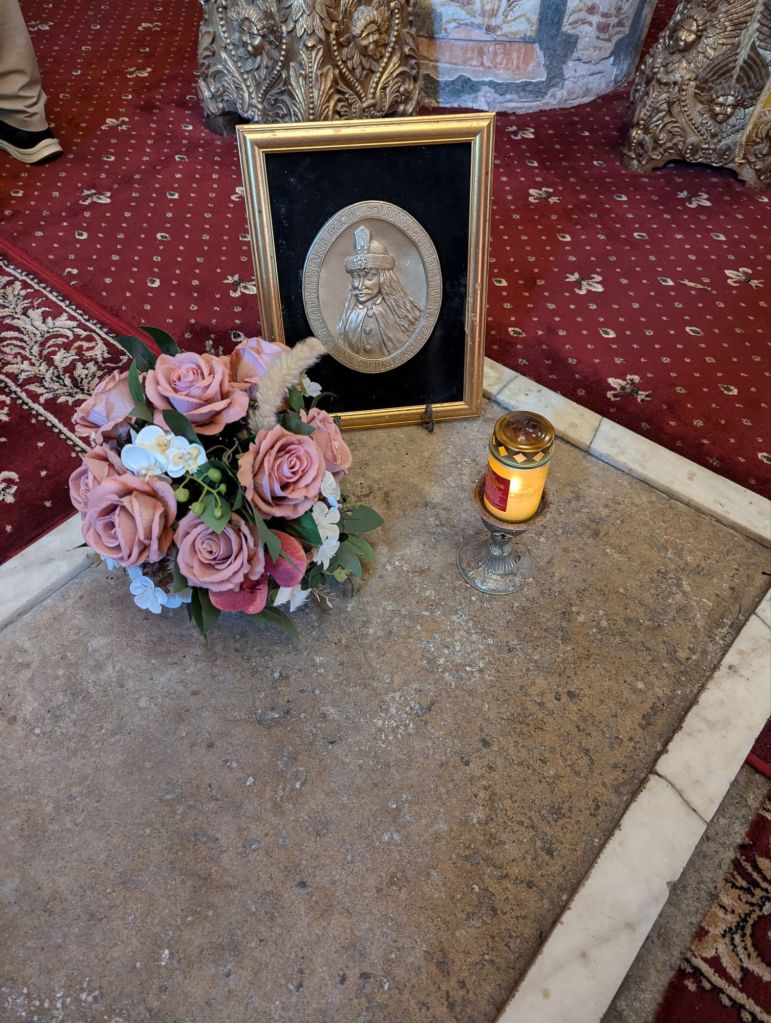
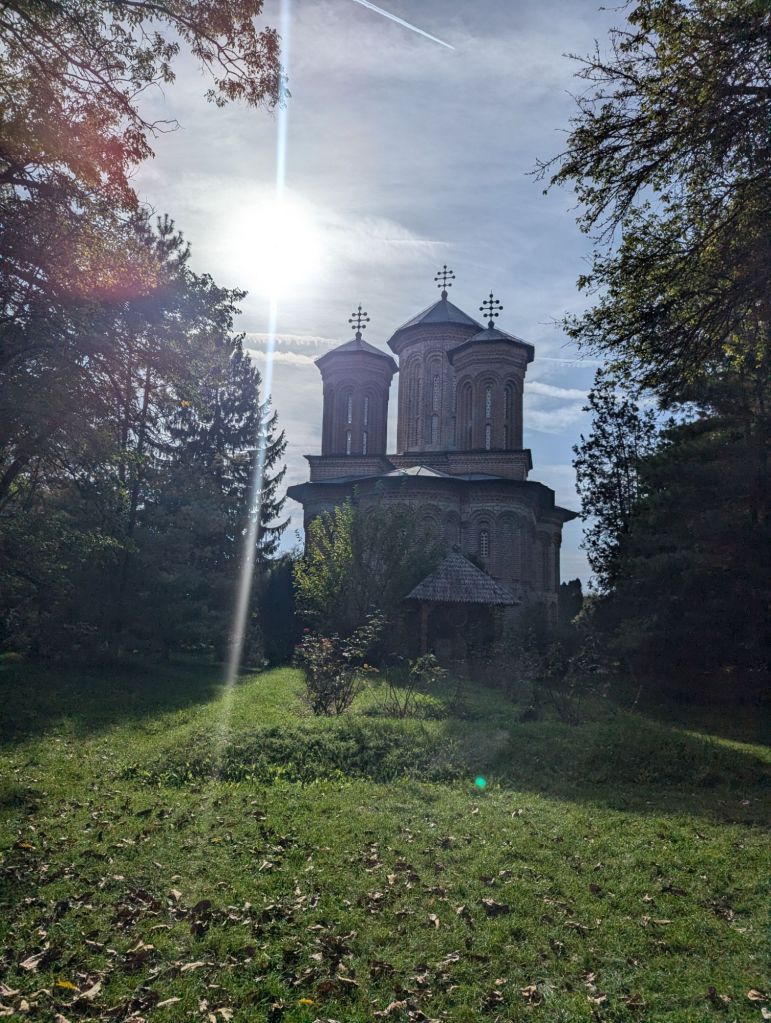
After a further drive, now out of the mountains and back to the plains, we stopped at the underwhelming monastery church on a little island in Lake Snagrov. Monastery church Snagrov is allegedly the final resting place of Vlad Tepes Dracula’s body. According to legend, our tour director, and Wikipedia, he died in a battle nearby and his head was sent to Turkey whereas his body was buried at this monastery which he supported/built. Unfortunately the tomb is/was empty and/or had a skeleton that didn’t match poor Vlad’s. I snuck a photo without paying the 10 lei tribute.
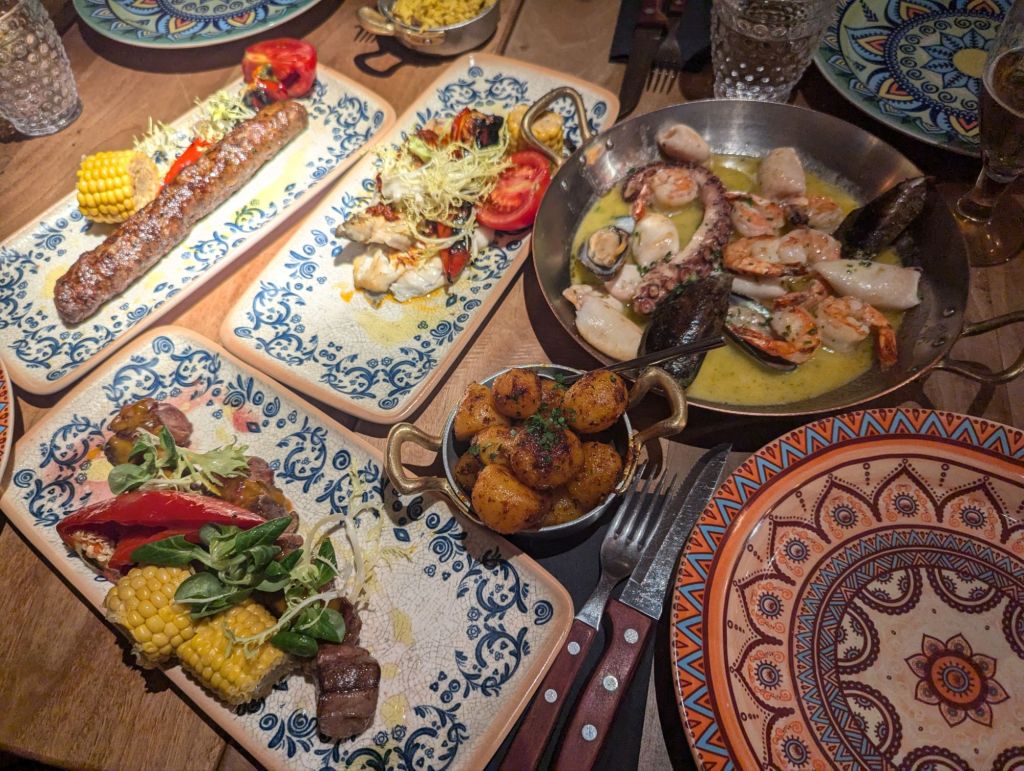
Back at the Athenee Palace in Bucharest we headed to our final dinner at nearby Mace by Joseph Haddad. Specializing in elevated Middle Eastern fare, we enjoyed tuna tartare, burrata and falafels appetizers with lamb, mici (mixed meat sausage), duck, octopus, mussels and shrimp entree bites in a family style setting. What a fine way to celebrate the end of a fantastic trip with a great group of former strangers, now friends!
Some final thoughts:
There were 2 very different opinions given on the effects of the Communist regime yet it was apparent that these two cultures (Bulgarian and Romanian) suffered from cultural poisoning and political and financial chaos for many years afterwards. Technology is allowing them to catch up rapidly but ugly Communist architecture lasts forever. People were not outwardly friendly but would help if needed. Romania seemed easier to navigate but then again, their alphabet is familiar and English was more commonly spoken. But you can always communicate with people somehow some way.
A quick packing list (for a warmish fall trip): 1 pr jeans, 3 pants-dressy, hiking, travel (could’ve used 1 or 2 less), 1 pr shorts, 1 denim skirt, 1 tee shirt dress (optional), 2 pr sneakers or walking shoes (remember: jumbled cobblestones and uneven steps), 1 pr dressy flats (optional), 1 swimsuit, 1 fleece and 1 windbreaker/rain jacket (it’s cooler in Transylvania; others needed quilted jackets, hats and scarves), 1 umbrella (didn’t need but still recommend), multiple tees (short sleeve and sleeveless), long sleeve shirts (2), and long sleeve Tees (2). A scarf is useful for warmth or dress-up. I would’ve liked more socks, maybe 8 pair. I washed a couple washable tees in the sink but laundry service is available at hotels. I recommend bringing cough drops and Zicam for the inevitable “cruise cough”. I hope you enjoyed reading! (P. S. I gained only 2 pounds! Yay!)

 My new reality