
We crossed the Danube at Ruse, Bulgaria to enter Romania. The water was as high as ever so luckily we did not take a river cruise. Despite it being Friday afternoon and with construction we crossed easily and breezed through immigration. Freight trucks were not so lucky, some waiting on average 24 hours to cross. Although both Bulgaria and Romania are part of the EU the ease of freight transport is not the same as in other Schengen nations, yet.
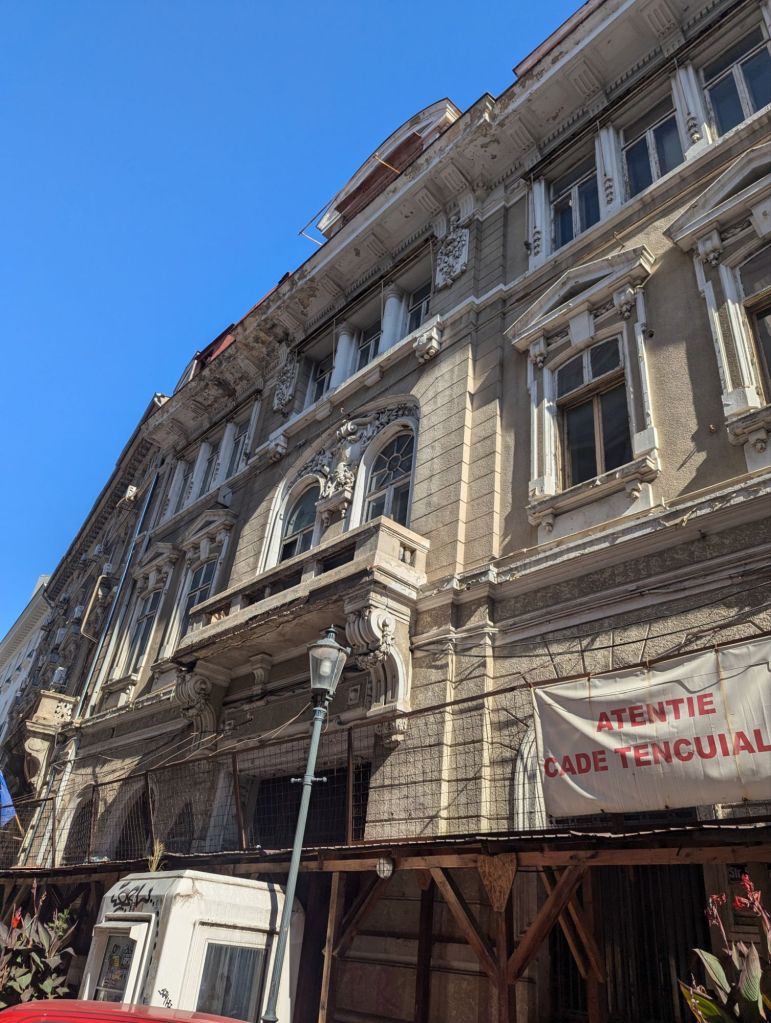
Bucharest was another 70km from the bridge. On the way we learned that Bucharest has exploded in size and population. Romania itself has doubled its GDP recently. Surrounding neighborhoods have been swallowed up into the city of Bucharest and current estimates put the population at 1.8-2.3 million (depending on city limits). There was a lot of construction evident. Architectural styles varied from Modern to Communist to Neo-Classical. We were warned to walk on the outside of the sidewalks. Romania had a less than favorable experience with Communism (unlike Bulgaria). One of the ramifications was that older buildings had no ‘ownership’ after the Communists seized everything so extended litigation after the regime fell and time/age combined for dangerous conditions from deteriorated ornate overhangs and balconies falling into sidewalks below. There was a lot to learn about this side of the Communist experience.
Dinner at La Mama’s that night was an experience of Romanian delights: sour bean soup (a vegetable soup), Sarmale or stuffed cabbage (very reminiscent of my mom’s Golumpki), and an amazing donut dessert called Papanasi served with sweet cream and forest fruits. This is where my WW journey goes off track. Either that or the delicious wines they serve are to blame.
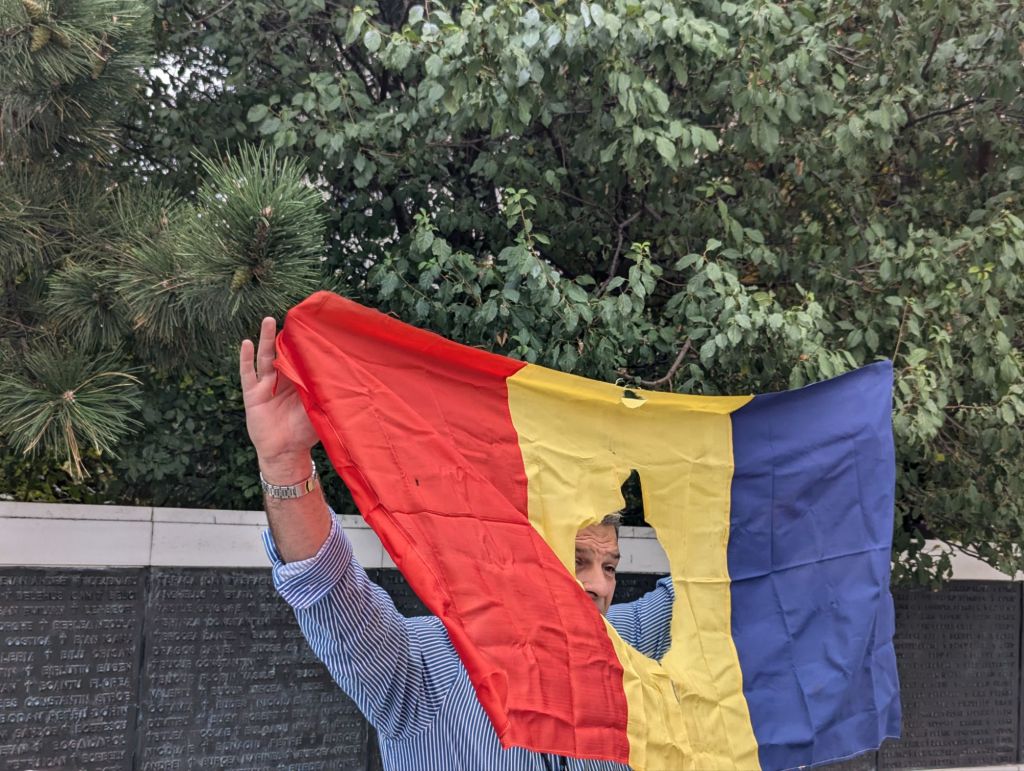
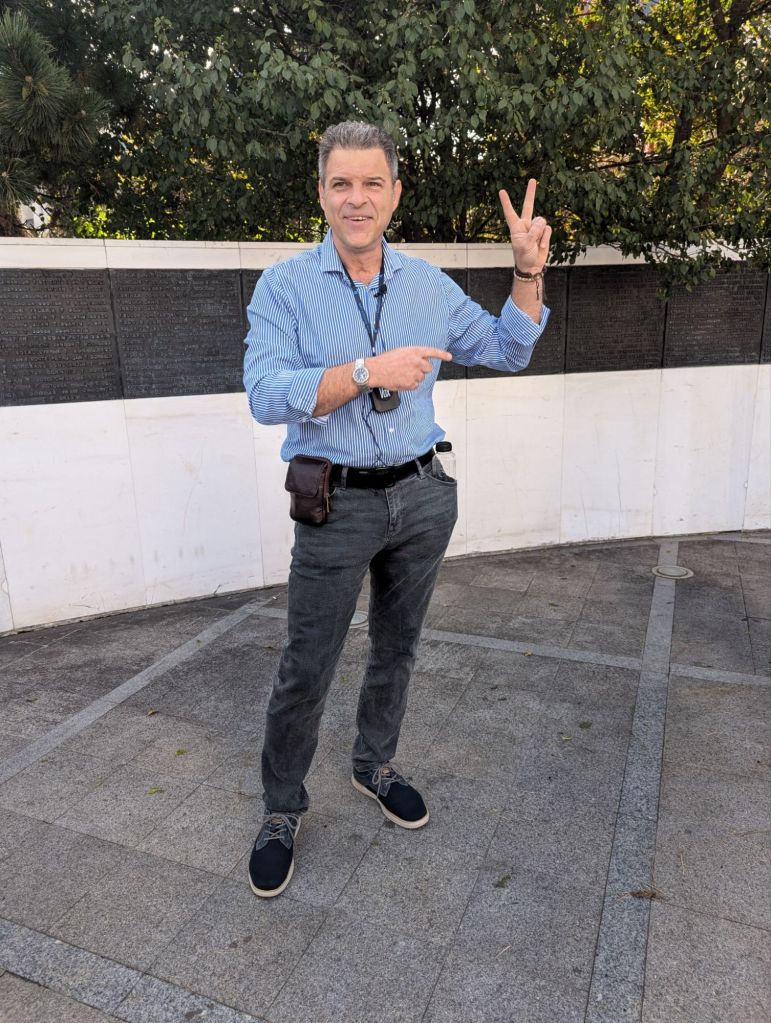
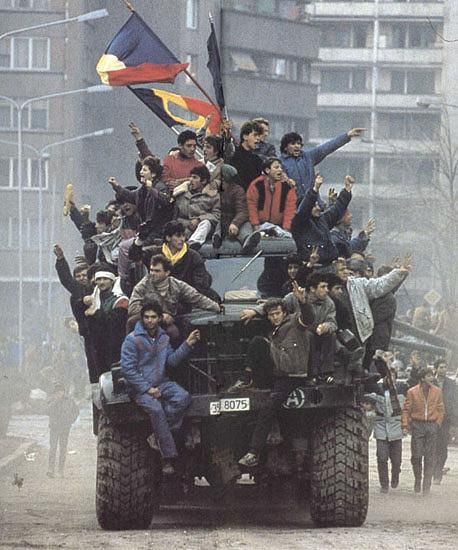
The next morning after an amazing buffet breakfast at our hotel-the Intercontinental Athenee Palace Bucharest -we headed out on a walking tour. Various monuments and government buildings were described. But then a most remarkable man, Egmont Puscasu, gave a moving talk about his experience in the Romanian Revolution of 1989. As a 15 year old he participated in the fall of the Communist regime, actually, dictatorship, under Nicolai Ceausescu. The experiences of the Romanian people during Communism was very different from that which we heard from our Bulgarian tour guide, Jordanna. Remember, Bulgaria was somewhat aligned with Russia after their Independence from the Ottomans. Romania, not so much. Romania was similarly inhabited from prehistoric times as Bulgaria yet historically a battlefield between western Europe and the “Mongol hordes” and always threatened with Russian expansionism. Of course religion played a huge part in the politics with strings pulled from The Byzantine Empire, the Ottomans, and the Holy Roman Empire. Romania has struggled with maintaining its borders, alternately expanding and contracting with the gain/loss of Transylvania to the north west (with Hungary and the Austro-Hungarian Empire) and Moldova to the north east. During WWI Romania sided with the Central Powers (Germany) against Russia and in WWII with Germany and the Axis powers (against Russia) but then flipped to supporting Russia as it was pushing Germany back; complicated royal and government politics played a huge part. This resulted in the ‘ease’ in which Russia exerted communism into Romania following the war. Always, the spectre of Russian interference and control hung over Romania, manifesting in the horrible history of communism/dictatorship in OUR lifetime.
Egmont gave a detailed talk of life under communism (not good). I’m of course, simplifying, and with apologies to history: Circumstances brought Ceausescu to give a self serving speech on the balcony of the government building that infuriated an already depressed populace. Two weeks prior the military had fired into a crowd that was protecting a bishop from the secret police. People were aghast. The populace was not normally allowed to gather in groups of 5 or more but Ceausescu allowed (basically dragged) thousands to gather to hear his speech. The huge crowd surged and booed with help from agitators. Ceausescu tried to control the situation by sending hooligans (miners from outside town) to threaten and give beatings. The tide turned and within a month he and his wife Elena were executed after a speedy trial (likely due to the next in line staff not wanting to be incriminated). Egmont was passionate in his speech to be thoughtful and yet cheerful, grateful and happy, but always to remember that ‘freedom isn’t free’. Truly a highlight of our trip.
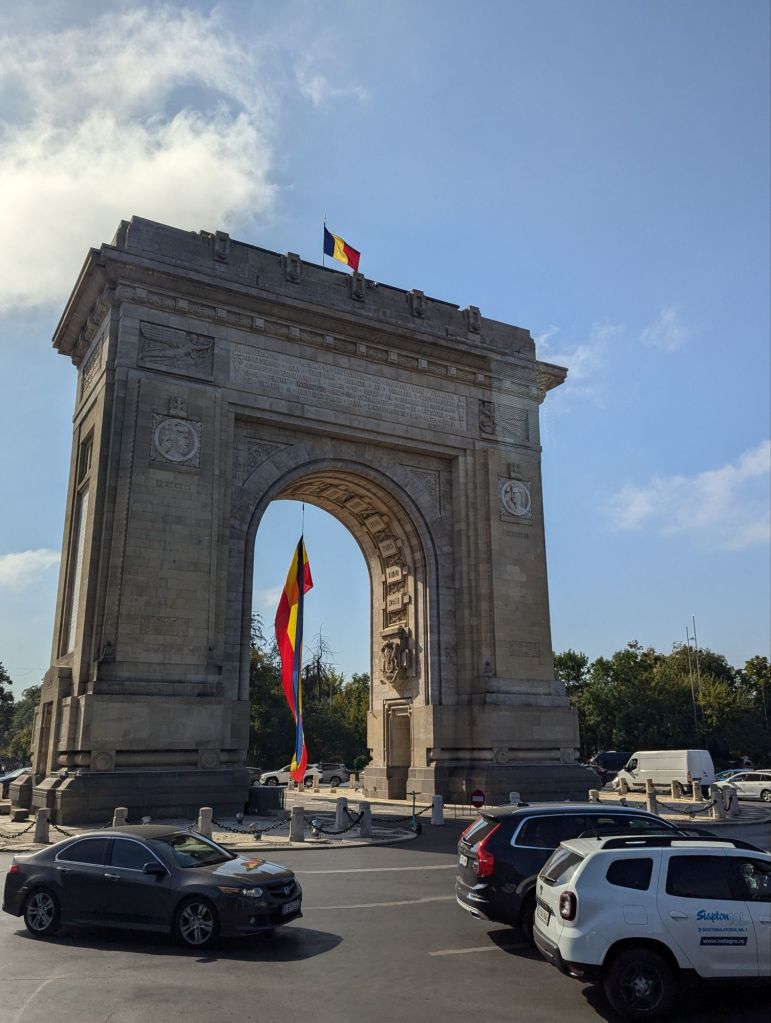
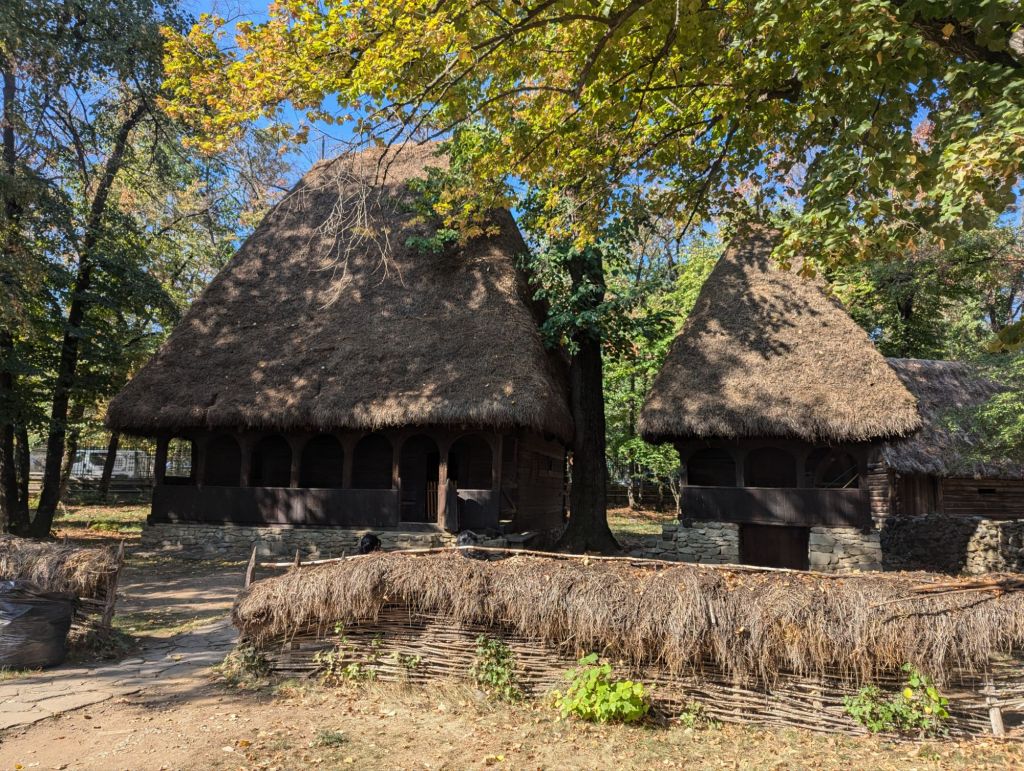
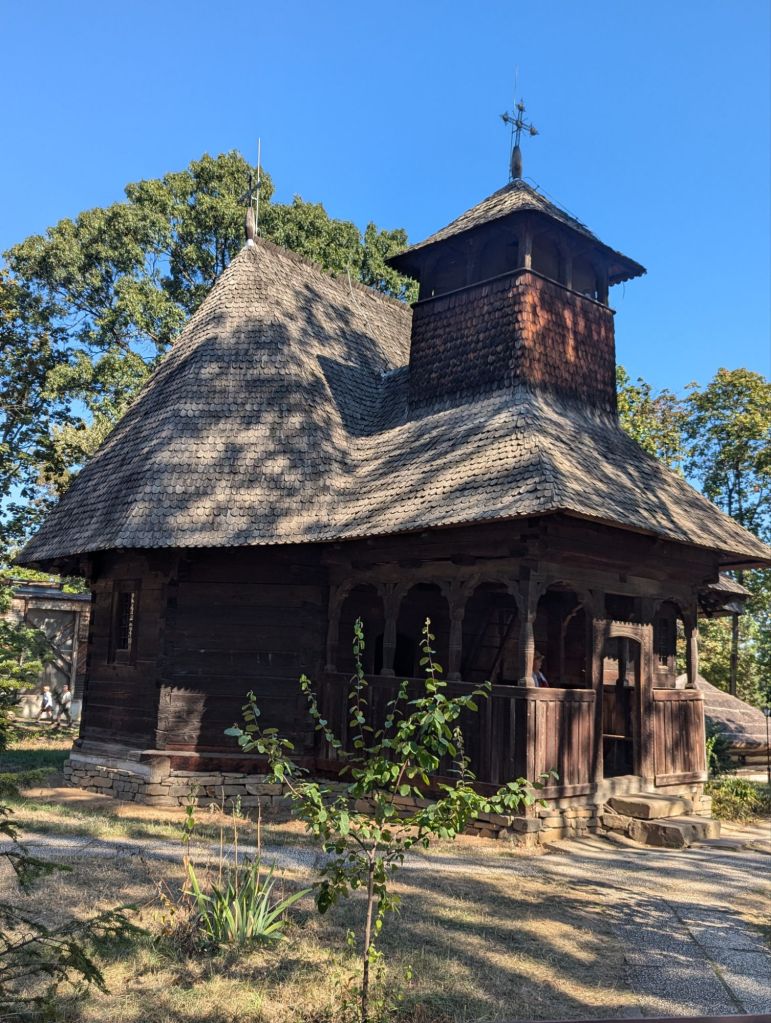
After drying our tears the tour continued up the wide boulevard and past Bucharest’s Arc de Triomphe (Ceausescu had a definite “keep up with the Jones’s” complex) to a village museum. What was unique about this museum was that in 1936 the peasant houses and churches were moved here for display ALONG WITH the families and animals. That didn’t last long once the farmers saw the bright lights of the city. The houses and churches still remain.
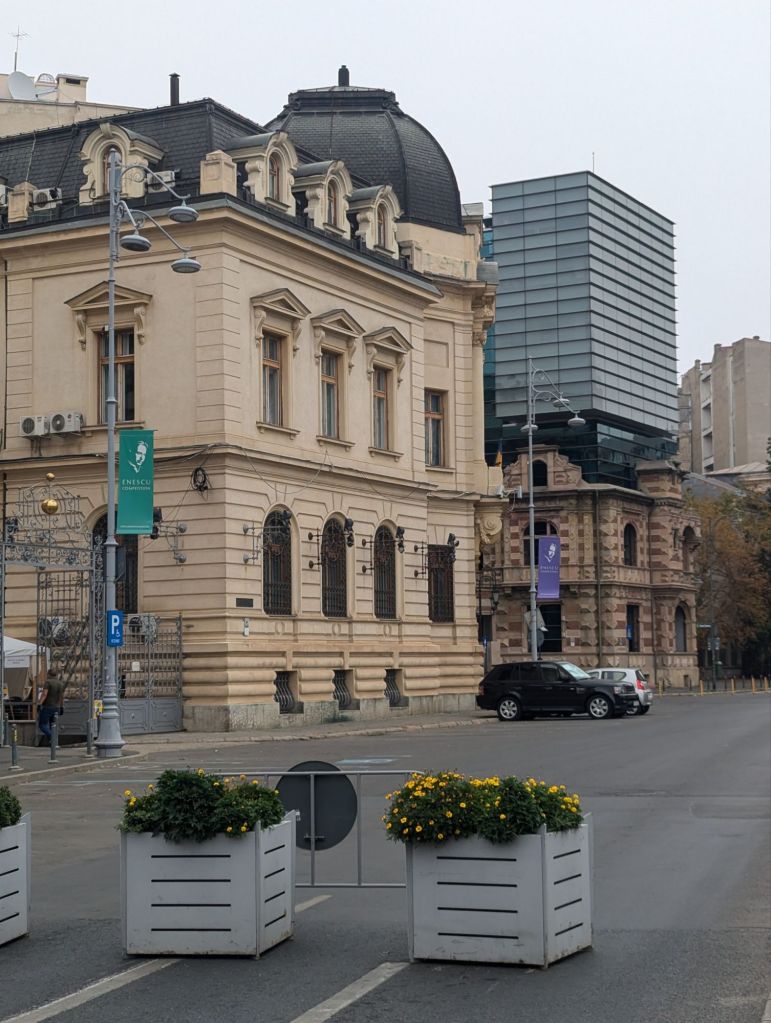
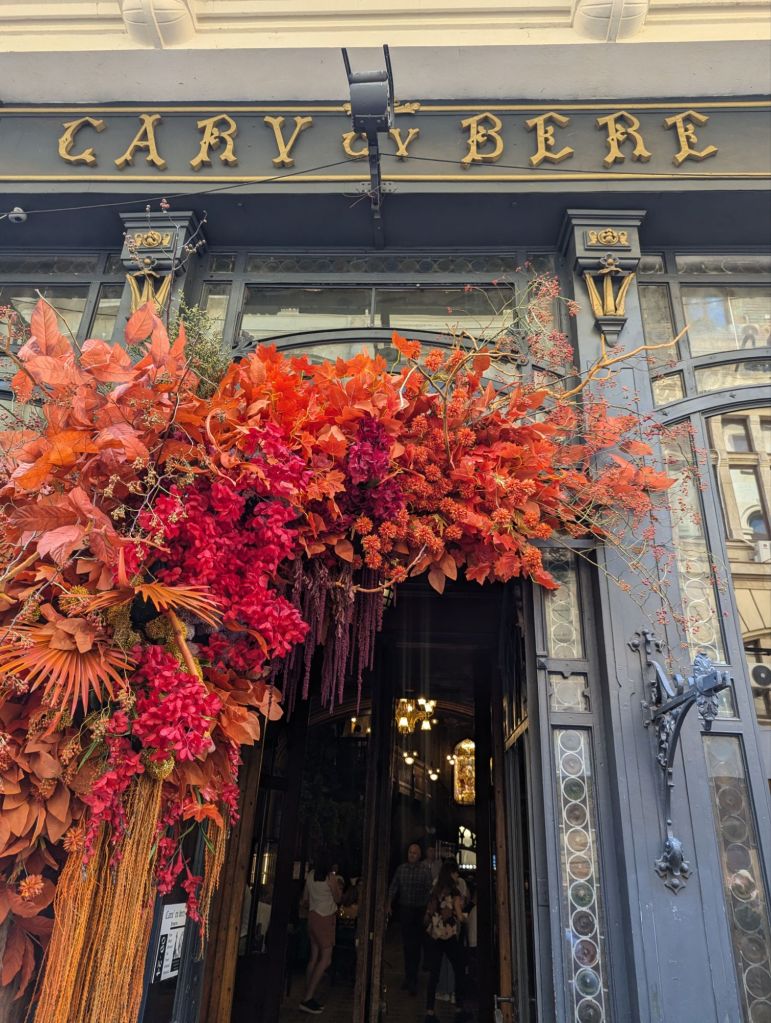
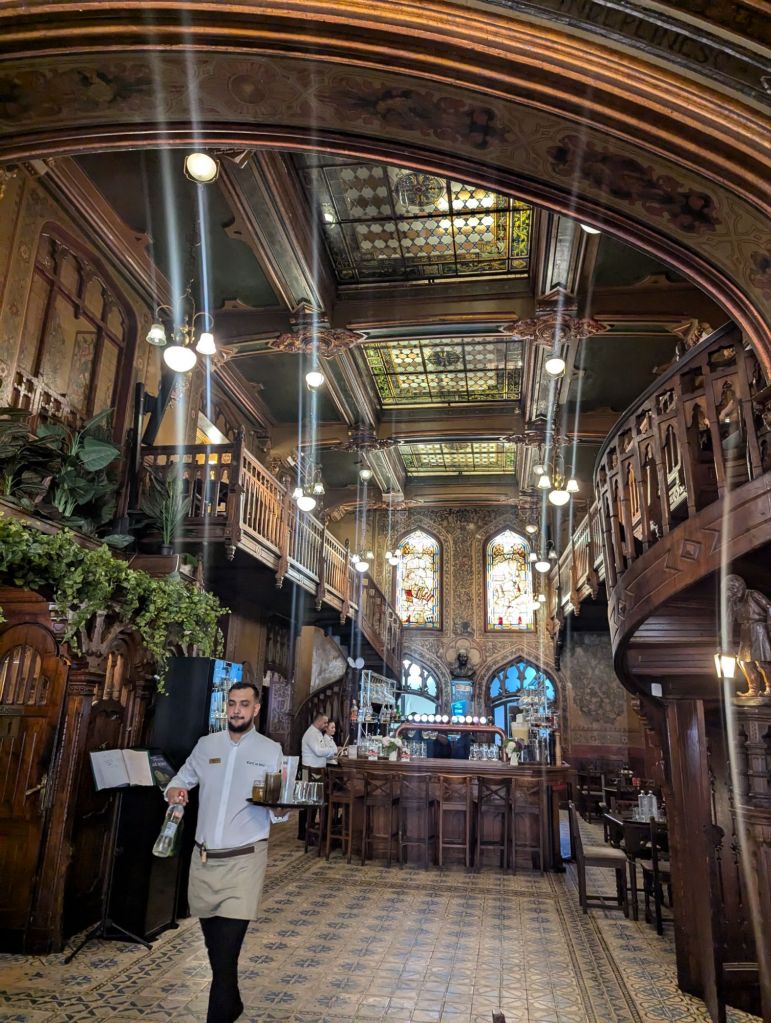
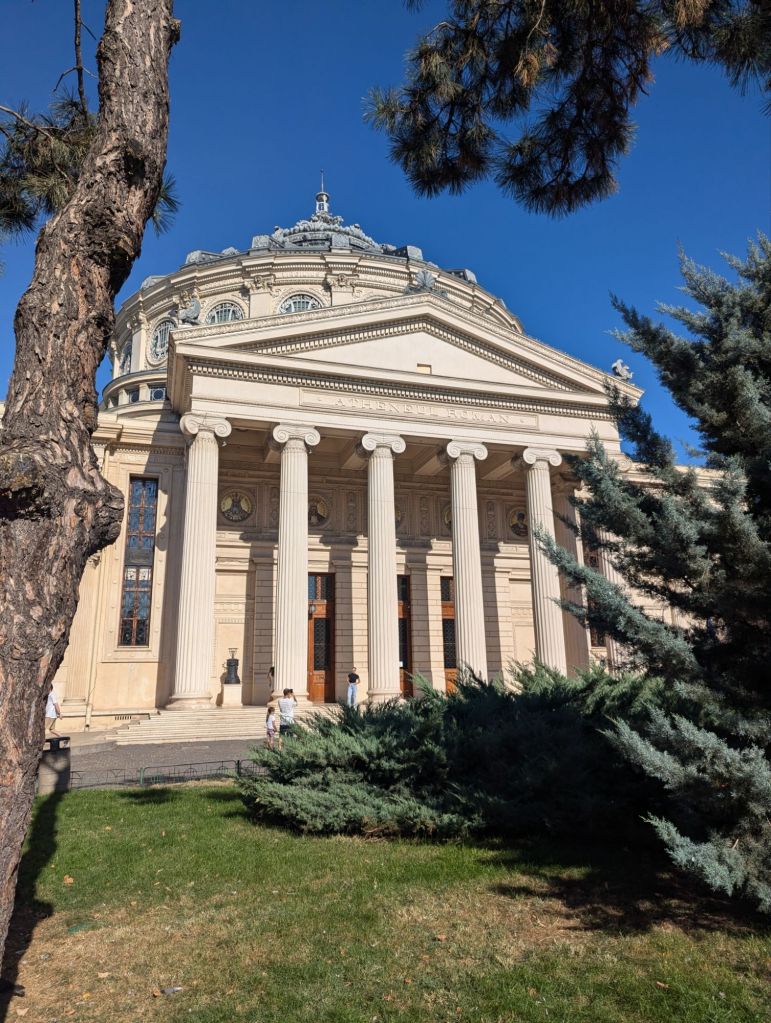
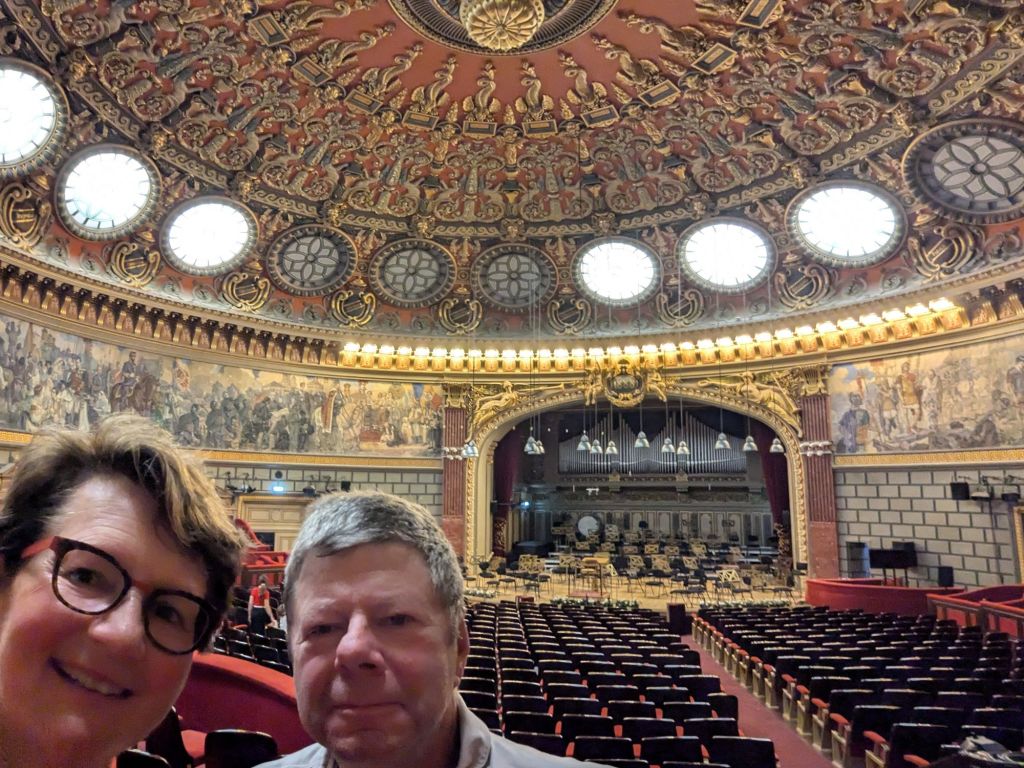
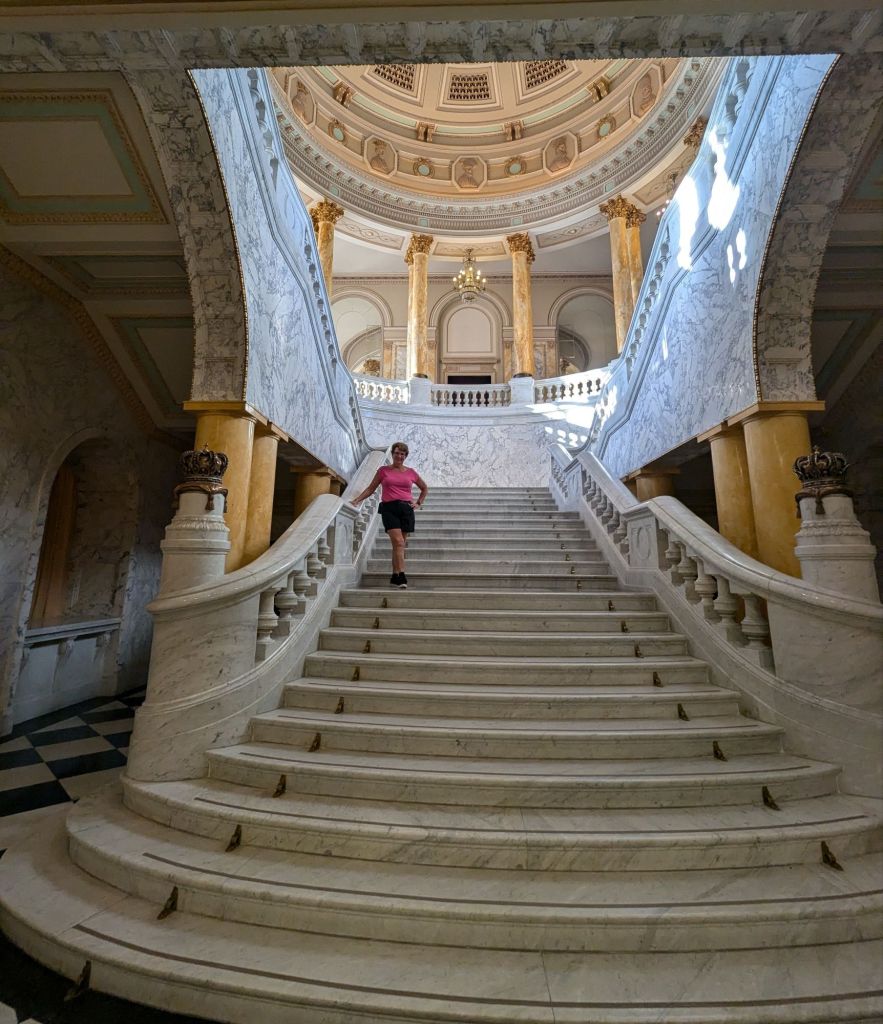
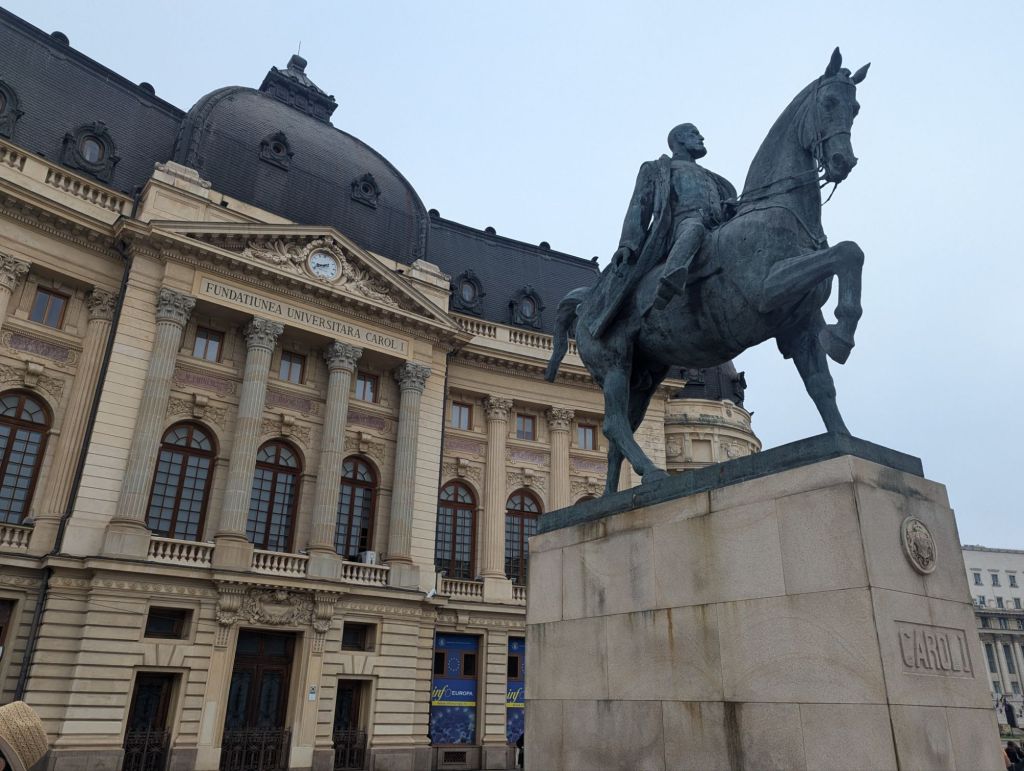
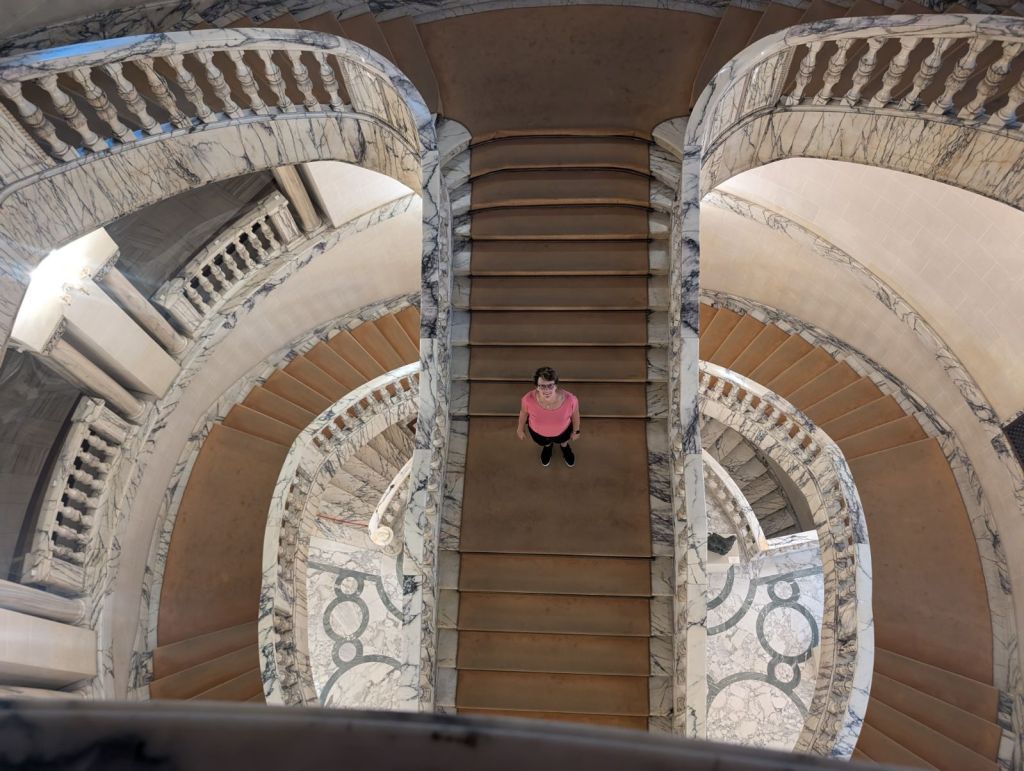
We hoofed it (by bus) to our lunch at chi chi restaurant Carv Bere in the old town of Bucharest. More Romanian traditional sausages and apple strudel for dessert. Here a large concentration of Neo Classical buildings remain, mostly banks. The streets were closed to traffic and people milled about on this gorgeous Saturday. We had the afternoon on our own so we meandered through the old town and around the many city colleges nearby then back up towards our hotel and a few adjacent museums. First we toured the Roman Aetheneum, a gorgeous concert rotunda. The government couldn’t afford to build it in 1888 so they asked every citizen to contribute 1 Leu (today 1 Leu = $0.25USD), a hardship for most families then, but worth it now for us! Next we visited the National Art Gallery located in a former Palace. It housed Romanian Art, European Art, and the Palace museum. We’re getting pretty filled up with icons and religious art although there was a memorial display of art from a beautiful monastery that Ceausescu had destroyed. The art progressed upward in age and form as we climbed to higher floors. Nicolai Grigorescu was featured as an impressionist artist whose work I really liked.
The palace museum was empty but the architecture and decoration was gorgeous. Romania’s royal history was rather short and recent, from the first King King Carol I (aka ‘Karl) Hohenzollern imported from Swabia, or southern Germany, in 1881 to King Michael who was forced to abdicate in 1947. King Michael was the youngest European monarch, at age 5, after his father abdicated to be with his mistress. Later, an older Michael opposed the government’s alliance with Germany in WWII and made a new alliance with the Allies. He then opposed the government’s Communist direction and was forced to abdicate as the monarchy was abolished. He went into exile but was always a favorite of the people. He died in 2017.

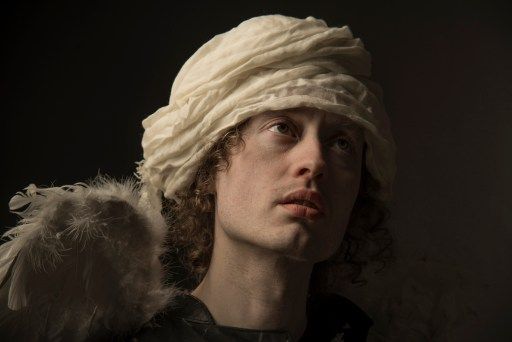
The European Art gallery was interesting with a few of Dutch Masters on display but more interesting to me was the work of a contemporary artist, Danielle van Zadelhoff, who photographed her subjects in costume, lighting, and poses such that they looked like paintings of Old Masters. Well done!
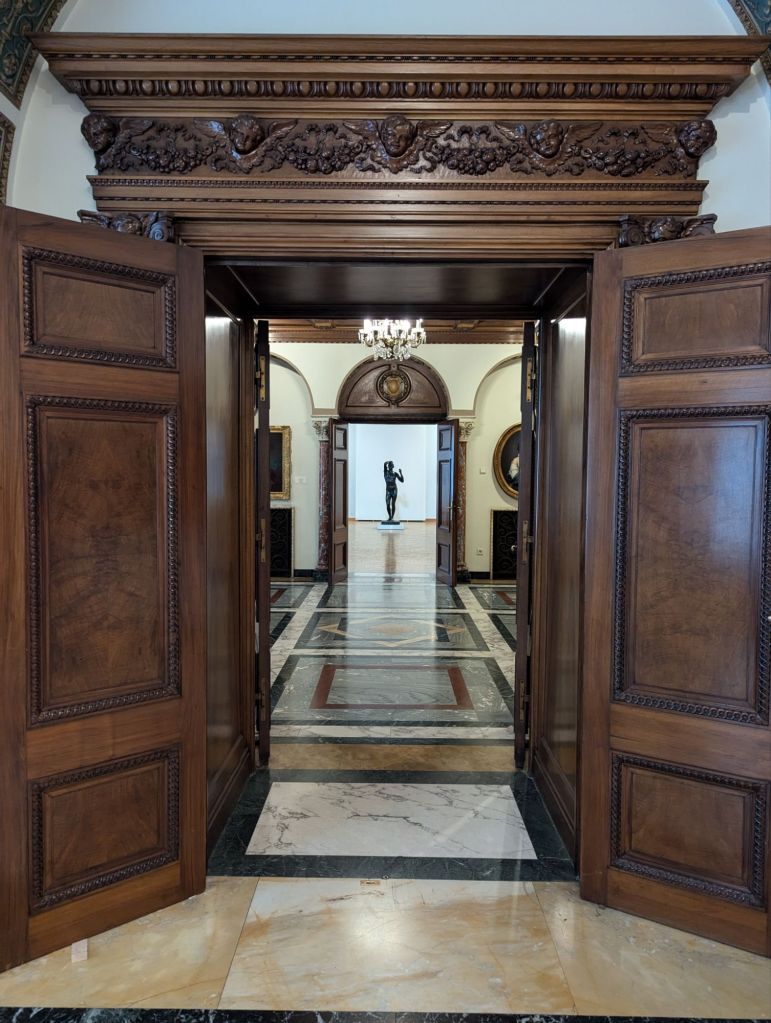
We meandered through more pedestrian filled streets and people-watched then enjoyed an evening drink and snack at an outdoor cafe. I do have a complaint to file with the Romanian people: please STOP smoking! Ugh. Smoking is allowed only outdoors but outdoor cafe experiences are ruined with wafting smoke. Also, COPD, hello?
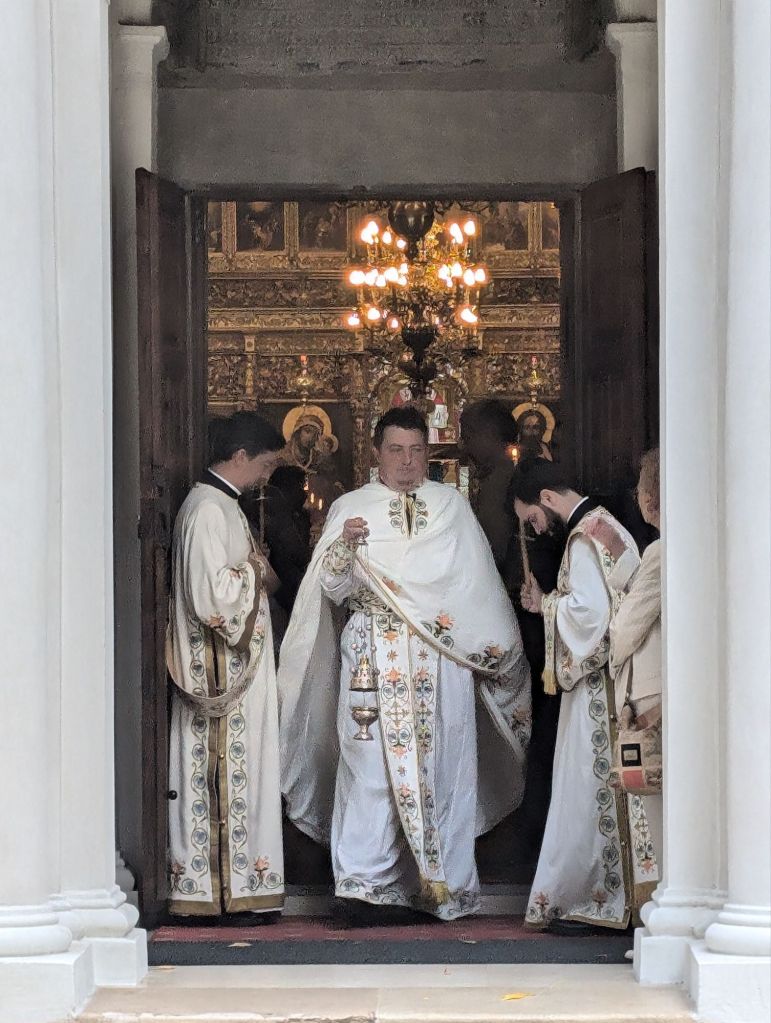
We had a free Sunday morning so after overeating at the buffet breakfast we walked around other parts of Bucharest near the hotel. On our return we heard a beautiful male choir broadcast from an Orthodox church service. We sat outside the church and enjoyed the chanting and singing and watched as worshippers went in and out as if there was a revolving door for takeout-salvation. Later we met up with the group for our regularly scheduled tour beginning with the Parliament Palace.
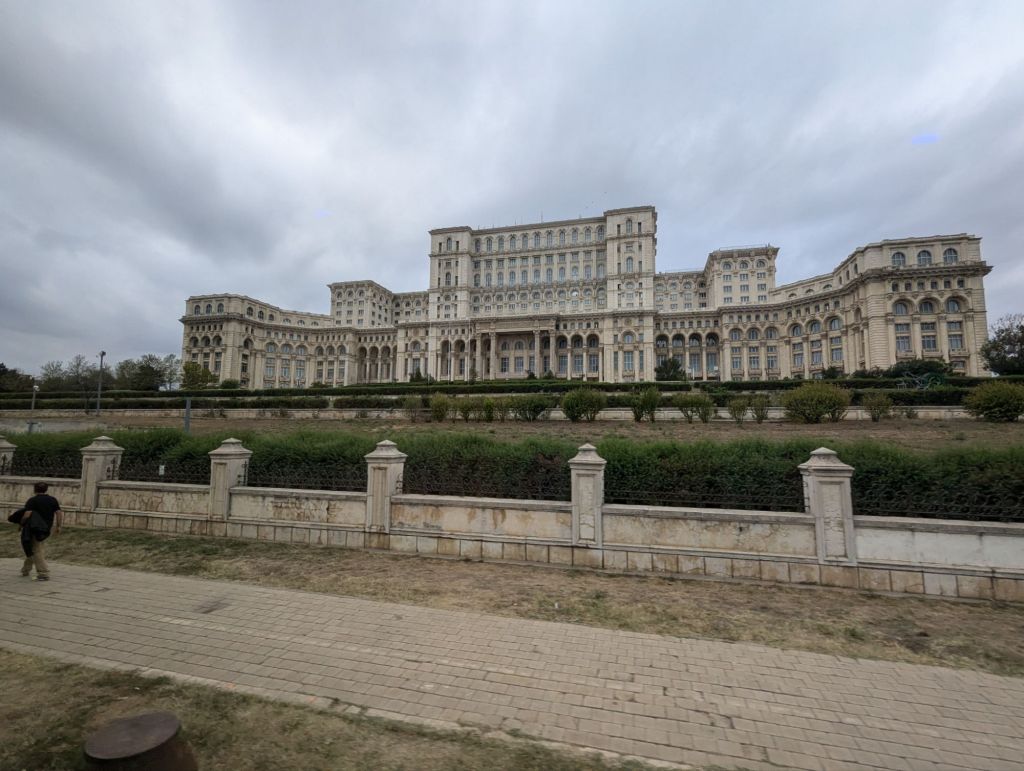
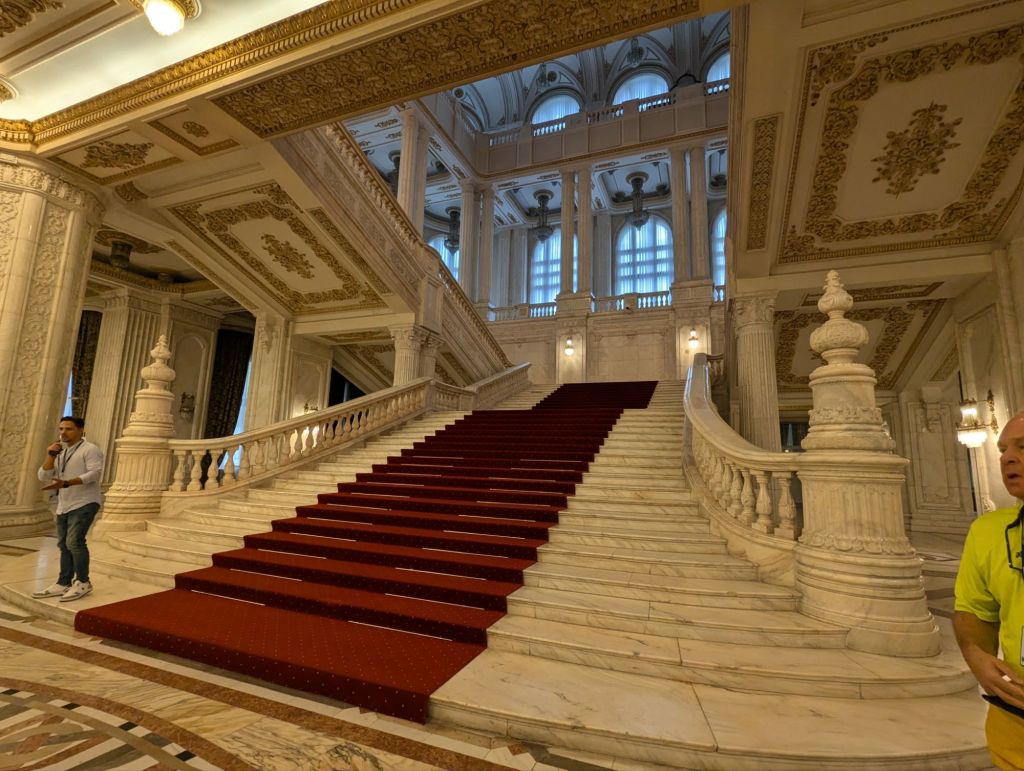
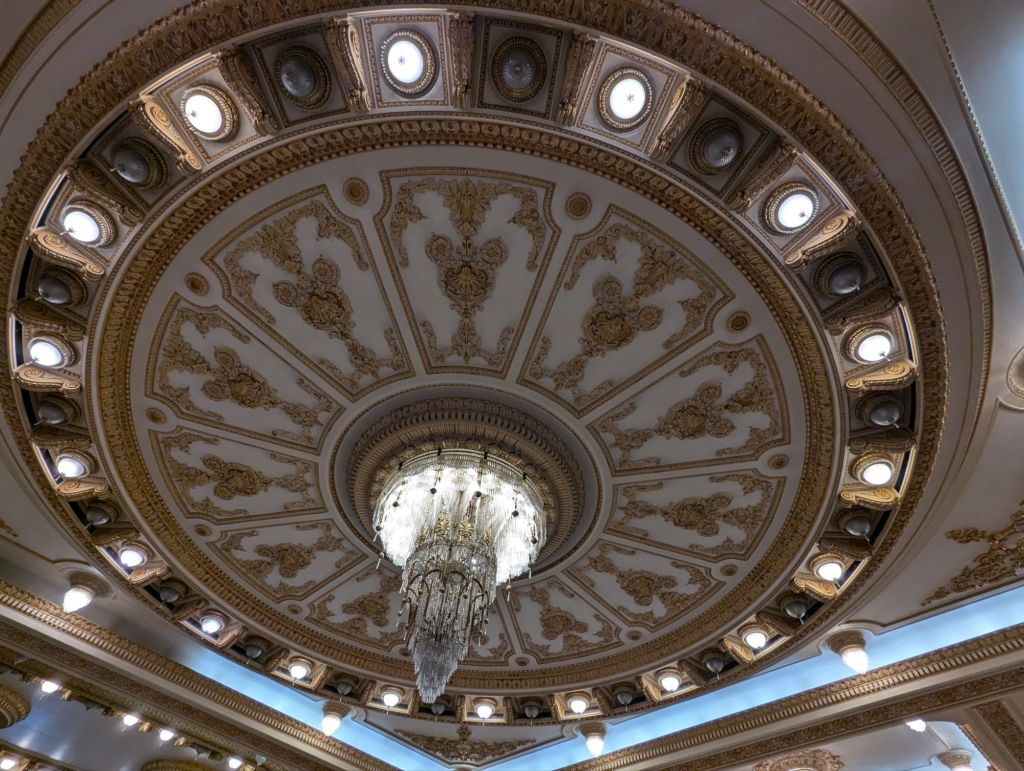
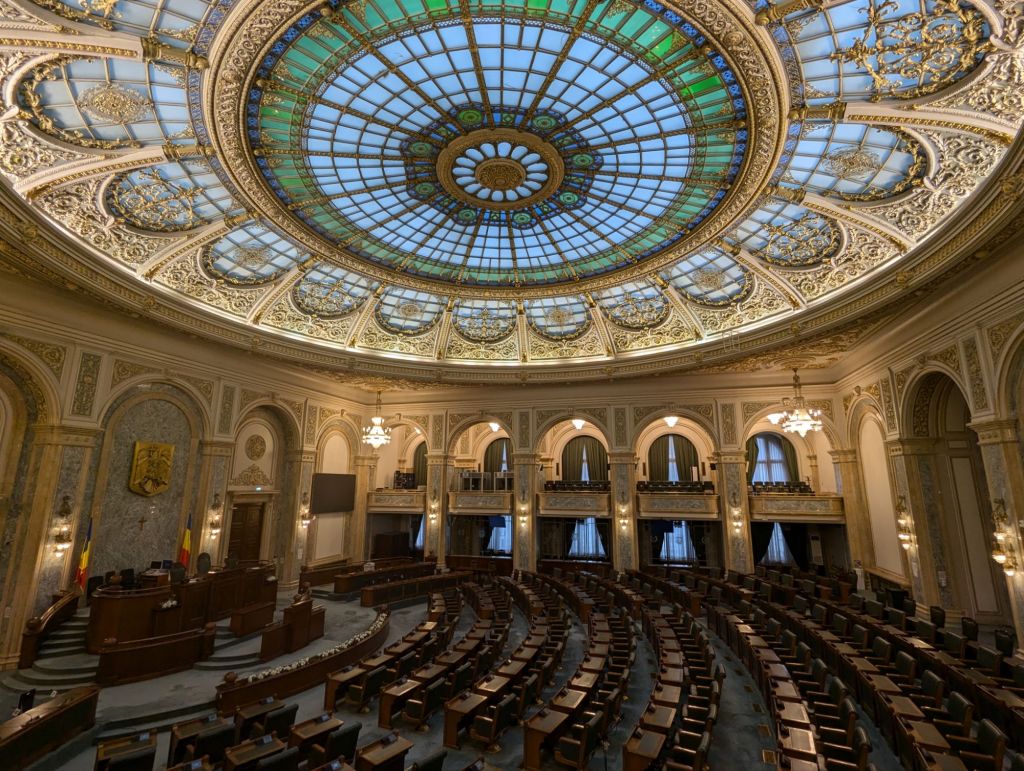
Ceausescu was inspired by the North Korean dictatorship and its personality cult. He was also into ostentation. He ordered the construction of one of the largest government buildings in the world now called the Parliament Palace. Only Germany’s Parliament and the US Pentagon are larger. The building was unfinished at his execution. Following 2 unsuccessful real estate attempts Romania decided to finish construction: 480 chandeliers, 1,409 ceiling lights and mirrors, 700,000 tonnes of steel and bronze, 35mil cu ft of marble, 32mil cu ft of wood, 2.2mil sq ft of woollen carpets of various dimensions (machines had to be moved inside the building to weave some of the larger carpets). All that and only about 50% of the building is in use.
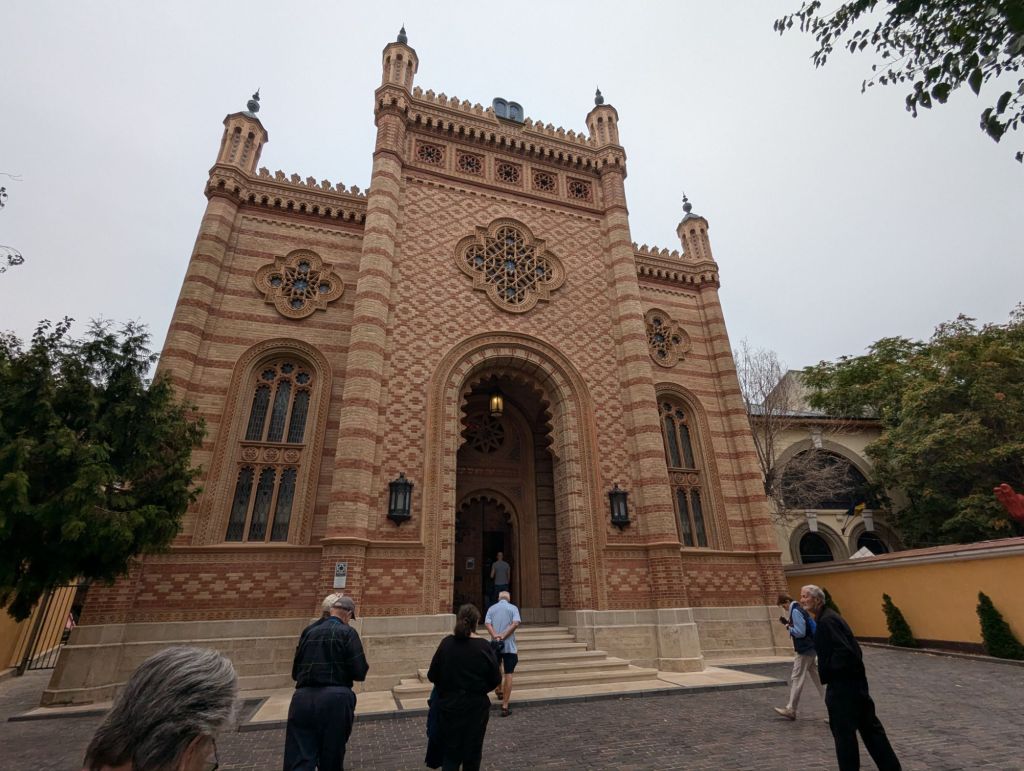
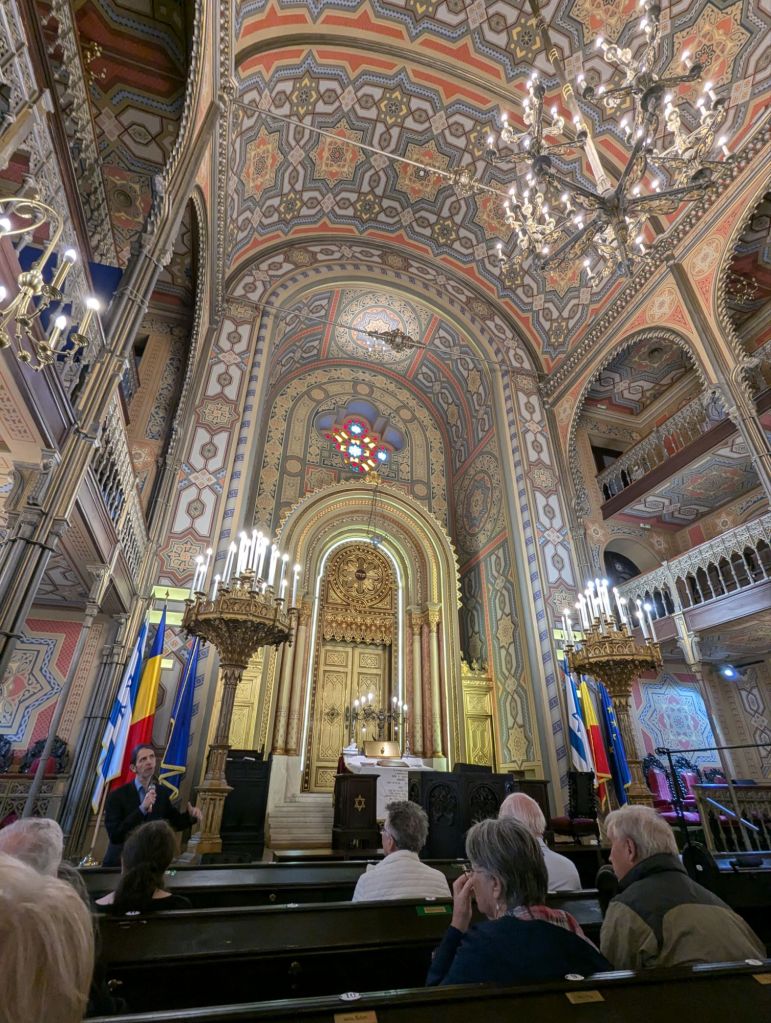
Our day ended with everyone’s cell phones alerting us to an impending serious rain event. We were able to visit the Choral temple, our tour given by a very passionate, talkative Mr. Gilbert Siam. Sadly, of the 800,000 ethnic Jews in Romania before WWII less than 10,000 remain due to deportation and the Holocaust, bartering with other countries to take Jews, and general emigration. Afterwards, we enjoyed dinner and a wine tasting as the rain pelted the city.
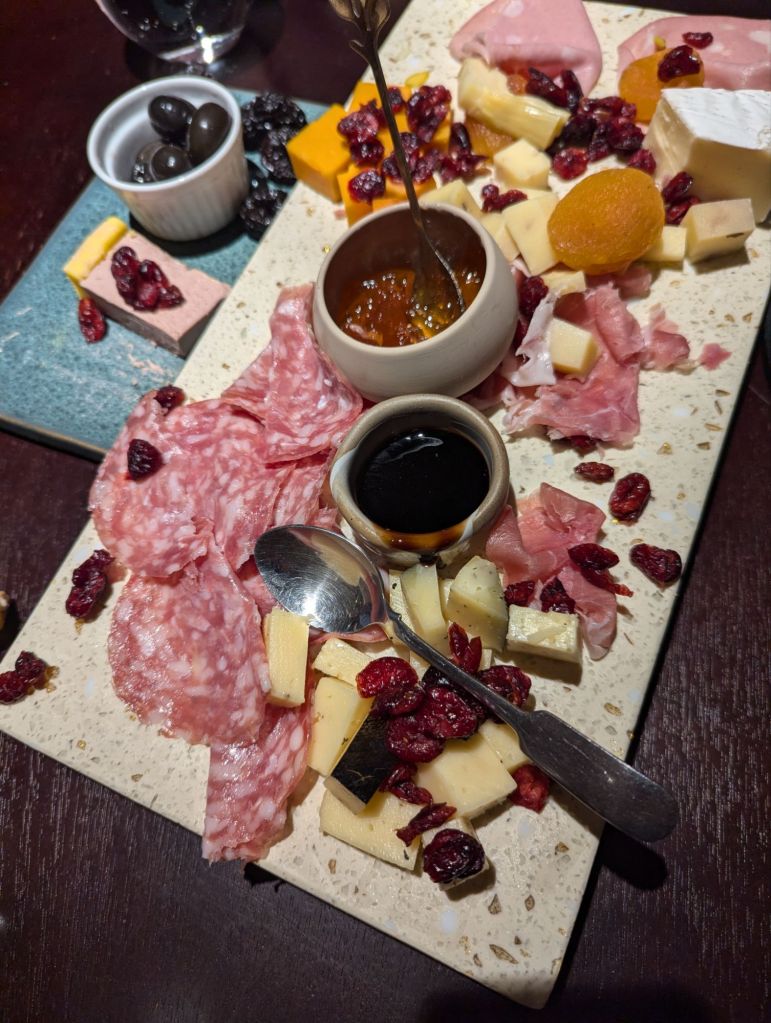
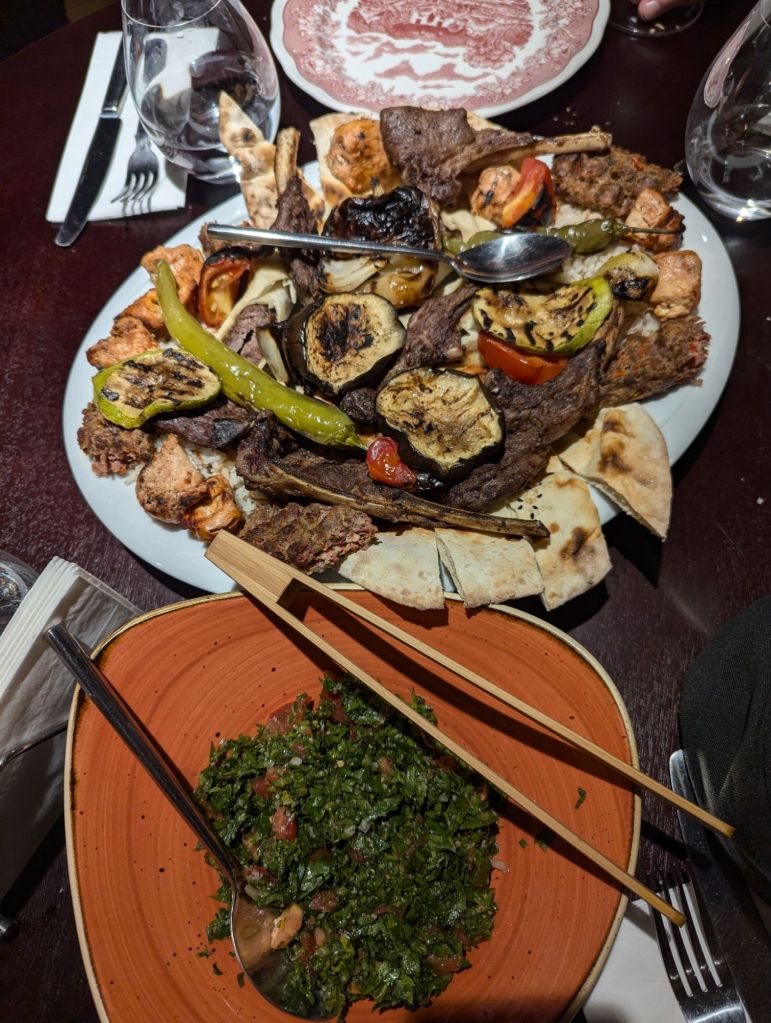

 My new reality