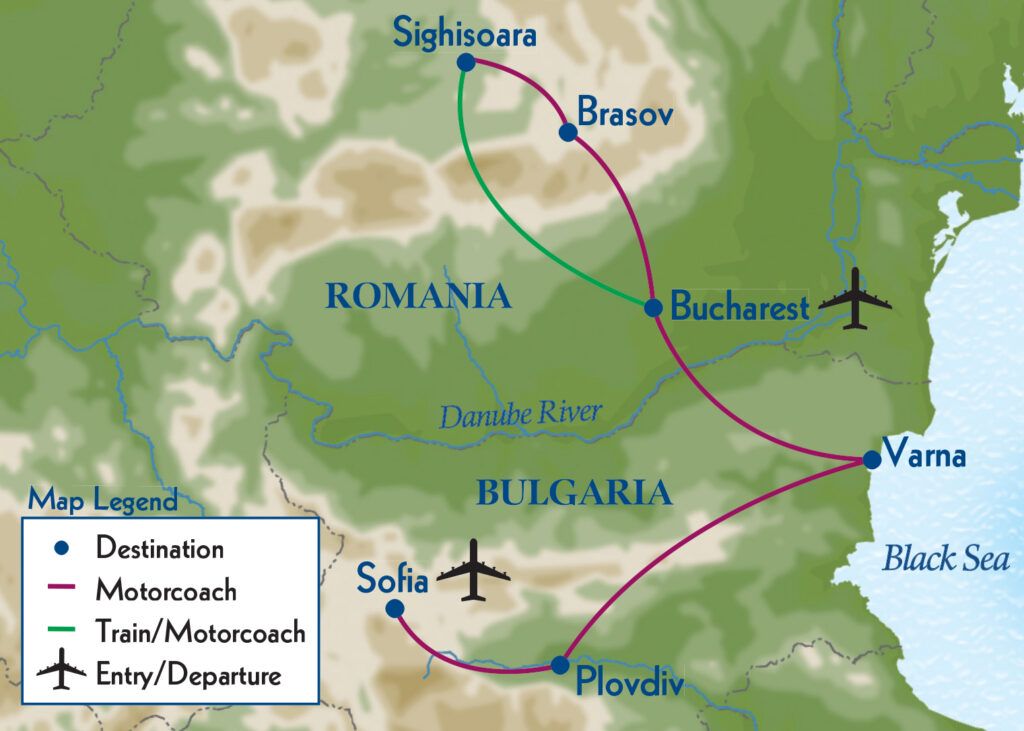
Here’s an international travel tip: Carry your electric adaptors with you and not in your checked luggage. Duh. Let’s hope the phone charge lasts. We have ‘old school’ printouts of our tickets just in case. (OK, we’re Boomers, I admit it). Oh well, what is travel if not an adventure? This trip started a little ‘rough’ anyway with flight delays, ugh. We’re back on Lufthansa and their track record is not improving (see my last blog: https://retirementadventureblog.com/2024/03/09/on-the-road-to-marrakech/ ). Our destinations: Bulgaria and Romania, once again with our favorite travel organization Odysseys Unlimited (https://www.odysseys-unlimited.com). No worries, we will get to our first destination, Sofia, Bulgaria, eventually. We built in an extra day for just such an emergency and are relaxing in the Frankfort lounge awaiting our next flight. Beer and brats anyone?
New since the last trip: seeing if I can work my Weight Watchers ‘journey’ into exploring new foods while in other countries. I’ll work on balancing tasting local foods with good choices and exercise. So far, so good!
We eventually arrived in Sofia, Bulgaria at our hotel, the Grand Hotel Sofia, only 28 hours later but late at night. Our tour director, Stefan, was there to introduce himself when we checked in. Our room was spacious with comfy beds and we immediately crashed.
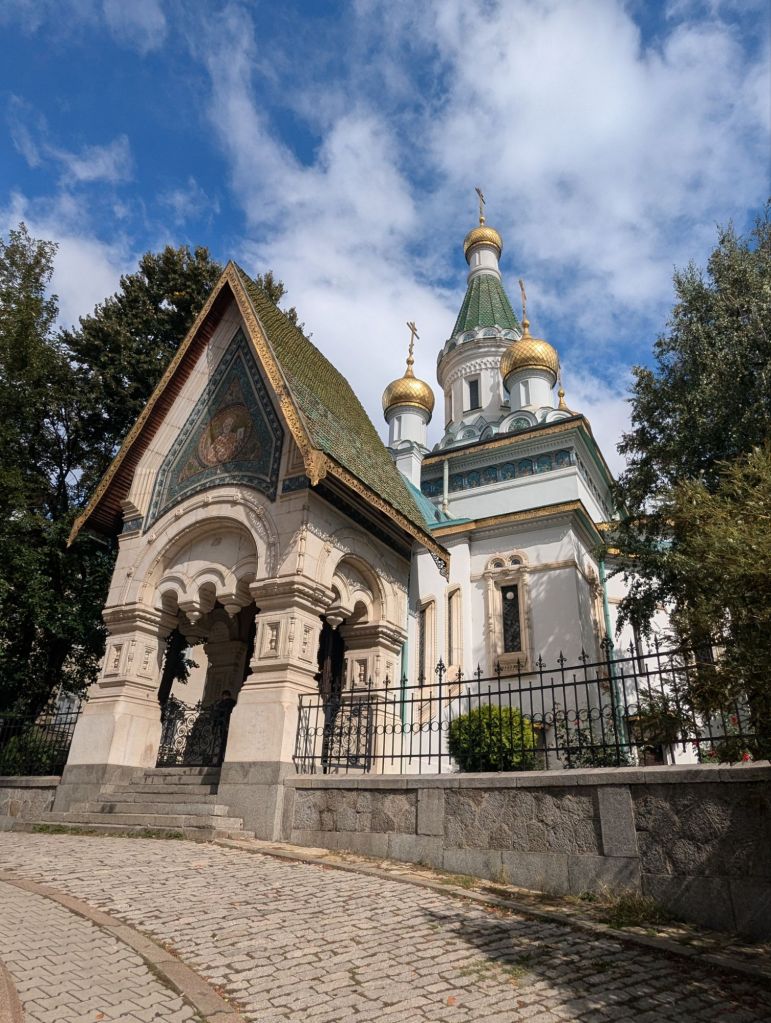
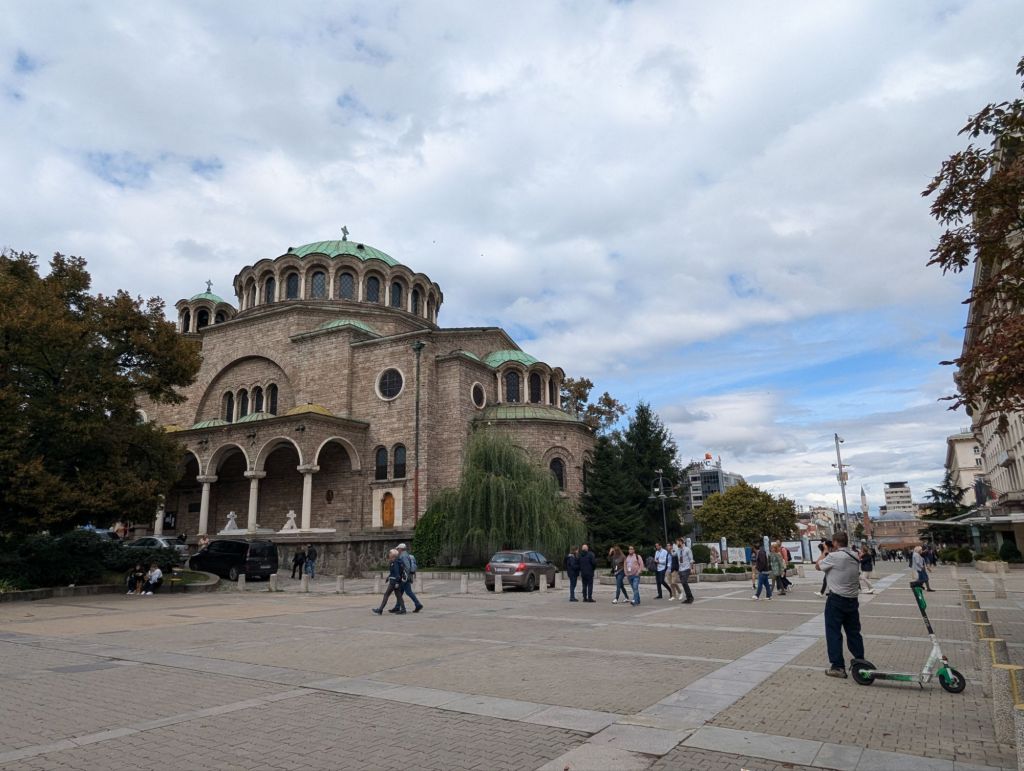
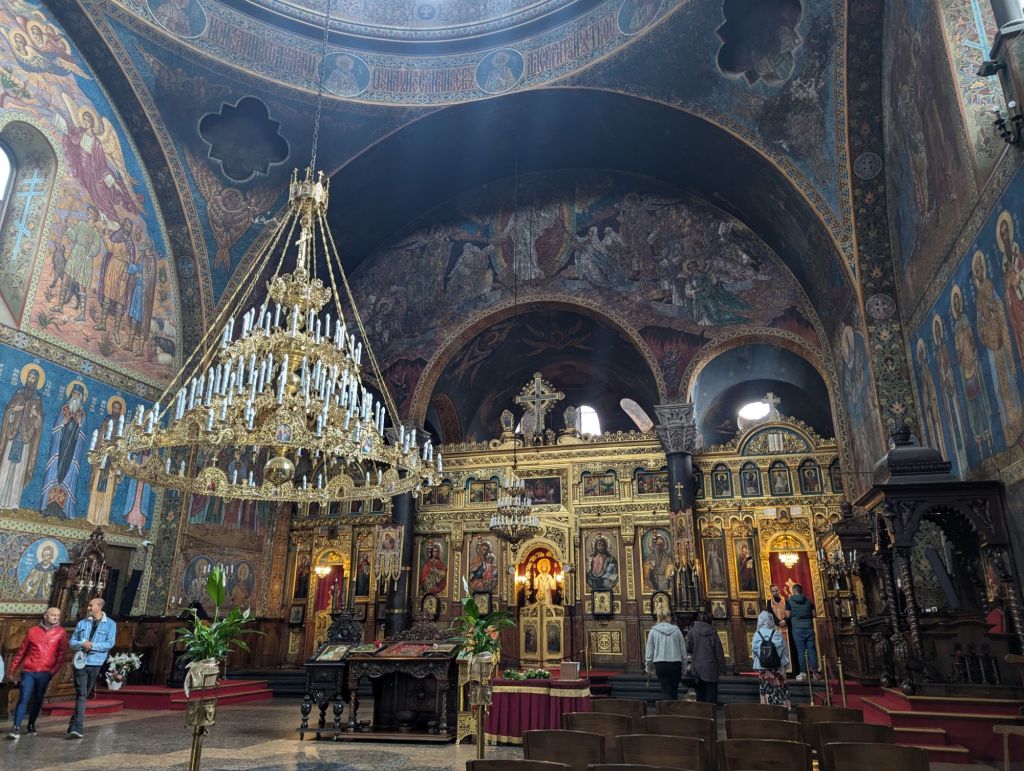
Sunshine greeted us on our first day in Sofia, the capital of Bulgaria. We had the day to ourselves so after breakfasting at the hotel buffet we began walking. And walking. Over 6 miles circling around our hotel in Sofia city center. We visited St. Nicholas and St. Nedelya churches with gorgeous icons, ornate chandeliers, and marvellously muralled walls, the National Art Gallery at the former Palace featuring royal portraits and Bulgarian artists of old, the bustling Women’s outdoor market, and various parks and monuments along the way.
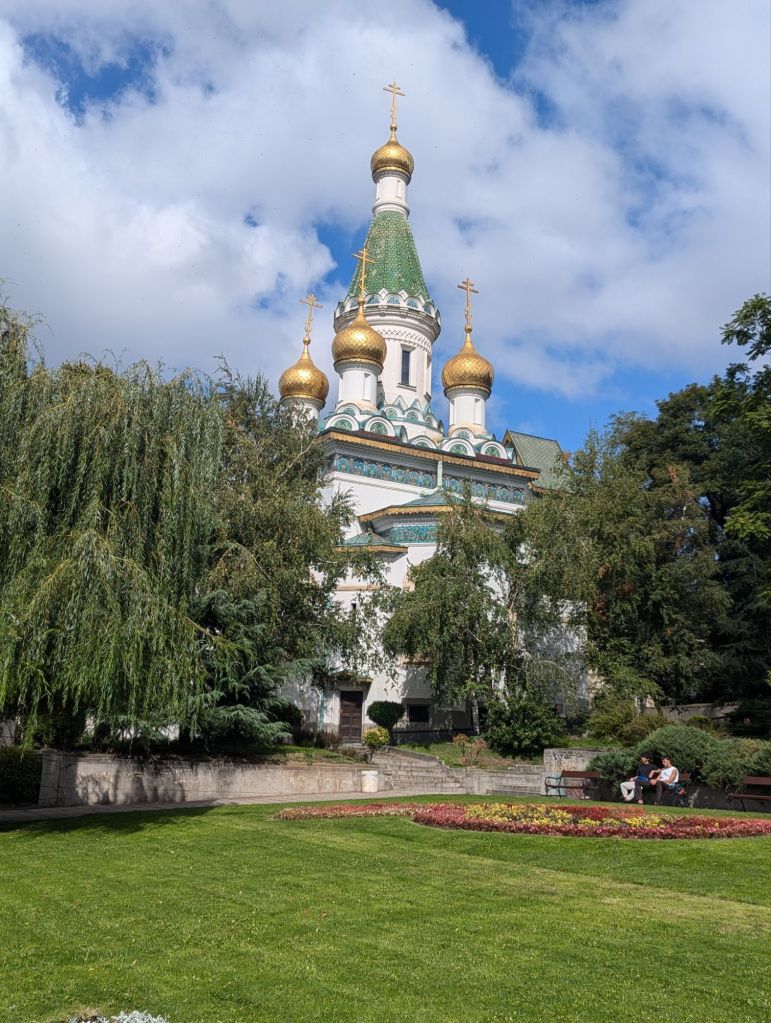
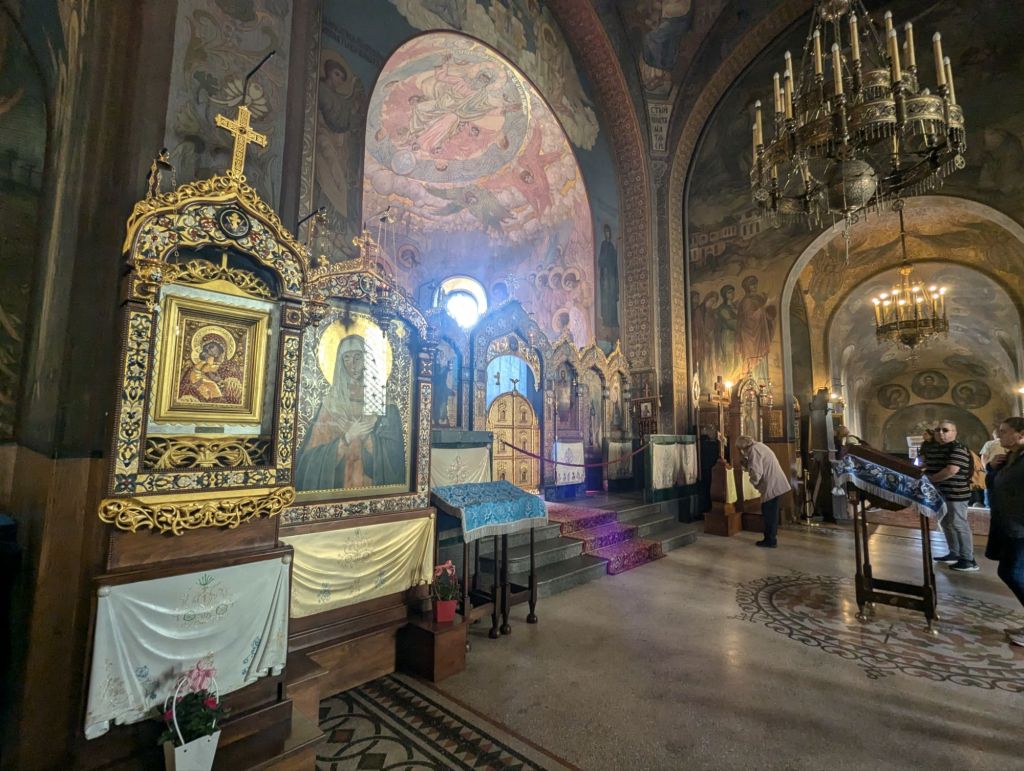
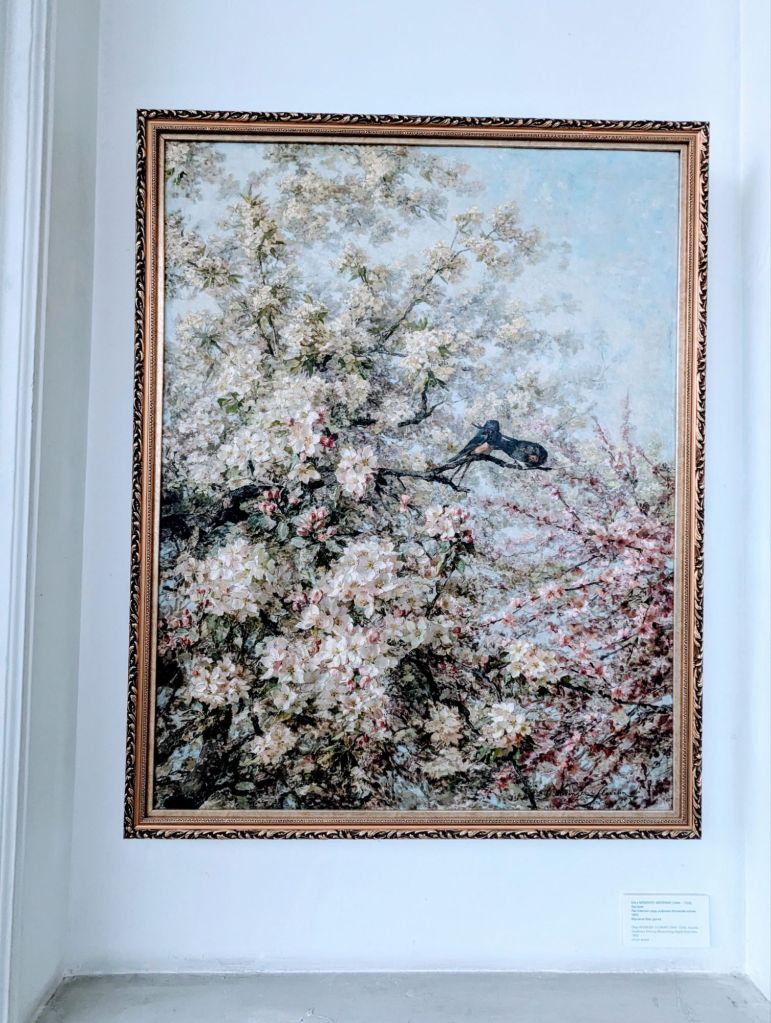
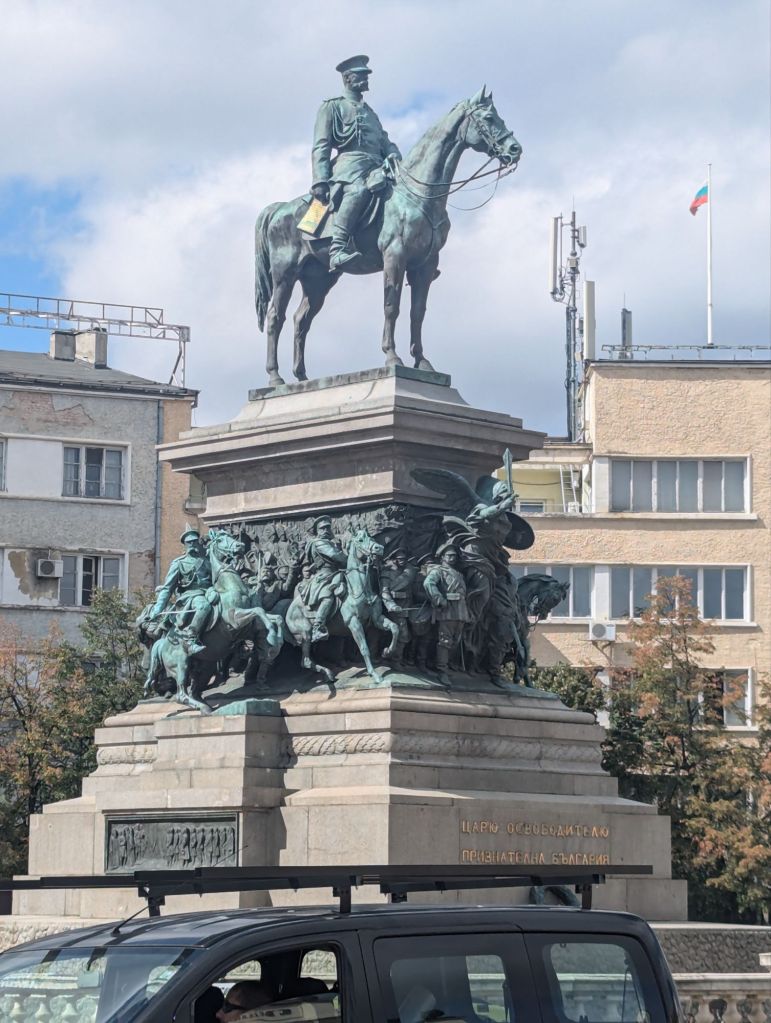
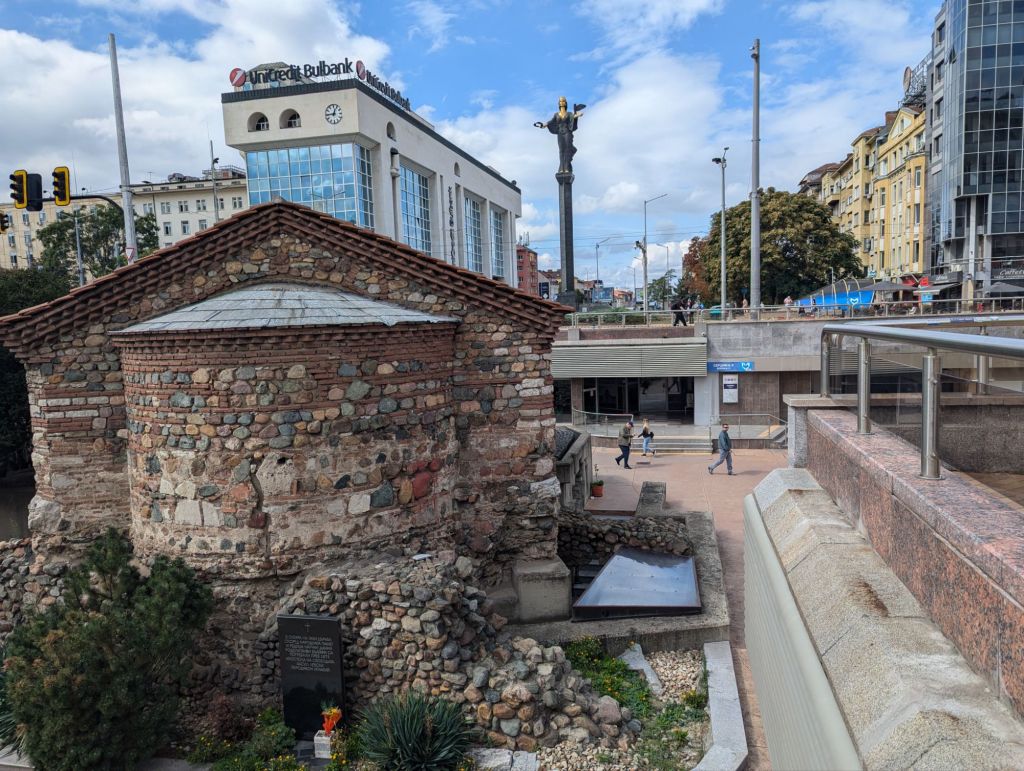
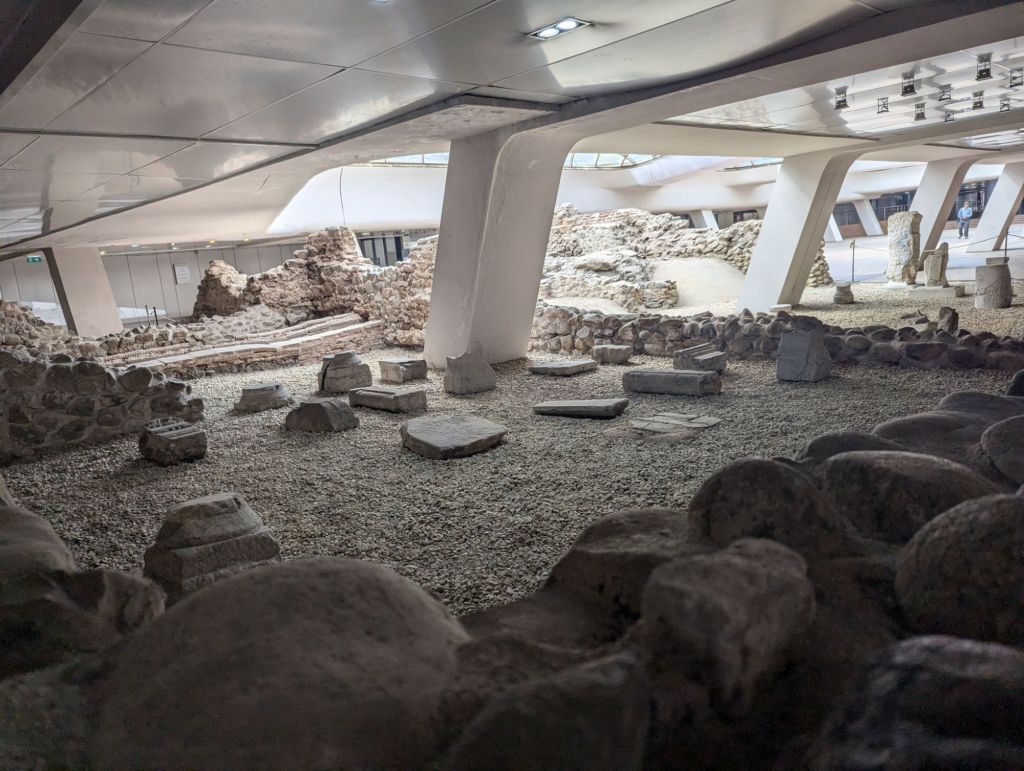
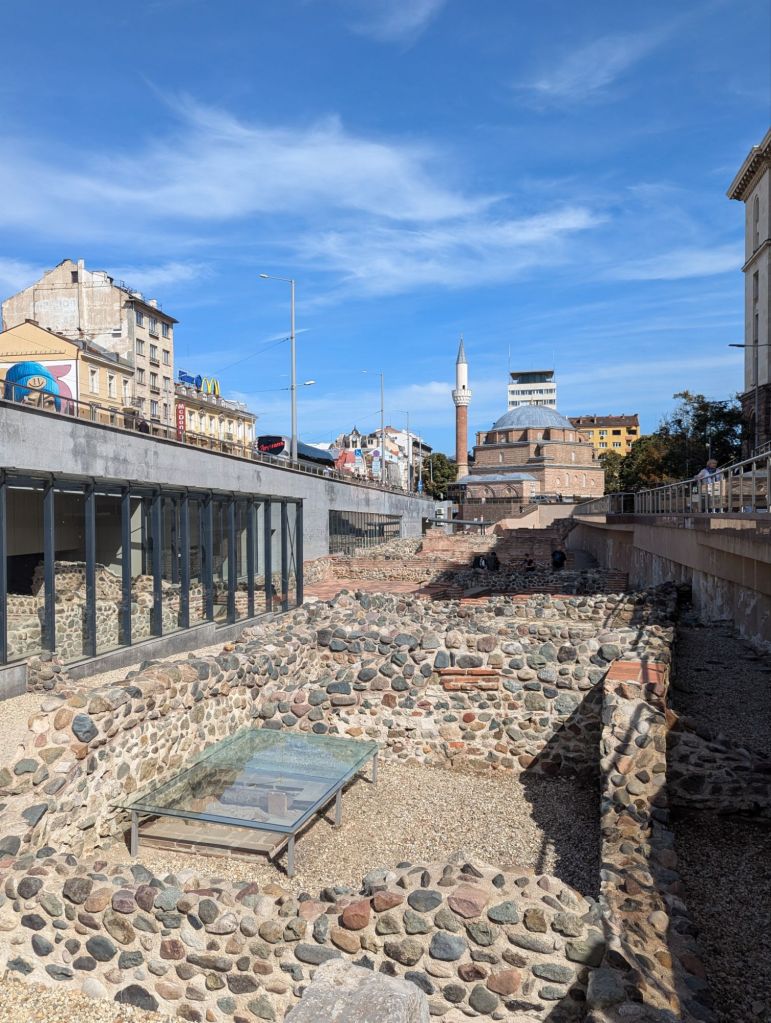
Sofia has layers of history on display throughout the city. Thracian tribes (from 1,000BC), Greeks, then Romans from 100 AD inhabited ‘Serdika’, or ancient Sofia. Sofia’s location as a crossroads through the Balkans to Asia, its mild climate and fertile soils, proximity to 2 rivers, and hot mineral springs made it desirable. Emperor Constantine resided in Serdika for several years. Excavated archeological sites include the unearthed ruins of ancient aqueducts, buildings, and roads that lay in between modern subways and underground walkways and beneath city highways and buildings.
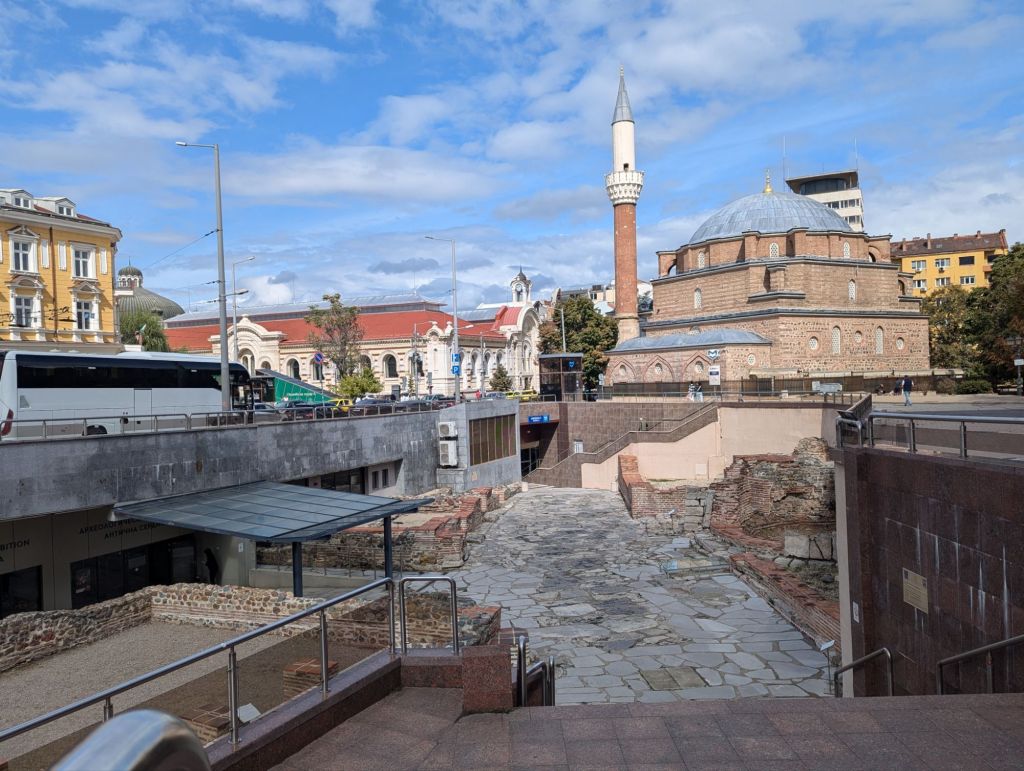
Bulgaria was liberated from centuries of Ottoman rule in 1878 with Russian help, hence the monuments and churches built to honor Tsar Nicholas II (the Liberator) and the Russian people. However, other European powers refused to accept the treaty since Russia would have influence over this new Bulgarian state. The following Berlin Congress reduced the size of the new Bulgaria, with some southern territories returned to the Ottomans. Several Balkan wars followed. On Sept. 22, 1908 King Ferdinand declared Bulgaria independent of Ottoman ‘vassalship’ and this date is celebrated as Independence Day even today. Later Bulgaria aligned with Germany in both WWI and II though it did not provide military troops and protected its Jewish population from deportation to concentration camps, yet suffered through Allied bombing. Later the Bulgarians provided troops to Russia vs. Germany. Communist Soviets entered Bulgaria in Sept. 9, 1944 following the poisoning assassination of beloved King Boris III. Intelligentsia and the elite were eliminated. Industrialization of Bulgaria began during the 1950’s and 1960’s under communist rule. Sofia’s population grew as farms were overtaken by the state and people flocked to the cities for work and housing. The Communist party resigned in 1989 after the Berlin Wall fell. Eventually Bulgaria joined NATO in 2004 and the EU in 2007. Current Sofia population: 1.28 million. Bulgarian total pop: approx 6.7mil. That’s Bulgarian history in 1,000 words or less.
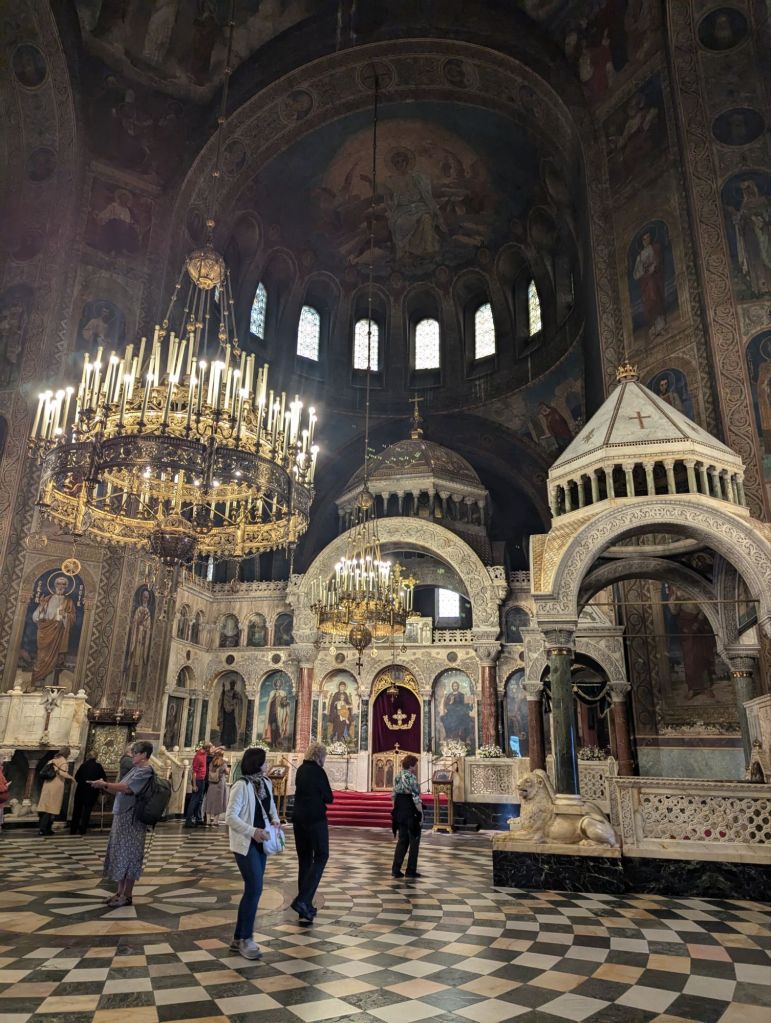
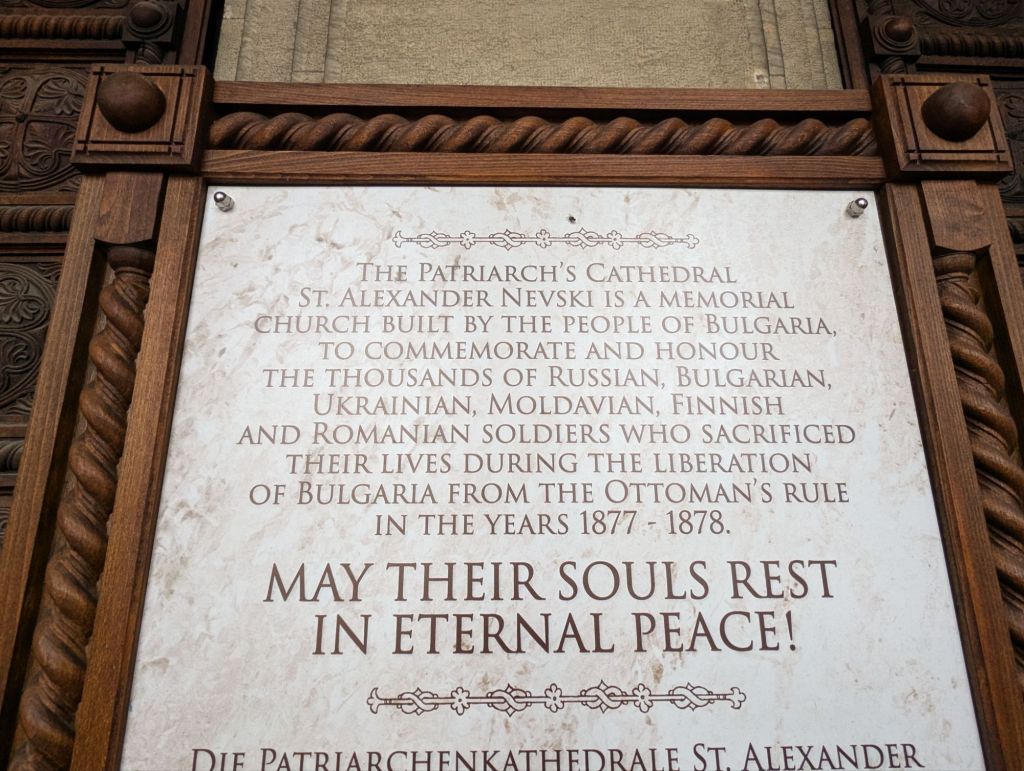
The next day the actual tour began. We met with our group and headed out. First stop: the Patriarch Cathedral of St. Alexander Nevski. This Bulgarian Orthodox church commemorates the Bulgarian Liberation. The interior is very large and can hold 5,000 worshippers who stand for the service. Two thrones near the ornate altar area are reserved for the ArchBishop, or Patriarch, and the King (now no longer in power although a royal descendant has been part of recent political party elections). Devout faithful kiss the various icons and bless themselves vigorously 3 times though right to left (not left to right as Roman Catholics do). Priests wear long black robes like Father Doyle from our parish used to do back in the day. Since this cathedral was dedicated to Russia, it was untouched during Communist rule although not used for worship.
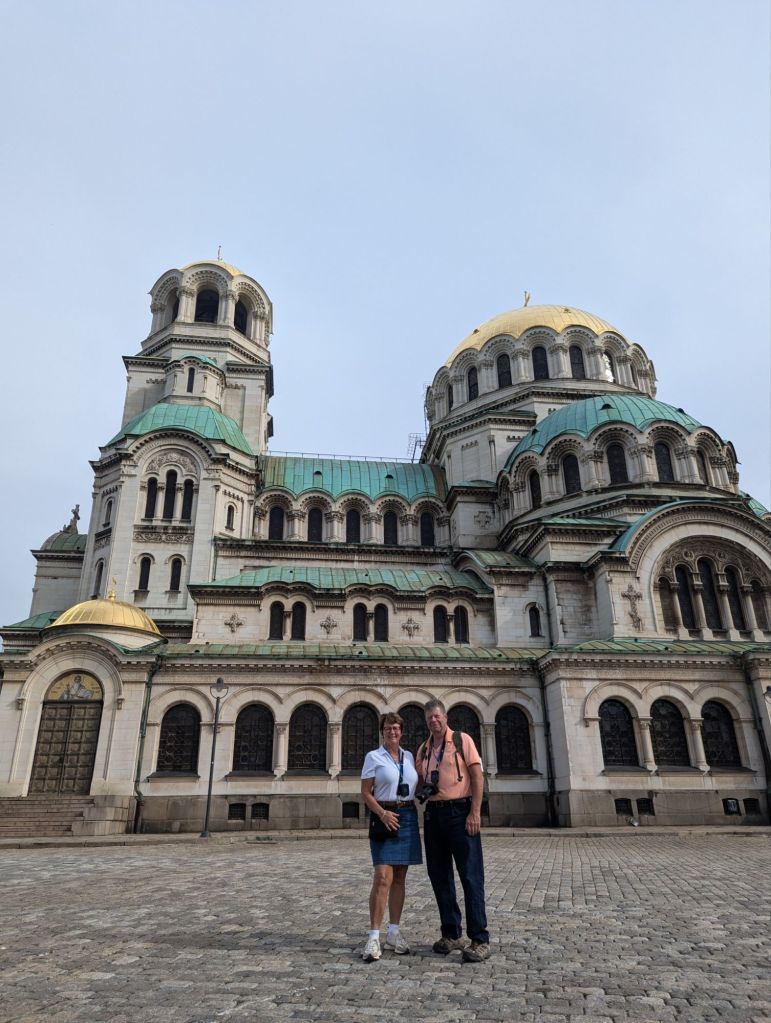
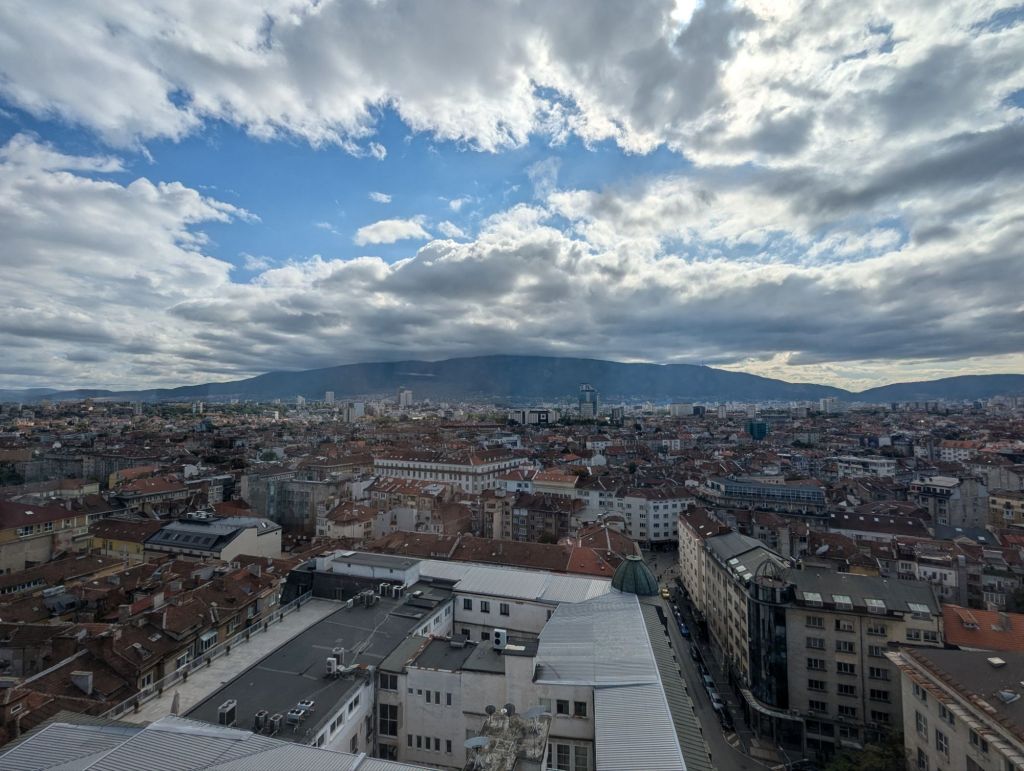
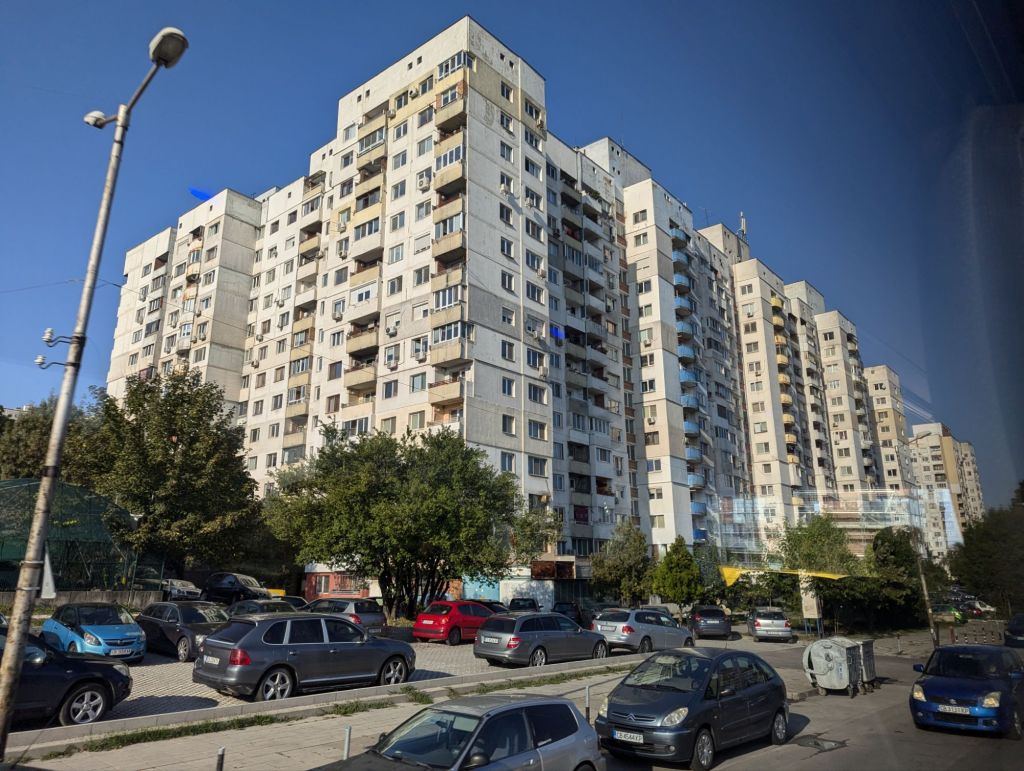
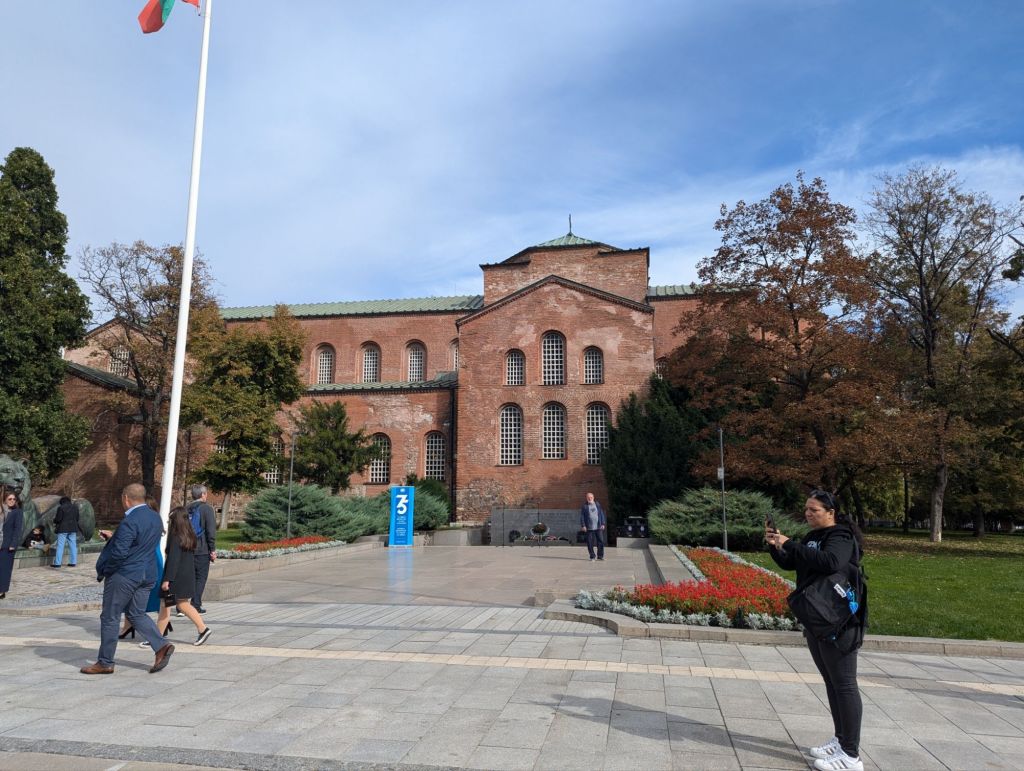
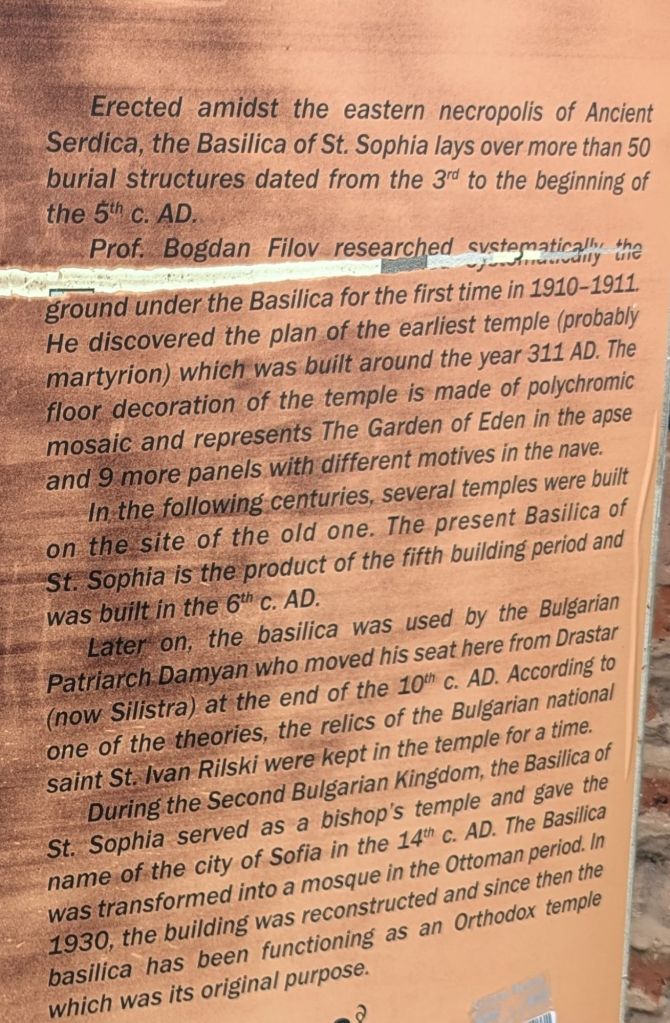
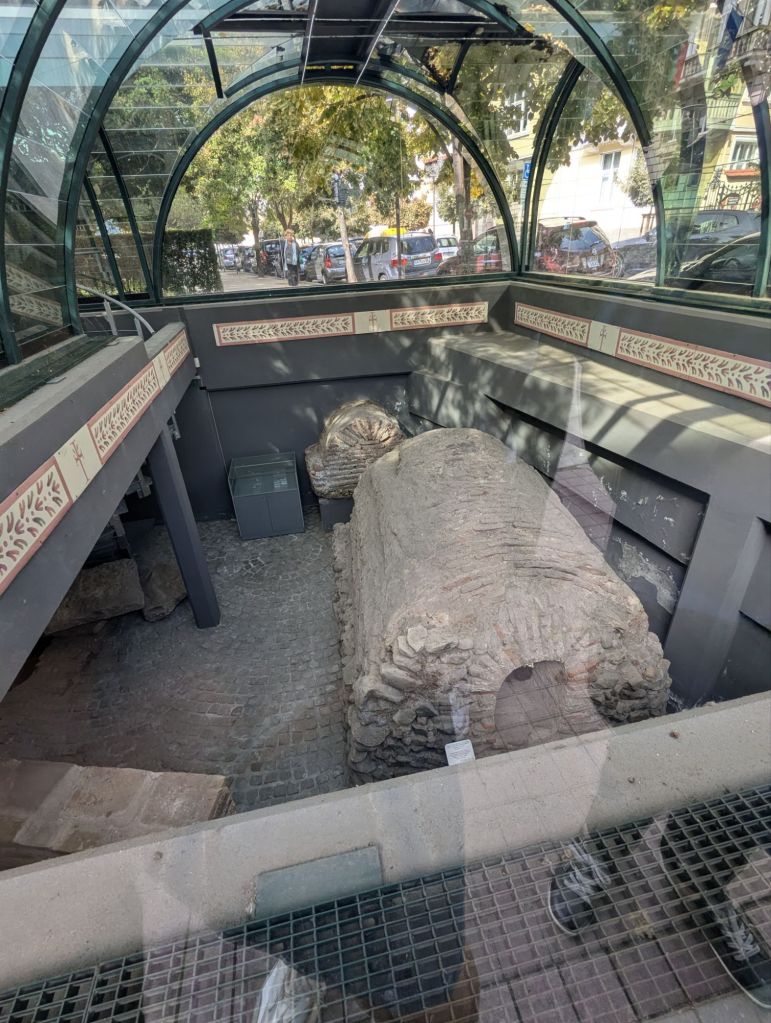
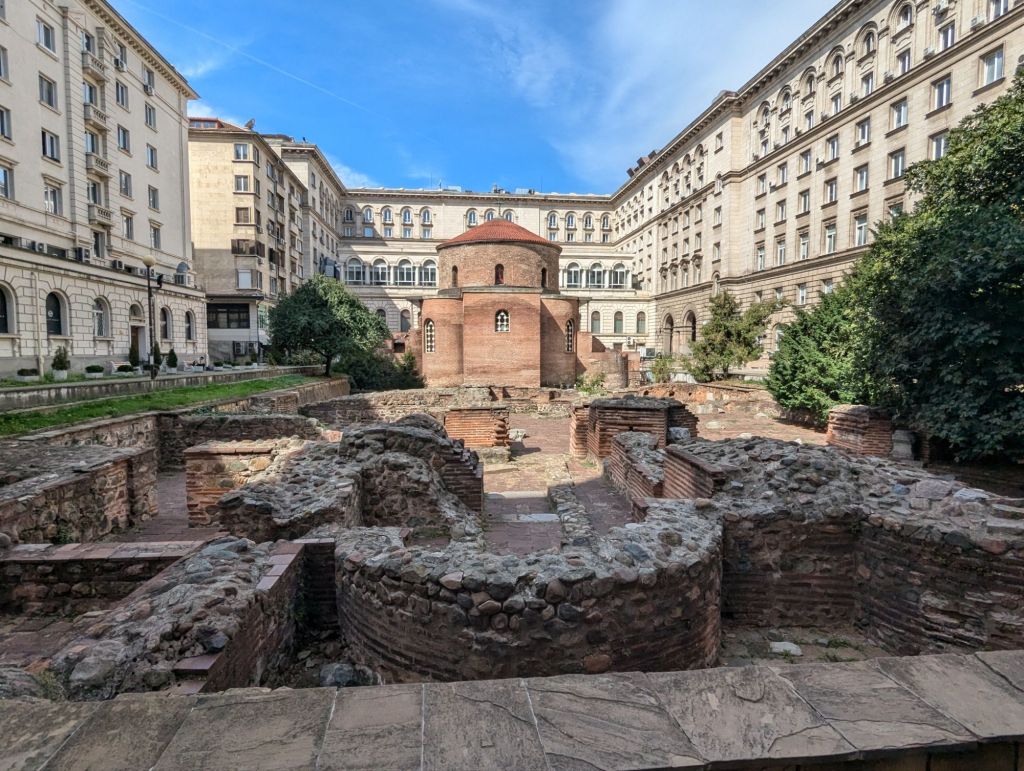
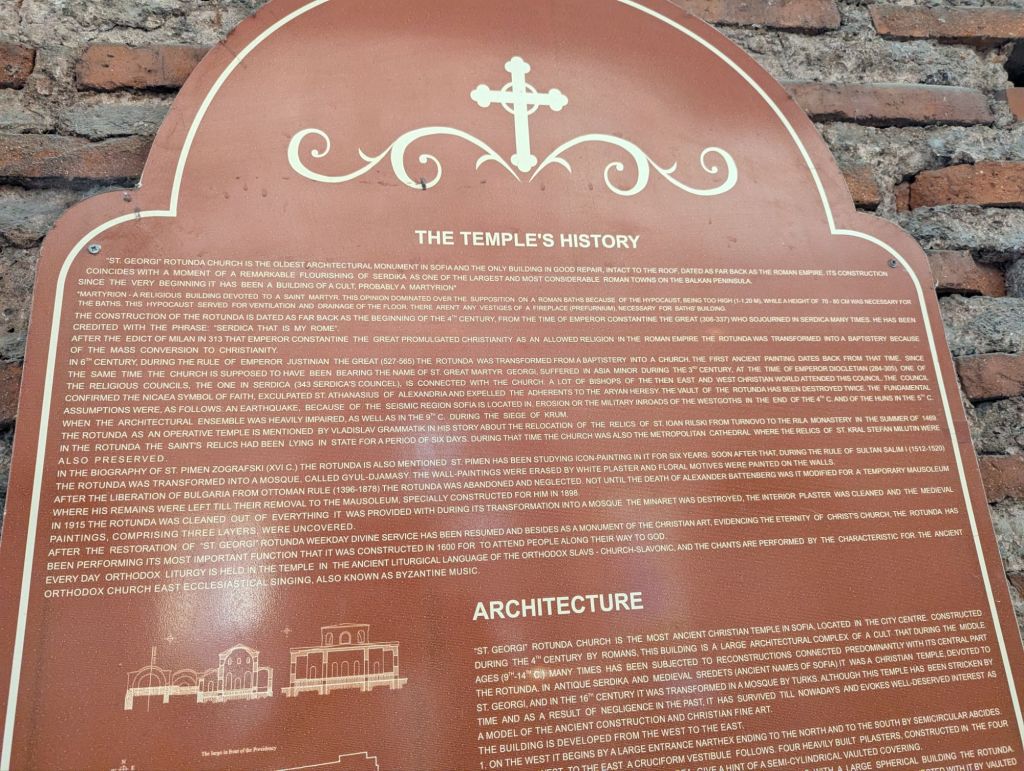
We walked past the red bricked church of St. Sofia dated from the 4th century. Several tombs were discovered beneath the church. Nearby was the Tomb of the Unknown Soldier and its eternal flame. We then walked over to another 4th century church, the St. George rotunda which still has significant portions of the original church walls remaining. Sofia has a mix of Renaissance architecture, Communist grey block buildings, updated highways, jumbled cobblestone sidewalks, graffitied condos, and lots of green parks though some were weedy and unmaintained whereas others were landscaped and welcoming. Sofia has electric trams, underground subways, buses, and little cars.
People were smoking everywhere though only outside. I noticed updated clothing trends (fancy sneakers and wide leg jeans) and designer clothing stores.
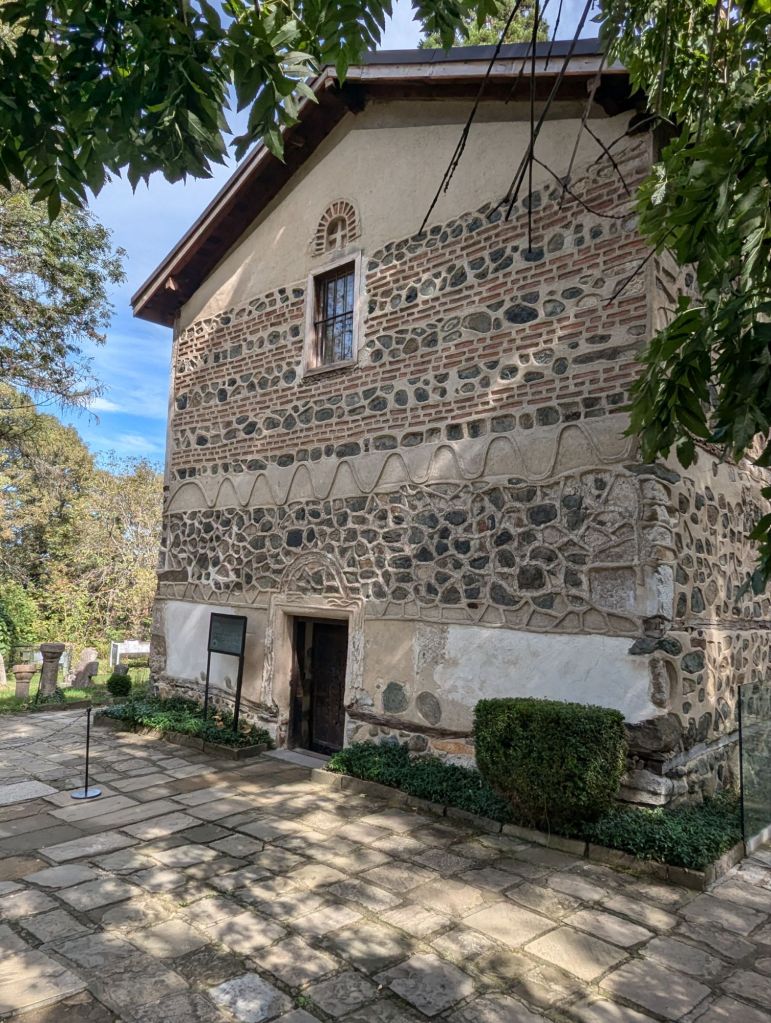
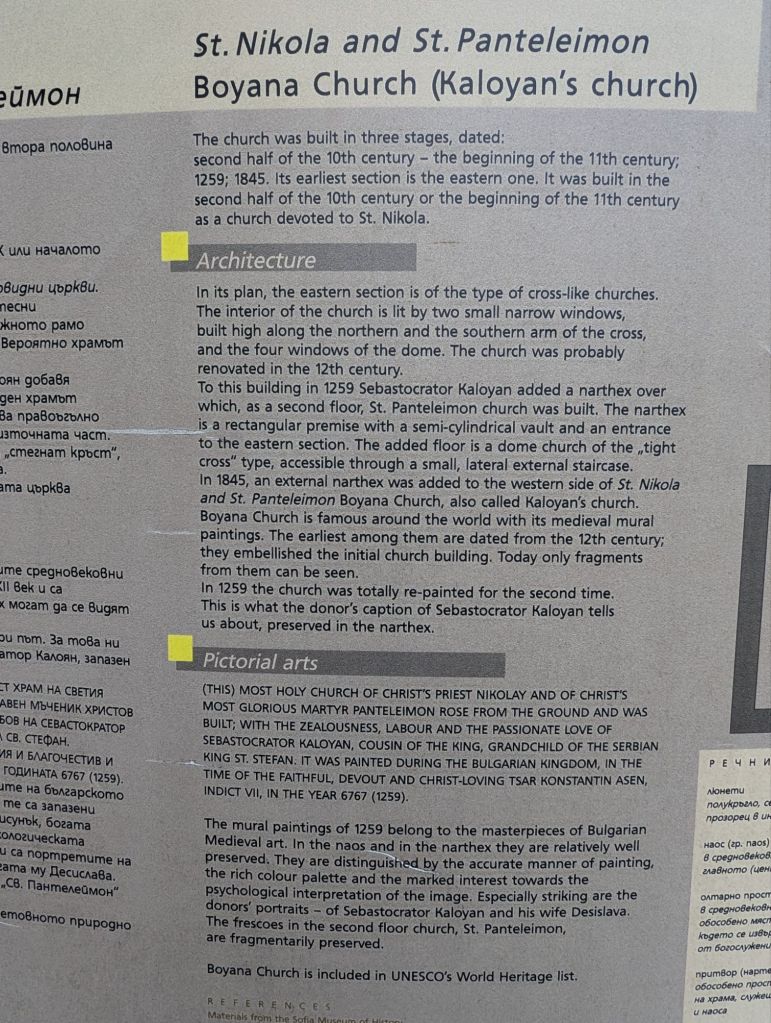
Later we bused to lunch (risotto, pasta) and then headed up the shoulder of Vitosha mountain which overlooks Sofia to visit another significantly historical church in Boyana, St. Nicholas, built in the 10th – 12th centuries and with original frescoes mainly intact. The tiny church’s murals depicted the many stories of St. Nicholas’ life. No photos were allowed.
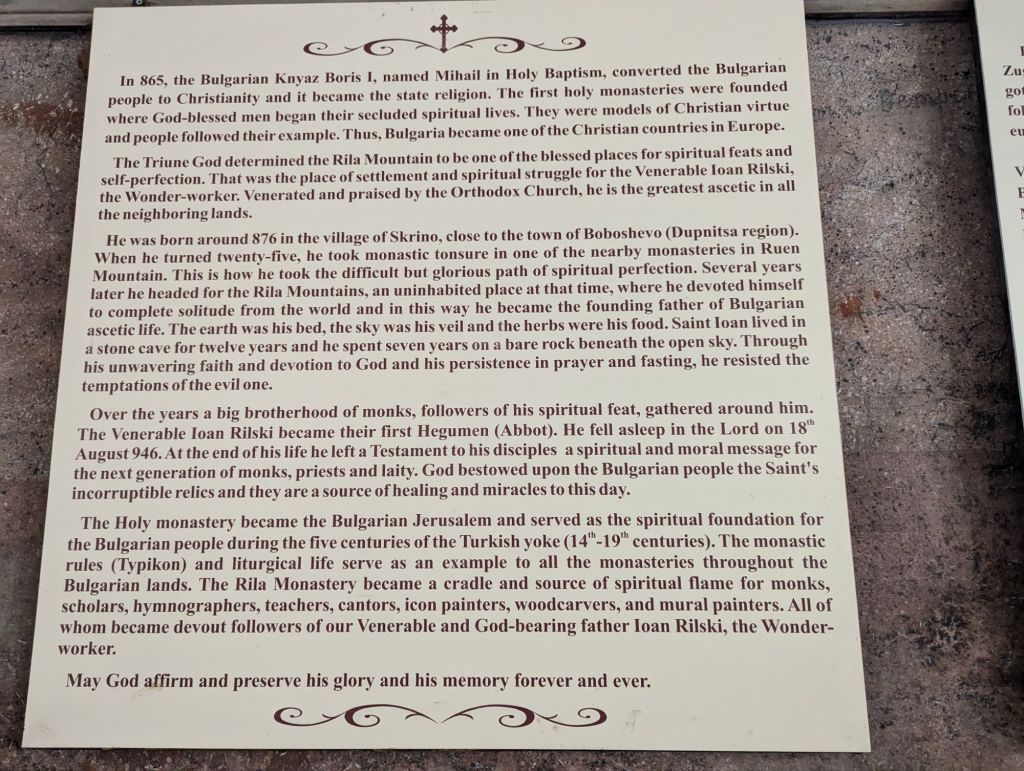
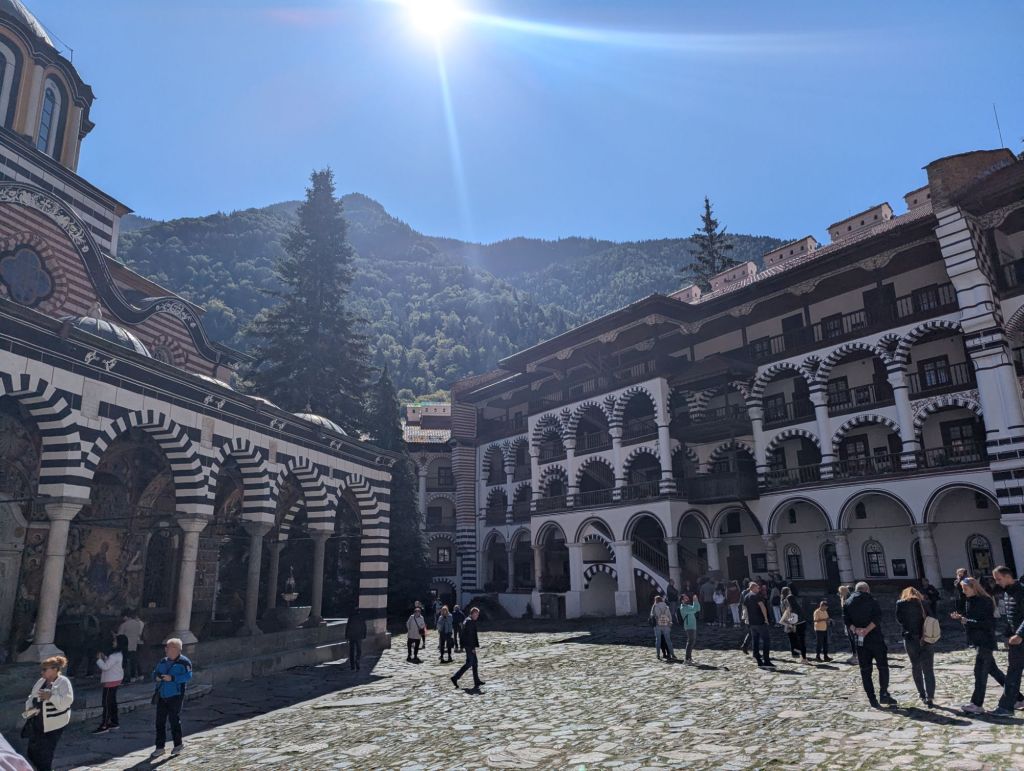
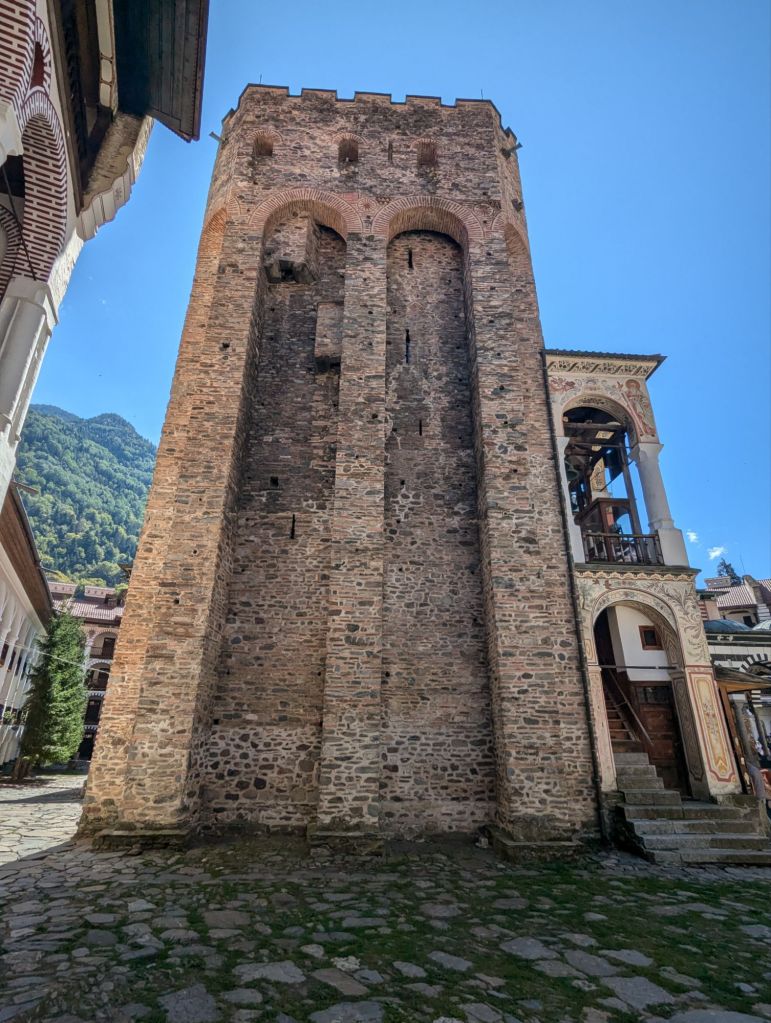
On Sunday we drove through the foothills of the Balkan mountains past Communist era housing and later, small farms and villages, almost 2 hours to the Rila Monastery. The monastery was founded in the beginning of the 10th century by ascete Ivan Rilsky. Ivan had ‘healing energy’ and charisma but lived in a cave in the mountains near the Rila river as a hermit. Others came to live nearby, becoming monks. Eventually a monastery was built to accommodate followers, pilgrims, and guests. The current monastery dates from the 14th century but was destroyed by Ottomans and also a fire in 1833. Only a fortification tower survived. The new church was rebuilt within 3 years as a replica of the Mt. Athos Orthodox center church. Currently only 60 monks live there, though there are rooms for 300 monks and/or guests. It is regarded as a center of Bulgarian culture and religion; St. Ivan is the patron saint of Bulgaria. BTW 85% of Bulgarians are registered Orthodox members and its history is largely tied to religion.
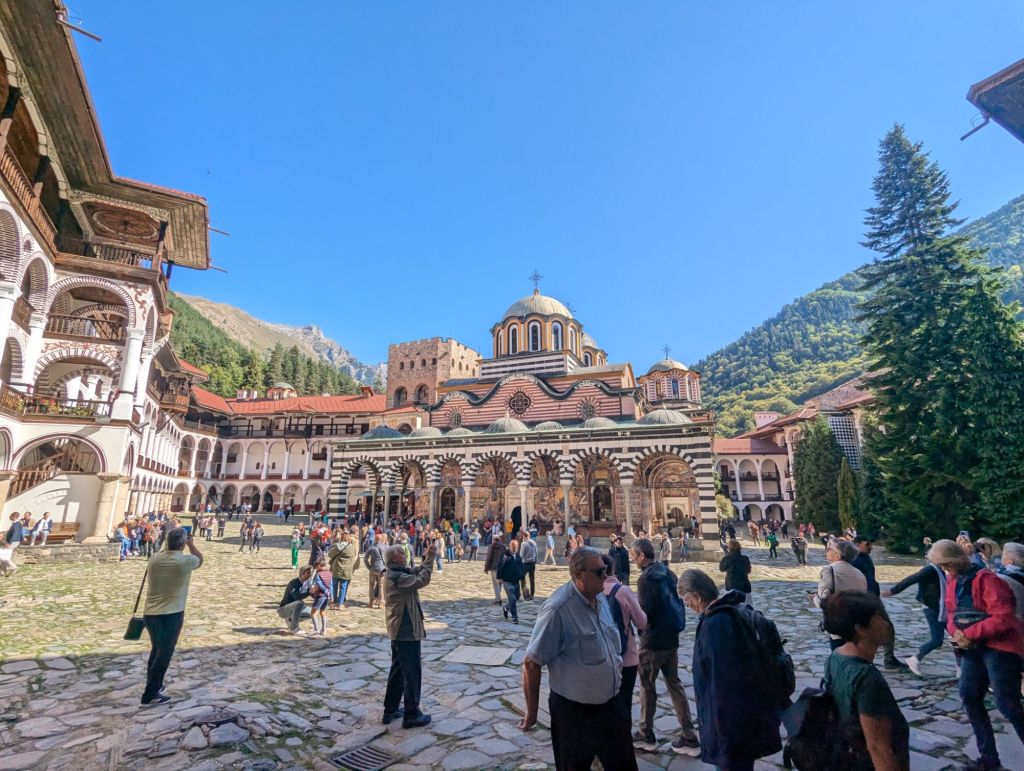
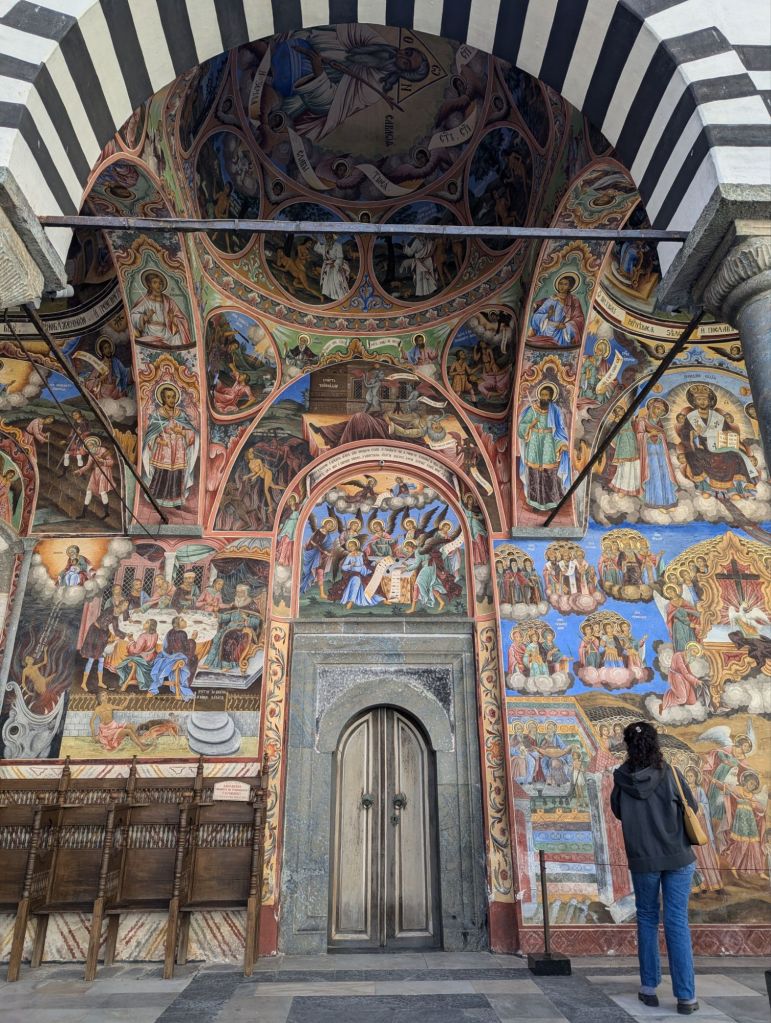
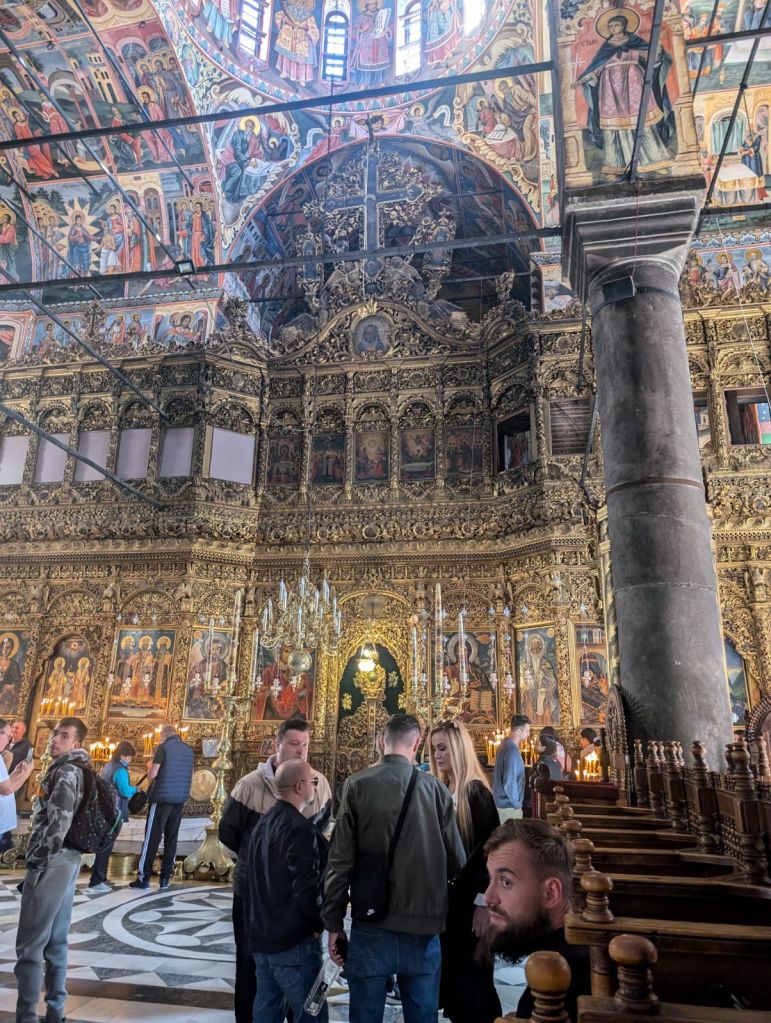
The exterior and interior of the church are richly decorated with frescoes depicting various scenes from Christian doctrine. These murals were used for teaching illiterate followers about the Bible and morality. Inside, the altar is decorated with gilt wooden hand-carved screens framing the icons and obscuring the altar. Occasionally the relics of St. Ivan were revealed to worshippers. A side altar has a shrine to King Boris III who was revered and buried within the church but Russians hid his body elsewhere (no one knows where!) We climbed the tower for a monastery overview. Stefan, our tour director, treated us to Mekitsi, or Bulgarian fried dough, a traditional breakfast item (though without the powdered sugar!) The monastery is a popular place for weekenders and tourists and got very busy as we left. We stopped halfway down the mountain for lunch: trout and eggplant and stuffed peppers with yogurt and honey for dessert, then returned to Sofia.
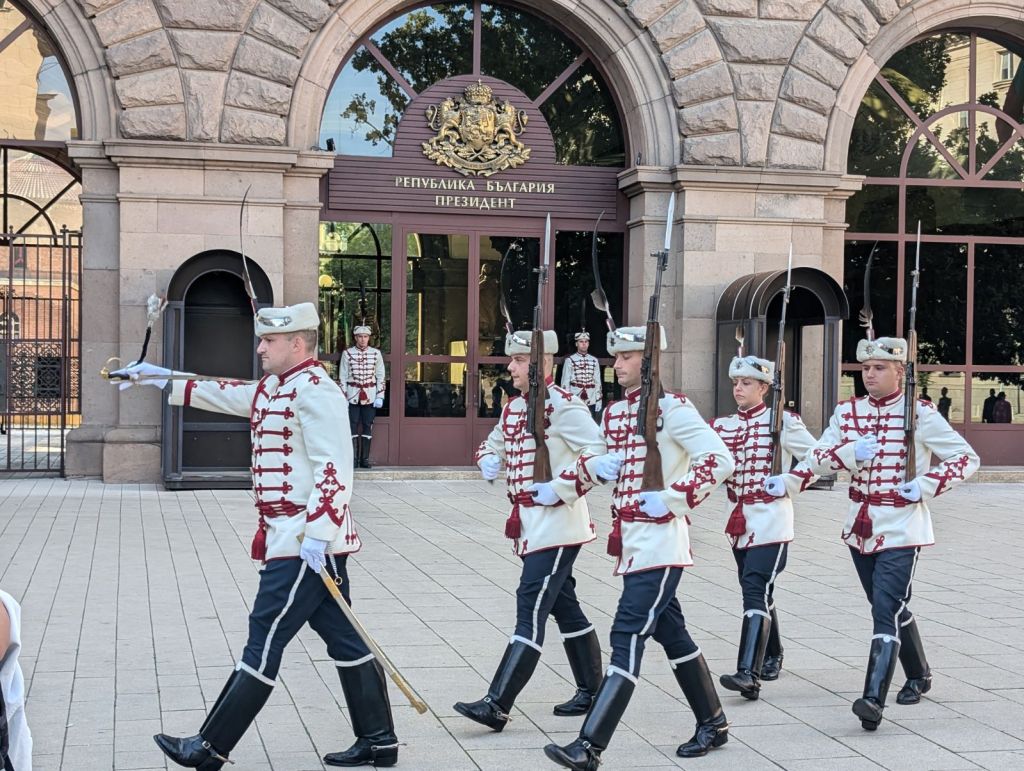
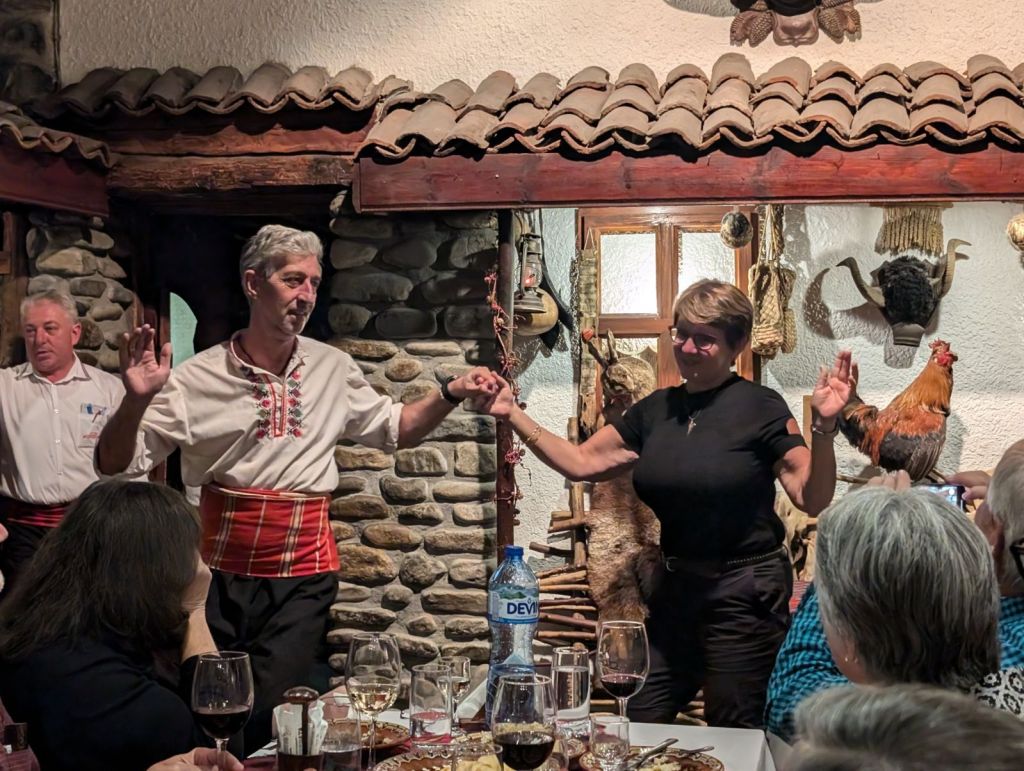
As today was Mobility Day, the entire center section of Sofia was closed to traffic to encourage walking, biking, or the use of mass transit. People milled about, reveling in the carless streets and celebrating Independence Day. We caught the Changing of the Guard ceremony at the President’s building. Balkan street musicians played, people sat in outdoor cafes or walked Vitosha Ave shops, or played in the city parks. After an afternoon wandering on our own we rejoined the group for a special dinner at “The Watermill” on Mt. Vitosha, a famous local Bulgarian restaurant. We were served traditional Bulgarian fare: grilled and stuffed peppers, ratatouille, sausages, pork, and amazing milk pastry (like tres leches cake) and cherry gelato. Also, we were served Rakia, the national “painkiller”, a brandy-like, lighter fluid tasting type of drink. Bulgarian folk dancers and musicians entertained us. But the most amazing thing of all was watching fire dancers walking on hot coals! Crazy!
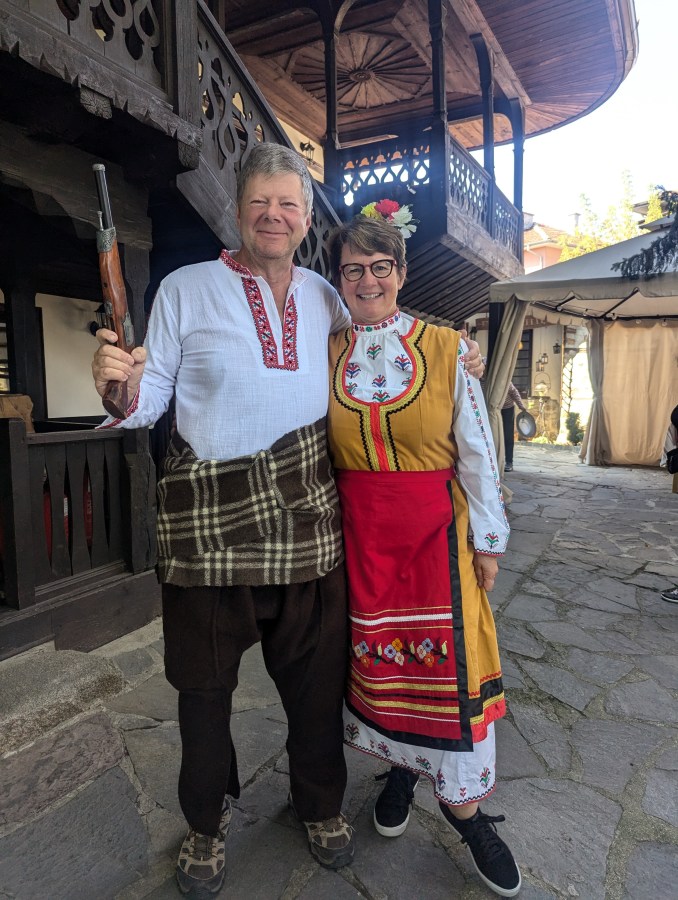
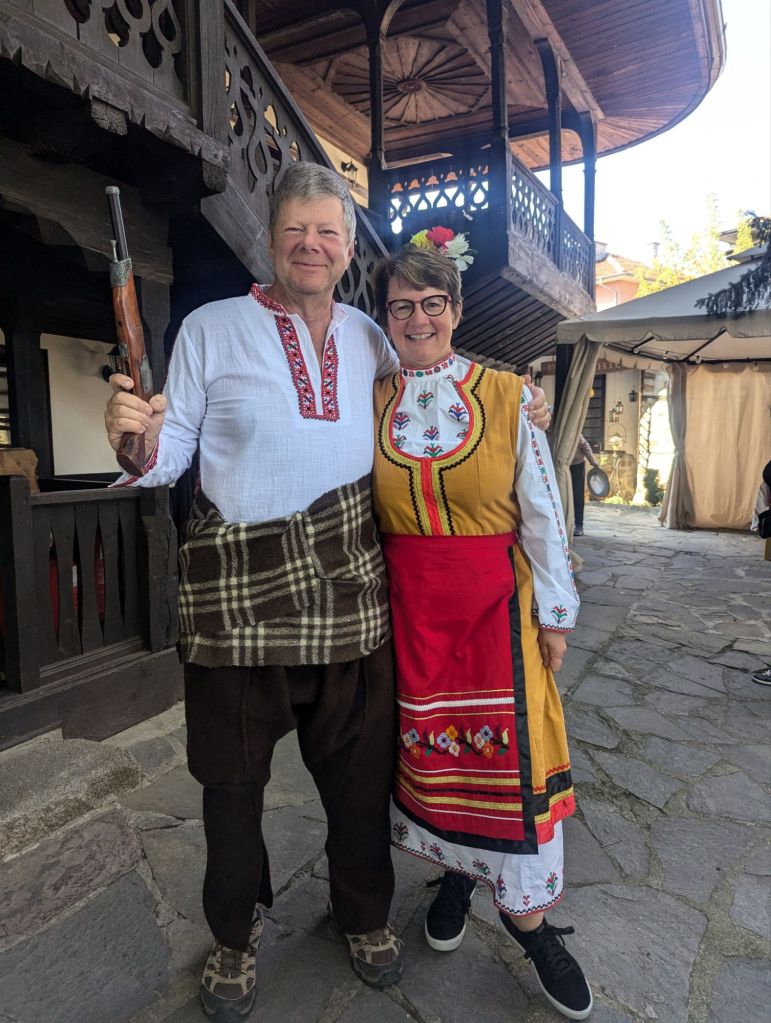
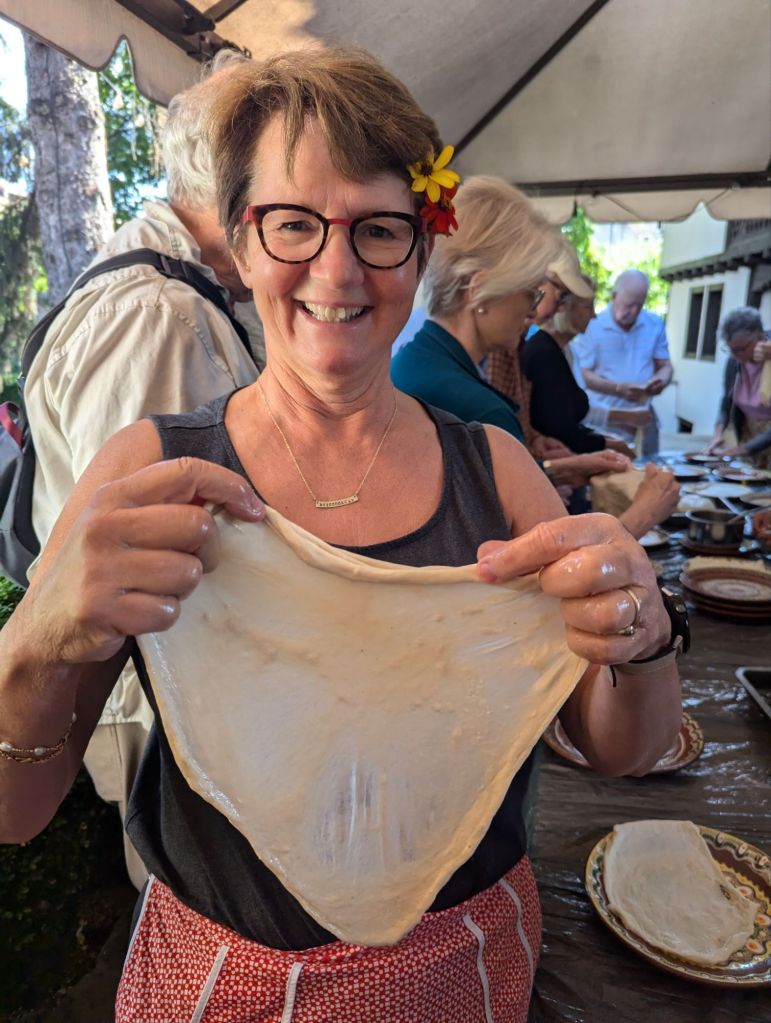
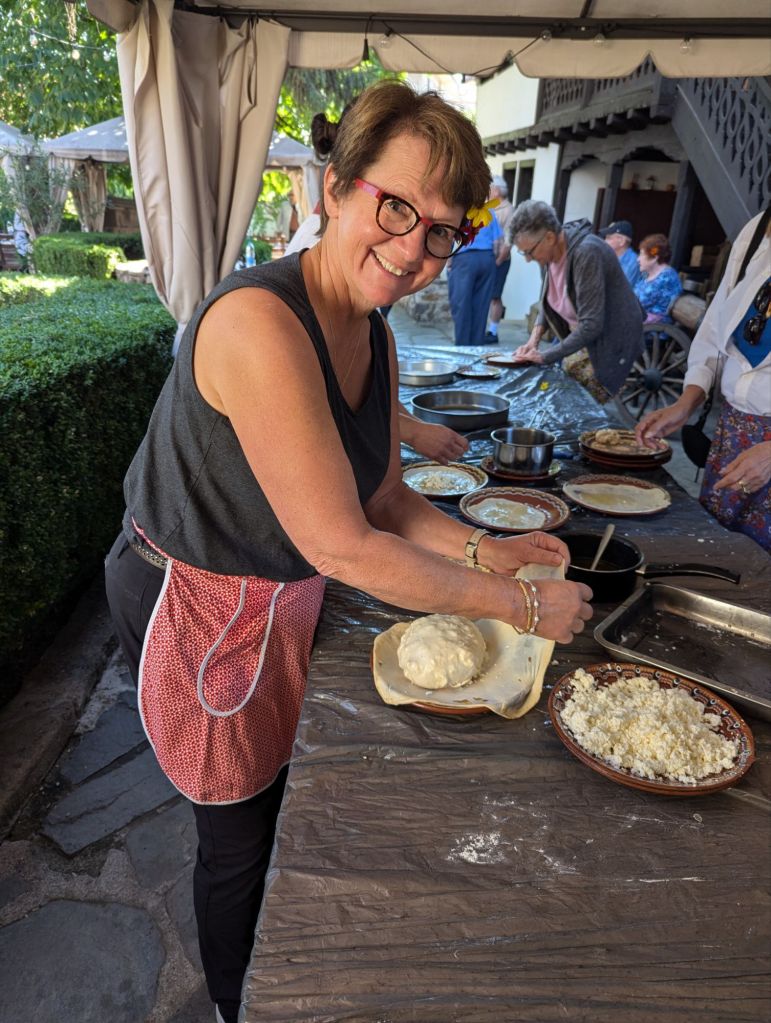
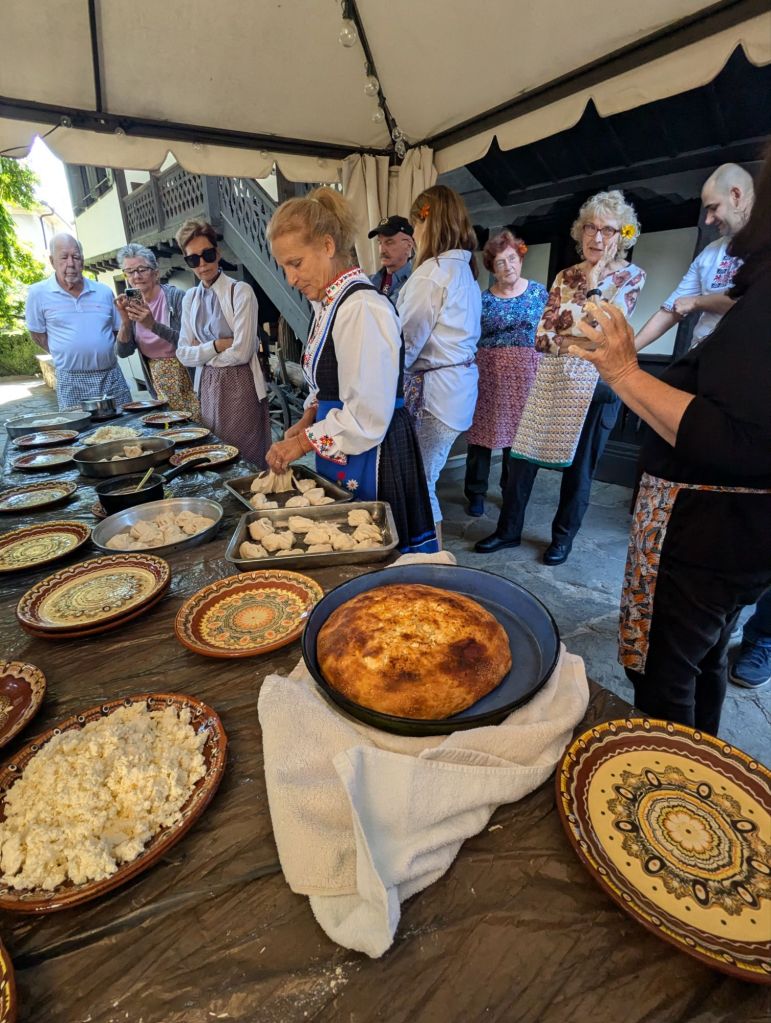
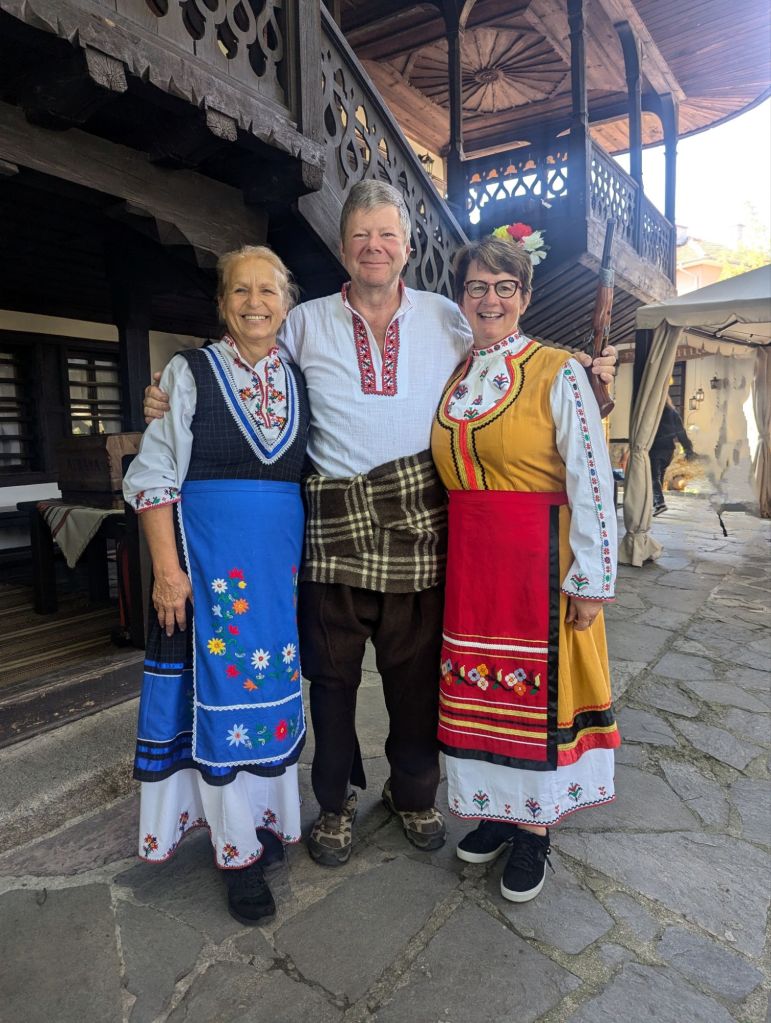
Next, we headed to Plovdiv. But first, a side trip to the small village of Panagyurishte in the agricultural region of the Thracian lowlands and the famous rose growing district. We took a cooking class making ‘banitsa’, a layered phyllo dough cheese bread with ‘Maria’, the owner of the small guest house. We enjoyed lunch in Maria’s garden courtyard enjoying more Bulgarian foods, fresh salad, mishmosh (a ratatouille dish), veal sausage, poached eggs, and, of course, banitsa! My competitive expertise in pastry-making (learned from years of watching the Great British Baking Show) earned us a dress-up in Bulgarian folk costume. Such a fun afternoon!
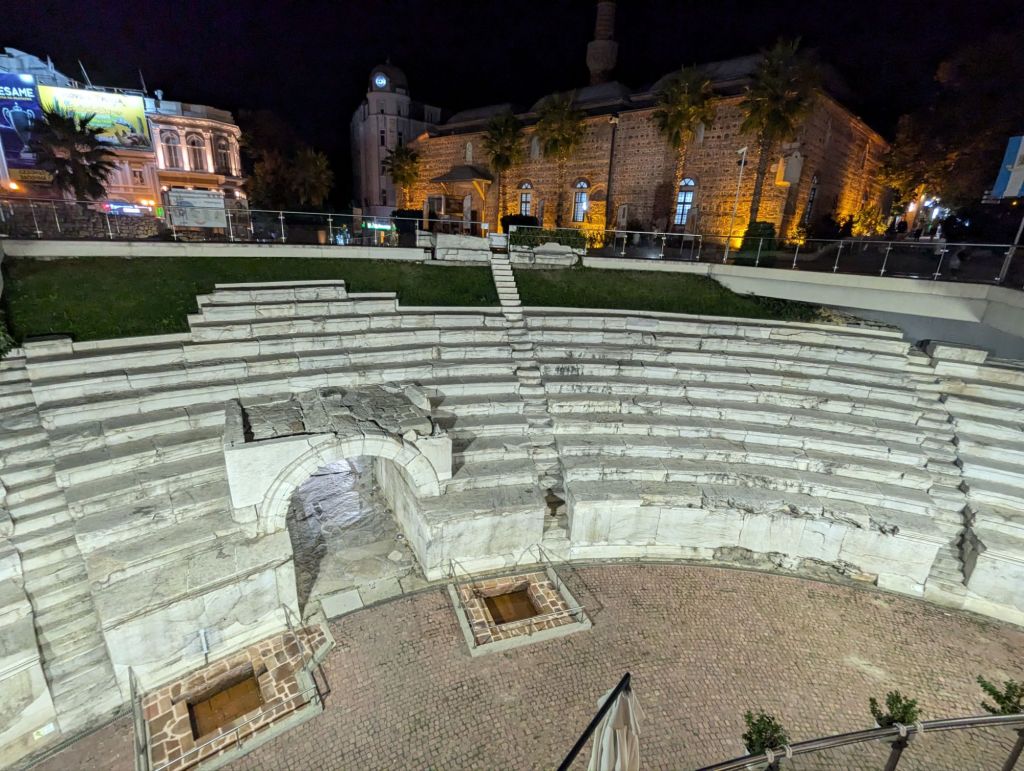
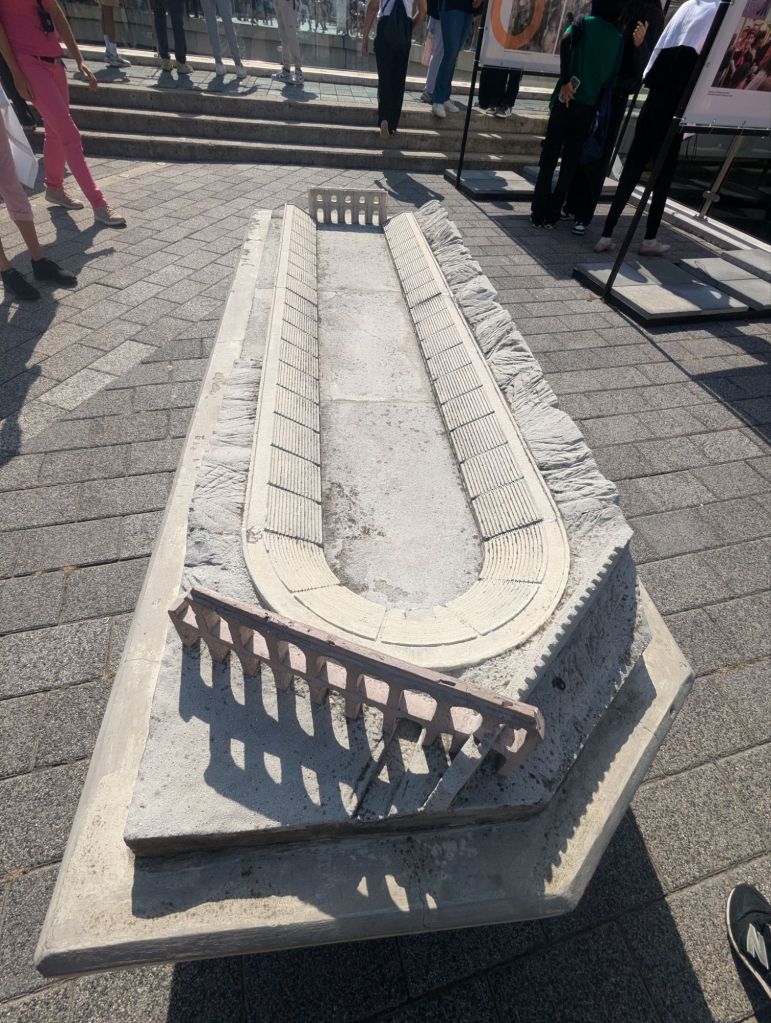
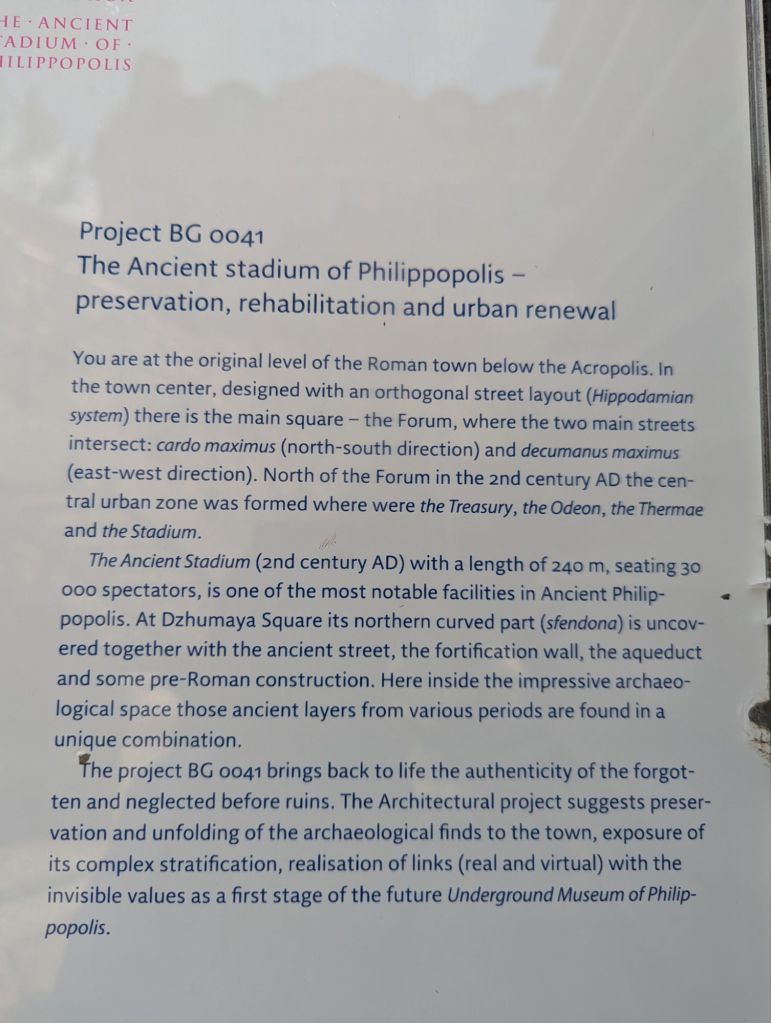
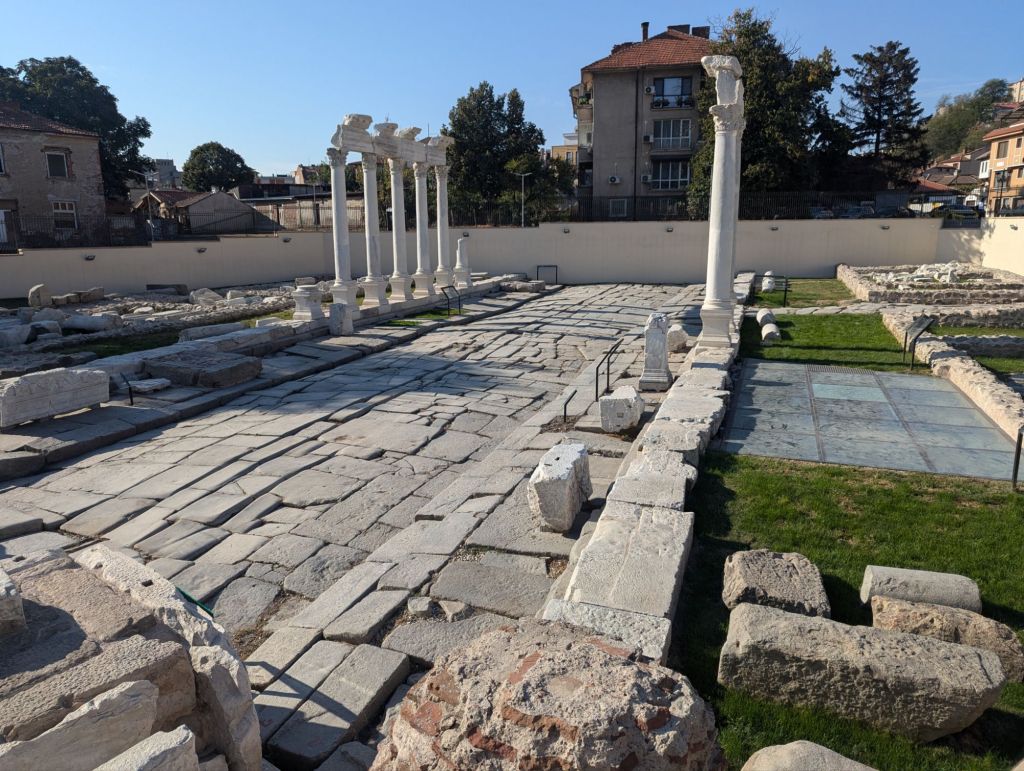
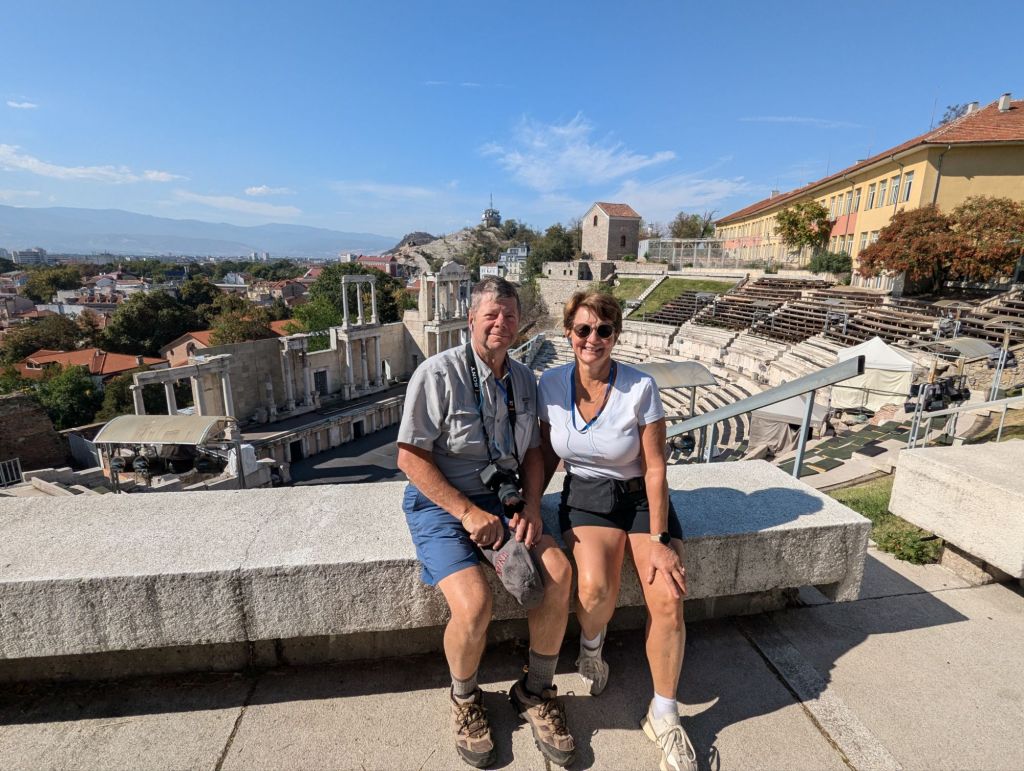
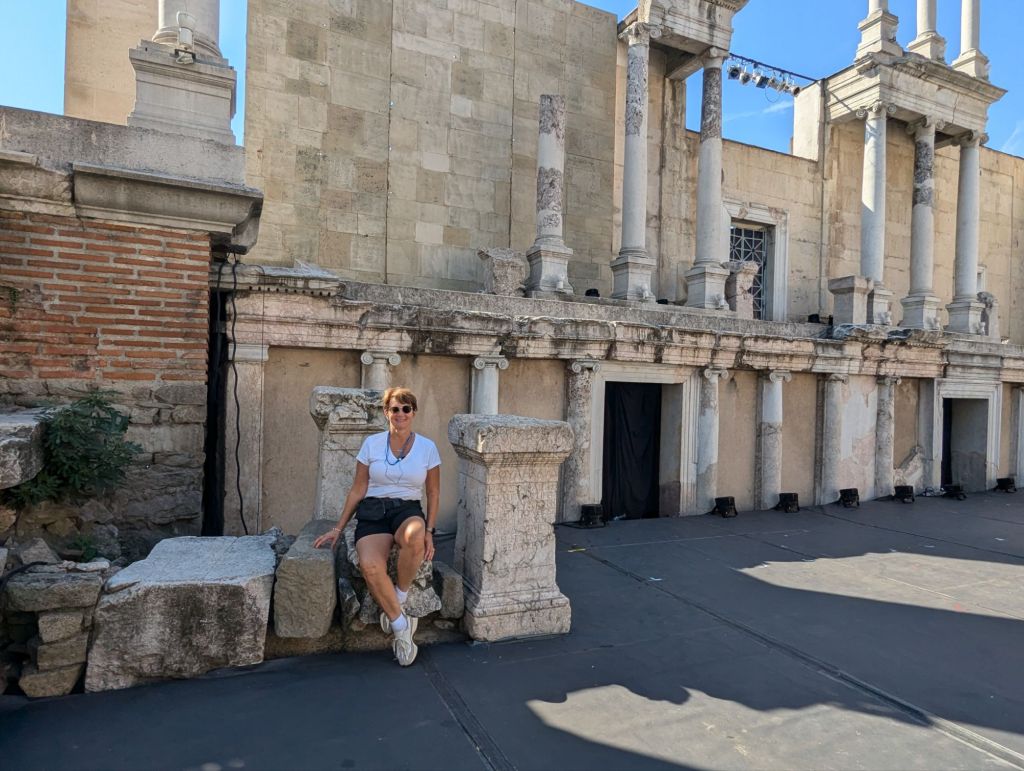
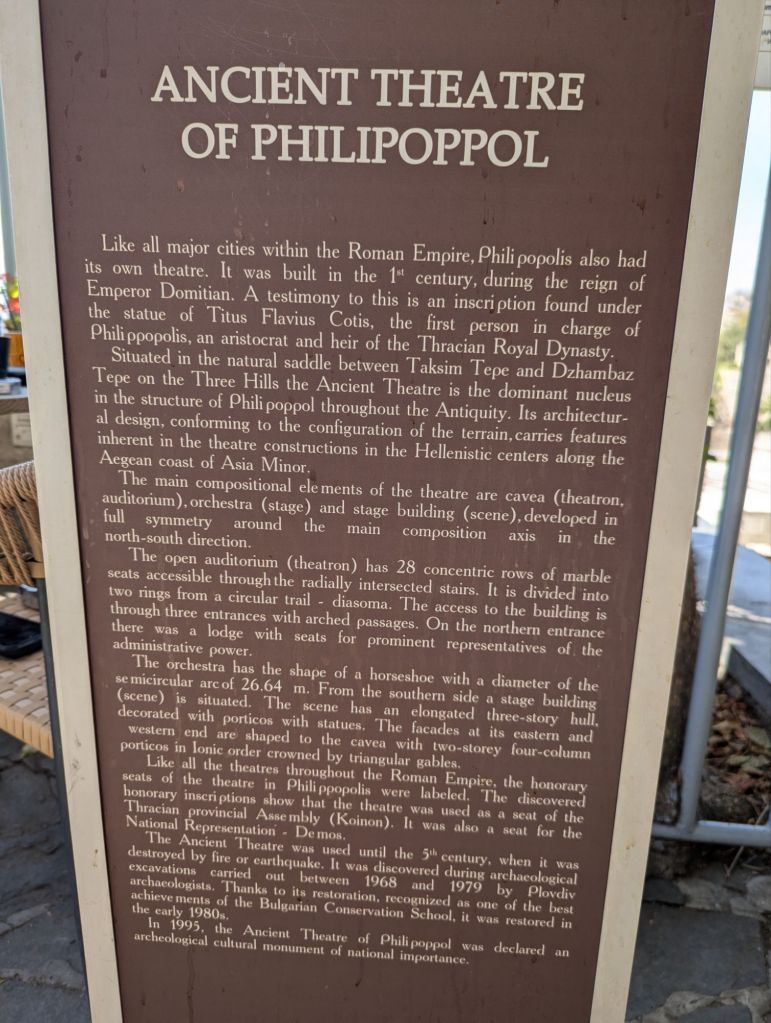
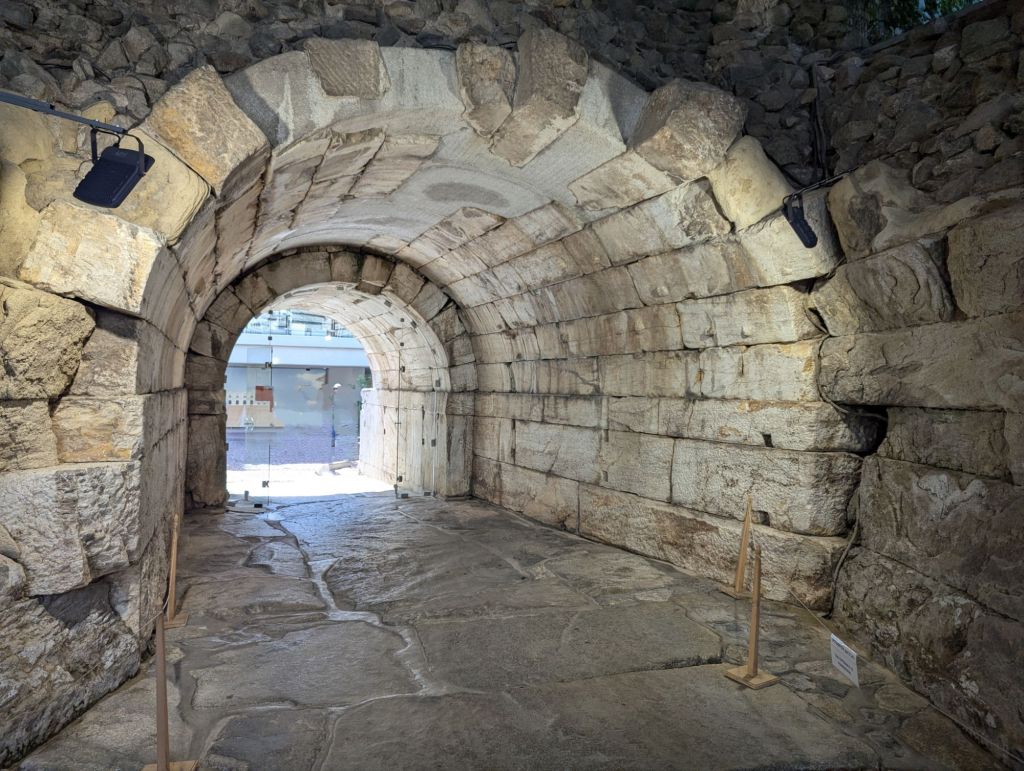
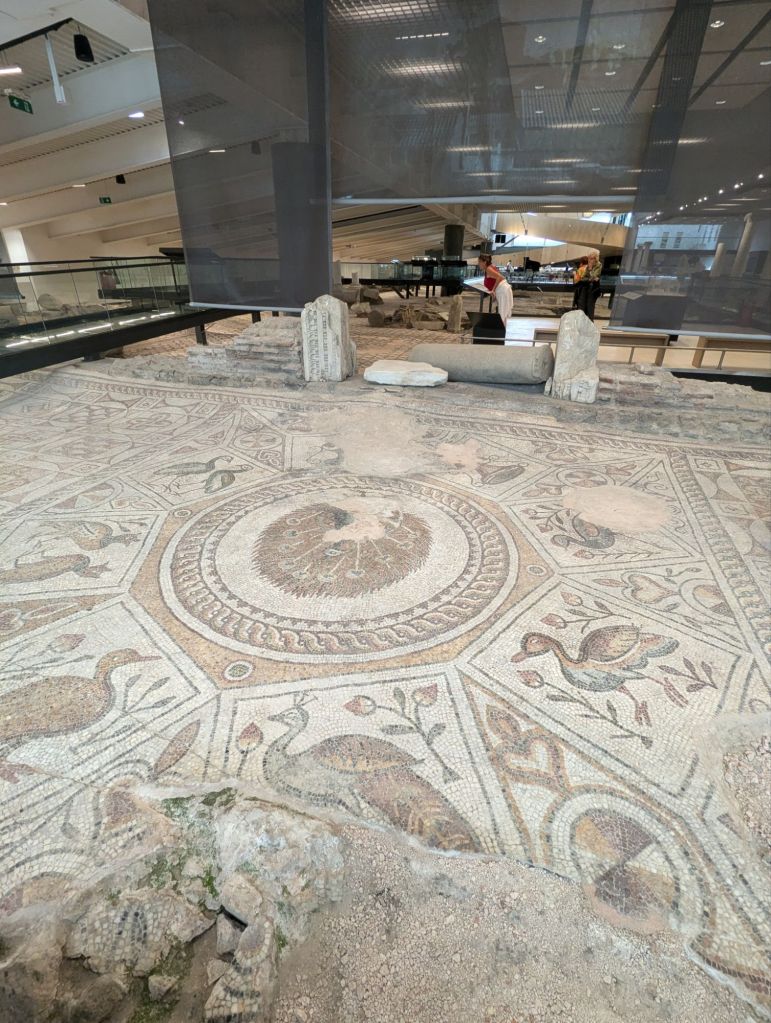
Arriving in Plovdiv later that day we drove past small industrial parks before pulling up to our glitzy, modern casino hotel, the Grand Hotel Plovdiv. This hotel was somewhat out of place as Plovdiv is the oldest continuously inhabited city in Europe, older than Rome or Athens and contemporaneous with Troy and Mycenae, originally called “Phillipopolis”. Nevertheless we were within walking distance to the shopping boulevard via pedestrian bridge and tunnel, but more importantly, in proximity to the old town and ancient ruins that are everywhere you turn. Excavated ruins dot the neighborhoods and amphitheatres built in the 1st and 2nd centuries and are in use even today. Archways, stadiums, roads, and foundations, buried for centuries, were discovered in the 20th century. There’s an H+M with a museum in the basement. A highlight was the Bishop’s Basilica, a museum enclosure housing the mosaic floor of a huge church built in the 2nd century on top of a pagan temple. The mosaics were intricate and many different birds were detailed. We had the afternoon on our own to wander through the old town and the ruins and people-watch while relaxing at one of the many outdoor cafes. Next we head to the Black Sea!
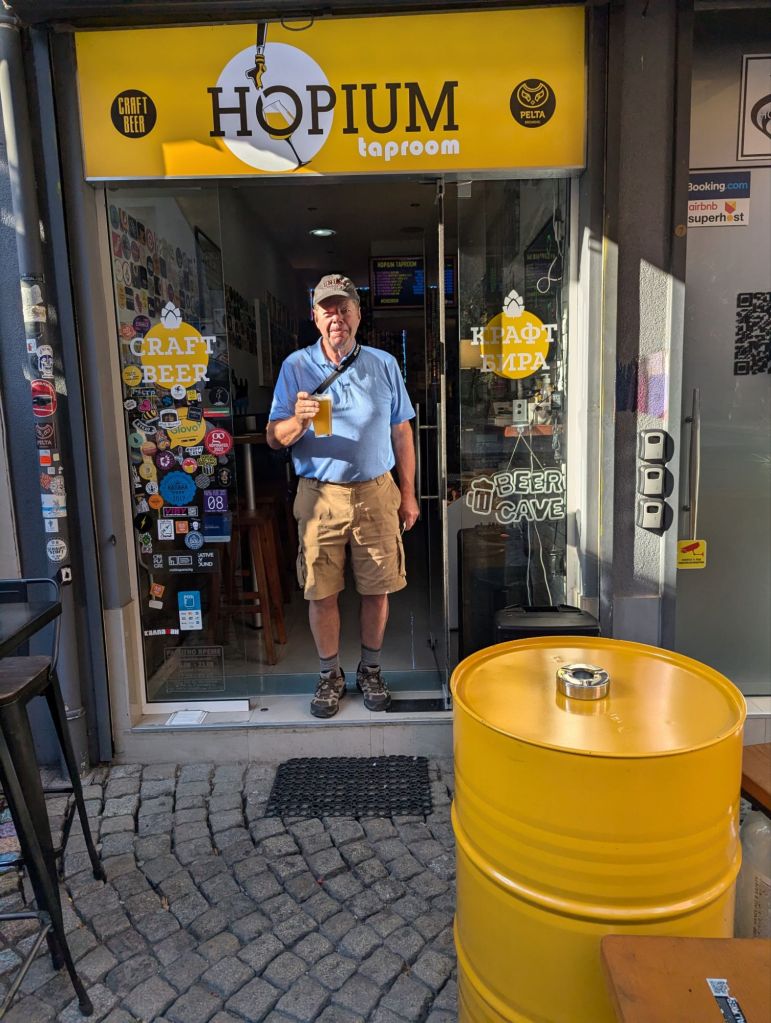

 My new reality
One thought on “Bulgaria I: Sofia, Rila, and Plovdiv”