
We left the beautiful Serengeti Seronera area and drove north and east to the Tanzanian and Kenyan border crossing at Isibania. The drive took over 4 hours but was well worth it. We passed villages and markets and many many people walking, biking, and motor biking on a beautiful Sunday morning. People were on their way to church and/or to market. Some were in their Sunday best: men in suits and women in colorful patterned dresses with elaborate head scarves. Others were herding cattle to market upwards of 10 miles one way! The cows were often in the road. People were pushing bicycles overladen with goods for market e.g.bags of corn, bunches of bananas, or stalks of sugar cane extending perpendicularly forcing us to go around on these narrow, bumpy dirt roads. Women, mostly, carried produce in baskets on their head. Many children waved. Everyone turned to look so perhaps there isn’t too much traffic on these roads. Some women and even children were washing clothes in small, muddy streams or culverts. Some children were bathing nearby. And a record: I saw motorbikes with 4 people riding on them. At the same time! The bikers rent out as two wheeled Ubers and they were everywhere.
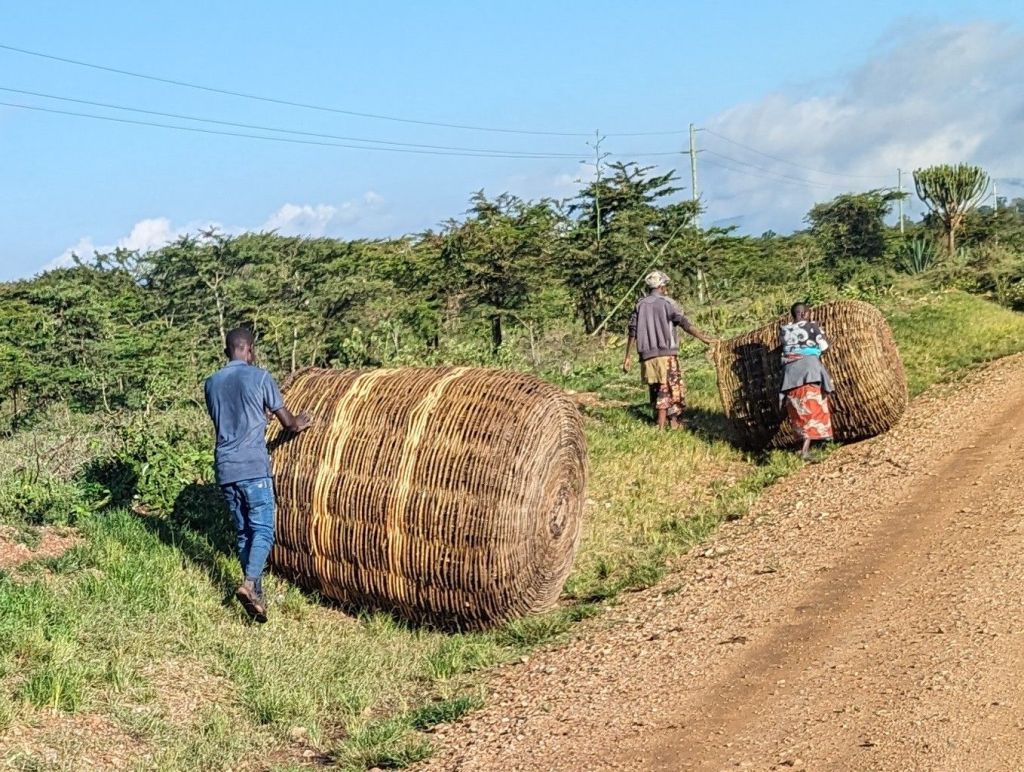


We drove through verdant, rolling hillsides with lots of agriculture. Market stalls were slightly less ramshackle. Huts and houses were side by side. As we got further north banana trees became more popular in the gardens. In some yards we saw sheets covered with corn kernels drying in the sun.


As we got closer to the border, we saw open pit gold mining operations with massive piles of rock surrounded by barbed wire fencing. The large town nearby was obviously more affluent. Infrastructure work on the roads made for even worse driving conditions, for now.


Eventually we arrived at the border, said goodbye to Johnson, our driver, and beautiful Tanzania, and hello again to Kenya. We boarded a bus for a 30 min ride to a very small airport where we took a flight on AirKenya in an 18 seater to Keekorok in the Maasai Mara National Park, our next destination. We flew over lush, cultivated fields and eventually an escarpment marking the Maasai Mara region. This region is the northern destination of the Great Migration pattern. It is adjacent to the Serengeti area and looks like it: flat and dotted with trees, which is what “Mara” means. Of course migrating wildebeest know no country borders and travel freely as dictated by instinct. The wildebeest we saw near Ngorogoro will arrive later this summer. Our 30 min flight was smooth and we landed in an airfield on, you guessed it, a dirt runway. There was an outdoor pavilion for departures and a restroom and a fuel truck but that’s about it. There were jeeps awaiting new guests and we got into ours.

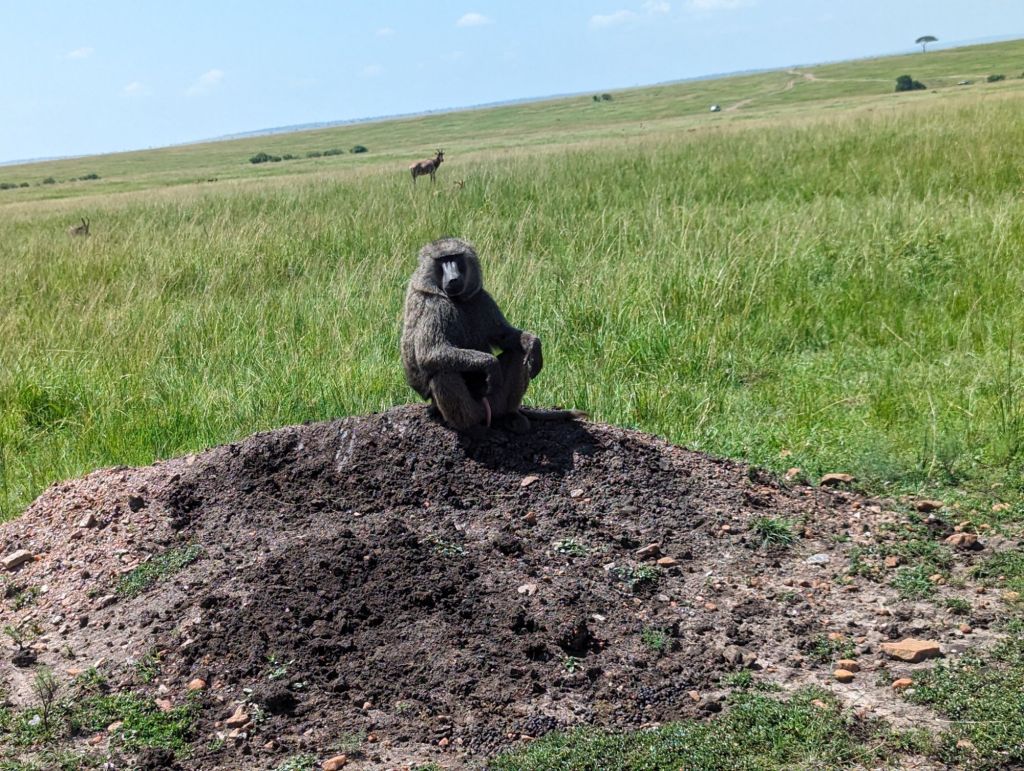
Maasai Mara National Park encompasses 750 sq miles whereas the Serengeti National Park is over 5,000 sq miles. Maasai Mara is where “Out of Africa”, Karen Blixen’s story, was filmed in 1977 (outside of the Nairobi scenes). A 20 min drive with our new driver John (who was the other driver in Amboseli) took us to our new lodging: Sarova Mara within Maasai Mara. This lodge was approached by bridge across a stream covered with jungle like plants. The architecture was similar to our other lodges but the scale was much bigger and the clientele much younger. Lots and lots of children. This place obviously has easier access than other places we’ve been, more like Disney than safari. But the place was nice and the food improved significantly. Indian was still on the buffet, so I was happy. Oh, and we were glamping in tents but had our own bathrooms within. The only wildlife to worry about were baboons and bush bucks. Though we did hear bush babies screeching at night and a cacophony of birds at dawn.


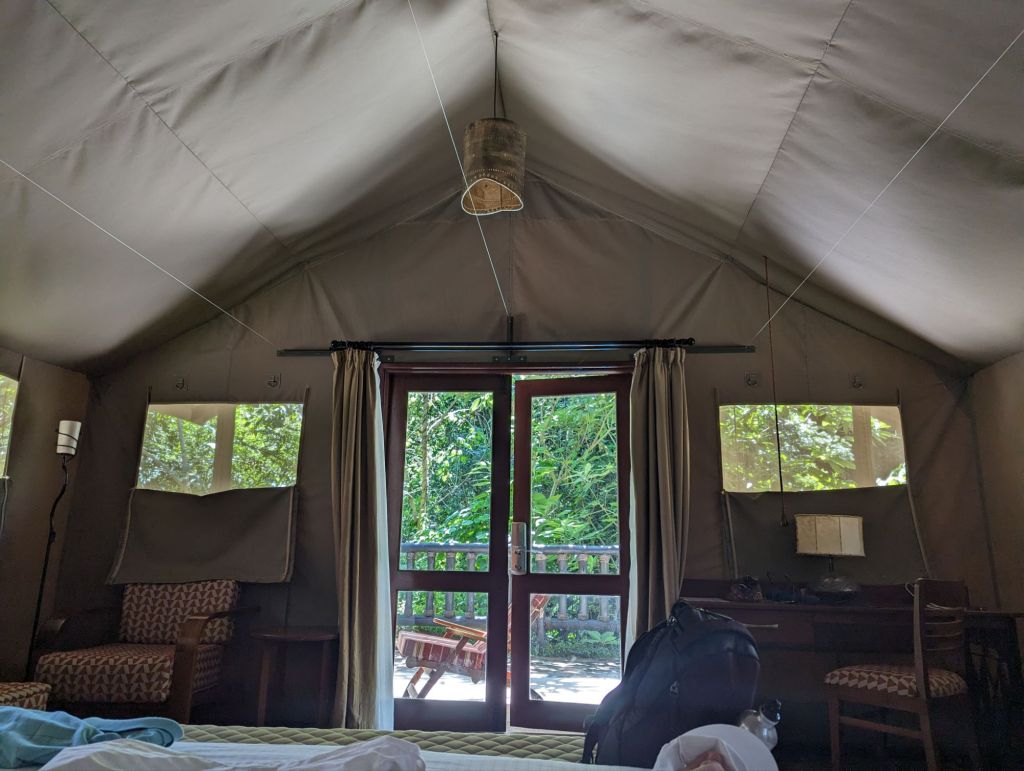
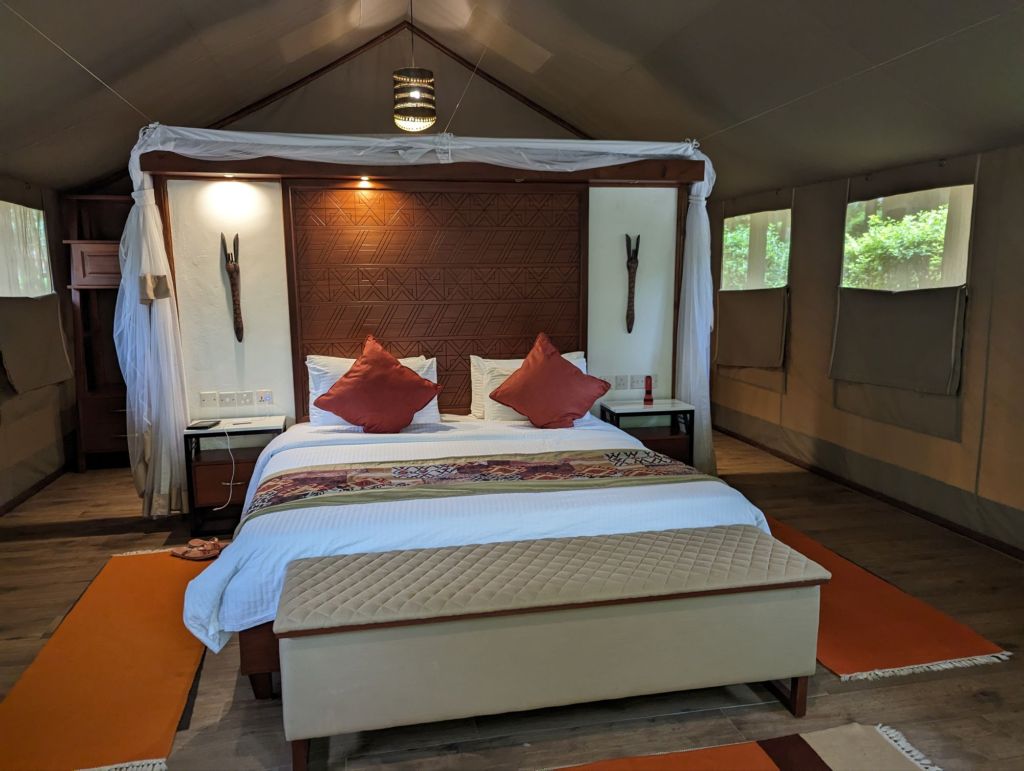
We had an afternoon game drive after lunch on arrival day and although there was only one lonely wildebeest (the Great Migration doesn’t initiate until April or so) we saw elephants, cape buffalo, zebra, giraffes, antelope, topi, water bucks, and a leopard obscured in a tree with his kill-a gazelle, hanging in an adjacent tree. We felt there were too many jeeps in the area, maybe 25 or so jockeying for a sight. What we learned was that in high season, July and August, there are 10x as many jeeps! That is horrifying to think of and would ruin my experience for sure. We were lucky to come off season. The plains dotted with trees was stunning with expansive vistas and gorgeous sunsets. We could see miles away outside the park limits on the other side of the Mara river where civilization comes right up to the edge of the park.


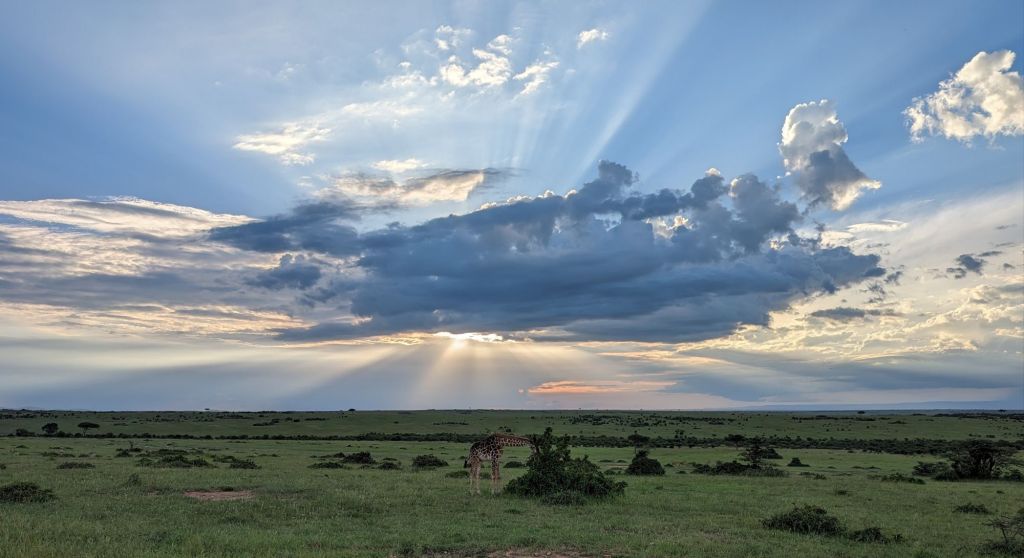

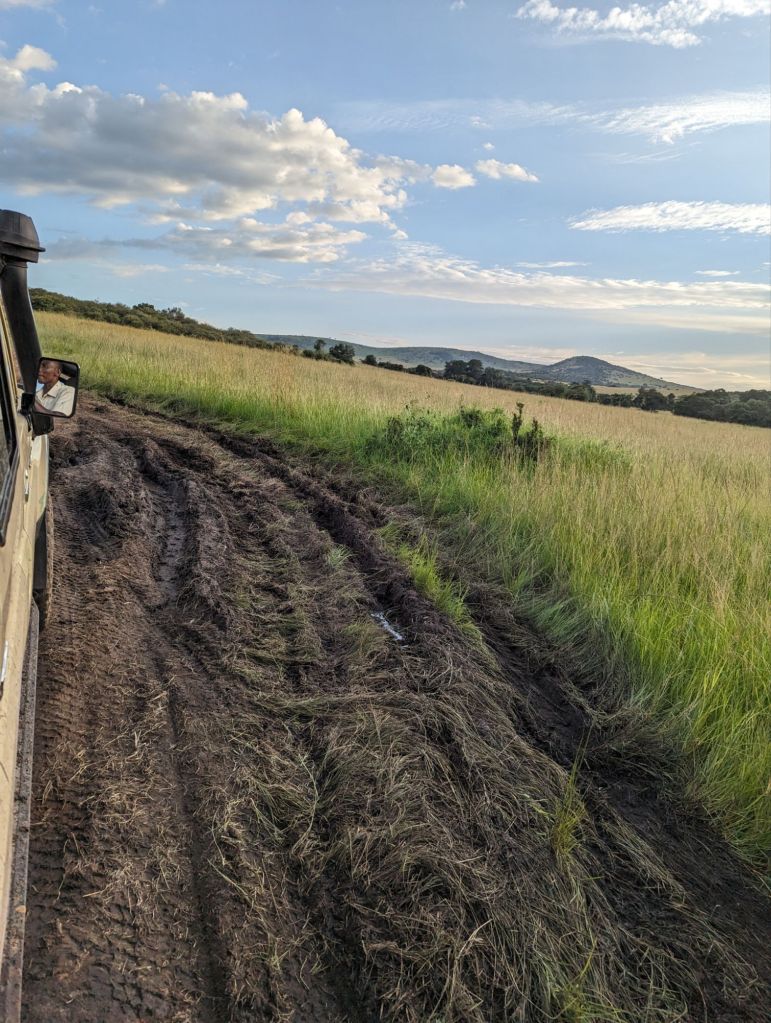
The following day, Monday, we had 2 game drives: a 6 hour drive in the morning and a 2 hour drive after lunch. It never gets old: elephants – a mother and baby kissing, a pride of lionesses, a lion meandering over to hang in the shade of our sister jeep, warthogs, hyenas, cheetahs, lionesses with 2 cubs, a hippo mom and baby, and some pretty nasty road conditions. It has rained the night before but also it’s been a very rainy year and the dirt/gravel roads are the worst we’ve seen. Our driver, John, navigated them beautifully and the Jeep was pretty well mudded up by the end of the day. Except for the swarm of Maasai women hawking items at the rest stop, it was a great day.





 My new reality