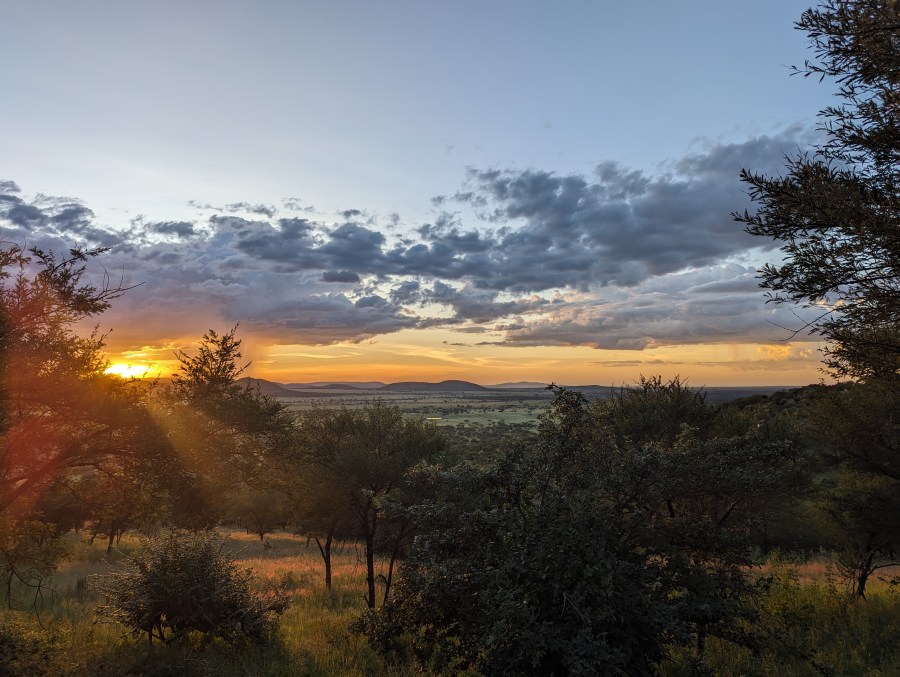

Ngorogoro is an important place that you may never heard of. The famous paleoanthropologic dig site in Olduvai Gorge is located in the Ngorogoro region. The gorge itself was discovered in the early 1900’s and in the early to mid 20th century anthropologic excavations found important artifacts and bones which contributed to the understanding of homo sapiens evolution. Lewis and Mary Leakey carried out the bulk of their research here.
But first, let me correct a mistake: Olduvai is a misspelling of a misheard communication. Oldupai is Maasai for the sisal that grows in the area. Accordingly, the area should be known as Oldupai Gorge. This is my small part in correcting the error.
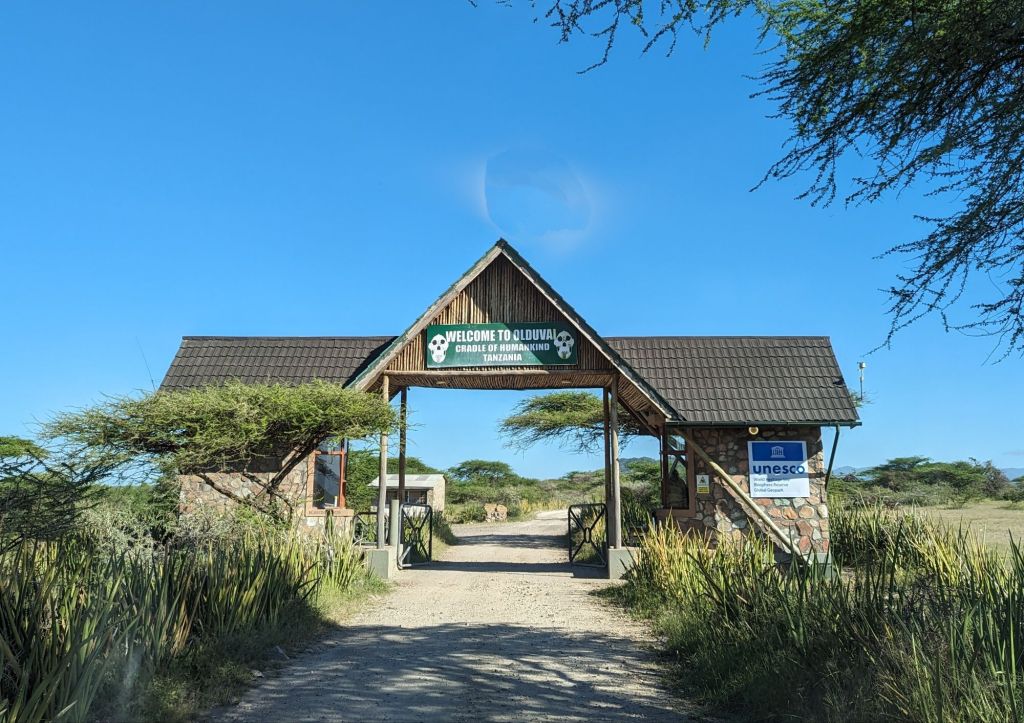

We visited Oldupai on our way to Serengeti just 45 minutes from Ngorogoro Crater. The museum describing the history of the discoveries and housing many of the bones and artifacts is located within the 55 km gorge. A brief introductory talk gave us the background and history, the rest we learned in the displays. In short: 5 geologic layers after tectonic movement and erosion yielded a chronologic history of man. Above an impervious basalt layer was the first layer from 1.8 million years ago and the remains of 2 hominids: Australopithecus boisei and Homo habilis “the handyman” who began using stone tools and hunting, discovered in 1958-1960. Above this was layer 2 from 1.2 million years ago where Homo erectis began using fire and walked more fully erect, discovered 1963. Layer 3, above layer 2, from 800,000 years ago is full of red iron which destroys any artifacts so nothing is found there. Layer 4 is from 400,000 years ago (I missed this info as I had to step away). Layer 5 from 200,000 years ago yielded the artifacts that gave us the first Homo sapiens. Studying the size of the skull cavities, length of arms and position of hips, use of incisors and molars, scratches on various bones indicating hunting and meat eating, creation and use and improvement of tools are among the many clues that contribute to the understanding of human evolution. Digs are held June through August by researchers from all over the world. (Any errors are all my own-go visit or do your own research. My last anthropology class was almost 50 years ago although the 2 million year old information hasn’t changed much since then.)


After our Oldupai Gorge stop we continued on to Serengeti through the wildebeest, zebra, and antelope heaven for about 2 hours on dirt and track roads or off road altogether. I can’t say enough how many animals we saw and how far we drove through them as they scurried across our path or just watched as we passed. We saw animal behaviors like zebras standing back to front which confuses prey or zebras hanging with wildebeests since wildebeest have better sense of smell while zebras have better eyesight. Many many babies were around and are ready to move when necessary. Or else.


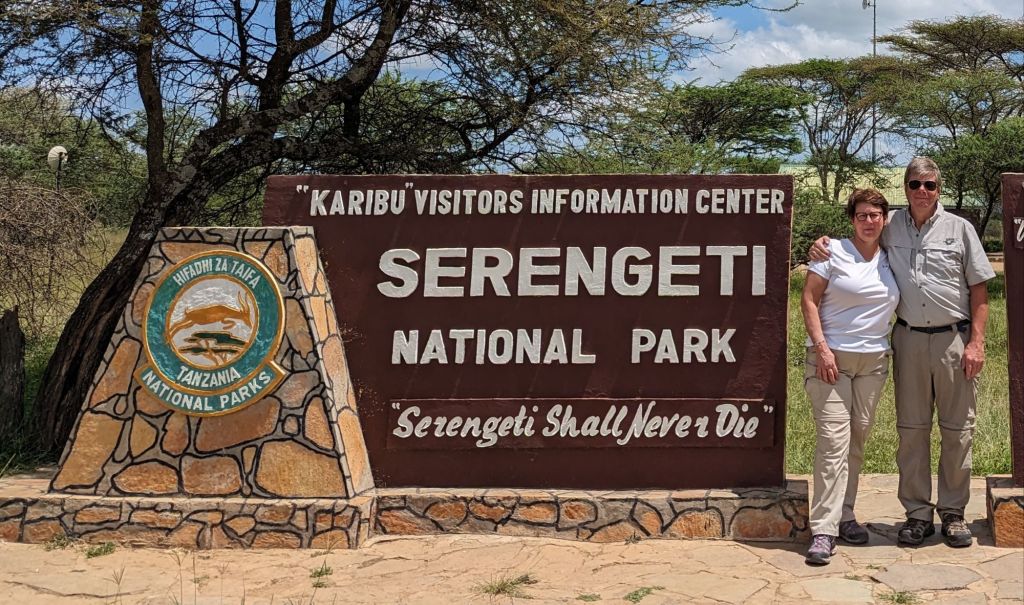
Our destination was the Nabbi Hill entrance to Serengeti National Park. “Serengeti” means “endless plains” and encompasses 15,000 sq km.. We stopped briefly at a smaller entrance and then continued on to Nabbi Hill where we enjoyed a box lunch of chicken salad and Kilimanjaro beer and Coke Zero, courtesy of our tour director, George. I should mention that although Greg has been drinking lagers without complaint including Tusker and Safari, Kilimanjaro is rated highest by him. For a lager. Which he is tolerating. Anyway, from Nabbi Hill we took a detour to see a pride of lions resting inside a culvert. The jumble of jeeps was none too fun but we all got out alive. From there it took about 3 hours to our hotel destination through Serengeti grassland then savanna with acacia and umbrella trees and volcanic outcrops called “kopjes”. Imagine first Mufasa, then eventually Simba and Nala standing on a rock above the other animals in “The Lion King”. That’s a kopje. And now the theme song is stuck in your head. We became used to our jeep hurtling down bumpy roads while often slowing briefly for washouts or dried mud tracks. This is a Serengeti “highway” which we shared with delivery trucks and even a broken down city bus. Everything spews dust so the windows were duly closed and reopened as each vehicle passed.

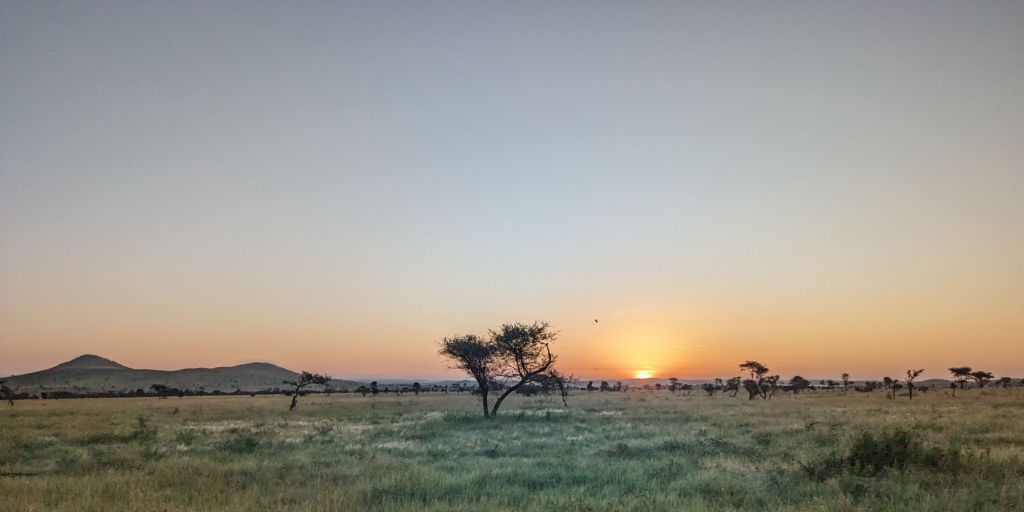


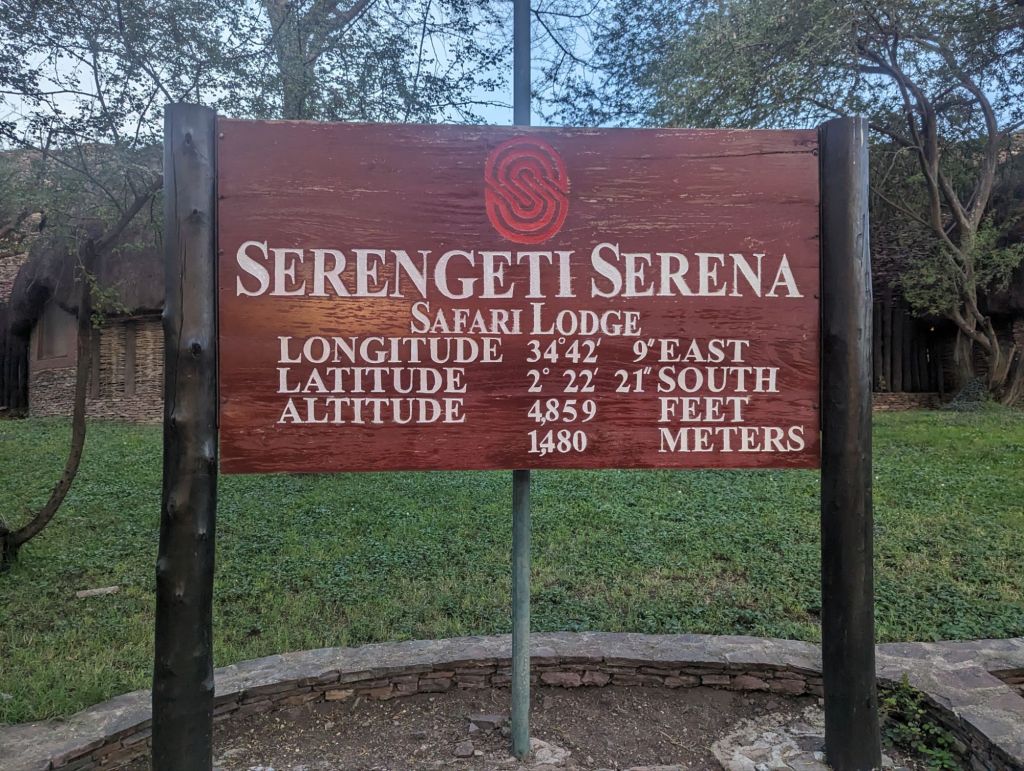
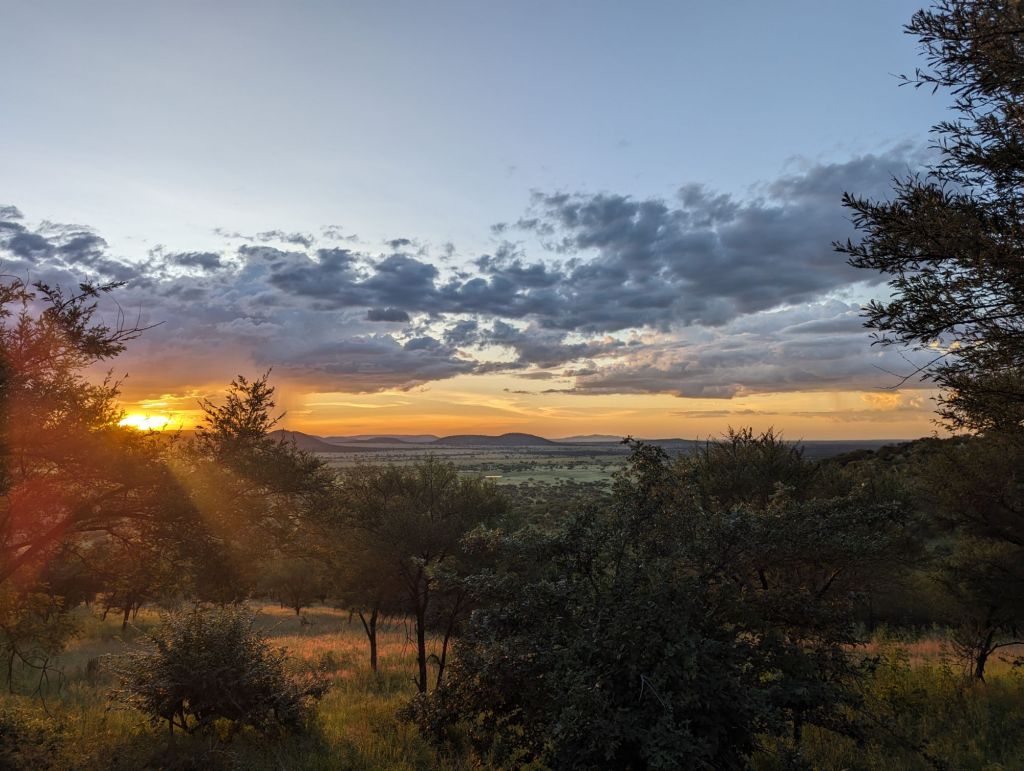
We eventually reached Serengeti Serena Lodge near the center of Serengeti. After braving bumpy roads and an attack of tsetse flies when we slowed to traverse washed out roads in the treed area we reached the oasis where we would be staying. Fieldstone buildings with hatch roofs, African carved posts, covered open porches, and a stream decorated this amazing place. Our room overlooked the Serengeti plains to the west and the sunset was amazing! Greg and I visited the pool to refresh; the flies were not bad. There was African music and dance entertainment before dinner of the usual buffet which was nothing gourmet but you could usually find something tasty. It was necessary to have a ranger escort you to and from your room as leopards and cape buffalo tended to prowl around at night! Dyk dyks meandered on the property and through the dining hall.


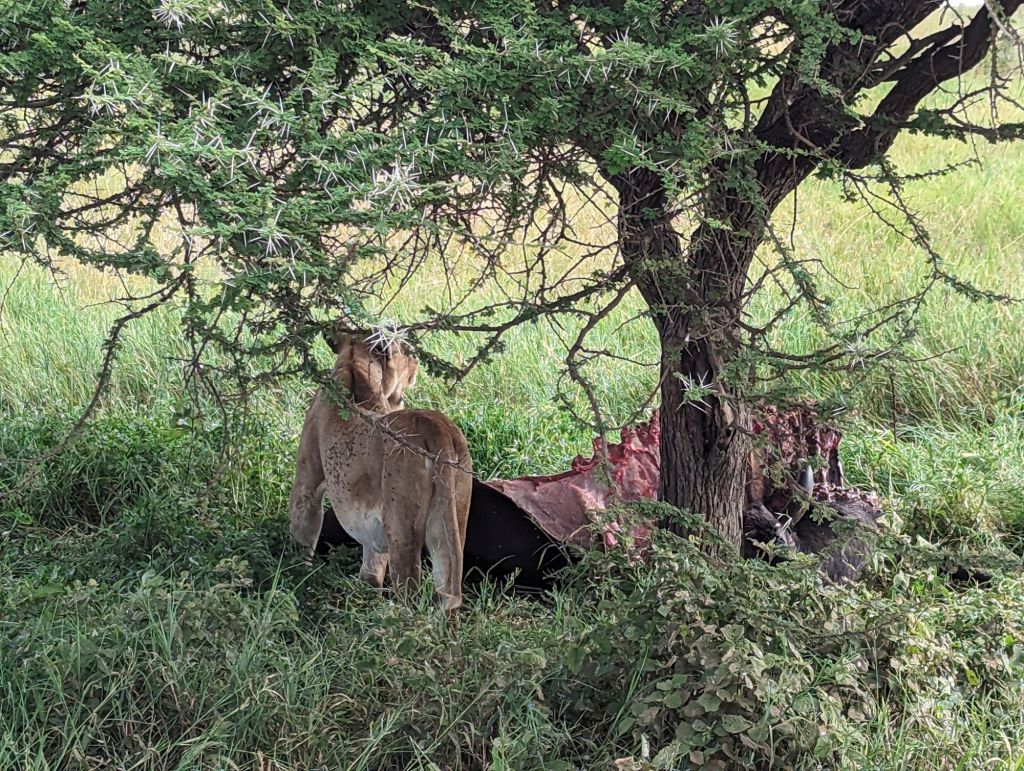
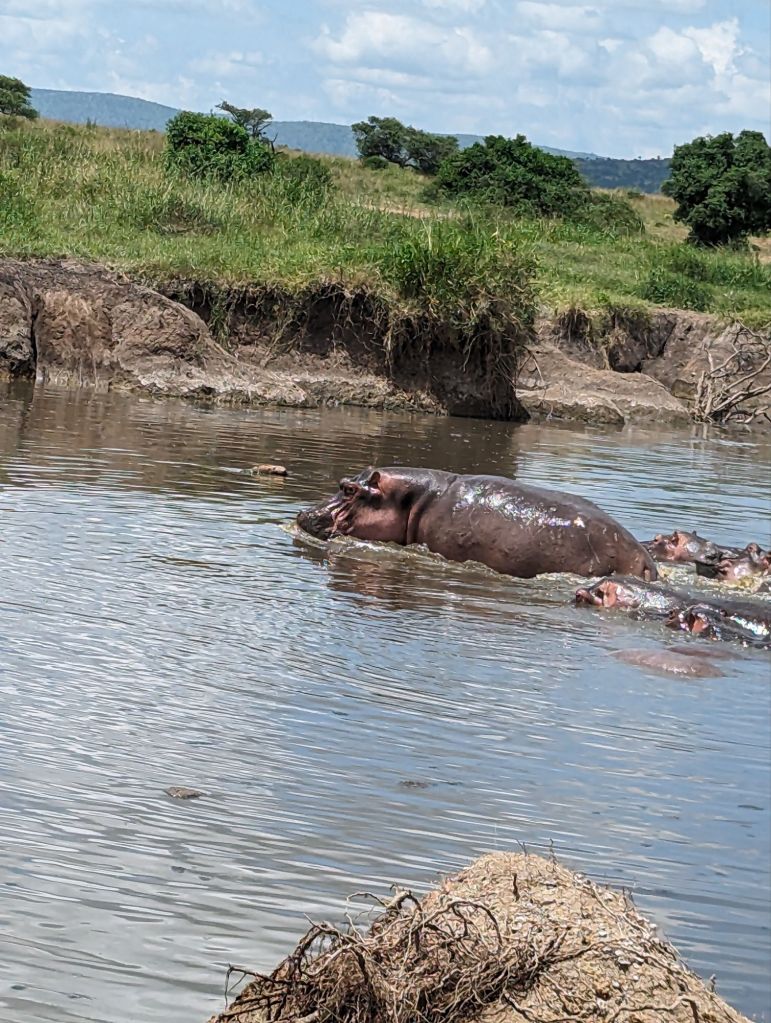
Our Serengeti game drive took us first to, of all things, a gas station in the center of the park. We drove past research stations and other vans and utilized the rest stop as we’ll be driving for about 6 hours looking for game. Then we headed to an area where it was rumored that lions had downed a cape buffalo two nights previously. Remarkably, the carcass and feeding area was near the road so we joined the Jeep jumble once again and watched a lioness feed. She got up to leave but we knew the lion would be nearby. We headed off sighting a leopard who would not lift himself out of the tall grasses to show off. We revelled in a herd of elephants tramping by and mudding themselves in the mud hole nearby. The babies were adorable and well looked after by the mommas and tweens again sparred for fun. The elephants rousted the lion from his napping place under a bush so we followed back to the buffalo carcass and watched him nibble. From there we found a pair of cheetahs in a tree. We then headed to a hippo pond and watched them splash themselves and snort underwater. Teen hippos also had fun sparring. In between we saw more impalas, gazelles, eland, topi, baboons, and of course, elegant giraffes.



Back at the Serena Serengeti Lodge we enjoyed lunch on the covered patio surrounded by birds. We had the afternoon off to relax and swim or sleep. A few safarians in our group were recuperating from stomach upset so the respite was welcome. Greg fixed his new camera which was malfunctioning: he brought 2 camera bodies, one for distance and one for near/landscape shots. After cleaning and re-initializing the auto-focus on the new body was working again much to his relief. Another typical buffet for dinner and then we were early to bed on a rainy thundery night.
Tomorrow we depart, leaving Tanzania and returning to Kenya.


 My new reality