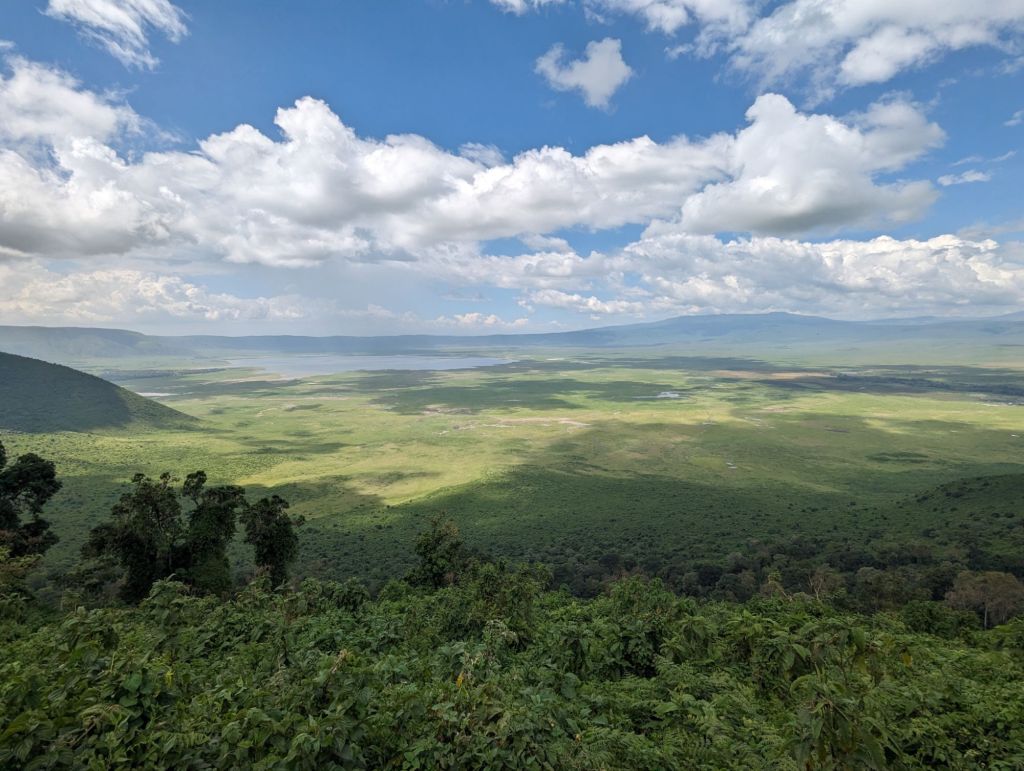
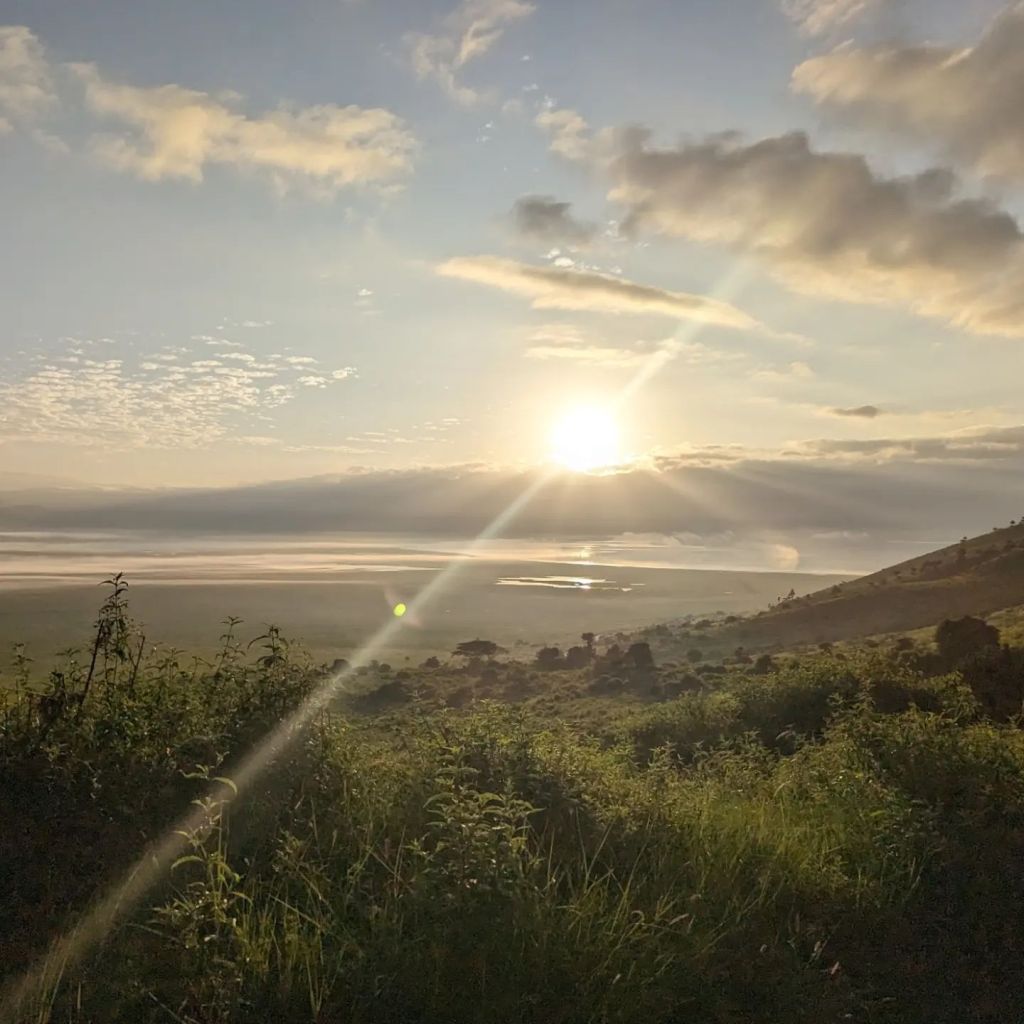
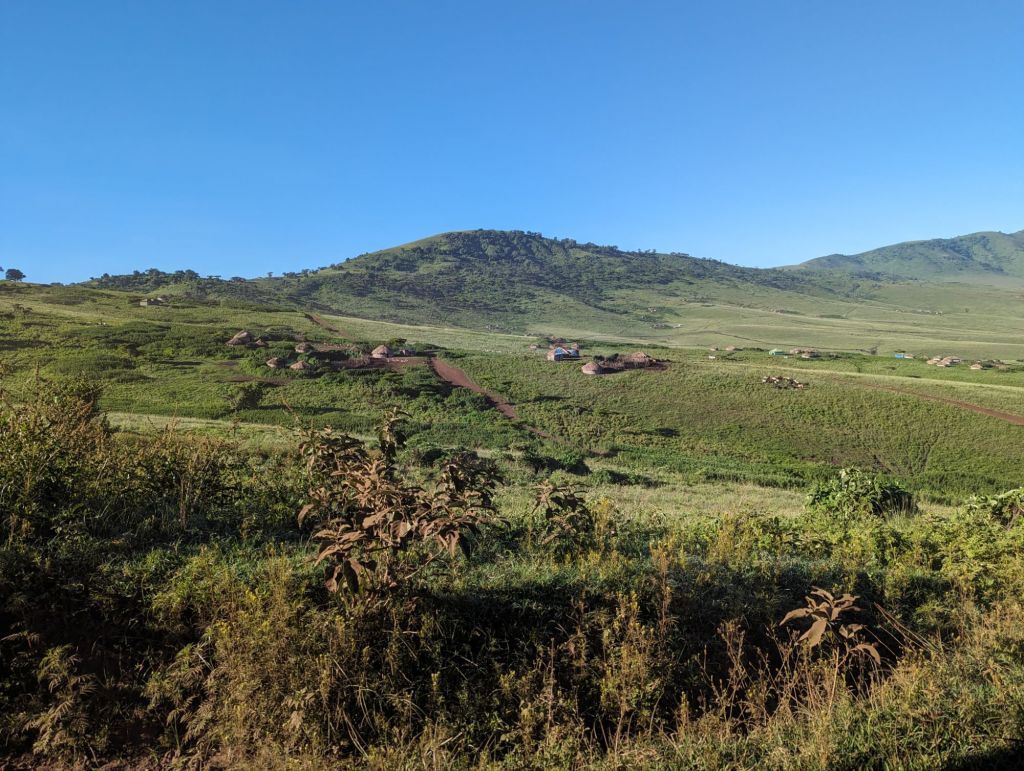
Ngorogoro Crater is a volcano that exploded and collapsed inward on itself about 2-3 million years ago. The approximately 19,000 ft peak become a circular rim of 8,000 ft elevation surrounding a flat, grassy plain at 5,900 ft elevation. Thus, technically, it is a caldera but I’ll go with the common nomenclature. The grassy plain and lakes encompass about 100 square miles within. Ngorogoro is named after the sound of a cowbell by the Maasai. Maasai villages are scattered all around the crater and herders can be seen watching their cows and goats on the rim. Within the crater is the Ngorogoro National Park where scores of animals live for several months as they give birth and prepare for the Great Migration. We visited in February which is birthing season for wildebeest and antelope. These grazing animals prefer the shorter grasses and plentiful water meanwhile, predators like lions, hyenas, and jackals find plentiful prey. Hey, it’s the circle of life!

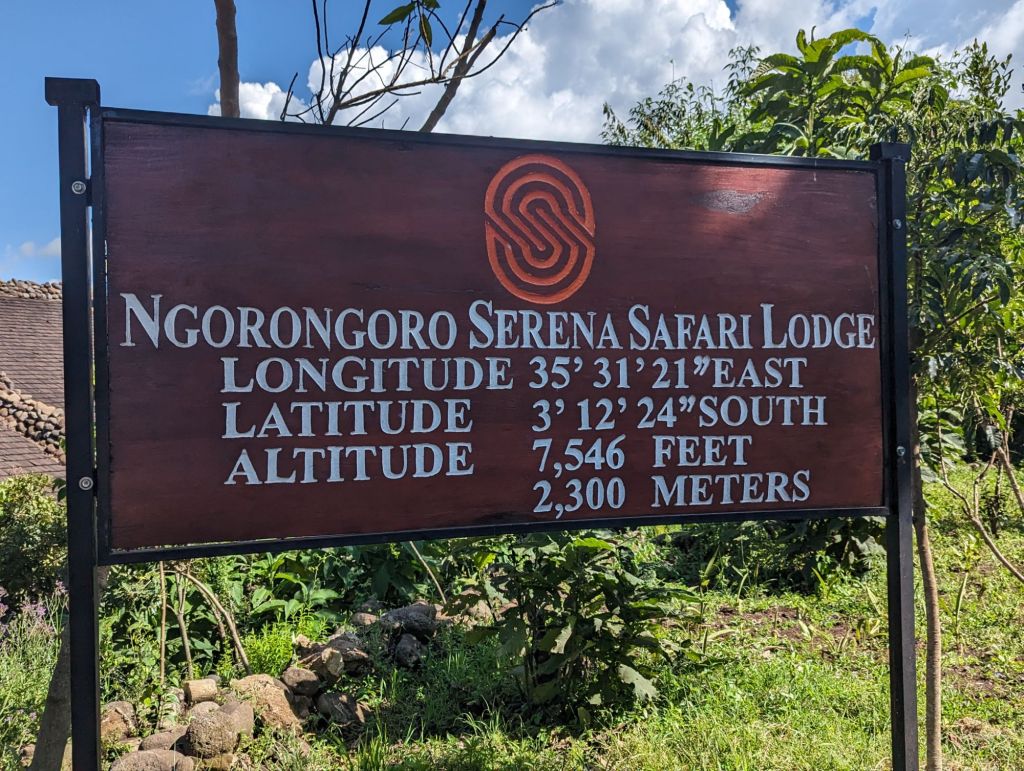
Our hotel, the Ngorogoro Serena Lodge, is located on the rim and the view was outstanding from our room. The hotel, like the other Serena Lodges we stayed in, was decorated beautifully, with African rustic charm. The entire hotel was cobblestoned and the restaurant had a soaring ceiling decorated with African murals and carved wood accents. There was another acrobatic show in the bar area which was pretty good given the limited space.
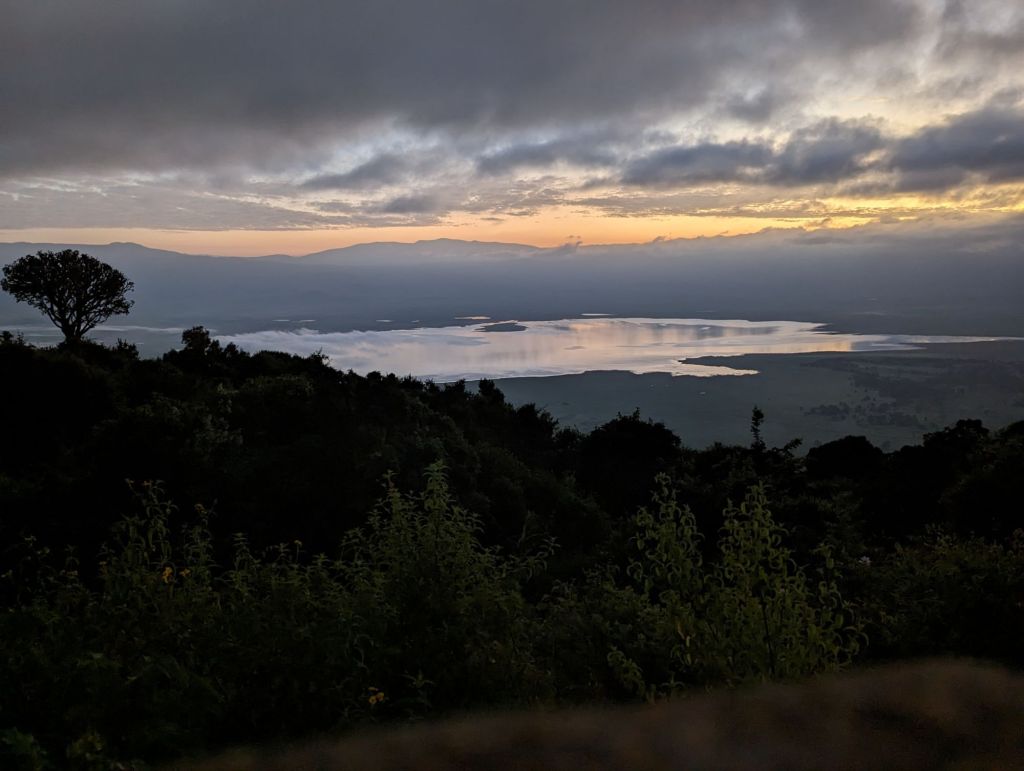
We visited the crater floor in the early morning when animals are more active. The switchbacks into the crater were paved with bricks, a benefit of the time allowed by the COVID shutdown. Anyway, the descent was thrilling as we looked out on thousands of animals grazing below.
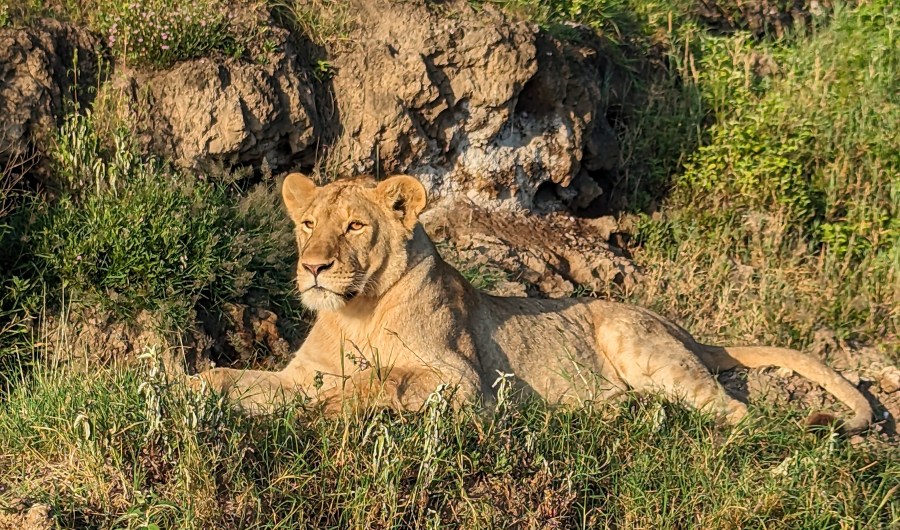
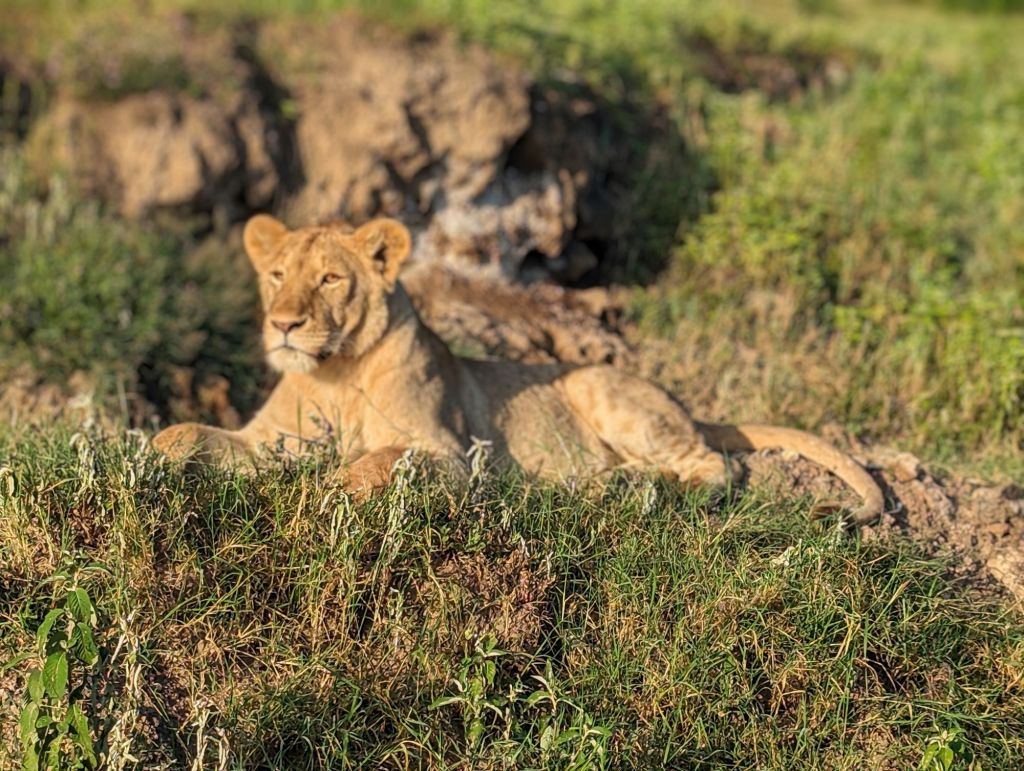
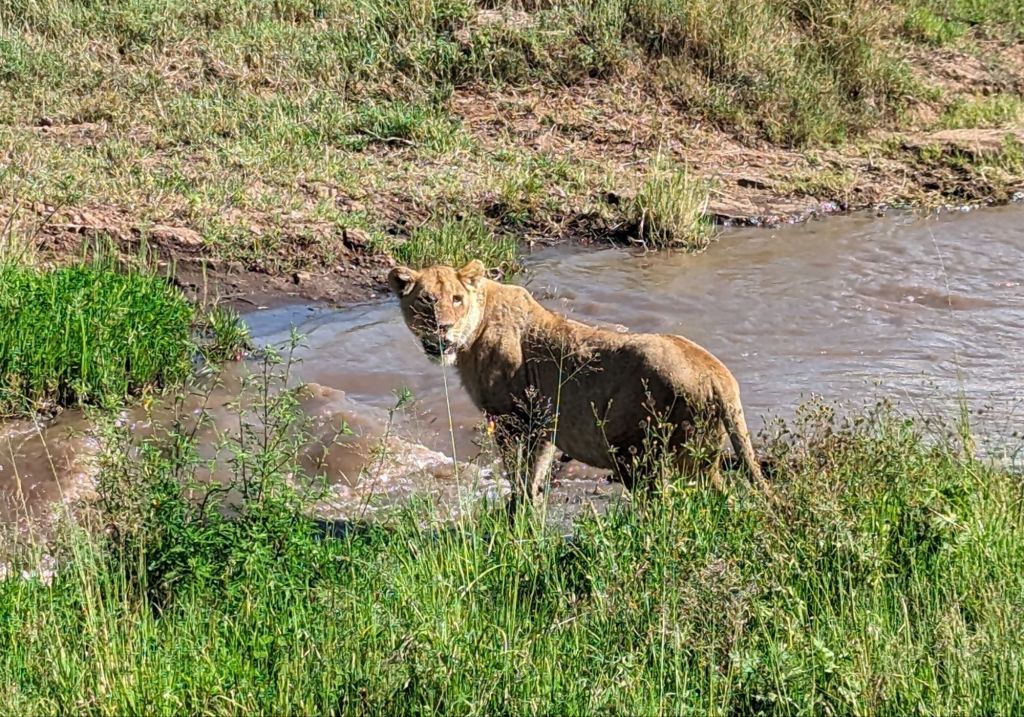
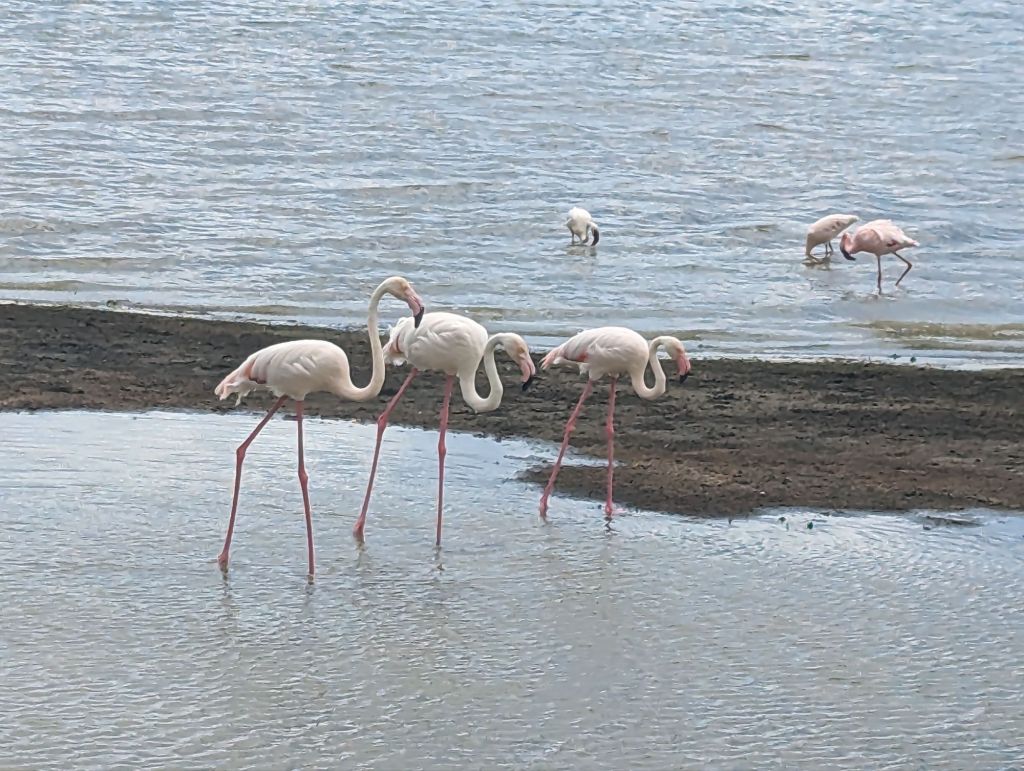
Our first encounter was with a lioness and our patience paid off as she finally lifted her head proudly as she basked on the morning sun. Down on the crater floor wildebeests were nursing calves which stood (or fell) on wobbly legs having birthed less than an hour before. Wildebeest and antelope babies are capable of running within a few hours of birth, out of necessity. A water buffalo just stood there gazing out, thinking who knows what? We saw jackals searching for wildebeest discarded placenta then being chased off by sentinel adult wildebeests, lions sleeping in depressions in the grass, a pride of lions lazing near the water, elephants eating grass, hippos in the shallow lake, flamingos, zebra, cape buffalo, more lions strutting right next to the jeep- “head inside” warned George. The Jeep drivers set up a picnic tea near a hippo pond and a “7 star bathroom” in the park and indeed, the facilities were first rate as well as the snacks. The highlight was finding a few black rhinoceros in the distance. The black rhino is critically endangered so we were very lucky to find them.
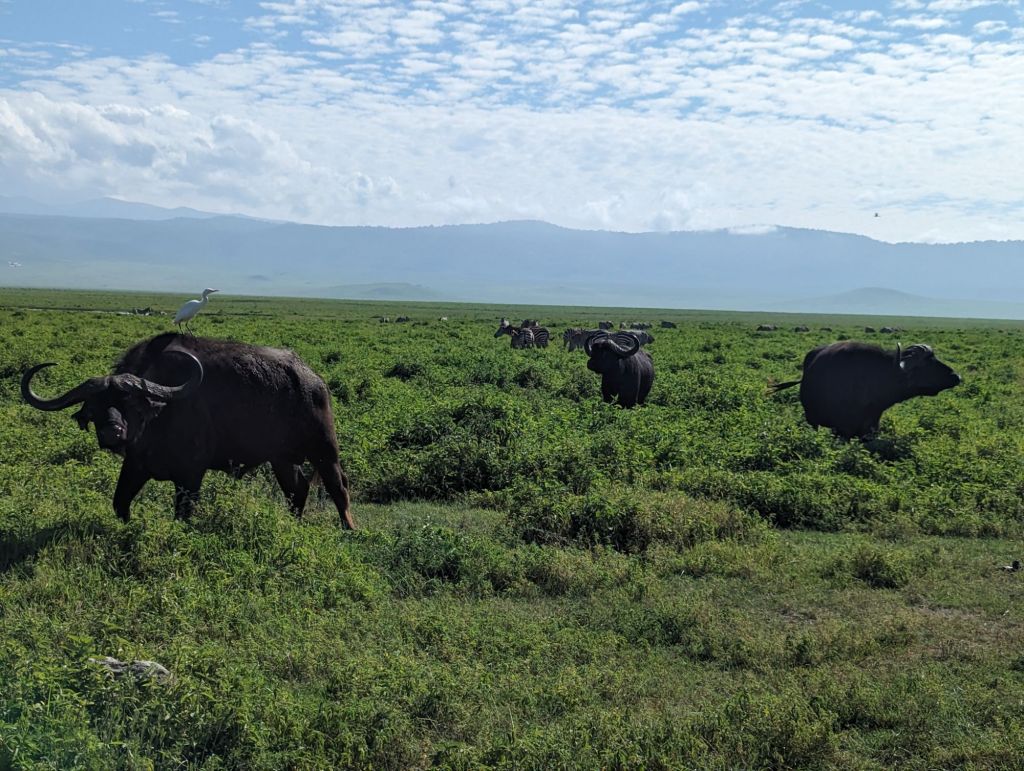



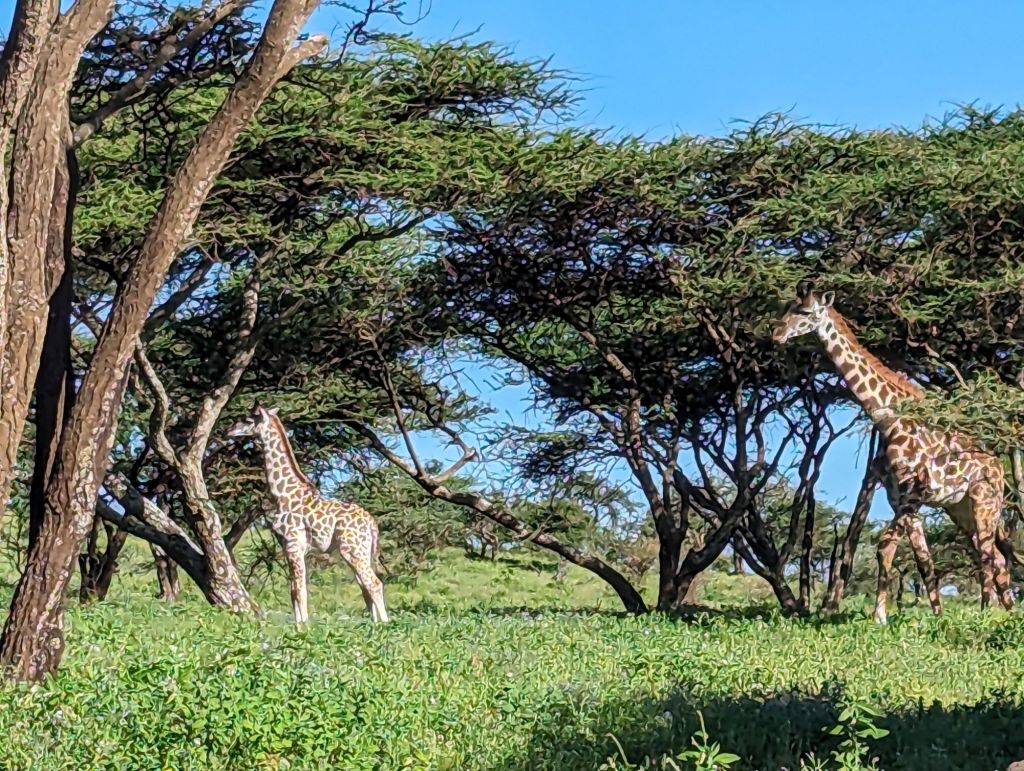
There were no giraffes in the crater as they stay on the rim or outside the steep inner walls of the crater. It’s too difficult for them to descend and there are too few trees for them to feed on. Otherwise, the grazing animals will stay within the crater for 8-9 months (Oct-May) and then will start the Great Migration as babies mature and water sources deplete and grass dries up. These animals will travel clockwise to the north seeking food and water and will return in October to begin the cycle again. Our next day’s experience as we headed out of the crater area and towards the Serengeti was to travel with and through scores and scores of animals over miles and miles of dirt track road, upwards of 25 miles. The number of wildebeests and zebra on the move was in the millions! Flat green grassland as far as the eye can see was covered with animals. It was a breathtaking and memorable experience.


 My new reality