

After 2 wonderful days in Amboseli National Park we headed for Tanzania. I had woken up with vertigo which I had only once before about 4 years ago. Ugh. It hit at breakfast so Greg helped me to the lobby where I waited for the dizziness to settle (and was close enough to the restroom to return my breakfast). We got on the van and headed out of the park on the rugged roads which probably settled the vertigo with my stomach settling about 2-3 hours later. I missed most of the 100km drive around Lake Amboseli to the border town of Namanga with my eyes closed. I could, however, still feel the many road washouts and flooded areas which we had to slowly navigate over. Lake Amboseli is typically dried up but with the recent heavy El Nino rains the lake is over flowing and the landscape is atypically lush. I felt much better by the time we processed through Tanzania immigration, handing our crisp $100 bills over with our visa application, passport, and yellow fever vaccination card. It only took maybe 20 minutes whereas lines of freight trucks spend hours processing through immigration and customs. Maasai women were hawking beaded goods outside the customs office while we transferred to a Tanzanian company Toyota Land cruiser heretofore known as a “jeep”. Johnson was our new Tanzanian driver.
Tanzania is huge, about double the size of Texas whereas Kenya is 1.5x the area of Nevada. However, Tanzania’s population is only 53 million compared with Kenya’s 64 million. Tanzania is more mountainous with 70% arable land. Indeed we saw many more hand cultivated garden plots or larger fields that may have been plowed with a leased tractor. There were corn fields, rice paddies, and banana trees. The Maasai people’s villages span the border and have free movement although cows and goats are not allowed through customs so they use the back roads. The Maasai in Tanzania tend to be more exposed to Western culture so unless they live fully isolated they may be seen using cell phones while they herd their flocks or may own scooters. Otherwise, the area around Namanga to Arusha seems more affluent in general with newer housing although the roadside market stalls are still ramshackle. Also of note: Kenya has banned plastic bags and bottles whereas Tanzania has not. The difference can be seen in the amount of roadside trash. You guessed it-Tanzania has a lot more of it.

We continued on our 2 hour journey from the border to Arusha bypassing the city center to drive through the coffee plantation area thereby avoiding smog-filled traffic and viewing the orderly coffee groves. Many of the plantations have been in family ownership for generations although with Arusha’s growth are likely to be subject to real estate development. We stopped at Arusha Coffee Lodge, a resort and restaurant which is often a jumping off place for hiking Mt. Kilimanjaro as it is usually approached from the Tanzanian side. It is said Tanzania owns the mountain but Kenya has the best view of it. At the Coffee Lodge we sat outside at a tented table for lunch. I did not partake much of the buffet as I was still recuperating but I did discover their local ginger soda which is delicious with an intense gingery bite and low sugar. My new favorite drink! Greg and I avoided the shops there. We then stopped at a local art gallery to hear stories from a delightful self taught artist and shop some of the artworks sold there from the collective of artists he supports. We proceeded to Manyara about 2 hours away. I was shocked as we passed to see a minivan stuffed with maybe 30 school children, like a child’s clown car, not an inch to spare between their little bodies. They were all smiling, or, were they grimacing? I wish I had a photo.

We stayed overnight at Lake Manyara Serena Safari Lodge located on an escarpment 1,000 feet above Lake Manyara. The switchbacks up the steep ascent were populated with huge Baobob trees with their overwide trunks and undersized canopies. The escarpment marks the division between the African or Nubian tectonic plate with the Arabian and Somalian plates. Here the plates are separating a few millimeters a year so that eventually (not in our lifetime) Somalia may be separated from the African continent by a narrow sea. (On the opposite side of the world the Nazca plate runs eastward towards the South American plate resulting in the creation of the Andes Mountains and with continuing earthquakes along the western coast of South America.)


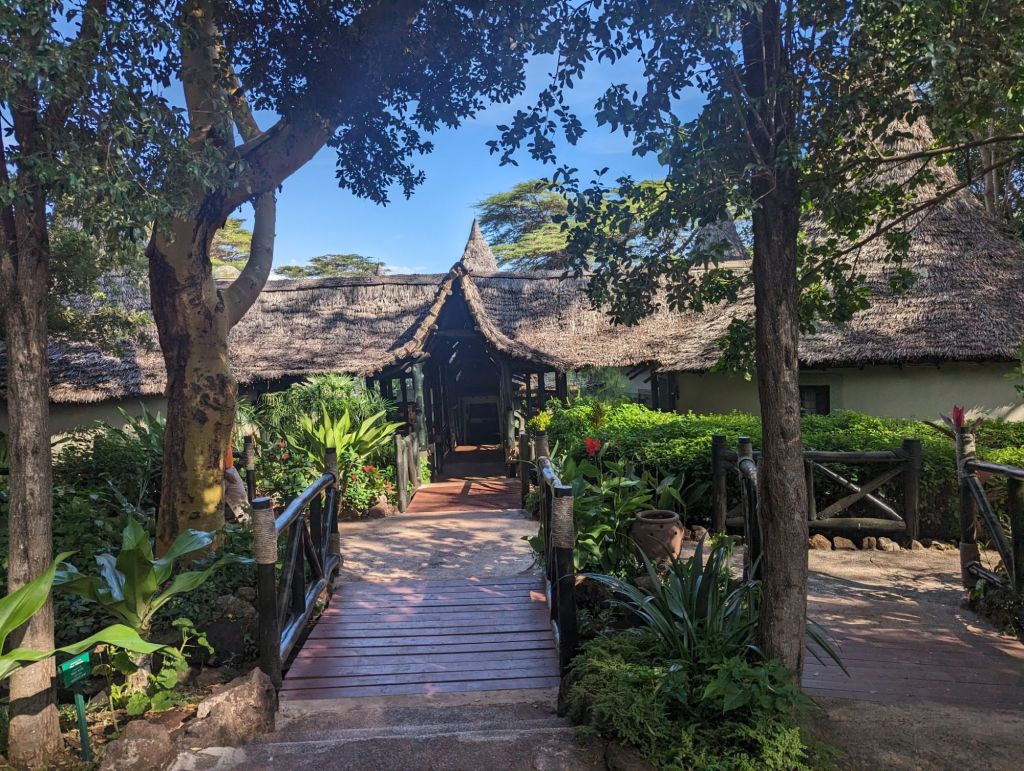

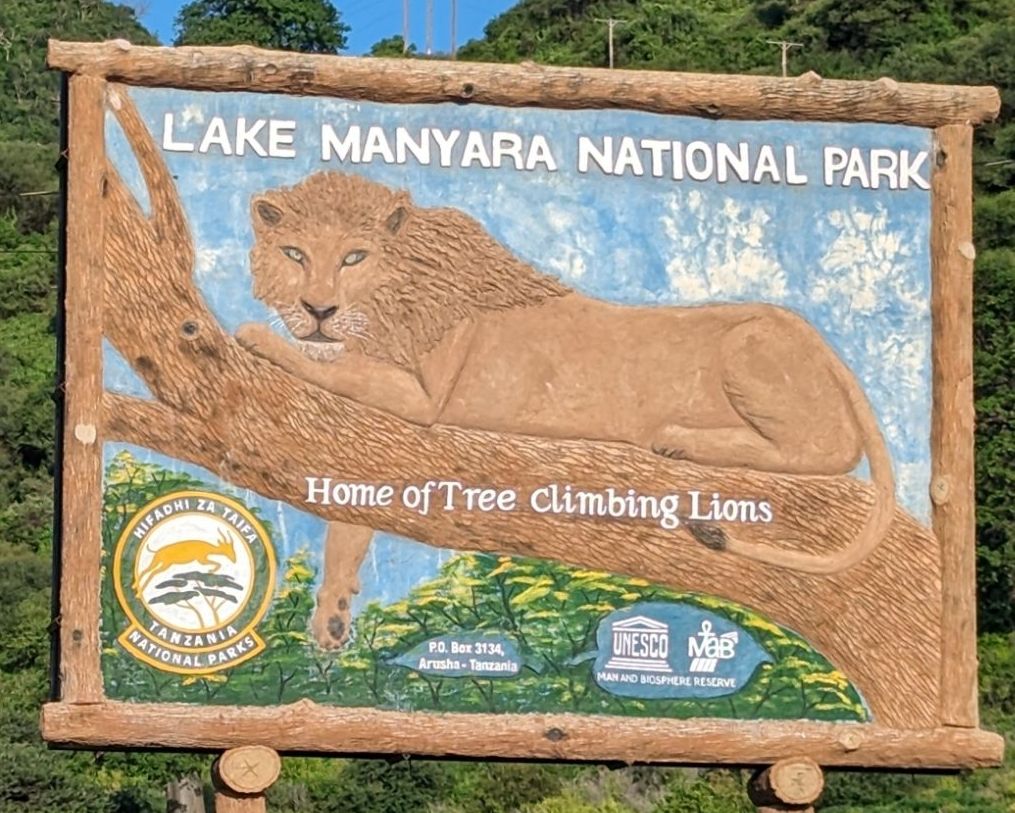
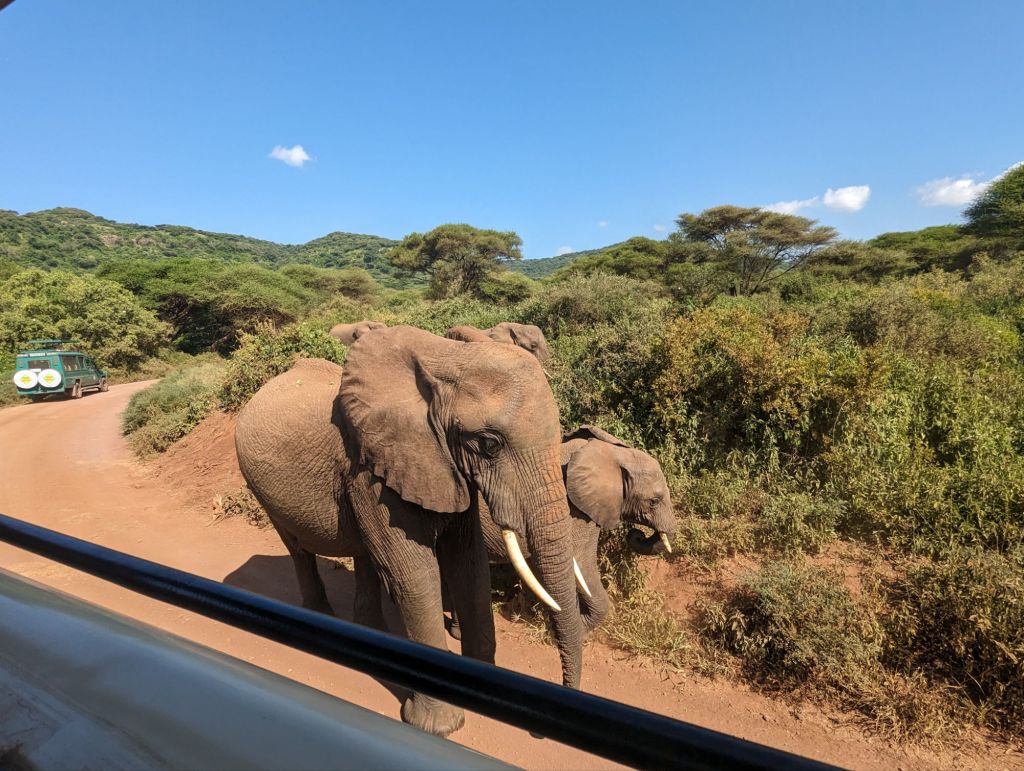
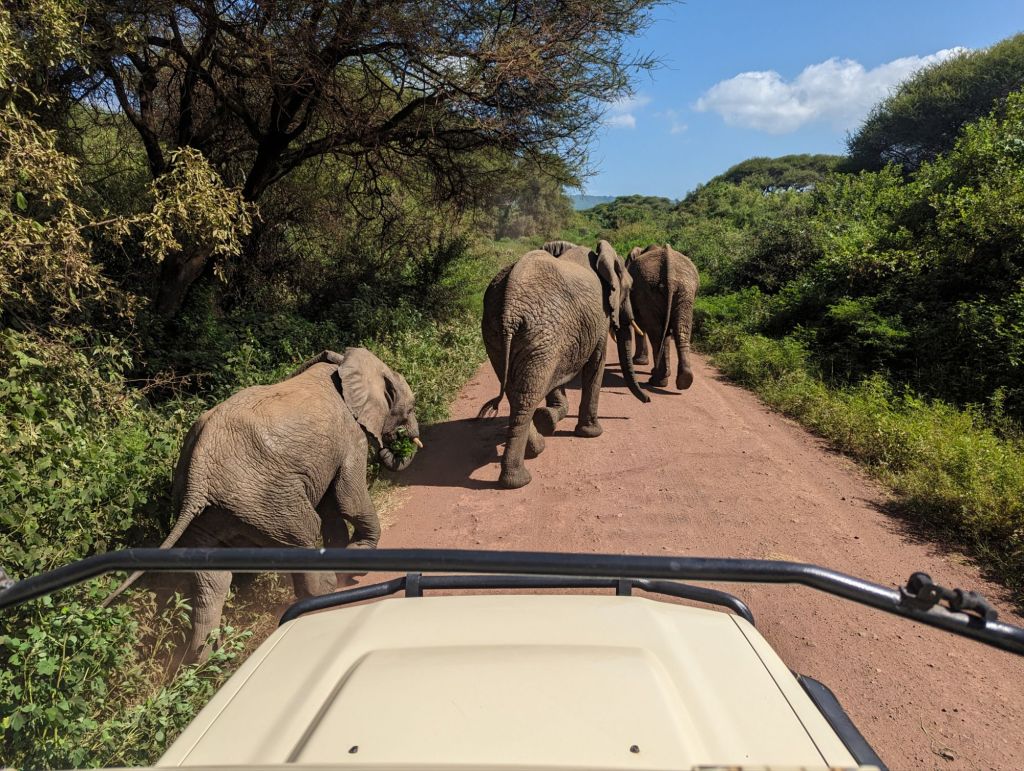
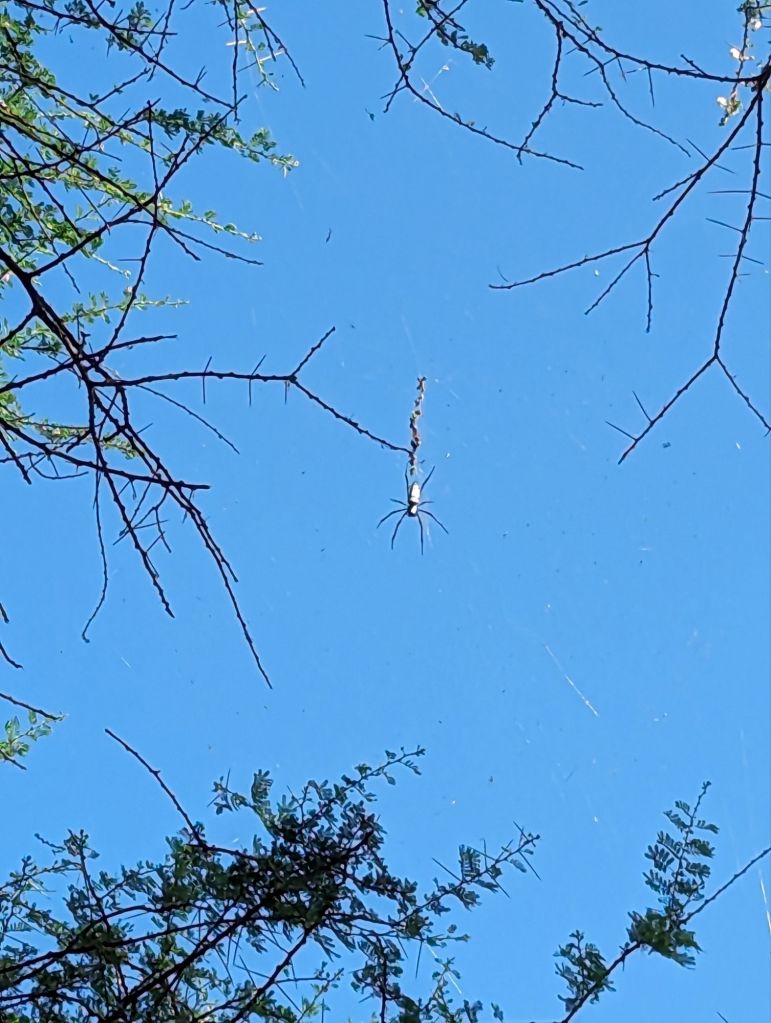
Our beautiful hotel was again decorated with African murals and fabric prints and we stayed in a hatched roof palapa. There was a refreshing infinity pool overlooking Lake Manyara below. We chatted with other “safarians” (I just invented that word aka safari tourists) then watched a very good, vigorous acrobatic show poolside before enjoying an outdoor evening BBQ of goat, chicken, and beef. And some Indian sides. Early the next morning we headed down to Lake Manyara National Park. This park was a jungle, unlike the grasslands and savanna of the other parks we have or will visit. Thus, it was harder to spot animals except for the baboons which were everywhere. We watched a troop of at least 50 scoot down a riverbed. There were also plenty of birds. Eventually we came to the Lake Manyara shore which has now exceeded its banks. We stopped for a refreshment under what could be the world’s largest spider. Heading back we saw more zebra, dyk dyks, and a small herd of elephants maneuvering around our vehicles on their way from here to there. They politely skirted our vehicle to within an arms distance. We also saw giraffes feeding from acacia trees but alas, no tree climbing lions. On our return we stopped at an upscale market free of hawkers and spent more than we expected on souvenirs we didn’t intend to buy. There was an interesting teak carving workshop within so we stopped to do some woodworking.



After lunch we drove about 1 hour to Ngorogoro Crater for our next nights lodging at the Ngorogoro Serena Lodge. The lodge, again an African safari themed beauty with cobblestoned walls, spreads along the rim of Ngorogoro Crater with beautiful views of the crater floor below. However, getting there requires a drive up switchbacks along the outside of the former mountain. After the lookout where we first viewed the expansive crater we came up on a stalled jeep crosswise on the road with the front end across the ditch. About 12 jeep tour drivers worked to rock and push the distressed vehicle onto the road and got it jumpstarted by pushing it. Apparently it only had one gear left so we hoped those passengers got somewhere safely (and were grateful we weren’t in it!)


We had a relaxing evening with another acrobatic show and delicious buffet dinner at our new hotel. A super early morning would take us down into the crater. More on that in the next blog!


 My new reality