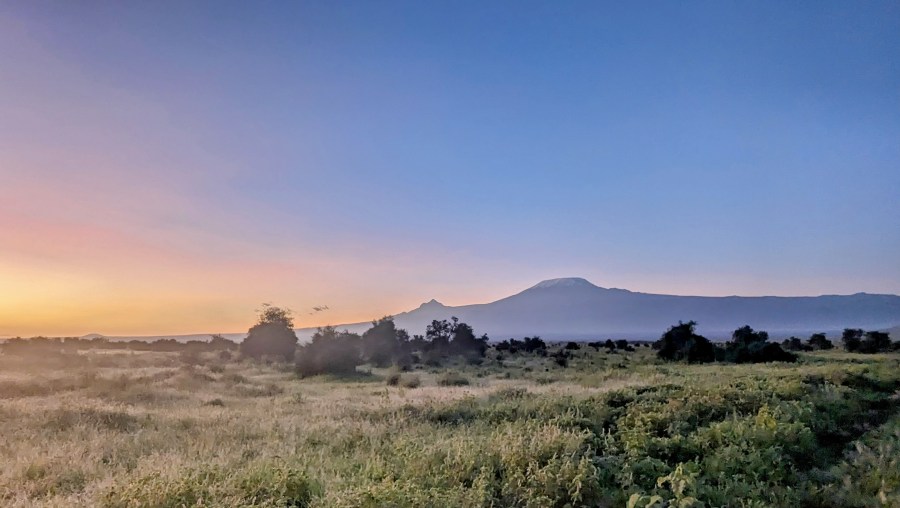
It was an early start on our second full day in Kenya. We departed our hotel in Nairobi and headed south out of the city towards the lowlands for Amboseli National Park. The weather was cloudy but dry and eventually it cleared. Traffic was light early on a Sunday morning until we got off the toll road and onto a single lane highway. A few cars sped by as they passed the caravans of lumbering, diesel spewing trucks that were headed southeast to Mombasa, the major port city on the Indian Ocean. Shortly after we exited the toll booth we got pulled over by a traffic officer who attempted to fleece our driver for money, asking for his license and other papers and otherwise trying to intimidate. Nicholas, our driver, and George, our tour director, were having none of that and argued back and resisted the harassment. There were many such opportunities for shakedowns by the local law enforcement along the way but there was no further interference.
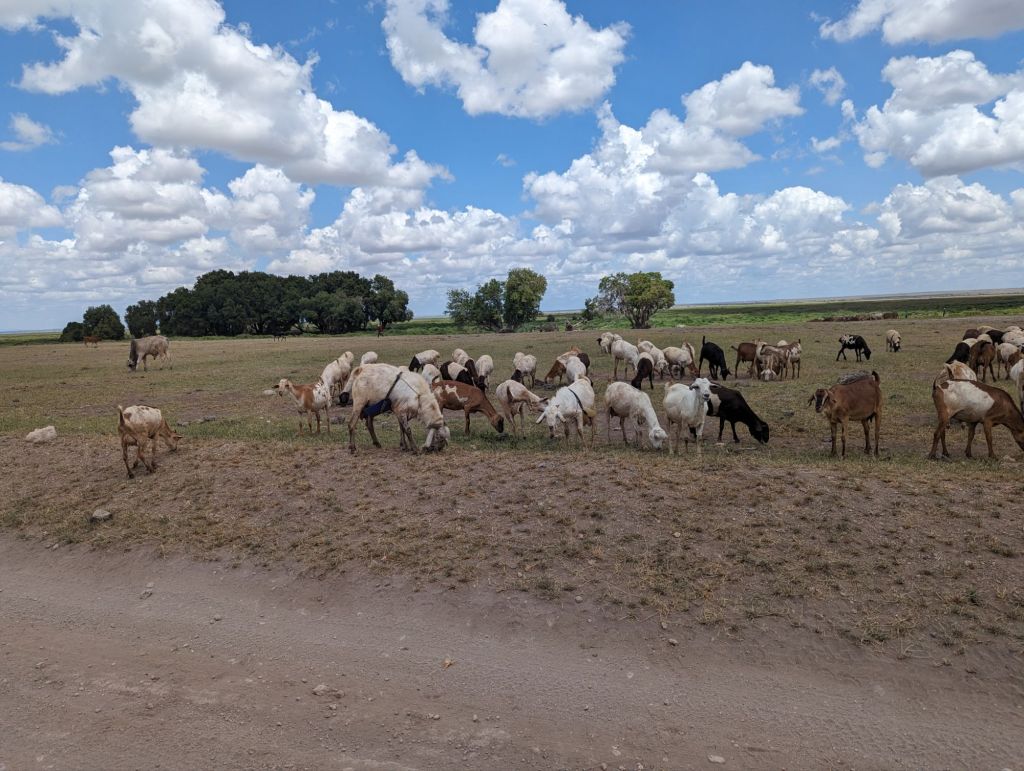
People walked along the highway alone or in groups miles from anywhere obvious. Where were they headed? Some were well dressed and were walking to church services as this is largely a Christian nation. We heard the jubilant singing emanating from open windows and doors of the modest churches. Ramshackle roadside stalls abutted the side of the highway but most were empty until after church services let out. There were “rest stops” which were indicated by speed bumps and trucks parked randomly alongside the widened lanes, the drivers visiting the market stalls that were selling fruit, vegetables, water, trinkets, solar lights, used sneakers, and hardware. Goats and cows were scattered about the markets and on the berm watched by herders. Block and wood fencing was brightly painted with the paint company advertising its logo. Just 20 minutes outside of Nairobi three giraffes slowed traffic by running across the road. I don’t want to know how long that car repair would take! Houses were sparsely spaced, some under construction that takes years as funds become available. There were shacks, sheds, and even some McMansions. We passed a few huge cement factories which supplily the construction needs of so many houses and buildings.
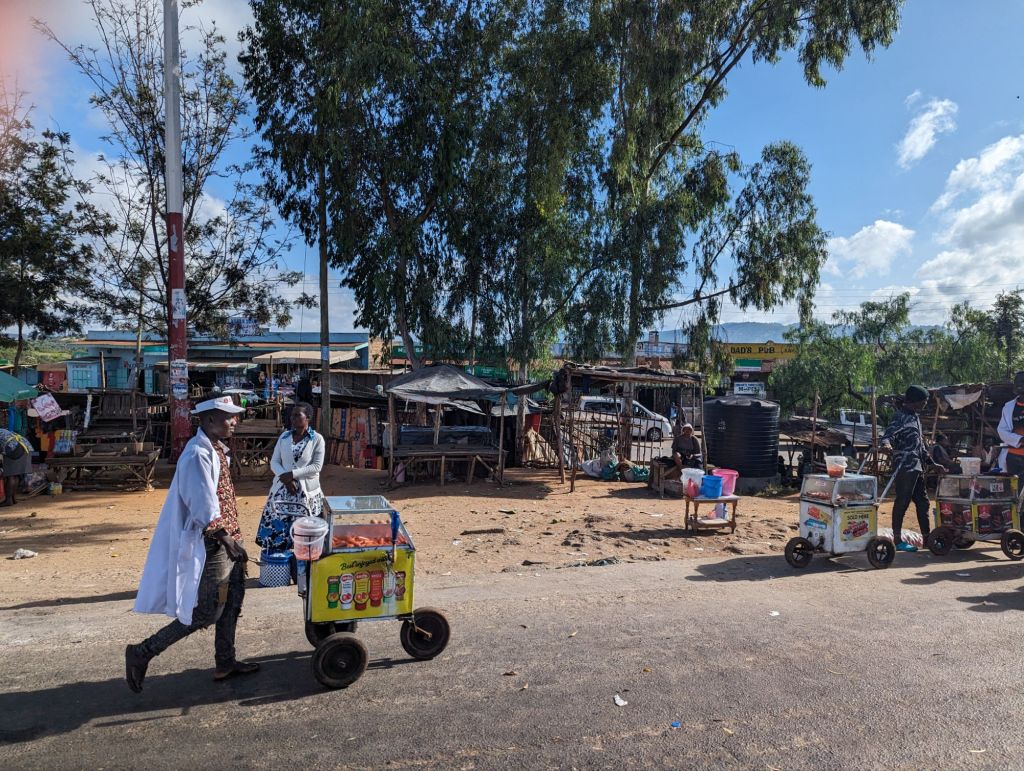
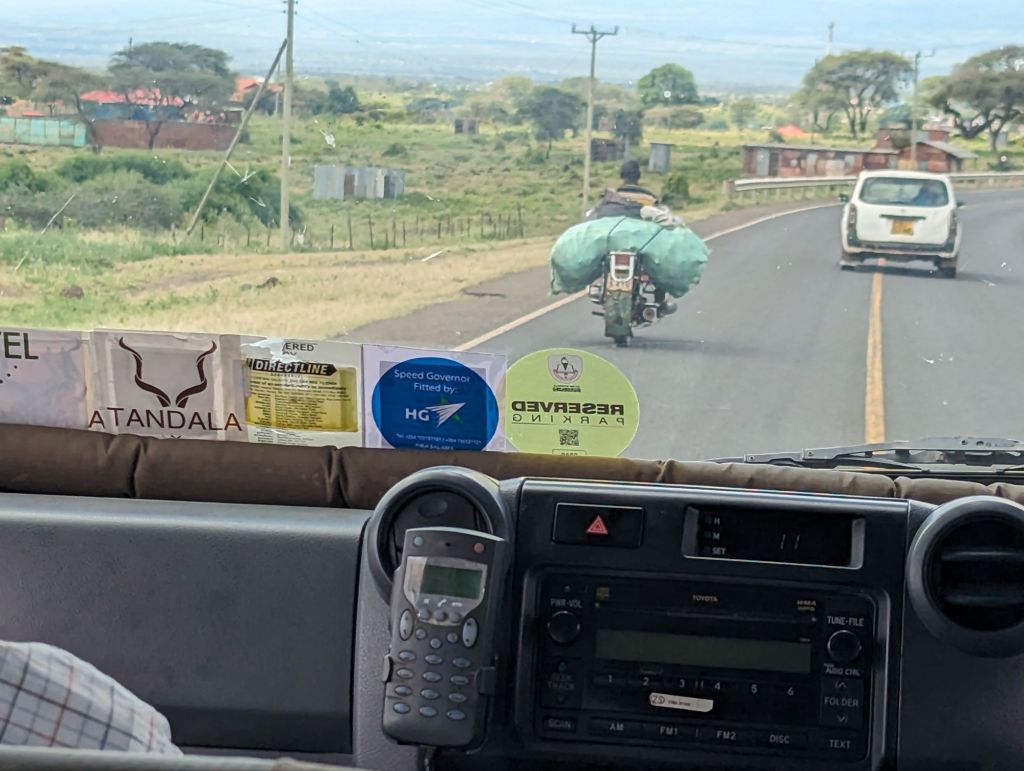
We passed through savannas: grassland dotted with acacia trees, then some hilly areas with more agriculture in the red clay. Mature corn stalks were evident. The El Nino weather pattern has provided abundant rain so everything is still very green which is welcome after the recent years of drought. We enjoyed 2 hours of other sights and sounds: a Maasai tribesman on the back of a scooter replete with red shawl and staff; 3 people on a scooter; scooters over àladen with packages; children gaily waving as we passed; a “technopolis” under construction by the government- a planned Kenyan Silicon valley hub; a Chinese built higher speed railroad track alongside an older, slower British built railroad.
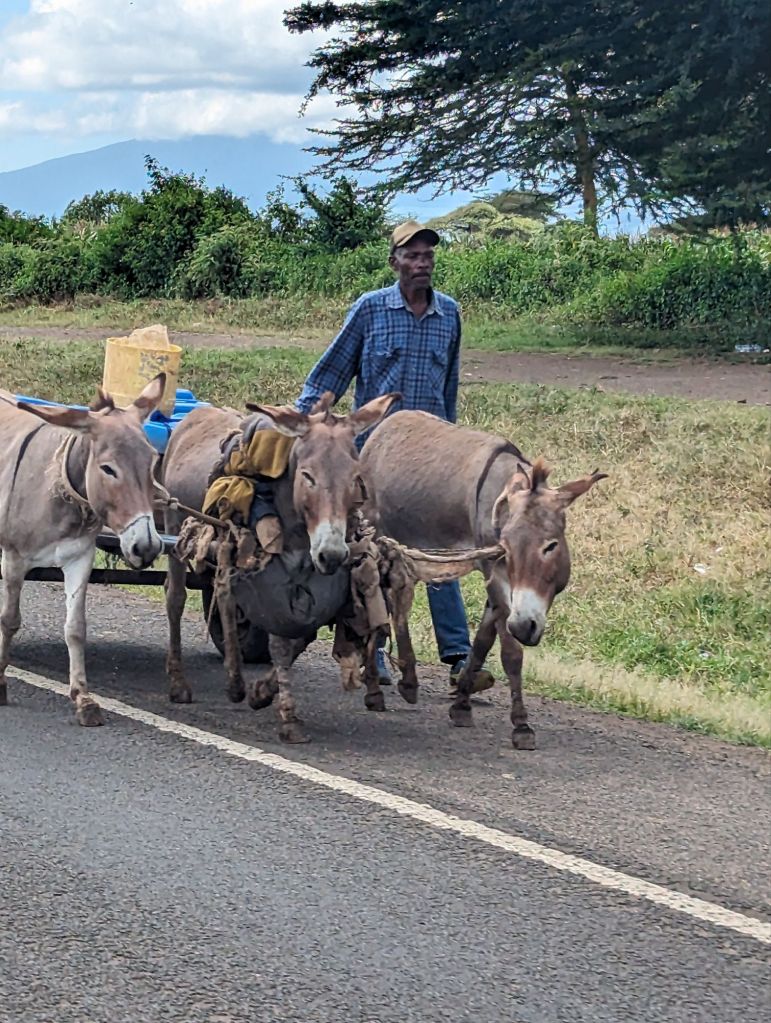
Soon we stopped at a tchotchki market with decent bathrooms and then turned off the Mombasa-Nairobi road. Eventually majestic Mt. Kilimanjaro came into view although it was shrouded with clouds. Occasionally glimpses of the snowy summit peaked through as the clouds thinned. “It was sleeping” our guides told us. After a further 2 hours and back in savanna country we entered Amboseli National Park. Amboseli has marshy grasslands excellent for viewing animals and with the recent rainy season there was plenty to see. Our bumpy ride to our lodging took about an hour serving as an introductory game drive. We viewed giraffes alongside zebras, impalas, and antelope. We’ve arrived! We’re on safari!
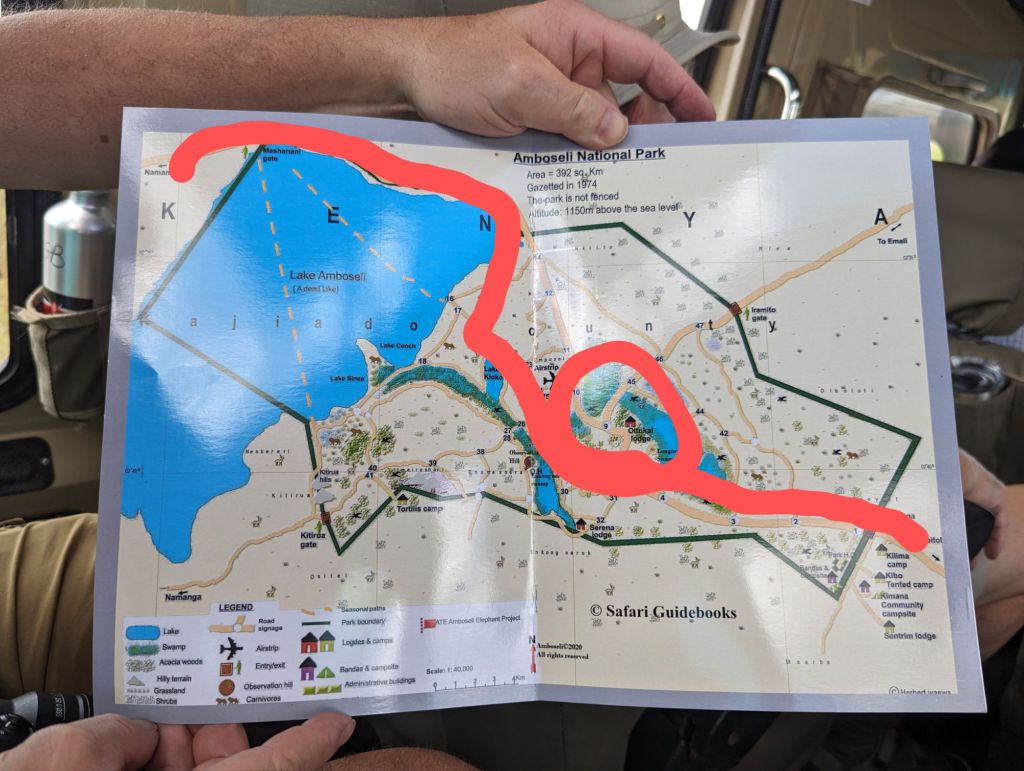
The Amboseli Serena Lodge is rustic with murals of local animals adorning the concrete walls with African print fabrics and logs and pumice stones decorating the interior. Our room overlooked the lush greenery surrounding the reservoir outside and Vervet monkeys watched us from the trees. Buffet meals were again heavily influenced by Indian cuisine, a vestige of British colonial dominance, Indian pioneers, and with being in proximity to India. We relaxed by the pool and then headed out for an afternoon game drive. We all searched for animals outside the open windows of our Land Rover and stopped for photography when animals were sighted. It’s amazing how the driver can navigate the bumpy roads and still find and identify animals before the 6 of us in the back can even blink. We tourists got excited spotting until we realized we’d found an “ALT” (Animal Looking Thing). Well, it wasn’t hard to spot the elephants: loads and loads of elephants eating grass and meandering along the marsh. Elephants are matriarchal and family groups tend to stay together. The bull elephants remain solitary but in this case one was hanging nearby while baby elephants nursed and teenagers playfully butted heads. Other safari group vehicles also gathered but each was respectful not to get in each other’s way. After a long, enjoyable time observing the elephants eat, play, nurse, and meander, we drove until our driver Nicholas spotted a lion in the distance. It was far enough away that only Greg with his telephoto lens could see it well. He, too, was solitary and not menacing as there were groups of antelope not too far away. Apparently the faster but petite antelope are not worth the effort of a lion. Or he was sated and lazy. After a while, we headed back for dinner and dreams of frolicking elephants.


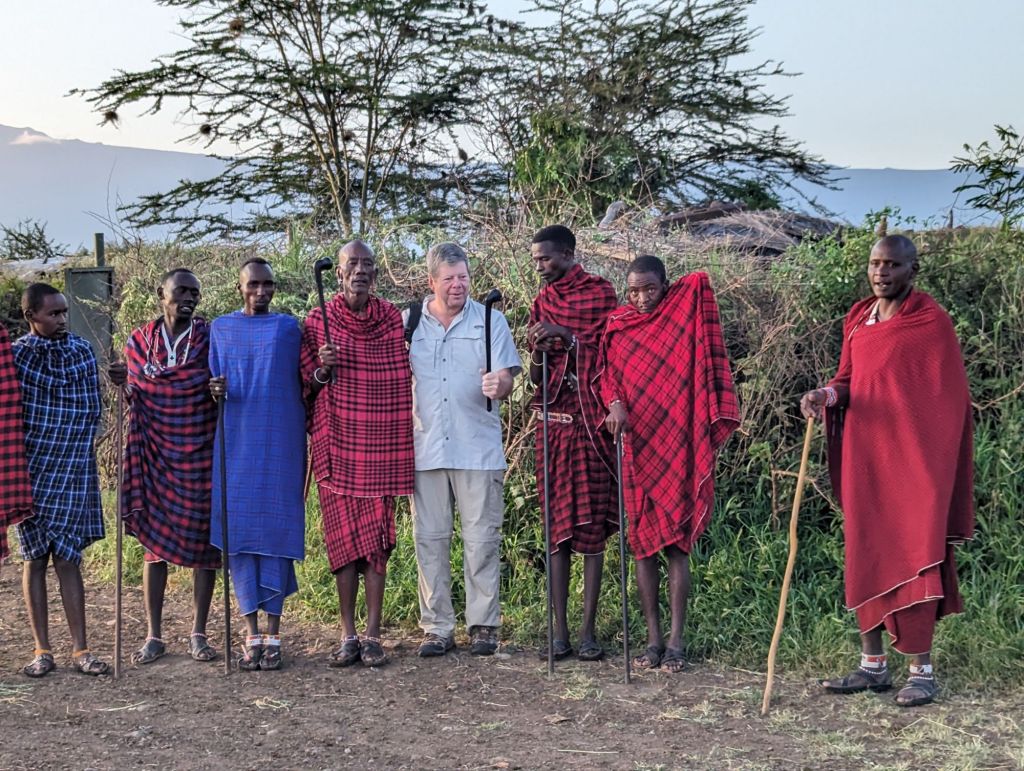
Another early start on Monday had us in the Land Rover before dawn to visit a nearby Maasai village. Mt. Kilimanjaro was azure blue as the sun rose to light it. A hot air balloon sailed in the distance. Then we saw groups of schoolchildren in royal blue uniforms walking about 2 km to school, each carrying a log or branch to contribute to the school. At the village we were greeted by the chief, Joseph, and his brother Thomas. They were attired in the traditional red blanket or “shuka” and blinged out with beaded and be-sequined bracelets, necklaces, and earrings. It looked like the whole village came to greet us with a welcoming song (I assume) and invited us to dance with them. The simple jumping and dipping was doable for Greg so he happily participated. The Maasai were so joyful and pleasant, smiling beautifully, young and old. We learned about their culture: how to start fire from rubbing sticks together, visited their dung-daubed, dark huts, had a charming show from the preschool children- singing for us and displaying their math abilities, and of course, were invited to shop their wares. Multiple wives are permitted; the first an arranged marriage but additional wives are of the man’s own choosing. Each wife requires their own house. Some go on to college, some return, some do not. The chief was college educated and now is a teacher in the village. He has 2 wives. The villagers herd goats and cows, keeping them within the circle of huts each night for protection. We learned a lion had taken down an animal nearby the previous night! Flies were abundant, often covering the eyes of the children. Shoes were ingeniously made of tires- the original Crocs. There is no electricity but a well and storage system was donated. This was a wonderful visit and exposure to a very simple peoples’ way of life, to wit: I didn’t mind overpaying for the craft items I bought there (and I stink at bargaining anyway). On the short return to the lodge we waited while a bull elephant passed within 10 feet of the vehicle. All this before breakfast!


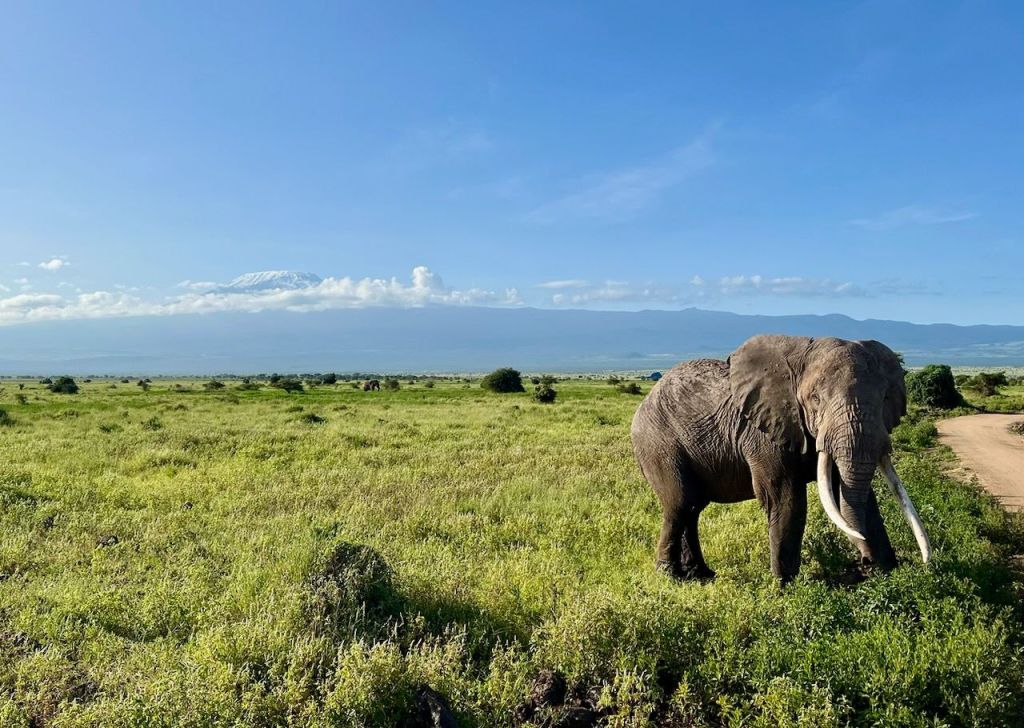
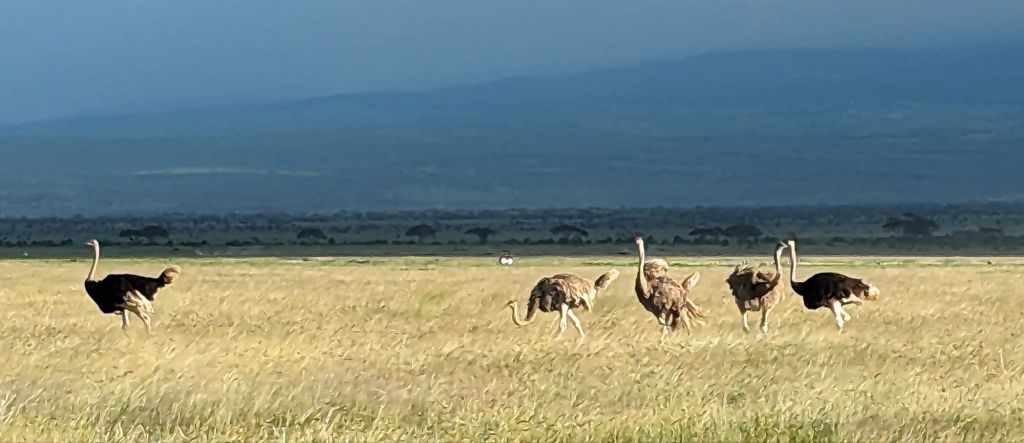
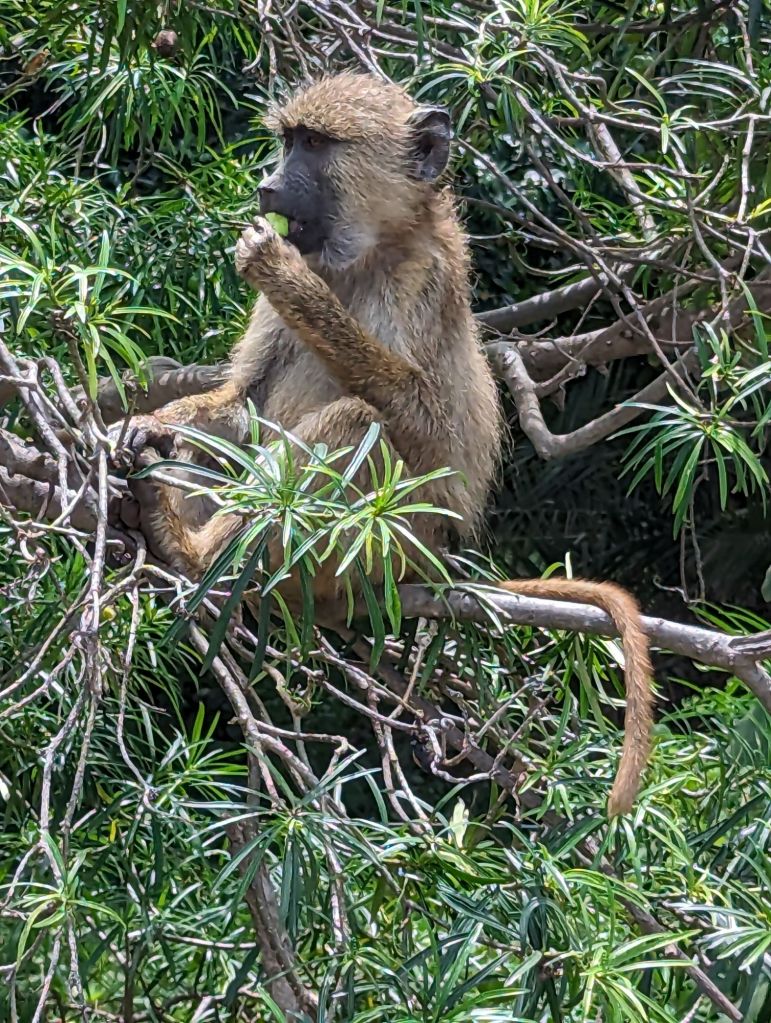
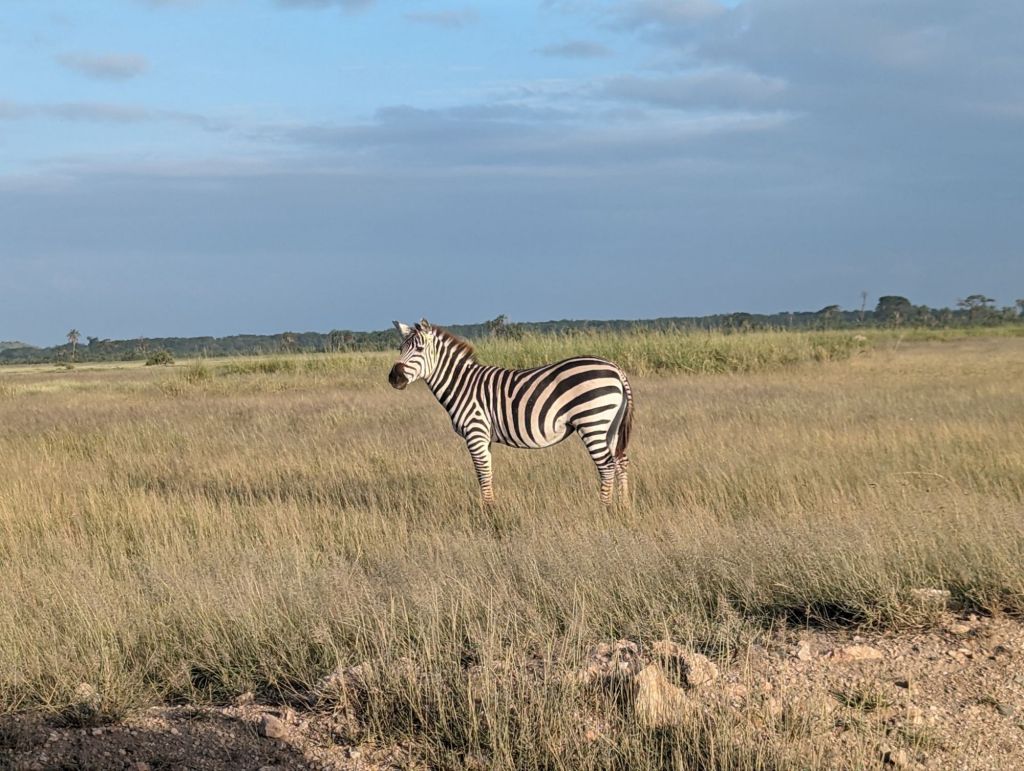
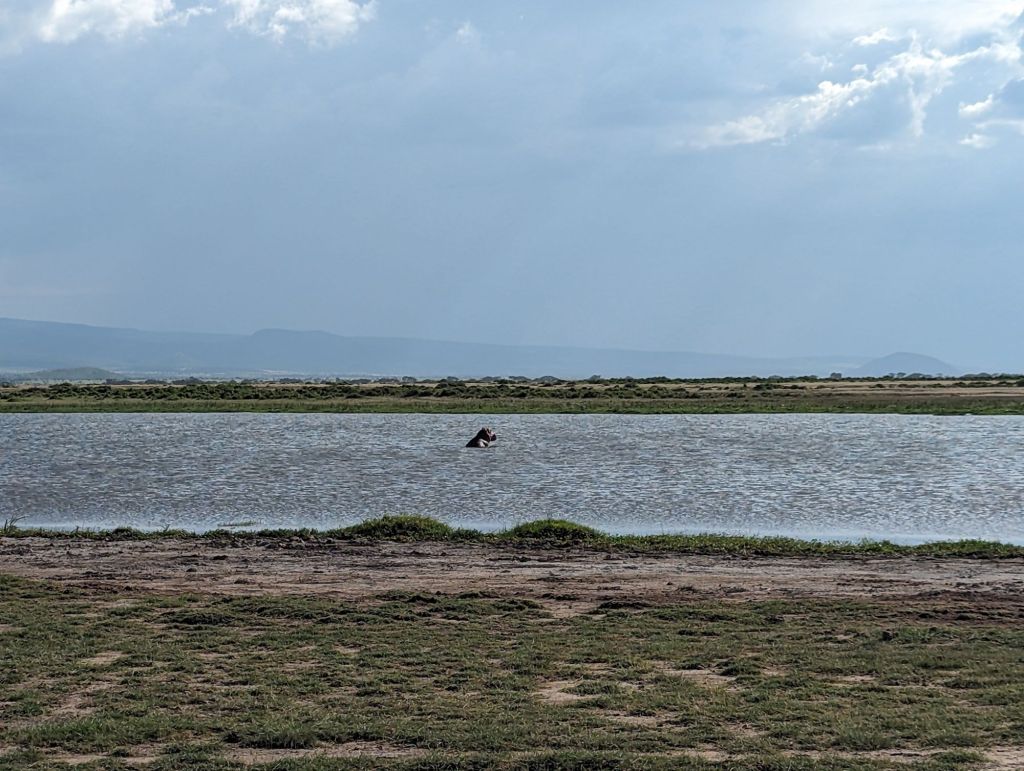
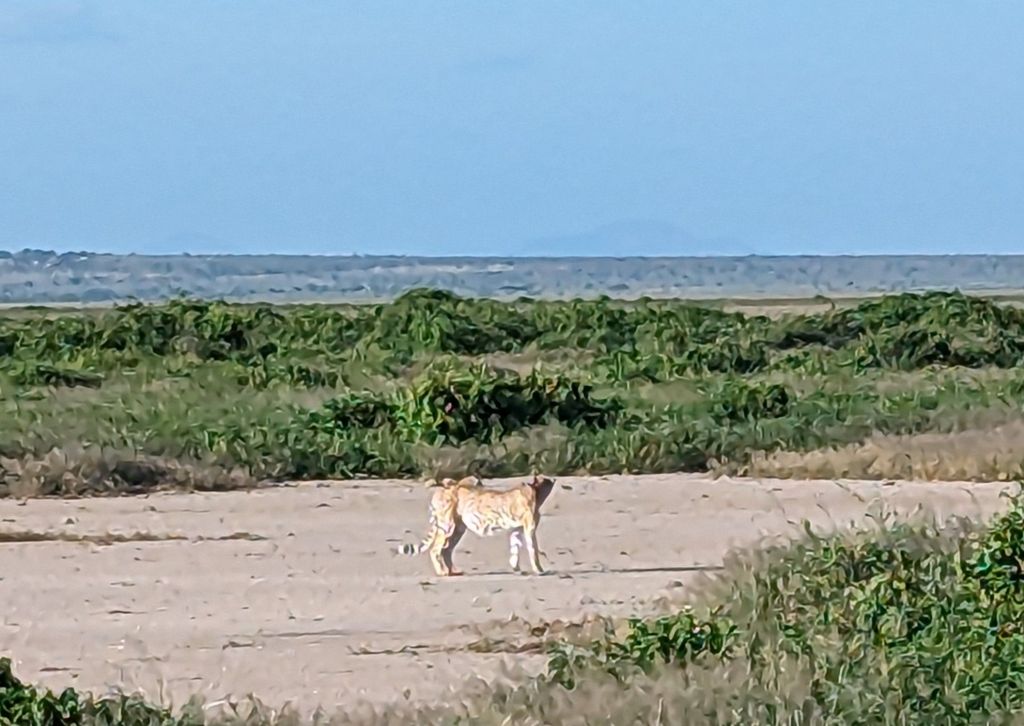
We spent the rest of the day on game drives with lunch in-between (more Indian food, I love mango relish on naan). We were able to see many herds of elephants and single bulls, a dazzle of zebras, a tower of giraffes, a bloat of hippos, a troop of baboons,many herds of gazelle (Grant and Thompson), a pair of water buffalo, a flamboyance of flamingos and many other birds including crown cranes and ostriches and Egyptian geese, also one spotted hyena, one wildebeest, one lion (in the distance), and the last sighting of the day: two cheetahs feasting on an ostrich. About 25 tourist vehicles jammed 3 abreast on a single lane road to catch a glimpse of this remarkable sight. Tomorrow: Tanzania!


 My new reality