
Day -1. We had a meet up with our guide, Baru, at the Chile Nativo travel office in Puerto Natales. A smallish man with rangy black hair and an impish smile, it seemed as if Baru was measuring us up as much as we did him. Distances and elevation didn’t seem so far on the maps as we discussed the plan to hike 4 days in the Parc Nationale Torres del Paine following the trail known as the “W” circuit. Dinner at the African/Chilean fusion restaurant Afrigonia in Puerto Natales was a great welcome to our friends Steve and Andrea who had just arrived from El Calafate by bus. I had the most delicious lamb chops and Greg enjoyed guanaco. Steve and Andrea had salmon, unknowingly the first of three nights they will enjoy salmon for dinner.

Day 1. We were picked up at our hotel at 7:00am, enough time to pack our hiking gear into our packs and overnight stuff into the dry bags which our porter will carry, 30 lbs total between the 4 of us. Hopefully we didn’t go over the limit. A 2 hour ride with Baru and our driver Juan took us through pampas and increasingly more foothills until the mountains appeared across a startlingly blue lake. At the entrance to the Parc Nationale Torres del Paine Baru checked us in very quickly while commercial bus loads of young hikers waited in line. Our private bus moved on to the Central Refugio at Torres del Paine. We disembarked and entered the reception area. The refugio was cozy with the reception area, a bar, and cafeteria filled with picnic tables and scattered groups of young hikers. We met up with Carlos, our porter, a very friendly man with a shy smile. Carlos is a descendant of an indigenous group and basically ran our belongings from Refugio to Refugio in half the time it took us to hike to each. He wore shorts, tee shirts, or a flannel shirt as we were layered and bundled in brand name hi tech gear. Baru gave us a little time to settle and gear up and then we started our first day’s hike.


.

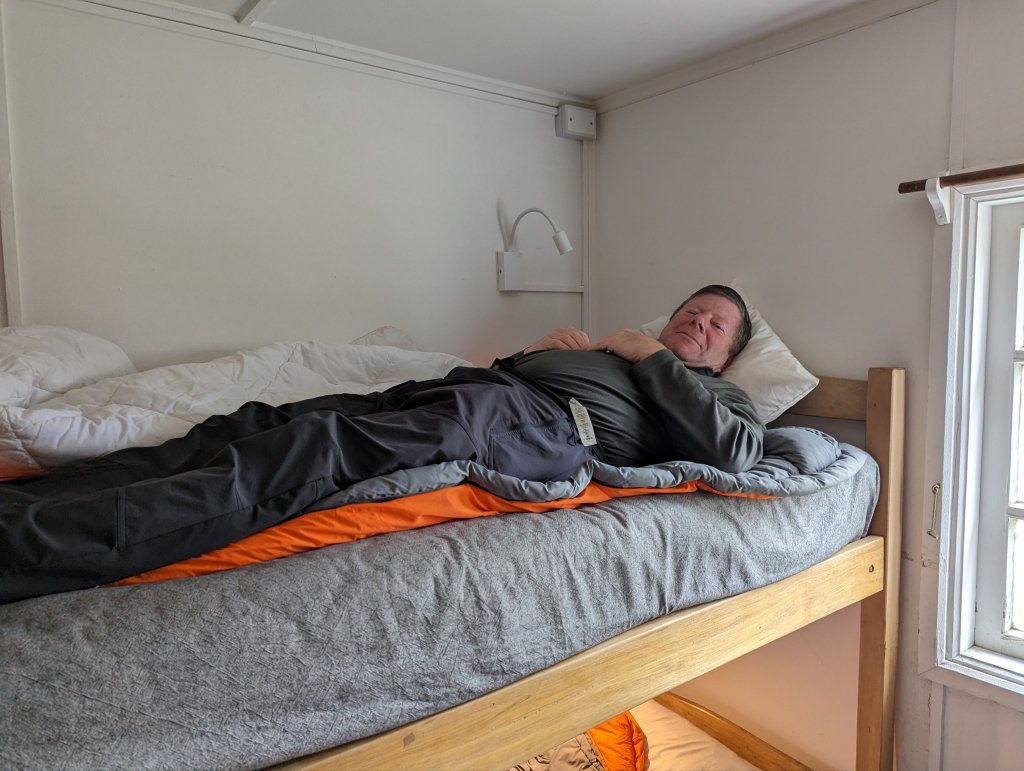
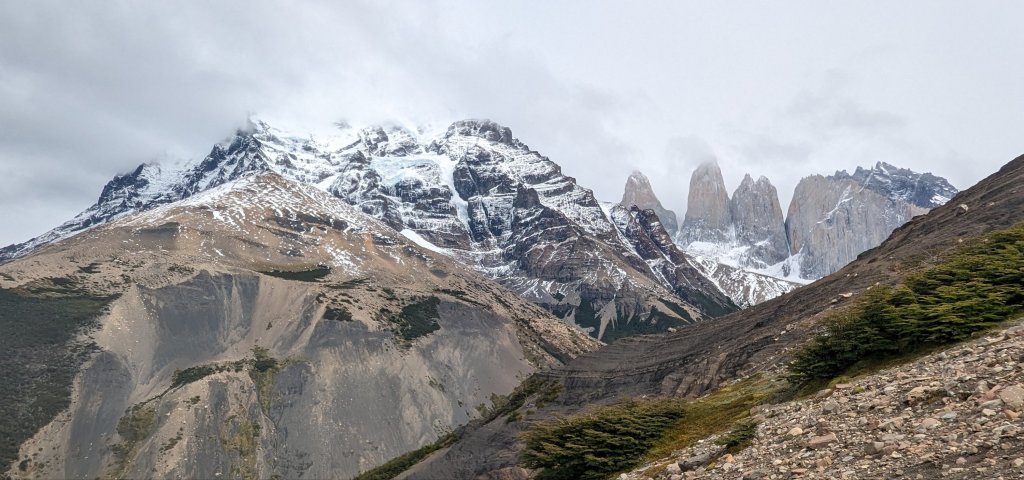
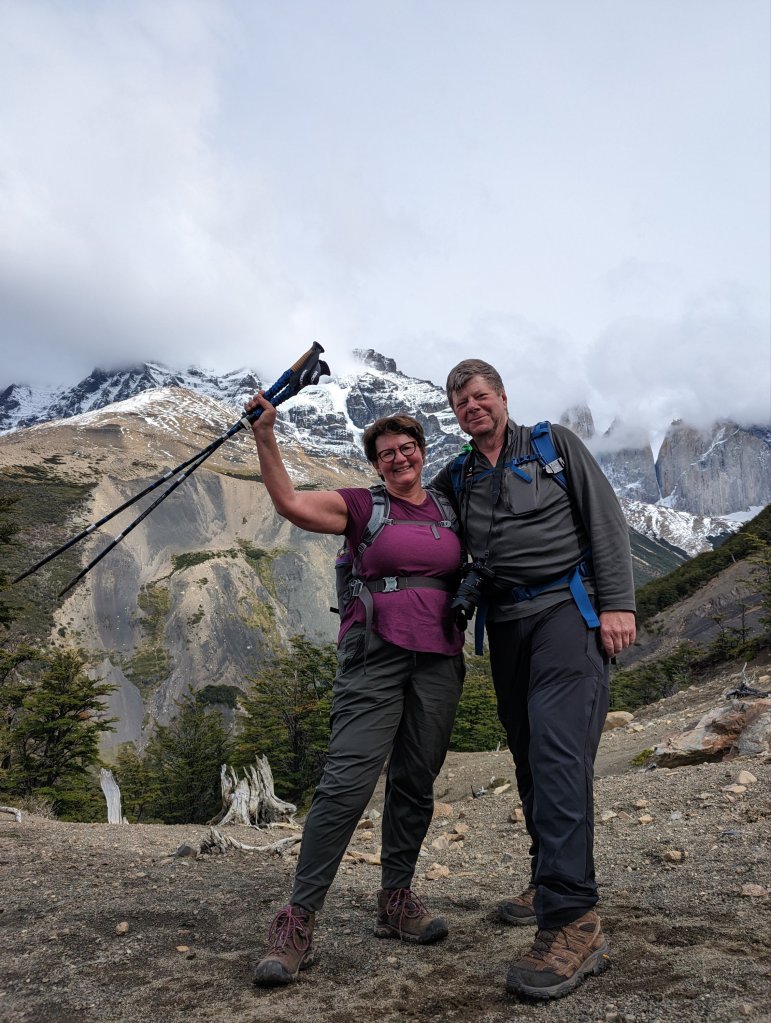
One of the benefits of having a guide was his understanding of our capabilities then taking this into account with his knowledge of trail conditions. Typically the first day would have been a hike to the base of the Torres del Paine but recent weather had forced the park to close the base and turn hikers away. Baru took us up Cero del Paine instead, a hike of considerably more elevation (1500 mt) but without the boulder climbing and with great views of the Torres (towers) and the Paine Massif. Andrea and I hiked about 3000 ft to a great viewpoint (Mirador), stopping for lunch with Baru while Greg and Steve continued on higher. We returned via a different path, wandering through the gentle hills and fields of the Hotel Torres del Paine, dodging the droppings of the many horses that graze there or are ridden by their guests. Baru showed us a great climbing wall he uses on occasion. Meanwhile the Paine Massif towered overhead. It was a sunny, warm, windless day. Afterward, we had beers and Calafate sours (a local berry like a blueberry) to celebrate our 8 mile 6 hour hike and had decent salmon for dinner. Then showers in the tiniest stall and to sleep in the remarkably comfy beds in the bunk room with limited snoring in our group. Perfect. Total elevation 3500+ feet, 8 miles, 6 hours.
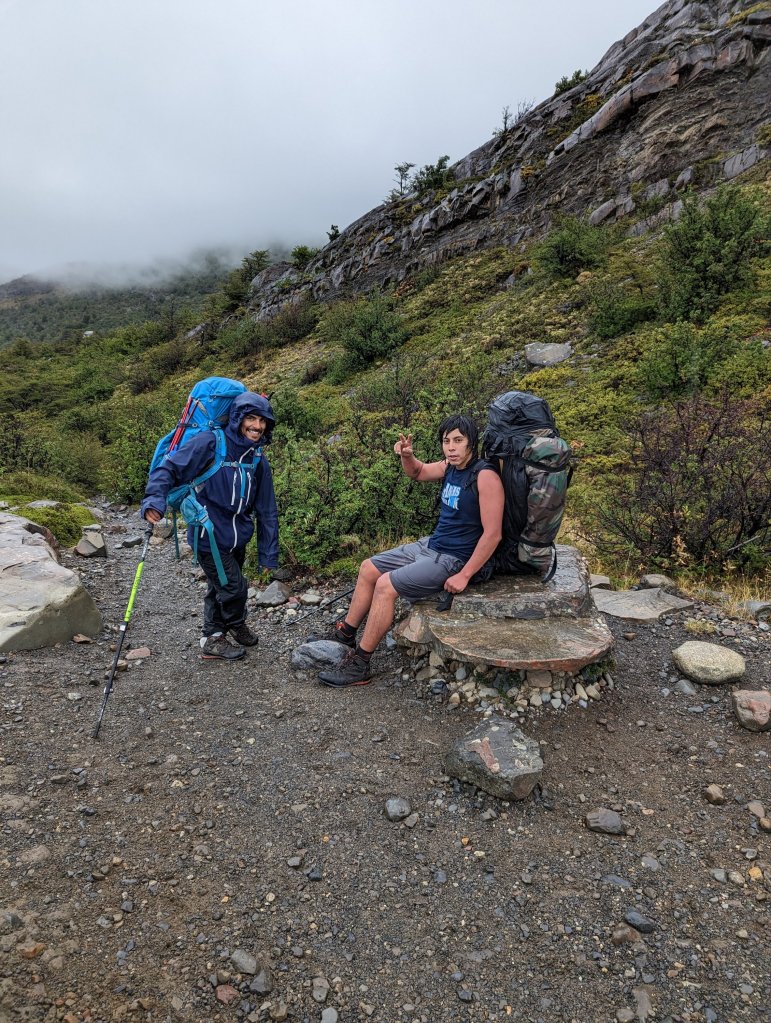
Day 2. Uh oh. It looked like rain in the forecast for the whole day which turned out to be accurate, unfortunately. We had a late breakfast (8 am) and then were headed to the next Refugio 8 miles away at Los Cuernos (“The Horns”). I don’t remember much at this point, views were limited due to the rain. We hiked along Lago Nordenskjold with the mountains to our right. Every now and then a mountain view would peek through the low hanging clouds to motivate us. Baru found a relatively sheltered location (under one of the rare trees in the area) and served us the hot, sweet tea he carried every day to enjoy with the bag lunches we carried ourselves. He carried a huge pack for a diminutive man including camping gear (he tented each night), safety items for the group, tea for midday, ground coffee with a French press for breakfast, avocadoes and peanut butter, all the important stuff. Soaked to the skin despite our waterproof gear, we were tired yet delighted to cross a raging glacial water river and see our cabanas at Refugio Cuernos after another 6 hour day. We had a fire in the tiny cabin stove that Greg used to dry out our clothes with a jury-rigged BBQ setup using overlapping hiking poles as drying racks. The rain forced everyone staying there, in cabanas or tents, into the tiny bar area so it was quite crowded. Baru, despite his tight relationship with the refugio crew honed over 7 years as a guide, was unable to get our dinner time moved up so instead they comp’d us free drinks and Chilean charcuterie while we played cards and Jenga. Baru taught us Nerviosa, a fast paced, slap card game similar to War. Steve and I killed at Spades even though I was new to the game (beginner’s luck). It was a great night although our delayed dinner time (salmon again) meant the fire in our cabana went out and a chill set in overnight. Despite that I could see the bright stars of the Southern cross through the skylight above my bed. Elevation approx. 800 feet, 8 miles, 6 hours.
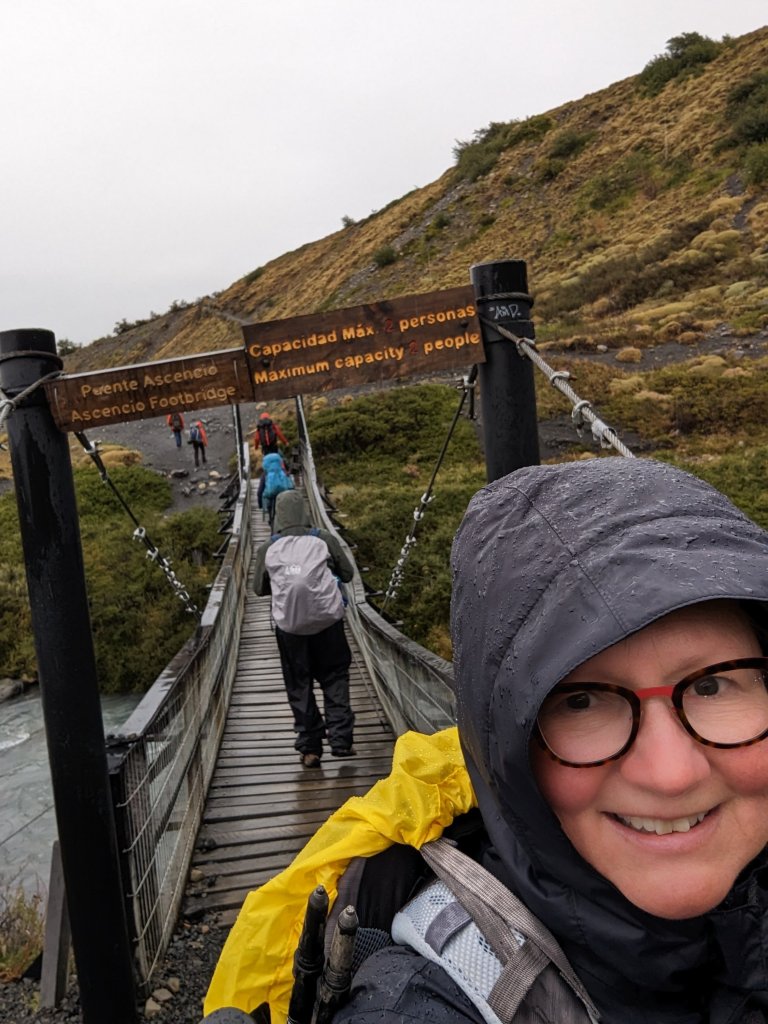
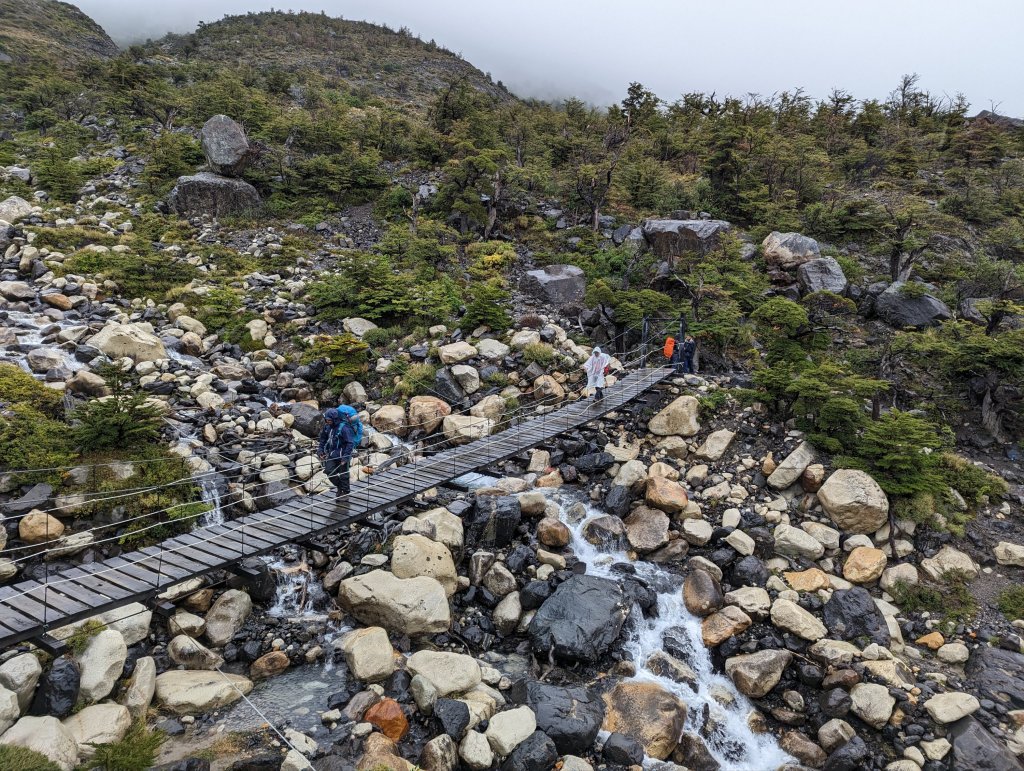

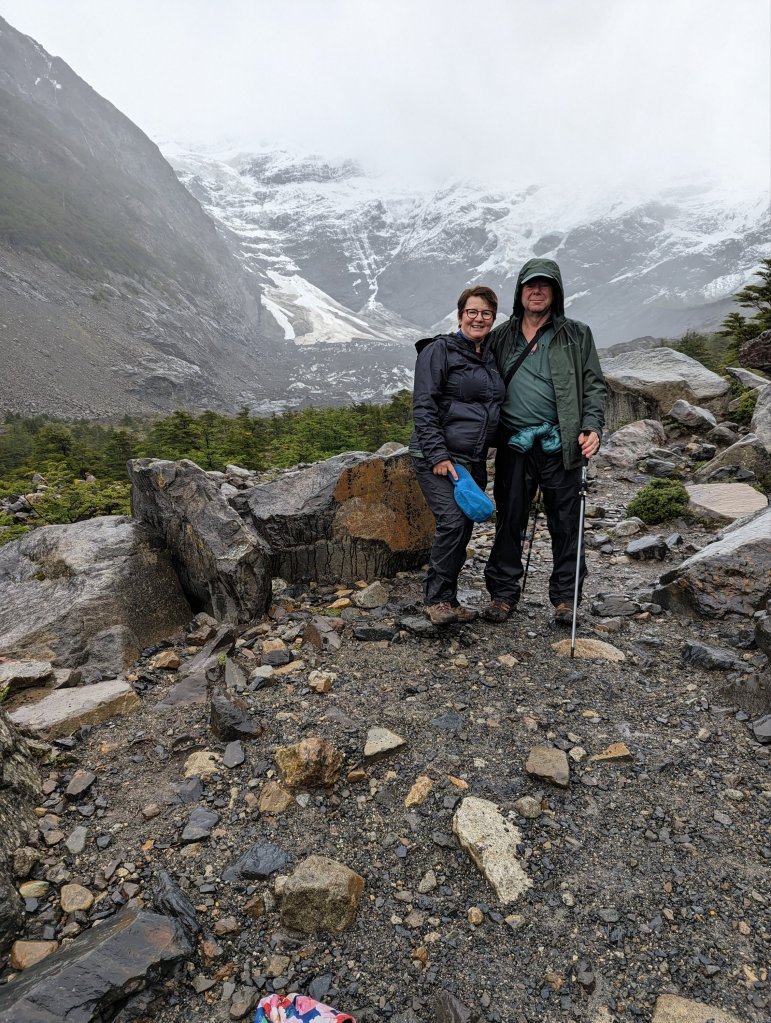


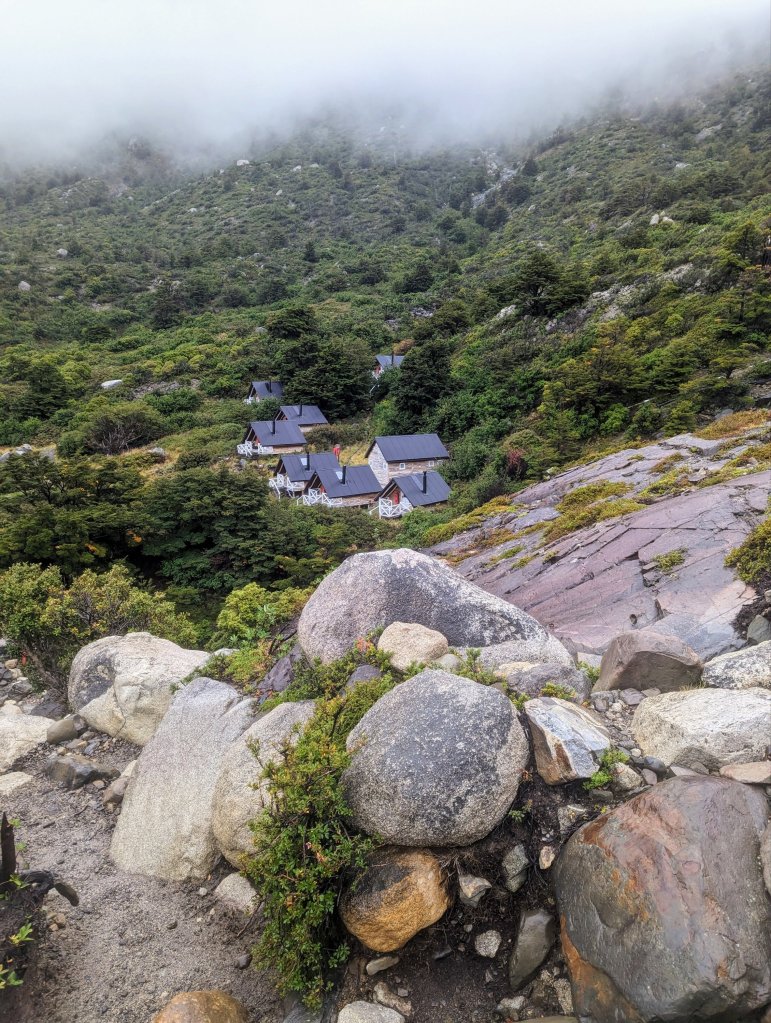

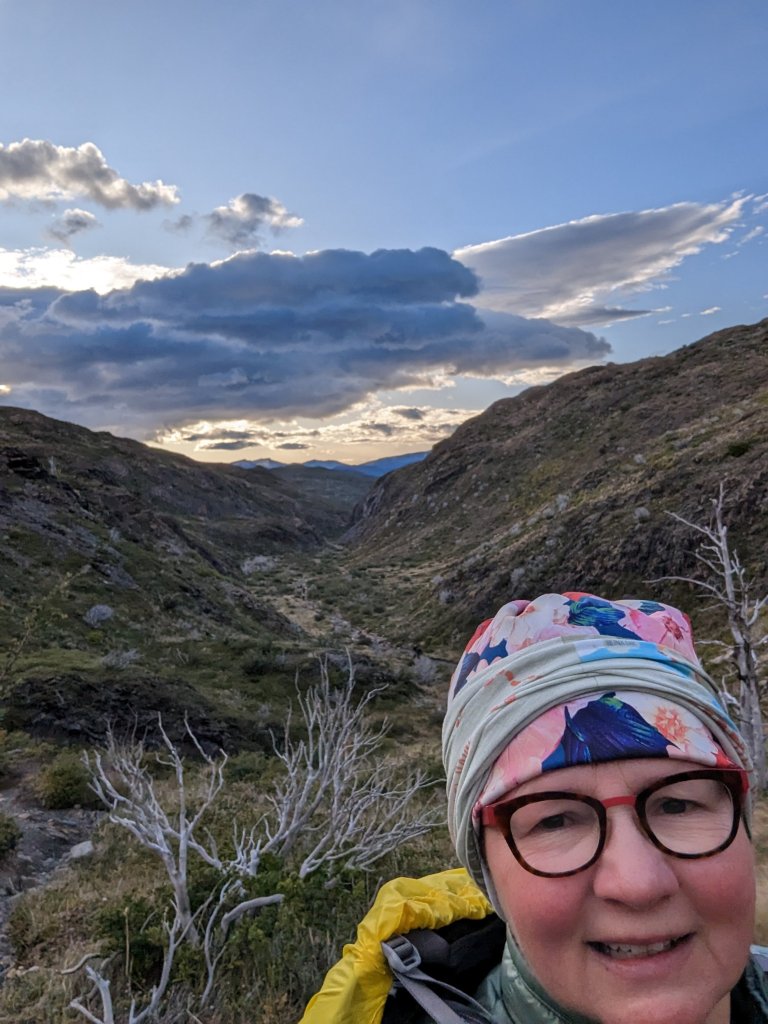
Day 3. Sun!!! The Cuernos peaks towered above the Refugio and reflected gold in the morning sun. Baru had French pressed coffee ready at breakfast and then we headed out to the French Valley and the Frances glacier. We hiked a couple hours to the ranger station at the head of the valley to drop our packs which we collected later. It had started to rain so we geared up. On the muddy path we ran into an Indian couple we had befriended on the ship to Cape Horn who were hiking one day in the park. It was nice to see them again. Then we continued up the valley and along the glacial river and up in elevation, through forests and glacial moraine and running rain water throughout. We reached the Mirador (lookout) from whence we could see the glacier, covered with dirt and pebbles from its slow, chaotic journey. Not a pretty glacier but pretty impressive nonetheless. We could hear avalanches in the peaks above. With the weather as it was we decided not to continue for a closer look to Britannica Point and returned to the station and our packs. Baru, ever the friendly guy, had arranged for our group to lunch inside the rather rundown building but it was warm and dry, unlike where all the other hikers rested-outside. While dining on sandwiches and Baru’s tea we watched as another hiker had his completely degraded boots taped together with kinetic tape, duct tape, bandage tape, anything that would keep them together. We continued on, the sun now returning, crossing glacial streams and meandering hills. Turning back we saw the Cuernos and other peaks from the other side. The mountains were magnificent in the crisp, clean air. Short dead trees covered the mountainside, the remnants of a fire in the early 2000s from a hiker burning his discarded toilet paper. 17,000 acres burned. Eventually we could see the next Refugio on turquoise colored Lake Pehoe, Grande Paine towering above. Grande Paine Refugio was larger than Los Cuernos and very busy. After showering and changing and lucky enough to get our boots close to the fireplace to dry, we had dinner, chicken or pork buffet, and went to bed early. Others in the Refugio were obviously less tired and talked outside our room til 11pm. Ugh. We were back in a bunk room now shared with 2 others so I ended up in a top bunk. I managed to not have to pee in the middle of the night, thankfully, because I had no idea how I’d get down without falling. Elevation, a rolling 758 feet, 11 miles, 8 hours.

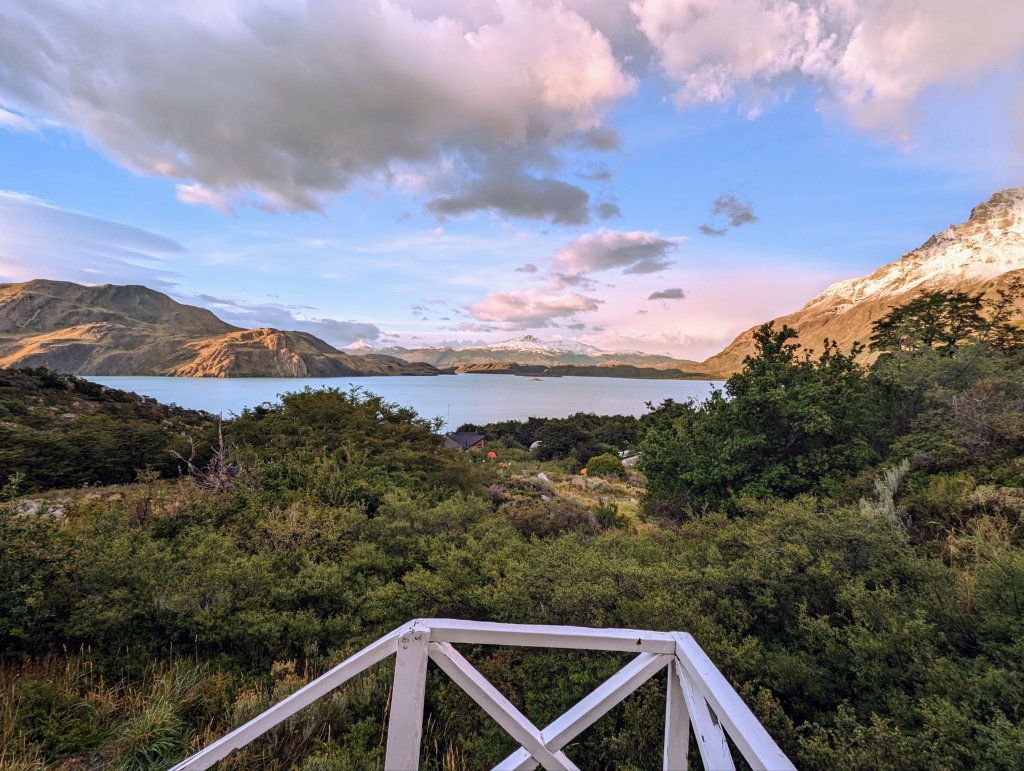
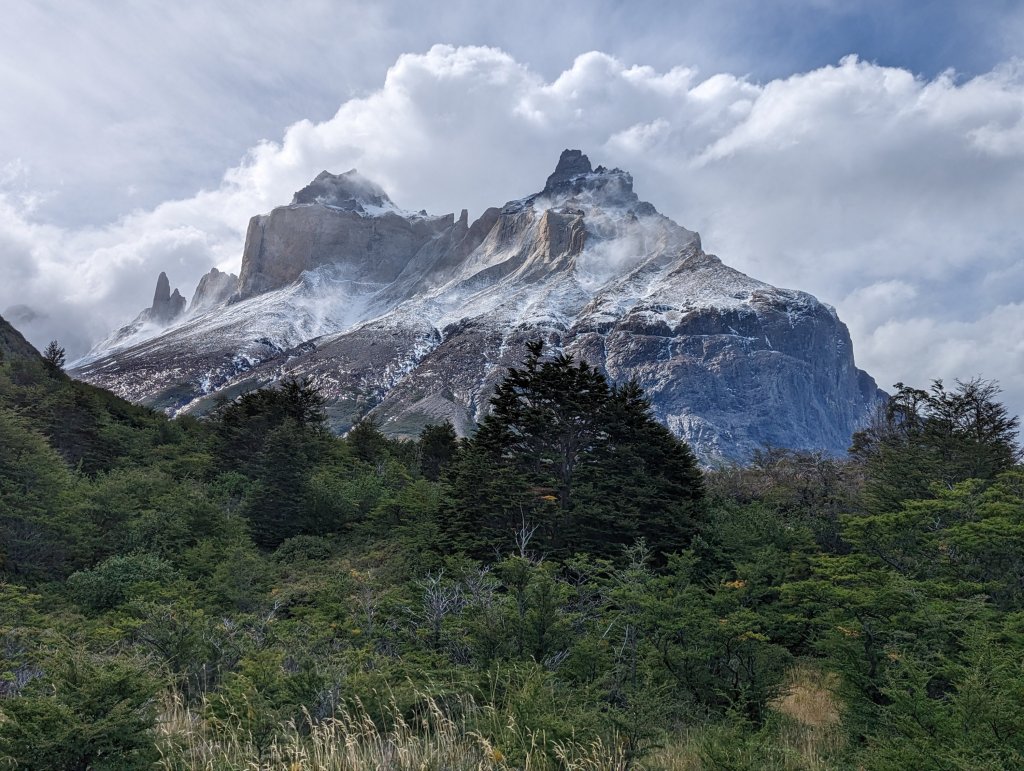
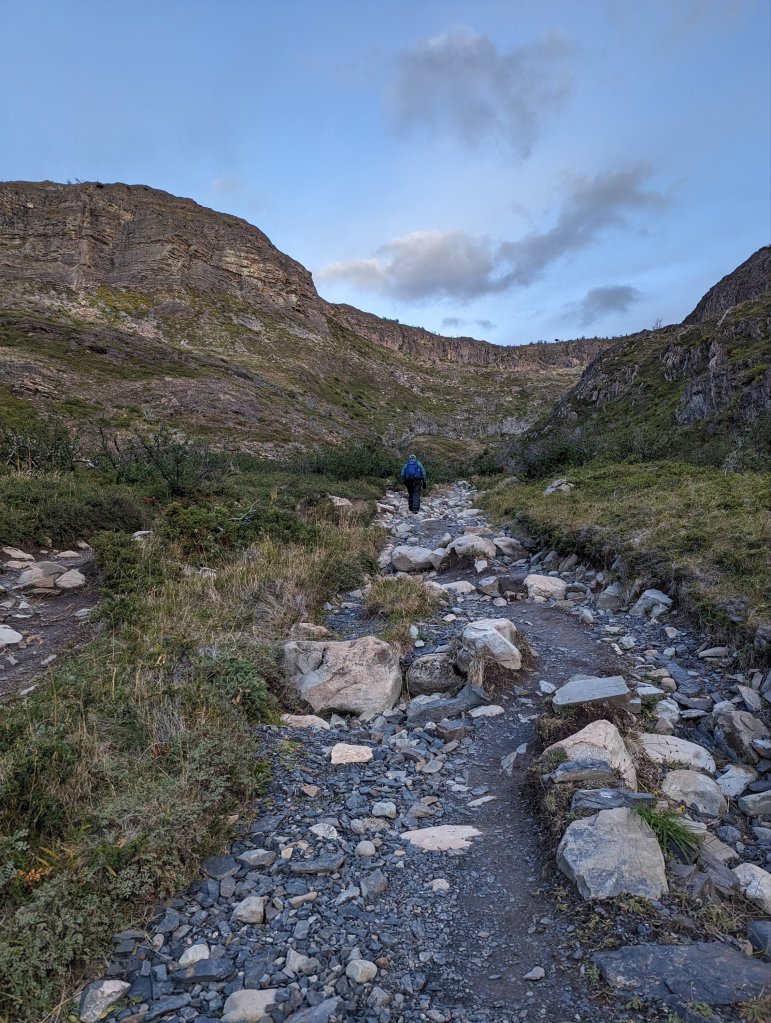
Day 4. Sunny, again, on our last day hiking. The plan was to pack, eat, and get on the trail to Glacier Grey by 8 am to catch the 2pm boat but Steve had developed swelling on his knee and had to make the difficult decision to bail. This Refugio had access to a dock and a boat to a bus to Puerto Natales several times each day (that’s why it was so busy). Steve and Andrea departed with travel instructions from Baru while Greg and I got a start on the final day’s hike. This was supposedly the easiest hike but my legs were exhausted. We hiked fast (well, let’s just say faster) up gradual hills and through rock strewn or loose conglomerate stone paths (like every day). It was obvious Steve had made the right choice. As we moved on, the wind picked up. And up. And up. We got to some higher points with views of Grande Paine on the right and icebergs floating on Lago Grey on the left. Baru was going to catch up to us at some point. Halfway to the Glacier Grey Refugio and the boat pickup we reached the Mirador lookout for Glacier Grey. Baru and Carlos, our porter, caught up to us then as we climbed onto the bare rock and got blown down. I literally could not stand up in the wind. Greg was bravely braced enough to take photos. Baru and Carlos played at flying, leaning into the wind and supported by it. It was crazy!!! But also, a turning point, literally. Baru, with his experience, suggested we turn back to Grande Paine Refugio suspecting that the boat to Glacier Grey would be cancelled due to the wind. We were just over 4 miles and 2 hours into a 9 mile hike with some significant downhill grade coming up. Rather than walk that and take the chance the boat would not arrive and then have to walk the same 9 miles back, I turned back accompanied by Carlos. Greg and Baru continued on a short while to another lookout, battling the wind the whole way, then turned around. Obviously Carlos slowed down to escort me and we tried communicating every now and then with his little English and my littler Spanish vocabulary. The wind was at our backs so we made good time (plus despite Carlos slowing down it was still a little fast for me) and got back to the Grande Paine Refugio just as Baru and Greg caught up. We were all exhausted with sore feet (well, maybe not Carlos). We had several hours to wait to take the boat to the bus to Puerto Natales and reunite with Steve and Andrea so Greg and I hung out at the bar cafe or hobbled about the shoreline in the wind. Baru took a nap in a tent somewhere. After returning us to our hotel, he would have a day’s rest then be at it again, guiding a group on an 8 day hike on the “O” circuit, circling completely around the mountains. We caught the boat to Puerto Pudeto at the other end of Lake Pehoe then had a private transfer bus us over severely potholed dirt roads (it has been raining a lot this summer) for 1.5 hours and got back to the Hotel Simple for dinner at 8 pm. We had completed the “W”. Last day’s elevation: 890 feet, 9 miles, a fast 4.5 hours. Thank you, Baru, and hiking boots that didn’t fall apart.




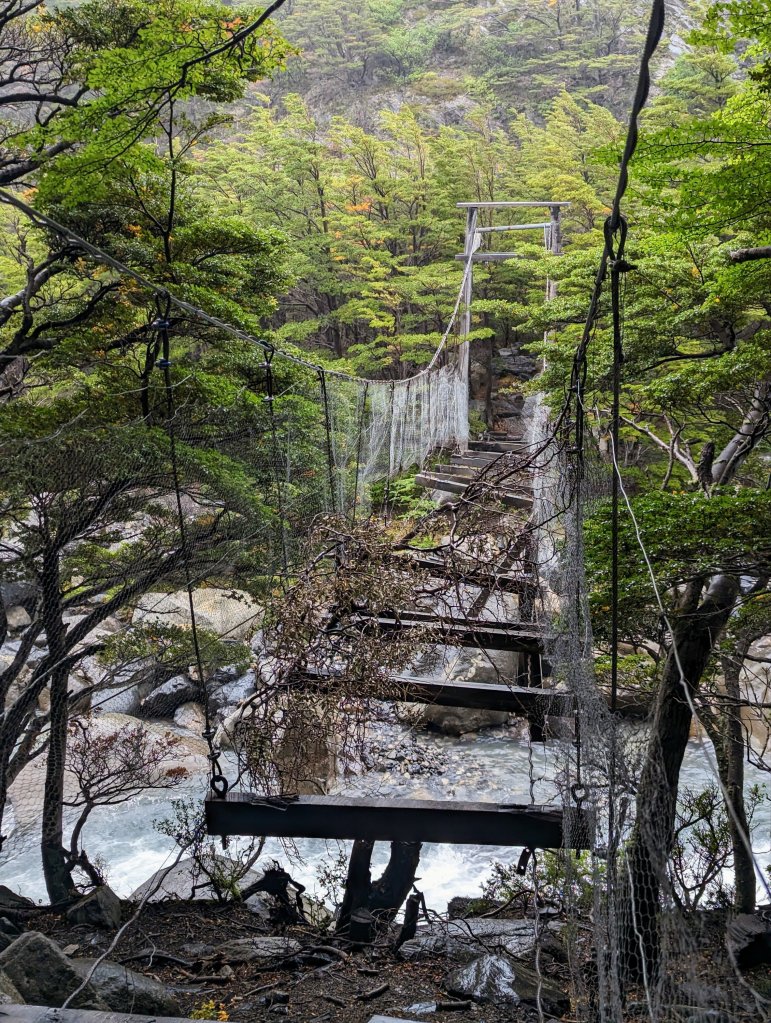
If you go: the season runs from October to early April, we hiked in late Feb. The weather doesn’t necessarily heed the calendar or the meteorologist. Prepare for all weather at any time: sun, heat, clouds, rain, cold, snow, and wind, wind, wind. Weather coming off the Pacific hits the Andes and goes nuts. This means you should be flexible with your plans and/or expectations. Also: most definitely take waterproof gear: hat, jacket, pants, gloves but keep in mind waterproof doesn’t mean it will stay waterproof for hours of rain on end; expect that after several hours of pelting rain you will be wet. It runs down your shoelaces or into the creases of your well worn boots and soaks your feet. Consider the old- school plastic bag over the feet trick. -A rain cover over your backpack doesn’t keep rain off your shoulder harness, which will soak your bag eventually. Consider putting your dry clothes, socks, papers into a plastic bag inside your pack. Or get a good poncho to cover you and your pack; disposable ones will blow around and be useless. -Even new Goretex fabric clothing will soak eventually. Forget old waterproof gear-the finish will have been worn off or washed off ages ago. -Wear layers: I had moisture wicking shirts under a fleece under a nano-puff under a ‘waterproof’ windbreaker (with hood). Everyday I went from all layers to tee shirt and back. -Be sure your boots are broken in, and maybe consider a spare pair of hiking shoes. You’ll need to dry your boots on wet or muddy days. I took one pair of boots and a pair of flipflops for rest and showering at the refugios. -Take Compeed pads or moleskin for blisters just in case. I used an entire package. -We saw a man whose boots were literally falling apart. They were wrapped with kinetic physio tape, duck tape, and whatever else they could find; he had miles yet to walk. a-Sunscreen! -Water is drinkable from streams. Drink enough! -If you are staying at a Refugio, plan on noise and bring earplugs. -Hiking poles are very useful if you have weak ankles and bad knees, like me. -Look behind you occasionally or you might miss some great views.
There are nearby hotels and lodges that offer day treks, if you have the funds for it or campsites in the area. You don’t have to hike or camp but hiking does get you closer and more in touch. We used ChileNativo for our booking. We had a guide and opted for a porter; our meals and all our entrance fees, Refugio costs, and transfers were covered. Also, our guide got us into places that independent trekkers couldn’t, like the ranger station at camp Frances on a windy, rainy day. Take your passport and immigration papers while hiking for Refugio check-in, also credit card or pesos for drinks.
Train! There are those who will say “be able to run 3-5 miles at a time” but as I say, bad knees. I walked hills, stair climbed, and walked the treadmill at an incline (10-12%) a few days a week. I tried to strengthen my knees, I swam (because I love it), I worked my core. I was slow but I did it!
My packing list: Collapsible hiking poles, several pairs wool socks, 2 pair hiking pants (probably could have just used one), rain pants, leggings for resting or sleep, 2 pair wicking tees, 2 long sleeve shirts, 1 quarter zip fleece, a nano-puff jacket, a waterproof rain/wind jacket (not lined), couple bras, undies, slides for walking around refugios and in showers. I washed tee shirts in the shower so I could have a clean shirt everyday but be sure you have access to drying. Waterproof and also lightweight gloves. Beanie, buff, baseball cap, sometimes I’d wear all three: I’d need the cap to keep rain off my glasses, the hat for warmth, the buff to keep it tight on my head, or some variation. Good, broken-in hiking boots. I prefer taller boots because, well, weak ankles. I wore a compression sleeve on my knee. Sunscreen, comb, toothpaste and brush, shampoo and conditioner bars (not liquid), soap bars from hotels, fast dry micro fiber towel (so-named because they don’t absorb water in the first place). 25-30 liter backpack (we had a porter but I could have fit everything in if I needed) with rain cover and plastic trash bag for inside, water bottle (refill at streams). I tried to keep everything organized in packing cubes or Ziploc bags. Sunglasses. Passport and immigration papers, pesos and credit card. Moleskin or Compeed bandages, lots of Advil.
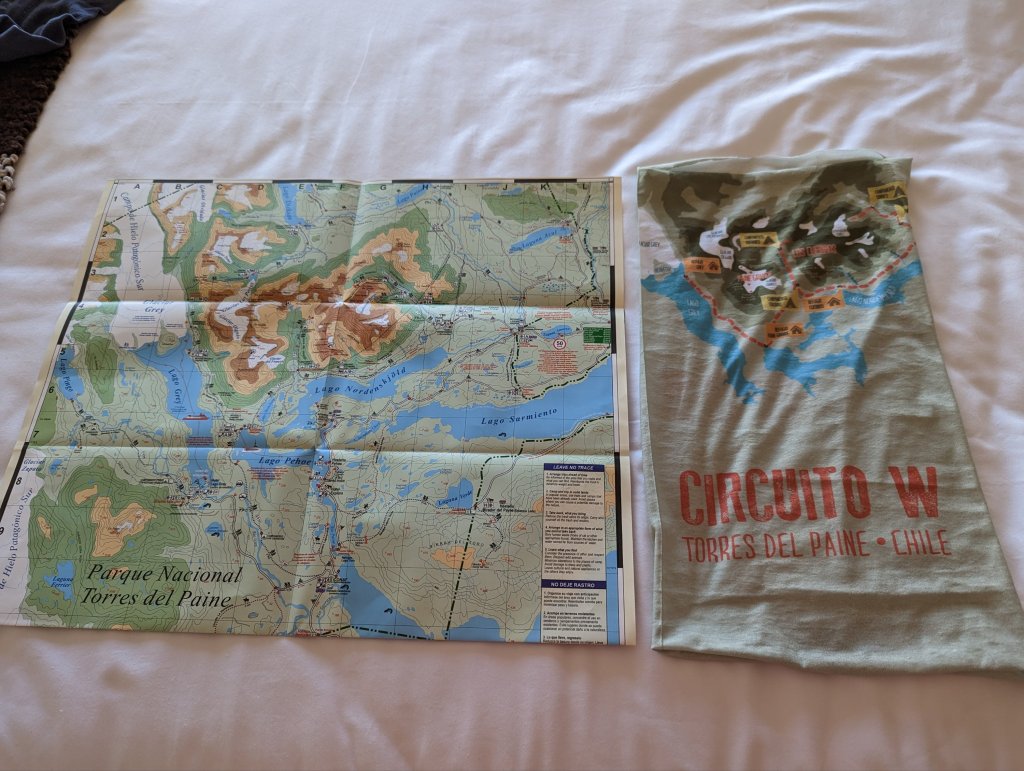

 My new reality
You guys are amazing! ‘Flying in the wind’ ! adventure and soggy at times, but your photos speak volumes!! Question:
what bag are you using? (rolling duffle? size, brand) and..where did you get the shampoo/conditioner bars? I’m staying tuned!!
LikeLike