
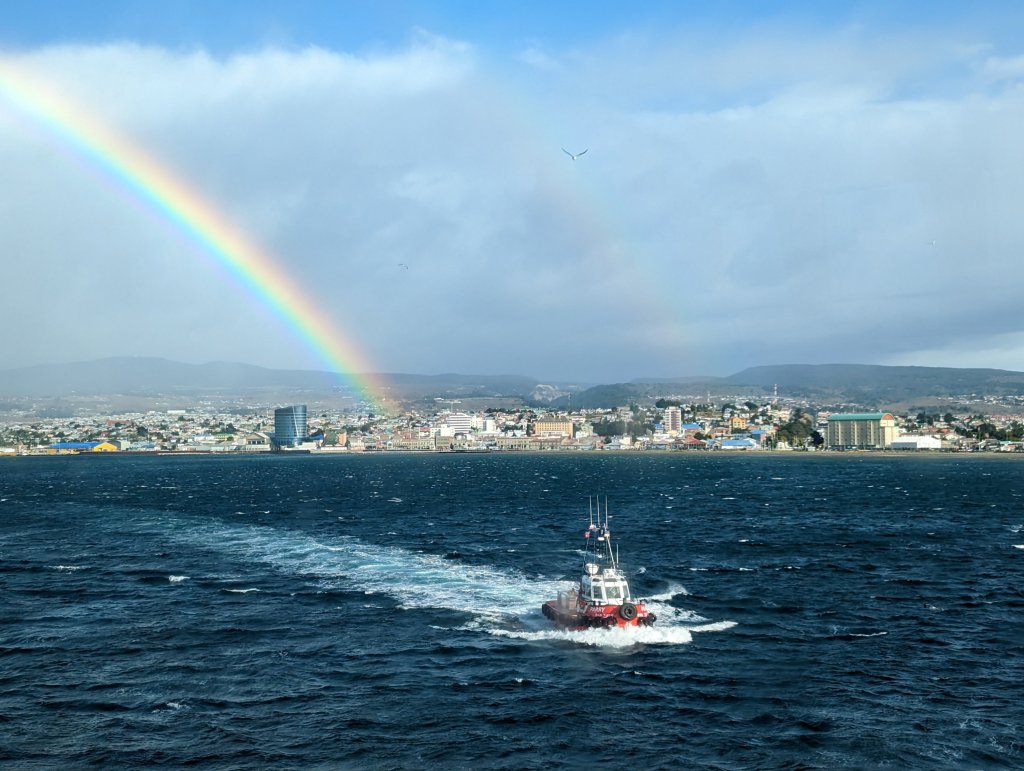
Our South American adventure continued as we headed north spending a couple days in Punta Arenas after disembarking the Stella Australis. We were now on continental Chile, on the northeast side of the Magellan Strait. To the east and south is the island of Tierra del Fuego, shared with Argentina with Ushuaia at the south. It was very windy, in the 40s, with intermittent rain and sun as the weather had been since we left BA but typical summer weather in Patagonia.

Punta Arenas is a major port on the Magellan Strait, somewhat larger than Ushuaia and with more ‘respectable’ history, although I’m sure that can be easily disputed. Money was made in shipping, ranching, banking, etc but at the horrific expense of the indigenous Selknap people, the last living native speaker passing in the 1970’s. Anyway, we stayed at a nice older hotel, the Hotel Jose Noguiera in the former Palacio of Sara Braun and Jose Noguiera. Chile granted the Noguiera’s 3×10*6 acres! (That’s 3,000,000 for those not familiar with scientific notation). Sara Braun funded Shackleton’s rescue of his men after he left with a few others for help. The Shackleton Bar inside the hotel was an elegant step back in time but with an updated drink menu.
We walked the town, up and down, visiting the local Cemetery once again and noting the more sophisticated architecture of the buildings and parks as compared to Ushuaia. A monument of Magellan has a statue of a seated native with a highly polished foot. The story goes that diminutive Magellan (as most Europeans were back then in 1520) on his circumnavigation of the globe in search of an alternative spice trade route met the taller indigenous natives covered in guanaco and sea lion furs and named the area “Patagones” meaning “big footed monster”. I guess it’s good luck to touch the giant foot, so I did. There’s a few small museums to visit but we didn’t have time. Btw Magellan didn’t even complete the circumnavigation, having been killed in the Philippines, but his first mate Juan Sebastián Elcano did and yet Magellan got the glory. Also btw, Magellan was Portuguese but sailed for Spain. Hi Dan!


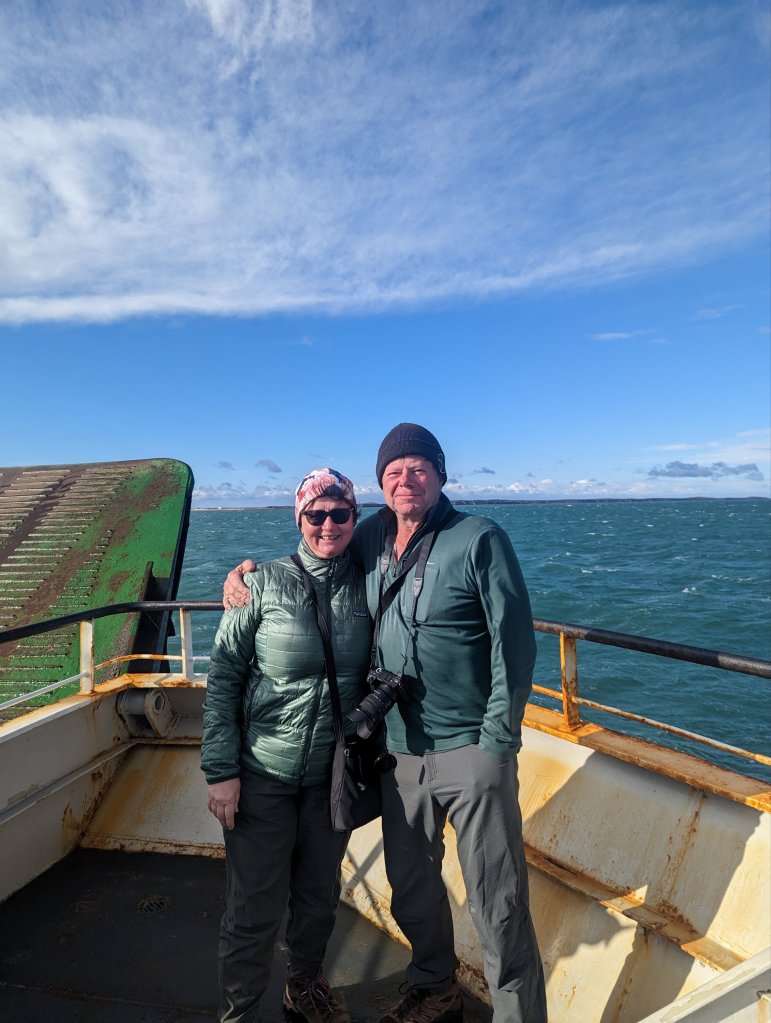
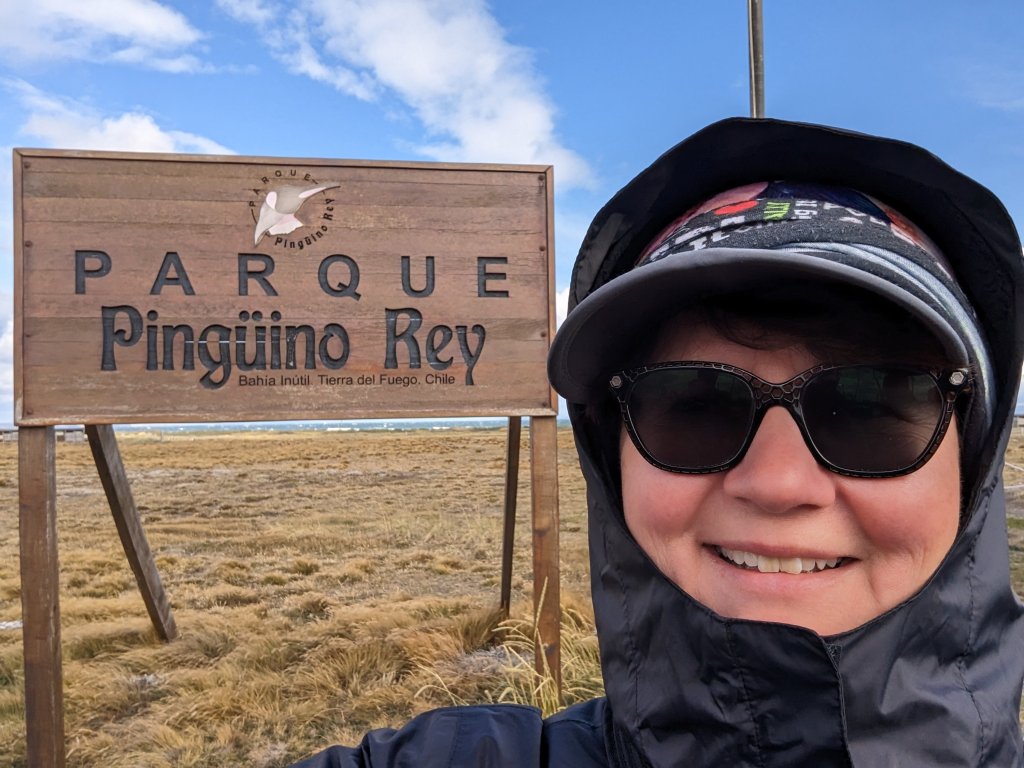
We spent one full day traveling to see more penguins. It was mui windy, I mean mucho mui windy, enough wind to shut down the ferry the night previously. Our tour was lucky enough to go, and by lucky I mean to drive 2.5 hours to the ferry and hope to get on and cross the narrowest part of the Magellan Strait. A bus load of travellers were unfortunate enough to have to spend the night on the bus in order to stay in the queue and attempt crossing the next morning, which they did, with us. Later we found out that the longest wait to cross was three days!!! Anyway, back on the road for another couple hours to a park where a small colony of King penguins was naturally established. King penguins are mostly found on South Georgia island off the tip of Cape Horn and Antarctica; here there were only 40 nesting couples but they return every year. Food is more plentiful due to stricter fishing regulations so these King penguins are bigger than most. The wind at this point was brutal so even the penguins were quiet and uncomfortable. We photographed from a duck blind about 100 meters away then ran back onto the bus out of the wind for the return trip through pampas and the ferry, stopping for giant sandwiches and a quick estancia visit. That was a 12 hour day and I can’t really say it was worth it except to spend some time with a bus load of lovely Chileans and see the miles and miles of pampas dotted with sheep, guanacos, and rhea (related to emus).
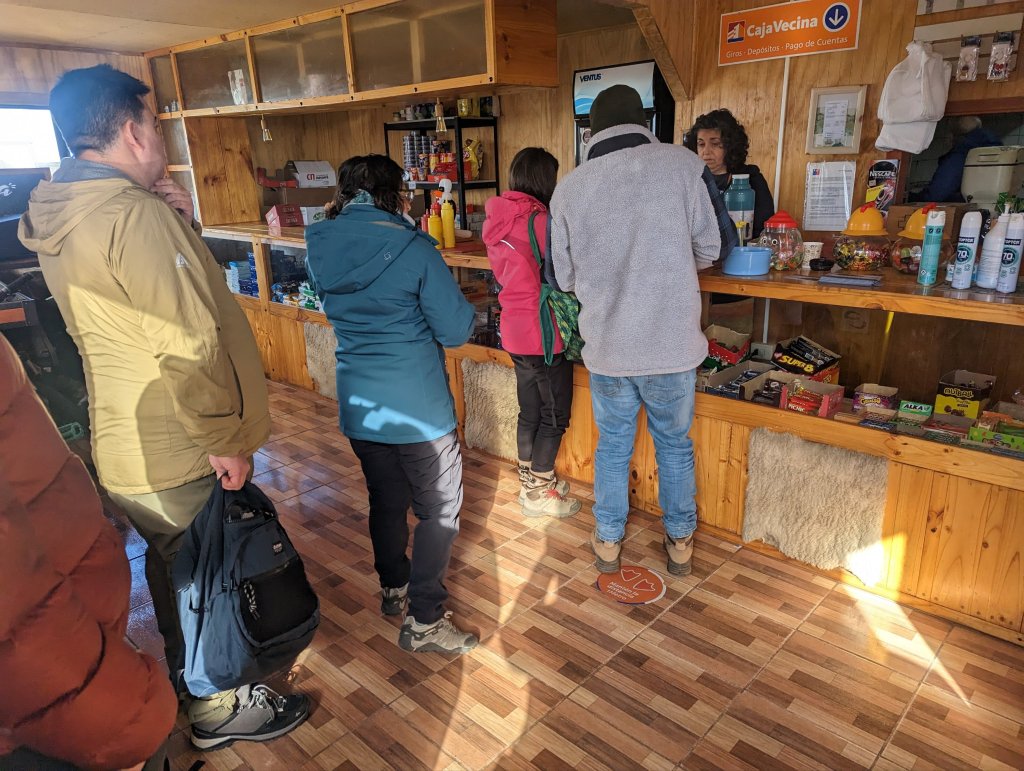


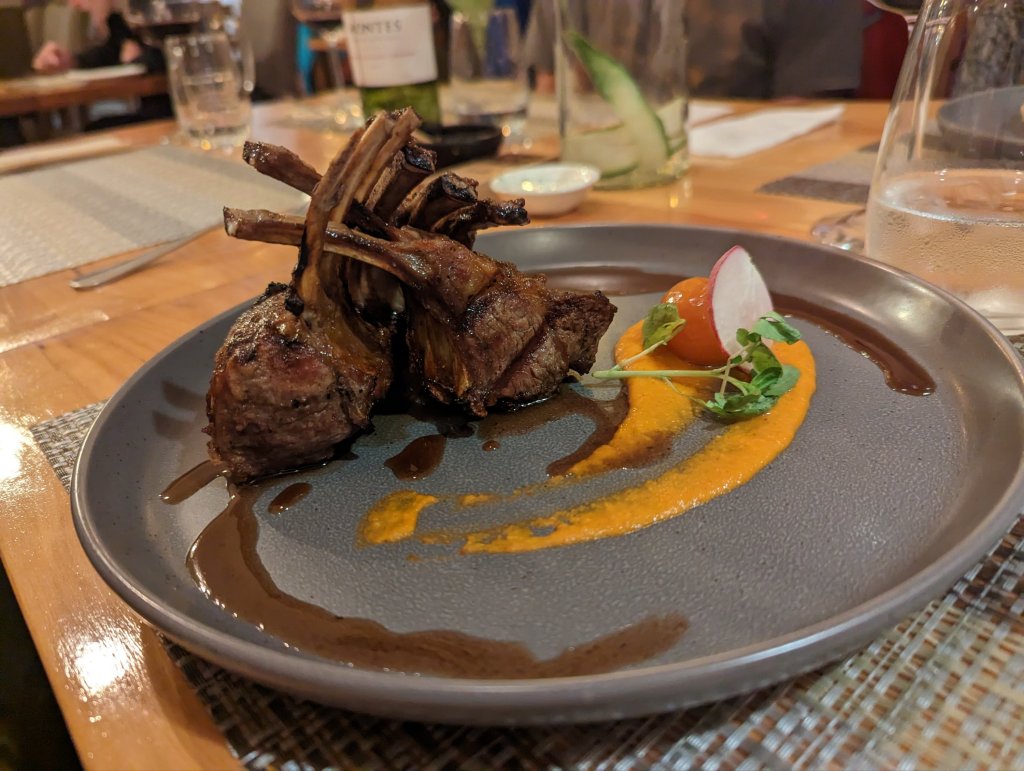
We left mid morning the next day for another, shorter, bus ride to Puerto Natales. Natales is the jumping off point for hikers and trekkers into the Parc Nationale Torres del Paine, where we were heading next. But first, a day in Natales, a former meat (sheep) processing, freezing, and shipping port with access to the Magellan Strait. The town was filled with hostels, eateries, bars, and gear shops, and with hikers in the uniform: boots, Patagonia jacket, backpack. The weather was still windy with intermittent rain but on occasion the surrounding mountains would peek through. Our mountain biking excursion was cancelled due to the weather so we meandered through town instead. We visited a very nice but tiny history museum highlighting the local indigenous people, now gone, and also the sheepherding and meat processing history of the area. We decided to walk back to the hotel, 3 miles outside of town, but regretted that when the wind, rain, and hail appeared out of nowhere. A stray dog accompanied us the whole way and raced after every car that drove by (“it’s not ours” we wanted to shout). After drying down and warming up we returned to town to meet with our friends Steve and Andrea who joined us for the rest of the trip. We met with our Chile Nativo hiking guide and then dined at Afrigonia, an African/Chilean fusion restaurant, having lamb, salmon, and the local delicacy, guanaco. Tomorrow, we hike!


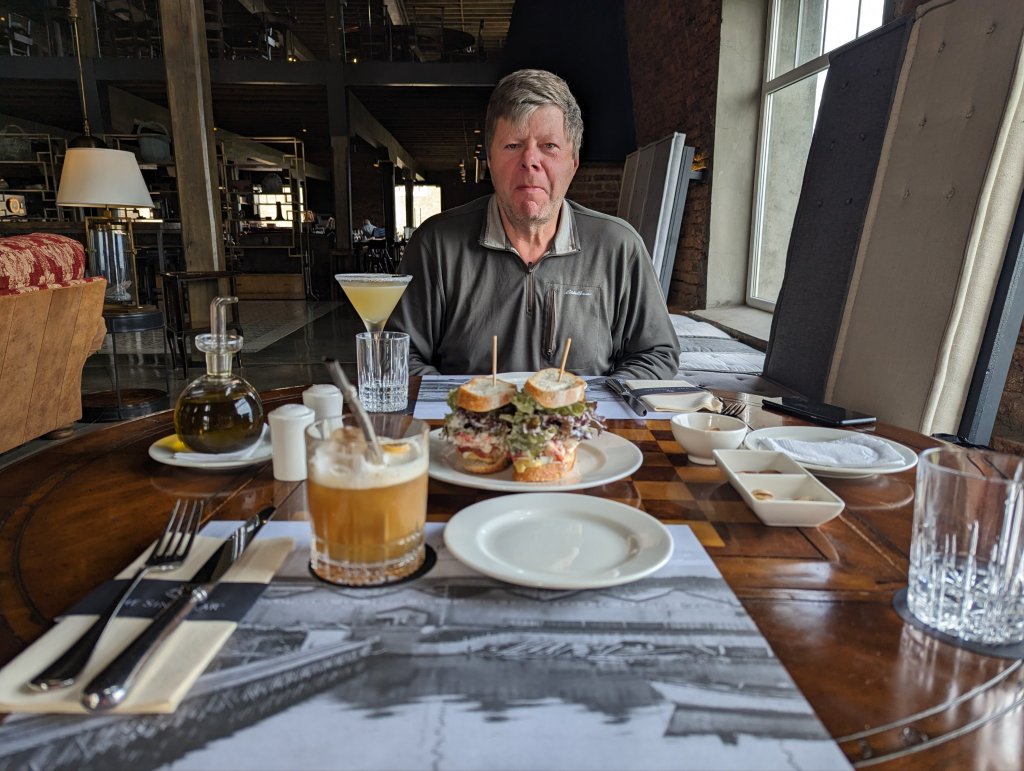
*if you go to Puerto Natales, stay at, or visit, the Hotel Singular, a hotel/spa built around the 19th century meat processing plant at Puerto Bories. They display the boilers and steam generator plants of the original factory in the lobby, the tannery room became a huge ballroom, the blacksmithing shop now an elegant restaurant. The owners, descendants of the originals, did a great job keeping the history of the place intact yet making a beautiful hotel and restaurant. Great food and cocktail menu. Our hotel, the Hotel Simple was next door and was very comfortable too. You do have to hop a fence to get from one to another if you don’t want to walk the long driveway.



 My new reality