

We’ve been travelling! Greg and I and two of my sisters, Christine and Terry, took the Grand European Viking river cruise from Budapest to Amsterdam. We were celebrating our 40th anniversary 1.5 years late but it was worth the wait. This was a 2 week cruise of the Danube, Main, and Rhine rivers on a Viking long ship with 150 or so guests (capacity: 198). Our ship, the Vali, looked brand new having been built just before Covid hit. Greg splurged on the larger room for us while my sisters were below in steerage. Taking a river cruise leaves the ‘driving’ to someone else and the unpacking is once and done. Luckily for us there were no river level issues on our trip. Travelling in late November, though, means the weather can be iffy. It was chilly with lots of cloudy days but only a little rain. We were prepared nevertheless.

We started in Budapest which Greg and I had visited about 25 years ago. We remembered it as dark and edgy with a leftover grey Communistic atmosphere. On this visit we were so happy to see it bright and busy and bustling. We visited the Grand Market for our paprika and spice shopping and wished we could have markets like that back home. Our first full day we took a bus excursion around the city to reacquaint with the area and learned about the history from a local guide ending up on Castle Hill and the Fisherman’s Bastion on the Buda side of the Danube. It is remarkable that they are rebuilding a lot of the castle buildings to exact replicas of the originals including an inside horse arena and the libraries. The iconic Chain Bridge is being renovated and will reopen in 2023. The Shoe Memorial along the Danube, 60 pairs of bronze shoes representing the Jews who were shot and tossed into the river in 1944, was especially moving. On our free time we visited St. Stephen’s Cathedral and walked to the top of the spire and then visited the Christkindl markets which had just opened in the square below. Everywhere we visited had Christmas markets, whether small towns or large cities, which were brightly lit and decorated with holiday greens and lights and piles of sweets or drinks to warm you, were well attended with locals and tourists. It was so good to see people out and about and celebrating! We sailed out of Budapest that evening with the beautiful Parliament building glowing in the spotlights.




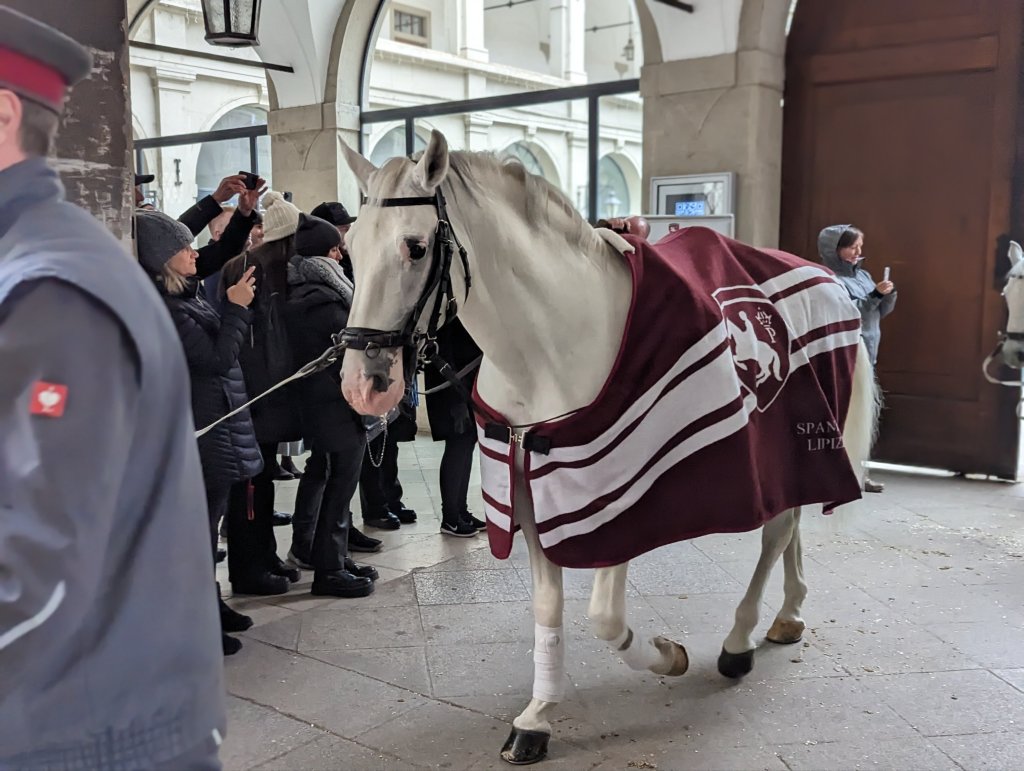
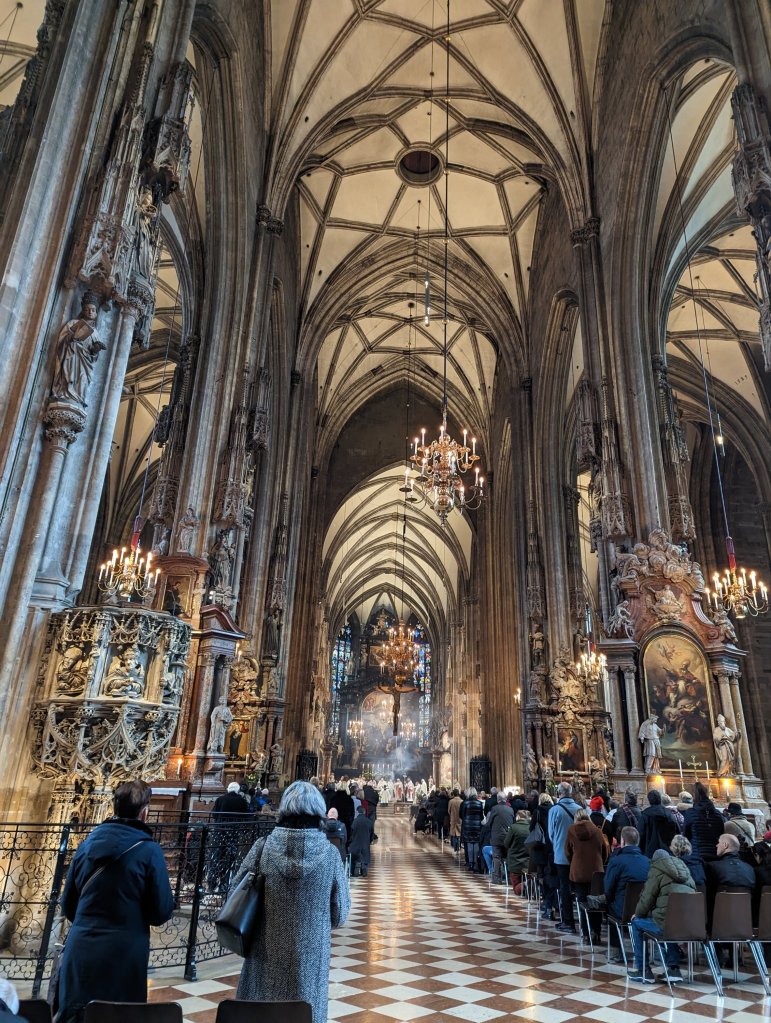
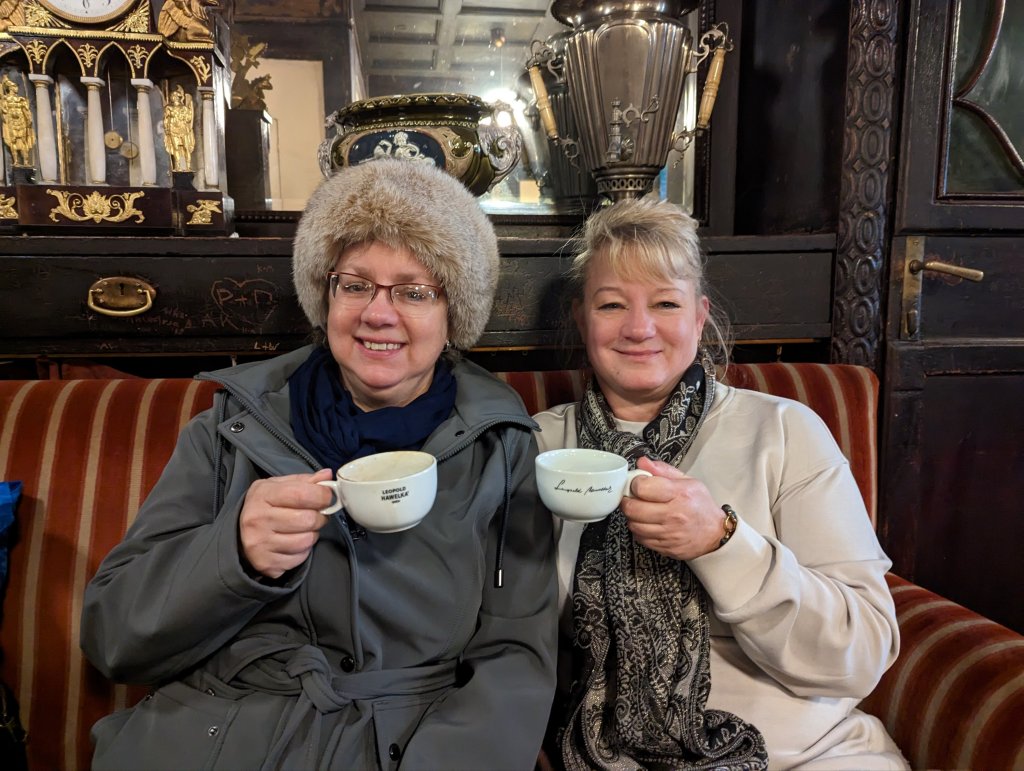
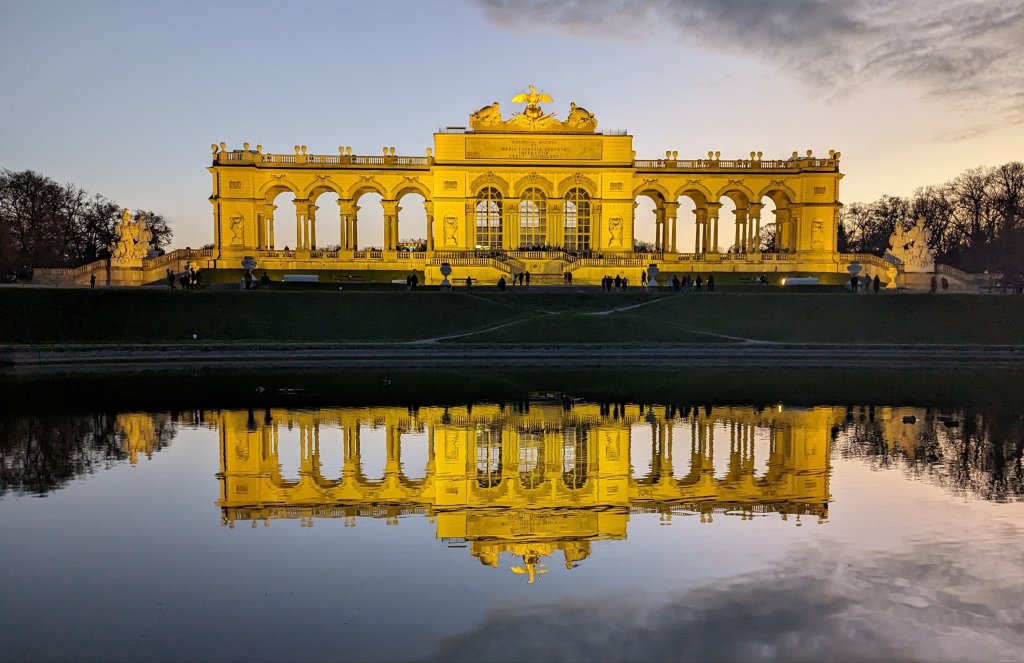
We sailed most of the next day towards Vienna, catching up on jetlag and attending the required safety talks and enjoying afternoon tea. Did I mention that we had unlimited drinks? The lounge became our favorite hangout place (usually nearest to the bar). We arrived in Vienna that evening. Greg and I enjoyed a Mozart and Strauss concert in a small venue at the Music Hall. The musicians were very good but also provided some levity in the latter half of the concert. Terry and Christine wandered on their own around the Vienna Christmas markets. Terry, having accidentally knocked her Christmas tree down last year, was on the hunt to replenish her ornament inventory and this was the trip to do just that. We met up for late night drinks. Next day we had a walking tour of Vienna; how fun for the tour guide to escort about 12 guests onto and hopefully off altogether at the same subway stop. Greg and I had been here twice before for conferences and Vienna had not changed. It is still glittery and shining, a golden version of the Emerald City with wide boulevards and baroque architecture. Our guide, as they all were, was informative and charming. We visited some new places for us including the Hrdlicka Sculpture near the Opera House and Albertina Hall and the Judenplatz Holocaust Memorial with it’s evocative books representing 65,000 murdered Jews and their stories that will never be read. And didn’t we see the Lippizaners as they left the stables? We were so close we could touch them. On our free time we visited St. Stephen’s Cathedral (yes, another St. Stephen’s), the Christmas Markets and also had treats and coffee at Cafe Hawelka (outstanding strudel, sachertorte – meh). We took the subway back to the ship and then headed out on buses for an excursion to Schonbrunn, the Hapsburg Palace. This was a revisit for us yet the palace and grounds were still beautiful. We arrived in the evening for the tour and afterwards got some amazing shots at dusk of the Gloriette. We had watched “The Empress”, a German series on the Hapsburg Empress Elizabeth, aka, Sisi, before our trip. After marrying Emperor Franz Joseph, Sisi became disillusioned with palace life, ala Princess Diana, and like Diana, is remembered everywhere throughout the former Empire (especially in Hungary) with buildings, parks, monuments, fountains, and museums dedicated in her name. Back to the ship for what was becoming routine: an outstanding sit down dinner created by the ship’s chef, Sasha, and served by our merry complement of Portugese wait staff, David, Miguel, George, and later, Daniela. Whether the regional cuisine or the chef’s specials, the food served on the boat was too good, all the time. Today: Wiener Schnitzel! After dinner (with drinks, of course) there was a lecture on Austrian history.






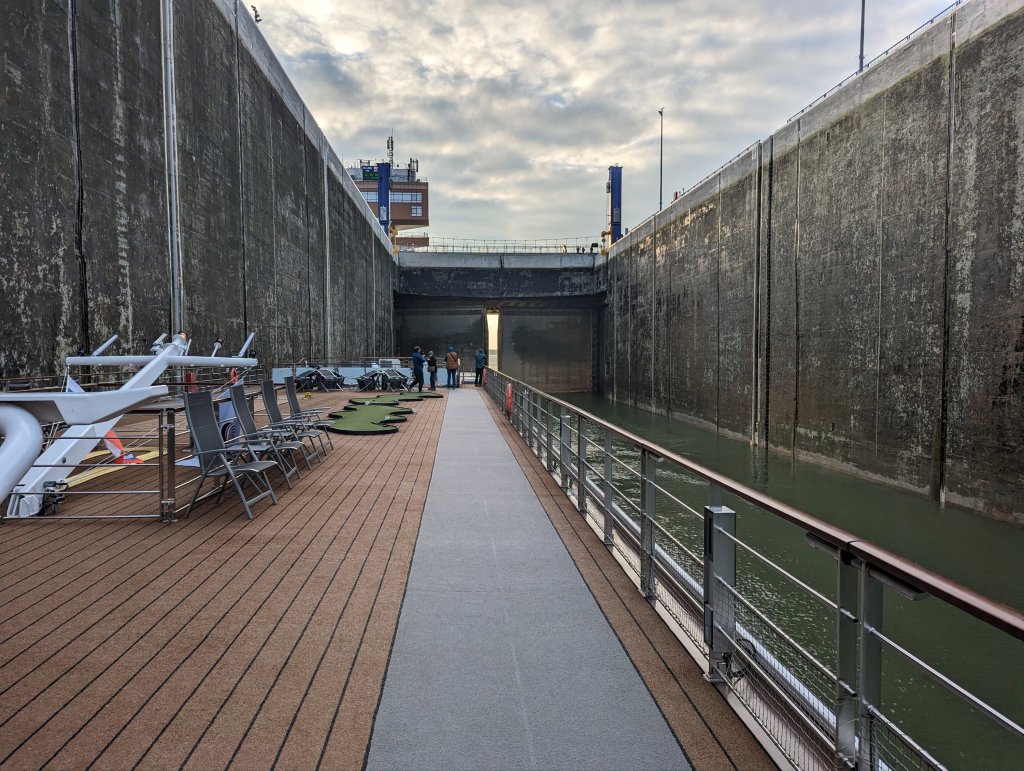
We sailed at night, typically, and often through locks (day or night), 66 of them, that would elevate us up the Danube 400+ feet and over the continental divide and then down to Amsterdam over the course of our trip. The locks themselves were fascinating, simple physical machines performing huge feats. The riverboats are often only 1 foot narrower than some of the locks requiring finesse on the Captain’s part (and his computer-aided navigation systems). I could only dream of piloting our little boat into it’s slip without all the silly oversteering.
The next morning we awoke to castles as we cruised down the Danube in the Wachau Valley. We enjoyed hot cocoa on the Aquavit terrace on the bow deck before arriving at Melk to visit the Benedictine Abbey. Greg and I had been here before. In 1991 we took a 2 week vacation, driving zig zag across Switzerland, Germany, and Austria (and maybe Lichtenstein?) from Zurich to Vienna and back. Melk was our first exposure to the grand, baroque, golden churches of Germany and Austria, built to the ‘glorification of God’. Here we are 32 years later and now there’s a park outside the Abbey and a restaurant and a gift shop. No photos were allowed inside (“please visit the gift shop”) but we have photos (on film, of course) from 32 years ago when you could take them. (I did sneak a digital shot on my phone this day.) It’s still beautiful and the wood paneled library is amazing. Seems smaller than I remember, though, like my elementary school. That night we enjoyed trivia night hosted by our Program Director Kane Davies who made the trip extra special with his humor and stories. Kane was basically the baby sitter to 150 geriatric guests (average age: about 70, ranging from 40 to 85) and performed his job with panache and patience, and with a lovely British accent to boot!


The next day we awoke in Passau in Bavaria. Greg and I stayed to visit Passau while Christine and Terry took a day long bus tour to Salzburg (we had visited there in 1991). It was probably our rainiest day but we persevered. After the usual walking tour of this city on 3 rivers (Danube, Inn, and Ilz) we spent time hiking up to the Prince-Bishop’s Palace, built above the city to protect the governing Prince-Bishop from his own constituents (politics and people, they never change). Once at the top we found out the palace and museum were closed but it was a good workout nevertheless and stayed to explore the grounds. Back down in town we visited the various churches (St. Stephen’s, once again) and markets. We’re hearing over and over again how much flooding these cities on the Danube sustain and every medieval building has markers on the exterior indicating the depth of flooding and the year; many homes have their living quarters on the upper floors, accepting that the lower floor will be flooded at some time. Once on board the ship travelled on and we caught up with the Salzburg crew who had a good but very rainy day where ‘the hills are alive’ and ‘Edelweiss’ is found everywhere.


Next stop: Regensburg. This is the beginning of our tour of towns ending in ‘burg’ on the Danube and through the Wachau Valley. Medieval Regensburg escaped major damage in WWII and thus has well preserved Gothic architecture including St. Peter’s Cathedral and the Old Stone Bridge. The bridge, built in the 12th century, opened up Northern Europe to Vienna so this was a site of some importance waaay back in the day (think Crusades). Greg and I hiked to the other side of town to visit the Taxis and Thurns Palace but, alas, it too was closed however we did discover the Cathedral of St. Emmeran and explored this empty baroque church. Later we had sausages in Germany’s oldest continuously operating restaurant, the Sausage Kitchen ‘Wurstkuchl’ built around the same time as the cathedral (1320) to feed the workers and shopped a few Christmas market stalls. A lot of these towns have universities nearby thus the population tends towards the younger side. Also, BMW has their manufacturing plant outside of town. There’s many people enjoying Gluhwein (hot mulled wine) at the festive markets. We then caught a bus to the ship which had moved upriver while we were exploring.




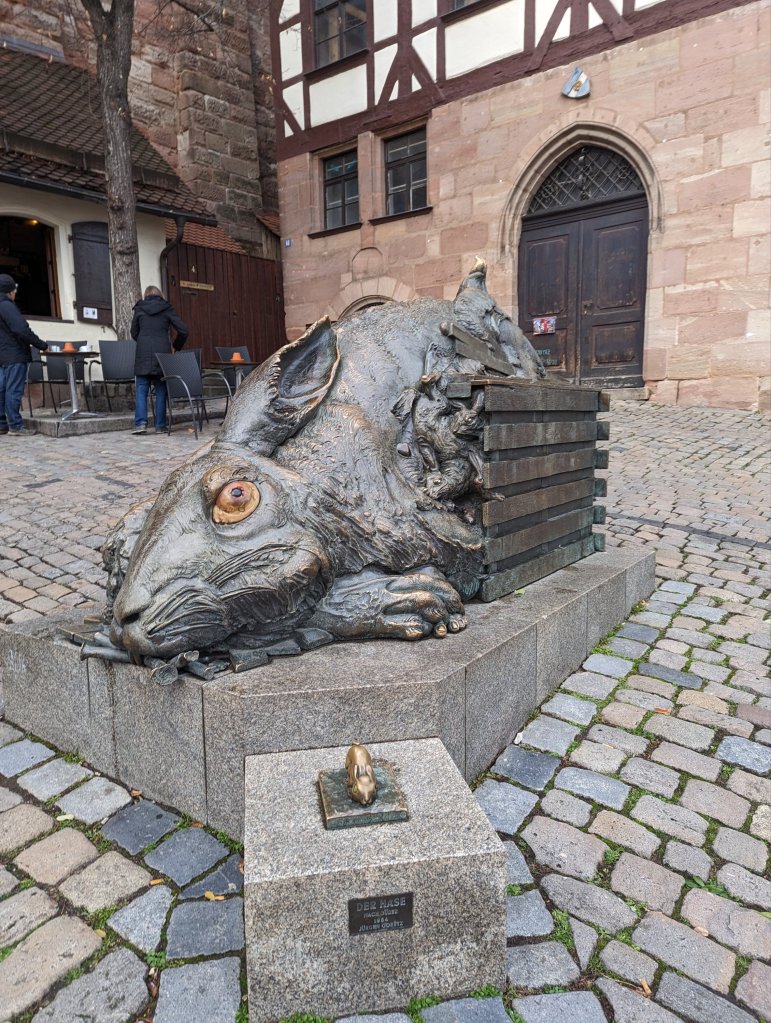
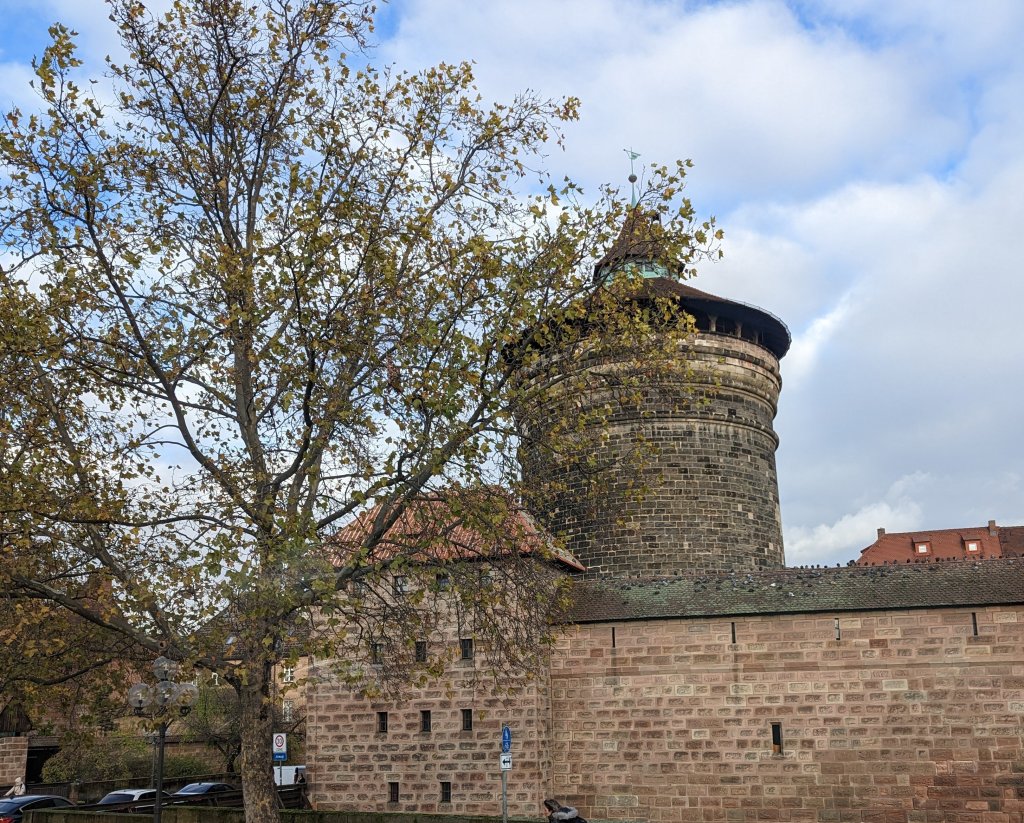
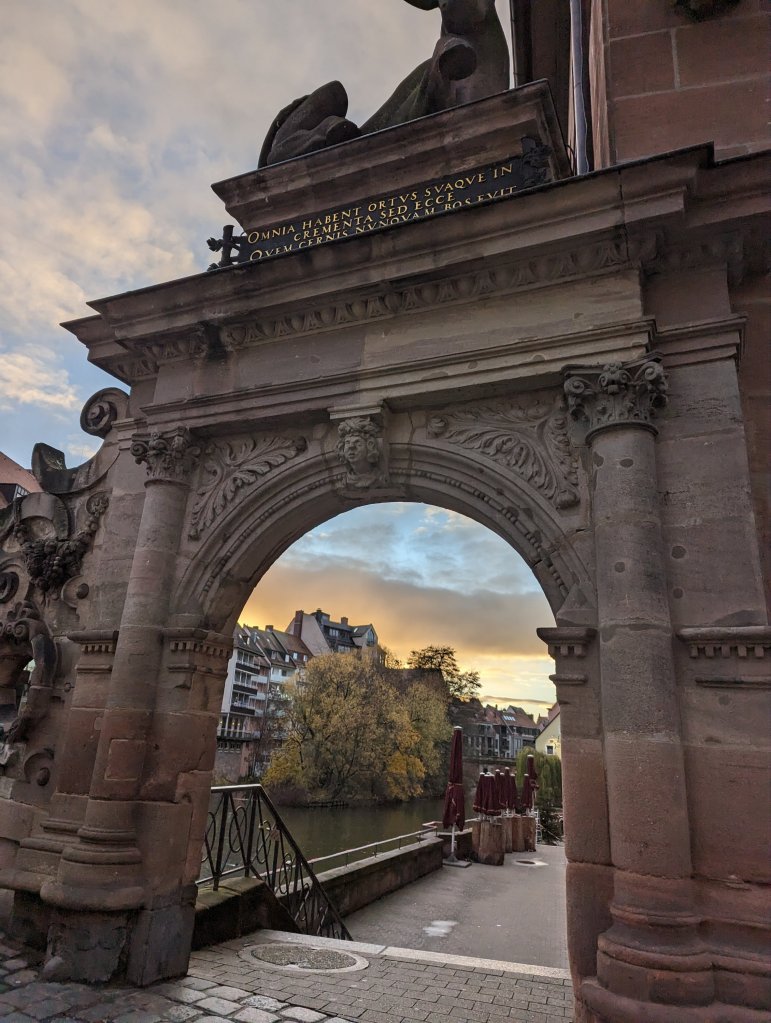
New day, new ‘berg’: Nuremberg. This fairly large city was rebuilt after significant WWII bombing although many of the old city walls and watch towers are original. Here the Nuremberg laws revoking citizenship for Jews were announced and Hitler’s annual rallies were held at the parade grounds. Yet the city was chosen for the Nuremberg trials since it had a government building still standing after all the bombing with attached prisons for holding war criminals in close proximity. Laws prohibiting the Heil salute carry fines up to 4,000 euro which anyone can report. Our tour guide gave a very emotional thank you to those on our tour, all from Allied nations (mostly US but some UK and Australian tourists), as the US occupied this quadrant of Germany after the war. His gratitude for the US ‘saving’ Germany after WWII was evident and well received. I didn’t expect the emotions that were going to be shared on this trip! We toured beer caves, massive caverns originally intended for storing beer that were used to store art works throughout the war (think ‘Monuments Men’) and also for harboring citizens during bombing raids. Later we toured St. Lorenz cathedral, formerly Catholic, now Lutheran (of course, not as simple a transition as all that!), and also walked the bridges and shopped the markets amongst the restored half timbered houses and Gothic churches in the Old Town. Renaissance painter Albrecht Durer was born here and a satirical sculpture of his masterpiece Feldhase (the Young Hare) is located in the restored old town square. We celebrated Thanksgiving back on the ship with turkey and all the trimmings, although the ‘stuffing’ was some kind of weird sliced bread. Later on in the lounge we enjoyed local musicians playing Franconian music (Franconia being the region of Germany we are now traveling in-do not confuse it with Bavaria to these Germans!)


After Nuremberg, the ship entered the Danube-Main-Rhine canal, aka the Europa Canal. This connecting canal from the Main River to the Danube connects the North Sea and Atlantic Ocean to the Black Sea. Originally envisioned by Charlemagne in 793, construction of an actual navigable waterway was finally completed in 1992. That’s a long time in the making and a lot of digging! It has become apparent that the ships were built to accommodate this narrow canal and its many locks, building as tightly as possible often with only 6 inch clearance on either side of the boat.

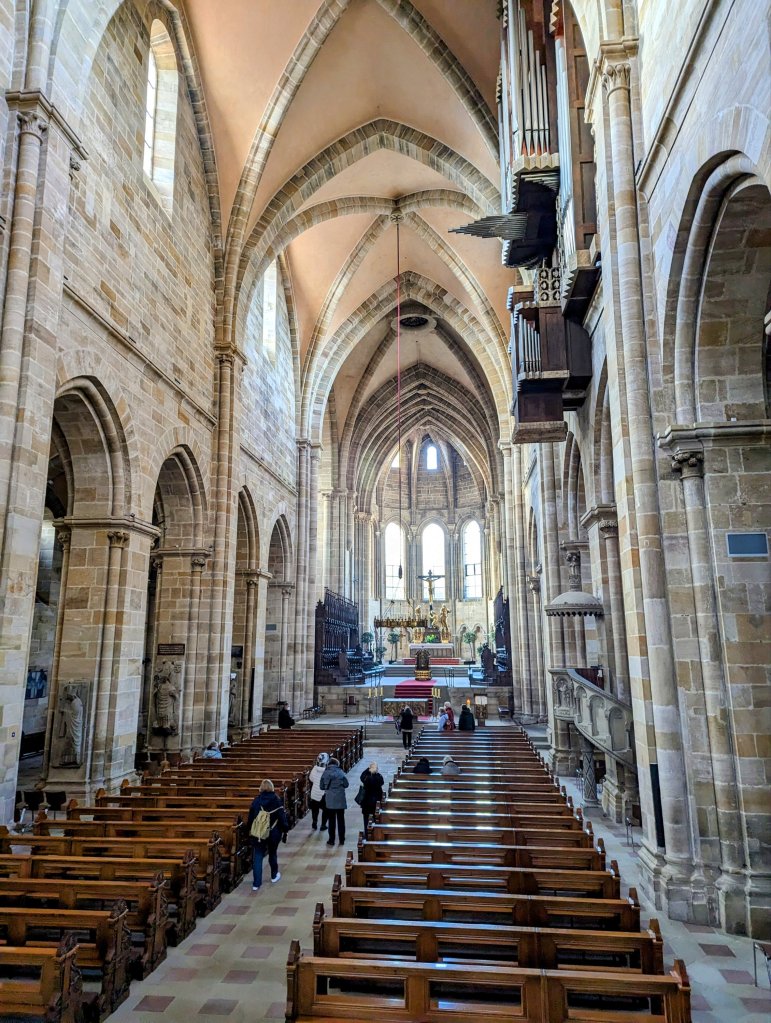
The next day we visited Bamberg, another UNESCO site. It was one of the few cities in Germany not bombed in WWII and thus has one of the largest preserved collections of medieval structures with Gothic, Baroque and Romanesque architecture. At one time Bamberg was the center of the Holy Roman Empire but also has a history of witch burning later in the 17th century. Remarkably, 5 of it’s male mayors were also burned at the stake. The city was built around 4 churches on 7 hills (after Rome) which are located at the 4 points of a cross. In one of these churches, Emperor Heinrich is buried with his wife whom he had tested for her fidelity by walking over hot coals. In apology for testing her loyalty he had her buried on his right which tradition indicates superiority. Small favors, I guess, but really deters shoe shopping. Anyway, Bamberg is beautiful with colorful, ornate buildings and lots of half-timbered houses, shops, and breweries. The original town hall is set on a bridge between the two halves of the city as a compromise. There’s a whitewater rafting course on the water just below, not so ancient. As for breweries, Bamberg is known for Rauschbier or smoky flavored beer. We popped into an old brewery for a couple bottles; in my opinion, it’s disgusting. We brought a bottle home and will see if our opinions, or the beer, improve. Also noted, a huge Abbey church and buildings on a distant hill. Asked why we couldn’t visit: the abbey (more recently a nursing home) is sinking and requires renovation. After a few hours shopping their Christmas markets and wandering through town we walked back to the buses (parked at an Opera house) and caught up to the ship which again had moved up-river while we were touring.


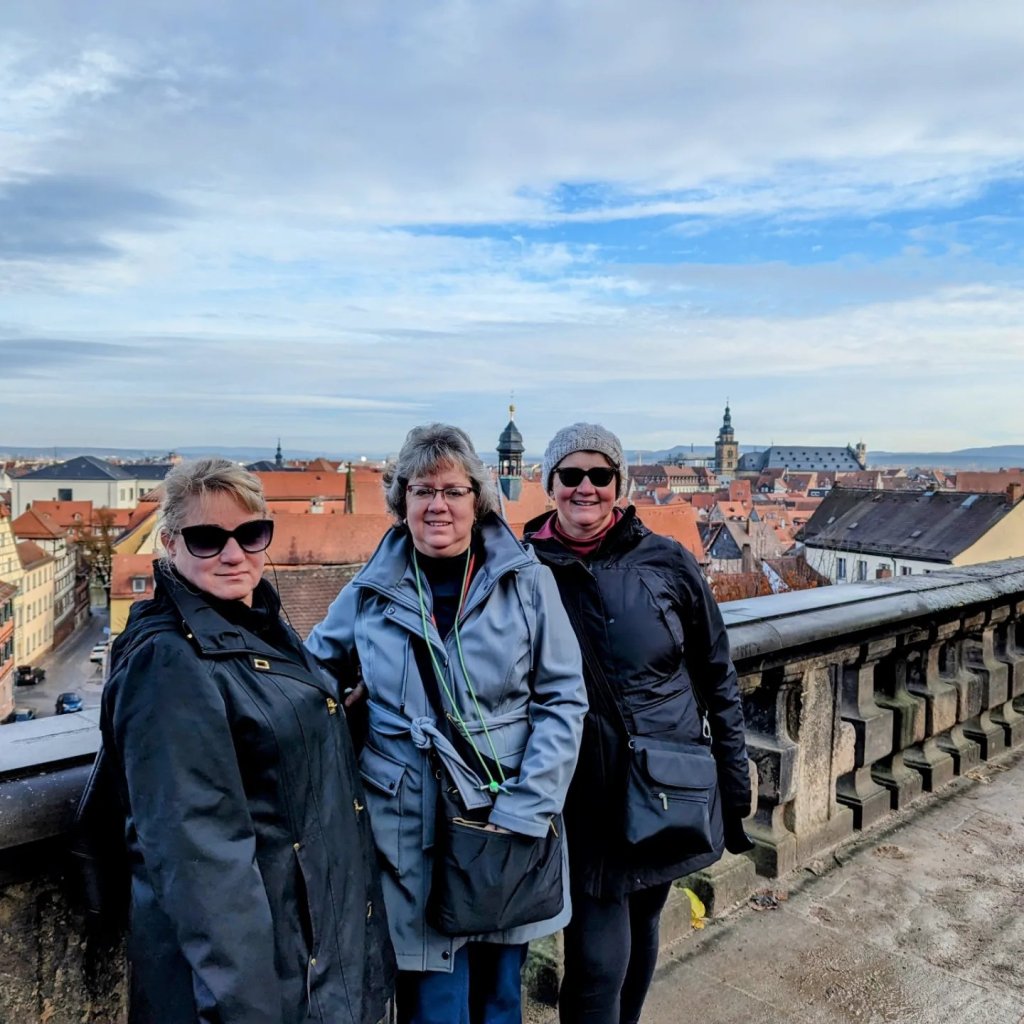


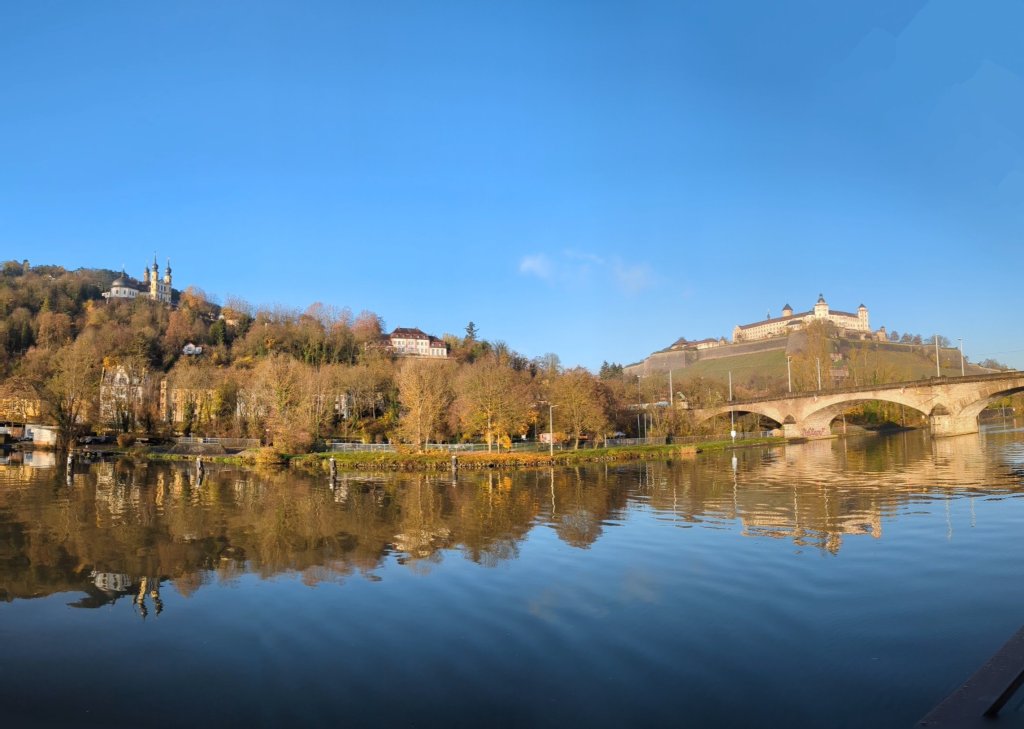
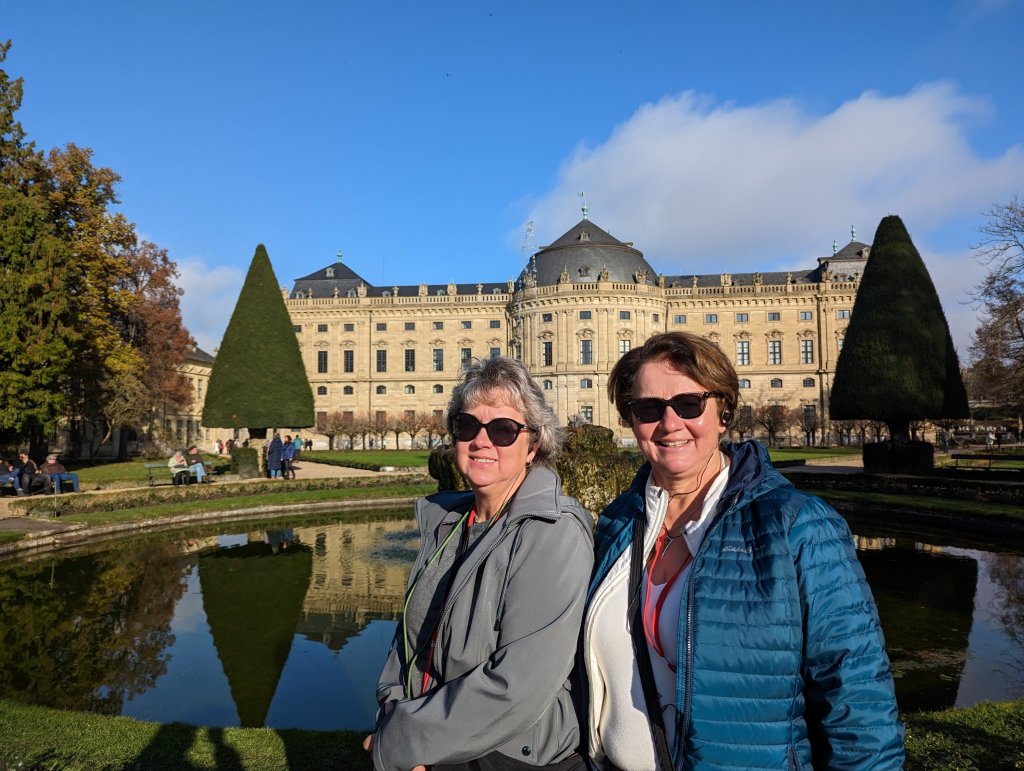
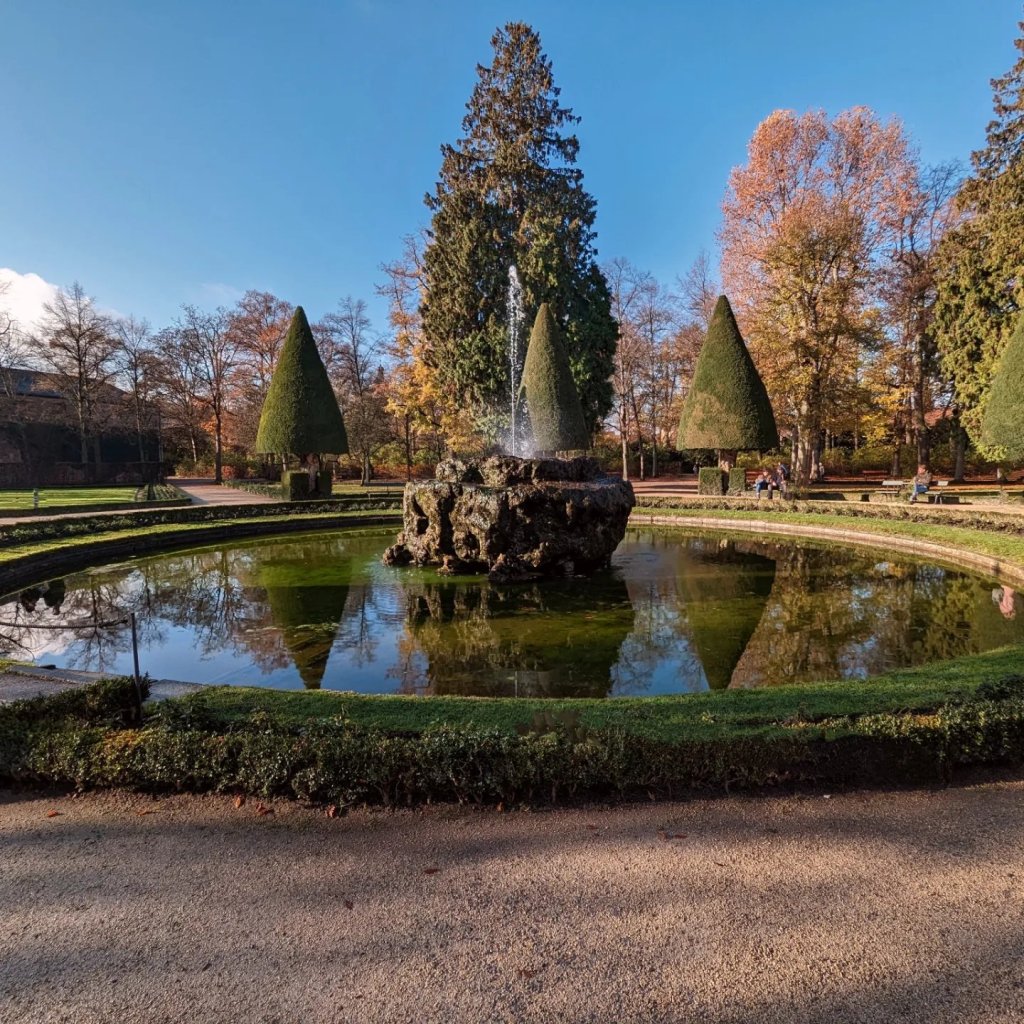
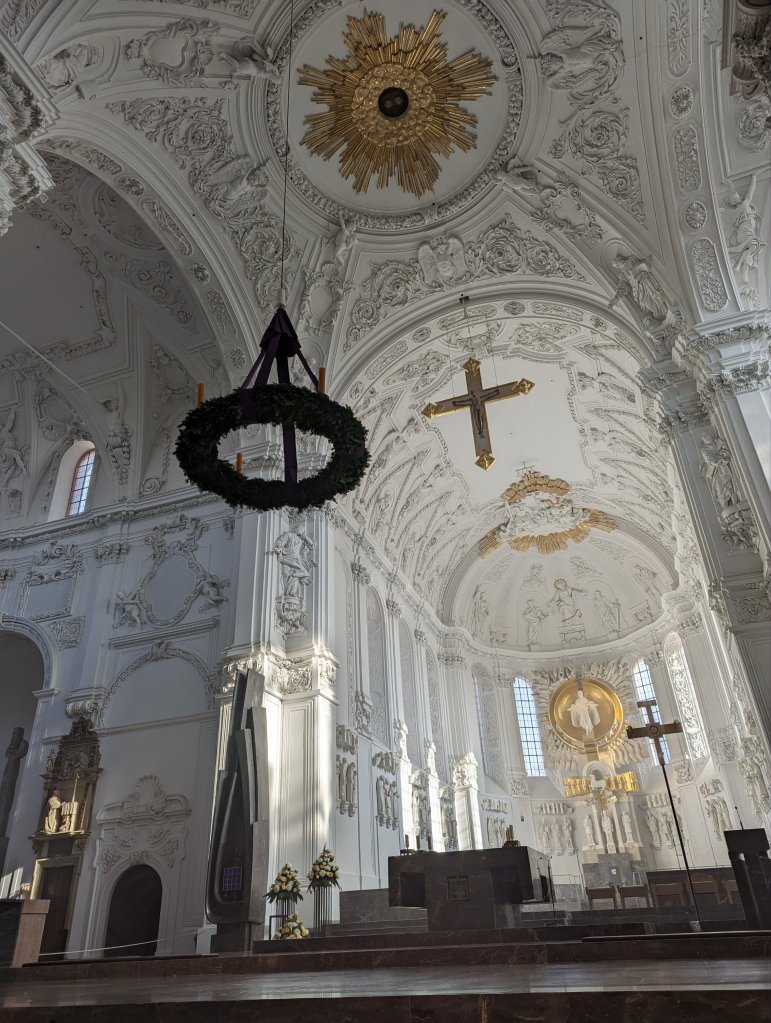
Wurzburg was our final ‘berg’ stop. As we sailed into the area we were welcomed by the site of wineries alongside the river and a huge castle on the hill. We started the morning at the beautiful Bishop’s Residence Palace. This outstanding palace had an amazing ceiling frescoed by Tiepolo over the main stairway celebrating the 4 seasons but also a room with glass ceiling decoration that puts Chihuly to shame. We viewed restored golden rooms, ornate wood flooring, and rooms with mirrored walls that were almost too beautiful. Most of this was rebuilt after significant WWII bombing but remarkably the original ceiling fresco and the glass decoration in the armament hall were original. An American, Major John Davis Skilton, another ‘Monuments Man’ was responsible for it’s reconstruction. Unfortunately, we didn’t have too much time to visit the beautiful gardens. Despite the season and lack of flowers it was a sunny day and the fountains and manicured bushes were pleasant to look at. We headed over to the town and visited a few of the churches: St. Killian’s (yes, named after an Irish missionary) and the Mariankapelle. St. Killian’s had probably the most pleasing mix of very old and newly incorporated contemporary art in its very white interior. We enjoy exploring the corners of old churches and buildings and here we found crypts and basement chapels with contemporary art and sculptures. Later we visited the Mariankapelle, a rather large chapel. Apparently churches that were built over destroyed synagogues are often dedicated to Mary. Not sure this is fair atonement for their pogrom? We enjoyed lunch at the Rathskellar in the town hall with our new cruise friend, Sue, and tasted the local white wine, Silvaner. Wurzburg had a large and busy Christmas market that my sisters and Sue shopped but instead Greg and I walked across the bridge and up the hill to check out the huge Marianburg fortress on the hill overlooking the river. We explored the castle grounds and got lost trying to make it out of the walled fortress, hoping to walk back through the vineyards on the hill. We did eventually make it back to the ship by retracing our steps and crossing the very busy footbridge crowded with oenophiles enjoying the local wine. After another amazing dinner we enjoyed a glass blowing demonstration by an artisan who was more rock ‘n roller than glass blower.


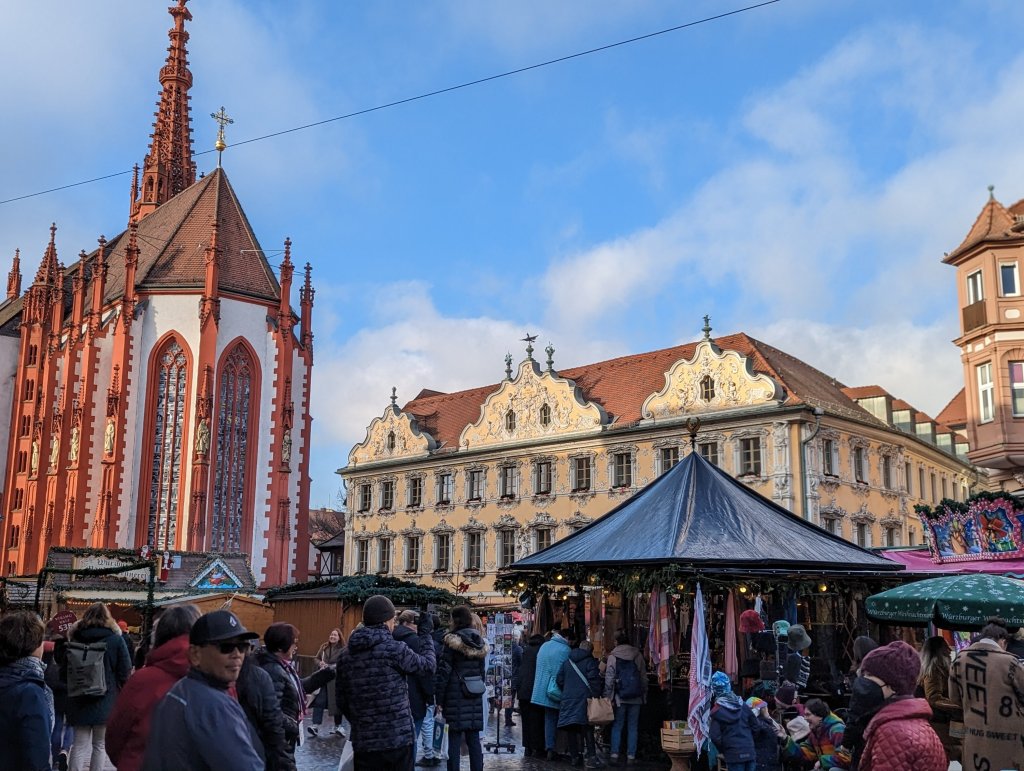


Wertheim was our next stop. It was a Sunday morning and in Germany most things are closed except the shop of the same glassblower from last night’s entertainment. His sales were very good that day. Wertheim is a tiny little town set on the Main and Tauber rivers with more of the romantic half timbered buildings and narrow streets that are becoming familiar. There’s even a leaning tower, a former jail of sorts for bickering neighbors, that is sinking unevenly due to flooding from the rivers, and of course, the requisite castle on a hill overlooking the town. The recent history of Wertheim is a little less charming than it’s architecture. Wertheim was the first town in Germany to accede to Hitler’s authority and hosted several Nazi events in it’s square. I didn’t expect we would get as much WWII history while traveling here but every tour guide at each stop gave us interesting information about Germany’s history, good or bad. Our tour guide in Wertheim, Ursula, was heartfelt in her description of the horrors that happened and how her family suffered. She began by saying that maybe the whole of Germany and the descendants of the Nazi generation do not bear ‘collective guilt’ but, referencing Elie Wiesel, they do bear responsibility to make sure nothing like the Holocaust happens again. As a reminder many of the towns we visited have brass cobblestones placed in the sidewalks noting the names and dates of Jewish victims of the war. As a registered guide, she was able to show us ‘forbidden’ or ‘illegal’ photos of SS rallies in Wertheim’s square. Christine and Terry were in a different tour group and heard a similar message. The evil that can emanate from people seems incompatible with the fairy-tale atmosphere of these villages. Never forget.


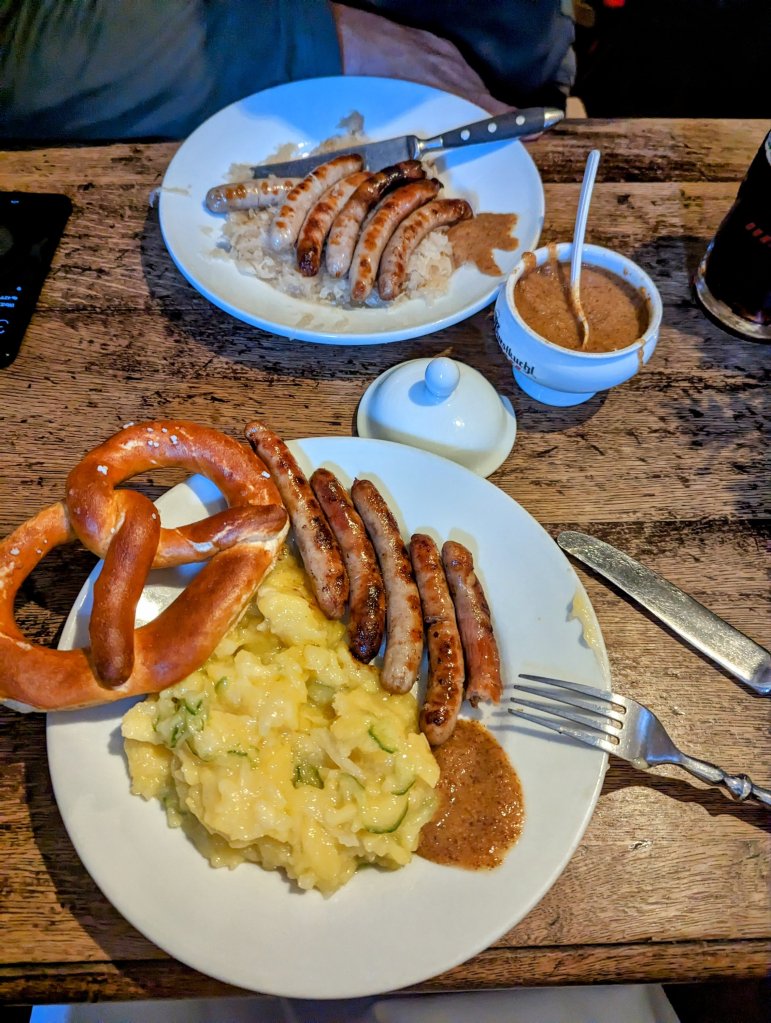
We departed Wertheim mid-day but once again had to pull over for an errant passenger who missed the boat for the 3rd time! We noticed Troy early on since he didn’t look like someone you might find on a river cruise. Long hair, flannel shirts, travelling alone. He’s a very friendly guy though perhaps a tad oblivious. He won over $300,000.00 gambling, called Viking and asked for the next available trip, and ended up in the top tier room of our ship. But he was terrible with scheduling and keeping track of time. Anyway, he was a topic of conversation for the whole boat mostly because he talked a lot and mostly about himself! That night we enjoyed a lively dinner of German sausages, pretzels and beer.
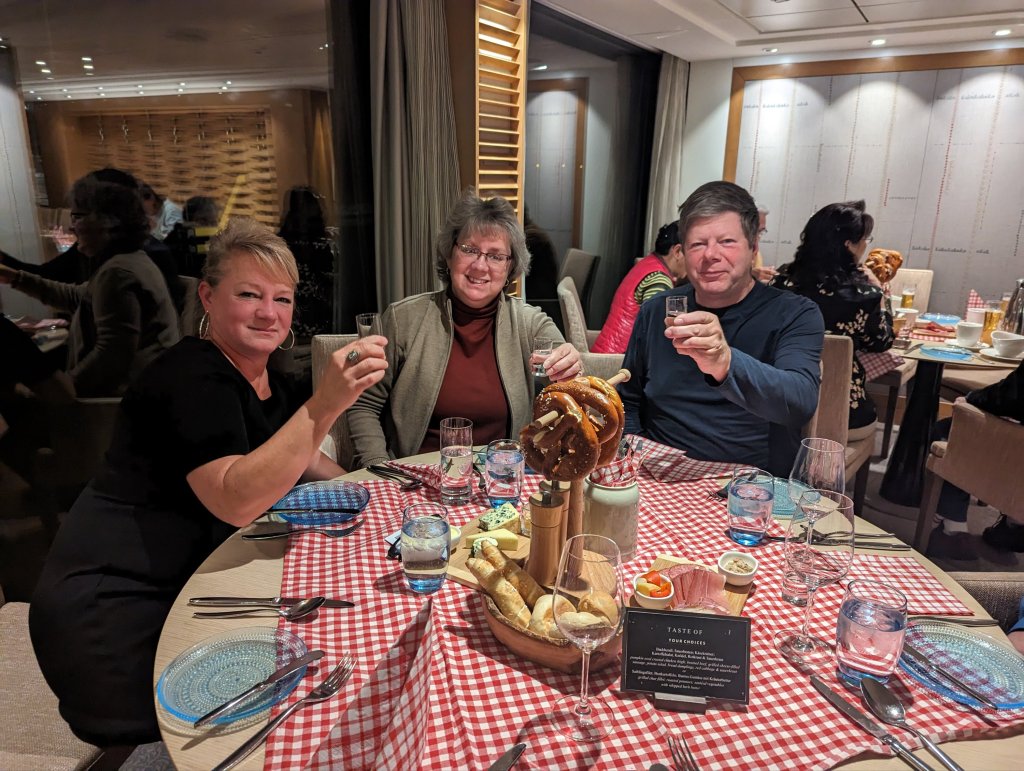
We were now sailing down the Middle Rhine and spent the next morning cruising past castles. It was quite chilly but more hot chocolate (with Bailey’s) kept us warm. We sailed past the local landmark, the Lorelei, a cliff jutting into the Rhine. Here the legend tells of the maiden Lorelei who threw herself into the river because of a faithless lover, later becoming a siren who lures sailors to their death. Our captain successfully steered by. Afterwards, we stopped in Braubach to visit the Marksburg castle.
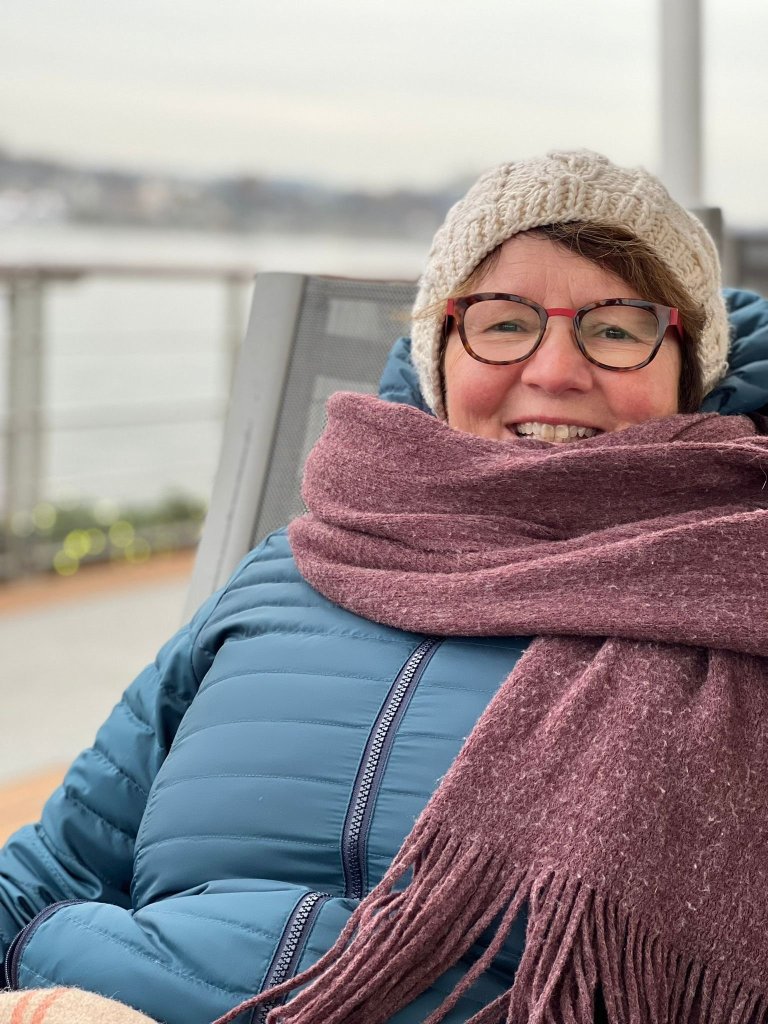
Enjoying the scenery…


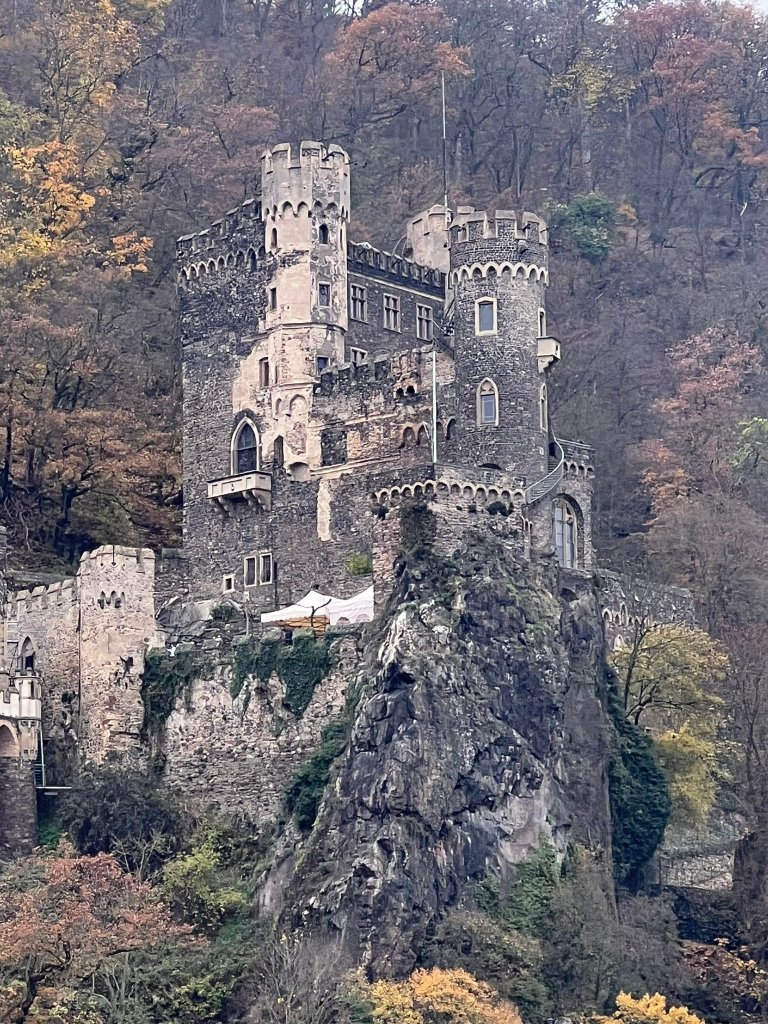
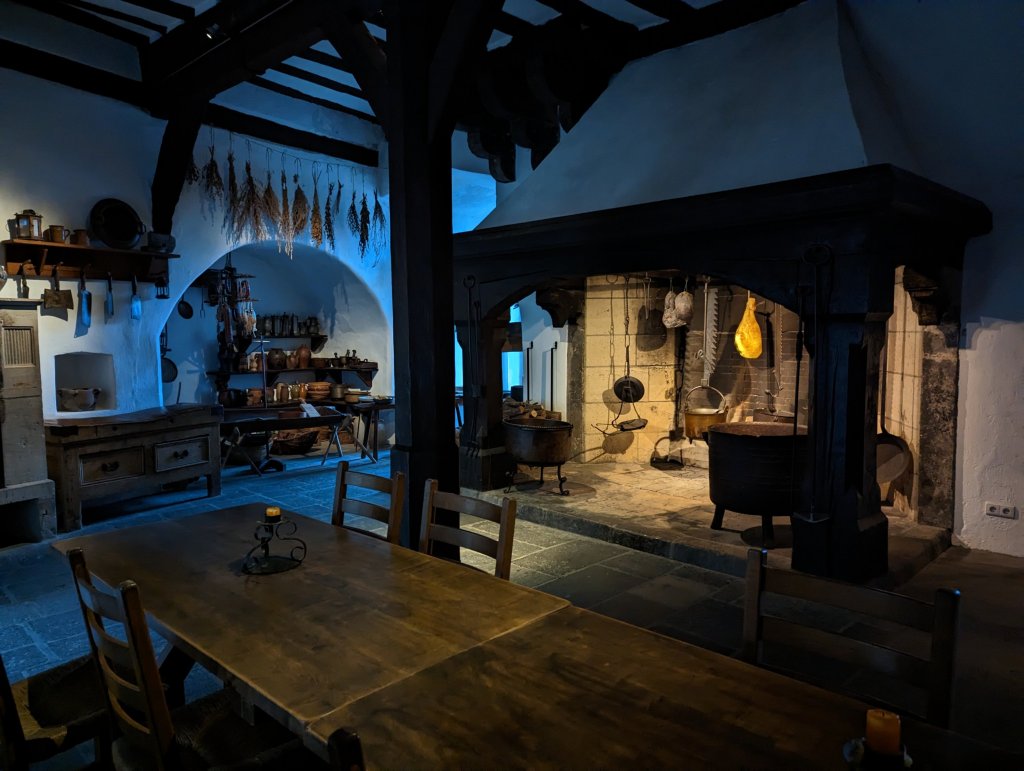
Marksburg is a remarkably well-maintained 12th century castle set high above Braubach on the Rhine. Currently owned by the German Castles Association, it was once captured by Napoleon when he fought the Holy Roman Empire and then gave the castle to the Duke of Nassau after whom Nassau, in the Bahamas, is named. The interior of the castle has recreated rooms such as a ‘kitchen’ and a bedroom, as well as toilets that overhang the exterior walls of the castle. There are very nice armor and armory museums as well as a torture room. Also within are current day living quarters (for staff, as I recall). Noted elsewhere on the trip was the hardships faced by occupants of the various tourist towns: lack of parking or driving, for that matter, on narrow cobblestone streets, difficulty commuting out of town to jobs, inability to renovate or upgrade historically preserved houses or areas, lack of play areas or space for families with children, among a few. Although it’s nice to visit these places many people wouldn’t and don’t want to live there.



That evening the ship docked in Koblenz. We were looking forward to our visit here as our sister Tricia’s son Jerry and his wife Aru live downriver in Bonn. They both work at the renown Max Planck Institute, Aru as a PhD mathematician and Jerry in IT. They graciously trained into town to meet us at a local brewhouse. We haven’t seen them in over 5 years so it was nice to catch up over sausages and beer and learn a bit more about what their life is like in Germany. We did get to see a bit of Koblenz that evening as we walked from the ship to the restaurant. Here the Christmas market stalls were stretched from one small square to another within the shopping/business district. A very large statue of Prince William I at Deutches Eck at the confluence of Rhine and Moselle rivers was not illuminated at night as we walked back to the ship. When asked, the response was that all of Germany is responding to the fuel/climate/financial crises by limiting unnecessary energy demands. That night our entertainment on board was a very good opera singer and a not so good French horn player.


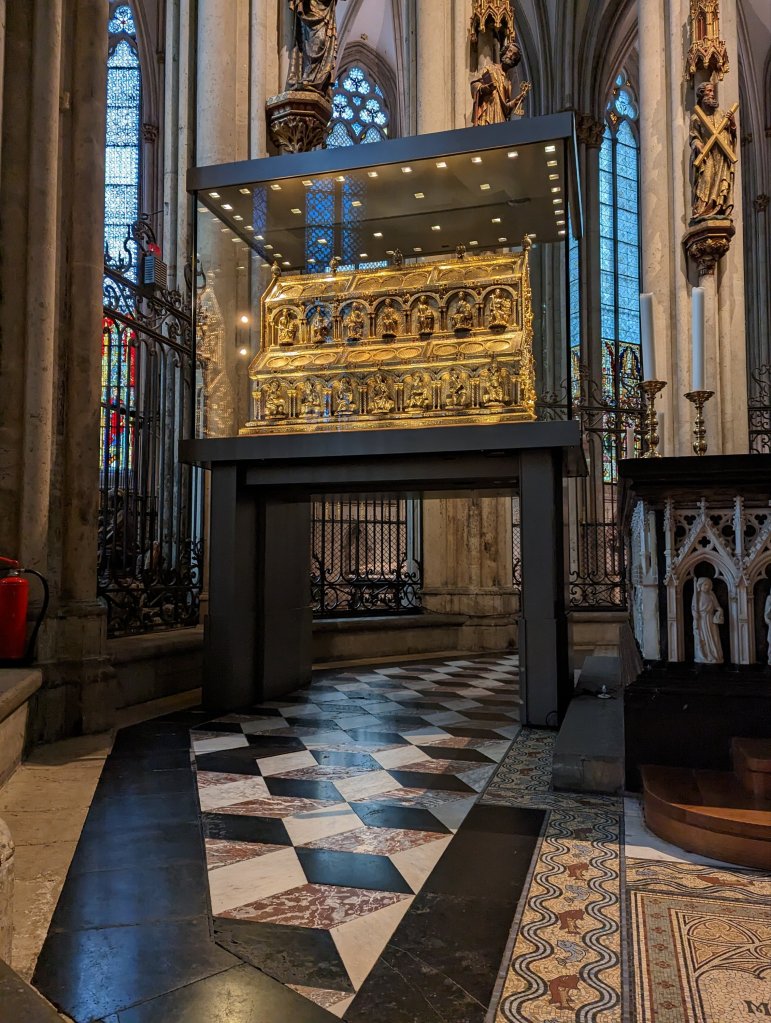
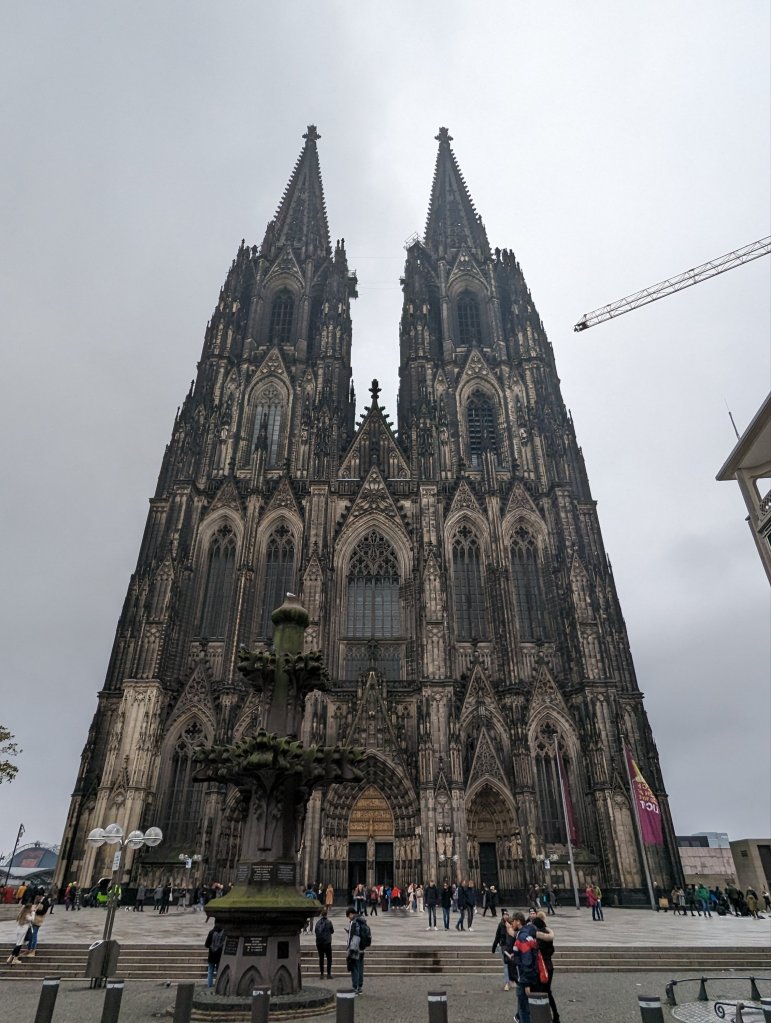
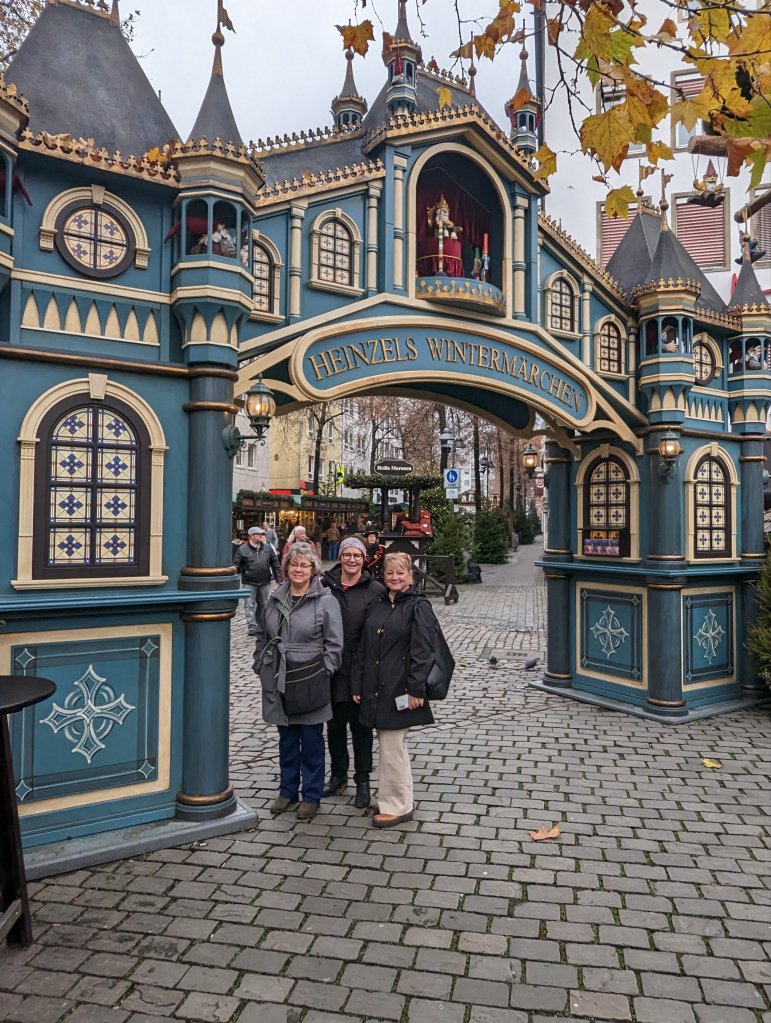
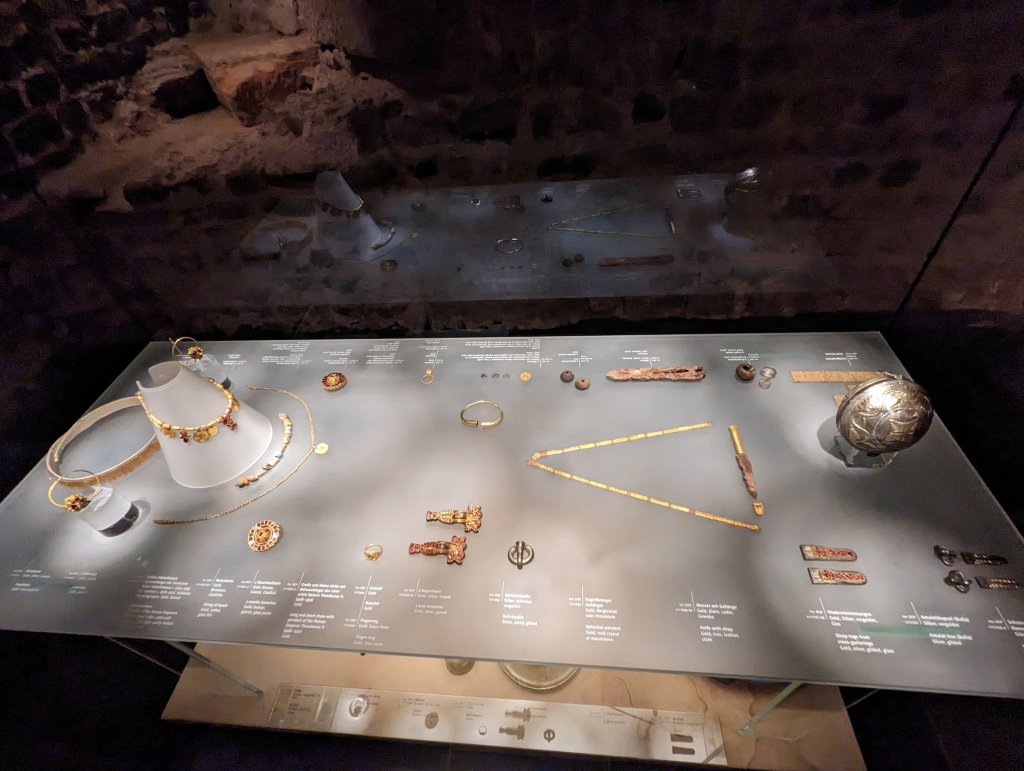
Overnight we moved onto Cologne passing under the Hohenzollerbrucke bridge, heavily encrusted with ‘love padlocks’. Cologne became one of our favorite stops although we said that everywhere we went. The gothic Cologne Cathedral, the Dom, was magnificent. The Christmas markets had beautifully decorated stalls and were very busy and there was a skating rink built in the center of the bustle. We had a nice walking tour in the morning and then had lunch (sausages and never ending pours of Kolsch) in a 18th century tavern. Afterwards Greg and I split off while Christine and Terry hit up the market stalls. Greg and I stumbled onto a prayer service in a local church. A group of nuns with beautiful soprano voices sang in an acoustically perfect setting. It was unexpectedly heavenly. We then meandered back towards the cathedral and considered taking the tour of the towers, a 500 step climb, but decided against it on this cloudy day and visited the museum inside the church. This museum was updated and the displays were outstanding: vestments and altar cloths with intricate gold thread embroidery, jewel encrusted chalices and Bishop’s staffs and rings. There we ran into Christine and Terry also in the museum as they had abandoned shopping to climb the towers and then come to see the treasures. In the lower level the museum displayed more historical treasures: unearthed graves of a woman and boy from the first church built on the site and in another room, the wood and metal sarcophagus which originally carried the relics of the Magi, the Three Kings who visited Jesus in the manger. The Cathedral’s fame and wealth was built on the ownerships of these relics, Frederick Barbarossa aka ‘Redbeard’ having stolen them from Milan in the 12th century. The Cathedral’s construction was started in the 13th century, the relics in hand and with worshippers and tourists visiting the city and pouring money into the coffers. It took nearly 700 years to finish construction of the Cathedral although the relics are now housed in a gold, silver, and jewel-covered reliquary on display behind the main altar. FYI, it is free to visit the cathedral and the reliquary, as most Catholic churches in Europe and the US are. We again left Christine and Terry, who returned to shop the markets, and Greg and I considered walking back to the ship. On the way we stumbled into a group from the ship led by Kane, the Program Director, who was leading them to an optional excursion we thought we were closed out of: The Top of Cologne tour. Kane invited us to go along, as 2 others had just dropped out, and wasn’t it the best experience ever? This tour was led by a resident building restoration expert. She took us up the construction elevator and led us up, down, and around the outside of the upper exterior of the cathedral, where they are restoring gargoyles and flying buttresses and replacing lead roof sheathing or gutters or window casements. We entered the interior of the cathedral through tunnels in the walls, far above the main level and up close to some of the stained glass windows. We walked past the huge organ, suspended from the ceiling to conserve space. We climbed ladders and circular stairs to visit attics and ‘secret’ storage rooms and see the iron metal roof supports that were installed in the 1800’s near to when the cathedral was completed. We visited the center tower and had an outstanding view of Cologne from up high. I was enthralled the whole time and was mostly able to control my fear of heights. I had to, this was so amazing to do and was certainly a highlight of the trip. Unfortunately, I cannot share photos online as a prerequisite of the tour. I can’t express how COOL it was. Luckily the Cathedral did not suffer too much from Allied bombing, although the lead roof did melt. The iron supports underneath kept the cathedral from damage. And now we get to visit in awe. Later that night at dinner we celebrated Christine’s birthday on the ship, coaxing other tables to join in singing to her. She turned 29 again!





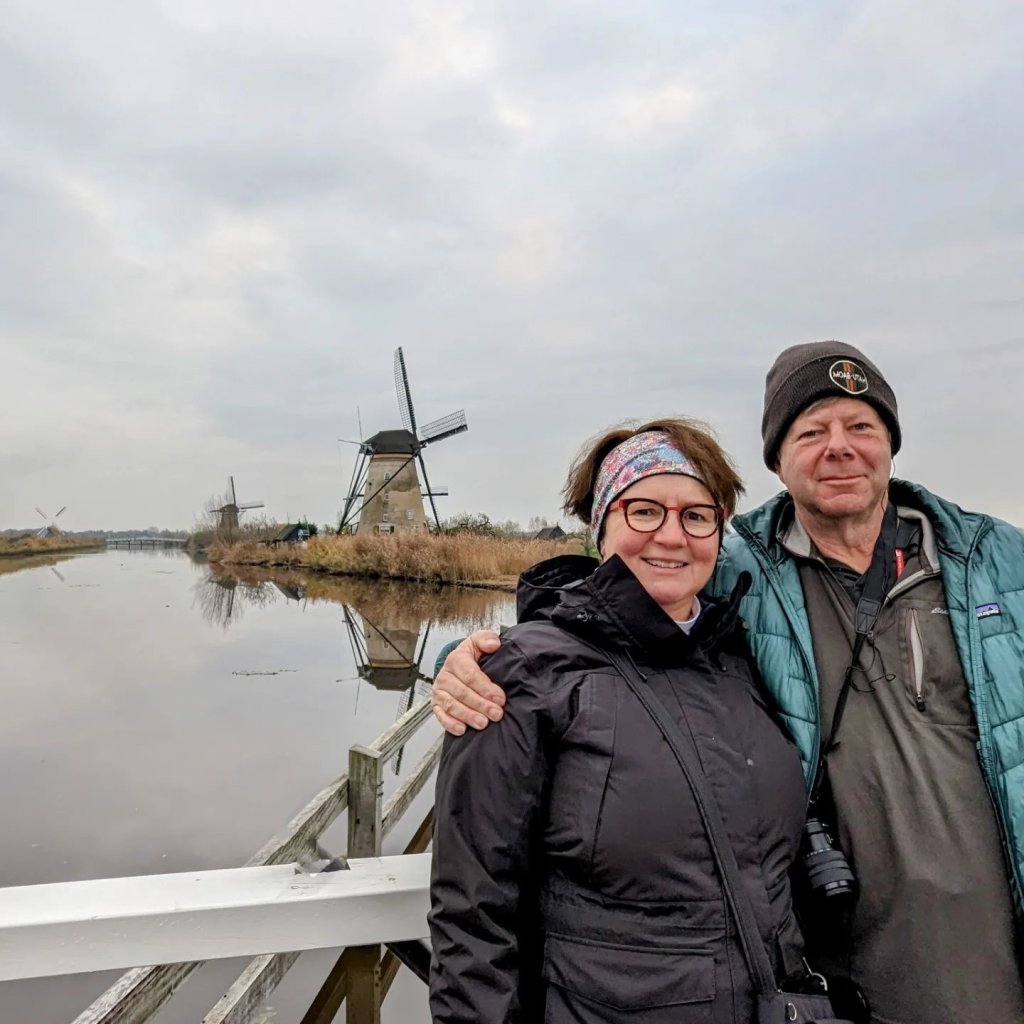
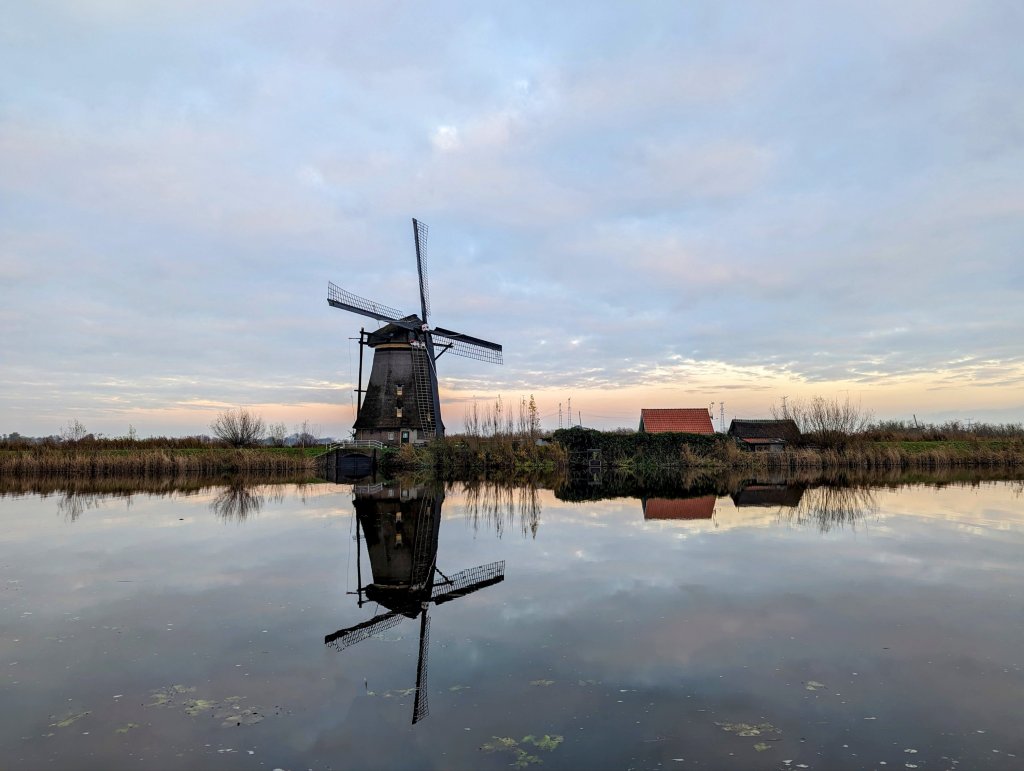
We departed Germany and sailed into the Netherlands, stopping for the afternoon at Kinderdijk, a working windmill museum. I really enjoyed this stop of 19 windmills still in use, many inhabited by renters. We visited one in particular that formerly housed a family of 13 within it’s 3 tiny levels surrounded by giant gears and windmill mechanisms. Although we’ve all heard of the water management required to drain the marshy lands of the Netherlands, it was impressive to see the scope of the engineering, old and new. Legend has it that Kinderdijk was named after a basket was found floating during flood, with a cat jumping back and forth across the basket keeping it upright in the water to keep the baby within safe. I thought Kinderdijk was a really beautiful place (despite the worst tour guide ever, but I’ll forgive the nice old man who was obviously a volunteer at the museum). But, back to the ship we went for our last night on board. I wish I had kept the menus from each dinner, as delicious and varied as they were.
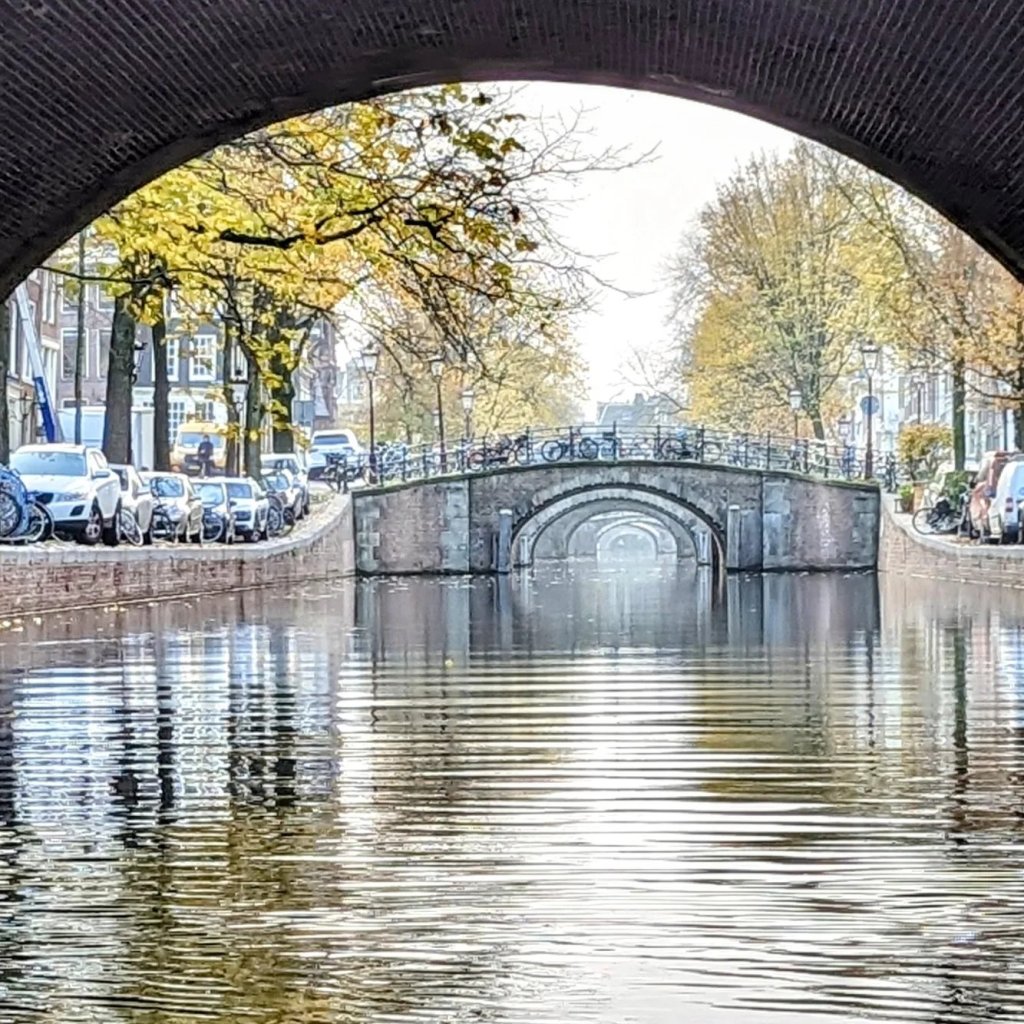
We awoke the next morning in Amsterdam. We had packed the night before and enjoyed a last breakfast on board the Vali. Although there were many guests departing at various times and for various destinations, things ran remarkably smoothly. Enough can’t be said about the Viking organization and service. We said our goodbyes as Christine and Terry were departing for a 2 night stay in Amsterdam while Greg and I were heading to the Hague for 2 nights. But first, we boarded a canal cruise boat for a morning tour of Amsterdam’s canals. First we saw the museum ship and the unusual architecture of the Science Museum, then we cruised under bridges and saw ‘dancing houses’ lining most of the canals, houses leaning into each other due to their piers were sinking. The weather was sunny but cool and Amsterdam shone brightly! We got our fill of history and photography and disembarked near the Rijksmuseum, Amsterdam’s art museum. We had time to fill on our own so Greg and I walked for several hours up and down the streets and along the canals. We shopped a bit (cheese and chocolate!) and then had early lunch at the art deco American Hotel at Leidesplein Square. We did not book tickets for the Anne Frank house, not knowing how much free time we would have in Amsterdam. AF tickets must be booked several weeks in advance so we had to forgo that visit for another time. Instead, we had purchased timed tickets for the Rijksmuseum (but if you go, you really don’t need to buy tickets in advance). The Rijksmuseum is a spectacular space filled with Dutch Masters, especially Rembrandt and Vermeer. We spent a few hours at the museum and then met up with our guide and other guests for our bus trip to the Hague, south of Amsterdam. My personal thoughts on Amsterdam: it’s a beautiful city but I HATED the bicycles everywhere. Pedestrians were always in danger from either lawless bicycle riders or cars trying to get around them. It was overwhelming.




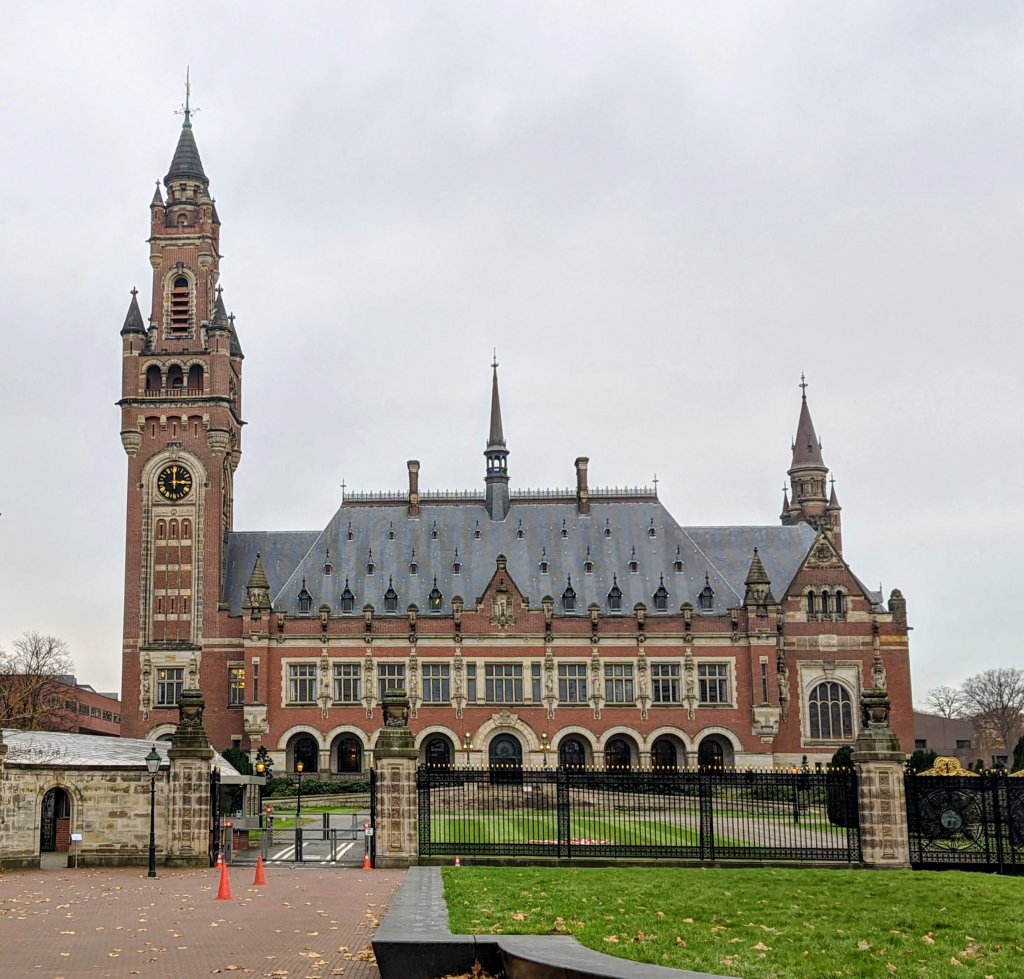
The Hague is the seat of the Dutch government and it’s third largest city but it is also the home of the International Court of Justice, an arm of the UN. Our hotel was located in the Centrum across from the Noordeinde Palace of the Dutch king Willem. The building itself was unremarkable as a palace and sat in the shopping district of the old town. The king was ‘in’ as evidenced by the flag flying on the roof but we didn’t get to see him. We did have a nice walking tour of the old town starting at the older, original palace and winding over to the current government buildings, the Binnenhof on Hofvijver Lake. Built in the 15th century the Binnenhof is the oldest house of Parliament still in use. We walked around and were given a very good lecture from our guide who once was the press secretary to the Dutch queen! He was immensely informative, printing out info for us and sending us links. We also visited a beautiful mall which offered respite from the chilly wind We walked past Catholic churches housed in private homes, a relic of conflict in the 1500’s. We had the afternoon on our own so we visited the Mauritshuis museum next to the Binnenhof. This approachable art museum in an old mansion housed some remarkable art including Vermeer’s iconic ‘Girl with a Pearl Earring’. We then headed over to the Hotel Des Indes to warm up and enjoy tea time. We had no reservation but since the maitre’d had already taken our coats he reluctantly managed to find us a table in the beautiful tea room. Everything was very walkable in this section so later that afternoon we headed over to the Peace Palace. This grand neo-Renaissance building houses the International Courts of Justice, Arbitration, and Criminal Courts, and the Hague Academy of International Law, among others. Although we could not visit the actual building we did visit the informative welcome center. The concept of International courts began early in the 20th century when people began to lose their romantic idealism for war and conflict. Remarkably, the advent of photography had a lot to do with that since the realities of war could now be seen by everyone, unveiling the horrors and erasing the romanticism of honor and heroism. Andrew Carnegie pledged $1.5 million for the construction of the building. Alas, although it opened in 1913, it did not prevent the start of WWI only 1 year later, but of course, despite conflicts over the last 110 years there is still purpose and hope assigned within its hallowed halls. Will it be the lawyers that save us?



And then it was over. We met up with Christine and Terry to say ‘goodbye’ once again at the Schipol airport though we were on separate flights. We returned to JFK and then to our dear friends Jeanette and Allen who graciously let us park and stay at their place. And then on to home afterwards. So ends our trip of a lifetime on a remarkable river cruise. Greg successfully navigated a trip with three sisters over two weeks. As for the three sisters, I think we travelled well together, reprising a lot of the fun we had touring Poland in 2002. Thank you for reading this very long blog. And no, the Rauschbier did not taste any better at home.
Addendum: Christine had some menus from the trip to share:


 My new reality