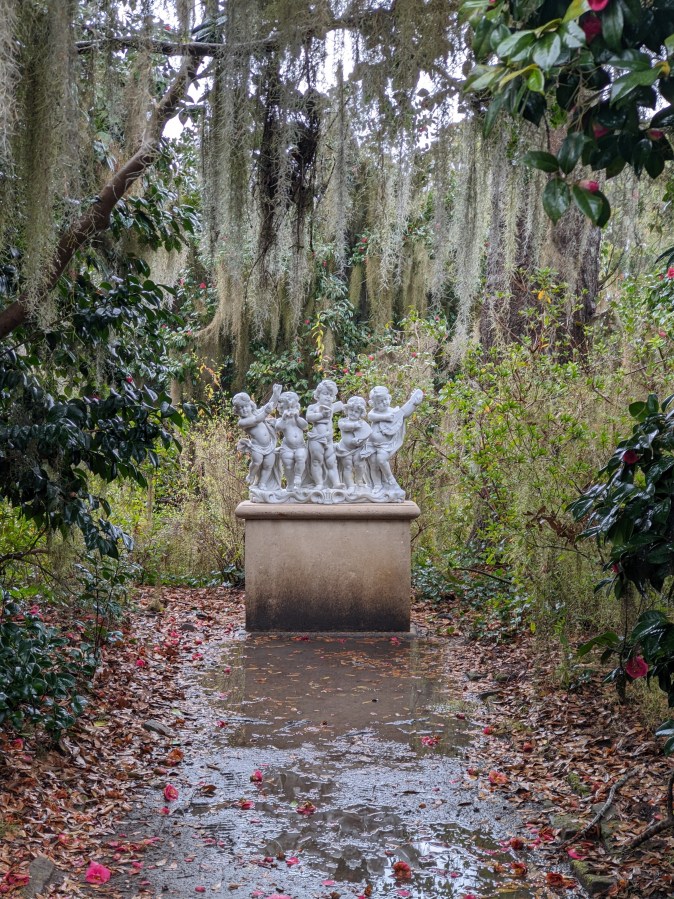
After 10 sunny days in the FL Keys we began our journey home. First stop: Hutchinson Island near Jensen Beach on FL’s east coast/intracoastal waterway. Greg drove the 4 hours (217 miles) up Rt. 1 from the middle Keys past the Everglades and Miami to this manicured snowbird haven. We again met our neighbors Bev and Neil but also Greg’s brother Bob and Tina who were visiting Tina’s family there. Our hotel, the Hutchinson Shores resort, was directly on the beautiful sandy beach. The Atlantic Ocean was considerably rougher than the Gulf of Mexico waters we experienced in the Keys, but the beach was sandier and wider. We enjoyed dinner with both couples at our swanky hotel restaurant, the Drift (red snapper, yum!). Despite all this loveliness, we slept very little due to our hotel neighbors having a late late night argument with exceedingly high pitched voices We left the next morning after a quick walk and visit with N+B and headed to the Kennedy Space Center.
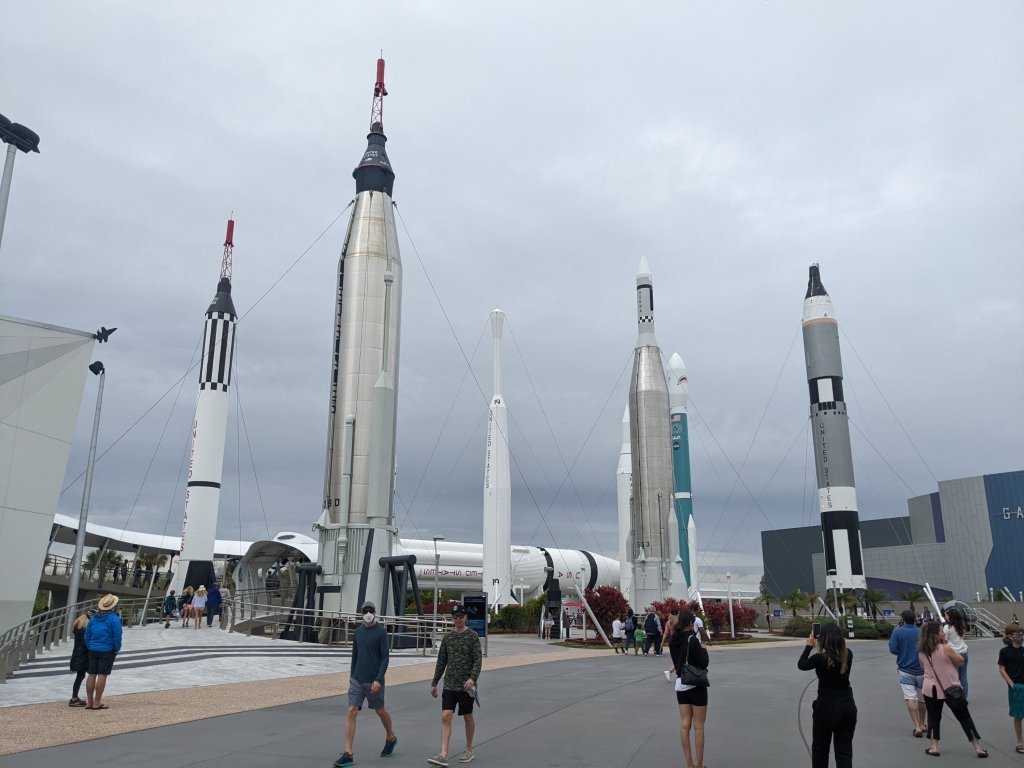
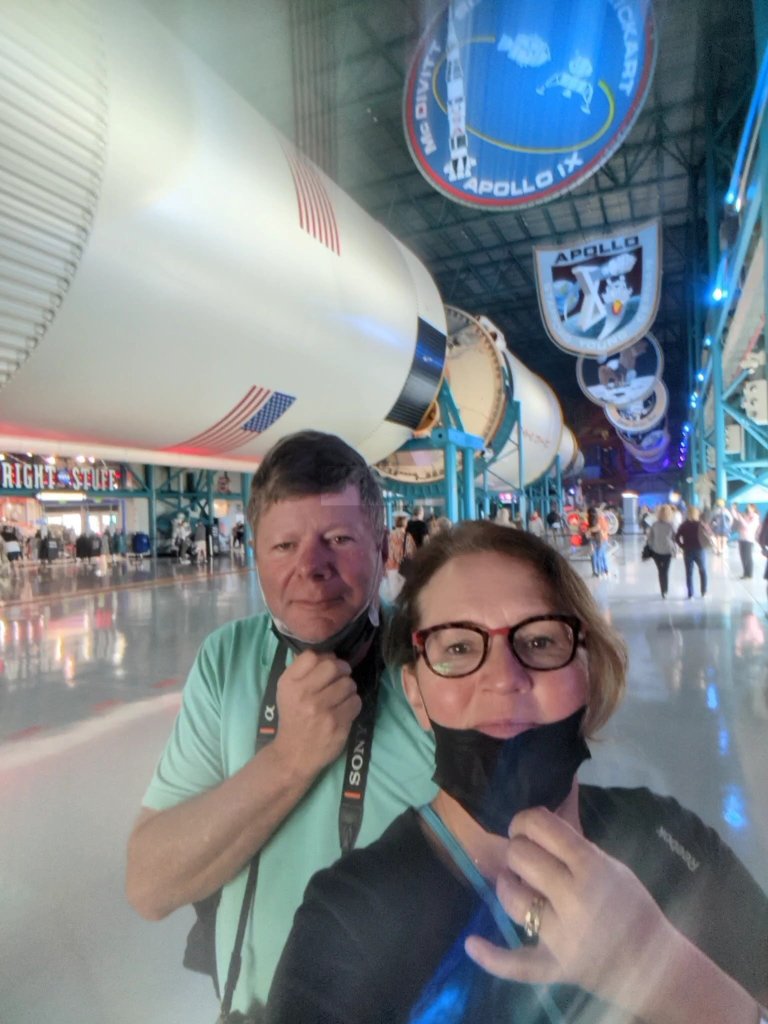
The Kennedy Space Center has changed considerably in the last few decades. It has more ‘disneyesque’ features with Imax movies, hands-on displays, and cute cafes. At first I felt that they sold out to commercialization. Then I came to realize the genius of marketing the space program to the masses and capturing the imagination of the young. As for us old, I teared up at several of the displays and videos of the astonishing achievements of our moon landings and space shuttle launches. The sheer size of the rockets and shuttles is remarkable. And, of course, the memorials of lives lost on shuttle and rocket disasters highlights the bravery of all the astronauts. I would definitely recommend visiting/revisiting and look beyond the gimmicks to the core messages of the museum. Our visit coincided with Super Bowl Sunday and the weather had turned cool so the center was relatively empty, a bonus!

One hundred miles up the coast we stopped at St. Augustine for 2 nights. We booked our stay at the Kenwood Inn, a Victorian bed and breakfast near downtown. After an evening stroll through the narrow bricked streets we dined at Casa Reina on Cuban and Mexican cuisine and margaritas. Mmmm. So good! Then we stopped around the corner for gelato and macrons at Le Macron. We slept well at the B+B and shared a nice breakfast with another travelling couple staying there. The husband was an architect so he and Greg bonded over construction disaster stories (oh! BTW, we saw Rich Trethewy from This Old House walking in town!) The wife was a specialty pharmacist so we also bonded over pharmaceutical talk. Boring to anyone else, fun for us! What became apparent is that everyone we saw on this trip was a reflection of us: older (elderly?) couples, some more mobile than others. OMG is that us? Except for pains in my knees and hands, and grunting when I rise and trying to avoid breaking a hip, I feel pretty great. I do need to repeat everything I say or what everyone else says to Greg or read aloud if he forgets his glasses, so maybe it’s just him. Let’s go with that. (Ok, I wear progressive lenses and color my hair so I’m no spring chicken…)
Our full day in St. A was sunny but breezy and cool. I’ve wanted to visit here for a long time and am so glad I did. St. A is a beautiful old city with cobblestone alleys and interesting architecture. We took a history laden walking tour of the old town. St. A and FL tourism are the direct result of Henry Flagler’s efforts. Henry F, a partner of Rockefeller in Standard Oil, decided FL was a warm winter option for Gilded Age robber barons and industrialists. In other words, he invented the concept of ‘snowbirds’ for the 1%. Henry built railroads and hotels, developing Florida’s infrastructure in exchange for land. In fact, Henry also built the railroad extending to Key West and his hotels there. But back to St. A: Henry favored Moorish architecture, reflected in the hotels, churches, and other buildings throughout. One tour we missed was of Flagler College, a former hotel turned liberal arts college. Where else would college students dine in a mess hall surrounded with authentic Tiffany stained glass windows?
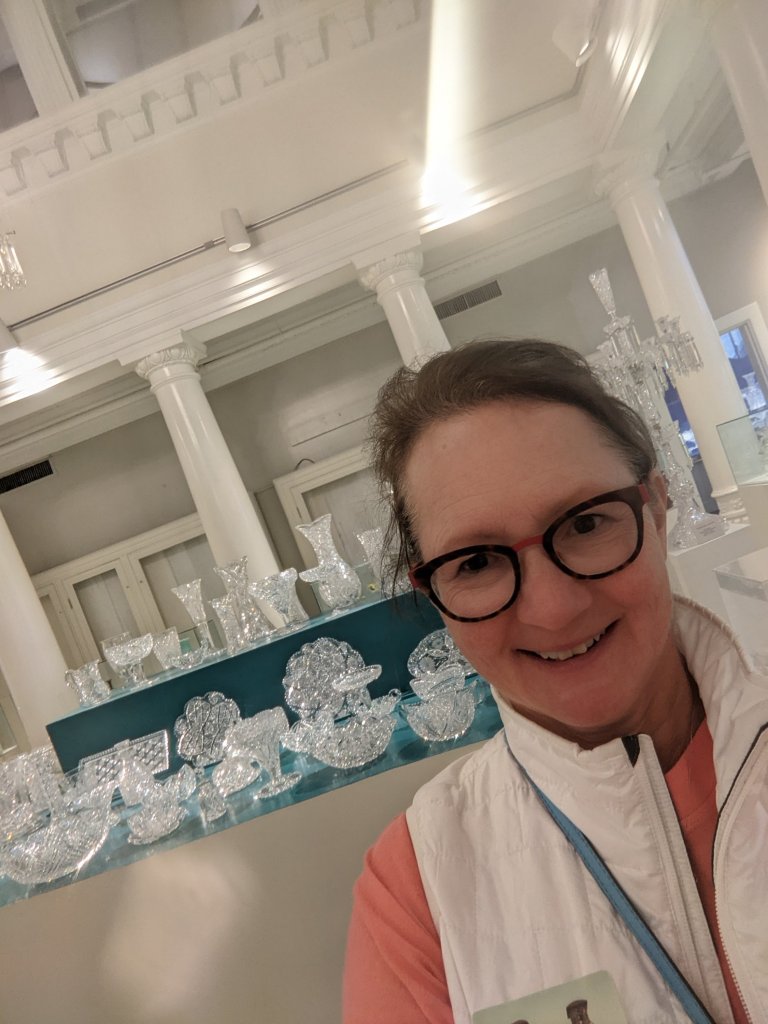
Before Henry arrived, however, St. A had significant pre-colonial history with alternating Spanish and British rule until becoming part of the USA. Castillo de San Marco, a National Park fortress, offered a detailed histories of the area and lives within, one of the best I’ve seen in a NPS fort. After more strolling and a Cubano sandwich, we visited the Lightner museum, a former hotel now displaying a huge Gilded Age collection of furniture, art, and the largest cut glass collection I’ve ever seen. I had a good friend and colleague (Joan R) in the Radiation Biology and Biochemistry laboratory I worked in while Greg was a postdoc at the University of Rochester. Joan and her husband Dick collected and dealt cut glass, of which Greg and I were able to learn a bit and purchase a few pieces. I was inspired to reconnect with Joan after seeing the Lightner collection. One funny story; one of the docents there warned us about another eccentric, overly talkative docent, so we spent some time playing hide and seek behind displays to avoid the loquacious, befeathered octagenarian.

Mid afternoon we visited Ancient City Brewing for the requisite local draft tasting (no complaints there). It was Valentine’s Day and we lucked into a cancelled reservation at Columbia, a Spanish restaurant in town. Gosh, the fish entrees, red snapper and grouper, were so good. I think we witnessed a couple’s breakup across the atrium. Always people watching. Maybe they made up later? We departed the lovely B+B and St. A for Savannah the following day.
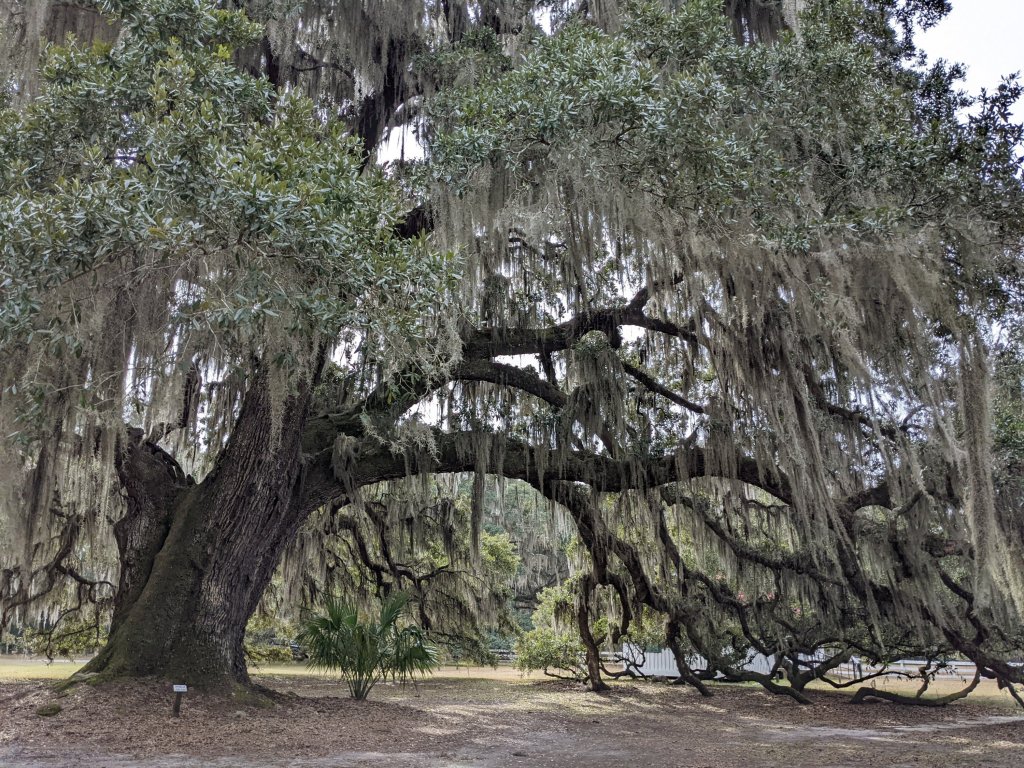
Next morning, 177 miles up I95, we stopped for one night at the Olde Harbor Inn in Savannah, GA. But first, about halfway there, we visited the Hofwyl-Broadfield plantation. A rice plantation turned dairy farm now Georgia State Historic Site, this was a lovely property covered with huge moss laden live oaks along the former rice fields, now marsh. The modest farm house, from the early 18th century, was filled with original family furniture and heirlooms having been owner occupied by 5 generations. We got our fill of family history and interesting history related tidbits. Every historic site now includes the contributions of enslaved people to the success of the Southern plantations and owners, as well as their lodgings and artifacts.

We had visited Savannah a few years ago so we spent the afternoon strolling and photographing the city squares, backstreets, and river walk with stops at Leopold’s ice cream as well as Moon St. brewery for afternoon treats. Our Inn was right on the river but luckily it’s low season so we didn’t have to listen to revelers partying outside our room. In fact, this whole trip we seemed to have avoided crowds, whether due to weather, COVID, low season, or luck. The staff here were very accommodating and welcoming, in fact everyone has been cheerful and friendly. We dined at The Pink House, nabbing a late night reservation at this popular Savannah restaurant named ‘pink’ due to the exterior red bricks bleeding color through the whitewashed surface. I had the scored flounder which was outstanding. The Inn offered free Klondike bars in each room which made for an awesome breakfast.
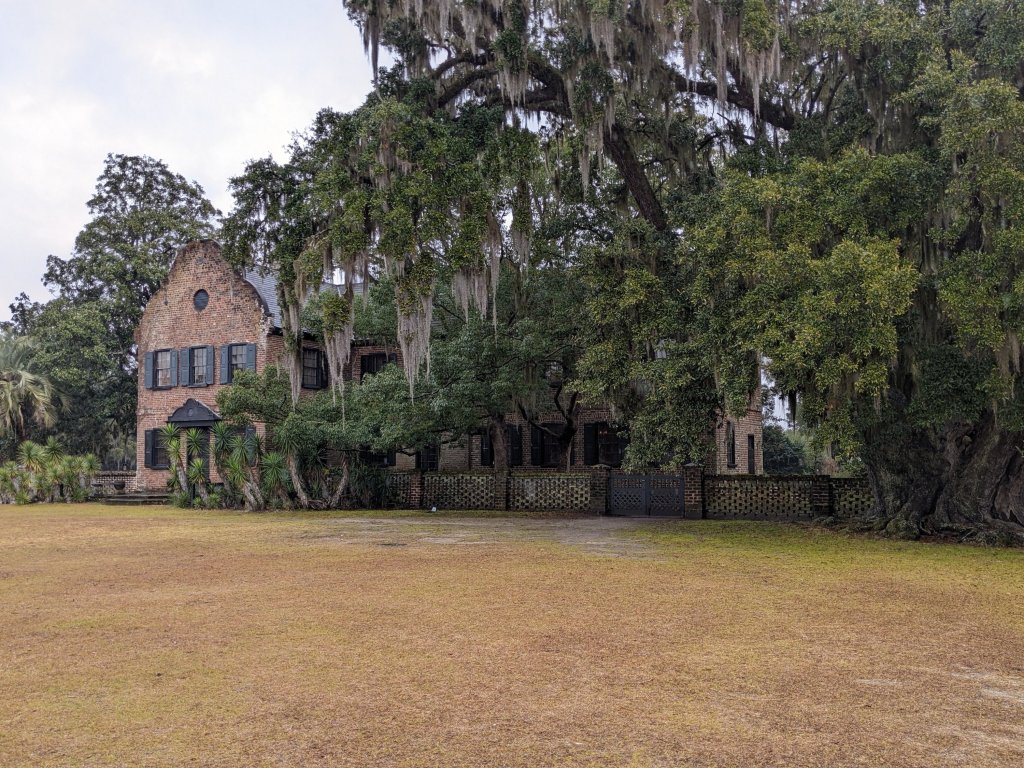
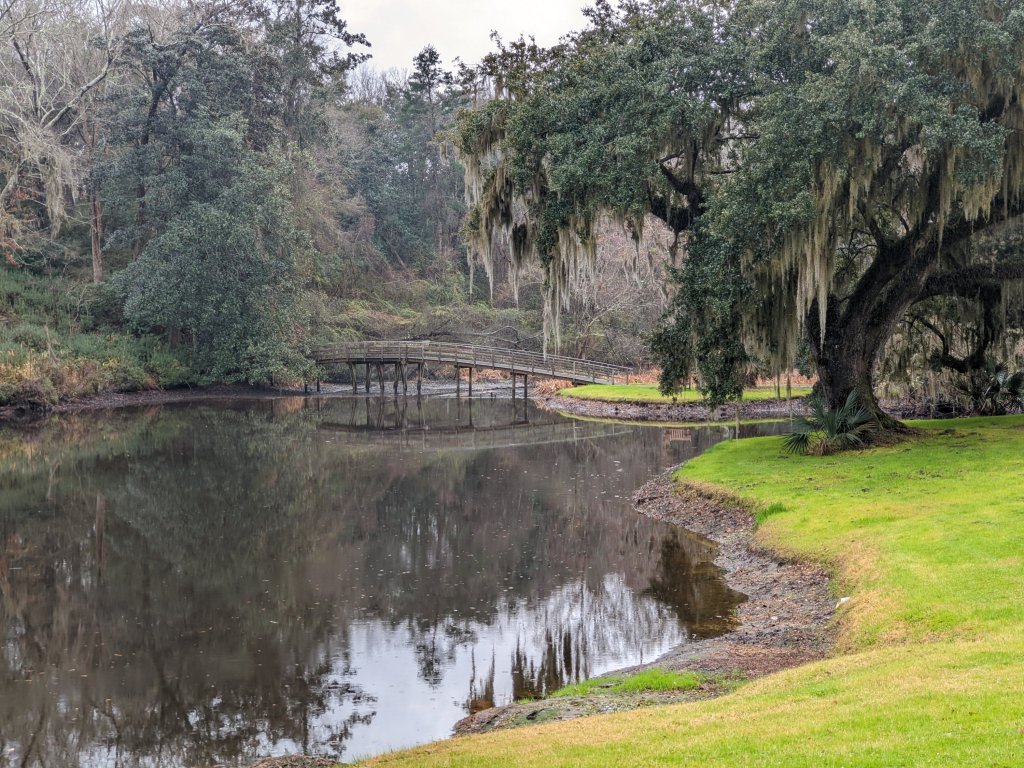
Onward 326 miles to Charleston. First stops: 2 plantations outside of Charleston: Drayton Hall and Middleton Place. It was raining and cool so it was worth visiting places where we would be mostly inside. Drayton Hall is an 18th century plantation with Palladian architecture and survived both the American Revolution and Civil War eras and is now a National Historic Landmark. This was an extreme example of preservation as the house was not decorated but rather undergoing restoration since it had fallen into such disrepair. It’s amazing that these architectural gems are often left abandoned and then destroyed. It’s Palladian style often refers to architectural symmetry but also the ability to control what guests might see, keeping public areas in front and personal living space in the rear including staircases, etc. About half the audio tour focused on the enslaved people and their workspace/lodging in the basement area. Nearby we stopped at Middleton Place, another plantation on the Ashley River and also a former rice plantation. The restored home is only a portion of the original plantation, built in the 18th century but mostly destroyed by fire in the Civil War and the 1886 earthquake. Despite that, part of the plantation was rebuilt and lived in by descendants of the original builders. Remarkably, members of the same family had signed both the Declaration of Independence and the South Carolina Ordinance of Secession. There was period furniture and many historical artifacts within the home included pardons from Abraham Lincoln and a young enslaved black girl’s rice sack, her ‘luggage’, embroidered with a goodbye note from her mother when she was sold to another household. We had lunch at the onsite cafeteria enjoying she-crab soup and gumbo. It was still raining, but we meandered the gardens which were outstanding in this weather and would have been spectacular on a sunny day.
We stayed at the French Quarter Inn in Charleston, quite near the City Market and within walking distance of everything. They offered breakfast, afternoon wine and hors d’oeuvres, and late night cookies with port wine. We continued to overeat and drink with dinner at Magnolia’s nearby after a brief walk to reacquaint ourselves with Charleston. We last visited here 32 years ago when my sister lived on the naval base while her then-husband was stationed on a sub-tender there. It was also just a few months after Hurricane Hugo had decimated parts of the area in 1989, but the city had survived. Other than an aircraft carrier museum ship there were no other navy ships since the naval base was closed in 1996.

The next morning we borrowed the hotel’s bikes and cycled down to the Battery section of Charleston. Here the grand old houses are tucked side by side on a peninsula with narrow tree-lined streets and gorgeous secret gardens spied from openings in the privacy walls. We visited two historic homes that morning, The Heyward-Washington House and the Edmonston-Alston House. The Heyward-Washington House, built in the 18th century, was occupied by a Declaration of Independence signer. Again, these and later owners prospered from enslaved people’s efforts either as local servants or from working distant rice plantations. Interestingly, two daughters of a later owner became some of the first female abolitionists in the country. And, of course, Washington slept here after becoming president. The Edmonston-Alston House has the typical Georgian style with the multi-storied porches along the breezy side of the house to help with cooling. Touring these homes helped to give the history of the area as well as the context of the owners of the time. In this case, General Beauregard watched the bombardment of Fort Sumter from the porch of this home. The attack on Union forces within Fort Sumter signaled the beginning of the Civil War. Unfortunately, we had no time to visit Fort Sumter but since I’m all up into US History right now (thank you very much Lin Manuel Miranda and Ron Chernow) we’ll have to return someday. After our delightful biking jaunt in the warm sun we returned the bikes and walked north of the hotel to two other sites, the Joseph Manigault House and the Charleston Museum. The Manigault House was an antebellum beauty built in 1803. Again, the prosperous owner’s wealth came from rice plantations and enslaved workers. But again, prosperity like that didn’t last long. The house fell into disrepair and a gas station was built onsite. Later, when it was saved from destruction, it became a USO building and Red Cross training site hosting over a hundred thousand soldiers and Red Cross trainees through the WWII years.

The Charleston Museum is a very nice history museum of the area. By now we were getting history-ed out but this museum was well worth a visit. Afterwards, we walked back via King St., the boutiquey shopping district and location of the local brewery, Chucktown Brewing, and also strolled through the City Market. Even 30 years later, I can’t quite bring myself to spend $200.00 on the iconic sweetgrass handmade baskets, beautiful as they are. Later, we snacked on the hotel’s wine and hors d’oeuvres before heading out for a night of fun at the Black Fedora Comedy Club. Of course I volunteered for a part in the mystery play and ended up having to voice my lines as different characters since I played Sybil, the split personality ghost. Let it be said the mystery was solved by other volunteers who voiced the ghosts of Shaggy, Velma, Daphne, and Scooby Doo. It was hilarious!
Our next stop was Wilmington, NC, 178 miles north. Now here was a place neither of us had ever visited and what a nice surprise it was! The Cape Fear River, where Wilmington is located, has treacherous waters and thus wasn’t inhabited for as long as other port cities. Yet, by WWII, Wilmington became a major shipbuilding port, one of 10 that built the Liberty and Victory cargo ships, often completing a ship in 32 days using welding instead of riveting prefab plates. Now the river has a restaurant-lined boardwalk and an active bar scene one block up on Front St. We visited 3 historic homes here, the Victorian Latimer House, the Antebellum period Bellamy House, and the Colonial period Burgwin-Wright House. The docent at the Latimer House was by far the best in describing contextual history at the time of the homeowner’s occupation. This young man was earnest in ascribing history and culture to the time and it’s effects in later periods. Again, enslaved workers supported the lifestyle of the family pre-Civil war. We then walked over to the Bellamy House, a perfect reflection of an antebellum style house with Georgian columns and a belvedere. The original family retained ownership until the early 1900’s and the slave quarters were perfectly preserved and described. Finally, we visited the Burgwin-Wright House, built in 1744 upon an older jail and dungeon which are still visible. Lord Cornwallis occupied this house briefly after taking Wilmington in the Revolution.
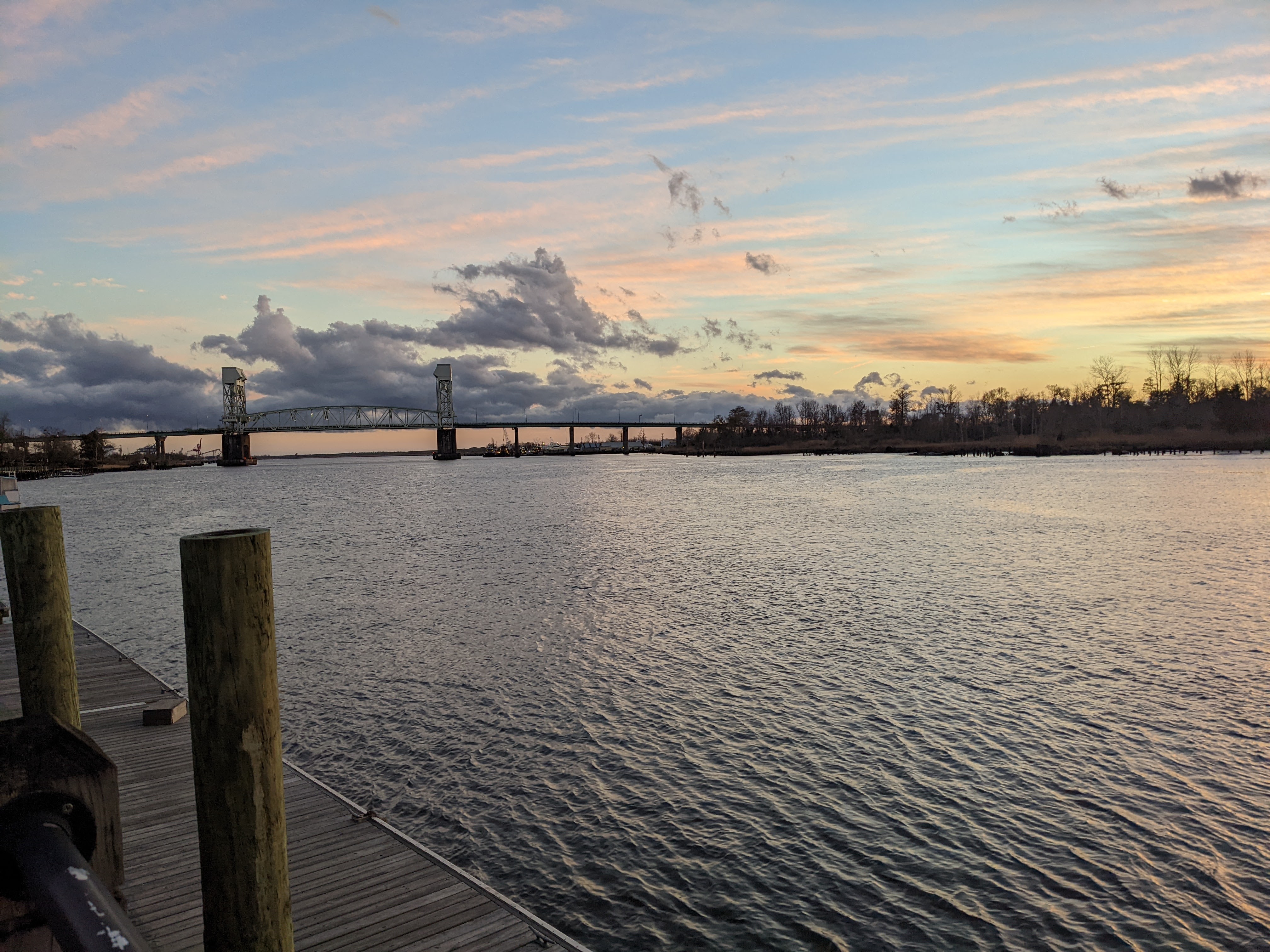
We stayed at a Best Western on the riverfront and walked to Elijah’s on the boardwalk for dinner: shrimp and grits for me, crap dip, crab chowder, and crab cakes for Greg. Then we hit the Front St. Brewery for after dinner beers and dessert. Needless to say, we had been drinking and dining well and Greg’s gout starting acting up. Uh oh, time to head home!
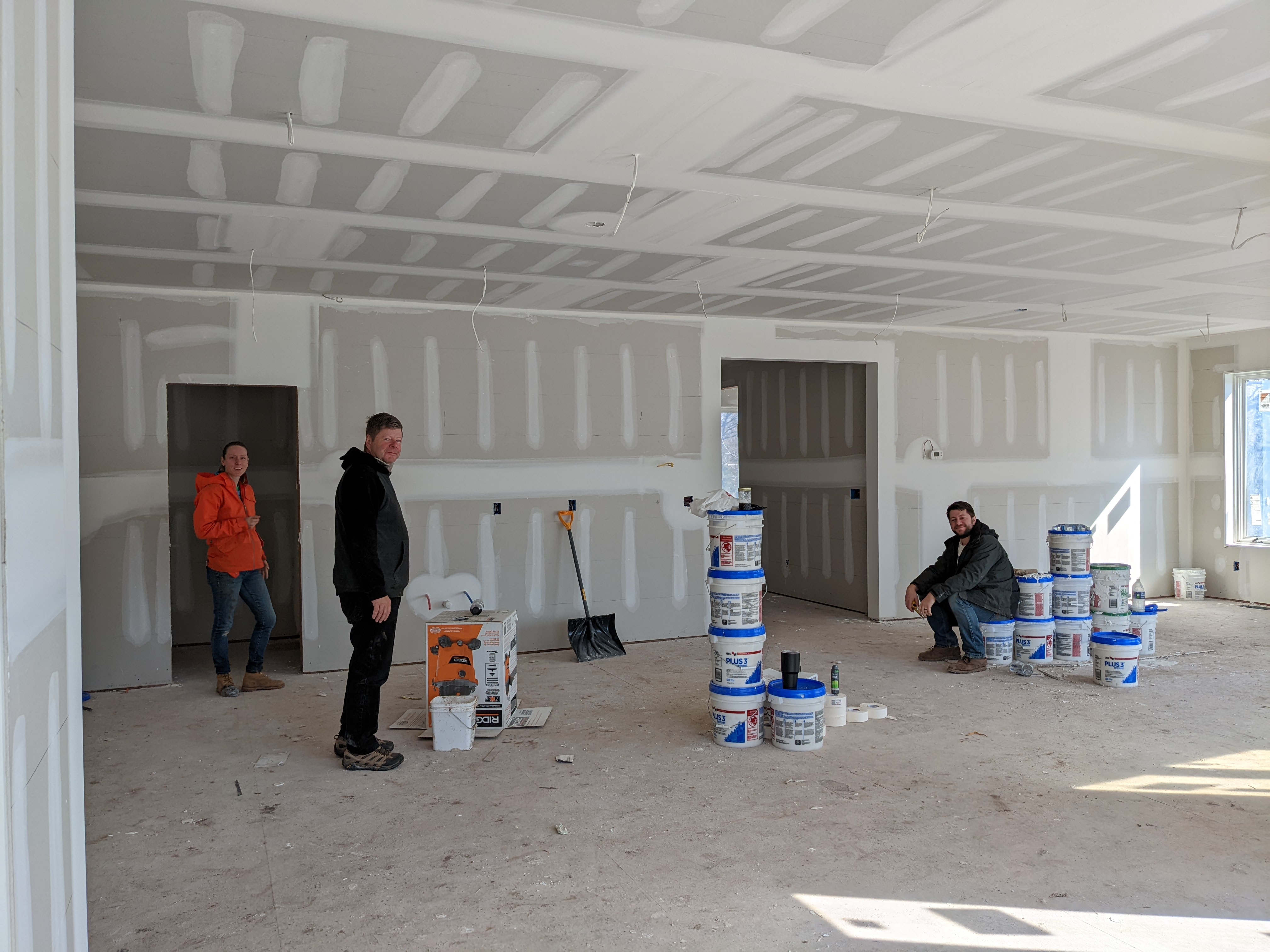
One of our longest drives was the next day to North East, MD where my sister Christine lives, 459 miles up I95. We noticed increased traffic heading south and opposite to us, luckily, and reminded ourselves it was the Saturday of President’s Day weekend. We timed this trip just right. Now that we live in the woods on a dirt road, traffic (and crowds) have become abhorrent to us. Or we’re just old. Anyway, Christine and her beau Shawn had a great charcuterie spread and steak dinner awaiting us. We’ve visited here before but it’s worth mentioning that North East is near Havre De Grace, MD and sits at the very northern tip of Chesapeake Bay. Christine has been fixing up her ranch style home over the last few years and it is just beautiful. We stayed the one night and headed 87 miles up to PA to pop in at Dan and Anna’s house which had recently been sheetrocked and what a transformation! How exciting to see the huge change and knowing the ‘end’ is in sight! After a few hugs and some instructions re: painting and ordering tiles, etc, we started on the road again, to home, 372 miles north.
With all the stops and visits and backroads, Greg drove almost 2,000 miles (I drove about 10%). Interesting to note, gas prices and mask usage increased as we travelled north. We had a great time, lots of great food, and lots of history and culture to mull over. Back to winter, for now!
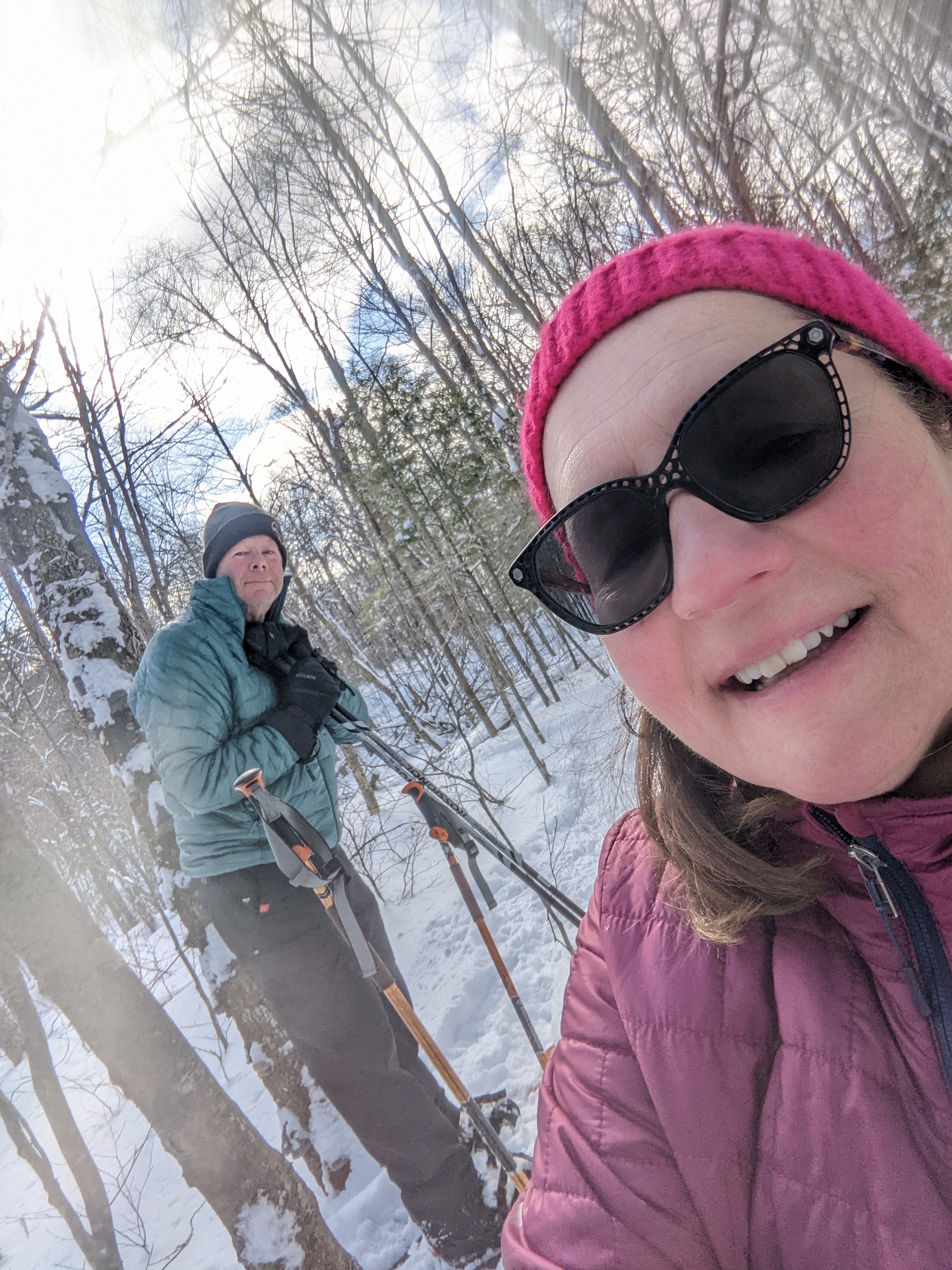

 My new reality