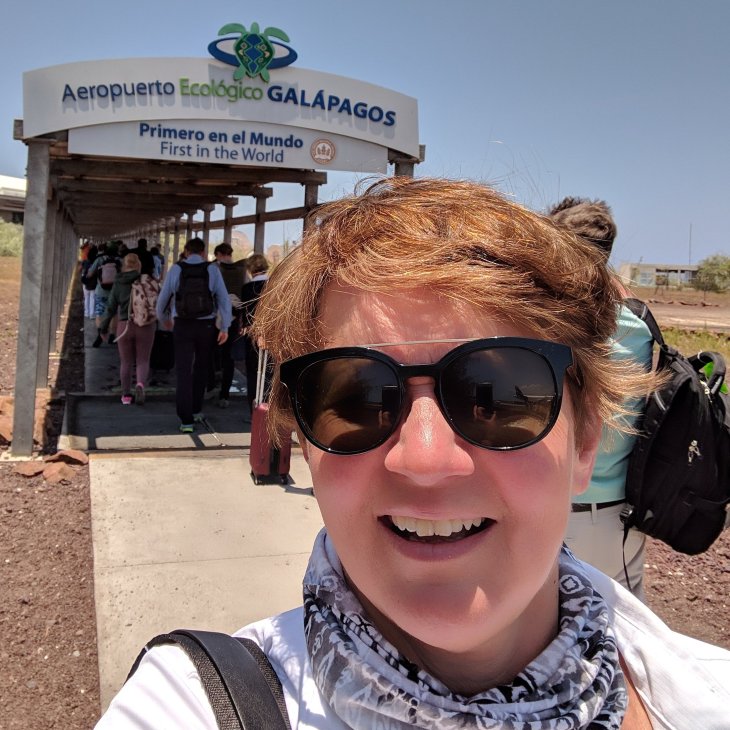
And so off we went to the Galapagos! From Quito we flew 45 min to Guayaquil, awaited refueling and new passengers, then flew another 1.5 hours to the Galapagos airport on Baltra island. Guayaquil is on the coast and 150 miles as the crow flies from Quito but traveling through the Andes it’s an 8 hour car drive. The Galapagos are 600 miles further off the coast of Ecuador in another time zone. Baltra was leased for 5 years by the USA during WWII as an airbase in close proximity to the Panama Canal. As we deplaned we were welcomed to a new airport (without air-conditioning) amidst the remnants of the former airbase, buckled concrete pads sitting in an arid landscape of scattered piles of red lava rocks and random scrub brush and cactus trees.


A short bus ride across the lunar like landscape took us to the ferry which took us across the narrow canal to the Santa Cruz island dock. The water was deep teal green and very inviting. We disembarked our passenger ferry and boarded a bus to our hotel, the Royal Palm. Santa Cruz is a one of the larger islands in the Columbus Archipelago, which is the official name of the Galapagos islands. The Royal Palm sits in the highlands of Santa Cruz, with lush green vegetation, a pool, and villas scattered down the hillside. This was our home for the next 4 nights. We were happy to stay unpacked for even this short while.

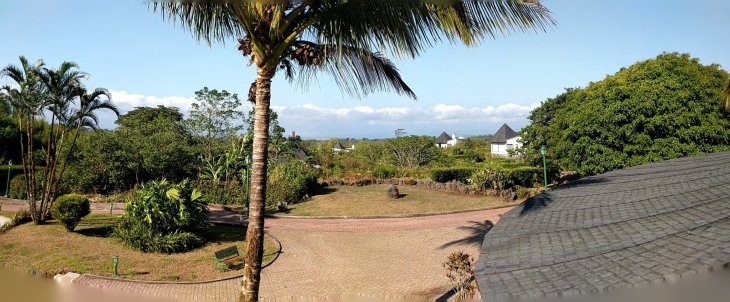
The hotel greeted us with snacks and lunch and then we were off to the beach! We met our two Galapagos park guides, Xavier and Duncan, and had our first experience with the birds and iguanas, both prevalent and unafraid of humans. We had a few birders in our group and even more photographers with expensive cameras so we strolled the path and the beach at a slow pace which was fine with me since it was so hot and humid. Then we went swimming in the cove which was welcome and refreshing. We dined at the hotel and retired to our air conditioned villa. If it hasn’t already become apparent, the heat and humidity were wilting me moreso than anyone else on the tour. I am definitely a mountain lake girl!
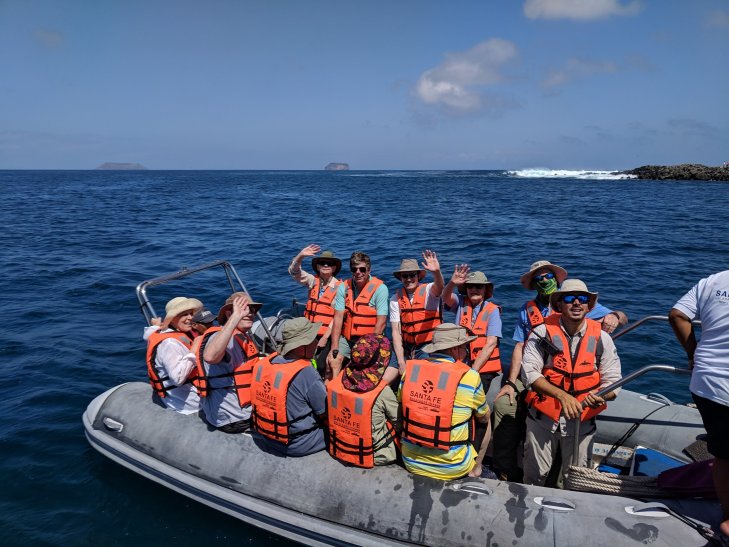
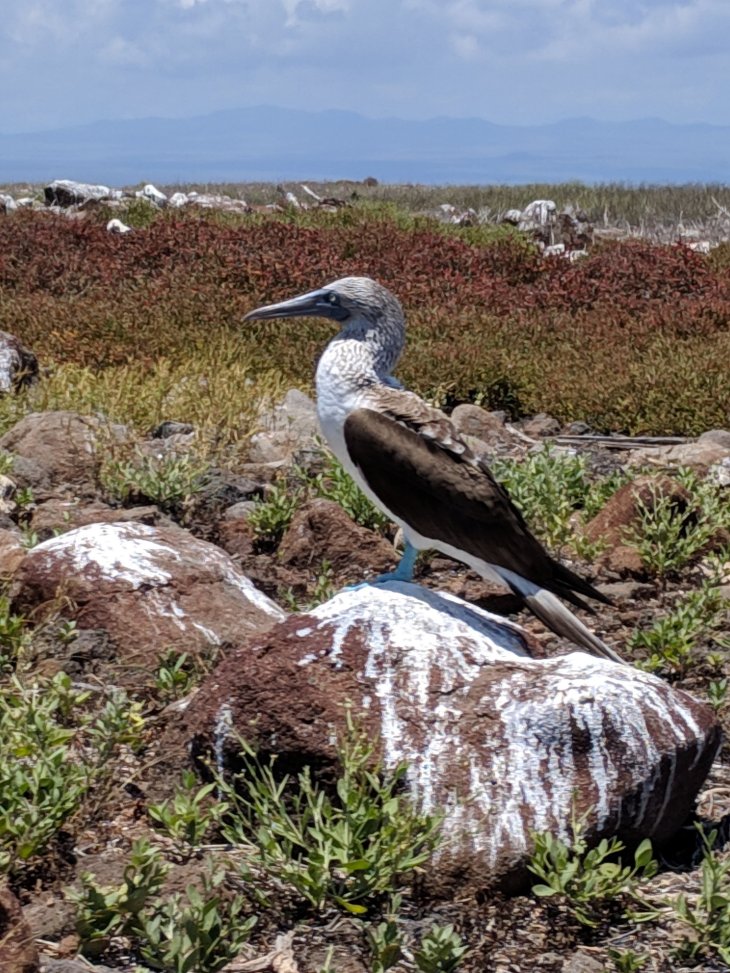
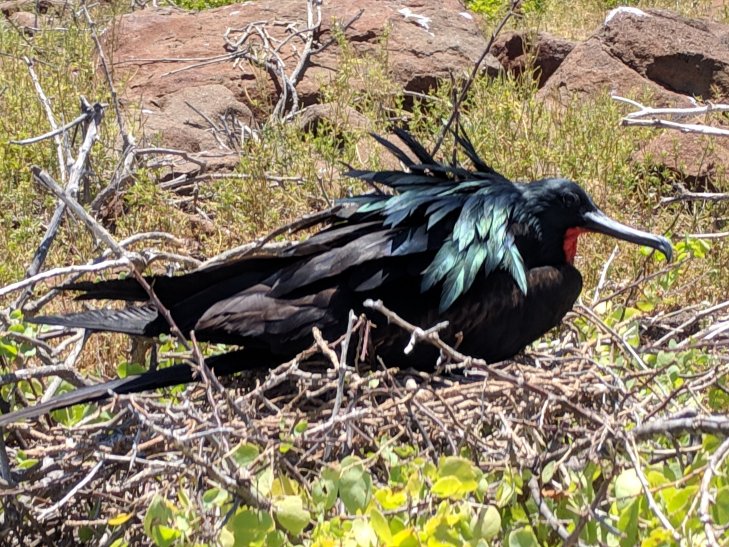


The next day we departed from the Santa Cruz dock for North Seymour island. The Galapagos are larger and more distant in real life than on a map. We had multiple warnings about sunburn and dehydration throughout our trip and even moreso on the islands. In fact the guides were covered head to toe and had gloves and a buff or scarf to cover their faces. Armed with multiple layers of SPF30 or SPF80, our khaki wannabe shirts, and our safari Tilly hats we tourists proceeded.

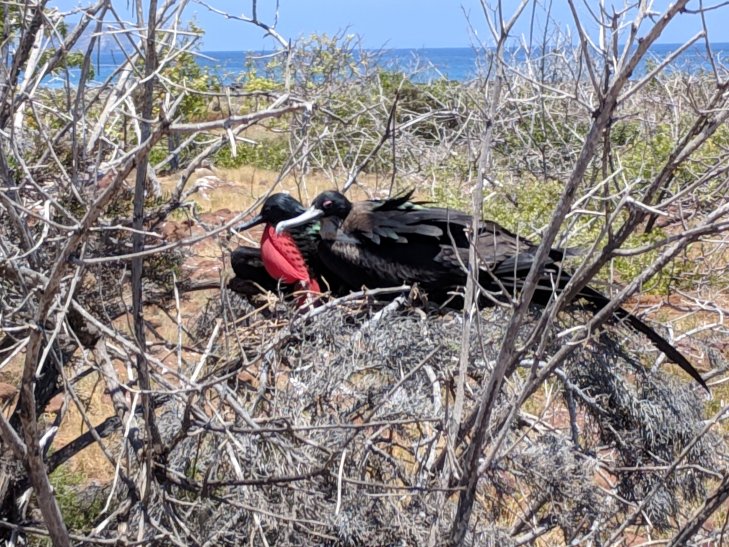


North Seymour hosts sea lions, frigate birds, marine iguanas, and blue footed boobies. Yes, I said “boobies”. The landscape was again, arid and lunar looking. And hot. Large cactus trees dotted the landscape and portulaca wound it’s way amongst the lava rocks. There were birds nesting and feeding and preening everywhere. Iguanas lounged in the shade. Everywhere. We followed the guides down the prescribed path and stopped for multiple photo opportunities. The guides were pretty passionate about the state of the Galapagos environment and the animals, describing the loss of cactus trees and replanting efforts and the effects on the iguanas and birds. They were also very well educated on the volcanic geology of the archipelago even as compared to the Hawaiian islands. The Galapagos are younger in comparison (1.5 vs. 15million years). They are also smaller since they are on the faster moving Nasca tectonic plate that collides with the Andes resulting in frequent earthquakes in Ecuador and all along the Western coast of South America. I loved geology in college and these stories were right up my alley. I also had a really cute TA in geology and the Galapagos guides were also not hard to listen to or look at. I also had a cute TA in organic chemistry but that’s another, longer story.
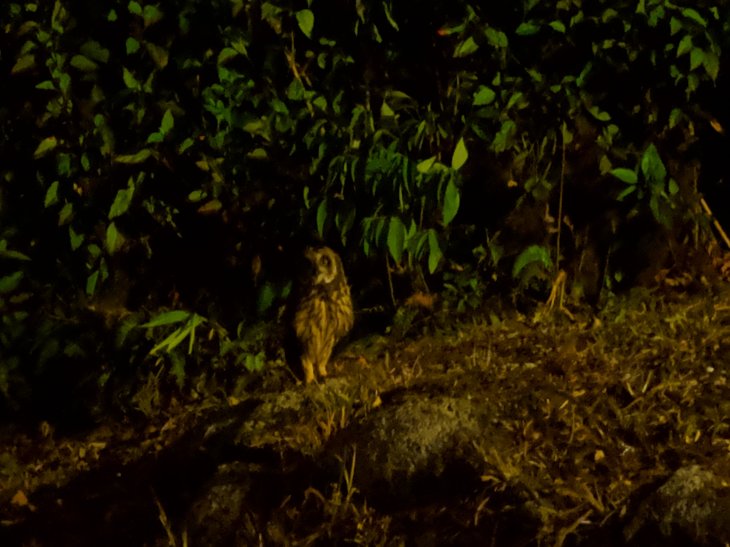
After our tour of the island, we enjoyed a healthy lunch on the boat, the Santa Fe III. The chef and staff served us while we proceeded to a cove for some snorkelling. Unfortunately it was too choppy for snorkelling, so we walked the beach and watched the multiple sea turtles playing in the surf near the shore. We also swam with fish darting about. Then we boated and bussed back to the Royal Palm for drinks and dinner. A short eared owl greeted us on our villa path. That night and every night there I slept so well.


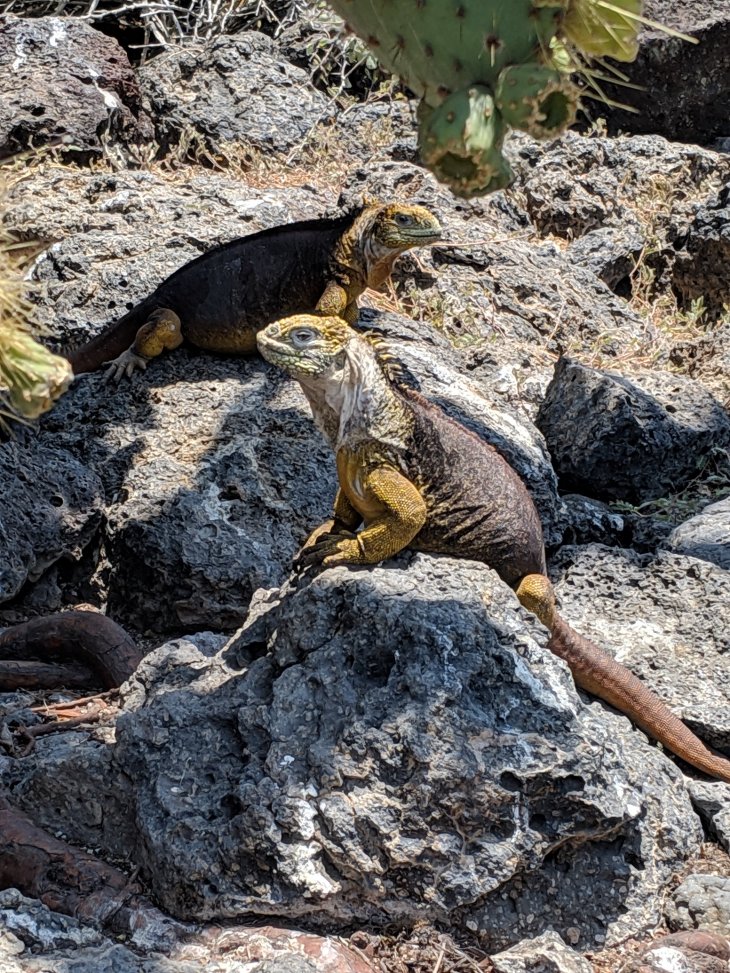
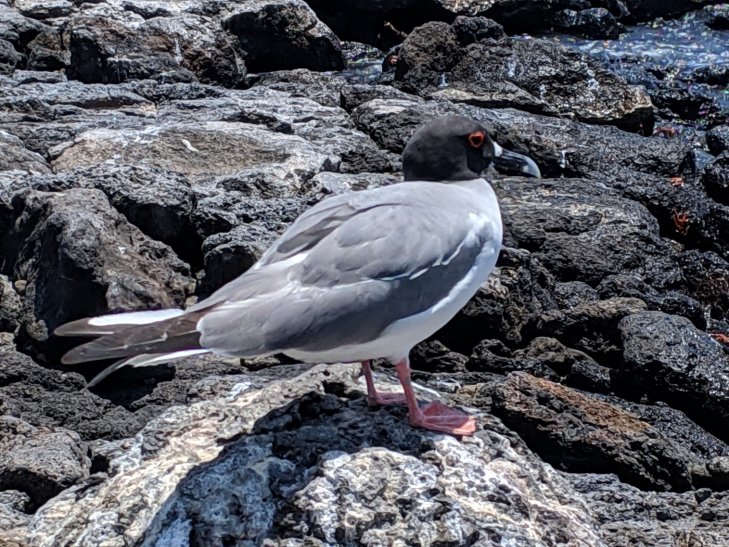

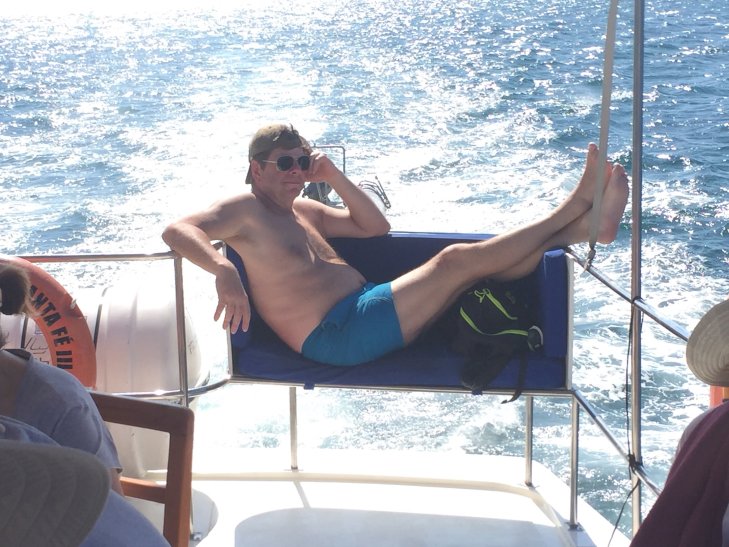
The next day we were back on the Santa Fe for a longer ride to Plaza Island. How nice it was to sit on the top deck and just watch the water. There even a few manta ray jumping above the surface; apparently they remove parasites this way. Plaza Island is another arid island but with many more sea lions along the shore and also land iguanas and boobies. We also saw a nocturnal Galapagos sea gull and a Galapagos hawk! The hawk is the top predator on the islands and kindly posed for us. We also saw red beaked tropic birds with elegant tail plumage and Galapagos puffins soaring along the cliff’s edge. Xavier was extremely passionate about sighting all these birds so I assumed we were getting a treat. It was fun nevertheless, despite the heat. Back on the boat we were treated to another lunch and then boated to a cove for snorkelling. On our way we came across a school of dolphins which raced and danced and jumped ahead of and alongside the Santa Fe. I was on the bow and could almost touch them as they leaped alongside. There were a few manta ray as well. It was magical!

At the cove we snorkelled amongst the rocky shore observing the tropical fish: giant angel fish, scorpion fish, octopus, shrimp and Nemo and Dory- like fish. So many of them. Then I saw a white tipped shark. Of course I backed away but everyone else came swimming up. I’m not sure I believe any shark to be vegetarian; I got a good look and that was enough.
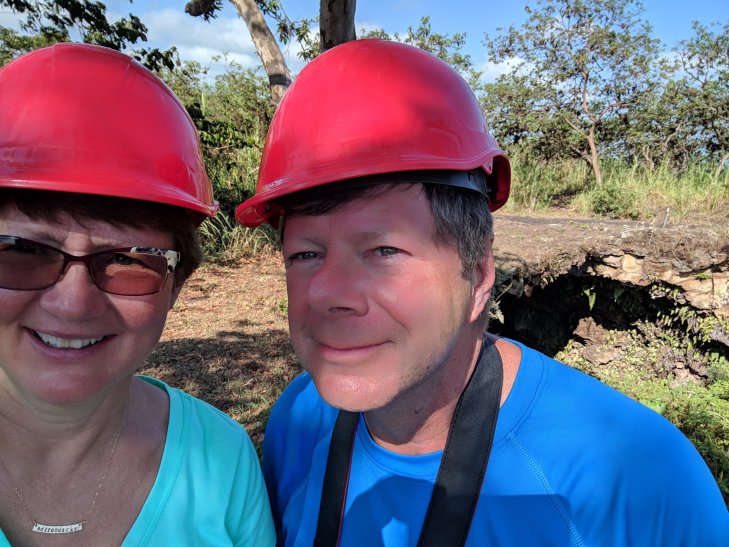

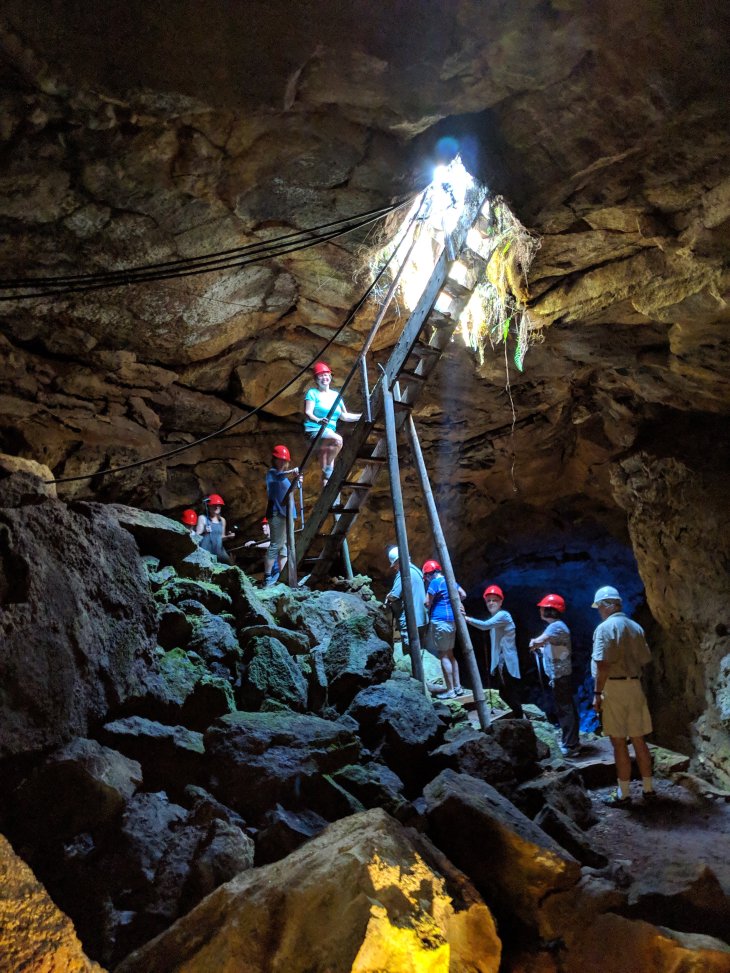
We returned to the hotel, showered, dined and again slept very well. Sleeping well is a delicious treat that I savor, but not often enough. The next day we stayed on Santa Cruz. Our first stop: the lava caves on-site at the Royal Palm. Adorned with helmets and flashlights, we walked the 0.5 mile cave formed by underground magma flow. We had previously seen a lava crater nearby. Lava caves dot the islands. There were only ‘baby’ stalactites forming due to the young age of the islands and the arid climate. It was humid inside. The original owner of the hotel had used part of the cave for wine storage! Although the cave continued on further we emerged into sunlight and heat and moved on to our next excursion.
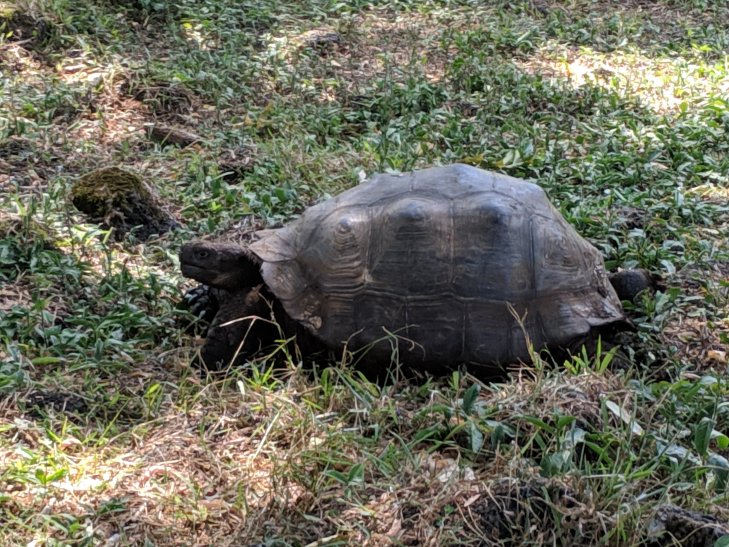


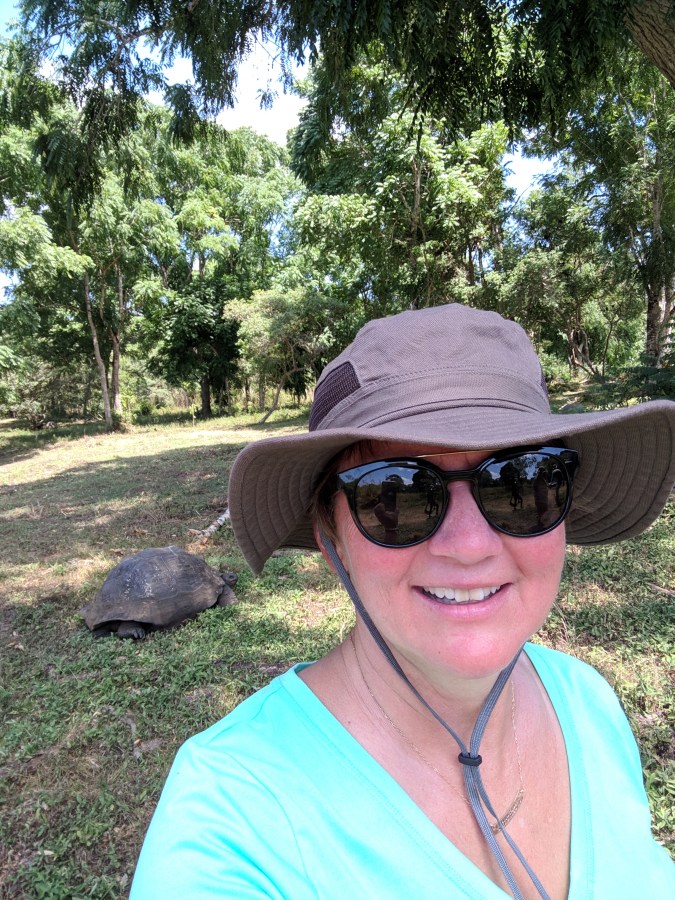
At a nearby farm adjacent to the National Park we were able to finally see the giant tortoises. There were no shortage of them; they were scattered about, lounging in the shade or mud. Tortoises are sexually mature after 25 years and then only mate a few months each year. It takes about 1.5 hours to copulate. Each female lays about 10 eggs per clutch and then abandons the carefully buried eggs. At one time the survival rate was about 20%, but human efforts have increased it to almost 80%. According to the guides, the National Park and Darwin Center staff intervene only when humans have affected the natural order. In this case, the unintended introduction of rats by humans has reduced the tortoise population. By capturing rats and encouraging increased birth rates the tortoise population has increased significantly.
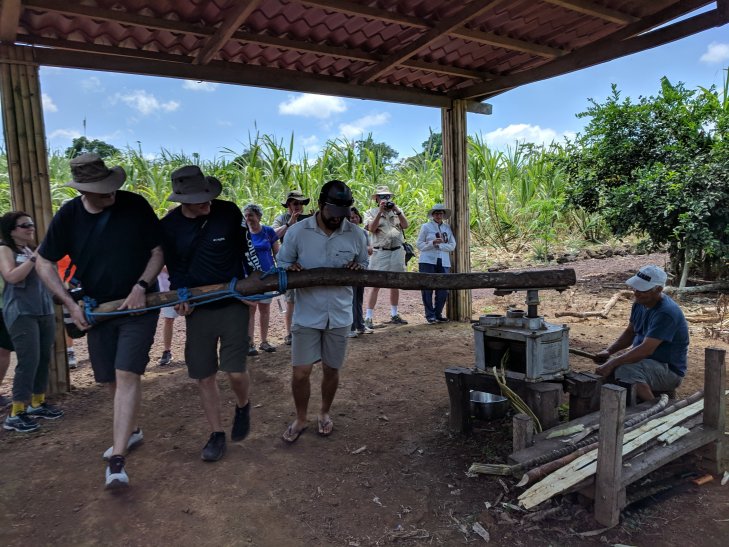
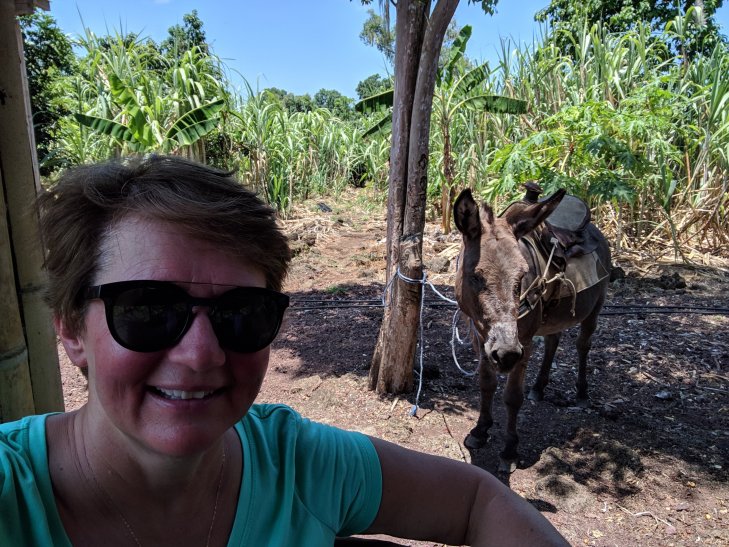
We also enjoyed a demonstration of sugar cane ‘moonshine’ production and also coffee bean harvesting and roasting. I don’t drink coffee but I did enjoy the moonshine!
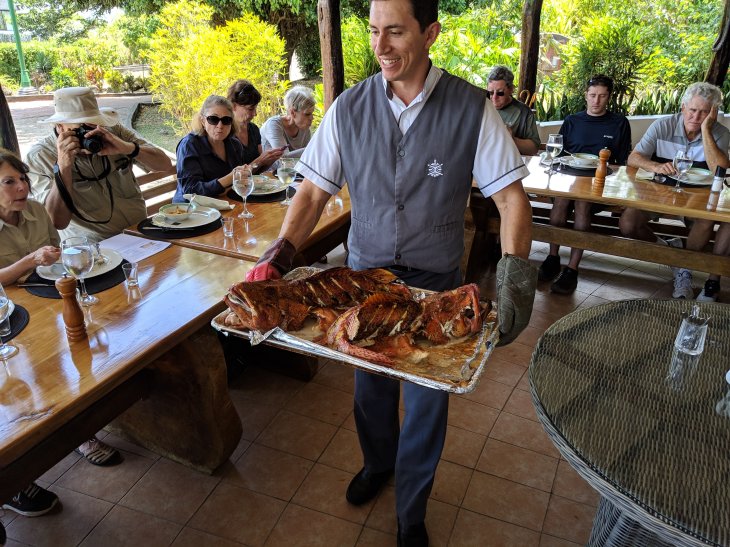
We returned to the Royal Palm for lunch. Vero the assistant chef gave us a cooking demonstration of Ecuadorian ceviche. It’s slightly different from other ceviche recipes in that it is a cold soup with fish, of course the citrus, the broth the fish (in this case, shrimp) was cooked in, veggies (tomatoes peppers, onions, cilantro), and ketchup and mustard. And to top it off, popcorn and plaintain chips. Sounds weird, but it’s delicious!!!! Then we had baked scorpion fish for lunch. OMG the fish on our trip has been so fresh and delicious! After siesta we drove to Porta Ayora and visited the Charles Darwin Research Center. Porta Ayora is the largest town in the Galapagos (pop. 18,000).

Living in a national park has some consequences, especially in the Galapagos. National Park status was conferred in 1959 so there are certain allowances made for established human interference, like farming or villages. However, now Ecuadorians and others cannot move here unless they marry into an established local family. Non-indigenous animals cannot be brought into the park, but those already established can be bred here, including cows and dogs. Owning property and building are very expensive, as is owning a vehicle. The major employment opportunity is supporting tourism. Even commercial fishing has been considerably limited. The entire focus is on maintaining the pristine nature and environment of the islands.
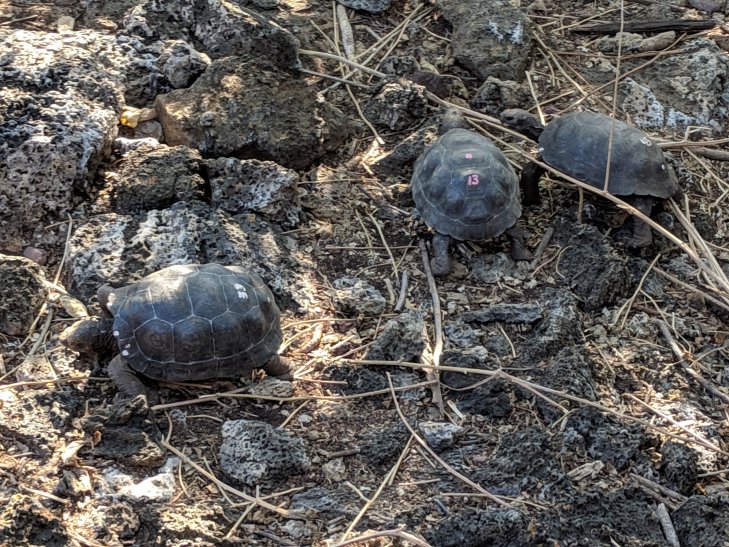


At the Darwin Center Xavier and Duncan led us through the outdoor paths amongst the breeding center for various tortoises that need help sustaining their population. Also, various other tortoises were housed there including former house pets. Diego, a rather small Hispaniola saddleback tortoise is known for being prolific. He is probably responsible for saving his species as he has fathered over 800 tortoises. On the other hand, we viewed “Lonesome George” the last known Pinta tortoise now stuffed and on display in a temperature controlled room. There were significant efforts to locate a female Pinta tortoise for George to mate with to no avail. Unfortunately George was unable to fertilize near-species tortoise eggs either. George died of stroke or heart attack in 2012, the last of his kind. We had quite the lesson in evolution and natural selection throughout these 4 days in this perfect setting of the Galapagos. I read “The Beak of the Finch” prior to this trip. The book discusses Darwin’s ideas and describes the work of evolutionary biologists Peter and Rosemary Grant as they actually prove Darwin’s theories. They have studied Darwin’s finches on the isolated island laboratories of Daphne Major and Minor since the 1970’s. The Grant’s are evolution theory superstars and have been studying the population, individual size, beak length, eating habits, and sexual behavior of every single finch on the island through climate and environmental changes. Other scientists are also highlighted. Many people recognize the Grant’s as they wave from the island when in residence. Consider that bacterial antibiotic resistance is another example of evolution in practice. Darwin was a genius!
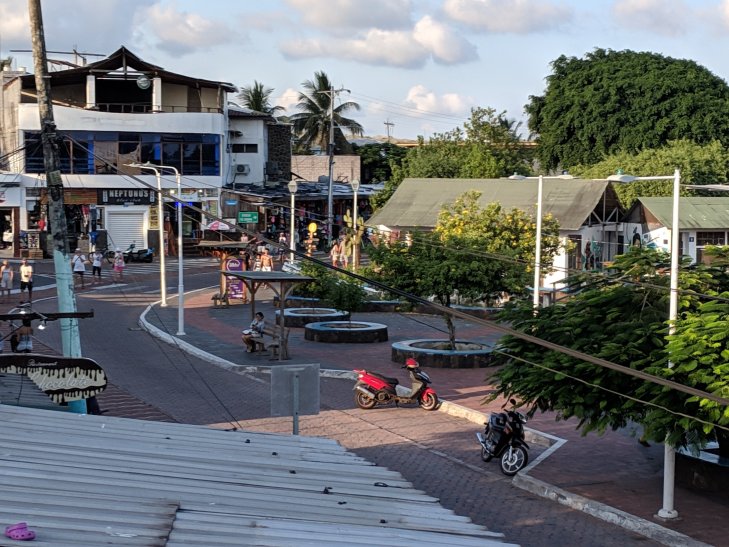

We had some free time to shop and tour Porta Ayora which turned out to be a nice little town. Everyone was at the beach as it was a hot Sunday afternoon. Greg and I stopped at a bar for beer and caiprina’s (2 for 1 special!) We then said goodbye to Xavier and Duncan and returned to the Royal Palm for a farewell Ecuadorian BBQ (prawn, pork and chicken) and one more night of delicious sleep. On our last bus trip to the ferry the air-conditioning failed with a loud bang and hiss. No matter, we continued on with open windows in the heat.
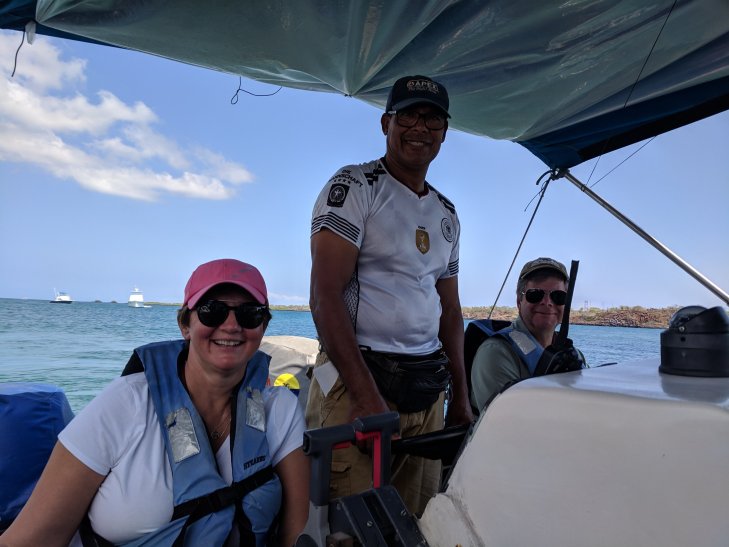
We returned to Quito by way of Baltra and Guayaquil for one more day of our South American adventure. Next stop, home.

 My new reality