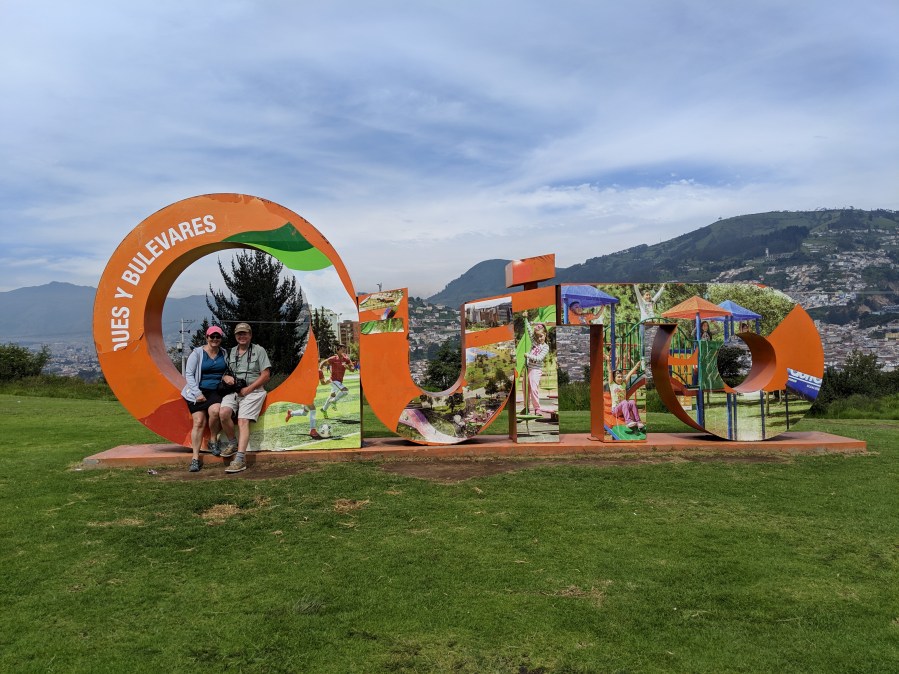

So many parts of this trip have turned into unexpected but delightful surprises. One has been our tour group chemistry; plenty of laughs and not a little drinking. And Quito was a lovely surprise. This city felt comfortable from the moment we arrived. Apparently lots of expats agree, as there is a growing community of North Americans settling here. The airport is new and large, the roads are passable and fast, there are far fewer roving abandoned dogs, and the city itself is a mix of new and old. It was the first city designated a UNESCO World Heritage Site in 1978. In Quechua Quito means “center of the land”.
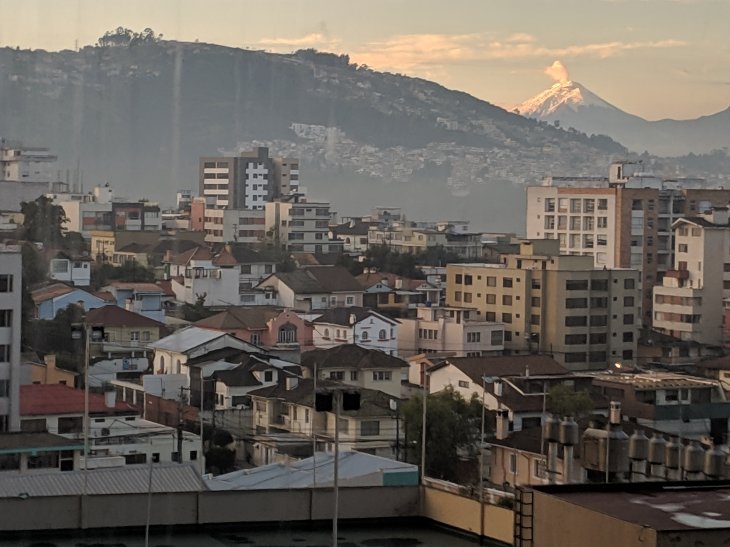
Quito is a small city with 1.5 million people located on an elongated plateau at 9,000 feet surrounded by 18 volcanoes and a river, the Nabo, which travels all the way to the Amazon. Many of the volcanoes are still active and they get 20-120 tremors in the area each day. Despite that, they have invested in building a subway or metro, not unlike Mexico City and other cities subject to earthquakes. The metro should open next year.
Ecuador has some interesting policies, such as mandatory voting, subject to fines. Also, the president, Lenin Moreno, is partially paralyzed so is supportive of disabled people’s needs. Ecuador adopted the USD$ in 1998 after a disastrous collapse of their economy; it appears to have worked in improving conditions in Quito although there are now many Venezuelan refugees.
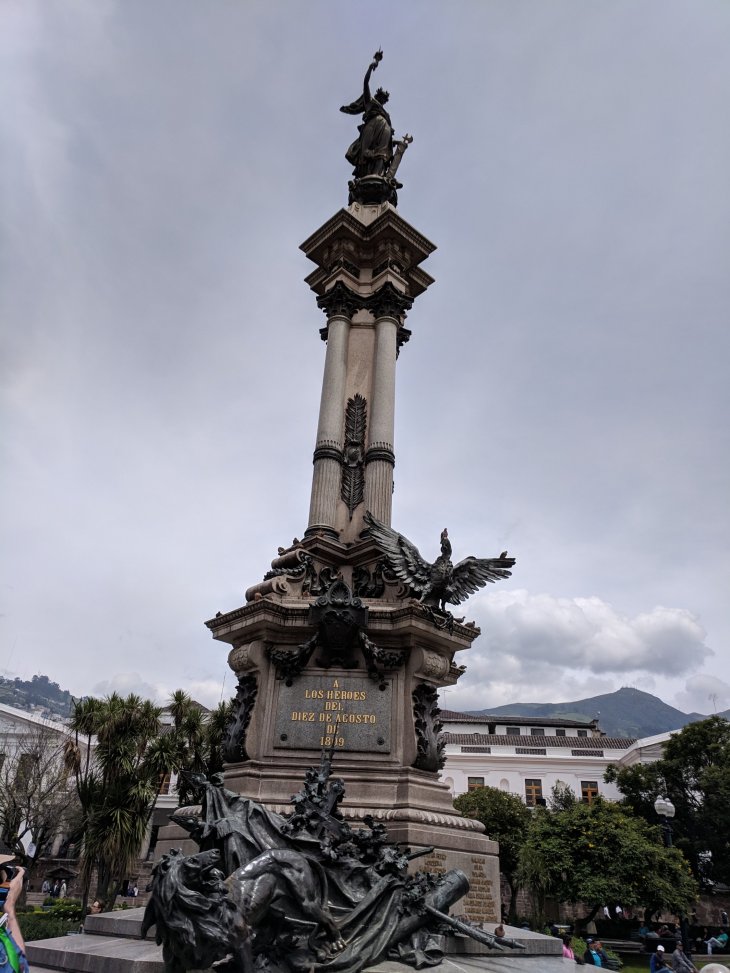
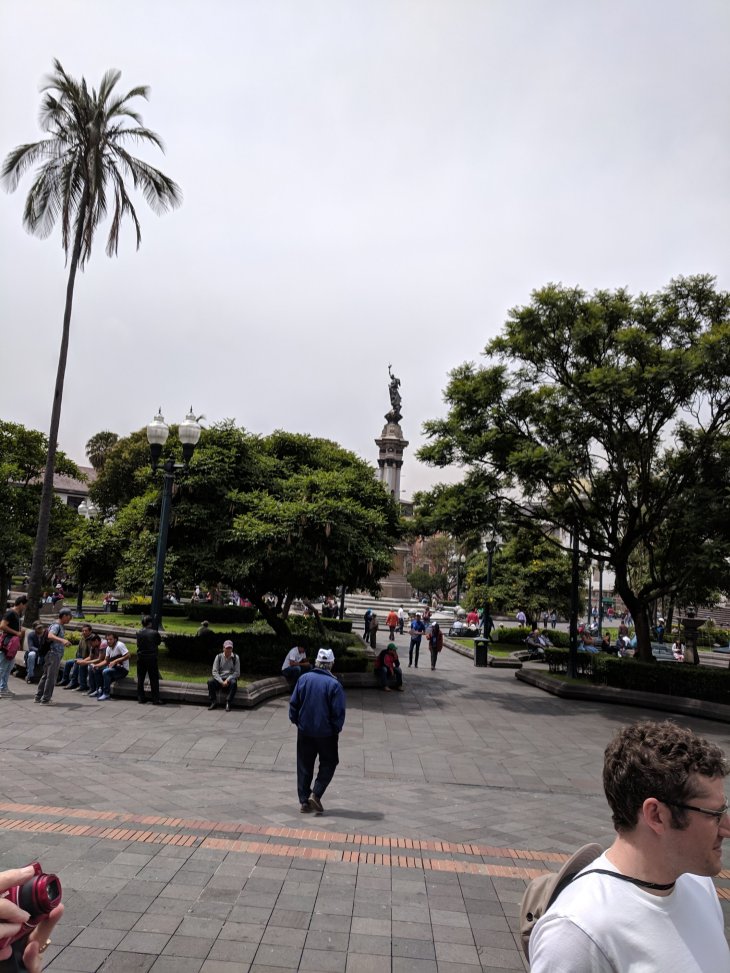
We stayed at the Swissotel in the financial district, about an hour from the airport. Our first full day in the city we toured the old town, specifically the Plaza Grande aka Independence Plaza. A monument to Simon Bolivar dominates the center of the plaza. Bolivar, as you may recall, liberated this part of South America from Spain. The revolution began in Aug 10, 1809, and was accomplished in 1822. Ecuador became a nation in 1830; the other 4 nations were Peru, Bolivia, Columbia, and Chile. In 1832 Ecuador claimed the Galapagos.
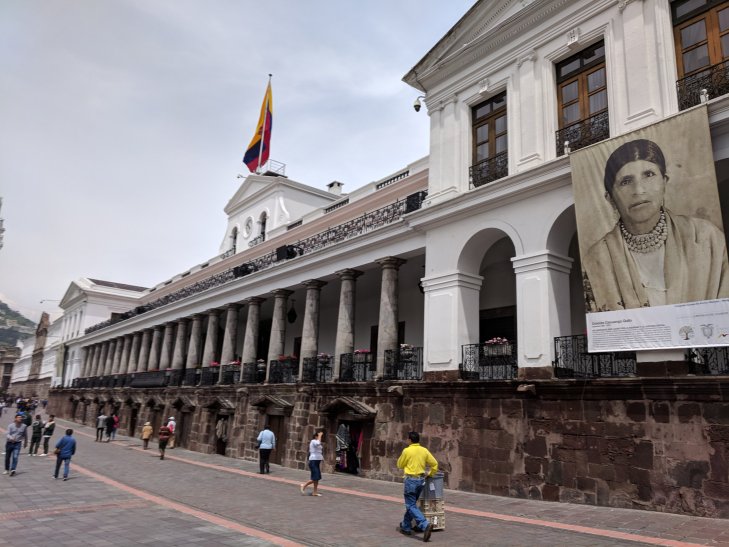
The presidential palace occupies one side of the plaza. It and many of the buildings here have ornate iron balconies, not unlike New Orleans. There is also French influence with some work by Gustave Eiffel.

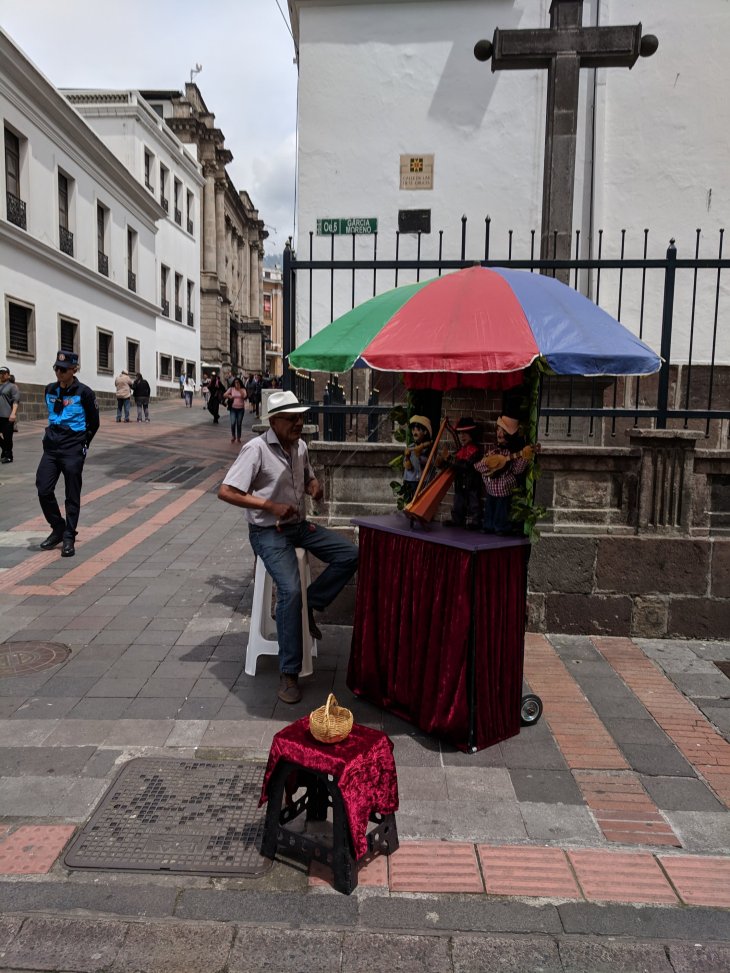
As we walked the plaza we saw many older men and women sitting on the benches throughout, waiting for someone to discuss the politics of the day. High school students in uniforms approached to interview us on our opinion of Ecuador. I think they were pleased with our responses.
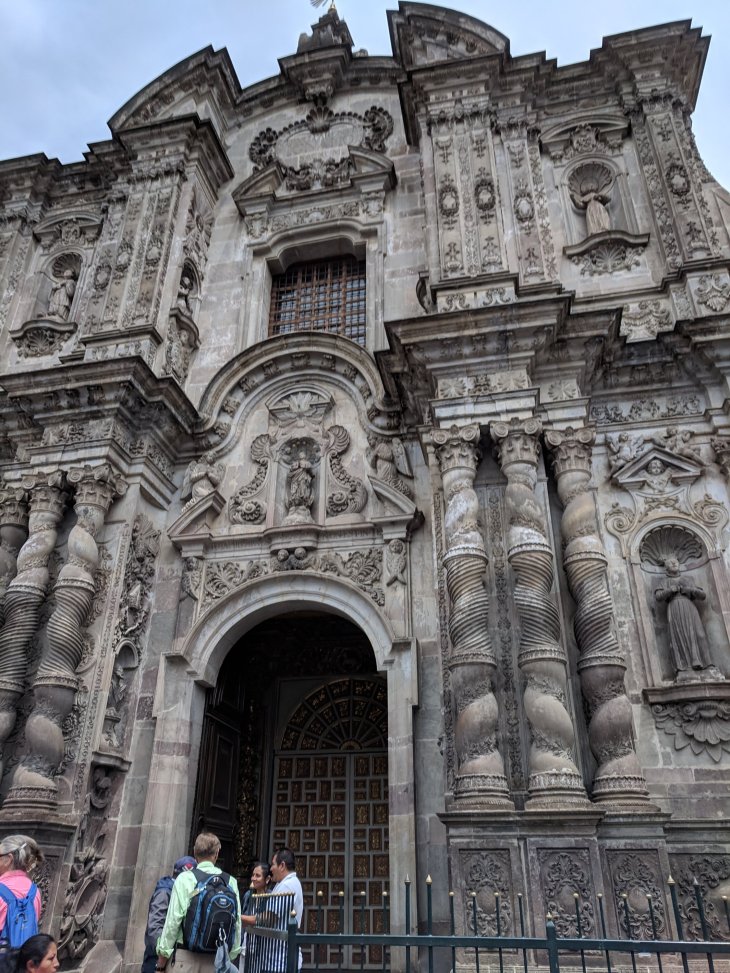
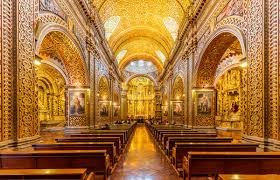
We toured the large cathedral ‘The Company of Jesus’. Our guide Tomas told us it would be a ‘3 OMG’ church and he was right. Allegedly there are 3 or more tons of gold leaf used in the decoration of this Latin Baroque masterpiece. The altar, side altars, and ceiling were ornate and everywhere the gold gleamed. This church was built by the Jesuits in 1605 and completed in 1765. There was some political and financial power struggles between between the Jesuits and the king of Spain, resulting in the expulsion of the Jesuits. The church was abandoned and years later reconstructed and refurbished and made earthquake resistant with UNESCO, church, government funds, and donations, although there was a fire in 1996 which required additional restoration. As with many ‘contemporary’ buildings, this church was built atop Inca ruins and thus has been aligned with the solstices. Again, another example of ‘synchrotism’, the fusion of two religions. The first Ecuadorian saint, ‘the Lily of Ecuador’, St. Marianna, is buried here.
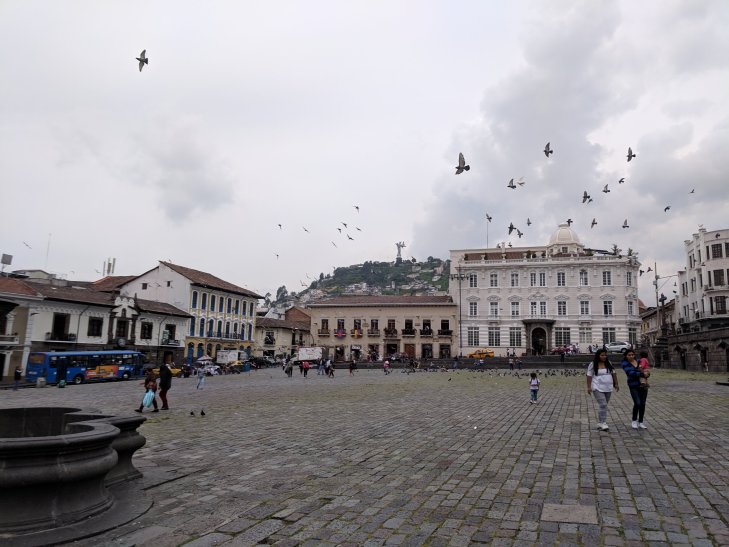
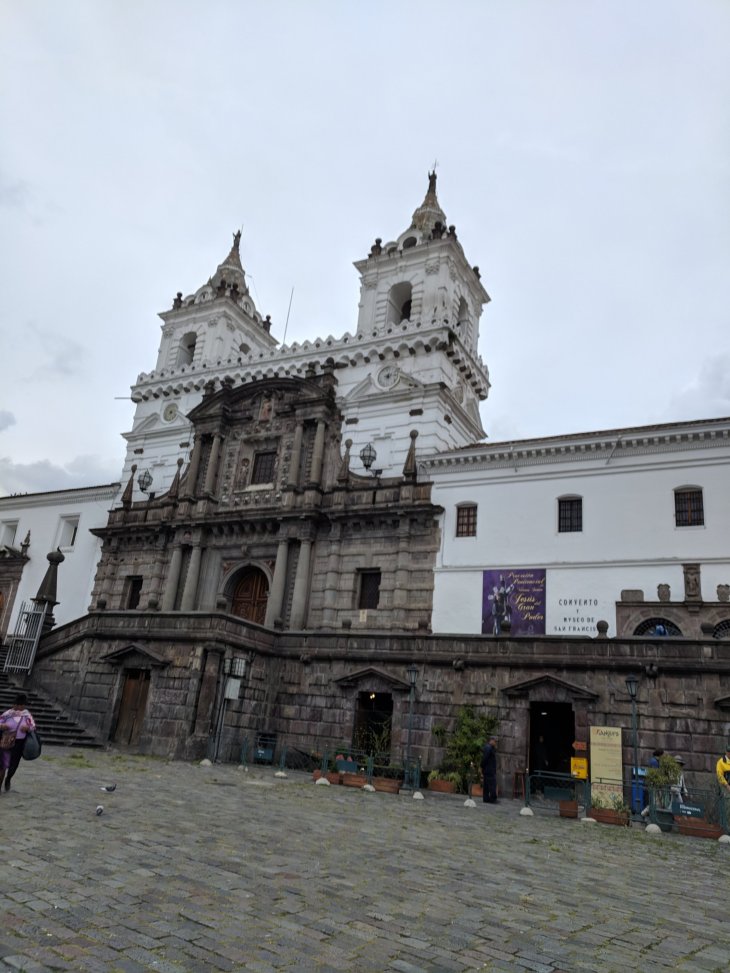
We stopped in another plaza for some shopping and to visit the church of San Francisco and then headed north for lunch. We drove about an hour to ‘the Crater’, a restaurant on the rim of an actual crater, set amongst many other volcanoes. The food was again, delicious, (carnitas, blueberry juice, empanadas, figs and cheese, hominy).
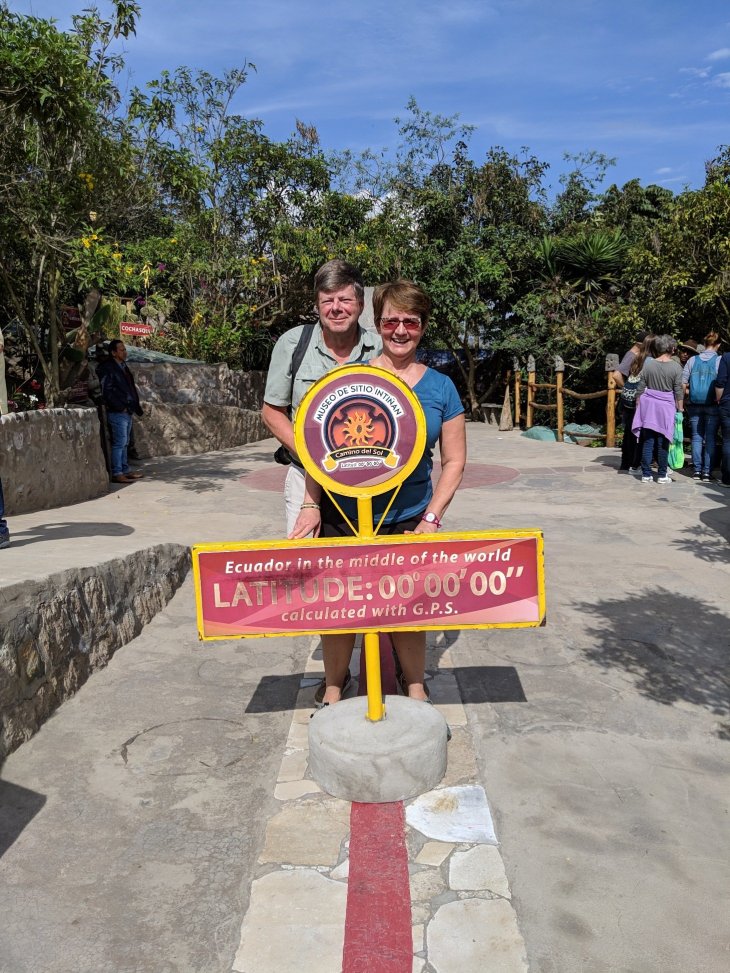
We then travelled a short distance back to the southern hemisphere having crossed the equator. At the Museo de Intinan at 00.00.00deg latitude we observed the tour guide as she demonstrated the phenomenon of water swirling in opposite directions just 6 feet to either side of the equator; the guide used a bucket and a small sink for the experiment. Indeed in the northern hemisphere water swirls counter clockwise and clockwise in the southern. And several in our group balanced an egg on the head of a nail on the equator. This was fun!
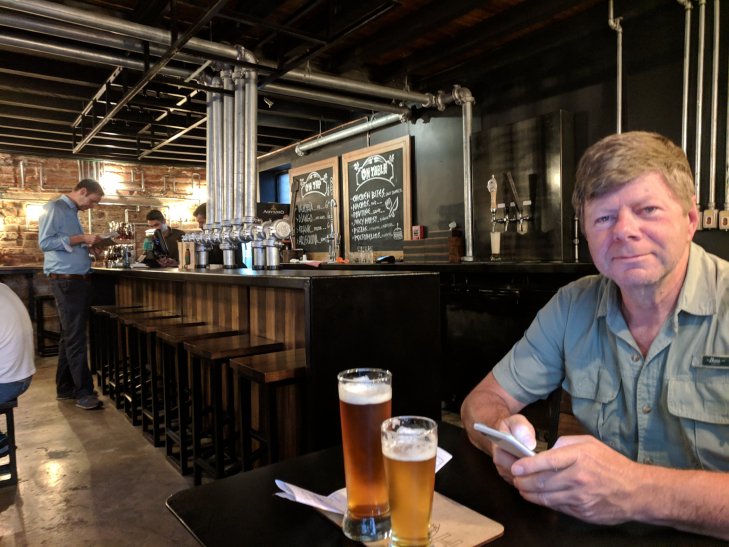
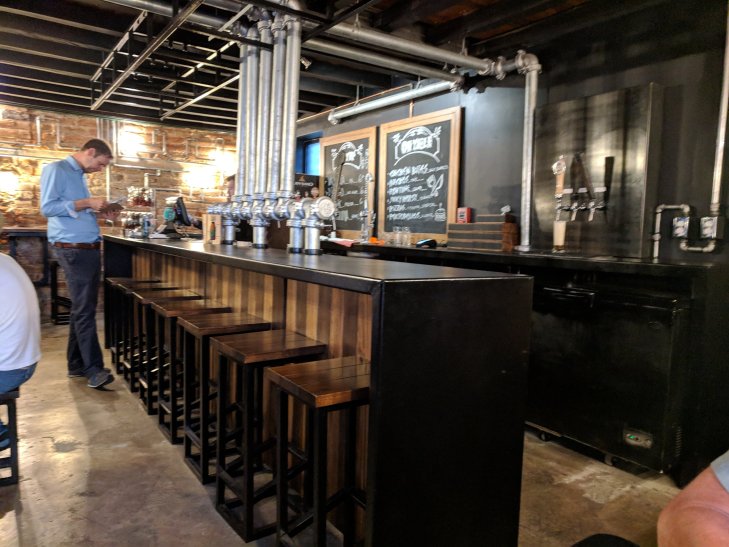
We had dinner on our own so Greg and I took a walk. I was still getting winded with a little stroll but no matter: we found a brewery! Greg was happy to indulge in an IPA and a stout. I had the lighter honey beer.
Tomorrow we take 2 flights, a bus, and a ferry to Santa Cruz in the Galapagos. After 5 days there we’ll return to Quito for a few more excursions before completing our fantastic journey. To be continued…

 My new reality